Suche:great area

Styles
Alle
Skam - No Name LP

Skam

No Name LP

12inchSN25
Sea Note
22.09.2023

Lost in time yet always in season, here’s a blast of that old perennial, the punk rock, representative of the swiftly changing times around Bailey’s Crossroads, just outside Washington DC, in the early 80s. Skam recorded this stuff in 1982-1983, then broke up, leaving these songs to be released… maybe never? Or more preferably, now, to race into the bloodstream of jaded, faded today with all the vigour and rigour of Skam’s eternal youth.

Though they didn’t release any records during their three years of existence, it’d be wrong to call Skam ‘never-was’ - in addition to these recordings, there’s a trail of flyers for shows with Scream, No Trend, United Mutations and Media Disease, as well as the memories of the student alumni from Bishop O’Connell High, class of ‘83 or so.

The conglomeration of scenes around the greater DC area at that time produced a variety of bands, but the prevailing recollection of the era is of the incendiary hardcore punk and subsequent straight edge values of the Dischord bands. The band that became Skam was a world apart; they were posited for the first time by 8th graders Vince Forcier and Jack Anderson at a Jackson Browne concert, and their initial rehearsals in their parents’ basement were highlighted by covers of Beatles, Stones, Who and Led Zeppelin songs. Bad covers.

It wasn’t until they’d been playing a bit that they discovered The Ramones, and it was then that the die was cast and pedal pressed to the metal for another frantic couple of years.

The Skam recordings from 1982 have an undeniably Clash-like countenance that sets them definitively apart from the ‘First Four’ of Dischord - in some ways, prefiguring the pop-punk sound of Green Day at the dawn of the 1990s instead - but subsequent recordings found them quickly evolving - or devolving - into a personal mastery of savage riffs and tempos, as well as post-punk conceptions.

But even as they were verging into this new territory, their three years together had frayed their alliance and they soon broke up. Jack joined No Trend, Vince played in Racer X and then Second Wind. And life went on. However, the rediscovered Skam tapes make for an incredible addendum to the more well-known music of that incredible time and place

vorbestellen22.09.2023

erscheint voraussichtlich am 22.09.2023

26,47

Last In: vor 2026 Jahren
A.R. Kane - A.R. Kive LP 4x12"

A.r. Kane

A.R. Kive LP 4x12"

4x12inchRGIRL133
ROCKET GIRL
08.09.2023

A.R. Kive collates the three most astonishing works from that most miraculous of duos - A.R. Kane - comprising the ‘Up Home’ EP from 1988 that signified the band’s dawning realisation of their own powers and possibilities, their legendary debut LP ‘sixty nine’ (1988) and its kaleidoscopic, prophetic double-LP follow up ‘i’ (1989).

In founder-member Rudy Tambala’s new remastering, the music on these pivotal transmissions from the birth of dream pop, have been reinvigorated and re-infused with a new power, a new depth and intimacy, a new height and immensity. Vivid, timeless and yet always timely whenever they’re recalled, these records still force any listener to realise that despite the habits of retrospective myth-making and the
safe neutering effects of ‘genre’, thirty years have in no way dimmed how resistant and dissident to critical habits of categorisation A.R. Kane always were. Never quite ‘avant-pop’ or ‘shoegaze’ or ‘post-rock’ or any of those sobriquets designed to file and categorise, A.R. Kive is a reminder that those genres had to be coined, had to be invented precisely to contain the astonishing sound of A.R. Kane, because
previous formulations couldn’t come close to their sui generis sound and suggestiveness. This is music that pointed towards futures which a whole generation of artists and sonic explorers would map out. Now beautifully repackaged, remastered and fleshed out with extensive sleeve notes and accompanying materials, ‘A.R. Kive’ reveals that 35 years on it’s still a struggle to defuse the revolutionary and inspirational possibility of A.R. Kane’s music.

A.R. Kane were formed in 1986 by Rudy Tambala and Alex Ayuli, two second-generation immigrants who grew up together in Stratford, East London. From the off the pair were outsiders in the culturally mixed (cockney/Irish/West Indian/Asian) milieu of the East End, with Alex and Rudy’s folks first generation immigrants from Nigeria and Malawi, respectively. The two of them quickly developed and fostered an innate and near-telepathic mutual understanding forged in musical, literary and artistic exploration. Like a lot of second-generation immigrants, they were ferocious autodidacts in all kinds of areas, especially around music and literature. Diving deep into the music of afro-futurist luminaries such as Sun Ra, Miles Davis, Lee Perry and
Hendrix, as well as devouring the explorations of lysergic noise and feedback from contemporaries like Sonic Youth and Butthole Surfers, they also thoroughly immersed themselves in the alternate literary realities of sci-fi and ancient history (the fascination with the arcane that gave the band their name), all to feed their voracious cultural thirsts and intellectual curiosity.

It was seeing the Cocteau Twins performing on Channel 4 show the Tube that spurred A.R. Kane into being - “They had no drummer. They used tapes and technology and Liz Fraser looked completely otherworldly with those big eyes. And the noise coming out of Robin’s guitar! That was the ‘Fuck! We could do that! We could express ourselves like that!’ moment”, recalls Tambala - and through a mix of
confidence, chutzpah, ad hoc almost-mythical live shows and sheer innocent will the duo debuted with the astonishing ‘When You’re Sad’ single for One Little Indian in 1986. Immediately dubbed a ‘black Jesus & Mary Chain’ by a press unsure of WHERE to put a black band clearly immersed in feedback and noise, what was immediately apparent for listeners was just how much more was going on here - a
tapping of dub’s stealth and guile, a resonant umbilicus back to fusion and jazz, the music less a conjuration of past highs than a re-summoning of lost spirits.
The run of singles and EPs that followed picked up increasingly rapt reviews in the press, but it was the ‘Up Home EP’ released in 1988 on their new home, Rough Trade that really suggested something immense was about to break. Simon Reynolds noted the EP was: Their most concentrated slab of iridescent awesomeness and a true pinnacle of an era that abounded with astounding landmarks of guitar-reinvention, A.R. Kane at their most elixir-like.

If anything, the remastered ‘Up Home’ that forms the first part of ‘A.R. Kive’ is even more dazzling, even more startling than it was when it first emerged, and listening now you again wonder not just about how many bands christened ‘shoegaze’ tried to emulate it, but how all of them fell so far short of its lambent, pellucid wonder. This remains intrinsically experimental music but with none of the frowning orthodoxy those words imply. A.R. Kane, thanks to that second generation auto-didacticism were always supremely aware about the interstices of music and magic, but at the same time gloriously free in the way they explored that connection within their own sound, fascinated always with the creation of ‘perfect mistakes’ and the possibilities inherent in informed play.

‘sixty nine’ the group’s debut LP that emerged in 1988 had
critics and listeners struggling to fit language around A.R. Kane’s sound. As a title it was telling - the year of ‘Bitches Brew’, the year of ‘In A Silent Way’, the erotic möbius between two lovers - and as originally coined by the band themselves, ‘dream pop’ (before it became a free-floating signifier of vague import) was entirely apposite for the music A.R. Kane were making. Crafted in a dark small basement studio in which Tambala recalls the duo had “complete freedom - We wanted to go as far out as we could, and in doing so we discovered the point where it stops being music”. There was an irresistibly dreamy, somnambulant, sensual and almost surreal flow to ‘sixty nine’s sound, but also real darkness/dankness, the ruptures of the primordial and the reverberations of the subconscious, within the grooves of remarkable songs like ‘Dizzy’ and ‘Crazy Blue’. Alex’s plangent vocals floated and surged amidst exquisite peals of refracted feedback but crucially there was BASS here, lugubrious and funky and full of dread, sonic pleasure and sonic disturbance crushed together to make music with a center so deep it felt subcutaneous, music constructed from both the accidental and the deliberate, generous enough to dance with both serendipity and chaos. ‘sixty nine’ remains - especially in this remastered iteration - ravishing, revolutionary.

The final part of this ‘A.R. Kive’ contains 1989’s astonishing double-LP ‘i’ which followed up on ‘sixty nine’s promise and saw the duo fully unleash their experimental pop sensibilities over 26 tracks, plunging the A.R. Kane sound into a dazzlingly kaleidoscopic vision of pop experiment and play. Suffused with new digital technologies and combining searingly sweet and danceable pop with perhaps the duo’s strangest and boundary-pushing compositions, the album did exactly what a great double-set should do - indulge the artists sprawling pursuit of their own imaginations but always with a concision and an ear for those moments where pop both transcends and toys with the listeners expectations. Jason Ankeny has noted that “In retrospect, ‘i’ now seems like a crystal ball prophesying virtually every major musical development of the 1990s; from the shimmering techno of ‘A Love from Outer Space’ to the liquid dub of ‘What’s All This Then?’, from the alien drone-pop of ‘Conundrum’ to the sinister shoegazer miasma of ‘Supervixens’ — it’s all here, an underground road map for countless bands to follow.” Perhaps the most overwhelmingly all-encompassing transmission from A.R. Kane, ‘i’ bookended a three year period in which the duo had made some of the most prophetic and revelatory music of the entire decade.

After ‘i’ the duo’s output became more sporadic with Tambala and Ayuli moving in different directions both geographically and musically, with only 1994’s ‘New Clear Child’ a crystalline re-fraction of future and past echoes of jazz, folk and soul, before the duo went their separate ways. Since then, A.R. Kane’s music has endured, not thanks to the usual sepia’d false memories that seem to maintain interest in so much of the musical past, but because those who hear A.R. Kane music and are changed irrevocably, have to share that universe which A.R. Kane opened up, with anyone else who will listen. Far more than other lauded documents of the late 80s it still sounds astonishingly fresh, astonishingly livid and vivid and necessary and NOW.

vorbestellen08.09.2023

erscheint voraussichtlich am 08.09.2023

105,84

Last In: vor 2026 Jahren
Smoke Inc. - Waitin' For Love / It's The Same Old Song

This release heralds the launch of a new 7” series from Mr Bongo. In partnership with London-based DJ and digger, Miche, the series will feature his latest discoveries, as well as choice cuts, taken from his 'With Love' compilations. For the inaugural offering, we take a trip to hazy San Francisco, California, in 1977. Smoke, Inc. were an emerging band in the Greater San Francisco Bay area and a regular fixture in the buzzing live music scene. They had a strong following and were in rotation in most of the Bay area clubs, as well as opening for numerous prestigious acts such as Sly & The Family Stone, Taj Mahal, The Pointer Sisters and Toots and The Maytals. Members of the group worked with Jimi Hendrix, Stevie Wonder, Frank Zappa, Martha Reeves & The Vandellas, and many others considered the cream of the crop of the music world.

Smoke, Inc. featured Roy Schmall on keyboards and vocals, Stan Terry on lead vocals and harmonica, Michael 'Ollie' Schotka, on bass and vocals, Keith Stafford on drums and vocals, and Archie Williams Jr on guitar. They went on to release one 12" EP and two 7" singles. One of those 7’s included 'Waitin' For Love’. It was first released in 1977 and came out on the band's own self-titled imprint. It has gone on to become their rarest and most sought-after recording, now fetching up to an astonishing £2,500 on Discogs. It is a breezy, feel-good, modern/crossover soul beauty, with an infectious sing-along chorus, floaty flute solo, and packed with pure, uplifting dancefloor energy. The B-side features a cover version of the Holland Dozier & Holland-penned classic 'It's the Same Old Song’, made famous by the Four Tops.

Miche enthuses, “I included this gem on my first ‘With Love’ compilation and knew that it deserved its own dedicated reissue complete with original artwork. I’m delighted to get the chance to make that happen for this incredible, soulful AOR glide from a band that is well due another round of appreciation. It’s very rare, and consequently very expensive, so here it is for you all to spin and add to your record collections.”

46 years since its original release, it is our privilege to help Roy and the gang’s light shine once again and let a whole new audience relish the beautiful sounds of 'Waitin' For Love'.

nicht am Lager

Bestelle jetzt und wir bestellen den Artikel für dich beim Lieferanten.

16,39

Last In: vor 2 Jahren
Nimbus Collective - Live In Lotusland LP 3x12"

"Featuring Nate Morgan on piano, Jesse Sharps on reeds, Danny Cortez on trumpet, Rickey Kelly on vibes, Joel Ector on bass and Derek Roberts on drums. This music was recorded in Santa Barbara in July of 1987. Since the passing of the great pianist /composer / bandleader Horace Tapscott, the Nimbus West label has continued to document the underground L.A. jazz scene that Mr. Tapscott was once at the center of. A number of great musicians who once collaborated
with Tapscott, like Jesse Sharps & Nate Morgan, have recorded albums as leaders on Nimbus West. The short liner notes state that "trying to play serious music in an area as shallow & fad-driven as Los Angeles, were too much for this band to deal with..." so they didn't last too long. No doubt. This LP is proof that this collective's music was strong, spirited, original and had a great deal to offer. I
can't say that I've heard of any of the rhythm section players but all six members of the collective are excellent musicians nonetheless.
Nate Morgan's "Retribution, Reparation" is first and it has one of those McCoy Tyner-like 70's ensemble vibes with spirited piano and Trane-ish tenor sax sailing on top. The entire sextet is in great form with impressive solos from trumpeter Danny Cortez, vibist Rickey Kelly and pianist Nate Morgan. How musicians as incredible as this escaped notice, I will never understand. The sextet is ultra-tight and swings furiously throughout. Bassist John Ector's "Big Spliff" has a most memorable theme that had me smiling all the way through. The long & inspired soprano solo by Jesse Sharps and that great piano interplay & solo makes this piece even more special. The only cover on this LP is Monk's "Well You Needn't" and it too is done exuberantly. There are over 100 minutes of outstanding music on this wonderful release. Another buried treasure to add to your collection of great gifts from the gods." - Bruce Lee Gallanter, Downtown Music Gallery

vorbestellen01.09.2023

erscheint voraussichtlich am 01.09.2023

100,80

Last In: vor 2026 Jahren
Le Motel - Kernel Panic

Le Motel

Kernel Panic

12inchYUKU038
YUKU
04.08.2023

"Hi there, I'm really happy to present my new EP "Kernel Panic" released on one of my favorite labels "Yuku". I've been discovering a lot of great music and new artists thanks to Yuku and I'm really happy to join the family.

My first release ever was a footwork release 8 years ago, and I wanted to experiment with this 160 bpm vibe again and merge it with a lot of different personal influences. I've been experimenting a lot with crazy polyrhythm sequencers and Euclidean algorithms for this EP. It was a lot of fun but my laptop didn't like it at all. During the whole process, I experimented a huge amount and experienced loads of bugs and laptop freezes, so I decided to dedicate this EP to "Kernel Panics".

It might be the most hybrid EP I've done. You can hear breaks, electro, footwork, grime, percussive, and dub ingredient within. I also had the pleasure to collaborate with the very talented Kenyan rapper, Nah Eeto, for Piga Makofi, and I can't wait to play this one live with her.

I asked my friend Vica Pacheco to create the artwork and she built this psychedelic 3d world based on "the hypnotic and dynamic energy" of the EP.

Big thanks to Yuku for following me into these new areas of experimentation."
- Le Motel

nicht am Lager

Bestelle jetzt und wir bestellen den Artikel für dich beim Lieferanten.

13,91

Last In: vor 3 Monaten
CAPTAIN BEEFHEART - TROUT MASK REPLICA LP 2x12"

Trout Mask Replica is a touchstone in the history of recorded music. The mix of dada absurdist blues and previously unexplored experimental avenues has long been praised as one of the greatest albums of all time. As so eloquently put by John Peel, "If there has been anything in the history of popular music which could be described as a work of art in a way that people who are involved in other areas of art would understand, then Trout Mask Replica is probably that work.” In full partnership with the Zappa Family Trust and to celebrate the relaunch of the seminal Bizarre label imprint, Third Man Records is proud to announce Captain Beefheart and the Magic Band's Trout Mask Replica. Out of print on vinyl for nearly ten years, this remaster was helmed by industry legend Bob Ludwig and cut by the estimable Chris Bellman at Bernie Grundman Mastering. Utilizing crystalline-quality safety masters kept in the Zappa family vault for decades by the trustworthy Joe Travers, the audio here is positively glorious. Every last skronk breathes full life into the room. Every twisted guitar figure uncurls onto paths previously unpaved. Every last bark and howl shines resolute through the vast emptiness of your mind. Previous countless Trout Mask Replica repressings used scans of scans of scans of the cover image, but the original Cal Schenkel cover photo has been tracked down and reproduced here at its clearest — its resolution from the original release in 1969. If you’ve only ever seen a jpg online or fuzzy, smeared-looking CD issues from the 90’s, be prepared to be wowed by the fully engaging spectrum this iconic image casts. This 2xLP is pressed on heavyweight 180-gram black vinyl for that full-on frenetic feeling.

vorbestellen04.08.2023

erscheint voraussichtlich am 04.08.2023

57,10

Last In: vor 2026 Jahren
De La Soul - Buhloone Mindstate LP

De La Soul is never far away from the conversation about great music but as of late, they have been back in the headlines more than ever as their music finally got added to digital streaming sites. Buhloone Mindstate is a lesser-known but just as good album as the most famous Three Feet High and Rising and was a critical success at the time. The lead single has samples of Michael Jackson's 'I Can't Help It' and Smokey Robinson's 'Quiet Storm', there is a collab with Biz Markie on 'Stone Age' and MC Shortie No Mas appears on many tracks including the particularly standout 'In The Woods'.

nicht am Lager

Bestelle jetzt und wir bestellen den Artikel für dich beim Lieferanten.

29,83

Last In: vor 2 Jahren
Curren$y - The Drive In Theatre Part 2 (2x12")

Following weeks of anticipation after an already banner year for the Hot Spitta, Curren$y gifts fans with his third release of 2022, The Drive In Theatre Part 2, the next installment in the cult fan favorite series. The 21 track album features appearances from Rob49, Fendi P, Dash, URA, Blü, I’sis, Premo Rice, and Jade Angelle, and sees production from Kino Beats, Trauma Tone, Harry Fraud, Cookin Soul, and more. In traditional form, Curren$y skates over smooth, jazz-infused beats and delivers a perfect album to put on and let play out while relaxing or working. If it wasn’t already clear, it’s safe to say that Curren$y is one of the greatest to ever do it. How many more timeless classics do you need?

nicht am Lager

Bestelle jetzt und wir bestellen den Artikel für dich beim Lieferanten.

24,58

Last In: vor 2 Jahren
De La Soul - Buhloone Mindstate MC

De La Soul is never far away from the conversation about great music but as of late, they have been back in the headlines more than ever as their music finally got added to digital streaming sites. Buhloone Mindstate is a lesser-known but just as good album as the most famous Three Feet High and Rising and was a critical success at the time. The lead single has samples of Michael Jackson's 'I Can't Help It' and Smokey Robinson's 'Quiet Storm', there is a collab with Biz Markie on 'Stone Age' and MC Shortie No Mas appears on many tracks including the particularly standout 'In The Woods'.

vorbestellen06.06.2023

erscheint voraussichtlich am 06.06.2023

18,91

Last In: vor 2026 Jahren
ASC - Hiding In Plain Sight 3x12"

marbled vinyl in 3 different colours

Four years on from the release of Astral Projection, ASC's last LP for Horo, a re-listen reveals a body of work that still sounds prescient and current, mapping out a simmering landscape that stood proudly on it's own in the crowded world of electronica.

Hiding in Plain Sight takes the musical baton left by Astral Projection and expands the environment. The two opening tracks (No Mask, A Whisper In Your Ghost) are sumptuous palette cleansers that paint the walls with bliss. As we continue on, mesmerising waves of melancholy wash over Grey Area themed constructions, sometimes jagged (No Mask, Dying Star, Centrifuge, Galaxies), other times propulsive (Dreadnought, Surface Encounters). Pensive, frozen constructions that come off as soundtracks to movies only James has seen pepper the LP (Overscan, Dying Star, Mirrored Sequence) while the centrepiece of the LP soars unbound over stuttered, sculpted breaks (Orbiting Neptune).

ASC's great gift is his ability to create worlds of music that are densely layered and complex and yet project a sense of perfect effortlessness while they assimilate into your psyche.

Hiding In Plain Sight is not so much a journey, as a destination. A rich, full bodied alien planet intricately designed to envelop your senses.

nicht am Lager

Bestelle jetzt und wir bestellen den Artikel für dich beim Lieferanten.

35,08

Last In: vor 2 Jahren
Coastlines - Coastlines 2x12"

Coastlines

Coastlines 2x12"

2x12inchBEWITH123LP
Be With Records
24.03.2023

Balearic believers rejoice! Japanese tropical-fusioneers Coastlines are back with the worldwide vinyl release of Coastlines 2. The follow-up to their classic debut, this is the sound of Coastlines's global influences. If the dedication to intricate sonic details is particularly Japanese, the overarching feel captures the sprawling grandeur of the international balearic community. As they put it, Coastlines 2 presents "a more precise and beautifully polished magic hour." If that isn't Balearic, we don't know what is.

Takumi Kaneko and Masanori Ikeda don’t radically alter their sumptuous template with this second LP; and we wouldn't want them to. Yet with a more focused flow from first track to last, both Coastlines and Be With feel this is an even stronger album than their first. One thing that hasn't changed is the use of instrumentals instead of words to express their themes; namely, "the emotional expression of being soaked."

Opener "Tenderly" is appropriately titled, a gentle Latin shuffle easing you back into the Coastlines sound. An organ-heavy synthy exotica that's in step with Lovelock's contemporaneous "Washington Park". Their über-horizontal take on Hawkshaw & Bennett's "Mile High Swinger" (from Synthesiser And Percussion, reissued by Be With!) evokes cocktails-by-the-pool as the sun slowly sets. The blunted deep jazz-funk swing of "Alicia" is a rearranged reimagining of the Gabor Szabo song from his classic Jazz Raga LP. This here sounds like an outtake from The Chronic.

As the sun goes down, "Combustione Lenta" soundtracks the relaxing slow burn of an idyllic bonfire on an isolated beach. Displaying a beautiful new side of Coastlines, we're treated to Moments In Love vibes and melancholic guitar arcs. The piano-laden early morning wonder of "Night Cruise" started life as a completely different song, but the duo found a particularly good loop from the initial sketch and reconstructed it into this sophisticated 80s instrumental soul groove. "Waves And Rays" is all undulating acid waves and lighthouse light. A chopped and screwed steel drum G-Funk with soaring synths and nods toward the squelchy machine soul of Mtume and Jam & Lewis. Yes, *that* good.

The bouncy futureboogie cosmic chug of "Sky Island" represents the beginning of the sunrise, casting images of 80s Japanese fusion and definitely one to play out early doors to get the crowd stepping. "Area Code 868" is the strutting staccato sound of Joe Sample waking up in the Caribbean to craft his piano funk drenched in sunshine. Accordingly, the tentative, naive melodies of "Sand Steps" represent that vivid feeling first thing in the morning, as you step on to the sandy beach in the sunshine and take a deep breath. The world is yours.

The emotional, organ-piano-steel drum-driven "Song For My Mother" is a slo-mo show of sincere gratitude to all the great mothers. "Yasmin's Theme" is Coastlines's Brazilian homage, recalling for them that early summer feeling. It's propelled laconically by the carnival beat of batucada`s big bass surdo drum and complimented by sweeps of warm keys and radiant vocal harmonies. Blissful beatless closer "Asafuji" conjures a scene from a wonderful morning spent with the people of Shizuoka, the symbolic mountain of Japan, Mt Fuji and its inhabitants. It sounds like Dâm-FunK jamming with Sabres Of Paradise.

Coastlines 2 was painstakingly crafted, across the pandemic, at Masanori's rented place in Tokyo and then brought back to his home studio and worked on slowly and repeatedly. With limited time to see each other, the duo became more united in their "consciousness with natural progress."

Mastered by Simon Francis and cut by Cicely Balston at Air Studios, this magnificent double LP has been pressed by the good people at Record Industry.

nicht am Lager

Bestelle jetzt und wir bestellen den Artikel für dich beim Lieferanten.

29,71

Last In: vor 2 Jahren
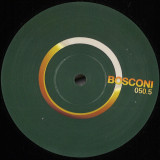
Minimono - Half Way Trough (Pt.2)

Here you have the second EP part of Minimono "Half Way Trough" mini saga.
Bosco050.5 follows the sound of the previous one serving four most exciting electro, italo-disco and acid infected floor burners!
"Run it Back" is a simple and dry tune, has those big cutting edge sounds typical of the early 2000 80's contaminated electro.. perfect for your starting set or in recreating that unique atmosphere.
On the A side follows "Half Way Trough", an effortlessly driving tech-acid house tune, strangely compelling, with a timeless feeling.. looking like an essential weapon for any dancefloor.
B side starts with the spicy electro-disco tune "Over The Machines" epic and functional at the same time with evocative arpeggios and a mechanical vocodered speach.
The Ep ends with the cyberfunk stomper "Revolution" , a twisted electro funk groover in typical Minimono vein.
Fabio Della Torre and Ennio Colaci celebrate this 50th.5 release on Bosconi in great style, remodernising the sound that they used to like when they first met in the early 2000, under the influence of those Berlin labels like Areal, Sender, Festplatten, Funkhaus, Beautycase, Lasergun, Gigolo.. and all of those labels who trademarked the sound of those unforgettable Berlin day

nicht am Lager

Bestelle jetzt und wir bestellen den Artikel für dich beim Lieferanten.

10,04

Last In: vor 2 Jahren
Lyrics Born - Vision Board

“This is me at my most imaginative, freakiest, and yet still most grounded and introspective,” says Japanese American rapper/actor Lyrics Born not only about his new album Vision Board, but also his “self” and his existence. “I feel like a new man! I’m healthier physically, spiritually, mentally, and emotionally.” The lead single and video “Diamond Door” is a pop/rap banger that lands you with an infectious barb and keeps you hooked for days, and is a thinly-veiled tribute to a particular style of female appreciation, but it can also be taken as a welcome mat to the new era of Lyrics Born. The accompanying video which shows Lyrics Born in his current physical form - svelte, stylish and with a confident swagger - reinforces this next chapter in his life. 60 pounds lighter, he lost the weight during the pandemic when he knew he needed to make a change. “Touring was becoming harder, and I was having all these weird health problems, but nothing that anybody could put their finger on,” he explains “My anxiety was high. I was not sleeping well. I was on the verge of really bad health.” And this improvement brought more confidence which shows in his new album. Vision Board is a focused affair that found him stretching his creativity farther and challenging himself to write in a way he’s never written before. Recorded primarily in New Orleans and produced by Rob Mercurio of Galactic (who also produced 2015’s Real People and 2018’s Quite a Life), it posited him in a new environment that helped his creative juices flow even more fluidly. “There’s nothing like recording in the Crescent City. It just gets in your blood, and the results are always funky and wild.” “This is about as psychedelic as I’ve ever been,” LB says. “I’m so proud of this album. I’m in a different space. The world is in a different space, and I wanted to celebrate that, loosen up and really create some imagery and share some emotion that I never have. I was listening to a lot of Shuggie Otis; a lot of obscure psychedelic soul and later Temptations,” he explained. “This is like if Alice in Wonderland was Japanese.” Vision Board was also inspired by another Bay Area rap luminary, although one who’s no longer with us - Gift of Gab. The dexterous Blackalicious MC and fellow Quannum Projects alum had a profound effect on Lyrics Born’s life, both creatively and philosophically. “I asked myself on some of these songs: ‘How would Gab approach them?’” he said. “I’d play with certain cadences, certain styles; I tried to stretch stylistically, lyrically and vocally on every single song. None of the patterns are the same.” Lyrics Born’s vulnerability shines through on the nine-track effort, something he’s not ashamed to admit (nor should he be). At one point during the pandemic, he was losing one friend, peer or family member every other week - from Zumbi of Zion I to Gift of Gab to Digital Underground’s Shock G. While many of the songs are deeply introspective, he had to “write some fun shit,” too. Celebratory horns, uptempo rhythms and fiery bars pepper the project from start to finish, and truly encapsulate Lyrics Born’s evolution of not just a groundbreaking Asian-American MC but also a human being. As the only Asian-American MC to release 10 studio albums, the first Asian-American to play major music festivals like Coachella and Lollapalooza and the first Asian-American to release a greatest hits compilation, Lyrics Born has been breaking barriers his entire life - and he’s not going to stop anytime soon. From the bombastic and tribal “I’m the Best Rapper in the World” with its self-winking boastfulness to the playful scat of “Bang Bang Bang” that slinks like an outtake from West Side Story, to the smooth and seductive “Who's The Best? (Dear Young LB)," to the psychedelic and swoony ”Alligator Boots” with it dreamy “Walk on the Wildside”-esque reverby sway, Vision Board sees Lyrics Born tackling different tones, textures and genres without fear and making them completely his own. It's an eclectic body of work that boasts more synths, more psychedelia and is generally more abstract.

vorbestellen17.03.2023

erscheint voraussichtlich am 17.03.2023

37,61

Last In: vor 2026 Jahren
Gecko Turner - Somebody From Badajoz LP

With his new album, Gecko Turner confirms that he is a standout artist in the global groove scene, a must for the outernational sounds aficionados.

Somebody From Badajoz is the fifth studio album in his much lauded discography and his first in seven years, eagerly anticipated by both his fans and himself: "this business of dedicating yourself to music and making songs... it's a long game."

With the release of his first two, remarkable, albums, Guapapasea! (2003) and Chandalismo Ilustrado (2006), Gecko started cultivating what one astute journalist defined as Afro-maduran soul—the "maduran" bit referencing Extremadura, a region in central-western Spain.

Badajoz, Gecko's birthplace, is the biggest city in the area, on the border with Portugal, by the Guadiana River. It is a place that oozes history, where there is constant movement at the border, and people's character is friendly and open-minded with foreign habits.

Gecko's Afro-maduran soul isbuilt on Afro-American music and drenched in Brazilian, African, Latin American and Jamaican sounds. There are also echoes of a youth marked in equal parts by our man's admiration for the Beatles and the flamenco that could be heard everywhere in Badajoz in the seventies. It makes for a singular sound and a musical language of its own—spicy, succulent, full of nuances, but with a very personal flavour.

The album opens with the Nigerian talking drums of Twenty-twenty Vision, (neo) soul in a magical falsetto, carried by a sumptuous orchestral arrangement with a cinematic flavour: "I'd been thinking about doing something called 'Twenty-twenty Vision' for some time, making a play on words with the vision we have of the world after the year 2020 and the medical expression, which, in ophthalmological terms, means 'normal or complete vision.' Beyond that particular song, I think that's the mood of the album: a look at society in the twenties of the 21st century and the feelings and demons it produces."

It's followed by De Balde, a very special song born from a posthumously discovered lyric by the great writer Carlos Lencero, a regular collaborator of Camarón, Pata Negra, and Remedios Amaya, and also from Badajoz. While conceived as a fandango, Gecko has moulded it into his sound in such a seamless way it now seems as if the words could only have been written to be embraced by the percussion, brass, and backing vocals heard on the album. It's the only lyric on Somebody From Badajoz not written by Turner, still it sits rather comfortably with the rest, sharing the same emotivity and sensitivity, as well as the trademark humour and irony.

Other tracks see more protagonism for the rhythm.The beat-driven Ain't No Fun Preachin' to the Choir features Gecko's vocals walking the thin line between singing and talking over a phenomenal afro-disco-funk-infused trailblazer. In Am I Sad? it's impossible to not bob your head to the queen of Papatosina's mongrel rhythm, as close to the banks of the Guadiana river as it is to the shores of the Mississippi. Qué Siesta Tan Buena, He Babeao Y To! is an ode to the snooze in true Afro-Maduran fashion. And in Come And Try, the Caribbean influence is evident—lovers' rock that invites you to dance in good company.

In these songs, and throughout the album, for that matter, the musicians accompanying Gecko, who himself plays many of the instruments as well, shine brightly. All hailing from Extremadura, Javi Mojave (percussion), Álvaro Fdez 'Dr. Robelto' (bass), and Rafa Prieto (guitar) have been carrying him with delicate forcefulness since he started out as a solo artist. At the same time, the wonderful and essential voices of Deborah Ayo, Astrid Jones, Fani Ela Nsue, and Miriam Solís give the album a sunny variety of colours. And there are many more—a sensational group of musicians contributes dazzling harmonic bursts to many of the songs. The palette of sounds is very diverse and rich in textures and nuances, including, for example, the ngoni, bells, and various repurposed kitchen utensils.

The groove is always around, moving between the magical border sound of Everybody Knows Somebody From Badajoz and Little Dose, the silky soul of The Sibariteo Appreciation Society, and the exultant celebration of End Of The World (which surprisingly sees Gecko turning to the occasional use of autotune), a piece that could be used for the final credits of a Monty Python film and, in fact, closes the album.

Gecko Turner has done it again with Somebody From Badajoz, looking to the future without losing sight of the roots. In times of upheaval all over the globe, when people are looking for purity, he delivers a formidable piece of work: risky, optimistic in spite of everything, and with a decidedly bastard sound. Let's rejoice.

nicht am Lager

Bestelle jetzt und wir bestellen den Artikel für dich beim Lieferanten.

23,07

Last In: vor 2 Jahren
Gecko Turner - Somebody From Badajoz

With his new album, Gecko Turner confirms that he is a standout artist in the global groove scene, a must for the outernational sounds aficionados.

Somebody From Badajoz is the fifth studio album in his much lauded discography and his first in seven years, eagerly anticipated by both his fans and himself: "this business of dedicating yourself to music and making songs... it's a long game."

With the release of his first two, remarkable, albums, Guapapasea! (2003) and Chandalismo Ilustrado (2006), Gecko started cultivating what one astute journalist defined as Afro-maduran soul—the "maduran" bit referencing Extremadura, a region in central-western Spain.

Badajoz, Gecko's birthplace, is the biggest city in the area, on the border with Portugal, by the Guadiana River. It is a place that oozes history, where there is constant movement at the border, and people's character is friendly and open-minded with foreign habits.

Gecko's Afro-maduran soul isbuilt on Afro-American music and drenched in Brazilian, African, Latin American and Jamaican sounds. There are also echoes of a youth marked in equal parts by our man's admiration for the Beatles and the flamenco that could be heard everywhere in Badajoz in the seventies. It makes for a singular sound and a musical language of its own—spicy, succulent, full of nuances, but with a very personal flavour.

The album opens with the Nigerian talking drums of Twenty-twenty Vision, (neo) soul in a magical falsetto, carried by a sumptuous orchestral arrangement with a cinematic flavour: "I'd been thinking about doing something called 'Twenty-twenty Vision' for some time, making a play on words with the vision we have of the world after the year 2020 and the medical expression, which, in ophthalmological terms, means 'normal or complete vision.' Beyond that particular song, I think that's the mood of the album: a look at society in the twenties of the 21st century and the feelings and demons it produces."

It's followed by De Balde, a very special song born from a posthumously discovered lyric by the great writer Carlos Lencero, a regular collaborator of Camarón, Pata Negra, and Remedios Amaya, and also from Badajoz. While conceived as a fandango, Gecko has moulded it into his sound in such a seamless way it now seems as if the words could only have been written to be embraced by the percussion, brass, and backing vocals heard on the album. It's the only lyric on Somebody From Badajoz not written by Turner, still it sits rather comfortably with the rest, sharing the same emotivity and sensitivity, as well as the trademark humour and irony.

Other tracks see more protagonism for the rhythm.The beat-driven Ain't No Fun Preachin' to the Choir features Gecko's vocals walking the thin line between singing and talking over a phenomenal afro-disco-funk-infused trailblazer. In Am I Sad? it's impossible to not bob your head to the queen of Papatosina's mongrel rhythm, as close to the banks of the Guadiana river as it is to the shores of the Mississippi. Qué Siesta Tan Buena, He Babeao Y To! is an ode to the snooze in true Afro-Maduran fashion. And in Come And Try, the Caribbean influence is evident—lovers' rock that invites you to dance in good company.

In these songs, and throughout the album, for that matter, the musicians accompanying Gecko, who himself plays many of the instruments as well, shine brightly. All hailing from Extremadura, Javi Mojave (percussion), Álvaro Fdez 'Dr. Robelto' (bass), and Rafa Prieto (guitar) have been carrying him with delicate forcefulness since he started out as a solo artist. At the same time, the wonderful and essential voices of Deborah Ayo, Astrid Jones, Fani Ela Nsue, and Miriam Solís give the album a sunny variety of colours. And there are many more—a sensational group of musicians contributes dazzling harmonic bursts to many of the songs. The palette of sounds is very diverse and rich in textures and nuances, including, for example, the ngoni, bells, and various repurposed kitchen utensils.

The groove is always around, moving between the magical border sound of Everybody Knows Somebody From Badajoz and Little Dose, the silky soul of The Sibariteo Appreciation Society, and the exultant celebration of End Of The World (which surprisingly sees Gecko turning to the occasional use of autotune), a piece that could be used for the final credits of a Monty Python film and, in fact, closes the album.

Gecko Turner has done it again with Somebody From Badajoz, looking to the future without losing sight of the roots. In times of upheaval all over the globe, when people are looking for purity, he delivers a formidable piece of work: risky, optimistic in spite of everything, and with a decidedly bastard sound. Let's rejoice.

vorbestellen24.02.2023

erscheint voraussichtlich am 24.02.2023

25,59

Last In: vor 2026 Jahren
Ian Sweetness - Since You've Been Away

Ian Haywood aka Ian Sweetness was born in Kingston, Jamaica. Gifted with talent, this versatile singer of culture Reggae music and Lover’s Rock, started at the age of nine with the church choirs. Bob Marley, Dennis Brown, Beres Hammond, Frankie Paul and the old school Reggae foundation artists are his greatest inspiration. His first recording was at the age of nineteen at the Creative Sounds Studio in Kingston. The tune’s title was “Rude Bwoy” feat. Simpleton. After that, he started to work with sound systems in his area, and from there he began to spend time in studios around Jamaica, such as Arrows Studio, King Tubby’s, King Jammy’s, Penthouse, Bobby Digital, and more.
Ian recorded tunes with different producers and labels, for example, Jah Life, and Bobby Digital, and was based at Arrows Studios, but still working with producers in Jamaica & overseas.

vorbestellen10.02.2023

erscheint voraussichtlich am 10.02.2023

10,04

Last In: vor 2026 Jahren
Sven Väth - What I Used To Play (12x12" boxset)
 
36

For this uniquely personal retrospective spread over twelve vinyl discs, Sven Väth takes us back to the early days of his DJ career. On What I Used To Play we meet great pioneers of electronic music, gifted percussionists, obscure wave bands, and innovative producers of a bygone 'new electronic' era. Rough beats and irresistible grooves from the identification stage of house, techno, and acid remind us not just how far electronic music has evolved over the past four decades, but how great it was to dance to EBM, techno, and house for the very first time.

If there is one protagonist of the electronic music scene who has remained curious, innovative and at the very cutting edge of music for over four decades, it's Sven Väth. His multi-layered artist albums and Sound of the Season mix compilations have been defining the genre for over two decades, and even today, he is constantly on the lookout for the next top tune to add to the highlights of his next set. At least, that's the case when he's not producing them himself as an artist or remixer. "Actually, it's always been part of my DNA to think ahead," and nothing had been further from his mind than looking back at his past, but when in spring of 2020 the international DJ circuit had to be scaled down to virtually zero, the 'restless traveler' suddenly had time. Time to stop and reflect on "how it actually was back then, at the very beginning of my career..."

"It was a great trip and with every track, beautiful memories came flooding back".
In the London apartment, he had just moved into, Sven has set up a "little music room", where he cocooned himself for several days, "to look way back for the first time and review my musical journey through the eighties, so to speak."

The interim result was six thematically oriented playlists with a grand total of 120 tracks from 'early 80s' to 'Balearic late 80s', together with excursions into afrobeat, European new wave, and EBM sounds and a few epochal techno/house tracks from the USA in between. From these 'Best of Sven Väth's favorites', the project What I Used To Play crystallized. Sven remembers how the Cocoon team reacted to his proposal: "They found the idea of making a compilation out of it MEGA from the beginning and everyone said 'Sven, go for it', but then, of course, the work really started, namely, to clear the rights and to get clean sounding masters of the up to 40-year-old tracks. There was also disappointment, of course. We couldn't clear certain titles because the rights holders in the USA had fallen out with each other or simply disappeared from the scene. In short, it wasn't easy, but now I can safely say we got the most important tracks."

Finally, after two years of research, curation, design, and administrative fine-tuning, the "little retrospective" from 1981 to 1990 is available. The exquisitely packaged, and three-kilo heavy box set is not only physically impressive, WIUTP is also the definitive record of Sven Väth's musical development. On each of the twenty-four sides of vinyl, you can trace track by track, what influenced him during which phase, and how he took off as a DJ from his parents' Queen's Pub straight into the spotlight at Dorian Gray. There and at Vogue (later OMEN), Sven became the style-defining player in the DJ booth that he still is today.


1981 - 1990: Future Sounds of Now

In the early eighties, the crowd in clubs like Vogue and Dorian Gray danced to what nowadays we call 'dance classics' - mainly disco, funk, soul, and chart pop. It was up to a new generation of DJs, including Sven Väth, the youngest protagonist in the Rhine-Main area at the time, to create their own club-ready music mix. Good new tracks and potential floor-fillers were rarities that had to be sought out and found, in order to prove oneself worthy.
Without MP3s, internet streaming, or other digital download possibilities, music didn't just gravitate to the DJ, instead, it had to be tracked down. In well-stocked record stores in Frankfurt and Wiesbaden or even in Amsterdam, London, or New York, Sven and friends sourced the material for countless magical nights. On WIUTP we can follow Sven's very personal journey through this wild, innovative era in which synth-pop, funk, hip-hop, and disco were successively replaced as 'club music' by house, techno, acid, and breakbeat. By the end of the decade, it was clear to see that these once exotic 'fringe' phenomena would soon become 'mass' phenomena.


Early 80s

Dirty Talk by the Italian-American duo Klein & M.B.O. represents the most innovative phase of the Italo-disco genre in the early eighties like no other track. Mario Boncaldo (I) and Tony Carrasco relied entirely on the original synthetic drum and percussion sounds of the Roland TR-808, coupled with the raunchy vocals of Rossana Casale and guitar accents of Davide Piatto. Of course, other tracks from this period were also influential in style, most notably Unit by Logic System, which worked as the perfect soundtrack to the laser lighting system at the legendary Dorian Gray club. With stomping beats and robotic rap interludes, Bostich by Yello also belongs on Sven's eternal playlist - after all, it caught the attention of Afrikaa Bambaataa, who invited the Swiss duo to perform at the Roxy in New York in 1983.


EBM Wave - Mid 80s

From today's point of view, the almost ten-minute-long, downtempo track Giant by Matt Johnson's band project The The, would probably not be considered an obvious club classic. However, a closer (re)listen reveals the rhythmic intricacies of the percussion overdubs by JG Thirlwell (aka Foetus) on Johnson's composition, and it becomes clear why this exceptional piece of music is one of Sven's absolute favorites. Other classics from this phase include Kaw-Liga by the mysterious The Residents, the hypnotic-synthetic Our Darkness by Anne Clark (and David Harrow), and last but not least, the somber, monotonous anthem Where Are You? by 16Bit, one of Sven Väth's projects together with Michael Münzing, Luca Anzilotti from 1986.


US House - Late 80s

You certainly can't talk about Chicago house without mentioning Frankie Knuckles. The resident DJ at the Warehouse not only gave the name to an entire genre, but also produced epochal floor fillers on the Trax label like the timeless Your Love, sung (and moaned) by Jamie Principle. Acid house protagonists Phuture also hail from Chicago, and on We Are Phuture (also released on Trax) we hear the chirping acid sounds of the legendary Roland TB-303 in full effect. Another featured classic is No UFO's by Detroit's Model 500 aka Juan Atkins, who is rightly considered the 'Godfather of Techno' even if the genre-defining track from 1985 still breathes with the spirit of hip-hop and electro from the first breakdance era.


Afrobeat

Le Serpent, by Algerian-born Abdelmadjid Guemguem, is a track that sounds completely different from everything else on WIUTP. Made in 1978, it's a monumental, rousing groove created without bass or synths, just with five congas! Even though Guem sadly passed away in 2021, his immortal, acoustic beats are understood all over the world and will continue to enrich many thousands of DJ sets for years to come. Another classic that not only Sven appreciates beyond measure is Hugh Masekela's Don't Go Lose it, Baby. In addition to being one of the most important jazz pioneers, the trumpeter and freedom fighter from Johannesburg was very experimental, integrating electronic sounds into his music in later years, in a similar vein to Miles Davis and Herbie Hancock. Dutch jazz pianist Jasper van't Hof's afrobeat project Pili Pili has also aged well. The trance-like, almost sixteen-minute-long track of the same name, manages to fill a whole side on the seventh of twelve vinyl discs in the WIUTP box.


UK-US-Euro - Late 80s

Time for a change of scene, in the truest sense of the word, and from a musical perspective, this section is like landing on another planet. First up is Andrew Weatherall's classic remix of Primal Scream's Loaded, featuring the iconic Peter Fonda sample (lifted from the 1966 biker film Wild Angels) that came to personify the mood triggered by the British Second Summer of Love in the late eighties: "We wanna be free to do what we wanna do, and we wanna get loaded...". This period also saw the emergence of M/A/R/R/S whose only single, 1987's Pump Up The Volume, became a club classic with support from DJ legend CJ Mackintosh. In this most eclectic of sections, we also encounter New York house and reggae producer Bobby Konders and his seminal Nervous Acid.


Balearic - Late 80s

Those who know him, know that Sven had already lost his heart to the 'magic island' of Ibiza as a teenager, so with that in mind, the WIUTP project couldn't end without a Balearic chapter. Inspired by Manuel Göttsching's E2-E4, the immortal, eponymously titled Sueño Latino belongs in there without question. Equally popular on the island was, and still is Break 4 Love by Raze, which thinking about it, would also fit perfectly into the house chapter. Last, but not least, there's an overdue reunion with Sven Väth himself, in his role as frontman of the successful Frankfurt trio OFF. Together with Michael Münzing and Luca Anzilotti (later of Snap!) this 'Organization For Fun' created the off-the-wall club hit Electric Salsa in 1986 which incidentally turned into an international chart smash, putting Sven in the enviable position of having to decide between pop stardom and a DJ career. Well, we all know how that decision turned out and the rest, as they say, is history. A not insignificant part of his story is What I Used To Play. Enjoy!

nicht am Lager

Bestelle jetzt und wir bestellen den Artikel für dich beim Lieferanten.

184,83

Last In: vor 8 Monaten
Space Ghost - Dance Planet LP

Repress !

Sudi Wachspress returns to Tartelet Records with Dance Planet, a third LP of emotionally-charged house music to welcome us back to the dancefloor. The spirit of true house runs deep in the sound of Space Ghost. Oakland native Sudi Wachspress is intuitively plugged into the romantic, mystical energy of 4/4 club music as a unifying force of empowerment and liberation, carrying the torch from vital forebears like Larry Heard, Alton Miller, and Blaze.

His new album, Dance Planet, carries a greater responsibility to spread spiritual affirmations. As the global dancefloor community emerges from a mentally-taxing recess and confronts their social self like it’s the first day of school, Space Ghost’s message couldn’t be more supportive.

“Don’t be afraid to be yourself, don’t be afraid to let go,” he intones on “Be Yourself.” More than just a beat and a hook, his music is pointedly created to heal and energize. “I’m a big fan of old-school house vocals that have a positive message,” says Space Ghost, “tracks that can perhaps enhance your mood or strengthen your confidence in yourself.”

Wachspress has always represented a beacon of musical uplift, both on his previous Endless Light and Aquarium Nightclub LPs for Tartelet and on his swathes of self-released music and last year’s Free 2 B on Apron. Compared to most house-oriented artists, he places emphasis on the long-player format to create an encircling experience for the listener, smoothing out psychic wrinkles and massaging areas of tension for a fully holistic hit.

nicht am Lager

Bestelle jetzt und wir bestellen den Artikel für dich beim Lieferanten.

18,70

Last In: vor 21 Monaten
Shane Sounds - Apostolos

Honoring the craft and the ones that came before him through undeniably infectious beats that brace the weight of his choice samples and original layers. Getting his chops up through his younger days, Shane spent his time developing instrumental obstacle courses for local emcees to dance around including Gift Of Gab (Blackalicious), Spills (NY) Kinetic Source (Ozomatli) and Cashus King (LA.) By the age of 21 Shane threw himself into the ring of the Stones Throw beat making contest. To only the surprise of himself, Shane walked away twice as a weekly winner of the battles. After a small hiatus due to the birth of his daughter Clementine, Shane jumped back on the pads and began crafting the instrumentals for what would become Apostolos. With the instrumentals in flux Shane reached out via Instagram to an upcoming emcee out of the Duck Down Camp, a prodigy of the late, great Sean Price, Rim. After chatting back and forth for a small time, making sure Rim knew Shane was in this project for the right reasons, Rim jumped on board and even helped land other up and coming NY emcees like Eddie Kaine & Spills. From there everything snowballed. One feature led to another and soon enough the album was taking shape with features from not only Rim and Eddie Kaine, but hip-hop heroes such as Masta Ace, Planet Asia, A.G. of D.I.T.C. and Geechi Suede. With a few more instrumentals and spaces to fill Shane reached out to long-time bay area engineer/producer Deegan Mack Adams to help with the mixing and mastering and overall release of the project. Apostolos gets its namesake and back cover imagery from Shane Sounds' great great Grandfather, Apostolos Christakis who immigrated to the United States from Greece at the turn of the 20th century. The documents you see on the back cover are Apostolos’s army registration documents only a week after coming to the United States. We pay our respects to the ones who came before us and allowed us to be here to create this project. Salute!

vorbestellen27.01.2023

erscheint voraussichtlich am 27.01.2023

30,04

Last In: vor 2026 Jahren
Molly - Picturesque

Molly

Picturesque

12inchSCR255LP
SONIC CATHEDRAL
26.01.2023

The album’s seemingly brief tracklisting belies a work of great beauty and depth, and one which turned into a one-man crusade for singer/guitarist Lars Andersson, intertwining deeply personal stories with his love for the era of Romanticism. “Every time I go to a museum and I’m about to pass through the era of Romanticism I stop in awe,” says Lars of the enduring appeal of the 18th century artistic movement. “Whatever it is – stories, paintings, music – it triggers something deep within me, something profoundly human. It really hits a nerve, and it utterly immerses me to a point where I can’t move.” The album replicates this feeling; a gloriously over-the-top blend of Slowdive and Sigur Rós, mixed with the single-mindedness of Daniel Johnston and the noisiness of Nirvana, it’s as bold and beautiful and every bit as ornate as the art that inspired it. Unlike their acclaimed debut, 2019’s All That Ever Could Have Been, which gradually came into focus with a 15-minute opening track, Picturesque hits home from the very first note of the short and sweet opener, ‘Ballerina’. That’s not to say there aren’t epics here – ‘Metamorphosis’ is essentially a 12-minute suite of three movements; blistering closer ‘The Lot’ is 11 minutes of Swans-inspired heaviness – but everything is much more direct and focused. This isn’t an album to lose yourself in, it’s one to get swept away by. “‘More is more’ was definitely the credo when making this record,” agrees Lars. “A big inspiration were bands like Pond and the way they manage to fill their songs up with stuff to the absolute maximum. While I definitely tried to give the listener some room to breathe at certain points and while, in good old post-rock fashion, it still builds up and breaks down, it relies much more on simple melody and harmony as opposed to noisy experimentation to transport feeling.” Never more so than on the first single, ‘The Golden Age’, which is the album’s centrepiece; a soaring slice of über-shoegaze that is so stunning you can’t take your eyes or ears off it. Like all the songs on the album, it’s based around a fairy-tale from the Romantic era. In this case, it’s Heinrich von Ofterdingen by the German poet, author and philosopher Novalis (other influences are: The Steadfast Tin Soldier by Hans Christian Andersen; The Seven Ravens and Hans in Luck by the Brothers Grimm; Undine by Friedrich de la Motte Fouqué and The Golden Pot by E.T.A. Hoffmann), with Lars drawing parallels between the titular character’s mystical and romantic searchings and his own personal quest. This is apt as the album has been an overriding obsession for Lars for the past two-and-a-half years; as well as writing and recording the songs (bandmate Phillip Dornauer played drums), he also mixed and mastered them at his Alpine Audio studio and Picturesque is very much his Brian Wilson or Kevin Shields moment. MOLLY were in the middle of their European tour when Covid hit in early 2020, forcing Lars to retreat back to his home outside Innsbruck and giving him time and space to think about every detail of the record. “Well, I was on a quest I guess,” he admits. “Like everyone, I was stranded at home and at some point I just said to myself, ‘If not now, then when?’ It was an intense process. I’ve worked on music from other bands and artists before but producing and mixing your own music is an utterly different animal. It was probably the most intense thing I’ve ever done, but it was also incredibly rewarding and the feeling of it all coming together piece by piece is incomparable.” The artwork is just as effective. “I think of Radiohead’s OK Computer – what you hear on the record is what you see on the cover,” explains Lars. “We were inspired by what we call ‘wimmelbilder’ hidden pictures in German, a very specific style in art where there are a lot of little things happening. When you see it from further away, it looks organic like a lost painting from the area of Romanticism, but the closer you look the more digital it gets. It’s a nice analogy.” He’s right, it perfectly sums up the conflict between Romanticism and 21st century life. “Romanticism was basically an answer to the Industrial Revolution as well as the social and political norms of the Age Of Enlightenment,” concludes Lars. “Now, we all live in a much more industrialised, materialistic, individualistic and sterile society than any early Romanticist could have ever possibly imagined. Over 200 years later the Romanticists have lost the battle.” With the divine and downright pulchritudinous Picturesque, MOLLY begin the fightback.1.Ballerina 2.Metamorphosis 3.The Golden Age 4.Sunday Kid 5.So To Speak 6.The Lot

nicht am Lager

Bestelle jetzt und wir bestellen den Artikel für dich beim Lieferanten.

25,84

Last In: vor 3 Jahren
J.T. IV - The Future

J.t. Iv

The Future

12inchDC842
DRAG CITY
20.01.2023

Barely heard in his lifetime (1961-2002) but hailed as an outsider hero of ur-punk since 2009’s ‘Cosmic Lightning’ compilation, J.T. IV strikes back!

15 unheard-of tracks found on an obscure cassette tape make the schizo split in his music - rabid rock & roll fantasy and cold-eyed acoustic introspection - an epic. ‘The Future’ is J.T. IV’s mad magnum opus.

The 2009 comp LP, ‘Cosmic Lightning’, cast his tragic silhouette up on the big screen
for all to see: the lost boy, alone in the world, standing before the mic and releasing
his inner star with glee and vengeance, his antisocial visions flying high atop a raging
funnel of distorted guitars and blunt rhythms. Or couched, childlike, within a heart
breaking billow of acoustic guitars - a schizophrenic split that only magnifies the
display of his deep emotions.
‘The Future’ goes even further, excavating fifteen recordings from a previously
unheard-of cassette entitled ‘The Best Of Johnny Zhivago Retrospective 1979–1993’,
and adding four more uncollected tracks from his slim (and impossible to find
anyway) discography.
Of these nineteen tracks, eight are covers - and J.T. IV’s picks, from Velvets to Mott
the Hoople, Roxy Music, Lee Hazlewood, The Kinks, Eno and Stephen Sondheim,
sharpen our image of the misfit adrift; on the outside looking in, but maybe just a few
steps away from his goal.
‘The Future’ unfolds like an epic, as both sides of J.T.’s persona - the street-smart,
damaged rocker and the heart struck poet of the scene - live on together in the best
performances of his short career.
A punk of the old order, John Henry Timmis IV was born in 1961 into a dysfunctional,
abusive and eventually broken family. By the mid-70s, he was desperate to get out,
running away from his mother’s home several times while still a teenager living in the
greater Chicagoland area. At wit’s end, she had him committed to the Menninger
Clinic for a year or so. Released on his own reconnaissance, he began his meteoric
ascent to the mythic level of self-aggrandizement in which he appears here. Inspired
by the underground, proto-punk sounds in the air (the likes of which any sharp-eyed
young thing might chance upon in the back pages of Creem, Crawdaddy, Trouser
Press, etc.) and desperate to be heard himself, J.T. presented like the scabby
younger brother of Bangs and Laughner: born only to rock, his musical conception a
rabid personality crisis of proselyte elitism and nihilist excess.
Now, 20 years on from his passing, ‘The Future’ is ever farther away from the world
in which he struggled so mightily - but his stinging iconoclasm, whether screamed
from Marshall amps or mic-ed up close, feels ever more powerfully infused with his
unique breadth of illness and essence.
These songs represent the two sides of J.T. - and while they emanate from the 80s,
they find themselves potently renewed in the polarized world of today, making ‘The
Future’ a worthwhile destination for everyone who ever had a heart touched by the
transgression and freedom promised by rock & roll.

vorbestellen20.01.2023

erscheint voraussichtlich am 20.01.2023

26,34

Last In: vor 2026 Jahren
Eagles - One These Nights LP 2x12" Boxset

One of These Nights occupies an important, unique place in the Eagles' discography given it represents the final album the group made before releasing the bajillion-selling Their Greatest Hits (1971-1975) compilation. The timing is telling. A coming-out party for Glenn Frey and Don Henley's songwriting skills, the studio record – the band's fourth, and its first to hit #1 on the charts – signifies the group's ascent to superstar status. Home to three massive singles (the title track, "Lyin' Eyes," and "Take It to the Limit") and nominated for four Grammy Awards, the quadruple-platinum 1975 effort solidified the Eagles' Southern California-reared sound and made the band a household name.

Mastered from the original analog tapes, pressed on MoFi SuperVinyl, and limited to 10,000 copies, Mobile Fidelity's UltraDisc One-Step 180g 45RPM 2LP vinyl box set takes One of These Nights to the limit. And then some. Playing with reference sonics and a practically indiscernible noise floor thanks to MoFi SuperVinyl's special formula, it provides a rich, dynamic, transparent, and three-dimensional view into a release that moved country-rock ahead by leaps and bounds – and paved the way for the Eagles' ascendancy to global superstardom. The opportunity to zero in on the particulars of the Eagles' golden harmonies, distinct vocal timbres, and cohesive interplay has never been better.

Visually, the premium packaging and presentation of the UD1S One of These Nights pressing befit its esteemed status. Housed in a deluxe box, it features beautiful foil-stamped jackets and faithful-to-the-original graphics that illuminate the splendour of the recording. From every angle, this UD1S reissue exists as a curatorial artefact meant to be preserved, touched, and examined. It is made for discerning listeners that prize sound quality and production, and who desire to fully immerse themselves in the art – and everything involved with the album, from the renowned cover art to the meticulous finishes. As much as any Eagles LP, the connection between the imagery and the music and the band on One of These Nights runs deep. No wonder it led to a Grammy Nomination for Best Album Package.

Devised by West Texas artist Boyd Elder, the striking skull-and-feathers themed piece gracing the front of One of These Nights represents where the Eagles have been and where they were headed. Album art director Gary Burden explained: "The cow skull is pure cowboy, folk, the decorations are American Indian-inspired, and the future is represented by the more polished reflective glass beaded surfaces covering the skull." Moreover, Elder had met the group years earlier when Henley and company performed at one of his gallery openings in California. MoFi's UD1S box set allows Elder's vision (and Burden's debossed treatment of the image) to pop and appear as if it was a stand-alone object.

Of course, what's inside the sleeves, and in the grooves, proves equally compelling. Though One of These Nights marks the final appearance of band co-founder Bernie Leadon on an Eagles LP and contains three of his tunes, the record's tremendous success owes to Frey and Henley's timeless contributions. Taking the next step in their maturation and evolution, the pair crafted several songs while living together as roommates in a rented house in which they converted a music room into a recording studio.

The duo's bond and chemistry pulse throughout the record – particularly in the tight arrangements, tasteful instrumental flourishes, and seamless blending of the folk, country, and rock elements. The musical combinations and partnership not only produced the Eagles' first million-selling single (the slow-dancing "Take It to the Limit," co-written with bassist-vocalist Randy Meisner) and the Frey-led cheating classic "Lyin' Eyes," but the famed title track, which nods to the era's nascent disco scene as well as Kenneth Gamble and Leon Huff's Philly soul platters.

Frey named "One of These Nights" as his favorite Eagles composition of all-time; Meisner's high harmonies alone send the track into a galaxy of its own. Speaking of the latter, Leadon's instrumental "Journey of the Sorcerer" ventures into another universe and was soon used by Douglas Adams as the theme to his "The Hitch-hiker's Guide to the Galaxy" radio series. Inspiration and creative experimentation also dragged the Eagles into the blues. Another Frey-Henley gem, the self-probing "After the Thrill Is Gone" serves as a response song to B.B. King's signature track and more evidence the band was turning the lens inward for lyrical narratives. Like everything on One of These Nights, the song confirms the Eagles were breathing rare musical air.

More About Mobile Fidelity UltraDisc One-Step and Why It Is Superior
Instead of utilizing the industry-standard three-step lacquer process, Mobile Fidelity Sound Lab's new UltraDisc One-Step (UD1S) uses only one step, bypassing two processes of generational loss. While three-step processing is designed for optimum yield and efficiency, UD1S is created for the ultimate in sound quality. Just as Mobile Fidelity pioneered the UHQR (Ultra High-Quality Record) with JVC in the 1980s, UD1S again represents another state-of-the-art advance in the record-manufacturing process. MFSL engineers begin with the original master recordings, painstakingly transfer them to DSD 256, and meticulously cut a set of lacquers. These lacquers are used to create a very fragile, pristine UD1S stamper called a "convert." Delicate "converts" are then formed into the actual record stampers, producing a final product that literally and figuratively brings you closer to the music. By skipping the additional steps of pulling another positive and an additional negative, as done in the three-step process used in standard pressings, UD1S produces a final LP with the lowest noise floor possible today. The removal of the additional two steps of generational loss in the plating process reveals tremendous amounts of extra musical detail and dynamics, which are otherwise lost due to the standard copying process. Every conceivable aspect of vinyl production is optimized to produce the most perfect record album available today.

MoFi SuperVinyl

Developed by NEOTECH and RTI, MoFi SuperVinyl is the most exacting-to-specification vinyl compound ever devised. Analogue lovers have never seen (or heard) anything like it. Extraordinarily expensive and extremely painstaking to produce, the special proprietary compound addresses two specific areas of improvement: noise floor reduction and enhanced groove definition. The vinyl composition features a new carbonless dye (hold the disc up to the light and see) and produces the world's quietest surfaces. This high-definition formula also allows for the creation of cleaner grooves that are indistinguishable from the original lacquer. MoFi SuperVinyl provides the closest approximation of what the label's engineers hear in the mastering lab.

vorbestellen15.01.2023

erscheint voraussichtlich am 15.01.2023

189,03

Last In: vor 2026 Jahren
A.Garcia - Nihilism EP

A.garcia

Nihilism EP

12inchDOCILE031
Docile Records
22.12.2022

Each realm moves its own time in the now. Our space in this realm moves in time with the greater mechanism, at our own pace. We focus less on the gears of the mechanism and more on the energy that turns motion. Our music is a reaction to falling; an instinctual jerk that breaks momentum. Our sounds are taken from the background of our environment. Conversations that blend, the rattling hydraulics of a bus, the ringing of your ears, the random bangs of a floundering stumble corralled into a rhythm and submerged in synth. Docile is a style that is gritty to smooth on an honest simple funk. It is a stripped down 4\4 minimalism with a backbone. We transmit the frequency of our time and space through the noise of the technosphere; determined to advance our movements into unknown areas.

Docile Recordings is owned and managed by Andy Garcia. Docile 31 was produced by Garcia in his laboratory located in downtown Detroit. Every Docile product is pressed by Garcia at Archer Records on an American made Lened press.

nicht am Lager

Bestelle jetzt und wir bestellen den Artikel für dich beim Lieferanten.

11,39

Last In: vor 2 Jahren
Dilated Peoples - The Platform / Annihilation

KU is proud to celebrate a powerful moment in hip-hop history, in which the underground found space amongst the mainstream.
20 plus years ago, Dilated Peoples dropped their first studio album, ‘The Platform’. The Los Angeles-based group was composed of legendary Beat Junkies member, DJ Babu, staple underground and prolific emcee, Evidence, and fellow Los Angeles-based rapper, Rakaa.

The crew formed in the early 90s, exploring their craft and dynamic for many years before making their imprint known and gaining the attention of Capitol Records, who’d eventually put out ‘The Platform’ in the year 2000.

Mainstream Hip Hop and specifically the greater Los Angeles area radio during those years was inundated with West Coast Gangster Rap. Dilated Peoples offered a different look for the genre, steering away from celebrating gun violence and misogyny. Stepping into the light with notes of positivity, boosting one another up, thought-out observations about social issues, and catharsis.

KU is celebrating the influential group with a replica 45” repressing, of the title track from ‘The Platform’. The track hit #22 on the US rap charts in 2000, and #89 in the UK. “The Platform” was produced by the aforementioned, The Alchemist.

nicht am Lager

Bestelle jetzt und wir bestellen den Artikel für dich beim Lieferanten.

15,08

Last In: vor 2 Jahren
Essential Logic - Logically Yours LP 5x12"

Exclusive to INDIE STORES: Hiss and Shake Records to release ‘Logically Yours’ – a limited edition, 5 x LP boxset of 50 essential recordings from seminal post-punk icon Lora Logic including 2 classic Essential Logic albums, early single releases, EPs, B-sides, rarities, vinyl exclusives + first new Essential Logic studio album in 43 years! Includes the classic Rough Trade Records releases ‘Beat Rhythm News (Waddle Ya Play?) + ‘Pedigree Charm’ + 2 retrospective compilations of early single releases, EPs, B-sides, rarities + vinyl exclusives ‘Aerosol Burns & Other Misdemeanours’ + ‘No More Fiction’ + new studio album ‘Land of Kali’ (first in 43 years) + 20 page booklet with introduction from Celeste Bell + Lora Logic Q+A. Susan Whitby, aka Lora Logic was one of the most distinctive talents from the post-punk era known for her intoxicating, rough-around-the-edges, yet exhilarating sax playing and haywire vocal style. Her offbeat, occasionally arresting lyrics tackled alienation, sexism, poverty and urban isolation, and with a complete disregard for convention, she carved her own path not only in her short-lived music career but also personal life. She was still in her teens when she answered an ad in Melody Maker “Looking for young punks,” and in 1976, with her friend Marion Elliot (aka Poly Styrene), she formed the punk band X-Ray Spex and acquired the pseudonym, Lora Logic. The duo soon achieved notoriety with the irresistible feminist protest single, ‘Oh Bondage Up Yours’ (1977) – Logic arguably stealing the show with her thrilling punk sax. “X-Ray Spex was my first band, I happened to be accepted, It happened to work, I happened to get famous overnight. I’d been playing sax in a cupboard in my room; I thought I better do something.” However, just prior to recording 'Germ Free Adolescents' (1978), X-Ray Spex's debut album, she found herself unexpectedly ousted from the band. With abundant enthusiasm and encouragement from Geoff Travis, founding director of Rough Trade Records, she went on to form Essential Logic, creating some of the most liberating and exciting music of the early post-punk era, not only as Essential Logic, but also as a solo artist. Hiss and Shake Records are pleased to present a limited edition boxset of 50 essential recordings from the irresistibly engaging Lora Logic archive, allowing for a new generation to become aware of her incredible creative output. Across 5 LPs, ‘Logically Yours’ includes in their entirety, the classic Rough Trade Records releases ‘Beat Rhythm News (Waddle Ya Play?) (1979) – Essential Logic’s sole studio album, and Lora’s solo album, ‘Pedigree Charm’ (1982) – her last studio album before turning her back on the music business, sad and disillusioned and fighting drug addiction, which saw her turn to a Hare Krishna lifestyle, alongside Poly Styrene, embracing a fresh new chapter. This totally absorbing and definitive collection also includes two retrospective compilations; ‘Essential Logic – ‘Aerosol Burns & Other Misdemeanours’, which comprises early single releases, B-sides and oddities including the gloriously chaotic ‘Aerosol Burns’, the essential punk/disco ‘Music Is A Better Noise’, and ‘Fanfare In the Garden’, showcasing Lora at her most pop. In addition, ‘Essential Logic – ‘No More Fiction’; contains 10 vinyl exclusives, including ‘Do You Believe in Christmas?’, recorded with the Krishna Kids Choir in 1985, alongside tracks recorded circa 1997, with Martin Muscatt, Dave Farren (Bad Manners) and Gary Valentine (Blondie), forming the basis of what would have been Essential Logic’s third studio album, ‘No More Fiction’. Having recently returned to the studio refreshed and rejuvenated, ‘Logically Yours’ also includes ‘The Land of Kali’ (co-produced by Youth), the first new Essential Logic studio album in 43 years, and features the forthcoming new single ‘Prayer for Peace’, a re-imagining of the X-Ray Spex track from the tragically overlooked album, ‘Conscious Consumer’ (1995) on which Lora also played sax. “Poly Styrene and I were living in a Krishna community in Worcestershire in the early 80s. We came together for the first time musically after X-Ray Spex to record the original version of this song. In 2019, I decided to record my own take as a tribute to the special times we shared. I hope Poly likes this new version too.” Further tracks penned for release from the album include the dystopian, lockdown-inspired ‘Alien Boys’ and ‘Sky Rocket’, written with daughter Malini, about the fairground of life. Despite her short-lived career in the music business, Lora still managed to perform and appear on releases with many artists including US experimental rock band Red Crayola between 1978 and 1981, and also appeared on recordings by The Stranglers, The Raincoats, Kollaa Kestää, Dennis Bovell, Swell Maps and later, Boy George. Undoubtedly an iconic figure of the UK post-punk scene, Lora Logic’s boldness, adventurousness and sense of fun can be seen as an influence on numerous female artists today including Karen O from Yeah Yeah Yeahs, Peaches and St. Vincent among others. Tracklisting: Essential Logic ‘Beat Rhythm News (Waddle Ya Play?)’ (1979). A1 ‘Quality Crayon Wax OK’ A2 ‘The Order Form’ A3 ‘Shabby Abbott’ A4 ‘World Friction’ B1 ‘Wake Up’ B2 ‘Albert’ B3 ‘Alkaline Loaf in the Area’ B4 ‘Collecting Dust’ B5 ‘Pop Corn Boy (Waddle Ya Do?)’…… Lora Logic – ‘Pedigree Charm’ (1982). A1 ‘Brute Fury’ A2 ‘Horrible Party’ A3 ‘Stop Halt’ A4 ‘Wonderful Offer’ A5 ‘Martian Man’ B1 ‘Hiss and Shake’ B2 ‘Pedigree Charm’B3 ‘Rat Allé’ B4 ‘Crystal Gazing’…..Essential Logic – ‘Aerosol Burns & Other Misdemeanours’. A1 ‘Aerosol Burns’ (1978) – Debut single A2 ‘World Friction’ (1978) – ‘Aerosol Burns’ B-side A3 ‘Eugene’ (1981) – Single A4 ‘Tame the Neighbours’ (1981) – ‘Eugene’ B-side A5 ‘Music Is A Better Noise’ (1981) – Single A6 ‘Moontown’ (1981) – ‘Music Is A Better Noise’ B-side B1 ‘Fanfare In the Garden’ (1981) – Single B2 ‘Stereo’ (1982) – ‘Wonderful Offer’ single B-side B3 ‘Rather Than Repeat’ (1981) – ‘Wonderful Offer’ single B-side B4 ‘The Captain’ (1979) – ‘Fanfare In The Garden’ B-side B5 ‘Soul’ (1983) – Previously unreleased on vinyl B6 ‘Stay High’ – Previously unreleased on vinyl….. Essential Logic – ‘No More Fiction’. A1 ‘Essential Logic’ (1991) – Vinyl exclusive A2 ‘On The Internet’ (1998) – Vinyl exclusive A3 ‘Under The Great City’ (1997) – Vinyl exclusive A4 ‘No More Fiction’ (1998) – Vinyl exclusive A5 ‘Love Eternal’ (1997) – Vinyl exclusive B1 ‘Barbie Be Happy’ (1998) – Vinyl exclusive B2 ‘Not Me’ (1998) – Vinyl exclusive B3 ‘The Beautiful and the Damned’ (1997) – Vinyl exclusive B4 ‘Marika’ (1997) – Vinyl exclusive B5 ‘Do You Believe in Christmas?’ (1985) with the Krishna Kids Choir – Vinyl exclusive……Essential Logic – ‘Land of Kali’ (2022). A1 ‘Prayer For Peace’ A2 ‘Alien Boys’ A3 ‘Mother Earth’ A4 ‘Never Know’ A5 ‘Charming Every Cupid’ B1 ‘Sky Rocket’ B2 ‘Serious’ B3 ‘Fallible Soldiers’ B4 ‘Land of Kali’ B5 ‘Beyond’
vorbestellen25.11.2022

erscheint voraussichtlich am 25.11.2022

134,41

Last In: vor 2026 Jahren
Dead Moon - Nervous Sooner Changes

nother all time DEAD MOON classic. The band really hit their stride on this one! The best rock band of the '90s and 2000s kicks out some of their finest rockers and ballads. Features all time greats like "Diamonds in the Rough," "Say It Isn't So," "Running out of Time," "Somewhere Far Away" and "Windows of Time." A must have for any fan of the band and rock music in general. A1 Diamonds In The Rough A2 Say It Isn't So A3 I Won't Be The One A4 Can't Let Go A5 Running Out Of Time B1 Psychodelic Nightmare B2 Area 51 B3 Somewhere Far Away B4 I'm Not Afraid B5 Windows Of Time

vorbestellen25.11.2022

erscheint voraussichtlich am 25.11.2022

23,11

Last In: vor 2026 Jahren
Houses Of Heaven - Silent Places

Houses Of Heaven

Silent Places

12inchFLT066LPC2
Felte
14.11.2022

new pressing on red & black swirl vinyl. RIYL: New Order, Drab Majesty, The KVB, Black Marble, The Soft Moon. Layering synths, guitars, electronic percussion and live drums, Houses of Heaven fuses early industrial and techno rhythms with the melodicism of shoegaze and a heavy dose of dub-influenced effects on their first full-length album titled 'Silent Places.' Written against the backdrop of the Northern California wildfires, ever-growing tent cities and the continued rise of empty luxury housing in the Bay Area, the album explores the intimate experiences that transpire within the chaotic confines of modern living. Opener "Sleep" basks in the tension surrounding the album's inception with blown-out kick drums, claustrophobic verses, and deteriorating vocal effects. Sharp arpeggiated synths and woozy strings neutralize the track's subterranean anxiety with texture and sensuality. Produced by Matia Simovich (Inhalt) and with engineering credits that include Monte Vallier (Weekend) and John McEntire (Tortoise), it's a potent introduction to the muscular sound design underpinning the album. Booming taiko drums sound the beginning of "Dissolve the Floor," the album's most club-ready track. A pulsing arpeggio gives the song its industrial heartbeat while disintegrating tape delay throws menace into the hazy atmosphere. The undulating techno beat breaks and repairs itself with seductive and satisfying timing. "In Soft Confusion" doesn't stray from the album's obsidian narrative as it envisions and ponders the aftermath of human extinction. Sonically speaking, though, it's the album's most uptempo offering with Tecon's supremely infectious chorus vocal hook and Beck's dizzying guitar riffs. The intricate electronic drum programming is elevated by Ott's live drumming, which lends a refreshingly human touch to the potentially icy, and often mechanical, sonic territory of synthdriven music. Adding density to the album's shadowy allure are the unusual sounds and vintage outboard effects that Tecon and Simovich impressively maneuver into the album's tonal palette. Great care has been taken to finesse familiar pop structures with an inventive edge. It's this mindfulness of past and present that is sure to secure Silent Places as a standout album in the new decade. Also Available From Houses Of Heaven: Remnant 12" EP

nicht am Lager

Bestelle jetzt und wir bestellen den Artikel für dich beim Lieferanten.

26,01

Last In: vor 3 Jahren
Spain - World of Blue

Spain

World of Blue

12inchSHIMMY2013LPC2
Joyful Noise Recordings
30.10.2022

Moody Blue Vinyl. RIYL: Codeine, Mazzy Star, Bedhead, Red House Painters, Low & American Music Club. Previously unreleased 16-track recordings that predates Spain’s 1995's landmark “The Blue Moods Of Spain". Includes original studio version of "World Of Blue" featuring Petra Haden on violin. Re-mixed and re-imagined by Kramer for Shimmy-Disc. The LP “World of Blue” features Merlo Podlewski on guitar. I first met Merlo in 1994. My sister Rachel Haden, who had been working with him at the Rhino Records store in Westwood, knew I was looking for a new guitarist for my band, and introduced us. Merlo is one of those guitarists whose playing is so smooth and effortless he makes anyone feel like they can play. He had an instinctual grasp of harmony and theory, which brought a great counterpoint to the technical knowledge and finesse of lead guitarist Ken. Spain played their first official L.A. gig with Merlo at a club called Pan, which shortly thereafter changed its name to Spaceland. We opened for Beck and That Dog. We played at Spaceland a lot and at other small clubs and coffee joints like the Troy Cafe (owned by Beck’s mom), Congo Square Coffee House in Santa Monica, Alligator Lounge, and others. At a certain point that year we were ready to record our first 7” single, and I reserved some time at Poop Alley. Poop Alley didn’t seem like the ideal recording setting. The walls and floors were made of concrete, and there was no soundproofing. The mixing board was in a loft up this steep staircase with no guard rails. But it worked somehow. On the particular day we recorded basics there was a rain storm which you can clearly hear in the background. The ceiling was so high there almost wasn’t a ceiling. A steep curving staircase with no guardrail led up to a loft area where the console was located, and next to it, on a custom-built, guardrail-less ledge, a queen-sized bed where Tom slept. I paid for the session with weed I grew in my closet. We set up and it started raining. Tom put a microphone outside. After tracking was finished, Petra came over and overdubbed violin. There was a cushioned area where I remember sitting during mixdown. We stayed good friends with Tom. We recorded a couple more songs with him the following year. Tom recorded lots of bands at Poop Alley. My sisters’ band That Dog, Beck, the Rentals, Rod Poole, Tom’s band Waldo the Dog Faced Boy, and many others. There were parties in the alley. There would be a keg of beer. Everyone was well-behaved. The most dangerous it got was when Kenny asked Beck if he was a Scientologist. I remember laughter and happiness the most from those parties. Not long afterwards Tom shut down the studio. Luckily for us, the tapes still exist. On those tapes are five songs, all of which are represented here. “I Lied” and “Her Used-To-Been” were released on the 7”, the remaining three have never been released before now. I can’t remember who I sent copies of the 7” to but shortly after it came out I got a call from an A&R executive at Geffen inviting me to their offices to talk. “I love your songs,” I remember him saying to me, “but my boss David Geffen won’t let me sign you because he doesn’t know how to market you.” Eventually a label that did want to sign us got in touch with me. Restless Records, they had decent distribution, so I said to myself, “Why not?”. This eventually led to the recording that produced our debut LP “Blue Moods of Spain”. Track listing: A1. Her Used-To-Been A2. Phone Machine A3. I Lied B1. Dreaming of Love B2. World of Blue

vorbestellen30.10.2022

erscheint voraussichtlich am 30.10.2022

26,95

Last In: vor 2026 Jahren
Ripatti Deluxe - Speed Demon LP

Ripatti Deluxe

Speed Demon LP

12inchRAJATON01LP
Rajaton
28.10.2022

Sasu Ripatti, now sporting the new "Ripatti Deluxe" moniker, presents his very own abstract take on early rave and happy hardcore. "Speed Demon" marks the first release on Ripatti's newly launched label "Rajaton".

The Finnish word ”raja” has multiple meanings. It could refer to a ”border”, ”limit”, ”boundary”, or even ”capacity” if understood broadly. It feels that ”border” is the first interpretation that comes to mind when the word is met in isolation of additional context. It often includes political energy of some sort. Or perhaps it’s just this particular point in time that leads the mind into such field of thought.

As the Dutch author Rutger Bregman notes in his book Human Kind – A Hopeful History, the real trouble with people began when the first person had the idea of drawing a line on sand and claiming ownership of the area on their side. The concept of physical borders was born.

Naturally, there are mental borders, as well. Think about all the things you shut out because they’re ”not for you”. They are numerous and we do it all the time. The issue is not to stop that, but to recognize when to let new things in, even if they’re not commonplace. Mental borders might often be easier to rewrite than physical ones, but the challenge remains a real one.

That’s where the derivative form ”rajaton” comes to play. By simply adding the ”-ton”, all borders, limits, boundaries and capacities are lifted in an instant. We have something ”borderless” instead, and are thus free to expand our thinking.

One could argue that the word ”rajaton” implies not the removal of borders but instead their very non-existence at large. How will our mind work when the concept of borders doesn’t even enter the conscious thought?

Mental borderlessness is a truly fascinating concept. A maximalist array of opportunities and potential ideas enters the picture – one which is also limitless, unlimited, sans boundaries, and also without a danger of being depleted. It’s an all-existence of multitudes where hierarchy also starts to deteriorate, giving way to a new form of full understanding without judgement.

Music is one fine place for such thinking, especially when thinking about the role of the listener. Occupying a much more active position than is generally recognized, the listener can greatly benefit from borderless thinking, and thus help to enhance the collective perceived significance of any given body of work. When there are no boundaries, the interpretation remains unchained and honest.

Basically it was all already said by the late revolutionary jazz pianist Burton Greene: ”Borders are boring!”

vorbestellen28.10.2022

erscheint voraussichtlich am 28.10.2022

14,50

Last In: vor 2026 Jahren
Ripatti Deluxe - Speed Demon LP

Ripatti Deluxe

Speed Demon LP

CassetteRAJATON01CS
Rajaton
28.10.2022

Sasu Ripatti, now sporting the new "Ripatti Deluxe" moniker, presents his very own abstract take on early rave and happy hardcore. "Speed Demon" marks the first release on Ripatti's newly launched label "Rajaton".

The Finnish word ”raja” has multiple meanings. It could refer to a ”border”, ”limit”, ”boundary”, or even ”capacity” if understood broadly. It feels that ”border” is the first interpretation that comes to mind when the word is met in isolation of additional context. It often includes political energy of some sort. Or perhaps it’s just this particular point in time that leads the mind into such field of thought.

As the Dutch author Rutger Bregman notes in his book Human Kind – A Hopeful History, the real trouble with people began when the first person had the idea of drawing a line on sand and claiming ownership of the area on their side. The concept of physical borders was born.

Naturally, there are mental borders, as well. Think about all the things you shut out because they’re ”not for you”. They are numerous and we do it all the time. The issue is not to stop that, but to recognize when to let new things in, even if they’re not commonplace. Mental borders might often be easier to rewrite than physical ones, but the challenge remains a real one.

That’s where the derivative form ”rajaton” comes to play. By simply adding the ”-ton”, all borders, limits, boundaries and capacities are lifted in an instant. We have something ”borderless” instead, and are thus free to expand our thinking.

One could argue that the word ”rajaton” implies not the removal of borders but instead their very non-existence at large. How will our mind work when the concept of borders doesn’t even enter the conscious thought?

Mental borderlessness is a truly fascinating concept. A maximalist array of opportunities and potential ideas enters the picture – one which is also limitless, unlimited, sans boundaries, and also without a danger of being depleted. It’s an all-existence of multitudes where hierarchy also starts to deteriorate, giving way to a new form of full understanding without judgement.

Music is one fine place for such thinking, especially when thinking about the role of the listener. Occupying a much more active position than is generally recognized, the listener can greatly benefit from borderless thinking, and thus help to enhance the collective perceived significance of any given body of work. When there are no boundaries, the interpretation remains unchained and honest.

Basically it was all already said by the late revolutionary jazz pianist Burton Greene: ”Borders are boring!”

vorbestellen28.10.2022

erscheint voraussichtlich am 28.10.2022

10,88

Last In: vor 2026 Jahren
SPAIN - WORLD OF BLUE LP

Spain

WORLD OF BLUE LP

12inchSHIMMY2013
SHIMMY DISC
28.10.2022

"The LP "World of Blue" features Merlo Podlewski on guitar. I first met Merlo in 1994. My sister Rachel Haden, who had been working with him at the Rhino Records store in Westwood, knew I was looking for a new guitarist for my band, and introduced us. Merlo is one of those guitarists whose playing is so smooth and effortless he makes anyone feel like they can play. He had an instinctual grasp of harmony and theory, which brought a great counterpoint to the technical knowledge and finesse of lead guitarist Ken. At a certain point that year we were ready to record our first 7" single, and I reserved some time at Poop Alley. Tom Grimley converted an auto-repair shop into Poop Alley Studio. The walls and floors were made of concrete, and there was no soundproofing. The mixing board was in a loft up this steep staircase with no guard rails. But it worked somehow. On the particular day we recorded basics there was a rain storm which you can clearly hear in the background. We set up and it started raining. Tom put a microphone outside. After tracking was finished, Petra came over and overdubbed violin. There was a cushioned area where I remember sitting during mixdown. There were little stacks of Aphex 16-track tape everywhere. We stayed good friends with Tom. We recorded a couple more songs with him the following year. Luckily for us, the tapes still exist. On those tapes are five songs, all of which are represented here. "I Lied" and "Her Used-To-Been" were released on the 7", the remaining three have never been released before now." - Josh Haden

nicht am Lager

Bestelle jetzt und wir bestellen den Artikel für dich beim Lieferanten.

22,48

Last In: vor 3 Jahren
Lee Tracy & Isaac Manning - Is it What You Want

As the sun sets on a quaint East Nashville house, a young man bares a piece of his soul. Facing the camera, sporting a silky suit jacket/shirt/slacks/fingerless gloves ensemble that announces "singer" before he's even opened his mouth, Lee Tracy Johnson settles onto his stage, the front yard. He sways to the dirge-like drum machine pulse of a synth-soaked slow jam, extends his arms as if gaining his balance, and croons in affecting, fragile earnest, "I need your love… oh baby…"

Dogs in the yard next door begin barking. A mysterious cardboard robot figure, beamed in from galaxies unknown and affixed to a tree, is less vocal. Lee doesn't acknowledge either's presence. He's busy feeling it, arms and hands gesticulating. His voice rises in falsetto over the now-quiet dogs, over the ambient noise from the street that seeps into the handheld camcorder's microphone, over the recording of his own voice played back from a boombox off-camera. After six minutes the single, continuous shot ends. In this intimate creative universe there are no re-takes. There are many more music videos to shoot, and as Lee later puts it, "The first time you do it is actually the best. Because you can never get that again. You expressing yourself from within."

"I Need Your Love" dates from a lost heyday. From some time in the '80s or early '90s, when Lee Tracy (as he was known in performance) and his music partner/producer/manager Isaac Manning committed hours upon hours of their sonic and visual ideas to tape. Embracing drum machines and synthesizers – electronics that made their personal futurism palpable – they recorded exclusively at home, live in a room into a simple cassette deck. Soul, funk, electro and new wave informed their songs, yet Lee and Isaac eschewed the confinement of conventional categories and genres, preferring to let experimentation guide them.

"Anytime somebody put out a new record they had the same instruments or the same sound," explains Isaac. "So I basically wanted to find something that's really gonna stand out away from all of the rest of 'em." Their ethos meant that every idea they came up with was at least worth trying: echoed out half-rapped exhortations over frantic techno-style beats, gospel synth soul, modal electro-funk, oddball pop reinterpretations, emo AOR balladry, nods to Prince and the Fat Boys, or arrangements that might collapse mid-song into a mess of arcade game-ish blips before rallying to reach the finish line. All of it conjoined by consistent tape hiss, and most vitally, Lee's chameleonic voice, which managed to wildly shape shift and still evoke something sincere – whether toggling between falsetto and tenor exalting Jesus's return, or punctuating a melismatic romantic adlib with a succinct, "We all know how it feels to be alone."

"People think we went to a studio," says Isaac derisively. "We never went to no studio. We didn't have the money to go to no studio! We did this stuff at home. I shot videos in my front yard with whatever we could to get things together." Sometimes Isaac would just put on an instrumental record, be it "Planet Rock" or "Don't Cry For Me Argentina" (from Evita), press "record," and let Lee improvise over it, yielding peculiar love songs, would-be patriotic anthems, or Elvis Presley or Marilyn Monroe tributes. Technical limitations and a lack of professional polish never dissuaded them. They believed they were onto something.

"That struggle," Isaac says, "made that sound sound good to me."

In the parlance of modern music criticism Lee and Isaac's dizzying DIY efforts would inevitably be described as "outsider." But "outsider" carries the burden of untold additional layers of meaning if you're Black and from the South, creating on a budget, and trying to get someone, anyone within the country music capital of the world to take your vision seriously. "What category should we put it in?" Isaac asks rhetorically. "I don't know. All I know is feeling. I ain't gonna name it nothing. It's music. If it grabs your soul and touch your heart that's what it basically is supposed to do."

=

Born in 1963, the baby boy of nine siblings, Lee Tracy spent his earliest years living amidst the shotgun houses on Nashville's south side. "We was poor, man!" he says, recalling the outhouse his family used for a bathroom and the blocks of ice they kept in the kitchen to chill perishables. "But I actually don't think I really realized I was in poverty until I got grown and started thinking about it." Lee's mom worked at the Holiday Inn; his dad did whatever he had to do, from selling fruit from a horse drawn cart to bootlegging. "We didn't have much," Lee continues, "but my mother and my father got us the things we needed, the clothes on our back." By the end of the decade with the city's urban renewal programs razing entire neighborhoods to accommodate construction of the Interstate, the family moved to Edgehill Projects. Lee remembers music and art as a constant source of inspiration for he and his brothers and sisters – especially after seeing the Jackson 5 perform on Ed Sullivan. "As a small child I just knew that was what I wanted to do."

His older brother Don began musically mentoring him, introducing Lee to a variety of instruments and sounds. "He would never play one particular type of music, like R&B," says Lee. "I was surrounded by jazz, hard rock and roll, easy listening, gospel, reggae, country music; I mean I was a sponge absorbing all of that." Lee taught himself to play drums by beating on cardboard boxes, gaining a rep around the way for his timekeeping, and his singing voice. Emulating his favorites, Earth Wind & Fire and Cameo, he formed groups with other kids with era-evocative band names like Concept and TNT Connection, and emerged as the leader of disciplined rehearsals. "I made them practice," says Lee. "We practiced and practiced and practiced. Because I wanted that perfection." By high school the most accomplished of these bands would take top prize in a prominent local talent show. It was a big moment for Lee, and he felt ready to take things to the next level. But his band-mates had other ideas.

"I don't know what happened," he says, still miffed at the memory. "It must have blew they mind after we won and people started showing notice, because it's like everybody quit! I was like, where the hell did everybody go?" Lee had always made a point of interrogating prospective musicians about their intentions before joining his groups: were they really serious or just looking for a way to pick up girls? Now he understood even more the importance of finding a collaborator just as committed to the music as he was.

=

Isaac Manning had spent much of his life immersed in music and the arts – singing in the church choir with his family on Nashville's north side, writing, painting, dancing, and working various gigs within the entertainment industry. After serving in the armed forces, in the early '70s he ran The Teenage Place, a music and performance venue that catered to the local youth. But he was forced out of town when word of one of his recreational routines created a stir beyond the safe haven of his bohemian circles.

"I was growing marijuana," Isaac explains. "It wasn't no business, I was smoking it myself… I would put marijuana in scrambled eggs, cornbread and stuff." His weed use originated as a form of self-medication to combat severe tooth pain. But when he began sharing it with some of the other young people he hung out with, some of who just so happened to be the kids of Nashville politicians, the cops came calling. "When I got busted," he remembers, "they were talking about how they were gonna get rid of me because they didn't want me saying nothing about they children because of the politics and stuff. So I got my family, took two raggedy cars, and left Nashville and went to Vegas."

Out in the desert, Isaac happened to meet Chubby Checker of "The Twist" fame while the singer was gigging at The Flamingo. Impressed by Isaac's zeal, Checker invited him to go on the road with him as his tour manager/roadie/valet. The experience gave Isaac a window into a part of the entertainment world he'd never encountered – a glimpse of what a true pop act's audience looked like. "Chubby Checker, none of his shows were played for Black folks," he remembers. "All his gigs were done at high-class white people areas." Returning home after a few years with Chubby, Isaac was properly motivated to make it in Music City. He began writing songs and scouting around Nashville for local talent anywhere he could find it with an expressed goal: "Find someone who can deliver your songs the way you want 'em delivered and make people feel what you want them to feel."

One day while walking through Edgehill Projects Isaac heard someone playing the drums in a way that made him stop and take notice. "The music was so tight, just the drums made me feel like, oh I'm-a find this person," he recalls. "So I circled through the projects until I found who it was.

"That's how I met him – Lee Tracy. When I found him and he started singing and stuff, I said, ohhh, this is somebody different."

=

Theirs was a true complementary partnership: young Lee possessed the raw talent, the older Isaac the belief. "He's really the only one besides my brother and my family that really seen the potential in me," says Lee. "He made me see that I could do it."

Isaac long being a night owl, his house also made for a fertile collaborative environment – a space where there always seemed to be a new piece of his visual art on display: paintings, illustrations, and dolls and figures (including an enigmatic cardboard robot). Lee and Issac would hang out together and talk, listen to music, conjure ideas, and smoke the herb Isaac had resumed growing in his yard. "It got to where I could trust him, he could trust me," Isaac says of their bond. They also worked together for hours on drawings, spreading larges rolls of paper on the walls and sketching faces with abstract patterns and imagery: alien-like beings, tri-horned horse heads, inverted Janus-like characters where one visage blurred into the other.

Soon it became apparent that they didn't need other collaborators; self-sufficiency was the natural way forward. At Isaac's behest Lee, already fed up with dealing with band musicians, began playing around with a poly-sonic Yamaha keyboard at the local music store. "It had everything on it – trumpet, bass, drums, organ," remembers Lee. "And that's when I started recording my own stuff."

The technology afforded Lee the flexibility and independence he craved, setting him on a path other bedroom musicians and producers around the world were simultaneously following through the '80s into the early '90s. Saving up money from day jobs, he eventually supplemented the Yamaha Isaac had gotten him with Roland and Casio drum machines and a Moog. Lee was living in an apartment in Hillside at that point caring for his dad, who'd been partially paralyzed since early in life. In the evenings up in his second floor room, the music put him in a zone where he could tune out everything and lose himself in his ideas.

"Oh I loved it," he recalls. "I would really experiment with the instruments and use a lot of different sound effects. I was looking for something nobody else had. I wanted something totally different. And once I found the sound I was looking for, I would just smoke me a good joint and just let it go, hit the record button." More potent a creative stimulant than even Isaac's weed was the holistic flow and spontaneity of recording. Between sessions at Isaac's place and Lee's apartment, their volume of output quickly ballooned.

"We was always recording," says Lee. "That's why we have so much music. Even when I went to Isaac's and we start creating, I get home, my mind is racing, I gotta start creating, creating, creating. I remember there were times when I took a 90-minute tape from front to back and just filled it up."

"We never practiced," says Isaac. "See, that was just so odd about the whole thing. I could relate to him, and tell him about the songs I had ideas for and everything and stuff. And then he would bring it back or whatever, and we'd get together and put it down." Once the taskmaster hell bent on rehearsing, Lee had flipped a full 180. Perfection was no longer an aspiration, but the enemy of inspiration.

"I seen where practicing and practicing got me," says Lee. "A lot of musicians you get to playing and they gotta stop, they have to analyze the music. But while you analyzing you losing a lot of the greatness of what you creating. Stop analyzing what you play, just play! And it'll all take shape."

=

"I hope you understood the beginning of the record because this was invented from a dream I had today… (You tell me, I'll tell you, we'll figure it out together)" – Lee Tracy and Isaac Manning, "Hope You Understand"

Lee lets loose a maniacal cackle when he acknowledges that the material that he and Isaac recorded was by anyone's estimation pretty out there. It's the same laugh that commences "Hope You Understand" – a chaotic transmission that encapsulates the duality at the heart of their music: a stated desire to reach people and a compulsion to go as leftfield as they saw fit.

"We just did it," says Lee. "We cut the music on and cut loose. I don't sit around and write. I do it by listening, get a feeling, play the music, and the lyrics and stuff just come out of me."

The approach proved adaptable to interpreting other artists' material. While recording a cover of Whitney Houston's pop ballad "Saving All My Love For You," Lee played Whitney's version in his headphones as he laid down his own vocals – partially following the lyrics, partially using them as a departure point. The end result is barely recognizable compared with the original, Lee and Isaac having switched up the time signature and reinvented the melody along the way towards morphing a slick mainstream radio standard into something that sounds solely their own.

"I really used that song to get me started," says Lee. "Then I said, well I need something else, something is missing. Something just came over me. That's when I came up with 'Is It What You Want.'"

The song would become the centerpiece of Lee and Isaac's repertoire. Pushed along by a percolating metronomic Rhythm King style beat somewhere between a military march and a samba, "Is It What You Want" finds Lee pleading the sincerity of his commitment to a potential love interest embellished by vocal tics and hiccups subtlely reminiscent of his childhood hero MJ. Absent chord changes, only synth riffs gliding in and out like apparitions, the song achieves a lingering lo-fi power that leaves you feeling like it's still playing, somewhere, even after the fade out.

"I don't know, it's like a real spiritual song," Lee reflects. "But it's not just spiritual. To me the more I listen to it it's like about everything that you do in your everyday life, period. Is it what you want? Do you want a car or you don't want a car? Do you want Jesus or do you want the Devil? It's basically asking you the question. Can't nobody answer the question but you yourself."

In 1989 Lee won a lawsuit stemming from injuries sustained from a fight he'd gotten into. He took part of the settlement money and with Isaac pressed up "Saving All My Love For You" b/w "Is It What You Want" as a 45 single. Isaac christened the label One Chance Records. "Because that's all we wanted," he says with a laugh, "one chance."

Isaac sent the record out to radio stations and major labels, hoping for it to make enough noise to get picked up nationally. But the response he and Lee were hoping for never materialized. According to Isaac the closest the single got to getting played on the radio is when a disk jock from a local station made a highly unusual announcement on air: "The dude said on the radio, 107.5 – 'We are not gonna play 'Is It What You Want.' We cracked up! Wow, that's deep.

"It was a whole racist thing that was going on," he reflects. "So we just looked over and kept on going. That was it. That was about the way it goes… If you were Black and you were living in Nashville and stuff, that's the way you got treated." Isaac already knew as much from all the times he'd brought he and Lee's tapes (even their cache of country music tunes) over to Music Row to try to drum up interest to no avail.

"Isaac, he really worked his ass off," says Lee. "He probably been to every record place down on Music Row." Nashville's famed recording and music business corridor wasn't but a few blocks from where Lee grew up. Close enough, he remembers, for him to ride his bike along its back alleys and stumble upon the occasional random treasure, like a discarded box of harmonicas. Getting in through the front door, however, still felt a world away.

"I just don't think at the time our music fell into a category for them," he concedes. "It was before its time."

=

Lee stopped making music some time in the latter part of the '90s, around the time his mom passed away and life became increasingly tough to manage. "When my mother died I had a nervous breakdown," he says, "So I shut down for a long time. I was in such a sadness frame of mind. That's why nobody seen me. I had just disappeared off the map." He fell out of touch with Isaac, and in an indication of just how bad things had gotten for him, lost track of all the recordings they'd made together. Music became a distant memory.

Fortunately, Isaac kept the faith. In a self-published collection of his poetry – paeans to some of his favorite entertainment and public figures entitled Friends and Dick Clark – he'd written that he believed "music has a life of its own." But his prescience and presence of mind were truly manifested in the fact that he kept an archive of he and Lee's work. As perfectly imperfect as "Is It What You Want" now sounds in a post-Personal Space world, Lee and Isaac's lone official release was in fact just a taste. The bulk of the Is It What You Want album is culled from the pair's essentially unheard home recordings – complete songs, half-realized experiments, Isaac's blue monologues and pronouncements et al – compiled, mixed and programmed in the loose and impulsive creative spirit of their regular get-togethers from decades ago. The rest of us, it seems, may have finally caught up to them.

On the prospect of at long last reaching a wider audience, Isaac says simply, "I been trying for a long time, it feels good." Ever the survivor, he adds, "The only way I know how to make it to the top is to keep climbing. If one leg break on the ladder, hey, you gotta fix it and keep on going… That's where I be at. I'll kill death to make it out there."

For Lee it all feels akin to a personal resurrection: "It's like I was in a tomb and the tomb was opened and I'm back… Man, it feels so great. I feel like I'm gonna jump out of my skin." Success at this stage of his life, he realizes, probably means something different than what it did back when he was singing and dancing in Isaac's front yard. "What I really mean by 'making it,'" he explains isn't just the music being heard but, "the story being told."

Occasionally Lee will pull up "Is It What You Want" on YouTube on his phone, put on his headphones, and listen. He remembers the first time he heard his recorded voice. How surreal it was, how he thought to himself, "Is that really me?" What would he say to that younger version of himself now?

"I would probably tell myself, hang in there, don't give up. Keep striving for the goal. And everything will work out."

Despite what's printed on the record label, sometimes you do get more than one chance.

nicht am Lager

Bestelle jetzt und wir bestellen den Artikel für dich beim Lieferanten.

11,72

Last In: vor 3 Jahren
Blind Illusion - Wrath Of The Gods

Bay Area Thrash Metal legend Blind Illusion returns after 34 years with a follow-up to “The Sane Asylum”, featuring Doug Piercy (ex-Heathen) and Andy Gallon (ex-Death Angel)! Thrash as a primitive, earthy genre has given us many greats: Metallica, Slayer, Exodus, Death Angel, Heathen and the like. But the more calculated, technical, and ultimately colorful inventors of progressive Thrash, a genre that blossomed handsomely after Watchtower’s debut in 1985, are what truly push the limits of Thrash and test its creative bandwidth. Blind Illusion on their new album “Wrath of the Gods”, achieve this to a degree that has seldom been approached, let alone passed, in the rest of Thrash history, just as they did 34 years ago on “The Sane Asylum”. What is most impressive and revealing about this album, however, is not the technical ability of the musicians involved (although there is nothing wrong with their ability). It’s the pure brilliance that shapes every song, and the demonstration of how focusing on the art of songwriting will work wonders for a band. “Straight as the Crowbar Flies” introduces us first to the astral energy this album exudes, with catchy riffing and Marc Biedermann’s raspy, growling vocals. The screeching guitar solos and the abrupt rhythm changes keep the song fresh, but the band’s incorporation of technical Thrash elements crossed with extremely catchy riffing and drum arrangements proves to be the strong attributes of this album. There are numerous instances where the band finds its virtue in slowing down, letting a power chord ring out, and then letting the drums restart and propel the song once again. When the band decides to let their guard down and get cagey or manic with the rhythm, it’s done so with precision and doesn’t come at the expense of the song structure. When they get technical, the notes still vibrate with emotion, and the song doesn’t just become a vacuum for skills to be shown off. This message is most evident in every song, which all feature catchy guitar licks and great guitar riffs. What Blind Illusion does best on this new masterpiece is deliver cleverly-written and fun songs with catchy riffs. At the heart of Thrash, that’s really all you can ask for. The effects of how masterfully composed this album is has lend the production a unique ethos that makes it feel human. This is a group of guys who know what die-hard Thrash fans want to hear, and they know how to put it on their 2022 album “Wrath of the Gods”.

vorbestellen07.10.2022

erscheint voraussichtlich am 07.10.2022

28,15

Last In: vor 2026 Jahren
Sudden Infant - Lunatic Asylum

Joke Lanz and Sudden Infant once again return in their razor-sharp trio setting whereby the absurdist nature that Joke’s work is already cut with is reconfigured in a gnarled and beefy punk-fucked contorted rock setting. Short bursts of angular flex are heavily propelled by depth-charge rhythms, wry lyrical musings on modern living, and sensibilities hatched from years of experience in the worlds of sound art, abstract music, industrialised junk-noise and related areas have manifested in the perfect follow up to 2018’s Buddhist Nihilism album on Harbinger Sound. Aided by Christian Weber on bass and Alexandre Babel on drums, Joke lays on a battery of electronics, loops, field recordings and samples to complement mostly semi-spoken vocals that appear like they’ve been swept from the overflowing gutters of a shopping centre into a huge ball of malaise that can only be laughed at as world leaders look on perplexed. Exactly as the title suggests, 'Lunatic Asylum' depicts a world in absolute disarray as the seams binding it together slowly fall apart to reveal jesters whose best attempts to glue everything back in place are built on bigger lies more transparent than ever. Meanwhile, citizens of the developed world turn on each other for the stupidest of reasons or grow fatter with their descent into an ignorance nourished by half-baked cultural nuggets pre-packaged and sold as great and awe-inspiring work. And everything has to be recorded, photographed and shared as brain cells are decimated by false ideals, propaganda, exaggerated lifestyles and a huge tub of popcorn swimming in indiscernible yellow gloop. Such are the snapshots that resonate as Lunatic Asylum takes some well-aimed swipes at the human condition of the 21st Century. Featuring a fantastic guest appearance by Franz Treichler (The Young Gods) on ' Il y a des Enfants', each of the 12 songs that constitute Lunatic Asylum are bold, heavy, playful and rife with surprising twists and turns Joke’s mostly English splatter-poetry helps guide into a space that’s about as accessible as the outer reaches of rock can get. In a perfect world, this is the stuff even daytime airwaves should be pregnant with but, since the world is presently tripping over its own feet more so than ever, we will have to suffice with wherever this can nudge with the help of Fourth Dimension Records. One day, hopefully, more will catch up. The CD version of Lunatic Asylum features two exclusive bonus tracks. It was released in April 2022. TRACKLIST 1/Good Morning! 2/Head 3/I Ghore Es Gloeggli 4/Mood Swings 5/Damage Control 6/Happiness to Go 7/Pain is a Pain 8/Il y a des Enfants 9/The Lived Body 10/Ah-Ah-Ah 1921 11/Mika the Dog 12/Tuba Manifesto

vorbestellen29.09.2022

erscheint voraussichtlich am 29.09.2022

18,45

Last In: vor 2026 Jahren
Lee Tracy & Isaac Manning - Is it What You Want LP

As the sun sets on a quaint East Nashville house, a young man bares a piece of his soul. Facing the camera, sporting a silky suit jacket/shirt/slacks/fingerless gloves ensemble that announces "singer" before he's even opened his mouth, Lee Tracy Johnson settles onto his stage, the front yard. He sways to the dirge-like drum machine pulse of a synth-soaked slow jam, extends his arms as if gaining his balance, and croons in affecting, fragile earnest, "I need your love… oh baby…"

Dogs in the yard next door begin barking. A mysterious cardboard robot figure, beamed in from galaxies unknown and affixed to a tree, is less vocal. Lee doesn't acknowledge either's presence. He's busy feeling it, arms and hands gesticulating. His voice rises in falsetto over the now-quiet dogs, over the ambient noise from the street that seeps into the handheld camcorder's microphone, over the recording of his own voice played back from a boombox off-camera. After six minutes the single, continuous shot ends. In this intimate creative universe there are no re-takes. There are many more music videos to shoot, and as Lee later puts it, "The first time you do it is actually the best. Because you can never get that again. You expressing yourself from within."

"I Need Your Love" dates from a lost heyday. From some time in the '80s or early '90s, when Lee Tracy (as he was known in performance) and his music partner/producer/manager Isaac Manning committed hours upon hours of their sonic and visual ideas to tape. Embracing drum machines and synthesizers – electronics that made their personal futurism palpable – they recorded exclusively at home, live in a room into a simple cassette deck. Soul, funk, electro and new wave informed their songs, yet Lee and Isaac eschewed the confinement of conventional categories and genres, preferring to let experimentation guide them.

"Anytime somebody put out a new record they had the same instruments or the same sound," explains Isaac. "So I basically wanted to find something that's really gonna stand out away from all of the rest of 'em." Their ethos meant that every idea they came up with was at least worth trying: echoed out half-rapped exhortations over frantic techno-style beats, gospel synth soul, modal electro-funk, oddball pop reinterpretations, emo AOR balladry, nods to Prince and the Fat Boys, or arrangements that might collapse mid-song into a mess of arcade game-ish blips before rallying to reach the finish line. All of it conjoined by consistent tape hiss, and most vitally, Lee's chameleonic voice, which managed to wildly shape shift and still evoke something sincere – whether toggling between falsetto and tenor exalting Jesus's return, or punctuating a melismatic romantic adlib with a succinct, "We all know how it feels to be alone."

"People think we went to a studio," says Isaac derisively. "We never went to no studio. We didn't have the money to go to no studio! We did this stuff at home. I shot videos in my front yard with whatever we could to get things together." Sometimes Isaac would just put on an instrumental record, be it "Planet Rock" or "Don't Cry For Me Argentina" (from Evita), press "record," and let Lee improvise over it, yielding peculiar love songs, would-be patriotic anthems, or Elvis Presley or Marilyn Monroe tributes. Technical limitations and a lack of professional polish never dissuaded them. They believed they were onto something.

"That struggle," Isaac says, "made that sound sound good to me."

In the parlance of modern music criticism Lee and Isaac's dizzying DIY efforts would inevitably be described as "outsider." But "outsider" carries the burden of untold additional layers of meaning if you're Black and from the South, creating on a budget, and trying to get someone, anyone within the country music capital of the world to take your vision seriously. "What category should we put it in?" Isaac asks rhetorically. "I don't know. All I know is feeling. I ain't gonna name it nothing. It's music. If it grabs your soul and touch your heart that's what it basically is supposed to do."

=

Born in 1963, the baby boy of nine siblings, Lee Tracy spent his earliest years living amidst the shotgun houses on Nashville's south side. "We was poor, man!" he says, recalling the outhouse his family used for a bathroom and the blocks of ice they kept in the kitchen to chill perishables. "But I actually don't think I really realized I was in poverty until I got grown and started thinking about it." Lee's mom worked at the Holiday Inn; his dad did whatever he had to do, from selling fruit from a horse drawn cart to bootlegging. "We didn't have much," Lee continues, "but my mother and my father got us the things we needed, the clothes on our back." By the end of the decade with the city's urban renewal programs razing entire neighborhoods to accommodate construction of the Interstate, the family moved to Edgehill Projects. Lee remembers music and art as a constant source of inspiration for he and his brothers and sisters – especially after seeing the Jackson 5 perform on Ed Sullivan. "As a small child I just knew that was what I wanted to do."

His older brother Don began musically mentoring him, introducing Lee to a variety of instruments and sounds. "He would never play one particular type of music, like R&B," says Lee. "I was surrounded by jazz, hard rock and roll, easy listening, gospel, reggae, country music; I mean I was a sponge absorbing all of that." Lee taught himself to play drums by beating on cardboard boxes, gaining a rep around the way for his timekeeping, and his singing voice. Emulating his favorites, Earth Wind & Fire and Cameo, he formed groups with other kids with era-evocative band names like Concept and TNT Connection, and emerged as the leader of disciplined rehearsals. "I made them practice," says Lee. "We practiced and practiced and practiced. Because I wanted that perfection." By high school the most accomplished of these bands would take top prize in a prominent local talent show. It was a big moment for Lee, and he felt ready to take things to the next level. But his band-mates had other ideas.

"I don't know what happened," he says, still miffed at the memory. "It must have blew they mind after we won and people started showing notice, because it's like everybody quit! I was like, where the hell did everybody go?" Lee had always made a point of interrogating prospective musicians about their intentions before joining his groups: were they really serious or just looking for a way to pick up girls? Now he understood even more the importance of finding a collaborator just as committed to the music as he was.

=

Isaac Manning had spent much of his life immersed in music and the arts – singing in the church choir with his family on Nashville's north side, writing, painting, dancing, and working various gigs within the entertainment industry. After serving in the armed forces, in the early '70s he ran The Teenage Place, a music and performance venue that catered to the local youth. But he was forced out of town when word of one of his recreational routines created a stir beyond the safe haven of his bohemian circles.

"I was growing marijuana," Isaac explains. "It wasn't no business, I was smoking it myself… I would put marijuana in scrambled eggs, cornbread and stuff." His weed use originated as a form of self-medication to combat severe tooth pain. But when he began sharing it with some of the other young people he hung out with, some of who just so happened to be the kids of Nashville politicians, the cops came calling. "When I got busted," he remembers, "they were talking about how they were gonna get rid of me because they didn't want me saying nothing about they children because of the politics and stuff. So I got my family, took two raggedy cars, and left Nashville and went to Vegas."

Out in the desert, Isaac happened to meet Chubby Checker of "The Twist" fame while the singer was gigging at The Flamingo. Impressed by Isaac's zeal, Checker invited him to go on the road with him as his tour manager/roadie/valet. The experience gave Isaac a window into a part of the entertainment world he'd never encountered – a glimpse of what a true pop act's audience looked like. "Chubby Checker, none of his shows were played for Black folks," he remembers. "All his gigs were done at high-class white people areas." Returning home after a few years with Chubby, Isaac was properly motivated to make it in Music City. He began writing songs and scouting around Nashville for local talent anywhere he could find it with an expressed goal: "Find someone who can deliver your songs the way you want 'em delivered and make people feel what you want them to feel."

One day while walking through Edgehill Projects Isaac heard someone playing the drums in a way that made him stop and take notice. "The music was so tight, just the drums made me feel like, oh I'm-a find this person," he recalls. "So I circled through the projects until I found who it was.

"That's how I met him – Lee Tracy. When I found him and he started singing and stuff, I said, ohhh, this is somebody different."

=

Theirs was a true complementary partnership: young Lee possessed the raw talent, the older Isaac the belief. "He's really the only one besides my brother and my family that really seen the potential in me," says Lee. "He made me see that I could do it."

Isaac long being a night owl, his house also made for a fertile collaborative environment – a space where there always seemed to be a new piece of his visual art on display: paintings, illustrations, and dolls and figures (including an enigmatic cardboard robot). Lee and Issac would hang out together and talk, listen to music, conjure ideas, and smoke the herb Isaac had resumed growing in his yard. "It got to where I could trust him, he could trust me," Isaac says of their bond. They also worked together for hours on drawings, spreading larges rolls of paper on the walls and sketching faces with abstract patterns and imagery: alien-like beings, tri-horned horse heads, inverted Janus-like characters where one visage blurred into the other.

Soon it became apparent that they didn't need other collaborators; self-sufficiency was the natural way forward. At Isaac's behest Lee, already fed up with dealing with band musicians, began playing around with a poly-sonic Yamaha keyboard at the local music store. "It had everything on it – trumpet, bass, drums, organ," remembers Lee. "And that's when I started recording my own stuff."

The technology afforded Lee the flexibility and independence he craved, setting him on a path other bedroom musicians and producers around the world were simultaneously following through the '80s into the early '90s. Saving up money from day jobs, he eventually supplemented the Yamaha Isaac had gotten him with Roland and Casio drum machines and a Moog. Lee was living in an apartment in Hillside at that point caring for his dad, who'd been partially paralyzed since early in life. In the evenings up in his second floor room, the music put him in a zone where he could tune out everything and lose himself in his ideas.

"Oh I loved it," he recalls. "I would really experiment with the instruments and use a lot of different sound effects. I was looking for something nobody else had. I wanted something totally different. And once I found the sound I was looking for, I would just smoke me a good joint and just let it go, hit the record button." More potent a creative stimulant than even Isaac's weed was the holistic flow and spontaneity of recording. Between sessions at Isaac's place and Lee's apartment, their volume of output quickly ballooned.

"We was always recording," says Lee. "That's why we have so much music. Even when I went to Isaac's and we start creating, I get home, my mind is racing, I gotta start creating, creating, creating. I remember there were times when I took a 90-minute tape from front to back and just filled it up."

"We never practiced," says Isaac. "See, that was just so odd about the whole thing. I could relate to him, and tell him about the songs I had ideas for and everything and stuff. And then he would bring it back or whatever, and we'd get together and put it down." Once the taskmaster hell bent on rehearsing, Lee had flipped a full 180. Perfection was no longer an aspiration, but the enemy of inspiration.

"I seen where practicing and practicing got me," says Lee. "A lot of musicians you get to playing and they gotta stop, they have to analyze the music. But while you analyzing you losing a lot of the greatness of what you creating. Stop analyzing what you play, just play! And it'll all take shape."

=

"I hope you understood the beginning of the record because this was invented from a dream I had today… (You tell me, I'll tell you, we'll figure it out together)" – Lee Tracy and Isaac Manning, "Hope You Understand"

Lee lets loose a maniacal cackle when he acknowledges that the material that he and Isaac recorded was by anyone's estimation pretty out there. It's the same laugh that commences "Hope You Understand" – a chaotic transmission that encapsulates the duality at the heart of their music: a stated desire to reach people and a compulsion to go as leftfield as they saw fit.

"We just did it," says Lee. "We cut the music on and cut loose. I don't sit around and write. I do it by listening, get a feeling, play the music, and the lyrics and stuff just come out of me."

The approach proved adaptable to interpreting other artists' material. While recording a cover of Whitney Houston's pop ballad "Saving All My Love For You," Lee played Whitney's version in his headphones as he laid down his own vocals – partially following the lyrics, partially using them as a departure point. The end result is barely recognizable compared with the original, Lee and Isaac having switched up the time signature and reinvented the melody along the way towards morphing a slick mainstream radio standard into something that sounds solely their own.

"I really used that song to get me started," says Lee. "Then I said, well I need something else, something is missing. Something just came over me. That's when I came up with 'Is It What You Want.'"

The song would become the centerpiece of Lee and Isaac's repertoire. Pushed along by a percolating metronomic Rhythm King style beat somewhere between a military march and a samba, "Is It What You Want" finds Lee pleading the sincerity of his commitment to a potential love interest embellished by vocal tics and hiccups subtlely reminiscent of his childhood hero MJ. Absent chord changes, only synth riffs gliding in and out like apparitions, the song achieves a lingering lo-fi power that leaves you feeling like it's still playing, somewhere, even after the fade out.

"I don't know, it's like a real spiritual song," Lee reflects. "But it's not just spiritual. To me the more I listen to it it's like about everything that you do in your everyday life, period. Is it what you want? Do you want a car or you don't want a car? Do you want Jesus or do you want the Devil? It's basically asking you the question. Can't nobody answer the question but you yourself."

In 1989 Lee won a lawsuit stemming from injuries sustained from a fight he'd gotten into. He took part of the settlement money and with Isaac pressed up "Saving All My Love For You" b/w "Is It What You Want" as a 45 single. Isaac christened the label One Chance Records. "Because that's all we wanted," he says with a laugh, "one chance."

Isaac sent the record out to radio stations and major labels, hoping for it to make enough noise to get picked up nationally. But the response he and Lee were hoping for never materialized. According to Isaac the closest the single got to getting played on the radio is when a disk jock from a local station made a highly unusual announcement on air: "The dude said on the radio, 107.5 – 'We are not gonna play 'Is It What You Want.' We cracked up! Wow, that's deep.

"It was a whole racist thing that was going on," he reflects. "So we just looked over and kept on going. That was it. That was about the way it goes… If you were Black and you were living in Nashville and stuff, that's the way you got treated." Isaac already knew as much from all the times he'd brought he and Lee's tapes (even their cache of country music tunes) over to Music Row to try to drum up interest to no avail.

"Isaac, he really worked his ass off," says Lee. "He probably been to every record place down on Music Row." Nashville's famed recording and music business corridor wasn't but a few blocks from where Lee grew up. Close enough, he remembers, for him to ride his bike along its back alleys and stumble upon the occasional random treasure, like a discarded box of harmonicas. Getting in through the front door, however, still felt a world away.

"I just don't think at the time our music fell into a category for them," he concedes. "It was before its time."

=

Lee stopped making music some time in the latter part of the '90s, around the time his mom passed away and life became increasingly tough to manage. "When my mother died I had a nervous breakdown," he says, "So I shut down for a long time. I was in such a sadness frame of mind. That's why nobody seen me. I had just disappeared off the map." He fell out of touch with Isaac, and in an indication of just how bad things had gotten for him, lost track of all the recordings they'd made together. Music became a distant memory.

Fortunately, Isaac kept the faith. In a self-published collection of his poetry – paeans to some of his favorite entertainment and public figures entitled Friends and Dick Clark – he'd written that he believed "music has a life of its own." But his prescience and presence of mind were truly manifested in the fact that he kept an archive of he and Lee's work. As perfectly imperfect as "Is It What You Want" now sounds in a post-Personal Space world, Lee and Isaac's lone official release was in fact just a taste. The bulk of the Is It What You Want album is culled from the pair's essentially unheard home recordings – complete songs, half-realized experiments, Isaac's blue monologues and pronouncements et al – compiled, mixed and programmed in the loose and impulsive creative spirit of their regular get-togethers from decades ago. The rest of us, it seems, may have finally caught up to them.

On the prospect of at long last reaching a wider audience, Isaac says simply, "I been trying for a long time, it feels good." Ever the survivor, he adds, "The only way I know how to make it to the top is to keep climbing. If one leg break on the ladder, hey, you gotta fix it and keep on going… That's where I be at. I'll kill death to make it out there."

For Lee it all feels akin to a personal resurrection: "It's like I was in a tomb and the tomb was opened and I'm back… Man, it feels so great. I feel like I'm gonna jump out of my skin." Success at this stage of his life, he realizes, probably means something different than what it did back when he was singing and dancing in Isaac's front yard. "What I really mean by 'making it,'" he explains isn't just the music being heard but, "the story being told."

Occasionally Lee will pull up "Is It What You Want" on YouTube on his phone, put on his headphones, and listen. He remembers the first time he heard his recorded voice. How surreal it was, how he thought to himself, "Is that really me?" What would he say to that younger version of himself now?

"I would probably tell myself, hang in there, don't give up. Keep striving for the goal. And everything will work out."

Despite what's printed on the record label, sometimes you do get more than one chance.

nicht am Lager

Bestelle jetzt und wir bestellen den Artikel für dich beim Lieferanten.

23,49

Last In: vor 3 Jahren
Colorado - Colorado / Para Ti

"Matasuna Records" returns to Mexico for a third time to dig for rare treasures. They got their hands on a special gem - two obscure Latin/Jazzfunk tunes by a band called "Colorado" from "Mexico City". The songs were released in 1976 on the Mexican label Peerless and the super rare original 7inch is virtually unavailable. Fortunately, the release is finally available for the first time as an official reissue in a remastered edition. An unjustly under-the-radar Latin jazzfunk highlight!

The song "Colorado", named after the band, opens the "A-side" of the single. The hypnotic fender rhodes puts the listener in the right mood right from the start, before the drums and percussion set the rhythm. The horns also add depth and melodiousness before the song takes a turn and reveals its funky side with guitars, synths and bass. A nice guitar solo also reveals the affinity for rock music without losing sight of the vibe of the song or tipping it a different direction. Definitely a fabulous song that comes up with a lot of ideas and inspirations, offering an unexpected richness in the under 3-minute running time.

The "B-side" also continues musically energetic in the same way with "Para Ti". Here, too, you can feel and hear the playfulness and experimentation of these extraordinary musicians. Atmospherically dense passages alternate with quieter phases and solo parts, before the tension rises again and literally explodes. As in the song "Colorado", rhodes, brass, guitars & bass offer a great and varied interplay. The secret highlight, however, might be the drum and percussion parts in the middle of the track, which will surely enchant not only the B-Boys and B-Girls.

Artist info:

The internet, a source of almost endless knowledge, offers no information about the band Colorado. All the more fortunate that one of the band's founding members, "Emilio Espinosa Becerra", provides detailed info for the reissue.

In 1968 the three brothers "Luis", "Francisco" and "Emilio Espinosa Becerra" from Mexico City started to rehearse together to play wellknown rock & pop songs at friends or family parties. At first, they played on Japanese guitars and a Teisco bass borrowed from a school friend. They saved up money to then buy guitar & bass amps and a microphone, which they always had to rent until then. However, the budget was only enough for Mexican replicas of the legendary Fender Bassman and the Fender Super Reverb. Original equipment was simply unaffordable.

Shortly thereafter, more members joined the band. Three musicians from the school band "Tepeyac": "Marco Nieto Bermudez" (trumpet), "Raymundo Mier Garza" (tenor saxophone) and "Alfonso Romero" (trombone). Another classmate named "Carlos Mauricio Fernández Ordóñez", who studied piano, also joined the group. His father had a chemical factory in the United States and helped bring equipment (amplifiers and a Farfisa Fast 5 organ) - hidden in the back of a truck - to Mexico. In the time that followed, more instruments were acquired, including bass and guitars (from Gibson, Rickenbacher and Fender) and microphones (from Shure) for vocals and horns.

With a larger band and new equipment, they played many parties in their district of "Lindavista" in "Mexico City" and neighboring areas from 1970 to 1973, as well as gigs at various festivals and school events. The group's band name at the time was "Sound Core Brass". However, more and more often people with turntables and speakers showed up at parties, which were also able to heat up. The so-called "Sonideros", a sound system culture that was emerging in the 1960s, charged less than a multi-piece live band, so the band's performances declined.

During those years, three other "Espinosa Becerra" family members joined the band: "Jorge Rafael" (trombone), "Sergio Alejandro" (tenor saxophone) and "Felipe de Jesus" (drums and percussion).

A brother of the musicians, "Carlos Espinosa Becerra", studied electrical engineering at the University. Together with another fellow student, he designed and built a 10-channel console with a variety of functions and features that far surpassed the devices available at the time. They also went to the US again to buy JBL speakers & tweeters to build their own sound system. On another trip to Los Angeles, they bought Phase Linear amplifiers, which offered enormous power by the standards of the time and had an extremely low distortion factor. With this equipment they could turn up the volume really loud and noise-free.

This was also the time when they stopped playing music from English bands & youth groups and changed their repertoire completely. They played mambos, chachachas, pasodobles and tangos on special occasions in big ballrooms and halls. Also, every now and then they hired a string quartet of well-known Mexican violinists to provide the musical entertainment at dinner events.

During those years, classmate "Pablo Rached Diaz" joined the band, playing tenor saxophone. Pablo was very active and organized many parties. He was also the one who helped the band to record on the Mexican label "Peerless". So in 1975 they were asked by Peerles Records to record their own songs. They had recorded a total of 12 songs - six of these songs were released on three vinyl singles (45rpm). Most of the songs were composed by "Gustavo Ruiz de Chavez Sr.". The band was asked to adopt a more commercial name, and so they had chosen the band name "Colorado". In the course of the releases, the band made some promotional tours and appeared in shows on "Televisa", the most important television station in Mexico in those years.

Later, several members of "Colorado" graduated and began to pursue regular professions. They didn't stop playing at events, but priority was given to more formal duties and the band was no longer as active as it had been in its heyday.

About 8 years ago, the band got back together to play again. The next generation of musicians also joined the band: two sons, a nephew and a brother-in-law of the original band members. Currently, they are back playing at friends' parties and family gatherings in Mexico City.

nicht am Lager

Bestelle jetzt und wir bestellen den Artikel für dich beim Lieferanten.

10,71

Last In: vor 3 Jahren
Troels Hammer - An Introduction

Danish Artist Troels Hammer has released 5 albums to date, with his sixth House of Memories due out later this year. As yet there has only been a sampler 12” on vinyl. Therefore ‘An introduction’ LP is a compilation of tracks exclusive to Vinyl for fans and new listeners to enjoy.

Troels was discovered by the Danish producer Kenneth Bager in 2012 and has already gained great recognition for his music on both the Danish and the international scene

The style is instrumental and moving in the area between nu-classical, lounge, dance, ambience and electronica. When Troels Hammer sits down at the piano, the music flows through him and brings the audience in a mood that is both relaxed and intense. He himself says that he creates music you can go in and out of –and get carried away by.

vorbestellen02.09.2022

erscheint voraussichtlich am 02.09.2022

28,99

Last In: vor 2026 Jahren
Monophonics - Mirrors LP

Monophonics

Mirrors LP

12inchTSR006LP
TRANSISTOR SOUND
19.08.2022

Repressed !

Fuzzed out and psychedelic covers of rare and classic tracks performed by San Francisco's Monophonics.
Monophonics are back with a six-song EP that fuses the complimentary and explosive soul, rock and funk influences, proving themselves to be the rightful inheritors of the Bay Area’s impressive psychedelic soul sound. Mirrors is comprised entirely of cover tunes, except that I doubt you’ve ever heard of half the deeply funky and soulful originals that inspired these soulful, tastefully produced, and timeless Monophonics treatments. “We wanted to do a couple songs that were more familiar to people and then shine some light on groups we’re big into,” lead singer, keyboardist and co-producer Kelly Finnigan explains. It takes a lot of guts to cover your favorite songs, your van jams, that song you play as a shot of inspiration to break-up a marathon studio session. “Not only are these great songs, but these are artists that we listen to and are influenced by.”

“It’s not about making records that sound old, it’s about making records that sound cool,” Kelly says. Not that he and the other five members of Monophonics mind if you confuse their albums for classic-era recordings. Even musician friends regular mistake a sweaty and greasy Monophonics original for an unheard Bar-Kays’ side, or a deep soul cover tune might pass for an original to a novice ear, except that Kelly makes sure to give credit where credit is due, which is what they do explicitly on this EP, Mirrors.

Even the familiar tunes, iconic, better said, receive a fresh treatment as instrumentals, despite their ubiquity as vocal songs. The EP opens with a ‘tip of the cap’ to The Main Ingredient’s version of “Summer Breeze” before the band unfolds a hazy, mellow-funk opus worthy of inclusion on a Bob James CTI album. The next four songs, all featuring vocals, range from the lowrider soul ballad, a cover of the The Invicibles’ “My Heart Cries” with a pleading and plaintive vocal by Nicole Smith, to the psychedelic blues stomp, “Lying,” originally by the archetypical psychedelic soul band nearly signed to Motown, Black Merda. Add in Kelly’s monster vocal take on Frankie Valli and the Four Seasons Northern Soul classic, “Beggin” (to be released as a 7” single with an instrumental version on the b-side), and the deep-funk pop-soul of Nu People’s “I’d be Nowhere Without You” with back-up vocals by Jeanine Jones and Veronica Johnson, and you have a highly-entertaining, toe-tapping, backbone-slipping, masterclass in deep funk and soul.

The final tune is the band’s singular take on the Mamas and the Papas hippie standard, “California Dreaming,” as an explicit and heartfelt tribute to their fans in Greece. The discerning music lovers of Greece fell in love with Monophonics after their 2012 hit “Bang Bang” resulting in multiple tours of the Mediterranean, where these native Californians imbibed on the fine ouzo, good vibes, and Grecian hospitality. Gifted a prized bouzouki (a traditional Greek guitar) by a local fan, Monophonics’ guitarist Ian McDonald and band infused this classic pop song with a soulful cinematic air and Mediterranean flavor, evoking a tune from an imagined Fellini film with a soundtrack by David Axelrod.

Catch the band on the road this Spring to hear some of these songs, favorites and new tunes from their forthcoming LP.

vorbestellen19.08.2022

erscheint voraussichtlich am 19.08.2022

25,42

Last In: vor 2026 Jahren
VLADISLAV DELAY - ISOVIHA LP

Isoviha was recorded four years ago, inspired by ideas that Sasu Ripatti (aka Vladislav Delay) had been reflecting on for a long time. This album is a counterpart to his two Rakka albums which were a personal reflection on the nature and sound-world of the northern Arctic wilderness, 1000 kilometres north of where he lives on the Finnish island of Hailuoto. It's an area he loves to explore, trekking out alone to enjoy its rugged power. However the sound world of Isoviha is a return to man-made civilization. Musically Isoviha presents a more complicated world than Rakka; overloaded and unpredictable, audio archaeology that layers and juxtaposes everyday sounds into intense sculptures of noise and drone. As a musical observation internally and externally, it's influenced by the heightened anxious intensity Sasu feels when returning from the empty wilderness. The ratcheting up of urban noise on Isoviha is built with insistent loops that seem to malfunction the faster they spiral and the dangerous overwhelming potential of ordinary objects and events: shimmering, hammering, crowds, radio distortion, ancient backfiring engines. It's hypermodern musique concrète, married to a jazz drummer's intuitive sense of rhythm. Going back even further in time but still tethered to the local, Isoviha also means 'the great wrath' and refers to a time in Finland under Russian occupation in the 1700s. A time when all the Islanders of Hailuoto were killed, apart from a single couple who were left to bury the dead. As if time is non-linear, the response to toxicity and madness that drives the album feels even more appropriate now than when it was written four years ago and confirmation that the horrors of the past still darken the present.

nicht am Lager

Bestelle jetzt und wir bestellen den Artikel für dich beim Lieferanten.

29,37

Last In: vor 3 Jahren
Artikel pro Seite:
N/ABPM
Vinyl