2026 Repress
French talent Hyden makes label debut on Mutual Rytm with conceptual new techno EP, 'To Whom It May Concern'. Hyden is a potent force in the French underground, creating powerful techno with dense percussion, immersive grooves and subtle nods to classic influences - all through his own unique lens. Having delivered standout releases in recent years, here he offers up sounds "anchored in psychoanalysis, time, and emotional residue" as he makes his mark on SHDW's Mutual Rytm imprint, delivering influences of dream logic and surrealism as the palette moves between brutality and introspection. "It's hypnotic music for moments of rupture where something breaks or breaks through". Opener 'Manifest Content' is inspired by Freudian theory and explores the surface illusions of thought and dream. It's about the dissonance between what we perceive and the deeper meaning that slips away beneath and is a deep and dubby techno track with flashes of unsettling melody. 'Bruises' is emotional trauma made sonic. This piece delves into invisible scars and traumas, residues of past conflict or intimacy - it's slow-burning, heavy and raw. 'Jikan' is a meditation built on time and its erosion. Inspired by the Japanese concept of impermanence, it reflects fleeting moments, decay and the tension between stillness and motion with jacked up but warm drums and turbulent bass. Next, 'Free Will' is born from inner conflict and plays with deterministic rhythms and evolving layers, questioning whether we are truly in control or just passengers in a prewritten sequence. The vocal mentions, "creatures, you're out of time" to bring darkness to the intense but sleek rhythms. The streamlined physicality of 'Swarm' channels the primal force of collective movement and is a nod to the loss of individuality in group behaviour. In addition, the package is loaded with digital bonus cuts. 'Yumehara' is a dive into surreal dream-states and evokes subconscious landscapes where logic dissolves and emotion reigns, while 'Lu Bu' is brutal and warlike and named after the legendary Chinese general that captures impulsive violence, betrayal and reckless glory with relentless energy and rhythm. Lastly, 'Neon Pale' is a synthetic dreamscape about fading beauty under artificial light - a melancholy ode to cities at night and the loss of warmth in modern life.
Поиск:groove dis
Все
- B1: Ore-Se-Rere (Nigerian Juju Hilife)
- B2: The Gathering
- B3: Spiritual Blessing
- A1: Elevation
- A2: Greeting To Saud (Brother Mccoy Tyner)
Elevation, released in 1974 on Impulse! Records, finds saxophonist Pharoah Sanders expanding his spiritual jazz vision on an album that balances ecstatic expression with focused ensemble interplay. Produced by Ed Michel and recorded in 1973 across two live performances and a studio session, Elevation features a dynamic ensemble including Joe Bonner on piano, Calvin Hill on bass, and Michael Carvin on drums.
The album’s open forms, modal grooves, and spiritual themes underscore Sanders’s ongoing search for transcendence and cultural affirmation through sound. With chant-like melodies, circular motifs, and immersive rhythmic textures, pieces like “The Gathering” and the title track reflect a more meditative and exploratory side of Sanders’s aesthetic. Elevation comes towards the end of Sanders’ tenure on Impulse!— a cohesive and spiritually resonant statement that bridges the raw fire of earlier albums with a deeper, more spacious sound.
The album’s open forms, modal grooves, and spiritual themes underscore Sanders’ ongoing search for transcendence and cultural affirmation through sound. With chant-like melodies, circular motifs, and immersive rhythmic textures, pieces like “The Gathering” and the title track reflect a more meditative and exploratory side of Sanders’s aesthetic. Elevation marks the culmination of his Impulse! discography — a cohesive and spiritually resonant final studio statement that bridges the raw fire of earlier albums with a deeper, more spacious sound.
The Verve Vault series is always mastered from analog tapes and pressed on 180g vinyl at Optimal.
a A1. Elevation 18:26
b A2. Greeting To Saud (Brother McCoy Tyner) 4:15
[c] B1. Ore-Se-Rere (Nigerian Juju HiLife) [6:20]
[d] B2. The Gathering [14:09]
[e] B3. Spiritual Blessing [6:20]
[a] A1. Elevation [18:26]
[b] A2. Greeting To Saud (Brother McCoy Tyner) [4:15]
[c] B1. Ore-Se-Rere (Nigerian Juju HiLife) [6:20]
[d] B2. The Gathering [14:09]
[e] B3. Spiritual Blessing [6:20]
[a] A1. Elevation [18:26]
[b] A2. Greeting To Saud (Brother McCoy Tyner) [4:15]
[c] B1. Ore-Se-Rere (Nigerian Juju HiLife) [6:20]
[d] B2. The Gathering [14:09]
[e] B3. Spiritual Blessing [6:20]
[a] A1. Elevation [18:26]
[b] A2. Greeting To Saud (Brother McCoy Tyner) [4:15]
[c] B1. Ore-Se-Rere (Nigerian Juju HiLife) [6:20]
[d] B2. The Gathering [14:09]
[e] B3. Spiritual Blessing [6:20]
[a] A1 | Elevation [18 26]
[b] A2 | Greeting To Saud (Brother McCoy Tyner) [4 15]
[c] B1 | Ore-Se-Rere (Nigerian Juju HiLife) [6 20]
[d] B2 | The Gathering [14 09]
[e] B3 | Spiritual Blessing [6 20]
The ‘Haris – Fourtrack EP’ marks the debut release from Shimmy, a new reissue label with a sharp ear for overlooked gems. Originally released 25 years ago and long coveted on Discogs, this sought-after EP finally returns to the shelves, breathing new life into a classic of the tech house underground.
Haris made his mark in the late ’90s and early 2000s with releases on iconic labels like Oblong and his own imprint, Laus Records, collaborating with scene heavyweight, Terry Francis. Renowned for his mastery of rolling, groove-led tech house, Haris crafted a sound that remains timeless and endlessly playable.
Each of the four tracks delivers a distinct flavour for different dancefloor moments, offering real depth and versatility across the EP. Expect snappy tribal percussion, eerie synths, haunting vocals and deep, driving basslines - all the essential ingredients for a late-night shimmy.
Light Touches Records is devoted to shed new lights on hot rarities, unknown grooves as well as forgotten classics.
While the older numbers are much sought after on Discogs, Light Touches pushes further and invites Irish underground heroes Frawl and Blackout (respectively founder and one of the resident djs of the connaisseur Backwards parties in Limerick) for the new release on the highly revered Light Touches Records.
On A side, “Fortune Teller” is a masterpiece of a lost disco tune with infectious funky bassline, while “Foxee” goes deeper into a brass driven relentless grooves with psychedelic melodies. On the flipside, “Me, Me, Me” is a 10 minutes journey, with a strong moody and deeper vibe.
All tracks have been carefully edited without overdubs, in order to bring the spirit of classic disco manipulators to today’s dancefloors!
12” limited to 300 copies (no digital).
Tim Maia’s self-titled 1973 album is one of those records that hits you from the very first groove and doesn’t let go. Originally released on Polydor Brazil, this was the fourth in a series of Tim’s self-titled albums and many fans and critics still consider it the crown jewel. Packed with irresistible hooks, lush arrangements, and that unmistakable Tim Maia swagger, the album captures the singer at the peak of his creative powers.If you’re new to Tim Maia, here’s the quick story: born in Rio de Janeiro, Tim was a larger-than-life icon whose music married American soul and funk with Brazilian samba and pop long before “fusion” was a buzzword. A true musical polymath, he absorbed everything from Curtis Mayfield to Motown and translated it into a sound entirely his own, gritty, passionate, and full of groove.
He didn’t just introduce soul to Brazil; he made it Brazilian.On this 1973 release, Tim pushes everything up a notch. The arrangements are bigger, slicker, and surprisingly majestic, without losing the raw spirit that earned him a devoted following. From the moment ‘Réu Confesso’ opens the album, you know you’re in for something special—smooth, funky, and heartfelt in all the right ways. The bittersweet ‘Gostava Tanto de Você’ remains one of his most beloved classics, while ‘O Balanço’ bursts with Brazilian flavor that practically dares you not to move. And with tracks like ‘Do Your Thing, Behave Yourself’ and ‘Over Again,’ Tim shows just how naturally the soul idiom fit him, even when he switched to English.This record has everything: deep grooves, soaring strings, magnetic vocals, and that unmistakable sense of joy that Tim Maia carried into every session. It’s a front-to-back winner—one of those albums that deserves a spot not just in Brazilian music history, but in any collection that celebrates great soul, funk, and timeless grooves.If you’re a longtime fan, it’s a reminder of why Tim Maia is legendary. If you’re discovering him for the first time, this is the perfect place to start. Either way: press play, turn it up, and let Tim do his thing.
Mit Schemes präsentieren Kreidler ihr neuntes Album auf Bureau B - und öffnen dabei ein neues Kapitel ihres markanten elektronischen Kosmos. Die international renommierte Band aus Berlin/Düsseldorf setzt stärker auf atmosphärische Klangräume, bleibt jedoch ihrem charakteristischen, leichtfüßigen Groove treu. Feldaufnahmen und Outdoor-Sounds spielen eine größere Rolle als je zuvor; besonders eindrucksvoll ist der Gastbeitrag von Leo Garcia, der seine Vocals spontan über urbane Field Recordings improvisierte. Das Trio - Thomas Klein, Alexander Paulick und Andreas Reihse - nutzt auf Schemes den kreativen Zufall als Motor. Leicht skizzierte Strukturen, schwebende Texturen und subtil pulsierende Sequenzen formen ein Ambient-nahes Album, das dennoch ständig in Bewegung bleibt. Jede Komposition entfaltet ihre eigene kleine Welt, zwischen spielerischem Experiment, warmer Räumlichkeit und eleganter Präzision. On their ninth album for Bureau B, the internationally renowned Berlin/Düsseldorf-based outfit Kreidler focus on atmospheric soundscapes - of course maintaining their signature rhythmic groove, which on "Schemes" is simply more buoyant and less insistent. "Schemes" is also characterised by the more pronounced use of nature/outdoor recordings. The track featuring Leo Garcia as a guest vocalist is based on just such a field recording. With "Schemes", Kreidler step into a more ambient space of possibilities, crafting an album that feels both carefully considered and delightfully unguarded. Selling Points
i 1.9Fenix [with Leo Garcia]
[i] 9Fenix [with Leo Garcia]
- 1: Beads
- 2: Klove Twin
- 3: Snowflakes
- 4: Bellboy
- 5: The Distance Between You
- 6: Looming Large
- 7: Marble Upset
- 8: Via Da Me
- 9: Fenix
- 10: Tar
CLEAR VINYL[24,79 €]
GER Mit Schemes präsentieren Kreidler ihr neuntes Album auf Bureau B - und öffnen dabei ein neues Kapitel ihres markanten elektronischen Kosmos. Die international renommierte Band aus Berlin/Düsseldorf setzt stärker auf atmosphärische Klangräume, bleibt jedoch ihrem charakteristischen, leichtfüßigen Groove treu. Feldaufnahmen und Outdoor-Sounds spielen eine größere Rolle als je zuvor; besonders eindrucksvoll ist der Gastbeitrag von Leo Garcia, der seine Vocals spontan über urbane Field Recordings improvisierte. Das Trio - Thomas Klein, Alexander Paulick und Andreas Reihse - nutzt auf Schemes den kreativen Zufall als Motor. Leicht skizzierte Strukturen, schwebende Texturen und subtil pulsierende Sequenzen formen ein Ambient-nahes Album, das dennoch ständig in Bewegung bleibt. Jede Komposition entfaltet ihre eigene kleine Welt, zwischen spielerischem Experiment, warmer Räumlichkeit und eleganter Präzision. On their ninth album for Bureau B, the internationally renowned Berlin/Düsseldorf-based outfit Kreidler focus on atmospheric soundscapes - of course maintaining their signature rhythmic groove, which on "Schemes" is simply more buoyant and less insistent. "Schemes" is also characterised by the more pronounced use of nature/outdoor recordings. The track featuring Leo Garcia as a guest vocalist is based on just such a field recording. With "Schemes", Kreidler step into a more ambient space of possibilities, crafting an album that feels both carefully considered and delightfully unguarded. Selling Points
i 1.9Fenix [with Leo Garcia]
[i] 9Fenix [with Leo Garcia]
MP06 introduces DHAEUR to the Moving Pressure catalogue. The Berlin-based producer carves his sonic worlds through a strong sense of rhythmic architecture and a deep understanding of dancefloor dynamics. Here, he channels club-driven sensibilities into a mature and conscious 4 tracker.
The concept behind the EP reflects the principles of the label - namely, the pressure of sound and its resulting movement. Minimalism meets maximum technical intention, where swollen basslines and tightly coiled rhythmic progressions open up in signature DHAEUR style. The groove carries a distinct elasticity, punctuated by vocal inserts that add a subtly funky, almost soulful essence to the flow. Every element sits with purpose: dynamic yet
stripped back, intricately offset in ways that keep the body locked and the mind wondering. While the A-side leans into this physical immediacy - driving, playful, and sharply articulated - the B-side slips further into the tunnel. Atmospheres thicken and the palette turns eerier, stretching its essential rhythmic backbone into darker territories. Spatial details begin to seep through the structures, pulling the listener deeper while maintaining that firm gravitational pull toward the dancefloor.
Together, the two sides reveal different shades of DHAEUR's language. The result is a beautifully balanced narration between propulsion and immersion, where groove-led functionality meets a more shadowy, atmospheric depth.
Parris returns to his and Call Super’s can you feel the sun imprint with Drippin’. A four-track love letter to the amber-lit glow of communal field maneuvers in the dusk on his most house-focused and personal release yet.
Continuing the themes explored on 2024’s Passionfruit EP, Parris embarks further down his unparalleled sound path on Drippin’. His latest solo outing draws inspiration from vivid memories of yesteryear, particularly experiences at Watching Trees Festival and various trips to Amsterdam, and subsequently constructed with friends in mind to play out. The resulting four tracks encompasses some of his most intimate material to date.
The title track bursts with measured fervour and a raptor-like throb, percussive configurations in tight pistons which induce rave friction hysterics across the dancefloor melee. Got Me Feelin’ dramatically switches tact, a sentimental roller entangled in swooning pads and R’n’B vocals while swigging lovingly from the ecky spring. True Vargo stomps further with acute hedonism, a sun-descending swooner that flows effortlessly in melodic serenity. Closer Crooning In The Trees leans most wayward, an evolving scene architected by Parris’ uncanny samples and disassociated groove that purrs with wide-eyed wonder. Another stand-out release from one of UK club’s most unique voices.
- A1: Kármán Cantata
- A2: Alto Vento
- A3: Low Orbit
- A4: All Is
- B1: Celestial Matari
- B2: Earthly Elements
- B3: Molecules
Fresh off the back of the successes of Work Money Death, The Flying Hats and The Library Archives: Volume 4, ATA Records is proud to present The Karman Line by Outer Worlds Jazz Ensemble.
When musicians are on tour conversations naturally turn to music. Two years ago, whilst exploring the jazz kissas and record stores of Tokyo, woodwind maestro Chip Whickham and ATA mastermind and bassist Neil Innes discussed their shared influences of Yusef Lateef, David Axelrod and Alice Coltrane. The seeds for a new project were sown and soon seven tracks of deep, spiritual, groove driven jazz were laid down and on tape.
The moods of the album are varied yet share a sense of reverence and exploration. On Karmen Cantala and All Is Chip’s flute floats and soars, propelled by dreamlike harp and waves of impressionistic piano. Low Orbit takes things in a funkier direction, arrangements with Steve Parry’s horn (including the unusual instrumentation of bassoon, French horn and tuba) channelling 1970s Quincy Jones and the loping swagger of Archie Shepp’s Mama Too Tight. The Celestial Matari and Molecules recall the flowing, cosmic sounds of Joe Henderson and Alice Coltrane’s masterpiece The Elements, and Earthly Elements gets earthy indeed. Driven by a heavy, dance-floor bass line and an array of percussion, Chips flute gets huskier, dirtier and more insistent, drawing deep from Yusef Lateef’s Psychicemotus and Roland Kirk’s Blacknuss.
Naarm/Melbourne producer Mistr Dean delivers the first release on the city’s newest label, Lower Power, a nine-track double LP rooted in Dub influences.
The project is at its core, a journey that progresses through ambient and house adjacent soundscapes, to methodically constructed grooves. Phase Shift, Solanin, Automagic and Send Dub all exemplify the consistency and range of the record, and Dean’s clear ability to build clean tracks from the ground up.
While it has a clear cohesive identity, Phase Shift leans into a diversity of sound and feel, suitable at points, for the bar, club, couch or frankly, any function you feel.
IN2POL rounds out the record with a remix of the title track that brings its own distinct weight to the LP’s sound and, to no one’s surprise, it truly is a weapon.
Credits:
Mixed by Mistr Dean
Mastered by Brendan Zacharias at Cirius Audio
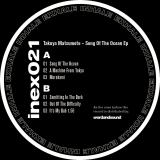
Japan's Takuya Matsumoto returns to Inhale Exhale with a new six-track EP entitled 'Song Of The Ocean'.
Japanese DJ and producer Takuya Matsumoto has quietly established himself as one of the most distinctive voices to emerge from Japan's contemporary house scene. Known for his warm, deeply musical approach to production, Matsumoto blends classic house
sensibilities with jazz, funk and soulful influences, crafting records that balance dancefloor functionality with rich musicality. Through releases on respected international labels like Clone's Jack For Daze and Royal Oak, Vibes and Pepper, and Fina he's built a
reputation for refined grooves, elegant arrangements and a timeless approach to house music.
Across the six tracks Matsumoto once again radiantly showcases the depth of his production skills as the project sonically traverses Balearic-tinged House, bouncy acid- laced electro, cosmic nu-disco, breaks driven jungle and dub infused deep house.
Ecstasy and delirium—Amterdam’s duo Match Box transport us once again, getting us back on bright, trance-leaning club sounds; while Berlin-based Olsvangèr takes on remix duties with patient in waveform form—dubby, radiant and groove-led. X-File’s is an ep leaned into pure ecstasy made for this summers festival calendar and beyond.
303 synthesiser leads, driven bouncy baselines, infectious chopped vocal samples from the nineties—Match Box sit somewhere between euphoric trance and high-energy progressive house, shaping the sound of the EP.
On B1, Olsvangèr takes Stone Again into dubby territory with his signature prog touch, full of intricate textures and depth.
Mad Rey is a Paris-based producer and DJ whose universe moves freely between warm house, raw electronic textures, and influences drawn from the international club scene. First emerging through the D.Ko Records collective and label—one of the key forces behind the French house revival of the 2010s—he quickly developed a sensitive and organic signature, blending analog groove, evocative melodies, and a deep dancefloor energy. His notable releases on D.Ko, followed by projects with labels such as Red Lebanese and Ed Banger Records, reflect a singular trajectory at the crossroads of France’s most influential underground and electronic scenes.
Constantly evolving, Mad Rey is now opening a new chapter in his journey. An upcoming EP on Yoyaku affirms a more club-focused and percussive direction, while new productions leaning toward tech house outline a sharper sound designed for powerful systems and late-night dancefloors. This evolution comes with a clear ambition: to carry his music beyond French borders and expand his presence on the international stage.
Balancing production precision, DJ instinct, and an ongoing search for renewal, Mad Rey continues to shape a distinctive artistic world—rooted in the present yet firmly oriented toward the future of the dancefloor.
- A1: Boundaries
- A2: Cyber Dreams (Patrice Scott Remix)
- A3: Nasty (Feat. Marquinn Mason)
- B1: Cyber Dreams (Feat. Domenica Fossati)
- B2: Foster Child
Water Sign is the debut EP from producer and instrumentalist John Silas: a five-track suite that moves fluidly between peak-time dance and inward reflection. Deeply aligned with the open-eared ethos of NYC’s Love Injection Records, the release channels house and jazz into an emotive personal chronicle shaped by movement, memory, and community.
At its thematic center is “Boundaries,” a dynamically arranged dance-floor meditation that begins with piano, 4/4 kick and restless hi-hats before blooming into radiant synth work reminiscent of classic disco auteur Patrick Adams. Midway, the track shifts—electric piano, whistles and percussion reframing the groove into what Silas calls “hues of vulnerability.” The result mirrors the arc of love, release and renewal.“Cyber Dreams” leans into lush escapism, buoyed by surging keys and impassioned flute from Domenica Fossati, while a remix from Detroit mainstay Patrice Scott (Sistrum Records) adds unmistakable Motor City weight. “Foster Child” nods to Silas’ hero, the late Paul Johnson with exuberant Chicago spirit, and “Nasty” delivers a concise workout featuring Marquinn Mason’s robust saxophone.
Water Sign reflects Silas’s trajectory—from a childhood steeped in Soul Train, coming of age with hip hop, to MPC craftsmanship, his Detroit musical family and present-day Brooklyn—into a deeply personal record equally suited to discerning DJs and deep listeners.
Gidia, the collaborative project of Giorgos Lemos and Kondaktor, deliver a bold release that marks a new chapter for both the artists and the evolving sound of REVOLT.
Born between global influence and local greek reality, Gidia operate at the intersection of club culture and street memory. Their sound moves freely across house, techno, electro and acid, drawing from West Coast grooves, disco-house energy, early Daft Punk aesthetics, boombox culture and the raw attitude of B-boys music.
Gatefold Sleeve
M’Bamina – African Roll (1975)
The story of an album born between Africa, Italy, and the nightclub culture of the 1970s
In the heart of 1970s Italy — a country undergoing profound social change and a music scene just beginning to open itself to distant sounds and cultures — an extraordinary, almost improbable story took shape. It is the story of a group of young African musicians who found their way to Europe, of a Turin nightclub that became a crossroads for communities and experimenters, and of an album which, released in small numbers and largely unnoticed at the time, is now considered a rare jewel of Afro-fusion.
The band called themselves M’Bamina — an ensemble of musicians from Congo, Cameroon, and Benin, who arrived in Italy in the early Seventies. Settling between northern Italy and the Pavia area, they began performing in small clubs and community events, bringing with them a vibrant rhythmic heritage: African polyrhythms, call-and-response vocals, funk-infused bass lines, and Caribbean or Afro-Latin colours absorbed along their musical journeys. Their raw, contagious energy on stage quickly drew attention.
Meanwhile, in Turin, another story was unfolding. There was a venue becoming almost legendary: Voom Voom, one of the city’s liveliest nightclubs, run by Ivo Lunardi. The club attracted an eclectic crowd — students, artists, foreigners, night owls — and Lunardi quickly understood that the dancefloor wasn’t just a place for music, but a melting pot for a new kind of cultural energy. Out of this vibrant atmosphere came his idea: to turn the club’s name into a small independent record label, Voom Voom Music, capable of capturing the spirit of those years and giving voice to unconventional projects.
When Lunardi heard M’Bamina, he immediately sensed that this was the sound he had been searching for: fresh, different from anything circulating in Italy at the time, and capable of blending African tradition with funk and European sensibility. He brought them into the studio.
Production was handled by Lunardi along with Christian Carbaza Michel, while the engineering was entrusted to Danilo Pennone, a young sound technician with a sharp, intuitive ear.
The recording sessions — held in Turin in 1975 — produced a remarkably warm and direct sound. The music feels almost live: grooves rooted in African tradition, but open to funk-rock structures and modern arrangements. It is a natural fusion, never forced. Tracks move between tribal rhythms, funk basslines, light electric guitars, congas and Afro-Latin percussion, with call-and-response vocals and melodies that echo both Congolese tradition and the lineage of Latin jazz. Not by chance, one of the album’s most striking tracks, Watchiwara, reinterprets a Latin standard through M’Bamina’s own rhythmic language.
The album was titled African Roll — a name that was already a statement of intention. It is African music that “rolls,” that moves, adapts, transforms within a new geographic and cultural setting. It is not strictly Afrobeat, nor Congolese rumba, nor Western funk: it is a spontaneous, hybrid blend, shaped more by lived experience than by any calculated aesthetic program.
When African Roll was released, the world around it barely noticed. Distribution was limited, and 1970s Italy had yet to develop a cultural framework for receiving such music. The national music press rarely paid attention to African or “world” productions. The album slipped into silence — though the band’s own story did not.
M’Bamina continued performing across Europe and Africa, even sharing a stage in Cameroon with none other than Manu Dibango. By the late Seventies, they moved to Paris, signed with Fiesta/Decca, and recorded a second LP, Experimental (1978). Meanwhile, the peculiar record they had made in Turin began to resurface quietly among vinyl collectors, Afro-funk enthusiasts, and DJs hunting for forgotten grooves.
That is when the album’s fate began to shift.
Over the decades, African Roll emerged as an almost unique document: a snapshot of an intercultural Italy before the word “intercultural” even existed, a fragment of migrant history, a spontaneous experiment in musical fusion born far from major industry circuits but rich in authenticity. Original copies began commanding high prices on the collector’s market, and the album became recognized as one of the hidden classics of European Afro-fusion from the 1970s.
Today, more than fifty years later, this reissue finally restores visibility and dignity to a project that deserves to be heard, studied, and celebrated. It is not simply an album: it is the testimony of a rare cultural encounter, born in an Italy unaware of how fertile such exchanges would one day become.
It is the story of a visionary producer, an extraordinary band, and a fleeting moment in which music, migration, and nightlife came together to create something genuinely new.
African Roll is — now more than ever — the sound of a bridge: between continents, between eras, between cultures. A record that, after rolling far and wide, has finally come home.
Todh Teri returns with a brand new record, and this time the spotlight falls on Hari Heart. The Return of Hari Heart marks the eighth release on Masala Movement Records and launches a fresh vinyl-only series that brings the mythical characters of Deep In India back to life in a bold new form. Todh Teri further expands his conceptual universe by focusing on deeper sonics & music explorations. Hari Heart guides the release with a delicious blend of nostalgia, analog warmth and a club-ready intentions - built for curious DJs (and listeners alike).
On the A side you will find Smriti (Remembrance) - a reimagined classic flipped into a peak-time driver - disco spirit, acid bite, and pure dancefloor release. Limited, loud, and made to move bodies. On the flipside we have ??a (Debt) - a deep, dubby slow-burn built around an evergreen melody which grows patiently - finally rewarding you with a sweet earworm.
The final tune on the record is Prem (Love) - a reinterpretation of a ’70s indie rock n roll gem. Unmistakably retrospective (if you know your history). Play it a bit longer into the dead wax, and you will catch a hidden acid sequence locked groove.
Art by Soju Aduckathil with creative direction from Masala Movement’s Manoj Kurian. This is the label’s eighth release, a vinyl-only exclusive, with more coming in 2026.
2026 Repress
Portuguese techno mainstay Dextro drops cultured EP 'Covil Dos Abutres' for his label debut on Mutual Rytm.
Dextro has been immersed in electronic music and DJing since the early 90s. In the decades since, he has become synonymous with a sound deeply rooted in simplicity and authenticity. Fuelled by a passion for his craft, his production process is guided by intuition and spans a diverse range of styles, from tunnelling grooves to more potent techno with deep and hypnotic layers. He has held several key residencies and released on top labels like CLR and Missile Records, and he adds to those with a first outing on SHDW's Mutual Rytm with 'Covil Dos Abutres'.
The five-track 12" and eight-track digital EP has a sleek, stripped-back style, with wide-spanning corners of the techno realm explored. 'Covil Dos Abutres' is a deep space transmission with journeying, frictionless beats and deft sci-fi motifs that recall classic touches synonymous with the genre's pioneers. 'Correct Incorrect' keeps the pressure on with more rubbery, dubbed-out groves beautifully decorated with delicate melodies. 'Vida E Morte' is another sublime and hypotonic minimal techno sound with funk in the kicks and a freaky late-night spirit. 'Element One' again combines perfectly reduced drum groves with atmospheric pads and curious samples that keep you intrigued, and 'Beautiful Day' closes out with sonar-like synth pulses over the most skeletal but captivating rhythms. Digital cuts 'Time Line', 'Savana Urbana', and 'Diferencas' further explore the intersection of minimalism with cosmic synth designs that take you off into distant astral worlds.
Father Sheed steps up to deliver a saucy meze for M.A.D Records sixteenth outing, following the groove-laden "Pancumbia" for A MAD 5 Years compilation!! The Austin, Texas based producer brings 5-tracks to ignite the discotheque with quirky sampling, punchy drum grooves and immaculate synth-scapes!