Christian Lee Hutson starts his new album Quitters with a laugh. In this follow up to his ANTI Records debut, Beginners, Hutson moves away from a focus on growing up to the dread and complications of growing older. Written under lock down, the laugh that announces Quitters is the kind you'll find at the end of John Huston films, one of resignation and release, and somehow a cosmic laugh that says "California," a place where lonely people gather together like birds. The song "Rubberneckers" follows the story a romance from beginning to break?up, with backing vocals by Phoebe Bridges, who returns as producer along with Conor Oberst. Quitters is a departure from the digital recording of his debut. Hutson shares, "With this record, Phoebe and Conor had an idea that it would be fun to make it to tape. Phoebe is my best friend and making Beginners with her was so comfortable and easy. So I wanted to work with her again and Conor is someone who I really respect as a lyricist." If every great record is a world, then this is Christian Lee Hutson's world. It's one filled with the fuzzy haze of a dream, and the half-remembered moments of a for?gotten life. It's a record brave enough to say, In the good old days, when times were bad. But beyond the songs, it is this voice. The voice of someone who was alive in 2021 and recorded a group of songs with his friends for us to hear.
Buscar:group a d
wieder auf Lager Die Hamburger Band Faust gehört zu den großen Namen, die der Krautrock der 1970er-Jahre hervorgebracht hat. Als Jean-Hervé Péron und Zappi Diermaier 1971 ihr Debütalbum vorlegten, wollte das in Deutschland niemand hören, im Ausland jedoch verkauften sich "The Faust Tapes" über 100.000-mal. "There is no group more mythical than Faust", schwärmte der englische Musiker und Krautrock-Kenner Julian Cope Jahrzehnte später. Mit "Just Us" setzen Faust ihren musikalischen Weg fort. Während Diermaier seinem Handwerk - Schlagzeug und Perkussion - treu bleibt, integriert Peron allerhand unübliche Klangquellen in sein Bassspiel, verschiedene Streichinstrumente, Klavier und sogar eine Nähmaschine als Metronom. Tracks wie "Nur nous" und "Ich bin ein Pavian" zeigen, dass Faust nichts von ihrer Vorliebe für Avantgarde und Dadaismus verloren haben. Ausflüge ins folkloristische Gefilde ("Cavaqui-ho", "Gammes") runden das wahrhaft faustische Überraschungspaket ab.
- A1: 007 Shanty Town
- A2: Israelites
- A3: It Mek
- A4: You Can Get It
- A5: Pickney Gal
- A6: Peace On The Land
- A7: I Believe
- B1: Look What They’re Doing To Me
- B2: Please Don’t Bend
- B3: My Reward
- B4: Little Darling
- B5: Life Of Opportunity
- B6: When I’m Cold
- B7: Archie Wah Wah
- C1: Hippopotamus
- C2: Warlock
- C3: Licking Stick
- C4: What Will You Gain
- C5: Trample
- C6: The More You Live
- C7: Go And Tell My People
- D1: Reggae Recipe
- D2: Yakety Yak
- D3: Where Did It Go
- D4: First Time For A Long Time
- D5: Stop The Wedding
- D6: Mother Nature
- D7: Life Hope And Faith
Desmond Dekker recorded some of his best known songs together with his backing group the Aces. Their track “Israelites” from 1968 became one of the earliest international reggae hits. Dekker's other hits include “007 (Shanty Town)”, “It Mek” and “You Can Get It”, which are all featured on the 1973 compilation album Double Dekker. The album was produced by Leslie Kong and serves an interesting period document of the years 1969-1971, following ska as it evolved into rocksteady.
NEW LIVE ALBUM RECORDED DURING GONG'S 2019 TOUR - DUE FOR RELEASE ON KSCOPE - 2LP 140Gram Gatefold Sleeve
Formed in 1969 by Daevid Allen, one of the founding members of Soft
Machine, classic albums such as 'Camembert Electrique', 'Flying Teapot' & 'You' established Gong as one of the most unique, innovative & experimental rock groups of the Seventies. Before he sadly passed away in 2015, founding Gong member, Daevid Allen, laid
out his hopes for a future Gong, that it should be uplifting, exploratory & a positive force. Kavus Torabi, Fabio Golfetti, Ian East, Dave Sturt & Cheb Nettles, chosen by him, continue his vision.
'Pulsing Signals', recorded live at The Wardrobe in Leeds, The Cluny in Newcastle & Rescue Rooms in Nottingham in 2019 during 'The Universe Also Collapses' tour finds the group in spirited form, unbeknownst to them, it being their final tour before the global pandemic took charge.
Owing to Gong being an international band, lockdown & restrictions on travel made it impossible to convene & work on new music. The band received many requests by fans to release a live album & fortunately enough, the band had multitrack recordings of several shows from the 2019 tour. Bassist Dave Sturt went through all the master tapes & selected the best performances which
became 'Pulsing Signals'.
The album was recorded by Pete Wibrew & mixed by Frank Byng, while mastering was handled by Andy Jackson. The stylish artwork was designed by Steve Mitchell, who has worked closely with the band since 2016's 'Rejoice I'm Dead'.
With touring now set to recommence & bookings going long into 2022 & beyond, Daevid Allen's vision for the future looks set to be fulfilled. 'Pulsing Signals' will be released as a 9-track gatefold double LP on 140g black vinyl.
Tape
Alexandre Bazin's second album for Cassauna is a compelling minimal/experimental/electronic album consisting of one piece separated into several movements for the purpose of stronger narrative and aesthetic coherence. The album explores the concept of percussion and resonance through the spectrum of electronic frequencies and densities with a plunge into the sound.
Percussion-Resonance makes use of a new alphabet, a simple vocabulary in order to create innovative and personal music, with a clear and emotional subject. Structured architectural sequences give way to the experimental. Different climaxes punctuate the work in order to keep grabbing the listener’s attention.The record title tackles the theme of musique concrète developed by French composer Pierre Schaeffer as well a nod to Bernard Parmegiani’s De Natura Sonorum
Alexandre Bazin is a member of the Groupe de Recherches Musicales better known as the GRM, for which he writes documentaries about music for Radio France.
He is passionate about experimental music and more specifically the electronic music created by Bernard Parmegiani, Iannis Xenakis, Pan Sonic, Fennesz, Alva Noto and Ryoji Ikeda. His music is distributed by Important Records / Cassauna, Umor Rex Records and played at the Moogfest festival in the USA.
- A1: Creation Day The Travel Flute Way
- A2: In Here The World Begins
- A3: Elegant Elephant
- A4: Through The Gates Of Yesterday
- A5: Milling Around The Village
- B1: The Aphid Sleeps
- B2: Growing Backwards
- B3: I'm Just A Person In This Roomy Verse
- B4: Never Trust A Rusty Bolt
- B5: Innocence In Orbit
- B6: Mother's Milk Means Music (At Home In The Universe)
'Mother Is The Milky Way' ist zum ersten Mal auf Vinyl erhältlich, remastered von den Originalbändern, mit Artwork von Julian House. Ursprünglich 2009 als eine auf nur 750 Exemplare limitierte Tour-CD zur letzten Broadcast-Tour zum gemeinsamen Album mit der Focus Group, 'Investigate Witch Cults Of The Radio Age', erschienen.
Sdban Records will reissue several installments of the legendary library series 'A Special Radio ~ TV Record' on vinyl. These were originally released on Belgian imprint 'Selection Records' between 1975 and 1981. N°15 in the series was the Belgian milestone jazz album 'Solis Lacus' released in 1975.
Solis Lacus is the cult group around renowned Belgian pianist Michel Herr, a pioneer of electric jazz in the 70's in Europe. Michel Herr rose to international prominence after winning the first prize at the jazz festival in Loosdrecht, The Netherlands, in 1971. He accompanied many European and American jazz stars on foreign tours and ran the group Jazztrack with saxophone player Wolfgang Engstfeld in Germany. At the same time, he set up his own band Solis Lacus, which consisted of Belgian musicians who had all made a name for themselves on the national jazz scene of the 1960s including Richard Rousselet and Bruno Castelluci both from Placebo. Inspired by the reigning jazz-rock sound of the day, Herr expanded his musical vocabulary and started to play electronic keyboards. Solis Lacus recorded its only album in the course of 1974 and 1975, before the members of the group headed in their own direction.
Solis Lacus is considered the European counterpart to sound experimentations of Herbie Hancock's Headhunters, or the best albums of the CTI label such as Freddie Hubbard. This is groundbreaking, experimental and funky jazz fusion!
It's pressed on red transparent recycled vinyl.
The feel good song "Everytime" from the album "Serendipity" by Lisa Decker & Japanese Jazz trio Nautilus gets the Pat Van Dyke treatment plus a special appearance by South Bronx born emcee John Robinson aka Lil Sci of the legendary east coast group ScienZ of Life who performed with the likes of The Roots, Common, Talib Kweli, Mos Def, Run DMC and MF DOOM to name a few.
Multi-instrumentalist, composer and producer Pat Van Dyke from New Jersey is giving the song a totally new direction with playful horns and heavy bassline to get the soundsystems bumping.
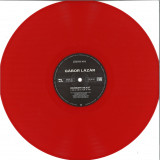
Gábor Lázár’s “Boundary Object” is a collection of eight real-time recorded, unedited tracks made in Budapest and Prague between 2020 and 2022 using a self-designed compositional interface. It's Gábor Lázár’s second album for Planet Mu following “Source” in 2020. The title comes from the idea of a Boundary object as a flexible concept of sociology and computation of how collaborations could happen between groups of people who have different kinds of backgrounds and different levels of knowledge. A Boundary object could be anything which translates between these groups to make a collaboration happen. Boundary objects are plastic, interpreted differently across communities but with enough common identity across social words and contexts to maintain integrity. This is a neat summary of how Gábor’s approach and working process led to his music on this album. Prismatic, flexible, and functioning on different levels of interpretation. On “Boundary Object”, the shiny surfaces and uniformity of “Source” have collapsed inward, leaving intact the recognisable pulse and frames of his music. While each individual track has a non-linear structure, the album as a whole has a strong narrative. Passages that start out Trance-like and familiar warp and weft into different shapes as if Gábor is examining the music like a 3d object, pulling at the edges, breaking and rebuilding what he examines, turning expectations inside-out. “Boundary Object” is intense, full-spectrum and a lot of fun.
Quindi Records returns once more to the swooning romanticism of Cabaret du Ciel, the long-running project from Andrea Desidera and Gian Luigi Morosin. After the contemporary material which made up long-player The Breath Of Infinity, Raintears heads back into the group's archives and focuses on a limited cassette release from 1991.
Originally released on Morosin's own Ionisation Tapes, Raintears is described as heralding a new phase for Cabaret du Ciel following their earlier Solarisation and Weather Colours cassettes. This revised, expanded version of the release opens with 'Raintears (Piano Version)', which originally came out on an Ionisation compilation entitled Imago Sonora 1. Truly evoking the spirit of the track and its meaning, it was recorded on a rainy Sunday afternoon when Desidera's friend and trained pianist Francesco Martignon heard the original melody for 'Raintears' and proceeded to improvise on the theme, with Desidera and Morosin embellishinbg Martignon's exquisite playing with subtle touches of synth and sampling. In its fragile, tape-worn repose, the piece is loaded with the delicate ambience a rainy Sunday afternoon implies - calm, melancholic and wistful.
'A New Day' is a piece cast in light and shade, contrasting two core melodic phrases expressed through synth and guitar, with a light touch of speech sampling adding to the cinematic poise of the track. 'Time Of The Twins' originally appeared as a single track on the cassette release, but here it's framed as two distinct parts which meet in the middle. The first half is patient, gliding ambience rich in the harmonic interplay and winding narratives which typifies Cabaret du Ciel overall. The second half opens up like a flower looking for the sun, all pronounced keys pirouetting across the fundamental chord progression established in the first chapter.
'A Delvaux Postcard', previously titled 'East Roads', takes on a spectral, spacious form as it passes by slow, rhythmic pulses and freewheeling synths, momentarily joined by scattered shards of sampled voice layered and filtered in a manner which reminded Morosin of Belgian surrealist painter Paul Delvaux. The EP closes with the original version of 'Raintears' (billed here as 'Raintears II'), a plaintive and disarmingly beautiful ambient piece centered on Desidera's light and poignant playing. As Morosin himself describes, "Andrea is in a full state of grace, touching the listener through his fingers with the notes into their deepest emotions. The first time I listened to the basic version, I was just speechless."
2LP with a 4-page colour insert
As Guadeloupean vocalist and composer Marie-Line Dahomay writes in her liner notes to the compilation, gwoka is more than a style of music, it is “a way of living and thinking.” Rooted in the social, musical and ritual practices of enslaved African people and their descendants on Guadeloupe, gwoka has always sought to express the spirit of independence and resistance authentic to the island.Building on its traditional call-and-response form and the ideas of pivotal figures like Gérard Lockel and Christian Laviso, modern gwoka evolved throughout the second half of the twentieth century to include funk, jazz and electronic influences.
Defined by its propensity for innovation and experimentation, this compilation charts the most radical changes to modern gwoka, capturing a sensory riot of traditional répertoires, rhythms and makè techniques fused with genre-defying experimentation.Whether heard in the deeply cosmic, spiritual music of Dao, Freydy Doressamy and Gaoulé Mizik, or the jazz funk inflections of Gui Konket and Horizon, the music here is united by the feeling of santiman ka, crucial not only to gwoka music but the identity of Guadeloupe at large.
As co-curator Cédric Lassonde (Bueaty & The Beats) writes: “What unifies these selections is the depth of the compositions, the experimentation around the santiman ka, and the spirit of resistance and liberation against slavery, be it modern or ancestral. With a thirst for innovation typical of the island’s creole culture, the ka spirit is deeply rooted in collective history and in a quest for identity.”
Co-curator Brandon Hocura (Séance Centre) continues: “The creative energy of these musicians is powerful and demonstrates a universal pursuit of resistance, freedom and identity. Their voices are distinct, but the chorus rises high and carries their message far across the sea.”
Lèsprit Ka: New Directions in Gwoka Music from Guadeloupe 1981-2010 is the first compilation of its kind to bring the sound of modern gwoka to a wider audience, with many of the featured musicians still active today. Presented as a double LP, the release features a specially commissioned essay by Guadeloupean musician Marie-Line Dahomey, and extensive liner notes from Cédric Lassonde and Séance Centre’s Brandon Hocura.
True to the hybrid nature of the music, the compilation seeks not to provide a definitive sound, but express the variety of contemporary forms that have evolved from gwoka. Just as Guadeloupean trailblazers Kassav fused gwoka with funk and cadence to create zouk, so did the musicians on this collection push gwoka in new directions rarely heard beyond its shores.
In the words of Gérard Lockel, “gwoka is the soul of Guadeloupe”
Few groups of musicians would be brave enough to tackle such an iconic jazz funk classic, but the Incognito guys under the guise of Citrus Sun and in the capable hands of their producer, Bluey, have pulled it off. This rendition of the Lonnie Liston Smith masterpiece from 1975 was recorded in 2020 and became the title track of an album, further to which it has brewed on the underground dance scene building an insatiable appetite for a release on 12” vinyl. So here it is in all it’s glory, coupled with an original instrumental jazz funk creation “Hard Boiled”. Grab one while you can. This 12” version comes in straight on the bass line.
After a quarter century of nearly nonstop activity, dystopian Detroit synth-punk institution ADULT. have perfected a strain of stylistic cohesion in the album format, "but for this we wanted something that's falling apart." Becoming Undone, the 9th official full-length by cofounders Nicola Kuperus and Adam Lee Miller, explicitly succeeds in this aim, simultaneously rejecting and reflecting the planetary discord that inspired it. Begun in the latter half of 2020 against a backdrop of unprecedented flux and seismic isolation, the duo kickstarted their muse by sourcing fresh additions to the rig: a vocal loop pedal for Kuperus and Roland percussion pads for Miller. Reconnecting with legacy influences like the politicized industrial percussion of Test Department and the queasy miscreant synthetics of TG's 20 Jazz Funk Greats sparked a series of fruitfully frenetic sessions, centered on themes of impermanence and dissonance. Miller's rationale is blunt: "We weren't interested in melody or harmony since we didn't see the world having that." From the tense technoid blitz of "Undoing / Undone" to the twitchy EBM of "Fools (We Are_)" and "I Am Nothing," the sides bristle with strident acidic revolt and black leather sequential circuits, unhinged and unforgiving. Elsewhere, slower tempos of purgatorial unraveling ("Normative Sludge," "She's Nice Looking") showcase a breadth of vocal FX, Kuperus sounding alternately indignant and possessed, decrying the crimes, fears, and failings of a deluded world. Throughout, the band's chemistry crackles with revulsion and strobe-lit dissent, equal parts exorcism and denunciation. "Humans have always been pretty terrible," Kuperus explains. "But every year the compromises of culture just accelerate." Becoming Undone is also freighted with a more personal pain, as Kuperus' father passed away during the height of the pandemic, just before the album took root. As his hospice caretakers, she and Miller faced the banality of finality, surrounded by objects drained of meaning, "the joy of having a body, but also the drudgery of having one." The record's bewitching closing track, "Teeth Out Pt. II" - which happens to be the first ADULT. song in the group's history without drums - speaks to this sense of doomed corporeal mass and the looming, lightless unknown that binds us all. A seasick haze swells and subsides in slow, low waves, flickering with ring modulation, above which Kuperus sings in a dazed, brooding, transcendent state, as if having finally glimpsed beyond the pale: "Some day / some day I will be silent and free / of this relentless gravity."
In February of 1976 Eddie Carmichael left the group “The Voshays” after catching the bandleader/manager stealing from the band. Derry Shepherd and Duncan Bethel left at that time also. About a week later I asked Derry if he would be interested in starting another band and he said sure. At that point Duncan Bethel agreed to participate and he recruited his friend Flynn Emanuel to play trombone. Derry was the manager of the cafeteria at Sears Department Stores in The Pompano Fashion Square Mall and he met Sandy Ficca who was the manager at Chess King Men’s Clothing Store in the same mall. Sandy also agreed to join the group and we auditioned bass players and chose Dave Segal and only one keyboard player auditioned and that was Bob Groszer. We now had all of the personnel for the group and we commenced rehearsing in the recreation center in Pompano Beach, FL at Westside Park. We did a few “Chitlin’ Circuit“ gigs to fine tune the band and music and then moved over to the beach circuit. While there we would perform spring and summer months at “The Ocean Mist” on the Strip in Fort Lauderdale, FL and for the fall and winter months the Big Daddy’s 8600 Club on Miami Beach. After 18 months of constant gigging I suggested that the band go into the studio and record some original music. Now all we needed was some serious financial support and songs. I met a man by the name of Jerry Bullard and convinced him to back the project. We formed our own independent label “Get Off Records” and publishing company “Situated Music”. At that point Dave Segal and Sandy Ficca left the group and Bruce Saddler who was the drummer for The Voshays joined us on the drums for the first two recordings. Sandy Ficca returned as drummer and brought in his old friend and bandmate Daryl Walker to play Bass on five of the six remaining songs. We recorded the entire album in five days at SRS Studios and Triad Studios both in Fort Lauderdale, FL in August of 1977. The first single “Give It Up (Let Yo Funk Fly Free) was a winner released only in the New York tri state area where in two weeks it reached number 16 in the top 100 and was poised to go number one nationwide on the R&B charts in the next two weeks. Henry Stone, owner of TK Records in Hialeah, FL wanted to sign the group as did many other major record labels including Maurice White of Earth, Wind & Fire. But the usual problems of the music business reared its ugly head and the record was pulled from all radio airplay and the group who became disenfranchised with the business of the industry decided to call it quits. Derry Shephard went into Gospel Music production, Sandy Ficca went on to become the drummer for the Pop/Rock recording artists “Firefall”. Daryl Walker is a session player and music teacher, I did studio sessions and played in several cover bands and toured internationally. Bob Groszer toured with Sly Stone and other legendary recording artists. Dave Segal went on to start New York Bass Works in New York. Flynn Manuel became a music teacher in The Broward County School District and Bruce Saddler and Duncan Bethel left the Music industry completely. We were young and not good business people at that time and did not understand the rules of do’s and don’ts of the music industry. But we had three talented songwriters, a great arranger, a killer band and all the financial support that we needed. Looking back if we only had an experienced manager I truly believe Mirror would have gone on to create some great music over the years that followed.
Peace and love all the time,
The Equations Collective is an experimental sound project formed by a multi-disciplinary group of artists, active in the fields of music, photography, sound design & software development.
In 2018, the collective set up a temporary outdoor recording studio, 1130 meters above sea level, on the slopes of Mount Helicon in Greece, with the ambition of recording their work in a natural environment. A 'mobile and modular' construction, fully powered by solar panels, the design of the studio showcases the possibilities of a progressive, environmentally sustainable future through renewable energy.
Embodying ecological incentives, and representing an immersive engagement with the landscape, the 'Helicon Sessions' document this extraordinary residency, capturing a profound dialogue with the eponymous mountain region.
Situated in Boeotia, Central Greece, Mount Helicon has a prominent archaic significance. A historic location where stories of sacred springs and the epic origins of the Muses and Narcissus converge. Steeped in the heritage of ancient narratives, Helicon is seen as a principal symbol of poetic inspiration.
On the 'Helicon Sessions' the collective draw upon the inspiring topography and fabled mythological resonances of the area, unfurling an expansive, hypnotic suite of abstract electronics. Liberated by an open-ended, improvisational dynamic, the collective move through a mysterious, elemental cycle that mirrors the imposing scale and dramatic atmospheres of the setting.
Across an entrancing, fluid sequence of five designated 'cuts', the collective traverse the borderlands of drone, techno, dub, and acid, amplifying the acoustic traces of Helicon by integrating field recordings collected at the site into this arresting body of work. With these recordings, the collective delineate an odyssey of subverted 303s, sputtering drum machines and formidable, oscillating low end that drifts and coalesces like an amorphous mirage; a spellbinding sound world of clarity and shadow.
The 'Helicon Sessions' signify a symbiosis (between the terrestrial and the engineered, between wildlife and futurism, between the intrinsic and the synthetic, between the innate and the manmade) And with their conception of a portable, eco-friendly studio The Equations Collective focalize valuable ideas centred on ingenuity and evolution. The outcome of this project illustrates a unique collaborative exchange which acknowledges the deep nuances of environment and the enduring echoes of history.
The Equations Collective is a collaboration between Artefakt, Aroma Pitch, Aphelion and Sphera De Noumenon across Berlin, Amsterdam, Cologne and Hamburg. Together they have established an all night long live event in Berlin, starting at Sameheads and Acud Macht Neu, which eventually lead to their residency at OHM (Tresor).
For this format they have collaborated with the following artists: Alex The Fairy, Anna Z, D-IX, Eliad Wagner, Jón Friđgeir Sigurđsson, Orson Wells, Phillip Jondo, Philipp Matalla, PRSMC, Rabih Beaini, Sabrina Gricourt, Sébastien Robert, and Vida Vojić.
The respective members of The Equations Collective have released a range of output on the likes of Field Records, Delsin, Semantica Records, De Stijl, & Soul People Music.
Since 2018 their visual identity has been shaped by Elias Hanzer.
The 'Helicon Sessions' is their debut release.
Solo acts of Paula Rebellato (RAKTA) and Douglas Leal (DEAFKIDS), members of two of the most thriving and groundbreaking bands coming out of Brazil to the world lately. The fusion of traditional and acoustic instruments with electronic and processed sounds highlights the strong characteristics of both projects, melted into a journey within timeless soundscapes. Buh Records presents "Gnose", the joint full-length by the solo acts of Paula Rebellato (RAKTA) and Douglas Leal (DEAFKIDS), members of two of the most thriving and groundbreaking bands coming out of Brazil to the world lately. Produced between 2019 and 2020 in Sao Paulo, Brazil, some of the compositions were first conceived for a live performance in late 2019 and then expanded into a full-length album, part recorded in studio and part at home during the first months of the pandemic. Inspired by the ritualistic potentials of music, "Gnose" offers a vertical and circular narrative throughout its 7 themes, exploring atmospheres that may contribute to experiences of displacement and inner silence. The fusion of traditional and acoustic instruments with electronic and processed sounds highlights the strong characteristics of both projects, melted into a journey within timeless soundscapes. Paula Rebellato is an artist based in Sao Paulo, Brazil. Her journey with music and sound started at young age and became a more consistent path when she co-founded the genre-bending group Rakta.
- 01: Entre Vareta Y Canasta (Tangos)
- 02: Sin Prisa (BulerÍA)
- 03: Ya No Hay Olas En La Arena (Taranta)
- 04: Lirios Y Rosas (Fantangos De Huelva)
- 05: A Mi Manuela (BulerÍA)
- 06: SabÚ (Martinete)
- 07: Brota De Mi CorazÓN (GranaÍNa)
- 08: Te La Regalo (BulerÍA)
- 09: Palabras Que Escribe El Aire (Tientos)
- 10: No Tiene DueÑO (SoleÁ)
- 11: Vidalita (Popular)
Diego el Cigala is, with any doubt, one of the greatest flamenco geniuses of our times. Not only because of his voice and charisma, but also for recording such vast and wide discography singing with majesty and no complex any style he could be challenged to perform. At Flamencoenvinilo we wanted to re-catch one of his early works back to his flamenco roots: "Entre Vareta y Canasta" (18 Chulos) was originally published in the year 2000 and, as many of his works, this album has proved the test of time and it has become a true classic. This will be the first time this album comes out on 12". Limited to 500 copies. Accompanied by Niño Josele (guitar) and a large group of percussionists, "Entre Vareta y Canasta" the second album by Diego El Cigala made him known among many people outside the traditional nucleus of flamenco for his simplicity, purity and mastery. The unique voice of this artist moves with naturalness and feeling in styles as different as martinete, bulería or fandangos.
Mercurial London artist Nilüfer Yanya announces her hugely anticipated second
album, ‘PAINLESS’, for release via ATO Records.
‘PAINLESS’ is the follow-up to Nilüfer Yanya’s renowned 2019 debut album, ‘Miss
Universe’, which fully established her as a singular artist and a distinctive voice that
simply has to be heard.
The critically acclaimed ‘Miss Universe’ - a widescreen concept record that took a
tongue in cheek swipe at the most self-involved corners of the health and wellness
industry - was followed last year by the three song EP ‘Feeling Lucky?’, which further
explored Yanya’s fascination with ‘90s alt-rock melodies and drew on themes of
resentment, her fear of flying, and the concept of luck. Pitchfork summed up ‘Feeling
Lucky?’ and her now peerless songwriting aptitude best: “Nilüfer Yanya’s melodies
have a pull so strong they almost necessitate their own law of physics.”
Yanya also re-released her early EPs on vinyl for the first time this year, on the
record ‘Inside Out’. The release is a fundraiser for Artists in Transit, a collaborative
not for profit group she founded with her sister Molly that delivers art workshops to
displaced people and communities in times of hardship.
As the daughter of two visual artists (her Irish-Barbadian mother is a textile designer
and her Turkish-born father’s work is exhibited at the British Museum), creativity was
always destined for Nilüfer Yanya’s future. Now she enters the next stage of her
creative journey - Yanya is running head first into the depths of emotional
vulnerability on her sophomore record, ‘PAINLESS’. The album was recorded
between a basement studio in Stoke Newington and Riverfish Music in Penzance
with ‘Miss Universe’ collaborator and producer Wilma Archer, DEEK Recordings
founder Bullion, Big Thief producer Andrew Sarlo and musician Jazzi Bobbi.
Where ‘Miss Universe’ stretched musical boundaries to include a litany of styles from
smooth jazz melodies to radio ready pop, ‘PAINLESS’ takes a more direct sonic
approach. By narrowing down her previously broad palette to a handful of robust
ideas that revolve around melancholy harmonies and looped industrial beats to mimic
the insular focus of the lyrics, Yanya has smoothed out the idiosyncrasies of previous
releases without losing what is essential to her.
‘PAINLESS’ is a record that forces the listener to sit with the discomfort that
accompanies so many of life’s biggest challenges whether it be relationship
breakdowns, coping with loneliness, or the search for our inner self. “It's a record
about emotion,” Yanya explains. “I think it's more open about that in a way that ‘Miss
Universe’ wasn't because there's so many cloaks and sleeves with the concept I built
around it.” Summing up the ethos of the new album, she adds, “I’m not as scared to
admit my feelings.”
Should stock of ATO0594BI1 sell out, a different standard vinyl format will be made
available (ATO0594LP).
“A distinctive new voice in indie rock, a deeply expressive singer and sharply
inventive guitarist” - Uncut
“On a musical and human level, then, the world needs more people like Nilüfer
Yanya” - MOJO
“A true original” - The Guardian
Reissue of a 1969 trio recording by American guitarist Jim Hall, who
resides at the top of the jazz guitar pantheon
At the time of his death in 2013 at the age of 83, he had long been considered
one of the jazz greats, a major influence on generations of jazz guitarists. It
seems that virtually every major musician wanted to play with Hall. His work as a
sideman ranged from swing era giant Ben Webster to new music pioneer Ornette
Coleman. HIs recording credits include a series of classic albums with groups
headed by Jimmy Guiffre, Sonny Rollins, and Bill Evans; Hall often spoke of
Rollins and Evans as two of his major influences.
This intimate June 1969 musical get-together was due in large extent to the close
friendship between the Hall and legendary German writer/ critic and producer
Joachim-Ernst Berendt. As Hall, his wife and daughter were visiting him in Berlin,
Berendt noticed that, although he had been recording extensively with a number
of major jazz figures over the last years, including several collaborative gettogethers, Hall had not recorded an album solely under his own name in over a
decade. Berendt immediately set up a trio recording for Hall that included two
internationally renowned musicians with whom Hall had previously worked, the
American expatriate bassist Jimmy Woode and Swiss- French drummer Daniel
Humair.
In such a transparent setting, Hall unfurled his finest qualities. Humair
perceptively summed it up: Hall played with "more clarity, more purity, more
sensitivity" than any other guitarist of the period. It resulted in an album of
intensely introspective music.
In 2005 the Californian heavy metal band Static-X released their fourth studio album, titled Start A War. The band’s line- up fluctuated quite a bit over the years and this was the first studio album to feature drummer Nick Oshiro, who also played in Seether and Blue Man Group. The album delivers guttural guitars, unrelenting roars and refreshing live drumming. Several tracks of the album were featured in video games, such as WWE SmackDown! Vs. Raw 2006, Project Gotham Racing 3 and Need for Speed: Most Wanted.