Search:group listening

Styles
All
Pugilist, Henry Greenleaf & Ebb - Flip Trix

The third installment of our four-part 12" series features our favorite artists from around the world.

Melbourne's Pugilist opens the gates with 'Flip Trix.' It's a dub-drenched, broken techno hybrid with earth-shattering low-end throughout. This lengthy 130bpm track, with foggy breaks and frosty pads, smartly concludes on a 4x4 beat to ensure a smooth exit. 'Flip Trix' is certainly a future percy for all.

Next, we have Bristol-based Henry Greenleaf, a music producer who provides jaw-dropping moments throughout his work. 'Stopper Knot' starts off with a murky low growl and soon evolves into a fully-fledged UK techno beast with ups, downs, twists, and turns. It's like the soundtrack to all of existence captured in 4 minutes and 37 seconds. An absolute tune.

Closing out the release, we have a very special track from Ebb, a resident of New Zealand's South Island. This tune comes with a Product Safety Warning. *We strongly advise never listening to this tune in small groups or while sitting down. 'GTAM' is a weaponized, peak-time, world-ending, acidic bass mutant designed for use only between 2 am and 4 am*. In true Ebb style, heavy and precise production.

Enjoy responsibly.

In Stock

On Stock and ready to ship

14,50
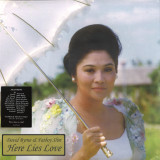
DAVID BYRNE & FATBOY SLIM - HERE LIES LOVE LP 2x12"
 
22

David Byrne & Fatboy Slim’s acclaimed 2010 album Here Lies Love receives its first-ever vinyl release to coincide with a new production opening on Broadway this summer. Here Lies Love is a double-disc song cycle – improbably poignant, decidedly surreal, surprisingly thought provoking – about the rise and fall of the Philippines' notorious Imelda Marcos. It was conceived by David Byrne; composed by Byrne and DJ/recording artist Fatboy Slim, AKA Norman Cook; and performed by a dream cast drawn from the worlds of indie rock, alt country, R&B and pop. Byrne's taste in collaborators is as imaginative as it is impeccable, including Cyndi Lauper (who recounts, to lighthearted disco beats, Imelda's courtship with Ferdinand Marcos), Steve Earle (as the power-hungry Ferdinand), Dap-Kings vocalist Sharon Jones (recalling Imelda's introduction into New York society) and Natalie Merchant (as spurned Imelda confidante Estrella, anticipating the onset of martial law). Along with vocals turns from such stars as Tori Amos and the B-52's Kate Pierson, Byrne works with rising indie rockers St. Vincent and My Brightest Diamond; New York chanteuses Nellie McKay and Martha Wainwright; and dance-music divas Róisín Murphy and Santigold. Byrne himself appears as the voice of imperialistic America on ‘American Troglodyte’, a send-up that wouldn't have seemed out of places in Talking Heads' True Stories.


Byrne originally envisioned this as a musical theatre piece, to be mounted in disco and nightclub settings, reflecting the globe-trotting Marcos' taste for such velvet-roped spots as Studio 54 and Regine's. In 2006, he performed work-in-progress versions to enthusiastic audiences at New York City's Carnegie Hall and the Adelaide Festival in Australia. While plans for a US theatrical production continued to evolve, he delivered this unique recording. The award-winning theatrical production eventually premiered at The Public Theater in New York in 2013, travelled to London’s National Theater for a sold-out run (2014–15), and was remounted at the Seattle Repertory Theater (2017).


Here Lies Love has an effervescent disco feel, redolent of Fatboy Slim's own dance-floor anthems, with warm undercurrents of the Latin rhythms that have percolated through Byrne's recent solo work. The sunny arrangements act in counterpoint to the reality of the Marcos' increasingly repressive regime, reflecting the imagined inner life of the glamour-obsessed Imelda. Explains Byrne, "For me, the darker side of the excesses are, for the most part, a matter of record. A lot of the audience is going to come with that knowledge already. What's more of a challenge is to get inside the head of the person who was behind all of that, and understand what made them tick." Byrne offers no judgment and avoids the obvious – there is no mention of Imelda's infamous shoe collection.


Many of Byrne's lyrics are, astonishingly enough, constructed from actual Imelda quotes, including the project's title, the words that Imelda, now returned to the Philippines from US-assisted exile in Hawaii, would like to have inscribed on her gravestone. In addition to his new liner note, Byrne illustrates the story with archival photos. In a detailed preface, he reveals what drew him to this subject and the bumpy route he took to launch the project and, ultimately, record this album. The booklet is indeed a page-turner, just as Here Lies Love is a wonderfully old-school album that rewards start-to-finish listening. Once again, Byrne – beloved as musician, thinker and bicyclist-about-town – reveals the breadth and singularity of his vision.


The new production of Here Lies Love will premiere at the Broadway Theatre in New York City. Performances begin June 17, ahead of an official opening night on July 20. Tony Award winner Alex Timbers (direction) and Olivier Award nominee Annie-B Parson (choreography) reunite with Byrne (concept, music, and lyrics) and Fatboy Slim (music) to bring Here Lies Love to Broadway, continuing a ten-plus year collaboration on the project. Tom Gandey and J Pardo contribute additional music. Here Lies Love is produced on Broadway by Hal Luftig, Patrick Catullo, Diana DiMenna for Plate Spinner Productions, Clint Ramos, and Jose Antonio Vargas. The staging at the Broadway Theatre will transform the venue’s traditional proscenium floor space into a dance club environment, where audiences will stand and move with the actors. A wide variety of standing and seating options will be available throughout the theatre’s reconstructed space. The producers of Here Lies Love said, “As a team of binational American producers – Filipinos among us – we are thrilled to bring Here Lies Love to Broadway! We welcome everyone to experience this singularly exuberant piece of theatre. The history of the Philippines is inseparable from the history of the United States, and as both evolve, we cannot think of a more appropriate time to stage this show. See you on the dance floor!”


David Byrne’s recent works include the launch of Reasons to be Cheerful, an online magazine focused on solutions-oriented stories about problems being solved all over the world (2019); Joan of Arc: Into the Fire, a theatrical exploration of the historical heroine that premiered at the Public Theater in New York (2017); The Institute Presents: NEUROSOCIETY, a series of interactive environments created in conjunction with PACE Arts + Technology that question human perception and bias (2016); Contemporary Color, an event inspired by the American folk tradition of color guard and performed at Brooklyn’s Barclays Center and Toronto’s Air Canada Centre (2015); Here Lies Love; Love This Giant, a studio album and worldwide tour created with St. Vincent (2012); and How Music Works, a book about the history, experience, and social aspects of music (2012).


Byrne curated Southbank Centre’s annual Meltdown festival in London in 2015. A co-founder of the group Talking Heads (1976–88), he has released eight studio albums as a solo artist and worked on multiple other projects, including collaborations with Brian Eno, Twyla Tharp, Robert Wilson, and Jonathan Demme, among others. He also founded the highly respected record label Luaka Bop. Recognition of Byrne’s various works include Obies, Drama Desk, Lortel, and Evening Standard awards for Here Lies Love; an Oscar, Grammy, and Golden Globe for the soundtrack to Bernardo Bertolucci’s The Last Emperor; and induction into the Rock and Roll Hall of Fame with Talking Heads. Byrne’s work as a visual artist has been published and exhibited since his college days, including photography, filmmaking, and writing. He lives in New York City. In addition to 2019’s cast album for American Utopia on Broadway, Nonesuch has released eight other David Byrne records since 2003, including 2018’s American Utopia studio album and two versions of his musical Here Lies Love.


q C6. Please Don't feat. Santi White Santigold

In Stock

On Stock and ready to ship

46,18
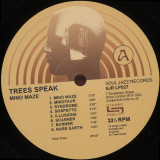
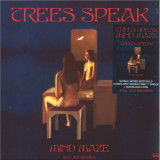
Trees Speak - Mind Maze LP 12" + 7" (NO COVER)

12" + 7" !

Mind Maze is, amazingly, Trees Speak’s fifth album to be released on Soul Jazz Records in the space of little over two years– an output matched only by the intensity of their music created during this short time.

The first pressing only of the album comes with a bonus seven-inch single containing two tracks that are not available on vinyl anywhere else.
As with all their previous releases, ‘Mind Maze’ is a mind-boggling tightrope walk across an array of musical influences that seamlessly create the unique present-day world of Trees Speak.

The band’s sound is characterized by a combination of German krautrock motoric-beat rhythms, angular New York post-punk attitude, 60s spy soundtracks, psych, rock, jazz, and 70s synthesizers and vocoders. There is also a cosmic spatial awareness to their sound; both personal inner space and galactic outer space, as well as a wilful pushing of sonic boundaries.

Trees Speak are a musical duo based in Tucson, Arizona, composed of Daniel Martin Diaz and Damian Diaz. Their music is heavily influenced by the cosmic magic of the natural desert landscapes of Arizona, creating a unique and captivating sound that is both experimental and innovative.

Here you will find the myriad sounds of 1970s German electronic music (everything from Can to Cluster, Popul Vuh to Tangerine Dream); 1980s New York post-punk and synthcore (from No Wave to Suicide); John Barry’s 1960s movies, John Carpenter’s 1970s horror. You will also hear the influences of French and Italian progressive rock (Magma, Goblin) as well as cosmic, new age and experimental space soundscapes …. an almost endless list of diverse influences that ebb and flow like an ocean of sound, in the process creating a truly unique soundscape that Trees Speak have made wholly their own.

The name Trees Speak reflects their interest in the concept of using future technologies to store information and data in trees and plants, with the idea that trees communicate collectively. This interest in nature and technology, combined with their passion for experimentation, has led Trees Speak to create a truly one-of-a-kind listening experience that is both unique and engaging.

If you ever wanted to hear Can, Neu!, Destroy All Monsters, Pere Ubu, electric eels, John Cage, Liquid Liquid, Tangerine Dream, Suicide, Laurie Spiegel, Art Ensemble of Chicago, John Barry, Mother Mallard’s Portable Masterpiece Company, Sun Ra, Stockhausen, John Carpenter, Electro-Acoustic and Musique Concrete and Mars in one band - then this is it! Trees Speak are a band that defies categorization and offer an eclectic listening experience, both exciting and memorable.

The two bonus tracks (‘Seraphim’ and ‘Orpheus’) included with the album give us a further window into the complex mind maze of the group - two stunning acoustic tracks that explore a distinct early 70s sound of Yes, Argent and other progressive rock accolytes.

In Stock

On Stock and ready to ship

20,13
Trees Speak - Mind Maze LP 12" + 7"

12" + 7" !

Mind Maze is, amazingly, Trees Speak’s fifth album to be released on Soul Jazz Records in the space of little over two years– an output matched only by the intensity of their music created during this short time.

The first pressing only of the album comes with a bonus seven-inch single containing two tracks that are not available on vinyl anywhere else.
As with all their previous releases, ‘Mind Maze’ is a mind-boggling tightrope walk across an array of musical influences that seamlessly create the unique present-day world of Trees Speak.

The band’s sound is characterized by a combination of German krautrock motoric-beat rhythms, angular New York post-punk attitude, 60s spy soundtracks, psych, rock, jazz, and 70s synthesizers and vocoders. There is also a cosmic spatial awareness to their sound; both personal inner space and galactic outer space, as well as a wilful pushing of sonic boundaries.

Trees Speak are a musical duo based in Tucson, Arizona, composed of Daniel Martin Diaz and Damian Diaz. Their music is heavily influenced by the cosmic magic of the natural desert landscapes of Arizona, creating a unique and captivating sound that is both experimental and innovative.

Here you will find the myriad sounds of 1970s German electronic music (everything from Can to Cluster, Popul Vuh to Tangerine Dream); 1980s New York post-punk and synthcore (from No Wave to Suicide); John Barry’s 1960s movies, John Carpenter’s 1970s horror. You will also hear the influences of French and Italian progressive rock (Magma, Goblin) as well as cosmic, new age and experimental space soundscapes …. an almost endless list of diverse influences that ebb and flow like an ocean of sound, in the process creating a truly unique soundscape that Trees Speak have made wholly their own.

The name Trees Speak reflects their interest in the concept of using future technologies to store information and data in trees and plants, with the idea that trees communicate collectively. This interest in nature and technology, combined with their passion for experimentation, has led Trees Speak to create a truly one-of-a-kind listening experience that is both unique and engaging.

If you ever wanted to hear Can, Neu!, Destroy All Monsters, Pere Ubu, electric eels, John Cage, Liquid Liquid, Tangerine Dream, Suicide, Laurie Spiegel, Art Ensemble of Chicago, John Barry, Mother Mallard’s Portable Masterpiece Company, Sun Ra, Stockhausen, John Carpenter, Electro-Acoustic and Musique Concrete and Mars in one band - then this is it! Trees Speak are a band that defies categorization and offer an eclectic listening experience, both exciting and memorable.

The two bonus tracks (‘Seraphim’ and ‘Orpheus’) included with the album give us a further window into the complex mind maze of the group - two stunning acoustic tracks that explore a distinct early 70s sound of Yes, Argent and other progressive rock accolytes.

In Stock

On Stock and ready to ship

30,21
Zone+ - For Angels

Zone+

For Angels

12inchSATYA007
Satya
28.11.2022

Hailing from Bahrain, sensational and suave producer Zone+ has just rolled out his very first Satya EP titled For Angels. If angels danced, they would flap their wings and soar from just hearing his contagious beats. Expect full body thrills with some emotional chills, as Zone+ delivers signature sounds that are crafted for freeing yourself on the dancefloor and in the outdoors. Optimal listening time? Rest assured - these four tracks will get you rising at dawn and grooving till dusk.

So who’s this mysterious master of deep hypnotic grooves? We’ll happily tell you. Currently based in Jeddah, Saudi Arabia, Zone+ balances the art of creating depth and levels in his music to make his crowd move yet fly through emotional landscapes. Widely known for his mesmerizing sets and memorable productions, Zone+ naturally makes his mark on dance floors all over the world. Starting off as a club resident in Soundscapes Bahrain, he has since continued his musical escapades being an integral part of the growing underground movement in the region.

“I always connect with people and love historical things, buildings and old stories.” - Zeyad Mohsen, Zone+

For Angels epitomizes Zone+ for its recognizable grooviness, always generating a playful yet dreamy soundscape for solo or group listening. Adding in eerie and floaty undertones, Zone+ creates a one of a kind narrative within For Angels, alluring the listener to learn more as the tracks progress.

In Stock

On Stock and ready to ship

16,01
OK:KO - Liesu LP

Ok:ko

Liesu LP

12inchWJLP39W
WE JAZZ
17.06.2022

Helsinki quartet OK:KO releases their third album "Liesu" with We Jazz Records on 15 April. The band, led by drummer/composer Okko Saastamoinen and including saxophonist Jarno Tikka, pianist Toomas Keski-Säntti and bassist Mikael Saastamoinen (of Superpostion & Linda Fredriksson "Juniper") is a scene favourite in Finland and has recently garnered some international attention with their melodic, dynamic and original approach. The OK:KO sound is adventurous yet accessible, and contemporary yet rooted in the lineage of acoustic small group jazz.

When listening to OK:KO, you can feel that their influences also come from out of the musical realm. After all, isn't this just how it should be? Making music from your own life. Here, you can tell that the landscape of rural Finland, its poetic, at times even melancholy beauty, is ever present. It's folk song country. But don't be fooled, these guys form a real flesh and blood jazz band. That means that the music just starts when the first note hits, and onwards from there, we're in for a wild ride.

Whether punchy like on "Anima", solemn like on "Arvo", or just trekking out there a skiing lane of their own like on "Vanhatie", what you'll get is pure OK:KO. Melodic, interactive, honest and forward-reaching contemporary jazz music. That is something we appreciate – a lot!

Vinyl editions available on opaque white / black vinyl, with inside-out 3mm spine sleeve and a polylined black inner sleeve.

In Stock

On Stock and ready to ship

15,92
The Invisible Session - Echoes Of Africa

After several years of silence, Schema Records co-founder Luciano Cantone in collaboration with Gianluca Petrella and a new group of musicians, present The Invisible Session's second album "Echoes of Africa" on the newborn Space Echo label. This new chapter is borne out of afrobeat, Africa 70's records and Tony Allen's drumming; furthermore, other influences come into play, with melodiescentred on Eastern pentatonic scales, as well as funk, afrobeat, psychedelia, modal and Ethio jazz, plus forays into pop and cinematica. Ancestral melodies intersect and weave, encouraging escape and deeper feelings. Conceptually, "Echoes of Africa" deals with pacifism, human rights, anti-racism, nature and ecological themes. This is an album to be absorbed in its entirety – have a good listening!

In Stock

On Stock and ready to ship

30,21
JEFF PARKER, ETA IVTET - HAPPY TODAY

"Happy Today" is the third album from guitarist/bandleader"s Jeff Parker"s long-running ETA IVtet, recorded live at Lodge Room in Los Angeles on August 20, 2025. This fresh entry into the IVtet"s catalog captures the instantly recognizable group sound of Parker and the band - including drummer Jay Bellerose, bassist Anna Butterss, and saxophonist Josh Johnson - on record outside of the now-shuttered Highland Park micro-club ETA for the first time ever. "Happy Today" is that sound - the IVtet"s signature syntax built around long-form, minimalist improvisation - expanding confidently into larger space while creating the same hypnotizing, deeply-tuned listening effect on visibly enraptured audiences. The album contains two sidelong pieces recorded as the band performed in the round at Lodge Room, surrounded by an audience of 400 or so deep listeners.

out of Stock

Order now and we will order the item for you at our supplier.

19,96
Christian Wallumrød Ensemble - Non Sonett

Aspen is very proud to introduce ‘Non Sonett’ by the Christian Wallumrød Ensemble. This ensemble is a pioneering Norwegian chamber group whose work on ECM and Hubro has redefined the boundaries between jazz, contemporary composition and folk music.Across seven albums, the ensemble has developed a highly distinctive l anguage built on restraint, timbral nuance and collective interplay, placing it among the most influential European ensembles of the 21st century.

Bringing together some of the finest musicians in Norway, the ensemble draws on a rare collective sensitivity, where each player contributes to a deeply integrated and texturally rich sound world.

With Non Sonett, the Christian Wallumrød Ensemble opens a new chapter that grows directly out of recent years of work in more solitary and cross-disciplinary contexts. In this period, Wallumrød has developed material for solo performance as well as for dance, allowing ideas to take shape in more fluid and exploratory formats. Some of this material now finds its way into the ensemble, where it is met by the possibilities offered by instrumentation, collective playing, and the distinct voices of the musicians. At the same time, older pieces—originating in entirely different settings— re-emerge here in new forms, reshaped by the ensemble context.

A defining aspect of Non Sonett is the way many of the pieces function less as fully determined compositions and more as open frameworks: starting points, suggestions, or “springboards” for music. These structures invite response rather than prescribe outcome, relying on the ensemble’s inherent sensitivity and capacity to realize and transform the material in performance. The result is music that feels both precise and fluid, shaped in equal measure by composition and by the interpretative presence of the players.

Central to this album is a continued deepening of Wallumrød’s long-standing interest in ambiguity and in dissolving boundaries between different musical elements and expressive worlds. By placing contrasting materials and associations side by side—sometimes subtly, sometimes more overtly—the music opens up spaces where meanings remain fluid and interconnected. On Non Sonett, this approach is taken a step further, allowing these juxtapositions to play an even more active role in shaping the music’s character and flow.

This approach connects closely with the ensemble’s broader artistic trajectory. Over time, the Christian Wallumrød Ensemble has developed a language that is immediately recognizable—marked by reduction, clarity and a deep attention to sonic detail. While each release has its own character, the underlying aesthetic remains consistent: a focus on the inner life of sound itself. Rather than foregrounding gesture or virtuosity, the music draws the listener toward the smallest elements, where meaning emerges gradually through texture, spacing and timbre.

The listening experience becomes one of concentration and proximity, where each sound carries weight, and the accumulation of detail forms a larger whole. References may be sensed—to early polyphonic music, Norwegian folk traditions, or more recent experimental practices—but these are absorbed into a singular musical language that resists categorization.

As with the ensemble’s recent work, Non Sonett also continues the integration of electronics as a fundamental part of the sound world. Each musician engages with electronic elements alongside their acoustic instruments, creating a layered and dynamic sonic environment. At times, this leads into extended, exploratory passages reminiscent of analogue musique concrète; at others, electronics operate almost imperceptibly, subtly altering and extending the acoustic textures in real time.

pre-order now08.05.2026

expected to be published on 08.05.2026

21,81
Christian Wallumrød Ensemble - Non Sonett (TAPE)

Aspen is very proud to introduce ‘Non Sonett’ by the Christian Wallumrød Ensemble. This ensemble is a pioneering Norwegian chamber group whose work on ECM and Hubro has redefined the boundaries between jazz, contemporary composition and folk music.Across seven albums, the ensemble has developed a highly distinctive l anguage built on restraint, timbral nuance and collective interplay, placing it among the most influential European ensembles of the 21st century.

Bringing together some of the finest musicians in Norway, the ensemble draws on a rare collective sensitivity, where each player contributes to a deeply integrated and texturally rich sound world.

With Non Sonett, the Christian Wallumrød Ensemble opens a new chapter that grows directly out of recent years of work in more solitary and cross-disciplinary contexts. In this period, Wallumrød has developed material for solo performance as well as for dance, allowing ideas to take shape in more fluid and exploratory formats. Some of this material now finds its way into the ensemble, where it is met by the possibilities offered by instrumentation, collective playing, and the distinct voices of the musicians. At the same time, older pieces—originating in entirely different settings— re-emerge here in new forms, reshaped by the ensemble context.

A defining aspect of Non Sonett is the way many of the pieces function less as fully determined compositions and more as open frameworks: starting points, suggestions, or “springboards” for music. These structures invite response rather than prescribe outcome, relying on the ensemble’s inherent sensitivity and capacity to realize and transform the material in performance. The result is music that feels both precise and fluid, shaped in equal measure by composition and by the interpretative presence of the players.

Central to this album is a continued deepening of Wallumrød’s long-standing interest in ambiguity and in dissolving boundaries between different musical elements and expressive worlds. By placing contrasting materials and associations side by side—sometimes subtly, sometimes more overtly—the music opens up spaces where meanings remain fluid and interconnected. On Non Sonett, this approach is taken a step further, allowing these juxtapositions to play an even more active role in shaping the music’s character and flow.

This approach connects closely with the ensemble’s broader artistic trajectory. Over time, the Christian Wallumrød Ensemble has developed a language that is immediately recognizable—marked by reduction, clarity and a deep attention to sonic detail. While each release has its own character, the underlying aesthetic remains consistent: a focus on the inner life of sound itself. Rather than foregrounding gesture or virtuosity, the music draws the listener toward the smallest elements, where meaning emerges gradually through texture, spacing and timbre.

The listening experience becomes one of concentration and proximity, where each sound carries weight, and the accumulation of detail forms a larger whole. References may be sensed—to early polyphonic music, Norwegian folk traditions, or more recent experimental practices—but these are absorbed into a singular musical language that resists categorization.

As with the ensemble’s recent work, Non Sonett also continues the integration of electronics as a fundamental part of the sound world. Each musician engages with electronic elements alongside their acoustic instruments, creating a layered and dynamic sonic environment. At times, this leads into extended, exploratory passages reminiscent of analogue musique concrète; at others, electronics operate almost imperceptibly, subtly altering and extending the acoustic textures in real time.

pre-order now08.05.2026

expected to be published on 08.05.2026

14,50
Byard Lancaster - Mother Africa

'A few months after recording Us, Lancaster recorded Mother Africa along with Clint Jackson III, a trumpeter, partner of Khan Jamal or Noah Howard on other recordings.
On march 8th, 1974, Lancaster and Jackson headed up a group composed of Jean-François Catoire (electric and double bass), Keno Speller (percussion) and Jonathan Dickinson (drums). Together, they create an immediate impression. From the first seconds of We The Blessed, they develop a free jazz which rapidly abandons any virulence under the effect of blues and soul based interventions.
When Gilson’s composition Mother Africa begins, listeners are transported into the studio, listening to the musicians setting up: chatting and joking… Then comes the melody: a dozen or so notes of a repeated theme which is accelerated and deformed according to their whims… The jazz played by the association Byard Lancaster / Clint Jackson III is rare: creative AND recreational. We the blessed, is apt listening to this again today!'

out of Stock

Order now and we will order the item for you at our supplier.

25,84

Last In: 19 days ago
I Am An Instrument - Vol. 2 & 3

I Am An Instrument

Vol. 2 & 3

12inchIAAI003
IAAI Music
17.04.2026out soon

The recordings on Volume II were captured in Copenhagen, Denmark on January 18, 2020. Guided as much by human instinct as by musical intention, the ensemble moved through the evening with a shared sensitivity…listening, responding, and trusting the moment as it unfolded. Though Morten McCoy admits to having felt quite ill that evening, nothing in the music suggests restraint. Instead, what remains is a vivid, playful exchange, where McCoy and Johannes Wamberg carry both Part I and Part II as a flowing conversation, speaking through sound rather than words.

Part I begins abruptly, almost throwing the listener back in time to the exact moment the improvisation was born. Jonathan Bremer steps to the forefront, providing a solid, melodic bassline as Kristoffer and Eliel, perfectly in sync, lay down a steady foundation for whichever voice chooses to rise above the rhythm.

This is also one of the few I Am An Instrument recordings to feature two guitarists. Johannes Wamberg leads the way, shaping the harmonic direction, while Steven Jess Borth II adds subtle rhythmic textures through muted palm work, deepening the groove without ever stepping into the foreground.

Part II unfolds with Morten McCoy on his Moog One, delivering a beautiful, expansive solo. Using a carefully chosen patch, the sound pulses through the rhythm, moving with the groove rather than above it, riding the beat like a wave through the ocean.
Shaped by trust, presence, and collective improvisation, Volume II captures a group deeply attuned to one another, allowing intuition and momentum to guide the unfolding form.
——
Volume III was recorded in Copenhagen on March 5, 2020. Little did anyone know that only days later, the world would be placed on pause for years. Captured just before that moment of global stillness, this session carries a heightened sense of presence, a final gathering before silence reshaped everything. Recorded in a space more commonly associated with a club atmosphere, the music draws on a different kind of energy and immediacy. With Eliel Lazo unable to attend, the group invited Victor Dybbroe of Girls In Airports to join on percussion, subtly reshaping the ensemble while preserving its core spirit. Part I opens with Steven Jess Borth II calling out on tenor saxophone, answered by Morten McCoy on Wurlitzer electric piano. The piece gradually unfolds into a meditative groove, patient and expansive, carrying the listener through an eight-minute journey of layered rhythm and restraint.

Part II begins with Jonathan Bremer on stand up bass, slowly joined by the rest of the ensemble as each voice enters with intention. Midway through, an unexpected vocal melody from Borth emerges, drenched in reverb and delay, later reappearing as a melodic line on the tenor saxophone.

Part III is led by Morten McCoy on Wurlitzer electric piano. His signature melodic language sets the direction, guiding the ensemble while leaving ample space for the music to breathe and evolve through collective improvisation. Reprise returns to the closing moments of Part II, its title reflecting its origin. The familiar groove reappears, transformed into a distinctly Jamaican-influenced rhythm, over which Borth delivers a final tenor saxophone solo, bringing the conversation to rest.

Any questions about any of these products feel free to get in touch and we'll help you out!

[a] a1. Part I [Vol.2]
[b] a2. Part II [Vol.2]
[c] a3. Part I [Vol.3]
[d] b1. Part II [Vol.3]
[e] b2. Part III [Vol.3]
[f] b3. Reprise [Vol.3]

pre-order now

This item has not yet been released. You can pre-order the product now.

25,63
Intercommunal Free Dance Music Orchestra - Vol. 2 Concert A Prades Le Lez

Concert at Prades-le-Lez marks the origins of the Intercommunal Free Dance Music Orchestra. In 1974, François Tusques and his companions (Michel Marre, Jo Maka, Adolf Winkler and Guem), in the spirit of Don Cherry or Chris McGregor, playfully dismantle all borders and all styles of creative music.

On this second volume, the Intercommunal builds unprecedented soundscapes around a song of revolt, a dance tune, or a burst of dissonance. The journey is unforgettable, no question about it. On repeat listening, it even becomes… lunar!

“The music that we make is primarily meant to be listened to live,” warned a leaflet from the Intercommunal Free Dance Music Orchestra. This is precisely why the (restored!) reissue of the two volumes of Concert at Prades-le-Lez, recorded on January 25 and 26, 1974 by François Tusques and his comrades, is such an important event.

In 1971, after recording a series of albums that would leave a lasting mark on French jazz (Free Jazz, of course, with Michel Portal, François Jeanneau, Bernard Vitet, Beb Guérin and Charles Saudrais, but also Le Nouveau Jazz with Barney Wilen, or the solo Piano Dazibao), François Tusques founded the Intercommunal—a grouping whose very name called for the fraternization of the various communities making up the country: Our music will help, we hope, to resolve the contradictions that exist between workers be longing to different communities, by breaking down various forms of national chauvinism, and more particularly the chauvinism of certain French people toward the cultures of Third World countries… Long live the friendship between the peoples of the whole world!

Among the great records made by the Intercommunal Free Dance Music Orchestra, the two volumes of Concert at Prades-le-Lez come first, before L’Inter Communal, Vol. 4, Le Musichien, and Après la marée noire (four titles already reissued by Souffle Continu). François Tusques and his companions (Michel Marre and Jo Maka on saxophones, Adolf Winkler on trombone, and Guem on percussion) performed on January 25 and 26, 1974 at the Moulin de Prades-le-Lez, a few kilometers from Montpellier. It was thus in the southern region of Occitanie that the first echoes of this musical vision of a borderless brotherhood were recorded.

“We’re not among the Colonels,” the Intercommunal reassures us right away, performing a stride piano tune carried by African winds that the audience cannot resist for long. The energy is already striking and it never lets up throughout these two recordings, from start to finish: jazz, blues, traditional music, minimalism, even funk… The musicians of the Intercommunal have heard a lot of great music and now delight in reinventing it by mixing it all together.

“We want the song form to take its place as a weapon in the struggle against capitalist exploitation and all those who oppress us morally and materially,” declared an Intercommunal leaflet, quoting Jean-Baptiste Clément, author of the lyrics to “Le Temps des cerises.” The struggle was therefore serious—but it did not prevent François Tusques and his group from waging it in a festive spirit: each piece on Concert at Prades-le- Lez sends out a call for love and fraternity. Fifty years later, the message remains as relevant as ever—and once again, it is François Tusques who makes it heard.

pre-order now17.04.2026

expected to be published on 17.04.2026

23,95
Shūdan Sokai - Live At 八王子 Alone

First time reissue of JP free jazz rarity, pre-Seikatsu Kōjyō Iinkai group.

The single album self-released by the quartet Shūdan Sokai in 1977 is one of the most vital documents of mid-seventies Japanese free jazz, documenting Tokyo’s free scene at the precise moment when it began to shift to a handful of tiny venues on the western fringes of the city. In Free Jazz in Japan, Teruto Soejima identifies the extant venue Aketa no Mise in Nishi-Ogikubo as the pioneer of this decamping from the centre: a cramped basement beneath a rice shop, seating just 20 people. Musician-run, operated on a shoestring, these spaces offered a vital site for community, creativity, and a small measure of financial independence — “even though it was in a basement, in spirit it was a loft.”

Among the most active of the new venues was Alone in Hachiōji, nearly an hour from Shinjuku, in a district shaped by universities, lower rents, and a thriving counterculture. Originally opened in 1973 as a jazu kissa, Alone was unusually spacious and equipped with a stage, grand piano, and drum kit. Around 1974, Junji Mori and Yasuhiro Sakakibara began working there, booking free jazz players on weekends and establishing the venue as a crucial hub. Mori recalls early appearances by figures including Kazutoki Umezu, Toshinori Kondo, and others who would define the scene.

In early 1976, Umezu and pianist Yoriyuki Harada — recently returned from New York’s loft jazz environment, where they had played with musicians such as David Murray and William Parker — formed Shūdan Sokai with Mori and drummer Takashi Kikuchi. The name, meaning “mass evacuation,” pointed to their self-chosen exile in Hachiōji. With Alone as their home base, the quartet developed a music characterized by an infectious sense of enjoyment and a willingness to integrate free jazz with elements of song structure. Harada switched between piano and bass; the group experimented with rap-like vocal pieces, jabbering nursery rhymes over bass rhythms.

They returned to Alone on December 24 to record Sono zen’ya (Eve), releasing it on their own Des Chonboo Records, partially funded by advertisements from local businesses printed on the rear cover. The closing “Ballad for Seshiru,” dedicated to Harada’s newborn son, unfolds over a delicate piano melody that moves into emphatic chords as intertwining alto lines rise and spiral.

Alone closed in September 1977, and Shūdan Sokai soon dissolved, later morphing into the expanded Seikatsu Kōjyō Iinkai Orchestra. What remains is a recording rooted in a specific place and moment: a fiercely independent scene sustained by small rooms, close listening, and collective commitment.

out of Stock

Order now and we will order the item for you at our supplier.

28,15

Last In: 27 days ago
Adriaan de Roover - Chansons de Trottoir / Stoepliedjes (TAPE)

Adriaan de Roover

Chansons de Trottoir / Stoepliedjes (TAPE)

CassetteECN51
Edições CN
20.03.2026

This is a special work by acclaimed composer and musician Adriaan de Roover, who has released records on Dauw, VIERNULVIER, PIAS, and Consouling Sounds. Chansons de trottoir / Stoepliedjes documents his relationship to sampling in the form of a radio play.

Originally created as a radio piece for Resonance FM in Manchester, the album is a sonic portrait of a walk through Brussels. It is constructed from two field recordings: one made during a walk from Metro Midi towards Adriaan’s home, and another recorded on a walk towards Flagey. Rather than foregrounding recognizable landmarks, the piece focuses on the pavement underfoot: the steady, repetitive rhythm of footsteps on sidewalk tiles.

The recordings are mixed with samples from the music of the Brussels hip-hop group STIKSTOF. Their music became the soundtrack to a period in which Adriaan’s desire to move from Antwerp to Brussels began to take shape. Through repeated listening, the city of Brussels gradually revealed itself to him. This experience echoes that of countless music fans who, while listening to The Beatles, imagine what Liverpool might be like: a city revealed through sound and myth, often crystallized in lukewarm Hard Rock Café–style projections.

Chansons de trottoir / Stoepliedjes is an exercise in sampling and an exploration of how one might find a personal place within the music of others. It frames appropriation as an attentive and considered act. Suspended between memory and imagination, the piece exists closer to a dream state than to reportage.

pre-order now20.03.2026

expected to be published on 20.03.2026

14,50
hoyah חיה - Can I Get A Chayah? (TAPE)

On his second album for Bruk, hoyah חיה continues to take an unflinching look at his Jewish identity while confronted with the heinous actions of the Israeli state. Echoing the name of his Refuge Worldwide radio show, he examines the shared histories of the Jewish diaspora across the Middle East and North Africa — from Morocco to Uzbekistan and everywhere in between. Can I Get A Chayah? is an honest attempt to explore what Judaism could become at a time when the culture faces an existential crisis.

The sonic approach hoyah חיה takes on Can I Get A Chayah? is central to the album's theme, as hard-gated processing on every sound creates a disorienting effect aiming for a kind of 'functional transcendentalism'. From the opening strains of preceding single '808s n Trance Gates' the jagged stop-start intensity of the samples sets a head-spinning tone for the album. The source material comes from across the aforementioned Jewish diaspora, challenging the nationalist idea of the single Jewish state.

Balancing beauty and aggression, hoyah חיה also reaches to a strong cast of collaborators to round out his cultural explorations. Principle among these is the late David German, the US-born guitarist and songwriter behind Silver Jews, whose repeated, bewildered mantras on 'Shalom Aleichem' embody hoyah חיה's own struggles with faith in the face of current horrors. Internationally celebrated Turkish-descent German musician Derya Yıldırım graces 'Talmuds' with her haunting vocal — a tribute to ancient Jewish mysticism that gets passed through the album's unrelenting sonic framework. On 'The Lock' Muha tackles African transcendentalism, while Rael pulls no punches with the questions he poses on the barbed 'This Song Has A Different Title But It Can't Be Published Here Because Of "Reasons"'.

With further prayer recitals on 'Lekha Dodi' and 'The Nose' and videos examining the psychedelic nature of reading the talmud and repetitive prayer movement shuckling, hoyah חיה has taken his research deep into the spirituality of his heritage at a time of crisis for Jewish identity. Naturally, Can I Get A Chayah? is not an easy listening experience, but neither is it a bleak one. There is beauty, mystery, complexity and nuance woven within the stark approach — an intentional, considered statement on a culture much deeper and wider than the barbaric acts of an unrepresentative group of twisted ethno-nationalists.

pre-order now20.03.2026

expected to be published on 20.03.2026

14,92
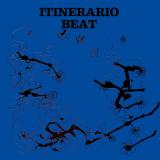
The Blue Sharks - Itinerario Beat (feat. Rigol (Duilio Radici)) LP
  • 01: Uno Dei Due (Feat. Rigol (Duilio Radici))
  • 02: Sembrava Sincera (Feat. Rigol (Duilio Radici))
  • 03: Il Mago (Feat. Rigol (Duilio Radici))
  • 04: Il Campione (Feat. Rigol (Duilio Radici))
  • 05: Itinerario Romantico (Feat. Rigol (Duilio Radici))
  • 06: L&Apos;Ascensore (Feat. Rigol (Duilio Radici))
  • 07: Strane Vacanze (Feat. Rigol (Duilio Radici))
  • 08: Viaggio A Londra (Feat. Rigol (Duilio Radici))
  • 09: Quartiere Residenziale (Feat. Rigol (Duilio Radici))
  • 10: La Baita (Feat. Rigol (Duilio Radici))

First-ever official reissue - Clear blue vinyl edition.

"Itinerario Beat" is as intriguing as it is mysterious. Performed by a group of largely unknown musicians called The Blue Sharks—previously heard on the excellent "It Became Crystal" (reissued by Redi Edizioni in 2021, Cat. No. REDILP001)—the album features ten easy-listening instrumental compositions for bass, drums, piano, and Hammond organ. The tracks are arranged and performed with distinctive taste, blending elements of beat, jazz-funk, and symphonic pop. Officially credited to Rigol, the pseudonym of composer Duilio Radici, the music also appears to include an uncredited contribution from Ugo Fusco, composer of several soundtrack LPs published by Edizioni Leonardi.

Beyond their use in television and film, library music tracks are highly sought after by renowned musicians and DJs and are frequently sampled. A notable example is "Itinerario romantico," included on this LP, which was sampled by rapper Travis Scott in his 2016 track "90210."

pre-order now06.03.2026

expected to be published on 06.03.2026

28,53
Elisabeth Klinck & Nils Vermeulen - Pioen

Elisabeth Klinck & Nils Vermeulen

Pioen

12inchBLICKWINKEL23LP
blickwinkel
27.02.2026

Pioen is the second album by Elisabeth Klinck & Nils Vermeulen, released on blickwinkel. It was recorded in a small chapel of a monastery in the city center of Ghent. A chapel by nature is a place of contemplation and meditation, which automatically had influence on the music. Movements slow down, attention is sharpened and the overwhelming silence of the space becomes part of the music. Sound and silence are meticulously woven into each other. Even when the music grows at times dense and heavy, there is an ever-present sense of closeness and intimacy. This is reinforced by the use of the voice, which naturally appears throughout the album, not as a separate layer but as an extension of the instruments.

The pieces – this time more curated than on their previous album Pair, Paire – arose from hours-long improvisations where sound became space and space became sound. Bringing together violin, double bass and voice, Pioen unfolds as a serene and honest journey, inviting the listener into a state of contemplation.

Elisabeth Klinck is a contemporary violinist, composer and performer based in Brussels, known or her timeless, deep-listening sound worlds. Her album Picture a Frame (2023) and Chronotopia - selected by The Quietus as one of the best albums of 2025 - were released on the Swiss label Hallow Ground. A big part of her work revolves around tactility, fragility, and a very physical approaches to sound.

Nils Vermeulen is a Belgian double bass player active in all varieties of adventurous music. He has played with Paul Lytton, Martin Küchen, Seppe Gebruers, William Parker, John Dikeman, Luis Vicente, among others. He works across many scenes, from free improv to jazz to contemporary classical music, and in many distinct constellations, such as his own groups Kabas and Jukwaa, a Norwegian free jazz trio with Tollef Østvang and Heidi Kvelvane, a string duo with Elisabeth Klinck, and as the double bassplayer of Nemo ensemble. In 2023, he released his debut solo album on Aspen Edities.

pre-order now27.02.2026

expected to be published on 27.02.2026

23,95
Black Swan - Paralyzed LP 2x12"
  • 1: When The Cold Wind Blows
  • 2: The Death Of Me
  • 3: Different Kinda Woman
  • 4: If I Was King
  • 5: Shakedown
  • 6: Fire And The Flame
  • 7: I'm Ready
  • 8: Paralyzed
  • 9: Carry On
  • 10: Battered And Bruised
  • 11: What The Future Holds

BLACK SWAN Return with Third Album “Paralyzed” — A Masterclass in Melodic Hard Rock Robin McAuley (McAuley Schenker Group), Reb Beach (Winger, Whitesnake), Jeff Pilson (Foreigner, The End Machine, ex-Dokken), and Matt Starr (Ace Frehley, Mr. Big) — collectively known as BLACK SWAN — are back with their explosive third album, Paralyzed. Following the critical acclaim of their previous releases, the supergroup once again delivers a powerful statement in modern hard rock. With all songs written and composed by McAuley, Pilson, and Beach, and expertly produced by Pilson, Paralyzed showcases Black Swan at their peak performance — offering a dynamic mix of towering vocals, razor-sharp riffs, and hook-laden melodies. The band’s chemistry continues to shine, elevating their songwriting and musical delivery to new heights.

Tracked at Pilson’s Los Angeles studio, the album reflects the tight-knit synergy among its members. McAuley’s commanding vocals remain as ageless, while the instrumentalists deliver with precision and fire. Much like its predecessors, the new record is a testament to the individual and collective talents of these seasoned musicians. Far from being a patchwork of their previous bands, BLACK SWAN has firmly carved out its own identity. Paralyzed is fresh, heavy, and melodically rich — a cohesive and compelling album that feels both classic and contemporary. Building upon the blueprint laid by their debut, Shake the World, the band expands their sonic universe. The result is a record that not only meets but surpasses expectations, cementing BLACK SWAN as a formidable force in the modern hard rock scene. Whether you’ve followed these legendary musicians since the heyday of '80s rock or you’re just now discovering their magic, Paralyzed is essential listening — a masterclass in melodic hard rock delivered by artists who continue to defy time and expectations.

pre-order now13.02.2026

expected to be published on 13.02.2026

27,10
Força Maior - Morte Lilás LP

Força Maior

Morte Lilás LP

12inchPERF004
Perf
09.02.2026

Força Maior combines the vital saxophone explorations of Pedro Alves Sousa with the infinitely subtle electronic processing of Pedro Tavares. Sousa (aka Má Estrela) is known for manipulating his woodwind through guitar pedalboards & amplifiers, creating far-from-ordinary sonics rooted in unceasing curiosity. For his part, Tavares (aka funcionário) conjoins video & sound work to create space for the pensive wanderings where memory and imagination interlace.

The album Morte Lilás was recorded over a week in June 2023 in Pedro Alves Sousa's family farm, located in the village of Ferreirim, near Lamego, in Portugal. The partly abandoned farm served as the residency, studio, and inspiration for the album: it is a 400-year-old granite farm that belonged to a member of the "40 conspirators"—a group that led the revolution for Portugal's independence from Spain in the 17th century.

Morte Lilás is a remarkable album of committed meditation. Each day on the farm was a recording day for the two Pedros: Sousa on sax & electronics, Tavares on sampler & processing. Apart from slight sonic incursions from the surrounds—the birds on 'Quinta à tarde'—and the sporadic use of sine tones, the source sounds all start from the saxophone. It is then processed both by Sousa & Tavares. The album unfolds as a saxophonic tapestry that breathes with quiet intensity. Each piece invites close listening, revealing fine gestures and tonal shifts that shape a contemplative, ambient space. Força Maior move with calm precision.

The album opens with the unhurried overture 'Quinta à Tarde' a Portuguese pun on Eno's Thursday Afternoon that announces the textures at play. Sousa's breathy entrance is paired with a soft, delicately shifting, backdrop. As the track progresses, time seems to stretch. The arrangement resists urgency, favouring subtle evolution over dramatic turns. Pensive layers shift & drift, creating a sense of suspended motion that brings the listener into the environs of Morte Lilás. 'Quinta à Tarde' is a long-form fade, shifting emphasis from Sousa to Tavares.

'Cubos' continues the gauzy feel, but with a more up-tempo tilt. Rhythmic clicks & pings setup a swung time for the sax to interpose melodic lines that are fed back & bent with cascading delays. Força Maior in distilled form.

Força Maior is in top form on the title track 'Morte Lilás', a sprawling centrepiece that showcases their command of atmosphere & emotional pacing. By turning up the reverberation & leaning into a continuous format, they dissolve the gap between hypnotic trance & articulate reverie. Then, a moment of stillness. The track pauses, not abruptly but like a tide pulling back, revealing the contours beneath. What follows is a return to the album's more relaxed architecture: understated rhythms, softened textures, and a sense of spaciousness that opens space for reflection. It is a transition that feels organic, as if the song itself needed to exhale before settling back into its contemplative groove.

'Menta' is another short-form miniature of the band's signature contours: beautiful loops of air pressure gradients that carry an emotive weight & light.

The album closes with 'Cascata do Inferno'. The title suggests violence, but the music whispers instead—an atmospheric cascade of breath & tone that emerges in slow, deliberate waves. Short melodic cycles are matched by shimmering electronic chords. It's a piece that rewards patience, draws the listener in to drift downstream, eyes closed, into the serene turbulence of its current.

pre-order now09.02.2026

expected to be published on 09.02.2026

22,65
Items per Page:
N/ABPM
Vinyl