2025 Repress!
Remastered and, for the first time, back to back on vinyl, two of Greg Wilson's best-loved edits/mash-ups (plus a bonus track never previously available).
'Two Sides Of Sympathy' combines a pair of P.T.A. mash-ups built around Amerie, Massive Attack and the Rolling Stones. A signature GW edit, originally pressed in 2007, that would feature in his classic 2009 Essential Mix.
'Gotta Keep Workin' It was a GW mash-up pressed back in 2005, its main elements being PM Dawn (sampling Imagination) and Missy Elliot. It would also find it's way into the Essential Mix. A later version, 'Working The Illusion', this time going straight to source with Imagination, whilst retaining Missy Elliot's rap, is made available here for the first time as a bonus addition.
quête:gw
If there was ever a dance oddity it’s the bizarrely named single ‘Prisencólinensináinciúsol’, released in late 1972 by Italian entertainment icon Adriano Celentano, first appearing as a 45 on his own Clan label. A cult favourite if there ever was one, GW Edits kicks off their label with a sumptuous edit sewing the A and B side of the record into an 11-minute masterpiece named ‘Adriano Italiano’.
Renamed ‘The Language Of Love (Prisencol…)’ for the UK market, the original failed to make any impression on the UK chart instead becoming a cult DJ treasure. The fact that it was regularly reissued over the next few years illustrates its enduring appeal.
The novelty of its title and zany nonsensical lyrics may have caught the attention, but what sealed the deal was that groove! On top of that, Celentano’s vocal (as well as that of his wife Claudia Mori, who injected the short female section) that mimics the way English sounded to non-English speakers, comes across nowadays as proto-rap, receiving kudos as such in more recent times. The track is most certainly an anomaly, having no bearing whatsoever on hip-hop culture, yet somehow unconsciously envisaging it.
The flip side of the record was appropriately called ‘Disc Jockey’, also featured that infectious rolling groove complete with offbeat hat. It wasn’t as DJ friendly though, the drums not dropping for the first minute, whilst it also featured a more traditional sounding song in Celentano’s native tongue instead of the rhythmic rap gobbledygook of ‘Prisencólinensináinciúsol’.
Here the two are sewn together for a full-length ‘Adriano Italiano’, running at just over 11 minutes, with the addition of a further two-minute instrumental version. The full-length appears on vinyl for the first time and, along with the original ‘Adriano Italiano’, launches the GW Edits series, bringing this eccentric favourite to a new generation of DJs in time for its 50th anniversary next year.
DJ Support:
Craig Charles, Gilles Peterson, Colleen ‘Cosmo’ Murphy, Francois K, Luke Una and Downtown Disco.
The third in Greg Wilson’s 12 inch DJ series of GW Edits features two uptempo mid-‘70s disco cuts by the Mighty Clouds Of Joy and Vicki Sue Robinson, the latter a huge tune back then, the former very much slept on, but sounding every inch a classic. Reworked with Ché Wilson, following on from last year’s acclaimed remix of Gabriels ‘Love And Hate In A Different Time’, ‘Mighty Cloud’ and ‘The Turnaround’ guarantee full-on dancefloor satisfaction.
The vinyl-only DJ-oriented A&R Edits makes a return with a new 12” EP ‘Disco Mondo’ / ‘In The City’. Following releases from Henry Greenwood, Derek Kaye, Sophie Lloyd, Fingerman, Peza and Twisted Soul Collective between 2013-15, the label stayed on the backburner for four years as other projects took precedent. Now re-emerging with the tenth vinyl release in the series, combining the GW & Henry reworks of El Coco’s smooth grooving esoteric disco cut ‘Mondo Disco’ and Marshall Hain’s brooding Balearic treasure ‘Dancing In The City’.
Courtesy of the influential Rinder & Lewis production team, ‘Mondo Disco’, originally issued in 1975, became a firm favourite with underground DJs and disco lovers, this playful yet purposeful rework boosts the track’s drive with an eye on the contemporary dancefloor.
Marshall Hain’s hazy/lazy ‘Dancing In The City’, a much-loved memento of the summer of 1978, was a huge UK hit, reaching #3 on the singles chart. Offering a perfect soundtrack to sun-kissed beaches and blissed-out festivals, this rework breaths a new lease of life into this sonic delight.
With releases on established labels like Force Inc., Cytrax, Lo-Fi Stereo, Morris / Audio, Delay or Background, he made his way with his tricky electronic sound. He started his own label, Edit that embraces the concepts of reuse and redefinition. Components are generated, arranged and fine-tuned. They are stripped apart, processed and rearranged. Sophisticated editing techniques enable this process to continue without end. The resulting audio productions become remixes of themselves.
- 01: Mrs. Sabra Bare Hampton Bolenkin
- 02: Mrs. Lena Bare Turbyfill Old Fool
- 03: Frank Bare Katie Morley
- 04: Marshall Ward Blue Ridge Mountain Blues
- 05: Mrs. Lena Bare Turbyfill Down In The Low Green Valley (Jealous Lover)
- 06: Mrs. Lena Bare Turbyfill & Ben Dugger Cindy
- 07: Mrs. Lloyd Bare Hagie Omie Wise
- 08: Mrs. Lena Bare Turbyfill & Mrs. Lloyd Bare Hagie Groundhog
- 09: Mrs. Sabra Bare Hampton & Oscar Hampton Partridge In A Pear Tree
- 10: Mrs. Lena Bare Turbyfill Jim Blake
- 11: Mrs. Lena Bare Turbyfill Paper Of Pins
- 12: Mrs. Lena Bare Turbyfill The House Carpenter
- 13: Mrs. Lena Bare Turbyfill George Collins
- 14: Mrs. Ethel Turbyfill Bare As I Went Out One Morning Fair
- 15: Mrs. Lena Bare Turbyfill Skip To My Lou
- 16: Mrs. Lloyd Bare Hagie & Mrs. Lena Bare Turbyfill Young Farmer
Folklorist Derek Piotr continues to excavate North Carolina mountain songs, presenting an assortment of archival recordings taking in Child Ballads, bawdy songs, play-party tunes, and old-time family singing - with a further focus on overlooked star Mrs. Lena Bare Turbyfill, of Elk Park, NC.
Tracks 1 and 9 recorded by Herbert Halpert near Morganton, North Carolina, April 19, 1939.
Tracks 2, 3, 5, 6, 7, 8, 10, 11, 12, 13, 14, 15 and 16 recorded by Herbert Halpert in Elk Park, North Carolina, April 12, 1939.
Track 4 recorded by Marshall Ward in Banner Elk, ca. 1979, transferred from analogue tape by Derek Piotr.
Curated by Derek Piotr.
Photograph of Mrs. Lena Bare Turbyfill courtesy of Elizabeth Gwyn.
But rest assured - it's still the same excellent band from Ruda ?l?ska, only this time instead of a forest full of ghosts or a land of fairy tale creatures like a Fruwajacy Przestepca the duo of producers takes us on an interstellar journey!
The artists' third album, just titled KOSMOBOTANIKA, is an over forty-minute work skillfully composed from a multitude of various samples, and genre-wise presenting the sounds of deep house, trip-hop, breakbeat, ambient and even jazz. This is electronic music with a very cinematic, visual and imaginative character, something at which ETNOBOTANIKA has undoubtedly achieved mastery confirmed by their first two very well-received albums. This cinematic style (electronic concept album?) is reminiscent of the classic albums of the genre's progenitors from the UK like The Orb (first releases) or The KLF (the iconic "Chillout" album), but also the French Motorbass.
The Silesian duo does it their own way, of course, with a local twist. Thus, in the cosmic journey our guides will be in-sampled familiar voices from Polish television, cinema, radio and dusty vinyls (yes - samples from Mr. Kleks in Space had to be on the album, of course :) ).
There is no shortage of atmosphere-building instrumental fragments here, but also quite song-like tracks with catchy melodies and vocals. Fans of the band will certainly be satisfied.
What is there to say - ETNOBOTANIKA has created another classic, which simply must be on the shelf :) Trust them and let yourself be taken on a cosmic journey - satisfaction guaranteed!
Arodes & Alessio Cristiano / Super Flu / Moeaike / Martim Rola & Mats Westbroek
Unreleased Records Vinyl Sampler
Unreleased Records is the label founded by Arodes, recognized for its afro-house, melodic, and club-oriented sound within the international electronic music landscape. Through a combination of high-quality productions, a strong and carefully developed artist roster, and an expanding live platform, Unreleased Records positions itself as a forward-thinking imprint that bridges underground credibility with international audience reach, and are now, after much demand, debuting on vinyl, with this standout 4 tracker EP with 3 tried and tested club bangers, and 1 unreleased gem.
So far, “Gwele,” “Don’t Mind,” and “Nothing’s Changed” have already been supported by heavyweights of the scene, including, Ante Perry, Black Coffee, Bluckther, Camilo Franco, Carl Bee, Chus & Ceballos (Ceballos), Cincity, Deer Jade, Djuma Soundsystem, Enoo Napa, Facundo Mohrr, Hyenah, Jonathan Kaspar, Joseph Capriati, Mauricio Brigante, Moeaike, Nicolas Masseyeff, Queen Rami, Sasha Carassi, Simone Vitullo, THEMBA, and Xinobi.
JOCELYN VIRAPIN is one of the master of the Guadeloupean Gwoka percussion.
Born October 17th, 1957 in Basse-Terre, he’s an author, composer, producer and a vinyl digger.
His Gwoka is a pure tribute to the traditional combination of responsorial singing in Guadeloupean creole, rhythms played on the Ka drums and dancing.
He started to play in the 90’s with his band Gwaka. He opened and collaborated with prestigious band such as Kassav or Zouk Machine.
He has a massive discography as arranger and musician: he appears on more than 78 albums! The track "Pasyon" was originally released in 1994 on a rare vinyl , but with the artist we decided to do an edit, so we invited the super talented jazz player Florian Pellissier for a Rhodes improvisation on the original take.
The track "Respè Pou Fanm" was originally released with his band BELOKA in 2010 and was only pressed on a Cd format at a very limited quantity. This beautiful song is a blend of Ka, fantastic jazzy keys on Rhodes, hypnotic bass, sublime creole spiritual chants. With an incredibly joyous feel, the lyrics gave a timeless advice to men: Respect Women .
It definitely deserves a vinyl version for all the music lovers, Dj’s and diggers from all over the world !
Kenbé red pa moli !
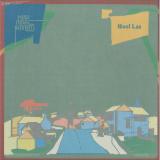
Welsh multi-instrumentalist and producer Huw Marc Bennett sinks his hands deep into the soil of South Wales, reimagining traditional melodies from the Morgannwg/Glamorgan region through an earth-toned palette of folk, jazz and psychedelic roots. ‘Heol Las’ is ancient music seen through a modern prism; acoustic textures rubbing up against hypnotic grooves, field-worn stories refracted into new shapes.
Every track on the album is either drawn directly from, or woven around, archival tunes of the region. Bennett’s approach is reverent yet expansive, pulling history into the present while staying grounded in community, landscape, and lived culture.
Bennett says, “On this record there are versions, interpretations and tunes influenced by cerddoriaeth werin, the folk music of Morgannwg; The place I was born, I was raised in and revisit to feel grounded. The melodies you hear were given, found and invented.”
Presenting the third thematic volume on the “Aquapelagos" series - a collection of split LPs where selected artists offer their own take into water surrounded cultures and communities. After the initial release of the Anthology compilation Aquapelago in 2022 (Discrepant ,CREP91) and the split LP Atlantico by Lagoss & Banha da Cobra (Keroxen, KRXN027) as well as the direct collaboration LP Índico by Mike Cooper & Pierre Bastien we proudly introduce an the third volume in the series in the shape of no other than two inspiring artists, Vica Pacheco and Pak Yan Lau. Two different sound journeys inspired by the majestic and peaceful Pacific Ocean, the vastest, largest and deepest ocean of our planet.
Vica Pacheco’s composition takes a calm meditation approach where water flutes and synths brush shoulders to create a ever expanding mind journey whereas Pak Yan Lau’s ambitions Neo classical piece, The Ocean in Us, talks about that grand overwhelming feeling, that vast space deep under, on the bottom of the Pacific. Both compositions were recorded and created with the particular wet acoustics of the Tank in Santa Cruz de Tenerife in mind.
From Philip Hayward and Matt Hill’s liner notes: ‘’The Pacific is a complex space, comprising a third of the Earth’s surface. A cascade of islands runs along its eastern flank, down from the Kamchatka peninsula, through Japan, Taiwan, The Philippines, Melanesia and on to Australasia. In its watery heart the islands of Micronesia and Polynesia stretch across huge distances, north-east to the Hawaiian archipelago, south east to Rapa Nui and south west to Aotearoa and Chatham island. Closer to the shores of the Americas lie Tierra del Fuego, the Galapagos Islands, Haida Gwaii and the Aleutians. This is a space that resists easy characterisation. The Pacific laps the shores of Japan and Chile, the beaches of Australia’s East Coast and the cold, damp coasts of British Colombia and Alaska alike. Indeed, the space is so vast that it is a world in itself and one rarely navigated in its entirety. In this manner, strands of genres and the songs that reflect them are components in an intricate mesh of associations.‘’ Philip Hayward and Matt Hill, April 2022
Soul legend Gwen McCrae’s All This Love gets a fresh dancefloor reinterpretation from Tokapi Disco Team, the German production duo known for their work with million-selling act Sash!. Ben Liebrand adds his signature touch with extended groove-driven edits, crafted with DJs firmly in mind. Tokapi Disco Team blends a warm, rounded kick with subtle percussion and a light shuffle that keeps the rhythm flowing effortlessly. A rolling, funk-inflected bassline locks in with Chic-inspired piano chords, while tasteful disco strings lift the arrangement throughout. Gwen’s unmistakable vocal remains the emotional centerpiece — rich, soulful and timeless.
The result is a seamless nu-disco and disco-house crossover that bridges classic soul heritage with contemporary club energy.
THIS is Gwen—this is ESSENTIAL.
- A1: One Two
- A2: I Am A Geddion
- A3: Ain't No Stopping Nancy
- A4: Gwan A School
- A5: Coward Of The Century
- B1: Bam Bam
- B2: Transport Connection
- B3: Pigeon Rock
- B4: Roof Over My Head
- B5: Only Woman Dj With Degree
Das Album "One, Two" von der Reggae/Dancehall Legende Sister Nancy enthält „den meistgesampelten Reggae-Song aller Zeiten“ („Bam Bam“) sowie zwei weitere Hitsingles („One Two“ und „Transport Connection“). Produziert von Winston Riley und gemischt von Soldgie bei Channel One. Sister Nancy in ihrer Blütezeit mit einer erstklassigen Auswahl der besten Reggae-Rhythmen, originalem Artwork und einer Innenhülle mit Liner Notes des angesehenen Reggae-Historikers John Masouri.
- A1: The Good Life (Feat Gwendoline Christie & Big Special) (3 00)
- A2: Double Diamond (4 18)
- A3: Elitest Goat (Feat Aldous Harding) (3 24)
- A4: Megaton (2 52)
- A5: No Touch (Feat Sue Tompkins) (3 03)
- A6: Bad Santa (3 24)
- B1: The Demise Of Planet X (2 23)
- B2: Don Draper (4 18)
- B3: Gina Was (3 25)
- B4: Shoving The Images (2 26)
- B5: Flood The Zone (Feat Liam Bailey) (3 21)
- B6: Kill List (Feat Snowy) (3 11)
- B7: The Unwrap (2 18)
Flanked by a team of collaborators - including Nick León, more eaze, Ultrafog and Kissen - Ben Bondy captures the Kwia-pop zeitgeist on 'XO Salt Lif3', sluicing down dappled emo and downtempo grooves with log drum thwacks, tempered field recordings and sandblasted shoegaze guitars.
Forget what you think you know about Ben Bondy; like Naemi's fuzzy 'Breathless Shorn', ‘XO Salt Lif3’ is a decisive shift away from the ambient world and towards contemporary underground pop. Last year's amapiano-tinted loosie 'Bend' serves as the album's opener and is the best taster, its slick DSP squelches, granulated drones and sub rumbles immediately swapped out for breezy acoustic guitar riffs, tuned log drum hits and Bondy's own Autotuned vocals. When Bondy turns down the temperature a little, letting the orchestral synth arrangements slip into fuller view on 'Halfmoon', a collaboration with Nick León and Aussie producer Lovefear, it's tempered by low slung emo riffs and mumbled sweet nothings.
By the time we hit 'Dreamseed', Bondy's in full swing, offsetting slow breaks and multi-tracked vocal harmonies with full-spectrum shoegaze power chords that cut into the mix like a chainsaw, with crunchy amp crackle foreshadowing the Bark Psychosis-like drop. Bondy hits a cruise when More Eaze helps out on 'There Is A Place'. Maurice's unmistakable pedal steel draws us in, used by Bondy to add an Americana accent to his euphoric fusion of amapiano and indie pop. It's music that'll make perfect sense if you've caught one of Bondy's notorious DJ sets, where you might hear anything from American Football and Jessica Pratt next to Gwen Stefani, Skinny Puppy or Sneaker Pimps. It’s this chaotic, open-hearted approach - which also plays a part in the Shineteac material - that makes 'XO Salt Lif3' so effortlessly enjoyable.
- A1: Intro
- A2: Raw Born Reggae
- A3: Nah Lie (Interlude)
- A4: She Nah Lie
- A5: Tings Ah Gwan (Interlude)
- A6: The Children
- A7: Radio (Interlude)
- A8: Gunman
- B1: Trenchtown Ride (Interlude)
- B2: The Herbs W/ Barrington Levy
- B3: Clarendon (Interlude)
- B4: Farmers Rock
- B5: Farmers Rock Dub
- B6: Dog Ah Bark Studio (Interlude)
- B7: Curfew Drop W/ Linval Thompson
- B8: Outro, Until Next Time
Six years after Nazamba’s first offering, he delivers his final gift: A Message From Zion.
The journey begins with George ’Nazamba’ and Rico ‘O.B.F’, two kindred spirits connected by sound. Countless cross-ocean visits between Kingston and the French Alps, from enjoying hot beers on the beach to reasonings in snowy mountains. Moments that forged a pure brotherhood.
Out of this friendship grew his first album, the self-titled Nazamba in 2019. Now comes his second, a collaboration between Thompson Sound and Dubquake Records. Together, they unite two generations of reggae powerhouses. Produced by Rico O.B.F, the record reimagines classic Thompson Sound gems. Nazamba’s musical storytelling is accompanied by the Roots Radics, with guest appearances from Linval Thompson & Barrington Levy.
Then came silence. In 2022, Nazamba passed on to Zion. The album project was unfinished, yet full of life. What remains is raw, unpolished and painfully beautiful.
A Message From Zion, a celebration of Nazamba’s universe. His voice, wisdom, poetry, heart and spirit. Forward we ah go. Ah true.
A must-hear for dub lovers, beat heads, and adventurous ears alike - Gwaan is genre fusion done right. Catalan vocal powerhouse Sr. Wilson joins forces with producer Geliks for Gwaan - the bold debut of Cinta Gara Records. Rooted in dub but fearlessly genre-hopping, this EP delivers four distinct versions that blend hip-hop, roots reggae, techno, and trap with finesse. Sr. Wilsons dynamic performance commands the spotlight, while remixes from Krystian Shek, Quindactiv, and Sascha Reder push boundaries.
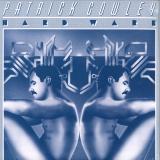
Cybernetic disco maestro Patrick Cowley graces Dark Entries once again with Hard Ware, an LP of far-out funk and synthpop celebrating what would have been Cowley’s 75th birthday. Best known for his chart-topping disco anthems, Cowley left us with an incredible body of work before his tragic death in 1982 due to AIDS-related illness. Since 2009, Dark Entries has been working with Cowley’s friends and family to uncover the singular artist’s lesser-known sides, including his soundtracks for gay pornographic films, which the label chronicled on compilation albums School Daze, Muscle Up, and Afternooners. Hard Ware presents the closing chapter in a trilogy of unreleased Cowley dancefloor bangers that began with 2022’s heavy-hitting Male Box and was continued with the soul and garage-inflected From Behind in 2024. The most expansive release in said trilogy, Hard Ware delivers ten tracks of pure, uncut Cowley: sultry, psychedelic, sarcastic, and just a bit sleazy. Cowley devotees will delight in “Tech-No,” a sparse instrumental demo version of his epically dystopian “Tech-No-Logical World.” You could soundtrack your next aerobics session with cheeky numbers like “Pajama Party Massacre” or “Shake It Up,” both of which feature Cowley himself on vocals. The frenetic “Big Ass in Motion” is built around samples from Rudy Ray Moore and The Madam’s infamous “Sensuous Black Woman,” an X-rated comedy record that would later feature in classic booty house records. Mid-tempo cosmic groovers are well-represented with jams like “Hellfire” and “Megablue,” which perfectly capture Cowley’s bathhouse-in-outerspace sensibilities. No collection of Cowley’s work would be complete without an interstellar floor-filler, and we’ve got quite a few here, like “Jungle Jump,” which pits whirling beats with dub-laced swirls of synth, or “Spellbinding Lover,” a Donna Summer-indebted melancholic boogie masterpiece that features Sylvester backup singer Jeanie Tracy. Hard Ware closes with the chilling synth-hymn ”Ice Age,” in which Loverde vocalist Peggy Gibbons sings of a coming frosty apocalypse. The story told in “Ice Age” mirrors the coming AIDS crisis and feels like a haunting premonition from Cowley. The record comes in a sleeve with a hand-airbrushed circuitboard-inspired design by Gwenaël Rattke, and includes lyrics as well as liner notes by Andrew Ryce and Peggy Gibbons. Hard Ware is another crucial document of a tremendous talent taken too soon.
Indo Warehouse / Kunal Merchant ft. Raja Kumari
Indo Warehouse presents Bombay Acid (Incl. SYREETA Remix)
Indo Warehouse presents ‘Bombay Acid’ on Crosstown Rebels, featuring Kunal Merchant and Raja Kumari. The hypnotic new single, fusing heritage and future-focused touches, lands with a remix from SYREETA
Making their debut on Crosstown Rebels, New York collective Indo Warehouse unveils ‘Bombay Acid’. The release is a collaboration between co-founder Kunal Merchant and acclaimed vocalist Raja Kumari, capturing the Indo Warehouse ethos: hypnotic grooves, ancestral textures,and underground energy fused into one expansive, ritualistic journey.‘Bombay Acid’ pairs Merchant’s meticulously layered production, melding deep, hypnotic grooves with textures drawn from South Asian musical traditions, with Kumari’s commanding vocals. The track unfolds as both a club-ready cut and an immersive ritual, bridging cultural heritage and contemporary electronic sounds. A Grammy-nominated rapper, singer, and classically trained dancer, Raja Kumari bridges Indian tradition with contemporary global music. She has collaborated with Timbaland, Dr. Dre, Gwen Stefani, John Legend, and Iggy Azalea, and has performed at Coachella, Wireless, and India’s NH7 Festival. Her imprint, Godmother Records, and projects such as ‘The Bridge’ (2023) and ‘Kashi to Kailash’ (2025) explore resilience and spiritual depth, making her one of the most distinctive voices in modern music.
On the flip, SYREETA delivers a striking rework. Authentic and fearless, the UK favourite has shattered glass ceilings while drawing on chunky basslines and energetic grooves from house and techno to craft her own sound and style. Her remix injects ‘Bombay Acid’ with that signature low-end punch, while driving and harnessing the track’s cosmic energy for late-night dancefloors.Kunal Merchant has spent years building a sound that is simultaneously drawn from his South Asian lineage and futuristic. From appearances at Coachella, Hï Ibiza, Fabric London, and Brooklyn Mirage, to releases across the Indo House spectrum, he has become a central figure in shaping the genre and bringing South Asian voices to the global electronic stage. Indo Warehouse, co-founded by Merchant and Kahani in 2022, has evolved from its underground origins in New York into an international movement. Their live shows are immersive experiences, rituals where identity, tradition, and club culture collide, and their releases continue to push the boundaries of house and techno while remaining deeply grounded in their origins. With ‘Bombay Acid’, Merchant and Kumari deliver a production that is both hypnotic and expansive, inviting listeners
into a universe where rhythm, culture, and underground energy meet in unison.
Wally Badarou is a synth pioneer and musical polymath. But rarely does he sing over his sumptuous tracks. The 6 songs that comprise new record Simple Things finally realise Wally's vision for select backing tracks from his beloved Colors Of Silence.
The tracks were originally developed back in 2001 for the release of the original CD; here, Wally has “simply" added overdubs and vocals to their mastered mixes with some discerning edits. Simply put, Simple Things is another slice of simply stunning Wally Badarou genius.
Simple Things has been decades in the making. Indeed, Wally struggled not only with the idea of singing these wonderful songs himself but singing them in English and writing his own lyrics, while wrestling with the sensational backing tracks, which themselves seemed to have taken on a life of their own.
As Wally explained to us: "In addition to the instrumental artist I have been known as, so far, there has always been a singer who simply was not sure he was, up until now. Even though “Back To Scales Tonight”, my very first album, was, indeed, a song album."
Opener "It Couldn't Be You" embellishes the uptempo groove of soca-funk gem "The Lights Of Kinshasa". As Wally explained to us, it's about “a simple love story somewhere, one rainy night, under the lights of Kinshasa. A woman, a man, online dating, quite usual in our times. Then they meet, almost missing each other." The guide vocal Wally had laid for Colors Of Silence - with an organ sound - seemed striving for words in Linguala, a Congolese language he could not speak. Therefore the decision to do it himself was not an easy one, for it had to be in English to fit his singing. We think it turned out pretty good!
"You Can't Hide Always" vocalises Wally's deep concerns set to the propulsive "Smiles By The Millions": "Populism, ostracism, radicalism, ethics and values all turned upside down worldwide, are they all inevitably exacerbated by our social networks? It could all melt down one day, like a house of cards in the ocean of fake news and false prophecies”. Wally wanted to keep the track as bare as possible but, inevitably, the backing vocals and the synth-brass arrive ultimately to present a welcome 70s flavour, with no snare-drum added.
The bright and breezy "We'll Make It Again" adds vocals to "Where Were We", a tropical, reggae-tinged bounce through the islands. Here's Waly: "Where were we when we last said: "I love you"? Simple words to express something quite common, but never quite simple to deal with. A simple song about the resilience of the broken hearts.” The reggae came from it being conceived when Wally was scoring for “Third World Cop”, a 1999 Jamaican action movie.
"Walk Straight Ahead" provides Wally's gorgeous, contemplative and idiosyncratic vocals to the deep serenity of Colors Of Silence highlight, "Amber Whispers". It's a gliding, divine, mini melodic masterpiece. It'll make you swoon in its extreme beauty. As Wally describes, "it started as just whispers, sweet amber whispers. Then the colour turned darker, as darker skies seemed to fall upon us while the whole world keeps on walking ahead, straight ahead, regardless of the blatant warnings, feeling much too comfortable in conformity. Initially, the verses were to be spoken only. I realised they could be sung all the while, without overshadowing the ethereal atmosphere." Amen.
The serene, celestial "Painting My Life Blue" presents the vocal version of "Days To Wonder". Says Wally, "how does it feel when your second half is gone after decades of riding life together? Past the temporary loss of your bearings, you come to realise you've been blind to the essential, and suddenly you can see...For this most intimate song of mine, I had tried to come up with a melody on top of the existing backing track, long before realising the melody was in the keyboard part already. It just needed to be properly mixed with it."
The profoundly emotional "Just Two Lovers" works up the formerly-too-brief and glorious "Crystal Falls" into a much fuller masterpiece and features acoustic guitar sparkle before fully glistening with some gentle head-nod percussion. Waly explains further: "Dear little green men, please tell me, what is it about us that makes you want to come and visit us so often (contrary to Fermi's assertion)? And here is the reply I believe I heard them sing: "You've got the key you've been searching for: Love”. I reverted to the initial backing track I had made around 1985, which already bore the melody, and which I added acoustic guitars to, before singing it." An astounding closer.
A synth specialist, there can be few artists more under-appreciated given their vast influence than Wally Badarou. His solo work practically defined the sound of the Balearic DJs of the 1980s, and thus the more sophisticated sound of dance culture thereafter. He was one of the Compass Point All Stars (with Sly and Robbie, Barry Reynolds, Mikey Chung and Uziah "Sticky" Thompson), the in-house recording team of Compass Point Studios responsible for a series of albums in the 1980s recorded by Grace Jones, Tom Tom Club, Mick Jagger, Black Uhuru, Gwen Guthrie, Jimmy Cliff and Gregory Isaacs. Badarou's keyboard playing could also be heard on albums by Robert Palmer, Marianne Faithfull, Herbie Hancock, M (Pop Muzik), Talking Heads, Manu Dibango and Miriam Makeba. He also produced Fela Kuti. Phew!
When we asked Wally about the significance of this collection's title, he explained: "These are "Simple things” that everyday’s life seems to build upon. The simplest are the harder to describe, but when satisfactorily described i.e. with simple words, they are the more genuine and authentic to express and share. I’ve immersed myself in other classic song lyrics, something I hardly did before, just to appreciate the genius behind the simple words they were made of, and had a great time studying how powerful they were in expressing complex ideas such as love."
Recording was twofold: first, most of the backing tracks were recorded in 2001, in Wally's studio in Normandy, mostly using hardware synths and Yamaha digital consoles. Then, he fine-tuned the melodies and wrote the lyrics in late 2023, then added some overdubs and sang them all during summer 2024. States Wally, "Digital Performer was and remains the DAW I’ve been using throughout, ever since the 80s."
Wally's sophisticated synth textures and expressive keyboard runs are so full of character, so full of life, that this work of art transcends any easy genre categorisation. Meticulously remastered and cut by both Simon Francis and Cicely Balston respectively, it has been pressed to the highest possibly quality at Record Industry in Holland. Sometimes, the simple things are the most extraordinary.
The occasion of possibility runs through Ben Bertrand's new album Relic Radiation. It is all backdrops and layers. Hints of the emotive and the distant. Confronting the classical with what is new, looking for an expressive space. Melancholy, not melancholy. Contemplation on a midnight blizzard. Dust motes in a sunbeam. Sand dunes and microwaves.
Ever since 2018 and the release of his first solo album, Ben Bertrand has been working up his own interpretation of the bass clarinet as an instrument of the avant-garde. Touching upon ambient and cosmic as well as earthy sceneries, his is a gentle musical paradox come to life. Let go of explicit pleasantries, Relic Radiation is the polymathic interpretation of a frozen intercom, of a subdued intent of contact. The music is competent and familiar, distant without being distant. There is no predefined form or context here. It is a different kind of colour.
As musical moments and modi become enormous, things break down into exploration. On the crystal shores of perception, Relic Radiation leaves a lot of space for interpretation. It is never loud, although it works loud. An at times almost sequenced feel to treated and overdubbed bass clarinet and clarinet notes adds to a feeling of paradox. Every voice, every gesture indicates a way in. The electron is now an immeasurable wave."
Gwenan Spearing, known for her perceptive, groove-oriented DJ sets, and more recently as a live performer working with hardware improvisation, launches a new imprint, Phase Space, with Degrees of Freedom, a debut album diving deep into generative electronics, modular systems, and real-time response. Composed and recorded in 2019-2020, the album treats constraint as creative fuel, floating between ambient,
sonic sculpture, and improvisation, mapping Gwenan’s path from rural Wales to Berlin’s outer zones of experimental sound.
Sync opens with a theme on a slow triangle wave, expanding the space as it evolves. Some Pluck explores generative counterpoint using LFOs and Euclidean rhythms. Generator I unfolds in an oscillating time where keyboard and bass circuits cross-modulate. Sleep Pressure is a lullaby for grown-ups, capturing that eerie threshold before sleep, followed by Loper, where time flows fluid and unstable. The closer, Generator II, holds machine heartbeats in delicate equilibrium before unraveling into graceful decay, a soft farewell. (That’s the Universe waving.) Degrees of Freedom is algorithmic music with a pulse: visceral, hand-wired, and built for deep listening.
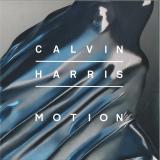
Issued in October 2014, debuting at number two on the UK Album Chart and at number five on
the Billboard 200 in the US, where it also became his second chart topper on the Dance/Electronic
Albums chart, Motion is Harris’ 4th studio album and a platinum-seller in the UK.
Packed with EDM crowd-pleasers as well as an impressive range of guest vocalists, including Hurts,
Haim, Gwen Stefani, John Newman and Ellie Goulding, it has been available on vinyl only once
before, a Record Store Day exclusive in 2015.
As Entertainment Weekly noted, “The best tracks on Motion…focus more on high-caliber vocals
than on booty-blasting low end... he's taking his chances with the most unpredictable technology
of all: the human voice."
Another all-time classic from the extensive back catalog of the legendary Miami songstress Gwen McCrae.
"90% Of Me Is You" is instantly recognizable, it's been sampled countless of times by some of the most seminal Hip Hop artists ever (Large Professor, Jaylib, Mobb Deep & more) & is a bonafide "Rare Groove" sure-shot that never loses it's appeal & is always in demand with DJ's & producers. Perhaps it's the pairing of the languid guitar & strings, or Gwen's sultry vocals & that steady breakbeat that keeps people hooked some 40 years after it's original release Whatever it is, it's classic material from start to finish!
Backed here with it's original b-side slow jam "It's Worth The Hurt" this super-rare 45 has been re-mastered, re-pressed & brought back for 2015's dance-floors in conjunction & with the permission of T.K. Disco / Henry Stone Music, Miami USA.
- A1: The Whispers - And The Beat Goes On
- A2: Tommy Stewart - Bump & Hustle Music
- A3: Loleatta Holloway - Love Sensation
- A4: The Jimmy Castor Bunch - Future Place
- A5: Claudja Barry - (Boogie Woogie) Dancin' Shoes
- B1: Frankie Smith - Double Dutch Bus
- B2: The Philly Armada Orchestra - For The Love Of Money
- B3: Carrie Lucas - Dance With You (Single Edit)
- B4: Candido - Jingo
- B5: Carol Williams - Love Is You
- C1: Positive Force - We Got The Funk
- C2: Gwen Mccrae - All This Love That I'm Givin
- C3: The Beginning Of The End - Funky Nassau
- C4: Instant Funk - I Got My Mind Made Up (You Can Get It Girl)
- C5: Inner Life - Ain't No Mountain High Enough
- D1: Patrice Rushen - Forget Me Nots
- D2: Fat Larry's Band - Act Like You Know
- D3: First Choice - Let No Man Put Asunder
- D4: Macho - I'm A Man
- D5: Barry White – Change
Get back to the golden age of Roller Disco Funk with a double vinyl including all the hits of the genre ! Featuring : Claudja Barry - Barry White - Inner Life - Patrice Rushen - Carol Willians - Positive Force - Frankie Smith - The Whispers
n C4 Instant Funk - I Got My Mind Made Up (You Can Get It Girl) 7” Version
Mit On My Way lieferte Gwen McCrae 1982 ein souliges Meisterwerk ab, das ihre Stimmgewalt und zeitlose Grooves zur Schau stellt. Das Album glänzt mit dem Kult-Hit Keep The Fire Burning, einem Muss für Dance- und R&B-Liebhaber, aber auch mit emotionalen Titeln wie I Need To Be With You, dem herausfordernden I Didn’t Take Your Man und dem ansteckenden Doin’ It. Es ist ein Beweis für McCraes bleibenden Einfluss auf Soul sowie Disco und hebt ihre Kunstfertigkeit hervor, die sie zu einer Ikone des Genres machte.
Gwenan takes us on an unusual excursion on her new EP, marking the sixth release on Snaretrade Records. Through four windows, we peek into scenes from an unknown script, cleverly disguised as club fare. The A-side starts out bustling and hasty, then takes us out for a melancholy moment in the sun. The B-side has us pause at home in a little skit brewed on a modular rig, before sliding off into the depth of night, where brooding thoughts come out to show their teeth. A remarkable and playful journey, in which Gwenan pays homage to her favourite author, with nods to her youth growing up in Wales.
180 G. BLACK VINYL WITH LINER NOTES IN CREOLE, FRENCH, ENGLISH
Originally released in 1979, "Spiritual Sound" lives up to its name, a soaring, triumphant album, six tracks of spirit magic from Guadeloupe.
Telluric, intense, terribly alive, the gwoka drums of Guadeloupe carry the identity of a painful and fervent island. Marked forever by the crime of slavery, Guadeloupe's créolité cherishes the ka drums and their natural environment: the low-pitched boula drum with male goatskin, the high-pitched soloist makè drum with female goatskin, the chacha, ti bwa, triangle, calabash and other percussion instruments that surround them, and the voices - the fiery, proud, timbred, urgent voices of the gwoka.
This album is also a legend for its voices: in his then dazzling youth, singer Lukuber Séjor was one of the first gwoka artists to largely feminize the chorus of répondè, who converse with his text delivered in a straight and powerful voice.
And everything here sets new standards. In 1979, Mizik Filamonik - Spiritual Sound proclaimed a spiritual patriotism of ferocious intensity. The album by Lukuber Séjor - whose spelling alone is a battle - sets out to give Guadeloupe the intangible weapons of self-respect and self-knowledge, through a singular practice of traditional music.
The genesis of gwoka music is less straightforward than one might imagine... The drums performed the servile task of accompanying the work of slaves in the fields and during the “corvées” imposed by the administration, before being freely practiced by the common people after the abolition of 1848. At the heart of the conviviality of the Guadeloupeans furthest from the cities - geographically and socially - the gwoka drums come out for carnival, funeral wakes and neighborhood celebrations, but also during strikes, fits of anger and armed vigils of the riots and revolts that have punctuated the island's history. For generations, governors of the colony and then the prefects of the overseas department of Guadeloupe have been viewing the gwoka as a potential for turbulence and a threat to public order.
But as the Beatlesmania, “chanson engagée” and rock revolutions unfolded in Europe, young people turned to the drums of mizik a vié nèg (“bad negro music”, in Creole), which Guadeloupeans had learned to despise by following the “assimilation” process advocated by the school system and most of the political class. At the end of the sixties, in a Guadeloupe mourning the deadly repression of the May 1967 social movement, they played traditional music, refusing to wrap it up in tourist prettiness and madras folk costumes. Instinctively, they played a rough and contemporary gwoka, led by the incendiary Guy Konkèt. This was the era of decisive 45 rpm records such as Robert Loyson's Kann a la richès, which brought to light the fieriest words of union rallies.
At his home in Sainte-Anne, Lukuber Séjor played with flautist Olivier Vamur and his brother Claude Vamur, who cobbled together a drum kit from tin crockery and became, a few years later, the most influential drummer in Kassav'.
These were the years of the Bumidom program, when young Guadeloupeans were encouraged to emigrate to mainland France. At the age of twenty, Lukuber Séjor embarked on the liner Irpinia, disembarking at Le Havre and taking the train to the Gare Saint-Lazare - the route taken by thousands of young West Indians who went on to study or looked for work, all the while trying to maintain a link with their homeland. In this case, it's at the Antony university residence, where Lukuber played the drum and participated in a thousand gwoka updates and aggiornamentos, while exile reinforced the need for a spiritual link with the native land.
In 1978, Guy Konkèt played at the Salle Wagram, a historic event for West Indian music. After serving as répondè - i.e. backing vocalist - on one of his home-recorded albums, Lukuber joined his live band. Little by little, he became one of the key artists on a circuit parallel to French show business. At a student party in Caen, he met a young woman from Martinique who, at the time, was more motivated by her ambitions as a visual artist than by her vocation as a musician. Her name was Jocelyne Béroard and, a few years before she plunged into the Kassav' adventure and became the greatest West Indian singer of her generation, she designed the cover of Lukuber Séjor's LP.
This ambition was obvious and imposed its will. A more or less regular band was formed, with Roger Raspail, Rudy Mompière and Éric Danquin on ka drums, Claude Vamur on ti bwa, Olivier Vamur and Françoise Lancréot on flutes and Annick Noël on keyboards. Lukuber Séjor is set on wanting to extend the gwoka palette to other instruments, as the jazz-rock revolution opens a thousand new doors. Annick Noël will play a wide range of timbres and textures on electric piano and synthesizer. Another novelty: the répondè are two men and two women, Roger Raspail, Olivier Vamur, Françoise Lancréot and Maryann Mathéus ...
Mizik Filamonik - Spiritual Sound is a self-production in which the singer and leader sank all his savings, allowing him no more than a single day in the studio. The first side is more of a musical manifesto, with the first two tracks, Éritage and Penn é plézi, being instrumentals. The third, Son, forcefully celebrates the need for Guadeloupeans to connect with the gwoka. In fact, Jocelyne Béroard's cover shows a tambouyé in the shadow of a cloudy sky, against which a radiant sun is rising and whose light will soon flood the entire landscape. The silhouette and face of this man strongly evoke the immense Vélo, master of the ka, rejected at the time on the fringes of society.
The second side of the LP is surprising. Formally, three tracks are explicitly linked like the three parts of a triptych. Primyé voyaj evokes the appalling tribulation of Africans deported as slaves to Guadeloupe; dézyèm voyaj speaks of the Bumidom program and the economic, political and social forces driving young Guadeloupeans towards the mirage of prosperity in France; twazyèm voyaj closes the cycle with the emigrants' return from Europe after years away from their island...
This gwoka, obsessed with the need to save Guadeloupe spiritually, appeals far beyond the politicized audience. Mizik Filamonik - Spiritual Sound instantly became a classic, although Lukuber Séjor never really made a career for himself as a musician.
After all, the album was released in 1980, with no promotional resources in France or Guadeloupe - and therefore no concerts. The thirty-two-year-old author, composer and performer made his own third trip back to Guadeloupe. He set up a small woodworking business, which he lost in Hurricane Hugo in 1989. His other activity, teaching in a medical-educational institute, became the core of his professional life. He continued to be an active campaigner - a campaigner for the Creole language, a campaigner for the reawakening of identity, a campaigner for special education, a campaigner for a thousand causes that he ignited with his generous and perceptive enthusiasm, such as the defense of breadfruit fries...
The echoes of his 1979 album have not died down. Of course, the use of Penn é plézi as the theme tune for Radio Guadeloupe's funeral notices from 1980 to 1992 kept him in the collective memory, but he continues to sing and compose sporadically, as with his all-female
vocal group Vwapoulouéka... Still convinced that music is a means of liberating the spirit, he continues the journey of a young man eager to deploy the power of Creole music and language.
Bertrand Dicale
There's iconic. Then there's *iconic*.
A MASSIVE speaker-smashing release, decades overdue. It's been bootlegged - shamefully so, many times over the years - but finally we present the first ever officially licensed reissue of this truly special Afro-disco-not-disco LP from 1979. A favourite of Harvey, Antal, Young Marco and, er, every great DJ to ever play deep records ever, basically. It's not hard to see - or, indeed, *feel* why.
Gem after gem of relentless, irresistibly funky gold, it's an incredibly revelatory album with endlessly complex drum patterns and basslines to dive into, throughout. Truly, this is uniquely FIRE music, unlike anything else you've ever heard, based on Gwo ka music from the gorgeous islands of Guadeloupe and Martinique. A thrilling synthesis of primal, hypnotic drums - the most tribal of percussive elements high in the mix throughout - with the loping synth pyrotechnics of, amongst a whole host of other greats, Wally Badarou and bass power of disco funk don Sauveur Mallia (Arpadys, Spatial & Co.)
Originally released on the seminal French label Barclay, you'd be hard pressed to even find an original copy in nice condition anywhere, let alone for a reasonable price, so it's high time an officially licensed, remastered reissue came around. It's just the latest in a long line of Be With reissues where the music sounds like the - drop-dead dazzling - cover. This here is a true drum attack. BUY ON SIGHT!
Tumblack was a short-lived project, produced and arranged by electronic wizard Yves Hayat and it can certainly be regarded as one of the first examples of Zouk, mixing powerful disco-funk arrangements with Gwo ka, traditional music from Guadeloupe. Gwo ka is an Antillean Creole term for "big drum". You can say that again! It refers to both a family of hand drums and the music played with them, which is a major part of Guadeloupean folk music.Whilst the first side is credited to the exceptional Tumblack band, the flip is given over to "Tumblack & Friends". These weren't just any old friends. Oh no, they were the absolute cream of the French scene (think Arpadys, Voyage, Le Club, Giant, CCPP, Synthesis, Swing Family) such as Sauveur Mallia, Wally Badarou, Marc Chantereau on percussion, Slim Pezin on guitar and Jean-Paul Batailley and Pierre Alain-Dahan handling drum duties.
The urgent, frantic "Fracas" gets things moving straight away with a cavalcade of drums and percussive funk before giving way to the stratospheric "Invocation", one of the album's many, many highlights. It's effectively one long heavenly drum break, a really hard, raw, tribal drum workout without a whole lot else going on - and all the better for it! One to make you sweat, no question. Up next, "Jubilé" is announced with a bellowing accapella voice, chanting the titular name before the heaviest of kicks smashes out your system and lulls you into an absolute state of bliss for nearly 6 minutes. Whoooooosh! Rounding out the sensational A-Side, "Vaudou" is a scratchy, funky patterned drum workout which - yep, yet again - absolutely slays your neck muscles, making them snap and contract in extraordinary fashion. TURN IT UP!
Ushering in the B-Side, the brief, fidgety, African chant-funk of "Parlement" segues seamlessly, beautifully into "Waka", an overwhelmingly rich gem of percussive funk. You do not want this to end, once it hits its stride. For maximum heavenly drum pleasure, you'd need to go a long way than the moment "Waka" feels like it's fading out before it kick-drum-blend into the mighty "Caraïba (Intro)". It's just staggeringly good. It's a minute-long layered drum prelude to the gigantic track which follows. Indeed, "Caraïba" is arguably the best loved and most well-known cut off the LP. And with good reason...featuring that Mallia bass, warm Rhodes and clavs, synth magic, memorably alto sax lines and, of course, tribal chanting.
Another mighty super-ahead-of-its-time classic, the bouncing bass heavy synth funk of "Chunga Funk" deploys Mallia and Wally Badarou (on Mini Moog) exceptionally well. I mean, come on, that bassline is just ridiculous. Try not to move to this one. This extraordinary record closes out with the more traditional Gwo ka sounds of "Bateau La Passé", the tribal chorus making the hairs on the back of your neck stand up.
Tumblack really is a gorgeous late-70s disco-not-disco essential. It's an absolute MONSTER that will completely blow you away; and, yes, it's as compelling and trance-inducing as the cover. The audio for Tumblack has been carefully remastered by Be With regular Simon Francis, ensuring it sounds better than ever. Cicely Balston's expert skills have made sure nothing is lost in the cut whilst the records have been pressed to the highest possible standard at Record Industry in Holland. The cover of Tumblack is so iconic and we sought special permission from original artist Hélène Majera to recreate this at Be With HQ. It absolutely zings off the print and serves as the perfect finishing touch to this long overdue re-issue.
New album from the South African musician + creative visionary, known for her vibrant, inimitable style + affirming lyricism Full Moon is a collection of 12 songs which displays Sanelly's unique sonic fingerprint, joyous attitude, distinctive vocals + genre-bending hits. Recorded in multiple locations while on the road, Full Moon is an introspective yet kinetic display of her versatility. "I can make any genre, I have fun creating music because I'm not limited," she says. Its club- ready beats oscillate between electronic, afro-punk, edgy-pop, kwaito, + hip-hop sensibilities. Produced by Johan Hugo (Diplo, MIA, Self Esteem)