CHIWAX welcomes Andre Red Hand to the Family!
Dubbed by Igloo Magazine as the 'Romanian Detroit electro/techno pioneer' and by the late Aaron Carl as 'the Romanian Underground Resistance himself', Andrew Red Hand from Romania's spiritual capital of lasi stands up as an unwavering militant of the underground, a true Detroit spirit possessed as Romanian humanoid!
From his early gigs throwing parties as one of the first generation DJs in lasi since 1997, ARH continues to break boundaries as part of the Romanian resistance scene and numerous time portals as they open around Europe. His blistering, mind-bending sets such as at Berlin's Tresor and Griessmuehle see the DJ with the red hand fuse pure Detroit electro and techno with the sounds of techno-bass, raw Chicago acid house, classics and futuristic beats. His mixes for Radio UR (Underground Resistance) and The Grid (Detroit Techno Militia) remain some of the best frequency transmissions to surface to air.
Armed with a Soviet Union reel to reel Majak 203, his scorching raw analogue and searing acid productions have been picked up by foundational Detroit labels such as Twilight 76, Matrix, Detroit Underground, Databass, Detroit Techno Militia, Cratesavers Intl, Visillusion as well as around the world from Holland's iconic M>O>S Recordings to 1Ø Pills Mate (Lobster Theremin), Bass Agenda and Land Of Dance. On his remix list includes work for Scan 7, Santonio Echois, Thomas Barnett, Sean Deason, Niko Marks, Six Foe, T.Linder and more while support from Anthony Shake Shakir, DJ Bone, Dave Clarke, DJ Godfather has been garnered for our sonic warrior... Beware of the Red Hand!
Поиск:h foundation
Все
- A1: A Min We Vo Nou We - Les Sympathics De Porto Novo
- A2: Asaw Fofor - Ignace De Souza & The Melody Aces
- A3: Dja Dja Dja - Stanislas Tohon
- B1: L´enfance - Elias Akadiri & Sunny Black´s Band
- B2: Mé Adomina - Picoby Band D´abomey
- B3: Nounignon Ma Klon Midji - Antoine Dougbé
- B4: Moulon Devia - Orch. Poly-Rythmo De Cotonou
- C1: Paulina - Black Santiago
- C2: Glenon Ho Akue - Lokonon André Et Les Volcans
- C3: Sadé - Sebastien Pynasco And L´orchestre Black Santiago
- C4: Baba L´oke Ba´wagbe - Super Borgou De Parakou
- D1: Gangnidodo - Cornaire Salifou Michel Et L´orchestre El Rego & Ses Commandos
- D2: How Much Love Naturally Cost - Gnonnas Pedro And His Dadjes Band
- D3: Idavi - Orchestre Poly-Rythmo De Cotonou
African Scream Contest 2
A great compilation can open the gate to another world. Who knew that some of the most exciting Afro-funk records of all time were actually made in the small West African country of Benin Once Analog Africa released the first African Scream Contest in 2008, the proof was there for all to hear, gut-busting yelps, lethally well- drilled horn sections and irresistibly insistent rhythms added up to a record that took you into its own space with the same electrifying sureness as any favourite blues or soul or funk or punk sampler you might care to mention.
Ten years on, intrepid crate-digger Samy Ben Redjeb unveils a new treasure- trove of Vodoun-inspired Afrobeat heavy funk crossover greatness. Right from the laceratingly raw guitar fanfare which kicks o Les Sympathics' pile-driving opener, it's clear that African Scream Contest II is going to be every bit as joyous a voyage of discovery as its predecessor. And just as you're trying to get o the canvas after this one-punch knock out, an irresistible Afro-ska romp with a more than subliminal echo of the Batman theme puts you right back there. Ignace De Souza and the Melody Aces' Asaw Fofor" would've been a killer instrumental but once you've factored in the improbably-rich-to-the-point-of-being-Nat-King-Cole-influenced lead vocal, it's a total revelation.
The screaming does not stop there, in fact it's only just beginning. But the
strange thing about African Scream Contest II's celebration of unfettered Beninese creativity is that it would not have been possible without the assistance of a musician who had been trained by the Russian secret services to "search and destroy" enemies of the country's (then) Marxist-Leninist president Mathieu Kerekou.
Already familiar to fans of the first African Scream Contest as a mainstay of ruthlessly disciplined military band Les Volcans de la Capitale, Lokonon André vanished in a cloud of dust at Ben Redjeb's behest with a list of names and some petrol money, only to return a few days later having miraculously tracked down every single name he'd been given. The source of this Afrobeat bounty-hunter's impressive people-finding skills - his training with the KGB - highlights the tension between encroaching authoritarian politics and fearless expressions of personal creative freedom which is the back-story of so much great African music of the 60s and 70s. Happily, in this instance, Lokonon was tracking the artists down to oer them licensing deals, rather than to arrest them.
Where some purveyors of vintage African sounds seem to be strip-mining the
continent's musical heritage with no less rapacious intent than the mining companies and colonial authorities who previously extracted its mineral wealth, Samy Ben Redjeb's determination to track this amazing music to its human sources pays huge karmic dividends.
Like every other Analog Africa release, African Scream Contest II is illuminated by meticulously researched text and eortlessly fashion-forward photography supplied by the artists themselves. Looming large - alongside Lokonon André - in the cast of biopic-worthy characters to emerge from this seductive tropical miasma is visionary space-nerd Bernard Dohounso, who laid the foundations for Benin's vinyl predominance by importing and assembling the turntables that would play the products of his Bond villain-acronymed pressing plant SATEL, a factory that would revolutionise the music industry in the whole region.
The scene documented here couldn't have been born anywhere else but in the Benin Republic , and the prime reason for that is Vodoun. It's one of the world's most complex religions, involving the worship of some 250 divinities, where each divinity has its own specific set of rhythms, and the bands introduced on the African Scream Contest series and other compilations from that country were no less diverse than that army of dierent Gods. At once restless pioneers and masters of the art of modernising their own folklore, the mystic sound of Vodoun was their prime source of inspiration.
One especially irascible Vodoun-adept was Antoine Dougbe, who styled himself The devil's prime minister' while turning ancestral rhythms into satanically alluring modern beats. As Orchestre Poly-Rythmo songwriter Pynasco has observed sagely, Evil is not elsewhere, evil extends into the house'. And African Scream Contest II is a gloriously cinematic road-trip through an undiscovered realm of music lore whose familiarity is every bit as thrilling as its otherness.
Written by Ben Thomson, March 2018
From his Saint Denis apartment, and with the help of his machines, Labelle has laid the foundations of an electronic maloya, modern and deeply rooted in its home territory: La Réunion. On 'univers-île' his latest album released in September 2017, the sound of the Creole Reunionese language played a key role. On 'Post-Maloya", Labelle release a fascinating EP of introspective trance music. Post-Maloya EP is characterized by vivid dream-like journey through which traces a path of exploration. Here you will find the maloya stamp, which is Reunionese traditional music, both in the rhythms and the instruments used, like the valiha. This traditional tubular harp from Madagascar is played by Vola on the track 'Jaojoby'. Vola was taught by Rajery himself, who is widely considered as master of this instrument. This track is an homage to Jaojoby, king of Salegy, a popular musician in Madagascar. The hypnotic sounds evoke distant dimensions and resonate like shamanic incantations whose aim is to gently lead us towards the trance. As the title suggests - 'Post-maloya' is the exploration of new musical processes mixed with the use of traditional maloya instrumentation. This is an appropriate name for this new opus, which is more electronic and percussive; carving an experimental path between electronic and traditional music. In parallel with the creation this EP, the Regional Conservatory of Réunion Island has given free reign to Labelle to create a series of live performances which he played all around the island last month, including an original creation linked to his expression of 'Post-maloya' supported by an ensemble of eleven musicians from Réunion Island's regional orchestra.
Repress
We are extremely happy to welcome yet another talented crew from Italy in the Moonshine family. D-Operation Drop is a project born in 2010 thanks to the encounter of 5 university students wich found themselves sharing the same house and more importantly, love for music (In 2013 Zeemo joins the Crew, modifying the formation from 5 to 6 elements). After a couple of early collaborations, almost casual, Uniradio Cesena gives to D-Operation Drop the chance to lay the foundations of an underground music program on air twice a week. Thanks to this experience the group officially finds its frame and looks forward to its new goals such as producing, dj'ing and vj'ing. To date D-Operation Drop, after almost seven years of experience, has received support from Artists like J:Kenzo, Distance, N-Type, Icicle, Radikal Guru & many others. Releasing music with notable labels such as Lion Charge, Artikal Music UK, Subaltern and now Moonshine Recordings.
HOGG returns to SCRAPES with a full-length recording made at Electrical Audio. Self-Extinguishing Emission captures the physicality and energy of a HOGG performance over the last several years, while the song-writing and production show a refinement and development that is uniquely HOGG. The songs are built around a spare foundation of heavy electronic pulses punctured by occasional stabs of distorted guitar, floor tom, and biological samples. Dueling vocals of diverse sonic and emotional quality render each song into a pleasurable exploration of internal conflict within a brutal psychological atmosphere
That Which Is Not Said is an album about learning to accept oneself within, and accept the reality of all that comes from without. It's an eponymous abstract exposition on navigating the realms of intimacy that the living world inevitably unveils and their equally inevitable fallout, the panic of abandonment and the loss of desire, and dragging oneself back up the hill once the lonely valleys lose their allure. Written and recorded over the course of two years in TWINS home studio in Atlanta with various synths, samplers, drum machines, and his very own flesh-and-muscle vocals, That Which Is Not Said is the result of countless studio sessions and experiments that were refined and distilled into the songs presented here, rigorously worked out through live performances and repeated critical overhaul. The material was all conceived more or less the same way: a mood or feeling would be channeled through whatever machines were plugged in at the time and eventually a foundation would be developed upon which a loose structure would be improvised. Experimenting and
throwing around vocals came next, making up phrases and lyrics on the fly until something clicked and a pathway cleared through the fog and mist.
· Album presentation live @ Camden Assembly London, 13th June
· Genre-spanning UK jazz artist who has worked with the likes of Craig Charles Fantasy Funk Band, Nightmares On Wax, The New Mastersounds, and Rae & Christian
· Follow-up to the debut and highly credited La Sombra from 2017
· Features guest UK trumpeter Matthew Halsall on 'The Mirage'
· La Sombra made Gilles Peterson's 'Best albums of 2017' list, with a track included on Brownswood Bubblers 12
· Part of the Matthew Halsall live band and toured with Dwight Trible
Recorded in Madrid in July 2017, Shamal Wind combines Chip Wickham's globetrotting, spiritual jazz expeditions with hard-won schoolings in the funk. Following his critically acclaimed 2017 debut, La Sombra, the record draws on spiritual jazz influences like Yusef Lateef and Sahib Shihab, and rests on Chip's many-sided experience as a musician, spanning left-field beat experiments to hard-hitting funk heavyweights.
After the Latin and flamenco whispers on La Sombra, Shamal Wind adds some Arab-influence percussion to the mix, most notably on the title track. Elsewhere, 'Barrio 71' sees him nodding to Shihab: high energy, lyrical and absorbing, with sax and the vibraphone taking the lead. 'Snake Eyes' taps into the meditative exaltations of modal jazz, while 'Soho Strut' nods to the jazz fusion, funk-influenced side of Chip's playing.
Like the Persian Gulf winds referenced in the album title, which often mark the shift to a new season, this album signals a new chapter for Chip, opening up a newfound energy and inclusiveness in his music, and further expanding on what he achieved in the past year. "Shamal Wind" is a heavy record, built on strong foundations.
Over the past 3 decades Chip Wickham has worked, written, recorded, and toured with the likes of Rae & Christian, Fingathing, The Pharcyde, Jimpster, Nightmares On Wax, Graham Massey, Roy Ayers, Nat Birchall, The New Mastersounds, Lack Of Afro, Craig Charles Fantasy Funk Band, Matthew Halsall, and Dwight Trible.
On "La Sombra":
"This is coming from the outside, I was like whooooa, easy. Blowing hard - they got it right! Gilles Peterson
"I'm becoming convinced that Chip Wickham is a genius" Craig Charles
"An impressive solo debut" London Evening Standard
"Majesterial and electrifying stuff" 9/10 Blues & Soul Magazine
"Tonally and melodically elegant and with a distinct 1960s/1970s vibe" Scotsman
Combo Lulo is that rare possibility of true magic moments manifested. Embodying the classic sentiment of a New York supergroup with an ensemble of friends and like-minded musicians whose resume is too full of credits and accolades to grasp in one shot, the band is a testament to what can happen when locked together for a two-day session in a Brooklyn studio.
Drawing inspiration and direction from band leader, composer and multi-instrumentalist Mike Sarason, Combo Lulo moves side to side from effortless Jamaican foundation rhythms into the further reaches of Caribbean influence...incorporating a natural transition between Jamaican classics and the essence of Afro-Latin ritmo. It's a musical match made in heaven and, more importantly, it's carried out with the gentle and deft touch of veteran studio musicians with deep appreciation and nuanced understanding. Together with Names You Can Trust, it's a locked in groove that is a perfect slice of roots, collaboration & present day experimentation that is sure to have any listener feeling nice.
A native of the Caribbean coast of Colombia, Abelardo Carbono achieved legendary status in his country's storied ranks of musical icons by combining the homegrown sounds of cumbia with the chiming guitars of West African soukous, enormously popular with the local tropical sound systems, and drenching the whole thing in his off-kilter, surreal and slightly psychedelic sensibility.
With the exception of a well-received compilation of songs from his 1980s heyday, Carbono has been rarely heard from outside the sweaty dancehalls he still commands in his hometown of Barranquilla. Now, Names You Can Trust has welcomed the reclusive guitarist and singer back to the vinyl format with a simmering Afro-Carib beast of a cut, recorded with the assistance of Will "Quantic" Holland on rhythm guitar and Mario Galeano (Frente Cumbiero, Ondatropica) on keys and in conjunction with Lucas SIlva of Palenque Records & Polen Records. It's a true cross-generational and international collaboration that is uniquely possible via Colombia. The first release of this expansive & power packed studio session is a cover of vallenato pioneer Guillermo Buitrago's La Piña Madura. This updated take veers heavily towards Africa on a rock solid foundation of bass and drums, with Abelardo's trademark guitar and quirky vocals leading the way.
Scottish producer & DJ Graeme Clark AKA The Revenge releases his second album 'When The Thrill Comes' on his own Roar Groove imprint on 11th May 2018.
'When The Thrill Comes' is a demonstration of a producer achieving a point of maturity in their work, able to exercise a sense of restraint, to allow for their sound to have space. It is also the opportunity for The Revenge to explore his own electronic music roots with a deeper pared-back sound more in touch with his earliest production experiences in house and techno.
Clark is no novice to the art of production and the sweaty alchemy of animating bodies on dance floors. He has been producing and playing electronic music since 1995, in many forms, though is well known for 'some of finest modern disco dubs and re-edits on the block' (DJ Mag). This passion for dusty disco and deep cuts is reflected in his long-standing collaboration with Craig Smith as 6th Borough Project which has yielded 3 albums and provided the foundation for the influential but now defunct Instruments Of Rapture label.
2015 was a momentous year for Clark with the release of his debut album 'Love That Will Not Die' on his own Roar Groove imprint. The LP picked up 'Best British Album' from DJ Mag, was shortlisted for Scottish Album Of The Year and drew support from leading DJs including Jackmaster, John Talabot, Solomun, Craig Richards, Axel Boman amongst others. Recent production work has both cemented and extended his reputation; with his future-facing remix for Auntie Flo being re-touched by Dixon for the Philomena label and his two EP's for Berlin's Dirt Crew Recordings reinforcing his love for solid club jams
Since the early 1990s, keyboard player Jessica Lauren has been a familiar part of London's alternative music scene. Jessica's keyboard skills have augmented the live performances and studio recordings of world renowned artists such as Jean Carne, Tom Browne, Dexter Wansel and James Mason, Japan's United Future Organisation, and UK soul diva Juliet Roberts.
Her previous Freestyle album 'Jessica Lauren Four' (2012) highlighted Jessica's minimalist approach, something rare and refreshing in the jazz world: she instills her compositions and playing with a refined sense of space which makes her music as much about what she doesn't play as what she does.
The albums' opener - Kofi Nomad is a deeply percussive afrocentric epic, featuring the beautiful baritone saxaphone of Tamar 'Collocutor' Osborn, one of the most in demand woodwind players working today, underpinned by a powerful foundation of percussion courtesy of Richard látúndé Baker, Phillip Harper and drummer Cosimo Keita Cadore.
Jessicas' amazing skill for writing simple, understated yet superbly memorable and catchy hooks remains undiminished. Highlights in this new collection are almost too numerous to mention, but Amalfi is a breezy bossa, which conjures up images of easy living days and sun dappled Mediterranean coastlines, whilst the angular and brooding Simba Jike has something of an Eddie Harris style deep, dark groove over which Jessica riffs and solos beautifully on grand piano - and Tamar once again blows freely, whilst 'level' Neville Malcolms' upright bass figure roots the entire thing in a solid, almost primeval sound.
The albums closing statement Argentina is a masterpiece of pathos and perfectly demonstrates Jessicas' approach which is almost akin to a minimalist architecture style of composing and playing, such is the strength of its atmosphere and subtlety.
It's taken almost 3 years to get the man like Medlar back on Delusions fol- lowing his 2015 release with Dan Shake but finally it's come together. That release, along with his regular output for Wolf, Riverette and For Discos Only has helped cement Medlar's reputation as one of the leading UK un- derground house producers and led to official remixes and approved edits for legendary labels TK Disco and West End no less! The Medlar seal of quality has led to support from such influential heavyweight selectors as DJ Harvey, Gilles Peterson and DJ Koze.
Kicking things off we see Medlar in straight up dance floor mode on title track NRG, coming through with a drum-heavy workout that utilises a gnarly bassline, echoing synth stabs and rasping hats to excellent effect.
Flip over for his own Dub Version which strips things back further placing all the emphasis on the bassline and going heavy on the Space Echo for a tripped out, dubby warehouse vibe tailor made for the freaky hours.
Closing the EP we have the aptly named Tripped which drops the BPM's for a low-slung mood-setter to warm up the floors with. A simple groove lays the foundation for a rolling bassline while chiming synths weave in and out of the spacious mix.
Aria Rostami and Daniel Blomquist are from San Francisco, CA, though Rostami has recently moved to Brooklyn, NY. Rostami and Blomquist's work occurs in two stages: the gathering/preparation of source material and the live performance. Rostami and Blomquist's source material primarily focuses on the exchange of information, repetition and decay, and surrendering aspects of creative control. The source material is either sampled and altered by Blomquist or composed and recorded by Rostami. Sometimes this material is repeatedly passed back and forth to be altered, others, it's barely touched.
Following prior albums on Glacial Movements and Jacktone, the duo return with their third full length, "Distant Companion" named after the multiple star Polaris. Comprised of Polaris Aa in orbit with Polaris Ab which in turn, are in orbit with a distant companion, Polaris B. Polaris, aka The North Star, was the star that American slaves followed to freedom. It carries with it a history of Civil Rights, a cosmic history of our origins, as all stars do, and a glimpse into the past as it floats light years away. The first two songs of "Distant Companion" were recorded during a protest performance at Grey Area Foundation of the Arts in San Francisco that featured artists representing communities, cultures and countries on the travel ban list (Executive Order 13769.) For this performance they sampled voice recordings of Persian poets Rumi, Hafez and Forough Farakhzad. Every generation seems to find, in their own way, that the pursuit for equality is not linear, but that we must know our pasts, be in tune with the present and have a will for a better future. This record stands on the shoulders of communities, artists and movements that have made art in protest of oppression, and we hope, in some way, to make a contribution to this conversation. All songs have been mastered for vinyl by George Horn at Fantasy Studios. Cover artwork features a collage by London-based artist Anthony Gerace, and each copy includes a postcard featuring a photo of the duo.
Techno Album of the month March 2018 in Mixmag UK!
Central to the Israeli club scene, Deep'a & Biri have long been defying expectations even within a community they helped construct. Serving as resident DJs, activists and bookers for Tel Aviv's legendary Barzilay Club, the pair helped build a transcendent club scene. Hugely influential artists such as Robert Hood, Derrick May, Rødhad, Ben Klock and Moritz Von Oswald passed through the club, enjoying legendary crowds and what they could surely sense was a genuine air of anarchy, rebellion and unadulterated rave pleasure.
As the duo held down dozens of parties with dozens of DJs, there was no 'eureka' moment for their emerging sound; just a steady stream of brilliant, inspiring electronic music, much of which left an indelible imprint on the pair. Now based in Berlin, for Deep'a & Biri, things are much the same, even if the landscape and the city is different. Always rooted in the fertile ground between machines and emotion, on their second full-length LP, 'Dominance', the duo demonstrate their unique grasp of the sensitive, unfolding relationship between man and machine. Steadfast in their insistence never to remain in one lane in terms of their sound, 'Dominance' flawlessly segues between forcefulness and weightlessness. From beginning to end, this is not a record afraid to show its teeth with an uncompromising, instantly recognisable techno palette that kicks the foundations of any sound system with menace, anger and determination, particularly on tracks such as the dense 'Voltage' and pulsing throughout the more industrial flourishes of 'Ecole De Nancy' and 'Seeking Solace'.
Beyond these grittier, although never mindless, moments of authority, a sense of escapism and curiosity imbues the album. 'Alpha Cephei' offers the first hint of Deep'a & Biri's more wistful concepts, producing a smoke trail of twinkling electronics out of a smudged but distinctive bassline. That understated sense of emotional catharsis carries throughout, to be found between the complex-yet-familiar bells that drive 'Flow Diverter's' rhythm to a Detroit-indebted landscape that will surely instantly elasticate any keen dancers, while 'False Memories' offers big-room techno fulfillment with none of the character or sincerity removed for cheap thrills. Saving the most remarkable moments for last, the pair sign off 'Dominance' with the poignant and purifying 'Astral Trails', fusing an ethereal, ambient landscape with the more pronounced rhythms of their hardware.
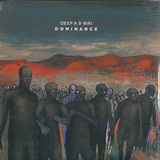
The album's distinctive artwork comes from the studio of Jewish orthodox artist Avraham Guy Barchil, who forged a powerful connection with Deep'a, both was immediately drawn to 'weird atmosphere, amazing technique and emotions involved with his work'. Perhaps one of the most interesting painters from Israel, Avraham is known for his unique perspective, taking his inspiration from the Zohar - the foundational work in the literature of Jewish mystical thought known as Kabbalah. The ambiguous figures represent mystical aspects of the Torah (the five books of Moses), as well as material on mysticism and mythical cosmogony.
Ensuring their natural, conscious touch always remains at the forefront of this unapologetically machine-driven music, Deep'a & Biri have produced an album in the lineage of their heroes and greatest influences. Cerebral yet satisfying, deep yet always engaging, 'Dominance' both reasserts and evolves Deep'a & Biri's forward facing and singular sound.
7"
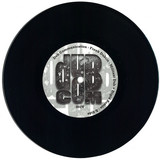
After the first vinyl release (Analog Dub Sessions) Dub Communication is back on 7". This time Frenk is using his Korg MS20 to lay down an analog 'Militant Dub' bass foundation. Creating subs, stabs and catchy melody lines. A live played Melodica, dipped in spring verbs, adding a human touch to the mix. Futhermore we got atmospheric chords and heavy drums rhythms, as we know, Frenk likes to produce. For the B side, there's a heavy remix from Belgium dub producer Digid. His signature bass growl takes over, filtering and phasing through the audio spectrum. He adds more weight to the drums and new melodies on top. From the half time to the steppers rhythm as Frenk took it the other way around.
Original year of release: 1989. Features the tracks 'King Kong Five', 'Pas Assez De Toi', 'Sidi H'bibi', etc. Mano Negra the legendary first band of French singer Manu Chao ... featuring songs in Spanish, French, English and Arabic.. We are celebrating this year the 30th anniversary of its foundation. The album has been unavailable on vinyl since its first original pressing.
Original year of release: 1988. Features the tracks 'Mala Vida', 'Ronde De Nuit', 'Salga La Luna', etc. Mano Negra the legendary first band of French singer Manu Chao ... featuring songs in Spanish, French, English and Arabic.. We are celebrating this year the 30th anniversary of its foundation. The album has been unavailable on vinyl since its first original pressing.
Original year of release: 1991. Features the tracks 'Out Of Time Man', 'King Of Bongo', 'Madame Oscar', etc. Mano Negra the legendary first band of French singer Manu Chao ... featuring songs in Spanish, French, English and Arabic.. We are celebrating this year the 30th anniversary of its foundation. The album has been unavailable on vinyl since its first original pressing.
Gitanes is Olde Gods' new EP and longest output to date. Following a series of singles on the Minor Planets label, the Barcelona duo are up to a 12 four-tracker on Amsterdams' Atomnation. Gitanes brings echoes from Spains' not-long gone golden club era. Its cover depicts an abandoned club from the 90's in a coastal town in the Mediterranean, could be anywhere from Valencia to Barcelona. All four tracks are trippy yet solid-grounded, spacey voices and strings leads all flying up and magically suspended over gross rhythmical foundations. Dear CZ, a fetiche track, built around a moody Casio CZ synth stab topped up with acid videogame-like crazyness. Gitanes brings entrancing vocals intertwined with more CZ pad action. All Around is a foggy and paranoid late-night drive, and None of these Bitches, a homesick folks' walk around Tokyo's Daikanyama area. Olde Gods are JMII and Guillamino.
Led by Saxophonist Rob Mitchell, Abstract Orchestra have been a consistent presence on the u.k. music scene, touring constantly in the promotion of their debut LP "Dilla" and steadily building a loyal and supportive fanbase.Inspired by the legendary live performances of The Roots with Jay-Z and the 40 piece orchestral arrangements by Miguel-Atwood Ferguson of the work of J Dilla, classic arranging techniques underpin modern loop-based structures, breathing new life into familiar material.The band itself is based on the classic jazz big band instrumentation of saxes, trumpets, and trombones and features the cream of the north of England's jazz scene, who collectively have played with Jamiroquai, Corinne Bailey Rae, Mark Ronson, Martha Reeves, John Legend & the Roots, Roots Manuva and Amy Winehouse.
"New Day" is the eagerly anticipated new single and features rapper and J Dilla's brother Illa J on vocals. Supported by a U.K. tour with Illa J throughout February, "New Day" takes the blueprint laid out on last years LP "Dilla" and expands it with Illa J's understated vocal delivery. Radio support anticipated from BBC6's Gilles Peterson who has been an advocate for Abstract Orchestra on both his BBC6 and Worldwide FM shows, as well as Huey Morgan (BBC6), Shawn Lee (Soho) and Dom Servini (Wah Wah 45s). "New day" is the first original work by Abstract Orchestra and builds on the foundations laid on their debut. Flutes and electric piano lay out a gentle pad, propelled forward by Joost Hendrickx's insistent drums. Occasional fragments of saxophones add an urgency to the insouciant groove laid out by the rhythm section as soft trumpets and trombones are gradually added to the flutes. This provides the perfect foil to Illa J's laid-back vocal delivery as he describes a typically relaxed Tuesday morning spent contemplating the day ahead. The B-side is the AO remix which takes the instrumental performances of the A-Side, chopping and fragmenting them and re-framing the original with a slightly harder edge, which should be popular with those DJs and listeners looking for something with a tougher sound.