Welcome to 'Instrumental Dubs #3', the ongoing series that delves into the world of the Dub Version and beyond. Side one explores the axis of UK Street Soul and Reggae with the opening two tracks produced by Howard Hill and originally released on his Passion Enterprises label in the late eighties. Both 'Versions' have a machine lead rhythm section paired with a reggae skank and snippets of soulful vox. The Proto House of Protek's 'I Love to Dance With You' featured on a Jura Soundsystem DJ Mix for Planet Trip, a one off single from the now sadly deceased Errol Parkes that's been re-edited with love by The Nightlark from Edinburgh.
The B side features The Cool Notes 'Natural Energy', which isn't strictly speaking a Dub Version, but it has that vibe with a primarily instrumental backing track featuring sparse vocals and spacey FX. The album closes with a secret weapon of Ilija Rudman 'Dub 4 Love' that pays homage to a famous track from Acid House's heyday.
Pressed on 180g Heavyweight Vinyl with full sleeve jacket design by Bradley Pinkerton.
Cerca:h paul
- 01: King Of Rock And Roll
- 02: Hey, Hey, Hey, Hey
- 03: Spreadin' Natta What's The Matter
- 04: Shake A Hand
- 05: Dew Drop Inn
- 06: True Fine Mama
- 07: Great Gosh A'mighty
- 08: Poor Dog
- 09: Send Me Some Lovin
- 10: Slippin' And Slidin
- 11: Bama Lama Bama Loo
Black Vinyl[22,65 €]
Diamond Dogs may be a bunch of renaissance rockers deeply rooted in the early 70s British rock and roll, but just like our forerunners, we owe
almost everything to Little Richard, the architect of it all! It's impossible to even imagine rock and roll without him.
Little Richard is the soul, spirit and passion of the Diamond Dogs lifestyle, and I was six years old when I first heard 'Rip It Up' with love at first feel.
The raw energy and the blood screaming lyrics over that manic hammering piano embodied everything I craved in music, straight from the speakers to my young heart. Even if I discovered a lot of other influences later on in life, I always kept Little Richard close to where he once hit me. One of Diamond Dogs' early tunes is called 'Lunatic Eye-Rolling Delivery' which is a line nicked from a concert review of Little Richard, and we believe it sums up the essence of his greatness pretty well. He was much more than a rock pioneer, the way he dressed up and spoke was something the world had never experienced before.
Little Richard got Paul McCartney to write 'I Saw Her Standing There', got James Brown a new haircut, and put a silly little mustache on Prince!
So, the idea of recording a homage to the true king of rock and roll had been with all of us for many years when Chris Spedding one day called me
and asked if we should record something together. Of course, I immediately said yes, and then asked him to join Diamond Dogs in the upcoming
studio session to record some well selected Little Richard gems for an LP. All said and done, and Chris was extra thrilled that his favorite 'Send Me
Some Lovin'' was among the songs we picked.
And on a cold and windy January day we gathered the Dogs and the new old puppy in the sweet premises of Dog Pound Studios, along with our
beloved friend and engineer Jonas Åhlén.
So, when the room is geared up, we do our melodies as we normally do it, no rehearsals, all live, straight to tape. One hour per track is usually a
good thing! An amazing energy and swagger filled the atmosphere as Diamond Dogs and Chris fulfilled my dream.
Now that I'm listening through the vinyl, I must say that I've never been prouder of anything we've achieved with this shady bunch so far. It's like
walk the full circle, like I've been graduating from the 12-bar rock and roll academy.
Sulo, Stockholm/Sweden, 2024
Sound Like: The Faces, Rod Stewart, Frankie Miller, Elton John, Mott
The Hoople, J Geils Band, The Rolling Stones, Steppenwolf, Little
Richard
Diamond Dogs may be a bunch of renaissance rockers deeply rooted in the early 70s British rock and roll, but just like our forerunners, we owe
almost everything to Little Richard, the architect of it all! It's impossible to even imagine rock and roll without him.
Little Richard is the soul, spirit and passion of the Diamond Dogs lifestyle, and I was six years old when I first heard 'Rip It Up' with love at first feel.
The raw energy and the blood screaming lyrics over that manic hammering piano embodied everything I craved in music, straight from the speakers to my young heart. Even if I discovered a lot of other influences later on in life, I always kept Little Richard close to where he once hit me. One of Diamond Dogs' early tunes is called 'Lunatic Eye-Rolling Delivery' which is a line nicked from a concert review of Little Richard, and we believe it sums up the essence of his greatness pretty well. He was much more than a rock pioneer, the way he dressed up and spoke was something the world had never experienced before.
Little Richard got Paul McCartney to write 'I Saw Her Standing There', got James Brown a new haircut, and put a silly little mustache on Prince!
So, the idea of recording a homage to the true king of rock and roll had been with all of us for many years when Chris Spedding one day called me
and asked if we should record something together. Of course, I immediately said yes, and then asked him to join Diamond Dogs in the upcoming
studio session to record some well selected Little Richard gems for an LP. All said and done, and Chris was extra thrilled that his favorite 'Send Me
Some Lovin'' was among the songs we picked.
And on a cold and windy January day we gathered the Dogs and the new old puppy in the sweet premises of Dog Pound Studios, along with our
beloved friend and engineer Jonas Åhlén.
So, when the room is geared up, we do our melodies as we normally do it, no rehearsals, all live, straight to tape. One hour per track is usually a
good thing! An amazing energy and swagger filled the atmosphere as Diamond Dogs and Chris fulfilled my dream.
Now that I'm listening through the vinyl, I must say that I've never been prouder of anything we've achieved with this shady bunch so far. It's like
walk the full circle, like I've been graduating from the 12-bar rock and roll academy.
Sulo, Stockholm/Sweden, 2024
Sound Like: The Faces, Rod Stewart, Frankie Miller, Elton John, Mott
The Hoople, J Geils Band, The Rolling Stones, Steppenwolf, Little
Richard
With their name taken from an episode of the radio program The Goon Show, Ned's Atomic Dustbin formed in Stourbridge, UK, in 1987. They're known for using two bass-players in their line-up and creating a tense and highly driven sub-hardcore sound featuring distorted effects-laden guitar and energetic drums.
In 1992 they released their second studio album Are You Normal?. The album features their American hit song “Not Sleeping Around”, which hit the top of Billboard's Modern Rock Tracks chart. The album was produced by Andy Wallace, best known for his work with Slayer, Prince, Nirvana, Sonic Youth, Paul McCartney and so on.
Are You Normal? is available as a limited edition of 1000 individually numbered copies on translucent blue coloured vinyl and includes an insert.
Originally released and sold on their fall 2009 US tour, Flower-Corsano Duo’s “The Chocolate Cities” stands as one of the group's most spirited releases. Recorded live in Cambridge, England and Geneva, Switzerland these recordings capture the power and energy being harnessed by the duo at a time of frequent touring, just after the release of their monumental double-LP “The Four Aims.” Michael Flower is perhaps best known for his work in Vibracathedral Orchestra, along with a slew of other bands, collaborations, and solo work. Meanwhile, Chris Corsano is well known as one of the premier drummers of modern times, and a frequent collaborator of Joe McPhee, Bill Orcutt, Bill Nace, Paul Flaherty, and many more. As a duo Flower and Corsano present an endlessly shifting and transforming sound, meshing elements of free jazz, drone, and ecstatic psychedelia into something all its own. While Corsano guides with his nimble and dynamic drumming, Flower plays amplified Japan Banjo (also known as a Shahi Baaja) providing melody, lead, and drone, often simultaneously. Gripping even in its quietest passages, thoughtful even in its most unrestrained crescendos, “The Chocolate Cities” documents a duo at the height of their collective prowess. Saved from the obscurity of its original CDr format and presented for the first time on vinyl with stunning new artwork by Chris Corsano, “The Chocolate Cities” stands as testament to the power of two magnificent players even 15 years on.
- A1: Alone (Live Troxy London Mmxxiv)
- A2: And Nothing Is Forever (Live Troxy London Mmxxiv)
- A3: A Fragile Thing (Live Troxy London Mmxxiv)
- A4: Warsong (Live Troxy London Mmxxiv)
- B1: Drone Nodrone (Live Troxy London Mmxxiv)
- B2: I Can Never Say Goodbye (Live Troxy London Mmxxiv)
- B3: All I Ever Am (Live Troxy London Mmxxiv)
- B4: Endsong (Live Troxy London Mmxxiv)
1st November saw the release of THE CURE's critically acclaimed album, 'SONGS OF A LOST WORLD,' the band’s first new studio record in 16 years and their first #1 album in the UK since 1992.
The night of the album's unveiling, The Cure performed it in full to 3000 fans at Troxy London and to more than a million on a free global stream.
The stunning live performance entitled 'SONGS OF A LIVE WORLD : TROXY LONDON MMXXlV’ will be released on the 14th Feb on vinyl on Fiction/Polydor, with all The Cure's royalties benefitting War Child and this will be opened up to Indie stores.
Initially formed in 1978, The Cure has sold over 30 million albums worldwide, headlined the Glastonbury festival four times and been inducted into the Rock And Roll Hall of Fame in 2019. They are considered to be one of the most influential bands to ever come out of the UK.
'SONGS OF A LOST WORLD' was written and arranged by Robert Smith, produced and mixed by Robert Smith & Paul Corkett and performed by The Cure - Robert Smith: Voice / guitar / 6string bass / keyboard, Simon Gallup: Bass, Jason Cooper: Drums / percussion, Roger O'Donnell: Keyboard, Reeves Gabrels: Guitar.
'SONGS OF A LIVE WORLD : TROXY LONDON MMXXlV’ includes Perry Bamonte: Guitar / 6string bass / keyboard.
The influence of the UK’s Steel City on electronic music is well documented and undisputed and continues to push the envelope with key figures such as Winston Hazel (Forgemasters, The Step), DJ Parrot/Crooked Man, Richard Benson (RAC, SWAG, Altern 8), Chris Duckenfield (RAC, Popular Peoples Front, SWAG, All Ears Distribution), a thriving underground club scene and the likes of Synaptic Voyager reinforcing the city’s rich musical legacy.
Matt White and Paul Baines have been making off-kilter, emotive, late night electronic jams since meeting in the early 90’s and while life took them on different paths for a while, they have recently blown the thick layer of dust from their synths and drum machines and got busy in the studio to create some amazing new music which draws influence from that classic UK techno sound which played such an important part in the development of dance music culture around the world. With recent releases on Frame Of Mind, Acquit and Telomere Plastic the duo are clearly on a roll, wearing the heritage of their city on their sleeve and delivering what can only be described as heartfelt, authentic machine music made with love and soul.
From the opening beats of lead track Dawn Till Dusk we are drawn in to another place which feels comfortably familiar yet organic, fluid and loose in a way that tugs on the heartstrings. A million miles from cookie-cutter tech house, this is two guys in a bedroom studio, digging deep on hardware machines to create a sound to get completely lost in. Lonely Promontory takes things deeper still with immersive pads, taught electro beats and blissed-out melodic lines which give just hint of optimism and recall those beloved sounds of B12, Redcell and Likemind.
Flipping over we have Stellar Engine which goes a littler heavier on the beats and bass whilst still retaining a floating quality, once again highlighting the hardware jam workflow that Synaptic Voyager utilise in their studio. Once Exposed takes us back to those heady days of the early 90’s when techno, house and ambient electronics combined to create a heady blend of deep atmospherics and driving beats which could work on both dance floors and car stereos alike. Rounding off the EP we have Cognitive Network which goes for a straighter four on the floor techno groove and a killer bassline to lose yourself in. These recordings were delivered to the label in unedited long form (some tracks totalling 15 minutes or more in length!) which Jimpster lovingly edited into the versions which you hear on this release.
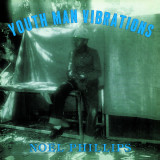
Erstmalige Wiederveröffentlichung seit 1981! Noel Phillips, der bis dato ausschließlich in Sammlerkreisen einen Namen hat, war seinerzeit 17 Jahre alt, als er für den Produzenten Prince Jammy dieses Juwel des Roots Reggae eingesungen hat, das es ab sofort zu entdecken gilt. Mit den Musikern Bass: Robbie Shakespeare, Drums: Sly Dunbar, Guitar: Boo Peep, Dougie, Horns: Deadly Headley, Bobby, Organ: Ansel, Winston Wright, Percussion: Scully, Sticky, Piano: Gladdy. Als CD exklusiv in der Box "Rootsman Vibration At King Jammy's" (VPGSCD7000) - Tipp!
- A1: Progetto Tribale - The Sweep
- A2: Onirico - Echo Giomini
- A3: Open Spaces - Artist In Wonderland
- B1: Alex Neri – The Wizard (Hot Funky Version)
- B2: M C.j. Feat. Sima - To Yourself Be Free - Instrumental Mix Energy Prod
- B3: Mato Grosso - Titanic Expande
- C1: Dreamatic - I Can Feel It (Part 1)
- C2: Carol Bailey - Understand Me Free Your Mind (Dream Piano Remix)
- C3: The True Underground Sound Of Rome - Secret Doctrine
- D1: Don Carlos - Boy
- D2: Lazy Bird – Jazzy Doll (Odyssey Dub)
Vol 2[28,99 €]
Volume 1 of this expertly curated project of 90s Italian House - put together by Don Carlos.
If Paradise was half as nice… by Fabio De Luca.
Googling “paradise house”, the first results to pop up are an endless list of European b&b’s with whitewashed lime façades, all of them promising “…an unmatched travel experience a few steps from the sea”. Next, a little further down, are the institutional websites of a few select semi-luxury retirement homes (no photos shown, but lots of stock images of smiling nurses with reassuring looks). To find the “paradise house” we’re after, we have to scroll even further down. Much further down.
It feels like yesterday, and at the same time it seems like a million years ago. The Eighties had just ended, and it was still unclear what to expect from the Nineties. Mobile phones that were not the size of a briefcase and did not cost as much as a car? A frightening economic crisis? The guitar-rock revival?! Certainly, the best place to observe that moment of transition was the dancefloor. Truly epochal transformations were happening there. From America, within a short distance one from the other, two revolutionary new musical styles had arrived: the first one sounded a bit like an “on a budget” version of the best Seventies disco-music – Philly sound made with a set of piano-bar keyboards! – the other was even more sparse, futuristic and extraterrestrial. It was a music with a quite distinct “physical” component, which at the same time, to be fully grasped, seemed to call for the knotty theories of certain French post-modern philosophers: Gilles Deleuze, Félix Guattari, Paul Virilio... Both those genres – we would learn shortly after – were born in the black communities of Chicago and Detroit, although listening to those vinyl 12” (often wrapped in generic white covers, and with little indication in the label) you could not easily guess whether behind them there was a black boy from somewhere in the Usa, or a girl from Berlin, or a pale kid from a Cornish coastal town.
Quickly, similar sounds began to show up from all corners of Europe. A thousand variations of the same intuition: leaner, less lean, happier, slightly less intoxicated, more broken, slower, faster, much faster... Boom! From the dancefloors – the London ones at least, whose chronicles we eagerly read every month in the pages of The Face and i-D – came tales of a new generation of clubbers who had completely stopped “dressing up” to go dancing; of hot tempered hooligans bursting into tears and hugging everyone under the strobe lights as the notes of Strings of Life rose up through the fumes of dry ice (certain “smiling” pills were also involved, sure). At this point, however, we must move on to Switzerland.
In Switzerland, in the quiet and diligent town of Lugano, between the 1980s and 1990s there was a club called “Morandi”. Its hot night was on Wednesdays, when the audience also came from Milan, Como, Varese and Zurich. Legend goes that, one night, none less than Prince and Sheila E were spotted hiding among the sofas, on a day-off of the Italian dates of the Nude Tour… The Wednesday resident and superstar was an Italian dj with an exotic name: Don Carlos. The soundtrack he devised was a mixture of Chicago, Detroit, the most progressive R&B and certain forgotten classics of old disco music: practically, what the Paradise Garage in New York might have sounded like had it not closed in 1987. In between, Don Carlos also managed to squeeze in some tracks he had worked on in his studio on Lago Maggiore. One in particular: a track that was rather slow compared to the BPM in fashion at the time, but which was a perfect bridge between house and R&B. The title was Alone: Don Carlos would explain years later that it had to be intended both in the English meaning of “by itself” and like the Italian word meaning “halo”. That wasn’t the only double entendre about the song, anyway. Its own very deep nature was, indeed, double. On the one hand, Alone was built around an angelic keyboard pattern and a romantic piano riff that took you straight to heaven; on the other, it showcased enough electronic squelches (plus a sax part that sounded like it had been dissolved by acid rain) to pigeonhole the tune into the “junk modernity” section, aka the hallmark of all the most innovative sounds of the time: music that sounded like it was hand-crafted from the scraps of glittering overground pop.
No one knows who was the first to call it “paradise house”, nor when it happened. Alternative definitions on the same topic one happened to hear included “ambient house”, “dream house”, “Mediterranean progressive”… but of course none were as good (and alluring) as “paradise house”. What is certain is that such inclination for sounds that were in equal measure angelic and neurotic, romantic and unaffective, quickly became the trademark of the second generation of Italian house. Music that seemed shyly equidistant from all the rhythmic and electronic revolutions that had happened up to that moment (“Music perfectly adept at going nowhere slowly” as noted by English journalist Craig McLean in a legendary field report for Blah Blah Blah magazine). Music that to a inattentive ear might have sounded as anonymous as a snapshot of a random group of passers-by at 10AM in the centre of any major city, but perfectly described the (slow) awakening in the real world after the universal love binge of the so-called Second Summer of Love.
For a brief but unforgettable season, in Italy “paradise house” was the official soundtrack of interminable weekends spent inside the car, darting from one club to another, cutting the peninsula from North to centre, from East to West coast in pursuit of the latest after-hours disco, trading kilometres per hour with beats per minute: practically, a new New Year’s Eve every Friday and Saturday night. This too was no small transformation, as well as a shock for an adult Italy that was encountering for the first time – thanks to its sons and daughters – the wild side of industrial modernity. The clubbers of the so-called “fuoriorario” scene were the balls gone mad in the pinball machine most feared by newspapers, magazines and TV pundits. What they did each and every weekend, apart from going crazy to the sound of the current white labels, was linking distant geographical points and non-places (thank you Marc Augé!) – old dance halls, farmhouses and business centres – transformed for one night into house music heaven. As Marco D’Eramo wrote in his 1995 essay on Chicago, Il maiale e il grattacielo: “Four-wheeled capitalism distorts our age-old image of the city, it allows the suburbs to be connected to each other, whereas before they were connected only by the centre (…) It makes possible a metropolitan area without a metropolis, without a city centre, without downtown. The periphery is no longer a periphery of any centre, but is self-centred”.
“Paradise house” perfectly understood all of this and turned it into a sort of cyber-blues that didn’t even need words, and unexpectedly brought back a drop of melancholic (post?)-humanity within a world that by then – as we would wholly realise in the decades to come – was fully inhuman and heartless. A world where we were all alone, and surrounded by a sinister yellowish halo, like a neon at the end of its life cycle. But, for one night at least, happy.
LINEAR LABS: Sao Paulo läutet eine neue goldene Ära musikalischer Genialität ein, die durch den Maestro Adrian Younge definiert wird. Eine außergewöhnliche psychedelische und gefühlvolle Erfahrung bietet "Adrian Younge presents Linear Labs: Sao Paulo", eine Zusammenstellung von neuen Songs, die die musikalische Brillanz von Adrian Younge mit Künstlern aus der ganzen Welt präsentiert. Im Wesentlichen enthält das Album jeweils einen unveröffentlichten Song aus einer Reihe von bevorstehenden Alben, die Younge für Linear Labs produziert hat, darunter "Something About April Ill", der dritte Teil von Younge's Meisterwerk-Trilogie, und ein neues Blaxploitation-Abenteuer von Hip-Hop-Legende Snoop Dogg, mit dem Titel "Don't Cry For the Devil".
- A1: Louis Philippso - Memories Of The Moldau (After "Vltava", Jb 1:112/2; T.111) 3:03
- A2: Louis Philippso - Paulette 2:23
- A3: Louis Philippso - Dragon's Lullaby 3:44
- A4: Louis Philippso - Kiki's Delivery Service: A Town With An Ocean View (Arr. For Piano By Jan-Peter Klöpfel) 3:59
- A5: Louis Philippso - Genshin Impact: Lover's Oath (Arr. For Piano By Pascal Hahn) 1:22
- A6: Louis Philippso - Shostakovich Jazz Waltz Variation (After Jazz Suite No. 2, Arr. For Piano By Jan-Peter Klöpfel) 1:57
- A7: Louis Philippso - Supernova 3:02
- A8: Esther Abrami & Louis Philippso - Andante Festivo (Arr. For Violin & Piano By Jan-Peter Klöpfel) 1:44
- A9: Louis Philippson & Michael Bosch - O Mio Babbino Caro (From Gianni Schicchi, Sc 88, Arr. For Piano And Cello By E. M. Fard) 3:16
- B1: Louis Philippso - Demon Slayer: Nezuko Theme 3:52
- B2: Louis Philippso - Bach: Prelude Piano Variation (After Cello Suite No. 1, Bwv 1007, Arr. For Piano By Tim Allhoff) 1:59
- B3: Louis Philippso - C'est Toi 2:47
- B4: Louis Philippso - Omg 1:32
- B5: Louis Philippso - Mahler: Symphony Of A Thousand Piano Variation (After Symphony No. 8, Arr. For Piano By Tim Allhoff) 2:22
- B6: Louis Philippso - Alla Turca Jazz Fantasie (After Piano Sonata No. 11 In A Major, K. 331, Arr. By Fazil Say) 1:34
- B7: Louis Philippso - Mozart Allegretto Variation (After Piano Sonata No. 13 In B-Flat Major, K. 333, Arr. By Philip Calisto) 3:00
- B8: Louis Philippson & Michael Bosch - In Trutina (From Carmina Burana, Arr. For Piano And Cello By Tim Allhoff) 2:21
- B9: Louis Philippso - Tchaikovsky Piano Concerto No. 1 Variation (After Piano Concerto No. 1, Op. 23, Arr. For Piano By Jan-Peter Klöpfel) 2:53
Der Pianist Louis Philippson begeistert seine Generation mit emotionalen und virtuosen Videos auf Social Media für die klassische Musik. Für sein Debütalbum "Exposition" verfolgt er die gleiche Idee und verbindet eigene Kompositionen mit neuen Arrangements bekannter Melodien klassischer Werke, sowie von Anime- und Pop-Songs. Selbstgeschriebene, epische Stücke wie "Supernova" und das groß-orchestrierte "C'est toi" stellt er seinen reduzierten Klavierminiaturen wie "Paulette", "Memories of Moldau" und "Dragon's Lullaby" gegenüber. Seine Eigenkompositionen ergänzt Louis Philippson durch frische, farbenfrohe Arrangements von Melodien aus verschiedenen Genres. Nach dem Motto von Duke Ellington, dass es "nur gute oder schlechte Musik" gibt, vereint er eine poetische Klavierversionen von "OMG" der K-Pop-Band NewJeans mit einer dynamischen Bearbeitung von Tschaikowskys Klavierkonzert, kreiert elegische Klavierversionen über Melodien aus Mahlers Symphonie der Tausend oder "In Trutina" aus Carl Orffs Carmina Burana, und spielt Puccinis "O mio babbino caro" begleitet von einem Cello. Auch Anime-Klassiker wie "A Town with an Ocean View" und "Lover's Oath" spielt er am Konzertflügel.Über sein Debüt-Album sagt Philippson: "Die Entstehung von 'Exposition' war eine unglaubliche Reise. Ich wollte ein Album schaffen, in dem ich alle Genres verbinden kann, die mich inspirieren. Es gibt so viele großartige Melodien, die man neu auf dem Klavier entdecken kann. Mein Ziel ist es meine Generation für die Schönheit der Klaviermusik auf neue Weise zu begeistern."Lange vor seiner TikTok-Karriere wurde Louis Philippson im Alter von sieben Jahren auf YouTube von seinem zukünftigen Klavierlehrer entdeckt, einem Professor an der Robert Schumann Hochschule in Düsseldorf. Dort wurde er später Jungstudent und nahm an zahlreichen nationalen und internationalen Klavierwettbewerben teil, darunter der prestigeträchtige Bach-Wettbewerb, den er gewann. Während der Pandemie im Jahr 2022 startete Louis Philippson seinen TikTok-Kanal und begeistert seitdem die Gen Z mit Vlogs, Humor und eindrucksvollen Klavierdarbietungen. Seine Posts haben inzwischen über 750.000 Follower erreicht. Philippson hat bereits mit einer Vielzahl von Künstlern aus unterschiedlichen Genres zusammengearbeitet. Unter anderen dem Konzertpianisten Martin Stadtfeld, der Geigerin und Influencerin Esther Abrami sowie dem italienischen TikTok-Pianisten Gabriele Bagnati. Ein besonderes Highlight seiner Kooperationen war die Zusammenarbeit mit der Sängerin Teya Dora für eine akustische Version ihres weltweiten Top-50-Hits "Dzanum".
Miki Yui is a musician, artist, and composer, originally from Tokyo, who has been based in Düsseldorf since 1994. Her whose work has long explored multiple forms of media, while documenting liminal zones of perception. On her latest album, As If, Yui creates a subtly connected suite of electronic music, drawn from improvisations and randomised processes that she has engaged with modular synthesis. Deeply poetic in its expression, even at its most minimal, the six pieces on As If have a curious tenor – they are, each of them, intensely sensuous, almost haptic listening experiences, as though the laser focus that Yui displays towards her compositions allows her to engage them as almost physical presences in the world.
One of the keys that unlocks the intimate complexity-in-simplicity of As If was Yui’s encounters with the Amazonian rainforest in Manaus, Brazil in 2018. Finding that the sounds in the rainforest both shadowed and echoed the music she had been making for two decades, she embraced the possibilities of modular synthesis, the sounds of which she discovered “have astonishing similarities to the sounds I experienced in the rainforest.” There is, indeed, something natural about the way these sounds bloom in real time; in their dedicated focus to the subtle development and mutation of several discrete parameters of sound, they grow slowly, gradually, their rhizomic structures suggesting that we are always situated within the middle of sound.
Sometimes, the material here has a kind of febrile energy, as on the ticking, clacking electronics of “Generativ”, a track that seems to rotate in the air in front of the listener, the light reflecting off its multiple surfaces as we catch the intricacies of its micro-patterns. Elsewhere, we slide into a cooled but welcoming environment, like the late-night fire-fly horizon of “Song 4”; there’s also the humid, dripping tropical sunset that’s documented on “Summernight”. It’s a music that’s hard to locate external coordinates for, though there are, perhaps, some parallels with the work of Laurie Spiegel, Eliane Radigue’s Vice Versa, and Pauline Oliveros’s “Roots of the Moment”. But As If is an extraordinary collection of naturally developing, rich studies for slowly mutating, enveloping, elemental electronics.
Recorded in 1997, Mountain Top features the commanding vocals of Tony Roots, backed by the legendary Firehouse Crew and produced by the visionary Fada Waz (Clifton Carnegie). This record’s release was driven by the people, evidenced and encouraged by the countless wheel-ups and sing-alongs during King Original’s international tour dates over the last three years whenever this seminal recording was dropped in the set.
Tony Roots, known for his cultural and spiritual themes, delivers a powerful vocal performance, reminding us that life’s most important journey is overcoming obstacles to find ‘Jah Love on the Mountain Top.’ This message is as relevant in today’s fast-paced, easy-come-easy-go consumer culture as it was when recorded three decades ago.
The Firehouse Crew renowned for their work with iconic acts like Luciano and Sizzla—shine brightly on this riddim, with the MPC drum machine-centered sound of 90s Jamaican roots reggae. An up-tempo 4/4 steppers beat layered with rich analogue textures and soulful instrumentation defines this timeless recording.
The first of many collaborations between Studio 55, Before Zero Records, and Footsie, the King Original legacy continues into the future, honouring the enduring contributions of Fada Waz and his collaborators.
Clifton Carnegie aka Ras Wazair aka Fada Waz - Clifton Carnegie, known as Ras Wazair, founded King Original Sound System in 1973, establishing it as East London’s foremost reggae sound. Operating under his Studio 55 moniker, he collaborated with legends like Johnny Osbourne, Barry Brown, Michael Prophet, Cornell Campbell, and Frankie Paul through imprints such as Original Sounds, Studio 55, and Original International. A mentor to many of the UK’s top sound systems and a key figure in London’s RasTafari community, Ras Wazair’s connections with prominent Jamaican artists, bands, and producers like Fattis Burrell ensured that Jamaican music remained an influential force in the UK sound system scene.
King Original
Founded in 1973 by Fada Waz, King Original Sound System shaped East London’s reggae scene for over two decades. Fada Waz and his son Footsie—a UK Grime pioneer who in later years expanded the legacy through his KO LP series and sold-out King Original mixed-genre events at London’s top venues—worked together until Footsie assumed full control following Fada Waz’s passing in 2021. Having worked with artists such as Dizzee Rascal, Arctic Monkeys, The Prodigy, D-Double E, Wiley, and Skepta, Footsie’s dedication to King Original has reinvigorated the legacy that underpins all UK bass music—the reggae sound system. Joining Footsie is his brother, Wazair’s last born Ras D also Jah Model, and long-time collaborator Sir Spyro, producer of two UK number-one hits with Stormzy and son of UK reggae stalwart Nerious Joseph. Armed with cutting-edge QSS sound system technology, King Original continues to set trends, shaping the future of UK bass music.
Tony Roots
Hailing from Manchester, Jamaica, in the 1980s, Tony Roots emerged alongside iconic figures like Garnet Silk and Tony Rebel. While his peers remained in Jamaica, Tony moved to the UK, where he went on to release ten albums and numerous singles, including hits like Grow Your Natty Dread Locks and Hola Zion. A steadfast champion of Rastafari, Tony has collaborated with legends such as the Firehouse Crew, earning worldwide respect and a devoted following within both the reggae community and the UK sound system scene.
The Firehouse Crew
Formed in 1986, The Firehouse Crew became a cornerstone of the 1990s roots-reggae revival. Initially associated with King Tubby’s Firehouse label before establishing their own, the band rose to prominence through collaborations with producer Philip “Fattis” Burrell at Xterminator Records. Their contributions to timeless albums like Luciano’s Where There is Life highlight their extraordinary musicianship. Over the years, The Firehouse Crew has backed iconic artists such as Sizzla, Buju Banton, and Beres Hammond, cementing their legacy as masters of roots reggae.
- 1: I Can See Him Loving You
- 2: Love Music
- 3: My Hang Up Is You
- 4: Halos Are For Angels
- 5: Somebody, Someplace
- 6: Do I (Love You Like You Like It)
- 7: That's Groovy
- 8: Can't Live Without You
- 9: A Toast (May There Be No Last Time)
- 10: Don't Spread Your Love Around
- 11: Trust Me
- 12: Give Him Up
- 13: That's All That's Required
- 14: Young Girl (In Your World)
Rare Seventies Big City Street Soul
In 1971, film producer David Gil and his business partners Robert S Sinn and Paul Frankenberg launched a film company called GSF. Over the next few years, it would be involved in a small number of productions. But, in 1971 the movie business was kind of old-hat, music was where it was at, and so GSF Records, a well-funded label, headed by Larry Newton was formed. Today Newton is largely remembered for his attempts to prevent Louis Armstrong from recording 'What A Wonderful World' but that didn’t stop him from growing ABC from a second division company to an industry leader. As he approached his 52nd birthday he was unveiled as GSF Records’ president a full-service music company, involved in records and publishing across all genres. Through a joint venture with drummer Bernard Purdie the label targeted the R&B charts and soul & funk dominated GSF's release schedule.
Black music ruled and this was reinforced by the hiring of Lloyd Price as head of A&R (veteran R&B star), and producers George Kerr (All-Platinum), Mickey Stevenson (Motown) and Jerry 'Swamp Dogg’ Williams. No wonder then, unintentional as it was, that GSF left behind such an extraordinary legacy of rare soul treasures.
NEW YORK’S BEST KEPT SOUL SECRET Features legendary Northern Soul classics courtesy of Anderson Brothers, Skull Snaps and Connie Laverne Produced by hit makers George Kerr and Motown veteran Mickey Stevenson Starring the Whatnauts and Eddie “Hey There Lonely Girl” Holman
Founded in 1979 in Sesto San Giovanni by Roberto Fusar Poli, Il Disco o began as a small, family-run record store, quickly evolving into a hub for imported music and a pioneer in the "disco dance" genre.
By 1981, it had expanded into music distribu/on and produc/on, aligning with the rise of Italo Disco—a genre blending synth-pop and electronic disco inspired by ar/sts like Giorgio Moroder and Bobby Orlando. Its first release, "I'm A Vocoder" by Gay Cat Park, marked the start of a prolific catalog that included hits like "You Are A Danger" by Gary Low and "Comanchero" by Raggio Di Luna, cemen/ng Il Disco o’s reputa/on in Italy and abroad.
At its peak, the label produced up to one record a day and distributed interna/onal hits like "Don’t You (Forget About Me)" by Simple Minds.
- Otto Normal
- Sie Liebt Dich Nicht
- Trophäe
- Danke Dirk
- Alles Wieder Gut
- Wär's Ok?
- Willkommen In Der Realität
- Es Zieht Im Paradies
- Extra
- Schreien!
Auf 12“-Vinyl ab dem 31.01.2025 und digital ab dem 14.02.2025 auf allen Streaming Plattformen.
Paula Carolina steht wie kaum eine andere Künstlerin für die neue Rebellion des Indie Pop: roh, ungeschliffen, laut und doch voller Feingefühl. Ihre Erfolge sprechen für sich: Mit über 30 Millionen Streams als Künstlerin und Hits wie „Schreien“ (15 Millionen Streams, über 9.000 TikTok-Creations) hat sie sich längst vom Geheimtipp zu eine der wichtigsten Stimmen ihrer Generation entwickelt. Sie trift den Zeitgeist, ohne ihm hinterherzulaufen.
Ihre Musik ist ein Spagat aus NDW, Punk und Indie, der live noch intensiver wirkt – ein Sound, der in den Moshpit treibt und gleichzeitig eine Hand ausstreckt, um festzuhalten, was sonst verloren geht.
2024 hat sie nicht nur Clubs ausverkauft, sondern auch die großen Festivalbühnen bespielt: Hurricane, Southside, und mehr. Vor Tausenden von Menschen war sie die, die den Lärm machte – und alle Stimmen zusammenführte. Dieses Live-Album ist genau das: ein Stück Gemeinschaft, ein Mitschnitt der Nächte, in denen die Bühne zum Safe Space wurde, für all jene, die mehr suchen als nur Pop. Es ist ein Reisetagebuch ihrer wilden Tour, ein rohes, ungeschliffenes Dokument voller schreiender Gitarren, treibender Drums und dieser Stimme, die mal schreit, mal flüstert und in jedem Ton die Gegenwart einfängt.
Es gibt Musik, die berührt, und es gibt Musik, die aufrüttelt. Paula Carolina macht beides - und live erst recht. Ihre "Willkommen in der Realität"-Tour 2024 war nicht nur ein lauter, treibender Zug durch die Clubs des Landes, sondern ein greifbares Bekenntnis zu echten Momenten. Nächte, die nachhallen, in denen aus Fremden eine Gemeinschaft wurde, die zusammen tanzte, lachte und schrie. Genau dieses Gefühl ist jetzt konserviert auf Vinyl.
Slum Dunk Music is proud to re-release Tropical Punk - a 12" EP by Brazilian mutant punk funk duo Tetine formed by Sao Paulo-born artists/musicians Bruno Verner & Eliete Mejorado, originally released in 2010 - and featuring 4 warm dance punk numbers taken from their the album "From A Forest Near You". The opener "Tropical Punk (Mutant edit)" comes with a brand new mutant funk re-edit with more percussion, more analog synths, warm drum machines, and a funky bassline. The result is a mid-tempo South American cannibalistic disco-pop with catchy lyrics & beautiful half-sang/half-spoken melodies. "Yr Daugther Lies" is a cosmic, experimental/new wave piece with plenty of old school synths, processed vocals, percussive drum machine & spooky live electronics flying around in the mix. It marks Tetine's first collaboration with L.A. electronicists Howardamb. On the B side, "Shiva" comes as a percussive tropical mutnat punk-funk number led by a swinged bassline & Eliete Mejorado's distinct post-feminist spoken word vocals on sordid domesticity set against organic drum beats, dissonant soundscapes, a lost trumpet & some great interplay of raw guitars. The last track "O Espaco" is a relaxed 6-minute cosmic disco piece of Brazilian tropical punk funk on the dangers & delights of being lost in the jungle - sang in Portuguese by Bruno & Eliete - & permeated by a discordant interplay of ultra-funky guitars, abstract synth-bass plus all sorts of FX & live electronics. Tropical Punk finds Tetine celebrating their art-punk roots back to the underground of Sao Paulo with a collection of wild & raw unconventional dance tracks.
- A1: On Green Dolphin Street
- A2: Fran-Dance
- B1: Stella By Starlight
- B2: Love For Sale
Mastered by Matthew Lutthans at The Mastering Lab from a new 30 ips quarter-inch stereo master tape transferred from the original 3-track session tapes. Plated and pressed at Quality Record Pressings for flawless production and superior fidelity! Stoughton Printing Old Style tip-on gatefold heavyweight jacket with scuff-resistant matte finish.
Miles Davis's Kind of Blue was the number-one jazz album in history. It totaled five songs. There are four more songs from that same historic group, recorded in the same time period and at the same studio. And here they are. These songs deserve to stand on their own with artwork to highlight the quality of the music and that matches the time period of the recording. This is a rare opportunity to have a smash follow-up to what many consider the greatest jazz record ever!
Through the years, these four remarkable performances — all from a single recording session in 1958 and all exemplary of the sound of Miles Davis' legend-loaded sextet of that year — have not been served well. They have been largely treated as add-ons for other compilations. Now, for the first time, Analogue Productions, the audiophile in-house reissue label of Acoustic Sounds, Inc., together with Quality Record Prssings, has deservedly given these tracks a stellar stand-alone release for jazz fans to savor!
The once-in-a-generation lineup that recorded these tunes is the very same that would be immortalized for the enduring classic they would record almost a year later, Kind of Blue. Davis played trumpet sublime with his ensemble sextet featuring pianist Bill Evans, drummer Jimmy Cobb, bassist Paul Chambers, and saxophonists John Coltrane and Julian "Cannonball" Adderley.
Undervalued since their recording, the tunes on this album reflect historial and musical significance. They offer early glimpses into the modal jazz that Kind of Blue would bring to the forefront. Using modes common in modern classical music, rather than the chords of popular songs, Miles had begun to experiment with the new approach on the Milestones recording sessions previously.
Analogue Productions is proud to present Birth of the Blue in an exclusive first-of-its-kind stand-alone release that reflects our reputation for meticulous production, capturing authentic sound with clarity, depth and fidelity that exceeds the audiophile standard.
For this release, we started with the original 3-track recording session tapes that were mixed down to a brand-new 30 ips quarter-inch stereo master tape by senior mastering engineer Vic Anesini at Battery Studios. From that stereo master tape, Matthew Lutthans at The Mastering Lab cut the lacquers at 33 1/3 RPM utilizing the legendary Doug Sax's custom all-tube system and cutting lathe. The lacquers were plated and pressed on 180-gram vinyl at Quality Record Pressings. Lastly, the Stoughton Printing tip-on gatefold jacket with a deluxe scuff-resistant matte finish is the highest quality available. The artwork has an incredible spot-on look to a 1959 Columbia records release!
Features:
• Pioneering Ensemble: Captured the same rare and short-lived alignment of jazz legends including Miles Davis, John Coltrane, Cannonball Adderley, Bill Evans, Paul Chambers, and Jimmy Cobb, as heard on the historic Kind of Blue.
• Innovative Sound: The session represented a crucial transition in jazz, blending elements of hard bop with early modal jazz influences, showcasing the ensemble's experimentation and forward-thinking approach.
• Undervalued Legacy: Despite its historical and musical significance, the session's recordings have been historically overlooked, often relegated to being add-ons in compilations rather than recognized as standalone masterpieces.
• Modal Jazz Precursor: Offered early glimpses into the modal jazz that would later be fully realized in Davis's groundbreaking album "Kind of Blue," laying the groundwork for future jazz innovation.
• Impact on Artists: Served as a critical point of development and confidence for the musicians involved, particularly Bill Evans, who noted the significant impact of this experience on his own identity and style.
• Historical Context: Occurred at a peak moment in Miles Davis's career, following his signing with Columbia Records and his critical and commercial successes with albums such as ‘Round About Midnight and Miles Ahead.
• Revealed backstory: Extensive liner notes by the Grammy Award-winning author Ashley Kahn, who also penned the estential book, Kind Of Blue — The Making Of The Miles Davis Masterpiece
All money generated by this project goes to HEAL Palestine
In November 2024, Ocean Moon Group along with friends Ricky Romain and Paul Chivers (Ramjac Corporation) convened at Shearwater Studios in the South West of England to create a collective message of peace. The resulting project is the next instalment of Lo Recordings' ongoing SPACIOUSNESS series of lovingly produced limited cassettes.
'CALL FOR PEACE' is a clarion call to seek a peaceful solution to the conflict in Gaza - and to all conflicts around the globe.
The album was recorded by the group over a single exploratory studio performance, one that was shared with friends and family of the bandmates, who attended the live session to share in this peaceful expression. Jon Tye (Lo Recordings, MLO, Seahawks) had shared with the group a suite of music with differing textures and movements of drones, samples and bell-like tongue drums which served as the foundation of the piece, to which master sitarist Ricky Romain added melodic inflection and counterpoint.
Further percussion was deftly handled by Paul Chivers, who used a wide array of drums from around the world to add his own unique rhythmic inflections. Jack Harman provided harmonic chordal work by incorporating the beautiful Shearwater piano, as well as the differing tonality of both electric and acoustic guitars. Weaving between these mixed motifs was the ambient percussion techniques of Graham Guy Robinson who used rain sticks and chimes to decorate the piece with contrasting punctuations.
'CALL FOR PEACE' was created with the deepest intention that, through music, we can travel beyond borders, beyond words and beyond politics and instead reach out with our humanity and put an end to suffering.
"What we do really affects the world. Most of us think we can’t do anything, but it really isn’t true." - Yoko Ono
Straight outta Rockaway Beach, Queens, New York City, USA, THE WORLD, Prison is a state of mind, an experience, a loose collective, a band, a jam band and a bunch of psychedelic dudes who aren"t your average bunch of jambanders. All that, all at once, ALL THE TIME. You get what you"re dealing with here? No...you don"t. The only way to REALLY get it is to go to Prison -- and if you"re not from greater NYC and haven"t showed at any of the shows, here"s your best bet: their breakout album, Upstate. And whatta breakout! So high, you can"t get under it; so wide, you can"t get over it! How wide? Every song has two titles, that"s how wide. And almost everybody sings, like, all the time. That wide. Sure, you can break down the numbers -- five guys, five songs and four sides of vinyl in one gatefold sleeve -- but that won"t get you Upstate, either. Prison is the sound of everybody in the room figuring out where to go, individually and collectively. As they go through it, the meaning changes, the destination changes, the words mean something different. It"s meaning and no meaning, rising and falling, sinking and flying on the back of something massive cacophonized by three guitars, four vocals, a bass and drums. A lot of information bouncing around and enough time to really get you out of yourself! Take a look at the titles: each one a dichotomous inquest that the assembled Prison-ers march upon with fervor, glee, vengeance -- a whole spectrum of feels and perspectives woven into the jam for you to see. The Prison population changes with the seasons, and during the season this album was recorded, Sarim Al-Rawi, Mike Fellows, Sam Jayne, Matt Lilly and Paul Major were in Prison. Sarim you might know from Liquor Store, Mike"s made a bunch of scenes and records as Mighty Flashlight, Sam, who passed away in 2020 (R.I.P., brother) was in Love as Laughter -- and Paul Major you know from Endless Boogie, who Matt had roadied for -- and despite being "just a skateboarder who loves music" with no previous experience on the drums, he and Sarim inaugurated the Prison experience, like, seven years ago. Since then, it just fell together and it keeps doing so. A free thing called Prison.