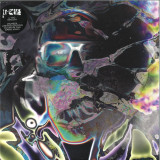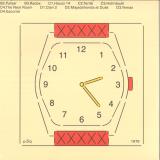
Two years after he first appeared on Balmat with 1977, Mike Paradinas returns with 1979. The sense of continuity between the two records is clear, and not just from their titles. Both capture the Planet Mu head venturing into the wilderness, seeking something—half-formed memories, thoughts caught in midair—in some of the most abstract, searching music he has released.
Just like 1977, 1979 surveys a synth-heavy array of ethereal soundscapes, ominous crevasses, and strange, psychedelic fugues. Like its predecessor, the new album’s atmospheric cast sets it apart from much of the work Paradinas has released as μ-Ziq on Planet Mu. It’s not strictly an ambient record, but it’s close, as close as this famously mutable artist ever comes to inhabiting a particular genre.
Paradinas’ inspiration for the record began on visits to the Spanish cities of Ávila and Majadahona, where his family hails from. That might account for the sense that there are spirits flitting through this music, presences you can intuit if not quite grasp. But 1979 is also a record to meet on your own terms, and to find your own meanings in.
It’s a stunning record, every track a world unto itself: the mysterious contours of “Majadahonda at Dawn”; the playful melodic fillips of “Clari”; the airy melancholy of “Galletas”; the full-scale breakbeat abandon (yes, you read that right) of “Houzz 14,” the rarest of dancefloor detours for Balmat. There are echoes of classic braindance and isolationist ambient and golden-age IDM; there are easter eggs and recurring themes and hidden symmetries. Every time we listen, we discover something new. Despite what the title might suggest, it’s less a trip back in time than a portal to another universe, a destination for(to?) which only Mike Paradinas knows the exact coordinates. – Philip Sherburne, Balmat
Cerca:h ziq
Planet Mu owner Mike Paradinas (a.k.a. µ-Ziq) wraps up 2022 with his 3rd release of new material this year. ‘Hello’ is the mirror image of the ‘Goodbye EP’. The intensity is heightened, the breaks more manic and melodies inhabit every corner. The material is the final chapter of the ‘Magic Pony Ride’ material and even includes another version of that track. 'Iggy’s Song’ has a slowed down sample of Mike’s son screaming, ‘Ávila’ is an ode to his father’s hometown in Spain and ‘Green Chaos’ even includes a nod to RP Boo. On Side B things get more interesting. ‘Pyramidal Mind Dispersion’ slows things down while amping up the tension, Modulating Angel is at drum & bass tempo but with a choir of angels from hell in the background, while the final two tracks recall the experimentation and melodies of Lunatic Harness.
µ-Ziq says hello again with 'Goodbye'. The six track EP is the first in a series of releases by Mike Paradinas this year, which are all centred around the 25th Anniversary Edition of 'Lunatic Harness', his classic 1997 album. Inspired by going back through the archives while he was remastering the Lunatic Harness reissue, 'Goodbye' sees Mike revisiting the nineties, taking on jungle and its precursor jungle tekno and upgrading them with the benefit of hindsight and contemporary software. Imbued with Mike's lush sense of melody and his knack for striking contrasts (don't be shocked to hear maudlin piano, 303 and amens in the same track), 'Goodbye' approaches these old genres like a sandpit, and stretches them in directions only Mike might take.
'Challenge Me Foolish' is an almost lost album of µ-Ziq material circa 1998-99, an era that saw Mike Paradinas release 'Royal Astronomy' on the now defunct Virgin subsidiary Hut records, and also tour with Björk.
It's an era of his music that's definitely worth re-exploring, in which Mike went against the grain by producing music that was baroque, melodic and whimsical, while the IDM movement he was lumped with made instrumental music that was often neurotic and complicated. His taste for melody and dreamy beauty above roughness and intricacy confused people who were hanging on too tightly to the rules. He even brought in Japanese vocalist Kazumi, adding an extra human touch.
'Challenge Me Foolish' is something of a companion to the Royal Astronomy record, arguably even better given the fresh ears selecting the material. It's imbued with a confident sense of pastoral colour, and a gentle optimism, utilising bells, studied orchestral arrangements and airy synthesisers that sit the album somewhere between, Jean Jacques Perrey (the French electronic composer whose whimsy was always balanced with serious innovation and chops) and the colourful, optimistic soundtracks of Joe Hisaishi. There's a strange sense of the old and new throughout, the sentimental and utopia, with nary a hint of darkness. Even when the album dips into the hyperkinetic rhythms of jungle, the melodies and mood still retain a sense of gentle warmth. Dive into peak time Paradinas.
Mike Paradinas, veteran producer and Planet Mu label owner has written a new album called 'Grush' and it's full of weird bangers that reclaim the 'dance' part of the woeful term IDM. A back-to-first-principles record, inspired in part by the group of artists IDM was coined for; melodic dance music that didn't come out of urban scenes, but interpreted them from a distance. The tracks on 'Grush' are all road-tested live favorites developed with feedback from Mike's touring partner and visuals guy Mora (Jan Moravec). It's a detailed and energetic journey which replicates the flow of a live gig. A lot of the tracks have been made in hotel rooms in response to shows, 'Imperial Crescent' is named after a Japanese Hotel, as is 'Belvedere' in Prague, while some tracks such as 'Hyper Daddy' were created specifically to play live. Drums are confidently at the fore here and the album feels like it traces Mike's musical history and interests neatly around his sweetly nostalgic melodies, with atmospheres and structures which twist and turn with a charming softness which contrasts with the tension in the drums. Take 'Hyper Daddy's' spiralling notes and twinkling piano which remind one of early Black Dog or Omni Trio rushing alongside splashy jungle drums, or the aquatic acid footwork of the title track with its drums softly bubbling and kicking. Elsewhere there's territory which harks back to his Tusken Raiders pseudonym, like the heads down Drexciyan funk of 'Windsor Safari Park,' which transforms from moody electro into a sunny hardcore track midway. The album is interspersed with Reticulum A, B and C at the start middle and end of the album which suggest a theme which carries across the music in an effortless and joyful way. 'Grush' is a strong album that works both for listening and DJing and a great snapshot of where Mike Paradinas musical head is at in 2024.Tracklist Vinyl A: 1/Reticulum A 2/Hyper Daddy 3/Fogou B: 1/Magic Pony Ride (Pt.4) 2/Imperial Crescent 3/Reticulum B 4/Grush C: 1/Belvedere 2/Raver 3/Windsor Safari Park 4/Hastings D: 1/Manscape 2/Metaphonk 3/Reticulum C
Mike Paradinas, veteran producer and Planet Mu label owner has written a new album called ‘Grush' and it's full of weird bangers that reclaim the 'dance' part of the woeful term IDM. A back-to-first-principles record, inspired in part by the group of artists IDM was coined for; melodic dance music that didn't come out of urban scenes, but interpreted them from a distance. The tracks on ‘Grush’ are all road-tested live favorites developed with feedback from Mike's touring partner and visuals guy Mora (Jan Moravec). It's a detailed and energetic journey which replicates the flow of a live gig. A lot of the tracks have been made in hotel rooms in response to shows, ‘Imperial Crescent’ is named after a Japanese Hotel, as is ‘Belvedere’ in Prague, while some tracks such as ‘Hyper Daddy’ were created specifically to play live. Drums are confidently at the fore here and the album feels like it traces Mike's musical history and interests neatly around his sweetly nostalgic melodies, with atmospheres and structures which twist and turn with a charming softness which contrasts with the tension in the drums. Take ‘Hyper Daddy’s’ spiralling notes and twinkling piano which remind one of early Black Dog or Omni Trio rushing alongside splashy jungle drums, or the aquatic acid footwork of the title track with its drums softly bubbling and kicking. Elsewhere there's territory which harks back to his Tusken Raiders pseudonym, like the heads down Drexciyan funk of ‘Windsor Safari Park,’ which transforms from moody electro into a sunny hardcore track midway.
repress, yellow viny
When we established Balmat in 2021, neither of us could have imagined that within two years, we’d be putting out an album by one of our musical heroes: Mike Paradinas, aka µ-Ziq. The British producer has been an inspiration to label co-founders Albert Salinas and Philip Sherburne since the 1990s. In fact, his album-length remix project The Auteurs Vs µ-Ziq was one of the very first pieces of electronic music that Philip bought, way back in 1994. To have the opportunity to release his music now feels like a real full-circle moment.
Paradinas, of course, needs no introduction. Under a slew of aliases, chief among them µ-Ziq, the British artist revolutionized leftfield electronic music in the 1990s—coincidentally, this year marks the 30th anniversary of his debut album, Tango N’ Vectif, for his friend and sometime collaborator Aphex Twin’s Rephlex label—and his label Planet Mu has built up a formidable catalog of visionary, forwardlooking records, mapping virtually every corner of the electronic spectrum. With 1977, he turns the clock backward in a sense, and not just with the album’s title: Rooted in classic ambient and electronic sounds, these 15 tracks evoke the anything-goes spirit of the early ’90s, before the tools and tropes had calcified into cut-and-dried styles.
There’s no shortage of familiar sounds on 1977. There are echoes of raves and chillout rooms and transmissions from the fringes of techno; there are detuned synths and glistening reverb tails and, above all, gauzy vox pads, the eerie glue that holds it all together. The title, he says, is meant to invoke a general sense of nostalgia, bookmarking a year in his boyhood when he became more selfaware. More than anything, 1977 sounds like µ-Ziq distilled: Stripped of his signature breakbeats and customary chaos, Paradinas’ first-ever strictly (well, mostly) ambient album presents the essence of his music in a whole new light.
Along the way Paradinas touches on dark-ambient drones (“Marmite”), horror-film themes (“Belt & Carpet”), jungle breaks (“Mesolithic Jungle”), and even house music (“Houzz 13”), which marks the first bona fide dance-floor moment on Balmat to date). Yet the album never—to our ears, anyway— feels expressly retro. Rather, Paradinas plucks timeless sounds out of the ether and gives them a gentle tap, spinning them into unexpected new orbits. At times, 1977 feels like an experience of extended déjà vu: When we first listened to it, we had the sense that we already knew this music. It was as though we had heard it years ago, perhaps on a battered cassette tape lent to us by a friend, and been searching for it ever since. We hope you feel the same.
When we established Balmat in 2021, neither of us could have imagined that within two years, we’d be putting out an album by one of our musical heroes: Mike Paradinas, aka µ-Ziq. The British producer has been an inspiration to label co-founders Albert Salinas and Philip Sherburne since the 1990s. In fact, his album-length remix project The Auteurs Vs µ-Ziq was one of the very first pieces of electronic music that Philip bought, way back in 1994. To have the opportunity to release his music now feels like a real full-circle moment.
Paradinas, of course, needs no introduction. Under a slew of aliases, chief among them µ-Ziq, the British artist revolutionized leftfield electronic music in the 1990s—coincidentally, this year marks the 30th anniversary of his debut album, Tango N’ Vectif, for his friend and sometime collaborator Aphex Twin’s Rephlex label—and his label Planet Mu has built up a formidable catalog of visionary, forwardlooking records, mapping virtually every corner of the electronic spectrum. With 1977, he turns the clock backward in a sense, and not just with the album’s title: Rooted in classic ambient and electronic sounds, these 15 tracks evoke the anything-goes spirit of the early ’90s, before the tools and tropes had calcified into cut-and-dried styles.
There’s no shortage of familiar sounds on 1977. There are echoes of raves and chillout rooms and transmissions from the fringes of techno; there are detuned synths and glistening reverb tails and, above all, gauzy vox pads, the eerie glue that holds it all together. The title, he says, is meant to invoke a general sense of nostalgia, bookmarking a year in his boyhood when he became more selfaware. More than anything, 1977 sounds like µ-Ziq distilled: Stripped of his signature breakbeats and customary chaos, Paradinas’ first-ever strictly (well, mostly) ambient album presents the essence of his music in a whole new light.
Along the way Paradinas touches on dark-ambient drones (“Marmite”), horror-film themes (“Belt & Carpet”), jungle breaks (“Mesolithic Jungle”), and even house music (“Houzz 13”), which marks the first bona fide dance-floor moment on Balmat to date). Yet the album never—to our ears, anyway— feels expressly retro. Rather, Paradinas plucks timeless sounds out of the ether and gives them a gentle tap, spinning them into unexpected new orbits. At times, 1977 feels like an experience of extended déjà vu: When we first listened to it, we had the sense that we already knew this music. It was as though we had heard it years ago, perhaps on a battered cassette tape lent to us by a friend, and been searching for it ever since. We hope you feel the same.
- A1: Brace Yourself Jason
- A2: Hasty Boom Alert
- A3: Mushroom Compost
- B1: Blainville
- B2: Lunatic Harness
- B3: Approaching Menace
- C1: My Little Beautiful
- C2: Secret Stair (Part 1)
- C3: Secret Stair (Part 2)
- C4: Wannabe
- D1: Catkin & Teasel
- D2: London
- D3: Midwinter Log
- E1: Hanky Pokery
- E2: Jiggery Panky
- E3: Worcester
- E4: The Cut Of My Jib
- F1: Lunatic Harness
- F2: Lunatic Harness (Remix)
- F3: Mr Angry (Remix)
- G1: Brace Yourself (Remix)
- G2: Kubba
- G3: Vaken Bolt
- G4: Losers' March
- H3: Abmoit
- H4: Brace Yourself (Reprise)
- H1: Summer Living 2
- H2: Intellitag
Clear Vinyl[116,60 €]
Lunatic Harness, µ-Ziq's rare and sought-after fourth album, was originally released in July 1997 on Virgin's Hut Recordings label. It is generally considered to be Mike Paradinas's best work of the nineties. An Apple Music review describes Lunatic Harness as "the prettiest album to come out of the mid-'90s "drill'n'bass movement", noting that Paradinas eschewed the abrasiveness of similar works by Squarepusher and Aphex Twin in favour of "atmospheres of ethereal color and shimmering melody", bringing the album "closer to pop music than anything Paradinas had previously attempted". Planet Mu has compiled a special 256th anniversary edition 4xLP boxset bringing together the My Little Beautiful EP, the Lunatic Harness album and May 1998's Brace Yourself EP (released by USA's Astralwerks label) with the addition of four rare tracks. Discs one and two of the vinyl are the original Lunatic Harness album, disc three compiles the My Little Beautiful b-sides with three unreleased cuts from the period and a remix of Mr.Angry from 1997's Mealtime compilation, while disc four is the 8-track Brace Yourself EP which hasn't been re-issued since 1998. This all comes in individual printed sleeves housed in a rigid box with an insert collage of some of the press Mike received at the time. There is also a 2xCD edition with the same tracklisting.
- A1: Brace Yourself Jason
- A2: Hasty Boom Alert
- A3: Mushroom Compost
- B1: Blainville
- B2: Lunatic Harness
- B3: Approaching Menace
- C1: My Little Beautiful
- C2: Secret Stair (Part 1)
- C3: Secret Stair (Part 2)
- C4: Wannabe
- D1: Catkin & Teasel
- D2: London
- D3: Midwinter Log
- E1: Hanky Pokery
- E2: Jiggery Panky
- E3: Worcester
- E4: The Cut Of My Jib
- F1: Lunatic Harness
- F2: Lunatic Harness (Remix)
- F3: Mr Angry (Remix)
- G1: Brace Yourself (Remix)
- G2: Kubba
- G3: Vaken Bolt
- G4: Losers' March
- H3: Abmoit
- H4: Brace Yourself (Reprise)
- H1: Summer Living 2
- H2: Intellitag
Black Vinyl[107,69 €]
Lunatic Harness, µ-Ziq's rare and sought-after fourth album, was originally released in July 1997 on Virgin's Hut Recordings label. It is generally considered to be Mike Paradinas's best work of the nineties. An Apple Music review describes Lunatic Harness as "the prettiest album to come out of the mid-'90s "drill'n'bass movement", noting that Paradinas eschewed the abrasiveness of similar works by Squarepusher and Aphex Twin in favour of "atmospheres of ethereal color and shimmering melody", bringing the album "closer to pop music than anything Paradinas had previously attempted". Planet Mu has compiled a special 256th anniversary edition 4xLP boxset bringing together the My Little Beautiful EP, the Lunatic Harness album and May 1998's Brace Yourself EP (released by USA's Astralwerks label) with the addition of four rare tracks. Discs one and two of the vinyl are the original Lunatic Harness album, disc three compiles the My Little Beautiful b-sides with three unreleased cuts from the period and a remix of Mr.Angry from 1997's Mealtime compilation, while disc four is the 8-track Brace Yourself EP which hasn't been re-issued since 1998. This all comes in individual printed sleeves housed in a rigid box with an insert collage of some of the press Mike received at the time. There is also a 2xCD edition with the same tracklisting.
In Spring 2021, Mike Paradinas (µ-Ziq and the owner of Planet Mu) spoke to long time friend and past label signing Hannah Davidson (Mrs Jynx) about the therapeutic power of writing music when times are tough. Both had recently been dealing with the loss of a parent due to cancer, and fresh from writing Scurlage, Paradinas suggested a collaboration. “I’ve always thought Hannah’s melodic sensibilities chime well with my own," says Paradinas, "and I've wanted to collaborate with her for a long time, since her 2010 album 'Shark Carousel' in fact, because she'd written some melodies that I wish I had.” In a matter of weeks the two collaborated online, sending stems back and forth, each encouraging the other and fitting perfectly together. “After about ten days we had ten tracks we were happy with." adds Davidson, "It was exciting to hear what Mike would do with the stems I sent, and equally exciting to see what he thought of my additions to his stems.” Overall the result is an opus of deeply personal moments of grief, depicted in a feeling of serene, misty tranquility that makes it easy to get lost in. Davidson and Paradinas settled on the title 'Secret Garden' due to the melodic vista which unexpectedly opened up before them on the final track. The album truly is a melodic exploration that is so often missed in this genre. There are twists and turns in mood, from the pastoral loveliness of 'Jynxiq' and 'Unheard Melodies' which fall away to the dubby beats of 'Hi Jynx'; the sadness of 'Loss' leading into the beatless forlorn 'The Ballad of Darth Vader. The album ups the pace with the muffled kicks and warm atmosphere of 'Afternoon Sunshine', which sets the tone for the happier mood of the second half. This all leads up to the album's denoeument in final track 'Secret Garden' whose naïve meandering synth melodies, orchestral accompaniment and glockenspiel end the album in happy resolution.
Mike Paradinas first album of new material since 2013, written in some rare downtime in the Gower (Wales) during the summer 2020 lockdown. There's a strange sense of the old and new in Scurlage, the sentimental and utopia. Dive into Paradinas world, yesterday, today and forever.
The Citadel Speaks marks the first recorded statement of ElektrAV as a curatorial imprint.
Rooted in Pamplona’s Citadel —and more specifically within the Arms Hall— this release brings together Alberta Balsam, Boris Divider, Bendiak, Komatssu and µ-Ziq, artists whose practices have resonated within the festival’s ecosystem through a shared sensitivity to space, experimentation and sound as cultural expression. Their contributions are not conceived as documentation of an event, but as part of an ongoing cultural dialogue.
The Citadel is not presented here as a venue, but as an active entity: a space that absorbs, transforms and emits sound. Each contribution responds to that condition, forming a collective statement shaped by place, time and intention.
This first volume initiates a living archive.
What follows is not a catalogue of releases, but a body of work.
- A1: Waiting For
- A2: I Couldn’t Remember So I Made Something Up
- A3: Bus To Fairlop
- A4: Orchids
- B1: Whistling On A Tuesday
- B2: Electrical Mobility
- B3: Holly Can Swim But She Doesn’t Really Like It
- B4: 7 Years Or More
dgoHn (pronounced “John") is the moniker of John Cunnane, who hails from somewhere between London and Essex. ‘Tessares,’ his fourth album but his first for Planet Mu, is playful, unconventional drum & bass that contrasts sparse effects and melodic elements with complex drumfunk and breakcore. He often uses unusual time signatures and head-spinning polyrhythms inspired by jazz and math rock, sometimes within the same track. Somehow he makes it sound effortless, and occasionally pretty as well, keeping a fine balance that never feels punishing; exploratory without getting lost.
He's built a name for himself over the last two decades performing live at festivals and events around the world, while collaborating with fellow artists such as Macc, Nic TVG, Jodey Kendrick and Badun as well as solo releases.
The album opens with ‘Waiting For’ which combines complex breaks with melodic fills, spacey effects and dubbed out vocals that feel like snatches of lost conversations - a combination he uses throughout the album giving it an eerie touch of humanity. Lead single ‘I Couldn't Remember So I Made Something Up’ is in 15/8 time. It feels like a conventional melodic drum & bass track, but the time signature disrupts the listeners’ expectations, while the detuned melody eases its sense of dislocation. ’Whistling On A Tuesday’ opens with a light echoey piano countdown into bass stabs which introduce heavy whirling amen breakbeats that switch between 180 and 120 bpm. ’Holly Can Swim But She Doesn’t Really Like It’ is the most rhythmically challenging track here. It feels hard to hang on to as its knotty breaks play out over bell chimes, like something Autechre might make if jungle was in their DNA. The album ends on the dubbed-out drumfunk of ‘7 Years Or More,’ with an arrangement that builds a filmic, dusty atmosphere of chimes and electric guitar, layering in vocals, vinyl crackle and echoing synth giving way to tough drums, before all that is taken away so that just a voice remains.
Break 3000 - Human Nature EP
A special collaboration with Partout records from Paris. Break 3000 digged deep in the archives for this one and found some old unreleased music on his dusted DAT tapes ranging from 1993 to 2002.
Now released for the first time ever on vinyl 12” and digital.
“Human” and “Komputerok were produced in the same project in his Maastricht bedroom studio back in 2002 and reflect to great influence artists like David Caretta and The Hacker had on his sound back then, a mix of banging Electro Clash meets EBM, 80s Proto House.
“Overdrive” opens the B-side and a window to the late 90s. This track was produced together with his classic “Plastique People” around 98/99 and was an instrumental track luckily found again, Break 3000 added a new vocal and made a fresh shorter Edit. Thanks to the excellent mastering by Salz Music this one is back in todays sound standards.
The next pearl from the past is a real favourite and is the oldest track featured on this EP. “Ambizone” was recorded back in 93/94 and marks the transition from his first musical project Amazone to becoming Break 3000. Recorded in an amazing analog studio in Venray Netherlands where Break 3000 worked on a full album.
More music will follow from these old sessions! Stay tuned.
Closing out with “Nature”, a true hommage to the early Rephlex sound and produced around 97/98. Acts like Bochum Welt, D’arcangelo and µ-Ziq had an immense influence on Break 3000 and are a reason why he started to make more electro orientated music.
All tracks mastered by Salz Mastering in Cologne.
This exciting new collaboration between Cara Tolmie and Rian Treanor is a highly kinetic and playful endeavour. Body-centric vocal explorations merge with intricate rhythmic systems forming a deliciously disorientating, hypersurreal space of semantic modulations, concrete poetry, cut-up beats and mimicked samples. Their sound is singular and tactile: dissociative dance music that reassembles contorting vocal lines and knotting biomechanics in an explorative network of unstable forms. It's a blur of bodily fragility and ecstatic disruption, where swells of meaning rise and fall through clouds of synthetic buzz, fleeting breath, and stream-of-consciousness imagery.The duo first performed together when Counterflows Festival paired them for a new commission at the historic Arches venue in 2023. Glasgow-born, Stockholm-based vocalist and performance artist Cara Tolmie brought her hypnotic vocal technique, Internal Singing _ an intimate practice using breath, movement, and touch that explores the subtle binds between voice and body in an unsettling, engrossing sonic space. Treanor's richly innovative work provided a compounding counterpart: radical, rave-infused structures that bent and contorted around Tolmie's incantation.Growing out of a series of charged, improvisational performances, Body Lapse was recorded between Stockholm and Rotherham in 2024. Echoes of their live energy run throughout _ a voice shaking through the body, responding to touch and physical modulation, translating performance into something tactile and immediate. Body Lapse marks their debut release together, it conjures a sound of unsettling beauty and frictional intensity _ a playful, physical mesh of computer music, voice, and speculative storytelling. In this gnawing, dreamlike space, breath and body become sites of both connection and disruption, sparking thrilling encounters with the unexpected, the playful, and the decisively weird
- A1: Burns & Tubbs - Where Were U In 92?
- A2: ?-Ziq - 4Am
- A3: Arthur Verocai - Caboclo
- A4: Auntie Flo - Green City
- B1: Software - Present Voice
- B2: Point Zero - Coastal
- B3: Nina Simone - Come Ye
- B4: N.y. House'n Authority - Apt. 3B
- C1: Mark Barrott - When Devils Become Gods
- C2: Eric Serra - Protect Life
- C3: Mazzy Star - Fade Into You
- D1: Boards Of Canada - Open The Light
- D2: Aqua Bassino - When The Bird Flies
- D3: Talk Talk - Wealth
- D4: Yukihiro Takahashi - Present
To mark a decade as one of Ibiza's most iconic musical sanctuaries, Hostal La Torre announces 'La Torre Ibiza Volumen Cinco', a new compilation curated by long-standing residents Pete Gooding and Mark Barrott. Released June 27 on CD and double vinyl, the 15-track collection captures the spirit of the venue that has come to define the golden-hour soundtrack ofthe island's west coast.
Since opening in 2015, La Torre has established itself as a bastion of Balearic culture-set high on the cliffs overlooking the sea, where music flows with the sun rather than the clock. The fifth volume in the celebrated La Torre series is a journey through Brazilian soul, ambient electronica, classic deep house, orchestral minimalism, and dusk-lit Detroit techno-an emotional arc designed to mirror the progression of an evening at the venue.
From timeless icons like Nina Simone, Mazzy Star, Talk Talk (with their Spirit of Eden closer "Wealth"), and Boards of Canada, to boundary-pushers like Auntie Flo, Eden Burns, and µ-Ziq (aka Mike Paradinas), Volumen Cinco weaves together deep-rooted classics and leftfield discoveries. Mark Barrott contributes a brand-new exclusive, 'When Devils Become Gods', while the compilation closes on a rare gem from Yellow Magic Orchestra's Yukihiro Takahashi. Also includedis Software's 'Present Voice', a quietly powerful tribute to the late José Padilla, the spiritual architect of Ibiza's sunset sound.
Volumen Cinco is more than just a listening experience-it's a tribute to La Torre's ethos: open-hearted, genre-fluid, rooted in place and time. Each track is carefully sequenced to evoke a feeling, a shift in light, or a shared memory beneath the fading sun.
Over the years, La Torre has welcomed some of the most influential names in Balearic and electronic music, from José Padilla, Alfredo, and Jon Sa Trinxa to DJ Harvey, David Holmes, Lovefingers, Heidi Lawden, Wolf Müller, Don Carlos, and Phil Mison. With each summer season and each release, the venue continues to build a musical legacy that has earned critical acclaim from Resident Advisor, Phonica Records, Juno, and Piccadilly Records, regularly featuring in their year-end lists.
As Test Pressing once wrote, "La Torre is not a party, it's a place of pilgrimage. It feels almost sacred." That spirit resonates deeply in this anniversary compilation-a celebration of music, community, and connection that spans a decade.
La Torre Ibiza Volumen Cinco is dedicated to the artists, friends, collaborators, and guests who've shaped its story so far-and to everyone who continues to gather, listen, and lose track of time as the sun slips beneath the horizon.