Berlin’s ZentaSkai returns to his Mask Records with the ‘Billie’ EP, collaborating with Palawan, Jeremy Reinhard, and Thomas Grün for release on vinyl only, 2nd November 2025. He kicks off with the solo cut 'A1', which is quick, sophisticated, raw House with a funky clip to the beats that diffuses heat in the grainy sustained pads. It brings serene emotional release through stylish hypnosis and gorgeous vocals that blend seamlessly into the mix. Next, ZentaSkai collaborates with the mysterious Palawan, as he did on one track of his 2023 album The Architecture Of The Mind, on 'A2.' This one suspends you in backlit synth glows while rounded drums and funky claps tap out the supple rhythm. Cautious hope comes from the quiet chord stabs and soft focus melodies in what is a masterclass in deep Techno minimalism. 'B1' reunites ZentaSkai with Cologne's Jeremy Reinhard following previous cuts on that same 2023 album. Reinhard has long been a pillar of his local Berlin scene as a resident DJ, but also the wider underground with his own label Lekker Record. Their track taps into dub depths but ups the pace and allows radiant synths to piece the surface next to muttered spoken word that keep it intimate and perfectly seductive for body and mind. Last of all is a collab with Austrian Thomas Grün, who has been shaping deep and Tech House with his immaculate grooves for decades. Their 'B2' brings US garage snares to buoyant drums and douses them in layers of fuzzy synth warmth. It's meditative yet direct with an ever-rising sense of hope that makes it all the more indelible. ZentaSkai (aka No Mad Ronin, Matt Nowak, and MASK) is a German DJ and producer active since 1997. Based out of his studio in Berlin, ZentaSkai runs the Zaijenroots label and, since 2017, the Mask sub-label, which houses his stunning 2023 ‘Architecture of the Mind’ LP as well as his Cuddling Monsters project with Laura Merino Allue, who has been significantly involved in the label's work since 2023. - with other credits including a release on Jerome Sydenham’s Ibadan Records and support from the likes of Richie Hawtin, Joseph Capriati, Marcel Dettmann, Luke Slater, Laurent Garnier, DVS1, Ben Sims, and Radio Slave.
Cerca:ha ze
- A1: Paradox
- A2: Zero.point.genesis
- A3: Living Ded
- A4: Button Eyes
- A5: Priestess
- A6: Omens
- B1: The Trial
- B2: Half Alive
- B3: Afterlife (Feat. Magnolia Park)
- B4: Infrared
- B5: Persephone
- B6: Sleepwalker
Farbiges Vinyl: Purple/Black mit White Splatter
- A1: Side A
- B1: Side B
Limitierte Vinyl-Auflage des 2021er Tapes ""Brooklyn Pirates: Neighbourhoods In The Sky, 2014–2021"" (Death Is Not The End), einer Recherche in den Archiven des Radiomoderators David Goren aus Brooklyn, New York. Seit mehreren Jahren erforscht dieser die Piratensender-Community in NYC und produziert Sendungen & Podcasts für BBC World Service und KCRW. In jüngster Zeit katalogisiert Goren seine Streifzüge durch die lokalen Frequenzen mithilfe der Brooklyn Pirate Radio Sound Map (BPRSM) und spürt so den noch immer bestehenden Verbindungen zwischen nicht lizenziertem Rundfunk und der lokalen Nachbarschaftskultur Brooklyns im digitalen Zeitalter nach.
Vorliegende Sammlung vereint Cut-Up-Aufnahmen von wilden Soca-Jams, Kompas über Wahlnachrichten aus Grenada, haitianischen Traueranzeigen und Werbung für jamaikanische Patty-Shops und spirituelle Heiler – samt Sendungen türkischer, orthodoxer und sephardisch-jüdischer Piratensender. Die B-Seite deckt den Zeitraum von Mitte der 2010er bis Anfang 2021 ab und fängt insbesondere die einzigartig eigenwilligen und hyperlokalen Reaktionen der Brooklyn Pirates auf den globalen Zerfall der frühen 2020er Jahre ein – Coronavirus-Pandemie, George Floyd, Biden-Wahl, u.a. – und dient als wichtiges Dokument der Sozialgeschichte, das den Wert von DIY-Community-Sendungen in einer Zeit weltweiter Lockdowns und des völligen Zusammenbruchs der Politik demonstriert.
Tracklisting:
For his last solo record ‘Through a Room’, Bill Nace shifted his usual saturated guitar sound and added tapes, hurdy gurdy, doughnut pipe, bird calls and the mysterious Japanese taishōgoto. Setting up for the final night of his three day residency at OTO with only the taishōgoto soundchecked, Nace hoped that Parker would arrive with his small soprano as its opposite. “I’ve been interested in state change, you know, playing until there’s a shift in time.” Known for his development of multiphonics to produce a constantly shifting pattern, Evan Parker has evolved an instantly recognizable sound - his work the soprano most distinct. Happily, it was the soprano Evan brought with him and as soon as the two start to play they entwine - taking off in a double helix of keys and reed primed for endless reconfiguration. Space warps under the velocity of playing, the pitch rising unrelentingly. It felt like unending lift off in the room, sheer energy until the last note makes remember your feet have been on the floor the whole time. Total time bending shredding.
–
"They had never played together before. They had never even met each other before this springtime 2024 concert at London’s Café Oto.
Evan Parker, circular breathing maestro of the saxophone, a legend in the universe that is Free Improvisation since the late 1960s and Bill Nace, one of the most intriguing experimental “noise” guitarists of the 1990s/2000s underground scene.
For those of us who have been enamored by the live and documented work of both these gents, this Café Oto duo was a must-hear event. It could have gone anywhere musically and that would have been totally fine. Particularly with Evan having a history of being thrown into a variety of challenging collaborations throughout his career, employing the learned elegance of trust in his own sensitivity to listening, responding, leading, following, sparring, intertwining, dialoguing, creating in the instant and, essentially, dignifying the non-hierarchical grace of chance.
The aesthetics of socialist consideration in Evan Parker’s playing, in his community of expanded and personal technique, for a younger player such as Bill Nace, strikes an exemplary model. This notion of respect would be entirely the reason Nace, when offered a residency at the most critical “new music” room in England, would request to play in duo with Parker.
Bill Nace came to prominence mostly during the apex of experimental music activity in and around Western Massachusetts in the early days of the aughts, with a focus on visual art and free improvisation guitar action. He could be found in the daytime hours, his head hanging down over a notepad, penning fine-tuned illustrations and abstract line drawings, while in the evenings he’d be attending any number of basement noise gigs, many of which he’d be participating in. His guitar style came across as being informed as much as by the physicality of his writing utensils in friction to the page as it was to his hearing and redefining of radical recordings ranging anywhere from the Black Unity Group to Black Flag.
Utilizing various metal files and other small cylindrical objects Bill would allow his guitar and amplifier to be in tandem with the improvisatory movements of his body as the instrument balanced, intentionally and, at times, precariously, upon his lap. The performances came across thrilling and daring and they would be mostly in the context of venues nothing more than a low-ceilinged damp and dank New England basement, a clutch of people hanging onto rusty pipes or sitting up on dilapidated washer/dryer machines, the shards of Bill’s “file guitar” sounds ringing out like the most alive music on Earth.
By the time Bill reached Café Oto in early 2024 he had relocated to Philadelphia all the while releasing a succession of collaborative LPs on his Open Mouth label to present his developing progression of solo and collaborative work. He also would find himself considerably engaged with playing the electric taishōgoto, a keyboard-activated string instrument from Japan which can exist as a one, two, four, five, or six string oblong sound object. Bill’s approach to the taishōgoto would not be too unlike his approach to the traditional electric guitar, though no outboard implements such as files, sticks, and rocks are utilized. The similarity would lie wholly with Bill’s full immersion of high velocity action-playing where, with the taishōgoto, an electric drone beauty occurs. The flurry of sonics and resultant harmonics emanating from the amplifier (which Bill opts to dial into with borderline loud-as fuck volume settings) furthers the meta-mantra properties of the instrument in an astounding display of drone dynamism.
This sound world of Bill’s two-stringed taishōgoto on this Café Oto night worked beautifully with Evan Parker’s improvisatory saxophone conceptions. The duology achieved instant lift off at ground zero only to find it’s eventual finale as if it were organically ordained. Time seemingly morphed from its ancient human construct of control, rendered inconsequential to the torrential transcendence of the room wildly activated by the magic resonance of the multi-directional pan-spatial sonance of the music as if it were some beatific blessing. It was one of those nights where art as a liberating force of spirit gifted the listeners with an offering of exaltation and joy. It was entirely mystical and mind blowing. A night of Total Music."
Thurston Moore, London, 2025
Coleman Hawkins war nicht nur der erste große Tenorsaxofonist, der sich in der Swing-Ära als Improvisator
profilierte, sondern trug später auch seinen Teil zur Entwicklung des Bebop bei. Im Gegensatz zu vielen
seiner Zeitgenossen blieb er nicht in der Zeit stehen, sondern entwickelte sich ständig weiter. Das 1958
erschienene Album zeigt ihn in munter swingendem Austausch mit durchweg prominenten Mitstreitern.
Nach gefeierten Auftritten bei den BBC Proms, im Kölner Dom und auf der New York Fashion Week veröffentlicht die Organistin, Chor-Leiterin und Influencerin Anna Lapwood ihr aktuelles Album Firedove jetzt auf Vinyl. Neben den beliebtesten Stücken des Albums sind auch zwei neue Stücke dabei, die extra für die Vinyl aufgenommen wurden: "Nimbus" von der indonesischen Komponistin Eunike Tanzil und eine Toccata von Eugène Gigout.Für ihr Album "Firedove" hat Anna Lapwood neue Arrangements zeitgenössischer Stücke von u.a. Hans Zimmer, Rachel Portman oder Alan Menken aufgenommen. Dabei ist Anna Lapwood nicht nur an der Orgel zu hören, sondern leitet bei den Stücken "Come to Me", "Firedove" und "Make You Feel My Love" auch den Chapel Choir of Pembroke College Cambridge. Beim Stück "Flight" wird Anna Lapwood von der Saxofonistin Jess Gillam begleitet. "Firedove" wurde in den Nachtstunden im Nidaros Dom aufgenommen, einer spektakulären gotischen Kathedrale aus dem 11. Jahrhundert in Trondheim, Norwegen."Ich wollte ein Album schaffen, bei dem die Hörer nie genau wissen, wohin es als nächstes geht. Es gibt viele kleine 'Easter Eggs', die man nicht erwarten würde - so der erste Auftritt des Chors. Ich habe das Gefühl, dass ich endlich gefunden habe, was ich als Künstlerin sagen möchte. Ich bin sehr stolz darauf", erklärt Anna Lapwood.Als roter Faden durchzieht "Firedove" das Motiv des Fliegens und der Entfaltung - ein Sinnbild für Anna Lapwoods künstlerische Entwicklung. Sie ist ein Phänomen. Mit der Orgel der Royal Albert Hall, an der sich fast jede Nacht übt, begeistert sie eine neue Generation von Musikfans auf Instagram und TikTok für ihr gemeinhin als altmodisch geltendes Instrument. Sie hat sich damit nicht nur Millionen Fans auf Social Media erspielt, sondern wurde auch zu Kollaborationen mit Bonobo, MRAYE, Florence & The Machine und Aurora eingeladen. Selbst Tom Cruise besuchte sie bei einer ihren nächtlichen Proben, was zu einer spontanen Orgelstunde führte. 2024 wurde sie für ihr Debüt-Album "Luna" mit einem Opus Klassik ausgezeichnet. Neben ihrer Tätigkeit als Organistin wurde sie mit 21 Jahren zur Musikdirektorin am Pembroke College in Cambridgeshire ernannt und war damit die jüngste Person, die jemals diese Position an einem College der Universitäten Oxford oder Cambridge innehatte und leitete neun Jahre lang deren Chöre.
- Fools Of The Trade
- I Want To Be Offended
- Skullbattering
- Unoriginal Sin
- The Enshittification
- Logorrea
- Rats Versus Snakes
- Slaves To The Blast
- The Ugliest Of All
Red Vinyl. 'The Ugliest Of All' is a devastating album with zero let-up or mercy, a thoroughly unenjoyable assault of horrific battering that will bring no pleasure to the listener whatsoever. Previous albums had catchiness and levity, but this one is dark, vicious, hateful. 'Fools Of The Trade' opens with anger at the rest of the metal scene, before segueing into 'I Want To Be Offended', a catchy middle-aged attempt at whining like millennials. 'Skullbattering' is a stomping Angelcorpse-tinged ode to mass suicide. 'Logorrhea' continues the WEREWOLVES tradition of ripping into their own fans, and title track 'The Ugliest Of All' closes the album with a fearsome chorus, stupendous velocity, and dynamite fretboard dexterity.
12LP
Anthology 1-3: track listing remains as per original releases.
4 x 3LP albums in triple gatefold sleeves and slipcase
The Anthology Collection 12LP set includes the three groundbreaking Anthology albums from the mid-1990s, remastered in 2025 by Giles Martin, plus a new compilation, Anthology 4. Containing 191 tracks, the collection’s studio outtakes, live performances, broadcasts and demos reveal the musical development of The Beatles from 1958 to the final single ‘Now And Then’ released in 2023.
Anthology 4 features 13 previously unreleased tracks and 17 songs selected from Super Deluxe versions of five classic albums. In addition to fascinating outtakes dating from 1963 to 1969, the album includes new 2025 mixes by Jeff Lynne of ‘Free As A Bird’ and ‘Real Love’.
Furthermore, Anthology 4 presents 26 tracks that have never previously been released on vinyl.
Pressed on 180g black vinyl, each 3LP album will be housed within a triple gatefold sleeve, featuring the original art, sleevenotes by Mark Lewisohn, and restored photos for Anthology 1-3; Anthology 4 has brand new sleevenotes written by Kevin Howlett alongside photos. The outer slipcase features the original Klaus Voorman triptych art, and a 3/4 O-Card image of the band with detailed track listing.
- Popafangout
- I Don't Have The Heart
- I Could Find Out
- Queen Of Globes And Mirrors
- (I Wanna) Be Your Girl
- Gonna Learn To Crawl
- Balloon 1
- I Don't Adore-Youo
- All The Prefabs
- Talking In Your Sleep
- Fall In Love Again
- Serene Haus Of Hair
- (In A While) You'll Be Mine
- Balloon 2
- Ex-Priest / In A Hole Of A Home
- Takes So Long
- Stop To Say Hello
- All The Shops And Stores Are Closing Now
- Maria Don't
- Crown Of Thorns
- Balloon 3
Manchmal geht einfach alles POP! Fall in Love Again with "Balloon Balloon Balloon"! Unterwerfung. Das ist das Wort, das mir in den Sinn kommt, wenn ich mich mit Kai Slaters Sharp Pins auf den überwältigenden Pop-Planeten begebe. Das Universum funktioniert nur, wenn man sich unterwirft: sich der Liebe unterwirft, sich der Rockmusik unterwirft. Sich der Kraft zu unterwerfen, die von einem Jungen ausgeht, der seine Gitarre schwingt, um makellosen Gitarrenpop zu kreieren, der ins Pantheon der Idole gehört, zu denen er mit diesem Album aufsteigt. Natürlich ist es verständlich, dass man zunächst wütend ist. Alle waren wütend auf Big Star, weil sie den Beatles zu nahe kamen. Und alle werden wütend auf Sharp Pins sein, weil sie dasselbe tun und dann noch Guided by Voices mit ins Spiel bringen. Wie kann er es wagen? Diese Überheblichkeit. Welcher 20-Jährige glaubt, er könne Robert Pollard übertrumpfen? ,Queen of Globes and Mirrors?" Ein Verbrechen. Mit dem noch schlimmeren Verbrechen, Songs zu schreiben, die so rätselhaft zeitlos sind, dass man glauben könnte, sie seien aus einem verlorenen Beatles-Band gestohlen worden. ,I Don't Have the Heart" und ,(I Want to) Be Your Girl" lassen einen wirklich im Unklaren darüber, wann und wo sie entstanden sind. Aber wenn der Lo-Fi-Noise-Pop von "Balloon Balloon Balloon" uns an etwas erinnert, dann daran, dass nur Kai das kann. Mit seiner 12-saitigen Gitarre und seiner unermüdlichen Besessenheit von Popmusik ist Slater einzigartig ausgestattet, um nicht nur von Pollard und Chilton das Erbe anzutreten, sondern auch den Byrds, den Temptations, den Four Tops und allen anderen Künstlern nachzufolgen, die versuchen, die wahre Liebe auf Band zu bannen. Er wendet die Taktik ,um Vergebung bitten, nicht um Erlaubnis" an, wenn er sich bei diesen Größen bedient, und uns bleibt nichts anderes übrig, als Slater zu vergeben, dass er uns diese Rock'n'Roll-Juwelen schenkt, die er aus der Vergangenheit in eine Zukunft katapultiert, die so melodisch makellos und doch kantig und aufrichtig ist, dass wir ihm auch dafür danken müssen, dass er das Genre vor der Bedeutungslosigkeit bewahrt hat. Denn was Slater hinzufügt, ist ganz und gar sein Eigen. Eine unbeschreibliche Sensibilität für das Songwriting, die trotz der zahlreichen Anleihen nur ihm gehören kann. Am Ende des Albums schluckt man jegliche Wut oder Ungläubigkeit, die man vielleicht hatte, und akzeptiert, dass Sharp Pins wirklich so gut sind. Auf diesem umfangreichen, aber niemals überladenen Album erschafft Slater eine Welt voller kleiner Pop-Perlen, die so einfach und dumm gut sind, dass sie uns daran erinnern, dass eine andere Welt möglich ist. Denn es ist nicht nur so, dass die Songs unmöglich aus dem Kopf gehen, was sie auch sind. Es ist Slaters eigene Hingabe an dieses Streben nach dem perfekten Popsong, die uns glauben lässt, dass dies nicht nur möglich ist, sondern auch ausreicht, um dem Leben wieder Form und Farbe zu geben. Fall in Love Again ist keine Empfehlung, sondern eine Verpflichtung. Nicht nur gegenüber einem schönen Mädchen, von denen es auf dem Album viele gibt, sondern gegenüber der Welt selbst. Vielleicht ist es dann möglich, die Zukunft zu erreichen, von der der 20-jährige Slater selbst träumt, aber bis dahin haben wir seine Liebesbriefe an den Rock'n'Roll und die Welt um ihn herum, die uns Gesellschaft leisten.
Das Ich, die Wegbereiter der Neuen Deutschen Todeskunst,
melden sich nach Jahren der Stille mit ihrem lang erwarteten
Album zurück. Das Album, dessen Titel „Fackel“ oder
„Leuchtfeuer“ bedeutet, ist ein brennendes Zeugnis einer
untergegangenen Zivilisation. Aus den Trümmern
menschlicher Errungenschaften und zerbrochener Ideale
zusammengesetzt, warnt vor den Geistern der
Vergangenheit und Gegenwart, die durch die Ruinen unserer
Welt geistern. Mit ihrer einzigartigen Mischung aus
elektronisch-sinfonischen Klängen, expressionistischer Lyrik
und harschen Industrial-Elementen schaffen Stefan
Ackermann und Bruno Kramm ein Werk, das sowohl
musikalisch als auch thematisch tief unter die Haut geht.
ist eine musikalische Reise durch die Asche gefallener
Imperien, digitaler Netzwerke und zerrissener Seelen. Die
Texte, inspiriert von philosophischen und literarischen
Konzepten, greifen Themen wie Verrat, Vergänglichkeit,
Hybris und die Selbstverachtung der Menschheit auf. Die
Flamme des Fanals, zusammengesetzt aus „Knochensplittern
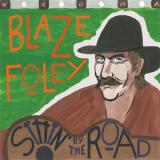
Die frühesten Aufnahmen des legendären Singer-Songwriters Blaze Foley. Einfach, geradlinig und kraftvoll - ,Sittin' By The Road" enthält 12 Titel, die während Blazes ,Baumhaus"-Zeit in Georgia aufgenommen wurden. Die hier vorgestellten Titel wurden Mitte der 1970er Jahre auf Blazes heimischem Tonbandgerät aufgenommen, das er auf seinen Reisen zwischen Texas und dem ländlichen Georgia mit sich führte. Diese Songs zeigen Blazes Talent in seiner frühen Form. Das Album enthält mehrere Songs von Blaze, die heute als Klassiker gelten, darunter ,Cold, Cold World", ,Election Day", ,Clay Pigeons" und ,If I Could Only Fly". Das Album enthält außerdem drei Songs von Foley, die auf keiner anderen Aufnahme zu finden sind: ,The Way You Smile", ,Fat Boy" und der Titelsong. Als Blaze 1989 auf tragische Weise ermordet wurde, war er außerhalb der Kreise der rebellischen Songwriter von Austin kaum bekannt. Heute wird er als einer der großen Songwriter von Texas verehrt. Townes Van Zant und Lucinda Williams haben beide bewegende Hommagen an Blaze geschrieben. Seine Songs wurden von John Prine, Merle Haggard, Lyle Lovett, Billy Strings und Willie Nelson gecovert.
Sonetos del Amor Oscuro is an ode performed by four enchanted souls who have intertwined their hearts and conjured harmonies and rhythms that wander endlessly among the spellbinding words of a poet from Granada... Federico García Lorca;
He wrung, pushed and vibrated words like tectonic plates, transforming plains into poetic mountain landscapes. He then covered them with a Moorish carpet of snow crystals and had them reflected by the dark locks of hair of a gypsy girl from Albaicín who, with a voice forged in gold and silver, sings her little sister to sleep with a soothing lullaby.
Helena Casella – vocals
Myrddin De Cauter – flamenco guitar
Stijn Kuppens – cello
Stefan Bracaval – flute, bass flute
Helena Casella, the Belgian-Brazilian vocalist with a deep, soft and warm voice, translates her multicultural background and personal thoughts into music in a passionate, soulful and refined way. With her roots in an exceptionally musical family, her music exudes this unique heritage. She effortlessly interweaves genres such as R&B, soul, hip hop and modern jazz, while remaining true to the vibrant sounds of Brazil, an essential part of her roots.
Her debut album was released earlier this year on W.E.R.F. records.
Myrddin De Cauter's music is deeply moving, complex, passionately rhythmic and deeply emotional. He has mastered the compás of flamenco, which gives him the freedom to converse with elements from jazz or classical music. His speed sometimes seems otherworldly, but those who take the time to listen closely to his music will quickly discover an immense world of pure emotion, beauty and tranquillity. After six albums and countless concerts, Myrddin proves that great virtuosos do not necessarily have to come from Spain. At the tender age of eleven, his father taught him to play the clarinet in jazz and gypsy swing style; he became part of the family orchestra and gained his first experiences on stage. A classical melody composed on the guitar prompted him to ask his father to teach him the basics of flamenco guitar. Soon after, Myrddin seemed ready for the real thing and went to Andalusia to learn from Manolo Sanlucar and Gerardo Núñez. This inspired him to compose in his own unique language, deeply rooted in the pure flamenco tradition but enriched by boundless creativity.
Stijn Kuppens is a cellist, composer and producer. In his own genre, which he describes as non-classical cello, he uses the cello in his own unique way. His profound knowledge of the complex history and techniques of the style is clearly audible: Kuppens' mastery of classical music is evident in every note he plays, whether he is performing solo or collaborating with other musicians. His skill as a musician and ambition to explore the boundaries of conventional classical music is evident in his ability to seamlessly blend different genres.
Stefan Bracaval is a classically trained flutist who graduated from the Royal Conservatory of Antwerp. His fascination with the expressive potential of improvisation led him to jazz, where he became a self-taught jazz flutist. Bracaval has collaborated on projects with prominent jazz figures such as Charles Loos, Bert Joris and the Brussels Jazz Orchestra. In addition, he worked as a soloist and arranger with the VRT Radio Choir in 2016. Bracaval leads the Stefan Bracaval QU4RTET, which emphasises the flute as a central jazz instrument and brings new repertoire rooted in jazz traditions.
Live
31/10/2025 – Café Silverio, Gent (BE)
15/01/2026 – Kloosterkapel Diepenbeek (BE)
16/01/2026 – ‘t Ey, Belsele (BE)
17/01/2026 – Sint-Luciakerk (kerkconcerten Merode), Engsbergen (BE)
23/01/2026 – Muziekcentrum Dranouter (BE)
- The Bullshit Talker
- Instastory Hashtag Tourlife
- Halloween Is Stupid
- Have You Ever Been On A Bobsleigh Track?
- Cascada Is Always A Good Choice
Mit Live in Bangalore legt der Kölner Schlagzeuger und Komponist Jo Beyer das dritte Album seines Quartetts vor - ein fulminantes Live-Dokument aus dem renommierten Windmills in der südindischen Metropole Bangalore. Fünf hochenergetische Tracks voller Spiellust, Wucht und Tour-de-Force-Momenten zeigen die Band in absoluter Topform. Entstanden gegen Ende einer intensiven Indien-Tournee, fängt die Aufnahme einen Abend ein, an dem alles stimmte: ein extrem gut eingespieltes Ensemble, ein Raumklang von Weltklasse und ein Publikum, das restlos aus dem Häuschen war. Sämtliche Titel existieren bereits in Studioversionen, doch hier sind sie hörbar gereift - durch jahrelanges Zusammenspiel, erweiterte Improvisationen und radikale Interaktion. Besonders prägnant ist die ungewöhnliche Besetzung ohne Bass, die ein unverwechselbares, rhythmisch starkes Klangbild schafft. Mit Pianist Felix Elsner an Bord hebt Beyer das Quartett endgültig auf ein neues Level - kraftvoll, kompromisslos und voller Überraschungen.
Dijon hatte mit Absolutely (2021) bereits bewiesen, wie man musikalische Narrative durch Performance-Visuals neu definiert. Nach diesem Generationen-Debüt zog sich Dijon zurück, gründete eine Familie und ließ Fans gespannt auf das Nachfolgewerk warten.Am 15.08.2025 veröffentlichte Dijon sein neues Album "Baby".Das neue Album entstand hauptsächlich in Isolation zu Hause, in enger Zusammenarbeit mit musikalischen Mitstreitern wie Andrew Sarlo, Henry Kwapis und Michael Gordon. Baby ist erneut ein definierendes Werk von Dijon, das bereit ist, die zeitgenössische Musiklandschaft zu prägen und damit auch für Vinyl-Enthusiasten von großem Wert sein wird.
Do you believe in spring? Simon Wangen (cello) and Philipp Sutter (piano) pose this question as the title for their new project. Whereas Bill Evans made a demand in 1981, the two Cologne-based musicians believe that in times of uncertainty, crisis, and environmental destruction, it is ok to set a questin mark here. But politics and world events aside: Do you believe in spring? Of course! It's never too late to start something new, get creative, and test your own limits. Simon Wangen is a classically trained cellist, Philipp Sutter a trained jazz pianist. Their different musical roots merge on this instrumental album into a lively mix of neoclassical, new jazz, and Cinéma Nordique. Ten pieces come across as sometimes dark, sometimes wild, sometimes delicate, always focusing on the dialogue between the two instruments that harmonize so well. The subtle use of electronic effects constantly opens up new perspectives and builds a bridge to contemporary sound aesthetics. Cello and piano—this combination has been established for centuries, but can still add new facets today. Do you believe in spring? begins stormily and turbulently, oscillating between romantic, sad, and beautiful moments, and leads from a rather dark beginning to the final and eponymous piece in C major, which leaves the listener with a glimmer of hope. Do you believe in spring? From October 24, 2025!
Do you believe in spring? Simon Wangen (Cello) und Philipp Sutter (Klavier) werfen den Titel für ihr neues Projekt als Frage in den Raum. Wo Bill Evans 1981 eine Forderung formulierte, sind die beiden Kölner Musiker der Ansicht, in Zeiten der Unsicherheit, der Krisen und Umweltzerstörung durchaus ein Fragezeichen setzen zu können. Aber abgesehen von Politik und Weltgeschehen: Do you believe in spring? Natürlich! Es ist nie zu spät, etwas Neues zu beginnen, kreativ zu werden und die eigenen Grenzen zu testen. Simon Wangen ist klassisch ausgebildeter Cellist, Philipp Sutter studierter Jazzpianist. Die unterschiedlichen musikalischen Wurzeln verschmelzen auf diesem Instrumentalalbum zu einer lebendigen Mischung aus Neoklassik, New Jazz und Cinéma Nordique. Zehn Stücke kommen mal düster, mal wild, mal zart daher, stets die Zwiesprache der beiden so gut harmonierenden Instrumente im Fokus. Der dezente Einsatz elektronischer Effekte öffnet immer wieder neue Perspektiven und schlägt eine Brücke zur zeitgenössischen Klangästhetik. Cello und Klavier - diese Besetzung ist seit Jahrhunderten etabliert, aber kann auch aktuell immer wieder neue Facetten hinzubekommen. Do you believe in spring? beginnt stürmisch und aufgewühlt, changiert zwischen romantisch - traurig - schönen Momenten und führt von einem eher düsteren Beginn hin zum letzten und namensgebenden Stück in C-Dur, das die Zuhörenden mit einem Hoffnungsschimmer entlässt. Do you believe in spring? Ab 24.10.2025!
- A1: Augen Auf
- A2: Good Riddance
- A3: Das Gute Leben
- A4: Friends
- A5: Carousel Ride
- A6: Growing Pains
- B1: Laut Genug
- B2: Alles Außer
- B3: Geh Ma Net
- B4: Bildet Banden
- B5: Bussi Baba
- B7: Heteronorm
Ltd. Translucent LP
Augen auf & durch' markiert 10 Jahre Yasmo & die Klangkantine. Die Wiener HipHop-Jazz-Bigband um Rapperin Yasmo (Yasmin Hafedh) präsentiert auf ihrem vierten Album ein klares Statement: wach bleiben, Haltung zeigen, die Realität aktiv gestalten. Musikalisch verschmelzen präzise Beats, Bigband-Bläser und pointierte Texte zu einem einzigartigen Sound zwischen Diskurs und Tanz. Mit Ralph Mothwurf und Tobias Vedovelli entstehen Werke jenseits aller Genregrenzen mit breitem Anspruch.
Der Gitarrist John Scofield und der Bassist Dave Holland, zwei der zeitgenössischen Meister des Jazz, haben
im Laufe der Jahre in verschiedenen Zusammenhängen zusammengespielt – darunter Projekte mit Herbie
Hancock und Joe Henderson sowie eine energiegeladene Gruppe mit Joe Lovano und Al Foster. Memories
of Home ist nun ihr erstes Duo-Album, letztes Jahr nach ausgiebigen Tourneen in den NRS Studios in
Catskill, New York, aufgenommen. John Scofield: „Die Platte enthält, genau wie unsere Live-Shows,
Stücke, die jeder von uns komponiert hat, einige neu, einige alt. Wir teilen jahrzehntelange gemeinsame
musikalische Bezugspunkte. Die Gemeinsamkeiten und Unterschiede in unseren Herangehensweisen machen
die Zusammenarbeit, wie ich finde, umso spannender.“
Das Album enthält Scofields Songs „Icons at the Fair“, „Meant to Be“, „Mine Are Blues“, „Memorette“
und „Easy for You“ sowie Hollands „Mr. B“, „Not for Nothin’“, „You I Love“ und „Memories of Home“.
Plus 4 wurde ursprünglich 1956 bei Prestige veröffentlicht und zeigt Sonny Rollins zusammen mit dem
Cliff Brown/Max Roach Quintett. Das Album wird als besonders starkes Hardbop-Set beschrieben und
enthält fünf Titel, darunter zwei Rollins-Originale, „Pent-Up House“ und eines seiner bekanntesten Stücke,
„Valse Hot“. Diese Neuauflage des Albums erscheint als Teil der OJC-Serie auf 180-Gramm-Vinyl, gepresst
bei RTI, mit vollständig analogem Mastering von den Originalbändern bei Cohearent Audio und einem
Stoughton Tip-On-Cover.
The Modern Soul Septet (later Modern Soul Band) was one of the hottest and most popular dance music groups in East Germany from the late 1960s to the mid-1980s.
In its early years, this band played a very unusual, raw, authentic, and freaky brand of funky Soul-Beat and Jazz-Rock for East Germany, which thrilled many music lovers and dance enthusiasts. The Modern Septett became one of the most booked dance bands in the country and recorded numerous outstanding tracks for the radio. Ahead of their time and too raw and hard for the state label, only two tracks were published in this first creative period. By the mid-70s, the Modern Soul Band had arrived in the midst of Fusion-Jazz and, thanks to their steadily growing popularity, finally received their first LP production in 1976. This album "Soul Komplex" fills a long-overdue gap in the band's discography and is an absolute must for any collector of East German Soul and Jazz.
Previously unreleased East German high class late 1960s and early 1970s funky Soul-Beat and raw Jazz-Rock titels.