Coleman Hawkins war nicht nur der erste große Tenorsaxofonist, der sich in der Swing-Ära als Improvisator
profilierte, sondern trug später auch seinen Teil zur Entwicklung des Bebop bei. Im Gegensatz zu vielen
seiner Zeitgenossen blieb er nicht in der Zeit stehen, sondern entwickelte sich ständig weiter. Das 1958
erschienene Album zeigt ihn in munter swingendem Austausch mit durchweg prominenten Mitstreitern.
Search:coleman hawkins
- 1
Coleman Hawkins gilt als Begründer einer der beiden großen Tenorsaxofon-Schulen. Während der Stil
seines Gegenparts Lester Young kühl und reflektiert war, stand Hawkins für leidenschaftliches und überbordendes Spiel. Bob Thiele holte den Veteranen 1962 für Impulse! Records ins Studio, um ihn eine exquisite
Mischung aus Up-Tempo-Nummern und Balladen, älteren und zeitgenössischeren Stücken einspielen zu
lassen.
Recorded in 1962, Hawkins’ quartet featuring Tommy Flanagan (Piano), Major Holley (Bass) and Eddie Locke (Drums) puts forth an easily palatable selection of repertoire, with up-tempo moments like ‘Go Li’l Liza’, and Swingin’ Scotch alongside a trio of ballads including Quincy Jones’ ‘Quintessence’. This Verve By Request title is pressed on 180-gram vinyl at Third Man in Detroit.
Ben Webster was considered one of the ‘big three’ of swing tenors along with Coleman Hawkins (his main influence) and Lester Young. ‘Blue Saxophones’ is a studio album recorded in 1957 by Coleman Hawkins and Ben Webster. Accompanied by a rhythm section with Herb Ellis guitar, Alvin Stoller drums and Ray Brown on double bass led by Oscar Peterson. They just blend together beautifully, and with the great Oscar Peterson on piano, the approach is always very tasteful. This encounter shows the two veterans at the peaks of their powers. Most of the album is a relaxed meeting of old friends, though. Coleman and Webster duet beautifully on the heads of “La Rosita” and “It Never Entered My Mind”. Limited Edition on Cool Blue coloured vinyl.
This 1957 date, produced by Norman Granz, finds the two tenors matching wits with accompaniment from Oscar Peterson, Herb Ellis, Ray Brown, and Alvin Stoller. From Hawkins' screaming solo on the opener "Blues for Yolanda" to the beautiful give-and-take on the ballads "It Never Entered My Mind" and "Prisoner of Love", this classic set is warm, lyrical and essential. Verve’s Acoustic Sounds Series features transfers from analog tapes and remastered 180-gram vinyl in deluxe gatefold packaging.
REISSUE
This superb recording features a reunion of two of jazz"s finest - tenor-saxophonist Coleman Hawkins and clarinetist Pee Wee Russell. At the time of this session, the two had not been on a recording date together in 32 years. Here they revisit "If Could Be With You One Hour", a song they first recorded in a classic version back in 1929. Pee Wee Russell, though often mistakenly associated only with Dixieland jazz, defied classification. His unorthodox playing and highly individualistic and spontaneous clarinet style pushed boundaries. Coleman Hawkins is almost unanimously considered to be one of the first prominent saxophonists of jazz, and he had a crucial role in the development of bebop in the 1940s. This brand new reissue of the 1961 album is available on CD and LP (180g) and has been remastered from the original Candid Records master tapes by Bernie Grundman.
Verve und seine Schwesterlabels Impulse, Mercury und Emarcy bieten Vinylfans mit der ACOUSTIC SOUNDS-Serie eine audiophile LP-Serie für gehobene Ansprüche. Hierfür arbeitet Verve mit dem bekannten amerikanischen Vinyl-Label Acoustic Sounds zusammen:
- Fertigung mit 100% ANALOGEN PRODUKTIONSSCHRITTEN
- Mastering vom ERSTE-GENERATION-MASTERBAND
- 180G-PRESSUNG bei Quality Record Pressings
- laminierte TIP-ON-GATEFOLD-SLEEVES & WATTIERTE INNENHÜLLEN
VERVE ACOUSTIC SOUNDS SERIE: komplett analog von Ryan K. Smith bei Sterling Sound von den
Originalbändern gemastert, QPR-Pressung (180 g), stabiles Tip-On-Gatefold (Stoughton Printing), wattierte Innenhülle.
Wohl kaum ein anderer hat den Titel “King Of The Tenors” mehr verdient als Ben Webster. Zusammen mit Coleman Hawkins und Lester Young bildete er das Triumvirat der großen Swing-Tenoristen. Mit
seinem warmen, gefühlvollen Stil, der im krassen Gegensatz zu seinem oft aufbrausenden Temperament
stand, beeinflusste er zu seiner Zeit unzählige andere Tenorsaxofonisten. Websters erstes Soloalbum unter
der Regie von Produzent Norman Granz erschien 1954 ursprünglich unter dem Titel “The Consummate
Artistry of Ben Webster” bei Norgran, wurde dann aber 1957 auf Granz’ neuem Label Verve Records als
“King Of The Tenors” wiederveröffentlicht.
- Young Bean
- In A Mellow Tone
- Budd Johnson
- Time After Time
- De-Dar
VERVE ACOUSTIC SOUNDS SERIE: Stereo, komplett analog von Ryan K. Smith bei Sterling Sound von den Originalbändern gemastert, QPR-Pressung (180 g), stabiles Tip-On-Gatefold (Stoughton Printing), wattierte Innenhülle.
“Ben Webster & Associates” war 1959 das dritte und letzte Projekt, für das der Produzent Norman Granz die beiden Tenorsax-Ikonen Ben Webster und Coleman Hawkins im Studio zusammenbrachte. Als dritter Tenorist gesellte sich bei dem entspannt swingenden Austauch noch Budd Johnson hinzu, von dem Ben Webster in seiner Jugend in Kansas City seine ersten Saxofonstunden erhalten hatte.
Since the late 90"s, Jakob "Dino" Dinesen has become a stalwart of the Danish jazz scene, performing with nearly everyone of note in the country as well as internationally celebrated names such as Kurt Rosenwinkel, Jeff "Tain" Watts, Jakob Bro and Paul Motian. Finding joy and inspiration in the building of bridges between genre boundaries, his career in music has seen him travel and perform all over the world, enriching his sound and soul with every new experience. His new record seeks to convey his dream of a future world at peace with itself. "Slow Flow" is set to release on January 25th on April Records. "I envision a world where people from every corner of the globe come together, dancing, sharing meals, and finding joy through my music. My children are a blend of Africa and Denmark, and I hope they"ll carry the traditions and wisdom of both their mother and father as they navigate their path. I would love for music like this to be the soundtrack to their journey through life." Rooted in the playful live sound of an atypical quintet featuring cello and djembe, Slow Flow sits in a unique space somewhere between earthy, simplistic, and acoustic and contemporary, electronic, and unexpected. The record"s sound is soft spoken and full of compassion-a dark-timbred music where the intimate, warm breath of his tenor saxophone intertwines with the crisp, organic tones of the cello. Together, they float over smooth, analog synths and electronic loops, while the carefully crafted lines of the bass and the gentle rhythm of hands on drum skins carry the music forward. Occasional erratic, quirky bursts from an affected keyboard and weaving improvisations offer moments of energy and contrast. Each of the album"s nine original compositions paint musical pictures of contentment that are dear to Dino, as well as offering musical tributes to four of his heroes in Yusef Lateef, Wayne Shorter, Coleman Hawkins and Eddie "Lockjaw" Davis". Drawing on modern European jazz, African rhythms, Italian circus music, and reggae, Slow Flow plays as a deeply personal exploration of Dino"s identity, whilst providing a dream-like message of global peace that promises to resonate with like-minded people all around the world..
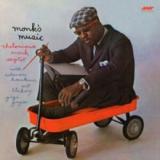
Dieses atemberaubende, bahnbrechende Monk-Album wurde 2001 in die Grammy Hall of Fame aufgenommen. Auf dem 1957 erschienenen Album des Pianisten sind auch die Talente von Coleman Hawkins
(Tenorsaxophon), Art Blakey (Schlagzeug) und John Coltrane (Tenorsaxophon) zu hören - mit glorreicher
Wirkung.
Das Album, so schrieb Pitchfork, ”half, die Zukunft des Jazz und den Geist von Monk zu definieren”. Seine
Songs ”Ruby, My Dear”, eine Studie über Nostalgie, und im Gegensatz dazu das lebhafte, selbstbewusste
”Well You Needn’t” sind Höhepunkte im akustischen Traumfeld von Monk Music.
THE COMPLETE ALBUM + BONUS TRACK - 180g VIRGIN VINYL - LIMITED EDITION. 2-3-4 was not a typical album for Shelly Manne who was primarily associated with West Coast Jazz. For this session though he flew from Los Angeles to New York by arrangement with producer Bob Thiele to be reunited with pioneering tenor saxophonist Coleman Hawkins and pianist Hank Jones, both of whom he had recorded with at various times in the 1940s. In an unusual session lasting through the wee hours of the morning, Manne ended by recording one tune as a duet with Hawkins.
“Monk’s Music”recorded in 1957, is an iconic masterpiece by jazz pianist Thelonious Monk. The album features a septet of talented musicians, including John Coltrane and Coleman Hawkins. With his unique style and innovative compositions, Monk reinvents jazz with tracks like “Well, You Needn’t” and “Epistrophy.” Vibrant solos and dynamic interaction between group members make this album a cornerstone of modern jazz, offering a timeless and captivating musical experience.
Monk's Music by Thelonious Monk Septet, released 16 May 2024, includes the following tracks: "Ruby, My Dear", "Epistrophy" and more.
An avant-garde masterpiece, a vocal-instrumental suite, a work of collective improvisation, directly addressing the racial and political issues of it’s day, We Insist! Max Roach’s Freedom Now Suite is one of the most important artistic statements of Civil Rights Movement and one of the most groundbreaking jazz albums of all time. Max Roach was already almost a decade into his career as one of the most influential jazz drummers and composers when he teamed up with lyricist Oscar Brown Jr. to collaborate on a piece they planned to perform at the centennial of the Emancipation Proclamation in 1963. Recorded just months after the February 1960 Greensboro sit-ins, the album stands as an early musical testament to the burgeoning rage, anger and passion that would take the Civil Rights Movement from its early victory in Montgomery in 1955 into a future that would dramatically alter race relations in the United States. The second release from the newly launched New York City based jazz label Candid Records, and produced by label co-founder, famed music critic and social activist, Nat Hentoff, the album is a bold statement, focused on civil injustices in black history ranging from slavery to contemporary racial prejudices, and featuring some of the finest jazz musicians ever, including Abbey Lincoln, Coleman Hawkins, Eric Dolphy, Booker Little, and Michael Babatunde Olatunji. The five movements of the work are organized as a historical progression through African-American history, a shape similar to the one in Duke Ellington’s Black, Brown and Beige. The Freedom Now Suite moves from slavery to Emancipation Day to the contemporary civil-rights struggle and African independence. The LP includes extraordinary liner notes written by Hentoff himself, giving a context and insight that adds to the experience of hearing these magnificent performances.
Tenor saxophonist Ben Webster (born Kansas City, 1909) needs little introduction, Webster is regarded as one of the three foremost swing era tenor saxophonists - the two others being Coleman Hawkins and Lester Young. His ballad playing and sound inspired such later fellow saxophonists as Archie Shepp, Sonny Rollins and John Coltrane. Webster became famous for his unique sound, quick tempos, his solos that contained great virile rhythmic momentum, a rasping timbre and an almost brutal aggressiveness filled with growl, while his ballad playing was breathy, tender and sensual. The list of his collaborations is long, Ben Webster worked, recorded and played with legends from the likes of Art Tatum, Count Basie, Cab Calloway, Roy Eldridge and Dexter Gordon_but a dream came true when he was offered a permanent job in Duke Ellington's orchestra where his personal style matured. Webster stayed with Ellington until 1943, after which he formed his own groups and played with other small ensembles. From 1952 on he spent his time between Los Angeles and New York playing, freelancing and recording with a variety of soloists, among them high-profile singers like Billie Holiday, Ella Fitzgerald, Carmen McRae and Frank Sinatra. Despite excellent reviews of his albums, it was difficult for Webster to find steady work in the US during the early 1960's, and when in 1964 he got offered to play for a month in London he accepted and sailed to England. Webster never returned to the United States. In Europe he found plenty of work, playing residences in Scandinavia, settled in Amsterdam (1966-69) and then in Copenhagen (where he even has a street named after him). He toured frequently, playing in clubs and at big festivals with local bands or with visiting American musicians. Ben Webster suffered a stroke in Amsterdam in September 1973 following a performance in Leiden and died on September 20. Even when his health started to decline during his last years, his playing never did. To the last day Webster played with passion and intensity, delivering weight on every note. Webster is the subject of two renowned documentaries and two extensive biographies have been published about his legacy. Responsible for a plethora of excellent recordings he remains THE best-selling tenor saxophonist in jazz. Ben Webster was one of those unique jazz musicians whose presence came through on every recording (He recorded for prestigious labels including Verve, Impulse!, Prestige, Reprise, Blue Note_and countless others. On the album we are proudly presenting you today (Wayfaring Stranger recorded in 1970 by the NPS Radio network in The Netherlands) you will find mind-blowing high-quality Dutch sessions that were left dormant on a shelf and weren't commercially released for over 30 years! On 'Wayfaring Stranger' the listener is treated to no less than nine sublime tracks that document Webster's trademark relaxed-swinging but imaginative playing style that never gets boring. The album features an all-star line-up from the likes of Rob Langereis (Toots Thielemans), John Engels (Chet Baker, Dizzy Gillespie) and Cees Slinger (Dexter Gordon, Slide Hampton). Expect a 61-year-old Ben Webster in excellent form giving a warm, dusky, gritty yet funky performance where he delivers everything from up-tempo material, 12-bar blues jams to soulful expressive ballads. Webster's quartet is in constant musical dialog with each other, creating a unique back and forth between musicians at the top of their game. Tidal Waves Music now proudly presents the FIRST EVER vinyl release of this fantastic album (originally released as a limited Compact Disc edition back in 2000). This unique record comes as a deluxe 180g DOUBLE vinyl edition (strictly limited to 1000 copies) with obi strip.
A pioneer of bebop, Max Roach went on to work on many other styles of music and is generally considered alongside the most important drummers in history having worked with such musicians as Coleman Hawkins, Dizzy Gillespie, Miles Davis, Duke Ellington, Charlie Parker, Stan Getz and more! A seminal set, stretching out towards the directions Max would explore fully on the Candid, Impulse, and Fantasy labels in the 60s. Group members include Booker Little on trumpet, George Coleman on tenor, Ray Draper on tuba, and Art Davis on bass – and the lack of a piano makes for a very exciting sound!
- A1: Oh, What A Little Moonlight Can Do
- A2: I Cover The Waterfront
- A3: Fine And Mellow
- A4: I Cried For You
- A5: My Man
- A6: Reading From Lady Sings The Blues
- A7: I'll Be Seeing You
- A8: Please Don't Talk About Me When I'm Gone
- A9: Yesterdays
- B1: Don't Explain
- B2: Reading From Lady Sings The Blues
- B3: Body And Soul / Billie's Blues
- B4: Reading From Lady Sings The Blues
- B5: Travelin Light With Reading
- B6: It Ain't Nobody's Business If I Do
- B7: Lady Sings The Blues
- B8: Reading From Lady Sings The Blues
The live recordings included here are among the very best from Billie Holiday's final years
Part of the motivation behind the 1956 Carnegie Hall concert was to promote Billie's autobiography, Lady Sings the Blues.
The music was attuned entirely to Billie's character part, reinforced by readings from her book by Gilbert Millstein. Although recorded in 1956, the LP was only issued in 1961, almost two years after Billie's passing on July 17, 1959, at the age of 44.
Billie Holiday, vocals
Roy Eldridge, trumpet
Coleman Hawkins, tenor sax
Carl Drinkard, piano
Tony Scott, clarinet (piano on Lady Sings the Blues only)
Carson Smith, bass
Chico Hamilton, drums
Gilbert Millstein, readings from the book Lady Sings the Blues Live at Carnegie Hall, New York, November 10, 1956.
Jazz Saxo Session is one of the first connected discs of Jazz Collection.
Grouped by instrumental theme, this jazz compilation features the greatest names in jazz: Charlie Parker, John Coltrane, Stan Getz...
The podcasts on the history of jazz offered in the Viny application (on IOS or Android) are fascinating.
And if jazz is in you, you'll love to continue the experience with the Jazz Collection by Vinyl & Media suite.
- A1: Lady Be Good 3’36
- A2: Back Home Again In Indiana 2’48
- A3: I Can’t Get Started With You 3’15
- A4: I Didn’t Know What Time It Was 4’20
- A5: Three Little Words 4’18
- A6: Pennies From Heaven 3’21
- B1: Tea For Two 3’31
- B2: I Cover The Waterfront 3’49
- B3: A. B. Blues 3’14
- B4: There’ll Never Be Another You 3’39
- B5: Almost Like Being In Love 4’01
- B6: Lullaby Of Birdland 3’43
In January 1959, Lester Young was in Paris for a series of concerts at the famous Blue Note Club. He plays with Rene Urtreger on piano, Kenny Clarke on drums, Jimmy Gourley on guitar and Jamil Nasser on bass. On March the 4th, 1959, Eddie Barclay decides to record Lester at Studio Barclay, which will be his last album.
This legendary recording session is poignant and moving in line with the from Coleman Hawkins ‘Sirius’ and the last recording of Billie Holiday. Lester Young is reduced but the grace and genius are still there! Some days later, March 15, 1959, Lester succumb at the Alvin hotel, a few hours after arriving in New York. A heart attack had just one defeat all musicians nicknamed ‘Prez’, The President.
An avant-garde masterpiece, a vocal-instrumental suite, a work of
collective improvisation, directly addressing the racial and political issues
of it's day, We Insist! Max Roach's Freedom Now Suite is one of the most
important artistic statements of the Civil Rights Movement and one of
the most groundbreaking jazz albums of all time
The second release from the newly launched New York City based jazz label
Candid Records, and produced by label co-founder, famed music critic and social
activist, Nat Hentoff, the album is a bold statement, focussed on civil injustices in
black history ranging from slavery to contemporary racial prejudices, and
featuring some of the finest jazz musicians ever, including Abbey Lincoln,
Coleman Hawkins, Eric Dolphy, Booker Little, and Michael Babatunde Olatunji.
Repress !
Max Roach's 1960 masterwork, We Insist!, is a suite based on the Civil Rights Movement, and involves variations on the theme of the struggle for African Americans to achieve equality in the United States, a struggle that is still all too relevant still. Roach began composing with lyricst Oscar Brown Jr. in 1959, with the initial intention of having the suite performed in 1963, on the 100th anniversary of The Emancipation Proclamation. Featuring the wonderful Abbey Lincoln on vocals, as well as Booker Little, Julian Priester, Coleman Hawkins, Olatunji, and more, We Insist! is a truly stunning album, one that knows no equal from that time or since, reissued on 180 gram LP with download code.
- A1: Bad Luck Blues
- A2: Bo-Weavil Blues
- A3: Moonshine Blues
- A4: Jelly Bean Blues
- A5: See See Rider Blues
- A6: Shave 'Em Dry Blues
- A7: Stack-O-Lee Blues
- B1: Soon This Morning
- B2: Ice Bag Papa
- B3: Ma Rainey's Black Bottom
- B4: Prove It On Me
- B5: Black Cat Hoot Owl Blues
- B6: Deep Moaning Blues
- B7: Traveling Blues
- B8: Daddy Goodbye Blues
Born in 1886 in Columbus (Georgia), Ma Rainey is considered by most the mother of the Blues. She did a lot to popularize this style among younger generations and will be a direct influence for countless artists. Author of the first hits of the genre (See See Rider Blues and Chain Gang Blues in the 1920s), she will take a young girl by the name of Bessie Smith under her wing and will write songs with Louis Armstrong or Coleman Hawkins.
- Si Tu Vois Ma Mere (From Midnight In Paris)
- Spring Will Be A Little Late This Year (From Whatever Works)
- Lil’ Darlin’ (From Mighty Aphrodite)
- My Ideal (From September)
- If I Had You (From You Will Meet A Tall Dark Stranger)
- Sleepy Lagoon (From Annie Hall)
- I Got Rhythm (From Celebrity)
- Liebestraum #3 (From Sweet And Lowdown)
- I’ve Heard That Song Before
- (From Hannah And Her Sisters)
- Manhattan (From Mighty Aphrodite)
- I Can’t Get Started (From Anything Else)
- The Way You Look Tonight (From Alice)
- Take Five (From Mighty Aphrodite)
Immortal jazz tracks from Woody Allen’s movies on 180g limited edition
vinyl featuring tracks by Sidney Bechet, Count Basie, Art Tatum, Benny
Goodman, Lester Young and others.
Jazz music has always filled an important part in Woody Allen’s life and work.
In addition to his career as a filmmaker he also plays the clarinet. Classic jazz
recordings are also present in nearly all of his films and play an essential role
in setting the mood. This LP presents a selection of 13 tracks that were used
on 11 of his movies.
“Everyone loves the music of his childhood, and for some reason, it has a
disproportionate impact on the person. When I was growing up and I got up
in the morning to go to school, I would turn on the radio and it would be Billie
Holiday and Coleman Hawkins and Benny Goodman.” - Woody Allen
Re-mastering by: Kevin Gray
This is a reissue of a now out-of-print album from live trio date by the legendary LA-based pianist, composer and multi-bandleader, Horace Tapscott. Pianist Horace Tapscott is always at his best when he is leading a trio. Born in 1934 in Houston, Texas, Horace came from a musical family centered around his mother, Mary Malone Tapscott, who worked professionally as a singer and pianist. When Horace was nine, the family moved to Los Angeles. As a teenager in the late 1940's, Horace was surrounded by the music of Central Avenue: Art Tatum, Charlie Parker, Coleman Hawkins, Dexter Gordon, were among the many cats on the set. Around this time, Horace also began to take music lessons from teachers Dr. Samuel R. Browne and Lloyd Reese, whose other students included Eric Dolphy and Frank Morgan. Horace's musical studies included trombone in addition to piano.
In 1952, Horace graduated from Jefferson High, got married to Cecilia Payne and went into the Air Force. Horace played in an Air Force Band while he was stationed in Wyoming for his term of duty. After mustering out, he returned to Los Angeles where he worked around on various gigs until he joined the Lionel Hampton Big Band as a trombonist.
In 1959, Horace finally went with the Hampton Big Band to New York, where his friend Eric Dolphy introduced him to John Coltrane. A tough winter, a lack of gigs, and too many nights on the floor of a friend's art gallery finally sent Horace packing for sunny Southern California, where a life with wife and family awaited his return.
The sixties saw Horace emerge as a die-hard leader of the Avant Garde. Horace began to gain public notice playing with his own group, that included alto saxophonist Arthur Blythe, bassist David Bryant, and drummer Everett Brown II. Horace also appeared on records for the first time.
Horace was always outspoken about racism, politics, stereotypes, and social ethics. His forward-minded vocal presence on and off the microphone is as much a part of his art as his piano playing. As a result, he was labeled a "dissident," categorized as an "employment risk," and black-listed from the music industry establishment in the early 1970's. None of this slowed Horace down. He began gigging sporadically at Parks and Recreation events and for churches around Watts. This "dark period," with his only regular gig at his friend Doug Weston's Troubadour on Los Angeles' "Restaurant Row", was also a time of intense creativity.
Around 1977, Horace reorganized the Pan-Afrikan Peoples Arkestra with the help of several old friends and many new faces. The Arkestra performances involve singing, dancing, and poetry in addition to the music. Soon after the new group's debut, Horace came to the attention of producer Tom Albach who contracted Horace to record a number of albums for Nimbus Records. Albach also helped introduce Horace to an international audience by arranging several European tours.
The 80's saw Horace emerge as one of jazz's premiere solo pianists. He recorded several solo piano albums for Nimbus.
Abbey Lincoln, often remembered for her seminal work with Max Roach, was a powerful performer and indeed one of the greatest Jazz voices of all time. "Straight Ahead" stands as one her best albums. Lincoln is matched here by a ultra-stellar line up including Jazz masters such as Booker Little — trumpet, Julian Priester — trombone Eric Dolphy — alto saxophone, bass clarinet, flute, Walter Benton and Coleman Hawkins — tenor saxophone, Mal Waldron — piano, Art Davis — bass, Max Roach — drums, Roger Sanders and Robert Whitley — congas. "Straight Ahead" is the perfect combination between Lincoln 's strong "Afro-Blue" tone singing, conscious lyrics and angular modern Jazz arrangements. Recorded in New York in a one-off studio session held on February 22, 1961 and released by Candid Records in the same year, the album includes highlights such as Oscar Brown jr's "When Malindy Sings", Thelonious Monk's "Blue Monk", Billie Holiday and Mal Waldron's "Left Alone" and "African Lady" a Randy Weston composition based on lyrics by the great writer Langston Hughes.
- 1