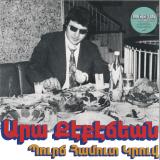
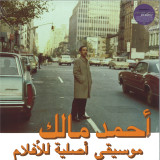
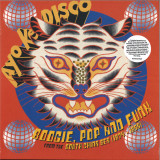
The long-awaited repress of the first Radio Maritko 45 “Oriental Shake”, featuring Habibi twist and Alba’s Shake. Exotica and twist mania from the Greek and Italian sixties that shakes all dancefloors! With a brand new layout
Buscar:habibi
- A1: Intro
- A2: Abaday
- A3: Mosaics
- A4: Kuda Arab
- A5: Mata Api
- A6: Ahmad’s Lament
- A7: Jamal
- B1: A Ladder On The Balcony
- B2: Bandar Batavia
- B3: Ombak, Ombak
- B4: Frag Men Ted Mea Ning
- B5: Pekojan Funk
- B6: Silk End
Tirakat brings together Jakarta-based trio Ali and Lebanese composer and multi instrumentalist Charif Megarbane in a collaboration rooted in long histories of cultural exchange between Indonesia and the Arab world. Ali are known for blending 1970s Indonesian psychedelic funk with Orkes Melayu, disco grooves, and Arab melodic forms, while Megarbane’s extensive catalogue has consistently explored similar cross-regional currents through jazz, library music, and Mediterranean-influenced arrangements. What connects the two is not genre alone, but a shared musical vocabulary shaped by overlapping histories, references, and lived cultural continuities.
The relationship between Indonesia and the Arab world stretches back over a thousand years, forged through Indian Ocean trade routes that carried not only goods, but languages, belief systems, instruments, and musical ideas. These exchanges were gradually absorbed into local traditions rather than replacing them. In Indonesia, Arabic musical elements entered through devotional practices and ensemble formats such as Gambus, Qasidah, and Orkes Melayu, where maq?m-derived melodic structures were adapted into local tuning systems and performance styles. Over time, these sounds became embedded within Indonesian popular music, shaping genres such as dangdut and informing a wider sonic landscape that remains audible today.
- A1: Cheb Bakr – Allom
- A2: Group Hewaya – Irja
- A3: Shahd – Erhal Keef Alshams Tgheeb
- A4: Ahmed Ben Ali – Jara
- B1: The White Bird Band– Ya Ummi
- B2: Khaled Al Melody – Jani Bigool
- B3: Fathi Aldiyqz & Sons Of Africa Band – Palestine Is My Homeland
- B4: Libya Music Band – Kol Al Mawaeed
- C1: Stars Of Africa – Baed Al Farha
- C2: Khaled Al Reigh – Zannik
- C3: Khaled Al Zlitni – Jiti Yam Eloyoun Buhoor
- C4: Murad Najah – Hubbi Leeki
- D1: City Lights Band – Kul Ghrub
- D2: Adil Al Ramli – Mawoud
- D3: The Hope Duo – La Tgheeb Anni Wala Youm
2x12"[28,15 €]
Habibi Funk is more than happy to announce our 31st release which happens to be our 3rd various artists compilation. The album is dedicated to the cassette tape scene in Libya from the late 80s to early 2000s, from disco to reggae to pop. All songs previously unreleased outside of Libya and not available on any DSP platforms.
This compilation isn’t a sweeping history of Libyan music — it’s a personal journey into the sounds we fell in love with while digging through tapes, conversations, and stories across Libya and beyond. Rather than spotlighting the country’s most famous musical exports, the compilation brings forward a mix of overlooked gems and local classics of the cassette era: artists whose work thrived despite political limitations, and scarce international exposure. The music featured here blends reggae rhythms, synthy disco grooves, gritty pop, house, and funk, a vibrant collision of genres that reflects Libya’s unique sonic landscape from the 1980s to the early 2000s. Many of these recordings were recovered from the TK7 cassette factory in Sousse, Tunisia, a now-demolished site that once played a quiet but vital role in distributing and manufacturing Libyan music. Other tracks were digitised in a Cairo hotel room in 2021, where we transferred nearly 100 tapes over the course of three days, on-site using a high-grade cassette deck brought into Egypt with us. From that trove emerged artists like Ahmed Ben Ali, Cheb Bakr, and Najib Alhoush & The Free Music, who have already featured on our earlier releases. Their sounds sit alongside contributions from this release from the likes of Khaled Al Melody, Fathi Aldiyqz & Sons of Africa Band, City Lights Band, Libya Music Band, and Group Hewaya. During this era, Independent artists relied on makeshift home studios or travelled abroad to record in Tunisia and Egypt, gradually building their own infrastructures for creativity. By the 90s and early 2000s, as access to digital equipment increased, a few of the artists began setting up their own studios — a shift that gave rise to a more self-sufficient recording culture across the country. The resulting sounds are anything but homogeneous. They reflect Libya’s geographic and cultural crossroads: North African rhythms meet Arab melodies and deep African roots. Reggae, in particular, took on a local Libyan flavour — not just musically, through the slowed-down cadence of traditional shaabi beats, but socially, as a vehicle for expressing identity and pride. What ties all the artists on this comp together is a boundary- pushing approach to genre and style: recorded in small studios, exchanged by hand, and shaped by a cross-pollination of influences, from Benghazi to Tripoli and beyond. All tracks are licensed from their creators and in the case of the artists being deceased from their estates. All profits are being split 50:50 between us in the licensors and ownership remains with the creators, we only licensed the music.
- A1: Cheb Bakr – Allom
- A2: Group Hewaya – Irja
- A3: Shahd – Erhal Keef Alshams Tgheeb
- A4: Ahmed Ben Ali – Jara
- B1: The White Bird Band– Ya Ummi
- B2: Khaled Al Melody – Jani Bigool
- B3: Fathi Aldiyqz & Sons Of Africa Band – Palestine Is My Homeland
- B4: Libya Music Band – Kol Al Mawaeed
- C1: Stars Of Africa – Baed Al Farha
- C2: Khaled Al Reigh – Zannik
- C3: Khaled Al Zlitni – Jiti Yam Eloyoun Buhoor
- C4: Murad Najah – Hubbi Leeki
- D1: City Lights Band – Kul Ghrub
- D2: Adil Al Ramli – Mawoud
- D3: The Hope Duo – La Tgheeb Anni Wala Youm
3x12" Vinyl Box[46,64 €]
Habibi Funk is more than happy to announce our 31st release which happens to be our 3rd various artists compilation. The album is dedicated to the cassette tape scene in Libya from the late 80s to early 2000s, from disco to reggae to pop. All songs previously unreleased outside of Libya and not available on any DSP platforms.
- A1: Hanadi 02 18
- A2: Dreams Of An Insomniac
- A3: Al Dollarji
- A4: Les Vents Dominants
- A5: Al Bahriye
- A6: Miramar
- A7: The Invisible Cut
- A8: Helia Featuring Sven Wunder
- B1: East Of What
- B2: La Calypso 02 41
- B3: Hawalat
- B4: Sfiha
- B5: La Virgule Suspendue
- B6: Preamble To The Conclusion
- B7: Chou Ostak
- B8: What Happened Next
- B9: Jana
If Hawalat sounds like a world tour that’s because it essentially is. “As much as Marzipan is a picture of Lebanon from the inside, Hawalat kind of picks up from where Marzipan finished but more looking to the outside, the diaspora, to the notion of exile.” Megarbane says he is interested in the connections between the global and the domestic, the mundane and the cosmic, and wanted to create space for non-linear progression.
Hawalat is based on the idea of hawala, informal money transfers that you can make to certain countries impacted by a lack of currency or unstable political and economic contexts. His use of the term on this album is not a financial one, Megarbane explains, but a nod to notions of creative exchange between “places, persons, generations.” It is the first time Megarbane called on other musicians in this way to inform his sound, including a collaboration with Sven Wunder on the song Helia featuring strings by the Stockholm Studio Orchestra.
The album opens with first single Hanadi, a punchy Somali-inspired track with warm non-lexical vocals and saxophone. It immediately pivots to the Dreams of an Insomniac, which balances soft, effortless vocals and keys with urgent violin intrusions. Al Dollarji feels like Megarbane’s bread and butter, that is Mediterranean sounds with intricate strings, while Al Bahriye takes this staple and introduces hip hop inflections. The result is a rich 17 track album that effortlessly blends genres and styles.
Including 8 page, 12" sized booklet with unseen photos and liner notes by Armani Syed.
Songs about the unity of Sudan, peace between Muslims and Christians and the fate of war orphans, backed by grooves equally taking influence from Arabic sounds, American funk as well as neighboring Ethiopia.
Kamal Keila was among the first artist we met in Sudan during our two trips to Khartoum and Omdurman last year. He is one of the key figures of the Sudanese jazz scene that was a vital part of the musical culture in Sudan from the mid 1960s until the islamist revolution in the late 1980s. When we meet Kamal he luckily presented us with two mold covered studio reels.
Each tape included five tracks. One with English lyrics and another with Arabic ones. Musically you can hear the influence of neighboring Ethiopia much more than on other Sudanese recordings of the time, as well as references to Fela and American funk and soul. His lyrics, at least when he sings in English which gave him more freedom from censorship, are very political. A brave statement in the political climate of Sudan of the last decades, preaching for the unity of Sudan, peace between Muslims and Christians and singing the blues about the fate of war orphans called "Shmasha".
A note inside one of the boxes specified the track titles, durations and the fact that the sessions were recorded on the 12th of august 1992. Both sessions stand as a hearable testament how Kamal Keila stuck to a sound aesthetic from decades ago, while incorporating current events into his lyrics.
Kamal Keila's album is the first in a series of releases covering the Sudanese jazz scene on Habibi Funk. Be on the lookout for albums by The Scorpions and Sharhabeel coming soon.
2LP + Download Code + 8 Page Booklet
Habibi Funk is excited to announce the release of Samh Almea'ad, a new 7" record by Libyan artist Cheb Bakr, hitting the shelves on December 6, 2024. Recorded in the early 2000s, Bakr’s music fuses the pulse of Libyan pop with R&B and hip-hop influences, bringing the energy of Benghazi to the dance floors of New York in the early 2000s. Cheb Bakr’s sound is a unique blend of styles that captures the essence of two worlds and includes production and vocals by Ahmed Ben Ali.
Our journey with Cheb Bakr’s music began when Yousef Alhoush, whose father Najib Alhoush led The Free Music from Libya, generously lent us boxes of cassettes to digitize. With the help of a journalist traveling from Tripoli to Cairo, we brought the tapes and a high-quality deck to Egypt. For three days in a hotel room on Zamalek island in Cairo, we sifted through nearly 100 tapes, finally landing on several from Cheb Bakr that dated back to the late 1990s and early 2000s. His albums stood out for their fresh, genre-defying sound—Bakr’s vocals flowed effortlessly over R&B and hip-hop beats with touches of jungle and drum and bass percussion, creating a fusion that crossed cultural and musical boundaries.
Returning to Berlin, we took a deeper dive into the digitized tapes, identifying bands, singers, and producers that excited us. In the process, we noticed familiar rap verses on a few of Bakr’s tracks—verses by none other than Ahmed Ben Ali, who was about to release an album with Habibi Funk. When we asked Ahmed about his connection with Bakr, he explained that they’d collaborated closely at Jamaica Studios in Benghazi, with Ahmed even producing some of Bakr’s songs.
Despite having lost touch for years, Ahmed helped us reconnect with Cheb Bakr through mutual friends. Their reunion took place in Bakr’s living room, where we joined them on a video call to discuss Bakr’s career and his influences. He explained how he sought to reinterpret eastern Libyan folk sounds for a new generation, blending them with contemporary genres.
This 45 marks the beginning of our work with Cheb Bakr, offering a glimpse into his unique musical style, with a full album to follow at a later date. The release includes two standout tracks that showcase Bakr’s dynamic range. Side A features “Samh Almea'ad,” a reinterpretation of a 2003 New York classic with Bakr’s signature spin. Since our first listen in that Cairo hotel room, it’s been played at every Habibi Funk set without exception. Side B, produced by Ahmed Ben Ali, features “Rjana Lamta,” a track that hints at American influences alongside a nod to Ahmed’s “Dameek Majeb.” Bakr’s artistry ties these contrasting elements into an original, dancefloor-ready track that remains as captivating today as it was two decades ago. As always, this 7" release comes with a booklet detailing some of the Cheb Bakr story. Samh Almea'ad will be out on vinyl December 6th.
Licensing info: These songs were licensed from Cheb Bakr. We pay the licensing partner 50% of the profits of this release. Only project related costs are deductible from the gross income, research and travel costs come out of our own share. Publishing was not included in our agreement (We feel it’s important to be transparent about these deals, therefore we will include these infos in all future releases).
Dalton was a band from Tunis, the capital of Tunisia. They came together as a band around 1968 when most of the members studied together at the University of Tunis. The band had five members. Faouzi Chekili on guitar, piano and vocals, Ridha Kouhen on bass guitar, Mustapha Rehouma and sax and percussion, Sadok Gharbi on trumpet and vocals and Skaner Alim on drums and vocals. They were active in the local scene, playing music that was heavily influenced by American soul and funk and at the same time regional musical traditions. In the early 70s the band got a regular gig at a beach hotel called Sahara Beach Resort on the coastline of Tunisia. They had six month contracts for a couple of years in the early 70s and during that time they would play every single night of the tourist season. While the hotel gig required the band to play sets leaning towards tourist entertainment, the regular work helped put some money into the band's accounts. Using those funds the band was able to travel to Rome to record their one and only 7' single release "Alech" around 1971/1972. The band eventually dismantled in the mid 70s and returned briefly as a new group with new members in the late 1970s under the name Carthago but that is a different story.
"That "Soul Brother" is my jam.... !!!!" Lefto
The single itself impressed us heavily when we first stumbled upon it through French collector Victor Kiswell. While the b-side "Soul Brother' sounds like a Tunisian version of modern soul / AOR with it's English lyrics and lush arrangements, the title track "Alech' is the one that will get every party started. An infectious 3/4 rhythm, a great horn arrangement and brillantly layered vocals that made us think of Brazillian music or the Georgian groove band Gaya. Luckily Faouzi Chekili, the former band leader and composer uses social media communication so he was easy to track down. He is still active as a renowned musician in the Tunisian jazz scene and remains active recording and playing concerts both in Tunisia and internationally.
Habibi Funk is thrilled to share a second collection of deep grooves and unreleased songs from Algeria's Ahmed Malek, often compared to Italian heavyweight Ennio Morricone. Malek’s music effortlessly switches between thematic jazz, funk, reggae and Algerian folk – creating indelible soundscapes that intersect the musical innovations made in African jazz by Mulatu Astatke, Bembeya Jazz National along with some of Europe’s finest experimental composers like Piero Piccioni and Janko Nilovic. “Musique Originale de Films, Volume Deux” is out June 28th, 2024 via Habibi Funk.
Whenever an interview asks about a “memorable moment” in Habibi Funk label history, one we always reference is how we got in touch Ahmed Malek’s (22K Spotify Followers, 285K Spotify Monthly Listeners) music and subsequently his family. It all started with us coming across Ahmed Malek’s music on YouTube in 2012. We were mesmerized by how effortlessly the music would switch between jazz, funk and Algerian folk while counterweighting it with an undertone of melancholia. Musical perception is different for every person, but there is a chance that his music will touch you in one way or another. At the time, we had just started the Habibi Funk label and we felt Ahmed’s music might be a good fit for the sound we were trying to highlight. Fast forward three years: we had become captivated with the idea of reissuing some of Ahmed Malek’s music. We knew some people had tried to locate his family but, but with no success. In the end it was an incredible amount of luck that made it possible for you to read these words and listen to Ahmed’s music. We were on a DJ gig in Beirut playing old Arabic records and we mentioned our passion for Ahmed Malek’s music to a friend. She said she knew one person in Algier, and as much as it would be a shot in the dark, she could ask her if she had an idea of how to find Malek’s family. Two weeks went by before we heard back, and what we got was incredibly good news - her Algerian friend was the neighbor of Ahmed Malek’s daughter! We’re not spiritual people, but it felt like the universe wanted to see the release happen. We started to speak with Henya, Ahmed Malek’s daughter and she was more than happy with our idea. She assured us that her father would have loved the plan as well. She provided us with tons of awesome material, from great photos, to unseen video footage and unreleased tracks. Eventually we visited Henya in Algeria and we licensed some of her father’s music, first for one (Habibi 003), then for another (Habibi 005), then we eventually organized an exhibition in June/July 2019 – Planète Malek – Une Rétrospective – at the Musée Public National D’Art Moderne & Contemporain in Algiers, focusing on Ahmed Malek’s artistic life. We also produced a small movie about him that our friend Paloma Colombe shot and directed. “Musique Originale de Films, Volume Deux” is a deep collection of unreleased songs and stemmed grooves from the Algerian master, from jazz, funk, psych to reggae rhythms and Latin flavors, all under the sonic umbrella of “Planète Malek;” and to quote the maestro, “I didn’t choose music, music chose me.” Lead single is the subtlety funky “Thème Rythme Léger,” out May 3rd along with LP Pre-Order (coincided with Bandcamp Friday for a larger impact) a delicate sonic dance between flute, piano and Spanish guitar with a Bossainfluenced groove. The steady, swingin’ drum groove is cloudlike - definitely toe-tapping friendly so just grab a partner to feel the Rhythme Léger. Second single out May 17th is the reggae-infused “L’Empire Des Rêves” – a sultry sax melody weaves through a prismatic rocksteady thematic groove. 3rd and final single “Thème Djalti feat. Aïda Guéchoud” – is a true Western-inspired ode to his Italian counterpart Ennio Morricone. “Thème Djalti” features the haunting vocals of Aïda Guéchoud, and combines elements of baroque and Bossa-jazz in a timelessly thematic way that seems grandiose yet remains uniquely personal to your ears. Swelling strings, trumpet, fem vox, flute, and plucked guitar expertly arranged, feels like you’re riding a horse into the sunset. Focus track “La La La” is fiery afro-arab-funk of the highest order! Put on your dancing shoes as Ahmed cuts the rug and gets us grooving along. Sonically the cut sounds like if Ahmed ran into The JB’s and Fela Kuti at a Cymande concert. Driving guitar and organ solos vie over pulsating bass riffs and afro-funk drumming that’ll have you out on the dance floor in no time. As always, both vinyl and CD come with an extensive booklet featuring background and interviews with Ahmed compiled through found newspaper clippings and newsreels, also including unseen photos, scans and more. “Ahmed Malek: Musique Originale de Films, Volume Deux” will be out everywhere June 28th.
Co-founded by Detroit natives Rahill Jamalifard and Lenny Lynch, Habibi got its start in Brooklyn in 2011, earning early raves every- where from Pitchfork and NME to All Things Considered and The New Yorker, who praised the band for infusing “the Colgate-white glisten of sixties-girl-group pop with an uncensored edge.” Dreamachine, Habibi’s mesmerizing new record releasing on Kill Rock Stars, marks a major sonic evolution for the band, rising beyond the critically acclaimed five-piece’s garage rock roots to arrive at a singular swirl of analog and digital elements that underpin their search for spiritual and physical transcendence. Produced by Tyler Love and longtime collaborator Jay Heiselmann and featuring MGMT multi-instrumentalist James Richard-son, the collection draws on a mix of post-punk, experimental pop, and vintage disco, calling to mind Tom Verlaine, Diana Ross, Kate Bush, and Kim Deal, all filtered through the band’s shared love of Middle Eastern psych music. The songs here are their own distinct worlds, each an immersive quest in pursuit of something greater, and the band’s performances are relentless and hypnotic to match, driven by lush synthesizers, sinewy guitars, and a muscular rhythm section. The result is a record as fearless as it is enthralling, an alternatingly fierce and joyous work that ascends to new heights as it reckons with desire and escape, love and surrender, rebellion and reality.
"East of Any Place,” out December 1st via Habibi Funk, is a treasure trove of songs we came across alongside Rogér Fakhr's acclaimed 2021 album, "Fine Anyway." These tracks, hidden for decades and only passed between a handful of people, offer a glimpse into Rogér’s musical genius and the vibrant scene of Lebanon during a period marked by civil war and social upheaval. This release serves as a companion to "Fine Anyway," feat studio tracks that didn't make it into the previous album.
We're super happy to announce our 13th release by Sharhabil Ahmed, the actual King of Sudanese Jazz (he actually won that title in a competition in the early 1970s). Sonically it sounds very different from what Jazz is understood to sound like outside of Sudan. It’s an incredible unique mix of rock’n’roll, funk, surf, traditional sudanese music and influences from Congolese sounds. Original copies of Sharhabil recordings are often hard to find, so we’re happy they will now be widely available. “Argos Farfish” which was featured on our last comp amassed close to 400.000 plays already.
- A1: Fadoul - Bsslama Hbibti
- A2: Bob Destiny - Wang Dang
- A3: Attarazat Addahabia - Unknown
- A4: Jalil Bennis Et Les Golden Hands - Mirza
- B1: Sharhabeel Ahmed - El Bomba
- B2: Belbao - Casablanca Shuffle 7.Mallek Mohamed - Rouhi Ya
- B3: Hafida
- B4: Freh Kodja - La Coladera
- C1: Kamal Keila - Al Asafir
- C2: Ahmed Malek - Tape 19.11
- C3: Hamid El Shaeri - Ayonha
- C4: Ahmed Malek - Bossa
- D1: Samir & Abboud - Games
- D2: Al Massrieen - Sah
- D3: Gharbi Sadok & Georges Garzia - Lala Tibki
- D4: Dalton - Soul Brother
'I heard about Seif Abu Bakr and The Scorpions maybe 3-4 years ago. Their album 'Jazz, Jazz Jazz' ended up on my radar because of an eBay auction with the bids eventually rising daily up to a staggering 1000$. The music is a unique combination of incredible horn arrangements powerfully performed, a vigorous drummer contributing a funky backbone and Seif's vocals uniting those elements. The results range from instrumental tracks awaking memories of 1970s crime thriller soundtracks to more Sudanese-rooted tracks, a lot of them modernized versions traditional rhythms of the diverse regions of Sudan and even an excursion into Colgolese Soukouss.
I went for my second trip to Sudan in December 2018 and after doing some research on the first trip my local colleagues Larissa and Yassir had managed to reach Amir, The Scorpions band leader and he was happy to meet. We got together with him in a Cafe right at the Nile in Omdurman. It was a happy occasion for everyone. He told us stories about him meeting Jimmy Cliff and Lewis Armstrong when they visited Sudan and how he and his band mates from The Scorpions played extensively in Kuwait, both in club residencies as well as for television. Amir brought tons of incredible photos illustrating not only the bands history but the vivid cultural live in the many music clubs in Khartoum of the 1970s. During this decade up until 1983 the capital was home to a huge number of clubs, bards and concert halls. This scene started to perish after president Nimeiry's turn away from his socialist policies, that he was widely associated with in the first decade of his rule, towards the implementation of Sharia law in 1983. During the first decade of his rule he had actively supported various artists of the Jazz scene, taking some of them on trips throughout Africa. The 1989 coup of Bashir and his generals then caused the final blow to a once thriving scene. Both of these political events within 6 years lead to significant drawbacks for the Sudanese jazz scene resulting into hardly no gig opportunities left and parties and concerts being critically observed. A number of musicians faced prosecution, most of the time for their political views; some left Sudan for good. Music never completely vanished from public life and even the regime kept selected artists close, but for a majority of those bands affiliated to the jazz scene life and making ends became a lot harder. The Scorpions dissolved as a group around the same time.
The re-release was produced with a clean copy of the vinyl version as a source. The original reel tape of the album stayed with Saif Abu Bakr along with another reel with other recordings that were never released. Unfortunately it was lost when Saif Abu Bakr had to flee to Kuwait temporarily during the second gulf war when Iraq raided Kuwait. Vinyl version comes with extensive booklets with photos, interviews, liner notes. The vinyl version also has a DLL code.
If you were to ask for a defining Habibi Funk track, there are a few that come to mind: from Fadoul’s “Sid Redad,” Dalton’s “Soul Brother” to Ahmed Malek’s “Omar Gatlato.” However, none are as widely connected with us at this point as Hamid Al Shaeri’s “Ayonha.” We heard the track for the first time when we were working on selecting tracks for your first compilation and we instantly loved it. We obviously had heard of Hamid El Shaeri’s music before, but only material from his Al Jeel phase when he was already the full-blown
superstar he is now.
Listening to his releases from the early 1980’s opened a whole new door for us. At the time, Hamid had just left Libya to pursue his career in Egypt via a detour in London, where he recorded his first album. Hamid’s distinct sound of the sound is quintessentially reliant on heavy synths and so it was particularly important to purchase these synths in a timely manner. “Whenever a new one synthesizer would come out, we would have to buy it immediately, otherwise someone else would get their hands on that sound.” London also played an important role for Hamid as a musical epicenter.
He fondly reminisces about the many live shows he attended there, including some of the biggest international musicians like Freddie Mercury and Michael Jackson. After returning to Cairo where he also recorded his following albums, he connected with SLAM! for the
release of his debut, laying the foundation of a collaboration that lasted for 5 albums. Luckily, we were able to connect with Hamid through our friend Youssra El Hawary, whose extensive network has opened many doors for us within the Egyptian music scene. We met Hamid for the first time probably in 2016 at his office / rehearsal studio in the outskirts Cairo. We were expecting a larger-than-life
character in-line with his status as a certified superstar, yet the actual person turned out to be very approachable and super easy to connect with. He liked the idea of an effort to amplify his early works again,
which, when originally released, were far from an economic success.
While he was down to assist with an interview and his blessing for the project he also told us that for any license we needed to speak with the original label SLAM! who released these songs, still held the rights and also remained in business over the decades though they didn’t actively release any new music. Hany Sabet had started SLAM! records in the early 1980s and focused on cassette tape releases, the
format that expedited the success of a new generation of record labels in Egypt. By the mid 1980’s, SLAM! had become one of the most successful and economically dominant record labels in Egypt, with Hamid El Shaeri being just one of their key artists, alongside Mohamed Mounir, Hanan, Hakim, Mustafa Amar and many more. Luckily, Hany Sabet turned out to be a friend of our colleague Malak Makar’s father, which probably helped to warm him to the idea of licen- sing “Ayonha” to this - in the scale of his world - tiny label
from Germany. Eventually “Ayonha” ended up becoming a widely successful release and either Hany or we brought up the idea of a full album dedicated to Hamid El Shaeri’s work on SLAM!.
"Maktoub Aleina” is the first single and will be released January 14th. Following the massive success of "Ayonha,” “Maktoub Aleina” is another mid-tempo groover with a beautiful, synth-forward melody, that brings together a lovely combination of soul, disco and Arabic pop music of the highest order, giving a taste of full album. The second single, “Yekfini Nesma Sotak” will be released January 28th and combines Hamid’s unique formula of soul and pop, held together by a catchy synth melody. “Yekfini Nesma Sotak” picks up the
pace a bit, making the uplifting mood of the track even more powerful. Third single, arriving February 11th, is “Dari Demou’ek,” one of the stand out tracks of Hamid’s early recordings done for SLAM! in the early 1980s. Dominated by a disco infused bassline, the track offers a lot of space of the funky production to shine while Hamid inserts his vocals at all the right moments. A masterpiece of disco touched by Arabic pop music.
Full album arrives February 25th. This release is dedicated to Hany Sabet, the founder of SLAM! and his wife Rosemary Jane Sabet (who
took the photos we used for the cover and the booklet), who sadly passed away during the time it took us to prepare the release.
Vinyl comes with an extensive booklet with an interview with Hamid as well as unseen photos
- A1: Lady Rain
- A10: Little Woman By My Side
- A2: Insomnia Blue
- A3: Fine Anyway
- A4: Express Line
- A5: My Baby, She Is As Down As I Am
- A6: Everything You Want
- A7: Waiting For It Everyday
- A8: Dancer On The Ceiling
- A9: Sad Sad Songs
- B1: Every Body Is Going Home
- B2: Sitting In The Sun
- B3: Had To Come Back Wet
- B4: The Wizard
- B5: (Such A) Trip Thru Time (Such A)
- B6: Keep Going
- B7: Gone Away Again
Rogér Fakhr is a musician from Lebanon. He recorded these songs in the late 1970s in Beirut (and some during a brief exile in Paris). Some were circulated on hand copied cassettes among friends, others like "Had To Come Back Wet" were never released. His music effortlessly combines folk with touches of jazz and soul. He wrote, composed and arranged all songs. While working on his own music he also played for Ziad Rahbani, Fairouz and other musicians.
When we first heard Roger's music we were blown away! The music was a mixture of folk with touches of other genres. Maybe one could also refer to it as "singer-songwriter", since all of the songs were Roger's own compositions. Songs of unique beauty both musically as well as lyrically. At the same time they gave me the feeling of them being somehow time and space isolated capsules. Nothing really revealed, where they could've been recorded and without knowing it was Beirut, my first guess maybe would have rather been California, sometime in the 1970s. The immersive effect of his compositions and voice are just incredible. I was stunned and proposed Roger to work on a re-release, which he politely declined, saying he had no interest in this music being reissued.
The vinyl version comes with a 8 page booklet and a DL code. CD digipak version comes with a 16 page booklet.
If you were to ask for a defining Habibi Funk track, there are a few that come to mind: from Fadoul’s “Sid Redad,” Dalton’s “Soul Brother” to Ahmed Malek’s “Omar Gatlato.” However, none are as widely connected with us at this point as Hamid Al Shaeri’s “Ayonha.” We heard the track for the first time when we were working on selecting tracks for your first compilation and we instantly loved it. We obviously had heard of Hamid El Shaeri’s music before, but only material from his Al Jeel phase when he was already the full-blown
superstar he is now.
Listening to his releases from the early 1980’s opened a whole new door for us. At the time, Hamid had just left Libya to pursue his career in Egypt via a detour in London, where he recorded his
first album. Hamid’s distinct sound of the sound is quintessentially reliant on heavy synths and so it was particularly important to purchase these synths in a timely manner. “Whenever a new one synthesizer would come out, we would have to buy it immediately, otherwise someone else would get their hands on that sound.” London also played an important role for Hamid as a musical epicenter.
He fondly reminisces about the many live shows he attended there, including some of the biggest international musicians like Freddie Mercury and Michael Jackson. After returning to Cairo where he also recorded his following albums, he connected with SLAM! for the
release of his debut, laying the foundation of a collaboration that lasted for 5 albums. Luckily, we were able to connect with Hamid through our friend Youssra El Hawary, whose extensive network has opened many doors for us within the Egyptian music scene. We met Hamid for the first time probably in 2016 at his office / rehearsal studio in the outskirts Cairo. We were expecting a larger-than-life
character in-line with his status as a certified superstar, yet the actual person turned out to be very approachable and super easy to connect with. He liked the idea of an effort to amplify his early works again,
which, when originally released, were far from an economic success.
While he was down to assist with an interview and his blessing for the project he also told us that for any license we needed to speak with the original label SLAM! who released these songs, still held the rights and also remained in business over the decades though they didn’t actively release any new music. Hany Sabet had started SLAM! records in the early 1980s and focused on cassette tape releases, the
format that expedited the success of a new generation of record labels in Egypt. By the mid 1980’s, SLAM! had become one of the most successful and economically dominant record labels in Egypt, with Hamid El Shaeri being just one of their key artists, alongside Mohamed Mounir, Hanan, Hakim, Mustafa Amar and many more. Luckily, Hany Sabet turned out to be a friend of our colleague Malak Makar’s father, which probably helped to warm him to the idea of licen- sing “Ayonha” to this - in the scale of his world - tiny label
from Germany. Eventually “Ayonha” ended up becoming a widely successful release and either Hany or we brought up the idea of a full album dedicated to Hamid El Shaeri’s work on SLAM!.
"Maktoub Aleina” is the first single and will be released January 14th. Following the massive success of "Ayonha,” “Maktoub Aleina” is another mid-tempo groover with a beautiful, synth-forward melody, that brings together a lovely combination of soul, disco and Arabic pop music of the highest order, giving a taste of full album. The second single, “Yekfini Nesma Sotak” will be released January 28th and combines Hamid’s unique formula of soul and pop, held together by a catchy synth melody. “Yekfini Nesma Sotak” picks up the
pace a bit, making the uplifting mood of the track even more powerful. Third single, arriving February 11th, is “Dari Demou’ek,” one of the stand out tracks of Hamid’s early recordings done for SLAM! in the early 1980s. Dominated by a disco infused bassline, the track offers a lot of space of the funky production to shine while Hamid inserts his vocals at all the right moments. A masterpiece of disco touched by Arabic pop music.
Full album arrives February 25th. This release is dedicated to Hany Sabet, the founder of SLAM! and his wife Rosemary Jane Sabet (who
took the photos we used for the cover and the booklet), who sadly passed away during the time it took us to prepare the release.
Vinyl comes with an extensive booklet with an interview with Hamid as well as unseen photos
Habibi Funk is digging deep to present the songs of Ibrahim Hesnawi, otherwise known as “The Father of Libyan Reggae.” Kingston meets Tripoli in this incendiary collection of Arabized roots, dub, dancehall and more. Featured on Habibi Funk’s last compilation (HABIBI015) with his track “Tendme,” Hesnawi crafts restless funk with evident buttressing from a reggae foundation. Highlighted across the LP is how Hesnawi essentially pioneered such an effortless synthesis between traditional Libyan music and Jamaican reggae stylings, plus the endlessly disparate funk, jazz, and disco accents which firmly situate Hesnawi in a league of his own. LP out everywhere October 6th.
- A1: Douaa - Haditouni
- A2: Magdy El Hussainy - Music De Carneva
- A3: Fadoul - Ahl Jedba
- A4: Sal Davis - Sultan Qaboos Song
- A5: Munir Khauli - Heik Ha Nishtghil
- A6: Ouiness - Zina
- A7: Najib Al Housh - Ya Aen Daly
- A8: Zohra - Badala Zamana
- A9: Ahmed Malek - Casbah
- A10: Ait Meslayene - El Fen
- A11: Hamid El Shaeri - Reet
- A12: Hamid El Shaeri - Tendme
- A13: Tony Benn Feghaly - Free Blow
Attarazat Addahabia & Faradjallah's album came to us as quite a mystery. Our friends from Radio Martiko got access to the studio archive of the Boussiphone label and a reel labeled “Faradjallah” was among the items they had found there. After listening to the selection of reels they borrowed, Radio Martiko felt it was not a fit for their label and helped us licensing it from Mr. Boussiphone instead. We knew nothing about the band. We just had the reel with the music but very little information. What we knew was that the music was incredible and very unique. Gnawa sounds were combined with funky electronic guitars, very dense layers of percussions and female backing vocals more reminiscent of musical styles further south than Morocco. We started asking around whether anyone knew the band with no immediate success until we asked Tony Day, a musician from Morocco who helped us during our search for Fadoul’s family. His sharp memory came through once again, remembering all the names of the Attarazat Addahabia band members and even how to contact the bands singer and leader Abdelakabir Faradjallah. After visiting him at his home in Casablanca with our Moroccan colleague Sabrina multiple times, he shared his personal story. His father arrived in Casablanca from Aqqa at the age of six and his mother came from Essaouira. Abdelakabir was born in the neighbourhood of Benjdia in 1942. Abdelakabir Faradjallah studied fine arts in Casablanca, graduating in 1962. He also played soccer in the second team of "Jeunesse Societe One". His brother-in-law Ibrahim Sadr worked for one of the biggest football teams of the time in Morocco called "Moroco Sportive Union", which allowed him to travel to France occasionally. While Ibrahim was never part of the band he brought along a few instruments from trips.
Yet the majority of the instruments they could not afford to buy were build by Faradjallah and Abderrazak, Faradjallah's brother who passed away early. For instance they had built a Spanish guitar and a drum made of wood barrel and sheepskin by themselves.During the 1950s Faradjallah was booked as a singer for surprise parties with friends. He started to write his first songs including "L’gnawi" in 1967 and wanted to make people discover Gnawa culture, or maybe rather his take on the culture to be more exact. Faradjallah recalls his first interaction with the genre in the streets of the Dern neighbourhood, where he used to go to elementary school. Gnawa is one of the essential musical genres of Morocco. It combines ritual poetry with traditional dances and music linked with a spiritual foundation. Musically a lot of influences originated from West Africa as well as Sudan. Gnawa is usually played by a selection of specific instruments such as the qaraqab (large iron castanets centrally associated with the music), the hajhouj (a three string lute), guembri loudaâ (a three stringed bass instrument) and the tbel (large drums). People would put shells on their clothes and instruments and use incense at their parties. "Sidi darbo lalla - lala derbo khadem..." came from Gnawa verses Faradjallah used to sing when he was 14. The lyrics tackle a global (im)balance of power and the question of social status in this course. The band Attarazat Addahabia was formed in 1968. The original line-up included 14 members, all from the same family. They played their first small concerts here and there starting in 1969. Later in 1973 they performed bigger shows for instance at the Municipal Theatre followed by the "Al Massira Show" at Velodrome Stadium in downtown Casablanca. Their first album "Al Hadaoui" (the one you are listening to) was recorded at Boussiphone studios in 1972 and was never released before. Nobody seems to remember the exact reason why Boussiphone ended up deciding not to put the album out. The album's title track also served as the basis for Fadoul's "Maktoub Lah", who frequented the same circles as the band for some time.
Their shows sometimes could go as long as 12 hours, starting at 5pm in the afternoon, with an occasional break here and there. In the 1980s the band took a brief break. Faradjallah recalled the reason for that break like this: "Zaki, the bands drummer, had fallen in love with a young girl from Mohammedia. Soon after, he fell very ill. The group members were convinced that the girl had given him ‘s'hor’ (a kind of local Moroccan version of "black magic"). For four years, the whole group stopped playing. It was unthinkable to find another drummer to replace Zaki, even temporarily." So they waited four years for Zaki to "get back on his feet" before going back on stage. Apart from very few gigs here and there Faradjallah stopped playing music in the mid 1990s. Some members from the younger generations formed a new band and still play frequently to this day. Faradjallah runs a television repair shop coupled offerings beverages and snacks in the Belevedere /Ains Sbaa district of Casablanca. While Faradjallah was primarily a musician, he would work for the local cinema and paint their posters for new movies by hand and he designed all artworks and cover posters of the band.
And this eventually led to him participating actively in our first exhibition dealing with Habibi Funk’s work in Dubai 2018. He helped us by creating calligraphic complementations on large photo prints for that show.
Habibi Funk is excited to share “Marzipan” - our first full length contemporary release courtesy of Beirut’s multi-instrumental phenom Charif Megarbane, also known as the man behind prolific Cosmic Analog Ensemble. The LP is a journey into Charif’s styling, one he terms “Lebrary”: a vision of Lebanon + Mediterranean expressed through the kaleidoscopic sonics of library music. Drawing from artists that encapsulates the HF sound, such as Ziad Rahbani, Ahmed Malek and Issam Hajali, Charif translates these influences into an LP that is equally at home in ’23. We always wondered why Charif’s music stayed under the radar for so long, that all changes with “Marzipan”.
Charif Megarbane, the staggeringly prolific producer, instrumentalist, and all-around musical mastermind returns with full LP “Marzipan.” Following his previous release of EP “Tayara Warak” in 2022, “Marzipan” is a sonic journey that seeks to capture the full scope of Megarbane’s habitus. As a composer and producer, Megarbane touts hugely versatile, sometimes volatile musicianship — his 100+ catalogue of projects (including legendary groups like the Cosmic Analog Ensemble, Free Association Syndicate, Monumental Detail, etc.) features a huge domain of sonic direction. This collection was previously developed in Megarbane’s own Hisstology label which hosts a wealth of collaborative efforts. Now, Habibi Funk represents Megarbane under his own name. Megarbane finds a sonic through-line in his surrounding soundscapes as he draws on the chaotic energy of the crowded Beirut metropolis (“Souk El Ahad”), the warm atmosphere of the Lebanese countryside (“Chez Mounir”), or the lushness of a Mediterranean beach resort (“Portemilio”). Reflecting the aural composition of his direct surroundings into kaleidoscopic instrumentation provides a unique insight into how one musical phenomenon transposes sight into sound. Habibi Funk is thrilled to share “Marzipan” and finally throttle this under-theradar phenomenon into the solo spotlight. Despite the magnitude of his catalog, Megarbane’s LP sounds as fresh—as resolutely inspired—as a debut record. “Marzipan” continues down the winding path he trod on EP “Tayyara Warak” (released Decmber, 2022) which features solid footing in the hectic city sounds Megarbane hears as home. Despite his obvious musical acumen, Megarbane’s greatest talent seems to be his open ears. In many ways, “Marzipan” is a cartographic feat — it travels and traces a journey across many dimensions (both sonic and physical). Megarbane’s instrumental catalogue is vast: toy glockenspiel, harpsichord, pedal steel, a classic Wurlitzer, et al are used liberally on the record. The resultant sound is as sprawling as the musician’s instrumental dexterity. “Marzipan’s” closing track “Bala 3anouan” can be translated loosely to “without address” — a fitting final word. Despite the entire record being a sincere testament to Megarbane’s environmental approach to music-making, the record is not bound to any particular coordinates, or any particular sound for that matter. The vastness of his influences — beloved artists like Ahmed Malek and Issam Hajali (both Habibi Funk veterans); West African funk deep cuts; European cinematic scores; et al — result in a record of somewhat unparalleled expansiveness. Floating melodies and frantic rhythmic interludes both find natural homes across “Marzipan.” The record is tinged with psychedelic elements—fuzz-drenched guitar, sliding microtonal interludes, hypnotic rhythmic breakdowns. Reflecting on his creative process, Megarbane cites a stream of consciousness approach: “It’s a very spontaneous, playful, and diary-like approach and workflow…I trust my instinct because instinct is based on experience.” Lead single “Souk El Ahad” opens the roll-out with a raucous energy, out June 12. Megarbane abstracts busy city sounds into a psychedelic framework, casting technicolor hues on everyday experience. Following is second single “Pas de Dialogue” out June 23. The track jerks the listener towards a more meditative state with lulling harpsichord and expanding, cinematic sound. “Marzipan” will be available physically and digitally everywhere on July 14, 2023. Be sure to listen for focus track “Chez Mounir” that captures the warmth of community in a joyful, laidback groove.
Uncover greater insight into the world of Charif Megarbane in the booklet accompanying the LP
Libyan Reggae at its peak grooves courtesy of Benghazi-born Ahmed Ben Ali. After working with Ahmed in 2020 on the 12” hit “Subhana” (Habibi012) (2.4M Spotify streams), Habibi Funk is back with a fulllength release focusing on Ahmed’s releases from the mid 2000’s.
The tracks on the LP represent a blisteringly deep collection of heavy reggae rhythms and synthesized grooves from a singular creative force, inspired as much from Jamaican sonics as from Libyan folkloric styles, as Ahmed says, “it’s the Libyan style, not some bullshit.” Out everywhere June 16th.
Avid Habibi Funk listeners may be familiar with Libyan composer / producer Najib Alhoush, who’s track “Ya Aen Daly” - the Bee Gee’s “Stayin Alive” cover - was included in our second compilation. While the original track never excited us, Najib’s version managed to strip it from its pop approach that had taken over disco during the genre`s peak. At that time, disco tracks mostly were aiming to appeal to the widest audience possible. Najib had turned the original track into something different and very unique. Upon further research we found that Najib was actually the singer and founder of The Free Music band alongside Fakhreddin, Salim Jibreel, Abdulrazzak ‘Kit-Kat’, Mukhtar Wanis and Mohameed Al Rakibi.
Initially, we only licensed Najib Alhoush’s “Ya Aen Daly” from Yousef Alhoush, Najib’s son, who was pleased to hear that there was interest in his father’s music form someone abroad. In the process of exchanging and learning about Najib’s music and career, our understanding was that The Free Music only recorded the one album. This couldn’t be further from the truth, in fact, there were ten albums produced by the group, all impressively coherent with a clear influence from disco, soul, funk and reggae.
The Free Music album was probably the longest it ever took us to gather information, photos and musical source material in a good enough quality to be reissued. This is largely due to the complicated political situation in Libya, compounded by the fact that Libya is still largely cut off from international payment systems, so getting an advance payment to the right person can be a process that takes weeks. The same goes for getting master tapes to a studio abroad and afterwards back to Libya.
When we look for music that works under the umbrella of Habibi Funk, we often come across albums where bands experimented with influences from Soul, Jazz, Funk, Disco and more, usually on a single track or two but then they often go down to a different path for the rest of the album. This was not the case for The Free Music. All their albums are fully dedicated to their unique blend of Disco, Reggae and Funk and it feels that when we made the selection for this album, we could have chosen a completely different number of tracks and the album would be been equally strong.
The lead-off single is the stupendously groovy “Ana Qalbi Ehtar” out February 3rd along with LP pre-order to capitalize on Bandcamp Friday. From the outset, the rhythmic strumming of the funkified guitars give way to the galloping drums and bass, opening up to anthemic vocals and rounding out with a blistering guitar solo, a certified disco-funk classic through-andthrough.
Second single, out February 17th is the disco slammer “Hawelt Nensa Ghalaak.” Guitars, harmonized horns, synths and bouncing bass and drums collide w/ spaced out vox to make the track a dancefloor sureshot for any party.
Third single is “Mathasebnish,” out March 3rd, a pure disco-funk slammer if there ever was one – with stabbing horns, funky bass riffs, a riding rhythm guitar and anthemic vocals, rounded out with stunning flute and guitar solos – the track will surely be on repeat along with the arrival of warmer weather.
Album focus track “Men Awel Marra” is another standout disco-infused tune, showcasing the immense creativity out of Najib and The Free Music. This past summer we finally had the opportunity to get together with Yousef face-to-face at a coffee shop in Istanbul’s central Istiklal road together with our friend Anas El Horani. Yousef told us the whole story of how his father got into music, the start of the band and his father’s continued conflicts with the Gaddafi regime that probably kept his career from becoming even bigger. As always, both vinyl and CD come with an extensive booklet featuring background on The Free Music and Najib Alhoush, including words from Najib’s son, Yousef, as well as unseen photos, cassettes and more.
Born on November 25, 1912, Asmahan, whose real name was Amal al-Atrash, was a Syrian singer and actress of the first half of the 20th century. Modern and free, she was the sister of Farid al-Atrash; and perhaps the only singer able to compete with the famous Oum Kalsoum. Her private and public life is worthy of a Hollywood movie and was particularly eventful during the Second World War, where she played spy for Germany, France and Great Britain. She died in 1944, at the age of 32, in a mysterious car accident, leaving only a few recordings. This record features her most popular titles, to be rediscovered by the music enthusiasts of today.
Completely unknown album by Salah Ragab's Cairo Jazz Band vocalist Maha, recorded in Cairo in 1979. Features productions by Hany Shenoda of Al Massrieen. Maha’s “Orkos,” originally released on cassette, is one of these standout musical diamonds that combines Jazz and Egyptian vocal traditions with Funk, Latin and Soul. Out via Habibi Funk October 10th.
Maha’s “Orkos” immediately catches your ear as a unique album. A strong and energetic voice, equally grounded in jazz as well as Egyptian vocal traditions, Maha sings over instrumentals that offer a wide palette of influences, sonically emblematic of the cultural changes that were occurring in the country. The album features rich compositions and productions by renown Egyptian musician Hany Shenoda, who’s group, Al Massrieen, Habibi Funk worked with in 2017 (the release led to sync placements in Hulu’s “Ramy” TV Series).
At the time of its release, however, the “Orkos” cassette quickly faded away among the growing number of releases populating the Egyptian musical soundscape. For more than 40 years, it sat in near obscurity before being given new life in the form of a properly licensed vinyl release. Habibi Funk and Disco Arabesquo are honored to play a part in sharing Maha’s story. Below is a bit more context around the release as well as the campaign schedule.
The arrival of the cassette brought a seismic shift in how music was produced and consumed around the world. Smaller bands and labels were able to release music without the logistical and financial barrier present in vinyl manufacturing. At the same time, in Egypt, a new crop of musicians and composers made their way into the scene, seeking to bring something fresh to what was perceived as the widely monophonic musical traditions of Egypt. Hany Shenoda, Mohamed Mounir, Magdy El Hossainy, Omar Korshid, Salah Ragab and Hamid El Shaeri are some names that come to mind. Many built their sounds combining their own musical upbringing with influences coming from the outside. The success of these projects varied widely, but for each there were numerous lesser-known bands and singers. Many of these often-short-lived projects would release their music on cassettes on tiny labels only to fade into the musical ether.
Maha’s “Orkos” album fits this category. Put out in a small run of cassettes, it’s fair to say that the singer’s sole recording outing was not a financial success when it was originally released by Egyptian label Sout El Hob in 1979. While it may not have found an engaged and open-eared audience upon its release, the first few bars of the album indicate this is a special, timeless album that transcends the musical boundaries that many artists were seeking to break through at the time.
From the funk sounds of “Law Laffeina El Ard” (Single 1, out September 1 with Pre-Order announcement); the moody, mellow sounds of “Kabl Ma Nessallem We Nemshy” (Single 2, out September 23) or “We Mesheet;” to excursions into Latin sounds in the title track “Orkos,” and disco with “Ana Gaya” (Album Focus Track, out October 10) the album is an amalgamation of genres that stands out from the immense creativity present in Egypt at the time.
We connected Maha in late 2021 and she was clearly surprised to have someone call about music she recorded more than 40 years ago. She also seemed interested in the idea in bringing her music back to people’s attention. A few weeks later we were speaking with our friend Moataz, who runs the Disco Arabesquo project and showed him this great new album we found and to our surprise he knew the album, having found a copy of it a year or two before, in Cairo. It was then obvious to team up for a collaboration for this project. You can find Moataz’s story about Maha and her music, as well as extensive interviews with Maha herself, in the booklet accompanying the release.
As always, both vinyl and CD come with an extensive booklet featuring interviews with Maha as well as unseen photos.
An absolutely legendary album from Lebanon by Issam Hajali’s group Ferkat Al Ard, “Oghneya” stands out as one of the great musical gems of the Arab world. A groundbreaking release from 1978 that represents the meeting point of Arab, jazz, folk and Brazilian styles with the talent of Ziad Rahbani, who did the albums arrangements. Filled with a variety of sounds and genres, from Baroque Pop to Psych-Folk to flashes of Bossa Nova, Tropicalia and MPB, “Oghneya” is like if Arthur Verocai took a trip to Beirut in the 70’s to record an album.
In 2015 we heard Ferkat Al Ard’s music for the first time, a Lebanese trio compromised of Issam Hajali, Toufic Farroukh and Elia Saba. It was a stunningly unique release that blends traditional Arabic elements, jazz and Brazilian rhythms hand in hand with poetic-yet-politically engaged lyrics. The band was active in the left-wing movement of Lebanon of the time and they communicated their political ideas candidly through their songwriting.
In our mind the idea was to see whether Issam was interested in re-releasing “Oghneya.” He was not opposed to it, but also made it clear that it was not his priority for a first project. He suggested we start with his first album, before Ferkat Al Ard was formed, “Mouasalat Ila Jacad El Ard,” which was recorded in 1977 in Paris together with his friend Roger Fakhr (whose work we have been privileged to re-release in the meantime as well.) “Mouasalat Ila Jacad El Ard” is melancholic, stripped-down, guitar-based folk intertwined with jazz-fused breaks, and the unique sound of the santour glistens through. While the music is very accessible, some song structures are rather atypical, neglecting common patterns of verse, hook, verse, hook. The lyrics mostly trace back to the poetic work of Palestinian author Samih El Kasem, with one song also written by Issam, who composed the music for the whole album.
We re-released Issam’s “Mouasalat Ila Jacad El Ard” in 2019 to a great reception, with positive reviews all over the place and an ongoing appreciation for the album. This meant it was time for us to undertake an “Oghneya” re-release again!
If you compare “Mouasalat Ila Jacad El Ard” and “Oghneya,” one apparent distinction is the strong Brazilian influence in the music. Issam Hajali explained that you can already hear traces of this influence on his debut, but it’s “Oghneya” where this musical relationship really peaks. Lebanon and Brazil have had a strong connection for nearly a century due to the continuous flow of immigrants from one country to the other. Today, Brazil has the largest Lebanese diaspora in the world, the “Brasilibanês”. The migratory route was not a one-way street, however, and some Lebanese returned to their home country, taking recordings of the music they learned to love in Brazil with them. They were followed by Brazilian musicians who visited primarily Beirut during the 1960’s and the first half of the 1970’s, just like many other musicians from around the world. In these years between the independence and the beginning of the civil war, Beirut became even more of a cultural center and regional hub than it already was.
Bossa Nova, at that time, was one of the defining sounds of Brazilian popular music. Issam Hajali remembers hearing it at a bar in Beirut’s Hamra district in 1974, which hosted musicians from Brazil playing the occasional gig. When Issam had returned from Paris in 1976 he got to know Ziad Rahbani, son of Fairouz, who had a shared passion with Issam for a lot of things, among them Brazilian music. Issam showed him some of the tracks he was working on, and Ziad agreed to help with arranging. The music that evolved from this cooperation between Ferkat Al Ard and Ziad Rahbani’s arrangement is, to put it lightly, outstanding. Issam’s singing is embedded into the uniquely beautiful string arrangements backed by the band’s poignant, swinging groove. The lyrics of the songs on “Oghneya” are based on poems by Mahmoud Darwish, Samih Al Qasem and Tawfiq Ziad, three pillars of Palestinian poetry within the last century, and their influence on “Oghneya” was itself a strong political statement during the Lebanese war.
“Oghneya” was eventually released in 1978 by the band themselves on cassette tapes. Finding a blank tape that fit the playing time proved to be impossible during the war so they needed to open up the case of each cassette to physically cut down the tape and customize it to the playing time. The album was well received, though some cultural critics deemed it too “occidental” in its sound. While the cassette was circulating, Ziad Rahbani started a label called Zida, together with Khatchik Mardirian. They decided to help the band with a re-release on vinyl in 1979, a year after “Oghneya” was originally released on cassette.
Sadly, there are two tracks from the original release of “Oghneya” that did not make it onto the reissue. “Ghfyara Ghaza” was replaced by the song “Juma’a 6 Hziran.” while “Huloul” was taken off without a replacement. This happened as a precondition from the band for this reissue to happen. We would have loved to include all tracks, but the decision ranged between having either a reissue like the one we put out or no reissue at all. Thus, an easy choice for us.
As always both vinyl and CD come with an extensive booklet with an interview with Issam as well as unseen photos from the recording sessions.
Dark cineastic soundscapes meet african Jazz at times reminicent of Mulatu.
Ahmed Malek was one of the most important musicians of the Algerian scene of the 1970s. His sountrack works that were composed for various Algerian movies of the time fuse Arabic influences with jazz, psych and funk influences Original copies of his vinyl releases have been sold for enormous amounts. For this release we combined the strongest tracks from his releases with a selection of unreleased material straight from the families archive. The vinyl edition comes with a 8 page 12' size booklet, the cd version with a 16 page booklet with lot of unseen photos, an interview with the artist from 1978 and an introduction to Algerian cinema.
Habibi Funk presents a selection of works by Algerian-born, Amazigh artist Majid Soula. Majid’s music blends the best of Arab-disco, highlife and groovy funk into something wholly unique.
Born in Kabylie, Algeria - a place that remains fundamental to his career - Majid Soula is a self-made musician, artist and producer. With no formal music education, Majid’s tenacity has led to a career that is still blossoming. His synths, driving drums, guitar & strong lyrics make a unique sound. A strong proponent for the rights of the Amazigh, he has a band that to this day plays shows, most linked to cultural events of the Amazigh diaspora in France, as well as in Belgium, Russia the UK and Sweden. He was part of a new wave of widely popular and successful Kabyle artists in the 1980s, such as Ait Menguellet, Lounès Matoub, Takfarinas, Idir and many more.
Habibi Funk as a label is dedicated to re-releasing music from “The Arab World”, but this release shows how reductive this term can be, as the countries from North Africa and West Asia being summarized under this term include a vast number of languages and identities. Obviously, headlines sometimes come with limited space, and one can’t avoid using terms that paint a half-finished picture. That being the case, however, we are even more happy that Majid Soula liked our idea to work on a release of a selection of his music with us. The tracks here are incredible and need to be introduced to a new generation of listeners.
For Majid Soula music is more than just entertainment. He considers himself an activist through music, and foremost a “chanteur engagé”, as he says of himself: „I take my inspiration from the daily life of my people and I share all their aspirations, mainly the official recognition of Tamazight as a language, culture and identity.”
He still works on new music in his small home studio in Belleville and occasionally plays concerts for the Amazigh community of the city.
We sincerely hope that for you reading this and listening to Majid’s album, his music will have the same revelatory feeling it had on us, and that this will be part of a momentum that will allow Majid to keep on working, playing, and sharing his message for many years to come.
Repress
Carthago: Rare Tunisian Disco Including Unreleased Instrumentals And Eight Page Booklet When we first decided to start Habibi Funk, a label dedicated to re-releasing "funky" Arabic music from the 1960s to 1980s, a band called Dalton was the first release we worked on. Dalton was a band from the Tunisian capital of Tunis and they played a unique mix of soul & funk with an Arabic DNA. We licensed the release from the band's composer Fawzi Chekili, and when we spoke to him on the phone in preparation of the release he mentioned another band he was part of, called Carthago. Our work with Habibi Funk is like a big treasure hunt. There are too many great bands that fully vanished into obscurity and didn't leave any traces in the digital sphere yet. We are so used to the internet providing all informations we might be looking for, but Carthago was one of those bands where the internet largely failed to provide any infos despite the fact that Carthago created some incredible music in the form of an highly infectious Tunisian take on disco music. Luckily most of the members of the 1970s musical scene of Tunis are still around to tell their story.
Carthago was founded in the late 1970s as a fusion of Dalton and a second band called Marhaba Band. Both bands frequently played at hotels and night clubs in Tunis and Sousse. They had similar musical influences and despite the fact that they were competition for the most part, they came up with the idea to join forces for a new band. Musically Carthago kept on walking on the musical path of Dalton and Marhaba but incorporated disco music, a new style that was making its way to North Africa from Europe and North America. The band had quite some success on local radio and played a number of big shows with thousands of people showing up. The band's concerts were a mixture of their own compositions as well as cover versions of the hits of the time from Stevie Wonder to Chicago. At the end of the 70s they went to Paris to record their only, self titled album. For our reissue we picked out two of our favorite tracks: "Hanen" and the outstanding disco version of the Dalton track "Alech" which has proved to work on every dance floor we played over the last two years.
When I came to Tunis for the first time after the Dalton reissue I met Fawzi in person. He still lives in Tunis and still works as a full time musician though his focus has shifted more towards Jazz over the years. Luckily he did not only keep a spotless copy of the Carthago album but he also kept the master tape of the instrumental versions of the album which to this day were unreleased. Being able to add exclusive content to a reissue is something that is rare and we feel highly privileged to be able to do so. Futher more we are so happy that we will be able to add something new to the bands legacy not only musically but also visually: One day I realized that most of the releases from Tunisia I liked, be it from Dalton, Carthago or Marhaba Band had the same photographer credit.Hassen Turki started taking photos at a young age and when he was 18 he started going to the gigs of the bands of the time that were playing in the Marhaba Hotel which was managed by his father at the time. He became friends with the bands and ended up being the person to be asked when it came to shooting the photos for the covers of the records. After some research I managed to get in touch with Hassen and met him in his hometown Sousse. Luckily he kept most of the negatives of the photos he took so we're more than happy to be able to share these unseen photos with whoever is interested.
Reggae Musik aus Lybien, aufgenommen im Jahr 2008. Nachdem der Song bereits millionenfach bei Youtube gespielt wurde, erscheint er nun erstmalig offiziell und auf Vinyl beim Berliner Label für erstklassige Reissues mit Musik aus dem arabischen Raum: Habibi Funk. Die EP erscheint mit 4-seitigem Booklet und MP3-Download-Coupon.
Issam Hajali is most known as the singer and composer of the Lebanese band Ferkat Al Ard. While they recorded 3 albums only their classic „Oghneya“ saw a vinyl release and is highly sought after in the Lebanese record collector scene (A copy changed hands in Beirut this year for 5000 USD). Before the band came together, he recorded this debut album in Paris in 1977 . This rare album fuses jazz and folk with Arabic and Iranian influences into unique beauty. It was only released in a limited run of 75 cassette tapes and is now officially licensed and reissued by Berlin based Habibi Funk Records.
Iraqi band Babylon Trio from Brussels plays an electrified ravey mix of contemporary Iraqi and Arabic music styles, such as choubi choubi, dabke, maqam and electronic hybrids that put the dancefloor on fire. Their debut album 'Habibi' features songs about their old life in Iraq and new life in Brussels, Belgium, with topics such as separation from loved ones, love, beauty, honour and pure Arabic party bangers. This year will mark the power of the contemporary Iraqi street sound of Babylon Trio throughout Belgium, Europe and beyond.
Al Massrieen: Disco, Funk and modernized Arabic Pop from Egypt
In the beginning of Habibi Funk, our search was focussed on vinyl records. Around a year ago though, we got to the point where we realized that it became substantially harder to discover music, that we enjoyed and hadn't heard before. It became apparent that it was time to start looking for other formats. Cassette tapes were the obvious alternative. These were introduced in the arabic world around the late 1970s. In some countries they took over a bit earlier, in others a bit later, but eventually they pushed the vinyl format out of the market in the 1980s. In Egypt this trend already even started in the late 1970s.
Al Massrieen was one of the first bands I learned about once I discovered the tape format for myself. They were really popular in Egypt in the 1970s and the more of their music I found on either tapes or Arabic pirate mp3 sites, the more I was becoming a fan. Only very few bands from the region can match the band's versatility as well as their strive for innovation. Hany Shenoda is the man behind the Al Massrieen band. He is a reknown figure of the Egyptian music scene and has worked with everyone from Abdel Halim Hafez to Mohamed Mounir. Al Massrieen was his attempt to introduce his ideas of modernizing Egyptian music, heavily encouraged by Naguib Mahfouz (Egypt's only winner of the Nobel Price for literature) after discussing his ideas with him.
Al Massrieen's sound goes from lush disco like 'Sah' to psych rock like 'Horreya' or incredible jazz fused pop on songs such as 'Edba Mn Gded'. I was shocked to realize the band seemed to be hardly known outside Egypt, even though I feel they're at least on the same level as Ahmed Fakroun. An relative obscurity which I largely attribute to the fact that their releases never have been pressed on vinyl (apart from a Greece best of LP which wasn't a strong compilation of the group's songs). One way or another it felt like this band and especially their composer, band leader and overall brain Hany Shenoda was in need to get some recognition outside of Egypt. The release is fully licensed from the band and comes with an extensive booklet with liner notes, interviews and unseen photos.
Long part of Portugal's ever expanding house scene, Bogdan Ra loves acid, and frankly, don't we all. This new drop on his Love Affair label offers up four more 303-inspired works full of dirtiness, sleazy texture and analogue punch. Side A opens with the classic leanings of 'Damn Fine' with a rasping acid line and hefty groove, while 'Habibi' is where eastern melodies meet jacked up drum work. Side B amps up the vibe with 'Feel', offering a faster, more edgy sound and 'Action' is a driving New Beat-inspired sound with phased bass, withering sci-fi synth motifs and darker, snappier moods and grooves for when the lights go down low and things get naughty.
The 2017 groundbreaking debut EP for Tamino-Amir Moharam Fouad, Tamino in short. The grandson of Egyptian actor/musician Moharam Fouad stormed the charts with the brilliant single 'Habibi', a song that envelops itself in a mist of melancholy and gloom. Tamino's phenomenal voice, ranging from a deep croon to a towering falsetto, goes right to the bone. He combines the tradition of the greatest singer-songwriters with his own Arabic roots. Belpop history was made right there.
Love Raid is first in a series of cassette-only mixtapes with the cult WFMU show and blog Bodega Pop collecting assorted digs from across New York's bodegas and cell-phone stores. This first edition is focused on leftfield, novelty, and protest 45s from across the Arabic world recorded between 1960 & 1974.
"A series of random discoveries in the mid-1990s led me to abandon American and British pop and focus on non-English-language music, predominantly Arabic, for the next two decades.
Feeding my ears required biking down to Bay Ridge, Brooklyn, or hopping on the subway to Steinway Street in Queens, where I would pop into a handful of the local bodegas and immigrant-run cell-phone stores, some of which offered music from North Africa and the Middle East on cassettes and compact discs.
When CDs spiralled into obsolescence in the mid-2010s, I reluctantly made the switch to vinyl, concentrating on 45s and intentionally filling holes not well represented in the digital era – more artists than not hadn't made the transition from analog in the 1980s. This meant focusing on singles by a lot of artists I'd not heard of, and it quickly became evident just how much of the era – from approximately 1960 to 1974, when 7" records were all but abandoned in Egypt and Lebanon – had been forgotten.
What also became evident was the breadth of popular music issued by even hegemonic titan Sono Cairo. The consensus is that state radio and music publishing ignored traditional folk, shaabi, and other lowbrow pop in favor of the exalted art song we associate with Oum Kalthoum, Abdel Halim Hafez, and Farid al-Atrash.
While this active neglect of the broadest Arabic pop spectrum is mostly true, I accumulated a not inconsequential number of what I can only describe as "novelty" records by mostly one- and two-hit wonders. From catchy gimmicks like the "doktor, ya habibi" of Maha's "Doktor" and the "boom boom boom" of twins Thunai Badr's "Love Raid," to the Monty Python-level silliness of Sayed Mandoline's fake Italian crooning and maniacal laughter in "I Present to You the Mandolin," these were sounds I was genuinely surprised to hear.
Even more remarkable were the songs recorded in English: Karim Shukry's celebratory "Ramadan" and Motyaba & Nada's civil-rights plea "No Black No White" are two of my favorites, and thus included in the present collection.
The tracks compiled here are often as beautiful as they are beguiling, but while the intention was to absolutely put together a solid listen, it was also my hope to slightly expand our understanding of Arabic music of this period beyond not just the usual suspects, but also subjects – and treatment of same."
--Gary Sullivan.
Darone Sassounian’s debut album, ‘Synthetic Instincts’ is a full length journey that will allow you to be familiar with Darone Sassounian’s unique ability of sound sculpting. It’s an album that may seem pleasant on the surface, but becomes thought provoking and more revealing the longer you listen. Grounded on reality, the album takes from the world’s political landscape, loss of life and native land, and the trajectory humanity is walking towards. However, there is a sense of hope lingering, for the future may hold brighter days. Transcending borders and limitations, ‘Synthetic Instincts’ is Darone Sassounian’s deepest and most spirited milestone to date. Forward motion with a touch of history meant to move you, whether it is physically, mentally, or emotionally.
Small Great Things proudly presents its latest release, SGT009—a meticulously curated selection of deep house grooves featuring a lineup of exceptional talent. Available on both vinyl and digital platforms, this release showcases a diverse range of deep, soulful, and groove-driven tracks designed to captivate any dance floor.
Opening the release on A1 is Luca Olivotto with "Let Me Go," a track that sets the tone with its rich, melodic layers and piano chords.
Olivotto’s masterful production effortlessly blends emotion and groove, making it an essential opener for this compilation.
Following up on A2 is Quadrakey's "Do It Right," a track that encapsulates the essence of deep house. With tight percussion, smooth basslines, and an irresistible groove, this track demands attention and will undoubtedly resonate with both DJs and listeners alike.
The B-side kicks off with a deep vocal cut from resident duo Nephews titled "Between Your Soul." This track takes listeners on a soulful journey, combining warm pads, driving basslines, and emotive vocals to create an immersive listening experience.
On B2, Peter LC delivers "We Were Alright," a deep, vocal-driven track that stands out with its smooth chords and heartfelt lyrics. The subtle groove and deep melodies make it a standout moment on the release. Rounding off the release on B3 is HAbibi Groove with "Groove Box Grooves." As the name suggests, this track is all about the groove.
With its infectious rhythm and intricate sound design, it provides the perfect closing note to this diverse and captivating compilation—a dancefloor-ready tune.
SGT009 is a must-have for any deep house enthusiast, offering a rich blend of styles and moods that showcase the depth and versatility of the genre. Available now on vinyl and digital platforms, this release is a testament to Small Great Things' commitment to quality and innovation in electronic music.