Composer, Synthesist And Producer Matt Robertson Is Set To Release His New Album 'entology' Via Tape Club Records On 16th November 2018. It Follows His Warmly Received 2016 Album 'in Echelon', Described By Mojo As "nils Frahm's Modern Classical Meets Jon Hopkins' Grainy Techno", "an Album Of Symphonic Electronica And Leftfield Techno Thats Cinematic In Scale" In Mixmag And "magnificent Wild Sound" By The Line Of Best Fit.
As Musical Director For Björk, Cinematic Orchestra And Anohni As Well As Working With Lamb, Emiliana Torrini And Bat For Lashes, Matt Has A Wealth Of Experience Collaborating With Some Of The Most Exciting Artists In The World. Working With A Collection Of Vintage, Modern And Diy Synths, And Combining Electronic Music Production With Classical Composition And Cinematic Soundscapes - Artists, Producers And Film Composers Alike Seek His Enveloping And Distinct Sound.
"i Love The Idea That Not So Very Long Ago, The Idea That A Species Could Become Extinct At All Was Laughed At. In The 17th Century, Fossils Were Believed To Be From Mythical Creatures Like Dragons. In 1796, George Cuvier Presented The Idea That A Species Could Have Existed And Now No Longer Existed, And He Was Laughed At By Scientists. Darwin Then Suggested That Evolution Did Not Need Catastrophic Events To Explain Extinction - More That It Was Due To Perpetual Competition In An Overcrowded World.
I'm Adopting The Word "entology" To Be An Awareness Of Our Current Period Of Geological Time Being An Extinction Period, Where An Extinction Period Is Defined As A Time When A Significant Proportion Of Species Die In A Geologically Insignificant Amount Of Time. I Was Trying To Imagine The Obvious Desolate Spaces Of A Post Apocalyptic World, But Also The Slightly More Opaque Vision Of The Fact That So Many Things Are Becoming Extinct Around Us Without Us Noticing, Or Even Being Aware Of Their Existence In The First Place.
The Idea Is Of Desolation But, Because Of The Awareness, Also Of Hope."
- Matt Robertson
Cerca:habit
Behind the pseudonym is the Finnish producer Samu Vesterinen. Latmos is Samu's way to express the mindset of a Nordic enviroment. He gets inspired from minimalism and his surrounding habitat with it's beautiful spruce forests. He incorporates these natural images into he's restrained, yet layered soundscapes, using different synthesizers and hardware.
Pyramids. Jagged Teeth Pushing Through Immaculate Skies. The Ever-changing Light. The Expansive Sense Of Freedom. The Wide Open Spaces. The Textured Landscape Seen From Above. Mountains. Watchful And Immobile For Thousands Of Years, Weathering Seasons, Transcending Change.
It's December 2016. I've Left The London Madness To Hit The Reset Button And Compose New Music In A Tiny Village In The Swiss Alps. I'm Over 10,000 Feet High, It's Minus 15 Degrees And The Snow Is Scintillating Under A Rich Blue Sky. I Turn Around And Suddenly This Gigantic Pyramid-shaped Peak Is Towering Over Me, Staring Me In The Face. Mind Blown. Senses Overwhelmed. Perspective. Lightbulb Moment. I Have My Album Concept.
I Wanted To Put Into Sound My Cathartic Experiences Of The Mountains. Every Track Title Was Chosen Before Composing. The Title Would Be A Catalyst For Visual Memories, Narrative And Overall Vibes. I Continued Developing The Tracks On Occasional Trips To Switzerland, But Mainly Back In The Gritty Habitat Of London's Hackney Wick. The Urban-nature Contrast Had An Impact On The Music Too.
I Use A Lot Of Found Sound, Stuff I Have Collected Over The Years, And A Lot Of Resampled Guitar Sounds And Textures. I Love Imperfections In Sound. Detuned Synths. Distortions And Glitches. Rhythmic Flutters And Percussive Frenzy. 'manual' Cut-ups. I Love Moving To House And Disco And Getting Lost In The More Melodic Side Of Techno. I Love Polyrhythms And Melodic Counterpoints. I Love The Energy And Rawness Of A Live Rock Band. I Channel All This To Create My Own Sonic Palette.
Artwork By Jimmy Turrell, Graphic Artist And Video Director Who Combines A Love Of Handmade Collage, Drawing, Screen Printing And Painting Alongside Digital Techniques. He Has Worked For Universal Music, Nike, Lexus, Levis, Mtv, The New Yorker, Intro, Capitol Records, The New York Times, Green Peace, Beck, The Prodigy/xl Recordings, Channel 4, The Guardian, Gq, The Times, La Times, Newsweek, Getty Images, Adidas, Sony Music, New York Magazine, Wired, Glastonbury Festival, And Vanity Fair Amongst Others.
The Debut Album 'pyramids' Comes Out Worldwide On Limited Double, Green Vinyl (including Download Code).
At first, it's difficult to pinpoint exactly what makes Our Girl so special, or why the Brighton-formed, London-based trio's music stands out within a busy crowd of fellow guitar-wielding-types. But if an explanation didn't jump out when they first emerged with a debut EP of mighty fuzz-soaked songs in November 2016, it surfaces with 'Stranger Today', a debut album of personal, emotional juggernauts that could have only been made by these three people: Guitarist / vocalist Soph Nathan, bassist Josh Tyler and drummer Lauren Wilson.
Since forming in Nathan and Tyler's Brighton home four years ago - Wilson joining as a late recruit when she was wowed by a demo of their self-titled debut track, and 'Stranger Today''s opener - Our Girl's members have only had pockets of time to work together. A day booked in a local studio here, a soundcheck there, full-time jobs and other projects meant the three rarely had a concentrated, collective patch. This changed in September 2017, when they stayed in Eve Studios in Stockport for a week, recording with Bill Ryder-Jones. Their week in Stockport became a crucial catalyst for what would follow. Ryder-Jones is a guitar virtuoso himself ('He did stuff neither me or Soph had ever seen anyone do before,' Tyler remarks), and he became an unofficial fourth member of the group.
'Stranger Today' is a special debut for several reasons: First, because it's the sound of a band beginning to grasp their own value and place in the world. Secondly, because you can hear the trio's hunger to finally get in the same room and put to tape years' worth of scrapbooks, half-finished ideas, and a slowly-forming feel for how their first album would actually sound. 'What band isn't itching to make their debut But it's quite frightening, knowing you're about to do it,' Wilson remembers.
The real clincher, however, is Our Girl's dynamic, and how it plays out across 'Stranger Today'. Best friends in person, the trio share the same close kinship and chemistry on record. On one side is Nathan's visceral lyricism, which has a habit of detailing and chipping away at precise moments; the first heart-flutter of a new crush; the moment a long-term friendship begins to ebb away. Around her, Tyler and Wilson's rhythm section carefully mirrors each feeling Nathan conveys. When she sings pointedly about love ('I Really Like It'), she's backed by a major-key afterglow. When the subject turns on its head ('Josephine'), out steps a wall of taut, earth-shaking noise. They each 'serve the song,' in Wilson's words, moving in sync but with their own personal slant. Not least on the closer 'Boring', where all restraint is thrown aside and the trio let out one final, violent thrash. They inhabit a space bigger than the first loves, sleepless nights and growing pains that define this record.
Nathan remembers being in Brighton four years ago, shortly after Our Girl formed, and realising, 'I was finally in the band I wanted to be in.' Almost half a decade later, and this eureka moment is sewn up on 'Stranger Today'. It's the sound of three friends totally at ease in their own space, discontent with being anywhere else; a vibrant document of what it's like to be young, invigorated and amongst people who feel the same.
The music on this EP was conceived in China, between 1989 and 1993. The original tracks were mixed to DAT in real time, in a small neighbour-proof studio inside my apartment in Macau, a 19th floor with a view to the hurricanes. There's a small, unexpected or improbable story behind each track, some little magic fused with the local atmosphere, certainly guaranteeing their lasting authenticity 25 years later.
TAIPEI DISCO
Late 80s Guangzhou was an exotic city where the traditional past coexisted in harmony with the present and even already with the future.
I'd rather spend my weekends in Guangzhou than diving into Hong Kong consumerism - as most ex-pats in Macau did. I took a cab at the border and travelled 150 Km through chaotic roads with family and friends until reaching the hot, humid, mega South China metropolis.
We ate on street joints in the evenings, went on to a karaoke bar and ended up at Taipei Disco, the only proper club in town. All the others were inside hotels and played generic music or they were seedy, sleazy, smoky cabarets.
Taipei Disco used to be a cinema and played cantonese pop music and anglo-saxon pop/rock (that was new). The spacious dance floor was generously lighted, the atmosphere was airy and modern. Boys and girls were in the habit of dancing in pairs, one in front of the other, observing a respectful yet sensual distance. When the girl took a few steps back, the boy went along and vice versa. With legs and feet (more than the upper bodies) synchronized with the music, they never exceeded in extroversion. Cool.
I always carried a MicroComposer and a portable DAT recorder in my travels through China and weekends in Canton. Any spontaneous musical idea was imediately recorded and memorized. The MicroComposer allowed multitrack recording, which was very handy on the road. Based on the emphatic choreography of Taipei Disco's dancers, i started to compose a rhythm track while sitting at a table, with headphones, listening to Cantopop in the background. As if by magic - not a rare occasion in music - everything began fitting together. Odd as it may seem, the track ended up sounding more germanic (Kraftwerkian) than Cantonese pop.
The story ends in a circle: the cantonese DJ at Taipei Disco, whom i used to ask to play certain records, wanted to play my music at the disco when it was basically only just a rhythm track and little else. From a cupboard under his set up he took out a battered keyboard (unrecognizable brand) and invited me to play over the track with the available sounds on the keyboard. The circle was complete, with Cantonese clubbers happily dancing forwards and backwards, as if it were another Cantopop hit.
I didn't get payed but the house offered us free ice cream cups in which little Portuguese flags were sticked.
The track would be finished later, in studio, with vocoder strings ensemble and synth solos.
TAIPEI DISCO (LIVE)
The live version of 'Taipei Disco' was recorded during a live set at the China Pop venue, in Macau, 1993. China Pop was a rock club built in the ample space of an old fishing warehouse, located in the labyrinthic Inner Harbour area. It was decorated with large Mao Zedong and Cultural Revolution posters and memorabilia and had a unique atmosphere, fusing Pop Art with film noir. We began our performance at 1AM, pretty early for Macau's nightlife standards. We were lucky. An audience showed up. And in Macau there were always several friends among the audience, which tranformed a musical performance into a relaxed party.
The atmosphere was particularly surreal on that night. The front row was dominated by French Crazy Horse dancers, a sort of Oriental Moulin Rouge. The girls had finished their last performance of the evening at the Crazy Horse and were still energized from their show. During our performance, right in front of us and perfectly synched, we could hear the famous irreverent screams of can-can dancers. You always had to expect the unexpected in Macau.
RED MAMBO (IMPROMPTU)
I was familiar with the Portuguese-speaking African countries well before having lived in China. I found myself returning several times to one in particular, always attracted by its magic and very distinct, identitary culture and music: Cape Verde.
During the early years of DWART a lot of the inspiration for drum machine rhythms (Roland's TR series) came from African music, especially from new musical trends that gained full autonomy with Cape Verde's independence from Portugal, as was the case with funaná.
I had the privilege of having known and befriended some of the greatest Capeverdian composers, musicians and singers during the 70s and 80s, such as Bana, Luís Morais, Cesária Évora, Paulino Vieira, Chico Serra, Tito Paris, and historical bands such as Bulimundo (ambassadors of funaná) and Os Tubarões (great innovators of morna, coladera and funaná, with the sonic impact of an afro-beat big band).
When Luís Filipe de Barros began playing Os Tubarões for the first time on Portuguese radio, that was the turning point for African music in Portugal. The 'Tabanca' album was so widely heard and talked about that it quickly got a Portuguese release through one of the big labels of the time.
The mystic of this band from the Santiago Island would reach the East. Os Tubarões played to a packed room in Macau in 1992, and after the bombastic gig we arranged a dinner and party at my place.
We ate and drank generously and the moment came for a jam session at the small studio on the 19th floor. Because Os Tubarões didn't all fit in the studio, we recorded an impromptu with only three of the musicians: Tótó Silva (electric guitar), Mário Russo Bettencourt (bass) and Zeca Couto (piano). And there we were improvising without barriers, suddenly detached from cultural roots, labels and constraints, a truly unique moment. The track is now being released exactly as it was recorded, imbued with the real communion between the musicians. And it could only be titled 'Red Mambo'. I wish to dedicate it to the memory of Ildo Lobo and Jaime do Rosário, founders of Os Tubarões, sadly and too soon departed from the land of music.
- A1: Paula, Mi Habitación
- A2: Salomé, Soy Muy Poca Cosa
- A3: Cocky Mazzetti, ¿Por Qué ¿Por Qué
- A4: Elsa Baeza, Guapa
- A5: La Nueva Generación, Tim Dom Dom
- A6: Bruno Lomas, Nuestro Momento
- A7: Seison Show, La Muchacha Del Week-End
- B1: Antonio González, Notarás Que Aún Te Quiero
- B2: Antonio Prieto, Chove Chuva
- B3: Los 3 Sudamericanos, Un Hombre Y Una Mujer
- B4: Los Aguacates, Agua De Beber
- B5: Hermanas Benítez, Nada, Nada
- B6: Los Millonarios, Más Que Nada
- B7: Richard Y Sus Bambucos, Música En La Bahía
Mid last century. Commercial Music is a machine that generates dances that run each other over in the urge to reach the audiences and mark their place in time and history.
A never-ending list of choreographies co-habit: hully gully, madison, rock, limbo, twist and a long etcetera, until a new dance, bossa nova takes over the dance floors. Joao Gilberto, Tom Jobim or Vinicius de Moraes reach stardom in Brazil with this mix of samba and jazz, but the genre doesn't explode internationally until a few American jazzmen decide to import it. From there it reaches Europe, via France, thanks to Sacha Distel, the first on the continent to record an EP completely dedicated to this phenomenon.
It is 1962.
Shortly after in Spain, the number of artists including original or adapted tracks in their albums, escalate: Tony Vilaplana, Mina, Duo Dinámico, Latin Combo, Los 4 Brujos, Gina Baró, Grau Carol, Salomé or Marisol, who popularizes the new trend by recording 'Marisol rumbo a Río', a blockbuster film partially filmed in Brazil. The maestro Augusto Algueró writes the films soundtrack.
For this compilation we have consciously dug into the archives of three Barcelona based labels like Belter, Discophon and Olympo to serve Spanish sung bossa nova songs that have never, inexplicably, been released on vinyl, all songs are recorded during those two (musically speaking) prodigious decades: the twentieth centuries sixties and seventies.
- A1: Le Cercle Rouge
- A2: Corey Revient Chez Lui
- A3: Final Inédit Version 2
- A4: Sur Les Toits
- A5: Corey Et Mattei
- A6: Vogel S'enfuit
- A7: Quand Les Hommes Ont Rendez-Vous
- A8: Razzia Chez Boucheron
- A9: Barrage Policier (First Time On Vinyl)
- A10: Les Habitants Du Placard
- B1: Avenue Paul-Dourmer
- B2: Avant Le Casse Version 1
- B3: Un Indicateur Scruppuleux
- B4: Corey Et Vogel
- B5: Melvillade
- B6: Avant Le Casse Version 2
- B7: De La Prison Au Train
- B8: Le Voyage De Corey
- B9: Cercke Désincarné
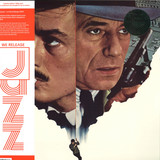
Original Soundtrack - Super Deluxe Version, (including 4 tracks never released on vinyl before, this feature is exclusive to this edition, see the tracklisting), 180g vinyl, mastered at half speed, heavy cardboard old Stoughton tip-on sleeve, obi, gold sticker Info We Release Jazz is delighted to present the official reissue of the original soundtrack of Jean-Pierre Melville's 1970 film noir classic Le Cercle Rouge (starring Alain Delon, Bourvil, Gian Maria Volontè, and Yves Montand) composed by French soundtrack master Eric Demarsan, available on limited edition 180g vinyl LP mastered at half speed and including 4 bonus tracks not available on previous pressings of the album. Eric Demarsan's compositions for Le Cercle Rouge draw from the orchestral spirit of the Modern Jazz Quartet (as requested by Melville who loved John Lewis' work), abstraction and minimalism to create a suspenseful and hypnotizing audio landscape which elegantly underlines the tense atmosphere of unavoidable fate that shrouds the movie and the doleful beauty of its characters. Simply put, it's the finest combination of underworld existentialism, coldblooded chic, and crime jazz! Le Cercle Rouge boasts the participation of celebrated jazz players Guy Pedersen (bass), Daniel Humair (drums), Georges Arvanitas (piano), and Bernard Lubat (vibraphone). Starting as a collaborator of François de Roubaix and Michel Magne in the 60s, Eric Demarsan went on to become a mainstay of French cinema soundtracks, composing for directors such as Jean-Pierre Mocky, Costa-Gavras, and Patrice Leconte among others. He also recorded the cult album Pop Symphony (for Pierre Cardin in 1970) under the Jason Havelock pseudonym.
Benjamin Vigneron, also known as Vronsky, was born in 1991 in Aix-en-Provence, France.
As a Teenager, drawn simultaneously to Visual Arts, Cinema and Musiproduction, he made his first contact with Techno by working for a local club as a graphic designer. During his 20s, while living between Montreal, Canada and Marseille, France, it was revealed to Benjamin he suffered from a heavy bipolar disorder. As a reaction, he started losing himself in free parties and increasingly dangerous habits.
Gradually learning to love himself despite his flaws, he kicked his risk-taking after he realized the love of music prevailed over anything else.
Equipped with a strong desire to share his vision despite not being able to perform as a DJ, Benjamin started a youtube channel and a collective named Listening Blue.
Moscow Is Mythologized For Its Grandeur And Gravity But Its Parable Pleasures Offer Splendor And Even Absurdity. Over The Ten, Symmetrical Pieces Of For, Kate Nv Scores Her Native Urban Environment With Just Enough Whimsy To Gurgle Through The City Cracks And Grow Psychotropic Foliage. Each Sound Assumes Its Own Personality, Moving Through The Album Metropolis Like Miniature, Mutating Molecules Viewed From Nv's Apartment Window.
Alternately A Guitar-wielding, Post-punker And One Within The Multitude Of Moscow Scratch Orchestra's Avant-garde, Nv Is A Versatile Artist That Maneuvers Instinctively In Whatever Musical Environs She Finds Herself. Nv's Second Solo Album Is An Even More Abstract Endeavor Than The Hybrid Pop Of 2016's Binasu. Inspired By Casual Moments Of Ephemeral Sound From Within And Beyond Her Apartment Walls, The Record Has A Clarity Arrived Altogether And From Right Under Her Nose. Recorded At Home, Nv Says It Was As If The Music Was Not Written By Herself, But Her Chair.
For Inhabits A Stage That Piero Milesi & Daniel Bacalov, Ann Southam, Or Hiroshi Yoshimura May Have Written Music For And Dresses It With Viktor Pivovarov's Psychedelic Depictions Of Moscow - Contorting Bodies, Flying Pencils, And Multi-dimensional Faces Dance With Subtle Arpeggiations, Conversational Voice Synthesis, And Anthropomorphic Midi. Animating Objects Is Essential To The Album. Like A Surreal Still Life, Each Piece Is An Alien Arrangement Of Common Elements That Extend The Everyday Ritual Into An Eternal Landscape Of Unconscious Activity. Somewhere Along That Landscape, Kate Awaits And Greets With Apples For Hands And Fish For Feet.
Like The Album Title, Each Composition Contained Within Is Represented As A Three Letter Word, In Russian And English. The First Half Of For Was Written In The Spring. Starting With yxo Ear,' Previously Released On The Peaceful Protest Compilation Cassette In 2017, Melodies Meander And Lollygag. a Two' Incorporates Human Breath Played Like Notes On A Pump Organ. Oak' Offers A Warm Tune To Tango. How' Loops Curious Notes That Bump Into Each Other With A Chirpy Acknowledgement. You,' The Only Track On For With Lyrics, Sets A Wassily Kadinsky Poem To Song.
The Second Half Of The Album Was Written In The Autumn. The Feathery Edges Of One' Extend Like Watercolors Bleeding Off A Rubber Scroll. See' Is A Subdued, Shadowy Variation Of How', As If The Same Song Were Played In Different Weather, Dimmer Light, Or By Kate's Devious Doppelganger. The Electronics Unravel And Unwind On Dog' Until The Final Track, Who,' Ends With Vague Solemnity And Rattled Metals.
A Short Online Film Series By Shura Kulak Will Accompany The Release Of For. The Films Follow A Solitary Figure Performing Ordinary Tasks Through A Slow, Warped Lens — Each Song Enacting A Daily Habit: Waking, Dressing, Reading, And So On. In Her Live Performances Around The Album, Kate Nv Will Play Each Song From Memory, Allowing For Variation From The Recorded Tracks, And Scenes From The Films Will Be Re-created And Improvised In The Moment.
- A1: Coco Feat. Lilja Bloom
- A2: Hurt
- A3: For Rose
- A4: True Romance Feat. Lilja Bloom
- A5: Distance Feat. Lylith
- A6: Wake Up Sister Feat. Max The Sax
- A7: Let's Roll Feat. Blaktroniks
- B1: Sunny Bunny Blues Feat Veda 36
- B2: Dandy Feat. Yola B
- B3: Your Man
- B4: Promises Feat. Klaus Hainy
- B5: Letoile Feat. Max The Sax
- B6: You And Me Feat. Lilja Bloom
- B7: The Mojo Radio Gang (Radio Version)
- C1: Ragtime Cat Feat. Lilja Bloom
- C2: Silent Snow Feat. Max The Sax
- C3: Libella Swing
- C4: Catgroove
- C5: Matilda
- C6: The Flame
- D1: Fleur De Lille
- D2: Hotel Axos
- D3: Monster
Coco finally available on double vinyl for the first time. With his unmistakable sound-mix of Jazzand Swing samples and electronic music, Parov Stelar has secured his own unique position in the world of music.
The double vinyl starts off where his former successful LP's ended. On the other hand he is consequently developing his established jazzy sound, by adding new stylistic elements to his tunes. Also his dancefloor-productions, which
have been published only as singles, now find a debut to a greater extent on this album. They meet with Stelar's melancholic-melodious trademark-sound, which is well known from his earlier albums, but now also spiced up with Hip-
Hop beats and synthpads. An electrifying album to fall for. The two vinyls are originally thought of as one with tracks that can be danced to and one with tracks just for listening. Nevertheless the line between those two approaches becomes blurred in Parov Stelar's newer compositions. The
album makes your feet tap more and more with every track. The musician himself sees the LP as a 'book for musical readers' which is classically defined in introduction, middle part and end. Because of streaming hit singles the
consumer behaviour changed, people don't listen to albums the same way they used to. The whole experience that includes refelecting on less prominent tracks somehow got lost. Parov Stelar sets 'Coco' as a statement against this habit.
"The kind of melancholia I'm talking about, by contrast, consists not in giving up on desire, but in refusing to yield. It consists, that is to say, in a refusal to adjust to what current conditions call 'reality' - even if the cost of that refusal is that you feel like an outcast in your own time." (Mark Fisher, Ghosts Of My Life, Zero Books 2014, p. 24) In Ghosts of My Life: Writings on Depression, Hauntology and Lost Futures', the author Mark Fisher outlines - to put it in a big way - a resistant melancholy. This stands in contrast to leftist melancholy resignation', as well as something which Fisher does not talk about: its common masculine counterpart, habitual post-left cynicism - as in seen it all before'. Fisher calls this hauntological melancholy. Haunting, spooks, ghosts and apparitions are an almost constant presence on I Started Wearing Black', the second album by the Cologne-based artist Sonae (pronounced so-nah'). The term hauntology shares a fate with retro-futurism when it comes to inflationary overuse and abuse. It's a conceptual container that looks good and can hold a lot, indeed, too much. Furthermore, hauntology has its peak season behind it, a term on the threshold of its expiration date. Nevertheless, I would like to rehabilitate hauntology and use it properly to characterize I Started Wearing Black', because the term is rarely as compelling to describe music as is the case here. The most recent other example could be Asiatisch' by Fatma Al Qadiri, but with a completely different frame of reference. What are the ghosts of this music It rustles, crackles, ruffles, crunches, rattles, scrapes, sometimes a beat emerges from the constant noise, sometimes an obscure voice mumbles incomprehensibly, sometimes a melancholy piano figure is prevented by this noise from coming too much to the foreground. It definitely is eerie - to bring into play another term used by Fisher in the title of his latest book, The Weird and the Eerie'. In British pop-jargon, eerie first occurred to me more often when referring to particularly leftfield, spooky and... well... ghostly dub, a bass-heavy, echoing noise, from Augustus Pablo to Creation Rebel to Burial. Unlike the Wald & Wagner records by Wolfgang Voigt, Sonae is not a kind of neo-romantic veiling with a tendency for escapist nebula. It is more a noise of latency. The noise signals a latent - not necessarily acute - threat, a latent uneasiness about... yes... about what About a System Immanent Value Defect' That's the name of a track on I Started Wearing Black' where something that sounds like a French Horn (or a foghorn) battles for attention through or against the background noise. An email from Sonae: The piece 'System Immanent Value Defect' should actually be called 'I See Turkey'. I wrote it for my fellow student Elif - she is a pianist and Gezi Park activist from Istanbul. Through her I witnessed the inner conflict and agitation that political circumstances can create: her feelings of guilt when there was an attack, with her safe in Germany as a student, watching the events from afar. It was horrible. When her mother begged her not to come home because she feared for her safety, I felt a cold shiver run down my spine. I started with the piece from this mood, beginning with the piano, then the noise (modulated sinusoidal curves), which reminded me of waves and the then heatedly discussed Mediterranean sea: atmospheric, melancholy motifs. In contrast is the anger, the pressure, represented in corresponding sounds - hopefully audible! - During this time I started to think about world views as they can be found around the globe, in how far they held by societies and their political representation. I realized that I know of no political system that is actually about the people and what would do them good. It's always about positions, power, money. I thought that was a lot more frightening on a global scale than merely viewing Turkey in isolation. That's why the piece is called "System Immanent Value Defect", because our world suffers from precisely that. Everywhere, it's all about the wrong things.' Between the wrong things there are happy moments. In the title track, after 184 seconds of rattling and hissing, a beat is unleashed, like an arrow released from a spanned bow, a beatific relief, if there is such a thing. White Trash Rouge Noir' first meanders along spookily, then after 144 seconds it transforms itself into a distant cousin of Einstu¨rzende Neubauten's Yu¨ Gung', but there is no Big Male Ego to be fed here, and the black in the album title is a completely different type of black from that of the Neubauten. Furthermore, I Started Wearing Black' was finished long before the black dresses were worn at the Golden Globes as a sign of protest against sexual violence. Sonae writes that she herself started wearing black some time ago. Her reasons are so-called personal ones: ... resulting from an individual situation (lovesickness), I started to wear black (gaining weight and feeling ugly).' The political dimension of gaining weight, feeling ugly and therefore dressing in black in I Started Wearing Black' lurks within the noise and never becomes explicit and only rarely manifest - or a manifesto. Sonae writes about the track We Are Here': A piece for minorities... in this case, considering the current pop-feminist discourse, explicitly for women. Female artists have long been saying loud and clear that 'we are here' and 'electronic music is not a boys club!' But this pop-feminist moment should only be seen as one part of the dedication of the piece. It is for minorities, for the oppressed, who didn't belong enough.'
Klaus Walter
In the late 1990's label manager Nik Weston was working for Island Records and in particular the label imprint Island Blue set up by Ross Allen. It was here that he first heard the timeless jazz version masterpiece of Amalia from Kirk Degiorgio's As One. The track featured on a promo cd but never made it to a commercial release for Island Blue and was later featured on the full length album release for San Francisco label Ubiquity Records a few years later in 2001. 'Amalia' is a sultry jazz classic featuring gorgeous keys from Jamie Odell aka Jimpster. As relevant today as it ever was when initially made and here presented as a single in it's own right for the very first time. On the flipside another track that never made it to single in this version was the unique jazzual 'Spiritual Rotations' by Butti 49 from Norway. Nik had later worked with Butti 49 whilst working for Exceptional Records for the Habit album in 2004 but 'Spiritual Rotations' itself initially featured as an exclusively album only track for Future Sounds Of Jazz Volume 8 in 2001 for German label Compost. So there you have it... two welcome killer Jazz classics that deserve a revisit for your attention cut on limited 180 gram vinyl for your ears, your turntable and your dancefloor....
Reeko debuts on Avian.
In recent years, the Spanish producer's name has become synonymous with exquisitely produced, hyper-functional Techno variants. Releases via Pole Group and Planet Rhythm as well as the artist's own Mental Disorder outlet have seen Juan Rico develop a distinctive sound that places elements of Noise & Ambient within a contemporary Techno framework - harnessing a dense, abrasive energy without compromising groove. Layers of ethereal pads, filtered noise and feedback FX are compounded into a tight, mono space, pushing back on powerful, propulsive low end - making for a decidedly heady listening experience.
On La Mala Educación, Reeko continues in this vein - though the work leans more towards the noisier, more industrial end of previous output. Across six tracks, the Spanish producer showcases a bipartite approach to form, as punishing dance-floor cuts Desfile Funebre de Rosas and Habitación 877 coalesce with more experimental, atmospheric recordings. Engendrado features a single warping sequence, pitching and bending over the course of it's four minute run time, while opener Carne y Demonio begins life as a shimmering, wide angle Ambient piece - before sinking deep into high-energy abstraction with a single feedback-heavy polyrhythm driving the work along it's course.
The finish on the material is harsh, and sounds meld together with considerable drama - but Reeko's real skill lies in the binding elements, the steely drones and machine hiss that hold the music together with considerable poise. Whilst La Mala Educación explores disparate expressions within the genre - the same mediative pulse runs throughout the EP, and this sense of cohesion combined with the admirable technical skill on display paints a picture of a producer in full control of his art.
After two hip-hop albums (Got To Get Down in 2016 and Impact in 2017), the unpredictable Afro Latin Vintage Orchestra comes back to its fundamentals with a new instrumental album:
MORPHEUS which repositions the band in the spirit of their previous spatial, almost cosmic albums Last Odyssey (2012) and Pulsion (2015), both released on Ubiquity Records and acclaimed by spiritual and fusion jazz lovers, library music fans, as well as rare grooves diggers (ALVO's first 4 vinyl albums now being out of stock).
Each new ALVO new release is a millesimal which evolved and learned from its predecessors.
Masta Conga, who's still leading the herd, has for main purpose to explore the musical space-time, gaining ground on never before revealed tracks, followed by his now faithful team of atypical and
farseeing musicians.
Compared to Miles Davis and his On The Corner by Wax Poetics, the band dives again in this realm of psychedelia and beyond', in particular with the contribution of Indian musicians. Twirling
around violins, superimposed patchy keyboards and effects, just as if their conductor wasn't already sufficiently influenced by Pierre Boulez and others such as Hiroshi Murakami... The result is however more uncluttered and loaded with multiple vibes than its predecessor Pulsion, which already carried the ceremonial characteristics of cult movie soundtracks. Tracks Moksha',
Air' and Morpheus' are the perfect demonstration, and far beyond their names. Simple grooves, lunar, but terribly efficient, emphasized by a mix that puts focus on these fiddly contributions of ethnic instruments, on percussions and horns on a drip of delay, reverbs and other space-echoes.
On the other side, the very rhythmic Descarga Uno', Descarga Dos' and Super Dopamine' show that the Parisian crew hasn't lost its good habit to look around latin, ternary, and syncopated
rhythms, in the ALVO only style! A new millésime, a Grand Cru maybe, but for sure to taste and appreciate in all weathers including space ones.
In 2017, the musical term electronic' is nearly obsolete given the ubiquity of computerized processes in producing music. Even so, the prevailing assumption is that musicians working under this broad umbrella must be inspired by concepts equally as electrified as their equipment. Kaitlyn Aurelia Smith has demonstrated in her still-blooming discography that this notion couldn't be further from the truth, and that more often than not, rich worlds of synthesized
sound are born from deep reverence of the natural world. Smith (who by no coincidence, cites naturalist David Attenborough as a contemporary muse) has embodied such an appreciation on
The Kid in as direct and sincere a way as possible by sonically charting the phases of life itself.
The album, which punctually follows up her 2016 breakthrough EARS, chronicles four defining cognitive and emotional stages of the human lifespan across four sides of a double LP.
The first side takes us through the confused astonishment of a newborn, unaware of itself, existing in an unwitting nirvana. Smith's music has always woven a youthful thread befitting of the
aforementioned subject. Here she articulates it in signature fashion on the track An Intention,' which serves not only as a soaring spire on The Kid, but on her entire output. There is playfulness here, but it's elevated by an undertone of gravity into something compelling and majestic that is fast becoming Smith's watermark. The emotional focus of side two is the vital but underreported moment in early youth when we cross the threshold into self awareness. The subject is profound enough to fill an entire album, but rarely makes its way into a single track, indicating Smith's ambition to broach subtler and deeper subjects than the average composer. This side offers up another highlight in the form of In The World But Not Of The World' which serves its subject well with epiphanic, climbing strings and decidedly noisy textures over a near-Bollywood low end pulse.
Side three emphasizes a feeling of being confirmed enough in one's own identity to begin giving back to the formative forces of one's upbringing, which is arguably the duty that all great artists
aim to fulfill. This side ends with the exploratory album cut Who I Am & Why I Am Where I Am' recorded in a single take without overdubs on the rare EMS Synthi 100 synthesizer. This humble
piece of sound design serves as a contrast to side four's verdant orchestral moments, all written and arranged for the EU-based Stargaze quartet by Smith herself. This final side represents a
return to pure being, the kind of wisdom and peace that eludes most of us until the autumn of life. On To Feel Your Best' this concept is voiced in the bittersweet refrain one day I'll wake up
and you won't be there' which Smith intended to be a grateful acknowledgement of life rather than a melancholy resentment of loss. The song has both effects depending on the mood of the
listener, and both interpretations are equally moving.
Kaitlyn Aurelia Smith belongs to an ilk of modern musicians who are defined by their commitment to creating experiential albums despite the singles-oriented habits of modern listeners,
and here she represents her kind proudly. The subjects on The Kid are not simple to convey, and yet through both emotional tone and lyrical content, Smith does just that. There is a similar
gravity to both birth and death, and rarely is that correlation as accurately and enthusiastically mapped as it is here.
Alan Watts, another logical inspiration of Smith's, once expounded that people record themselves to confirm their own existence, and as such, echoes and resonance are reminders that we are alive. You're not there unless you're recorded,' Watts muses, if you shout, and it doesn't come back and echo, it didn't happen.' The Kid speaks to this idea directly. As Kaitlyn Aurelia
Smith explores her existence through music, she guides us in gleefully contemplating our own.
Optimo Music is delighted to release a first album by Fantastic Twins (formerly known as The Twins). We'll let them tell you the story behind this inspired and beguiling record -
Obakodomo (Au Balcon Du Monde) is a soundtrack I created for a piece of contemporary dance, performed by two dancers for a young audience from the age of 4. It is the story of an imaginary journey in Antartica where two explorers go on an adventure. They encounter a colony of penguins and will progressively learn to understand their habits and respect their environment. Essentially, Au Balcon Du Monde is a metaphor of how to exist next to each other, how to share a territory, how to learn to live together and share resources.
The scenography and stage accessories were designed in a minimalistic and non-obvious form to leave all the space for imagination. The penguins were made of translucent material to provide light effects and were programmed to move in a swaying motion, allowing interaction with the dancers and the music. LED system could be wireless piloted.
With the soundtrack, I wanted to create an atmosphere that would immediately transport the children into this terra nova - a poetical space, like a cold sphere, where the strange meets the frightening and the playful. Translating the immense vs the small, the far-off vs the near, the collective vs the individual, the strange vs the familiar or the cold vs the heat. My intention was to follow the thread of the story in a narrative, yet non-caricatural way. Music for children doesn't have to be 'childish'. Children love to be scared or even just challenged. They love to love and react instantly to what they hear through their emotions. Ultimately, the soundtrack aims to provide different levels of 'reading' so that it becomes something more universal. So we, adults, just have to accept the invitation.
- A1: So
- A2: Logarithms
- A3: Breedlove
- A4: Sex Music
- A5: Carry Me Off
- B1: Say You'll Say So
- B2: Camella
- B3: It's Telling On Me
- B4: Sandbars Alone
- B5: Don't Push Me
- C1: Anodyne
- C2: Minord Birds
- C3: Brian's Having A Party
- C4: Nisei
- C5: Smooth Edges
- C6: Overhead Glass
- D1: The Alluring Pause
- D2: Excerptsfrom Ground Zero
- D3: 1 By 1
- D4: Mack
Music From Memory's final compilation of 2017 sees the release of the double album 1 by 1', which brings together the works of American experimental musician Geoffrey Landers. During a period spanning from 1979 to 1987, this Denver, Colorado based multi-instrumentalist, composer, record producer and engineer, conceived several solo albums. Only two of these, The Ever Decimal Pulse' and Habitual Features' along with the single Breedlove' were ever released on vinyl.
.
Being heavily involved in the local industrial/punk/new wave scene and wanting to create a recording studio available to record artists regardless of their financial circumstances' Landers set up The Packing House Studio' in 1981. This analog 8-track recording facility was located in a former slaughterhouse in the stockyards of Denver and was a place of significant activity for the next three years with the studio releasing recordings from numerous artists most notably Allen Ginsberg.
It was here that Geoffrey Landers also started his own aptly named Cauhaus' label. Indicative of the underground/DIYculture, Cauhaus' was a subsiduary of a label called Local Anaesthetics which was started as an in-store label by independent Denver record store Wax Trax. Typically Cauhaus releases were only pressed up in small quantities and independently distributed, making Lander's music essentially elusive to a wide audience. After relocating in 1984 to an art district of Denver Landers opened the Cauhaus Institute of Recording' studio where he continued to produce music for soundtracks, art and multi media projects for the next three years, after which Landers stepped out of the music industry entirely. He currently creates and exhibits mixed-media glass art.
Throughout the twenty tracks of "1 by 1", of which six previously appeared on CD only, we are submerged into a wide diversity of musical approaches from Geoffrey Landers. From the proto-house track Logarhythms' and the heart breaking New-Wave Boogie/Funk of Say You'll Say So' to the more contemplative pieces such as the oriental insprired Nisei' and the drenched in sunshine dub/reggae track Mack' Landers shies away from musical expectations again and again, searching continually for innovative and new forms of expression.
Originally released in October 2016 - 'Maajo' marked the inauguration of a new imprint: Queen Nanny. Spread across 4 sides of vinyl, the LP was a 'meandering journey' that saw a newly formed Finnish five-piece expand and develop a canon set by Herman Prime's EP under the same title that was released via Seagull in 2015.
Following it's warm reception, Queen Nanny returns with an all-star remix package that sees Luke Vibert, Call Super and Dengue Dengue Dengue all interpret selections from the original album. Altogether a tougher and more contorted collection of music - the remixes effectively pull Maajo out of it's habitual home-listening environment and drop it directly on the dancefloor to stunning effect - TIP.
Having come up with an annual-ish drop of 12's since 2010, Even Brenden AKA Chmmr set aside the spring of 2016 to challenge himself to a new format: a full-length album. A true nostalgic, he uses Compass Point-era and early Italo sounds for inspiration and attempts to simulate these styles. This makes for a melodic, chuggy and graphic album that belongs a little more in the living room than on the dance floor. With 10 tracks of dusty rhythms and the honest, naive and spacious themes that is Brenden's signature, it's a record designed to signal that today's technological future may not be as different as yesterday's. Features a nice-looking cover painting drawn by the late Harold Cohen's AARON program - automation at its finest. Hidden behind his Chmmr moniker is Even Brenden, whose summery debut found its way into the world via Norwegian psych-disco label Luna Flicks in 2010. The record became somewhat of a soughtafter item and after making pit stops at Relish, Dødpop and Untz Untz Records, he landed on Prins Thomas' Full Pupp in 2014 and have stayed put ever since, all the while enjoying a steady habit of record jocking and the occasional keyboard duty in Telephones' now-defunct live band. Even resides in Oslo makes odd waves without vowels.