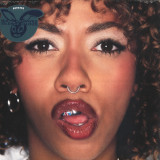
More about the world has changed than not in the decade since dance production dyad Frank & Tony released their last full-length record, 2014’s You Go Girl. Despite, or perhaps in spite of, this shifting landscape, house music has managed to stay fundamentally reliable (either a bug or its greatest feature, depending on who you ask). Where previously, Frank & Tony have been celebrated for their contemplative, studious approach to the genre, with 2024’s Ethos, the Brooklyn/Biarritz-based duo return amidst metastatic cultural upheaval to prove out those scholarly credentials — with an album that serves to remind listeners why dancefloors and liberatory politics consistently share the language of movements and revolutions.
Undoubtedly, Ethos is tremendously influenced by the multitude of projects originating from, and supported by, the duo and their label in the decade since You Go Girl– releasing records from a vast diversity of artists (including Nadia Khan, Gry, Villete, Darand Land, Alex Albrecht, DJ Sprinkles and CCL), and Harris becoming curatorial voice of Brooklyn’s premiere venue for audiophiles, Public Records, where he continues to amplify work across a global diaspora (and where the duo maintain a residency of wide praise).
It is this bright energy and focus on the necessity of community and relationships that animates the aptly-titled Ethos. If past Frank & Tony releases have been lauded as ‘a coloring book in which someone has exclusively drawn inside the lines… with extreme precision,’ Ethos deviates by inviting friends in for a game of exquisite corpse. From singer and pianist Eliana Glass, whose androgynous, double-reeded voice freestyles across album opener Olympia, to distinct track features from fellow house masterminds DaRand Land, DJ Aakmael and Lawrence over half of the album’s nine tracks highlight artists in the larger Scissor & Thread circle.
quête:hal singer
Emerging out of Amsterdam's vibrant squat scene in 1979, The Ex – a name chosen for the ease and speed with which it could be spray-painted onto a wall – have for four decades been an entirely self-sustaining musical entity, charting a course through the global underground with a spirit of freedom and radical exploration.
Blueprints For A Blackout, The Ex's fifth album and first double LP, combines caustic studio experimentations and loose songs from their gripping live-set at the time. The band consisted of singer G.W. Sok, guitarist Terrie Ex, two new recruits on bass, Luc and Yoke, and drummer Sabien Witteman, along with a plethora of guests including Mekons' Jon Langford and long-serving sound engineer Dolf Planteijdt, among others.
Originally released in 1984 on the band's own Pig Brother Productions, Blueprints veers from jagged punk explosions to sharply focused improvisations featuring field recordings that would become a hallmark of their subsequent forays into free jazz and experimental music. The overall effect is not unlike the menace of a slowly building winter storm.
Tracks like "Rabble With A Cause," "U.S. Hole" and "Scrub That Scum" stand out as exemplars of this phase of The Ex. Comparisons can be made to contemporaries Einstürzende Neubauten, NoMeansNo and Svätsox as well as later Crass label bands.
Suffolk-based singer songwriter James Varda’s fourth and final album before his death from a long battle with cancer in 2015, Chance And Time, set for a vinyl only reissue on Unspun Heroes is an astonishing aural document of a creative, forward -thinking musician coming to terms with a life slowly evaporating away. There is hubris, melancholy and an undeniable weight of sadness in these ten songs but, miraculously, there is also a stoic realisation and acceptance from Varda that is both heart-wrenching and deeply affecting. On Chance And Time Varda reconnects the human spirit to the land, a heavy, fearful heart to an optimistic soul, and in a beautiful poetic flourish gives a real tangible sense of loving and hope to his family and friends offering genuine reassurance and even, at times, a green light for celebration.
Carrying a certain air of mystique, that same sense of a ‘other worldliness’ if you will of say a Karen Dalton or a Jeff Buckley, Varda’s delivery and tone carries huge emotional weight here and an unique ability to add an honest perspective and warmth to the starkest of realities. The hard hitting impact of the opening tracks is blunt and sharply defined. There is pain, hardship, and fear wrapped in these tales - ‘The Doctor Spoke, Two Hearts Broke” - made all the more hitting as this is a real life journey in the here and now being catalogued. As we move towards the second half of the record there is something even deeper and truly incredible at play. Varda’s whole demeanor is one of understanding and acceptance - hear the celebratory shamanic vibe of the extraordinary ‘Pass It On’ and the poignantly reflective, chokingly sad finale ‘We Won’t Dream’ - bringing to an end a record that will leave a mark on everyone who hears it. Real art is both timeless and omnipresent, these songs from James Varda will hang in the air forever and be there for those who look to find understanding, joy and a sense of hope. Chance And Time is both an extraordinary record and poignant study of life and living, of death and what comes after.
James Varda released four albums between 1988 and his death in 2015. A fledgling career beginning on the singer-songwriting folk scene where his arrival was met with both curiosity and critical acclaim as was his debut, the John Leckie produced Hunger. Any momentum was lost however as it would be ten years before the next, In The Valley was met with a ruffle of applause. Cancer took hold of the troubadour and for a number of years Varda lived life and wrote songs until The River And The Stars appeared like a phoenix from the flames as he began to wrestle with the realities of his situation. It’s a record that beautifully lays the ground for this his masterpiece that was to follow.
Unspun Heroes, a new label set up by Simon White, has the sole purpose of finding and reissuing albums that he considers both undervalued and seemingly ignored. All releases will be on vinyl only complete with Obi strip and extensive liner notes. Each will be individually numbered and limited.
Violist, violinist and singer-songwriter Marla Hansen returns to Karaoke Kalk with "Salt", her second full-length album to date. Building upon the sonic palette the Berlin-based musician established with her debut "Dust" in 2020, "Salt" takes the delicate mixture of acoustic instruments such as viola, violin, piano and guitar combined with subtle electronics to the next level. The new album is both a remarkable departure and at the same time sheds a new yet reassuring light on Hansen's work and creativity. "Salt" features numerous collaborations with like-minded musicians and friends, e. g. producer and composer Simon Goff, The Notwist's drummer Andi Haberl and the renowned artist DM Stith.
The "Dust" has settled. After having recorded her solo debut of that name, in 2020 the world came to a grinding halt, leaving Marla Hansen left to her own devices in her adopted home of Berlin. For Hansen, who previously had lent her talent to many creative minds such as The National, Sufjan Stevens, The Hidden Cameras, Jay-Z and Ravi Coltrane, the collaborative aspect of writing and producing music had always played a crucial part in finding her own path as a solo artist.
"I started to explore synthesizers and electronic production myself," she remembers of the time when meeting other musicians in person was out of the question. "I am proud that I accomplished many of the electronic elements of the new album by myself, and otherwise laid the groundwork for the final electronic structures through my own experiments. I always wanted to record a 'big' record, one that has a lot of power and sound, and this one is 'bigger' than anything I have done so far."
"Salt" is big, indeed. The opener "Chains" is driven by a gliding bass line, bobbing 808 snares, deep chords and a mesmerizing chorus doubled by luscious strings, marking the beginning of a new chapter in her creative journey. A stark statement, both musically and lyrically. Meanwhile, the title track of the album is an almost abstract sounding ambient miniature, sketch-like, dark and haunting, showcasing Hansen's voice in a shy, brittle and fragile state. If This Mortal Coil/The Hope Blister were ever to record another album, these songs should be high up on the shortlist of tunes to pick. "The One Time" - a duet with Hansen's long-time friend DM Stith - gently meanders between a Philip Glass-inspired piece for chamber orchestra and a vocal ensemble performing on Top Of The Pops. In this range of styles and approaches, Hansen's vision is more present than ever.
For refining and finishing the songs, Hansen turned to Simon Goff, who produced the album and engineered much of the recording, merging Hansen's newly-found songwriting approach with the artistic delicacy which made her debut album an exceptional piece of work. Features include among others: Alice Dixon (Oriel Quartett) on cello, Kyle Resnick (The National, Beirut) on trumpet, Benjamin Lanz (The National, Beirut) on trombone and tuba, and Miles Perkin on bass. And then there is The Notwist's Andi Haberl, who "crafted perfect drum and percussion parts to move the songs wherever they needed to go, either into their driving grooves, slow-build explosions or gentle swells of feeling."
But what are songs actually about? "The themes revolve around a feeling of being trapped. Having to stay inside during the pandemic, with all the silence and stillness coming with it. Simultaneously, I was caught up in a professional situation that was not working for me, yet it required a lot of energy and time. I was thinking a lot about how to break old habits and patterns. Patterns in my life, patterns I saw my friends and loved-ones stuck in. There are a lot of ways that people can be trapped, and breaking out of that requires a lot of courage and energy - on all levels. The title 'Salt' seemed to fit, ocean themes showed up naturally in some of the songs, and I thought often about the quote: 'The cure for anything is salt water: sweat, tears or the sea.' Maybe I was just dreaming of the ocean, since it was inaccessible for the first time! But I wanted a cure for this feeling of being trapped, in a time of uncertainty and anxiety, salt as a remedy seemed to have some truth in it: sweat, tears or the sea."
Perseverance and the urge for freedom prevailed in the end. "Salt" is a bold artistic achievement, with songs as big as the biggest waves imaginable. With melodies as alluring as the most comfortable breezes. Perfect from start to finish.
Rock & Roll, indeed. Ruth Brown’s sizzling full-length debut — also known by its eponymous title — symbolizes what was exciting, fresh, invigorating, and raw about the burgeoning style in its halcyon days. Originally released in 1957, and reissued here in audiophile quality for the first time in partnership with Atlantic Records’ 75th anniversary, the set remains a testament to one of the most pioneering and talented vocalists to ever command a stage.
Mastered on Mobile Fidelity Sound Lab's renowned mastering system in California, pressed at RTI, housed in a Stoughton jacket, and strictly limited to 2,000 numbered copies, Mobile Fidelity’s 180g mono LP of Rock & Roll plays with an immediacy, vibrancy, and fullness that showcase the reach, power, and emotionalism of Brown’s voice. The sound of her support musicians — brassy horns, swinging rhythm combos, echoing backing vocalists, rollicking pianists, jaunty guitarists — is made clear and vivid, helping the upbeat fare to jump, juke, and jive with newfound energy and exuberance. In a related manner, Brown’s slower, more understated material crackles with an intimacy and passion that let you know you're in the presence of a woman who has lived what she sings. The longtime Rock and Roll Hall of Fame member deserves nothing less.
In an era dominated by big-throated vocalists, few — if any — came grander than Brown. The singer, whose repeat million-selling ‘50s success with Atlantic Records led many to call the then-indie label “The House That Ruth Built,” charted two dozen R&B hits in the span of a decade for the fledgling imprint. Rightly coined “Miss Rhythm,” the extroverted Brown put Atlantic on the national map, became the best-selling female musician of the ‘50s, and established a precedent that would ultimately lead to Grammy and Tony Awards. Her early works have lost none of their fire or flair.
Akin to many full-length LPs of its era, Rock & Roll doubles as a collection. Its 14 tracks comprise some of the more famous sides Brown recorded for Atlantic, beginning in 1949 with the all-time-great rendition of the ballad “So Long,” and continuing through 1956. After the song caught the public’s ear, the Virginia native briefly became known for her smoldering style with lovelorn material and torch songs, approaching them (see “Oh What a Dream,” “Old Man River”) with a combination of pained sadness and hardened resilience that had no contemporary equal. Encouraged to pursue the style by Atlantic Records co-founder Ahmt Ertegun, her R&B-driven material soon made her a constant chart presence.
Demonstrating what fellow legend Bonnie Raitt deemed “sex with class and dignity,” Brown merges blues and jazz, swing and gospel in electrifying fashion. She dares you not to move, dance, and get on your feet. A majority of Rock & Roll explodes with uptempo runs and jaunty readings of hot-blooded R&B numbers. Sweaty and sultry, bawdy and bold, Brown eclipses the anthemic blare of the saxophones and joyful clatter of the 88s, singing with a slight catch in her voice and hurricane-gale force that threatens to blow the roof off whatever room her voice occupies.
Evidence abounds. Listen to her prod the band and encourage the band members to blow a fuse on a sizzling “Hello Little Boy,” complete with cries and wails; stretch her phrasing to the heavens on the swaying “Wild Wild Young Men,” laden with romp-and-stomp beats; plead and persuade on the snaking “5-10-15 Hours,” which flips the script on the age’s notions of dominance; use her raspy tones, high notes, and breath control to mesmerizing effect on the smash “Mama He Treats Your Daughter Mean,” recorded with a group led by Ray Charles; survey the scene and take charge on the steaming “As Long as I’m Moving”; and tap a classy albeit flirtatious vein on “Lucky Lips,” which dented the pop charts as her first crossover hit.
Throughout Rock & Roll, Brown knows the lyrical connotations and spirited architecture of the songs inside-out. Her assertive voice — never harsh, strident, or false — is the epitome of the passionate desires and sonic strains that turned into nascent rock ’n’ roll. Brown played a pivotal role in helping the style develop, the record a timeless reminder of a lasting legacy that will never be forgotten.
Some artists embrace their success by repeating the steps that originally granted them fame. Billy Joel did the opposite, refusing to be contained by prescribed approaches or constrained by a given label. The follow-up to the breakthrough The Stranger, 52nd Street further expands on its predecessor's bold production techniques and inventive arrangements, incorporating more sophisticated textures as well as reflecting a jazz edge gleaned from New York City's thriving club scene.
A key piece of Mobile Fidelity's Billy Joel catalogue restoration series, 52nd Street is here sourced from the original master tapes and pressed on 45RPM 180g LP at RTI. The wider and deeper grooves – as well as the meticulous mastering – yield resplendent dynamics, broad soundstages, three-dimensional perspectives, and tonal balances absent from prior editions. This is how you want to experience the 1978 LP that captured the Grammy Award for Album of the Year.
Teaming again with producer Phil Ramone, Joel capitalizes on his momentum, churning out another direct-sounding affair replete with captivating melodic devices, showmanship accents, and penetrating lyrics. The singer's concision and focus is evident via the tune's lengths, with only "Until the Night" breaking the six-minute mark. Hit singles "Big Shot" and "My Life" rattle forth with an urgency and intensity that Joel had not previously demonstrated, the combination of passionate deliveries, snide overtones, and insistent grooves setting the table for what follows.
Broadening his palette, and drawing from New York's thriving jazz club scene and the city's late-70s grit, Joel splashes Latin and jazz colours on several pieces, employing veterans such as Dave Grusin and Freddie Hubbard to contribute along with a cast that includes a team of background vocalists and horn players. Everything is tastefully appointed, and yet the vocalist's trademark Broadway gaze and knack for the grand gesture coincide with the straight-ahead swagger.
52nd Street is one of the main reasons why Joel has always been championed for consistency. Everything here, from the production to the stand-up songs, helped redefine mainstream pop-rock. Decades later, it's finally available in fidelity that nears that of the Columbia Records' master tapes produced right on 52nd Street.
- Mar Vista - Visions Part 1 Her Eyes Are Closed
- Kennlisch - Kennlisch
- Crystal Eyes - Crystalzed
- Warlus - Girl Like You
- Gerard Alfonsi - Fana Stickle
- Geoffroy - Viking
- Amphyrite - Symphonie Pour 3 Oeufs Brouilles
- Eole - Friendship
- Capucine - Les Elephants
- Rictus - Flashes
- Inscir Transit Express
- Polaris - Polaris
- Joel Boutolleau - Force
- Spotch Forcey - Frustre
- Demon Wizard - Black Witch
- Temple Sun - Voyage Sans Retour
- Chantal Weber - Ballade Aux Chataignes Tombees
- Jean-Claude Zemour - X Kmh
- Rhodes Co - Baoum
- Guidon Edmond Et Clafoutis - Stormy Sunday
"For a long time, I'd come across these discs without really understanding what connected them, apart from a button and that famous logo designed by René Dessirier. Then, with a little more digging, I discovered the "self-production" link. For choirs, schools, folk singers, young pop groups, popular homes and even great composers who engraved unique copies of certain recording sessions...
The French equivalent of the English "Derby Service", the Kiosque d'Orphée, formerly at 7 Rue Grégoire de Tours in the 6th arrondissement, was taken over by Georges Batard in 1967 and moved to 20 Rue des Tournelles in the 4th arrondissement of Paris. The adventure lasted until 1991. Georges Batard was a sound engineer who used a Neumann tube engraver to engrave acetates from the tapes he received, before printing the precious vinyls in the press factories of the day, where he was able to produce very small runs of between 50 and 500 copies.
Of course, there were other structures for releasing his records, such as Voxigrave or, later, FLVM, but none of them had so many records in their catalog. Le Kiosque d'Orphée was neither a label nor a publisher, but a structure that allowed you to press your own vinyl, at a time when it was quite an adventure to get your first 45 rpm or 33 rpm album released!
Georges Batard was described as passionate and conscientious. His son, bassist Didier Batard, wrote of him:
"Georges was passionate about recording and reproducing the stereo sound of his great passion, music. He paid close attention to distortion rates, signal-to-noise ratios, response curves, rise times and other damping factors in audio equipment. He was looking for the exact reproduction of concert hall sound in his living room (with the same sound level, if possible...). In the late '50s/early '60s, he found other sound enthusiasts in AFDERS (Association Française pour le Développement de l'Enregistrement et de la Reproduction Sonores). He became its honorary president. Every Saturday afternoon, its members met to test au- dio equipment. Their opinions were published in the monthly Revue du Son.
All you had to do was send in your tapes and choose the number of record copies you'd like to take home with you, so you could finally share your creations and, in a way, exist. You could opt for a generic sleeve, available in several colors, directly customizable with your name and credits, or you could design your dream sleeve yourself in your living room or at a printer's.
This "Do It Yourself" temple gave birth to some superb pouches. Stencilled, hand-written, illustrated with paintings, drawings, illustrations by friends or girlfriends of the time, photo prints hastily stuck in the middle of a blank, white sleeve, on which the traces of time would leave their imprints, so that collectors and the curious would come and buy them decades later, with the promise of a musical discovery, unfortunately not always fulfilled...
What most of these records have in common is the youth of their songwriters, whether or not they've had a career. Stories of buddies, of getting by and dreams of glory made up this catalog. Most of them were amateur productions, both in terms of the level of the musicians and the quality of the recordings, made on a two-track or, the ultimate luxury, a 4-track in a teenager's bedroom or parents' living room.
It was the beginning of the home studio, thanks to the advent of the Revox portable tape recorder. A bit of a shaky DIY system, but, in return, the luxury of setting no limits: one-sided tracks, no outside censorship, no artistic director, no manager, no Barclay or EMI/Pathé Marconi logos...
When you finally had your own record, you could give it away or sell it to friends, family or after concerts. You could also drop it off at the nearest record shop, with undisguised pride.
It was also a calling card that could be sent to radio stations or music labels, in the hope of launching a career...
Many of the protagonists in this story tried to sign with labels, but in those days, bridges were not so easy to build between one's hometown, or even one's village, and the major or more specialized label that might have released these records. At the time, the advertisements published in the press by the Kiosque d'Orphée opened up the field of possibilities for provincial composers. It was now possible to make their own record, without having to go through the process of signing with a label.
Some of the composers who have gone on to make a career have used this channel to release their first record or parallel projects (Claude Engel, Dominique A, Andy Emler, Michel Deneuve, Claude Mairet, Mick Piellard, Tristan Mu- rail...) and sometimes even single or very limited pressings of work or promotional copies (Bernard Parmegiani, Jef Gilson...).
This album is the conclusion of a long investigation, begun six years ago. It took a long time to find the records, scattered all over the place, in the homes of collectors and sometimes the musicians themselves, and then to listen to them, sometimes painstakingly, to unearth these moments of grace.
From this work, 23 tracks remain, but there are dozens of others that could have been included, so we had to choose, and the choice had to be as universal as possible. This selection is obviously not objective, but I hope you'll like it.
Today's music is raw, touching and powerful. "
Jean-Baptiste Guillot - Born Bad Records
- A1: The Best
- A2: I Can't Stand The Rain
- A3: What's Love Got To Do With It
- A4: I Don't Wanna Lose You
- A5: Let's Stay Together
- B1: Steamy Windows
- B2: Typical Male
- B3: We Don't Need Another Hero (Thunderdome)
- B4: Private Dancer
- B5: Better Be Good To Me
- C1: Nutbush City Limits (The 90'S Version)
- C2: Tina Turner & Rod Stewart - It Takes Two
- C3: River Deep - Mountain High
- C4: Be Tender With Me Baby
- D1: Addicted To Love (Live)
- D2: I Want You Near Me
- D3: Way Of The World
- D4: Love Thing
Black Vinyl[34,03 €]
‘The Best’, the global smash hit track by Tina Turner that still resonates to this day through dance floors, sporting arenas, radio stations and beyond. To commemorate this incredible record, and the career of one of the most iconic and important performers in the history of popular music, ‘Simply The Best’, was reissued on 22nd November 2019 on double gatefold LP four days before Tina Turner’s 80th birthday. This blue double gatefold LP will be back in circulation on 8th March 2024.
‘Simply The Best’ is an 18-track collection of some of Tina Turner’s best-loved songs including ‘What's Love Got To Do With It’, ‘I Don't Wanna Lose You’, ‘Steamy Windows’ and ‘Private Dancer’. Originally released in 1991 and gaining multi-platinum status around the world, it spent over two years in the UK charts and is one of the best selling best-of compilations of all time.
Tina has sold over 200 million records and has had ten UK top ten hit singles and nine UK top 10 albums and was the first female artist to have a top 40 hit in six consecutive decades in the UK. Her albums combined are 20x platinum in the UK and 9x platinum in the US whilst also achieving huge sales throughout the rest of the world. She has won eight Grammy Awards and been nominated for 25. She was inducted into the Rock & Roll Hall of Fame in 1991, has stars on the Hollywood Walk Of Fame and St. Louis Walk of Fame. Her 1988 Break Every Rule tour, broke the world record for the largest paying audience at a solo concert, with 184,000 at the Maracanã in Rio de Janeiro and Rolling Stone Magazine named her #17 in 100 Greatest Singers of All Time and #63 in 100 Greatest Artists of All Time.
For her first solo project, the French-Chilean singer Alsy has teamed up with producers Rose, Peter Dallas and Jimmy Whoo. Co- produced with Jimmy Whoo, this EP reflects the meeting of the two artists' worlds, between the nocturnal atmosphere of Motel Music and the sunny ambiance of the singer's South American influences.
With her project Candela, Alsy has imagined her own musical universe, intimate and deep, rich in the variety of her influences. The lyrics are passionate, the rhythms smooth and warm, and the project is a subtle mix of modernity and nostalgia, between steamy reggaeton, smooth synth pop and hypnotic electro.
The singer's smooth and bewitching voice is the hallmark of this debut EP, which takes us on a dreamy journey from Paris to Santiago, against a backdrop of rhythmic and atmospheric music.
- A1: Wear Your Love Like Heaven
- A2: Mad John's Escape
- A3: Skip-A-Long Sam
- A4: Sun
- A5: There Was A Time
- B1: Oh Gosh
- B2: Little Boy In Corduroy
- B3: Under The Greenwood Tree" (Words By William Shakespeare, Music By Leitch)
- B4: The Land Of Doesn't Have To Be
- B5: Someone Singing
- C1: The Enchanted Gypsy
- C2: Voyage Into The Golden Screen
- C3: Isle Of Islay
- C4: The Mandolin Man And His Secret
- C5: Lay Of The Last Tinker
- D1: The Tinker And The Crab
- D2: Widow With A Shawl (A Portrait)
- D3: The Lullaby Of Spring
- D4: The Magpie
- D5: Starfish-On-The-Toast
- D6: Epistle To Derrol
Donovan’s Original
A Gift From a Flower to a Garden made for a few firsts: the first double LP of Donovan’s
career, one of the first box sets in pop and, most importantly for Donovan himself; the first
pop album for the children of tomorrow.
He resolved to make A Gift From a Flower to a Garden an album of two halves. The first,
Wear Your Love Like Heaven, was intended for his own generation as they started to think
about the kind of world they wanted to leave behind. The second, For Little Ones, was for
the children they had or would have in the years to come. The result was a kaleidoscopic
folk-jazz suite on the power of love, imbued with all the romance and mystery of an Arthur
Rackham illustration for an ancient English fairy tale. The songs, remarkably adventurous
given Donovan was a globally famous singer at his commercial height, combined the
influences he had amassed so far.
There is something about A Gift From a Flower to a Garden that could never be repeated,
though. It is such an innocent evocation of the childlike imagination, so redolent of its time,
yet set apart from it too. All these years later, the peaceful qualities of this pioneering,
enchanting, deeply unusual album feel more valuable than ever.
The state51 Box Set
With authenticity core to the project, The state51 Conspiracy engaged one of the UK’s
leading experts in box set design, Daniel Mason at Something Else, to painstakingly recreate
the box, records and accompanying ephemera. The first challenge was to find the deep blue
leatherette paper the original box set was covered in; a problem since it was no longer in
production. “I knew people who had stacks of it, gathering dust on top shelves, so I bought it
up wherever I could find it,” says Mason. Then came the reproduction of 12 loose leaf lyric
sheets on fine art watercolour paper, each of them featuring a watermark and a fairytale-like
illustration by Donovan’s artist friends Sheena McCall and Mick Taylor. Where, though, to
find the same paper stock? “I found out that it was made at a paper mill in North Wales
called Abbey Mills. Unfortunately the mill dissolved in the early 70s and very little of the
paper remained. However enough paper remained to allow us to produce the numbered
certificate also signed by Donovan that sits within the box.”
Then to the iconic cover image. Donovan and Jimi Hendrix’s personal photographer Karl
Ferris, used infra-red film to achieve the psychedelic effect on the cover, but the original
negatives couldn’t be found. Mason then used digital technology to ramp up the colour levels
on a reproduction from an original copy of the album while allowing it to remain a little bit
faded, as it would be after half a century. The same labour of love and care has gone into
producing all elements of the box; from the rebuilding of the famous front cover font to the
hand-numbered and signed certificate; letterpress printed on the original paper stock of the
1968 UK release lyric sheets.
To cap it all off the original mono master tapes were waiting safely in the EMI Donovan
Archive and transferred from tape to digital by Abbey Road Studios where new lacquers
were cut, ensuring Donovan's favoured mono version of the album would be presented both
physically (and digitally for the very first time) in striking audiophile quality. The final touch to
Tommy was born in 1945 in Homestead, Florida, and after his first foray into music in a church choir, he launched his secular recording career in Jackson, Mississippi, working mostly with Tim Whitsett and his Imperial Showband in the latter half of the 1960s. After a short stint with the Nightingales, he signed with KoKo in 1971 and had six impressive singles released, followed by records on Sundance, Juana and Urgent Records.
“I Can’t Do Enough for You Baby” is a mellow and melodic slow-to-mid-tempo song that sounds almost inspirational, while “Hold On” is a beautiful waltz-time ballad which James Carr released on Atlantic in 1971. Both of these songs were cut as demos probably in 1969 after Tommy and Carson Whitsett had signed a deal to become staff writers with Malaco Records.
Tommy was a magnificent singer and songwriter, who never got the credit he deserved mainly because of poor business choices and unfortunate incidents throughout his career. However, he was a beautiful person, gentle and humble.
Analogue Productions (Atlantic 75 Series) Celebrating the 75th Anniversary of Atlantic Records! Iconic musician and singer Ray Charles' classic 1957 album! Includes the hits "Hallelujah I Love Her So," "Ain't That Love" and "I Got a Woman" 180-gram 45 RPM double LP Mastered directly from the original master tape by Bernie Grundman Pressed at Quality Record Pressings Tip-on old style gatefold double pocket jackets with film lamination by Stoughton Printing Hybrid Mono SACD Mastered directly from the original master tape by Bernie Grundman Ray Charles' self-titled 1957 album was one of the first handful of LPs issued by Atlantic (and was later retitled Hallelujah I Love Her So). As AllMusic reviewer Bruce Elder notes, the album is weighted about three to one in favor of Charles' own compositions, with the hits "Hallelujah I Love Her So" and the pounding, soaring "Ain't That Love," which opens the LP, its raison d'etre. Charles does just as well with his interpretations of others' work, most notably the ominous, gospel-focused rendition of "Sinner's Prayer" (which offers a virtuoso piano performance, and comes courtesy of the pen of Charles' former mentor Lowell Fulson) and Henry Glover's wrenching ballad "Drown in My Own Tears," which is topped out on each verse by a gorgeous chorus. "Funny (But I Still Love You)" offers a guitar break played in such an understated fashion that it almost doesn't seem so much a part of R&B as it was usually being offered in 1957 as it does a part of Charles' early career output. The second side of the LP is even better, opening with the title track, a number that is almost too ubiquitous in its various cover versions — the original has a mix of urgency and playfulness that's absolutely bracing, and the album carries this mood forward with "Mess Around," an Ahmet Ertegun-authored piano- and sax-driven romp with Charles at his most ebullient as a singer. "This Little Girl of Mine" offers him in a surprisingly light, almost acrobatic vocal mode, while "Greenbacks" is a knowing, clever cautionary narrative that is almost a throwback to 1940s-style R&B. "Don't You Know" is as salacious a piece of R&B as one was likely to hear in 1957, and "I Got a Woman" closes the record out on a pounding, driving note. All the hallmarks of a top-notch Analogue Productions reissue are here for you to savor: Mastered directly from the original master tape by Bernie Grundman and cut at 45 RPM. Pressed on 180-gram at Quality Record Pressings and RTI, and housed in tip-on old style gatefold double pocket jackets with film lamination by Stoughton Printing.
Jesse James returns to the Soul Junction roster with a new 45 that features his own unique interpretation of a classic song that is backed with one of the more popular songs from his 1990 “Looking Back” album now brought to you for the first time as a 45 release.
Beginning with the A-side, “Everybody’s Talking At Me” which is Jesse’s unique cover of the folk rock singer Fred Neil’s penned song “Everybody’s Talkin’”. Which although recorded by Neil originally, was made internationally famous by Harry Nilsson when used as part of the theme score for the acclaimed United Artists 1969 film “Midnight Cowboy”. The song has been much covered in the style of a ballad but Jesse’s version recorded under the production skills of close friend Willie Hoskins (Wilhos Productions and Boola Boola Records) is a great up-tempo piano driven version of the song. “Everybody’s Talking At Me” is yet another find from the unissued tapes from the self- financed sessions that Jesse recorded at the Searra Sound Studios in Berkley C.A during 1971 that also has brought us SJ543 “(The Girl In) Clinton Park” and SJ544 “If A Man Ever Loved A Woman (Baby I Love You)”.
While the b-side, features the much, admired modern soul favourite “You’re More Than A Friend Of Mine” which first gained a release on the 1990 ‘Looking Back’ album (Gunsmoke Records). “You’re More Than A Friend Of Mine” was up to that point a previously unissued mid 70’s recording produced by the late song writer /producer Ron Carson. Carson the original owner of the San Francisco Soul Clock Records label remains highly respected for his work with the hit group, ‘The Whispers’ (both on Soul Clock and some of their later Janus recordings). Carson had produced and co-wrote Jesse’s 1975, 20th Century Records release “If You Want A Love Affair/I Never Meant To Love Her” now regarded worldwide as Jesse’s signature song. Carson had a follow up release in the can, which never came to fruition due to Jesse and 20th Century parting company for the second time. Carson by then had moved on and was heavily involved in the production of the Janus distributed blackploitation album “Black Fist” for Happy Fox records. “Black Fist” was a various artists compilation which also featured the Jesse James composition “The Same Thing Happens (Part1 & 2)”. The shelved, proposed 20th Century follow up release would have been “Your More Than A Friend of Mine/I Don’t Want It To End” recorded during 1976. Carson had pitched the idea of a song in a similar vein to the Jackson Sisters 1973 Prophesy Records release “(Why Can’t We Be) More Than Friends” to the songs original songwriting team William Peele Jr and Warren Sams. They duly obliged, coming up with the aforementioned “Your More Than A Friend Of Mine”. Warren Sams along with his half-sister Christine Adams Tripp and their friend Rachel Sanders were none other than the respected vocal trio “Water & Power” who recorded the acclaimed 1975 album of the same name for Fantasy Records and a solitary 45 “Mr Weatherman/If You Don’t Want Me”.
- The Black Angels' classic sophomore album - Special color edition pressed on Metallic Silver Wax. - Triple LP housed in a Stoughton tri-fold gatefold jacket // "The Black Angels bring the aura of mid-1966 the drilling guitars of early Velvet Underground shows, the raga inflections of late-show Fillmore jams, the acid-prayer stomp of Austin avatars the 13th Floor Elevators everywhere they go, including the levitations on their second album, Directions to See a Ghost. Mid-Eighties echoes of Spacemen 3 and the Jesus and Mary Chain also roll through the scoured-guitar sustain and Alex Maas' rocker-monk incantations. But he knows what time it is. 'You say the Beatles stopped the war," Maas sings in `Never/Ever.' `They might've helped to find a cure/But it's still not over.' Even so, this medicine works wonders." - David Fricke, Rolling Stone Last time we met The Black Angels, they were staring into the desert sun somewhere outside of Austin, Texas. Two years later, night has fallen and the spirits have come out. It's time for The Black Angels to provide Directions On How To See A Ghost. If you're familiar with Passover, the band's 2006 debut, you'll know that The Black Angels's music alone is enough to invoke spirits. There's a name for the band's sound; they call it `hypno-drone 'n roll'. It's the sound of long nights on peyote, of dreams of a new world order, and of half-invented memories of the seamy side of '60s psychedelia. While the Iraq war is still a major influence on the band's lyrics, there are new forces at work here, including Eugene Zamyatin's dystopian novel We and in Christian Bland's words "psychic information from the past and future." See, The Black Angels really are in contact with ghosts. "Civil War battlefields are prime spots for seeing ghosts," says Bland. "One time at Kennesaw mountain in Georgia, I was climbing the mountain in the middle of June and it must have been close to 100 degrees, but in this one particular spot it was very cold. The hairs on my neck stood up and I knew something strange was happening. Then the wind whispered something like `retreat,' and I did. I later learned that the spot where I was on the battlefield was known as `the dead angle', the place where the fiercest fighting took place. The confederates ended up retreating from the mountain towards Peachtree Creek." The Black Angels formed in Austin, Texas, in 2004, comprising from six people (now five) from very different backgrounds. Singer/vocalist Christian Bland is the son of a Presbyterian Pastor and was raised in a devoutly religious household. Bassist / guitarist Nate Ryan was born on a cult compound and drummer Stephanie Bailey claims she's a descendent of Davy Crocket. She and Alex Maas (vocals/guitar) believe a little girl in a red linen dress haunts the group's home. The band released Passover in 2006 to critical acclaim for both the album and the song "The First Vietnamese War". Most of all, Passover established The Black Angels as a band with brains, balls and a strong message. And this time around, the message is there to read in a 16-page booklet that comes with the album. "Our central theme is that people need to open up their minds and let everything come through, and to learn from past mistakes," says Christian. "Only then will we understand the reality of this world and progress beyond where we are now as humans. We've built upon that theme with Directions to See a Ghost. We want people to study the booklet we are providing with the album in hopes that they will be able to relate each song to something in their life." _"War is Peace. Freedom is Slavery. Ignorance is Strength. Keep Music Evil."_
For more than 30 years, singer-songwriter and guitar hero Mary Timony has cut a distinctive path through the world of independent music, most recently as vocalist and guitarist of acclaimed garage-pop power trio Ex Hex (Merge) but also as a member of seminal postpunk band Autoclave (Dischord), celebrated leader of the deeply influential Helium (Matador), multifaceted solo artist (Matador, Lookout!, Kill Rock Stars), and a co-founder of supergroup Wild Flag (Merge). Described by Sleater-Kinney's Carrie Brownstein as "Mary Shelley with a guitar" and dubbed "a trailblazer and an innovator" by Lindsey Jordan a.k.a. Snail Mail, Timony has distinguished herself as one of her generation's most influential. Although she has remained a cult hero and critical favorite since the early '90s, Timony's many triumphs have long been counterbalanced by crippling doubt and self-nullification. Her fifth solo album, Untame the Tiger, approaches these emotions head on. Her first solo release in 15 years is a startling document of an artist fully coming into her own power during the fourth decade of her career. It is the product of lessons learned during life-altering struggle. The mystical, acoustic-driven Untame the Tiger emerged after the dissolution of a long-term relationship and was bookended by the deaths of Timony's father and mother. The album was recorded during a two-year period during which she was the primary caregiver for her ailing parents. The tectonic psychic shift Mary experienced due to this loss informs many of her lyrics. Standout track "No Thirds" "is a song about losing everything and having to keep on going," says Timony. "I wanted the verses to sound like a wide-open barren space, like driving across a desert, because that is what the song is about - losing people and the feeling that your future is a giant, wide-open blank space." The stripped-back acoustic instrumentation of "The Guest" conjures Sweetheart-era Byrds. Timony describes it as a song sung directly to loneliness: "I was imagining loneliness as a house guest who keeps knocking on your door. I thought it would be funny to say loneliness is the only one who always comes back." Untame the Tiger does not eschew Timony's guitar hero reputation; in fact, "Summer" relishes in it, a straight-up banger that you'd be half tempted to call "no frills" until its initial garage rock stomp breaks into the unexpected bliss of a twin guitar solo conclusion. "I wanted the recording to have the energy of the Kinks, early Dio and Elf, or Rory Gallagher," she explains. "I was also listening to a lot of Gerry Rafferty's first solo album and was inspired to have two simultaneous guitar solos." Untame the Tiger picks up the thread woven through Timony's freak-folk-anticipating solo albums of the early '00s. Basic tracks were recorded at Studio 606 in Los Angeles, with Timony backed by Dave Mattacks, drummer of legendary British folk-rock band Fairport Convention. "Mattacks is a hero of mine and one of my favorite musicians of all time. He is a true legend. I never in a million years thought he'd agree to play on my record," says Timony. "Before the session, I had a panic attack and had to go sit alone in the parking lot_ Once we started playing together, it felt so great that the fear subsided and turned into excitement. His playing felt instantly familiar, which makes sense because it's the foundation of many of my favorite records." Untame the Tiger was produced by Mary Timony, Joe Wong, and Dennis Kane. The album was recorded over the course of two years at Studio 606, Magpie Cage, 38North, and in Mary's basement Additional engineering by J. Robbins (Jawbox, Burning Airlines). Musicians include Chad Molter (Faraquet, Medications), David Christian (Karen O, Hospitality), and Brian Betancourt (Cass McCombs, Devendra Banhart, Hospitality). The album was mixed by Dave Fridmann (MGMT, The Flaming Lips, Mercury Rev), Dennis Kane, and John Agnello (Dinosaur Jr., Kurt Vile, Waxahatchee).
DOG BEACH is Merryn Jeann’s first full length album, produced by Rob Ellis, comparing her directely with his previous collaborators.
Rob Ellis is a record producer, composer, arranger and musician who has been acting for about 40 years and during which he's had the honor to work with such notable artists as PJ Harvey, Marianne Faithfull, Scott Walker, Nick Cave, Warren Ellis, Brian Eno, Thom Yorke, Anna Calvi, ...
About working with Merryn : "In every instrumental phrase that she arrived at and each line of her vocal delivery Merryn's enthusiasm and very individual creativity comes across brilliantly I think... whilst still managing to retain an expression of deeply felt heart and soul... a rare combination in my experience, and a match for any of my aforementionel, much admired collaborators."
"The days in the studio were endlessly creative and playful... and subsequently very exhilarating... by the end it felt like we had really gone through something extremely special, and I believe the resulting LP strongly reflects that." Rob Ellis
Album was recorded over 5 weeks in England, including musicians such as Jim Barr (Portishead), Ben Christophers (Bat For Lashes) or Patrick J. Pearson (Daughter, LYR) but also Christelle Canot aka Confuse, half of IN CASE OF FIRE recently signed to Steve Budd’s prestigious record producer agency.
Merryn Jeann is a Naarm/Melbourne and Bundjalung Country/Byron Bay Shire based singer-songwriter and multi-instrumentalist. She has crafted a genre-bending, dreamy world of soundscapes that bear an enticing musical wisdom.
Sitting somewhere between Caroline Polachek, Cat Power, Weyes Blood, Feist, and Kelsey Lu, Merryn Jeann’s sound is fueled by authenticity. Her raw and honest self packaged into intricate and reflective morsels, many of which are yet to be revealed.
She played Glastonburry at the beginning of her career with the band TORA.
UK and international promo by Whiteboard PR.
A second LP will be recorded in 2025 again with Rob Ellis at the production.
Side projects : OSOO with Kyson & Chris Hill, IN CASE OF FIRE
Champagne Vinyl[28,53 €]
Boys Like Girls have enjoyed a meteoric rise after forming as teenagers in 2004. The b& was forged from the very beginning in the damp basements, garages, & VFW halls of the Massachusetts coastline over tattered lyric books, guitars, drums, & a collective dream. A half-billion Spotify streams later it‘s clear this was a fairy tale in its first act. Their self-titled debut album 2006 is nearing Multi-Platinum RIAA certification, while its chart-topping successor Love Drunk 2009 bowed at #1 on the Top Rock Albums Chart & Top 10 on the Billboard 200. A slew of successful singles abounded, including Platinum-certified hits “The Great Escape” & “Love Drunk,” as well as Gold-certified hits “Hero/Heroine” & “Thunder.” There was the Platinum-certified, BMI award-winning Hot 100 duet with Taylor Swift: “Two Is Better Than One.""""
By 2012 lead singer & songwriter Martin Johnson was beginning to feel the universe pulling him into a new arena, where he crafted hits for Swift, Ariana Grande, Pentatonix, & more. That led to a years-long hiatus for Boys Like Girls. But in 2016, the b& would return to the road for the 10th Anniversary tour of their debut record. While fans across America were ecstatic for the reunion they’d been waiting for, internally it felt more like a farewell. But it wasn't. In 2019, Boys Like Girls plotted another return to the road Down Under. Those plans were delayed due to the global events of 2020. After making good on their promise to return in 2022 & punctuating the tour by playing both weekends at the lauded Las Vegas When We Were Young Festival, Boys Like Girls meant more than ever not only to the band’s members, but to the fans as well.
Rock Sound Cover band / confirmed for Slam Dunk UK Festival 2024 / support from Kerrang! and NME "
Black Vinyl[28,53 €]
Boys Like Girls have enjoyed a meteoric rise after forming as teenagers in 2004. The b& was forged from the very beginning in the damp basements, garages, & VFW halls of the Massachusetts coastline over tattered lyric books, guitars, drums, & a collective dream. A half-billion Spotify streams later it‘s clear this was a fairy tale in its first act. Their self-titled debut album 2006 is nearing Multi-Platinum RIAA certification, while its chart-topping successor Love Drunk 2009 bowed at #1 on the Top Rock Albums Chart & Top 10 on the Billboard 200. A slew of successful singles abounded, including Platinum-certified hits “The Great Escape” & “Love Drunk,” as well as Gold-certified hits “Hero/Heroine” & “Thunder.” There was the Platinum-certified, BMI award-winning Hot 100 duet with Taylor Swift: “Two Is Better Than One.""""
By 2012 lead singer & songwriter Martin Johnson was beginning to feel the universe pulling him into a new arena, where he crafted hits for Swift, Ariana Grande, Pentatonix, & more. That led to a years-long hiatus for Boys Like Girls. But in 2016, the b& would return to the road for the 10th Anniversary tour of their debut record. While fans across America were ecstatic for the reunion they’d been waiting for, internally it felt more like a farewell. But it wasn't. In 2019, Boys Like Girls plotted another return to the road Down Under. Those plans were delayed due to the global events of 2020. After making good on their promise to return in 2022 & punctuating the tour by playing both weekends at the lauded Las Vegas When We Were Young Festival, Boys Like Girls meant more than ever not only to the band’s members, but to the fans as well.
Rock Sound Cover band / confirmed for Slam Dunk UK Festival 2024 / support from Kerrang! and NME "
East Los Angeles quartet Levitation Room’s floaty, cosmic songs are always a trip. Since forming nearly a decade ago, they’ve self-produced dizzying, otherworldly music that’s connected with fellow travelers in the hallucinogenic world of outré rock music. Led by singer and guitarist Julian Porte along with founding members Gabriel Fernandez (lead guitar) and Johnathan Martin (percussion), the band has enchanted live audiences at Desert Daze and on tour with like-minded groups Post Animal and Psychedelic Porn Crumpets. The band’s vivid sound has found them placed on popular playlists like Modern Psychedelia and the legendary superproducer’s Danger Mouse Jukebox. Their 2015 debut, “Friends,” has surpassed 18 million streams. Joined by new member Kevin Perez (bass) in 2021, Levitation Room have continued to expand their colorful, unearthly sound, a process that has culminated with the vibrant new album Strange Weather. Collaborating with former Brian Jonestown Massacre keyboardist Rob Campanella, Jason Kick (Mild High Club), and Black Crowes’ Joel Robinow, Levitation Room take a new step in their story and vision with Strange Weather. The record’s lyrical narratives—about love in the park, life in the city, and the fact that “The world today is such an illusion”—are appropriately steeped in ’60s sonics and a dreamy, lo-fi atmosphere. It’s spacey, celestial guitar music for escaping into, and “it feels just like heaven.” Join Levitation Room on their new voyage.
Die schönsten, traurigsten und innigsten Songs kommen noch immer aus Skandinavien. Als Christian Kjellvander sich in dem winzigen Dorf Österåker, eine halbe Autostunde nördlich von Stockholm, eine alte Kirche kaufte, war klar, dass er seine Heimat gefunden hatte: für sich, seine Familie und seine Songs. Der schwedische Singer/Songwriter brauchte einen Ausgangs- und einen Endpunkt, dazwischen kann er mit seinen Liedern auf der ganze Welt unterwegs sein, im Vorprogramm von Leonard Cohen oder Kris Kristofferson singen, mit seinen Bandprojekten Loosegoats und Songs Of Soil touren oder Solo-Konzerte spielen, die nur so vor Intensität und Erhabenheit leuchten. So wie sein neues Album "A Village: Natural Light" es schon im Titel trägt. Lieder über nicht weniger als Leben, Lieben und Sterben. Es sind keine Lieder, die einen weit fort tragen, sondern sie stehen mit beiden Beinen fest auf dem Boden. Und doch atmen sie etwas Überirdisches, eine raue Schönheit wie in einem kargen, nördlichen Wald und die Klarheit einer mittendrin entspringenden Quelle. Kjellvander erzählt, er habe, als er diese Lieder schrieb, auf dem Dorffriedhof als Leichengräber gearbeitet. Nicht, weil er so morbide wäre, sondern weil er den wahrhaftigsten Job, den es nur geben kann, machen wollte. Das setzt er als Songwriter konsequent fort Und als Musiker lässt er die Lieder dann so hell erstrahlen, dass man ihn quasi vor sich sieht, wie er sich die Erde von den Händen reibt, die Gitarre nimmt und in seiner Kirche seine Stimme erhebt.
In diesen Tagen, in denen Ausgrenzung und Abschottung zu regieren scheinen, braucht es Künstler wie Christian Kjellvander. Der schwedische Singer/Songwriter ist einer, der das Fremde umarmt und das zutiefst Menschliche auslotet. Bereits der Titel seines neunten Albums, "Wild Hxmans", zeigt: etwas ist anders, irritierend. Denn Kjellvander macht uns ein X für ein U vor. Das ist gut, denn er macht uns nachdenklich und sensibilisiert. Wir nutzen ein X, um unsere Stimme abzugeben. Aber auch, um einen Fehler grob unkenntlich zu machen. "Einfach durchstreichen und weg - wenn Leute versuchen, dieses Prinzip auf andere Menschen anzuwenden, haben wir ein Problem", sagt der Musiker, dessen Wunderstimme mal an Leonard Cohen, mal an Neil Young und mal an David Sylvian erinnert. Und so erzählt uns der 42-JaÌêhrige in sieben rauen wie soghaften Songs zwischen Folk, Blues, Americana und Free Jazz von Abschied und Aufbruch, von Flucht und dem Gefühl, neu in einer Welt zu sein. So erschafft Kjellvander einen Sound, der ruhig atmet und pulsiert, um sich dann aus dieser Intimität in eine unglaubliche Dynamik hineinzufiebern, in etwas Dunkles, Sattes, Schwüles. Mitunter scheint seine Musik zu entschwinden, um kurz darauf flirrend und transparent zu strahlen.
United Kingdom-based Dirty Water Records has signed the California-based rock and roll / Power Pop outfit The Tearaways to a 5-year deal. The label has released the Ed Stasium-produced (Ramones, Talking Heads, Smithereens) digital version of their new record called “And For Our Next Trick.” The band features the dual lead singers of bassist John “Fin” Finseth and rhythm guitarist Greg Brallier, lead guitar David Hekhouse and Rock & Roll Hall of Fame drummer Clem Burke (Blondie). Also, from Tom Petty & The Heartbreakers, Benmont Tench played keyboards and Steven McCarthy (Jayhawks, The Long Ryders) added pedal steel guitar. The new record was recorded at legendary Village Recorders in Los Angeles and mastered at Sterling Sound by Greg Calbi. The first single being released to radio was “Charlie, Keith and Ringo,” along with the the award-winning video (Raindance Festival directed by Stephen David Brooks (“Flytrap”). The spring single is called “Saturday Everyday” and is being serviced to radio stations and other outlets right now. Label chief Paul Manchester: “We are thrilled to have assembled an all-star team of distributor Cargo Records UK, Wipe Out Music Publishing, Seán Crossey from the UK promotion firm High Violet PR & Plugging, and US publicity specialist Lou Mansdorf to help launch this project.“
The long lost 1968 debut album by singer-songwriter, Scott Fagan, once tipped to be bigger than Elvis, is set for release on 9th February 2024 via Earth Recordings. 'South Atlantic Blues' will be reissued for the first time in its original artwork, with an iconic portrait of Fagan by famed rock photographer, Joel Brodsky, following a widely celebrated 2015 release. Revisiting his mystical, mythical, and deeply soulful masterpiece, this psych-folk gem doffs a Tropicalia hat direct from downtown New York. "His songs embrace a broad sonic fantasia, swirling in '60s New York R&B and '40s jazz, as well as the Caribbean rhythms of calypso, meringue and Pachanga." New York Times Scott Fagan's story is worthy of a movie in itself. A swinging hipster who landed in 60s Greenwich folk scene, escaping the abject poverty of his U.S. Virgin Islands upbringing, Fagan found himself mentored by the Brill Building's Doc Pomus and Mort Shuman, and feted as the next big thing. "Forget Rodriguez, forget Searching for Sugar Man," says Sharyn Felder, daughter of the late Doc Pomus, the legendary songwriter who signed Fagan to management in 1964. "Scott was so much more. He was cut from a different cloth." 'South Atlantic Blues' is the perfect soundtrack to this tale, an epic song cycle wrapped around an impassioned love story, driven by Fagan's dense, allusive lyrics, and production by Elmer Jared Gordon (Pearls Before Swine) and rich arrangements by Horace Ott (Nina Simone, Sam Cooke, The Shirelles). The Earth Recordings reissue coincides with a resurgence in activity for Fagan, with a new album in the works - the never-recorded soundtrack to 'Soon', the 1971 Broadway rock musical he co-wrote and starred in - and a documentary 'Soon: the Story of Scott Fagan' currently filming through Scissor Kick Films, from director Marah Strauch, writer Chris Campion (who rediscovered the singer-songwriter in 2015), and producer Eric Bruggeman. Classic Black Vinyl + DLC
COTONETE is back!
After releasing numerous and now collectable standalone singles, plus some now famous collaborations with Dimitri from Paris, 2019 saw Parisian based 8 piece, Cotonete release their first long player in 15 years! Under the guidance of Melik Bencheikh from Paris’ rare record emporium, Heart Beat Vinyl. The dark moody mover "Super-Vilains" came out to great success on Heavenly Sweetness.
After playing some packed live shows around France and the UK, including the acclaimed Sunday at Dingwalls in Camden, hosted by Gilles Peterson and Patrick Forge. Somewhere along this part of the journey, they came across the Brazilian music legend and vocal powerhouse, Di Melo. He softened their souls, and from this love affair came the album "Atemporal". Released on Favourite Recordings, this 8 track album would end up being sampled by Canadian superstar Drake, for his 2023 album ‘For All the Dogs Scary Hours
Edition’.
So now into 2024, and we have Cotonete full length number two. They’ve enlisted the producer Guts to guide them towards sunshine, groove, warmth and all the colours in his rainbow. With their tongues firmly in their cheeks, the album is titled ‘Victoire de la Musique’ - a dig at the annual French music award ceremony. Taking the band deep, producer Guts showed them new and exciting rhythms from all corners of the world. The record’s first example of this is ‘Venezuela’, a track directly inspired by the jazz funk from the great Caribbean nation.
Other key musical exploration on the record can be attributed to the late composer Francis Lai. On ‘Cinq Pour L'aventure’ - an almost 15 minute epic monster showcasing the band’s love for 70's French movies soundtracks. “L’aventure c’est l’aventure”, was a movie by one of the most famous French directors Claude Lelouch The single from the soundtrack was sung by French music superstar Johnny Halliday.
Guests are scattered very tastefully across the album, on the only cover version of the record, the Brazilian master Jorge Ben’s ‘Bebete Vãobora’, Sabrina Malheiros was invited to lend her lungs. The daughter of Azymuth’s Alex Malheiros helps join perfectly the dots from a band that are without a doubt Cotonete’s biggest influence. Brazilian jazz funk, now with an added French touch.
On ‘Day in Day Out’ a powerful performance is given from Leron Thomas on vocals and trumpet. Perhaps also known for his role as the musical director for Iggy Pop and touring member of his band. This track is an already tried and tested dance floor filler, emphasizing just how tight the band really can play - the track even found its way into BBC Music’s Craig Charles’ ‘Track Of The Year’ selection.
No record so soulful would be complete without a trip to the UK. Omar, London’s Godfather of New Soul pops in. Having recorded with artists like; Courtney Pine, Level 42 & Erykah Badu, in his distinctive smooth style, he blesses the track ‘What Did Run You For?’ The final vocal visitor is Gystere Peskine, a Parisian based musical hero, who shows off his retro future funk feels on ‘O Ceu es Preto’ - which literally translates as ‘the sky is black’ - although given the hugely uplifting and almost Gospel Soul of this Russian/Brazilian singer, he
has us seeing things far brighter.
Cotonete have endeavored to build a worldwide rainbow warrior team of merry boys and girls. Fighting the brave fight to shine light towards the fact that music will always win…. "Victoire de la Musique" - a symphony of spring, songs of the new world, a "Victory Of Music”
Penelope Scott is a songwriter and producer who absorbs the mania and magnificence of Gen Z life in her expansive, entrancing, and extreme musical vision equally steeped in tender acoustic balladry and hyperpop paroxysms. Gathering hundreds of millions of streams and receiving widespread acclaim from Billboard and more, she showcases both sides of her sound on the 2023
double-EP, Girls Night and Mysteries for Rats.. “When I was making the project, I realized there was a split down the middle,” she reveals. “Half of the songs are in the more acoustic folky style, and the other half are computerized synth sounds. So, I decided to do multiple EPs. It gives people different options and flavors already sorted out for them.” Penelope explores every facet of who she is on the double-EP and appeals to a myriad of emotions in the process as just “a singer-songwriter, aspiring music software knower.”
Dazzle rolled deep. Very deep. In the 1980s, it wasn't unusual for the Milwaukee-based group to show up at various Midwest night clubs in a caravan of 30-40 cars and vans. Their live following was hard won over a career that spanned 20+ years, many line up changes, and a handful of project names. Friends, family, and fans made the journey with them weekend after weekend, a testimony to both the musical prowess of the group and the tight-knit community that they emerged from.
Donald Smith, band leader, was there the whole time - joined by many of his siblings and friends - first as founder of the Ghetto Players, a early 70's nine-piece which also included siblings Michael, Ronald, and Charles. They played hard funk in the style of early Kool and the Gang, and although they sadly left no recordings, the strength of their live act managed to catch the eye of local Milwaukee R&B music entrepreneur Cobie Joe Payne. Cobie had made a couple of records locally in the early/mid 70s as a singer, including the impossibly weird and amazing rare afro-blues-funk 45 "Sweet Thing", but had never enjoyed national success. When the Ghetto Players disbanded in the early-mid 70s, Donald soon put together a new group, C on the Funk (the 'C' referring to lead vocalist and sibling Charles), under Payne's tutelage. Sister Lorrie Smith came in as the drummer, the line-up being fleshed out by brothers David and Melvin Johnson, and friend Robert Mitchell. After a few years as a strictly live attraction, they drove to Chicago and produced a single, "In the Disco" / "A Place" for Payne's small record label Sweet Thang Records in 1980. Lacking the financial backing needed to supply the local R&B disk jockey's "promotional fees" , this single sadly languished in obscurity, gathering dust inside the local tavern jukeboxes and manilla promo envelopes that comprised Payne's DIY distribution network.
C on the Funk were traveling the Mid West extensively at this point, and making some important friends on the road. Ike Wiley Jr. of the Dazz Band/Kinsman Dazz took particular interest and the band was re-christened Dazzle, partially as a tie-in with Dazz, partially to embrace the new sounds that would distinguish the 70s disco scene from what record collectors and DJs would now refer to as the "Boogie" era. There no doubt was a stigma attached to the word "Disco" as the eighties began, and as we see in this collection C On the Funk's "In the Disco" is remixed and transformed into the psychedelic synth instrumental of Dazzle's "Disco's Out", a title which embodies both the next-step approach Smith and company were pushing for, and humorously comments on the state of black dance music in the early 1980s. The Dazzle recording, done in Chicago in 1982, updated the sound and featured an expanded line up, most notably a second synth player (Charles Washington), and a percussionist/second lead vocalist (Greg McDonald). The added synth textures and deep percussive grooves give the Dazzle recordings an elegant late night vibe that resonate just as well in a good pair of headphones as they do on the dance floor. The trance inducing cough syrup-warble of "Explain" may best exemplify this here. Sadly, a pressing flaw in the 12" halted production and promotion, and the EP and the songs within were lost to the ages. The group, having done a much better line in the live music business, followed that path instead all the way to the early 90s. --bio provided by andy noble
Fay Hallam is a hugely respected Hammond organist, singer and songwriter.She first came to
prominence in Wolverhampton Mod-popsters, Makin' Time, in the early 1980's, along with a Martin Blunt.
She and Martin, along with drummer John Brookes, then went on to form The Gift Horses, which were the
embryonic beginnings of The Charlatans, which Martin and John then went on to form. Fay’s next project
was as the vocalist and organist in the now legendary, Prime Movers, including the 'Earth Church' LP,
which was hailed by the now-defunct Sounds Music Weekly, as LP of the year. Since then, Fay has gone
on to make over 10 albums, as Phaze, The Fay Hallam Trinity, and then as a solo artist
Analogue Productions (Atlantic 75 Series) Celebrating the 75th Anniversary of Atlantic Records! 180-gram 45 RPM double LP Mastered by Bernie Grundman from the original analog tape Contains Otis Redding's posthumous hit "Sittin' On the Dock Of the Bay" Appeared on Rolling Stone's 500 Greatest Albums of All Time, rated 161/500! Pressed at Quality Record Pressings Gatefold old-style "tip-on" jacket by Stoughton Printing Hybrid Mono SACD Mastered directly from the original master tape by Bernie Grundman The guts of the story are this: While on tour with the Bar-Kays in August 1967, Otis Redding's popularity was rising, and he was inundated with fans at his hotel in downtown San Francisco. Looking for a retreat, he accepted rock concert impresario Bill Graham's offer to stay at his houseboat at Waldo Point in Sausalito, California. Inspired, Redding started writing the lines, "Sittin' in the morning sun, I'll be sittin' when the evening comes" and the first verse of a song, under the abbreviated title "Dock of the Bay." He had completed his famed performance at the Monterey Pop Festival just weeks earlier. While touring in support of the albums King & Queen (a collaboration with female vocalist Carla Thomas) and Live in Europe, he continued to scribble lines of the song on napkins and hotel paper. In November of that year, he joined producer and esteemed soul guitarist Steve Cropper at the Stax recording studio in Memphis, Tennessee, to record the song. Cropper remembers: "Otis was one of those the kind of guy who had 100 ideas. ... He had been in San Francisco doing The Fillmore. And the story that I got he was renting boathouse or stayed at a boathouse or something and that's where he got the idea of the ships coming in the bay there. And that's about all he had: 'I watch the ships come in and I watch them roll away again.' I just took that... and I finished the lyrics. If you listen to the songs I collaborated with Otis, most of the lyrics are about him. ... Otis didn't really write about himself but I did. Songs like 'Mr. Pitiful,' 'Fa-Fa-Fa-Fa-Fa (Sad Song)'; they were about Otis and Otis' life. 'Dock of the Bay' was exactly that: 'I left my home in Georgia, headed for the Frisco Bay' was all about him going out to San Francisco to perform." Redding and Cropper completed the song in Memphis on Dec 7, 1967 with tragedy, unknowingly, looming. Just two days later Redding lost his life on a routine commute to a performance when the small plane he was in crashed. The other victims of the disaster were four members of the Bar-Kays — guitarist Jimmy King, tenor saxophonist Phalon Jones, organist Ronnie Caldwell, and drummer Carl Cunningham; their valet, Matthew Kelly and pilot Fraser. Cropper and bassist Donald "Duck" Dunn completed the music and melancholic lyrics of "(Sittin' On) The Dock of the Bay' which was taken from the sessions — Redding's final recorded work. Cropper added the distinct sound of seagulls and waves crashing to the background. This is what Redding had wanted to hear on the track according to Cropper who remembered Redding recalling the sounds he heard when he wrote the song on the houseboat. One of the most influential soul singers of the 1960s, Redding exemplified to many listeners the power of Southern "deep soul" — hoarse, gritty vocals, brassy arrangements, and an emotional way with both party tunes and aching ballads. At the time of his tragic death he was 26. ‘(Sittin’ On) The Dock of the Bay’ was released just a month following Redding’s death and became his only ever single to reach number one on the Billboard Hot 100 in January 1968. The album, which shared the song's title, became his largest-selling to date, peaking at No. 4 on the pop albums chart. "Dock of the Bay" was popular in countries across the world and became Redding's most successful record, selling more than 4 million copies worldwide. The song went on to win two Grammy Awards: Best R&B Song and Best Male R&B Vocal Performance. With the album, Redding confirmed himself as a talent lost far too soon. All the hallmarks of a top-notch Analogue Productions reissue are here for you to savor: Mastered directly from the original master tape by Bernie Grundman and cut at 45 RPM. Pressed on 180-gram vinyl at Quality Record Pressings, and housed in tip-on old style gatefold double pocket jackets with film lamination by Stoughton Printing.
Two sublime unreleased scores from Basil Kirchin. Need we say more.
So here we are. The next Trunk / Kirchin assignment. Basically some more unreleased music from the unpredictable and slightly chaotic Kirchin Tape Archive.
Very Limited Black Vinyl.
These tapes were labelled up as follows:
Assignment K (with lots of pencil scribbles everywhere). The Strange Affair (with lots of pen scribbles everywhere).
As usual with Basil tapes / things there is little else to go on, no tracklist, no list of musicians, no singer names, no dates or anything. I have actually tried to establish the name of the singer on the song from Side One (we have called it “Love Is To Walk Away “ as it is unnamed) but having played it to a handful of knowledgeable collectors and enthusiasts who I would count as experts in this field, no one has a clue who it might be. If you think you know please get in touch. We know who it isn’t.
We can tell you that Assignment K dates from 1968, was a film about a toy maker who has a double life as an international spy. It was directed by Val Guest, who’d just finished trying to rescue the cinematic hotchpotch that was Casino Royale - he had been brought in by the Bond producers after Peter Sellers had walked off the movie. We imagine Assignment K may have been a slightly less stressful few months of shooting. As for the Kirchin score that we have here, we can tell you very little indeed, apart from the fact that the bass player was Ron Prentice (an ex blacksmith turned musician and craftsman) who worked on several Bond scores, but we know little else. And we only know this because it says so in the academic tome “Jazz On The Screen” by David Meeker.
The Strange Affair is also from 1968, and was not only controversial but also a reasonably unsuccessful movie. Directed by David Greene who also directed, amongst other films, I Start Counting and the quite brilliant Sebastian. In this rather grubby flick a policeman called Peter Strange (played by Michael York) falls for an underage girl (played by Susan George), finds himself compromised by a pair of pornographers and gets lured into an errand for a smack gang. We can tell you little else because I have no more information about it all.
But we do know that this music has all the classic Kirchin mid-period sonic hallmarks that have always set him apart.
The Vampisoul chicas are back. And for the third time. And, although collectors and connoisseurs have never stopped playing the songs by these Spanish female singers, here they are again, sounding as vibrant as they did half a century ago. Because these children of their times, the musical decades of the 60s and 70s covered by this compilation, boldly ventured into the limited spaces of freedom open to female artists back then. And they did so with attitude, in search of the right repertoire, proudly presenting new, daring personal projects often breaking away from the demure tone adopted by mainstream local female singers. And they were canny about it too. Realizing that the censors working back would just listen to the song that the record company flagged up as the listening target on the A side and not bother to flip the single over, they recorded many of their racier songs on the B side. That exciting dark side of singles, which have long tempted collectors. Lacking the freedom and visibility enjoyed today, these daring records by these female singers went as far as they could and a few managed to go beyond. The songs on this compilation tell everyday stories, narrating small socio-musical conquests revolving round the enduring theme of young love. Sass, sex, boy-girl rivalry, the defense of liberating women's fashion and, saying what women think loud and clear, all characterize these grooves. Performed in a variety of musical styles ranging from ye-yé, twist, disco, beat, popcorn, flamenco pop to Northern Soul, and, even more surprisingly, sung in an everyday, natural and self-assured tone that must have ruffled some feathers. As in previous volumes of "¡Chicas!", this third compilation includes female singers from outside Spain but whose career, their decision to sing in Spanish or their long tours and local stays, and occasionally permanent residence, meant their albums were created, recorded or produced here in Spain. It's a winning proposition for everyone. Take the band Los Bravos, four of the singers that passed through the ranks of this quintessentially Spanish group were foreigners. It's part of our open-door policy. Spain is different. In every sense. But let's get down to the serious stuff and the ritual: vinyl on the turntable and needle poised ready to play. Third volume of Vampis' ¡Chicas! series, an irresistible collection of ye-yé, twist, disco, beat, popcorn, flamenco pop and even Northern Soul! From the early 60s and in the middle of a difficult political and social context, Spanish female singers - and those who moved to Spain - disregarded conventions and overcame all barriers to be part of a music movement that shook the Spanish society of the period. Many of the 24 tracks are reissued for the first time, including very hard-to-find records. It includes extensive notes by Vicente Fabuel featuring all the original record sleeves and artist photos.
Third album from Brooklyn, NY singer/songwriter/guitarist/harpist Lizzie No; first album with a label partner Let’s start with this: genre is a construct. To categorize artists might make it easier to organize record stores and playlists but there’s no one term that could define any artist, least of all one like Lizzie No (she/her/they/them). You could say that Lizzie No makes “Americana” music, in that her work pulls from the rhythms and traditions of Blues, Folk, and Country — not unlike the artists to whom she’s most often compared: Allison Russell, Rhiannon Giddens and Adia Victoria — but her collaborations with Brian Dunne, Pom Pom Squad and Domino Kirkie display an undeniable Indie influence that allows No to move frequently and seamlessly between overlapping musical circles. You could say that Lizzie No writes “protest” songs, in that as a Queer, Black woman, her entire existence is a living, breathing, singing protest against a genre and a country that, on their best days, are reluctant to reckon with the very foundations upon which they were built.
- A1: I Really Love You (Full Length Studio Version) 4 38
- A2: Your Love Is Smokin' (Previously Unissued) 4 40
- A3: What's That Sound (Full Length Studio Version) 4 48
- A4: Free To Be Me (Previously Unissued) 5 28
- B1: You Changed Me (Part 1 & 2) (Full Length Studio Version) 7 10
- B2: Nice Beat (Easy To Dance To) (Previously Unissued) 5 28
- B3: Get The Funk Off My Back 3 20
- B4: Get It From The Bottom (Previously Unissued) 4 02
Impulse’ was a band of Milwaukee, Wisconsin musicians whose members included Michael Reese (Rhodes Piano and background vocals), Cedrick Rupert (Lead and Rhythm guitar), Jeffrey Williamson (Drums and background vocals) and Robin Gregory (Bass and background vocals). They would become a group in their own right with the eventual addition of another local artist John Gee, who joined them as their lead singer. The Impulse musicians formed the backing/touring band for another Milwaukee outfit, a vocal quartet, The Quadraphonics who recorded the solitary 45 single “Betcha If You Check It Out/Prove My Love To You” for the Carl Davis/E. Rodney Jones owned ‘Innovation II’ Record label during 1974. This release would later be nationally distributed by the major Warner Brothers label. With import copies of “Innovation II” single finding their way into the UK the record became popular with the devotees of Blackpool Mecca’s Highland Room.
During 1976 the members of Impulse migrated to Oakland California, they had hoped that, The ‘Quadraphonics’ would join them but instead The Quadraphonics chose to remain in Milwaukee and eventually broke up. It was fellow Brewtown producer/recording artist Harvey Scales who was responsible for inviting ‘Impulse’ to the west coast. Under the auspice of Scales, Impulse recorded their self-titled debut album project at Wally Heider’s Studio in San Francisco. The album was initially offered to Casablanca Records but no firm interest was to materialise, a subsequent approach to Jerry “The Ice Man” Butlers newly formed Chicago label, Fountain Records again failed to secure a release of the album, sadly leaving the project unreleased in the can. In the ensuing years, the former group members have continued with their respective careers, the late John Gee embarked on a solo career, recording the 1980 release “Not Enough Love Makin’/ you Are That Man (Why Don’t You Be That Man)” for Leroy Smith’s Oakland C.A, Pashlo label followed by his 1985 modern favourite “So Good To Me/Just Get On” recorded under the artist name of Jon Pierre Gee on his own newly formed Kandi Inc, Record label. Later Kandi projects included the 1995 Jon Pierre Gee & Touch album and the 2005 Ah’VantSoul cd album project, which featured Jon’s business and real-life partner, Kathryn Hannemann (a.k.a the performing artist Kat Webb).Throughout all the aforementioned projects Jon continued to use and enjoy performing with his former fellow ‘Impulse’ musicians of which the two surviving members Robin Gregory and Michael Reese can still be found jamming to this day in the renowned Milwaukee Restaurant/Coffee House by the name of ‘Coffee Makes You Black’. Sadly, drummer Jeffrey Williamson passed away during 2015 with Coley Jackson coming in to pick up the sticks! Lead and Rhythm guitarist Cedrick Rupert left the group in the 1970’s moving to Lake Charles, LA, sadly, he too passed away in 2020.
The Impulse album project having lain dormant since the 1970’s was resurrected during 2018 when Jon Pierre Gee in conjunction with Stephen Chin of Nice Choice Records (USA) and Soul Junction Records (UK) breathed new life into the project. Beginning with the release of the first of two ‘Impulse’ 45 singles on Jon’s Kandi imprint. Firstly “What’s that Sound/You Changed Me” followed in 2020 by a second 45 “I Really Love You/Get The Funk Off my Back” with all four soul and funk tracks receiving worldwide acclaim. Initial plans for the release of the whole album project had been set in place but we’re unfortunately brought to an unexpected halt with the passing of Jon Pierre in November 2020.
Undetered Soul Junction have finally been able to bring this amazing ‘Impulse’ project to life as a limited vinyl press I’m sure once heard, the old adage of “Good Things Come To Those Who Wait” will certainly ring true, enjoy.
EASYGOING PORTRAIT OF DOWN-HOME SOUL SINGER COMING INTO HIS OWN AND ESTABLISHING AN INDELIBLE BOND BETWEEN PERFORMER AND AUDIENCE
1/4" / 15 IPS / Dolby A analogue master to DSD 64 to analogue console to lathe
On par with the most treasured concert albums of the 60s and 70s, Bill Withers' transformative Live at Carnegie Hall is a forgotten classic – an easygoing portrait of a down-home soul artist coming into his own in front of an audience eager to share every moment of his brilliance. Soothing with subtlety, charming with calmness, and healing with a vocal timbre as relaxing as his grooves, Withers uses the stage to expand the range of favorites and engage in dialog with the crowd. Distinguished with sonics that restore the performances' balance and improve the sound-staging, this reissue takes you inside the venue.
Moreover, aspects that really make this concert document unique – the energetic crowd, Withers and his band's willingness to extend arrangements, and the undeniable communicative bond between the performer and his fans – are brought into fuller relief. While most live albums give you the sense of what transpired, our reissue allows it to seem that what you're hearing and sensing is happening right now, in the moment. You are as much a participant as listener. For this reason and more, Live at Carnegie Hall ranks with James Brown's Live at the Apollo and B.B. King's Live at the Regal. No small claims, but the proof is in the grooves.
The antithesis of the sweaty R&B shouter that prowls the edge of stages, Withers deals in mellowness and vulnerability, qualities that come to fore. The songs here span soul, blues, and folk and often times, contain elements of all three styles. Live at Carnegie Hall also deals with serious subject matter with unflinching honesty and simple directness. Companionship, poverty, war, maturity, family, and love all crop up within Withers' tunes, yet the messages are never overly cumbersome or preachy. Credit goes to his easygoing style and relatable lyrics, not to mention a tight-as-a-vice band that on this night is simply "on."
"One more time?" Withers asks in response to a request for another stanza during "Use Me," and like the snap of fingers, his musicians are right back on cue, the crowd clapping along on every beat. This classic, as well as the instantly familiar "Ain't No Sunshine," poignant "Grandma's Hands," and all-time favorite "Lean On Me" are delivered with utmost soulfulness, passion, and electricity. Few, if any, live albums demonstrate such a bond between the crowd and artist as Live at Carnegie Hall. You'll definitely want to be there.
- A1: Roscoe Robinson - You Don't Move Me No More
- A2: Lamp Sisters - No Cure For The Blues
- A3: Lh & The Memphis Sounds - Out Of Control
- A4: Marvin Preyer - Climbing Up To Love
- A5: Oscar Toney Jr - A Love That Never Grows Cold
- A6: Lee Rogers - The Same Things That Make You Laugh (Make You Cry) (Make You Cry)
- A7: Shortkuts - Your Eyes May Shine (Feat Eddie Harrison)
- A8: Bobby Womack - Take Me
- B1: James Fry - Tumblin' Down
- B2: Joe Simon - Looking Back
- B3: Lc Cooke - Half A Man
- B4: Masqueraders - Sweet Lovin' Woman
- B5: Bart Jackson - Dancing Man
- B6: Homer Banks - Foolish Hearts Break Fast
- B7: Double Soul - I Can't Use You
- B8: Terry Felton - I Don't Want To Have To Wait
- B9: Ted Ford - You're Gonna Need Me
Most southern soul fans will tell you that that the music produced in Memphis in 1967 and 1968 was the pinnacle of quality. So following on from our look at the River City’s soul output in 1967, we now turn our attention to an album covering the next year. As before, the singers here are a heady mixture of local Tennessee talent and welcome soulful guests who journeyed down south hoping that a little of the famous Memphis magic would rub off on their songs. There are soul genres to suit all tastes here – from the deepest ballads to upbeat tracks that will rock your socks off. Soul doesn’t get much better than the artists and their tunes on this LP!
Analogue Productions (Atlantic 75 Series)
Celebrating the 75th Anniversary of Atlantic Records!
Bad Company's eponymous 1974 debut featuring "Ready for Love"
180-gram 45 RPM double LP
Mastered directly from the original master tape by Ryan K. Smith at Sterling Sound
Pressed at Quality Record Pressings and RTI
Tip-on old style gatefold double pocket jackets with film lamination by Stoughton Printing
From the wreckage of Free came Bad Company, the English hard rock supergroup fronted by singer Paul Rodgers and featuring his drummer bandmate Simon Kirke, Mott the Hoople guitarist Mick Ralphs, and King Crimson bassist Boz Burrell. Peter Grant, who managed the rock band Led Zeppelin, also managed Bad Company until 1982.
The group's eponymous 1974 album debut decidedly proves the band is proudly not progressive — the details make a difference, as do the pastoral acoustics of the closing "Seagull" — reducing their rock 'n' roll to a strong, heavy crunch; compare "Ready for Love," a tune Ralphs brought over from Mott the Hoople, to the original to see how these quartet members keep their heads down as they do their business. Appropriately enough given their name, there's a sense of slow, churning menace to Bad Company, writes AllMusic reviewer Stephen Thomas Erlewine.
Their first three albums, Bad Company (1974), Straight Shooter (1975), and Run with the Pack (1976), reached the Top Five in the album charts in both the U.K. and the U.S.. Many of their singles and songs, such as "Bad Company," "Can't Get Enough," "Good Lovin' Gone Bad," "Feel Like Makin' Love," "Ready for Love," "Shooting Star," and "Rock 'n' Roll Fantasy," remain staples of classic rock radio. They have sold 20 million RIAA-certified albums in the U.S. and 40 millon worldwide.
The self-titled debut album was recorded at Headley Grange, Hampshire, in Ronnie Lane's Mobile Studio. The album reached No. 1 on the Billboard 200 in the U.S, and No. 3 on the U.K. Albums Chart, spending 25 weeks on the U.K. charts. The album has been certified five times platinum in the U.S., and became the 46th-best-selling album of the 1970s. The singles "Can't Get Enough" and "Movin' On" reached No. 5 and No. 19 on the Billboard Hot 10.
All the hallmarks of a top-notch Analogue Productions reissue are here for your pleasure: Mastered directly from the original master tape by Ryan K. Smith at Sterling Sound and cut at 45 RPM. Pressed on 180-gram vinyl at Quality Record Pressings and RTI, and housed in tip-on old style gatefold double pocket jackets with film lamination by Stoughton Printing.
Silver Biplanes are Tim Vass (one half of Razorcuts - the Creation-signed indie pop darlings) and Vanessa Vass (singer of Radcliffe jangle pop favourites The Melons. "A Moment In The Sun" is the debut long player by silver biplanes, a melodic indie band based in Bedfordshire, England. The band features wife-and-husband team Vanessa Vass and Tim Vass alongside drummer Rob Scott and the album is the pinnacle of a musical career which has previously seen Vanessa and Tim release songs on no fewer than 30 different labels between them! The band are lifelong fans of the highways and bi-ways of music and the album draws upon a wide range of influences. It's a heady mix of choruses, hooks and catchy tunes in which you'll hear traces of psychedelia, post-punk, krautrock and more. Tim was bassist and lyricist in cult indie band Razorcuts, co-writing all of their songs. Razorcuts releases regularly featured in the higher reaches of the independent charts throughout the late 80s, and included two top five albums recorded for the famous Creation label. Both albums were reissued in sellout deluxe vinyl editions in 2020. Razorcuts continue to appear on numerous compilations and their influence is often cited in books and internet articles. Tim has also played in Red Chair Fadeaway, Dandelion Wine and the Forever People. Vanessa was the singer in 90's indie band The Melons who are probably best remembered for their two legendary live sessions on Mark Radcliffe's Radio 1 show. The Melons released 6 singles and were regularly featured in the British music press.
Van Halen did more than announce to the world the earthshaking arrival of a revolutionary guitarist. Performed by an enterprising California quartet that took its name from two of its principal members, the 1978 debut ripped headlines away from punk, injected fresh energy into a then-moribund rock 'n' roll scene, reimagined how heavy music and throwback pop could coexist, and invited everyone to experience the top-down pleasures of a beach-front Saturday night every day of the week no matter where they lived. Painstakingly restored by Mobile Fidelity Sound Lab, and the first of a multi-album series in an exciting partnership between the famous reissue label and Van Halen, Van Halen delivers feel-good thrills and hormonally charged desires like never before.
Limited to 12,000 numbered copies, pressed on dead-quiet MoFi SuperVinyl at RTI, and mastered from the original analogue master tapes, Mobile Fidelity's ultra-hi-fi UltraDisc One-Step 180g 45RPM 2LP collector's edition pays tribute to the record's merit and allows fans to experience Van Halen's original blend of raw power, Hollywood flair, and vaudeville fun for generations to come. Playing with reference-setting sonics that elevate a 10-times-platinum landmark whose importance cannot be quantitatively measured, this definitive version provides a clear, clean, transparent, balanced, and turn-the-volume-up-to-11 view of an album that birthed entirely new styles. Since MoFi's unique SuperVinyl compound allows you to crank the decibels to your wildest desires without risking noise-floor interference, prepare to not only hear but feel Van Halen in your chest, no fifth-row concert seat necessary.
The premium packaging and gorgeous presentation of the UD1S Van Halen pressing befit its extremely select status. Housed in a deluxe box, it features special foil-stamped jackets and faithful-to-the-original graphics that illuminate the splendor of the recording. No expense has been spared. Aurally and visually, this UD1S reissue exists as a curatorial artefact meant to be preserved, touched, and examined. It is made for discerning listeners that prize sound quality and production, and who desire to fully immerse themselves in the art – and everything involved with the album, from the iconic cover art to the meticulous finishes and, yes, of course, Eddie Van Halen's pioneering fretwork and his brother Alex's double-bass percussion.
Indeed, could a piece of music that transformed how countless guitarists approached their instrument be more fittingly named than "Eruption"? Likely not, and in just 102 seconds, Eddie Van Halen rewrote, reimagined, and reconfigured a vocabulary last significantly updated a decade earlier by fellow six-string wizard Jimi Hendrix. Akin to the Washington State legend, Eddie Van Halen developed his own techniques and tones all the while making his seismic accomplishments seem effortless. Devoid of the pretence, ego, and showiness that infected many of his imitators, the Dutch native sticks to a straightforward approach that underlines the authority, prowess, and visionary scope of his playing and then-unheard-of finger-tapping skills. Throughout Van Halen, he establishes himself as an instant idol – a savant whose otherworldly combination of breadth, poise, feel, speed, force, and melody seems beamed in from another galaxy.
As does nearly every song on the record, whose cohesiveness and dynamic put into perspective the advanced chemistry and one-for-all spirit the youthful band had out of the gates. Having paid its dues for years in bars and clubs – going as far as recording a 24-track demo for Kiss bassist Gene Simmons at Village Recorders only to be spurned by management companies that felt its music wouldn't go anywhere – Van Halen finally got a deserved break when Warner Bros. executives signed the group in 1977. The subsequent recording sessions further testify on behalf of the band's synergy and alignment. Completed in just a few weeks with producer Ted Templeman, Van Halen was primarily cut live in the studio with minimal overdubs and edits. The explosiveness, energy, and electricity remain definitive, and as heard on this UD1S set, put the group on a private stage – humming amplifiers, Frankenstrat guitar, bright spotlights, sweaty headbands, and then some.
Van Halen yielded just one hit in the form of a Top 40 single (a breathless cover of the Kinks' "You Really Got Me") but practically every song on the revered LP has become a staple. Named the 202nd Greatest Album of All Time by Rolling Stone and considered by countless experts as one of the best debuts in history, the record displays what can happen with four distinct talents gel and strive for the same purposes. In Van Halen's case, the latter almost always involved partying, freedom, sex, and, in the immortal words of singer David Lee Roth, living "life like there's no tomorrow." The celebration manifests from the opening notes of the strutting "Runnin' with the Devil" – announced with the blare of droning car horns, Michael Anthony's robust bass line, and Alex Van Halen's thumping drumming – and continues through the conclusion of the white-hot "On Fire," goosed by Eddie Van Halen's race-track-ready lines, Roth's flamboyant deliveries, and the rhythm section's cat-like pounce.
Picking out individual highlights on Van Halen is akin to trying to count all the stars in a clear nighttime desert sky: There are far too many to identify, once you see one you notice another dozen you didn't spot before, and the cluster is best enjoyed as a whole. What's evident over repeat listens is the sheer diversity, a fact that's often overlooked: The high harmonies and background funk of "Jamie's Cryin'"; the insistent cane-and-a-tophat shuffle and doo-wop shoo-bop vocal break on "I'm the One"; the throwback acoustic blues that spreads into fast-paced, single-entendre wildfire on the Roth-led standout interpretation of John Brim's "Ice Cream Man." Like the man says, on Van Halen, all the flavours are guaranteed to satisfy.
More About Mobile Fidelity UltraDisc One-Step and Why It Is Superior
Instead of utilizing the industry-standard three-step lacquer process, Mobile Fidelity Sound Lab's new UltraDisc One-Step (UD1S) uses only one step, bypassing two processes of generational loss. While three-step processing is designed for optimum yield and efficiency, UD1S is created for the ultimate in sound quality. Just as Mobile Fidelity pioneered the UHQR (Ultra High-Quality Record) with JVC in the 1980s, UD1S again represents another state-of-the-art advance in the record-manufacturing process. MFSL engineers begin with the original master recordings, painstakingly transfer them to DSD 256, and meticulously cut a set of lacquers. These lacquers are used to create a very fragile, pristine UD1S stamper called a "convert." Delicate "converts" are then formed into the actual record stampers, producing a final product that literally and figuratively brings you closer to the music. By skipping the additional steps of pulling another positive and an additional negative, as done in the three-step process used in standard pressings, UD1S produces a final LP with the lowest noise floor possible today. The removal of the additional two steps of generational loss in the plating process reveals tremendous amounts of extra musical detail and dynamics, which are otherwise lost due to the standard copying process. Every conceivable aspect of vinyl production is optimized to produce the most perfect record album available today.
MoFi SuperVinyl
Developed by NEOTECH and RTI, MoFi SuperVinyl is the most exacting-to-specification vinyl compound ever devised. Analogue lovers have never seen (or heard) anything like it. Extraordinarily expensive and extremely painstaking to produce, the special proprietary compound addresses two specific areas of improvement: noise floor reduction and enhanced groove definition. The vinyl composition features a new carbonless dye (hold the disc up to the light and see) and produces the world's quietest surfaces. This high-definition formula also allows for the creation of cleaner grooves that are indistinguishable from the original lacquer. MoFi SuperVinyl provides the closest approximation of what the label's engineers hear in the mastering lab.