
Cerca:half moon

Marc Richter aka Black To Comm released his debut record 20 years ago. In 2023 he is still busy releasing music under various disguises and is currently signed to the Thrill Jockey label. To celebrate this anniversary his own Cellule 75 label is re-releasing some classic out-of-print vinyl albums that originally came out on the defunct Type and De Stijl labels. The LP will feature a full-colour printed inner sleeve exclusive to this edition.
In 2009 the Type Recordings label run by John Twells had just released seminal records by Grouper, Jóhann Jóhannsson and Yellow Swans when they signed Richter and put out his breakthrough Alphabet 1968 album. The LP sold out within two weeks, receiving a glowing full-page review in The Wire Magazine by the late Mark Fisher (later reprinted in his book Ghosts Of My Life), was selected for Boomkat's Top 10 releases of the year (alongside debut albums by Leyland Kirby, Demdike Stare and Oneohtrix Point Never) and was greeted with universal praise in the underground blog network as well as established magazines such as The New Yorker and Pitchfork.
The music itself played with the notion of nostalgia without being nostalgic itself. It's the sound of half-remembered dreams, a surreal distorted vision of the past, an aural polaroid of long forgotten musics, a ghostly voice from a non-existent era.
From the original Type one-sheet:
"The mission statement for Alphabet 1968 was to write an album of "songs" for want of a better word. Short tracks which represented genre points, the milestones which stuck in Richter's mind when he thought back to his favorite records. What we arrive at is a breathtaking 10-track album which, over the course of 45 minutes, explores world music, techno, noise, avant-garde, ambient music and even exotica. Each track is linked with a loose thread of radio static or environmental sound, dragging you through the album, as if tuning in to a stray broadcast or a particularly adventurous mix. Richter has pieced the album together from hours of recordings made at his studio with home made gamelan, small instruments and loops gathered from a collection of ancient vinyl and 78 records. The scope of the album is admirable, but ignoring this, it is simply a shockingly arresting collection of experimental oddities, with references ranging from Moondog to Basic Channel by way of Bernard Herrmann. It's not hard to fall in love with Alphabet 1968, far harder would be to place exactly where the record should fit into your collection."
Mark Fisher in The Wire:
"But what if we were to take Richter's provocation seriously - what would a song without a singer be like? What would it be like, that is to say, if objects themselves could sing? It’s a question that connects fairy tales with cybernetics, and listening to Alphabet 1968, I’m reminded of a filmic space in which magic and mechanism meet: JF Sebastian’s apartment in Blade Runner. The tracks on the LP are crafted with the same minute attention to detail that the genetic designer and toymaker brought to his miniature automata, with their bizarre mixture of the clockwork and the computerised, the antique and the ultramodern, the playful and the sinister. Richter’s musical pieces have been built from similarly heterogeneous materials - record crackle, shortwave radio, glockenspiels, all manner of samples, mostly of acoustic instruments. ….. JF Sebastian's apartment was itself an update of older spaces in which science and sorcery co-existed: the workshops of ETA Hoffmann's inventor-magicians, or of Pinocchio's creator, Geppetto. I think, too, of Auguste Villiers de l'Isle-Adam's astonishing 1886 tale The Future Eve in which Edison, using the expertise he has recently acquired from inventing the phonograph, sets himself the task of constructing an artificial woman. But if there are songs here, they are sung by the gramophone and other recording and playback machines. Richter so successfully effaces himself as author that it is as if he has snuck into a room and recorded the objects as they played (to) themselves. Rather than simply automating his music, as in the case of Pierre Bastien and his mechanical machines, Richter makes us feel that he has merely recorded the unlife of objects. ….. Indeed, the impression of things winding down is persistent on Alphabet 1968. Entropy has not been excluded from Richter's enchanted soundworld. It feels as if the magic is always about to wear off, that the enchanted objects will slip back into the inanimate again at any moment."

Blue Marbled Vinyl
Opening the EP we have a serious sensory treat from Aural Imbalance, as he ditches his own rulebook unleashing a myriad of rapidly combining elements synergising over glorious echoed intro-beats, before an uncharacteristically heavy slice of breaks punches its way into the track, electrifying the atmosphere while the trademark melodies dance above like fireflies in the night.
A2 - Luminosity
An airy intro slowly welcomes in snappy snares, staunch forthright bass tones and those delicious airy pads we know Aural
Imbalance so well for, gradually enveloping the listener in a luscious web of glorious serenity. Layers of intricate textures and rhythms build upon one another, creating a mesmerizing and hypnotic sonic journey inviting repeated listens.
AA1 - Moonscape
Aural Imbalance crafts a true gem here as Moonscape opens with a serene hit of soothing pads before the wonderfully analogue breakbeats join the party, laden with hi hats and subtle poise. The backdrop exudes whimsical birdsong until halfway we are treated to a true earworm melody carrying us through to the clean ritualistic outro.
AA2 - Sunlight Through Clouds
Simon closes the EP with Sunlight Through Clouds, opening with wistful muffled grooves before the bubbly apache break reveals itself and whisks us on a synthful audio feast, built on the immersive, meditative soundscapes he is so well known for. The track has a soothing, reflective vibe and fits perfectly as a curtain call for his latest extended player.
Words by Chris Hayes (Spatial / Red Mist)

- Shower
- Underwater
- Satellite
- Half Asleep
- Bad Dreams Feat. Sowut
- Half
- Shell Feat. Cudjiy Lja Karivuwan
- Lake
- Quilt Feat. Kento Nagatsuka (From Wonk)
- Walk
- Speechless
- Moonset Feat. Yeye
- Midway
On Underwater, Elephant Gym's latest release and second full-length,
there was no single composer overseeing the record - To the end of
unlocking new sounds for themselves, each member took turns leading
production and compositional roles during the creation of the album
The result is an expansive cohesion of diverse songs which flow in and out of one
another like water. Vocal cameos by international collaborators provide another
compelling dimension to the record, emboldening a group usually known for their
instrumental compositions.
The band explains that "Underwater is an idea about a kind of private, mysterious
space." It's a place where one may go to ponder or concentrate, to clear one's
head, or to just blow off some steam in solitude. So, too, is Underwater
fundamentally about immersion: immersion in the chaos of feeling, living in the
throes of being human-sized in the infinite expanse of existence.
m Midway [Rgry Remix]
6
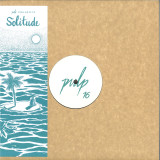
UK artist Jayson Wynters debuts on Pulp with four tracks of atmospheric house and funk that come complete with remixes by Jarren and Mogwaa.
Kung fu master Wynters hails from Birmingham and has been a key player on his local scene for years. More recently he has broken out with impressive EPs on mighty Dutch label Delsin and Adam Shelton's EON. He has a real love of hazy house and always brings his own unique take on that to his timeless analogue grooves. This latest EP was written during lockdown, which provided Jayson a chance to explore different sounds and delve into different styles.
Opener 'Solitude' proves that with its misty-eyed melodies and dreamy pads. The drums tumble loosely, the percussion has a frayed edge and the whole thing is coated in warmth and soul. Half Moon's Jarren is based in LA and brings plenty of that city's musical charm to his remix. It has far-sighted chords, soft-focus harmonics and well swung claps and drums that are simply irresistible.
Wynters then offers 'Corns Funk,' which pairs another dusty drum line with pinging kicks and woodpecker-like percussive hits. A superb twanging bass riff brings some real funk and retro-future feels as the groove builds and bright synths shine through the haze to enrich your soul.
'Night Drive' is a lush downbeat tune for sunset cruises. It has heart-melting chords that prompt deep inward reflection and features an aching guitar riff full of melancholy. The remixer for the one is Seoul musician and master beatmaker Mogwaa who layers in squelchy synth bass and dreamy, loved-up pads. Last of all, 'Uncle's Jam' is Dam Funk-style electro bliss doused in lo-fi chords and languid late-night funk and packed with romance.
Jayson Wynters shows off another superb side to his sound with his expansive Solitude EP.

11
Originally released in 1996, Come's third album 'Near Life Experience' was the sound of a band heading into new territory, refining their dense mix of hypnotic noise-rock, blues and rock'n'roll song-writing. Lovingly remastered, this new version features three incredible bonus tracks 'Prize', 'Strike', 'Hurricane II' stemming from the same era, additional liner notes and photographs. After Come's seminal 1994 release 'Don't Ask Don't Tell', bassist Sean O'Brien and drummer Arthur Johnson left the band to pursue other careers. Remaining members Chris Brokaw and Thalia Zedek recorded Near Life Experience with two different rhythm sections: one half of the album was recorded with drummer Mac McNeilly of the Jesus Lizard and Bundy K. Brown of Tortoise and Gastr Del Sol, the other half recorded with Kevin Coultas and Tara Jane O'Neil of Rodan and The Sonora Pine. Other contributors to the album included Edward Yazijian from Kustomized and Jeff Goddard from Karate, both rock bands hailing from Boston, MA. The title of the album resulted from "a slip of the tongue, as Zedek states, she "was telling someone she had had a 'near life experience,' but meant to say near death experience. Chris [Brokaw] was cracking up at the imagery of that. Thus, the phrase was chosen as the album's title. "Near-Life Experience is heavier, and at the same time prettier, than Come has ever sounded." CMJ New Music Monthly. "Come is a re-energized, even more powerful band than they used to be, and Near Life Experience is their most concise and affecting release yet." All Music. Zedek and Brokaw might have compensated the loss of band members by recruiting new blood but the reward was huge, 'Near Life Experience' is Come's most cinematic, diverse and accessible album.

9
The 1st album released in August 2021 attracted attention in the overseas scene, and labels from various countries such as Italy, Argentina, US and Poland. More release realized. Only half a year after that, they completed the remarkable 2nd album. Based on the royal road doom sound and the music with the blues feeling derived from 70's, the band ensemble with more euphoric feeling gets a lot of attention. A full lineup of songs such as "Devastator", which freely grooves from a side-beating beat to double bass, and "Agua De Vida", which enhances smoke and trip feeling under the direction of Mr. Okazaki. In the mellow "Underneath the Sky" and "Running In my Vein", the taste that has withered moderately is impressive. With the help of an effectively crafted album composition, it can be argued that they have reached the next level in this work. Don't miss the further leap of "Tokyo samurai doom" !!

- A1: Orinoco Flow
- A2: Caribbean Blue
- A3: Book Of Days
- A4: Anywhere Is
- B1: Only If…
- B2: The Celts
- B3: Cursum Perficio
- B4: I Want Tomorrow
- C1: China Roses
- C2: Storms In Africa
- C3: Pax Deorum
- D1: The Longships
- D2: Ebudae
- D3: On My Way Home
- D4: Boadicea
- E1: Watermark
- E2: Portrait (Out Of The Blue)
- E3: Miss Clare Remembers
- E4: Shepherd Moons
- F1: March Of The Celts
- F2: Lothlórien
- F3: From Where I Am
- F4: Afer Ventus
- G1: Oriel Window
- G4: Willows On The Water
- H1: Morning Glory
- H2: No Holly For Miss Quinn
- H3: The Memory Of Trees
- I1: Evening Falls
- I2: Paint The Sky With Stars
- I3: Angeles
- I4: Athair Ar Neamh
- J1: La Soñadora
- J2: Aldebaran
- J3: Deireadh An Tuath
- J4: Eclipse
- J5: Exile
- K1: On Your Shore
- K2: Evacuee
- K3: Marble Halls
- K4: Hope Has A Place
- L1: The Sun In The Stream
- L2: Na Laetha Geal M'óige
- L3: Smaoinim
- G2: River
- G3: Tea-House Moon
46
Originally released as a limited edition three-CD set in 1997, Enya’s ‘A Box of Dreams’ has become a must-have collector’s item among fans. 25 years later, ‘A Box of Dreams’ will receive a long-awaited reissue when it is released on vinyl for the very first time, within a beautifully designed six-disc eco-friendly box set which has been manufactured using 100% recycled board and vinyl. The set compiles highlights from the first half of Enya’s storied career, spanning selections from her self-titled debut album (later reissued and expanded as ‘The Celts’) through to the single ‘Only If…’ which had just been released and featured on her first ‘best of’ ‘Paint The Sky With Stars’.

8
Bristol multi-instrumentalist, producer and nature freak Will Yates offers a new record from his Memotone alias, an expansive, hypothetical revue titled How Was Your Life?
Launching from terrains recognizable to fans of Will’s extensive, restless discography, How Was Your Life? packs up his penchant for baroque druid folk, homespun electronics and weightless woodwinds and explodes them into glistening, fractal star dust.
Instigated by the purchase of an antiquated Y2K era guitar synthesizer, the record was produced over the first half of 2022, in a large part a result of in-studio improvisation and carved by equipment that offered both possibilities and parameters that Will relished and explored to the nth degree. The Roland GR33 not only provided sublime guitar sounds but also empowered the guitar to convincingly mimic fretless bass, tabla and a vast percussive array, also summoning an artillery of uniquely outre atmospheres over the course of the record. The resulting concoction sounds familiar yet subtly, unshakeably otherworldly, shaping up as perhaps the most honed, energized and beatific Memotone album to date.
Paradise Drips gently lifts off with wobbly guitar, randomized sequences and unidentifiable percussive elements situating us somewhere in an unearthly realm, before Open World zaps the serotonin receptors and gushes with ecstatic warmth, it’s quietly insistent soft disco shuffle and levitational fretless driving towards a totally blissed and very soft “drop”. Forest Zone sees Memotone deep in the green, with a loose, propulsive groove and dancing flutes stumbling into a medieval ritual in the clearing halfway through, and Glow In The Dark deftly bounces between spacey ambience and an undulating no wave vamp. Carved By The Moon is a delightfully melted classical cut, while Canteen Sandwich offers the record’s most explicitly nod to modernity in the form of a nimble drum workout with samurai synths and melodic percussion that heaves towards a genuine peak. Lonehead immediately backs right off, viscerally melancholic clarinet and bubbling fx making for the records most hefty introspective moment, before Walking Backwards simmers all the way down on an wistful arpeggio, rooting back in earthly reality with charmed rhythms and jazzy tunings. Catharsis complete, Memotone is onto the next incarnation.
Will Yates has been making music as Memotone since 2010, releasing music on labels like Black Acre, Disktopia and Accidental Meetings, also releasing music as O.G. Jigg and Half Nelson. He’s worked as a producer, session musician and live performer on a broad spectrum of projects, and recently provided source sounds that made up Batu’s “Opal” on Timedance.
How Was Your Life? was written, produced and mixed by Will Yates. It was mastered by Chris Wang. Art and design by Hugo Bernier.

4
Total Annihilation Beach is the latest collection from Caveman LSD, one of the handful of monikers of Special Guest DJ / uon / sometimes just shy. Their releases under this name have always had the character of sonic transmissions – crushed sine-waves hurtling out of a wormhole, remote pirate radio bandwidths, whale-song picked up on radar, and so on. Here, the signal seems to come from a place whose remoteness is not defined by distance, but adjacency: these are alternate reality bops.
What does it sound like? Kind of solarpunk, but dirty; not at all an artifact from a hopeless culture. Percussion at the forefront; warm timbres and tones – never have I heard this producer play with tabla and tambourine loops as they do in “Lost Hours,” the opening track of the EP. The buildup holds tension and dynamics tight, with a vocoder-smoothed moan – sampled from the caveman’s own voice, on the low – alternating between two notes; when the beat decompresses for the first time two and a half minutes in, one hears the amorphous and cavernous pads we know so well from shy. “Bottle Service Angels” picks up with another acoustic drum loop, and a clap entering 18 seconds in swings the rest of the track into your hips – there’s even an alternate percussion interlude
sandwiched in the middle. The drums are turned over by a distorted and delayed wave, almost like a cop siren, which finds an answer in the track’s final seconds: we hear them blaring, but distantly (the demo version of this track, from spring 2020, was called “ACAB Beat”).
The B side begins with a textured, heaving slab of ambience: “The Sun Will Sink Into the Ocean.” It is perhaps the sun one sees setting over “Total Annihilation Beach” – a phrase that came to shy while tripping on LSD in San Francisco, which felt to them like a post-apocalyptic haven for the rich. Seems on point. There is a machinic repetition to the track, but also sweeping curtains of sound that move like mist. But what comes at nightfall? Not cops, not raiders nor bottle service angels – nothing, actually. Just a void into which one lobs praise. “H6 Remix” adapts a Mesopotamian hymn to the divine wife of a moon deity, dated to 1400 BCE; the strings of the sampled oud playing it out are rich and trail beautifully with reverb. Caveman LSD’s gesture of remixing such a song reads sincere – the reality we inhabit is likely just as brutal as the one to which these transmissions belong; however, in both, honor exists. Love follows.

Born in Milan to a Cameroonese father and a Polish/Lithuanian mother, Nathan Dawidowicz moved at the age of 6 to Jerusalem. He was spending his childhood in a Jewish ultra-orthodox environment playing the piano and dreaming of being a Fashion designer and musician. After waking up from the reality he was raised in, he moved to Venice and started to explore the "outside world" of the mental barriers of religion. Music and fashion were his medicine, and he quickly became addicted to musical textures and vinyl. His love for music brought him quickly to Berlin, where he currently lives and loves.
Sanctuary Of Ideas is a very personal and optimistic journey by Nathan Dawidowicz. His first solo album is a spiritual path, as cosmic and adventurous as Nathan`s trajectory, with beautiful twists and psychedelic twirls into Dawidowicz personal rabbit hole. A record full of memories and positive affirmations, filled with Jazzy yet psychedelic Cosmic and Krautrock elements. A fusion of inspiration - and a perfect reflection of Dawidowicz heritage.
Idea`s Eve is a stargate to our ancestral power. The source of our inspiration is connected to our past - to the spirits of our ancient memories. Dawidowicz leaves a lot of space to breathe in this magical opener. Enchanting melodies and bubbling sounds surround the listener while his voice keeps repeating a mantra of an ancient love spell. A track where you feel your DNA spiraling up the ladder of evolution. Yet so natural and healing.
Full Moon Dance is the spiritual continuation of the first track. A swirl of magical melodies, yet jazzy but truly cosmic walking up the ladder to another dimension, where warm moon rays and fluffy clouds surround love. The synth lines represent the playful and smooth moon rays reflected on a rhythmical heart-beating ground where tears can be joyfully spent to honor the emotions we usually oppress.
To close the EP, Nathan Dawidowicz worked a half a year to finalize the last track in full detail. 23 Minutes and 18 Seconds long is the Capricorn Rising Over Jerusalemite Temple. This story is where the listener is brought to a higher level of consciousness. Against the rules of our consumerist world, Nathan Dawidowicz focuses on a dramaturgy full of patience for our own lifetime. Acidic lines come and go, powerful synth solos trigger unknown brain parts, and an epic melody accompanies the listener and lets dark emotions melt in a brass-filled part where a voice tells us that time is on our side. The song ends with an epic twist and promises a new start, where our most lovely memories stay in a vortex of light. Beam me up Nathan.

- A1: Roxanne
- A2: Can't Stand Losing You
- A3: So Lonely
- A4: Message In A Bottle
- B1: Walking On The Moon
- B2: The Bed's Too Big Without You
- B3: Don't Stand So Close To Me
- B4: De Do Do Do, De Da Da Da
- C1: Every Little Thing She Does Is Magic
- C2: Invisible Sun
- C3: Spirits In The Material World
- C4: Synchronicity Ii
- D1: Every Breath You Take
- D2: King Of Pain
- D3: Wrapped Around Your Finger
- D4: Tea In The Sahara
16
Remastered
"The Police - Greatest Hits is being reissued on vinyl in celebration of the 30th anniversary of the original release. Remastered at Abbey Road and cut at ‘half-speed’ for ultimate sound quality, the set contains two heavyweight black LPs with expanded artwork and packaging in a bespoke gatefold sleeve which enhances the original artwork.
A multi-platinum selling global smash on CD, it had a limited vinyl release upon its original release in 1992 which has long been out of print resulting in the original vinyl copies becoming highly sought after by fans. This collection is a perfect introduction to The Police for new admirers, original fans and vinyl collectors alike
This is the definitive compilation of the band - featuring 16 tracks, 14 UK top-20 hits and five UK number one singles – ‘Message In A Bottle’, ‘Walking On The Moon’, ‘Don’t Stand So Close To Me’, ‘Every Little Thing She Does Is Magic’ and ‘Every Breath You Take’. "

10
Xiu Xiu setzen sich seit 20 Jahren mit Verarbeitung, Empathie, Ungehorsam und Neuordnung des Grauens auseinander. Ihr neues Album 'Ignore Grief' ist eine Platte mit zwei Hälften. Angela Seo singt auf der einen, Jamie Stewart auf der anderen. Die eine Hälfte ist real, die andere imaginär. Die realen Songs versuchen, das Schlimmste, was das Leben den 5 Bandmitgliedern zu bieten hat, in eine Art verzweifelte Form zu bringen, die ihre Herzen und ihr Gedächtnis in diesen schrecklichen Erfahrungen nicht zermalmen und verrohen läßt. Die imaginären Songs sind eine abstrakte Erkundung des frühen Rock'n'Roll-Genres 'Teen Tragedy' als Ausgangspunkt, um die Emotionen der Band zu dekontaminieren, weil sie weiß, was diesen fünf Menschen widerfahren ist.
- LP auf Silver Ghost farbenem Vinyl mit DL Code in breiter Außenhülle mit Booklet (Lyrics, Poesie)

- A1: Branislave Zivkovic - Morning Light (2:30)
- A2: B Zivkovic - Sundown (2:44)
- A3: B Zivkovic - Pastoral Walk 1 (0:45)
- A4: B Zivkovic - Pastoral Walk 2 (1:31)
- A5: B Zivkovic - Pastoral Walk 3 (2:11)
- A6: B Zivkovic - In The Garden 1 (1:25)
- A7: B Zivkovic - In The Garden 2 (1:35)
- A8: B Zivkovic - Soft Thoughts 1 (0:47)
- A9: B Zivkovic - Soft Thoughts 2 (0:36)
- A10: B Zivkovic - Soft Thoughts 3 (0:43)
- A11: B Zivkovic - Soft Thoughts 4 (0:38)
- A12: Andre Tschaskowski - Grief (1:20)
- A13: A Tschaskowski - Personal Mood 1 (1:45)
- A14: A Tschaskowski - Personal Mood 2 (1:10)
- B1: A Tschaskowski - Woodland Mood (1:40)
- B2: A Tschaskowski - Reminiscence (3:20)
- B3: A Tschaskowski - Sentimental View 1 (1:30)
- B4: A Tschaskowski - Sentimental View 2 (1:47)
- B5: A Tschaskowski - Sentimental View 3 (1:10)
- B6: A Tschaskowski - Sentimental View 4 (0:40)
- B7: A Tschaskowski - Moonset 1 (4:46)
- B8: A Tschaskowski - Moonset 2 (1:43)
- B9: A Tschaskowski - Emotional Tension 1 (0:33)
- B10: A Tschaskowski - Emotional Tension 2 (0:56)
24
Emotionally, crafted by Brainislave Zivkovic and Andre Tschaskowski in 1986 for Coloursound, is arguably the most beautiful library album ever produced. A start-to-finish masterpiece of powerfully melodic music for reflection and introspection. It is, indeed, deeply emotional.
Branislave Zivkovic handles the majority of Side A. Opener "Morning Light" evokes exactly that feeling, with a gorgeous and plaintive acoustic guitar solo combining with alto flute to stunning effect. Its immediate counterpoint, "Sundown", in no less arresting but brings with it an after-dark drama of almost Lynchian proportions, again drawing upon guitar and flute but with a slightly more melancholic, even sinister edge, also calling to mind Ry Cooder's score for Paris, Texas. It truly captivates when the strings arrive. Remarkable.
The reflective cello solo with swelling strings at the heart of "Pastoral Walk 1" ensure this track is aptly titled, with parts 2 and 3 adding more agitation - via keys and percussive elements - to great effect. "In The Garden 1" presents an elegiac cello solo whilst its second part elevates the romance. The four-part "Soft Thoughts" suite invites further introspection via reflective alto flute and guitar. Fans of The Durutti Column will need to seek this.
Andre Tschaskowski enters proceedings with three tracks at the end of the Side A. All of them aces in the pack. "Grief", whilst sorrowful, uplifts in its second half through beautiful keys. Equally hopeful are the two-part "Personal Mood" sketches, both dreamy exercises in optimistic ambience.
Tschaskowski controls the entirety of Side B. "Woodland Mood", with its pastoral flute and cor anglais and "Reminiscence", with its classical, emotional strings, both beguile. The piano and strings-heavy "Sentimental View" suite is one of the most beautiful, atmospheric things you will ever hear, particularly its second part. "Moonset 1" with it's wonderful Joe Pass-esque guitar is tense yet easy, the beauty elevated further with the introduction of strings and horns. The more restrained "Moonset 2" is pared back to its divine, sweeping essence and should surely have been sampled by now. To close out an album of almost impossible refinement, the brief 2-part "Emotional Tension" salvo brings both increased stress before resolving itself and the LP with a piano motif and atmosphere of serenity. Blessed relief.
As David Hollander, in Unusual Sounds: The Hidden History of Library Music, states, Coloursound was "founded in 1979 by composer, music lawyer, and vibraphonist Gunter Greffenius. A Munich-based library with a reputation for releasing innovative and ambitious music, it catered largely to the market for experimental sounds, its first release was 1980’s Biomechanoid, an abstract synthesizer excursion by Joel Vandroogenbroeck, of the pioneering kosmische band Brainticket. The record — complete with imposing, anonymous title and unearthly H.R. Giger cover art — set the tone for the label’s progressive leanings. The label’s catalogue stands as a tribute to the unfettered creative license that libraries were able to provide to forward-thinking musicians who, frustrated by the whims and constraints of the commercial scene, found complete freedom in the world of production music."
As with all our library music re-issues, the audio for Emotionally comes from the original analogue tapes and has been remastered for vinyl by Be With regular Simon Francis. Richard Robinson has brought the original Coloursound sleeve back to life in all its metallic silver glory.

Repress !
The long-awaited reissue of the best ever album of rare Eastern and psychedelic Jazz music by this famous Hungarian guitarist
Gabor Szabo, originally released in 1968. For the first time as extended edition with 2 bonus tracks: radio versions of Fire Dance
/ Ferris Wheel from the 1969 7” single 7”. Deluxe 8-sided Digipak CD and Gatefold Vinyl come with long, exclusively written
inner notes by the famous researcher and biographer Douglas Payne. Remastered by Martin Bowes at Cage Studios (UK).
Gabor Szabo was one of the most original guitarists to emerge in the 1960s, mixing his Hungarian folk music heritage with a deep
love of jazz and crafting a distinctive, largely self-taught sound. Born in Budapest, on March 8, 1936, Szabo was inspired by a Roy
Rogers cowboy movie to begin playing guitar when he was 14 and often played in dinner clubs and covert jam sessions while still
living in his hometown. He escaped from his country at age 20 on the eve of the Communist uprising and eventually made his way
to America, settling with his family in California.
He attended Berklee College (1958-1960) and in 1961 joined Chico Hamilton's innovative quintet featuring Charles Lloyd. Urged
by Hamilton, Szabo crafted a most distinctive sound; as agile on intricate, nearly-free runs as he was able to sound inspired during
melodic passages. Szabo left the Hamilton group in 1965 to leave his mark on the pop-jazz of the Gary McFarland quintet and the
energy music of Charles Lloyd's fiery and underrated quartet featuring Ron Carter and Tony Williams.
Szabo initiated a solo career in 1966, recording the exceptional album, Spellbinder, which yielded many inspired moments and
"Gypsy Queen," the song Santana turned into a huge hit in 1970. Szabo formed an innovative quintet (1967-1969) featuring the
brilliant, classically trained guitarist Jimmy Stewart and recorded many notable albums during the late '60s. The emergence of
rock music (especially George Harrison, Eric Clapton, and Jimi Hendrix) found Szabo experimenting with feedback and more
commercially oriented forms of jazz.
During the '70s, Szabo regularly performed along the West Coast, hypnotizing audiences with his enchanting, spellbinding style.
From 1970, he locked into a commercial groove, even though records like Mizrab occasionally revealed his seamless jazz, pop,
Gypsy, Indian, and Asian fusions. Szabo had revisited his homeland several times during the '70s, finding opportunities to perform
brilliantly with native talents. He was hospitalized during his final visit and died in 1982, just short of his 46th birthday.

Repress !
The long-awaited reissue of the best ever album of rare Eastern and psychedelic Jazz music by this famous Hungarian guitarist
Gabor Szabo, originally released in 1968. For the first time as extended edition with 2 bonus tracks: radio versions of Fire Dance
/ Ferris Wheel from the 1969 7” single 7”. Deluxe 8-sided Digipak CD and Gatefold Vinyl come with long, exclusively written
inner notes by the famous researcher and biographer Douglas Payne. Remastered by Martin Bowes at Cage Studios (UK).
Gabor Szabo was one of the most original guitarists to emerge in the 1960s, mixing his Hungarian folk music heritage with a deep
love of jazz and crafting a distinctive, largely self-taught sound. Born in Budapest, on March 8, 1936, Szabo was inspired by a Roy
Rogers cowboy movie to begin playing guitar when he was 14 and often played in dinner clubs and covert jam sessions while still
living in his hometown. He escaped from his country at age 20 on the eve of the Communist uprising and eventually made his way
to America, settling with his family in California.
He attended Berklee College (1958-1960) and in 1961 joined Chico Hamilton's innovative quintet featuring Charles Lloyd. Urged
by Hamilton, Szabo crafted a most distinctive sound; as agile on intricate, nearly-free runs as he was able to sound inspired during
melodic passages. Szabo left the Hamilton group in 1965 to leave his mark on the pop-jazz of the Gary McFarland quintet and the
energy music of Charles Lloyd's fiery and underrated quartet featuring Ron Carter and Tony Williams.
Szabo initiated a solo career in 1966, recording the exceptional album, Spellbinder, which yielded many inspired moments and
"Gypsy Queen," the song Santana turned into a huge hit in 1970. Szabo formed an innovative quintet (1967-1969) featuring the
brilliant, classically trained guitarist Jimmy Stewart and recorded many notable albums during the late '60s. The emergence of
rock music (especially George Harrison, Eric Clapton, and Jimi Hendrix) found Szabo experimenting with feedback and more
commercially oriented forms of jazz.
During the '70s, Szabo regularly performed along the West Coast, hypnotizing audiences with his enchanting, spellbinding style.
From 1970, he locked into a commercial groove, even though records like Mizrab occasionally revealed his seamless jazz, pop,
Gypsy, Indian, and Asian fusions. Szabo had revisited his homeland several times during the '70s, finding opportunities to perform
brilliantly with native talents. He was hospitalized during his final visit and died in 1982, just short of his 46th birthday.

- A1: A Further Look At Loss (Alternate Mix)
- A2: Last Sunbeans Of Childhood (Alternate Mix)
- A3: Fugitive Light Restless Water
- A4: The Violet Hour (Alternate Mix)
- A5: Everywhere Something Sublime (Alternate Mix)
- B1: In Balgay Silhouettes (Alternate Mix)
- B2: Awoke In The Early Days Of A Better World (Alternate Mix)
- B3: (Half Light Of) The Cadmium Moon
- B4: Black Bay Dream Minor (Alternate Mix)
- B5: Lost, Aglow
10
With 'Parallel Light', AndrewWasylyk offers an alternative mix album to 2020's spiritual-jazz and neo-classical masterclass in melody, 'Fugitive Light And Themes Of Consolation'. This new LP, his third with Athens Of North Records, is as much a different perspective as a companion piece.
The ten songs still circle landscapes for meaning, channelling half-heard melodies and misremembered memories; caught somewhere between settling down and setting out towards the shining levels of the estuary and beyond. Each magnifying the bold, expansive arrangements of FL&TOC with layers are lifted and peeled away.
The soft-focus glow of gently pressed piano keys, the well and wash of strings and brass remain, but the deduction of instrumentation serves to highlight the ornate and offers comfort with this new found space. In the warmth reshaped, a romanticism illuminated.
At the essence of these reframed compositions Wasylyk's blue and gold, mellifluous refrains prevail. It's a seamless, sublime flow from a restless artists and an album quietly reawakened.

- A1: Half Moon Mornings
- A2: Reese's Cup
- A3: No Yeast (Feat. Boldy James)
- A4: Obsession
- A5: Corvette Rally Stripes (Feat. Havoc & Wiz Khalifa)
- A6: Whale Watching (Feat. Styles P)
- B1: The Tonight Show
- B2: Signature Move
- B3: Louis Baggage (Feat. Babyface Ray)
- B4: The Final Board
- B5: Jodeci Tape
- B6: Endurance Runners (Feat Larry June)
- B7: Kool & The Gang
13
Following what many would consider a banner year of releases for both artists, Curren$y & The Alchemist reunite for their third collaborative album, Continuance. With a chemistry that is unmatched in this day and age, the album sees Spitta exude effortless confidence over some of Alc's most finely crafted beats, resulting in what many would already consider a timeless piece of work. The 13-track album features a tight, yet impressive roster of guests including Boldy James, Babyface Ray, Styles P, Larry June, Havoc, and old partner in crime, Wiz Khalifa. While their run seems never ending at this point, it is definitely something to be celebrated and not taken for granted.

12

11
repress
Levon Vincent returns with his fourth full-length studio album Silent Cities a striking departure from his previous records. This, his first release experimenting with the cassette format, Silent Cities is a kind of mixtape through more private moods and personal pitches (literally given Levon’s non-standard tunings).
While Levon has always pro
duced dance floor jams with the intention of raising people’s heart rates, Silent Cities began with 72 bpm: his average resting heart rate, and the concept of tuning the music he was making to his own body rather than increasing anything. This brought the tempos down to 72 bpm or even half of that, at 36bpm. Programming the record during the empty cityscape of Berlin lockdowns, this is the first time Levon’s created an album for the home stereo or for headphone listening whilst navigating through a city. A mixtape specialist in his youth; he was always wanted to play with the cassette format. The results are sure to delight any listener, with the ever-present ambient, krautrock, shoegaze, hip-hop and electro influences coming to the foreground on this work.
“I was expanding further along the lines of a surprise favourite from my previous LP, a song called She Likes To Wave To Passing Boats which was not a 4 on-the-floor piece to play in clubs but a more impressionistic piece of music that I wrote to expound some emotions one day” says Levon. “It was a song written using just intonation. I really love how warm the pure 4ths sound, so when working on the new LP Silent Cities I decided to use my own tunings”.
Historically, the use of just intonation has meant that such instruments could sound "in tune" in one key but at the expense of more dissonance in the other keys. None of the songs on Silent Cities use standard Western equal temperament, Levon created his own scale designs coupled with the ancient ratios found in just intonation.
Born in Houston in 1975, Levon’s life changed dramatically when his parents moved their family to New York in 1981, uprooted from what he knew, the shock, the change from Houston to New York at 6 years old, is referred to constantly in Levon’s Musical output over the years. Levon's family moved houses in and around NYC from 1981 -2010, never more than a mile or two from the WTC. He lived on the Lower East Side during his teenage years and early 20s. This time period and this locale are also a big theme recurrent in his music as he tries to convey how the "downtown" lifestyle and culture-melding affected him so much at a tender age. He cut his teeth working in record shops around lower Manhattan, and while working at the Halcyon Record shop in Brooklyn he (alongside DJ Jus-Ed) was instrumental in creating the wave that came to be known as the "NYC House Renaissance" circa 2010. During the Y2K years he studied 20th C post-minimalism at Purchase college of New York under James McElwaine (who tangentially produced Man Parrish’s Self-Titled proto-hip-hop debt LP). Levon was fortunate to study theory with avant-garde composer Dary John Mizelle and orchestration under conductor Joel Thome. He undertook masterclasses with Philip Glass and also served as intern for John Kilgore, engineer for Steve Reich, where he was present for notable mix sessions such as “Violin Phase.”
Post-minimalism clearly remains an influence not to mention the early sampler stars of 80s freestyle and synth pop. Mixing such far-reaching influences is something Levon executes tremendously well. The first track Everlasting Joy moves at a head nodding 96 BPM tempo, reflecting formative influences like Paul Hardcastle’s Rainforest or Art Of Noise’s Moments in Love. “Those types of songs were a big eye opener for me as a youth, because it was where I realised songs in popular culture didn’t have to be kept to just 3 minutes, and they didn’t require vocals either. So, Everlasting Joy is a song with that intention, one that might be radio-friendly, despite the long arrangement and without vocals. You could say it was inspired by 107.5 in NY because that was a station I listened to a lot in the 1980’s.”
The majority of demos on Silent Cities were recorded before Covid-19 hit the world - when Levon had found a studio space outside of home in his adopted city of Berlin. It was a career first - working on music outside the bedroom. This riding the train or bicycling ‘going to work’ in Berlin opened up a new mood in his music, using the time back and forth to be inspired - commuting as an NYC transplant who still feels as a tourist in Berlin, with a pair of headphones, looking out the window on the train, or stopping on bridges and parking his bike to enjoy Berlin's skyline and horizon. Then, the pandemic struck and “work” came to a halt. Levon had recorded so much material during that year in the studio out of house it seemed like an inflection point for him to lighten the burden of the possessions he was carrying.
“People close to me have watched me give away synths and hardware regularly and I have given away my record collection every few years for my whole life. As a struggling artist in my 20s who had worked in record stores that whole time, I learned that moving constantly with 12k records just wasn't the way to live. So, in light of the pandemic, I set up a shop online, and sold all my music equipment. I also created a separate shop for all my sneakers and clothes. Easy come, Easy go. This provided me with a slow drip type of income that carried me quite well through the pandemic and it allowed me to focus on my own art and music. Getting rid of all my possessions felt like a weight being lifted from my shoulders and I was able to stay the course and remain committed to the music. I needed a further 2 years to mix and arrange the LP. If it weren’t for the pandemic, I would not been able to make this type of LP, so in light of everything, I was able to turn a depressing time in to something lasting and musically very positive.”
You can hear how his approach to a cassette release retains the "Medium is the Message." ethos. Silent Cities is a spooling, warm piece about life memories and embodiment.
