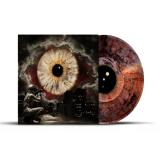
From the same recording sessions as Bézier's first EP on Körperspannung records 'Negative Velocity', 'Contraption' channels a few moods and scenarios.
On the a-side 'Contraption' is an insignificant droplet darting through the sky. Soon it joins a disarray of objects positioned above the atmosphere, maneuvers in formation to reveal randomized, decentralized nodes packed for mayhem.
On the b-side Bézier shows a slice of his lived experience. Back in 2004 he used to go to house parties around East LA with friends they grew up with every weekend to listen to music. Winding through the Southern Californian roadway sprawl they'd drive 1/2 an hour to 1 hour on the I-10 (sometimes diverting to Route 60 if gridlock is expected) to get to the location, usually in a residential neighborhood. Being respectful of the communities and the struggle of the progenitors of this music, Bézier presents 'Blue Halo' as an homage to that sound with a twist: Cumbia-Synth to provide a little sauce for your ears. Dave Easlick joins the milieu to provide a percussive framework for this tune.
Lastly, 'Bit by an Electric Wire' showcases Easlick's drumming with an overlay from Bézier. As Dave rips and shreds through his drum kit the OCD machine living inside Yang's brain switches on and organizes, collates and files that dataset into a hardcore rhythm track.
Поиск:halo
Все
Chris Ryan Williams (trumpet & electronics) and Lester St. Louis (cello & electronics) work together as HxH (H by H). Their skills have seen them move smoothly across various situations, constantly carving out new terrain and working in new configurations of musicians at a rapid pace. While worth reading, their biographies capture only a part of their complex rhizome.
HxH started about three years ago. The project is a direct response to all their activity with others and more importantly all their future leaning sonic desires. Their debut album STARK PHENOMENA is both their first studio recording and their first physical release. The album is appropriately set to be released by KMRU on his growing label OFNOT. It’s an ideal introduction to their sound world and their approach.
HxH describe their music as “electroacoustic,” but until recently the presence of Black musicians in this field has been greatly overlooked and largely ignored, making this phrase only partially appropriate. What HxH do really is to always be unpredictable. Every gig is a new soundscape. Sometimes you might hear echoes of Autechre or Robert Hood but then the sound-field will open up into a new terrain all their own. Chris and Lester bring together techniques from across the sound spectrum of electronic music and also draw on their deep backgrounds in Jazz, Improvisation, Classical and Noise scenes to create a sound that is true to them. After all, these two have worked with the likes of Bennie Maupin and the music of Black Fluxus artist Ben Patterson. Their rhizome is deep.
One of the ways that their unique approach manifests is in their merging of both acoustic instruments and electronic instruments in real time. This is something few have managed to do – but their spontaneous leanings work in both complex and accessible ways because of their deep understanding of landscape crafting. You can hear this clearly on the track “Pyrex Vision.” Their approach makes it tempting to compare their music to Sun Ra jamming with Laurel Halo – a comparison that would be only partly accurate.
Chris and Lester note that the sounds on STARK PHENOMENA are “imbued with such hopeful, gracious care; one that is far flung from obsessive carefulness or fuck the world carelessness, but more a caring embrace without the fuzziness of nostalgia.”
They note that when they began working together, they would “always come back to speaking on our concepts of an architecture of the expanse,” noting that their live sets often take on the joyfully noisy task of “dreaming big.” For HxH it was essential that STARK PHENOMENA have a quality that is “almost sculptural.” They consider the album “an object to be viewed from all sides.” This kind of thinking has resulted in them directly engaging with numerous sculptors and artists including Torkwase Dyson. Shape wise HxH’s sound fields work in a parallel to Dyson’s black architectural works.
They also note that the opening cut “BEACH” (the opening and longest track from the album) was “written weeks after our first gig in a studio session donated to us by our dear friend jaimie branch.” And that Pyrex Vision “was continually being edited months after sending our ‘final mixes’ to KMRU.” Their sound sources and samples come from studio sessions, live gigs, durational installations, 3am improvised downloads and more.
KMRU notes: "I think there is an in-between layer on this record. I was first caught by the Pyrex Vision track which organically flows between monologue, subtle field recording, and instrumentation. It's such a beautiful track, evoking deep emotion through simplicity. STARK PHENOMENA effortlessly glides in between imaginative mosaics of sounds — free yet complex — unlocking memories within its layers."
- A1: Montego Bay - Everything (Paradise Mix) 04 59
- A2: Atelier - Got To Live Together (Club Mix) 06 06
- A3: Golem - Music Sensations 04 56
- B1: The True Underground Sound Of Rome Feat. Stefano Di Carlo - Gladiators 05 26
- B2: Eagle Parade - I Believe 04 26
- C1: Dj Le Roi - Bocachica (Detroit Version) 05 28
- C2: Green Baize - Synthetic Rhythm 01 41
- C3: M.c.j. Feat. Sima - Sexitivity (Deep Mix) 05 30
- D1: Kwanzaa Posse Feat. Funk Master Sweat - Wicked Funk (Afro Ambient Mix) 06 31
- D2: Progetto Tribale - The Bird Of Paradise 06 29
- D3: Mbg - The Quite 06 59
Vol 1[28,99 €]
Googling “paradise house”, the first results to pop up are an endless list of European b&b’s with whitewashed lime façades, all of them promising “…an unmatched travel experience a few steps from the sea”. Next, a little further down, are the institutional websites of a few select semi-luxury retirement homes (no photos shown, but lots of stock images of smiling nurses with reassuring looks). To find the “paradise house” we’re after, we have to scroll even further down. Much further down.
It feels like yesterday, and at the same time it seems like a million years ago. The Eighties had just ended, and it was still unclear what to expect from the Nineties. Mobile phones that were not the size of a briefcase and did not cost as much as a car? A frightening economic crisis? The guitar-rock revival?! Certainly, the best place to observe that moment of transition was the dancefloor. Truly epochal transformations were happening there. From America, within a short distance one from the other, two revolutionary new musical styles had arrived: the first one sounded a bit like an “on a budget” version of the best Seventies disco-music – Philly sound made with a set of piano-bar keyboards! – the other was even more sparse, futuristic and extraterrestrial. It was a music with a quite distinct “physical” component, which at the same time, to be fully grasped, seemed to call for the knotty theories of certain French post-modern philosophers: Gilles Deleuze, Félix Guattari, Paul Virilio... Both those genres – we would learn shortly after – were born in the black communities of Chicago and Detroit, although listening to those vinyl 12” (often wrapped in generic white covers, and with little indication in the label) you could not easily guess whether behind them there was a black boy from somewhere in the Usa, or a girl from Berlin, or a pale kid from a Cornish coastal town.
Quickly, similar sounds began to show up from all corners of Europe. A thousand variations of the same intuition: leaner, less lean, happier, slightly less intoxicated, more broken, slower, faster, much faster... Boom! From the dancefloors – the London ones at least, whose chronicles we eagerly read every month in the pages of The Face and i-D – came tales of a new generation of clubbers who had completely stopped “dressing up” to go dancing; of hot tempered hooligans bursting into tears and hugging everyone under the strobe lights as the notes of Strings of Life rose up through the fumes of dry ice (certain “smiling” pills were also involved, sure). At this point, however, we must move on to Switzerland.
In Switzerland, in the quiet and diligent town of Lugano, between the 1980s and 1990s there was a club called “Morandi”. Its hot night was on Wednesdays, when the audience also came from Milan, Como, Varese and Zurich. Legend goes that, one night, none less than Prince and Sheila E were spotted hiding among the sofas, on a day-off of the Italian dates of the Nude Tour… The Wednesday resident and superstar was an Italian dj with an exotic name: Don Carlos. The soundtrack he devised was a mixture of Chicago, Detroit, the most progressive R&B and certain forgotten classics of old disco music: practically, what the Paradise Garage in New York might have sounded like had it not closed in 1987. In between, Don Carlos also managed to squeeze in some tracks he had worked on in his studio on Lago Maggiore. One in particular: a track that was rather slow compared to the BPM in fashion at the time, but which was a perfect bridge between house and R&B. The title was Alone: Don Carlos would explain years later that it had to be intended both in the English meaning of “by itself” and like the Italian word meaning “halo”. That wasn’t the only double entendre about the song, anyway. Its own very deep nature was, indeed, double. On the one hand, Alone was built around an angelic keyboard pattern and a romantic piano riff that took you straight to heaven; on the other, it showcased enough electronic squelches (plus a sax part that sounded like it had been dissolved by acid rain) to pigeonhole the tune into the “junk modernity” section, aka the hallmark of all the most innovative sounds of the time: music that sounded like it was hand-crafted from the scraps of glittering overground pop.
No one knows who was the first to call it “paradise house”, nor when it happened. Alternative definitions on the same topic one happened to hear included “ambient house”, “dream house”, “Mediterranean progressive”… but of course none were as good (and alluring) as “paradise house”. What is certain is that such inclination for sounds that were in equal measure angelic and neurotic, romantic and unaffective, quickly became the trademark of the second generation of Italian house. Music that seemed shyly equidistant from all the rhythmic and electronic revolutions that had happened up to that moment (“Music perfectly adept at going nowhere slowly” as noted by English journalist Craig McLean in a legendary field report for Blah Blah Blah magazine). Music that to a inattentive ear might have sounded as anonymous as a snapshot of a random group of passers-by at 10AM in the centre of any major city, but perfectly described the (slow) awakening in the real world after the universal love binge of the so-called Second Summer of Love.
For a brief but unforgettable season, in Italy “paradise house” was the official soundtrack of interminable weekends spent inside the car, darting from one club to another, cutting the peninsula from North to centre, from East to West coast in pursuit of the latest after-hours disco, trading kilometres per hour with beats per minute: practically, a new New Year’s Eve every Friday and Saturday night. This too was no small transformation, as well as a shock for an adult Italy that was encountering for the first time – thanks to its sons and daughters – the wild side of industrial modernity. The clubbers of the so-called “fuoriorario” scene were the balls gone mad in the pinball machine most feared by newspapers, magazines and TV pundits. What they did each and every weekend, apart from going crazy to the sound of the current white labels, was linking distant geographical points and non-places (thank you Marc Augé!) – old dance halls, farmhouses and business centres – transformed for one night into house music heaven. As Marco D’Eramo wrote in his 1995 essay on Chicago, Il maiale e il grattacielo: “Four-wheeled capitalism distorts our age-old image of the city, it allows the suburbs to be connected to each other, whereas before they were connected only by the centre (…) It makes possible a metropolitan area without a metropolis, without a city centre, without downtown. The periphery is no longer a periphery of any centre, but is self-centred”.
“Paradise house” perfectly understood all of this and turned it into a sort of cyber-blues that didn’t even need words, and unexpectedly brought back a drop of melancholic (post?)-humanity within a world that by then – as we would wholly realise in the decades to come – was fully inhuman and heartless. A world where we were all alone, and surrounded by a sinister yellowish halo, like a neon at the end of its life cycle. But, for one night at least, happy."
Following on from their 2021 debut album “Lowlands”, Birthname (fka Caro) returns to Limbo Tapes with "Spiral Dance”. 8 signature beats in the form of smoked out sequencing, warped percussion, field recordings and ceremonial sub frequencies.
Their ability to meld ethereal heights and sound system depths continues to provoke movement and headphone speculation alike.
Limited 50 cassettes + Digital.
2024 Repress
Straight in the wake of their eponymous debut LP released on the label back in 2016, Weval return to Kompakt this year with their sophomore album, 'The Weight', breaking their pop-mellow, nostalgia-friendly facet further out in the open as they arrive "at this place again were everything felt spontaneous, new and exciting, like we had in the beginning". Orbiting around that ever luminous yet wistful melodic halo that surrounds their music, this second full-length effort sweeps an extra-wide and languidly woven palette of emotions and moods, making for a uniquely ambitious and generously coloured mosaic of sound. If the recording sessions "often started grumpy and emotionless" by Harm and Merijn's own admission, the pair was "surprised by the joy it gave us, which can be compared to the emotions we felt back in the first days of making music together"; subsequently reconnecting with that fresh, naïve feeling of "absolute creative freedom" they were after. The album is also the fruit of a whole new working process for them - more playful and unpredictable - which saw them switch from "guitars lying around to piano, onto our own synths and the most cheap quirky toys synths you can imagine", and involved "recording all of our own samples, voice and almost every instrument out of the box - which for us was a totally new way of working". "We've always wanted a narrative for the album, and finding the right order perhaps took the most effort" they explain; "we felt anxious, felt insanely positive, felt heartbroken again, felt in love again, and there was death, and even suicide around us. It was quite chaotic. As a whole, 'The Weight' breathes with that transformative richness, free of limits and rules, except perhaps to "do quick and not think too much". Amidst this collection of songs and instrumentals that live by Weval's singularly positive take on music - one that can "lift you up, and make you feel hopeful without being necessarily straight out 'happy'" as they define it, the title-track and lead single stays true to the duo's dynamic approach, putting on a fine balance of floor and dream inducing adaptability that sound engineer David Wrench (Frank Ocean, The XX, FKA Twigs, Caribou… etc.) subtly made palpable. There's heavy showers of funk drops pouring from endless bars of thunderstorm clouds and laid-back riffs beating a restrained poolside-party kind of pulse, but also sensual vocals rising from beneath the sheets and rueful polaroid-filtered ambiences to soundtrack all possible moments in life - from the most euphoric to those when music seems the only viable healing potion. More on the post-KLF, BoC-inflected electronica side of things, 'Are You Even Real' takes its listener for a round-trip across the star-studded dome and beyond, before songs like 'Someday' and 'Same Little Thing' head back down to a state of pulsating, earthly organicity, tense and mercurial as get. An arpeggiated slice of piano-strewn kosmische, 'Heaven' is another invitation to an epic-scale odyssey from the inner-spheres into the distant fringes of the outer-world. Weightless and airy, yet texturally dense and widely magnetic overall, Weval second LP is a synthesis of the duo's multi-angle take on electronics: blissed-out, heartening and infinitely free.
Nur zweieinhalb Jahre nach der Veröffentlichung ihres selbstbetitelten Debutalbums finden sich WEVAL zurück "an jenem Ort, an dem sich alles spontan, neu und aufregend anfühlt - so wie als wir anfingen zusammen Musik zu schreiben". An diesem Ort entstand "The Weight", ihr zweiter Longplayer, auf dem Weval sich ganz den Pop-verliebten, Nostalgie-freundlichen Facetten ihres Sounds öffnen. Stetig um den sehnsuchtsvollen Strahlenkranz ihrer Melodien tanzend, legt diese Platte noch vielschichtigere, mit feinster Präzision gewobene Gefühlswelten frei.
Obwohl die Aufnahmesessions nach eigenem Bekunden oftmals "miesepetrig und emotionsarm" begannen, so war das Duo überrascht darüber, wie schnell sich bei der Arbeit jene Freude einstellte, die sie aus ihren künstlerischen Anfangstagen kannten, eine Woge des frischen, naiven Gefühls der "absoluten kreativen Freiheit". Dieses Album ist die Frucht eines verspielteren und unvorhersehbareren Arbeitsprozesses innerhalb der Band, in welchem alles zum Einsatz kam, was ihnen in die Finger kam - von der ollen Gitarre, die in der Studioecke stand, über ein Piano und den bandeigenen Sythesizern und den sonderbarsten Spielzeuginstrumenten, die man sich vorstellen kann. All dies sowie zahlreiche Vocalaufnahmen dienten als alleinige Samplequelle - "was für uns eine völlig neue Arbeitsweise war". "Es war uns wichtig für das Album den perfekten Erzählbogen zu spannen. Die richtige Reihenfolge zu finden war ein extrem aufwendiger Vorgang", erklären Harm und Merjin. "Uns war bange, wir fühlten uns total selbstsicher, uns zerbrach das Herz und wir verliebten uns erneut. Wir waren sogar von Tod und Selbstmord umgeben. Alles war Chaos. Insgesamt atmet "The Weight" die Reichhaltigkeit dieser sich ständig verändernden Gefühlslagen, frei von Einschränkungen und Regeln - außer vielleicht "mach es schnell und zerdenke die Dinge nicht." Inmitten dieser Ansammlung von Songs und Instrumentals, die aus Wevals einzigartiger, von Zuversicht geprägter Herangehensweise entstanden sind - "Musik, die dich hochzieht und Hoffnung spendet, ohne dich notwendigerweise happy zu machen. Der Titeltrack "The Weight" steht exemplarisch für Wevals ambivalenten Ansatz, die feine Balance zwischen Dancefloor und Traumzuständen, perfekt in Szene gesetzt von Soundengineer David Wrench (Frank Ocean, The XX, FKA Twigs, Caribou… etc.).
Der schwer aus gewaltigen Gewitterwolken tropfende Funk, die eine verhaltene Poolparty suggerierenden Riffs, die sinnlichen, geisterhaften Vocals und ein verwaschenes Ambiente, das wie ein Album alter Polaroidaufnahmen alle erdenklichen Momente des Lebens festhält - von den euphorischsten bis hin zu jenen, in denen Musik der einzige Trank ist, der Linderung verheißt. Das post-KLF und Boards of Canada evozierende "Are You Even Real" führt den Hörer auf einen imaginären Flug ins Sternenzelt, während organisch-klingende Songs wie "Someday" oder "Same Little Thing" wie Quecksilber am Boden haften. "Heaven" ist eines jener "kosmische" Stücke mit wilden Arpeggios und Pianosprengseln, die Weval in den vergangenen zwei Jahren zu einer Live-Sensation werden liessen. Wevals Musik ist schwerelos und luftig, aber gleichermassen von dichter Struktur und von einer magnetischen Anziehungskraft. Ihr zweites Album "The Weight" ist eine Synthese aus dem multi-perspektivischem, kaleidoskopischen Verständnis von elektronischer Musik: Herzerwärmend, alles umschmeichelnd und unendlich frei.
Feedback Waves - the new imprint from independent label Rings of Neptune - is proud to present Trill, the first and only album by Palomatic. Almost thirty years after its original release on CD in 1995, this beautiful nine-track work is now available on vinyl for the first time.
Palomatic is an alias of Koji Takahashi, an active member of the bubbling Japanese electronic music scene of the early-to-mid 90s. Besides his solo work, he was a core member of Takahashi Tektronix (with Nic Yoshizawa) and Mutron (with Kiyoshi Hazemoto, aka Interferon), as well as working as a synth programmer for supergroup Denki Groove.
Following the release of his debut track 'Halo' on Syzygy Records in 1993, Takahashi made a series of contributions to compilations on the scene-defining Transonic label. His first and only full-length album, Trill, combined these tracks with original material to form an absorbing and versatile standalone statement of the Palomatic sound.
From the oscillating lilt of 'Flutter', which opens proceedings at a measured 104bpm, through to the symphonic epilogue of 'Soar', Trill is rooted in the fertile territory between organic and synthetic sounds - ground that was nourishing the work of many likeminded producers worldwide at the time. West Coast psychedelia and East Coast funk, the moody bass weight of Bristol trip-hop and Sheffield bleep, and the chemical rush of German techno and Belgian trance: with a distinctly Japanese sensibility, Trill drew these strands together into an elegant musical tapestry. The result is timeless - indeed, album centrepiece 'Foaming Waves' would sound right at home on the faster-paced dancefloors of today.
This double LP features an alternative artwork by Feedback Waves co-founder Max Binski.
The scenic artist and multi-instrumentalist CLARAGUILAR moves from performing arts to cinema as a composer and live performer. Over the last few years he has created soundscapes that blend electronics and sampled elements with orchestral arrangements, becoming one of the main names of the Spanish theater scene when it comes to soundtrack and sound design creation.
After her acclaimed EP 'Mystery is All' Lapsus is proud to present 'Figura', CLARAGUILAR's debut album, a heartfelt tribute to her connection with the scenic world, and especially with the operatic universe. The starting point of this project was born with the concept of an "invisible orchestra", an imaginary that aesthetically becomes a reality on stage thanks to the collaboration with the Barcelona studio Oscila, as well as with the help of the stylist Joan Ros, who has been in charge of the costume design.
'Figure' is a space in which electronica, ambient, and chamber-pop coexist; all under an operatic halo full of drama. Once again, the producer locked herself down from late 2022 to the beginning of 2023 to compose all the tracks in a very intimate and closed composition process. The album dives into the melodic landscapes, merged with orchestral samples and chopped voices containing mysterious messages inside.
Each track is a pixelated lightshow and a live electronic instrumentation, presented onstage as an elegant performance with an expansive emotional range
- A1: Three (Intro)
- A2: Noisia & Camo & Krooked - Nova
- A3: The Upbeats & Noisia - Shibuya Pet Store
- B1: Noisia & Imanu - Shift
- B2: Noisia & Skrillex - Horizon
- B3: Noisia & Former - Cleansing
- C1: Mefjus & Noisia - Foundations
- C2: Scrapped
- C3: Shutters
- D1: Noisia & The Upbeats - Halcyon
- D2: Noisia & Halogenix - Wordless
- D3: Told You
- E1: Noisia & Two Fingers - Dzjengis
- E2: Noisia & Former - Pleasure Model
- F1: Noisia & Phace - Deep Down
- F2: Noisia & Posij - Simplon
- G1: Noisia & Black Sun Empire - Caps Lock
- G2: Skrillex & Noisia & Josh Pan & Dylan Brady - Supersonic (Vip)
- H1: The Hole Pt 1
- H2: Closer
"After Outer Edges we were trying to find a new direction for Noisia. This resulted in an extensive journey that took us through a lot of new ideas and music.
Although we eventually decided to stop, we are proud of the things we made along the way, and these tunes were always meant to be part of a larger whole. So before we finally close the book on Noisia, we wanted to share them with you, on one last album. Previously released or newly finished, they all represent directions we enjoyed exploring.
In the end, we didn't manage to figure things out. But we did get closer." - Nik, Thijs, Martijn (Noisia)
- A1: Three (Intro)
- A2: Noisia & Camo & Krooked - Nova
- A3: The Upbeats & Noisia - Shibuya Pet Store
- B1: Noisia & Imanu - Shift
- B2: Noisia & Skrillex - Horizon
- B3: Noisia & Former - Cleansing
- C1: Mefjus & Noisia - Foundations
- C2: Scrapped
- C3: Shutters
- D1: Noisia & The Upbeats - Halcyon
- D2: Noisia & Halogenix - Wordless
- D3: Told You
- E1: Noisia & Two Fingers - Dzjengis
- E2: Noisia & Former - Pleasure Model
- F1: Noisia & Phace - Deep Down
- F2: Noisia & Posij - Simplon
- G1: Noisia & Black Sun Empire - Caps Lock
- G2: Skrillex & Noisia & Josh Pan & Dylan Brady - Supersonic (Vip)
- H1: The Hole Pt 1
- H2: Closer
"After Outer Edges we were trying to find a new direction for Noisia. This resulted in an extensive journey that took us through a lot of new ideas and music.
Although we eventually decided to stop, we are proud of the things we made along the way, and these tunes were always meant to be part of a larger whole. So before we finally close the book on Noisia, we wanted to share them with you, on one last album. Previously released or newly finished, they all represent directions we enjoyed exploring.
In the end, we didn't manage to figure things out. But we did get closer." - Nik, Thijs, Martijn (Noisia)
- 2022 repress
Halogenix raises the bar once more, flipping between the light and the dark of his "Gaslight EP". The exquisite summertime bounce of "Out Of Line" featuring SOLAH on vocals and the future liquid of "Would You" give the perfect balance to the frenetic paranoia of title track "Gaslight" and "Line B". One of his best releases to date.
It might seem tongue-in-cheek on the surface, but the fact that the title of Eldritch Priest's sprawling debut vinyl release, Omphaloskepsis, is the Greek translation for “navel-gazing” unlocks something essential to the Vancouver-based composer and writer's singular outlook.
Perhaps even more telling is the title of Priest's 2013 book Boring Formless Nonsense: Experimental Music and the Aesthetics of Failure (Bloomsbury), whose 300-odd pages read as though you've been dosed with potent hallucinogens. Throughout the text Priest addresses—celebrates, even—the titular elements via various musical examples, including that of his peers. What's so bewildering it is that his descriptions of how boredom, formlessness, and nonsense manifest are laced with the very tactics he's depicting. Passages tie themselves in knots, footnotes engulf the “primary text,” he even deliberately misleads the reader.
The restless stasis of Omphaloskepsis could be regarded as an extension of this book's wayward spirit. Things unfold fairly slowly and consistently but it'd be a stretch to describe it as properly contemplative. Like attempting to meditate with a high fever, any sense of tranquility is constantly derailed as one succumbs to queasy agitation. The piece's foundation is a seemingly endless guitar melody; an organic meander that neither seems to repeat or offer any concessions to narrative directionality. Priest unfurls this rambling cantus firmus in a rich, clean, jazz-like tone, but as it's played, it's repeatedly tangled with snarls of dense digital processing and shadowed by stumbling virtual “band.” These strident interjections blatantly contrast with the guitar, yet they aren't so violent as to offer more than a faint itch of distraction. As such, the distinctive amorphousness that this piece asks us to inhabit for its 54-minute duration leaves a strong impression, but also feels utterly intangible.
In addition to his recorded forays, Priest's disorienting music has also been performed by top-tier interpreters such as the Arditti Quartet, Quatuor Bozzini, Philip Thomas, Anton Lukoszevieze, and Continuum. While living in Toronto he co-founded the collective neither/nor with John Mark Sherlock, which featured a cross section of musician-composers playing each other's work including Eric Chenaux, Doug Tielli, Eric KM Clark, Heather Roche, and Rob Clutton. “Though the name refers specifically to a loosely knit group of composers and performers,” remark's the collective's website “neither/nor is also a sensibility that refuses art’s messianic pretensions and the gaping maw of commercialized society, opting instead for art’s right to be esoteric.” In 2021, when Eric Chenaux and Martin Arnold relaunched their neither/nor-adjacent Rat-drifting imprint, an album by Priest, Many Traceries, was among the first to be released. Perhaps unsurprisingly, Priest was a student at the University of Victoria, a school that's come to be known for fostering such staunch individualists as Arnold, Linda Catlin Smith, Allison Cameron, and Anna Höstman.
As a scholar, Priest writes from a 'pataphysical perspective and deals with topics such as sonic culture, experimental aesthetics and the philosophy of experience. Priest brings these interests to his job as an Associate Professor in the School for the Contemporary Arts at Simon Fraser University, interests that also inform his work as a member the experimental theory group The Occulture. In addition to Omphaloskepsis, his new book, Earworm and Event: Music, Daydreams and Other Imaginary Refrains,
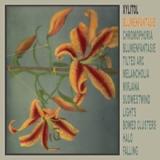
Xylitol, aka producer and DJ Catherine Backhouse, shifts up the refinement and musical breadth for her second album Blumenfantasie, the follow-up to her Planet Mu debut Anemones.
With Blumenfantasie, Xylitol wanted “to make space and for the music to float and propel at once”, finding routes through the pointillistic figures, cascading synths and the meditative stillness of kosmische musik and bolder breakbeat programming. She reaches this delicate balance through careful subtraction, hoping “to convey a sense of intimacy and sadness but without sentimentality” which she manages with a feel and sound that's raw and intuitive.
Blumenfantasie rolls through detailed jungle workouts that flutter and bleep, through beatless ambience, taking a rare dip below 160 bpm for the elegiac Mirjana, the album’s most explicit nod to Krautrock with a drum break chopped up from Amon Duul II’s anthemic ‘Archangel’s Thunderbird’, through to Halo, a bare bones grime rhythm that calls to mind the missing link between industrial pioneers Nurse With Wound and Wiley's Eskibeat.
Catherine cast her net to draw in experimental audiovisual duo Sculpture and Reading based post-rock band The Leaf Library as collaborators, pulling the former’s whirling eddies of musique concrète into a slice of sublime aquatic jungle, and the latter’s radiophonic folksong into a dark and disorientating breakbeat workout equally indebted to Source Direct as to Broadcast.
Blumenfantasie moves with a confident, self-effacing fluidity which has been informed by DJ Bunnyhausen’s more regular DJ gigs. She speculates ‘if this album feels more cohesive than its predecessor it's likely because I've been DJing a lot more, with Worthing Techno Militia, with central and eastern european electronica collective Slav to the Rhythm, as well as being part of Italo Disco crew Flex. Moving between these zones seemed to open up hidden pathways between the disparate musical trajectories they represent.'
While Anemones contrasted the rough and the delicate, its successor is an album built for the head, hips and heart, with painterly sounds and a sense of intimacy that encourages deep listening while keeping its eyes on the strobelight and its feet on the dancefloor.
- A1: Don't Talk To Strangers
- A2: Didn't It Click
- A3: She's My Girl
- A4: Poultry Head
- A5: Older Than Her Years
- B1: So Glad
- B2: Want Me
- B3: Loverboy Keyboards, Backing Vocals, Written-By – John Maus Written-By – Ariel Pink
- B4: Jonathan's Halo
- C1: Hobbies Galore Written-By – R. Stevie Moore
- C2: I Don't Need Enemies Written By, Lead Vocals, Guitar – Matt Fishbeck
- C3: Let's Get Married Tonite
- C4: Ghosts
- A1: Jason Mill's
- A2: Halo
- A3: Devil
- A4: P O (Ft. Black Thought)
- A5: Clover (Ft Joey Valence & Brae)
- A6: Stigma
- A7: C O.p
- A8: Start 2 Finish - S T.f (Ft. Dmx)
- B1: Scary Merri
- B2: Cell Block Freestyle / Cd On
- B3: Flakka (Ft Mf Doom)
- B4: Misogynistical
- B5: Life 4 A Life (Ft Pusha T)
- B6: Everyone Knows ) (Ft Rza)
- B7: Scrambled Eggs - Tbc ( (Ft Ogi)
Jason ".idk." Mills' neuestes Projekt, Even The Devil Smiles, ist eine fesselnde Reflexion über Überleben, Transformation und die Schicksalsmomente, die seinen Weg für immer verändert haben. Ausgehend von seiner eigenen Geschichte der Inhaftierung und einer entscheidenden Wendung des Schicksals, die es ihm ermöglichte, seine Freiheit vorzeitig wiederzuerlangen, lässt er diese gelebte Erfahrung in ein Werk einfließen, das sowohl eindringlich als auch unerschrocken ehrlich wirkt. Durch seine lebhafte Erzählweise behandelt er Themen wie Verrat, spirituelle Konflikte und Widerstandsfähigkeit. Jeder Track pulsiert vor der Spannung gelebter Erfahrungen und fängt die Herausforderungen, Entscheidungen und Durchbrüche ein, die seinen Weg geprägt haben. Getreu Mills' multidisziplinärer Vision ist ,Even The Devil Smiles" mehr als nur Musik. Es präsentiert sich als kulturelles Artefakt, das eine Brücke zwischen der Mixtape-Ära des Hip-Hop und zeitgenössischem Design und hoher Kunst schlägt. Das Ergebnis ist ein Projekt, das die Härte und Unmittelbarkeit des rohen, Hardcore-Rap in sich trägt und sich gleichzeitig als Sammlerstück positioniert, das über die Musik hinaus Resonanz findet und Zuhörer und Trendsetter gleichermaßen einlädt, sich sowohl mit einer zutiefst persönlichen Erzählung als auch mit einem bleibenden kulturellen Statement auseinanderzusetzen.
Toronto-based musician and producer David Psutka’s long dormant Egyptrixx alias returns, with How Tidal. A compendium of sorts, which retells the story so far, reworks of highlights from his catalogue sit alongside brand new tracks, serving as a bridge between the past and the future, preceding more fresh music in 2026.
With the originals still sounding remarkably current, a straight best-of wouldn’t have been out of question, but ever the tinkering student of sound, Psutka thought he’d break them apart, just to see how he could put them back together again.
The music on is How Tidal is cutting-edge and futuristic, but never difficult, instead offering accessible gems where multiple strains of bass music are infused with a zingy, techno-pop bounce, whilst ambient moments gift sonic lozenges for maximum contentment. Psutka creates optimistically welcoming environments, where synthetic birds chirrup in cyan skies over babbling rainbow brooks, as 15 inch subwoofers boom by.
Egyptrixx gained renown across the 2010s with his hard hitting yet tranquil experimental dance music dubbed ‘celestial jeep music for a Saturn moon’. Colourful sound design was braided with dancefloor structures, creating an exhilarating tension between melodic and dissonant, euphoric and inward. The debut album Bible Eyes was released in March of 2011 to critical acclaim.
As Egyptrixx, Psutka has released four studio albums, collaborated, remixed, and toured with some of the biggest names in electronic music.
The widely acclaimed moniker is foundational to Psutka’s complex body of work that encompasses multiple solo projects, plus a diverse range of collaborative work. He has performed live at Sonar Festival, Roskilde, Mutek, MOMA PS1 Warm-UP and CTM Festival, and presented sound installations at Galeria Civica Commune di Modena and Art Gallery of Ontario (AGO).
In 2015, Psutka launched Halocline Trance as a home for his various sound projects, events and collaborations. In recent years, the label has quietly established itself as a platform that facilitates many of Canada’s most exciting creative music projects.
- 1: Tribe
- 2: Halo
- 3: Mayday
- 4: Parallel Realities
- 5: Doppelgänger
- 6: Godlike
- 7: Ghost Town
- 8: Coldheaven
- 9: Back To Dirt
- 10: Snake Skin
- 11: Lies
- 12: Echo
Explosive Ukrainian metalcore force SPACE OF VARIATIONS returns with Poisoned Art, out on February 13, 2026 via Napalm Records. Blending furious brutality with heartfelt emotion, the four-piece band sheds their skin and continues to push the boundaries of modern metal, their new record showing a new facet of their ever-evolving sound—a new era. Twice crowned Ukraine’s best metal band, and former tour partners of genre giants Jinjer, SPACE OF VARIATIONS are raising the bar for metalcore with the twelve new tracks of Poisoned Art. Mercilessly honest, the opening track “TRIBE” sees the band battle existential fears in both English and their native Ukrainian. Driving in the urgency are diverse stylings, ranging from djent in “HALO” to fitting sirens in “MAYDAY”, showing that SPACE OF VARIATIONS doesn’t shy away from adding a certain edge to their catchy choruses. “PARALLEL REALITIES” cleverly combines soft melodies with brutality, staging captivating desperation and neck-snapping breakdowns as parallel realities. Explosive outburst “DOPPELGÄNGER” powerfully blends groovy distorted guitars and unrelenting intensity, contrasted by haunting melodic passages and subtle electronic textures, making this song especially hard-hitting. The mix of pummeling ferocity with emotional depth continues throughout “GODLIKE” and “GHOST TOWN”, before “COLDHEAVEN” stands out from Poisoned Art through its exploration of hip hop elements and cold industrial grain. “BACK TO DIRT” continues the djent vibe, while “SNAKE SKIN” delves into electronic territory.
- Gasoline (All Rage Still Only Numb)
- Disconnected
- See Through
- Fall Away
- 3: Am
- Into The Dark
- My Religion
- Halos
- Good For Me/Feel So Bad
- Better Than High
- I Don't Wanna Feel Like This Anymore
Story Of The Year haben seit ihrem Debütalbum »Page Avenue« – einem der ersten Alben dieser Art, das sich 2003 eine Million Mal verkaufte – die Post-Hardcore-Szene maßgeblich geprägt, und das Quartett aus St. Louis ist im Laufe der Jahre nur noch beeindruckender geworden. Fans haben die Band auf Tour mit Linkin Park, My Chemical Romance und Deftones gesehen, sowie bei ihren Auftritten auf der Warped Tour und beim Festival When We Were Young und vielen anderen.
- A1: Bleach
- A2: Ether
- B1: In Bloom
- B2: Opiate
- B3: Halogen
The Italian music scene is enriched by an intriguing new jazz trio: Chromogen.
Led by bassist and composer Matteo Magnaterra, the project features three members: tenor saxophone, bass, and drums. Using an unconventional lineup, they pursue a well-defined exploration of sound and timbre, creating ample space for dialogue and experimentation. They
pave the way for a new, holistic jazz style, clearly defined in their first album, "Chromogen."
The name is inspired by a parallel passion of the artist-composer: analog photography.
Chromogen is, in fact, the English name for the chemical compound capable of transforming a negative image, dyeing it with color. Those
same colors will then animate the artist's songs, developing imagery tied to his way of observing, portraying the world around him in vivid
colors.
CREDITS
Matteo Magnaterra: compositions, electric bass
Matteo Diego Scarcella: tenor saxophone
Vincenzo Messina: drums
Jacopo Trapani: recording, mixing
Francesco Brini: mastering
- A1: Gareth Coker - The Resistance (Main Theme)
- A2: Gareth Coker - Uchawi's Hearth
- A3: Gareth Coker - Giggling Forest
- A4: Gareth Coker - Green River
- A5: Gareth Coker - Wild Coast
- A6: Gareth Coker - City Of Stonedale
- B1: Gareth Coker - Rudolf
- B2: Gareth Coker - The Citadel
- B3: Gareth Coker - Ancient Might
- B4: Mick Gordon - The Underking
- B5: Gareth Coker - Fire Swamps
- B6: Gareth Coker - Sinking City
- B7: Gareth Coker - Fallen Guardian
- C1: Gareth Coker - Training Grounds
- C2: Gareth Coker - The Lizard King
- C3: Gareth Coker - Pilgrim's Road
- C4: Gareth Coker, Rachel Hardy - Yeldrim
- C5: Gareth Coker - Catacombs Of Renewal
- C6: Yuka Kitamura - Morta Mima
- C7: Gareth Coker - Mansion Of The Cult
- D1: Gareth Coker - Mouth Of Madness
- D2: Motoi Sakuraba - The Cosmic Beast
- D3: Gareth Coker - Endless Bazaar
- D4: Gareth Coker - Power
- D5: Gareth Coker - Azra, Pride Of The Sun King
- D6: Gareth Coker - Absolum, A Broken Dream
This album is the game soundtrack of Absolum, a fully hand-drawn world and unique lore by the team behind Streets of Rage 4, TMNT: Shredder’s Revenge... Known for Ori and the Blind Forest and Halo Infinite, the main composer Gareth Coker brings his signature emotional depth, blending dark fantasy orchestration with medieval-inspired themes and brooding atmospheres.
From orchestral soundscapes to thrilling boss fight themes, this soundtrack features guest tracks by Mick Gordon (DOOM 2016, Wolfenstein: The New Order, Atomic Heart...), Yuka Kitamura (Elden Ring, Dark Souls III, Dark Souls II), Motoi Sakuraba (the Dark Souls Series, Mario Golf, Star Ocean), and Rachel Hardy (Stray Gods, Eternal Strands), setting the tone for the events taking place in this cute but twisted fantasy world. Magic may be forbidden in these lands, but the music is still truly enchanting!
- 1: Any God Of Yours (Instrumental)
- 2: Swell (Instrumental)
- 3: Arise Dear Brother (Instrumental)
- 4: Ammi Ammi (Instrumental)
- 5: Buffed Sky (Instrumental)
- 6: Sex With Nobody (Instrumental)
- 7: Eye’s Drift (Instrumental)
- 8: The Sea Liner Mk 1 (Instrumental)
- 9: Empty Vessels (Instrumental)
- 10: New Builds (Instrumental)
- 11: Dull Boys (Instrumental)
- 12: Thames Water (Instrumental)
XL Recordings is proud to mark the 10th anniversary of Archy Marshall’s (aka King Krule) A New Place 2 Drown with the release of a newly remastered instrumental edition.
Originally released on 10 December 2015, A New Place 2 Drown remains a singular entry in the Archy Marshall catalogue. Known to many for his work as King Krule, Marshall released A New Place 2 Drown under his own name, highlighting a different facet of his creative identity. An atmospheric blend of submerged beats, woozy textures, and diaristic storytelling, the project earned widespread acclaim upon release, including Pitchfork’s Best New Music.
Developed in parallel with a visual world shaped with his brother and longtime collaborator Jack Marshall, the quietly influential project stands as a multidisciplinary love letter to their home of South London, originally released alongside a Will Robson-Scott–directed short film and a book of artworks, photography, and poetry by the Marshall brothers.
The 2025 instrumental edition offers a newly illuminated perspective on the record’s sonic core, drawing fresh attention to the production craft that underpins the project. By stripping the songs back to their foundations, the release highlights the intricate textures, rhythmic detail, and atmospheric depth that have helped A New Place 2 Drown grow into a cult favourite over the past decade.
“A New Place 2 Drown evokes a septic world filled with flickering halogen bulbs, sticky synth keys, and corroded outputs. Marshall has made tremendous strides as a producer, gorgeously reproducing the gloom and loneliness of early '90s hip-hop and finding a way to integrate it into his own style.” - PITCHFORK
Shogun Audio is extremely proud to present GLXY's second album, 'Form, Focus'. Unequivocally the most refined body of work to date from the ever-evolving drum & bass duo, this LP showcases GLXY at their irresistible best.
A decade on from the release of their debut single 'Small Talk/Trinity', GLXY have cemented themselves as one of liquid drum and bass’ most respected and prolific acts. With twelve EPs, a debut album in 2020, and collaborations with the likes of Alix Perez, Halogenix, Lenzman, Unglued, and Catching Cairo under their belt, 'Form, Focus' represents the next definitive milestone in an already heavyweight catalogue.
From beginning to end, the record distils everything that makes GLXY so special. Abundant with luscious sound design, soulful vocal features, and an unmistakable sense of groove and musicality. Featuring Charli Brix, DRS, Duskee, Eljé, Jords, Salo, and Verbz, the tracks flow seamlessly between deep, introspective liquid cuts and vibrant, club-ready rollers, painting a full picture of their artistry while pushing their sound into fresh, exciting spaces.
More than just a continuation, 'Form, Focus' feels like a statement: a decade of honing their craft distilled into a singular vision. It’s an album that reaffirms GLXY’s position at the cutting edge of the genre, while at the same time carving out their own unmistakable lane within it.
- 1: Workaround One
- 2: Workaround Two
- 3: Workaround Three
- 4: Workaround Four
- 5: Workaround Five
- 6: Clouds Strum
- 7: Workaround Six
- 8: Workaround Seven
- 9: Workaround Eight
- 10: Workaround Nine
- 11: Square Fifths
- 12: Workaround Bass
- 13: Pause
- 14: Workaround Ten
‘Workaround’ is the lucidly playful and ambitious solo debut album by rhythm-obsessive musician and DJ, Beatrice Dillon for PAN. It combines her love of UK club music’s syncopated suss and Afro-Caribbean influences with a gamely experimental approach to modern composition and stylistic fusion, using inventive sampling and luminous mixing techniques adapted from modern pop to express fresh ideas about groove-driven music and perpetuate its form with timeless, future-proofed clarity. Recorded over 2017-19 between studios in London, Berlin and New York, ‘Workaround’ renders a hypnotic series of polymetric permutations at a fixed 150bpm tempo.
Mixing meticulous FM synthesis and harmonics with crisply edited acoustic samples from a wide range of guests including UK Bhangra pioneer Kuljit Bhamra (tabla); Pharoah Sanders Band’s Jonny Lam (pedal steel guitar); techno innovators Laurel Halo (synth/vocal) and Batu (samples); Senegalese Griot Kadialy Kouyaté (Kora), Hemlock’s Untold and new music specialist Lucy Railton (cello); amongst others, Dillon deftly absorbs their distinct instrumental colours and melody into 14 bright and spacious computerised frameworks that suggest immersive, nuanced options for dancers, DJs and domestic play. ‘Workaround’ evolves Dillon’s notions in a coolly unfolding manner that speaks directly to the album’s literary and visual inspirations, ranging from James P. Carse’s book ‘Finite And Infinite Games’ to the abstract drawings of Tomma Abts or Jorinde Voigt as well as painter Bridget Riley’s essays on grids and colour. Operating inside this rooted but mutable theoretical wireframe, Dillon’s ideas come to life as interrelated, efficient patterns in a self-sufficient system.
With a naturally fractal-not-fractional logic, Dillon’s rhythms unfold between unresolved 5/4 tresillo patterns, complex tabla strokes and spark-jumping tics in a fluid, tactile dance of dynamic contrasts between strong/light, sudden/restrained, and bound/free made in reference to the notational instructions of choreographer Rudolf Laban. Working in and around the beat and philosophy, the album’s freehand physics contract and expand between the lissom rolls of Bhamra’s tabla in the first, to a harmonious balance of hard drum angles and swooping FM synth cadence featuring additional synth and vocal from Laurel Halo in ‘Workaround Two’, while the extruded strings of Lucy Railton create a sublime tension at the album’s palatecleansing denouement, triggering a scintillating run of technoid pieces that riff on the kind of swung physics found in Artwork’s seminal ‘Basic G’, or Rian Treanor’s disruptive flux with a singularly tight yet loose motion and infectious joy. Crucially, the album sees Dillon focus on dub music’s pliable emptiness, rather than the moody dematerialisation of reverb and echo. The substance of her music is rematerialised in supple, concise emotional curves
and soberly freed to enact its ideas in balletic plies, rugged parries and sweeping, capoeira-like floor action. Applying deeply canny insight drawn from her years of practice as sound designer, musician and hugely knowledgable/intuitive DJ, ‘Workaround’ can be heard as Dillon’s ingenious solution or key to unlocking to perceptions of stiffness, darkness or grid-locked rigidity in electronic music. And as such it speaks to an ideal of rhythm-based and experimental music ranging from the hypnotic senegalese mbalax of Mark Ernestus’ Ndagga Rhythm Force, through SND and, more currently, the hard drum torque of DJ Plead; to adroitly exert the sensation of weightlessness and freedom in the dance and personal headspace.
- A1: Disconnection
- A2: Sentry
- A3: Under The Scar
- A4: Sugarcane
- A5: Gun You Hold
- B1: Passionate Nun
- B2: Halogen
- B3: Violence Of The Star
- B4: Who's Giving You Love
- B5: Even If It's Just A Dream
- Graffiti Palace
- Dance The Crisis
- The Last Goodbye
- Feel The Rage
- The Cradle
- The Game
- Invisible Trade
- Widow Club
- Screens
- The Sharp Bones Of My Sleep
"From the very first seconds of the opening track "Graffiti Palace", this album establishes itself as one of the clearest and strongest in the band's discography. Eric Deleporte assumes his new ambitions and deploys his song-writing across 10 panoramic, dreamy songs. Seven years after "Black Condensed" and 31 years after a debut album "Icy Morning in Paris" released on the legendary French label Lithium (1994), "The Sharp Bones of my Sleep" marks a major turning point in the band's history. Rémy Poncet (Chevalrex) accompanied the construction of this sound architecture and Angy Laperdrix (Tahiti 80, Aquaserge, Chassol, Zombie Zombie, Halo Maud...) produced the mix. The light-dark atmospheres and heartbreaking melodies are more sensitive than ever in Perio's work, and summon the best of US indie (Deerhunter, Devendra Banhart...), the ghosts of punk and new-wave, and the urban poetry so dear to Eric Deleporte. ""Perio is a rare band. Because it sounds like no other, resolutely French-American, in a folk vein that bridges the gap between tradition as recorded in Harry Smith's Anthology of American Folk Music and resolutely contemporary sounds."" -La Blogothèque
- A1: Babysbreath
- A2: Teardrop
- A3: Iwantyou
- A4: Fur
- A5: Dizzy
- A6: Plume
- A7: Burst
- A8: Tinkerwench
- A9: Charm
- B1: Sugaredglowing
- B2: Glimmer
- B3: Finger
- B4: Moinaexquisitewallflower
- B5: Butterfly
- C1: Youreyesimmaculate
- C2: Bloweyelashwish
- C3: Crushing
- C4: Precious
- C5: Darkglassdolleyes
- C6: Halo
- D1: Babysbreath (Mycomium Version)
- D2: Spidervelvet
- D3: Lips To Kiss
- D4: Feathermouth
- D5: Moinaexquisitewallflower (Original Version)
Eine atmosphärische Symphonie aus ätherischem Verfall, die zum Klassiker des 21. Jahrhunderts aufgewertet wurde. Aufgenommen 1992 zu Hause mit einer 12-saitigen Gitarre, einem 4-Spur-Recorder, einem Loop-Pedal, unendlichem Hall und dem strukturierten Gesang der geheimnisvollen Sängerin Melissa Arpin Duimstra, verwandelte Scott Cortez' bezauberndes Projekt postadoleszente Tagträumereien im Schlafzimmer in ein ruhiges, mondbeschienenes Schweben auf einem endlosen Meer. Diese erweiterte und remasterte Doppelalbum-Edition enthält fünf weitere verzerrte Reflexionen aus dem Archiv, mit Texten und einer Replik einer Postkarte, in denen man sich verlieren kann. Hier braucht man keine Augenspülstation - Blindheit ist beabsichtigt.
With their musical roots deeply immersed in the fertile soil of Afro-American music, the Buttshakers have found a new direction for their nostalgia-heavy soul music. With Lessons In Love, their third album on Underdog Records, their early heartaches and furies have faded in favor of a more composed harmony – a sound enveloped in love and soaked in the blues. Guided by their singer Ciara Thompson, the Buttshakers have taken a more intimate path, whose compass, in the chaos of emotions and the modern world, points only in one direction: the light.
Seen from the sky, the view appears limitless. Accentuated by the sun, the ochre and sandy hues of the open road only reinforce this feeling of immensity. The sky stretches and the green stands out in striking contrast. In lighter tones, a road is drawn -- without bends or contours. This is the worn and weary road of soul music, which The Buttshakers explore on each album in new and unique ways. Soul music – a rare place to find a French band.
Vast, the musical direction could have taken them to lighter pastures. Yet the Buttshakers chose to evolve in a different way; to take a heavier load. Two paths – one sparked by social unrest, the other purely sentimental, Lessons In Love explores the deep roots of soul music, in the steps of Curtis Mayfield or Al Green. It is here that the heart and mind cross paths, merge, and become one. A weary road -- that brings together the agitation of a world where good intentions never rise above the level of digital outrage, and a faith in love which, however it manifests and expresses itself, remains the only truth that never loses its power.
Less rage and more compassion, it is through the haunting words and now tempered inflection of Ciara Thompson's voice, which opens to distinct emotions and perspectives, that the listener is guided. With its gaze fixed on the horizon, the acoustic guitar of Gotta Believe invites us on an intimate stroll through the open plains, while Dream On carries us away with a clavinet riff and a possessed saxophone; reconnecting the electric heat and neurosis of a city full of dreams. The senses are moved by the conjuring potion of the guitar which distills throughout Troubled Waters; the body is brought back into a visceral dance by the keys and brass section that are put to the test by Sure As Sin and its irrepressible rhythm. Passing through clouds of dust and sand has left a bluesy imprint on their groove: the miles travelled became hundreds, then thousands.
All of this leaves the listener bewitched by the halo of resilience that now surrounds Ciara's performance, as the ten tracks let the light fade. But certainly not hope in a better day. Like the sunflower that always lifts its head towards the sun’s rays, the Buttshakers continue to resource their sounds in the deep roots of soul music. Into the rich layers of African-American music of the 60s and 70s, The Buttshakers capture the spirit as much as the musical aesthetics of the epoch. A sound that reaches into the meanderings of the soul, bringing light to dark places and hope for all. A sound for the most parched of hearts, living in a damaged world, Lessons In Love confirms that even the tiniest beam of light can illuminate one’s path.
- Hot Rotten Grass Smell
- Bull Believer
- Got Shocked
- Formula One
- Chosen To Deserve
- Bath County
- Quarry
- Turkey Vultures
- What's So Funny
- Tv In The Gas Pump
END[GER] Die Band Wednesday aus Asheville, North Carolina errichtet im Laufe der zehn Songs von "Rat Saw God" einen Schrein voller aufregender Details: Halb lustige, halb tragische Botschaften aus den Südstaaten, die sich klanglich irgendwo zwischen dem wimmernden Skuzz von Neunzigerjahre-Shoegaze und klassischem Country-Twang entfalten - mit verzerrter Pedal Steel und Frontfrau Karly Hartzman, die mit ihrer Stimme, den Lärm durchschneidet. Ein Song von Wednesday ist wie ein Quilt. Eine Kurzgeschichtensammlung, eine verschwommene Erinnerung, ein Flickenteppich aus Porträts des amerikanischen Südens, der disparate Momente einfängt und als Ganzes doch irgendwie einen Sinn ergibt. Karly Hartzman, die Songschreiberin, Sängerin, Gitarristin und Leiterin der Band, ist eine Geschichtensammlerin als auch eine Geschichtenerzählerin: Eine aufmerksame Beobachterin von Menschen und witzigen Bemerkungen. "Rat Saw God", das neue und beste Album des Quintetts aus Asheville, ist ekphrastisch, aber ebenso autobiografisch und vor allem sehr einfühlsam. Es wurde in den Monaten unmittelbar nach der Fertigstellung von dem zweiten Album der Band, "Twin Plagues", geschrieben und innerhalb einer Woche im Drop Of Sun Studio in Asheville aufgenommen. Die Songs auf "Rat Saw God" erzählen keine Epen, sondern das Alltägliche. Sie sind lebensnah, erzählen vom wahren Leben, sie sind verschwommen und chaotisch und seltsam zugleich - was Hartzmans eigenem Ethos entspricht: "Everyone's story is worthy. Literally every life story is worth writing down, because people are so fascinating." A Wednesday song is a quilt. A short story collection, a half-memory, a patchwork of portraits of the American south, disparate moments that somehow make sense as a whole. Karly Hartzman, the songwriter/ vocalist/guitarist at the helm of the project, is a story collector as much as she is a storyteller: a scholar of people and one-liners. Rat Saw God, the Asheville quintet's new and best record, is ekphrastic but autobiographical and above all, deeply empathetic. Across the album's ten tracks Hartzman, guitarist MJ Lenderman, bassist Margo Shultz, drummer Alan Miller, and lap/pedal steel player Xandy Chelmis build a shrine to minutiae. Half-funny, half-tragic dispatches from North Carolina unfurling somewhere between the wailing skuzz of Nineties shoegaze and classic country twang, that distorted lap steel and Hartzman's voice slicing through the din. Rat Saw God is an album about riding a bike down a suburban stretch in Greensboro while listening to My Bloody Valentine for the first time on an iPod Nano, past a creek that runs through the neighborhood riddled with broken glass bottles and condoms, a front yard filled with broken and rusted car parts, a lonely and dilapidated house reclaimed by kudzu. Four Lokos and rodeo clowns and a kid who burns down a corn field. Roadside monuments, church marquees, poppers and vodka in a plastic water bottle, the shit you get away with at Jewish summer camp, strange sentimental family heirlooms at the thrift stores. The way the South hums alive all night in the summers and into fall, the sound of high school football games, the halo effect from the lights polluting the darkness. It's not really bright enough to see in front of you, but in that stretch of inky void - somehow - you see everything. The songs on Rat Saw God don't recount epics, just the everyday. They're true, they're real life, blurry and chaotic and strange - which is in-line with Hartzman's own ethos: "Everyone's story is worthy," she says, plainly. "Literally every life story is worth writing down, because people are so fascinating." But the thing about Rat Saw God - and about any Wednesday song, really - is you don't necessarily even need all the references to get it, the weirdly specific elation of a song that really hits. Yeah, it's all in the details - how fucked up you got or get, how you break a heart, how you fall in love, how you make yourself and others feel seen - but it's mostly the way those tiny moments add up into a song or album or a person.
- 1: Fear Of The World
- 2: Be Near Me
- 3: Vanity Kills
- 4: Ocean Blue
- 515: Storey Halo
- 6: A To Z
- 7: (How To Be A) Millionaire
- 8: Tower Of London
- 9: So Hip It Hurts
- 10: Between You And Me
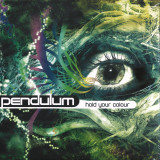
Pendulum, undoubtably one of the biggest electronic bands of all time, are back with Inertia, their first album in fifteen years. Produced by Rob Swire and Owen Charles and recorded at Pendulum’s London Studio, Inertia is a rampaging, 16-track emotional maelstrom and without doubt the band’s most personal work to date. Featuring collaborations with Bullet For My Valentine, Wargasm, AWOLNATION, Scarlxrd, Joey Valence & Brae and Hybrid Minds across the album’s tracklist, Inertia began to take shape in 2020 as Rob searched for what it is to be Pendulum in its current era. Stemming from 2021’s Elemental and 2023’s Anima EPs, which were the blueprint for the band’s future, the band found their new direction. Pendulum have 3 platinum albums to their name, including renowned debut Hold Your Colour and a UK #1 and #2 for Immersion and In Silico. The drum and bass/rock band from Perth, Australia have sold over a million albums in the UK alone, as well as selling out global arena tours and playing to thousands across main stage performances from Glastonbury and Download to Reading and Leeds on top of a headline slot at Ultra Miami in spring 2025.
Bendik Giske’s Beatrice Dillon-produced 2023 album gets an addendum with reworks from Carmen Villain, aya, Hanne Lippard, Hieroglyphic Being, Wacław Zimpel and Dillon herself.
Giske’s clearly got his ear to the ground; his last remix record was an invitation for Laurel Halo to put her stamp on »Cruising«, while 2018’s »Adjust EP« roped in Deathprod, Total Freedom, Lotic, and Rezzett. Now comes this new LP of remixes and it’s one of the best we’ve heard in aeons. Carmen Villain boots things off with a remix of »Slipping«, following her excellent (and way, way too underrated) »Nutrition EP« with a giddy, subtle roller that sounds as if it’s been constructed using only Giske’s raw stems. His breaths and leathery key presses – already amped up by Dillon’s detailed recording – are magicked into a dubby concrète groove that’s enhanced with the sparest melodic elements: echoing rainforest-at-night horn blasts, and lopped off decay trails that help fuel the momentum.
aya’s revision of the same track takes a different approach, forming forceful overlapping polyrhythms from Giske’s clanks, using the gamelan-like arpeggios for melodic weight and repetition. The result is a constantly shifting, hypnotic trancer that’s achingly organic – more Raja Kirik than Paul Van Dyke. Polish clarinetist and producer Wacław Zimpel, meanwhile, supplements his trippy recent collaboration with James Holden on a similarly levitational wrinkle of »Slipping« that twists Giske’s quivering sequences with microtonal synth prangs, and gusty echoes. But it’s Jamal Moss who plays fastest and loosest with Giske’s source material, calling back to April’s psy-house stunner »Dance Music 4 Bad People« with a powdery, sexualised banger that buries the breathy »Start« stems underneath neon synths, and brittle drum loops.
»I’m a digital nomad,« Lippard deadpans over Giske’s »Not Yet«. »I’m addicted you know that.« It’s a typically dry treatment from the conceptual artist that unexpectedly amps up the hypnotic qualities of Giske’s original, adding her circuitous charm to his concertina-ing sax sequences. And to tie things up perfectly, Beatrice Dillon returns with her diaphanous remix of »Rise and Fall«, built to emphasise the radically different approaches of each artist.
- Musique Pour Le Lever Du Jour
- Arabesque
With Vermilion Hours, Melaine Dalibert offers a condensed rereading of his Musique pour le lever du jour, still exploring minimal variations and subtle piano resonances. This new version, enriched by David Sylvian's discreet electronic textures, retains the atmospheric magic of the original while offering a new density. Sylvian, best known as the singer of Japan, is also an important figure in ambient music, collaborating with Czukay, Hassell and Sakamoto. Their collaboration, born of a sincere artistic affinity, acts here as a transmission between generations. The two tracks on the album - Musique pour le lever du jour and Arabesque - evoke a soundscape where each note is reflected and diffracted infinitely. The electronic work acts like a halo, a vibrant aura. Dalibert speaks of a desire to humanize his theoretical processes, to touch through the organic. Like a Klee painting, each stratum of sound builds depth. This is, indeed, "landscape music," where, if you listen closely, you might hear birds singing in the background. And that is the true essence of these suspended harmonies, these vermilion hours-which transport us, as only the contemplation of nature can, into another space-time, a sonic bath that is also a renewal of the senses. Since his career with Japan began in 1974, David Sylvian has explored a wide range of musical territories, collaborating with the likes of Robert Fripp, Jon Hassell, Readymade FC and Ryuichi Sakamoto - venturing as far as ambient music, which he further develops here in tandem with Melaine Dalibert. While continuing to teach at the Rennes Conservatoire, Melaine Dalibert regularly releases albums on various labels and performs both his own works and those of other composers - most recently, a reworking of Keith Jarrett's Köln Concert. He also co-curates the Autres Mesures festival. The two pieces forming Vermilion Hours feel like transcending the generations. Between Melaine Dalibert (born in 1979) and David Sylvian (1958) lies the same generational gap as between Sylvian and Czukay (1938-2017) or Hassell (1937-2021). The CD versions adds two edit versions of both long tracks.
- 1: Wherever I Go
- 2: Bad Guy
- 3: Sweet Child O Mine
- 4: Halo
- 5: Shallow
- 6: Demons
- 7: I Don T Care
- 8: Cryin
- 9: Livin On A Prayer
- 10: The Sound Of Silence
Croatian cellists Luka Šulić and HAUSER, together known as 2CELLOS, celebrated their 10th anniversary in 2021 with a brand new album, titled Dedicated. The album was led by the first single, a cover of Bon Jovi’s anthem “Livin’ On A Prayer”. Dedicated showcases their unique playing style on ten new arrangements that reinvent both recent hits such as One Republic's “Wherever I Go”, Ed Sheeran/Justin Bieber's “I Don’t Care” and Billie Eilish's “Bad Guy”, and iconic classics such as Guns ‘N Roses' “Sweet Child O’ Mine” and Aerosmith's “Cryin’”. In 2011, 2CELLOS went viral with their self-uploaded version of Michael Jackon’s “Smooth Criminal”. Since then, they’ve released five chart-topping studio albums, amassed over 2.5 billion streams and surpassed 20 million followers on their socials. They shared the stages with Elton John, Steven Tyler, Andrea Bocelli, George Michael and Queens Of The Stone Age amongst others. Dedicated is available as a limited edition of 1000 numbered copies on white coloured vinyl and includes an insert.
Let's go back to the open-minded days of the '90s, when Goa-trance wasn't strictly defined! DICA & Antidot are the perfect example of genre-crossing artists. French artist DICA is already a well-known name in the acid scene and teamed up with his friend Antidot for this EP. After visiting ZNA and Apsara, their love for Goa-trance deepened...and it shows!
Picture a room full of analog machines and two guys tweaking them like madmen. The result? A high-energy acid/Goa-trance crossover with a touch of hard trance. All tracks have been tested on dancefloors with truly uplifting results! We hope you're ready for this madness too!
- A1: Jumpscare
- A2: Star87
- A3: Misery
- A4: Blk Xmas Feat Bruiser Wolf
- A5: Waterproof Mascara
- A6: Counterclockwise
- B1: Corinthians Feat Despot
- B2: Pitchforks & Halos
- B3: All These Worlds Are Yours Feat Elucid
- B4: Maquiladoras Feat Al.divino
- B5: A Doll Fulla Pins Feat Yolanda Watson
- C1: Golgotha
- C2: Cold Sweat
- C3: Blk Zmby
- C4: Make No Mistake
- D1: Born Alone
- D2: Lead Paint Test Feat Elucid & Cavalier
- D3: Dislocated Feat Elucid
- D4: House In The Woods
Cassette[15,92 €]
GOLLIWOG is billy woods' first album in two years, preceded by 2023's Maps, his second collaboration with producer Kenny Segal. That nimble travelogue has little in common with woods' newest work, despite the fact that Segal shows up a couple times in the credits. GOLLIWOG is a haunting collection that weaves horror, humor, surrealism and Afropessimism into a cinematic tapestry, aided and abetted by a murderer's row of producers. African zombies, time traveling trap cars, malevolent ragdolls and a dying Frantz Fanon are just a few of the revelers in woods' danse macabre. GOLLIWOG features production from The Alchemist, Kenny Segal, EL-P, Conductor Williams, Preservation, Messiah Musik, Sadhugold, Ant (Atmosphere), Shabaka Hutchings, Steel Tipped Dove, DJ Haram, Willie Green, Jeff Markey, Saint Abdullah, and LA-based experimental jazz trio Human Error Club. Meanwhile, woods is joined on the mic by Backwoodz labelmates ELUCID and Cavalier, along with rappers Bruiser Wolf, Despot, Al.Divino, and singer-songwriter Yolanda Watson. GOLLIWOG is another triumph in the woods oeuvre, as layered and compelling as anything he has ever done. A black carnival pitched in a muddy field overnight, empty rides whirring and clattering in the dark.
- A1: Patina Shift
- A2: Blistex
- A3: Rust Halo
- A4-: Lesio
- B1: Sightjacker Ft. Visio
- B2: Here Used To Be A Star
- B3: Spume (Formerly An Icefield)
- B4: Hypnoxia
- C1: Astral Trepidation Ft Jiyoung Wi
- C2: Spotshadowsphere
- C3: Cable Eater
- C4: Velvet Myst Ft. Heith
- D1: Nerveghost
- D2: Relaxus
- D3: L’ Inaperçu Nous Traverse Ft. Bernardino Femminielli And Habib Bardi
Corrosiv, the sophomore album from Orchestroll, reveals the duo at their most mature and vulnerable. Originally conceived as a reflection on hybridity and bastardization, the album deploys New Age and ambient compositional tropes as a launchpad, exposing their trite sanctity to the realities of corrosion. Having come of age in the 1970s and 1980s, the New Age movement perdures today as a domain of contradictions; its promise of transcendence riddled with the very commercialized dogma from which its adherents claim to flee. Healing modalities such as reiki, crystal therapy, and sound baths are simultaneously pathways to solace and sites of exploitation; their sonic counterparts—ethereal synth pads, shimmering textures, celestial drones—claim to facilitate meditation and enlightenment while devolving into empty signifiers of vitality. With Corrosiv, Orchestroll displays neither reverence nor disdain toward New Age: they exhume it instead, revealing the saccharine effervescence and commodified murk undergirding its aesthetics. The result is intoxicating—disquieting.
Born from a two-week residency at EMS Studios and expanded through a performance at MUTEK Montreal’s 25th anniversary, Corrosiv has since outgrown its original conceptual nucleus, taking on a broader scope. Its inquiry into New Age ideology’s voided rhetoric and aesthetic mysticism now informs a broader interrogation of cultural mediocrity, anti-authoritarianism, gatekeeping, music industry toxicity, and the crumbling edifice of late capitalism and techno-feudalism—all the mechanisms by which meaning is stripped from ceremony, and once-potent forms of knowledge are subsumed into the machinery of economic extraction, severed from their original essence, and transformed into hollow simulacra. Corrosiv distills these themes through a loose narrative: a soul, fixated on wellness as dictated by cosmetic economism, becomes ensnared in an endless afterlife, unable to transcend and shed its dilapidated consciousness.
Framed as an act of audio dissolution, the album thus engages in an alchemical process, whereby complex waveshaping, morphing synthesis, and distortion enact a ritual of fragmentation. There is also friction: between the rigid, mechanical imposition of systematized order and the untamed, chaotic force of organic metamorphosis. Here corrosion and confinement are not solely conceptual motifs; they are enacted in real time, sculpting the album’s terrain. Scraping, tarnishing, degradation—the languid wear of form and substance—become instruments in their own right: buffing as abrasion, entrapment as transformation, corrosion as a means of reconfiguration. The ‘protagonist,’ if there must be one, is the listener, caught within the throes of structural determinism and the potential for emancipation, unable to pass into something greater as the specters of collapsed futures accumulate in the margins.
Corrosiv extends its reach through collaborations with familiar voices: Heith (PAN), VISIO (Haunter), Femminielli (Drowned by Locals), Habib Bardi (Interzone), and Jiyoung Wi (Enmossed, Psychic Liberation, Doyenne) each leave their imprint on its sprawling landscape. At 1h16m, it is a procession, dense with earworms that burrow into the listener’s unconscious.
Misshapen, broken-down metals leach copper into blood, acid reflux burning through the core. Psyche disaggregates into cosmic turmoil, drifting between planes—tongue on rustline, gullet laced with solvent hymns, molars unlatching, bitcrushed to marrowspill. A spasm of brine, ferrous scripture, venomtext blooming in leaden rivulets, cartilage smoldering in phosphor decomposition, synapses drowning in a quicksilver choir. Crest of bile, churning ore, breath clotting into arsenic mist, vein-thread cinched, a corrosive gospel, limb by limb, oxidized to silence.
Ultimately, as the music exhales its final breath, its residue refuses to dissipate—and stillness alone remains. There are no conclusions here—no resolution, no collapse—only the slow drift outward of a vessel unmoored, lost in the sea of symbolic souring. Corrosiv sings the song of a world barren of prophecy, littered with aesthetic detritus. Whether this magic has been transfigured or simply worn away is unclear: the last breath dissipates, but the oxidation does not stop. The silence, too, will decay.
Conceptualized, composed, performed, recorded, mixed, engineered and produced by Jesse Osborne-Lanthier, and Asaël Richard-Robitaille in 2023 and 2024 at Elektron Musik Studion (EMS) - Stockholm, Sweden and Landsc8pe Studio - Montréal, QC, Canada.
Artwork by Jesse Osborne-Lanthier.
Mastered by Stephan Mathieu @ Schwebung Mastering.
- A1: Olivia Salvadori, Coby Sey, Kid Million - With All The Senses, Su Di Te M'infrango
- A2: Upsammy - Programming
- A3: Sepehr - Divooneh
- A4: Levente - Read It
- A5: Ece + Stefan - Love Street No 90
- A6: Ben Bertrand - What To Do With My Male Body
- A7: The Spy - Paradox
- A8: Filmmaker - Broken Power Gloves
- A9: Christos Chondropoulos - The Spell
- A10: Zona Utopica Garantita - Loop Kraut
- B1: Christos Chondropoulos - Love Song
- B2: Galina Ozeran - Dvizhenie
- B3: Lamusa Ii - Le Reve (Feat Vittoria Totale)
- B4: Solid Blake - Nyx
- B5: Laurel Halo - Waves Goodbye
- B6: Annavsjune - Mirrormom
- B7: Brainwaltzera - Scratch The Sir Face
- B8: Frank Rodas - Dial Up
- B9: Black Dot - The Rainbow Children
- B10: Anpanman - Adjustic High
- B11: Fluctuosa - Lamponi
In 2022, Osàre! Editions founder Elena Colombi approached artists and musicians with a prompt: Every body, everyone needs love to flourish. In her book The Will to Change, the eminent author and social activist, Bell Hooks, invites men to excavate their innermost selves, challenging the way that patriarchal society limits their capacity for intimacy, tenderness, care and emotion. As hooks lays out, feminist thought and work requires the collective participation of all genders in order to realise a liberated world. How can we imagine cross-gender solidarity through music and art? And how can we tell sonic stories that facilitate our full potential as desiring beings? These are the questions that The Male Body Will Be Next starts out from.
The title of the record draws connections between hooks' writing, a film by Rebecca Salvadori and Peter de Potter's stunning photo series of the same name. In de Potter and Salvadori's depictions, men's bodies appear as vulnerable, naked and exposed.
Divided into two parts, the first instalment of The Male Body Will Be Next hinges on colliding energies – the melding of club dance floors and haunting ambient textures, agile techno and noisy experimentation.
'The sun on my skin… it’s so warm and gentle,’ speak-sings Olivia Salvadori on ‘Su Di Te M’Infrango’, visualising utopias. Laurel Halo crafts a dreamscape spun from golden threads of synth and strings. Pensive and reflective, Ben Bertrand’s bass clarinet roams searchingly, its piercing tonality full of longing. Yet, in between these lucid, cinematic passages and spoken word, The Male Body Will Be Next finds space to dance together. Moving in fervent, rhythmic patterns, Sepehr’s ‘Divooneh’ pivots between tension and release. Filmmaker unleashes a wave of energy and The Spy delivers a potent take on vintage electro, the track title hinting at the double-bind of gendered expectations. Propelled between these eclectic styles, the record encapsulates the full spectrum of sonic expression.