180 Gram Vinyl Celebrate the holiday season with this fiery collection of vintage R&B, gospel, and soul, guaranteed to bring the Christmas spirit to life! This vinyl release features a handpicked lineup of legends like Chuck Berry, Sonny Boy Williamson, and Charles Brown, delivering everything from foot-stomping hits to soulful serenades. Highlights include Freddy King's heartfelt "Christmas Tears," Lightnin' Hopkins' gritty "Merry Christmas," Carla Thomas' soulful "All I Want For Christmas Is You," and the lively classic "Run Rudolph Run." With rare holiday gems spanning raw blues, swinging gospel, and smooth soul, this album is the ultimate soundtrack for a cool Yule.
180 Gram, Yellow Vinyl Celebrate the holiday season with this fiery collection of vintage R&B, gospel, and soul, guaranteed to bring the Christmas spirit to life! This vinyl release features a handpicked lineup of legends like Chuck Berry, Sonny Boy Williamson, and Charles Brown, delivering everything from foot-stomping hits to soulful serenades. Highlights include Freddy King's heartfelt "Christmas Tears," Lightnin' Hopkins' gritty "Merry Christmas," Carla Thomas' soulful "All I Want For Christmas Is You," and the lively classic "Run Rudolph Run." With rare holiday gems spanning raw blues, swinging gospel, and smooth soul, this album is the ultimate soundtrack for a cool Yule.
Originally released on Mon 22 August 2005, the Furries’ third and final album to be recorded by Epic Records, Love Kraft is to be reissued on double vinyl, 2CDs, including the 22-track bonus CD, Kiss Me With Apocalypse and digital formats on Fri 24 October 2025 via the Cardiff-based independent label, Strangetown Records. Four previously unheard tracks are drawn from the vaults, including the squidgy ELO-stomp of drummer, Daf Ieuan-led Rock ‘N’ Roll Flu, plus the distorted space-jam of Cae Marw, the band’s deep-bass sketch of Palo Alto and ghostly, percussive morsel of Bedw Arian.
The album followed six previous albums by the band, including their statement debut album, Fuzzy Logic in 1996, melding an attention-demanding mix of literary, narcotic and musical influences. Maintaining a shape that was ill-fitting in the jigsaw of other 90’s guitar bands, their follow-up, UK Top Ten album, Radiator brought the hooky squelch of the bona fide indie dancefloor classic, The International Language of Screaming. The next decade saw the release of the first Top 20-charting, Welsh language album, Mwng (2000), followed by further experimentation and commercial success with Rings Around The World (2001) and Phantom Power (2003).
Love Kraft’s sense of cohesion, collaboration and free-flow of rich harmony has been credited to the five-piece escaping Wales to record in the shimmering heat of Figueres, Catalunya. Bringing famed Beastie Boys producer, Mario Caldato Jr along with them for the ride, the travelling band’s stay in the Catalonian hometown of Salvador Dali included found sounds, boozy petrol stations, gastronomic revelations and, finally, a rich album of strings, synths and opulent vocal harmonies.
While eventually finding their way to Baha, near to Rio di Janeiro to mix the album Love Kraft’s story began in Wales and Pleasure Foxxx Studios, where the band began to craft the album’s songs. Embracing the landmark of a seventh album, notably coming after the 2004 release of their first ‘best of…’ package, Songbook: The Singles, Vol. 1, Super Furry Animals pooled ideas and affected further democracy in their songwriting, taking a load off traditional lead-writer and front man, Gruff Rhys, and sharing in lead vocal duties (aside from the microphone-averse bassist, Guto Pryce).
Love Kraft was the first Super Furry Animals album recorded to hard disc instead of multi-track tape, and found the band typically explorative and open to happenstance. Zoom’s opening splash into the recording studio’s swimming pool is accompanied by the on-location, pool table samples found elsewhere on the album.
Updated packaging features the original, meticulously built diorama design by long-time collaborator Pete Fowler. Constructed by hand in his studio, complete with bulb-lit illumination, then photographed, the sleeve’s depiction of a monolith-rich desert landscape reflects the sense of other space and time depicted by Love Kraft’s woozy songs. The final sleeve design again comes courtesy of Mark James.
To mark the 20th anniversary of his cult classic debut album We Have Sound, multi-instrumentalist and creative iconoclast Tom Vek releases We Have Sound Remixed today via StrataSonic Records — a 10-track remix album in its original order that reimagines the influential original for a new era.
Led by remix singles from Dave Glass Animals, Everything Everything, and IS TROPICAL, the project is complete with a stacked lineup whose own sonic identities trace back to Vek’s genre-hopping, DIY spirit — including alt-J, Baths, Porij, and more.
We Have Sound is widely credited as one of the seminal albums that pioneered indie electronic music. Dave Bayley of Glass Animals calls the album “one of several responsible for us going on to make our music.” Gus Unger-Hamilton of alt-J adds, “I’ve loved this album since I was fifteen. Paul Epworth’s ‘Phones’ version opened my eyes to the art of the remix.”
We Have Sound Remixed, is a rare kind of tribute, curated by Vek himself, with each artist handpicked and invited to reinterpret the record that helped shape their creative DNA. The result is a celebration of We Have Sound not only as a pivotal album of the 2000s, but as a blueprint for the fusion of guitar music, DIY electronica, and sharp-edged pop that now defines a generation of UK and alternative acts. The project cements Tom Vek’s role as a cult figure whose music remains current — and deeply influential — two decades on.
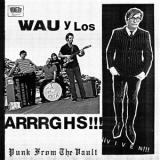
Valencia-based band Wau y Los Arrrghs!!! is made up of five punk rock hooligans as raw and real as chaos itself - led by one of the wildest frontmen around, Juanito Wau. Yes, there's garage rock here, no doubt - but you'll also find blasts of punk, rock 'n' roll, pop, and even a splash of surf. After many years unavailable, we are now delighted to reissue their second album "¡¡¡Viven!!!" (2009) featuring new artwork by Mik Baro. It includes their classic originals 'Copa, raya, paliza' and 'Viva Link Wray!!!' as well as a bunch of wild cover versions of Los Mockers, The Lyrics, The Troyes, The Hatfields, Jonah & The Whales_ The album was produced by Jorge Explosion (Dr. Explosion) and Mike Mariconda (Raunch Hands, Devil Dogs), and recorded at the celebrated Circo Perrotti Studios in Gijón. Please welcome again the undisputed kings of garage punk!
Following on from 2024's "Distant Landscapes EP" alongside Tensal, Amorphic returns (solo this time) to James Ruskin's Blueprint Records with a new ten-track album released digitally and as two four-track vinyl EPs released simultaneously.
Amorphic is a pseudonym of Scottish artist Vince Watson to explore more raw and hypnotic signatures. Launched in 2022, Amorphic has featured on labels such as Token, Symbolism and Modularz as well as the two labels Vince runs himself: Amorphic and Morph.
With almost 30 years in the industry, Vince has released over 1000 tracks, which has allowed him to work and gig with some of the very best in that time including Laurent Garnier, Richie Hawtin, Carl Craig and in this year, Vince will release an LP with Carl Cox on his label Awesome Soundwave. As a touring musician has been able to play at some of the world's best clubs as both Amorphic and Vince Watson, including a residency at Tresor Berlin, DC10 Ibiza with Carl Cox, Berghain and Womb Tokyo as well as being a current resident of 909 Festival in Amsterdam.
earth had been watched by the keepers of the secrets for millennia.
the human experiment had evolved into chaos.
the subjects had destroyed themselves and the planet they were gifted.
a few were taken, leaving a dying planet behind.
the rest of human history was deleted.
the gods sought a new order.
the year zero...
A record born of insurmountable joy and simultaneous profound loss; World Maker marks a time of great change for Psychonaut, both personally and musically, as the band burn away the philosophical narrative complexities of previous offerings with a searing, panoramic clarity that implores us to savour the beauty of the now as a means of leaving a legacy for the future. The traditional, three-piece line up of Belgian, psychedelic post-metal collective Psychonaut has long belied the compositional prowess, captivating narrative depth and crushing live presence of a band now operating at the forefront of forward-thinking, contemporary heavy music. Having sent a shockwave through the post-metal and prog scenes with their three times repressed Pelagic Records debut Unfold The God Man in 2020 before following it up with the transformative metaphysical complexities of 2022's Violate Consensus Reality, Psychonaut have played prestigious Belgian open-air festivals like Alcatraz, Rock Herk and Boomtown Festival as well as boutique events such as Soulcrusher, Roadburn Redux and A Colossal Weekend whilst sharing stages across Europe with the likes of Amenra, Brutus and Pelagic labelmates The Ocean and PG.Lost. The seed of World Maker took shape just as the campaign for Violate Consensus Reality came to a close, with the news that guitarist/vocalist Stefan De Graef was to become a father. This tilting of life's axis led De Graef, like most fathers-to-be, to re-assess what was really important. As such, the music he was inspired to write felt free of the band's previous philosophical and spiritual foundations and instead took the form of life lessons for his unborn son, a legacy of love in case something were ever to happen. This hopeful euphoria shines keenly throughout World Maker as an uncharacteristically optimistic warmth; from the reverberating Rhodes organ on the titular opening track and the meandering, free-jazz inspired guitar solo that introduces `Everything Else is Just The Weather' to elements of world music, electronica and the otherworldly voice of Dutch multi-instrumentalist and old friend Anthe Huybrechts (Anthe/Helion Creek) most notably on tracks like `Origins' which also features tabla, a pair of indian hand drums, as its propulsive heartbeat. Whilst Psychonaut's giant riffs, punishing polyrhythms and guttural vocal rage are more resplendent than ever, there is a wider dynamic spectrum to World Maker that sees the band proudly exploring their more delicate, intimate extremes as well as their most aggressive and abrasive. Not long after the birth of De Graef's son came the devastating news that both his own father and Psychonaut bassist/vocalist Thomas Michiels' father had been diagnosed with advanced cancers. Living day-to-day and torn between joy and grief, the band found themselves shedding the grand scope and world-shattering agenda of Violate Consensus Reality to focus on the here and now. Lead single `Endless Currents', the first full track on the album, explodes in a barrage of staccato guitar tapping but mellows to let the powerful, newly pared back lyrics ring out as a call to embrace the flow and follow joy. The song's final few words `Lead the way. / Soar. / Everlong.' double as both a greeting and a goodbye as the trio build their formidable post-metal might to a thunderous breaking point. Similarly, the pulsing, propellant `Stargazer', named so for De Graef's son being born in stargazer position, pairs delicate guitar motifs and folk-inflected optimism with huge and sprawling breakdowns as some of the band's most genre-pushing work to date; asking difficult but important questions of what happens next. It is `And You Came With Searing Light' though that most immediately exemplifies Psychonaut's redirected ambition on World Maker, as euphoria collides with blinding fury. The first track written for the album, `_Searing Light' is easily the most complex and initially wouldn't sound out of place on Violate Consensus Reality. Originally meant to be the new album's opening track; the decision to defer its impact, not to mention its compositional and dynamic gravity, speaks of a fundamental change to the band's very core. The words "Discover the world with wide eyes" recurring throughout speak as much to those having lost a part of their world as they do to those seeing it for the first time. Amidst such turbulent times, the band found strength and support within their Post-Metal community. The album was recorded and produced by the band alongside their longtime collaborator and close friend Chiaran Verheyden (Hippotraktor) with help and advice from Psychonaut's live engineer Victor, who will no doubt make this album sound just as awesome on stage. Even the artwork for World Maker was a family affair, being designed by close friend Sam Coussens of Belgian cosmic sludge metallers Pothamus. In the face of life's soaring highs and desolate lows, World Maker is direct and brave without sacrificing any of Psychonaut's raw power, creative innovation or inimitable musical depth. Where their previous full-length offerings have charted grand introspective courses through time and space, World Maker is breathtaking in its uncompromising clarity: a father singing to his newborn son as a son bids his own father farewell. FOR FANS OF Mastodon, Russian Circles, Tool, Gojira, The Ocean, Pelican, Hypno5e, Cult Of Luna, Amenra
out of Stock
Last delivered 11 months ago available to reorder, subject to availability
Mister Water Wet returns to Soda Gong with "Things Gone and Things Here Still," an album that radically expands the project’s purview while preserving the homespun warmth and oblique tactility that have long defined Iggy Romeu’s work. Where earlier records tilted toward the dusty swing of sample-based beatcraft or spectral minimalist jazz, here Romeu opens the frame to a more ensemble-minded approach, inviting a stellar cast of supporting musicians, including SG alumni Memotone and K. Freund, into the fold.
The result is an album that feels both broader and more intimate, with live instrumentation such as piano, strings, and reeds woven into MWW’s signature lattice of hand percussion, production sleights, and slippery time signatures. Acoustic and electronic textures bend toward each other like plants angling for the same light: bowed strings blur into vaporous pads, brushed drums scatter under riffing guitars, a horn phrase lingers in the same space as a cracked cassette loop.
A tension between decay and presence - the “things gone” and the “things here still” - runs throughout the record. At times, the music evokes a chamber session refracted through waterlogged tape; at others, it recalls the afterimage of a hip-hop instrumental slowed into an oneiric haze. In the world of MWW, memory functions less as nostalgia and more as a living fabric - mutable and resonant. "Things Gone and Things Here Still" finds Iggy Romeu at his most expansive, offering up a generous record of open spaces and porous boundaries.
out of Stock
Last delivered 11 months ago available to reorder, subject to availability
Most of you probably first heard about BAOBAB when they appeared on our PEACE CHANT compilation series (Vol.7).
BAOBAB was once described as "one of the most interesting rock-jazz groups on the Stuttgart scene". "Keine Nummer" was originally recorded and released in 1978. 44 years later the band came together in the studio to record an updated version which is exclusively available on this 45.
Limited to 333 hand-numbered copies!
out of Stock
Last delivered 11 months ago available to reorder, subject to availability
A decade after its release, A Fragile Geography returns transformed. This limited edition cassette accompanies the AFG10 anniversary reissue, offering an inspired re-envisioning of Rafael Anton Irisarri’s landmark compositions. Reworks presents distinctive readings of these pieces, with each artist leaving their personal mark on the material. The titles remain unchanged, with the sole exception of “Hiatus,” reborn here as “Ausencia.” Together, these reimaginings extend the emotional cartography of the album into new terrains.
KMRU reframes “Displacement” with expansive, glimmering layers that open into meditative ambient landscapes. Nairobi born and Berlin based, he is known for morphing field recordings into vivid aural experiences, often capturing the texture of footsteps, foliage, and distant city life and weaving them into contemplative soundscapes. In this version he introduces subtle new sounds, including stringlike synths that trace and heighten the piece’s emotional arc. The result invites close listening, offering enveloping tones where the organic and the synthetic gently collide and flow.
Penelope Trappes renders “Reprisal” as a voice-led invocation of the delicate and the intimate. Her wistful vocals bloom with fragile sorrow, rising over shimmering strands of strings to create a sound world at once sacred and shadowed. She is adept at channeling inherited grief into music that is transcendent and otherworldly. The interplay of her voice, the strings, and her use of space and depth draws those qualities into Irisarri’s orbit, imbuing “Reprisal” with the same spiritual weight and clarity that define her most powerful work.
Kevin Richard Martin (a.k.a. The Bug) transforms “Empire Systems” into a cavernous “Iced Mix,” driven by polyrhythmic double bass motifs and sculpted from subterranean pressure and negative space. Known for pushing sound to its physical limits, Martin brings the stark intensity of his dub and noise infused practice into Irisarri’s architecture. The track seethes with harmonic distortion and erupts in white noise rhythms, its brooding low end depth and icy reverberant textures amplifying the tension. Vulnerability and force are set in stark relief, as silences feel as heavy as the bursts of sound themselves. The result is a stark study in atmosphere, restraint and impact, reframed through Martin’s singular lens of sonic mass and low end intensity.
On Side B, Mabe Fratti opens with a cinematic, dreamlike, Lynchian reimagining of “Hiatus” in her native Spanish (“Ausencia”). She threads cello and voice so wondrously that her rendering feels at once hauntingly beautiful and disquieting. Emotionally charged melodies shift in unexpected directions, while her soft, intimate vocals hover above Irisarri’s brooding synth textures. Fratti’s gift for blending experimental and avant pop sensibilities with visceral, emotionally powerful expression shines resplendently here. She gives voice to Irisarri’s reflections on the passage of time and his growing desire to reconnect with his familial roots.
Abul Mogard stretches “Persistence” into a vast drone elegy. A master of patient sound sculpting, Mogard layers evolving waves of analog synths into a dense shroud that radiates its own internal light. Gradual surges of tone and subtle harmonic shifts emphasize the piece’s endurance and inevitability. Irisarri’s original composition, in Mogard's hands, becomes a rumination on time’s unrelenting flow. Melancholy and transcendence coexist in equal measure in this engulfing, cathartic rework.
William Basinski and Gary Thomas Wright close the cycle with a spectral version of “Secretly Wishing for Rain.” Basinski’s field recordings of Reseda rainfall and birdsong, which open and close the rework, add a personal touch and evoke the imagined sound of a grainy film reel flickering to life. The piece suspends Irisarri’s yearning for the Pacific Northwest, lodging it hazily between memory, place and an unreachable dream. It feels like a fading recollection, half forgotten and half felt. A final gesture that dissolves the album into vapor, leaving the listener adrift in its lingering afterglow.
Mastered with great care by Stephan Mathieu and featuring a remixed version of the original artwork by Daniel Castrejón, this edition refracts the language of the original through new prisms. Less a return than a passage, across time, across interpretation, into uncharted emotional realms.
out of Stock
Last delivered 11 months ago available to reorder, subject to availability
"Clouds In The Sky They Will Always Be There For Me", das vierte Album von Porridge Radio, wurde Anfang 2024 in Somerset vom langjährigen Big Thief- und Laura Marling-Tontechniker Dom Monks aufgenommen und ist ein Moment des Erwachsenwerdens, inspiriert von Burnout, der Musikindustrie, Herzschmerz und der zunehmenden Vertiefung der Bandleaderin Dana Margolin in ihr eigenes Handwerk als Künstlerin. Margolins rücksichtsloser, sich selbst hinterfragender Schreibstil wird auf dem gesamten Album durch die bisher ergreifendste Musik der Band ergänzt, die sich geduldig aufbaut und tragisch intensiv ist. "Alle Songs begannen als Gedichte, ich wollte mich selbst herausfordern", sagt Dana Margolin über das Werk, aus dem "Clouds In The Sky They Will Always Be There For Me" wurde. "In einem Song kann sich der Autor immer hinter den Tricks der Musik und altbekannten Techniken wie Wiederholungen verstecken. In einem Gedicht hingegen sind es nur Worte und das war's." "Vieles auf diesem Album handelt von einer frenetischen und verzweifelten Art von Liebe, es geht um den völligen Verlust meines Selbstbewusstseins in einer Beziehung und um den tiefen Rest von Unsicherheit und Schmerz, der eine neue Beziehung trübte." Lieder, die als Liebeslieder geschrieben wurden - wie "In A Dream I'm A Painting" - bekamen neue Bedeutungen, als Margolin die Lieder mit einer neuen Distanz betrachtete. "Es gab eine Menge Liebe und Verwirrung, alles durchsetzt mit Erschöpfung und Schmerz." Die Clouds-Sessions fanden in Frome statt, als der Winter zu Beginn des Jahres 2024 in den Frühling überging. "Es gab ein paar Zusammenbrüche", grinst Dana, eine faire Einschätzung der Aufnahme solch intimer und persönlicher Songs, "nach einigen Takes brach ich einfach auf dem Boden zusammen, so aufgebracht war ich." Es wurde ein Umfeld geschaffen, in dem Dana sich ausdrücken konnte und in dem sie gefördert wurde. "Wir hatten jeden Abend diese großen gemeinsamen Mahlzeiten", sagt sie, "es fühlte sich sehr eng und fürsorglich und warm und besonders an. Unser kleines Haus lag auf einem großen Hügel, ein Fluss floss hindurch, es war groß und hell und schön", erinnert sich Dana. Das Studio selbst war hell - voller strahlendem natürlichem Licht aus den großen Fenstern, ein Segen für Musiker, die an die abgeschottete Welt der meisten Aufnahmestudios gewöhnt sind, und zum ersten Mal konnten alle im selben Raum wie der Produzent aufnehmen. "Es fühlt sich an, als hätten wir zum ersten Mal etwas gemacht", erklärt sie und freut sich hörbar über das Album, "es hat etwas von unserer Freundschaft eingefangen und von der Art und Weise, wie wir gelernt haben, zusammen zu spielen. Ich liebe die Songs, ich liebe es, sie zu spielen, sie sind nicht alt geworden und es fühlt sich an, als wäre es etwas Besonderes." Eine Pause. "Es hat mich so viel gelehrt. Deinem Bauchgefühl zu folgen, auf deine Freunde und ihre Loyalität zu vertrauen, darauf zu vertrauen, dass du mit Leuten richtig kämpfen kannst. So will ich leben, so will ich Platten machen, denn Platten machen ist mein Leben, denn meine Arbeit ist mein Spiel, mein Job ist mein Leben. Alles ist in dieser Sache miteinander verbunden, und es gibt Wege darin, die mich nicht umbringen."
Grizzly Bear haben sich nie aufgelöst. In den sechs Jahren seit ihren letzten Auftritten haben sich die vier Mitglieder, die vor zwei Jahrzehnten als lose Freunde und sogar völlig Fremde zur Gruppe stießen – Chris Bear, Ed Droste, Daniel Rossen, Chris Taylor – anderen Dingen zugewandt. Sie haben andere Musik gemacht, andere Karrieren verfolgt, andere Familien gegründet und andere Leben jenseits dieser Band geführt. Und nun, zum ersten Mal seit 2019, kehren diese vier Musiker und Freunde zu Grizzly Bear zurück, um die Bande, die sie zu einem der fesselndsten und beliebtesten Acts dieses Jahrhunderts gemacht haben, auf die Probe zu stellen und zu sehen, wohin diese alten Verbindungen noch führen. Da sich Grizzly Bear nie aufgelöst haben, sind ihre ersten Auftritte seit sechs Jahren keine Reunion; sie sind Ankunft und Aufbruch zugleich, ihr nächstes Ziel noch unbekannt.
Diese Art von offenem Ansatz ist es schließlich, der Grizzly Bear noch immer zu einem der prägenden Acts dieses jungen Jahrhunderts macht. Vor zwanzig Jahren wandelten sie sich rasant von einem Lo-Fi-Songwriter-Projekt zu einer vollwertigen Band mit einem sofort einzigartigen Sound, unheimlichen Harmonien, die sich um Arrangements schmiegten, die den Glanz eines Kammerorchesters mit der Härte einer Rockband verbanden. Sie trugen dazu bei, die Möglichkeiten des Indie-Rock neu zu definieren, indem sie Üppigkeit mit Lockerheit, technische Exzellenz mit emotionaler Offenheit in Einklang brachten. Ihre musikalischen Spuren sind nach wie vor allgegenwärtig, Teile ihrer unorthodoxen Sicht auf Klang und Textur sind heute fester Bestandteil des musikalischen Erbes. Diese Songs im Jahr 2025 live zu hören, wird sich also weniger wie ein Händedruck mit der Vergangenheit anfühlen, als vielmehr wie das erste Mal, ihre Fingerabdrücke in der Gegenwart zu sehen.
Begleitet werden diese Live-Shows von Neuauflagen der Alben Yellow House, Veckatimest, Shields und Painted Ruins auf farbigem Vinyl.
Grizzly Bear haben sich nie aufgelöst. In den sechs Jahren seit ihren letzten Auftritten haben sich die vier Mitglieder, die vor zwei Jahrzehnten als lose Freunde und sogar völlig Fremde zur Gruppe stießen – Chris Bear, Ed Droste, Daniel Rossen, Chris Taylor – anderen Dingen zugewandt. Sie haben andere Musik gemacht, andere Karrieren verfolgt, andere Familien gegründet und andere Leben jenseits dieser Band geführt. Und nun, zum ersten Mal seit 2019, kehren diese vier Musiker und Freunde zu Grizzly Bear zurück, um die Bande, die sie zu einem der fesselndsten und beliebtesten Acts dieses Jahrhunderts gemacht haben, auf die Probe zu stellen und zu sehen, wohin diese alten Verbindungen noch führen. Da sich Grizzly Bear nie aufgelöst haben, sind ihre ersten Auftritte seit sechs Jahren keine Reunion; sie sind Ankunft und Aufbruch zugleich, ihr nächstes Ziel noch unbekannt.
Diese Art von offenem Ansatz ist es schließlich, der Grizzly Bear noch immer zu einem der prägenden Acts dieses jungen Jahrhunderts macht. Vor zwanzig Jahren wandelten sie sich rasant von einem Lo-Fi-Songwriter-Projekt zu einer vollwertigen Band mit einem sofort einzigartigen Sound, unheimlichen Harmonien, die sich um Arrangements schmiegten, die den Glanz eines Kammerorchesters mit der Härte einer Rockband verbanden. Sie trugen dazu bei, die Möglichkeiten des Indie-Rock neu zu definieren, indem sie Üppigkeit mit Lockerheit, technische Exzellenz mit emotionaler Offenheit in Einklang brachten. Ihre musikalischen Spuren sind nach wie vor allgegenwärtig, Teile ihrer unorthodoxen Sicht auf Klang und Textur sind heute fester Bestandteil des musikalischen Erbes. Diese Songs im Jahr 2025 live zu hören, wird sich also weniger wie ein Händedruck mit der Vergangenheit anfühlen, als vielmehr wie das erste Mal, ihre Fingerabdrücke in der Gegenwart zu sehen.
Begleitet werden diese Live-Shows von Neuauflagen der Alben Yellow House, Veckatimest, Shields und Painted Ruins auf farbigem Vinyl.
Grizzly Bear haben sich nie aufgelöst. In den sechs Jahren seit ihren letzten Auftritten haben sich die vier Mitglieder, die vor zwei Jahrzehnten als lose Freunde und sogar völlig Fremde zur Gruppe stießen – Chris Bear, Ed Droste, Daniel Rossen, Chris Taylor – anderen Dingen zugewandt. Sie haben andere Musik gemacht, andere Karrieren verfolgt, andere Familien gegründet und andere Leben jenseits dieser Band geführt. Und nun, zum ersten Mal seit 2019, kehren diese vier Musiker und Freunde zu Grizzly Bear zurück, um die Bande, die sie zu einem der fesselndsten und beliebtesten Acts dieses Jahrhunderts gemacht haben, auf die Probe zu stellen und zu sehen, wohin diese alten Verbindungen noch führen. Da sich Grizzly Bear nie aufgelöst haben, sind ihre ersten Auftritte seit sechs Jahren keine Reunion; sie sind Ankunft und Aufbruch zugleich, ihr nächstes Ziel noch unbekannt.
Diese Art von offenem Ansatz ist es schließlich, der Grizzly Bear noch immer zu einem der prägenden Acts dieses jungen Jahrhunderts macht. Vor zwanzig Jahren wandelten sie sich rasant von einem Lo-Fi-Songwriter-Projekt zu einer vollwertigen Band mit einem sofort einzigartigen Sound, unheimlichen Harmonien, die sich um Arrangements schmiegten, die den Glanz eines Kammerorchesters mit der Härte einer Rockband verbanden. Sie trugen dazu bei, die Möglichkeiten des Indie-Rock neu zu definieren, indem sie Üppigkeit mit Lockerheit, technische Exzellenz mit emotionaler Offenheit in Einklang brachten. Ihre musikalischen Spuren sind nach wie vor allgegenwärtig, Teile ihrer unorthodoxen Sicht auf Klang und Textur sind heute fester Bestandteil des musikalischen Erbes. Diese Songs im Jahr 2025 live zu hören, wird sich also weniger wie ein Händedruck mit der Vergangenheit anfühlen, als vielmehr wie das erste Mal, ihre Fingerabdrücke in der Gegenwart zu sehen.
Begleitet werden diese Live-Shows von Neuauflagen der Alben Yellow House, Veckatimest, Shields und Painted Ruins auf farbigem Vinyl.
Es sind acht Jahre vergangen, seit Montreals The Barr Brothers ein Album veröffentlicht haben. In dieser Zeit hat das Leben sie - persönlich wie beruflich - in neue Richtungen geführt und ihre Art, gemeinsam Musik zu machen, verändert. Ihr viertes Studioalbum Let it Hiss ist nicht einfach nur eine neue Sammlung von Songs. Es ist ein Dokument der Transformation. Die Entstehung dieses Albums markierte einen Wendepunkt: eine Phase der Reflexion, eine Auseinandersetzung mit Verletzlichkeit und eine Wiederverbindung zwischen den beiden Brüdern, die seit über drei Jahrzehnten Seite an Seite Musik machen.,Im Jahr 2022 standen wir an einem Wendepunkt", sagt Brad Barr, Gitarrist, Sänger und Haupt-Songwriter der Band. ,Es war klar, dass sich etwas ändern musste. Die wahre Geschichte dieses Albums ist die Geschichte dieser Veränderung - und von allem, was danach kam.",Let it Hiss ist das, was passiert, wenn man aufhört, so zu tun, als wäre alles in Ordnung - und endlich wirklich hinhört", sagt Andrew.Das Album beginnt im Kleinen: eine winzige mexikanische Gitarre, der sanfte Puls eines Klaviers, ein minimalistischer Rhythmus - und eine Stimme, die sowohl Hingabe als auch Stärke vermittelt. ,Take it from me", singt Brad - nicht als Befehl, sondern als Geständnis. Schon ab diesem ersten Moment lädt das Album in einen Raum ein, in dem Makel nicht herausgeschnitten, sondern verstärkt und gefeiert werden. Es ist ein kraftvoller Einstieg in ein Album, das auf Ehrlichkeit, Wiederentdeckung und Vertrauen beruht.Für die Brüder wurde das Aufnehmen zu einem Spiegel. Der Prozess begann nicht mit Klang - er begann mit Wahrheit. Sie setzten sich nicht nur mit kreativen Blockaden auseinander, sondern auch mit persönlichen: alten Mustern, unausgesprochenen Spannungen, Trauer, Wachstum. Durch all das fanden sie wieder zu einem Rhythmus - nicht durch Perfektion, sondern durch Erlaubnis.Brad und Andrew machen schon Musik zusammen, seit sie Kinder sind - zuerst in der sich ständig wandelnden Rockband The Slip, später als The Barr Brothers, wo sie amerikanische Roots-Musik mit experimentellen Klangtexturen zu etwas ganz Eigenem verbanden. Ihr Ruf für musikalische Raffinesse und emotionale Tiefe brachte ihnen weltweit Fans - und Anerkennung von musikalischen Größen.Der Titel des Albums ist zugleich ein Leitbild. ,Es fühlte sich einfach richtig an", sagt Andrew. ,Das Rauschen drin zu lassen. Das Unbehagen, die Unvollkommenheit, den Kampf. Wir haben aufgehört, alles sauber machen zu wollen. Und genau da fing die Musik wieder an zu atmen. Und Spaß zu machen."Tatsächlich steht Let it Hiss stärker als frühere Alben der Barr Brothers für eine freudvolle Ungezwungenheit - hörbar etwa im Roadtrip-Hymnus "Run Right Into It" (mit Elizabeth Powell von Land of Talk) oder im verspielten Garagenband-Reggae von "She Doesn't Sleep With the Covers On". Doch das Album lässt die intime Erzählweise, die das Markenzeichen der Barr Brothers ist, keineswegs hinter sich: "English Harbour" ist eine wunderschöne Folk-Hymne, bereichert durch die Harmonien von Jim James (My Morning Jacket), während "Moonbeam" eine opulente Soul-Serenade mit Streichern ist - veredelt durch den frankophonen Gastgesang der quebecischen Artpop-Künstlerin Klô Pelgag.Die Songs auf Let it Hiss besitzen eine zeitlose Qualität - besonders spürbar in Stücken wie "Naturally", das leise an die Ära klassischer Songschreiber erinnert, in der Melodie und Botschaft untrennbar miteinander verbunden waren. Es ist Musik, die dem Hörer vertraut und sich nach und nach entfaltet - mit Arrangements, die Zurückhaltung und Ambition in Einklang bringen. Im Zentrum steht vielleicht der Song "Owning Up to Everyone", der den Geist des Albums im Kleinen einfängt. ,Dieser Song hat etwas in uns aufgebrochen", sagt Andrew. ,Er fühlte sich wie ein Durchbruch an."Doch all die musikalische Freiheit und emotionale Aufwühlung, die sich durch Let it Hiss zieht, bereitet nicht auf den letzten Song vor: "Upsetter", ein schweißgetränkter, punkgetriebener Rock'n'Soul-Explosion, gekrönt von einem absolut wahnsinnigen Gitarrensolo. Es ist schlicht der wildeste Song, den die Barrs je aufgenommen haben - ein Song, der die Let it Hiss-Philosophie so weit ins Rote treibt, dass er den VU-Meter fast sprengt. ,Ich dachte mir: ,Na ja, der wird es eh nicht aufs Album schaffen`, weil er vielleicht für viele unserer Hörer unerwartet kommt", gibt Brad zu. ,Aber ich glaube, unsere Hörer schätzen es, wenn wir einfach wir selbst sind - und dazu gehört eben auch sowas."Brad und Andrew produzierten Let it Hiss selbst, hauptsächlich zu zweit in ihrem Studio in Montreal. Um die rohe Direktheit und Komplexität des Albums einzufangen, arbeiteten sie mit Mix-Ingenieur Jon Low (The National, Taylor Swift, Bon Iver). Sie luden enge Freunde aus ihrer musikalischen Community ein, ihre Stimmen, Instrumente und Texturen beizusteuern, wenn es die Songs verlangten - Kollaborationen, die sich weniger wie Features, sondern mehr wie natürliche Erweiterungen der Musik anfühlen. Viele dieser Beziehungen entstanden über Jahre gemeinsamer Bühnen, langer Nächte im Studio und einer gemeinsamen Hingabe an das Handwerk. So ist Let it Hiss zugleich das persönlichste und das kollaborativste Album, das sie je gemacht haben.Let it Hiss will nichts auflösen - es will offenlegen. Es lädt die Hörer ein, genau hinzuhören - auf das Rauschen, das Gewicht, das Staunen. Während die Barr Brothers ihren Weg fortsetzen, ist eines klar: Sie haben einander wiedergefunden - und darüber auch ihre Musik.And the rest is hiss-tory
Mit dem weltweiten Erfolg von Natural Brown Prom Queen im Rücken legt Sudan Archives noch eine Schippe drauf: Aus einer hands-on DIY-Künstlerin ist eine ausführende Produzentin geworden.
Aufgenommen in Los Angeles, Chicago und Detroit, hat sich die innovative US-amerikanische Geigerin, Sängerin, Songwriterin und Produzentin mit THE BPM - ihrem dritten und bislang wohl ehrgeizigsten Album – ganz der Clubmusik verschrieben. Nach wie vor geprägt von ihrem Signature Instrument, der Geige, präsentiert sich die Musik auf The BPM tanzbarer denn je.
Mit dem weltweiten Erfolg von Natural Brown Prom Queen im Rücken legt Sudan Archives noch eine Schippe drauf: Aus einer hands-on DIY-Künstlerin ist eine ausführende Produzentin geworden.
Aufgenommen in Los Angeles, Chicago und Detroit, hat sich die innovative US-amerikanische Geigerin, Sängerin, Songwriterin und Produzentin mit THE BPM - ihrem dritten und bislang wohl ehrgeizigsten Album – ganz der Clubmusik verschrieben. Nach wie vor geprägt von ihrem Signature Instrument, der Geige, präsentiert sich die Musik auf The BPM tanzbarer denn je.
Jubiläums-Ausgabe: Neu abgemischt und remastered. Enthält den neuen Song "Glass Houses". Mit neuem Artwork, kommt in O-Card-Schuber. Strung Out feiern im Jahr 2025 zwei wichtige Meilensteine: ihr 35-jähriges Bandjubiläum und das 20-jährige Jubiläum ihres bahnbrechenden Albums ,Exile in Oblivion". Dieses Album, das weithin als unverzichtbarer Punk-Hardcore-Klassiker gilt, wurde zu diesem Anlass neu abgemischt und remastered. Zur Feier des Tages hat die Band mit Hilfe von Kyle Black und Rob Ramos "Glass Houses" fertiggestellt, einen unvollendeten Song aus den ursprünglichen Aufnahmesessions. Exile in Oblivion zeigt Strung Out's charakteristische Mischung aus melodischem Punk, Hardcore und Metal-Elementen, die jetzt besser klingt als je zuvor. Während frühere Alben ihr technisches Können andeuteten, zeichnet sich Exile in Oblivion durch disziplinierte Gitarrenarbeit und schnelles Schlagzeugspiel aus, das immer dem Kern des Songs dient. Das Album wurde durchweg für sein kraftvolles Songwriting, die komplexe Musik und den dunkleren, aggressiveren Ton gelobt und festigte seinen Ruf als bedeutende Veröffentlichung sowohl in der Diskografie der Band als auch in der breiteren Melodic Punk/Hardcore-Szene. Indie-Handel exklusives Red & Yellow Swirl Vinyl!
Developed over three years across residencies, tours, and periods of deep listening, “Your Whistle Tells of Landscape” finds Australian sound artist Alexandra Spence continuing her investigations into the perceptual entanglements of sound, place, memory, and imagination. Like much of the artist’s work, it unfolds at the liminal edge between the real and the imagined — between what is heard and what is remembered.
Composed from a constellation of materials gathered across sites and seasons — snowscapes recorded in Vancouver, insect choruses from a Sydney backyard, ceramic fragments unearthed while mudlarking with tinysound — it renders an intimate cartography of experience: one shaped equally by ecological resonance and internal drift. Each piece traces a kind of imaginary geography, where sonic ephemera become proxies for topography, weather, or myth.
The album is informed by time spent at EMS (Stockholm) and MESS (Melbourne), where Spence deepened her engagement with microtonality and tuned feedback systems, and by dialogues with sympathetic artists such as Tashi Wada and Patrick Farmer. Sound materials were sourced from Serge Modular systems, a custom lyre built by Tim Wall, amplified objects, handmade electronics, and Spence’s own field recordings captured within rockpools, beneath sand, and among a flock of sheep in the French Pyrenees. On “Magenta,” a collaboration with Delphine Dora, the domestic and mythic intertwine, as layers of voice, environmental recordings, and Halldorophone feedback drift in and out of one another like overlapping weather systems.
Despite its diverse material palette, the album resists spectacle or accumulation. Instead, it moves with a quiet sense of continuity and a rich interiority — less a sequence of compositions than a set of situated attunements. Across its duration, sounds seem to murmur, glint, or hover right at the edge of presence, invoking a listening practice that is as much about orientation as it is about reception. These are pieces not simply about place, but of place — etched with the grains of time, vibration, and breath.
Multi-rhythmic harmonies from the backyard! Alive and free improvisations with percussion, synthetic, woodwind and string instruments. Comes with handmade cover!
Recorded by GUU, Berlin 2024.
Mastered by CGN Wizard.
Co-produced by Tax Free Records, TRjj Compiler, iRiAi Verlag, El Muelle 1931 and All Night Flight.
out of Stock
Last delivered 11 months ago available to reorder, subject to availability
Clear Vinyl. Mit ihrem Debüt The Empty Space Between A Seamount And Shock Headed Julia hinterließen The Black Cat's Eye 2023 ein bemerkenswertes Echo in der Szene - ein energetisches und atmosphärisches Werk, das Psychedelic- und Postrock-Elemente auf einzigartige Weise vereinte und schnell vergriffen war. Nun, zweieinhalb Jahre später, präsentiert das Frankfurter Quintett sein neues Album Decrypting Dreams Of Weird Animals And Strange Objects. Auch diesmal lotet die Band die Grenzbereiche zwischen Psychedelic-, Kraut- und Post-Rock aus. Die Musik oszilliert zwischen hypnotischem Drive, verträumten Gitarrenflächen und dynamischen Spannungsbögen. Das Album umfasst sechs Songs, deren Spannweite von fünf- bis zehnminütigen Klangreisen reicht. Neu ist, dass diesmal zwei Bandmitglieder Kompositionen beisteuerten: Neben Gitarrist und Bandgründer Christian Blaser stammt die Hälfte des Materials von Bassist Jens Cappel. Sein kraftvoller, direkter Stil ergänzt Blasers atmosphärischen Ansatz ideal. Blaser: ,Auf dem Debütalbum stammten alle Stücke von mir. Als Gründer der Band lag mein Fokus zunächst darauf, eine musikalische Vision und Richtung vorzugeben. Jens war zu diesem Zeitpunkt noch nicht so in die kreativen Prozesse eingebunden, obwohl er ein außerordentlich talentierter und umtriebiger Musiker ist. Er veröffentlicht regelmäßig großartige neue Musik auf den Bandcamp-Seiten seiner eigenen Projekte, zum Beispiel The Black Black Paint. Als es dann an das Schreiben neuer Songs für das zweite Album ging, brachte Jens einige wirklich tolle Demos mit ein." Stilistisch verbindet das Album, wie schon der Vorgänger, klassische 70er-Einflüsse mit zeitgenössischer Rockmusik - man hört Anklänge an Can, Motorpsycho, Neu!, Indie- und Stonerrock, aber auch an David Gilmours Gitarrenästhetik. Die Musik ist instrumental, einzig im finalen Stück ,The Magic Balloon" übernimmt Jens Cappel den Gesang. Ähnlich rätselhaft wie bei der ersten Platte klingt der Albumtitel: Decrypting Dreams Of Weird Animals And Strange Objects. Blaser erklärt: ,Der Titel ist inspiriert von einem faszinierenden Aspekt der US-amerikanischen TV-Serie Westworld. Dort werden humanoiden Robotern Gefühle und Träume einprogrammiert. Doch weil diese Androiden dadurch immer menschlicher werden, geraten sie außer Kontrolle - die Programmierer suchen daraufhin den Fehler in den von ihnen geschriebenen Quellcodes, analysieren die künstlichen Gefühle, Gedanken und Träume mithilfe ihrer Computerprogramme. Übertragen auf unsere Realität ist der Titel durchaus ironisch gemeint. Unsere moderne Technik vermittelt den Eindruck, wir könnten jeden Bereich unseres Lebens vollständig steuern. Selbstoptimierung und die Kapitalisierung des eigenen Ichs werden zum obersten Prinzip. Eine trügerische Illusion, denn wir sind nur winzige Teile eines größeren, für uns unergründlichen Ganzen. Vor diesem Hintergrund stellt sich die Frage: Was kann Kunst zu unserer Wahrnehmung der Welt beitragen? Welche Bedeutung hat es, sich mit musikalischen Mitteln auszudrücken? Durch Technik, Mathematik, Physik und reine Vernunft kommen wir dem Wunder des Lebens und dem Sinn unserer Existenz nicht wirklich näher. Was uns bleibt, ist das Ritual, die Beschwörung, die Ekstase. Musik, Tanz, Malerei, Geschichten - sie offenbaren für kurze Momente den wahren Kern des Lebens, richten unser Verhältnis dazu neu aus und verbinden uns mit dem Universum." Aufgenommen hat die Band wieder im Tonstudio Bieber in Offenbach am Main. Oli Rüger, Studiobetreiber und selbst Musiker, hat langjährige Erfahrung mit dem Aufnehmen von Gitarrenbands. Innerhalb von drei Tagen spielte die Band die Basic Tracks live ein, anschließend ergänzten sie diese durch Overdubs. Rüger war auch als Co-Produzent beteiligt. Cappel: ,Oli hat das richtige Händchen für die perfekte Balance zwischen rohen, heftigen und filigranen Sounds, ohne gleichzeitig den Blick für das große Ganze zu verlieren." Das Werk wurde final von Krautrock-Legende Eroc gemastert - eine passende Wahl für eine Band, die sich nicht nur als Erben der 70er sieht, sondern diese Tradition aktiv in die Gegenwart weiterdenkt. Das monochrome Cover-Artwork unterstreicht eindrucksvoll die dunkle Atmosphäre der Musik. Es verdeutlicht den konzeptionellen Ansatz der Band, Musik nicht nur als Klang, sondern als Raum, Konzept und visionäre Erzählform zu begreifen. Das Titelbild - eine scheinbar endlose Spirale, Symbol für DNA-Strukturen und Ewigkeit - wurde vom italienischen Grafiker Daniele Stochino entworfen. Die Innenseite des Gatefolds verbindet dieses Motiv mit einer Illustration des in Berlin lebenden Grafikers und Musikers Max Emil Hurlebaus. Durch farbige Akzente eröffnet sie kontrastreich neue Perspektiven.
Fiddlehead's debut LP Springtime and Blind is an exploration of grief both introspective and through the insight of others. Following the release of their Out of the Bloom EP on Lockin Out Records, the Boston-based band have created a debut LP that shares an anguishing, relatable story of love and loss through the catharsis of spirited, loud indie rock. Consisting of guitarist Alex Henery (also of Basement), vocalist Patrick Flynn and drummer Shawn Costa (both of Have Heart), Fiddlehead explore musical styles different from their other projects while bringing a familiar energetic and emotional core to the collaboration. Springtime and Blind stemmed from Pat's loss of his father. Flynn looks at how his mother coped with the situation- losing her spouse, her center of gravity -writing the lyrics as an emotional catharsis for both of them. While the process of writing and recording helped Flynn cope with his personal loss there's no doubt it carries a universal message that can help ease others' loneliness. A contrast to itself, Springtime and Blind is a multidimensional and relatable journey through its cathartic message and spirited instrumentals.
Die erste Zusammenarbeit zwischen dem japanischen Noise-Titan Masami Akita, alias Merzbow, dem legendären brasilianischen Schlagzeuger und Produzenten Iggor Cavalera und dem zukunftsorientierten italienischen Gitarristen und Sounddesigner Eraldo Bernocchi, ,Nocturnal Rainforest", schafft eine Klanglandschaft, die fast überwältigend dicht und verwirrend ist, aber niemals aggressiv oder chaotisch. Es ist ein vollständig immersives Erlebnis, das die jahrelange Arbeit des Trios im Bereich der extremen experimentellen Musik neu kontextualisiert, indem es sich auf Textur, Atmosphäre und sensorische Überlastung konzentriert. Der Noise selbst wird verwendet, um ein raffiniertes Maß an Konzentration zu provozieren; ,Nocturnal Rainforest" ist auf seine eigene Weise meditativ und umhüllt die Zuhörer mit Wellen von Verzerrungen, phantasmatischen, ungemessenen Rhythmen und verwirrenden, bearbeiteten Feldaufnahmen, aber es ist nicht für passives Hören gedacht. Entstanden durch eine Fusion von maßgeschneiderten Techniken, die das Trio seit Jahrzehnten entwickelt, existiert es in einer rohen und mystifizierenden Grenzzone zwischen dem organischen Bereich und der digitalen Welt - einem Ort, der zu vertraut ist, um ignoriert zu werden. Als einer der bekanntesten und produktivsten Noise-Künstler der Welt hat Akita vielbeachtete, genreprägende Alben auf so unterschiedlichen Labels wie Relapse, Important Records, Tzadik, Cold Spring und Soleilmoon veröffentlicht und mit einer Vielzahl von Künstlern zusammengearbeitet, von Keiji Haino und Mika Patton bis hin zu Melt-Banana und Boris. Seit 1979 hat er über 500 Merzbow-Alben veröffentlicht, darunter das Tape-Experiment ,Pornoise/1kg Vol.1" von 1984, das bahnbrechende Noise-Wall-Album ,Pulse Demon" von 1996 und das dubartige ,Merzbuddha" von 2005. Cavalera ist vor allem als Mitbegründer der brasilianischen Metal-Band Sepultura bekannt. Seit er die Band 2006 verlassen hat, beschäftigt er sich intensiv mit experimenteller Underground-Musik und arbeitet mit Künstlern wie Laima Leyton, Ninos Du Brasil, Raven Chacon, Linekraft, Petbrick, Pig Destroyer, Soulwax, Dwid Hellion, Shane Embury und anderen zusammen. Bernocchi begann seine Karriere in den 70er Jahren in verschiedenen Punkbands und wurde in den 80er Jahren bekannt, als er das postindustrielle Kollektiv Sigillum S mitbegründete und Kontakte knüpfte, die sich über die gesamte globale Underground-Szene erstreckten. Als aktives Mitglied der einflussreichen Illbient-Bewegung arbeitete er mit einigen der wichtigsten Persönlichkeiten des Genres wie Spectre, Bill Laswell und DJ Olive zusammen und nahm für WordSound sowie das Kult-Hip-Hop-Label Rawkus auf. Bernocchi hat seine innovativen Aktivitäten fortgesetzt, indem er als SIMM mit dem Grammy-Gewinner Grime MC Flowdan zusammengearbeitet und mit Harold Budd, Robin Guthrie von den Cocteau Twins, Gaudi Nils Petter Molvaer, Hoshiko Yamane und vielen anderen aufgenommen hat. ,Nocturnal Rainforest" ist das Ergebnis der kontinuierlichen musikalischen Entwicklung jedes einzelnen Künstlers, angetrieben von extremer Musik, aber gemildert durch Deep-Listening-Techniken, die Präsenz statt Distanzierung erwarten. Auf ,Swietnenia Macrophylla" vermitteln suggestive, feuchte Klanglandschaften zunächst ein prekäres Gefühl der Sicherheit, das an den Rändern durch schnurrende Schwingungen, die die Fauna des Dschungels imitieren, verschwimmt. Und diese Ruhe wird schnell durch perkussive, nebelhornartige Verzerrungen unterbrochen, die das Ausmaß der Vision des Trios verdeutlichen. Es handelt sich nicht nur um rohen Lärm, die raueren Elemente werden durch subtile Wellen wogender Atmosphäre und schwüle Low-End-Drones unterbrochen, bevor der Track in eine Symphonie computergenerierter Stottergeräusche übergeht. Es gibt ein ständiges Hin und Her zwischen organischen und künstlichen Klängen - bevor man sich an den DAW-verfälschten Lärm gewöhnt hat, trüben collagierte Bandübersteuerungen und zerschnittene Verstärkerbrummen die Atmosphäre, verwirren gezielt die Sinne und verschleiern die Quellen. Dieser Gedanke wird in ,Ceiba Pentandra" fortgesetzt, wenn das Trio den wimmelnden Klängen des Dschungels mit knurrenden, surrenden Elektronikklängen und dichten Interferenzen folgt. Was als Vogelgesang und Insektenchor beginnt, verwandelt sich in eine Wand aus ohrenbetäubender, transzendenter Vollspektrum-Textur, die sich wie ein langsam voranschreitender Sturm über einer schattigen Wildnis auftut.
After Brummel 001, the baddest boys from Roffa town strike back with Brummel 002. This time, it's an EP from Nathan Homan that delves deeper into the sonic forest than the previous release. On the flip, you'll find a track made by Nathan Homan and Mathijs Smit over six years ago. Some say Nathan bought a 303 and went straight to Mathijs' place with the machine in hand. The afternoon passed, and Apoih was born.
out of Stock
Last delivered 8 months ago available to reorder, subject to availability
Um 60 Jahre dieser unglaublichen Reise zu feiern, nimmt „From The First Sting“ Sie mit auf eine Reise
durch die legendärsten und prägendsten Epochen der Band. Mit 31 handverlesenen Titeln präsentiert diese
Sammlung die jahrzehntelange Arbeit der Band, darunter zwei unveröffentlichte Songversionen.
Erhältlich als limitiertes Deluxe-Bookpack (mit zwei sparkling -LPs/2 CDs und einem 40-seitigen Buch),
als 2-LP-Gatefold auf schwarzem 180-g-Vinyl oder als 2-CD-Digi-Sleeve, wirft diese umfassende Veröffentlichung ein bleibendes Licht auf die Karriere dieser einflussreichen Meister des Genres.
Ein fiktiver Radiosender als Titel, der mit den politischen Verhältnissen im Osten abrechnet und ein Cover,
das Lindenberg auf dem roten Platz mit drei Balletttänzerinnen zeigt. Schwer vorzustellen, ein Album
mit noch höherer zeitgeschichtlicher Relevanz zu veröffentlichen. Dieses Jahr feiert Lindenbergs „Radio
Eriwahn“ 40. Jubiläum. Schon im Titel des 19. Studioalbums des Panikrockers: eine Anspielung auf den
frei erfundenen Sender Eriwan. In einer Kategorie politischer, teils unmoralischer Witze wird mit diesem
„Sender“ des Sowjetregimes hinter vorgehaltener Hand die Politik und der Alltag in der DDR verarbeitet.
Ein treffender Titel für ein Album, welches vom humorvollen Umgang mit der Ost-West-Teilung lebt. Die
A-Seite des Albums besteht aus Studiotiteln, die B-Seite sind Live-Aufnahmen aus Moskau, wo er anlässlich
der Weltfestspiele der Jugend und Studenten 1985 mehrfach auftrat. Ein heimlicher Triumpf für Lindenberg,
dem nach seinem ersten Konzert in der DDR seine DDR-Tour abgesagt wurde. Das Cover zeigt Udo auf
dem roten Platz, der für das Cover rot eingefärbt wurde, nachdem Lindenberg bei seinem ersten Besuch
enttäuscht war, dass der Platz nicht tatsächlich rot ist. Am 17.10.2025 erscheint die Jubiläumsversion von
„Radio Eriwahn“ in gelb-transparentem Vinyl in einer streng limitierten, handnummerierten Auflage von
nur 1.500 Exemplaren. Um das 40. Jubiläum gebührend zu feiern, wird das Album zudem auch als CD
neu aufgelegt.
"Across eleven cinematic tracks — each a melodic treasure and short film — Dienel probes: What does freedom look like when rooted in presence, not escape? “Joy, especially queer joy, is revolutionary,” they muse. “Even in the face of everything else, I wanted to show that happiness is still possible — and necessary.”
The record was brought to life with an impressive ensemble of collaborators: producer Adam Schatz (Japanese Breakfast, Neko Case), bassist Spencer Zahn, guitarists Carly Bond (Meernaa) and meg duffy (Hand Habits), drummer Max Jaffe, mixing engineer Jake Aron (Solange, Snail Mail), and mastering engineer Heba Kadry (Björk, Sade). Breaking from their usual DIY approach, Dienel embraced the power of the collective — an experiment in trust, connection, and openness.
Tonally influenced by My Own Private Idaho and widescreen pop, such as Born in the U.S.A., My Heart Is An Outlaw is a warm-hearted exploration. Can we love fully without being domesticated? Can we resist cultural scripts by choosing presence and community over self-erasure? As they put it, “The heart has a mind of its own…It’s the thing holding you back that you have to set free on your own time, in your own way.”
From the early days of White Hinterland to the lush orchestral pop of her solo work, Dienel has consistently bent and challenged the boundaries of independent music. My Heart Is An Outlaw continues that legacy — an unapologetic, joyous declaration of queer love and creative agency."
L.A.B return with a brand new remix album L.A.B In Dub. The ten-track album features an array of dubbed-out L.A.B remixes by Italian producer & remixer Paolo Baldini DubFiles. Eight tracks are also accompanied by a Live Mixdown Video. With the tracks hand picked from L.A.B"s catalogue, L.A.B In Dub see"s Baldini bring a new light with his dubbed-out versions. Combining a range of L.A.B"s eclectic sounds including funk-inspired tune "Fashion Dread" and reggae-pop fan favourite "Why Oh Why", the album sees Baldini bring his signature dub-filtered sound, approaching each track with with his analogue techniques inspired by Jamaican pioneers King Tubby and Scientist. Following on from multiple number one singles & albums, alongside a growing list of platinum sales & awards across New Zealand & Australia, this is the band"s first ever full length remix album in collaboration with Loop and German-based Dub-focused label Echo Beach, further cementing L.A.B as one of NZ"s hardest working acts. This is a project which has been in the works for a number of years, and has continued to expand as L.A.B"s catalogue has grown.
out of Stock
Last delivered 65 days ago available to reorder, subject to availability
STANDFIRST Titanic, the project spearheaded by Mabe Fratti and Hector Tosta (aka I. la Católica), return with a sumptuous and life-affirming new album.
In her sensational 1929 biography Tiger Woman, dancer and socialite Betty May claimed her ‘coster’s eye’ meant she liked to wear as many colours as possible. “Colours to me are like children to a loving mother. Each is my favourite, yet I can never bring myself to deny the others by preferring one.” May’s bold and inclusive strategy is one that manages to transfer itself, almost a century later, to Hagen, the new record by Titanic.
Many will know Titanic as the Mexico City-based brainchild of cellist and singer Mabe Fratti and multiinstrumentalist Hector Tosta who is now operating under the pseudonym, I. la Católica, (taken, rather unusually, from the name of the street the pair live on). With Hagen, and their previous release, Vidrio, (2023), the pair are creating a distinctive signature sound in modern alternative pop music. Nobody else sounds quite like them. Both records have an open hearted nature and simple, winning melodies that play off against a taste for drama, spectacular orchestration and a feeling of otherworldly mystery. Hagen is the more ambitious, sometimes more mystical effort. From the opening handclaps of ‘Lágrima del Sol’, (a wonderfully uptempo playground chant translating as a tear from the sun but, surely, not referencing the brand of pineapple wine?), the record dances its way through various mid-to-late-eighties inspirations, lush and widescreen passages of melancholy and vertiginous contrasts.
Mystery is often found in the simple but slightly odd song titles. English translations of various track titles give, ‘you swallowed the gum’, ‘leak’, ‘a tear from the sun’, ‘raising the trophy’ ‘digging dimensions’, ‘the owner’, ‘the decapitated hen’ and ‘the trap is exposed’. All denote striking images, metaphysical hints and emotional cues or simple, even childlike actions. Though Fratti and Tosta don’t reveal its provenance, the album’s title could even be a crafty play on words: the listener would be forgiven in thinking the moments of brash contrast and eyebrow raising theatricalism in the music constitute a musical nod to German punk chanteuse, Nina Hagen.
On Hagen, singer and cellist Mabe Fratti once again displays her brilliant knack of speaking to us directly. There is never the suspicion of her playing to the gallery, and the directness of many of the lyrics don’t allow it. Parallel to this, Fratti has an almost magical ability to give Hector Tosta’s melodies, and her and Tosta’s lyrics ones imbued with an insight and meaning that feels otherworldly. Tosta admitted it was “pretty wild to hear Mabe take the interpretations to a different place” and the listener can pick up on the delight Fratti takes in (literally) adding a voice to the many narratives.
Two examples can be shown here: ‘Gotera’ (Leak) uses harsh slashes of cello and tough, gunfire-like guitars and drums and multiple vocal lines that could be acting as a Greek chorus. They play off brilliantly against Fratti’s soft, slightly baleful vocal take that delivers lyrics such as: ‘nobody knows where the leak is / but I know where it is / they fight in front of the door and / nobody can go in’. With ‘La Gallina Degollada’ the somewhat blithe melody melody line, sung with what could be sarcastic brio by Fratti, plays against an itchting rhythm and rasping guitar part. The punch comes when you see that the song is about a chicken that has been decapitated and read lyrics such as: ‘I already saw it, it moved, the decapitated chicken’ / ‘could it be that I'm broken’ and ‘Two people hurt each other by thinking that they no longer agree’/ ‘Hours pass and the chicken represents what scares me’.
There may be death and fights to deal with, but there is also a quality of chirpy self-reliance about Hagen that is a key part of its nature. Like Betty May and her colourful outfits, Hagen’s sound often revels in its own sense of richness. Throughout, the record delivers vaulting string sections or glutinous guitar squeals that could, like the powerful, driving ‘Escarbo Dimensiones’ (Digging Dimensions) have come directly from a glossy 1980s TV series. Fratti sees this “glam sound” developed by Tosta on the aforementioned track and ‘Te Tragaste el Chicle’ (You Swallowed The Gum), as moments that were truly “revealing” for the album as a whole during its making.
What else? The thud and thump of ‘La Trampa Sale’ (The Trap is Exposed), and its sudden change of tempo and mood betrays a monstrously ambitious piece of music, the players almost greedily creating the sounds. Other moments are heart wrenching: ‘Libra’ ends on a poppy chord switch that cleverly ramps up the emotion inherent in the music’s notation. You could almost imagine a teenager in a bedroom forty years ago, rewinding the track over and over on a small, cheap cassette player, unable to get enough of that sugarsweet switch. Elsewhere, Oneohtrix Point Never adds stardust and an unearthly sense of space on the changeable, slightly moody meditation, ‘Pájaro de Fuego’ (Firebird). The record ends with ‘Alzando el Trofeo’ (Lifting the Trophy), a track that could soundtrack a state wedding, what with its beautiful cascading piano parts, a sugary vocal and short triumphal guitar riffs that add a rich patina to the overall sound. Fratti: “When I doubled those vocals on ‘Alzando el Trofeo’ I felt there was an epiphany happening, right at that moment.”
Making a good record is a team game. Tosta and Fratti recall seeing Randall from Circular Ruin Studios in NYC “tweak the drums in ‘Libra’ to make that amazing effect of the gated reverb”, or the shaping of ‘Gotera’, “when (recording engineer) Nate Salon added some synths to the track.” Drummer Eli Keszler, “an amazing and versatile player” had the songs down pat in a couple of days” and, according to Tosta, Oneohtrix Point Never “just came to one of the sessions and we hung out, and after all the recordings he and Nate were together in some studio and out of nowhere they sent us some beautiful tracks for ‘Pájaro de Fuego’! Fratti concurs. “He decided that he wanted to record because he was listening to the record (Nate works closely with him) and he really liked it! It was a total honour, indeed!”
Bedazzled by the playing, the skyscraping ambition in the arrangements and the giddy moments of contrast thrown up by Hagen, we could allow ourselves a brief moment of flippancy and state that Titanic’s new record is Yacht Rock meets Aeschylus, full-on. It’s also worth speculating that, in this hyper-sensitive, intemperate age, Titanic’s music has the power, however fleetingly, to heal hurts. Hagen is a brilliant showcase for a fresh and enriching form of pop music: displaying a magpie eye for what glints and plundering what has gone before.
Like Vidrio, Hagen was partially and additionally recorded at Fratti and Tosta’s house, aka Tinho Studios in Mexico City, as well as Golden Girl Studios & Circular Ruin Studios in New York City. Mixing was done by Santiago Parra in Pedro y el Lobo Studios, Mexico City and mastered by Rafael Anton Irisarri at Black Knoll Studios, New York City. The recording engineer was Nate Salon.
Hagen featured Mabe Fratti on cello, vocals & backing vocals, I. la Católica on guitar, keyboards, prepared piano, bass & backing vocals, drums by Eli Keszler and synths in ‘Pájaro de Fuego’ from Daniel Lopatin and Nate Salon.
All compositions on Hagen are written by I. la Católica, except ‘Escarbo Dimensiones’ & ‘Pájaro de Fuego’, which were composed by I. la Católica and Mabe Fratti. The record was produced by I. la Católica and co-produced by Nate Salon & Mabe Fratti. And all lyrics are by I. la Católica except ‘Escarbo Dimensiones’, ‘Gotera’, ‘Gallina degollada’ & ‘Pájaro de Fuego’, which were written by I. la Católica & Mabe Fratti.
out of Stock
Last delivered 12 months ago available to reorder, subject to availability
STANDFIRST Titanic, the project spearheaded by Mabe Fratti and Hector Tosta (aka I. la Católica), return with a sumptuous and life-affirming new album.
In her sensational 1929 biography Tiger Woman, dancer and socialite Betty May claimed her ‘coster’s eye’ meant she liked to wear as many colours as possible. “Colours to me are like children to a loving mother. Each is my favourite, yet I can never bring myself to deny the others by preferring one.” May’s bold and inclusive strategy is one that manages to transfer itself, almost a century later, to Hagen, the new record by Titanic.
Many will know Titanic as the Mexico City-based brainchild of cellist and singer Mabe Fratti and multiinstrumentalist Hector Tosta who is now operating under the pseudonym, I. la Católica, (taken, rather unusually, from the name of the street the pair live on). With Hagen, and their previous release, Vidrio, (2023), the pair are creating a distinctive signature sound in modern alternative pop music. Nobody else sounds quite like them. Both records have an open hearted nature and simple, winning melodies that play off against a taste for drama, spectacular orchestration and a feeling of otherworldly mystery. Hagen is the more ambitious, sometimes more mystical effort. From the opening handclaps of ‘Lágrima del Sol’, (a wonderfully uptempo playground chant translating as a tear from the sun but, surely, not referencing the brand of pineapple wine?), the record dances its way through various mid-to-late-eighties inspirations, lush and widescreen passages of melancholy and vertiginous contrasts.
Mystery is often found in the simple but slightly odd song titles. English translations of various track titles give, ‘you swallowed the gum’, ‘leak’, ‘a tear from the sun’, ‘raising the trophy’ ‘digging dimensions’, ‘the owner’, ‘the decapitated hen’ and ‘the trap is exposed’. All denote striking images, metaphysical hints and emotional cues or simple, even childlike actions. Though Fratti and Tosta don’t reveal its provenance, the album’s title could even be a crafty play on words: the listener would be forgiven in thinking the moments of brash contrast and eyebrow raising theatricalism in the music constitute a musical nod to German punk chanteuse, Nina Hagen.
On Hagen, singer and cellist Mabe Fratti once again displays her brilliant knack of speaking to us directly. There is never the suspicion of her playing to the gallery, and the directness of many of the lyrics don’t allow it. Parallel to this, Fratti has an almost magical ability to give Hector Tosta’s melodies, and her and Tosta’s lyrics ones imbued with an insight and meaning that feels otherworldly. Tosta admitted it was “pretty wild to hear Mabe take the interpretations to a different place” and the listener can pick up on the delight Fratti takes in (literally) adding a voice to the many narratives.
Two examples can be shown here: ‘Gotera’ (Leak) uses harsh slashes of cello and tough, gunfire-like guitars and drums and multiple vocal lines that could be acting as a Greek chorus. They play off brilliantly against Fratti’s soft, slightly baleful vocal take that delivers lyrics such as: ‘nobody knows where the leak is / but I know where it is / they fight in front of the door and / nobody can go in’. With ‘La Gallina Degollada’ the somewhat blithe melody melody line, sung with what could be sarcastic brio by Fratti, plays against an itchting rhythm and rasping guitar part. The punch comes when you see that the song is about a chicken that has been decapitated and read lyrics such as: ‘I already saw it, it moved, the decapitated chicken’ / ‘could it be that I'm broken’ and ‘Two people hurt each other by thinking that they no longer agree’/ ‘Hours pass and the chicken represents what scares me’.
There may be death and fights to deal with, but there is also a quality of chirpy self-reliance about Hagen that is a key part of its nature. Like Betty May and her colourful outfits, Hagen’s sound often revels in its own sense of richness. Throughout, the record delivers vaulting string sections or glutinous guitar squeals that could, like the powerful, driving ‘Escarbo Dimensiones’ (Digging Dimensions) have come directly from a glossy 1980s TV series. Fratti sees this “glam sound” developed by Tosta on the aforementioned track and ‘Te Tragaste el Chicle’ (You Swallowed The Gum), as moments that were truly “revealing” for the album as a whole during its making.
What else? The thud and thump of ‘La Trampa Sale’ (The Trap is Exposed), and its sudden change of tempo and mood betrays a monstrously ambitious piece of music, the players almost greedily creating the sounds. Other moments are heart wrenching: ‘Libra’ ends on a poppy chord switch that cleverly ramps up the emotion inherent in the music’s notation. You could almost imagine a teenager in a bedroom forty years ago, rewinding the track over and over on a small, cheap cassette player, unable to get enough of that sugarsweet switch. Elsewhere, Oneohtrix Point Never adds stardust and an unearthly sense of space on the changeable, slightly moody meditation, ‘Pájaro de Fuego’ (Firebird). The record ends with ‘Alzando el Trofeo’ (Lifting the Trophy), a track that could soundtrack a state wedding, what with its beautiful cascading piano parts, a sugary vocal and short triumphal guitar riffs that add a rich patina to the overall sound. Fratti: “When I doubled those vocals on ‘Alzando el Trofeo’ I felt there was an epiphany happening, right at that moment.”
Making a good record is a team game. Tosta and Fratti recall seeing Randall from Circular Ruin Studios in NYC “tweak the drums in ‘Libra’ to make that amazing effect of the gated reverb”, or the shaping of ‘Gotera’, “when (recording engineer) Nate Salon added some synths to the track.” Drummer Eli Keszler, “an amazing and versatile player” had the songs down pat in a couple of days” and, according to Tosta, Oneohtrix Point Never “just came to one of the sessions and we hung out, and after all the recordings he and Nate were together in some studio and out of nowhere they sent us some beautiful tracks for ‘Pájaro de Fuego’! Fratti concurs. “He decided that he wanted to record because he was listening to the record (Nate works closely with him) and he really liked it! It was a total honour, indeed!”
Bedazzled by the playing, the skyscraping ambition in the arrangements and the giddy moments of contrast thrown up by Hagen, we could allow ourselves a brief moment of flippancy and state that Titanic’s new record is Yacht Rock meets Aeschylus, full-on. It’s also worth speculating that, in this hyper-sensitive, intemperate age, Titanic’s music has the power, however fleetingly, to heal hurts. Hagen is a brilliant showcase for a fresh and enriching form of pop music: displaying a magpie eye for what glints and plundering what has gone before.
Like Vidrio, Hagen was partially and additionally recorded at Fratti and Tosta’s house, aka Tinho Studios in Mexico City, as well as Golden Girl Studios & Circular Ruin Studios in New York City. Mixing was done by Santiago Parra in Pedro y el Lobo Studios, Mexico City and mastered by Rafael Anton Irisarri at Black Knoll Studios, New York City. The recording engineer was Nate Salon.
Hagen featured Mabe Fratti on cello, vocals & backing vocals, I. la Católica on guitar, keyboards, prepared piano, bass & backing vocals, drums by Eli Keszler and synths in ‘Pájaro de Fuego’ from Daniel Lopatin and Nate Salon.
All compositions on Hagen are written by I. la Católica, except ‘Escarbo Dimensiones’ & ‘Pájaro de Fuego’, which were composed by I. la Católica and Mabe Fratti. The record was produced by I. la Católica and co-produced by Nate Salon & Mabe Fratti. And all lyrics are by I. la Católica except ‘Escarbo Dimensiones’, ‘Gotera’, ‘Gallina degollada’ & ‘Pájaro de Fuego’, which were written by I. la Católica & Mabe Fratti.
out of Stock
Last delivered 12 months ago available to reorder, subject to availability