
11

I Talk To Water, the fifth album for Kompakt by Danish producer Kölsch, is the artist’s most personal statement yet. While all the trademarks that make his music so popular and powerful are still present – lush, melodic techno; swooping, trance-like figures; sensuous, shivery texturology – I Talk To Water is also a deep and intimate rapprochement with family and history, a beautiful, finely detailed document of loss and memory, and a tracing of the long, unbroken thread of grief that runs through our lives once we’ve lost those we loved.
The emotional core of I Talk To Water, then, is a cache of recordings by Kölsch’s father, Patrick Reilly, who passed away in 2003 from brain cancer. With time rendered elastic by the pandemic and its associated lockdowns, its sudden, alienating shifts in everyday living, Kölsch found himself reflecting on his father’s passing and ongoing spiritual presence, thinking about how best to memorialise such a significant figure in his own life. Those recordings opened a gateway, of sorts, for Kölsch to move through – a way to bring past and present together and entwine them in a sensitive, poetic manner.
Kölsch’s father was a musician – “touring in the sixties and seventies, in the Middle East especially, he was doing the whole hippy trail, playing guitar, and wrote some songs over the years,” he recalls. “But all in all, he decided to focus on family rather than pursue a musical career.” Reilly kept playing and writing music over the years, though Kölsch hadn’t listened to the material for some time: “I’d never had the guts to listen to it, because I just felt too fragile listening to his voice. It’s such a tough thing to go through.”
During the pandemic, though, Kölsch listened through the fragmented body of work that his father had produced over the years. “I decided I’m gonna finally release my dad’s music twenty years after his passing,” he reflects. “This whole album is about the process of loss, and for me it’s been one of my main driving forces in my musical life, the whole emotional aspect of whatever I’ve done has been based in that feeling that he’s not there anymore.”
Recordings of Reilly appear on three songs across I Talk To Water. His guitars drift pensively across “Grape”, offering a lush thread of melody that Kölsch wraps with clicking, driftwood rhythms and droning, melancholy bass. “Tell Me” is a lovely three-minute art song, a sadly beautiful reflection, minimally adorned with gentle keys and a muted pulse. And on the closing “It Ends Where It Began”, Kölsch lets his father’s acoustic guitar take centre stage for a lament that’s unexpectedly folksy, a guitar soli dream, which Reilly originally recorded in 1996. “He actually recorded it for my first album that never came out,” Kölsch reveals, “and I had it sitting around forever. That is purely him.”
These three imagined collaborations between father and son are poised and delicate. But their relationship also marks the gorgeous music Kölsch has made across the rest of I Talk To Water, from the itchy yet lush “Pet Sound” (titled in tribute to one of Reilly’s favourite albums), the flickering synths and yearning vocal samples that slide through “Khenpo”, the ecstatic shuddering that marks “Only Get Better”, or “Implant”’s slow-motion pans and subtle reveals.
There’s also the title song, where Kölsch is joined by guest Perry Farrell (Jane’s Addiction, Porno For Pyros), singing a mantra for internal reflection: “I talk to water / Searching for myself / Looking for answers / Oceans of you.” Farrell’s appearance brings another timbre, another spirit to the album, aligning neatly with his recent interest in electronic music. “He was completely taken by this idea of talking to water,” Kölsch says, thinking about the ways we collectively lean towards the natural world as a comfort and a listener, a guide through mourning, a way to map out the terrain of the heart. This mapping is something that Kölsch has proven remarkably adept at through the years; dance music for both body and mind, but also both for the here-and-now, and for the hereafter.
“I Talk To Water”, das fünfte Album des dänischen Produzenten Kölsch für Kompakt, ist zweifellos das persönlichste Statement des Künstlers bislang. Während alle Markenzeichen, die seine Musik so beliebt und kraftvoll machen, immer noch präsent sind – üppige, melodische Techno-Tracks; schwebende, tranceartige Elemente; sinnliche, fiebrige Texturen – ist “I Talk To Water” auch eine tiefe und intime Annäherung an Familie und Geschichte. Es ist ein wunderschönes, fein ausgearbeitetes Dokument des Verlusts und der Erinnerung, und es verfolgt den langen, ungebrochenen Faden der Trauer, der durch unser Leben läuft, sobald wir diejenigen verloren haben, die wir liebten.
Der emotionale Kern von “I Talk To Water” besteht aus Aufnahmen von Kölschs Vater, Patrick Reilly, der 2003 an Hirnkrebs verstarb. Durch die Pandemie und ihre damit verbundenen Lockdowns, die plötzlichen, entfremdenden Veränderungen im Alltag, fand Kölsch sich in Gedanken an den Tod seines Vaters und seine fortwährende spirituelle Präsenz wieder. Er überlegte, wie er eine so bedeutende Figur in seinem eigenen Leben am besten verewigen könnte. Diese Aufnahmen öffneten ihm sozusagen ein Portal, um Vergangenheit und Gegenwart miteinander zu verbinden und sie auf sensible und poetische Weise zu verweben.
Kölschs Vater war Musiker – “er tourte in den sechziger und siebziger Jahren, vor allem im Nahen Osten, auf dem Hippie Trail, spielte Gitarre und schrieb im Laufe der Jahre einige Songs”, erinnert sich Kölsch. “Aber alles in allem entschied er sich, sich auf die Familie zu konzentrieren, anstatt eine musikalische Karriere zu verfolgen.” Reilly spielte und schrieb jedoch im Laufe der Jahre weiterhin Musik, obwohl Kölsch das Material lange Zeit nicht angehört hatte: “Ich hatte nie den Mut, es anzuhören, weil ich mich einfach zu zerbrechlich fühlte, seine Stimme anzuhören. Es ist so schwer, das durchzustehen.”
Während der Pandemie hörte sich Kölsch jedoch durch das fragmentierte Werk, das sein Vater im Laufe der Jahre produziert hatte. “Ich beschloss, die Musik meines Vaters zwanzig Jahre nach seinem Tod endlich zu veröffentlichen”, reflektiert er. “Dieses ganze Album handelt von dem Verlustprozess, welcher für mich generell eine der Hauptantriebskräfte in meinem musikalischen Leben ist. Der ganze emotionale Aspekt von dem, was ich getan habe, basierte auf dem Gefühl, dass er nicht mehr da ist.”
Auf “I Talk To Water” sind Aufnahmen von Reilly in drei Songs zu hören. Seine Gitarren ziehen nachdenklich durch “Grape”, bieten einen üppigen Melodiefaden, den Kölsch mit klickenden, treibenden Rhythmen und dröhnendem, melancholischem Bass umwickelt. “Tell Me” ist ein schönes dreiminütiges Kunstlied, eine traurig-schöne Reflexion, minimal geschmückt mit sanften Tasten und einem gedämpften Puls. Und auf dem Abschlusstrack “It Ends Where It Began” lässt Kölsch die akustische Gitarre seines Vaters im Mittelpunkt stehen, ein überraschend folkiger Klagegesang, den Reilly ursprünglich 1996 aufgenommen hatte. “Er hat es tatsächlich für mein erstes Album aufgenommen, das nie veröffentlicht wurde”, enthüllt Kölsch, “und ich hatte es ewig liegen.”
Diese drei erdachten Kollaborationen zwischen Vater und Sohn sind ausgewogen und zart. Aber ihre Beziehung prägt auch die wunderschöne Musik, die Kölsch im Rest von “I Talk To Water” geschaffen hat, angefangen bei dem nervösen, aber üppigen “Pet Sound” (benannt als Hommage an eines von Reillys Lieblingsalben), den flimmernden Synthesizern und sehnsüchtigen Vocal-Samples in “Khenpo”, den ekstatischen Erschütterungen in “Only Get Better” oder den langsamen Schwenks und subtilen Enthüllungen in “Implant”.
Es gibt auch den Titelsong, in dem Kölsch von Gast Perry Farrell (Jane’s Addiction, Porno For Pyros) begleitet wird, der ein Mantra für die innere Reflexion singt: “I talk to water / Searching for myself / Looking for answers / Oceans of you.” Farrells Auftritt bringt eine weitere Klangfarbe, einen weiteren Geist in das Album, der gut zu seinem jüngsten Interesse an elektronischer Musik passt. “Er war völlig fasziniert von der Idee, mit Wasser zu sprechen”, sagt Kölsch und denkt darüber nach, wie wir kollektiv zur Natur als Trost, Zuhörer, Führer durch die Trauer neigen, um die Gelände des Herzens zu kartieren. Diese Kartierung ist etwas, in dem Kölsch im Laufe der Jahre erstaunlich geschickt war; Tanzmusik für Körper und Geist, sowohl für das Hier und Jetzt, als auch für das Leben danach.
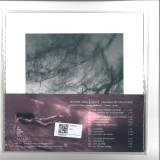
'After a first album as a duo released on Okraina Records: "Le Corps Défendant", Delphine Dora and Mocke invite us to join them again in listening to a new album. We slip into it as if in a dream, the music carries us away with its floating images.
Heard before on a handful of disturbingly beautiful solo albums and in collaborations such as Midget!, Arlt, Chevalrex, Mohamed Lamouri, Mocke (Dominique Dépret's nom de plume) is a subtle and inventive guitarist, who draws melancholic arpeggios, with a beautiful languor, that walk the line between tensions and tears. Delphine Dora has been heard with Roxane Métayer, Sophie Cooper, Andrew Chalk, Jackie McDowell, Helena Espvall, Valentina Magaletti ... meeting in a moment of improvisation, a solitary sincopated voice blooming between the black and white keys of her piano, tuning betwist these keys, or at other times in the gap of the right note. Here improvisation feeds on melody, or is it the other way round?
Recorded in an old church in the village of Mauzun in the Puy-de-Dôme, by Cyril Harrison, "L'invisible est multiforme" is an invitation to join them, to let these abstract songs erase our obsessive thoughts of the day, to open ourselves to the vibrant poetry of the air and the evening, to finally forget ourselves. Each note played by these four intertwined hands is like a slight break in the fabric of time, sliding one over the other, reminding us of mortality and its beauty. Ritornellas flow out of mechanical clocks, fragile, taking care not to hurt the silence. Both seek to dig and open up new paths to enrich their duet, to open up imaginary landscapes. Sometimes the guitar cuts through the fabric of an organ, fractures the song, just as the rain erases a landscape, redrawing it. But very quickly, both of them continue to follow this new path, improvising what will serve as a framework, a perspective, a language. There is a kind of praise for slowness in this "invisible", a desire to hold back the song, not to let it slip away, to let the listener's ear enter its course, to share the last note, its illumination. Each of these thirteen short sound pieces merge into a common colour, a vibration close to the different tonalities, which inter-penetrate, like a cubist painting. Words cannot take away the mystery of this record, words can only fail to describe the music, you must hear it.'
- Michel Henritzi

The Bladehouse crew is back with Bladhouse IV, offering another slice of the good stuff. Four differently styled out tools spanning from stripped house to peak-time groove and the occasional minimal bleeper on the B Side. Get your hands on this versatile dance-floor weapon as long as it‘s stocked. As Always: No Names - Let it Rip
BHO004 starts things off with a groovy, intuitive vibe on A1. A bumping Bassline dives Deep into hypnotic and subtle chord layers and a thriving shaky beat, perfect for open spaces and creating a lifted atmosphere.
A2 is a hidden stomper. Techy drum loops blend with dubbed-out pad shots, crafting a dark and moody rhythm that builds up to a climax, creating moments of anticipation and release.
The B Side is opened up by glitchy and gritty textures that evolve into a warm body of soothing groovy minimal with an intimate ambivalence. Use this to hypnotize crowds of any form and size.
B2 wraps things up with one more perfectly crafted mood swinger. Repeated percussions come together with a deep pad, gradually clearing up and welcoming mind-bending plucks and bleeps when the main theme kicks in. It creates a moody and meditative vibe with plenty of drive to keep you moving.

Heavenly Recordings release the next two volumes in their series of remixed classics and unreleased versions. ‘Heavenly Remixes 7 & 8’ sees the label going back into the archive, as well as picking off some more recent remixes, and both albums primarily feature either previously unreleased versions or re-workings available for the first time on vinyl and CD.
Heavenly have always seen immense value in the remix, a value way beyond what it might bring commercially. Since their first release in 1990 (where Andrew Weatherall overhauled a one-off single by club kids Sly and Lovechild) Heavenly remixes have been carefully curated and treated as a key part of the A&R process. It’s an opportunity to view an artist through a different prism, to play out a musical ‘what if’ scenario. It’s the kind of exploration that’s happened consistently through the thirty plus years the label has released music.
The ‘Heavenly remixes’ series continues to showcase the very best remixes, versions, meditations, re-rubs and dubs from all around the world of artists right across the roster of the country’s most exciting record label. In most cases, the albums offer the first physical release for a remix, elevating them from streaming playlists to their rightful, spiritual home on super heavy vinyl (or shiny, super-packed compact disc).
‘Heavenly remixes 7’ heads to Belfast, where David Holmes - a producer who first appeared on Heavenly in 1994 amping up the acid on Saint Etienne’s ‘Like A Motorway’ - appears as solo artist and as one third of Unloved, who get a lift right to the heart of a Vauxhall sweatbox by Horse Meat Disco. It draws a line between Amsterdam and Frankfurt as Ludwig A.F. amps up the electronics on Pip Blom’s ‘Keep It Together’. It stops off in a south London studio where super producer Dan Carey plays the desk with Toy, then relocates LA psych rock band Fever The Ghost to an Ibizan shoreline as the sun sets on the horizon. It cements Sheffield’s reputation as the home of modern British techno with the return of true originators Forgemasters. And it pitches up in front of a renegade soundsystem late night at Glastonbury as Erol Alkan’s mighty rework of Con Man gets its third rewind of the night.
‘Heavenly remixes 8’ opens with Space Afrika’s lush, ambient reimagining of the Orielles’ ‘BEAM/S’ before Justin Robertson stretches Amber Arcades’ ‘Turning Light’ into eight minutes of electronic dub. Elsewhere, Baxter Dury’s peerless ‘Miami’ becomes a string-laden electro skank in the hands of French producer Pilooski; Edinburgh’s bedroom techno genius Eyes of Others’ ‘Safehouse’ turns into an East End bathhouse courtesy of disco deviants Decius; Ashley Beedle’s Black Science Orchestra turns Unloved’s heartworn torch song into seven minutes of glimmering dreamlike percussive house and Katy J. Pearson’s freak flag is flown high thanks to The Umlauts’ throbbing filtered electro mix. It ends similarly to how it began as TONE takes
Fran Lobo’s ‘All I Want’ on a gorgeous slow motion spacewalk.

The wax is hot. The tunes are massive. Oath’s sub-label, Last Year at Marienbad, dispenses a foursome of punchy house tracks for its fifth release, lovingly crafted by some of the genre’s finest producers.
‘The Way We Flow’ by Sam Paradise pairs detuned, lo-fi samples with thumping kicks, and muffled drums. Just when those innocent lo-fi elements simmer, the drums slam back into your periphery harder than ever, making for an absolute dancefloor smasher.
‘De Nuit (3 A.M)’ by Nu-Cleo descends deeper. Swinging drums and chocolatey, indulgent keys lay the basis for a hypnotic acid bassline. Real tension builder.
Flipping over to the B-Side – careful, it’s hot – is ‘She Wrote’ by Gloved Hands. Seemingly just a ride through a well-made bouncing synth and house groove combo at first, this track soon shows off Gloved Hands’ knack for leftfield flavours. There’s an unexpected trap-esque vocal that gets re-contextualised for the club alongside piercing synths and a bulging broken beat.
‘Hard Deep’ by Rick Wade is an obvious one. The stalwart of the house scene serves up another of his zesty, masterful grooves. Shimmering, effortless keys steer a tight drum groove while a subtle bassline nestles between the kick’s low end.
Four cuts from four house experts. Is there much more a dancefloor could ask for?

Unmissable!
Moana Pozzi in the late 1980s, following in the footsteps of her illustrious colleague Ilona Staller/Cicciolina, made her official singing debut by recording several songs arranged and produced by Jayhorus. The music ended up in several of her films as well as being performed in her hot live shows.
Discographically at the time only a few tracks were released on 7″ and 12″ singles that are now cult collector’s items for fetishists and weird DJs.
At last, Cinedelic has gotten their hands on the original masters, unearthing some unreleased ones as well, producing a luxurious gatefold LP.
Thus we find persuasive, nocturnal and mischievous tracks in perfect nightclub style such as “Amore Tossico”, “Autostop”, “Ultima Notte” and “La Gabbia” side by side with more Dance tracks such as his main hit “Supermacho”, the Dance-Rock “Impulsi Di Sesso” and “Gate One (Aeroplano Telecomandato)” and the Funky “Rocky.”

Long Beach legend Scotty Coats links the West Coast eclecticism of Stones Throw to the NYC cool of DFA and Rong to the Balearic gods of DJ Harvey et al. He personally introduced Be With to Ned Doheny 10 years ago and he was immortalised on Smith & Mudd's last LP. And he's the main man behind the mysteriously titled duo Todd Russell & The Dangerous Coats, alongside Erick "Todd" Coomes (Lettuce founder/bassist).
In very real danger of being lost forever, we unearthed two of their private recordings and present them as a double A-Side 12", adorned with S-T-U-N-N-I-N-G artwork, courtesy of Arizona artist Frank Gonzales.
"Playa Larga" is a melodic, mellow masterpiece and is quintessentially Balearic. It's stretched out, low slung, guitar-soaked drum-machine soul music. It's multi-layered and contains multitudes: it builds and builds and builds and mesmerises as it does so. On the flip, "1900 Ocean Avenue" is a super slo-mo, sunbaked drug-chug which is already blowing minds thanks to early leaks of this cosmic, psychedelic detonation.
On first listen back, Erick said to Scotty: “So wait, nothing really happens, I mean nothing bad happens but nothing really happens”. Apparently these tracks were a bit foreign for Erick, musically, because of the lack of structure in the songs.
One morning, years later, Erick called Scotty and excitedly declared: “dude, I get it now!”. He was listening to random music with a lady friend while watching the sunrise in his 1900 Ocean Ave apartment and "Playa Larga" came on randomly. He'd forgotten all about it and said he had to get up and see what song it was because "it was the perfect soundtrack for a psychedelic sunrise over the ocean."
And that's exactly how we came across it, circa 2018, randomly popping up on a playlist while we were busy doing other things. It stopped us in our tracks but, when trying to find any info on iTunes, we were out of luck. It was only years later that we worked out Scotty had sent it to us. Ever since, we've been working on getting this out to you all. It's finally time.
We've only 500 pressed for the world, with many of them spoken for by those lucky enough to be already ITK, so these are gonna fly: be warned!
Scotty is a world class raconteur so we'll hand over to him to explain how these songs came about and why they mean so much to him in the context of his wider raison d'être:
"These were made 13 years ago when I was a new dad and left my job at Ubiquity Records to provide security for my newborn son, Nolan Liam Chai Coats. I became miserable working a job outside of music for the first time in my life and I was laid off 4 months into it. I was left wondering how the fuck am I going to provide for my family?
I lived in Long Beach and Erick lived a few blocks away. I would walk to his house when Jen finally got Nolan to sleep so I could escape my panic, drink some beers (is it beerlearic?) and make some music. He lived overlooking the ocean with the Queen Mary on the horizon, so I guess mellow Long Beach nights unintentionally inspired the music. These songs were the first two songs we ever made and they embody the desperation and hope I really needed at that time. 12 years later, when Rob at Be With expressed an interest in releasing it, we had Erick's brother Tyler Tycoon Coomes play drums on it at Jazzcats Studio in LBC, with Jonny Bell.
Shortly after I was laid off, I discovered The Stepkids. I was blown away by "Shadows On Behalf" and sent it on to Gilles Peterson. He played it on Worldwide the next day. The Stepkids pulled me back into music and made me realize I wasn't prepared to do anything but be involved with music. After I heard their unreleased album, I knew there was something there so I sent it to my good friend Jamie Strong who was at Stones Throw at the time. Jamie passed it along to Peanut Butter Wolf and the band asked me to be their manager. I didn't think I was the right guy for the job but wanted to see them do well so I told them I would help shop their album. Jamie suggested I take his place at Stones Throw, just as he did when he left Ubiquity Records. I always joke that Jamie can call me Scotty Coat Tails because I had been riding his for years.
Wolf told him that "Scotty is a nice guy but has horrible taste in music", which was ironic because he was literally trying to sign the band that I brought him. The Stepkids signed with Stones Throw and found a real manager. 6 or so months later Jamie sent me a note saying "Stones Throw is hiring and you should apply lol". I told him I was going to send my resume and the subject of the email was to read I HAVE GREAT FUCKING TASTE IN MUSIC. I did just that and got a call the next day from their new GM asking me to come in for an interview. When I walked in I was in Wolf's office where I had been 6 months before, signing The Stepkids
deal. Wolf and Jason McGuire were asking me some questions and wanted to introduce me to Jeff Jank. Jank walked in and said "Isn't this the guy that Jamie wanted to bring on 6 months ago?" They confirmed and he threw his hands up and walked out saying "I've seen enough". I got the job. I worked there for 2 or 3 years until I left to join forces with Jamie Strong at his label and stayed there for almost 7 years."
Scotty wanted to use a painting by his good friend, Frank Gonzales, for the front cover image. Frank was incredibly generous in letting us use this one, and Scotty was completely honoured. We think you'll agree, it's pretty striking. Simon Francis carefully mastered the original audio for both tracks and Cicely Balston's precise cut for Alchemy at AIR Studios ensures this double A-side 12" sounds appropriately outstanding. The immaculate Record Industry pressing will ensure these previously unheard, recently discovered recordings finally get a chance to shine.

TN Edits 001
Is based on an old jazz and child song from Denmark with danish child vocals - and now cult classic from Lotte Kærså - titled: "Prøv og Gør li'som Jeg" rediscovered by a dj collective from UK, heavily plaid by eclectic dj's and on the acclaimed collection.
The take on an edit is a straight up techno remix from the Danish techno wizard and genius Bjørn Svin doing his edit of the edit for the first and one time only.
Capturing the soul from the original this is a classic and a hands in the air floorfiller!

"We find ourselves venturing into the depths of a rugged terrain. In our hands, we hold stones and minerals, each possessing its own distinct texture, weight, and sonic potential. It is through the artistic touch and through the musical instruments that these earthly treasures, once dormant, are awaken to life." — Sara Oswald + Feldermelder
The 3rd collaboration of prolific cellist Sara Oswald and electronic musician Feldermelder evokes captivating sensations that oscillate between impending doom and hope. The albums' sonic journey is highly immersive, transporting the listener from one cerebral landscape to another. The transformative nature of metallic elements being integrated in sustained orchestral tones weaves the sonic tapestry, resulting in a captivating experience for the listeners. The organic sounding — reminiscent of minerals' timbres — brings a touch of brightness and a distinctive edge, while the orchestral harmonic structures lend a sense of grandeur and continuity. The origins of this music remain enigmatic, while the tracks of the album gradually unveil concealed aspects and the hidden truth.
One can step into a realm where melodies are reborn, as Sara Oswald's cello spins tales and emotions burst forth. Nature's eternal splendor intertwines with the essence of music, as she infuses harmonies with the soul of mountains. Vibrant hues come alive with delicate strokes, and cascading notes resonate with a select few. Feldermelder conjures profound echoes that swirl like ancient whispers of the earth's primordial past. He sculpts textures, from fragmented glitches to expansive atmospheres, that warp the fabric of reality. The two musicians merge together harmoniously, blending the acoustic and electronic worlds into a transcendent unity. This fusion of contrasting elements adds a unique and intriguing quality to the music. The cello's warmth merges with pulsating electronic beats, creating a symphony of contrasts and sonic upheaval. Each composition is woven in intricate layers, combining electroacoustic architecture with delicate precision. A subtle balance of chaos and control permeates the music as it meanders through the labyrinth of the mind. The soundscape unfolds like a grand tapestry, distant echoes murmuring like grains of sand.
Trained in baroque cello and advocating improvised music, Sara Oswald is the perfect match for sound artist and electronic musician Feldermelder. She plays solo, composes for film and theatre and collaborates with musicians like The Young Gods, Pascal Auberson, Sophie Hunger and Julian Sartorius. Feldermelder is a polymathic creative whose artistry spans composition, sound design, installation and code. He is co-founders of -OUS and part of Encor.studio, a collective of artists who specialise in creating immersive audio-visual installations. Through his work, he explores the idea of secrecy and its impact on our lives, using music and sound to create a thought-provoking and immersive experience for his audience.

This EP was carefully crafted in celebration of our 5 year anniversary, with the aim to bring back some of our favourite flavours from back in the day. It took us more than 2 years to put this record out for you and we hope you enjoy it as much as we do! THANK YOU FOR YOUR SUPPORT

INTOXTC is the first EP under Ash Luk's post Minimal Violence alias,Infinity Division. Like a phoenix rising, he continues his ascent through amelodic dystopia simultaneously channeling nostalgia and violence. No stranger to Never Sleep after our //ZOO release and playing live shows for the club night for many years. 'Visions' has ID howling over eerie pop lubed melodies, jungle breaks which all come together to form a new age in crossover music. Sounding like nobody else and completely blows the doors off the"Hyperpop" stigma associated with this kind of bravery. 'Thirteen' shows the club some trance fever dreams whilst 'Something Dreamy' breaks the whole fourth wall in its unashamed hands in the arrangement and palette. Leading the charge is 'T-INT' - a HUGE orchestral noise rhythmic workout and shows the sheer volume that this producer can materialise. Leftfield break up a mosh pit in NYC's CBGB and find Ian Curtis still dancing.

The formidable Rex The Dog returns with his first single for Kompakt in three years, “Change This Pain For Ecstasy”, a slow-burning disco-glitter stomp that’s charged with analog energy. Pushing his self-built modular hardware set-up to its limits, “Change This Pain For Ecstasy” is taut and thrilling, stripped-back and pulsating, with sweeping chords shimmering through a classic Moroder arpeggio, as a delirious voice sings out a psychedelic raver’s plaint for liberation, pleading for you to "take away my sorrow and this pain”. Deeply emotional, it’s also a masterwork in tension and release, dizzy with snare-rush peaks, and dark, humid valleys where Rex is bound to the patchbay.
On the flipside, Rex gives us “Moto”, which tickles your ear with cymatic phenomena, its gentle vibrations building, beautifully, into a monster-piece of stealth techno. Rex’s DIY synths work overtime as he chases patterns and phases through circuitry, wielding the tones until they erupt into a spray of pointillist pizzicato. The sounds here crackle and corrode, the textures so tantalizing, so sensual, you can almost grab hold of them with your hands. It’s great to have Rex The Dog back, making livewire, yet deeply human techno, alive and bursting with electricity.
Der formidable Rex The Dog kehrt mit seiner ersten Single für Kompakt seit drei Jahren zurück, “Change This Pain For Ecstasy”, ein mit analoger Energie aufgeladener, stürmischer Disco-Glitter-Stomper. Man kann förmlich spüren, wie Rex’ selbstgebautes modulares Hardware-Setup an seine Grenzen gerät. “Change This Pain For Ecstasy” ist eine Hymne an das Nachtleben, an die kathartische Qualität einer durchtanzten Nacht. Über schwungvolle Akkorde und ein hochenergetisches Moroder-Arpeggio bittet eine delirierende Stimme um Befreiung von allem Leid und Schmerz. Das ist zutiefst rührend und emotional – da es sich hier aber um ein Meisterwerk der Spannung und Entspannung handelt – schwingt sich der Track plötzlich auf in schwindelerregende Höhen der Euphorie.
Auf der anderen Seite gibt Rex uns “Moto”, das das Ohr mit zymatischen Phänomenen kitzelt, deren sanften Vibrationen sich zu einem Monster von Stealth-Technotrack aufbauen. Rex’ DIY-Synthesizer machen Überstunden, während er Muster und Phasen durch die Schaltkreise jagt bis sie in einen Sprühregen aus pointillistischem Pizzicato ausbrechen. Die Sounds hier knistern und korrodieren, die Texturen so verlockend, so sinnlich, dass man sie fast mit den Händen greifen kann.
Es ist großartig, Rex The Dog zurück zu haben, der hochverdrahteten und doch zutiefst menschlichen Techno macht, voller Leben und Elektrizität.

A label synonymous with a distinct flavour of house sweeping Italy in the ‘90s, the prolific Palmares Records discography is a gold mine of goodness from sun-kissed, italo house cuts to rave-channelling raucousness. Axe Corner’s 'Tortuga' four tracker is one such example of that latter direction and with originals trading hands for up to £150 it's high time a remastered, reissue landed.
A classic of the era, balancing breakbeat-laced, rave and hardcore sensibilities with a deft Italian flair. Four tracks produced by a quartet of some of the most masterful minds of the Italo house sound Alex Neri, Marco Baroni, Adriano Dodici and Pietro Pieretti.
‘OUT-SLD’ opens, a warehouse wall shaker, with twisted top lines and a hardcore infused underbelly. ‘IN-SLD’ turns it into a fever pitch, acid-laden warper – atmospheric organs and all.
On the flip ‘BAD-SLD’ has more of the Riviera feel to it, classic keys drenching this in warmer rays, as ‘SLD-EFFECTS’ takes the closing spot - a stripped back, driving groover.
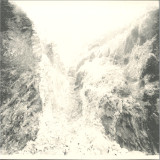
Staran Wake is a collaborative project by Andrew Bunsell and Tom Relleen. After several years creating music in various groups together, followed by countless hazy late night recording sessions at each other’s studios and crisper afternoons producing the results, the British duo’s musical vision materialised with this self-titled instrumental album, taking nearly 4 years to complete.
This collection of pieces is composed with a wide range of instruments and combines multiple dark, experimental genres to form a rather lavish and unique proposition. It is imprinted with intense turgid textures, interweaving the hyper-tactile characteristics of analogue sound with field recording elements and sound effects.
Although the project’s name suggests a rather celestial concept (‘an’ means moon in one of the early protolanguages), the music actually explores the intimate feelings of transient space and otherness. It uses subtle build-ups of tension and repetitive progressions to shape an impression of distended time and space. More than a mere treat for the ears, it’s a multi-layered album that invites reflection.
All tracks composed, performed and recorded by Andrew Bunsell and Tom Relleen at Dalston Studios, Space Studios and The Bunker, London, UK
Arranged, produced and mixed by Andrew Bunsell and Tom Relleen at The Bunker, London, UK
Mixed and mastered by Marta Salogni at Studio Zona, London, UK
Artwork and design by Jonas Meier

Hot on the heels of their sophomore release with DJ Rocca, Cyphon Recordings welcome Tijuana’s Cyborg Nerve to the family for the third installment in their busy label schedule.
A new project helmed by the Cedillo brothers - also known for their work under the monikers Soul of Hex and Mano De Fuego - Cyborg Nerve’s sound tips the hat to the roots of Detroit electro and techno.
The Vicario Musique Recordings bosses have already made a mark under their Soul of Hex alias, pushing their cosmic, vibrant take on deep house. It’s caught the ear of labels and artists across the world; the likes of Delusions of Grandeur, Freerange Records and Quintessentials have shared their music and they’ve even earned the Larry Heard seal of approval, with the legendary Chicago producer stepping up to remix their 2014 track ‘Lip Reading’. As Mano De Fuego they’re also getting their music into the hands of pioneering figures in the American dance music scene - summer of this year saw them release a shamanistic debut via the inimitable Underground Resistance.
For their debut outing as Cyborg Nerve, the pair deliver four tracks of old school electro grooves. Title track ‘Cristalizacion’ kicks things off. A slice of intergalactic electro; celestial pads soar above warm bass and staccato drum rhythms. Their eponymous track follows and takes the energy levels up a notch: a warbling bass line drives the track forward, whirring and revving while crisp hats fizz overhead.
‘Tijuana 3000’ is another cut that's custom-made for the dance floor. As with the title track, the duo call to mind the interstellar jazz-tinged electronics of Detroit outfit Galaxy 2 Galaxy, as they pair cosmic twinkling melodies with a hypnotic acid line that takes centre stage. ‘Machine Effect’ brings the EP to a close. Like its name suggests the track is powered by a raw, machine funk groove and precise drum programming - no bells and whistles, just pure cosmic vibrations to move your body.
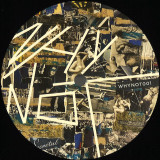
Zurich’s Elvis Cassetta delivers a dazzling four-track debut EP to his brand-new WhyNot imprint. Complete with a refined deep house sound, this is an expertly crafted body of silky smooth grooves to get floors shaking.
'Down With Us' instantly displays Cassetta’s effortless ability to create a hot house swing using just a handful of elements – subtle groove, skittish percussion and a sultry vocal sample. The whole track is thrown out wide in the breakdown, but then as the bassline is brought back in, Cassetta draws it all back in close for an intimate dancefloor moment. Definitely one of those hands-in-the-air peak-time scenes.
Dreamy synth pads steadily build under a thunderous kick drum pattern on the EP’s second track, 'Focals Finest', which takes the tempo up a notch for a real sweat inducer.
Finally, it’s all about a raw bassline on the metallic and techy 'Jupiter Groove'. Contorted slices of spoken word dip in and out throughout to create another level of leftfield, danceable percussion. While the low end is the main focus on the original, in Silat Beksi’s remix, we hear a brighter take on the deep groove. There’s a swirling sample, more prominent key stabs, eerie vocals and a teasing smattering of melody. Percussive elements are thrown from all angles, and they pulsate up into the rafters of the lofty house track, leading you further into a state of hypnosis.
Overall, these are house tracks made right – a classy release fit for warming in crowds in style.

After last year’s Black Clouds Above The Bows, Amsterdam-based collective Wanderwelle presents the second entry of their trilogy for Important Records, which is dedicated to telling the story of the climate crisis and its effects on coastal areas around the globe. For this album the artists incorporated the sound of a dying organ, fatally wounded in a climate related event.
All Hands Bury The Cliffs At Sea consists of electro-acoustic threnodies for an environment at risk due to the effects caused by receding coastlines around the globe. Wailing odes tell the story of the catastrophic activity of eroding waves and winds shaping the land that are enhanced by the climate crisis. First hand experiences and meetings with local maritime experts on the subject of these receding coastlines inspired Wanderwelle to compose these albums.
During their travels, the artists stumbled upon a small church in a town on the east coast of Scotland. The building was quite damaged, the roof was being stabilized and the ancient walls showed great tears running vertically down the structure. One of the church’s volunteers told Wanderwelle that the damage had been caused by a nearby cliff that collapsed in the sea. An event increasingly common in the region.
The church organ was ruined in such a way that it was deemed unplayable, as most of the pipes were gravely damaged and in dire need of restoration. Musical instruments directly affected by the environment -and especially the climate crisis- are quite rare. Despite the damage, the artists were allowed to record a few tones of the instrument with their equipment, which was actually meant to be used for field recordings later that day.
In Black Clouds Above The Bows, antique cavalry trumpets were recorded and manipulated by Wanderwelle to sound an environmental alarm in the same manner as they were once used to warn men on the battlefield. Similar processing was used on the recordings of the dying organ, resulting in spectral, deconstructed tones beyond recognition. In addition to the damaged organ, the artists recorded piano, cello and harmonic additive synthesizers in later stages of the composition process, manipulating these sounds to mimic the perpetual activity of the sea shaping the land.Furthermore, a great deal of inspiration was found in maritime superstition, lore and mythology.
As told in the legend of Aspidochelone, a legendary sea creature of enormous size, was once mistaken for an island. After sailors docked and lit a fire, the beast submerged resembling a land mass sliding into the sea. The album’s title is derived from the saying ‘All Hands Bury The Dead’, a maritime burial phrase, as the duo likes to think ‘All Hands’ refers to all of mankind since we are all responsible for these impending catastrophes.
Cello, violin, voice, pipe organ (damaged), bowed guitar, EBow, Prophet-6 synthesizer, modular synthesizer, field recordings.
RIYL: Oliveros/Deep Listening, Arvo Part, Lambda Sond, Sarah Davachi

Alignment is back on Charlotte de Witte's KNTXT label for a fourth time with his Attack EP. It offers four more forward-thinking tracks of trance infused techno.
Berlin-based, Italian-born artist Alignment, whose real name is Francesco Pierfelice, has emerged as a real force in the techno world in recent years. He has had an outstanding array of vital productions, and his sound helps carry forward the diversity and musical identity KNTXT stands for. His sound has smartly evolved since as he continues to pick up new influences. All that comes out on this superb new release.
Says the artist, ‘I am more than happy to contribute with ‘Attack EP’, another release on such a renowned imprint like KNTXT. Charlotte has supported me since day one, and I am hugely grateful to release for the fourth time on her label. Four tracks that are straight to the floor, they are the outcome of touring clubs and festivals again now in 2022. Enjoy this selection and see you soon on the dance-floor!’
Says label boss Charlotte de Witte, ‘Alignment is one of my favourite producers out there. His high energy style and sound always deliver on the dancefloor. I'm very proud and honoured to have him once again on board for another four killer tracks on KNTXT.’
Attack opens up with hammering drums and turbo-charged synths. It is an all powerful track that drills deep and brings a real sense of rave to the club. There is an ever present sense of euphoria to Dream State as the trance synth loops bring real light and emotion to the flat footed and slamming drums. Some steamy vocals add that all important hook and ensure real dance floor destruction. Multiverse brings bouncing techno funk beneath edgy synth stabs and industrial percussion design for soot-black warehouse spaces. Last of all is The Way, another unstoppable and supersized techno offering with hands-in-the air synth designs and drums that just don't quit.
This is another fiery offering of new school techno from Alignment.

First Various Artists series on Yellow Van Records.
It includes tracks by Tilman, Yann Polewka, Innocent Soul and DJ Delivery.
As always only on Vinyl.
