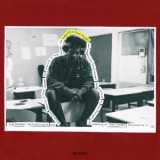
The Bollock Brothers are a British punk act formed in 1979 by the London promoter, DJ, and manager Jock McDonald. They are best known for their English language cover of Serge Gainsbourg’s song “Harley David (Son of a Bitch)” (originally in French) and Alex Harvey’s “Faith Healer”.
As well as being known for their original songs “Horror Movies”, “The Bunker”, “The Legend Of The Snake” and "The Slow Removal of The Left Ear of Vincent van Gogh" which featured Martin Glover of the band Killing Joke, they are known for their release of cover versions by artists Led Zeppelin, The Sensational Alex Harvey Band, Steppenwolf, David Bowie, and Vangelis among others.
- Newly Expanded Deluxe Double LP Edition! - Includes the original 1972 album, plus all of Larry Mark's acoustic demos and tracks from his unreleased 1970 LHI LP for the first time on vinyl - Previously unreleased session outtake of "Cold Hard Times" plus demos of obscure Hazlewood compositions "Drums," "The - Start," "Susie," "Miracle on 19th Street," and "Peppermint Morning" - 30 total tracks - Remastered by GRAMMYr-nominated mastering engineer John Baldwin - Liner notes by GRAMMYr-nominated reissue producer Hunter Lea including interviews with Larry Marks, Joe Cannon, Torbjörn Axelman & Suzi Jane Hokom - Lee Hazlewood comic strip, the story of 13 told through original artwork by Jess Rotter - Double LP housed in a gatefold jacket // DESCRIPTION "Pimps_ whores_ pushers_ dopers_ gangsters_ and bottom of the human chain shit-heels. Now you're probably thinking I'm writing about major record companies and their unscrupulous executives_ and lawyers. You could be right_ but this time_ YOU'RE WRONG! I'm describing the characters in my album `13' _Some I knew_ some I invented _ some are true_ some are false_ some I liked_ some I didn't. But they all had a story to tell and I told it_none of `em seem to care_ and I don't either_ have fun_" - Lee Hazlewood "He (Lee) took my voice off the album and put his voice on the album. Now don't forget these were in my keys, it was my charts, it was my everything. Lee Hazlewood was not even remotely going to be considered as an artist for this album and that's the way he wanted it." - Larry Marks The album 13 was never supposed to be a Lee Hazlewood album. It is perhaps the strangest record in one of the most varied discographies in music. The Bombastic brass heavy funk, deep blues and soul paired with Hazlewood's subterranean baritone would be best enjoyed with a tall Chivas in an off-strip seedy Vegas lounge. By 1972 Lee Hazlewood had settled in his new homeland of Sweden. His days were spent carousing, making movies with Torbjörn Axelman and releasing albums. To keep up his prolific recorded output, Lee began to mine the recently defunct LHI Records archives for material. One such gem, was an unreleased album by Larry Marks (LHI producer, artist and the voice of the first Scooby-Doo theme). Larry's concept was to take Hazlewood's strongest compositions and arrange them in a soul vibe. An album was completed, but with no distribution in America and no funding, Lee had no vehicle to release Larry's record. The tapes were taken to Sweden, Larry's voice was wiped and Hazlewood's was dubbed_ 13 was born.
- Newly Expanded Deluxe Double LP Edition! - Double LP expanded edition includes outtakes, demos and instrumentals, including 10 previously unreleased recordings - 26 total tracks - Album remastered from pristine LHI master tapes by GRAMMYr-nominated mastering engineer John Baldwin - Liner notes by GRAMMYr-nominated reissue producer Hunter Lea including interviews with Torbjo?rn Axelman, Suzi Jane Hokom, Nina Lizell, Don Randi, Hal Blaine and Shel Talmy - Rare film production photos from the Torbjo?rn Axelman archive - Double LP housed in a gatefold jacket // Description: By the end of the 1960s Lee Hazlewood's LHI Records had burned piles of cash, gone through a half dozen distributors and failed to achieve the kind of chart success "Boots" had promised. Fortunately for Lee there was a land where he was still on the top of the charts, a place where women flowed like Bra?nnvin...Sweden was calling. Released as the last LHI LP, Cowboy in Sweden was a soundtrack to the 1970 cult classic film of the same name starring Lee Hazlewood. The film was a surreal psychedelic account of Lee's journey to his new homeland, while the soundtrack was a perfect compilation of Hazlewood's orchestral melancholy country pop songs. Recorded over a prolific globe trotting three year period, Lee's peak on LHI records was ironically the label's swan song.
This past year marked the 25th Anniversary of Big Pun's debut Capital Punishment. Big Pun was truly larger than life and sadly passed away at the age of 28, only two months before the release of his sophomore studio album Yeeeah Baby. Yeeeah Baby was released on April 4, 2000, excecutive produced by Fat Joe and a roster of producers including Just Blaze, L.E.S., Buckwild, Younglord, and Sean C among others. The album which would be Big Pun's final release was certifed Gold after three months off the strength of the first two singles "It's So Hard" and "100%" and eventually certified Platinum. Get On Down is proud to present and honor the legacy of Big Pun with a limited edition vinyl reissue pressed on double A-Side/B-Side colored vinyl and stamped numbered OBI limited to 2000 copies.
The Madlib Invazion Music Library Series Entry #7: Producer/multi-instrumentalist Joe Harrison (El Michels Affair/Gunna) fuses modern production with vintage instruments, drawing a line between J Dilla and David Axelrod. This is the next up in a series of music library releases, with future volumes produced by DJ Muggs, Karriem Riggins and more. The Madlib Invazion Music Library Series was created by Madlib and Egon to give their creative friends a chance to stretch out and indulge in whatever type of music they wanted. This music was created for easy, one-stop clearance in film and television synchronization usage and for sampling. You can also enjoy these albums in the way that many do with the best of the best vintage library catalogs – listen, ponder, repeat
Into the void hits from second one. Strong beats lead the way into this dreamlike soundscape, where metallic drum elements and effortless reverb tails take us on a journey. We get lost in a slow build and an unassuming bass-line drives us home, until the track collapses just to hit twice as hard coming back in. Dreamy vocals float over dirty synth lines, melodies that feel familiar guide the way to continuous build ups, where we can’t help but move our bodies to the gritty, thumping bass-line pushing us forward relentlessly.
Tempest is all about the beat. Simple, yet endearing, it reels us in and guides us on an endless rise where fragile synth swells and powerful percussion elements tease our ears. High-pitched glimmers dance across the soundscape with ease. A track that rises again and again, yet never quite implodes in-between. Instead it builds, in the most natural way, skilfully and exquisitely, whilst sirens add a well-rounded urgency, that’s hard to resist.
No en stock
Última entrega hace 2 años disponible para reposición sin garantía
Black Grape, eine Band, die nur in Manchester entstehen konnte, melden sich mit dem brandneuen Album ORANGE HEAD zurück. Shaun Ryder (Happy Mondays) hat sich vom wilden jungen Rabauken zu einem britischen Nationalschatz entwickelt. Ihm zur Seite steht Rapper Paul Leveridge aka Kermit. Black Grape gelten als eine der innovativsten und kultigsten Bands der letzten 25 Jahre. Sie hatten vier Top-10-Singles, ihr Debütalbum 'It's Great When You're Straight… Yeah' schoss 1995 direkt auf #1 der UK Charts und wurde mit Platin ausgezeichnet. Der Nachfolger 'Stupid Stupid Stupid' erreichte 1997 Gold. Black Grape waren schon immer ein düsteres, kosmisches musikalisches Puzzle, das Rock, Hip-Hop, Acid House, psychedelischen Pop und Reggae mit Ryders Gossenpoesie vermischte, vorgetragen in seinem unnachahmlich-hysterischen Stil.
SLIFT's ILION is a towering work of rock music, a steamrolling record that starts at the highest peak and never lets up. If that sounds overwhelming, trust that this Toulouse trio have you in good hands. Their third full-length feels massive and oceanic, merging the furious intensity of metal and the wigged-out guitar heroics of psych rock with post-rock's epic sense of scale. ILION is the kind of music where you listen to it and think to yourself, "This came from only three people?" It sure did, and SLIFT's utter ferocity is way more than a tempest in a teacup. It reaches outwards for miles and creates new zeniths within unforeseen horizons of rock. SLIFT is made up of brothers Jean and Remí Fossat, and Canek Flores, who first met the brothers Fossat at school. After the band formed in 2016, they quickly made their 2017 debut EP, Space Is the Key, which merged stoner rock's heaviness with the sugar-rush qualities of garage rock. From there, things only got weirder: The trio experimented with faster tempos and bongos(!) on the following year's full-length La Planeté Inexploreé, and in 2019, their KEXP session recorded at the Trans Musicales festival in Rennes became a viral sensation, racking up more than 1.4 million YouTube views. UMMON from 2020 represented SLIFT's pivot towards the celestially crushing confines of psych-metal, marked by Remí's rolling basslines and Flores's relentless skin-pounding. But nothing in their catalog could prepare you for ILION, a huge and melodically dense record that at once recalls Godspeed! You Black Emperor's perpetually uplifting surge, the passionate burn of post-hardcore legends _And You Will Know Us By the Trail of Dead, Led Zep's psychotic blues-rock mysticism, and the psychedelic swirl of Swedish greats Goat.
SLIFT's ILION is a towering work of rock music, a steamrolling record that starts at the highest peak and never lets up. If that sounds overwhelming, trust that this Toulouse trio have you in good hands. Their third full-length feels massive and oceanic, merging the furious intensity of metal and the wigged-out guitar heroics of psych rock with post-rock's epic sense of scale. ILION is the kind of music where you listen to it and think to yourself, "This came from only three people?" It sure did, and SLIFT's utter ferocity is way more than a tempest in a teacup. It reaches outwards for miles and creates new zeniths within unforeseen horizons of rock. SLIFT is made up of brothers Jean and Remí Fossat, and Canek Flores, who first met the brothers Fossat at school. After the band formed in 2016, they quickly made their 2017 debut EP, Space Is the Key, which merged stoner rock's heaviness with the sugar-rush qualities of garage rock. From there, things only got weirder: The trio experimented with faster tempos and bongos(!) on the following year's full-length La Planeté Inexploreé, and in 2019, their KEXP session recorded at the Trans Musicales festival in Rennes became a viral sensation, racking up more than 1.4 million YouTube views. UMMON from 2020 represented SLIFT's pivot towards the celestially crushing confines of psych-metal, marked by Remí's rolling basslines and Flores's relentless skin-pounding. But nothing in their catalog could prepare you for ILION, a huge and melodically dense record that at once recalls Godspeed! You Black Emperor's perpetually uplifting surge, the passionate burn of post-hardcore legends _And You Will Know Us By the Trail of Dead, Led Zep's psychotic blues-rock mysticism, and the psychedelic swirl of Swedish greats Goat.
plastic death - the second album by glass beach - is a follow-up record almost five years in the making. The band's 2019 debut, aptly titled the first glass beach album , has over the years grown a cult fanbase for its unflinching depiction of queer life as mediated through social media, its oversized ambition, and its scrappy yet adventurous production. And while it took some time to arrive, plastic death sounds like the logical expansion of all the things that made their first album so special. Years and years of relentless writing, tinkering demos, cancelled tours and a few lockdowns only strengthen the chaotic core of what makes glass beach' s maximalist approach work so well. Frontperson and primary songwriter J McClendon is joined by lead guitarist Layne Smith, bassist Jonas Newhouse and drummer William White to create something adventurous on each song. Trumpet, trombone, violin, and even marimba dance and bloom alongside the band's own creative and dextrous instrumentation - a stunning, transformative creation that pulls from indie rock, jazz, prog, hardcore, metal, experimental, and beyond. Songs like lead single "the CIA," are examples of the band's ambitious writing. It's a dark, dancy, post-punk/jazz hybrid, a coordinated, breathless braid of synth and saturated guitar. Tension and confusion explode into a brutal modern metal climax to close the track, flickering with glitchy production zaps and razor-sharp stops. The artwork of plastic death is similarly rich with detail, resulting in a bioluminescent, fully-realized double album depicting sprawling scenes where moments of neon brightness shine momentarily in a dark undersea - a metaphor for the moments of optimism and catharsis glass beach provide on these songs. "This album is the Pacific garbage patch: cultural trash strewn together seemingly by accident, standing in stark juxtaposition to each other ," says McClendon. plastic death is a complete, uncompromising, playful work of art; every corner and crevice of the record's 13 tracks, each arrangement and timbre and texture, is alive with intention and possibility.
plastic death - the second album by glass beach - is a follow-up record almost five years in the making. The band's 2019 debut, aptly titled the first glass beach album , has over the years grown a cult fanbase for its unflinching depiction of queer life as mediated through social media, its oversized ambition, and its scrappy yet adventurous production. And while it took some time to arrive, plastic death sounds like the logical expansion of all the things that made their first album so special. Years and years of relentless writing, tinkering demos, cancelled tours and a few lockdowns only strengthen the chaotic core of what makes glass beach' s maximalist approach work so well. Frontperson and primary songwriter J McClendon is joined by lead guitarist Layne Smith, bassist Jonas Newhouse and drummer William White to create something adventurous on each song. Trumpet, trombone, violin, and even marimba dance and bloom alongside the band's own creative and dextrous instrumentation - a stunning, transformative creation that pulls from indie rock, jazz, prog, hardcore, metal, experimental, and beyond. Songs like lead single "the CIA," are examples of the band's ambitious writing. It's a dark, dancy, post-punk/jazz hybrid, a coordinated, breathless braid of synth and saturated guitar. Tension and confusion explode into a brutal modern metal climax to close the track, flickering with glitchy production zaps and razor-sharp stops. The artwork of plastic death is similarly rich with detail, resulting in a bioluminescent, fully-realized double album depicting sprawling scenes where moments of neon brightness shine momentarily in a dark undersea - a metaphor for the moments of optimism and catharsis glass beach provide on these songs. "This album is the Pacific garbage patch: cultural trash strewn together seemingly by accident, standing in stark juxtaposition to each other ," says McClendon. plastic death is a complete, uncompromising, playful work of art; every corner and crevice of the record's 13 tracks, each arrangement and timbre and texture, is alive with intention and possibility.
It's the pair you've all been waiting for! FINALLY!
Alan Tew's Drama Suite Part II. What can we really say? Honestly? We guess the first thing that strikes you is how clean the drums are. Almost impossibly slick but dripping so, so heavy with the neck-snapping funk you'd expect from perhaps the most sought-after library funk set of them all! The cheapest on Discogs is, currently, £1300+. Now's your chance to remedy that. If you know, you know. And we think you know...
"The Rub" is a cool, low-slung heavy-funk roller with relaxed brass and alto flute phrases. Up next, "Money Runner" is another edgy funk glider, its easy-tempo moving in harmony with slinky rhythmic riffs and featuring a seemingly ad-libbed electric piano solo. Strutting along after, "White Elephant Walk" is another laconic, deeply stoned walking theme with electric piano and alto flutes. There follows a couple of brief "walking" links before the brilliantly tense "Master Plan" slowly builds. Expectancy grows to the main theme around a minute in and then a melodic theme builds slightly to the 3 minute mark before floating down gradually and elegantly to its climax. It's utterly fantastic. The smoky, after-hours "Night Watch" is a slow, cool gem featuring alto flutes and synths.
Now we're talking, "The Fence (a)" is just sensational and worth buying this album all on its own. It's likely the reason you're here, anyway. Another impossibly funky, slow and easy tempo with a bass riff to die for, dramatic guitar with gorgeous electric piano and alto flute phrases. It was sampled for "Action Satisfaction" by J5, way way back. "The Fence (b)" is a slower, more deliberate version of the previous heater, but it's no less essential. Indeed, it's absolutely jaw-drooping. Closing out this remarkable side, "Surveillance" is another horizontal masterpiece of relaxed yet dramatic jazz-funk. Vibes ad-lib in centre section and give you an idea of how Roy Ayers making library funk in the mid-late 70s might've sounded. Sensational.
Flip over for "Total Silence", a near-beatless and understated scene-setter featuring neat interplay of guitar and synthesizer themes over bass and hi-hats. The slow "Eyes" follows, a brief gem with subdued electric piano solo and a light climax. The fantastic "Drama Backcloth (1a)" is up next, a repetitive piano and bass refrain with guitar figures over the top. Its creeping crime-funk vibe was pilfered for "Outta Town Shit" by Ghostface Killah in 2006. "Drama Backcloth (1b)" is a short, subdued version without the guitar figure. "Drama Backcloth (2)" features an expectant, background marimba figure over light rhythm whilst the cool "Drama Backcloth (3)" centres around a relaxed riff and the angular "Drama Backcloth (4)" presents eerie progressions with piano interjections. It's decidedly non-rhythmic!
We're then onto 14 (!) different half-minute "Scenechanges", all jazzy and funky, some cool and dramatic, some slow and rhythmic. All ace and groove-fuelled. The aptly-titled "Final Statement" closes proceedings, a slow, pensive theme on guitar joined by cool brass and a solo trumpet to its climax.
As with all of our KPM re-issues, the audio for Drama Suite Part II comes from the original analogue tapes and has been remastered for vinyl by Be With regular Simon Francis. And as usual, the sleeve reproduction duties were handed over to Richard Robinson, the current custodian of KPM’s brand identity. We're not quite sure what else to say about this landmark record, other than, GET IT!
No en stock
Última entrega hace 21 meses disponible para reposición sin garantía
Impossible to find in the wild, KPM's Image is exactly that; this record paints extraordinary, hyper-vivid scenes with music, in the way only the library greats can. Originally released in 1974, Image is an absolutely stunning listen from start to finish, and arguably the most wanted KPM grail that's still not been reissued - until now! Just too good…
Worth the price of admission alone, and likely the reason you're all already drooling about this release, the mellow, dramatic beat of "Image", Brian Bennett's opener and title track, is a Jaylib-sampled firecracker. A reflective, scenic underscore which grows to full orchestra and ends as it begins - it's just beautiful. Next up, swoon to "The Little Orphan" by Neil Richardson featuring strings and harp. It's a deeply emotive, sweeping orchestral piece. Just straight gorgeous. It's followed by "Paradise Island", a lush, horizontal Balearic gem courtesy of Gordon Rees and David Gold; it'll send you into a blissful reverie with its elegant strings and gentle drums. From the same pair, "Forbidden Fruit" is, again, string-drenched but the strings are more insistent, stabbing even, and, with drums and Blaxploitation guitars high up in the mix, it's definitely a funkier proposition. "The Enchantress", again a Rees-Gold special, is a slower, groovy, synthy wonder. Closing out the A-Side, "Phenomena" is a mysterious gem, a Gold solo effort set at a breezier tempo with propulsive percussion and head nod, fast-paced breaks with ace keys.
Flip over for "Infinite Expanse", John Scott's dramatic panorama adorned with proud, triumphant horns. Scott's "Static Objects" paints patient, pastoral scenes; there's a serenity and stillness to the proceedings. Next up, Be With favourite John Fiddy delivers shifting shapes and patterns with his wonderful "Metamorphosis", all wah wah, harps, dramatic percussion and strings. It's by turns billowy and blasting. "Cubist Pictures" follows, Neil Richardson's brilliant nebulous, fragmentary piece. Better yet, Richardson's gorgeous, beatless "Analysis" follows, and it's an orchestral beauty featuring cello, harps and woodwind. It's no exaggeration to describe this as transcendental. His "Crystal Ball" presents more static scenes with cello, twinkling percussion and strings, before Steve Gray's fantastically-titled softly-ace "Gliding Through Clouds" closes out this remarkable set.
As with all of our KPM re-issues, the audio for Image comes from the original analogue tapes and has been remastered for vinyl by Be With regular Simon Francis. And as usual, the sleeve reproduction duties were handed over to Richard Robinson, the current custodian of KPM’s brand identity.
No en stock
Última entrega hace 19 meses disponible para reposición sin garantía
Delasi, the Koforidua-based producer, singer and rapper has released his new single ‘Amplifier’ featuring Nii Noi Nortey.
Prophetic, spiritual and frenetic, ‘Amplifier’ is Delasi’s testimony in musical form. A manifestation of Delasi emerging triumphant after many years in limbo as he searched for a long-awaited breakthrough in the music industry.
Produced by Delasi himself alongside Morgan Greenstreet, ‘Amplifier’ is underpinned by the texture of coastal rhythms indigenous to Accra and tightly ornamented with bustling drum breaks, electronic synth lines and jazz sensibilities.
Veteran Ghanaian multi-instrumentalist and sound designer Nii Noi Nortey appears on the track to deliver an explosive and rhythmically intense saxophone performance throughout as it tastefully builds to an emphatic crescendo.
Self-described as a prayer, the track’s maximalist and percussive instrumentation is cleverly juxtaposed with minimal lyrics where Delasi’s faint vocal repeats a series of repeated phrases like evoking the mood and semblance of a meditative chant and religious experience. Harkening to the work of afrofuturistic jazz musicians like Sun Ra and Pharaoh Sanders.
Speaking on the track’s meaning, Delasi said: “‘Amplifier’ is my prayer and like with other songs of mine it can scare me because I write things and then it’ll manifest in exact detail. The song is basically outlining how hard I’ve worked and how I need an amplifier to have my desires fulfilled. It's like a mantra and that’s why it's not so lyrical”.
‘Amplifier’ marks Delasi’s first release as a lead artist since his 2015 self-released project ‘#thoughtjourney’ which garnered support and praise from Rolling Stone, BBC6 Music, Worldwide FM, KCRW, Afropop Worldwide, Deutschlandfunk Kultur, NRK and legendary French DJ/Producer Laurent Garnier. Additionally parlaying into touring and festival gigs across Nairobi, Berlin, Morocco, Denmark and Sweden.
Delasi is an artist that has been quietly prolific for over a decade. Honing his musicianship exploring sonic possibilities with Ableton and Teenage Engineering. Eventually entrenching himself in the Ghanaian rap scene via collaborations with Hammer of The Last Two, Reggie Rockstone and Yaw P with whom he would release a joint project ‘Imperfections: The Break Up Vol 1’ in 2013.
He was musically raised on a diet heavily influenced by his father who exposed him to the sounds of Marvin Gaye, Bob Marley & The Wailers, Bobby McFerrin, Jim Reeves and Billy Ocean alongside the soundtracks for movies like Doctor Zhivago, The Sound of Music and La Bamba. Delasi’s own tastes would be heavily informed by linchpins of US Hip-Hop like Wu-Tang Clan, Nas, Onyx and M.O.P in addition to alternative R&B artists Frank Ocean and James Blake.
After many years of operating as a proudly independent and self-contained artist, Delasi has now partnered with Gilles Peterson’s Brownswood Recordings. One of the world’s leading indie labels, famed for their instrumental role in breaking the likes of KOKOROKO, Yussef Dayes, Swindle, Joe-Armon Jones, Shabaka And The Ancestors, Zara McFarlane and Ghostpoet.
With Delasi now being granted resources to give his music the grand and worthy footing, he is now on the cusp of the artistic breakthrough that was long out of reach. Speaking further on how the deal with Brownswood inspired the new single, Delasi said:
“The music I’ve created this go round is so strong that I can’t handle it all by myself. Though I had a lot of fun doing it all by myself with ‘#thoughtjourney’, this time around I needed it to be with a home who could properly amplify it.”
Joseph Omicil, Jr, a.k.a. Jowee Omicil, is a Haitian-Canadian jazz musician. He has worked in the past with artists such as Roy Hargrove, Pharoah Sanders, Tony Allen, Kenny Garrett, Jacob Desvarieux, Glen Ballard, Harold Faustin, Michel Martell, etc. He hosted Quincy Jones' 85th birthday celebration at Montreux Festival. He also starred in the Netflix series The Eddy, produced by Damien Chazelle, and Le temps d'aimer, directed by Katell Quillévéré (Cannes Festival 2023). The Bois- Caïman ceremony was Haiti's first major collective uprising against slavery. On his new album, SpiriTuaL HeaLinG: Bwa KaYimaN FreeDoM SuiTe, Jowee performs his ancestors' revolution in his own way. Joweebroughttogetherallhisinnertubes,soprano,alto,tenor,wood,clarinets, piccolo flute, cornet, that blows, that winds, that rumbles. Thisrecord is an incantation, a therapy, it cleanses the world by drawing onthe fantasized memory of the Haitian revolution. There are FreedomSuites by Sonny Rollins, Max Roach and others. Prayer music, music tobreak the chains in your head and on your wrists, music of black powerandwhitemagic.ForJowee,akidfromMontreal,sonofaHaitianpastor, who sang Jesus in all the tones, and then Michael Jackson, andthen2Pac,wholearnedjazzfromOrnetteColeman,theceremonynecessarilyhasthetasteoffree.Thisrecordisahealinghour-longimprovisation.
These days we are back again in the 60s, as the world urgently needs a new peace movement.
Therefore we ultimately call everyone to hold their hands together and look into the future, - nothing describes better the message we deeply feel being part of, in the own words of Kito Jempere. For ''Let's Hold Our Hands Together'' he already called up the internationally awarded Swedish composer Adam Evald on vocals and the enigmatic Antoha MC on trumpet, backed by Public Possession artist, Eden Burns and our very own, Leonid Lipelis (check his latest 'Function As A Meaning' EP!!!), on the remix duties, Kito Jempere is the ''DJ's hero'' - selector, producer, own orchestra and band conductor (watch Boiler Room from PPF!), who has been delivering quality dance records through decades via DFA, Lo Recordings, Freerange.
Proclaimed as the ''The King Of Collaborations'' by Zweikommasieben, Kito has been working on music with together with Jimi Tenor, Red Snapper, Hard Ton, New Composers and got remixed by Palms Trax, Andras, Ruf Dug, Black Spuma and many more.
No en stock
Última entrega hace 50 días disponible para reposición sin garantía
„Little Rope” ist eines der besten und vielschichtigsten Alben in der fast 30-jährigen Karriere von SleaterKinney. Das Album als makellos zu bezeichnen, wäre eine Beleidigung für seine Intention - es stürzt sich kopfüber in Fehler und Gebrochenheit - eine Meditation darüber, was das Leben in einer Welt der ständigen Krise aus uns gemacht hat und was wir im Gegenzug der Welt antun. Oberflächlich betrachtet, reichen die 10 Songs des Albums von sparsam bis hymnisch, von eingängig bis absichtlich hart.
Dahinter verbergen sich jedoch die vielleicht komplexesten und subtilsten Arrangements aller Sleater-Kinney-Alben und ein lyrischer und emotionaler Kompass, der fest in die Richtung von etwas sowohl Befreiendem als auch Erschreckendem weist: das Gefühl, dass der einzige Weg, die Kontrolle zu gewinnen, darin besteht, sie loszulassen.
„Little Rope” ist eines der besten und vielschichtigsten Alben in der fast 30-jährigen Karriere von SleaterKinney. Das Album als makellos zu bezeichnen, wäre eine Beleidigung für seine Intention - es stürzt sich kopfüber in Fehler und Gebrochenheit - eine Meditation darüber, was das Leben in einer Welt der ständigen Krise aus uns gemacht hat und was wir im Gegenzug der Welt antun. Oberflächlich betrachtet, reichen die 10 Songs des Albums von sparsam bis hymnisch, von eingängig bis absichtlich hart.
Dahinter verbergen sich jedoch die vielleicht komplexesten und subtilsten Arrangements aller Sleater-Kinney-Alben und ein lyrischer und emotionaler Kompass, der fest in die Richtung von etwas sowohl Befreiendem als auch Erschreckendem weist: das Gefühl, dass der einzige Weg, die Kontrolle zu gewinnen, darin besteht, sie loszulassen.
This record contains four tracks taken from a live performance which took place on December 3rd 2021 at the vinyl harvest record store in Esch-sur-Alzette Luxembourg. The concert was curated by non-profit organisation I am esch twenty too and the label mint.conception.recordings. I am esch twenty too was founded in 2020 as an alternative suggestion to the city of Esch-sur-Alzette being European Capital of Culture 2022 and its role and program. The budget for this concert was generated by the entrance fee to the concert only.
Jan Jelinek has for more than 20 years been one of the most essential voices in contemporary electronic music. Arthur Clees is a young percussionist from Luxembourg and a bright talent intent on finding his own way into jazz, improv and electronic music. Both performers had never met each other before.
No en stock
Última entrega hace 23 meses disponible para reposición sin garantía
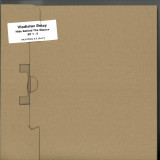
Vladislav Delay's complete "Hide Behind The Silence" series. Intuitive and raw music, momentary and reflective, released on Ripatti's own label Rajaton.
Stillness is a myth. Consider concepts such as ”still water”, or ”still air” for that matter. Go to a restaurant, ask them for a glass of still water, hold it against the light and see where we’re at. Even though the water itself has been captured and imprisoned in the glass, it never stops breathing. It’s filled with tiny particles, dancing. Everything can be explained on a molecular level, but since we’re not scientists – and even if you happen to be – it’s the natural world of perception that moves me.
Still air is very similar. A hot summer’s day with zero wind feels completely still. It’s the closest I have felt to complete stillness. Or for a more urban adaptation, imagine the same vibe inside a normal apartment. In those moments, revelations and mind- blowing experiences can be had with experiments in stillness.
Try this: Just sit down for a minute on a sunny day, making sure there’s enough natural light. Do absolutely nothing. Try not to breathe for a bit. (If you need a mental anchor, you can play Cage’s 4’33” in your head but nothing else.) Watch the tiny dots of dust dancing :..’ ̈.:; ́ ́*°.,’:,. ̈ ̈ ̈ ̈:,.’
The movement is crazy, but the feeling of stillness comes from witnessing how subtle it is. In (perceived) complete stillness, every act of microscopic mobility seems to speak volumes. Yet, it feels both reassuring and oddly threatening that the stillness is never complete. What if we would need absolute stillness? Or is it just enough that we can perceive something as such? Extremes attract, so for both water and air, extraordinary movement is equally fascinating. That is also a luxury item of sorts. For us to enjoy a very ”loud” body of water or air, we need to be safe, in enough control of the situation. So when you are, it’s worthwhile to pay attention and take it all in.
A rapid flowing free with extreme strength and just barely in control. Look at that water go! No still water on this one, only ”sparkling”. A windy day when birds seem surprised how hard it is to fly, but in the end they make it. Trees bend but don’t break. The wind shows you its movement but doesn’t hurt you. It feels friendly, like a big clumsy dog that doesn’t quite understand its size.
It’s beautiful to be a guest of the elements, but not at the mercy of them. A new kind of dialogue forms.
Q&A with Sasu Ripatti:
1) Tell us something about the EP series ”Hide Behind the Silence”, what’s the idea and what can we expect?
Exploration of inaction. Of many kinds. In arts and in personal life, or at bigger and more serious levels. Questioning myself as a human being as well as an artist. Acknowledging the growing activism all around, and the very clear need for it, and how it reflects my own inaction.
Musically speaking, after Rakka, Isoviha and Speed Demon, I finally found some relief, but more importantly lost the need to go musically ever more outward and intensive. I felt quite strongly certain periods/moods from the past and they made me revisit some musical ideas or states of mind I was exploring early on.
It’s about live moments being captured, not much premeditation or editing. More intuitive and raw, even though the end result (to me) feels and sounds quite introspective and calm. It’s not very ambitious. Momentary and reflective.
2) Your music doesn’t sound very silent. Does it come from somewhere behind the silence?
Oh, this time to me it sounds quite quiet and playing with space if not silence. I don’t know what’s actually behind silence, but I think silence is the source of everything. We just don’t understand it yet.
3) What kind of thoughts or experiences gave inspiration to this series?
Writing this in Nov ’22, it’s not a stretch to say the world has been really unwell. Sometimes, like Mika Vainio put it, the world eats you up. I feel a bit like that. And I try to hide in my studio and stay away from it all, but it’s getting harder by the day. I’ve been questioning myself and thinking if what us artists are doing is worth anything, and whether it’s just a selfish thing I’ve been doing for the past 25 years, running away from everything. I haven’t come to a conclusion yet.
4) Is it easy for you to be in silence, or around silence?
Absolutely. I not only hide behind silence but I also love silence. It’s only since I started going back to nature as a grown-up person that I sensed and was enveloped by silence, true silence. I have begun to appreciate it a lot. I think all the people should spend more time in silence.
All tracks composed and produced by Sasu Ripatti.
Artwork by Marc Hohmann, photography by Shinnosuke Yoshimori.
Mastering by Stephan Mathieu for Schwebung Mastering.
Vinyl cut by SST Brueggemann.
Publishing by WARP Music Ltd.
No en stock
Última entrega hace 2 años disponible para reposición sin garantía
Sasu Ripatti's complete "Dancefloor Classics" series. Music for imaginary dancefloors, released on Ripatti's own label Rajaton.
”Look up, into the light” she said, while the camera shutter clicked. ”Like this? Does it look holy?” His neck felt stiff. Her reply: ”Yes, just like that. What do you mean holy? Like religious? ”No, more like trying to look very far, somewhere beyond what we can see.” ”Okay, stand still, I’m going to come close to you now. The light hits your face great.” click, click, click.
He noticed her fingernails. They were not polished. Natural. Even somewhat rugged, as if something wore out the fingers slightly. What had these hands held besides the camera? What made the edges of her fingernails drift off?
He thought it’s weird to look straight into the camera. The photographer had closed her left eye, the one not looking into the lens. Then it opened, she looked up, perusing the surroundings, then she closed her eye again, then looked up, closed, looking up, very quickly. It all seemed very professional. Maybe she calculated the light, making sure it’s close to perfect. ”What will these photos look like?” – the thought popped into his head briefly. It was liberating to think it wouldn’t matter.
”What’s that song playing?” he asked. ”Wait a sec, Ol’ Dirty Bastard?” she replied. ”Oh yeah, right. But the sample?” ”Hey, could you look up again, like that. No, lower.”
New directions: ”Look out from the window, turn left.” ”My left or yours?” ”Yours, I always try to think from the direction of my model.” How professional! This is a good shoot, so natural. Should I worry about how the photos look like? No, I don’t want to. His thoughts bounced around. What would the story be like? It’s a big newspaper, everyone will read it. Maybe someone drinks coffee and eats a stroopwafel while they do it. Will they place the waffle on top of the mug for a brief while, so that it gets hot and the syrup melts a little? Then it feels wet, and you can bend the cookie.
She broke his train of thought off midway through: ”Now turn right, but look left, and slightly up, but don’t turn your face right.” ”Umm, like this? Sounds like a set of pilates instructions.” she laughed ”You do pilates?” ”Yeah, it’s hard sometimes. Have you tried?” ”No”, she said. ”I’m not good for sports that are done in groups.” ”Yeah, but in pilates you can just be inside your mind, drowning in your private thoughts.”
”What are you thinking in pilates?” she asked, taking more photos. ”Well, mostly just which way is right. And which left.” click, click.
Q&A with Sasu Ripatti:
1) Tell us something about the EP series ”Dancefloor Classics”, what’s the idea and what can we expect?
I’ve been slowly writing these sort of dance music pieces and finally curated them together for a conceptual release. I like to create music for a dancefloor that exists only in my imagination and doesn’t try to suck up to the standardized reality.
2) Your vinyl format is 10” which is quite special (as opposed to LP / 12”). Why did you choose it?
It’s my favourite format, absolutely. The size is perfect, and you can make it sound really good @ 45 rpm. And you still can make great artwork.
3) You seem interested in sampling/repurposing, what does it mean to you as an artist to approach something already existing from a new angle? How does the source material inform you about the approach to take?
I guess i could flip it around and just say I’ve outgrown synths or electronic sounds to a great extend, and having gotten rid off all my synths already good while ago I’ve used samples as my main source material a lot. It’s obvious on this series that i’ve sampled existing music, but I also sample instruments and things in the studio and resample my own library that I have built over the years, it’s quite large. To me the end result matters, not so much how I get there. Once I have something on my keyboard and play around, it’s all an instrument, though with sampling other music it becomes a really interesting and complex one as you’re possibly playing rhythm, but also harmonic content and maybe hooks or whatever, all at once.
I never sample premeditadedly, like listening to records and looking for that mindblowing 3 sec part. I just throw the cards in the air and see what lands where, just full intuition and hopefully zero mind involved, playing tons of stuff, trying things, just recording hours of stuff. Then comes the interesting part to listen to hours of mostly crazy stuff and finding that mindblowing 3 sec part.
4) What is your relationship with the dancefloor (conceptually and/or in experiences / as a performer)?
Very complicated. I have never really felt comfortable on a dancefloor but have always wanted to. There’s something in club music, in theory, that really speaks to me. It has never really materialized for me – speaking mainly from a performer’s point of view who goes to check on a dancefloor for a moment after a concert. I never have DJ’d or felt much interest towards it. But again, I love the idea and concept of DJing. As well as producing music for imaginary DJs. Lately, as in the past 10+ years, I haven’t even performed in any sort of club spaces. So my relationship to the dancefloor is quite removed and reduced, but there’s quite a bit of passion and interest left.
All tracks composed and produced by Sasu Ripatti.
Artwork & photography by Marc Hohmann.
Mastering by Stephan Mathieu for Schwebung Mastering.
Vinyl cut by SST Brueggemann.
Publishing by WARP Music Ltd.
No en stock
Última entrega hace 2 años disponible para reposición sin garantía
First reissue of these cult 1974 recordings of a Mayan brass band playing funeral dirges and popular songs in its distinctive extended harmonic and rhythmic style. The members of the San Lucas Band lived in the mountain village of San Lucas Tolimán, Guatemala, playing local events of both religious and social nature. The pride of their town since 1922, the band represented a fast-disappearing musical tradition when these recordings were originally released in 1975. Their unique sound derived from an unusual combination of instruments, a repertoire including pieces dating from more than fifty years before the recordings were made to more recent ones, and above all from the highland Maya style of their playing, which is characterized by a preference for freer rhythmic structures and a wider variety of pitches than Western scales allow. One of Jon Hassell and Charlie Haden's favorite records, it was nominated for a Grammy Award upon first release and has remained much beloved by a small community of enthusiasts for decades. A profound and rewarding musical experience for all adventurous listeners, notably fans of Albert Ayler, microtonal and raw cosmic music.
Over 20 years into their career, Toxic Positivity is everything fans have come to know and love from The Used – straightforward, in-your-face, destructive, and vulnerable all at once.
Established in 2000, The Used was brought to life and have since released a collection of albums that pioneered the scene of emo rock. High-energy live shows, gut-wrenching relatable lyrics, and melodies that blended pop sensibility and hard rock was the perfect combination to make an everlasting impression on fans globally.
The latest by Texan-turned-Angeleno progressive vaporwave producer Carlos Ramirez aka AURAGRAPH finds him shifting focus to the dance floor across eight chrome clockworks of cosmic acid house and liquid rave glide: 'New Standard'. Inspired by lessons learned during a 5K mile American road trip tour in the summer 2022, he set to work in his Simi Valley Tuff Shed of synths and hardware, pursuing an explicitly DJ-friendly muse: "I realized I wanted to make a record where every track could go off in a live setting."These cuts do just that, revved and rhythmic, peppered with slap bass, Madchester whistles, filtered acid, gated snares, baggy cowbell, and sample pack classics - record scratches, orchestral stabs, the "Yeah! Woo!" from Lynn Collins "Think (About It)." Ramirez describes the process as immediate and instinctual: "I'd turn on the MPC, pick a tempo, and just improv - it was incredibly fun."From sleek freeway techno ("110 Cruising") to arcade lurker acid ("Coast 2 Coast") to big room bangers ("666 Ambience"), the tracks time-travel across the canon of club music, sifting tricks and styles to fashion fresh anthems of hypnagogic jack. It's an album channeled as much as crafted, tapping into the decks of mythic warehouse infinities past and present, where the system rips all night and acid never dies.
Divino Nino's new album Foam feels like catching up with a lifelong friend. There's undeniable songwriting chemistry between guitarist Camilo Medina and bassist Javier Forero, who met as kids in Bogota, Colombia and years later reconnected by sheer happenstance after their families had both moved to Miami. Both studied at the School of the Art Institute of Chicago where they met guitarist Guillermo Rodriguez and eventually Drummer Pierce Codina. Now Chicagoans, their rhythmic, soulful - and at times bilingual - Latinx punk songs are a reflection of their continent-spanning bond and proof that Divino Nino couldn't have formed without unlikely but happy coincidences.The ten tracks on Foam feature wistfully romantic lyrics like the yearning plea on the title track ("I really wanna run away with you"), and sunny, honeyed arrangements. Songs like "Quiero" trade-off between English and Spanish with woozy guitars and harmonies anchoring the sweetness of the lyrics. The quartet's Latin American roots seep in throughout the LP's silky psychedelic flourishes but especially on single "Maria," which is sung entirely in Spanish. Inspired in equal parts by Argentine punk and the narratives of Mexican telenovelas, the personality-filled track is one of the most memorable on the record.
Opaque Lime vinyl. The Loneliest Girl is the third studio album by New Zealand musician Chelsea Nikkel, better known as Princess Chelsea. It was recorded by Chelsea between 2016 and 2017 in her home studio in West Auckland, New Zealand. The Loneliest Girl examines the loneliness and ultimately the artistic satisfaction a strong work ethic can bring, the result of which is this eclectic collection of pop songs. As a studio based artist Chelsea was conscious of not wanting to fall too deep into a production hole for her third album and wanted to more than ever before capture moments of inspiration, madness and spontaneity on record. Chelsea's trademark arrangements featuring classic 80s Synths (Yamaha DX7, Roland D-50), ambient guitars, and orchestral instruments are all here but are presented in a more refined and simple manner than on her previous releases. Stylistically The Loneliest Girl moves away the more uniform synth sounds of The Great Cybernetic Depression to more eclectic territory similar to her first release Lil' Golden Book and certainly sounds like a record made by a lover of pop music across all genres from 60s girl groups to 80s power ballads, and late 80s acid house to 90s pop. Like her earlier work, adult issues are presented in a humorous and sometimes childlike manner, and this juxtaposition rather than softening the blow makes jarring social commentary hit harder.
Die kratzigen Gitarrenhooks, das eingängige Schlagzeugspiel und die ausgedehnten Codas klingen eindeutig nach Großstadt, doch bei WIDOWSPEAK gesellt sich ein trockener Minimalismus und eine an die Atmosphäre von David Lynch Filmen erinnernde Düsternis, die aus der Kleinstadt der Bandmitglieder stammt. Während der Grunge Seattle berühmt machte und die Riot Grrl und die DIY Einstellungen synonym mit Olympia sind, steht Tacoma für etwas Raueres und Düsteres. Berühmt-berüchtigt für den beißenden Gestank der Papiermühlen hat die Stadt es dennoch geschafft, eine fruchtbare Musikszene ihr Eigen zu nennen - nur wenige Außenstehende wissen das. Drei Jahre, nachdem sie schon bei einem kurzlebigen Sampler Label Projekt aufeinander getroffen waren, fragte Michael Molly, ob es nicht Zeit wäre, eine neue Band zu gründen. Molly fing trotz Bühnenangst an, zu schreiben und kurz darauf lud Michael den Gitarristen Robert Earl Thomas zu einer ersten Probe ein. Obwohl Robert seine Gitarre über die Musikanlage spielen musste und Michael auf nur zwei Trommeln spielte, zeigte die erste Stunde, dass alles passte. Sie suchten einen Namen aus, den Molly sich schon Monate vorher ausgedacht hatte und der Sound von WIDOWSPEAK begann, Form anzunehmen. Im Herbst hatte das Trio sechs Songs für eine Kassette names ,October Tape" zusammen, die sie nur mit einem Laptop Mikrophon und Garageband aufgenommen hatten. Das Tape fiel in die Hände von Captured Tracks und hier ist das selbstbetitelte Debüt. Aufgenommen mit Jarvis Taveniere von WOODS bekamen die noch zittrigen Probetracks im Studio Luft zum Atmen. ,Widowspeak" erschafft eine unheimliche Atmosphäre, die sich manchmal auf den Jukebox Pop der Fünfziger oder auf die Psychedelia der Sechziger gründet. Während WIDOWSPEAK mit ruhigeren Acts wie MAZZY STAR oder CAT POWER verglichen wurden, haben sie einen Sound definiert, der ernsthaft nostalgisch und zunehmend selbstbewusst ist.
The heavyweight trio of Keiji Haino, Jim O’Rourke and Oren Ambarchi return with their 12th and most epic release to date, the triple LP With pats on the head, just one too few is evil one too many is good that's all it is. Documenting the entirety of their final performance at the dearly departed Roppongi home of Tokyo underground institution SuperDeluxe in November 2018, the music spread across these six sides splits the difference between the guitar-bass-drums power trio moves and experiments with novel instrumentation that have defined the trio’s decade of working together. Containing some of the most delicate music the three have committed to wax since the gorgeous 12-string acoustic guitar and dulcimer tones of Only wanting to melt beautifully away is it a lack of contentment that stirs affection for those things said to be as of yet unseen (BT011), this wide-ranging release also offers up some of their most blistering free rock performances yet.
The side-long opening piece finds Haino on a single snare drum in duet with O’Rourke on unamplified electric guitar, playing in the lovely post-Bailey vein heard on his classic 90s recordings with Henry Kaiser and Mats Gustafsson. Spiky dissonance and ringing harmonics interweave with flowing melodic fragments as Haino single-mindedly explores the resonance of the snare like an untutored Han Bennink. On ‘Right brain, left brain; right, left; right wing, left wing. Just how many combinations can be made from these?’, O’Rourke moves to synth and electronics, joined by Ambarchi on drums, who at first focuses on sizzle cymbals before hypnotic cycles of gentle tom rhythms combine with electronic burbles and flutters to suggest a dream collaboration between Masahiko Togashi and Jean Schwarz. Ambarchi’s percussion is then joined by Haino on wandering, overblown flute, before the man in black switches back to the snare for a bizarre, stuttering drum duet.
For the first trio performance, Haino makes another new addition to his seemingly infinite catalogue of instruments, this time a homemade contraption he refers to as ‘Strings of Dubious Reputation’. Joined by O’Rourke on increasingly spaced-out electric guitar and Ambarchi on skittering percussion, Haino’s wonky, slack strings adds a definite ‘musique brut’ edge to this side-long performance, certainly one of the most enchantingly odd in the trio’s discography. When the group reconvene for the second set, spread out across the final three sides, they seem ready to breathe fire from the first instant. O’Rourke slashes distorted chords on the six-string bass, Ambarchi breaks into his signature irregular caveman thump, and Haino squeals and squawks on heavily delayed oboe before unleashing an overpowering electrical storm when he first picks up the guitar. For over half an hour, the trio pound out one of their most relentless performances, a constantly rearranging kaleidoscope of tortured fuzz guitar, insanely busy bass riffing and propulsive, tumbling drums. A hushed atmosphere initially reigns on the final long piece, given the mournful title ‘There are always things I wish to say but I can only convey them in this language August 6 August 9’. Haino’s clean guitar strumming calls up the shimmering tones of his PSF classic Affection, gradually building to a surging wall of sound, bass and drums lumbering through a roar of jet-engine guitar. Arriving in a deluxe trifold package with photos by Lasse Marhaug alongside inner sleeves with extensive live images, this epic release is perhaps the most remarkable document yet of this unique trio’s stamina and continuing inventiveness.
It's not hyperbole to state that Touché Amoré's third album Is Survived By is the band's most pivotal album. Released 10 years ago on September 24th, 2013 via Deathwish Inc., Is Survived By tackles the complicated nature of leaving a lasting legacy and the uncertainty that surrounds that; ultimately resulting in a record about learning to find the validation and love within one’s self. Produced by the legendary Brad Wood (Sunny Day Real Estate, Liz Phair, mewithoutYou), the recording sessions were a lesson in growth for the Los Angeles quintet - vocalist Jeremy Bolm, guitarists Nick Steinhardt and Clayton Stevens, bassist Tyler Kirby, and drummer Elliot Babin - as the band transformed from a group of individuals who play hardcore songs to the established headlining act that Touché Amoré is today. Is Survived By received critical acclaim from the likes of Pitchfork, The A.V. Club, The Needle Drop, and more - resulting in the album being 13th highest rated album of 2013 per Metacritic. It was also the band's first record to chart on the U.S. Billboard 200, peaking at 85. But most importantly, Is Survived By is beloved by fans new and old.
Third album from Brooklyn, NY singer/songwriter/guitarist/harpist Lizzie No; first album with a label partner Let’s start with this: genre is a construct. To categorize artists might make it easier to organize record stores and playlists but there’s no one term that could define any artist, least of all one like Lizzie No (she/her/they/them). You could say that Lizzie No makes “Americana” music, in that her work pulls from the rhythms and traditions of Blues, Folk, and Country — not unlike the artists to whom she’s most often compared: Allison Russell, Rhiannon Giddens and Adia Victoria — but her collaborations with Brian Dunne, Pom Pom Squad and Domino Kirkie display an undeniable Indie influence that allows No to move frequently and seamlessly between overlapping musical circles. You could say that Lizzie No writes “protest” songs, in that as a Queer, Black woman, her entire existence is a living, breathing, singing protest against a genre and a country that, on their best days, are reluctant to reckon with the very foundations upon which they were built.
COUGH return with their first album in over five years. Produced by Electric Wizard’s Jus Oborn and recorded by Oborn and Windhand’s Garrett Morris, Still They Pray is the kind of monolithic cosmic doom that will take the listener to the heights of despair and the bottom of the abyss. With Still They Pray, COUGH summon psychedelic feedback-driven melodies just to deconstruct them to their core. This is easily COUGH at their most focused: pessimistic riffs and tortured grooves collide in melodic agony alongside a hallucinogenic blend of harsh and clean incantations, crushing and cathartic yet utterly mesmerizing. Step through the gates of madness and stare into the void. FFO Windhand, Electric Wizard, Pallbearer, Sleep, YOB, Uncle Acid & The Deadbeats
Das Debütalbum von Geelong's starken Trio aus erfahrenen Punk/Alternative/Noise-Rockern feat. 'Lightning' Ben Watkins (ex- Warped), Buzz Munday (ex- Bored!) und Adam Doherty (ex- Spaghetti Westerns). GRYTT mischen OZ-Hardrock mit Proto-Punk-Attitüde und noisy Alternative. Das selbstbetitelte Debütalbum von GRYTT klingt, als hätte Lemmy die Amme für das Kind von Husker Du und Wipers gespielt. Buzz' unglaubliches und unnachgiebiges Schlagzeugspiel bietet eine klapprige Kulisse aus "Friedhofsschicht in der Gießerei"-ähnlichem Gepolter als Vehikel für Ben und Ads' solipsistisches und a-rhythmisches Gitarren- und Bassgefuchtel und eine kollektive, temperamentvolle Reihe fataler lyrischer Erklärungen, die mit einer solchen Intensität deklamiert werden, dass sie geradezu lebensverbessernd klingen; Ihr dreckiges, maritimes Stolzieren ist eine eingängige, von Verzerrungen getriebene melodische Schwere, d.h. diese Australier beweisen ein für alle Mal, dass ihr Sinn für Dynamik sowohl intensiver als auch immenser ist als der der anderen Kinder im Block! Inspiriert von Husker Du, Black Sabbath, Wipers und ZZ Top (neben vielen anderen), verbindet die aus Geelong stammende Rockband GRYTT die Sounds des harten Aussie-Rocks mit einer lärmenden Proto-Punk-Attitüde. Die Band wurde 2022 gegründet und besteht aus Sänger/Gitarrist "Lightning" Ben Watkins (Ex-Warped), Schlagzeuger Buzz Munday (Ex-Bored!) und Bassist Adam Doherty (Ex-Spaghetti Westerns). Obwohl sie angeblich Teil einer Szene sind, die Aggression und Lärm ebenso schätzt wie Hooks und Melodien, zeigen GRYTT eine auffällige Pop-Sensibilität. Der Gesang ist üppig geschichtet und doch knurrig, und die Texte schaffen es, eine Schönheit in den Banalitäten des Vorstadtmelodrams zu finden. Unterstrichen von schreienden Garagenrock-Gitarren und der kraftvollen Rhythmusgruppe der Gruppe, treiben GRYTT den Rock'n'Roll mit Vollgas voran. "Featuring members of international touring artists Bored! and Warped "Recorded, Mixed & Mastered at Goatsound, Melbourne Australia by Jason Fuller "Ltd 300 copies on white vinyl worldwide, artwork by the renowned Alex Hegyesi
The undisputed kings of grind, PIG DESTROYER return with their long awaited fourth proper full length ‘Book Burner’. ‘Book Burner’ is a resounding statement of championship, as every element of PIG DESTROYER towers above their closest peers—a 32 minute, 19 song knockout punch of cerebral viciousness. Scott Hull’s guitar heroics sound like a mutant double speed hybrid of Slayer and the Melvins jacked up on amphetamines, new skinsman Adam Jarvis is the pinnacle of inhuman drumming, Blake Harrison delivers layer upon layer of suffocating atmosphere and JR Hayes remains the poet laureate of extreme metal. ‘Book Burner’ is the finest work of extreme music’s best band. Limited edition deluxe CDs and LPs available with bonus ‘Blind, Deaf and Bleeding’ EP, expanded packaging and the much talked about short story penned by JR Hayes. RECOMMENDED IF YOU LIKE: Napalm Death, Converge, Melvins, Discordance Axis, Wormrot
Consisting of MCs A+, Phesto, Opio and Tajai (with production by A+, Domino, Del the Funky Homosapien, Jay Biz and Casual), East Oakland’s Souls of Mischief burst onto the scene in the early 90s with an impact that few other West Coast artists had at the time. Culminating in the release of their classic debut, they created a bouillabaisse that was most parts West Coast swagger but - similar to The D.O.C. and Cypress Hill - with a sonic approach that could just as well have stepped off the streets of New York City. Recorded in less than two weeks at San Francisco's Hyde Street Studios, 93 ‘til Infinity doesn’t suffer from a single freshman jitter or misstep. It’s a fully-realized effort, packed from start to finish with ridiculous lyricism - all carried out in impressive four-part, tag-team style - and backed by a wide range of musical possibilities, from hard boom-bap to 70s CTI-jazz-sprinkled grooves. But without worthy music, the group’s high-level lyricism could have fallen by the wayside. Digging deep into crates that other producers had yet to mine, the production crew gave the quartet exactly what they needed, with unpredictable rolling basslines, dusty drums and jazz keyboard and horn stabs and swirls. Non-singles like Disseshowedo (produced by Domino and Jay Biz), Batting Practice (Casual), Limitations (Jay Biz, with Del and Casual contributing verses) and What A Way To Go Out (Domino) made sure that the fast-forward button remained untouched. Get On Down is proud to present a 30th Anniversary pressing of this west coast Hip-Hop classic on cloudy blue and cloudy yellow vinyl, packaged in a gatefold jacket with liner notes and a commemorative 30th Anniversary stamped numbered OBI.
This is TEK2 Production Records third vinyl release with Winston covering the classic Channel One recording originally recorded by Jamaican harmony group Wailing Soul entitled Very Well
American Punk-Rock group The Toros formed in 1976 in Chula Vista, California. The band was originally formed with Javier Escovedo (vocals/guitar), Robert Lopez (guitar), Héctor Penalosa (bass) and Baba Chenelle (drums). Often referred to as "the Mexican Ramones," they were just one of many contributors to the city of Los Angeles' Punk explosion in the late '70s, although they never received the acclaim like their contemporaries Black Flag, Circle Jerks or Germs and Wipers. They have more followers and fans outside of the United States, especially Australia, Europe and Spain in particular. The label "the Mexican Ramones" did not take into account their other revealing influences: pre-Punk and Garage-Rock bands. The Zeros make it evident on this album, releasing covers of New York Dolls among others. But the originals, for example "They Say (That Everything's Alright)" and "Handgrenade Heart", also exploit the spirit of loud, strident rock. There are also slow and melodic, sloppy and dirty Pop songs to satisfy all tastes. The quartet broke up in 1981, reformed sporadically for live shows, and recorded the 1999 album "Right Now!". An excellent album. Ideal to have a good time and enjoy good Rock. Also, for those who don't know The Zeros, an excellent introductory album, so you can then review their catalogue. Versions of songs by The Zeros were released by the Los Angeles bands Wednesday Week ("They Say That Everything's Alright"), The Muffs ("Beat Your Heart Out"), the Basques La Secta ("Wild Weekend"), the Australians Hoodoo Gurus or the Swedes The Nomads ("Wimp").
The Vampisoul chicas are back. And for the third time. And, although collectors and connoisseurs have never stopped playing the songs by these Spanish female singers, here they are again, sounding as vibrant as they did half a century ago. Because these children of their times, the musical decades of the 60s and 70s covered by this compilation, boldly ventured into the limited spaces of freedom open to female artists back then. And they did so with attitude, in search of the right repertoire, proudly presenting new, daring personal projects often breaking away from the demure tone adopted by mainstream local female singers. And they were canny about it too. Realizing that the censors working back would just listen to the song that the record company flagged up as the listening target on the A side and not bother to flip the single over, they recorded many of their racier songs on the B side. That exciting dark side of singles, which have long tempted collectors. Lacking the freedom and visibility enjoyed today, these daring records by these female singers went as far as they could and a few managed to go beyond. The songs on this compilation tell everyday stories, narrating small socio-musical conquests revolving round the enduring theme of young love. Sass, sex, boy-girl rivalry, the defense of liberating women's fashion and, saying what women think loud and clear, all characterize these grooves. Performed in a variety of musical styles ranging from ye-yé, twist, disco, beat, popcorn, flamenco pop to Northern Soul, and, even more surprisingly, sung in an everyday, natural and self-assured tone that must have ruffled some feathers. As in previous volumes of "¡Chicas!", this third compilation includes female singers from outside Spain but whose career, their decision to sing in Spanish or their long tours and local stays, and occasionally permanent residence, meant their albums were created, recorded or produced here in Spain. It's a winning proposition for everyone. Take the band Los Bravos, four of the singers that passed through the ranks of this quintessentially Spanish group were foreigners. It's part of our open-door policy. Spain is different. In every sense. But let's get down to the serious stuff and the ritual: vinyl on the turntable and needle poised ready to play. Third volume of Vampis' ¡Chicas! series, an irresistible collection of ye-yé, twist, disco, beat, popcorn, flamenco pop and even Northern Soul! From the early 60s and in the middle of a difficult political and social context, Spanish female singers - and those who moved to Spain - disregarded conventions and overcame all barriers to be part of a music movement that shook the Spanish society of the period. Many of the 24 tracks are reissued for the first time, including very hard-to-find records. It includes extensive notes by Vicente Fabuel featuring all the original record sleeves and artist photos.