Cerca:hara

Generi
Tutto
KLAUS SCHULZE - RICHARD WAHNFRIED'S MEGATONE LP

"Megatone" ist das dritte Studioalbum des Side-Projekts von Klaus Schulze, Richard Wahnfried, das 1984 veröffentlicht wurde. Auf diesem Album arbeitet Schulze mit Michael Garvens, Axel-Glenn Müller, Ulli Schober, Michael Shrieve und Harald Katzsch zusammen. Im Gegensatz zu den Projekten, die unter dem "Klaus Schulze" Namen laufen, wird bei Richard Wahnfried eifrig kollaboriert und improvisiert. Handgespielte Instrumente, wie elektrische und akustische Gitarre, Saxofon, E-Piano oder auch simple Perkussion bekommen hier großen Raum zur Entfaltung. In "Angry Young Boys" wird sogar auf sehr rockige Weise gesungen. "Megatone" ist ein durchaus hörenswertes und abwechslungsreiches Album. Keine Spur von Verlorenheit in wabernden Synthesizerwänden, sondern sehr erdig und lebendig.

pre-ordina ora26.08.2022

dovrebbe essere pubblicato su 26.08.2022

20,55
700 BLISS - NOTHING TO DECLARE LP

The LP version is limited to 1000 copies, pressed on blue vinyl, in a high grade spot-varnished gatefold sleeve.

700 Bliss is the forward-thinking duo of DJ Haram and Moor Mother. Their first full length for Hyperdub is an album of noise rap that ties together the raw edges of club music and hip hop with punk energy, jazz, house-party catharsis, percussion-heavy analogue sound design, and cheeky skits, ranging from experimental rap tracks with rolling hi hats and lyrical bravado, to poetry set to noise and sound collage.

Moor Mother and DJ Haram started collaborating in 2014 and eventually formed 700 Bliss, a blistering live act in Philly's DIY scene, releasing their 2018 debut, Spa 700 on Halcyon Veil / Don Giovanni Records. Since that time, both artists have grown global followings. Moor Mother is a prolific solo artist and collaborator, writer, and member of Black Quantum Futurism while Haram has been curating and creating radio shows, DJing, and producing (including an EP for Hyperdub in 2019).

‘Nothing To Declare’ is a smart, danceable revelation, a chiseled soundscape of dive bombing bass, piercing bleeps, crunchy distortion, and wavering synth lines. Welcoming in a variety of voices from their extended, cross-genre scene, 700 Bliss also bring along a cast of collaborators, including vocalists Orion Sun, Lawfandah, Ase Manual, and Ali Logout (from the band Special Interest), plus Palestinian producer Muqata'a, and writer M Téllez who delivers a surreal sci fi monologue over a pounding kick drum on ‘More Victories’.

‘Nothing To Declare’ is a deeply layered rewriting of hip hop and electronic music that gives more with each listen. You won't hear another rap album like it in 2022.

non in magazzino

Ordina ora e ordineremo l'articolo per te presso il nostro fornitore.

23,11

Last In: 3 years ago
Kourosh - Back From The Brink LP (2x12")

Repressed , please note price increase, all orders have been cancelled, please re-order! Pre-Revolution Psychedelic Rock from Iran: 1972 - 1979

Now-Again Records is proud to present Back from the Brink, the only legitimately licensed collection of the godfather of Iranian psychedelic rock, Kourosh Yaghmaei. Known within the Iranian diaspora simply by his first name, Kourosh’s Pre-Revolution recordings were thought lost after Islamic fundamentalists took control of Iran. They weren’t: Kourosh had protected them – along with key ephemera from the 70’s. Their collection here - spread over two CDs, a 3-LP and a 4x7” box set - bolstered by Kourosh’s first person recollections of Iran’s 70s rock scene and its death after the Revolution, tells the story of an immensely talented artist’s desire to persevere in the face of terrible adversity.
Kourosh Yaghmaei and his brothers Kamran and Kambiz were amongst the few inspired Iranian musicians determined to change Tehran’s musical landscape in the late 60’s and early 70’s. The trio, armed with rented, second-hand instruments and records by The Ventures, The Kinks, The Doors, merged Western garage rock, psychedelia and Iranian folkloric music to create a sound unlike anything that came before them. Later, inspired by the unlikely duo of Elton John and James Taylor, Kourosh’s music took a sophisticated turn, and he churned out funky, progressive rock that is as imminently enjoyable as it is impossible to categorize.
His star on the rise was knocked off course by the Revolution, and its backdrop of Islamic fundamentalists burning record companies and harassing musicians. But while most Pre-Revolution musicians – including his brothers – fled Iran in 1979, Kourosh stayed, loyal to the country of his birth. He has suffered a performance and recording ban for twenty-two out of the last thirty-two years. Yet he remains stoic and resolved to continue bolstering Iranian musical tradition.
Kourosh still lives in Tehran and is pleased that his story – and his glorious 70s recordings – will finally spread the world over.

pre-ordina ora19.08.2022

dovrebbe essere pubblicato su 19.08.2022

34,87
MALL GRAB - WHAT I BREATHE LP 2x12"

Mall Grab

WHAT I BREATHE LP 2x12"

2x12inchLG105 / LFTLP01
LOOKING FOR TROUBLE
08.08.2022

What I Breathe is the debut album from Mall Grab AKA Jordon Alexander. The Australia-born London-based powerhouse reaches within to create the most comprehensive demonstration of his style to date – loudly defining the raw energy that has become synonymous with the moniker.

“This album is deeply personal and an exploration of all influences, sounds and sides of the Mall Grab project. It follows my journey of the last 6 years from a university dropout in Newcastle (Australia), making music as a source of happiness and expression.”
While glances of what Jordon gravitates towards in dance music can be heard in the record label imprints he steers—Looking For Trouble and Steel City Dance Discs—it's with What I Breathe that he elaborates on and articulates his diverse ear for music. Through collaborations with Brendan Yates of Turnstile, Novelist, D Double E and Nia Archives, the Mall Grab repertoire of emotive electronics is used to traverse his love of hard-to-define energies that exist between genres like Hardcore, Hip-Hop and Soul.
“I have been lucky enough to work with some of my favourite artists which have really been the glue that keeps the project coherent. There are a lot of familiar sounds on this album that my listeners and followers have become accustomed to and joined me in the deep dive. Elements of emotional but hard and pumping club music are intertwined with House, Jungle, Rave and Grime. My adopted home city of London has been a huge inspiration to how my music has evolved and progressed, and on What I Breathe I wanted to create a body of work which not only had something for everyone who has been with me the past 6 years, but also those who aren’t yet aware of what I’m about or the music I make.”
Jordon’s long-standing penchant for all things DIY blossoms in tracks like Lost In Harajuku and Without The Sun which feature his own original lyrics and vocals. As the album twists and weaves from one song to the next, gleaming melodies flare up into club-ready anthems such as Metaphysical and Breathing. The kinetic flow of the music as a whole can be attributed to the many years of cutting his teeth as a DJ, a skill that can be testified by anyone who has witnessed a Mall Grab set.

“As I was a DJ for many years before I delved into producing electronic music, I had a wide appreciation and love for all types of music, predominantly gravitating towards ‘band' music when creating my own projects, before evolving into a fully-fledged electronic producer – however always retaining the influence and love for all things live and genre-fluid.”

Even with a stack of very well-received projects already under his belt, What I Breathe can be seen as the first deep breath in and a fierce declaration of what’s to come for Mall Grab.

“I’m grateful for everything and everyone in my life, those I love and those who support my music, through all the ups and downs. I live and breathe this shit. I cannot do anything else. I will continue until there is nothing left for me to say.”

non in magazzino

Ordina ora e ordineremo l'articolo per te presso il nostro fornitore.

28,36

Last In: 7 months ago
CONCEPT OF MAN - Regularities

Concept Of Man is Martin Knorz - Berlin based keyboarder, producer and DJ.

A studied jazz pianist, Knorz is known for playing keys in the highly acclaimed, german experimental pop band Hope, with whom he’s been touring around Europe and UK over the past couple of years, as well as forming the sound of Austrian pop icon Teresa Rotschopf‘s solo debut „Messiah“.

In 2019 he started devoting himself to modular sound-synthesis, playing live shows and remixing acts as Hellotrip (Mutant Rebuilds) and Hara Crash (Bali).

His debut “Regularities” will be released on Patrick Pulsinger’s Big Beak Recordings in 2022. It’s a modular infused tape majestically crafted by a sound surgeon. Drawing inspiration from Robag Wruhme, James Holden and Patrick Pulsinger (with whom he has collaborated on his album Impassive Skies and the EP Nocturnal Cat), „Regularities“ consists of four minimal tracks and a durational modularsynth-only-performance, both of which feed the realm of sound caviar. Tribal rhythms join the darkness of modular sounds, regular beats oscillate on irregular impulses, while intriguing basslines and uplifting chords remind us that Knorz is first and foremost a pianist, a master of melody.

Wooden but soft percussive chords create a tribal rhythm that carries through the song, interrupted by a contrapuntal rhythm. Another drum group provocatively steps in the arena, together they build a rolling total. Then a „squelching“, juicy, nearly acid melody grounds the track, to be drummed out by the two groups when approaching the end.

non in magazzino

Ordina ora e ordineremo l'articolo per te presso il nostro fornitore.

14,24

Last In: 3 years ago
EVARISTE - IL NE PENSE QU'A CA - 1967/1971 LP

Évariste is one of the rare specimens of artist-cum-scientists. Among his kind stand others like Pierre Schaeffer, a Polytechnique graduate (an engineer but also the father of musique concrète) and the eccentric Boby Lapointe (graduate of the École centrale and inventor of the Bibi-binaire system, patented in 1968). Évariste's songwriting, joyful and full of energy (albeit extremely critical), shrouds an original tragedy: born in 1943 among résistants, Joël Sternheimer (aka Évariste) grew up without a father, lost to Auschwitz. Although he makes little reference to Jewish culture in his music, his origins leave their mark: in 1974, he sings a Hebrew song on television. In 1966, the young Joël sports Princeton's colourful paraphernalia - that's because he's freshly returning from the US, where he was sent to pursue his research on "particle mass and the interpretation of observed regularities, such as the effects of a wave" (will understand who may). When he gets there the country's in the midst of the Vietnam War. With McNamara keen to find an alternative to the nuclear weapon and calling upon the country's biggest brains to undertake the task, there's a "fund shift" within the university - a diplomatic way to give notice to whoever may not be disposed to follow the government's scheme. Joël, who's under the supervision of a rebellious physician, is dismissed. He regardless keeps following the prestigious seminaries of the Institute for Advanced Study, chaired by Oppenheimer, inventor of the atomic bomb. Likely inspired by the hippie movement and music, Joël buys a guitar and starts playing in Washington Square - after all, Bob Dylan himself started there. He blithely skips Oppenheimer and receives a warm (though surprised) welcome from a crowd thoroughly unfamiliar with French. When the ageing physicist questions him about his decreasing attendance, Joël explains how drawn he is to music, and how he thinks it could help him in self-financing his research. Évariste recalls seeing the sickened man, his face torn by remorse, lighten up to his words and say: "What's keeping you - go for it! If I was still young that's exactly what I'd do." The student takes these words as a testimony from his professor - and it's enough to convince him . And so he takes the leap during the Christmas vacations he spends in Paris. A journalist friend he often sees around the Sorbonne introduces him to the artistic director of Disques AZ. The latter passes the tapes on to the label's boss, Lucien Morisse, also program manager on Europe N°1. Morisse is blown away - and signs him onto the label right away. Michel Colombier, arranger for Serge Gainsbourg and co-author of "Psyché Rock", with Pierre Henry, contributes some of his original ideas to the 7 inch "E=mc2": Évariste's preoccupation with the percussion sound on the track "Le calcul intégral" is that it goes "poom poom" and not "tock tock" - Colombier is aware of the issue and records Évariste's guitar like a percussion in an isolated booth. The organist Eddy Louis, who is to participate, in 1969, to the success of Claude Nougaro's "Paris mai", also appears on the record. It's 1966 and the Antoine phenomenon (signed on Vogue) storms through France. The two singers share similarities: Antoine is an engineer of the École centrale, gifted with a great originality in his song-writing. A godsend for the two labels who turn this resemblance into a commercial strategy, setting them out as rivals. To this day though, Évariste still denies what was little more than slushy tabloïd gossip. Success comes around swiftly and in 1967 Évariste launches into a second 7 inch, "Wo I nee", again arranged by Michel Colombier. Quantum mechanics fans finally get their anthem with "La Chasse Au Boson Intermédiaire" (or the "Intermediary Boson Pursuit"). To sum up what's a boson, say he's a close pal of the meson, photon and other gluons. A few months later, it's May 68 and everything's turned upside down. Évariste writes a series of songs inspired by the events, which he immediately submits to Lucien Morisse. When the man behind "Salut les copains", once married to Dalida, hears the song "La révolution" - a father and son dialogue - he can't take any more: AZ simply cannot release this. But there and then Lucien Morisse makes a gesture which will remain engraved in French music's history: sorry to be unable to officially stand by the singer, he encourages him to self-produce the record, but with his tacit support. He calls the pressing factory and asks they apply the same rate for Évariste as they would for AZ. The singer and his musicians use the same studio as for the previous record, all of them playing for free awaiting a return on investment. Évariste keeps singing at the Sorbonne with "Jussieu's gang" and "the young Renaud" he nicknames "le p'tit gavroche" (or "street urchin"). Renaud volunteers to type the lyrics of the song "La révolution" so that the chorus can be sung and recorded. A boy in the group is related to Wolinski and introduces them. The two get along so well that Wolinski ends up drawing the cover for the record "La révolution", for free. The self-released 7 inch "La révolution / La faute à Nanterre" is sold under the table and door-to-door for half the price of a standard record, on and around the boulevard Saint-Michel; and it runs out fast. In the end, there will be 6 releases of the record, and 25000 copies sold. When the theatre director Claude Confortès decides to adapt Wolinski's drawing series titled "Je ne veux pas mourir idiot" ("I don't want to die a fool"), he asks Évariste to write the original soundtrack. His friend, now cartoonist for Hara-Kiri Hebdo, often promotes him in accordance with a principle dear to him by virtue of which he gives a special place to his friends. Dominique Grange (writer of the song "Nous sommes les nouveaux partisans") soon joins the team. After 150 performances, Évariste leaves his place to Dominique Maurin (brother of Patrick Dewaere). Évariste composes the songs for Claude Confortès' next play, "Je ne pense qu'à ça" ("That's all I think about"), co-wrote with Wolinski in 1969. The comedians of the play record the songs on a 7 inch, with a cover signed, again, by Wolinski. In 1971, French television produces the documentary "Évariste et les 7 dimensions", but doesn't air it. Indeed, the scientific sub-comity of the programming comity (sic) censors the show. The given justification is that "Évariste dangerously mixed science with science-fiction, numerology and other non-scientific disciplines". The underlying motive might have been a will to censor the singer-mathematician's political discourse. In the documentary and among other things, Évariste discusses hierarchy, alienation and revolution. Half a century later the documentary remains invisible, though some excerpts resurfaced in 1992 in the cult show "L'oeil du cyclone", on Canal +. Though flourishing, Évariste's career is nearing its end. 1970 is the beginning of a decade in the course of which he is to make a decisive discovery in the musical and scientific domains. Following this breakthrough, he moves away from self-produced music and gaucho magazines to focus on science. He keeps Oppenheimer's encouraging words in mind, now freely pursuing his research thanks to the sales of his records. Joël realises that when decoding protein sequences, one finds musical sequences recognisable to humans. He names them "proteodies". If, when listening to a proteody, one responds by being so sensitive as to finding it beautiful, then it reveals a deficiency of the related protein - and this peculiar music may be the cure. We could trace back the music history in light of proteins lacking in a given artist, or within a public's majority. You always thought these hysterical groupies who'd throw their underwear with passion and faint in the pit had miraculously appeared because they had never heard anything as wonderful as the Beatles? Make no mistake! For Évariste, it all boils down to an intro's protein content. Indeed, the beginning of their first hit "Love Me Do" corresponds to dopamine, the neurotransmitter linked to compulsive buying. An intro like this could only unleash the fervour of groupies, victims of fashion and biology. Évariste's success is such that the income from his sales gives him the autonomy to which he had aspired when confiding to Oppenheimer. It made it possible for him to pursue his research without any institutional constraints. He now devotes himself to his proteodies, sat in the offices of the European University for Research, just around the corner from the Sorbonne he knew so well. Évariste is no more. Joël regained control of this strange and comical beast.

pre-ordina ora15.07.2022

dovrebbe essere pubblicato su 15.07.2022

19,29
The Vision Reels - Eyes Open

Dreamy ambient drifters by The Vision Reels

"A personal journey into one's self, this music was written over a really unpredictable part of my life it's to remind myself to always be true to my own colours and a reminder of how beautiful the world can be when you look at it through a different lens, it helps me see the beauty in everyday life. The album is a very personal thing that I will leave open to the interpretation of others, a welcome invitation into my vision and sound." - Adam O'Hara (The Vision Reels)

All tracks written, produced and mastered by Adam O'Hara aka The Vision Reels.
Original Artwork by Dima Rabik
Design by OFF T

non in magazzino

Ordina ora e ordineremo l'articolo per te presso il nostro fornitore.

12,82

Last In: 3 years ago
Seikatsu Kojyo Iinkai - Seikatsu Kojyo Iinkai

Ferocious JP / US free jazz bomb. A rare meeting between the NYC free jazz scene and the Japanese free music scene. Old-style Gatefold LP, with rare photographs & liner notes by Alan Cummings.

Following hot on the heels of the first, mid-sixties generation of Japanese free jazz players like Kaoru Abe, Masayuki Takayanagi, Yōsuke Yamashita, Motoharu Yoshizawa, etc., an exciting second wave of younger players began to emerge in the seventies. Two of its leading members were the saxophonist Kazutoki Umezu and multi-instrumentalist Yoriyuki Harada. Both were post-war babies and immigrants to the city, Umezu from Sendai in the north and Harada from Shimane in the west. They first met as students in the clarinet department at the Kunitachi College of Music, a well-known conservatory in western Tokyo. Harada was already securing sideman gigs on bass with professional jazz groups and was active in student politics, making good use of his connections to set up jazz concerts on campus. It was around this time that the two began to play together in an improvised duo, with Umezu on clarinet and bass clarinet and Harada on piano. They also experimented with graphic scores and prepared piano.

These experiments eventually led to the creation of a trio, with a high-school student called Tetsuya Morimura on drums, that they decided to name Seikatsu Kōjyō Iinkai (Lifestyle Improvement Committee) in joking reference to the Marxist discourse of the student radicals of the time. Around 1973, Umezu and Harada decided to call it a day and go their separate ways. Umezu began playing with the Toshinori Kondo Unit and Harada with the Tadashi Yoshida Quintet. In 1974 Harada formed his own trio and began to play at jazz coffeehouses across Japan.

Then, in September 1974 Umezu travelled alone to New York, where he set about building connections with the loft jazz scene in the city. It was a fortuitous moment to arrive in New York. Rents were cheap in the Lower East Side, possibilities for squatting existed, so many musicians and artists had moved to the area. Umezu soon became known on the scene as Kappo and he started to make connections with some of the young musicians like David Murray, Arthur Blythe, and Oliver Lake. He recalls making the rounds of the lofts every evening, checking out the performances, and getting the chance to sit in with many groups including Juma Sultan’s Aboriginal Music Society and trumpeter Ted Daniel’s orchestra.

Things were going so well that Umezu wrote to Harada and invited him to come to New York. He accepted and arrived in the city in July 1975. Harada and Umezu took the opportunity to resume their artistic collaboration. Their first concert together in over two years took place on July 20th at another loft, Sunrise Studios at 122 2nd Avenue. Umezu remembers Sunrise as an unusually sunny loft with the rarest of things, a grand piano. He invited along Ahmed Abdullah, a trumpeter he had got to know while playing with Ted Daniel. Abdullah led his own group and was a long-term Sun Ra sideman. William Parker, one of the key figures in the loft jazz scene of the period, was on bass. Abdullah also brought along Rashid Sinan on drums. Sinan drummed in Abdullah’s units throughout the seventies, but he had also played on Frank Lowe’s immortal Black Beings album and collaborated with Arthur Doyle, playing on Doyle’s Alabama Feeling album. By all accounts the evening was a huge success, with speed and dynamism of Harada’s piano playing gaining him lots of support.

Since they had managed to save some money from their day jobs, Umezu and Harada decided to set up a recording session with the same line-up on August 11 at Studio We, where there was a well-equipped studio on the third floor. Umezu recalls the session as follows, Of course, we recorded our performances in one take, with zero retakes as far as I remember. On all the tracks we recorded, we moved as one unit, sharp and fast. That was the nature of Lifestyle Improvement Committee, New York Branch.

Umezu and Harada would later become known for the elements of parody and entertainment that they brought to their music, a freewheeling blend of pastiche, humour and on-stage performativity that paralleled the approaches of the Art Ensemble, Sun Ra, and Holland’s ICP. But here, on their first recordings, the humour element is not yet present. Instead, there is a febrile sense of joy in creation and connection. On the Umezu-penned “Kim”, for example, Harada opens the piece with a speedy exploration of the full-range of the keyboard, hitting hard on the bass keys to create a rhythmic bed out of which patterns begin to emerge. Umezu enters at a much slower pace, longer held notes that at first float weightlessly over the urgency of the piano before they begin in splinter and accelerate. When Parker and Sinan kick in, it’s a rollicking tempo with Parker plucking deep and hard and the left-handed Sinan skittering hard across the topside of his kit. Abdullah kicks in a glorious solo twelve minutes in, bright and breathy at once. The piece slows and grows more spacious towards the end, giving Parker a chance to showcase some arco work that shades beautifully into the air against Abdullah’s trumpet.

pre-ordina ora06.05.2022

dovrebbe essere pubblicato su 06.05.2022

25,17
Salum Abdallah and Cuban Marimba Band - Ngoma Tanzania

A fantastic compilation of the great Salum Abdallah and Cuban Marimba Band. 12 perfect songs from the stars of the early 60s "muziki wa dansi" (dance music) scene in Tanzania, mixing local music styles with Cuban son, cha cha, and twist. One of the greatest music scenes anywhere, ever, which has been criminally underrepresented in this era of apparently inexhaustable reissues - finally a stellar compilation dedicated to it! Shimmering guitars and driving rumba basslines, horns weaving counterpoint harmonies through the air, irresistible percussion locking it all in, and the heartwarming voice of Salum Abdallah. Music that just feels GOOD. The LP comes in an old style tip-on jacket, with a printed inner sleeve featuring lyrics in Swahili and English.

pre-ordina ora06.05.2022

dovrebbe essere pubblicato su 06.05.2022

18,91
Various - SATURNO 2000: LA REBAJADA DE LOS SONIDEROS 1962-1983 LP (2x12")

Analog Africa delves deep into the scene of the Mexican's sonideros (sound-system operators) to present the "Rebajada" movement they've created using locally made pitch controls, speakers and sound effects.

"In 2010, I had asked Eamon Ore-Giron - aka DJ Lengua - if he would be interested in compiling a Latin project for Analog Africa, and if so, if he had a theme in mind. He replied, “Have you ever heard of rebajada?“ The question mark above my head, together with the wall of China, must have been the only other object visible from out of space because Eamon, probably noticing I got paralysed, continued, “Rebajada in Spanish means “to reduce, to lower”. It’s basically Mexican sonideros (soundsystem operators) slowing down the beat of a Cumbia to create a much more tangible music to dance to. I’ll send you a mix I made last year and let me know what you think.“ And so he did.

That mix was called Rebajada Mota Mix and I began listening to it on a loop. Although I was not immediately hooked it was intriguing from the get-go, and so I kept listening until magic began unfolding. Slowed down music allows you enough time to hear right through it, revealing itself in ways I had rarely experienced before. Everything became more transparent and I was noticing sounds normally only perceptible by bats. A near psychedelic experience. That mysterious mix included a few Ecuadorian songs by Junior y su Equipo - aka Polibio Mayorga (a cult figure in the sonidero scene), a couple of Mexican tunes, one Colombian, and various Peruvian songs, undoubtedly the driving force behind this project.

The sonidero who brought Peruvian and Ecuadorian music to Mexico was the legendary Pablo Perea from Sonido Arco-Iris, and although his fingerprints are all over the compilation Saturno 2000, this selection of songs in rebajada is exclusive to DJ Lengua. With the exception of a few classics from Polibio Mayorga and La Sampuesana – the queen of all rebajadas – most of these songs were probably never performed as such before, let alone released.

So how did rebajada come to be? In a nutshell; Rebajada started with two families of brothers – the Pereas and the Ortegas – who travelled all over Latin America and returned to Mexico with heavy loads of records which they would sell to the various sonideros always on the lookout for new tunes. Colombian beats especially seemed to fit almost perfectly with the Mexican dance steps – but they were just a bit too fast. As a result some sonideros began experimenting with equipment, and Marco Antonio Cedillo of Sonido Imperial created a revolutionary pitching system that could slow records down to an extent other players could only dream about. And so rebajada was born . . . or so we thought.

At the same time in north of the country, in Monterrey, sonidero Gabriel Dueñez almost got electrocuted by a short circuit that nearly set his record player on fire. As a result the platter started spinning in slow motion for the rest of the party, turning Cumbia into a different affair altogether. The youngsters went crazy for it and started harassing the sonidero with requests to record cassettes for them. Reluctant at first, Dueñez finally began recording a series of pirated cassettes called “Rebajada” which included mainly Colombian cumbia and porro in slow-mo exclusively. Those tapes took the city by storm and turned rebajada into a celebrated and defiant movement of the youth.

Of course it would not be a Mexican urban legend if it didn’t include dramaturgical elements, and so for nearly 30 years, until this day and probably for ever, both cities have been arguing and claiming ownership the creation of rebajada for themselves. But sonidera Joyce Musicolor, who never has time for such trivial arguments, got straight to the point: “Rebajada, and the equipment to perform it, is from here Mexico City but it was Monterrey that popularised it.“

non in magazzino

Ordina ora e ordineremo l'articolo per te presso il nostro fornitore.

27,69

Last In: 17 months ago
Kenji Kawai - Patlabor 2 ink spot yellow / red Edition

Coloured Vinyl

WRWTFWW Records is absolutely honored to announce the release of Kenji Kawai’s complete soundtrack to Mamoru Oshii's 1993 superb political thriller science-fiction mecha anime PATLABOR 2: The Movie, available on vinyl for the first time ever and housed in a beautiful heavy gatefold sleeve with obi, as well as on digipack CD. Both versions come with liner notes by the great Masaaki Hara.
A true soundtrack maestro, Kenji Kawai is behind the legendary soundscapes of cult animes and movies such as Ghost in the Shell, Avalon, Ring, Ip Man, and Seven Swords among numerous others. PATLABOR 2: The Movie (Original Soundtrack) is one of his most experimental offerings, an outstanding palette of emotion-filled ambient atmospherics and percussion mastery breathing beautifully through Kawai’s minimalism meets modern classical approach. His symphony of moods paints a delicate picture of urban isolation, a central theme in the movie, but doesn’t hide hints of hope for a joyful future.
PATLABOR 2: The Movie (Original Soundtrack) is an ideal companion to Kenji Kawai’s Ghost in the Shell soundtrack, already available on WRWTFWW Records.

non in magazzino

Ordina ora e ordineremo l'articolo per te presso il nostro fornitore.

28,19

Last In: 4 years ago
The Web Of Lies - Nude With Demon

FFO Comets on Fire / VU / 60s garage / early Flaming Lips, new band from Leeds/Glasgow - you'll know some of the people involved, we couldn't help but fall in love with it. Here's some words from T House (Sweet Williams/Charlottefield): “Ostrich tuned and chronically distressed, The Web Of Lies is Neil Robinson (Buffet Lunch) and Edwin Stevens (Irma Vep, Yerba Mansa). Having played together years back in Robert Sotelo’s band and forged a singular connection, the pair have been biding their time, waiting for the perfect moment Nude With Demon, their first LP, lurches from the incendiary to the world-weary, like a drunk alternately haranguing and commiserating on the rush hour tube. Drafted quickly in a handful of hungover early morning sessions, fleshed out with a few carefully chosen collaborators - Kathryn Gray (Mia La Metta, Nape Neck), Dylan Hughes (The Birth Marks), Ruari Maclean and Jess Higgins (Vital Idles), Neil Campbell (Astral Social Club) and Dan Bridgewood Hill (d bh) - it’s one long dribbling lunge at the grab strap, regret seeping from the pores, mitigated by wry humour and, when the rage momentarily subsides, the suggestion of humanity"

pre-ordina ora28.02.2022

dovrebbe essere pubblicato su 28.02.2022

19,29
Bev Lee Harling - Little Anchor LP

Bev Lee Harling returns with her first solo recording in almost a decade. She won the hearts and musical minds of DJs across the board with her 2012 debut LP, Barefoot In Your Kitchen, which BBC 6Music's Gilles Peterson made his Album of the Week. Now the gifted singer, violinist and composer returns with twelve beautiful pieces of music that tell a very personal story of the years since.

Having swapped the busy streets of North London for the calmer shores of Hastings in Sussex to bring up her young family, it's fair to say that Bev's priorities might have changed somewhat over the past few years, but the music was never far away. Her new environment, and musical family (including multi-talented partner and album co-producer Frank Moon) added plenty of fresh inspiration to her recordings, and we're very excited to share her new album, entitled Little Anchor, with you this Autumn.

The album is in some senses a travelogue, a 9 year journey of a creative womannavigating the landscape of parenting. Each song is a snapshot taken at a differentlocation in time, in a world where finding balance between creative freedom and motherhood is still a struggle, from the uplifting and euphoric Beautiful Life, to the heavy and harassed Only Got A Minute.

Between the unexpected joys of parenting, grappleswith mental health and feelings of inadequacy, and fighting for every second ofcreative time while slowly accepting a life very different to the one that existedbefore, this unedited family album emerged bursting with quirky childhoodmemories, dark musings and celebrations of musical passion and legacy.

Each song carries breakthrough personal moments in rebuilding strength as an artist, as a person, as a parent. Even down to a very emotional moment with Ray Davies of The Kinks, during a songwriting retreat, where album closer This Violin String, a deeply personal ode to her recently departed mum, was written…

"Everyone turned up writing on guitars and piano and I just had my battered old violin. I felt totally out of touch with my former confident musical self and had zero confidence in what I was doing after an intense period of car crash parenting. I wrote it, performed it on the same day and then sobbed my guts out in front of a bunch of total strangers (sorry Ray!). Something shifted for me in the act of being quite so vulnerable though and I found my mojo again in writing solo with my violin."

The personal nature of this record is self-evident, it bursts through every note and word in each song. We're very excited to be able to share such a special album,afresh foray into the always unpredictable, experimental and playful world of Bev Lee Harling.

non in magazzino

Ordina ora e ordineremo l'articolo per te presso il nostro fornitore.

20,13

Last In: 4 years ago
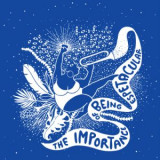
Thiago França presents A Espetacular Charanga do França - The Importance of Being Espetacular

São Paulo-based carnival collective and brass band combine retro horns with cumbia, baile funk, jazz, Michael Jackson & more

A Espetacular Charanga do França started as a political act, part of a recent movement which has seen the people of São Paulo reclaim their streets, turning their city into a revelation of Brazilian carnival. The group takes equal inspiration from the powerful charanga horn and percussion bands that stir the crowds at Brazilian football matches, and the expertly-arranged sounds of 60s

samba, finding that sweet spot between musicianship and music that makes you lose your shit. And they do it with humour, clear as day in their covers of Michael Jackson and pagode pop hits, and the baile funk and Balkan rhythms that sneak their way in to the tunes.

Since forming in 2013 the group have become an iconic staple of São Paulo’s revived carnival, generating crowds 15,000 strong. Though COVID-19 put a stop to them hitting the streets this year, in 2020 they made their way to carnival with over 60 brass players and 30 percussionists, declaring their bloco an anti-fascist zone, their reply to a political climate in Brazil that is suffocating human rights, culture and any hope for equality.

“I like to think that Charanga is an oasis in the middle of all the shit that we live, where you don't have to be worried about who you are, what are your preferences, whether you can be comfortable. If you want to parade with us wearing a tea towel you can, you won't be harassed. And it's also about music, it's about listening to music. We do this thing the whole year, we rehearse all year, we do too much so that people can just get crazy and not care about the music.” Thiago França

The group is the brainchild of saxophonist Thiago França, best known as a founding member of Afro-punk explorers Metá-Metá, and one of São Paulo’s most in-demand horn men, with credits on influential albums by Criolo, Elza Soares, Céu and Lucas Santtana. A

pre-ordina ora11.02.2022

dovrebbe essere pubblicato su 11.02.2022

29,79
HARARI - GENESIS

Harari

GENESIS

12inchTWM74
Tidal Waves Music
04.02.2022

Rare South African Funk/Soul album from 1977 - First vinyl reissue since 1982 - First ever release outside of the African Continent - 180g black vinyl // Harari was a band that was deeply rooted in pan-African politics, the parallel cross-influences of the Black Panther Movement and Black Consciousness. African American soul music and Soweto Soul contributed to the way Harari became purveyors of all the styles we know today as Afro-soul, Afro-pop and Afro-jazz. The Beaters/Harari left behind a body of work that fused traditional African sounds with rock, funk, jazz, soul and psychedelia into a unique and coherent sound. It shows their ability to capture the many genres flying around South Africa during a time of intense political and cultural shifts. The album we are presenting you today (Genesis from 1977) comes swinging right out the gate with a set of six monster anthems, explosive up-tempo jams, gorgeous vocal harmonies and chants, Afro-centric fusions of rock, funk and indigenous influences. The album is packed with mesmerizing drum-grooves, psychedelic improvisations and catchy Afrobeat rhythms. This is a quintessential Harari record that every serious collector or fan needs to have in his collection. Originally released in 1977 on Gallo Records South Africa (and later repressed in 1982 on the same label), Tidal Waves Music now proudly presents the first official reissue of this rare album (original copies tend to go for LARGE amounts on the secondary market_that is if you're lucky enough to come across one). This is also the FIRST time 'Genesis' is being released outside of the African continent. This unique record comes as a deluxe 180g vinyl edition (strictly limited to 500 copies) with obi strip and featuring the original artwork.

non in magazzino

Ordina ora e ordineremo l'articolo per te presso il nostro fornitore.

32,73

Last In: 4 years ago
Kiyoshi Yamaya, Toshiko Yonekawa & Kifu Mitsuhashi - Wamono Groove: Shakuhachi & Koto Jazz Funk '76

Following the already classic Wamono A to Z trilogy, 180g presents an exceptional collection of jazz funk / rare groove tunes recorded in the mid-seventies at the Nippon Columbia studios by three giants of Japanese music: arranger Kiyoshi Yamaya, koto legend Toshiko Yonekawa and shakuhachi master Kifu Mitsuhashi.

- 180g heavy vinyl pressing, reverse board jacket

- Fully licensed Nippon Columbia masters available for the first time outside of Japan

- Mastering and lacquer cut by Jukka Sarapää at Timmion Cutting Lab, Helsinki, Finland

- Artwork by Nker

---

Born in 1932 in Tokyo, Kiyoshi Yamaya started his musical career in 1953 when he played in various jazz bands in town. In 1957, Yamaya joined Nobuo Hara's famous jazz big band Sharps & Flats as a baritone saxophone player and started composing, arranging, and recording for them and other big bands. He became a key jazz figure in Japan in the sixties together with Norio Maeda and Keitaro Miho, both jazz pianists, composers and arrangers, by forming the Modern Jazz Three Association – which aimed at improving the level of Japanese jazz composition and arrangement. In the mid-seventies, his Contemporary Sound Orchestra explored jazz funk fusions with traditional Japanese melodies and instruments such as the shakuhachi, koto, biwa, and shamisen. These works were recorded for a series of panoramic Japanese albums released domestically on Denon and Nippon Columbia, from which the tracks on this compilation are taken from.

Toshiko Yonekawa, born 1913 in the city of Himeji, not so far from Osaka, is the eldest daughter of koto and shamisen master Kin'o Yonekawa. She started studying both instruments with her talented father from the age of 3, played in her first concert at 8, and was only 12 years old when she first appeared on national radio. Her unique style of koto playing is widely recognized due to the extreme accuracy of the intonation and rhythm, as well as the unequaled beauty of the instrument's sonority. After a life decorated with awards and prizes, Toshiko Yonekawa was named a Living National Treasure in 1996.

Born in Tokyo in 1950, Kifu Mitsuhashi is a great master of Koto style shakuhachi. After completing the NHK Hōgaku Training Program in 1972, Mitsuhashi became a member of Pro Musica Nipponia, a group of leading composers and top-ranking musicians devoted to performing a wide-ranging repertoire of classical and contemporary compositions from both Japan and the West – in which all music is performed by traditional Japanese musical instruments. Mitsuhashi has toured the world for hundreds of recitals, also as a soloist, and has performed his art with the greatest ensembles such as the BBC Symphony Orchestra and the Berliner Philharmoniker. In 2020, Kifu Mitsuhashi was awarded the Order of the Rising Sun.

---

All tracks selected and compiled by Greg Gouty and Maxime Brottes, with the assistance of Ryohei "Nitchiku-kun" Tanaka.

All tracks licensed by Nippon Columbia, Japan.

Mastering and lacquer cut by Jukka Sarapää at Timmion Cutting Lab, Helsinki, Finland.

Artwork by Nicolas Kerembellec (Nker.fr).

Proofreading by Brian Durr (Diskotopia).

Executive producers: Greg Gouty and Maxime Brottes.

180GWALP04 - Manufactured and distributed by 180g.

non in magazzino

Ordina ora e ordineremo l'articolo per te presso il nostro fornitore.

26,85

Last In: 13 days ago
Sea Wolf - Through A Dark Wood (Deluxe)

Acclaimed Los Angeles indie songwriter Alex Brown Church has announced the release of Sea Wolf - “Through A Dark Wood (Deluxe)” on November 19 via Dangerbird Records. “Having it come out now feels kind of fitting,” Church remarked. “‘Through a Dark Wood’ originally came out in March 2020 at the beginning of the pandemic, when we were all entering into a new ‘dark wood’ together. We’re beginning to figure it out, though we’re still not sure what’s next. Just like the story of the album.” “Through A Dark Wood (Deluxe)” includes 5 new songs from the original sessions where Church, coming out of a bruising divorce, wrote, recorded and scrapped a full album's worth of material before starting anew. Deluxe Tracklist: 1. Witchknife 2. Reflections On A Grey Dawn (feat. Dustin O'Halloran) 3. Two Figures 4. Here For You 5. Animal Mind

pre-ordina ora28.01.2022

dovrebbe essere pubblicato su 28.01.2022

26,01
Kenji Kawai - Patlabor 2: The Movie

WRWTFWW Records is absolutely honored to announce the release of Kenji Kawai’s complete soundtrack to Mamoru Oshii's 1993 superb political thriller science-fiction mecha anime PATLABOR 2: The Movie, available on vinyl for the first time ever and housed in a beautiful heavy gatefold sleeve with obi, as well as on digipack CD. Both versions come with liner notes by the great Masaaki Hara.
A true soundtrack maestro, Kenji Kawai is behind the legendary soundscapes of cult animes and movies such as Ghost in the Shell, Avalon, Ring, Ip Man, and Seven Swords among numerous others. PATLABOR 2: The Movie (Original Soundtrack) is one of his most experimental offerings, an outstanding palette of emotion-filled ambient atmospherics and percussion mastery breathing beautifully through Kawai’s minimalism meets modern classical approach. His symphony of moods paints a delicate picture of urban isolation, a central theme in the movie, but doesn’t hide hints of hope for a joyful future.
PATLABOR 2: The Movie (Original Soundtrack) is an ideal companion to Kenji Kawai’s Ghost in the Shell soundtrack, already available on WRWTFWW Records.

non in magazzino

Ordina ora e ordineremo l'articolo per te presso il nostro fornitore.

24,16

Last In: 4 years ago
Articoli per pagina:
N/ABPM
Vinyl