02AM is an 4 track EP by the young producer Hekkla from Eindhoven in the Netherlands.
The first track is 'Sunset Strip', a slowly build house track that moves like the last waves of heat at the end of a hot summers day, walking home feeling satisfied, all ready for the night. 'Saturday Morning Sentimentality' is a hard to pinpoint track that sounds like the bastard son of a trio between the melancholic side of Cyndi Lauper, Alphaville and the echoes of a cheesy saturday morning cartoon theme song from the late 80's. On the other side 'Memories of Tau Ceti' feels like tumbling into space with only the memories left of a good time on an alien world, accelerating faster and faster but still enjoying it, even though you know that the vacuum of space will eventually kill you. Finishing with the hardest track 'No Math', because, boys and girls, it's no math...
Hand stamped artwork by Frank Koedood.
Cerca:hard left
- A1: Jone's Disco - Los Porcos
- A2: Comme Ça - Domenique Dumont
- A3: Berlin - Ruede Hagelstein & The Noblettes
- A4: Ol Fashioned Kiss - Ala.ni
- B1: C'est La Vie - Laure Briard
- B2: Samana - Bones & Beeker
- B3: Sonate Pacifique (Radio Edit) - L'impératrice
- B4: Hoping (Herbert's High Dub) - Louie Austen
- C1: Velo Patrol - Roscius
- C2: Plage Isolée (Soleil Levant) - Polo & Pan
- C3: Punks Still You - Justine & The Victorian
- C4: A Walk In The Dark - The Central Executives
- D1: Farewell To Wendo - Mock & Toof
- D2: Pulse - Shigeto
- D3: Speak Low - Billie Holiday
- D4: The Beat Generation - Bob Mcfadden & Dor
Hunting down the coolest sounds around the globe, the wewantsounds crew have curated another special mix for your Lazy Sundays. Dishing out a tasteful mix of new tracks from under the radar, this selection features a string of sunny pop, indie grooves, chilled electro and relaxed disco, the whole seasoned with a couple of leftfield cult classics and classy jazz tracks for good measure. Sunday Mixtape is the perfect sonic brew that will bring you back to life after a long night or hard partying. Many of the tracks in this selection have barely been heard outside of the underground circles and feature young artists who have just sprung out to life with the exception of UK soul diva ALA.Ni and the recent success of her melancholic jazzy album and L'Impératrice, the next disco big thing out of France, whose buzz is getting louder.
Here you'll find new French nouvelle vague singer Laure Briard, US groovy duet Bones & Beeker, minimal house producers Roscius and Shigeto as well as Domenique Dumont with a buzzing balearic beat.
Sunday Mixtape also features a few cult classics such as Mock & Toof's 'Farewell to Wendo', Louie Austen's 'Hoping' and Justine & The Victorian Punks' 'Still You', a sought after NY avant disco 1979 tune led by French expat fashionista Justine and saxophonist (and frequent Arthur Russell collaborator) Peter Gordon.
How time flies. There are only a few months left till the summer begins. Right on time there is a new record on forTunea coming out too. Therefore we present our new members on the label. JAKOBIN & PELETRONIC will release this may their new EP called "Girlo"! The title track from this sympathetic Vienna based duo is a fluffy laid back tune, that will fit perfectly for this year's open air season. While the second track on the A-side features a more harder and faster version by Klaus Benedek. On the other hand "The Ghetto Code" focuses more on a darker note with its use of minimalistic drumpatterns, deep heavyweight synths and a thought-provoking speech. Last but not least on B2, MPC wizard Roman Rauch did a remix of that track aswell. In total a good diversified record that has useful material for everyone!
Limited to 300 copys --- Mastering by Patrick Pulsinger
Jamie Roberts is no stranger to the more experimental tenets of the Techno genre, and much of the British artist's output of late has hinted at more leftfield leanings. A recent return to Will Bankhead's Trilogy Tapes imprint saw a brace of meditative, post-Detroit workouts - employing the same heady, hardware aesthetic as much of his work on Ternesc - though at a drastically reduced tempo.
It's this same willingness to break down perceptions regarding his own music that marks Walk Type - Roberts' debut on the Avian label, as a notable chapter in the artist's discography.
In terms of aesthetic finish, AVN027 might be Roberts' most comprehensive and well articulated ode to the culture of machine music - but it's also his most organic offering. Corroded drones provide the basis for much of the material, pitching & bending at will - shifting & warping in and amongst furtive drum work, that by and large sits uncharacteristically deep in the mix.
For the most part the record eschews traditional dance floor functionality in favour of this rich, experimental premise - it's early moments are generally unclassifiable, though nods towards a caustic IDM variant offer some context. In it's later stages, the material moves tentatively closer to the club environment, as Robert's offers up a handful of anxious, low slung tools - that, whilst not straying far from the crushed, greyscale tone of their predecessors, round out an enviable addition to the Avian catalogue.
- A1: Dorothy Ramsey - He's A Real Gone Guy
- A2: Johnny B & The Music Makers - Unchain My Heart
- A3: Bobby Wade - They Call It Stormy Monday
- A4: Rene Bailey - Woke Up This Morning
- A5: Howard A. Smith - Sugar
- B1: Nu Art Quartet - California Dreaming
- B2: Johnny Walker Trio - The Purple Jellybean
- B3: Bob Brown Quartet - Dell's Bell's
- B4: Bob Hines Trio - Dasheka
- B5: Steve Mason Trio - The Nitty Gritty Humbug
- C1: Al Jarreau & Trio - Take Five
- C2: Matilda Haywood - Can You Handle It 1
- C3: George Smith - Out Of This World
- D1: Ray Johnson - The Deep End
- D2: Lee Mitchell - How Can You Be So Cold
- D3: Shelley Fisher - St. James Infirmary
- D4: The Eminent Stars - Hearts Are Jumping
One year has passed since the last release in this series and, as always, the Tramp Records crew have been working hard during the last 12 months to come up with an equally fine selection of tunes for this brand new volume. Our aim is to keep up with the quality of each release, a task which certainly does not get any easier as we step forward into the twenty first century.
There is no need to praise this selection of tracks. It is larger-than-life. And those who do not recognize the distinctiveness of it should better seek medical advice. The most astounding fact is certainly that 99% of the record buying public have never heard any of these tunes, most likely not even the artists. And we are not talking of people who solely listen to mainstream music. No. Even music lovers who believe that they have a good portion of knowledge when it comes to jazz and soul music will be left speechless.
You can skip to any song on this album and you won't be disappointed. The only premise is that you are a fan of raw, earthy soul and jazz music. If this is the case then you can't go wrong. Rene Bailey, Matilda Haywood, Lee Mitchell, Nu Art Quartet, to name a few. It is high time to introduce all these names to a broad audience and to prevent that they vanish into thin air. The Movements series was coined to introduce music lovers to so far unheard musical treasures. Tunes which only hardcore record collectors have had the privilege to enjoy it...until now.
Slight Delay aka Tiago makes a welcome addition to the Vibrations camp with this supreme e.p of leftfield house. 'West Sonic Vibe' is a deep eastern infused tropical gem with 'Party Over' taking on a harder edge on the same mystical journey. Oz producer of the moment Inkswel takes on the remix duties and rocks 'Party Over' into a slower funked up, bass line heavy trip via Sugarhill.
During the '70s, work days at Umiliani's Sound Workshop Studios were hectic; thousands of sessions were held in order to keep up with a very busy Italian movie industry: Hundreds of soundtracks alongside with music library were recorded and released on vinyl in very limited quantities for TV and film production use only. Those LPs are now proper collectors' items, extremely hard to find.
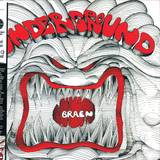
Filled with hypnotic bass lines, heavy drums and screaming fuzz guitars "Underground", the first LP of the fictitious group known as Braen's Machine, is one of the rarest and the most expensive of them all, always "reaching" sky high prices throughout the second hand vinyl market. A fast-beat jam with hammond scales and a twin lead guitar theme ("Flying") opens the A Side soon followed by "Imphormal", a classicfunk-beat-meetsfender- rhodes-and-psychedelic-guitar number. The music then switch to "thriller territories" with "Murder" which is based on prepared piano swells and a deeply hypnotic walking bass, reminiscent of the best Morricone's soundtracks for Dario Argento's movies. Two highly percussive songs complete the A Side: "Gap" is an improvised song with guitar and keyboards dwelling over an infectious drum rhythm while a marching snare and a vibraslap effect are the special features on "Militar Police".
The mood relaxes slightly on the opening of the B Side with a lazy jazz groove on "New Experience" but the rock influences are soon brought back on the following track "Fall Out". "Obstinacy" is all about keyboards with syncopated rhodes themes and distorted hammond sustained notes whilst the fuzz guitar is back again screaming through the left channel on the last song of the album, "Description". We could happly say that that was the golden age of the Italian music library. But who's behind the name "Braen's Machine" On the original cover the songs are credited to the composers Braen and Gisteri. Braen was a pseudonym often used by Alessandro Alessandroni, an extremely skilled and versatile musician, and one of Umiliani's closestcollaborators. He could write, conduct and arrange, he could sing (ever heard "Mah Na Mah Na"), he could whistle (ever heard Morricone's "For a fistful of dollars") and he could play almost anything: guitar, bass tuba, accordion, sitar and the list grows..... His first album "Alessandro Alessandroni e il suo complesso" (Sermi, 1969), had transformed the Italian library music from orchestral sound beds into the psychedelia we all love; the extremely fuzzy guitars are very "present" on "Underground" too. For a long time Gisteri's real identity was rather mysterious; often wrongly attributed to Umiliani. Gisteri was the pseudonym of Oronzo De Filippi, art name of Rino De Filippi, music supervisor to the Italian public broadcast company (RAI) between the '60s and the '70s. De Filippi composed other notable pieces such as "Riflessi" (Edipan, 1975) and "Nel mondo del lavoro" (Sermi, 1972).
De Filippi passed away few years ago but we were able to contact Alessandroni to talk about this LP. Remembering "Underground" recording session as one of the thousands he took part of, Alessandroni told us that this record was produced very quickly, in two days maximum. This was made possible by a team of wonderfully capable session musicians and the creative genius behind the mixing desk; this incredible combination helped to focus on the mood of each track even more. Unfortunately there are no liner notes but Alessandroni's memories and speculations, based on other music tracked in the same period at Soundworkshop by resident engineer Claudio Batussi, led us to identify this as the most probable lineup: Munari on drums, Majorana on bass, Vannucchi on keyboards and Alessandroni himself on guitar. For this reissue the sound has been restored and the cover art reproduced exactly as it was.
Dutch DJ, producer and Wolfskuil label boss Darko Esser is to self-release his sophomore album, Anipintiros, in April 2014. The eight track album comes four years after his debut and is his first as Tripeo, the techno leaning alias he has been working under most often in recent times.
Working as Tripeo has reinvigorated Esser, who under his own name has been producing his unique take on electronic music for a decade now. 'It was liberating to have another persona take over,' says the man himself. 'I have been so inspired and productive ever since that I woke up one day with the thought 'I'm ready to do another album' and started straight away that day.'
Tripeo music is aimed squarely at the dancefloor, and there sure are some full blooded cuts on the album, but so to are there concessions to the listening experience, meaning deep, dark passages and more leftfield experiments help tie the whole thing together into one cohesive and coherent whole. 'Like all albums, this is a very personal statement,' explains Esser. 'It's just me trying to translate the overwhelming inspiration I feel right now into sound. That, and making the record as diverse as possible without losing the purist identity of Tripeo.'
That identity shines through right from the off on the album, which has been made using a knowing blend of both soft and hardware. 'Anipintiros #1' is a firmly rooted, rubbery bit of deep techno that works you into hypnosis and comes detailed with plenty of otherworldly ambiances. From there, Tripeo explores gallivanting techno run through with celestial pads on 'Anipintiros #2' and tripped out, ever shape shifting and dusty minimal sounds on 'Anipintiros #3'.
'Anipintiros #4' channels the widescreen and pumping techno of Detroit's finest whilst 'Anipintiros #5' is a more industrial and muscular track of the sorts that would sound perfect in the bowels of Berghain. 'Anipintiros #6' is one of the busier and more kinked techno rhythms with punchy drums and fax machine like melodies, before 'Anipintiros #7' thumps with real menace and 'Anipintiros #8' hums and hisses, spits and stutters like the suitably epic and melodic comedown you need after such a captivating ride.Everything, though is backed with serene synth work and an otherworldly sense of alien spirit that runs through all great techno.
There is plenty to get lost in throughout Anipintiros and it proves once again that Esser is someone able to coax far more feeling out of his machines than most.
DJ FEEDBACK
Early support from Blawan, Rødhåd, James Ruskin, Reeko, Exium, Mike Parker, Ben Sims, Rolando, Pfirter, Craig McWhinney, Cadans, Sandrien, Nuno Dos Santos
The third in the Modular Techno series from live analogue artist and Freerotation organiser Steevio.
After 15 years of producing techno live on hardware, in 2009 Steevio began building a dedicated machine on which he could totally improvise an entire techno performance from a blank canvas that far surpassed anything he could do with his previous setup of drum machines and synthesizers. Steevio's modular is 100% analogue; there is no computer involved, there are no memories to save sounds or sequencing patterns, and everything is improvised in real time..
Volumes 1 and 2 of the series were just a taster of what was to come, and were the early experimentations on Steevio's newly built machine. Steevio records everything he does, especially during the intense practice sessions for live gigs. All the music in the series are out-takes from these practice sessions, and the tracks from Volume 3 and the forthcoming Volume 4 all come from a three day period in practice for a recent live gig at Delete, Bournemouth, UK.
Volume 3 continues from where Volume 2 left off but delivered with more confidence and a deeper more hypnotic feel. Steevio continues to develop his skills and fine tunes his unique instrument in this dedicated 'for life' project.
The new album will be released across a series of 4 limited edition 12" vinyls. This is the 2nd 12 inch From Tronic Jazz The Berlin Sessions. A Guy Called Gerald has spent the last couple of years flitting through shadows, turning up on labels like Perlon, Beatstreet and Sender like a peripatetic prophet of the Berlin underground, seeding the scene with cryptic singles that return to the past to suggest alternate futures. Now he returns to Berlin's Laboratory Instinct label with the follow-up to 2006's Proto Acid: The Berlin Sessions, the album that re-established Gerald as an acid hero and techno auteur. Tronic Jazz: The Berlin Sessions builds upon the foundation established by its predecessor to create an even more powerful statement of intent, one that communicates more persuasively than ever Gerald's vision for techno in its third decade of existence. One immediate difference stands out, this time around. Where Proto Acid offered a seamless mix of 24 cuts, recorded in one epic session, Tronic Jazz collects 13 standalone tracks. That's welcome news to DJs. After so many years of digital anything-goes, you might have forgotten the kind of sounds that are possible with "old" machines: the way a lead stacked against tuned percussion and shrouded in pads can evoke still other sounds, hidden in the mix, or maybe not really there at all. It's a ghostly, suggestive presence, a kind of evocation of infinite possibility within the context of a limited set of inputs. In that sense, Tronic Jazz follows a certain minimalist impulse, but it's far too lush ever to be mistaken for the dread "mnml" of recent years. This stuff is wide-eyed and full of life. When it funks, it funks hard, and when it smoothes out, it can be as intimate as a hand-written note left on a lover's pillow. As "class ic" as Tronic Jazz may be, the album refutes any notion that "class ic" equals "retro," that the ideas have all been expressed before. Tronic Jazz takes the foundations of house and techno as though they were a kind of language, and speaks volumes with them.