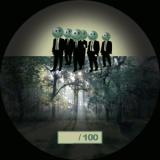
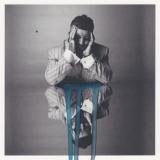
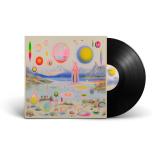
Hidden Traffic is the debut album by Hard To Tell via their own imprint, Vitrage Records. Spanning eight tracks, the album blends Detroit-influenced house, breakbeat textures, warm analog tones and subtle hypnotic techno nods. From the atmospheric opener Last Night Jam to the emotional closer Solid Love, Hidden Traffic showcases the full spectrum of the duo's sound - introspective, danceable, and deeply personal.
Buscar:hard to tell
"My favorite singer in the place was Karen Dalton. She had a voice like Billie Holiday's and played the guitar like Jimmy Reed." - Bob Dylan // Karen Daltons Capitol-Debüt aus dem Jahr 1969 ist endlich wieder erhältlich! Light in the Attic freut sich, eine brandneue Ausgabe dieser herzzerreißenden und bluesigen Einführung in die berauschende Welt von Dalton und ihrem tiefen Brunnen voller musikalischer Geheimnisse zu präsentieren. Weltmüde und vom Blues erfüllt, war Daltons unübertroffene interpretatorische Tiefe und emotionale Bandbreite wie keine andere. "It's So Hard To Tell Who's Going To Love You The Best" wurde 1969 für Capitol aufgenommen und reihte sich ein bei klassischen amerikanischen Songwritern wie Lead Belly, Fred Neil und Tim Hardin. Diese Neuveröffentlichung ist die endgültige, rein analoge Version von Daltons umwerfendem Debüt, mit neu gemastertem Audiomaterial von den Original-Capitol-Mastern, dem Original-Artwork von 1969 in einem erweiterten Klappcover, ungesehenen Fotos des Albumfotografen Joel Brodsky und einem Essay, in dem Karens Freunde und musikalische Mitstreiter zu Wort kommen, vom Albumproduzenten und Bassisten Harvey Brooks bis zum Musiker Peter Stampfel von den Holy Modal Rounders. - Features new all-analog mastering by Kevin Gray at Cohearent Audio, direct from the original analog tapes - Pressed at RTI - Includes liner notes by Brian Barr - Featuring unseen photos by legendary photographer Joel Brodsky - LP housed in an expanded gatefold jacket
This repressed 12" features 5 of the best early DM remixes from his now legendary (and long out of print) mashup EP 12"s. Includes his mashup remixes of NAS vs PORTISHEAD, AUDIO TWO vs AIR, SUZANNE VEGA vs 50 CENT, OUTKAST vs FUNKADELIC, and XZIBIT vs RADIOHEAD. Limited stock on colored vinyl.
In 1994, hip-hop was going through an at-times painful growth spurt. Since N.W.A.'s and Ice-T's ascent in the late '80s, the rap game was no longer owned by the East Coast. After the worldwide popularity of Dr. Dre's The Chronic in 1992, things were looking even worse for hip-hop's hometown. The East Coast / West Coast feud that would later indirectly claim the lives of Biggie and Pac was still in its infancy, but New York needed a shot in the arm. The hype behind young Queensbridge native Nasir 'Nas' Jones had been in full swing months before his smash debut album Illmatic, thanks to Columbia Records' promo machine. From his earliest appearance on Main Source's 'Live at the BBQ,' to his own accomplished debut 'Half Time' (as Nasty Nas, on the Zebrahead soundtrack in late 1992), it was clear that this kid was something special. In fact, the pressure on him must have been overwhelming at times. April 19, 1994 couldn't have come soon enough. And as soon as the first lines of 'N.Y. State of Mind' kick in, bolstered by perhaps DJ Premier's darkest beat of all time, the entire East Coast breathed a collective sigh of relief. God's Son had arrived. Backed by an absolute all-star cast of New York's top-shelf producers - Premier, Pete Rock, Large Professor, Q-Tip and a youngster named L.E.S. - the album never lets up. Serious to a fault, and lyrically dense to an extent that has possibly never been matched, the 20-year old Nas stood on the shoulders of his predecessors and proudly proclaimed, 'Don't f*** with the East... we are BACK.' Illmatic was actually a slow-burn, which might surprise fans that have come to its genius more recently. Despite an unheard-of '5 Mics' in The Source - despite an unwritten rule of never awarding classic status to debuts - it didn't go gold until early 1996, and didn't hit platinum status until late 2001. But when you dive deeper that shouldn't be a shock: like Black Moon and Wu-Tang's debuts, it was a dark, hard record, made for heads in New York, not teeny-boppers in Des Moines. There were no dance beats, no crossover love songs. Just boom-bap and rhymes, skills and heart.
Mit der Veröffentlichung von "Illmatic" etablierte sich Nas schnell als Hip-Hop-Ikone und hatte sich zu einem der angesagtesten Künstler in der Musikszene gemausert. Das legendäre Album wurde von den Kritikern als eine der beispielhaftesten Hip-Hop-Aufnahmen aller Zeiten gelobt. "Illmatic" trug auch viel zur Wiederbelebung der New York City Rap-Szene bei und ist heute eines der meistgefeierten und einflussreichsten Alben in der Geschichte. Nas stammt aus der Queensbridge Nachbarschaft von Long Island City, einer Hochburg der Rap-Künstler seit den 80er Jahren, und verkaufte weltweit über 20 Millionen Alben, ein Botschafter für die Hip-Hop-Kultur auf der ganzen Welt.
Eno Williams, frontwoman of Ibibio Sound Machine, uses both English and the Nigerian language from which her band's name is derived for the dazzling new album Doko Mien. Long lauded for jubilant, explosive live shows, Ibibio Sound Machine fully capture that energy on Doko Mien, the followup to their Merge debut Uyai.
In a glowing piece in the New York Times, those songs were praised for following 'in the tradition of much African music, [making] themselves the conscience of a community.' By pulsing the mystic shapes of Williams' lines through further inventive, glittering collages of genre, Ibibio Sound Machine crack apart the horizon separating cultures, between nature and technology, between joy and pain, between tradition and future. That propensity for duality and paradox seems common in people whose lives span continents.
Williams was born in the UK, but grew up in Nigeria, always steeped in her family heritage. She obsessed over West African electronic music, highlife, and the like, but was equally empowered by Western genres such as post-punk, disco, and funk. The London octet have enveloped themselves in that maximalist quilt proudly since their 2013 formation. Though it can often bring with it news of stress and uncertainty, the modern world further brings all these disparate traditions into connection.
'Everyone has everything now,' says multi-instrumentalist Max Grunhard. 'Everyone has immediate access to every genre, picking things up from everywhere—like magpies.' And while they haven't suddenly left their African roots behind, Doko Mien does find increased representation of English lyrics in the ratio. By sharing more directly with more universal lyrics, the record feels more anthemic, reaching for grander heights.
'We wanted to give people a reason to sing along, to find their soundtrack every day,' Williams says. 'We wanted everyone to feel as if they're part of the music as well.'
Late album highlight 'Guess We Found a Way' addresses the change with a coy smile. 'Guess we found a way to speak to you/ Guess we found a way to say what's true/ To say what's real,' Williams coos over glistening chains of reverberant synth and diamond dust percussion, before returning to Ibibio in the chorus. Perhaps the best example of the group's ability to convey meaning across language and tradition, to blend past and future into a singular present comes on 'She Work Very Hard'. The traditional Ibibio folk tale bobs over the waves of tuned percussion, chunky synth, and pinprick highlife-esque guitar, while Jose Joyette's drums and Derrick McIntyre's bass funk groove bring everyone to the dance floor. 'These stories won't be forgotten. Feel the music: it speaks to everybody,' Williams says. 'We can travel back in time together, while convening on a futuristic, present tense. We hope that we can give people that reason to wake up, that one song to sing and dance and be happy.'
Doko Mien: Tell me everything. On their new album, Ibibio Sound Machine provide the perfect companion, ready to digest as much as possible and then further unfurl beauty and hope. They remember and honor the past and charge forward toward the future, all while intensely expanding the present.
- A1: Standing In The Shadows Of Love
- A2: Bring Back My Yesterday
- B1: I've Found Someone
- B2: I've Got So Much To Give
- B3: I'm Gonna Love You Just A Little More Baby
- C1: Girl It's True, Yes I'll Always Love You
- C2: Honey Please, Can't Ya See
- D1: You're My Baby
- D2: Hard To Believe That I Found You
- D3: Never, Never Gonna Give Ya Up
- E1: Mellow Mood (Pt. 1)
- E2: You're The First, The Last, My Everything
- E3: I Can't Believe You Love Me
- F1: Can't Get Enough Of Your Love
- F2: Oh Love, Well We Finally Made It
- F3: I Love You More Than Anything (In This World Girl)
- F4: Mellow Mood (Pt. 2)
- G1: Heavenly, That's What You Are To Me
- G2: I'll Do For You Anything You Want Me To
- G3: All Because Of You
- G4: Love Serenade
- H1: What Am I Gonna Do With You
- H2: Let Me Live My Life Lovin' You Babe
- H3: Love Serenade
- I1: I Don't Know Where Love Has Gone
- I2: If You Know, Won't You Tell Me
- I3: I'm So Blue And You Are Too
- J1: Baby We Better Try To Get It Together
- J2: You See The Trouble With Me
- J3: Let The Music Play
- K1: Don't Make Me Wait Too Long
- K2: Your Love - So Good I Can Taste It
- L1: I'm Qualified To Satisfy You
- L2: I Wanna Lay Down With You Baby
- L3: Now I'm Gonna Make Love To You
- M1: Playing Your Game, Baby
- M2: It's Ecstasy When You Lay Down To Me
- M3: You're So Good You're Bad
- N1: Never Thought I'd Fall In Love With You
- N2: You Turned My Whole World Around
- N3: Oh What A Night For Dancing
- N4: Of All The Guys In The World
- O1: Look At Her
- O2: Your Sweetness Is My Weakness
- O3: Sha La La Means I Love You
- P1: September When I First Met You
- P2: It's Only Love Doing It's Thing
- P3: Just The Way You Are
- P4: Early Years
- Q1: I Love To Sing The Songs I Sing
- Q2: Girl, What's Your Name
- Q3: Once Upon A Time (You Were A Friend Of Mine)
15 Jahre nach seinem frühen Tod feiert - The 20th Century Records Albums (1973-1979)' Barry White als einen der größten Künstler / Songwriter / Produzenten der 70er Jahre. Er etablierte den neuen Klang der Orchesterseele, der über das Jahrzehnt und darüber hinaus zu einem Grundbestandteil wurde. Das Vinyl-Box-Set enthält alle 9 LP-Alben, die Barry White über das Label 20th Century Records veröffentlicht hat und werden hier zum ersten Mal zusammengestellt. Alle neun Alben wurden zum ersten Mal seit ihrer Veröffentlichung in den 70er Jahren von den originalen analogen Masterbändern remastert und werden hier mit ihrem originalen Sleeve und Label Art präsentiert. Die Alben wurden in den Abbey Road Studios in London auf hochwertigem 180g Vinyl geschnitten, um die höchstmögliche Audioqualität zu garantieren.
[ZZA] q4 | Oh Me, Oh My (I'm Such a Lucky Guy)
[ZZB] r1 | I Can't Leave You Alone
[ZZC] r2 | Call Me, Baby
[ZZD] r3 | How Did You Know It Was Me
- A1: The Gaslight - Hard Times Are Coming, Hard Times Are Here (Previously Unissued)
- B1: Just Because Of You (Previously Unissued Mix)
- B2: It’s Just Like Magic
The earliest foundations of the Detroit Harmony group ‘The Gaslight’ came when future lead singer Oliver “Butch” Cheatham via an introduction by his sister Jackie joined a group known as ‘The Young Sirs’ who recorded, “There’s Something The Matter (With Your Heart/African Love” for Magic City during 1969. The group included Oliver’s future brother -in-law Allen Cocker (Jackie’s future husband).
Oliver and Allen went on to form a new vocal quartet with Curtis “Kippy” Anderson and Michael Eatmon. Under the group name of ‘The Gaslight’ they signed to Uptight Productions Incorporated, a local production company founded by local businessmen Marvin Figgins and Arnold Wright. The Gaslight were the only vocal harmony group signed to Uptight Productions and as such, it was they who made the most recordings across two label imprints Grand Junction and Black Rock. The Gaslight’s first single “I Can’t Tell A Lie/Here’s Missing You” was released on Grand Junction (GJ1001) in 1970, For the groups second single Figgin’s placed them under the guidance of legendary producer/songwriter, the late George McGregor under whom they recording “Drifting Away/If You See Her” Grand Junction (GJ1002) released in 1971 For their next release Figgin’s switched the group to his Black Rock label to record “Out Of My Hand/I’m Only A Man” Black Rock (2002) under the pseudonym of Butch & The Newport’s With “Butch” being Oliver’s nickname. A later, second release of “I’m Only A Man” but with a different flip side “I’m Gonna Get You” came out on Grand Junction (GJ1100) in 1973 with the performing artist credits reverting back to ‘The Gaslight’.
Upon leaving Uptight Production’s the group found a new home when George McCregor took them to a new fledgling label T.E.A.I (an abbreviation for “Tellin’ Everybody About It”) owned by ‘The Dramatics’ Road Manager Charles Underwood. ‘The Gaslight’s’ first and only release for T.E.A.I, was the mellifluous 1975 double sider “Just Because Of You/It’s Just Like Magic”. Underwood had precured a working relationship with Polydor Records who picked the release up for national distribution three months later. As good as the record was due to poor promotion it failed to make any notable noise and eventually sank with the group soon after breaking up.
During Soul Junction’s later dealings with the late Oliver Cheatham, respected UK Collector Andy Rix mentioned he owned a three track acetate containing the two mentioned T.E.A.I/Polydor tracks plus a third unissued dance track “Hard Times” which through a licensing deal with Charles Underwood Soul Junction now present to you on a three track 45, released under its full title “Hard Times Are Coming, Hard Times Are Here” backed with a previously unissued mix of “Just Because Of You” alongside the issued 45 version of “It’s Just Like Magic”.
- A1: Code 718 - Equinox (Heavenly Club Mix)
- A2: Cls - Can You Feel It (In House Dub)
- B1: George Morel - Let's Groove
- B2: Kcyc - I'm Not Dreaming (Mystipsychotix Mix)
- C1: Hardrive - Deep Inside
- C2: Groove Patrol - Need Your Love (Original Mix)
- D1: Lou² - Freaky (The "Bar Heads" Mix)
- D2: Wink - Higher State Of Consciousness (Tweekin Acid Funk)
Repress!
Legendary NYC house label Strictly Rhythm is celebrating a mammoth 3 decades of cutting edge, roof-raising house music. Truly a benchmark. Originally founded in 1989 by the dynamic pairing of music industry man Mark Finkelstein and A&R expert Gladys Pizarro, Strictly tapped directly into the fertile New York underground and after hours club scene, helping to launch and bolster the recording careers of dance music luminaries like Armand Van Helden, Roger Sanchez, Ultra Nate, Todd Terry, Wamdue Project, DJ Sneak, Louie Vega and many more. Strictly Rhythm is easily one of the most recognisable and respected dance music powerhouses of all time.
Across 3 limited double vinyl offerings, the Strictly catalogue has been expertly picked over to present you with a snapshot of some of the most earth shattering house music to emanate from the streets of New York City. A who's who of producers and artists, all killer and no filler. End to end classics that help to tell the story of one of dance music's most well loved labels. Classic cuts and essentials from Danny Tenaglia (Code 718), George Morel, Kerri Chandler (KCYC), Louie Vega and more all feature on part 1 in their unedited, 12" mix glory.
Fully legit, remastered and selected with love courtesy of Strictly Rhythm and Above Board distribution for 2020. Happy birthday Strictly Rhythm!
Rising star Storm Mollison lands her debut on Heist with an ep blending House & R 'n B and we're completely hooked.
The future is looking bright for Storm Mollison - Heist's newest. Marked as artist to look out for by Shazam on their fast forward 2026 list, Storm's got a bright and busy year ahead, after an already big 2025. Last year alone, she featured on Kiki's hit 'Getting ready for the party', featured on a Mixmag London event and a Raw Cuts X Heist ADE party, had her first cover feature on Spotify, multiple radio 1 appearances, released several singles, a full EP on Noir Fever and a Luuk van Dijk remix.
If that's not enough to get you excited, we suggest you just listen to her 'Act like that' EP on Heist. In Storm's own words: "it's the most exciting music I've made so far" and we couldn't agree more. Her EP is a perfect blend of her love for house music and soulful R 'n B with its 4 tracks smothered in deep chords, smooth vocals and crunchy textures.
EP opener 'Doing Sumthin'' has been a staple in Dam Swindle's sets ever since receiving Storm's first demo and has never failed to make the crowd bounce from left to right with its quirky and equally cool vocal courtesy of Aaron Pfeiffer. Sometimes, you just need someone to tell you which way to move and before you know it, the whole club is doing it. The beat is chunky, and the sax lick is a nice wink to the old school house that has influences Storm's sound so much.
Act Like That - the EP's title track -, is a modern R' n B song that could have easily been on Rochelle Jordan's latest album. The lyrics are perfectly delivered by Storm herself and celebrate women who stand up to unreliable men. It could well be the badass soundtrack of womanhood for 2026 delivered in a silky-smooth package that'll live rent-free in your head for the foreseeable future.
On the flipside is "Gotta Go', an undercover dancefloor burner with lush keys and a lean-back groove. The track relies on crisp textures and little frizzles all throughout the track, with a big breakdown for ultimate release.
Ep closer 'Workin' takes us back into R 'n B territory, this time in a very danceable form. Storm's soft vocals lie on top of a steady beat with deep chords and a bassline so sexy It'll make you get down no matter where you're hearing this.
It's hard to speak about a breakthrough for an artist that has already seen such a rise in the scene, but if we're talking about her music, this will be the record that people come back to after years and say, "remember when she releases ALT!?"
As always, enjoy the music and play it loud!
Yours, Maarten & Lars
Sicilian-born, Amsterdam-based Fran LF returns to Nastia's imprint with three Techno tracks built over a year of studio work, each one telling part of a single story that unfolds across the EP. The narrative moves through different chapters, starting with tracks that shift and transform as they play out, building tension through evolving elements rather than straightforward drops. These are straight-up warehouse cuts - the kind that start one way and shift into something heavier as they unfold. Dubby atmospheres that harden into driving rhythms, basslines that anchor the groove, and synths that evolve throughout.
Closing the record is a remix from Sicilian producer LPV, a close friend and admirer who reworks "Tsufuru Relaxation" with his signature dark, driving approach. He strips it down, adds a relentless bassline, and gives the track a completely different, moody and ethereal energy while respecting what made the original work.
Solid dancefloor techno with enough depth to keep things interesting.
- A1: Les Masques - Il Faut Tenir (1969)
- A2: Isabelle Aubret - Casa Forte (1971)
- A3: Christianne Legrand - Hlm Et Ciné Roman (1972)
- A4: Jean Constantin - Pas Tant D'chichi Ponpon (1972)
- A5: Billy Nencioli & Baden Powell - Si Rien Ne Va (1969)
- B1-: Marpessa Dawn - Le Petit Cuica (1963)
- B2: Jean-Pierre Sabar - Vai Vai (1974)
- B3: Sophia Loren - De Jour En Jour (1963)
- B4: Isabelle - Jusqu’à La Tombée Du Jour (1969)
- B5: Sylvia Fels - Corto Maltesse (1974)
- C1: Frank Gérard - Comme Une Samba (1972)
- C2: Ann Sorel - La Poupée Des Favellas (1971)
- C3: Charles Level - Un Enfant Café Au Lait (1971)
- C4: Andrea Parisy - Les Mains Qui Font Du Bien (1970)
- C5: Audrey Arno - Quand Jean-Paul Rentrera (1969)
- C6: Aldo Frank - T’as Vu Ce Printemps (1970)
- D1: Christianne Legrand - Cent Mille Poissons Dans Ton Filet (1972)
- D2: Clarinha - Lemenja (1970)
- D3: Hit Parade Des Enfants - Aquarela (1976)
- D4: Jean-Pierre Lang - Tendresse (1965)
- D5: Magalie Noël - Une Énorme Samba (1970)
- D6: Françoise Legrand - La Lune
Ever since the late 1950s bossa-nova revolution, Brazil’s influence on French music has been undeniable. Pierre Barouh, Georges Moustaki and a vast array of lesser known artists, all made the Musica Popular Brasileira (MPB) an axis of promotion at the service of a cool and metaphysical, modern and mixed Brazilian lifestyle. Some were seduced by the poetic languors of the bossa, some were looking for fun, and others just loved the American hybridization of jazz-bossa, jazz-samba.
What is bossa nova? One of its creators, Joao Gilberto said: "Its style, cadence, everything is samba. At the very start, we didn't call it bossa nova, we sang a little samba made up of a single note - Samba de uma nota so .... The discussion around the origins of bossa nova is therefore useless”. It is nevertheless useful to remember that these magnificent Brazilian songs, which the guitarist describes as samba, were shifted and balanced around improbable chords. "I like things that lean, the in-betweens that limp with grace," said Pierre Barrouh, quoting Jean Cocteau.
With emotion, arrangements for violin and supple guitar licks, bossa nova rapidly changed. A transformation that can be heard in the Tchic, tchic, French Bossa Nova 1963-1974 compilation, the result of a cultural reappropriation, which traveled through the United States and supplemented itself in France.
A musical revolution that has remained significant, bossa nova was born in Rio. From 1956 to 1961, Brazil lived through its golden years. In five years, the country had invented its modernist style. Elected president in 1956, Juscelino Kubitschek de Oliveira, an elegant man with a broad forehead, brandished a promising slogan: "Fifty years of progress in five years". He quickly got to work. Not worried about increasing debt, he launched the project for a new federal capital, Brasilia, designed by the communist architect Oscar Niemeyer. Volkswagen opened state-of-the-art factories and created the “fusquinha”, the Beetle. In Rio, the Vespa made its first appearance. The Arpoador Surf Club crew run into the “girl” from Ipanema, Helô Pinheiro - the tanned garota ("chick"), between a flower and mermaid, who at 17 walked by the Veloso bar, where the fiery author and composer, Tom Jobim and Vinicius de Moraes, were getting drunk on whiskey. From then on, bossa symbolized cool.
In 1958, Joao Gilberto recorded Chega de Saudade, which the directors of Philips denied, calling it "music for fagots". The marketing director, who believed in it, secretly pressed 3000 78-inch vinyls and distributed them at schools around Rio, creating a tidal wave.
American jazzmen then took over. In particular, trumpeter Dizzy Gillespie and guitarist Charlie Byrd. In November 1962, the Brazilian Ministry of Foreign Affairs funded a "Bossa-Nova" concert at Carnegie Hall in New York, inviting the genre’s pioneers. Unprepared, the show soon turned to disaster. But the troupe was invited to the White House by Jackie Kennedy. The first lady loved "the new beat" and in particular Maria Ninguem, a song by Carlos Lyra, later covered by Brigitte Bardot.
In Brazil, the 1964 military coup quickly ended this euphoria. The destructive atmosphere that ensued pushed many Brazilian musicians to leave, if not to exile. Thus, Tom Jobim, Sergio Mendes and Joao Gilberto arrived to the United States. In New York, Joao Gilberto met saxophonist Stan Getz. At the time, he was married to the Bahianese Astrud Weinert Gilberto, who had a German father. She had never sung before, but she knew how to speak English. Getz therefore asked her to replace her husband on The Girl From Ipanema. The Getz/Gilberto record with Tom Jobim on piano, was released in March 1964. Phil Ramone, the "pope of pop" was in charge of sound.
Bossa nova arrived in Paris through the classic “guitar-voice” channel (Pierre Barouh, Baden Powell, Moustaki…) But France loved jazz and Paris had already welcomed its American contributors. All these good people were to pass through Saint-Germain-des-Prés. The cabaret l'Escale became the Mecca of Latin American sound where one could find Pierre Barrouh and his friends, such as the Camara Trio, samba-jazz aces, whose only record was published by the Saravah label. With a band strangely called Les Masques (a band that included Nicole Croisille and Pierre Vassiliu, among others), the Camara Trio recorded an interesting Brazilian Sound, including the track Il faut tenir which is present on this tasty compilation of rarities.
Other enlightened musicians can also be found on the compilation, such as Jean-Pierre Sabar (songwriter for Hardy, Auffray, Leforestier ...) and the French pop rock organist Balthazar. In 1975, Sabar recorded Aurinkoinen Musiikkimatka on a Finnish label, which featured the crazy Vai, Vai, included on this record. We are now following the footsteps of Brazilian electronic musicians such as Sergio Mendes, Eumir Deodato or Marcos Valle who created funk and disco sounds on their keyboards and synthesizers. A style that influenced Véronique Sanson when she wrote Jusqu’à la Tombée de la nuit in 1969 for Isabelle de Funès, the niece of Louis and a great friend of Michel Berger - Sanson did end up singing this track on her 1992 Sans Regret record.
The pinnacle of exoticism and travel, Sylvia Fels’ Corto Maltese includes bongos, sea mist and ocean sounds. The title was taken from Jacky Chalard’s concept album written in 1974, Je suis vivant, mais j’ai peur (I am alive, but I am scared), based on Gilbert Deflez’s science fiction novel.
However, bossa nova extended the scope of popularity. "In the 1970s, I was a fan of Sergio Mendes, Getz / Gilberto. I fell in love with this music that I knew because I had been an orchestral singer, " explained Isabelle Aubret, who in 1971 delivered a composite record of covers by the very funky Jorge Ben, Orfeu Negro, Tom Jobim, Vinicius de Morais and Jean Ferrat. "I recorded this album for Meys Records in Paris, far from Brazil, with wonderful musicians, François Raubert, Roland Vincent, Alain Goraguer...". The latter wrote the arrangements for Casa Forte, a very percussive title borrowed from Edu Lobo, one of the initiators of the bossa who spent time in California. "Jazz and bossa came together and produced very rhythmic music. I love singing, it allows me to dream, to have fun, to feel a high on stage, and these songs brought me joy, made me swing, my singing felt like a dance.”
The world tours of French singers and their desire for the tropics, often brought them to Rio with its hills, forests, caipirinhas and tanned bodies. There are surprises though, like this Iemenja (Iemenja is the goddess of the sea in the Afro-Brazilian candomblé religion). Not unlike the composer and musician Jean-Pierre Lang, based in Sao Paulo, Claire Chevalier taught Brazil to Brazil. In 1970, the singer and painter published a 45-inch vinyl, Mon mari et mes amants (My husband and my lovers), under the improbable pseudonym of Clarinha (little Claire). She was then living in Rio, with her husband, Joël Leibovitz, who founded a band called Azimuth, and who owned a record label specialized in "sambas enredos" songs for samba school parades.
For its B side, she asked Pierre Perret to come up with lyrics for a song composed by Carlos Imperial: "Oh goddess of the sea, o goddess Iemenja, I bring a white rose to adorn your long hair ..." . "Perret came to see us, and we had fun, remembers Joël Leibovitz. We wrote Lemenja for fun, we recorded it at the Havaí studio, behind the Central do Brasil the central station. Erlon Chaves, the arranger who worked with Elis Regina, joined us" adding his share of Afro-Brazilian percussions and funky brass to the mix.
There is a common misunderstanding in Franco-Brazilian history: that bossa, admittedly hedonistic, is perceived as funny, even though the poets who wrote the texts are often philosophizing on the human condition. Its French interpreters pull it towards a carnival inspired universe, far removed from its fundamental essence. Thus, Jean Constantin covered the famous Samba da minha terra, an ode to the art of samba written by the classic Bahian composer Dorival Caymmi, renaming it with the enticing title of Pas tant de tchi tchi pompon: "On your pier there is no tchi tchi / when you arch your back, you know everything is alright ”(lyrics by Gérard Calvi). This expedited bossa aims for the absurd, but retains a certain elegance.
Indeed, Jean Constantin was not an idiot, the rather large man had a huge mustache and liked fantasy, (Les pantoufles à papa, Le pacha, inspired by cha-cha-cha-cha, salsa and jazz) but he was also the lyricist of Mon manège à moi interpreted by Edith Piaf, the composer of Mon Truc en plume by Zizi Jeanmaire and the soundtrack of François Truffaut’s 400 Blows. Le Poulpe, published in 1970, from which this bossa is extract, was arranged by Jean-Claude Vannier, an accomplice of Serge Gainsbourg’s Melody Nelson. In short: "There is enough of samba / By looking at the parasol / Because my poor cabeza / Is going to die in the sun".
Even the American actress Marpessa Down, who was at the heart of the bossa nova revolution with her role as Euridyce in Marcel Camus’ film Orfeu Negro, winner of the 1959 Cannes Palme d'or, fed the clichée with Je voudrais parler au petit cuica - "Tell me how you manage to always make people want to dance / It's true, I must admit that I cannot resist your magic" - in consequence, once can hear the cuica, a little drum inherited from the Bantu.
But bossa nova had many angles. Societal, of course, pushing actresses who were symbols of women's liberation like Brigitte Bardot, Jeanne Moreau, or Sophia Loren to engage in the exercise of accelerated bossa. In February of 1963, Sophia Loren made a record in French in Rome, Je ne t'aime plus, featuring the song De jour en jour, a bossa written by two Italians, Armando Trovajoli and Tino Fornai, which was released a little later by Barclay. Bossa accompanied the 1960s, a decade of moral liberation. Ann Sorel, who interpreted La Poupée des favellas, caused a sensation with L’amour à plusieurs, a provocative song written by Frédéric Bottom and Jean-Claude Vannier. As for the actress Andrea Parisy, she displayed her bourgeois cheekiness in Marcel Carné's Les Tricheurs before interpreting Les mains qui font du bien. And Magalie Noël, the friend of Boris Vian, who sung Johnny fais-moi mal, was hired to sing Une énorme Samba, composed by Alain Goraguer (arranger to Gainsbourg, Bobby Lapointe and Jean Ferrat) with lyrics by Frédéric Botton.
But in the end, of what wood is bossa nova made of? The answer is given by Christianne Legrand, daughter of Raymond the conductor, and sister to Michel the composer: "With me, with jà" - jà means "immediately" in Portuguese. In 1972, the singer, an expert in vocal jazz and a member of the Double Six, published Le Brésil de Christianne Legrand. Two songs included on the Tchic Tchic compilation that demonstrate how bossa, jazz, funk, rock, etc. work like a swiss army knife: the music is used to denounce broken systems, or miracles, HLM et ciné roman, Cent mille poissons dans ton filet, two songs from the O Cafona soundtrack, a successful telenovela broadcast, at the time in black and white, on TV Globo. The first was adapted in French by the fighter and friend of the Legrand tribe, Agnès Varda. The second is content with a play on words, jostling them into a summer fun.
Véronique Mortaigne
BLUE & WHITE COLOUR IN COLOUR VINYL
In the culinary arts, it’s easy to overcomplicate the final product. Theme, presentation, texture…they’re important but should work to complement the raison d'etre of any food. At the end of cooking a dish, it should taste good and feed people. Some dishes, like barbeque or provoleta, resist the tendency towards hollow showmanship. One of their expressions can be more or less aesthetic, but the first purpose is to be simple and tasteful. Argentinian provoleta goes so far as to blur the line between ingredient and dish. It relies on the inherent flavor of provolone being heated at the right speed for the perfect amount of time. You can add garlic or chives or red pepper to the slice, but ultimately they serve to bring out an essence that’s already there.
Los Angeles’ Cousin Feo has developed his rapping acumen in the five years since releasing Provoleta, but returning to the project today shows that he always had the penmanship, grit and delivery that christens an emcee worthy of remembrance. Like the bubbles rising up in the appetizer that is the album’s namesake, Feo showed that true profundity is found in the simple gestures.
Since dropping the project in 2019, Cousin Feo has expanded his vision of a world where hip-hop and football, two proletarian art forms, mingle in creative and compelling ways. He has collaborated across multiple continents, chronicled football histories, aided in canonizing legends, kept the flames high in age-old rivalries and constantly forced his audience to search for the last time they heard bars this hard. In anyone else’s hands it would be too great a task.
The maturity he showed on Provoleta wasn’t nascent, it was an inherent quality forcing itself to the surface. The songs refract his experience as a working class Angeleno through the archetypes of Argentinian football legends. The kernel that unites the two worlds is hustle. When Feo was coming up, missteps had greater consequences than crashing out in the group stage and street deals had the weight of a Boca-River Plate match.
Each track uses slightly different ingredients to let Feo’s underlying talent shine. “Maradona” feels salvific, fitting for a football legend canonized from the Andes to the Alps and a Los Angeles rapper looking to inspire similar hope in the neighborhoods that raised him. On “Di Stefano” Feo massages the instrumental with the same composure of the late forward, until he pierces through the headphones like one of Di Stefano’s arrows. It’s also refreshing to hear a song celebrating Messi before his meme-ification, focusing on the universal truths contained in his footballing talent instead of using number 10 as a stand-in to make a point in a fruitless argument. And he still finds space to show deference to Batistuta, Kempes and other members of the Argentinian pantheon who’ve been erased from the popular imagination by the national team's contemporary success.
Real ones know that true players, true rappers, and true artists will always stand the attacks of time and consensus. In Provoleta’s first verse, Cousin Feo says he moves with the hand of God. Maybe one day he’ll tell the whole truth and let us know how he was able to wrestle the pen away too. Limited edition of 300 hand-numbered copies.
David August's most expansive, ambitious album to date, the Italian – German composer and producer lets his vast sonic universe collapse, rediscovering in its wake an instrument that's been a constant presence in his life. 'Hymns' is a deeply personal set of candid piano – led reflections that tell a simpler but far more distinctive story; rather than concentrate on the life cycle of humanity and civilization, August narrows his field of vision, tracing his own background and re - asserting his relationship with a musical language he'd tried hard to unlearn. An intimate, instinctual album that emerged from isolation and contemplation, 'Hymns' is also a surprisingly hopeful suite of soft hued, evocative improvisations that well up from the depths of the soul. In August's own words, "it should recall light, not darkness."
- A1: Point To A Point Blank
- A2: Automatic Teller
- A3: End Of The Great Credibility Race
- A4: Too Much
- A5: Killer's Kiss
- A6: Continental Cats
- A7: Instrumental Bonus Track
- B1: Spanish Fly By Night
- B2: The Roof
- B3: Your Beaten Heart
- B4: Turning Tricks
- B5: Wine & Depression
- B6: Quarter To Four
Back in 1990 the New Bomb Turks got together as four Ohio State University students who just wanted to rock. 10 years later they are already on their 7th studio album: Nightmare Scenario.
New Bomb Turks return to their snaggle-toothed first mistress — hard-driving, no-holds-barred American punk rock. With the guitar jive of Chuck Berry, the blinding ferocity of Motörhead and the snot of The Dead Boys, singer Eric Davidson and his backing trio fire off a dozen grenades of authentic old-school three-chord riff-rock in little over a half-hour, with nary a pause for breath between tracks. You can’t quibble with the four-on-the-floor intensity of tunes like opening salvo Point To A Point Blank. It was recorded over four days and nights, the only break being a jaunt over to a bar to see a reunited Real Kids, their first show in years, which floored the band and only added more mezcal to the fire.
Nightmare Scenario is available as a limited edition of 500 individually numbered copies on violet vinyl and includes an insert.
- A1: Alex Castelli – Enjoy (O0Omix)
- A2: Marco May - Typhoon (Trance Mix)
- A3: Davide Sgarbi Project - Feel The Drums – Bass
- B1: X-Form - Pleasure Voyage (Apollo Mix)
- B2: Gianluca Erre - Physical Impact
- B3: Paolo Kighine – Nasdaq Guy
- C1: Roland Brant – Mastermind
- C2: Cladiv Project - The Reel (SMolanteperleiversion)
- C3: Zenith Dj Vs Avex – I’m Your Deejay (A0Ack Mix)
- D1: Gianni Parrini - Android (Gianni Parrini Club Rmx)
- D2: Trilogy - Nebulosa (Liquid State)
- D3: Marco Carola - Apollo 13 (Hard Mix)
This official double vinyl is dedicated to Duplé, the historic nightclub that defined enre
generaons of clubbers.
It's a special project: two vinyl records collecng the tracks that made Duplé's history over the
years—the ones you danced to, shouted out, sang along with, and that sll give you goosebumps
on the first listen. An insert with historical notes and flyers recalling the most significant magical
nights is included.
This is not a simple record release, but a collector's item: a piece meculously curated, featuring
tracks that are somemes hard to find, selected specifically to tell the story of the club's soul and
its legendary events. This "Duplé Paura" double vinyl is a tribute to all who experienced its magic, both yesterday and
today.
- A1: Design - Premonition
- A2: Vision - Lucifer’s Friend
- A3: Richard Bone - Alien Girl
- A4: John Howard - I Tune Into You
- A5: Ian North - We’re Not Lonely
- A6: Selwin Image - The Unknown
- B1: Harry Kakoulli - I’m On A Rocket
- B2: Rich Wilde - The Lady Wants To Be Alone
- B3: Billy London - Woman
- B4: Alan Burnham - Science Fiction
- B5: The Microbes - Computer
- B6: The Goo-Q - I’m A Computer
- C1: Gerry & The Holograms - Gerry & The Holograms
- C2: The Warlord - The Ultimate Warlord
- C3: Die Marinas - Fred From Jupiter
- C4: Dee Jay Bert & Eagle - I Am Your Master
- C5: Peta Lily & Michael Process - I Am A Time Bomb
- C6: Sole Sister - It’s Not What You Are But How
- D1: Alasdair Riddell - Do You Read Me?
- D2: Karel Fialka - Armband (The Mystery Song)
- D3: John Springate - My Life
- D4: Idncandescent Luminaire - Famous Names
- D5: Disco Volante - No Motion
- D6: Dream Unit - A Drop In The Ocean
2025 REPRESS ON TRANSPARENT GREEN VINYL
Compiled by Philip King “And then came the rise of synth pop : blokes with dodgy haircuts hunched over keyboard-operated machines stuffed with wires and do-it-yourself tone oscillators making sounds like a brood of geese passing gas in a wind tunnel. Whoopee! This is the way the ‘70s ended : not with a blood-curdling bang bang but with a cheap, synthesized, emasculating whimper.” NICK KENT, NME. All The Young Droids: Junkshop Synth Pop 1978-1985 is a new compilation that charts the underbelly of the epoch-defining sound of the synthesiser in 80s popular music. Compiled by Philip King (previously seen compiling All The Young Droogs, Glitterbest and Boobs - The Junkshop Glam Discotheque), the music here connects the dots between DIY synth enthusiasts grappling with new, cheap synthesisers at the tail-end of punk and wannabe, jobbing songwriters enthral to the new music pioneered by Gary Numan, Depeche Mode and Daniel Miller’s Mute Records. Featuring rare tracks of auto-didactic progressive pop music, proto-techno punk, shoot-for-the-stars-land-in-the-gutter chart flops and heralded, underground synth classics, School Daze paints a picture of beautiful failure. Complete with extensive sleeve notes written by King and never before seen imagery, all 24 tracks were remastered by RPM in-house engineer Simon Murphy, many from vinyl copies due to lost master tapes. The story told on All The Young Droids is one of the dawning opportunity presented by both the emergence to the market of cheaper analog synthesisers and the distribution networks plus indie labels that exploded with the advent of punk music in 1976. While the music that sprouted out all over the globe in the wake of these factors was decried as fake, plastic, a refutation of punk’s guitar-led revolution, it’s telling that much of the music on All The Young Droids.. was created in bedrooms, ramshackle studios and home-made set ups with often borrowed equipment. In the era of record labels jumping to capitalise on the success of The Sex Pistols, The Clash (both on major labels, of course) these artists struggled to stand out from a new gold-rush with next to no budget or PR team. With radio and labels desperate for the new Yazoo, what resulted was a testament to necessity being the mother of invention. At the time, the synthesiser was the music of the future, a shiny new machine that could paint like an orchestra with a single finger and a 4-track. In the hands of Manchester avant-pranksters Gerry & The Holograms it’s a pulsing, sardonic weapon.. the only instrument on the Messthetics classic lampooning of New Wave fashion. In Hamburg, a 16 year old Andreas Dorau used it to write and record (with his female classmates on vocals) a global smash in Fred Vom Jupiter (later licensed to Mute Records). The hard-to-find English version (Fred From Jupiter, natch) is included here. Many artists with alreadystoried careers caught the bug and recorded synthesiser-fuelled peons to space, computers, the future and, of course, love-interests. Harry Kakoulli, late of Squeeze, recorded a solo album in 1979 that included the incredible power-synth-pop smash-that-never-smashed I’m On A Rocket. Similarly, Ian North of Neo and American Power Pop stalwarts Milk ’n’ Cookies bought a Korg MS20 and used a tape machine to record We’re Not Lonely, an absolute lost-classic of minimal synth pop. We’re Not Lonely also features on the Junkshop Synth Pop sampler 7” twinned with John Howard unreleased track You Will See, released April 12th 2025. There are plenty of compilation debuts in evidence. Sole Sister were a mysterious trio who were featured on the Scaling Triangles compilation of female-fronted, queer-adjacent post-punk / underground music that also featured The Petticoats. Selwin Image were from San Francisco and featured members of the recently defunct power pop/punk group The Pushups. Their stupidly catchy The Unknown fizzes with New Wave energy - think XTC to Sparks but remains unreleased until now. Dream Unit’s A Drop In The Ocean is an early synth wave cut, positively teaming with Joy Division instrumentation, previously only released on a long-forgotten and super rare, self-released EP. Incandescent Luminaire’s Famous Names belies an archetypal struggle of a small-town trying to make it in a cruel industry but is a thrilling New Romantic-Synth Wave cross over with a OMD gloominess that’s a joy to hear. Feminist Minimal Wave track I Am A Time Bomb by performance artist Peta Lilly and Michael Chance is a revelation destined for new found cult status. It was released on 7” and lost until now. The flipside to the subterranean, never-made-it synth pop mentioned above are the ambitious, even fruity attempts at success that have a perennial elegance to their confidence. New Jersey-ite Billy London (real name Ed Barth) tried to cash in on the synth boom with Woman, released by a major label, a lurching new wave track built on the Louie Louie rhythm and a wonderfully camp Lou Reedstyle sleazy vocal before exploding in the synthesised chorus. The song bombed but with a chorus like this, you have to wonder why? Ex-Glitter Band member John Springate’s My Life is truly epic, with doomed chord progressions and massive sounding drums turning into at least 3 different songs in the course of the track. Before you wonder what’s going on the song resolves with a glorious return to the main refrain. The dry-ice-dressed dance floor is well catered for too. Design’s Premonition and Vision’s Lucifer’s Friend are stone-cold minimal synth bangers, well loved but given a new lease of life here. The Warlord’s The Ultimate Warlord was released in 1978, a homespun proto Hi NRG banger that was later re-recorded by The Immortals in Canada who had a club hit with it. One-man- band Disco Volante’s No Motion was re-issued by Synth wave label Medical in 2012 but makes its first vinyl compilation appearance here. Close your eyes and you can imagine what Lawrence of Felt would have sounded like with some cheap Korgs a little earlier in his career. Gibraltar-based trio The Microbes imagined a computer programming people to dance - how prescient - and ended up with a propulsive, robo-funk track with splendid rubbery bass playing over a tectonic drum machine. Previously picked up by Belgian label Stroom TV, Dee Jay Bert & Eagle’s heavily Euro-accented I Am Your Master demands the listener to “come to paradise!” In a frankly terrifying manner. All The Young Droids is the first compilation to peel away from the narrative that dour, Minimal Synth and Cold Wave were the only musical children of the first rush of synth pop. Philip King and School Daze Records describe a much more complicated world: along with the austere, Brutalist children of Daniel Miller (who produced Alan Burnham’s Bowie-Low-influenced Science Fiction here) was a plethora of desperate cash-ins, accidental mainstream hits, ambitious pop dramas and major label punts that went nowhere. Crucially, the compilation blurs the line between junk and treasure. What if the two things are interchangeable. What if it’s all science fiction?
Sometimes the title of an album tells you everything you need to know. Laurence Pike’s Possible Utopias for Jazz Quintet is like that: The music within represents a search for freedom, potentiality—liberatory strategies that transcend the ego and the solitary, atomized figure.
But in this case, the album title is also a red herring, because there is no jazz quintet here—just Pike, his drums, and his machines, not so much an ersatz ensemble as a purely notional one, a thought experiment equipped with drumsticks, circuitry, and the desire to go beyond hardwired limits.
And the results, strictly speaking, aren’t really jazz, though they incorporate the vocabulary of jazz, along with that of ambient, electronica, and post-rock. They are some other thing, cognizant of genre but never beholden to it. Again, we’re talking about a search for freedom here.
The Sydney-based musician has a long history of coloring outside the lines, not just in his solo recordings—including four albums for the Leaf label between 2018 and 2024—but also in the trio Pivot (later PVT); Szun Waves (alongside saxophonist Jack Wyllie and Border Community’s Luke Abbott); Triosk, which recorded an album with Jan Jelinek in 2003; and even post-punk titans Liars, whom he joined in late 2018.
Of his first album for Balmat, Pike says, “My loose concept was: What does music sound like when the expectations of late capitalism are removed from it? How might a jazz musician from an idealised culture of the future, or even another world, utilise musical language when the conventions of style and marketing are no longer a factor in music making?”
That inquiry, he says, connects to his “guiding principle: that the purpose of music is to access something bigger than the individual, and reveal a sense of possibility and freedom in the world to the listener. To create an understanding that the future can be something other than what we imagined or expect, even unconsciously.”
Heady ideas, but plug into his stream-of-metaconsciousness flow and you may start to intuit what motivates him. There is a deeply lyrical expression in these pieces—in the ruminative piano of opener “Guardians of Memory,” for example—but also a sense of exploded perspective, of ideas approached from more angles than any one mind could dream up. Of a collectivized consciousness, of mycelial networks branching across tone and rhythm and timbre, of ideas articulated in distributed fashion, nodal points dancing across drum heads.
Pike’s imaginary quintet is hardly without precedent; it’s a continuation of concepts floated across Jan Jelinek’s Loop-Finding-Jazz-Records, Burnt Friedman’s many guises, and much of the recombinant improv of the International Anthem roster, not to mention the far corners of ECM’s catalog in the late 1970s and 1980s, which Pike says have been integral to his development since he was a teenager. Possible Utopias for Jazz Quintet is a point in a continuum, a voice in a conversation, a question with no obvious answer: How can the search for otherness in music manifest something true about ourselves?
F_Phono is an artist who has spent a significant part of his life immersed in the vibrant atmosphere of clubs, where he discovered a deep passion for electronic music. Through years of exploration across various musical genres, he found his true voice in a sound that blends Electro and Synth Pop, drawing clear inspiration from the iconic styles of the '80s and '90s. The result is a modern and distinctive sonic identity—deeply rooted in the past yet forward-looking in its execution.
"Santi e Peccatori" is an album that tells a story—one of ancient duality, where light meets shadow, the sacred meets the profane, and the physical collides with the spiritual. It explores the timeless tension between opposites: black and white, yin and yang, raw and ethereal. Through a seamless blend of driving, hard-edged beats and dreamy, melodic textures, this sonic journey invites both the mind and body to move. Each track is a chapter in a narrative of contrast and connection, where electronic music becomes the language of balance and transformation. Santi e Peccatori isn't just an album—it's a rite of passage through the grey spaces between extremes.
Mastered at : BurbiDub
Artwork : Marcos Pedrero
- A1: Krome & Time - The Slammer
- A2: Q Bass - Funky Hardcore (Dj Hype Remix)
- B1: M&M Ft. Rachel Wallace - I Feel This Way (The Beefed Up Mix)
- B2: Run Tings - Fires Burning
- C1: Sonz Of A Loop Da Loop Era - Far Out
- C2: Rachel Wallace - Tell Me Why
- D1: Krome & Time - This Sound Is For The Underground
- D2: Q Bass - Hardcore Will Never Die (Telepathic Mix)
- E1: Phuture Assassins - Future Sound (2 Bad Mice Remix)
- E2: Dj Hype - Weird Energy
- F1: D'cruze Ft. Rachel Wallace - Life (Hands To Heaven)
- F2: Timebase Aka Krome & Time - Fireball
Suburban Base Records Presents: Classic Subbase – 3 part Vinyl Set Reissue
Suburban Base Records proudly unveils the vinyl reissue of the iconic 1997 album Classic Subbase, following huge demand after releasing the album digitally at the end of last year, this becomes our huge Christmas 2025 vinyl release. For the first time since its original release, this legendary compilation is available on 3 x black vinyl, housed in a fully illustrated sleeve that pays homage to the original classic artwork.
This essential collection features some of the most influential tracks from the Suburban Base catalogue, including genre-defining cuts from Sonz Of A Loop Da Loop Era, Krome & Time, QBass, M&M, Rachel Wallace, Phuture Assassins, DJ Hype, and D’Cruze. Each track has been digitally remastered to deliver enhanced clarity and punch while preserving the raw energy and spirit of the original recordings.
Unavailable for over 25 years, Classic Subbase has become a coveted piece for collectors and fans of drum and bass, jungle, and rave culture. This limited-edition reissue offers a rare chance to own a mint-condition pressing of a defining album that shaped the sound of a generation.
Don’t miss the opportunity to own this piece of rave history—secure your copy while supplies last and experience the timeless tracks that continue to resonate through dance music culture.
- A1: Ulrika Spacek - 'Interesting Corners
- A2: Empty Country - 'D3Sp4Ir
- A3: The Reds, Pinks & Purples - 'New Market Space (Down The Stairs Ver )
- A4: Cindy - 'The Thousand First
- A5: April Magazine - 'U Bop
- B1: Index For Working Musik - 'Going To Heaven On The End Of A String
- B2: Midding - 'Do As You Would
- B3: Luft - 'My Third Eye
- B4: Hospital - '25 Jade Place
- B5: William Doyle - 'The Sun Ain't Doing It For Me Lately
- B6: Daily Toll - 'Begin Again
LTD BLUE VINYL[26,68 €]
After so long it becomes harder to say new things about older things you now just do. Some things you've become. Some things you simply (never simply) are. The thing becomes a slippery notion. The self slides along with it. After this long, the story is whatever are the songs. A Self-portrait at two decades. Here are 11 new ones, from the current constellation, and a future still to come. The cement is still wet on that one. From the forest near where I now live you can hear a chorus of different birds in voice at once, competing but each defined, in defence of a territory or to attract a mate. There's an app that tells you so. I wonder, too, what that app doesn't reveal, if their nature need not share those same purposes. This is simply (never simply) how it exists. If we can't speak to the mysteries of these strategies, they at least persist, regardless of who picks up the frequency. Singing to itself, and there will always be these kinds of songs. 1. Ulrika Spacek - 'Interesting Corners' 2. Empty Country - 'D3SP4IR' 3. The Reds, Pinks & Purples - 'New Market Space (Down the Stairs Ver.) 4. Cindy - 'The Thousand First' 5. April Magazine - 'U Bop' 6. Index For Working Musik - 'Going to Heaven On the End of A String' 7. Midding - 'Do As You Would' 8. Luft - 'My Third Eye' 9. Hospital - '25 Jade Place' 10. William Doyle - 'The Sun Ain't Doing It For Me Lately' 11. Daily Toll - 'Begin Again'
Wally Badarou is a synth pioneer and musical polymath. But rarely does he sing over his sumptuous tracks. The 6 songs that comprise new record Simple Things finally realise Wally's vision for select backing tracks from his beloved Colors Of Silence.
The tracks were originally developed back in 2001 for the release of the original CD; here, Wally has “simply" added overdubs and vocals to their mastered mixes with some discerning edits. Simply put, Simple Things is another slice of simply stunning Wally Badarou genius.
Simple Things has been decades in the making. Indeed, Wally struggled not only with the idea of singing these wonderful songs himself but singing them in English and writing his own lyrics, while wrestling with the sensational backing tracks, which themselves seemed to have taken on a life of their own.
As Wally explained to us: "In addition to the instrumental artist I have been known as, so far, there has always been a singer who simply was not sure he was, up until now. Even though “Back To Scales Tonight”, my very first album, was, indeed, a song album."
Opener "It Couldn't Be You" embellishes the uptempo groove of soca-funk gem "The Lights Of Kinshasa". As Wally explained to us, it's about “a simple love story somewhere, one rainy night, under the lights of Kinshasa. A woman, a man, online dating, quite usual in our times. Then they meet, almost missing each other." The guide vocal Wally had laid for Colors Of Silence - with an organ sound - seemed striving for words in Linguala, a Congolese language he could not speak. Therefore the decision to do it himself was not an easy one, for it had to be in English to fit his singing. We think it turned out pretty good!
"You Can't Hide Always" vocalises Wally's deep concerns set to the propulsive "Smiles By The Millions": "Populism, ostracism, radicalism, ethics and values all turned upside down worldwide, are they all inevitably exacerbated by our social networks? It could all melt down one day, like a house of cards in the ocean of fake news and false prophecies”. Wally wanted to keep the track as bare as possible but, inevitably, the backing vocals and the synth-brass arrive ultimately to present a welcome 70s flavour, with no snare-drum added.
The bright and breezy "We'll Make It Again" adds vocals to "Where Were We", a tropical, reggae-tinged bounce through the islands. Here's Waly: "Where were we when we last said: "I love you"? Simple words to express something quite common, but never quite simple to deal with. A simple song about the resilience of the broken hearts.” The reggae came from it being conceived when Wally was scoring for “Third World Cop”, a 1999 Jamaican action movie.
"Walk Straight Ahead" provides Wally's gorgeous, contemplative and idiosyncratic vocals to the deep serenity of Colors Of Silence highlight, "Amber Whispers". It's a gliding, divine, mini melodic masterpiece. It'll make you swoon in its extreme beauty. As Wally describes, "it started as just whispers, sweet amber whispers. Then the colour turned darker, as darker skies seemed to fall upon us while the whole world keeps on walking ahead, straight ahead, regardless of the blatant warnings, feeling much too comfortable in conformity. Initially, the verses were to be spoken only. I realised they could be sung all the while, without overshadowing the ethereal atmosphere." Amen.
The serene, celestial "Painting My Life Blue" presents the vocal version of "Days To Wonder". Says Wally, "how does it feel when your second half is gone after decades of riding life together? Past the temporary loss of your bearings, you come to realise you've been blind to the essential, and suddenly you can see...For this most intimate song of mine, I had tried to come up with a melody on top of the existing backing track, long before realising the melody was in the keyboard part already. It just needed to be properly mixed with it."
The profoundly emotional "Just Two Lovers" works up the formerly-too-brief and glorious "Crystal Falls" into a much fuller masterpiece and features acoustic guitar sparkle before fully glistening with some gentle head-nod percussion. Waly explains further: "Dear little green men, please tell me, what is it about us that makes you want to come and visit us so often (contrary to Fermi's assertion)? And here is the reply I believe I heard them sing: "You've got the key you've been searching for: Love”. I reverted to the initial backing track I had made around 1985, which already bore the melody, and which I added acoustic guitars to, before singing it." An astounding closer.
A synth specialist, there can be few artists more under-appreciated given their vast influence than Wally Badarou. His solo work practically defined the sound of the Balearic DJs of the 1980s, and thus the more sophisticated sound of dance culture thereafter. He was one of the Compass Point All Stars (with Sly and Robbie, Barry Reynolds, Mikey Chung and Uziah "Sticky" Thompson), the in-house recording team of Compass Point Studios responsible for a series of albums in the 1980s recorded by Grace Jones, Tom Tom Club, Mick Jagger, Black Uhuru, Gwen Guthrie, Jimmy Cliff and Gregory Isaacs. Badarou's keyboard playing could also be heard on albums by Robert Palmer, Marianne Faithfull, Herbie Hancock, M (Pop Muzik), Talking Heads, Manu Dibango and Miriam Makeba. He also produced Fela Kuti. Phew!
When we asked Wally about the significance of this collection's title, he explained: "These are "Simple things” that everyday’s life seems to build upon. The simplest are the harder to describe, but when satisfactorily described i.e. with simple words, they are the more genuine and authentic to express and share. I’ve immersed myself in other classic song lyrics, something I hardly did before, just to appreciate the genius behind the simple words they were made of, and had a great time studying how powerful they were in expressing complex ideas such as love."
Recording was twofold: first, most of the backing tracks were recorded in 2001, in Wally's studio in Normandy, mostly using hardware synths and Yamaha digital consoles. Then, he fine-tuned the melodies and wrote the lyrics in late 2023, then added some overdubs and sang them all during summer 2024. States Wally, "Digital Performer was and remains the DAW I’ve been using throughout, ever since the 80s."
Wally's sophisticated synth textures and expressive keyboard runs are so full of character, so full of life, that this work of art transcends any easy genre categorisation. Meticulously remastered and cut by both Simon Francis and Cicely Balston respectively, it has been pressed to the highest possibly quality at Record Industry in Holland. Sometimes, the simple things are the most extraordinary.
A bit of backstory behind this release, I first met Hilton (Jack Horner) at an event in 2012 that took place in a venue called Crucifix Lane (also known as Jack's, now defunct due to expansion of London Bridge station). He's good friends with Krome & Time who were performing that night and I remember chatting with him about jungle (I was still a very eager young lad that was in his first year of raving and very keen to talk about jungle/hardcore/d&b to anyone that would be willing to endure it!) and he mentioned that he used to make jungle in the 90s. I asked who he was and when he told me he was Jack Horner, I went mental because I was a big fan of the 2nd release on Spectrum Records (The Hoover & I Got This Feeling) and to actually meet the person behind those tunes was a really special situation for me to be in.
Unfortunately, I was too shy to get any contact details for him and I never saw him again or knew anyone that had a way of getting in touch with him. That was until very recently, when he had started attending Distant Planet events in London & I got the chance to meet him again, only to be shocked by him telling me that he had been following me & my music and was a fan of me & my label! This time, I made sure that I was able to get contact details for him, I was not going to make the same mistake as last time!
Last December, he messaged me asking if I would be up for doing a remix of The Hoover & I was quite unsure about doing it because of how much I really enjoy the original and feel like it does pretty much everything it needs to do with the sounds used. But, I thought it would be worth a try so I gave it a go and Hilton really liked the outcome (which was a huge relief ????), even though I was a bit too scared to change too much of it haha.
He then asked if I would be interested in releasing it on Future Retro London, which I'd never considered doing because I thought he would have had his own plans for it but I was willing to try & see if we could make a release out of this. I messaged Dwarde & Kid Lib to ask if they'd be up for doing remixes of the same tune (at the time, we only had access to the samples from The Hoover) and they both were and they did great work taking the original track in different directions, each in their own way.
Around the time of making The Hoover, Hilton made another tune with similar samples called After The Pain, which was never released, but he still had the tune. The problem is that he only had it in the form of a cassette recording, which wasn't very good quality and probably would not be easily cleaned up for release. So, I decided to remake the tune from scratch, using the samples I had from The Hoover, as well as sourcing & recreating other sounds used. I was able to remake the whole tune arrangement & then Kid Lib mixed it down to make it sound more sonically similar to how it would have sounded when it was originally made back in 94/95.
Anyway, story time over, big thanks to Hilton for his co-operation & assistance on making this release happen, to Dwarde & Kid Lib for their remix work & a special shout going out to Hughesee for going through Hilton's collection of floppy disks to find & record the samples for The Hoover.
Several years after a 12” for the Unrelatable imprint, Marco Passarani opens a new chapter with F.F.O.M., a work of extra-terrestrial tales that feel grounded, where the hard, dirty work of the people continues on a different planet. The scenery changes, but the story stays the same: broken dreams on arid ground.
Linking back to his early Nature Records releases, Passarani blends experimentation with an unshakable sense of groove, weaving a more abstract narrative without losing the dancefloor pulse. While distinct from his Studiomaster output, the project shares the same DNA, fusing digital and analog textures until the boundaries dissolve.
True to the raw spirit of pure techno and imbued with the unmistakable nuances of the Roman school, F.F.O.M. is both a nod to the past and a step into uncharted territory, where Martian dust meets earthly sweat.
Each track paints a fragment of this imagined frontier: Tales Of Truth reveals shadowy landscapes hiding the real nature of the so-called new promised land; Alone in the Depth drifts through liquid scenery, a classic TR-808 pulsing deep beneath unknown oceans; Clouded Shore distills the numeric essence of groove in a subtle nod to Kraftwerk; Dominion erupts into the fierce struggle for supremacy over the new territories; Passione Orbitale tells of love for the unknown and voyages toward otherworldly sunsets; Exploration Noises echoes the spirit of Ixora from Passarani’s first Nature Records release, with manic, melancholic SH-101 lines riding electro rhythms.
The digital edition includes two exclusive miniatures, fleeting transmissions from the edge of this Martian settlement.
DJ Support: Laurent Garnier, Archie Hamilton, Radio Slave, Mark Farina, Horse Meat Disco, Ilario Alicante, DJ Harvey, Harri, Ame, Inland Nights, Massimiliano Pagliara
The Netherlands Dennis Quin makes a welcome return to Kaoz Theory this September with ‘New York To Amsterdam’, featuring one collaboration with the legendary Mr. V and accompanied by remixes from Rotterdam’s underground royalty, Benny Rodrigues. Dutch house maestro Dennis Quin returns to Kerri Chandler’s Kaoz Theory imprint with a brand-new EP, reaffirming his position as one of Europe’s most consistent purveyors of groove-led, rhythm-driven house music. With a career spanning acclaimed releases on PIV, Beeyou, Dungeon Meat and on his own label Eardrums, Quin’s work seamlessly bridges deep house heritage with contemporary dancefloor energy.
Opening the EP, ‘New York Accent’ sets the tone with a classic New York house vibe—raw drums, choppy chords, and snippets of street-level vocal samples. ‘Hard Days Work’ dives deeper into house territory with shimmering piano keys, dreamy chord progressions, and crisp percussion layered with twitchy synths, sax flourishes, and soulful vocal hooks. Dennis Quin - New York to Amsterdam ft. Mr V (Incl. Benny Rodrigues Remix)
Next up, ‘My Amsterdam Legacy ft Mr. V’, Quin tells us “My Amsterdam legacy tells the story from hitting the clubs in the early ’90s as a House music loving teenager to rocking stages worldwide right now. Mr. V captures that journey in a track that’s as soulful as it is raw. It’s my past, present, and future all in one”. Rounding off the release, Benny Rodrigues reworks ‘New York Accent’, retaining its essence while injecting his signature rhythmic grit and intricate dynamism.
Hi girls! Don't tell your boyfriend you need this record. It's so dirty! He can't compete.
With his second release, "Wrong Friends Keep Colouring My Days EP," Easy comes through with an audacious two-tracker on the Doublecross XX imprint. And you thought he would change his style? Think again. Side A is a gritty breakbeat track influenced by Rotterdam gabber and early breakcore. The B-side is a tribute to the raw teknival sound of the '90s, combined with 2020s-style hardcore footwork.
Musique de Niche Vol.1 barked for a Vol.2. The second opus of any relevant trilogy (did I just spoil a Vol.3?) undergoes always the hardest trial by fire: but the bois, Pierre Marty and Admo, once again delivered these flavors you didnt know your collection was missing.
Same city, different district and new inspirations: following the world premiere in Berlin of their Liveset, they hit the home studio, refining the last bits of this new EP and giving it a new twist while still echoing the first volume.
Tech-house yes, but is it really ?
Indecisiveness feels like we could've said maybe yes but no but...
Well: Alpyren did the quite impressive feat of pressing this feeling on a record - that's A1. The haunting voice sample is this sassy inner self trying to tell you whats up. At least, you're not alone: the quirky bleeps and the punchy bassline are there lending you a hand to make that surely bad decision.
By flipping the record or the usb, you get to the two tracks where they let their new inspirations hit the speakers.
B1 is out before GTA VI, but it could've been in the soundtrack if the game was actually happening between Los Santos and Marseille.G-funk with the Alpyren touch: for the floor, a tune that will make you sway. Broken beats, almost broken legs.
B2 is the freaky one of the bunch: starts with the gloomy sound signature of the duo, but we're back with more 80's inspirations.Darker synth pop with a twist: you end up following the kick with the head bobbing in sync, while all the FX sounds bring to the track this extra spice.
It's 5pm here at the Ordinateuf HQ and we've just finished listening to the latest masters of the new E.P by Alpyren 'Musique de Niche vol2'. Before we're back to more phone calls, we'd like to thank all the friends that bought the first volume: the support has been quite amazing so far.
Enjoy this new one - its got our paw of approval.
- A1: Design - Premonition
- A2: Vision - Lucifer’s Friend
- A3: Richard Bone - Alien Girl
- A4: John Howard - I Tune Into You
- A5: Ian North - We’re Not Lonely
- A6: Selwin Image - The Unknown
- B1: Harry Kakoulli - I’m On A Rocket
- B2: Rich Wilde - The Lady Wants To Be Alone
- B3: Billy London - Woman
- B4: Alan Burnham - Science Fiction
- B5: The Microbes - Computer
- B6: The Goo-Q - I’m A Computer
- C1: Gerry & The Holograms - Gerry & The Holograms
- C2: The Warlord - The Ultimate Warlord
- C3: Die Marinas - Fred From Jupiter
- C4: Dee Jay Bert & Eagle - I Am Your Master
- C5: Peta Lily & Michael Process - I Am A Time Bomb
- C6: Sole Sister - It’s Not What You Are But How
- D1: Alasdair Riddell - Do You Read Me?
- D2: Karel Fialka - Armband (The Mystery Song)
- D3: John Springate - My Life
- D4: Incandescent Luminaire - Famous Names
- D5: Disco Volante - No Motion
- D6: Dream Unit - A Drop In The Ocean
MB Crystal Vinyl[32,73 €]
LTD Trans Pink Vinyl[32,82 €]
LTD Trans Pink Vinyl[27,69 €]
Compiled by Philip King
“And then came the rise of synth pop : blokes with dodgy haircuts hunched over keyboard-operated
machines stuffed with wires and do-it-yourself tone oscillators making sounds like a brood of geese
passing gas in a wind tunnel. Whoopee! This is the way the ‘70s ended : not with a blood-curdling bang
bang but with a cheap, synthesized, emasculating whimper.”
NICK KENT, NME.
All The Young Droids: Junkshop Synth Pop 1978-1985 is a new compilation that charts the
underbelly of the epoch-defining sound of the synthesiser in 80s popular music. Compiled by Philip
King (previously seen compiling All The Young Droogs, Glitterbest and Boobs - The Junkshop
Glam Discotheque), the music here connects the dots between DIY synth enthusiasts grappling with
new, cheap synthesisers at the tail-end of punk and wannabe, jobbing songwriters enthral to the new
music pioneered by Gary Numan, Depeche Mode and Daniel Miller’s Mute Records. Featuring rare
tracks of auto-didactic progressive pop music, proto-techno punk, shoot-for-the-stars-land-in-the-gutter
chart flops and heralded, underground synth classics, School Daze paints a picture of beautiful failure.
Complete with extensive sleeve notes written by King and never before seen imagery, all 24 tracks
were remastered by RPM in-house engineer Simon Murphy, many from vinyl copies due to lost master
tapes. The story told on All The Young Droids is one of the dawning opportunity presented by both the
emergence to the market of cheaper analog synthesisers and the distribution networks plus indie labels
that exploded with the advent of punk music in 1976. While the music that sprouted out all over the
globe in the wake of these factors was decried as fake, plastic, a refutation of punk’s guitar-led
revolution, it’s telling that much of the music on All The Young Droids.. was created in bedrooms,
ramshackle studios and home-made set ups with often borrowed equipment. In the era of record labels
jumping to capitalise on the success of The Sex Pistols, The Clash (both on major labels, of course)
these artists struggled to stand out from a new gold-rush with next to no budget or PR team. With radio
and labels desperate for the new Yazoo, what resulted was a testament to necessity being the mother
of invention.
At the time, the synthesiser was the music of the future, a shiny new machine that could paint like an
orchestra with a single finger and a 4-track. In the hands of Manchester avant-pranksters Gerry & The
Holograms it’s a pulsing, sardonic weapon.. the only instrument on the Messthetics classic lampooning
of New Wave fashion. In Hamburg, a 16 year old Andreas Dorau used it to write and record (with his
female classmates on vocals) a global smash in Fred Vom Jupiter (later licensed to Mute Records).
The hard-to-find English version (Fred From Jupiter, natch) is included here. Many artists with alreadystoried careers caught the bug and recorded synthesiser-fuelled peons to space, computers, the future
and, of course, love-interests. Harry Kakoulli, late of Squeeze, recorded a solo album in 1979 that
included the incredible power-synth-pop smash-that-never-smashed I’m On A Rocket. Similarly, Ian
North of Neo and American Power Pop stalwarts Milk ’n’ Cookies bought a Korg MS20 and used a
tape machine to record We’re Not Lonely, an absolute lost-classic of minimal synth pop. We’re Not
Lonely also features on the Junkshop Synth Pop sampler 7” twinned with John Howard unreleased
track You Will See, released April 12th 2025.
There are plenty of compilation debuts in evidence. Sole Sister were a mysterious trio who were
featured on the Scaling Triangles compilation of female-fronted, queer-adjacent post-punk /
underground music that also featured The Petticoats. Selwin Image were from San Francisco and
featured members of the recently defunct power pop/punk group The Pushups. Their stupidly catchy
The Unknown fizzes with New Wave energy - think XTC to Sparks but remains unreleased until now.
Dream Unit’s A Drop In The Ocean is an early synth wave cut, positively teaming with Joy Division
instrumentation, previously only released on a long-forgotten and super rare, self-released EP.
Incandescent Luminaire’s Famous Names belies an archetypal struggle of a small-town trying to
make it in a cruel industry but is a thrilling New Romantic-Synth Wave cross over with a OMD
gloominess that’s a joy to hear. Feminist Minimal Wave track I Am A Time Bomb by performance artist
Peta Lilly and Michael Chance is a revelation destined for new found cult status. It was released on 7”
and lost until now.
The flipside to the subterranean, never-made-it synth pop mentioned above are the ambitious, even
fruity attempts at success that have a perennial elegance to their confidence. New Jersey-ite Billy
London (real name Ed Barth) tried to cash in on the synth boom with Woman, released by a major
label, a lurching new wave track built on the Louie Louie rhythm and a wonderfully camp Lou Reedstyle sleazy vocal before exploding in the synthesised chorus. The song bombed but with a chorus like
this, you have to wonder why? Ex-Glitter Band member John Springate’s My Life is truly epic, with
doomed chord progressions and massive sounding drums turning into at least 3 different songs in the
course of the track. Before you wonder what’s going on the song resolves with a glorious return to the
main refrain.
The dry-ice-dressed dance floor is well catered for too. Design’s Premonition and Vision’s Lucifer’s
Friend are stone-cold minimal synth bangers, well loved but given a new lease of life here. The
Warlord’s The Ultimate Warlord was released in 1978, a homespun proto Hi NRG banger that was
later re-recorded by The Immortals in Canada who had a club hit with it. One-man- band Disco
Volante’s No Motion was re-issued by Synth wave label Medical in 2012 but makes its first vinyl
compilation appearance here. Close your eyes and you can imagine what Lawrence of Felt would have
sounded like with some cheap Korgs a little earlier in his career. Gibraltar-based trio The Microbes
imagined a computer programming people to dance - how prescient - and ended up with a propulsive,
robo-funk track with splendid rubbery bass playing over a tectonic drum machine. Previously picked up
by Belgian label Stroom TV, Dee Jay Bert & Eagle’s heavily Euro-accented I Am Your Master
demands the listener to “come to paradise!” In a frankly terrifying manner.
All The Young Droids is the first compilation to peel away from the narrative that dour, Minimal Synth
and Cold Wave were the only musical children of the first rush of synth pop. Philip King and School
Daze Records describe a much more complicated world: along with the austere, Brutalist children of
Daniel Miller (who produced Alan Burnham’s Bowie-Low-influenced Science Fiction here) was a
plethora of desperate cash-ins, accidental mainstream hits, ambitious pop dramas and major label
punts that went nowhere. Crucially, the compilation blurs the line between junk and treasure. What if the
two things are interchangeable. What if it’s all science fiction?
Coming correct with a heavily garnished follow-up to his first drop of neo-junglist delicacies, Skins is back with a second volume of Sauce Direct. The name tells you all you need to know about the school of breakbeat science he's coming from, but the learned craft of drum edits is offset by a mischievous thirst for disruption, presenting the matter on this platter as a stand-out serving on the plentiful menu of modern-day jungle.
'Strictly Hardcore' brings together the heavy weather of quintessential dub techno with deft, stepped breaks for a brooding heads down tear-out while 'Lost In The Sauce' revels in vintage synth melancholia as a unique backdrop to Skins' own brand of rabid Amen chops.
'Reaper's Kiss' switches stance with some heavy sub wobble and the teased flicker of Apaches in a patient half-time roll out of serious soundsystem reverence. There's space for some snappier breaks in the second half, but this cut is testament to Sauce Direct being a space for wider ideas beyond textbook jungle.
'Double Dose' keeps the stylistic dexterity on lock with a swerve towards trance-speckled lead lines, deployed with a necessary restraint to play nice on top of the nimble breaks. It's an approach which could be so easily overcooked - in Skins' hands the balance of flavours is on point, capping off another essential round in this must-check series of white label delicacies for heads with real taste.
Blending British techno and hyperpop with the Baile Funk and samba of singer Paula's native Brazil, PPJ are considered by British magazine NME to be one of the most innovative bands of the moment.
The double EP "Bloco Vol.1 & Vol.2" tells the story of the band's journey to Rio de Janeiro, far from the postcards we know of Brazil.
"One of the most innovative new names around" NME
"A fascinating and exhilarating blend of neoperreo, techno and electroclash from a group to watch" RESIDENT ADVISOR
"Kaleidoscopic techno-pop" DJ MAG
"A real anti-depression remedy"LINE OF BEST FIT
"Their main goal? To make everybody dance" METAL MAGAZINE
‘It’s hard to find an act as distinctive as PPJ » MIXMAG
Genie In A Bottle is back with strong EP from my Italian Hermano - Shkedul.
“Secret Society” is the last track of the record, but definitely far from least. One of the best examples of Shkedul’s dark and confident production. This time also with perfect marching kicks, acidic arpeggios, and kinda familiar story that is being narrated through the track. The name here goes straight from the story, by the way.
“Meditative State” at the B1 also tells us the story, this time with a bit calmer voice. The track is calmer too, the kicks are still marching, don’t assume. “Confidence” lays very hard on the acid part, easily the most acidic track here. Finally, the opener, “Change Is Coming”. With the story again (damn, I like those conversations over the track so much) and the most interesting bassline of all.
Powerfull Support from : Quest , Anthea , Gabbs , Jane Fitz…
Grab your copy !
Welcome to the second edition of Era Specific Noise! This release sees the debut of three talented new artists to the label - there's nothing better than a good VA. With an audible sonic influence and shared appreciation for the originality and love poured into old-school techno, ESPN002 has something for every drum machine lover out there.
We kick things off with Toecruncher's track "Turnstyle", the first of two driving pieces of dancefloor-friendly techno that make up the A side. A classic 16th note bassline, strong percussion, and just the right amount of ear candy and ephemeral pads - this work practically mixes itself into your DJ set. The next output by label head Richardson "Situational Awareness" builds off this style and adds a growling, modulated synthline, a uniqueness which ensures its memorability and slot in your bag.
The clarity in production of B1 "Occhio per occhio" by Alfa Cornae is hard to put into words. There's a mountain of percussion in this hardgroove-inspired piece and yet, everything seems to have its own place - and those squelchy breakdowns don't hurt either. Rounding off the release is "Kintsugi" - a slamming, industrial yet ethereal piece by Andrea Crestani. We personally enjoy a release that tells a story, and this track has all the hallmarks and melancholy of an EP closer.
We hope you enjoy your stay with Era Specific Noise - New school old school.
Jimmy J & Cru-l-t are back on top form with two brand new old skool rave tracks! Bach Again see's them stepping outside their comfort zone to deliver a classically influenced and harder than expected A side. Flip to the B side for the more traditional J&C sound, and a full on euphoric vocal rave workout!
Nadia Struiwigh returns to Blueprint for her second EP "The X1 Shift EP is more than a collection of tracks; it's a story, a refl ection of the shifts I've embraced, and the identity I'm uncovering at my core. I've always felt that music is storytelling, not boxes to be labelled. Whether through ambient textures, techno grooves, or experimental soundscapes, each genre represents a chapter in a bigger story.
The magic lies in weaving them together into something timeless and deeply resonant-much like the origins of electronic music. For me, the essence of being an artist is freedom-creating without limits and exploring the beauty of the unexpected.
This EP represents thatfreedom: the love of pushing boundaries, the courage to evolve, and the joy of stepping into the unknown. Every sound on X1 Shift is intentional, every transition meaningful, yet there's also room for spontaneity.
Technically, the EP features the tools and hardware that inspire me: the Korg Electribe (my heart), Yamaha DX200, NI Maschine+, Arturia Minifreak, and plugins from NI and Plugin Alliance.
These tools became the palette for painting this journey.
Thank you, James, for supporting this music and giving it a second round. Your belief in this, especially something a little out of the box, means the world to me!!
Here's to breaking free, telling stories, and creating from the heart.
Man-of-the-minute Jorg Kuning returns to Facta & K-LONE’s Wisdom Teeth imprint with ‘Elvers Pass’: a new 6-track exposition of his singular sound, and his most accomplished and comprehensive work to date. By now, the Jorg Kuning trademark is well established. Cherrypicking influences from the wiggiest ends of tech house, electro and bass music, his music is instantly set apart by his totally unique sound palette.
In fact, it’s hard to think of another club artist who has emerged with such a distinct and recognisable voice in recent years. Bubbling and funky with that unmistakable dose of wonk, you can tell a Jorg Kuning tune the minute it enters the mix. Since last appearing on Wisdom Teeth with 2022’s ‘Chosta-del-sol’ EP, the Welshpool-based artist has become a cult name on the global club and festival circuit - his must-see live set turning heads wherever he pitches up. Anybody who frequents the summer circuits around Freerotation, Love International, Gottwood and Dimensions will know exactly what we’re talking about. Along the way he has picked up a number of ardent and outspoken fans, including Lukas Wigflex and Koreless - the latter of whom tapped Jorg for a stellar remix on last year’s ‘Deceltica’ EP on Young. On ‘Elvers Pass’, Jorg manages to ring an exceptionally rich diversity of life from the circuitry of his modular machines.
The record’s melodies flutter and swirl like deep-sea creatures, and his synths ooze as if dredged from some primordial swamp. More so than ever, a host of otherworldly voices have begun to creep into his music: ‘Mercedes’ centres around a fluttering chorus of disembodied vocal chops, while ‘Synthetic Squashies’ rocks back and forth on a looping dialog between two AI chatbots. Across the record, synths mimic animal vocal tones, from the belching bass licks on ‘Skudde’ to the amphibious synth groans on ‘Teen Frogue’. Playful, oddball and in a class of its own, ‘Elvers Pass’ is a welcome New Year offering for ravers and club adventurers worldwide.
Probably the most astonishing hard rock LP out of 1970s Spain, repressed by popular demand and this time offering a very limited transparent blue colour run.
THE STORM hailed from Sevilla and were acclaimed by both audience and press reviewers as one of the best rock bands from Spain. The combo was formed by the Ruiz Geniz brothers (Angel and Diego), on guitar and drums respectively, plus Luis Genil (organ) and José Torres (bass).
Their debut album, originally released on Basf in 1974, is one of the Crown jewells of Spanish hard rock, and changes hands for a small fortune among collectors all over the world, especially since its inclusion in Hans Pokora's 'Record Dreams' books.
This LP really rocks. It's high energy hard rock that follows the line marked by the big organ outfits of the era such as DEEP PURPLE, ATOMIC ROOSTER, BRAM STOKER, MEGATÓN...
It has also a deep classic prog sound root, which reaches the top on 'Un Señor Llamado Fernández De Córdoba'.
We are talking of one of the seminal Spanish hard rock LPs.
- A1: Head Rush
- A2: Black & Mild
- A3: Joyful Noise
- B1: Traffic
- B2: Cactus Water
- B3: Candy Paint Feat. Thundercat
- B4: Berghain Feat Barney Bones
- C1: Holy Moly Feat. Ty Dolla $Ign
- C2: I’m Him
- C3: Chain Hang Low Feat. Teezo Touchdown
- C4: Need U 2 Know Feat. Ravyn Lenae
- C5: Two Ways
- D1: Aspen Feat. Toro Y Moi
- D2: We Hungry Feat. Estelle
- D3: Type
- D4: Gold Daytonas Feat. Watr
- D5: Here
- Channel Tres releases his debut album Head Rush via RCA Records.
The album, which features the previously-released singles "Berghain" featuring Barney Bones and "Cactus Water" is the culmination of Channel's steady ascent since he first broke through to public consciousness with his cult-classic debut single "Controller." Head Rush features all of the sounds that have come to be hallmarks of Channel Tres songs, but finds him incorporating musical influences not heard in his prior catalog, as evidenced by "Berghain" and other songs from the album including the Ty Dolla $ign-featuring “Holy Moly,” a visualizer for which is out now. The album arrives on the heels of two recent head-turning Channel Tres collaborations as well -- his contribution to KAYTRANADA's "Drip Sweat" and Jay Worthy, DāM FunK & ATrak's "105 West" alongside fellow LA legends Ty Dolla $ignand DJ Quik exemplify his versatility. Head Rush is a richly layered record, but one that feels totally intuitive, without a trace of doubt or self-consciousness.
The way “I’m Him” shimmers is balanced by the Estelle-featuring “We Hungry,” which nearly growls; the spare, percussion-forward Ravyn Lenaeduet “Need U 2 Know” (the stylization of its title a nod to Prince, one of Tres’s major influences) at delightful odds with the easy ride of “Gold Daytonas.” Head Rush shows the staggering array of styles Channel Tres can evoke. But that versatility is not the point in and of itself—the point is that all these component parts can be reassembled into something that feels uniquely personal, and honest. Through his career, Tres has blended recognizable genres, textures, and points of view into a truly singular form all his own. Longtime listeners will recognize in Head Rush the hallmarks of a Channel Tres record: a mastery of rhythm, the rare ability to make songs sinister and fluorescent at once.
But this LP also opens a new sonic world, one rife with unexpected terrain and hairpin turns—see the way “Type” takes what sounds at first to be a simple romantic boundary and stretches it out into an alien landscape. Or take “Berghain,” a song that nods to the kinetic live shows that became must-see events—a crescendo of interest that included his momentous Coachella 2022 performance and culminated, at least symbolically, with his early 2023 set at Berghain, the legendary Berlin club that has long been a musical hub of the Western world. “Berghain” is delirious but thumps almost impossibly hard, in line with the album as a whole—always molting, always ready to turn from the claustrophobic to the communal, as the pivot on “Joyful Noise” accomplishes so seamlessly. Head Rush also features some of Tres’s most deeply felt vocals to date, like the veritable bloodletting on “Two Ways.” And so the record, which also features Ty Dolla $ign, Thundercat, Teezo Touchdown, Watr, Barney Bones and Toro y Moi, marks a new era for Channel Tres, personally as well as artistically. “I’m older now, and the things that I’ve accomplished tell me I’m ready to do this,” he says. “You’ve worked your whole life for this, you’ve been able to do these shows and walk into these rooms and make these songs. There’s no reason you have to live by the same insecurity that you had to use in years past.” Shedding that baggage accomplished exactly what it was meant to—lightening the load so we’re free to get heavier than ever
"Existences" is the highly anticipated first album by Neurocore, a talented French artist known for his thought-provoking compositions. This album is a culmination of years of introspection and exploration into the complexities of human existence. During the Covid lockdown, Neurocore found himself with the precious gift of time, allowing him to delve deep into his creative process and tackle profound questions through music.
Each of the 13 tracks on the album tells a story, evoking emotions and painting vivid sonic landscapes. The cover art, meticulously crafted by URRU, captures the essence of the album's concept - a mesmerizing blue vortex symbolizing the unknown and the powerful energy that draws us towards it.
Neurocore breaks free from the confines of being labeled solely as a "speedcore producer." Instead, he presents a diverse array of electronic compositions that transcend trends and embrace the full spectrum of human emotions. Rejecting the notion that hardcore music is only dark and brutal, Neurocore sees it as a representation of the inner beauty within every human being.
"Existences" invites listeners to interpret and create their own stories, as music has the power to evoke personal experiences and emotions. With this remarkable album, Neurocore celebrates the diverse facets of existence and invites us to embark on a profound sonic journey.
3x12" album + digital release
Including an A5 insert with a personal note from Neurocore