quête:hard ton release

Genres
Tout
HIGH TONE - LIVE LP 2x12"

HIGH TONE

LIVE LP 2x12"

2x12inchFXLP42
JARRING EFFECTS
20.03.2026
  • The Orientalist
  • Mother Dubber
  • 112: Dub
  • Hard Working
  • Bad Weather
  • Short Visit
  • Enter The Dragon
  • Onew Dub
  • Delhi-Katmandou
  • Taniotoshi
  • Echo-Logik

When High Tone Live dropped on Jarring Effects, it wasn't just another live album - it was a statement. Captured in the spring of 2003, the Lyon-based collective condensed years of experimentation into an 11-track journey that redefines what live dub can be. Since their formation in 1997, High Tone have stood at the crossroads of dub, electronic music, rock, and urban culture. With Jarring Effects as their home base, they built a reputation for transforming the stage into a laboratory - a place where basslines mutate, beats deconstruct, and every frequency breathes. High Tone Live draws from four key releases - Low Tone, Opus Incertum, Bass Température and ADN - Acid Dub Nucleik - revisiting them through the raw energy of the stage. Classics like "Dehli Katmandou" and "Enter the Dragon" are stretched, twisted, and reborn in extended, improvisational forms. Two unreleased tracks, "112 Dub" and "Onew Dub," complete the set, adding a dose of fresh material to a disc that feels both retrospective and forward-looking. As with any live recording, there are rough edges: the mix shifts, some moments feel caught mid-explosion. But that's the beauty of High Tone Live. The imperfections add warmth, immediacy - a reminder that this music is made by humans pushing machines to their limits. High Tone Live stands as one of the strongest documents of Europe's post-dub explosion. It's a record that bridges continents and genres - a sonic travelogue where analog grit meets digital hypnosis. More than a live set, it's a manifesto of independence and sound exploration, stamped with the unmistakable seal of Jarring Effects.

pré-commande20.03.2026

il devrait être publié sur 20.03.2026

31,05
HAEXLER - TALKSHOW EP

HAEXLER

TALKSHOW EP

12inchHGR45
Holy Goat
13.03.2026
  • 1: Supervisory Committee
  • 2: Talkshow
  • 3: Back Room
  • 4: Civic Behaviour
  • 5: Connecting Employment
  • 6: Western Values
  • 7: Lobbying
  • 8: Party Donation
  • 9: Pluralistic One-Party-Rule
  • 10: Young Bloods
  • 11: Campaigning

TALKSHOW is Haexler's 3rd EP and clearly marks an evident deep dive into the environment of purist Powerviolence. While the Hardcore influences were overtly visible on their previous releases, Haexler now turn their heads towards fully submerging in a primitively harsh tone that flirts with lo-fi soundscapes and noisey elements. On TALKSHOW, Haexler return with their concise and accurate deconstruction of political frameworks, frontally addressing the scope of formations of the liberal democracy, following the foundation of Agnoli's classic "Die Transformation der Demokratie." The full set of disputes regarding the scheme that builds the foundation of liberal democracies from lobbyism all across the possible impact of the media (talkshows), rituals of parties, political pluralism to western values is ferociously dissected with cynical implementations of snippets off the TV series "Mad Men". TALKSHOW will only take a comparably short amount of time to fittingly blast your head off. Make sure to be prepared! Classic black one-sided 11-Track 12" w/ b-side etching and lyrics insert!

pré-commande13.03.2026

il devrait être publié sur 13.03.2026

14,71
PICTISH TRAIL - ISLAND FAMILY

PICTISH TRAIL

ISLAND FAMILY

12inchFIRELPG656
Fire Records
13.03.2026
  • 1: Island Family
  • 2: Natural Successor
  • 3: The River It Runs Inside Of Me
  • 4: In The Land Of The Dead
  • 5: It Came Back
  • 6: Thistle
  • 7: Melody Something
  • 8: Nuclear Sunflower Swamp
  • 9: Green Mountain
  • 10: Remote Control

Limited Green LP is for Indies only. all LPs include a DL card. Island Family is the fifth album from Isle-of-Eigg dwelling electro-acoustic psych-pop wonder Pictish Trail, AKA Johnny Lynch. A strange, unpredictable, sardonic and yet deeply personal record inspired by all from Fever Ray to The Flaming Lips, Liars, Mercury Rev and Beck, Island Family is Pictish Trail's contrarian view of arcadia; a search for the euphoric in the bucolic, bound up in sometimes conflicting ideas and feelings around nature and environment, sincerity and artifice, escapism and belonging. It's an album about how no man can remain an island, however hard he might try. Released by Fire Records, with support from Johnny's own label Lost Map, and produced by long-term collaborator Rob Jones (The Voluntary Butler Scheme, The Gene Dudley Group), 'Island Family' opens with its title track, a song of death, ghosts and the ties that bind, fusing abrasive electronic beats with a tongue-in-cheek fireside folk refrain and the haunted ice cream van melody of a digitally reincarnated traditional Scottish jig. A purgative surrender to nature's whim driven by a clattering machine drumbeat rolled in a puddle of filthy dirty fuzz, 'Natural Successor' is five-and-a-half-minutes of cathartic churning bass. 'In The Land of The Dead' is an eight-bit glitch-core reflection on island party excesses spasming into existential dread and regret, suitably accompanied by a funereal mariachi band. It's followed by the epic 'It Came Back', the understated verses and arms-aloft falsetto chorus of which are accompanied by a tense, foreboding bass-driven electro hip hop instrumental with (spoiler) a brain-shattering industrial-metal meltdown. 'Melody Something' is the album's purest moment, a cautiously uplifting solar-powered-ballad about losing track of time in the cycle of the seasons, and the gap between memory and reality. Shapeshifting closer 'Remote Control' is a channel hopping cabin-fever-dream flipping from warped boyband ballad to deep-fried fuzz pop. "One of my favourite artists" Lauren Laverne, BBC 6 Music

pré-commande13.03.2026

il devrait être publié sur 13.03.2026

23,49
Claudio PRC & Reeko - Split Series 02

Technokunst Records returns for a second chapter in the Split Series, pairing long-time friends Reeko and Claudio PRC for a package of highly effective grainy Techno excursions. This meeting is a perfectly weighted exchange with two originals and two reinterpretations shared between them.
The opener ‘Grainphase’ is a slowly morphing textural work building towards a masterfully executed release of energy in the latter half of the track. Reeko’s version reshapes the main elements and reveals a harder spine beneath the original’s fluid architecture. Flipping the record gives way to Reeko’s original, a tour de force in sound design. ‘Tierra De Nadie’ paints a desolate and hazy surface filled with glitched recordings of alien language. Finally, Claudio’s rework is built in a similarly dark tone but with an increase of visibility, drifting aboveground.

Mastered by Artefacts Mastering and cut by Simon at The Exchange. The artwork is based on a digitally scanned painting on canvas by Technokunst’s own Dorka Berkes.

pas en stock

Commandez maintenant et nous commanderons l'article pour vous chez notre fournisseur.

16,39

Last In: 3 months ago
Claudio PRC & Reeko - Split Series 02

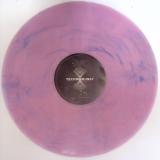
180gr pink & blue mixed coloured vinyl in poly sleeve w/ art print insert, LTD — 200 copies.

Technokunst Records returns for a second chapter in the Split Series, pairing long-time friends Reeko and Claudio PRC for a package of highly effective grainy Techno excursions. This meeting is a perfectly weighted exchange with two originals and two reinterpretations shared between them.
The opener ‘Grainphase’ is a slowly morphing textural work building towards a masterfully executed release of energy in the latter half of the track. Reeko’s version reshapes the main elements and reveals a harder spine beneath the original’s fluid architecture. Flipping the record gives way to Reeko’s original, a tour de force in sound design. ‘Tierra De Nadie’ paints a desolate and hazy surface filled with glitched recordings of alien language. Finally, Claudio’s rework is built in a similarly dark tone but with an increase of visibility, drifting aboveground.

Mastered by Artefacts Mastering and cut by Simon at The Exchange. The artwork is based on a digitally scanned painting on canvas by Technokunst’s own Dorka Berkes.

pas en stock

Commandez maintenant et nous commanderons l'article pour vous chez notre fournisseur.

16,77

Derniere entrée: 86 jours
Andre Lodemann, Square, Tony Lionni, Sam Matters - 20 Years Of Freerange (pt 2)

Warehouse Find! Test Pressing!

Andre Lodemann is a highly regarded producer from Berlin whose debut release dropped in 2004 on Mike Grant's legendary Moods & Grooves label.
Last year saw Andre Lodemann release his Innervisions debut Leaving The Comfort Zone EP.
He has remixed for labels such as Innervisions, Buzzin' Fly, Poker Flat and Rebirth.
Squares is a brand new side-project from Fish Go Deep, focusing on completely hardware-based productions and slightly more experimental, left field deep house.
Tony Lionni continues to impress following his Osgut Ton smash Found A Place (which continues to drive dance floors into a frenzy worldwide) with releases on Versatile, Mule, Wave and Madhouse.

pas en stock

Commandez maintenant et nous commanderons l'article pour vous chez notre fournisseur.

12,82

Last In: 3 months ago
Various - From the Archive Vol. 3... compiled by Volcov LP 2x12"

Volcov, the Veronese founder of the Neroli record label, returns to the BBE fold with the third compilation in his majestic series 'From the Archives' and once again this new installment is another collection of overlooked gems and unreleased beauties that are set to entice the discerning listener. As with volumes 1 and 2, 'From the Archives volume 3' features cherry picked songs that focus on melodies and weave a thread between eras and genres. From the Archives volume 3 is a genre free journey into authentic grooves which features music from the enchanted tones of Carlo Nino & Friends, an exclusive from Collettivo Immaginario, uptempo moments from remix kings Kaidi Tatham and DJ Spinna as well as two unreleased songs from Fred P and J2 Fusion feat. Javonttee and DJ Genius. From The Archive 3 represents another accomplished work of love from Volcov aka Enrico Crivellaro, who has a long list of albums and compilations under his belt as well as being involved in productions, edits, releases and projects with artists such as Dego, Theo Parrish, Phil Asher, Gerald Mitchell, Domu, Kaidi Tatham, Kirk Degiorgio, Patrick Gibin, Lars Bartkuhn, Ian O’Brien and many more. From the Archive volume 3 is released as a vinyl double LP and a digital download and is a compilation in which the music lover will be guided hand in hand through a collection of unreleased and hard to find songs that shift effortlessly between jazz and house, broken beat, ambient and soul.

pas en stock

Commandez maintenant et nous commanderons l'article pour vous chez notre fournisseur.

32,35

Derniere entrée: 23 jours
Charlie Mingus - Tonight At Noon LP
  • 1: Tonight At Noon
  • 2: Invisible Lady
  • 3: “Old“ Blues For Walt’s Torin
  • 4: Peggy’s Blue Skylight
  • 5: Passions Of A Woman Loved

"Tonight At Noon" compiles tracks from two earlier recordings sessions: one session from 1957 with Jimmy Knepper on the trombone, the drummer Dannie Richmond, Saxophone player Shafi Hadi and the pianist Wade Legge, which were released on the album "The Clown" (Atlantic 1260). The second session took place in 1961 with Booker Ervin and Roland Kirk on the saxophone, Knepper, the bassist Doug Watkins, Mingus at the piano and Richmond on the drums, and was released on "Oh Yeah" (Atlantic SD 1377).

The two sets differ in mood, but this does not mean that it is an album that uses leftovers. While Mingus in the first session strives for European harmonics and melodic approaches with a hard bop tempo (particularly on the title track) in the direction of the blues, the second session with its vespertine elegance and spatial explorations comes over rather as a sort of exercise à la avantgard Ellington with sophisticated harmonies that pave the way for sluggish marches and gospel-like blues. Kirk and Ervin complement one another particularly well, their swing is appararently boundless. Mingus’s piano playing is deeply rooted in the blues, and his sense of tempo and lightness anhances these numbers, particularly in "‘Old’ Blues for Walt’s Torin".

In these compositions one already finds hints of Mingus’s later recordings. The most beautiful number is taken from the 1957 session and concludes the album: "Passions Of A Woman Loved", almost ten minutes in length, feels like an Ellington suite. Although, or maybe simply because several years passed between the two sessions, one cannot deny this album’s magic.

pré-commande27.02.2026

il devrait être publié sur 27.02.2026

39,92
NUKE WATCH - PEPPER’S GHOST LP

Don’t believe your ears - Pepper’s Ghost is the latest offering from NYC project Nuke Watch.

Whatever you think it is - it is not. By the same token it really can be whatever you want - electronica, jazz, improv, noise, new age, ambient - it’s none and all of these. Like the primitive visual illusion it’s named for - Pepper’s Ghost is a projection of a thing, it’s not the thing.

The Nuke Watch method - like that of Aaron Anderson and Chris Hontos’ other primary project Beat Detectives - leans almost entirely on live improvisation, with some advanced studio alchemy in post. Where the Beat Detectives palette draws from club music tropes, Nuke Watch blends recognizable tones (hand drums, woodwinds, keys, fretless bass) with sounds of providence unknown, the line between organic and synthesized instrumentation unintelligibly smudged. What is real and what is projection? It’s hard to say. What do our ears tell us? This is where we arrive at Pepper’s Ghost.

Warped as the sounds may be, the playing belies a crew of deeply expressive, learned improvisers who have their craft honed. Their friendship and psychic connection enhances the ritualistic rhythms, mutant modular synthesis, nimble keyboard runs, absurdist sampling and unidentified skronk. They’re wonderfully complemented across several tracks on this set by Cole Pulice’s levitational, sublime saxophone.

As unhinged as this might all appear, once the mind and music meet on the same wavelength this is profoundly moving, energizing and uplifting Alive Music that recalibrates the sense of what music can be.

Nuke Watch is Aaron Anderson and Chris Hontos, with an array of friendly guests. They’ve released records as Nuke Watch on The Trilogy Tapes, Commend and Moon Glyph. As Beat Detectives they’ve released records on Not Not Fun, 100% Silk and their own studio imprint NYPD Records.

Pepper's Ghost was written and produced by Aaron Anderson and Chris Hontos. Additional instrumentation on these recordings by Cole Police, Leonard King, Eric Timothy Carlson, Chris Farstad and William Statler. It was mixed by Chris Hontos and mastered by Jack Callahan. Painting on the cover is “The Unity Of Being” (2020), by Ry Fyan. Design and layout by Aaron Anderson.

RIYL - Musical illusions, puzzles and magic tricks, downtempo, music of the spheres, good journey, Eddie Harris, Ketron, "world building", orange sunshine, suspension of disbelief.

pas en stock

Commandez maintenant et nous commanderons l'article pour vous chez notre fournisseur.

23,74

Last In: 3 months ago
Brandy Dalton - Fallen Angel LP

Somewhere between heaven and hell…there is Fallen Angel. Dark Entries continues its mission of shining light on a generation of composers and musicians lost to AIDS with Brandy Dalton’s Fallen Angel, his soundtrack work for the award-winning Fallen Angel series. Brandy was known for many years in the LA underground for his performances with his boyfriend, Robert Woods, who was the resident DJ at Club Fuck. Eventually, they recruited John Munt to form the band Drance, becoming infamous for their high-energy performances and songs that tackled taboo topics like sadomasochism. While Drance explored the aggressive sounds of industrial and EBM, Dalton continued to produce a wide range of electronica, from abstract sonic textures to techno bangers. The Fallen Angel album collects 16 sweaty, sticky cuts composed for the pornographic series Fallen Angel, a trio of leather-focused films released by Titan Studios. The sounds here span from the fractured cyberpunk-rave of “Swelled” to the tabla-laced trance of “FA2,” taking listeners on a journey through hedonistic recesses chock full of crunchy digital drum machines and wailing FM synths.

This album was originally released on CD in 1999 by Titan Studios, capitalizing on the success of the film franchise. It will be reissued on LP as well as CD, featuring 6 bonus tracks. Artwork for the album, designed by Eloise Shir-Juen Leigh, features stills from the Fallen Angel film. Also included is an insert with liner notes and photographs. This album is dedicated to Brandy, who passed away from AIDS-related illness in 2006, after battling with the disease for 17 years. Brandy’s passing was preceded by his best friend and Drance co-founder Robert’s death in 1995. Documenting a sonic shift in the 90s bathhouse music, Fallen Angel provides a hardcore BDSM ride, building upon the analogue archival soundtracks that Dark Entries has previously released.

pas en stock

Commandez maintenant et nous commanderons l'article pour vous chez notre fournisseur.

19,75

Derniere entrée: 13 jours
BILLY BOND & LA PESADA DEL ROCK & ROLL - BILLY BOND & LA PESADA DEL ROCK & ROLL VOL. 2

Reissue, at last!, of Vol. 2, second album by legendary Argentinian Rock outfit Billy Bond y La Pesada del Rock and Roll, a Hard Rock classic originally released in 1972. Leaning on the heavier side of their Hard Rock, Blues, Rock'n`Roll and Psychedelic influences, and keeping their playful spirit intact, the band created another masterpiece. Includes bonafide classics of their repertoire such as "La pálida ciudad", "La máquina" or "Para qué nos sirven". Their tongue in cheek adaptation of the patriotic song "Marcha de San Lorenzo" got them heavily censored by the government. An essential release for the hugely important Argentinian label Music Hall, licensed by the label and re-released in close cooperation with the iNAMU, Argentina's National Music Institute. Gatefold cover, includes insert with extensive notes and rare photos.

pré-commande20.02.2026

il devrait être publié sur 20.02.2026

23,49
D3070 - Crossing the Unknown (Tape)

Slow Process welcomes D3070 with ‘Crossing The Unknown’, a brisk six track collection of contemporary, inventive electro.

Track by track:

Opener ‘Interceptor’ is a concentrated blast of overdriven, swaggering energy, setting the tone for an immersive and hard- hitting joyride of a release. A pacy electro assault follows in the form of ‘CBRN’, before pulling the tempo back for the title track, an eight-minute swathe of dark acidic sequences and classic drums. ‘Aim High’ strikes a similar, albeit less dark chord, with some sweeter melodies on display. The introduction of ‘Quantum Leap’ is suggestive of a straightforward four to the floor workout, before evolving into something altogether more off-the-wall. Finisher ‘Our Galaxy’ is a slightly more subdued, minimal affair comprised of lucid melodic motifs, percussive zaps and sub basses.

Includes download codes.

pré-commande20.02.2026

il devrait être publié sur 20.02.2026

8,36
KMRU - Kin LP 2x12"

KMRU

Kin LP 2x12"

2x12inchEMEGO319V
Editions Mego
18.02.2026

Editions Mego welcomes KMRU back to the fold. Kin is Kenyan born, Berlin based, sonic wizard Joseph Kamaru’s second release on Editions Mego, following on from the classic 2020 release Peel. Since the release and subsequent praise for Peel, the artist has been a staple on the electronic scene performing on numerous stages and festivals worldwide in tandem with a flood of media recognition. Kin could be construed as the second child following Peel. The project came out of initial discussions with Peter Rehberg about what a Peel sequel would sound like. Kamaru is quick to clarify that Kin is not that record; “I'll know when that record will come and when I'll make it. It's already happening... or maybe it lives within both of these Mego records”.

It is this deft ambiguity and vague tiptoeing around the concrete that encapsulates the ambiguous sound world of Kamaru’s vision.

Kin was started early 2021 in Nairobi with Kamaru exploring his noisier palette of sounds encompassing distortions reminiscent of the sounds he would muster from in his youth when playing guitar. He paused making this record for a year as soon as Peter died, then slowly returned to it through 2022 resulting in the immense new work we have here.

The charms within Kin lay as Easter eggs revealing the true identity behind the colourful sonics only after multiple deep listens. With Trees Where We Can See sets the tone by way of a warm swaying melody inviting the listener in for further investigation. In 2022 KMRU and Mego stalwart Fennesz toured the USA together resulting in a strong friendship and also, the second track here, Blurred. A neat Mego/Editions Mego loop as such. Blurred arranges twangy guitar strums alongside glistening glaciers of shimmering drones. They Are Here represents a darker hue as melancholic clouds of shadowy noir tap directly into the listener's nerve stream. Maybe takes a detour into a bristling euphoric electronic storm whilst We Are screeches in a pattern formation not unlike a highly abstracted Aphex Twin forcing its way out of a hard drive. By Absence concludes proceedings, operating as both exit music and a portal to further sonic investigation with acoustic bellowing residing amongst a kaleidoscopic backdrop.

Kin is a trip that rewards close repeated listens as all the colours and textures, nuance and narratives unveil themselves. This isn’t a record to be glossed over, magic rewards concentration.

Kin is a record to be Played slow and LOUD.

For Pita.

All tracks written, produced, mixed by Joseph Kamaru
Blurred co-written & produced with Christian Fennesz
Mastered by Stephan Mathieu at Schwebung Mastering
Photography: Joseph Kamaru
Layout & Design: Nik Void
Cut by Andreas Kauffelt at Schnittstelle, Berlin

pas en stock

Commandez maintenant et nous commanderons l'article pour vous chez notre fournisseur.

31,72

Last In: 3 months ago
EARTH TONGUE - DUNGEON VISION LP

Ushering in a new era, Berlin based, New Zealand heavy psych duo Earth Tongue lower the castle gates on their third album Dungeon Vision, a trove of fuzz-drenched anthems produced by garage rock luminary Ty Segall in Los Angeles. Guitarist Gussie Larkin and drummer Ezra Simons spent the Berlin winter of 2025 refining the album’s twelve tracks in their self-described “windowless cave” rehearsal space, crafting a record that channels both isolation and the duo’s live intensity. With the songs finally taking shape and a studio deadline looming, they flew to Los Angeles to turn their hard-won ideas into the real thing. Once there, the band and Ty captured lightning in a bottle, recording and mixing Dungeon Vision in just ten days at Altamira Sound. Tracked live to tape, Dungeon Vision pulses with human energy, fuzz guitars, bone-battering drums, and hauntingly tuneful vocals. Ty Segall’s influence is all over the record with Ty choosing the best takes based on feel rather than technical perfection. The “king of fuzzy guitar tones” pushed the duo to find new sonic textures while championing their raw chemistry. “Ty’s been a big driving force,” says Ezra. “We supported him in New Zealand back in 2023, and he’s backed us ever since even bringing us on tour through Europe and the UK in 2024.” Since their emergence in 2016, Earth Tongue’s world-building, visuals, and relentless touring have earned them global attention and a cult-like following. Their 2024 album Great Haunting, also released on In The Red Records, received a Taite Music Prize nomination and saw them win Best Group at the 2025 Aotearoa Music Awards. They’ve toured extensively, sharing stages with the likes of Queens of the Stone Age, IDLES, Acid King, Brant Bjork and Kikagaku Moyo. With Dungeon Vision, Earth Tongue deliver their most immersive work yet, a richly human, fuzz-soaked journey that bottles the magic of their live show and cements their reputation as one of the most exciting psych rock acts on the planet.

pré-commande13.02.2026

il devrait être publié sur 13.02.2026

28,53
St. David - Deep House Damage EP

St. David Unleashes 'Deep House Damage EP' on Definitive Recordings.

Definitive Recordings is proud to present a brand-new four-track outing from Italian house innovator St. David, titled 'Deep House Damage EP'. Following his acclaimed remixes earlier this year for label classics like 'Good Music' (John Acquaviva, Dan Diamond, Alex D'Elia, Nihil Young) and 'Do It' (Las Americas), St. David now steps forward with a full EP that delivers nothing less than pure oldschool house fire.

The release opens with 'Touch Me (Sexy Hard Dub)', a shuffling house cut with a vintage edge, driven by a rolling bassline and a sensual spoken-word female vocal that sets a playful, club-ready tone. 'I Like It Deep' heads into deep house territory, pairing organ stabs and a steady oldschool beat with both male and female spoken-word phrases, creating a hypnotic, afterhours mood. On 'Dub Swagin'', the energy kicks back up with stomping drums, chopped samples, and filtered percussion. All wrapped in unmistakable 90s house flavor. Closing things out, 'Gonna Work It' is a peak-time smasher stacked with classic vocal samples and grooving organ chords that lift the track into euphoric territory.

Born in Bari, St. David (real name Davide Disanto) has carved a reputation as one of today's most authentic purveyors of oldschool house. Deeply inspired by the American house scene, his tracks blend groove, funk, and raw analog warmth, consistently topping vinyl charts and earning support from global heavyweights like The Martinez Brothers, Riva Starr, Jovonn, and Chris Stussy. He is the founder of Theory of Swing Records, a vinyl-only label dedicated to preserving the magic of 90s house. His music has been featured on Cinthie's DJ-Kicks and he has released on respected imprints including Snatch! Records, Body N' Deep, Heist Recordings, Skylax, and Let's Play House.

With 'Deep House Damage EP', St. David confirms his role as one of the most vital voices in contemporary house, channeling the spirit of the past into tracks made for the dancefloors of today.

pas en stock

Commandez maintenant et nous commanderons l'article pour vous chez notre fournisseur.

14,71

Last In: 3 months ago
Various - Wizzz! French Psychorama Volume 5 (67-75)

The journey through French-speaking pop archives continues with this fifth volume, packed with fuzz, gimmicks, and dissent. Far from the charts, the selected tracks display a great creative freedom, often backed by corrosive humor. Welcome to the surprising, kaleidoscopic, and colorful world of the late sixties and early seventies, Wizzz!
Born in Montauban, Robert Pico stumbled into music by chance when he met René Vaneste, then artistic director at Pathé-Marconi. René brought him to Paris to record his first 45 RPM EP in 1964. A year later, Pierre Perret introduced him to Vogue, where he recorded his second album with Claude Nougaro’s orchestra. Sylvie Vartan then introduced him to RCA, where he recorded four singles, including the astonishing "Chien Fidèle," a track backed by a hair-rising fuzz guitar. Alongside his solo career, he also composed for other artists like Alain Delon (the song was recorded but remains unreleased), Magali Noël, Bourvil, and Georges Guétary. In the Paris of the sixties, he mingled with Mireille Darc, Elsa Martinelli, Marie Laforêt, France Gall, Françoise Hardy, Petula Clark, Régine, Dani, Serge Gainsbourg, Joe Dassin, Franck Fernandel, Charles Level, and Roland Vincent. Despite his efforts and winning a Grand Prix Sacem for his final record, Robert Pico didn’t achieve the expected success in show business and decided to leave Paris and return to the Southwest, where he devoted himself to writing. He is the author of 23 books (including Delon et Compagnie, Jean-Marc Savary Editions 2025, a memoir about his youth and his many encounters). Today, he is relieved to never have become a celebrity and devotes himself to his work with passion.
In 1969, the Franco-Italian movie Erotissimo was released, directed by Gérard Pirès (who later directed Taxi in 1998, written and produced by Luc Besson). This pop comedy features Annie Girardot, Jean Yanne, Francis Blanche, Serge Gainsbourg, Nicole Croisille, Jacques Martin, and Patrick Topaloff. The soundtrack was written by Michel Polnareff and William Sheller, with lyrics by Jean-Lou Dabadie. "La Femme Faux-cils," performed by Annie Girardot. It recounts the feelings of a rich CEO's wife who seeks to develop her sex appeal under the influence of advertisement and magazines. Groovy, sparkling and light, this track, with ITS lush arrangements humorously critiques consumer society and feminine beauty standards.
“Je suis l’Etat” (1967) is the flagship track of the first EP by singer-songwriter Spauv Georges, aka Georges Larriaga, better known as Jim Larriaga (1941-2022). Born into a family of bakers, the young man was initially planning to become a hairdresser when he discovered English-speaking music through Elvis Presley and the Beatles. After this revelation, he decided he would become a songwriter and gave himself five years to succeed. He recorded his first two EP’s independently for RCA under the pseudonym Spauv Georges; meaning “that poor George”, a nickname given to him by the mother of her friend Jean-Pierre Prévotat (future drummer of the Players, Triangle, or Johnny Hallyday). Portraying a depressed and eccentric young man, Spauv Georges created corrosive and amusing songs that didn’t reach a wide audience, despite a TV appearance with Jean-Christophe Averty.
Supported by his loyal friend and fellow songwriter Jean-Max Rivière, Georges Larriaga met the future singer Carlos in the early '70s, then Sylvie Vartan’s assistant. He wrote songs for Carlos, including the popular "La vie est belle," "Y’a des indiens partout," and "La cantine", which went onto become a huge hit in 1972. He also composed for Claude François (“Anne-Marie”, 1971), Charlotte Julian (“Fleur de province”, 1972), helped launch child singer Roméo (who sold 4 million records), and later wrote the hit "Pas besoin d’éducation sexuelle" (1975) for the young Julie Bataille. In 1971, Jim recorded an album for Disc'Az: “L’univers étrange et fou de Jim Larriaga”, which featured pop gems like “La maison de mon père”.
The story of the song "Zoé" began when Pierre Dorsay, artistic director at Vogue Records, asked Swiss singer and musician Pierre Alain to write a song for a new female singer. The inspiration came when he realized that Zoé (the artist's name) was also the name of France's first atomic battery, created in 1948, which consisted of uranium oxide immersed in heavy water! The lyrics reflect a bubbling energy that must be handled with caution, while the instrumentation echoes this atomic theme, notably with the use of a theremin.
Zoé’s career lasted only as long as a single 45 RPM, but it seems Christine Fontane was the vocalist behind this pseudonym, who is known for several EPs, a good "popcorn" album in 1964, and a handful of children’s singles in the '70s. Regardless, the photograph on the cover is of a different girl entirely.
Later, Pierre Alain continued his career, writing songs for himself, Marie Laforêt, Danièle Licari, Alice Dona, Arlette Zola (3rd place in Eurovision 1982), and achieving multiple gold and platinum records in Canada. Also an inventor with several patents, president of the Romande Academy, and head of the French Alliance in Geneva, he now composes atonal music, books, and poetry. Moreover, he is also the host of "Les Mardis de Pierre Alain" at "Le P'tit Music'Hohl" in Geneva.
Filled with oriental choruses and fuzz guitar, "Fou" is from Jacques Da Sylva's only EP released by Vogue in 1967. Despite the quality of this recording, all traces of this singer disappear after this first effort.
Valentin is a baroque pop singer born in Belgium. He is the songwriter and composer of most of the tracks on his three singles released in the late 60s in Canada. A legend says that he reincarnated himself as Jacky Valentin during the 1970s for a rock'n'roll revival career in Belgium, but his older brother sadly debunked this story. Valentin's first two singles were arranged by Claude Rogen, a Parisian session pianist who had come to Canada to promote the song “Mister A Gogo”, a cover of David Bowie’s “Laughing Gnome”, adapted by singer Delphine, his wife at the time. Far from his usual network, Claude Rogen arranged music for Polydor, including the arrangements for “Je suis un vagabond” in 1969, a jerk tune with string arrangements and a furious optimism.
Jacques Malia wrote, composed, and recorded his only 45 EP for Festival in 1966. “Histoire de gitan” is an incredible beat track with bohemian scat that tells the story of a gypsy musician who came to Paris to make it in the Music-Hall, to no avail. The hero of the song and its author probably shared a similar fate, as Jacques Malia faded into anonymity after this remarkable attempt.
Bernard Jamet recorded two EPs for Barclay in the late sixties and co-wrote several songs with Christine Pilzer, Pascal Danel, and prolific songwriters Michel Delancray and Mya Simile. The track “Raison Légale” (1968), his masterpiece, immerses the listener in a courtroom right when a murderer is being judged, with jerk rhythm and free arrangements. A unique, paranoid, judicial, and psychedelic oddity.
Jean-Pierre Lebrot-Millers started his career in show business in 1967 as a singer and songwriter for the Philips label. After three singles, he wrote several songs of a new kind with his friend Pierre Halioche, in the midst of the sexual liberation movement and the democratization of drugs. With provocative lyrics, “Les filles du hasard” and “Barbara au Chapeau Rose” were released on a Philips singles in 1968. The character of Barbara was inspired by a queen of Parisian nightlife during the psychedelic years: model Charlotte Martin, who dated Eric Clapton from 1965 to 1968, then Jimmy Page from 1970 to 1983. Jean-Claude Petit’s arrangements, with a table-filled intro, soul brass, and Hendrixian guitar, emphasize the flamboyance of a hedonistic and sexy character, whose dog is named Junkie because “Junkie est un nom exquis”! The track was recorded live in three takes with a full orchestra.
Upon its release, the record was censored by Europe 1 and RTL due to its references to drug use. Jean-Pierre Lebrot was then banned from the airwaves and later dismissed by his record label. He changed his artist name to Jean-Pierre Millers, while his companion Pierre Halioche became D. Dolby for a new dreamy composition, “Chilla”, which Jean-Pierre produced himself with arrangements by Jean Musy. Once again, the song was immediately censored everywhere. After this setback, he decided to stop singing and started taking on odd jobs to support his Swedish wife and their son until the day he met Jean-Pierre Martin, then production manager at Decca, who had worked with Manu Dibango. Martin offered Jean-Pierre Lebrot-Millers, then employed at Rank Xerox, the position of artistic director at Decca. He accepted and became, a year later, promotion director (radio, press, TV). He worked on Julio Iglesias’s first album for Decca, which became a massive hit and allowed him to meet Claude Carrère. The latter asked him to write new songs and find their performers, much like a “talent scout.” It’s through him that Jean-Pierre discovered Julie Pietri and Corinne Hermès. He composed “Ma Pompadour” for Ringo, Sheila’s husband, and took the microphone again for the syncope hit “Rendez-Vous” in 1982.
That same year, Jean-Pierre Lebrot-Millers tried to release a track for which he had heavily gone into debt: “Si la vie est un cadeau”. Having recorded it in London, he presented it to numerous professionals, all of whom refused to get involved. The same thing happened with Antenne 2 and the Sacem when he proposed the song as France’s entry for Eurovision. He then met Haïm Saban, who was producing cartoon soundtracks and had just launched the Goldorak theme song. Saban, having listened to the song, declared it had the potential to become a hit. He sent Jean-Pierre and Corinne Hermès to meet the CEO of the Luxembourg radio and television network. The latter received them, asked to hear a verse and chorus a cappella in his office, and immediately hired them to represent Luxembourg at Eurovision 1983. They reworked the arrangements and recorded a new version with Haïm Saban as co-producer. The song ended up winning Eurovision 1983, a great comeback for our hero. He continued producing and hung out with the band Nacash in Belgium when a couple came to introduce their daughter for an impromptu audition in a hotel room. The girl sang “Les démons de minuit” while dancing to a radio cassette. Impressed, he had her take singing lessons for a year and composed a song for her (for which he had the melody and title, but no lyrics). This required him to go on the hunt for a lyricist, who ended up being Guy Carlier. They recorded the song, which was initially a ballad, at Bernard Estardy’s CBE studio, and gave the singer a new name: Melody. They showed the song around their industry network without success. Later, Estardy called Jean-Pierre to suggest changing the rhythm and making it pop-rock. Orlando, Dalida’s brother, liked the result and decided to co-produce the track. “Y’a pas que les grands qui rêvent » became a classic hit. The song has since been covered by Juliette Armanet (as a ballad, like the original) and Valentina.

Born into an aristocratic Breton family, Hervé Mettais-Cartier worked as a DJ at Queen Kiss, a nightclub in Poitiers, where he formed the band Les Concentrés with Michel (an actor) and Christian (a radio technician). Together, they created a repertoire of whimsical songs (“Ma bique est morte”, “J’suis un salaud”, “Fils de dégénéré”...) that they performed on stage dressed in white (in homage to “concentrated milk”). They performed at Bliboquet and Olympia in 1968 for the 10th edition of the “Relais de la chanson Française” organized by L’Humanité-Dimanche and Nous les Garçons et les Filles, sponsored by Pepsi Cola. Winners in the author-composer category, alongside Danish singer Dorte, their visibility allowed them to record a 45, and appear on television in Jean-Christophe Averty’s show. The A-side of the disc features Bruno le ravageur, a casatchok dedicated to Bruno Caquatrix, the director of Olympia, nicknamed in the song “Coq Atroce” or “croque-actrices”. The B-side is dedicated to “Fils de dégénéré”, a quirky tribute to Hervé's aristocratic roots, mixing absurdity with sophisticated vocal harmonies.
After Les Concentrés, Hervé Mettais-Cartier formed the duo La Paire et sa Bêtise with his friend Olivier Robert. They performed in Parisian cabarets and toured with Pierre Vassiliu. In the late 1970s, Hervé began a solo career. He recorded two albums for the Motors label in 1978 and 1979, which did not achieve their anticipated success due to lack of promotion. In 1980, he met Bernadette, with whom he started a family and created a “Chansons à voir” (songs to see) show that he performed until his death at the end of 2024.

Publicité comes from the final EP by the Missiles (Ducretet Thomson, 1966), a disc that also includes “La (nouvelle) guerre de cent ans”, featured on Volume 4 of our Wizzz! series. Please refer to the booklet for the story of the band.

“He’s 1.82 meters tall, 28 years old, weighs 135 kg, is black and Belgian”: this is the description of singer Hegesippe on the back of his sole single (Decca, 1967). He appears on the album cover wearing a Greek toga, like a hippie gag – we are at the end of the year 1967. In “Le crédo d’Hegesippe”, this former bodyguard of Antoine and the Charlots plays the delightful card of the thick brute converted to Flower-Power and non-violence, with arrangements by Jean-Daniel Mercier, aka Paul Mille.
“Ethéro-disco” was released on a promotional record for clients of the Maréchal company (Liège, Belgium) for the New Year 1979. Over a funky rhythm, celebrity impersonations (Brigitte Bardot, Jacques Dutronc, Fernandel…) deliver an enigmatic text about pharmaceutical products like ether, bismuth, and aspartate. The track was composed by Dan Sarravah (responsible for Joanna's “Hold-up inusité” featured on Wizzz! Volume 3) and Tony Talado, who was also a singer (one 45 in 1967), songwriter (with over a dozen credits between 1964 and 1985 in various styles from surf music to disco), author (Devenez Végétarien, Dricot Editions, 1985), ad designer, and psychologist.

Décollez-les is on the A-side of Mamlouk's only single, a pseudonym for Marsel Hurten, who is known for his work on several EPs in the late sixties, as well as composing music for Hervé Vilard’s “Capri, c’est fini”, Claude Channes' “La Haine”, Annie Philippe’s “On m’a toujours dit”, and Nancy Holloway’s “Panne de Cœur”.
This strange song, with Afrobeat horns and absurd dialogues between a chef and his kitchen staff, is the result of a collaboration between Marsel Hurten and one of his neighbors, a photographer from Pavillon-sous-Bois (93), where the musician settled after returning from the Algerian War. A music video was shot to promote the record.
Marsel Hurten was born in Tourcoing (59) into a musical family. At a young age, he joined the brass band founded by his grandfather, playing the piston before studying trumpet at the conservatory, as well as teaching himself how to play the guitar. As an orchestra musician, he toured in France, Belgium, Germany, and England. He released a series of solo 45’s between 1965 and 1968 for the DMF and Az labels before stopping recording to focus on working for other artists (Gilles Olivier, Noëlle Cordier…).
“L’amour nu” (Vogue, 1971) is the work of the short-lived Belgian band Mozaïque. The track, written by singer Jacques Albin, closely resembles another of his compositions, “Carré Blanc”, which he recorded in 1969 for Disc’AZ.
Represented by the Lumi Son micro-label based in Marignane (Côte d'Azur), Jean-Marc Garrigues released two 45 RPMs in the late sixties, defending the French jerk sound. The song “Je dis Non” is a short, joyful ode to youth, pop music, and rebellion.
Songwriter and performer Jacques Penuel released three singles. The first one, “Astronef 328” (Fontana, 1969), features a dizzying series of chords punctuated by sound effects, a sci-fi story, and arrangements by Jean-Claude Vannier.

We would like to sincerely thank Pierre Alain, Moon Blaha, Marsel Hurten, Bastien Larriaga, Jean-Pierre Lebrot-Millers, Bernadette Mettais-Cartier, Robert Pico, Olivier Robert, Claude Rogen, Micky Segura.

pas en stock

Commandez maintenant et nous commanderons l'article pour vous chez notre fournisseur.

23,11

Last In: 4 months ago
Various - Highway of Diamonds - Black America Sings Bob Dylan (2x12")
 
20

Ace’s small but ever-evolving “Black America Sings…” series has been quiet of late, but it springs back into action this month with the 2-LP and CD releases of “Highway Of Diamonds” – a second dip onto the catalogue of Bob Dylan, as reimagined by some of the foremost African-American artists of the 20th century.

From almost the start of his songwriting career, Dylan’s words and music have impacted on black American music, with ‘Blowin’ In The Wind’, speaking to an America that was still mostly segregated and becoming an anthem for all colours and creeds. As Dylan’s own career progressed, so did the number of covers he received, with a significant amount coming from what might be termed ‘non-traditional’ sources such as those heard here.

The 20 songs on “Highway Of Diamonds” continue the story that was told in part on the earlier “How Many Roads” compilation, with an almost entirely different selection of artists lending their voices to some of the best songwriting of the 20th century, and an almost entirely different selection of songs (with the exception of ‘Blowin’ In The Wind’ itself, which provides a common thread linking the story told across the two sets).
Big names from the worlds of soul, gospel and jazz, timeless songs and, for many, new ways of appreciating ever-durable material make “Highway Of Diamonds” as essential a purchase as its predecessor.

As ever, the great audio is complemented by a handsomely illustrated package on both CD and double vinyl, with a plethora of illustrations and in depth song-by-song-and-track-by-track annotation by Ace legend Tony Rounce.

pré-commande30.01.2026

il devrait être publié sur 30.01.2026

31,72
Wiccans - Phase IV LP

Wiccans

Phase IV LP

12inchDRUNKENSAILOR195
Drunken Sailor
16.01.2026
  • 1: Crucifixion
  • 2: Primordial Sorcery
  • 3: Barbarian Queen
  • 4: Belly Of The Beast
  • 5: Prison Planet Bios-4
  • 6: A Place For Peace
  • 7: Final War
  • 8: In Pandemonium
  • 9: Sacrificial Lamb
  • 10: Vermiform (In A Perfect World)
  • 11: Crystal Magic

Wiccans only make noise when they feel like it. A band that’s been uttered in reverence for nearly two decades with only a handful of releases, each one a stand-alone classic.
You see, it’s hard to pinpoint a band that actually has the equal influences of American psychedelia and hard rock all anchored in the glorious benevolence of American Hardcore. A tonne of bands dance around and flirt with each but it rarely lands in the sweet spot. They’re not trying to fit some supposed perfect space and that’s the very point so many others miss.
Wiccans are creating the space. Breaking rules and allowing a bit of breadth to what is often a claustrophobic style of music. This might sound scary as everyone knows that the more Hardcore evolves the worse it is - at least on record. The formula that Wiccans are playing with on Phase IV should scare you. It’s totally potent with odd songwriting, intensely creative and varied guitar work and completely pissed vocals. Phase IV does whatever the fuck it wants and passes the bar that only Wiccans could have set for themselves. All of this is propelled by a far stronger production quality than previous efforts and instead of having that expose some fault line it’s secured it as a modern classic.
It’s the kind of shit that will shake the dandruff from the beard of a Third Man collector but will also make that guy stop going to DIY gigs because they’re “too rough” or whatever. I’m just sitting here wondering if this is maybe what might have happened if Poison Idea wrote Hidden World. There’s always space for a carbon copy Negative Approach destroying someones basement and they usually put out a record that is clearly brilliant but fuck me if I can’t help but yawn.
Am I getting old or is Hardcore painting by numbers? In a slough of legitimately top tier Hardcore Punk releases, this one actually sounds like something truly special.

pré-commande16.01.2026

il devrait être publié sur 16.01.2026

21,84
Miles Davis - Agharta LP 2x12"

Miles Davis

Agharta LP 2x12"

2x12inchMOVLP134C
Music On Vinyl
Release unknown
  • A1: (Part I)
  • B1: Prelude (Part Ii)
  • B2: Maiysha
  • C1: Interlude
  • C2: Theme From Jack Johnson

The capstone of Miles Davis’ electric period, Agharta reigns as a funk-rock fireball — a blazing comet streaked energy and elan, a fearless organism feasting on adventure and freedom, a seven-headed Godzilla stomping its way through Osaka, Japan. Recorded on February 1, 1975 at Osaka Festival Hall at the first of a two-show stand, the double album offers an endless abundance of surprises and shifts — as well as a road-proven ensemble whose chemistry and abilities equal that of any of Davis’ celebrated bands. If the true measure of jazz is the capacity to adapt to the moment and challenge perception, Agharta is consummate.

Sourced from the original master tapes, housed in a Stoughton gatefold jacket, and pressed at Fidelity Record Pressing in California, Mobile Fidelity’s numbered-edition 180g 33RPM 2LP set of this epic live release presents it in audiophile sound on a domestic pressing for the first time. Offering greater degrees of separation, detail, and richness than the compressed CD editions and more clarity, openness, and presence than older vinyl copies, this version of the 1975 release helps bring the concert stage to your home. Just make sure your turntable and speakers are up to the challenge of Davis and Co.’s explosive performances — and producing the decibels they demand.

Teeming with vibrant colors, tones, and pace, Mobile Fidelity’s reissue captures the hear-it-to-believe-it flow, sweep, and moodiness of the music. Though the group honors looseness and freedom with religious verve, the specificity and scale rendered by this remaster allows you to detect methods behind the alleged madness that are often otherwise harder to discern. This insight extends to the understated changes in volume, harmonics, and phrasings. In many ways, you can listen as Davis himself did that early February evening as he helped coordinate the overall direction and decided on whether to blow his wah-wah-wired trumpet or take a turn on the organ.

Tellingly, Agharta would likely never have been made if not for Davis’ ventures overseas and, specifically, to the Land of the Rising Sun. Having for years faced a backlash on his native soil for his choices to experiment and blow past all known borders, Davis was welcomed with open arms in Japan. The concert documented on Agharta — as well as the day’s later show, captured on the equally exciting Pangea — stemmed from a sold-out three-week tour that would ultimately mark Davis’ final public appearances for years, as he soon settled into semi-retirement and nursed the wounds connected to an unprecedented stretch of restless and relentless output.

For all the band-fueled merit of Agharta — and there’s plenty, given the cast of saxophonist Sonny Fortune, bassist Michael Henderson, drummer Al Foster, percussionist James Mtume, and guitarists Reggie Lucas and Pete Cosey seemingly blasts off to outer space and travels distant galaxies by the time this minimally edited record runs its course — Davis’ own playing often remains overlooked. As critics Richard Cook and Brian Morton observed, it is “often fantastically subtle, creating surges and ebbs in a harmonically static line, allowing him to build huge melismatic variations on a single note.” He attacks like a man on a mission, out to prove naysayers wrong and bent on trailblazing another new path forward. Convention and skeptics be damned.

Noisy and furious, dark and discordant, abstract and off-balance, radical and intense, abrasive and atmospheric, strangely beautiful and hypnotically eccentric: Agharta evades simple description, and refuses to be pinned down in any established category — rock, jazz, punk, ambient, prog, avante-garde, or otherwise. Shot through with trench-deep grooves, screaming riffs, scalding solos, and free-improv leads, its cosmic thrust comes on as the equivalent of an animated pointillist painting comprised of millions of textured dots, dashes, and dabs that hold your attention so raptly you want to revisit the ideas again and again.

Always steps ahead of everyone else, Davis knew what he was doing even when Agharta debuted in Japan before later hitting U.S. markets. Though “Maiysha” and “Theme from Jack Johnson” are identified in the track listing, the record contains a number of uncredited references to other Davis works, including a nod to “So What.” This decision to bypass labels only adds to the art of the reveal — the rare black magic in which Agharta expertly deals.

pré-commande

Cet article n'a pas encore été publié. Vous pouvez pré-commander le produit maintenant.

46,18
EMERSON, LAKE & PALMER - Emerson Lake & Palmer LP
  • 1: The Barbarian
  • 2: Take A Pebble
  • 3: Knife-Edge
  • 4: The Three Fates A. Clotho B. Lachesis C. Atropos
  • 5: Tank
  • 6: Lucky Man

Supergroups existed before Emerson, Lake & Palmer formed in 1970. And, as we all know well, many came after. But few, if any, matched the English trio’s chemistry and its elevated combination of virtuosity, vision, and verve. Having influenced a multitude of followers, ELP’s prowess was obvious from the start. The band’s self-titled debut stands as a towering statement of creative imagination, execution, and discipline more than five decades after its original release.

Mastered at MoFi’s California studio, housed in a Stoughton jacket, and pressed at Fidelity Record Pressing, Mobile Fidelity’s numbered-edition 180g 33RPM LP of Emerson, Lake & Palmer presents the benchmark album in audiophile sound. Clear, dynamic, and balanced, this collectible edition honors the perfectionist approaches that both informed the playing and recording of the record.

Distinguished with black backgrounds, this reissue brings to light the epic scope, tonal depth, and mind-bending degrees of musicianship on display. Aspects — textures, nuances, effects, melodies, tempo changes — that go hand-in-hand with the trio’s compositions and interplay are rendered amid broad soundstages and delivered with pinpoint detail. Whether you’ve owned multiple copies of this touchstone or seeking out your first version, you’ll relish the presence, separation, imaging, and crispness that help make every song come across as if the group has set up shop in your listening space.

Opening the door to the seemingly infinite possibilities of progressive rock while steering clear of excess, Emerson, Lake & Palmer achieved a rare feat in that its complex, cerebral music didn’t prevent it from attaining mainstream success. The gold-certified effort launched the career of a band that would sell tens of millions of records. It also landed a Top 50 single in the form of the ballad “Lucky Man,” whose vocal harmonies, folksy strumming, multi-tracked instrumentation, and breakthrough Moog solo almost feel quaint in the face of the other fare on the album.

Comprised of genre-defying originals and hybrid arrangements of two classical pieces, the album Rolling Stone originally and rightly said is “best heard as a whole” matches outrageous ambition with the otherworldly skills of three musicians who remain among the finest to ever pick up their respective instruments. While Emerson soon drew the lion’s share of headlines for his ability on keys — clavinet, Moog, piano, Hammond organ, and pipe organ included — Greg Lake’s aptitude on guitar and bass, along with well as Carl Palmer’s monster talents behind the kit, created a three-headed hydra that devoured everything in front of it.

That extends to the radical reinterpretation of Bela Bartok’s “The Barbarian” that begins the LP, a performance that in less than four-and-a-half minutes runs the gamut from distorted to churchy to angular and blustery. More classical flourishes, keyboard wizardry, hard-rock heaviness, and gothic signatures emerge throughout “Knife-Edge,” which reimagines music by Leos Janacek and J.S. Bach — and ultimately invites you to explore a cathedral of sound teeming with separate bursts of keys and percussion.

And did someone say “drumming”? Check out Palmer’s monster salvo on “Tank,” a rhythmic showcase that marches out with knee-bent notes and mirror-reflected passages. Or dive into the mythological suite “The Three Fates.” Replete with three parts and Emerson playing the pipe organ at Royal Festival Hall, it shoots off sonic fireworks via sophisticated arpeggios, jazz improvisations, dancing counter-meters, sizzling chords, and a few explosions. Please don’t hold anyone at MoFi responsible if your system cannot handle it; this is heady stuff.

Indeed, everything on Emerson, Lake & Palmer is there for a purpose. Whether you aim to attempt to dissect all of the notes, shifts, and polyrhythmic bluster or just want to absorb this album as one living, breathing organism, this version invites you to do both as many times as you desire.

pré-commande

Cet article n'a pas encore été publié. Vous pouvez pré-commander le produit maintenant.

53,74
Articles par page:
N/ABPM
Vinyl