Re-mastering by: Cicely Baston at Alchemy/Air Mastering, London
Electric blues guitarist Melvin Taylor had been sporadically recording solo albums for 20 years when Dirty Pool arrived — and was somehow just beginning to find fame. Already a hit in Europe, it had taken a steady run of performing in Chicago’s famed blues clubs to slowly earn Taylor a well-deserved reputation as an equal talent among the giants before him, such as Otis Rush, Albert King and Stevie Ray Vaughan.
While early records like Melvin Taylor Plays the Blues For You show off an equally amazing jazz side, Taylor traded away his Wes Montgomery-inspired runs for more Luther Allison/Jimi Hendrix attacks with the formation of the trio Melvin Taylor and the Slack Band in the mid ’90’s.
The title song of the second album by that outfit, “Dirty Pool,” is actually more the balls-to-the-wall, no-compromise, hard-rockin’ electric Texas blues of Vaughan and Johnny Winter than the sweet Chicago soul of Buddy Guy.
Indeed, three tracks on this 1997 release, including “Dirty Pool,” were SRV tunes. Other standards, like “Kansas City” and “Floodin’ in California” also have more of a Lone Star State approach to them. But the Jackson, Miss.-born Taylor’s guitar is cleaner than his forebears and technically, he even surpasses them, yet the anger and sorrow of the blues is readily evident in his playing.
This rare combination of qualities really comes out in a slow blues tune like his solo in “Dirty Pool,” which after repeated listens, still makes me head shake in disbelief when I hear it.
“Too Sorry” is a good example of how well Taylor fares when he treads in Jimi Hendrix territory, whereas his rhythm work is the best I’ve heard from a lead guitarist since Vaughan; listen to “I Ain’t Superstitious,” “Born Under A Bad Sign” and the funky “Telephone Song” for your proof.
It also helps that Taylor’s drummer James Knowles is well in synch with him, while Ethan Farmer completely owns the low end of the sound. Farmer’s peppering bass lines in and “Floodin’ in California” is the textbook way electric blues bass should be. Overall, a tight little band.
Taylor’s vocals certainly won’t draw any comparisons to the Wide-Brimmed–Hatted One but he holds his own just fine until it’s cuttin’ time. This is right at the top of my list of best blues guitar playing on record over the last couple of decades. If you decide to give this one a listen, prepare to be blown away.
Buscar:hard work records
The Miami Maestro is back with a superb slice of moody, mid-tempo Latin Soul. Anyone who has had the pleasure of seeing one of Jason's passionate live performances can attest that he exudes raw energy and emotion on a level seldom seen on today's soul scene - attributes that Jason delftly applies to the pen.
Drawing from personal experience, “Se Acabó” is a bilingual lament about the challenges of navigating mental illness within the context of a romantic relationship. Jason pleads "Her heart was a butterfly flying through the winds of the hurricane of her mind" as he comes to grips with the fact that in spite of his undying love she may never return.
Accompanied by a grooving, unrelenting beat, he distills the pain down to an elixir of high-proof soul sure to requite the lovelorn among us. Yet another Penrose playbox essential by one of the hardest working players in the game.
Born and bred New Yorker Jean Pierre is stepping out with his own brand new label, Pakate. The vinyl-only outlet kicks off with a fantastic first EP from FLETCH featuring remixes from Pierre himself and Franco Cinelli.
This exciting new label will be an outlet for Jean and other friends to serve up mature and minimal sounds focused around unique designs and powerful grooves. Dealing in heady underground sounds that also work on larger dance floors, the label comes after Pierre has spent 15 years entrenched in the electronic scene. This is his way to carefully curate his own music exactly how he wants to, with three releases already lined up for 2021.
The first one is from FLETCH, a red hot UK talent who has released on the likes of Kaluki and Whippin’ Records. His opening tune 'Actin Up' is a slick and slippery minimal groove with real depth and freaky sound designs that make it pop. 'Want Me' then hits harder, with loopy house drums and squelchy synths all bubbling away beneath soulful female vocal sounds and cosmic synths.
The first fine remix is from France Cinelli who takes 'Actin Up' super deep, with punching kicks and rolling bass that gets you in a state of hypnosis., Closing out the package is a Jean Pierre remix of 'Want Me' that shows off his ability to lay down stripped back but compelling house grooves with deft sound design and a freaky atmosphere.
This is a standout first EP that perfectly sets the scene for what is sure to become a vital new label from this American mainstay.
Rough & tough from beat one, Cosa Records is extremely proud to present to you The Revues! Exploring the Texas ballroom revue scene of the 1960's, The Revues' first offering is this updated take on the classic Royal Jesters cut. On the flip side,The Revues take on the classic song "Carino Nuevo", features a fresh arrangement of the quintessential version played by Sunny Ozuna. By blending elements of Texas and California soul, the Revues breath new life into this classic bolero. Led by vocalist La Marisoul, her soulful voice adds a depth and tenderness to Sunny's version. This take is an ode to the Tejano ballrooms that pervaded across much of the Southwest during the mid-20th century. Late nights, bar fights, broken hearts, and soulful music that provided a soundtrack to the lives of hard working Mexican-American families.
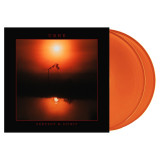
There is no single way that London trio Urne describe their sound, it all comes back to one thing: heavy. There are shades of Metallica, Mastodon, Alice In Chains in there, hopping between sludge, tech-metal, doom, hardcore and anything else with a weighty heart. On their debut full-length, ‘Serpent & Spirit’, this is writ large as the work of one of the finest new bands in the British metal underground. Featured on Metal Hammer’s ‘ones to watch 2021’ and ex-members of Hang The Bastard. Available on CD Mintpack & 140g 2LP Transparent orange vinyl.
Includes Download Code and Special Insert Drawing !
Quindi Records continues to yield intriguing prospects as we reach the third edition, moving from Woo's astral ruminations via Cabaret Du Ciel's sonorous meditations on to the dusty, dusky mantras of Dead Bandit. Maintaining the ambiguous creative practices of the label's previous releases, From The Basement r eaches to the earth for the malleable grit of post-rock while making the most of the broader sonic outlooks afforded by kosmische and electronic effects processes.
Dead Bandit are Chicagoan songwriter Ellis Swan and Canadian multi-instrumentalist James Schimpl. Swan has previously released solo works including the stunning, inward-looking album I'll Be Around, a lo-fi Southern gothic dragging the husk of country ballads through battered signal chains. In Dead Bandit, Swan and Schimpl's artistic vision casts its gaze outwards on a vast expanse, where the distortion has space to stretch its legs and the drums pound out into open space. There's a common tonality at work here, the duos guitars telling a thousand hard-bitten tales where Swan's voice falls silent. It's no surprise to learn Swan and Schimpl's reference points include Neil Young's Dead Man soundtrack, SF noise rockers Chrome and the imperial work of the late, great Mark Sandman of Morphine.
You can sense Jim Jarmusch's America just lingering behind the road-weary thrum of 'These Clouds' and detect the shadow of Tom Waits lurking in the raunchy lurch of 'FF M'. The pointedly titled 'Sedated' calls to mind the slowcore movement and its rejection of rock n' roll's fixation on speed. Instead, tonality and atmosphere are key across From The Basement , although the ambient lull of 'I See Her There' is the exception rather than the rule. Dead Bandit's desert sound has vibrancy and immediacy to match its moodiness, from the sultry swagger of opening track 'Mud' to the bold and borderline bombastic 'When I Looked Around'.
Like the previous Quindi releases, this record is inherently experimental in nature, but not at the expense of its warmth and instant appeal. From the basement, an inquisitive pair with primitive tools look out and imagine a colossal plain as the canvas on which to paint their picture
- 1: Bonjour Klaus - Jeff Özdemir & Daniel Raymond Gahn 03:58
- 2: He's A Woman - Jeff Özdemir With Knarf Rellöm & Dj Patex 03:51
- 3: I Follow My Heartbeat - F.s.blumm & Jeff Özdemir 0:25
- 4: Saatler, Dakikalar Ve Saniyeler Gelip Geçiyor - Jeff Özdemir & Ertan Doğancı 02:29
- 5: Kleistpark - Vackrow 04:22
- 6: Love Letters - Jeff Özdemir & Joanna Gemma Auguri 03:31
- 7 52: Nd Street Und Dann Die Erste Rechts - Jeff Özdemir 05:14
- 8: Campagne (Band Version) - Désolé Léo 04:46
- 9: Disco - Beige Gt 03:40
- 10: Losin' - Jeff Özdemir & Zap 04
- 11: Complètement Perdu - Jeff Özdemir & Alexandre Thiercelin 02:18
- 12: Zu Viele Erinnerungen - Otto Von Bismarck 08:23
- 13: That's Not What Friends Are For - Jeff Özdemir's New Hard Drive 02:58
- 14: Bremerhaven, Das Kann Ich Dir Nicht Antun - Jeff Özdemir 03:26
- 15: The Day - Eng°N Featuring Jeff Özdemir 05:43
- 16: Güneș - Jeff Özdemir & Treetop 01:51
- 17: Bored - Elke Brauweiler & Jeff Özdemir 04
- 18: Die Quelle Von Hermidas - Jeff Özdemir With Elmer Kussiac 02:19
In the past years, the multi-instrumentalist, composer, producer and music enthusiast Jeff Özdemir had been focusing on organising the Live-Mixtape series in Berlin, inviting numerous artists to join him on stage for every single event. However, the year 2020 put an end to this for all the painfully obvious and obviously painful reasons. Undeterred, he instead put together the third instalment of the »Jeff Özdemir & Friends« series, working with singers, musicians and groups such as Knarf Rellöm & DJ Patex, F.S. Blumm, Joanna Gemma Auguri, Elke Brauweiler and Elmer Kussiac for an 18-track … Now, is this a compilation or an artist album? Well, why just either this or that when it can just be both at once? This is »Jeff Özdemir & Friends Vol. 3« after all, emphasis on »&«.
Released on Karaoke Kalk like its two predecessors from the years 2015 and 2017, respectively, »Jeff Özdemir & Friends Vol. 3« sees the man behind Kreuzberg’s 33rpm record store and the 33rpm Records label showcase his qualities as a people remixer, songwriter and versatile musician. He put together a collection of groovy tunes picking up on funk and afrobeat rhythms, introspective ballads, a musically channeled punk attitude, shoegaze sentiments, spoken word passages, drones, glockenspiel sounds, seriously fun experimentation and much more. Just like on the cover artwork - courtesy of Marion Eichmann, Özdemir’s favourite visual artist - everything here seems to discreetly exist for itself while being tightly connected to everything else at same time.
While artists like Ertan Doğancı, Désolé Léo, eng°n, F.S. Blumm and Zap have been long-term collaborators of Özdemir and were featured on previous instalments of the »Jeff Özdemir & Friends« series, new faces and forces also enter the mix. The melancholic »Love Letters« for example marks the first (though hopefully not last) collaboration with singer Joanna Gemm Auguri, while Knarf Rellöm & DJ Patex’s appearance has been dreamt of collectively but hasn’t been fully realised until now.
Whether it’s Désolé Léo’s French crooner soul, the lo-fi synth pop song »Bored« featuring former Commercial Breakup singer Elke Brauweiler or the many different sounds and styles presented under the name Jeff Özdemir: no decision is ever made between either that or this musical direction, but all are being joyfully enjoyed together. Thus, throughout its 70 minutes, the stylistic diversity of »Jeff Özdemir & Friends Vol. 3« does not once border on randomness. Instead, these sometimes very different songs are marked by a shared atmosphere - a direct result of these very different musicians approaching their studio time together less as a chance to make music but more of a chance to carefully listen to and interact with each other.
Just like you’d expect it from someone deeply connected with the local music community who also happens to run a record store, Özdemir is also the kind of person who’ll hand you the worn copy of a record he has just fished out from the bargain bin because he knows about its potential to change your life. The contributions by Vackrow (»Kleistpark«), Gebrüder Teichmann’s old band BeigeGT (»Disco«), and Otto von Bismarck (»Zu viele Erinnerungen«, produced by The Whitest Boy Alive’s Daniel Nentwig) do not even feature Özdemir, but are simply musical pearls that were (almost) lost in the shuffle of music history and unearthed for this very special occasion. That’s just what friends do, don’t they?
JANA IRMERT – THE SOFT BIT
"The compositions for this album were shaped over the course of one year, at first without a concept or storyline as a starting point. Yet what I became increasingly interested in was a kind of sensory aspect of sounds. I felt I wanted to get closer so the sounds, feel their structure and surface and how they contrast each other."
stick your hands into the sand and feel the grains against your skin.
"Throughout the musical process, I used materials like metal, water, sand and air in a very direct and maybe more raw way to create and record sounds than I did in previous works, where I had often manipulated field recordings that had a more ambient character and thus strongly carried the location of origin in them.So in a sense, for the compositions of this album, I used sounds without a place, or just an expression of the sound of the particular material itself."
submerge yourself in water and listen to the sounds you hear.
"It turned out the processed sounds resulting from hard materials would often have soft and tonal qualities whereas those made from "soft" materials like water or air would ultimately be of percussive or harsh and noisy character. Finishing the compositions was like feeling along the surfaces of the single pieces with closed eyes, making out their shape and outline inch by inch. Maybe this is why to me, some of the compositions feel solidified like pieces of rock, while others seem to be ready to evaporate into air."
stand as still as you can and feel the air moving against your face.
I tend to exist in the darker parts of the psyche, Jim Ward admits. “That’s where I’ve always been.” And yet what makes the musician so unique and downright compelling is how exactly at the moment when the world joins him in the darkness — take, for example, the ultra-challenging year that was 2020— it’s then Ward is able to claw his way back into the light. “All I was doing was basically meditating with a guitar,” Ward says of how every night during the pandemic,armed with a guitar as well as a bit of time and purpose, this prolific musician was able to churn out several riotous riffs that ultimately transformed into one of his most personal and profound albums to date. “I’ve always used music as an outlet for anxiety and frustration,” notes Ward, who has played in a slew of monumental bands, from the iconic post-hardcore band At The Drive-In to Sparta, aswell his alt-country project, Sleepercar. In fact, it’s this healing power of music, Ward offers, that led him to Daggers, the lauded musician’s new solo record set for release in 2021 via Dine Alone. “When my world has upheaval, it becomes about doing the work in front of me,” he adds. “And this record was pure joy: talking to my friends on the phone, swapping ideas with them, going into my head for a while, coming out with something.” So while Daggers is officially credited as a solo work, and Ward never entered the room with any of his collaborators due to the COVID-19 pandemic, he’s effusive in his praise for them: notably the twin team of Incubus bassist Ben Kenney and Thursday drummer Tucker Rule, both of whom took Ward’s guitar riffs and helped propel them into fully fleshed-out songs. For Fans of: Sparta, At The Drive-In, The Mars Volta, Thursday, Incubus, Frank Eiro, Bear vs Shark, Glassjaw, ...Trail of Dead, Deftones, Jimmy Eat World, Taking Back Sunday, Queens of the Stone Age, Thrice, The Smashing Pumpkins Key marketing highlights: - Jim Ward is the lead singer and guitarist of Sparta and co-founder of post-hardcore band At The Drive-In. - Ward has toured with the likes of My Chemical Romance, Deftones, mewithoutyou and many more - Ward has received acclaim from Pitchfork, Consequence of Sound, Brooklyn Vegan, Alternative Press, Guitar World, Billboard and more. - Ward has performed on the late night TV programs of Conan and David Letterman. - Ben Kinney From Incubus playing bass on record and Tucker Rule from Thursday playing drums on record
It’s not easy to summarize any band whose career has stretched over two decades. In the case of Growing, though, it’s all in the name: since 2001, the core duo of Kevin Doria and Joe DeNardo have been making vibrating, explorative experimental music that is in a forever state of evolution. In that time, they have amassed a hard-to-define and influential body of work, and Diptych sees the band operating at the height of their “big amp ambient” powers.
Diptych is a masterclass in slowly undulating ambient drift, and quite possibly the definitive headphone album of the year. Guitars that sound like organs pointed at the heavens are cut with subtly damaged electronic moves, the end result being a record that is at once ecstatic, transportive and gritty.
Ambient and new age music have become part of the larger indie vocabulary. Things were different over twenty years ago in the Olympia, Washington punk community where Doria and DeNardo got their start. Both veterans of aggressive music by the time the band began, Growing emerged like a rainbow at the other end of the heavy music tunnel: loud as ever, but with a sonic and aesthetic position that ran counter to punk rock norms.
Created over the past year and a half, Diptych extrapolates on Growing’s formative drone-based work, showing a unit in full control of a language that they have built and reconfigured over time. The music here continues to be an intuitive outgrowth of a friendship that started in late-90s Olympia and still bears fruit today—even as each member lives in a different city.
Green yellow red splatter vinyl
Into the Future’ is the ninth studio album by the American hardcore punk band Bad Brains, which was originally released on November 20, 2012 on Megaforce Records.
t is a tribute dedication to Adam Yauch of the Beastie Boys, a longtime friend of he band who died of cancer six months before its release, and produced their previous album ‘Build a Nation’
This “Into The Future’ vinyl reissue is on green, yellow and red splatter vinyl in gatefold packaging featuring cover art by Shepard Fairey, a street artist who became widely known with his Barrack Obama “Hope” poster used in his 2008 campaign. His work has been included in many contemporary art museums luding the Victoria and Albert Museum in London.
- A1: Sea Cruise
- A2: The Girl From New York City
- A3: Multiplication
- A4: Johnny Remember Me
- A5: Who Put The Bomp (In The Bomp-A-Bomp-A-Bomp)
- A6: Chain Gang
- A7: Footsteps
- A8: Hey Girl Don't Bother Me
- B1: (You've Got) Personality
- B2: A Night At Daddy Gees
- B3: Ally-Oop
- B4: Blue Moon
- B5: Bony Moronie
- B6: Doo Wah Diddy
- B7: Jungle Rock
- B8: Good Times
• Showaddywaddy eventually had more UK hits in the 1970s than any other act…including Abba!
• From their winning appearance on an edition of ‘New Faces’, the ‘Britain’s Got Talent’ of the day, to become runners-up in
the series’ ‘All Winners Final’, it took just a matter of months until Showaddywaddy released, ‘Hey Rock And Roll’.
• The single reached #2 in the UK Singles Chart.
• The band are still lauded as one of the hardest working live bands in the UK, usually with more than 250 shows a year.
• This vinyl LP collection, showcases the band’s professionalism, in this no-nonsense 16 track rock ‘n’ roll set.
• The album includes their versions of ‘Sea Cruise’, ‘Blue Moon’, ‘The Girl From New York City’, ‘Multiplication’, ‘Doo Wah
Diddy’ and a blistering performance of the Vanda/Young classic, ‘Good Times’, taken from Showaddywadddy’s 1981 album
of the same name.
• The album is pressed on heavyweight 180g pink colour vinyl.
Yo No Se return after a 5-year hiatus since their last album, Soma. Their
new album Terraform continues on from the dystopian world created in
Soma but this time taking the narrative to the stars. Terraform explores
the ideas of making a fresh start on another planet but the same
problems creep in…. Greed, corruption and hate. Exploring more of a
grunge feel along with some hard psych the band recorded with Dom
Mitchison (as well as Alex doing guitars and vocals at home), mixed with
Ali Chant and mastered again with grunge godfather, Jack Endino.
The band have toured across Europe in support of Soma in the last 5
years and gained a reputation for their loud and energetic shows. The
album has 3 drummers under its belt and countless breakdowns on the
road. With the pandemic kicking in just as the band started touring, they
had plenty of time to finally record (and find another drummer).
Terraform is a record 5 years in the making due to sheer bad luck.
Hopefully, their luck will change as the band are already working on their
follow up record.
The first single Black Door approaches the subject of corruption
amongst 'leaders'. The idea comes from Boris Johnson getting Brexit
'done' to forward his own career without thinking about the impact it will
have on peoples lives. We’ve had enough and we're ready to tear down
the establishment. The idea being that these problems we now face will
follow us wherever we go unless we stamp them out, here, on earth.
The artwork for the cover is by renowned sci-fi artist Bruce Pennington.
With a fundamental emphasis on the encouragement of genre hybridization, Evar Records, the Los Angeles-based imprint co-founded by Trickfinger (John Frusciante) and Aura T-09 (Marcia Pinna), continues its momentum with an expansive 9-track collection from Netherlands-based luminary, Limewax.
After making a strong first impression with its 2020 debut offerings, Evar Records has recruited Limewax to carry forward its mission of blurring boundaries and challenging conventions in electronic music. The Ukranian hard drum and bass hero happily obliged, referring to signing with Evar as a breaking point which allowed him, finally, to take full stock of his background in classical and electronic music simultaneously. Although Maxim Anokhin is widely known for his hard-edged breakbeats, releasing on labels such as Tech Itch Recordings, Position Chrome, Freak Recordings, and PRSPCT, the full scope of his artistry shines through on Untitled.
The opening cut, "Porcelaineworm," is a futuristic electro cut recalling IDM classics like AFX's "XMD5A." Of course, the virtuosic drum programming and hectic D&B sound which Limewax has built his reputation upon is here in spades on tracks like "Stay Lackey. Cuts like "Ushio" and "Whay1" are fascinating studies in contrasts—the former balances bludgeoning techno of the Ansome and Perc variety with a resolve that recalls Fennesz's pastoral glitch abstractions. "Whay1," meanwhile, is sub-rattling drum and bass nuanced by cinematic string themes. "Getupa" is an experimental beat track that truly bangs, its layers of texture and field recordings placing Limewax in the company of bleeding-edge acts like SVBKVLT's breakout star Hyph11E. The very next track, "19NB," is a subtle update to the original minimal technical template established by Detroit icons Robert Hood & Jeff Mills.
While most of the album hurtles forward at hard techno and D&B tempos, "Maleisae" is a sensual 70 BPM track mixing ghostly R&B and acid. That spectacular cut heralds Untitled's intricate denouement. The brief "Wernmqbram" effortlessly reconciles a baroque minor-key piano theme with the renegade snares of classic jungle. "Hasan" is a true "closing credits" master stroke, half-time acid giving way to gorgeous IDM-meets-Blade Runner synth leads.
Far from a genre-jumping hodgepodge, Untitled is a remarkably coherent full-length by a virtuosic artist free to explore the entirety of their creative influences. The Tilburg-based artist cites the poets Marina Tsvetaeva and David Whyte as influential on Untitled and also listened to works by 1771-1862 works by organ builders when crafting the album. The end result reveals Limewax as a masterful, diverse artist, capable of any style he pursues. It's a clear indicator of the boundless promise of Evar's core principle—a staunch refusal to put artists in boxes.
“Behind The Mask” was originally to be the second Incognito album. Still floating on the high of the success of their debut album “Jazz Funk”, Jean-Paul ‘Bluey’ Maunick started work on new material recruiting friends and strangers from London’s buzzing music scene. Where “Jazz Funk” in 1981 had by name and nature been achieved from the influence of Jazz Funk and Soul music that we had been listening to in the 70’s, “Behind The Mask” from has a strong leaning towards the harder Fusion trend of that time. Innocence and earthy tones were replaced by a bright and bold flurry of cascading arpeggios and screaming solos. Brass arrangements that had been created by singing a man a line were now leaping out of reams of paper scored by the wizard that is Richard Niles. However, still present and leading the charge was the unmistakable, funky, pulsating and irresistible bass lines of the late Paul “Tubbs” Williams.
Debut solo album by the Red River Dialect songwriter. Recorded at the Hotel2Tango, Montreal, by Howard Bilerman. Featuring Thor Harris (Swans, Thor & Friends, Shearwater) on drums and Thierry Amar (GYBE!, ASMZ) on bass, with guest appearances from Tom Relleen (RIP) (Tomaga, Melos Kalpa), Catrin Vincent (Another Sky) and Coral Rose (The Silver Field, Red River Dialect).
David has written five critically acclaimed collections of songs under the Red River Dialect name. The last two albums (released by Paradise of Bachelors) achieved a glowing Pitchfork review and a Folk Album of the Month award from the Guardian. Selected press below.
“Folk Album of the Month. Alert, anti-colonialist folk. Songwriter David Morris brings alternate seduction and disquiet on this worldly album steeped in the British landscape... a wide-eyed, curious creature, willingly alert to the world.” – 4/5 The Guardian
“Animated with a new intensity, the Cornwall band’s fifth album may be its most ingenious and immersive mix of folk and rock yet. It’s also Morris’ most compelling set of songs. He invests small sensations with outsize power, finding joy in sensory pleasures as well as in the mystical inquests that music allows. Even as the record is steeped in the long history of British folk music, that balance of the tactile and the spiritual anchors these songs in the present moment.” – Pitchfork
“The most underrated folk-rock band in Britain. The idea of them as a Cornish-born, Buddhist-inclined Waterboys is more potent than ever. Their fifth album of elementally-battered, rueful and rousing folk-rock ... is as stirringly anthemic as they've managed thus far.” – MOJO
“A beguilingly atmospheric record… imagine Steve Gunn transplanted to Kernow.” – Clash
“Gorgeous and moving, anchored by the heft of the physical but reaching for more. The epic spareness, the way it manages to be both still and an enveloping swirl, reminds me most of Talk Talk. There’s a prayerful intensity to the quiet bits, a listening, wondering awe, that makes the rock payoffs more powerful. The album works as a restless, searching, gorgeous whole. Morris and his band have never been better.” – Dusted
“It’s not often that a band comes along and over the course of nine songs both plays to the tradition and stands it on its ear. RRD has taken the challenge of playing with reckless abandon to heart, generating an album that stands on the shoulder of giants showing no fear.” Folk Radio
Monastic Love Songs continues the tradition that David has established over the course of five albums with Red River Dialect: using a song cycle to articulate a relationship with inner and outer landscapes, inspired by the Taoist approach of observing the movement of the heavens in order to understand the cosmos within, and vice versa. The joyful closing track Inner Smile was initially written as a poem of thanks to his Tai Chi teacher Hollis and takes its name from a Taoist practice.
The songs were written during the final weeks of a nine-month retreat at Gampo Abbey, a Buddhist monastery in Nova Scotia where David took ordination as Buddhist monk. The album title is sincere, with a little tongue-in-cheek. The songs mostly explore human relationships within the community, with outliers: Gone Beyond shimmers with cosmic devotion, in Rhododendron a reverie grows from the shadow of a flower. Steadfast concerns the love to be found beyond the urge to like and be liked, when you can’t avoid that difficult person. Leonard Cohen, on his six years living in a monastery:
“You know, there’s a Zen saying: ‘Like pebbles in a bag, the monks polish one another.’
David considers this album to be a follow up to 2015’s Tender Gold and Gentle Blue. The cover of that lp featured an image of him on top of Skellig Michael, in the years before the island was made famous as the home of the Jedi. He considers the visit to that abandoned Celtic monastic site to be one of the influences that stirred up his motivation. Skeleton Key speaks of what was given up to go, and what he was giving up to leave, referencing the Tibetan concept of the ‘bardo of becoming’.
The album came about through a series of fortunate encounters. David’s friend Tom Relleen visited him at the Abbey in May 2019, mentioning a postponed plan to visit the Hotel2Tango. A spark was sown: this studio had long figured in David’s imagination. Many of the releases on Constellation Records, which he had become a die-hard fan of in his teens, were recorded there. Tom contributed some Buchla synthesizer to the opener New Safe, which concerns healing in emptiness and light.
In May David was given permission by the senior monastics to acquire a guitar, which was swiftly baptised as “Malibu Barbie”. Having let the identity of being a songwriter loosen up, not playing an instrument in six months, he was unsure what would happen. In the single hour he was permitted to practice each day, songs began to cascade. The first, Purple Gold, concerns a reacquaintance with first love. David wrote to the Hotel2Tango asking if they had any days available in mid-July?
Engineer and studio co-owner Howard Bilerman replied that they did, and a date was set. Did Howard know any local drummers or bass players who might do a session? He did, too many to choose from, what kind of style? David decided to ask for his ideal: did Thierry from Godspeed ever do sessions? Howard sent him the demos. Thierry was up for it. On the day he went deep into the cover of traditional song Rosemary Lane, his double bass singing on this and on Circus Wagon.
David asked if there were any local drummers he would recommend? Thierry said “many, what style?” David tried his luck again, “two of my favourite drummers are Thor Harris and Jim White.” Thierry said let’s invite them. Thor, having met David a decade earlier, flew from Austin to Montreal for that July day in the studio. Nine months of watching thoughts come and go in meditation helped David recognise this as an opportunity to practice enjoying the day without expectations.
He is, however, grateful that this album came out the way it did, channelling some of what it was like to live those nine months in a monastery overlooking the Gulf of St Lawrence, frozen and flowing.
Mixed by Jimmy Robertson at SNAFU, London, mastered by DenisBlackham.
Fiddlehead wasn’t supposed to make a second record. But, if we’re being totally honest, they weren’t supposed to make their first record either. Formed in what singer Pat Flynn describes as “a deeply, deeply, laughably depressing part of my life,” Fiddlehead was born with modest intentions. Flynn and his then-roommate, guitarist Alex Dow, decided to work on some songs, and with Basement having just broken up, guitarist Alex Henery entered the fold. Drummer Shawn Costa and bassist Adam Gonsalves—who has since been replaced by Casey Nealon—linked up with them and, all together, they wrote what would become the Out Of The Bloom EP. Those five songs established what Fiddlehead would be, a band that merged elements of post-hardcore, post-punk, and classic ‘80s emo into something that felt distinctly theirs.
Between The Richness effectively picks up where Springtime & Blind left off, as Flynn dives headfirst into that same subject. But astute listeners will notice a major difference this time: Flynn is singing about himself. “These massive things happened in my life between the first record and this record. It just so happened that I ended up getting married, I had a child, and it was around the 10-year anniversary of my father’s passing. So what if I want to write another record about how I feel about the loss of my father? Will people be like, ‘Pick another topic, dude.’ So, the opening track is called ‘Grief Motif’ because it’s the idea that this is an eternal struggle that will never go away. Take it or leave it, but it will be part of this dude as long as he’s got a pen in the hand.”
Between The Richness explodes with an energy that usurps that of Springtime & Blind. The guitar riffs of Dow and Henery are their most anthemic and combustive yet, making songs like “The Years,” “Get My Mind Right,” and “Down University” not just serve as the backbone for Flynn’s personal ruminations, but empathetic, emotional musical stabs that hit the listener just as hard. Meanwhile, Costa and Nealon give the songs a propulsive heft, allowing a track like “Million Times” to dart into unexpected territories without ever feeling alien
Fiddlehead wasn’t supposed to make a second record. But, if we’re being totally honest, they weren’t supposed to make their first record either. Formed in what singer Pat Flynn describes as “a deeply, deeply, laughably depressing part of my life,” Fiddlehead was born with modest intentions. Flynn and his then-roommate, guitarist Alex Dow, decided to work on some songs, and with Basement having just broken up, guitarist Alex Henery entered the fold. Drummer Shawn Costa and bassist Adam Gonsalves—who has since been replaced by Casey Nealon—linked up with them and, all together, they wrote what would become the Out Of The Bloom EP. Those five songs established what Fiddlehead would be, a band that merged elements of post-hardcore, post-punk, and classic ‘80s emo into something that felt distinctly theirs.
Between The Richness effectively picks up where Springtime & Blind left off, as Flynn dives headfirst into that same subject. But astute listeners will notice a major difference this time: Flynn is singing about himself. “These massive things happened in my life between the first record and this record. It just so happened that I ended up getting married, I had a child, and it was around the 10-year anniversary of my father’s passing. So what if I want to write another record about how I feel about the loss of my father? Will people be like, ‘Pick another topic, dude.’ So, the opening track is called ‘Grief Motif’ because it’s the idea that this is an eternal struggle that will never go away. Take it or leave it, but it will be part of this dude as long as he’s got a pen in the hand.”
Between The Richness explodes with an energy that usurps that of Springtime & Blind. The guitar riffs of Dow and Henery are their most anthemic and combustive yet, making songs like “The Years,” “Get My Mind Right,” and “Down University” not just serve as the backbone for Flynn’s personal ruminations, but empathetic, emotional musical stabs that hit the listener just as hard. Meanwhile, Costa and Nealon give the songs a propulsive heft, allowing a track like “Million Times” to dart into unexpected territories without ever feeling alien
Deep spiritual jazz recorded in Germany, performed by Jamaican born saxophone player Fitz Gore and his international group The Talismen, featuring a.o. bassist Gérard Ebbo from Morocco and drummer Philippe Zobda-Quitman from Martinique. This is the first reissue of their second album, released in 1976 by the small private label GorBra from Bonn, including "Delilah" and "Requiem For Julian Cannonball Adderley". The rare LP comes in a newly mastered version with original cover design and sleeve notes. Fitz Gore's music is full of tremendous tension and movement between deep seriousness, inwardness and humility; it affects your life, it liberates and heals.
Original sleeve notes from 1976:
"Soundmagnificat" is the successor to "Soundnitia" (GorBra Records F 665 532), the first release from the Talismen, an international group with Jamaican Tenor saxophonist Fitz Gore (born1935) as founder, spiritual and musical leader, main soloist. "Soundnitia" contained concert performances of June, 1975, including compositions by John Coltrane, Horace Silver and one by Gérard "Prof. Dr. Splüm" Ebbo, bassist of the Talismen.
This second offering from the Talismen is more varied. It has four tracks recorded at four different occasions. It presents Fitz Gore as a singer, a composer, as well as, a tenor saxophonist. The opener, Requiem for Julian "Cannonball" Adderley, is a moving tribute to a great American artist, the late alto saxophonist "Cannonball" Adderley. On this track, Hungarian drummer Janos Sudy is heard with the Talismen, for the first time. The playing by the quartet on this slow lament very adequately illustrates the mood of the composition
For the next piece, a concert performance, Gore selected a gem from the American Negro Song Tradition and he displays a mighty, masculine and soulful voice in Steal Away. An example of a modern artist using an old traditional to express his own inner feelings. Delilah is taken from another concert performance, the same concert as the music on "Soundnitia". It has extensive playing by Gore, a bass solo by Gérard Ebbo, leading into some exciting conga playing by Lamont Hampton.
The final track, A Sinner Kissed An Angel, was recorded by another tenor player, Wardell Gray, in 1950, but this version is all Gore's. After the piano introduction, Gore delivers the melody with authority and with an expressive use especially of the high register of his instrument. In his improvisation, Gore's playing becomes more dissonant. Some of his playing here causes me to think of the way the late Albert Ayler sounded on his first recordings done in Sweden, in the beginning of the 60s. No drums here, but nice accompaniment and solo work of Jochen Paul on vibes.
I met Fitz Gore in Copenhagen in the fall of 1975. We were both listening to the trumpet playing of Harry "Sweets" Edison at the now defunct Café Montmartre. Prior to that time, I did not know Gore and his music, but listening to his playing on this album and the earlier one, has once more widened my musical horizon. His music has struck some chords within me. "Music is communication", John Coltrane once said. I feel sure that as you listen to the music of Fitz Gore and his Talismen, you will get the message.
In these notes, I have mentioned a couple of jazz artists and another one ought to be named primarily, because he has meant a lot to Gore: Sonny Rollins. The two met in Paris in 1966. Gore says of Rollins: "He openend my eyes ...big man … phenomenon … my man". As Sonny Rollins's artistry, the music of Fitz Gore holds many aspects, some being aggressive and even hysterical, others being those of beauty and peace. As life itself … (Roland Baggenaes, June 1976)
The music of Fitz Gore, rooted in the blues, is full of tremendous tension and movement between deep seriousness, inwardness, humility and humor, hardness and tenderness; it affects your life, it liberates and heals - a hopeful, a truly groundbreaking, a timeless, a new music - Newsic!
(Gisela Braasch, 1976)
In memory of Fitz Gore.
Mastered 2020 by Roskow Kretschmann at Audiomoto,
kindly supported by Tom Sky. Vinyl cut at SST.
Producer for reissue: Ekkehart Fleischhammer,
reproduction of original cover design by Gisela Gore:
Patrick Haase aka rab.bit.
Be With is delighted to present Jorge López Ruiz’s El Grito (Suite Para Orquesta De Jazz), eternal Argentinian magic released on CBS in 1967 that must be one of the most sought-after South American jazz LPs.
Living in Buenos Aires in the 60s, driven by creative impulse and rage Jorge López Ruiz used music as his platform to protest the Argentine military dictatorship: “I could never stand dictatorships, to be told how you have to think, what you have to do. Nor did I endure discrimination”.
A young López Ruiz had appeared on a television panel alongside writer, politician and philosopher Arturo Jauretche, criticising the Onganía dictatorship. Jauretche told López Ruiz “Now say it with music”. This was the deep inhale that lead to El Grito, literally “The Scream”. As López Ruiz later explained “Jauretche urged me that my protests should not remain in words and acquire the consistency of a work… but it was not so much what he told me but how he told me, what prompted me to make the work take shape, first in a live concert and then in a recording”.
As the police and military began resorting to kidnapping, torture and summary executions to quiet dissent, with depressing inevitability the artist community and their work were a particular target of the increasingly brutal regime. El Grito was banned not long after it was released and the majority of original copies were unceremoniously destroyed.
The work of a genius artist living under an opressive dictatorship, erased by the government of the time, this is buried treasure in every sense and it’s been a rare record for over 50 years. But it isn’t just being hard to find that has pushed up the prices of those few original copies that survived, this is a foundational record in the development of jazz in South America.
El Grito (Suite Para Orquesta De Jazz) is a showcase for Jorge López Ruiz’s skills as a composer and arranger as he leads a virtuoso orchestra of the likes of Mario Cosentino (alto sax), Baby López Furst (piano), Pichi Mazzei (drums), Gustavo Bergalli (trumpet), Oscar López Ruiz (guitar), Arturo Schneider (flute) and Jorge López Ruiz himself plays double bass on the fourth and fifth movements.
As the album’s sub-title explains, The album is a Jazz orchestra concept suite. Five movements, to be heard as a whole, that end where they begin.
“When I wrote it there was no history of a cyclical work in jazz. But I didn't notice that, I needed to express something and I did it. At that time they told me I was crazy, that such a thing was very difficult to do. But hey, I like challenges”.
Yet this is not challenging jazz. There are certainly avant garde, free jazz flourishes, but the hard bop characteristics make this a very accessible album: easy to listen to without being easy listening. López Ruiz’s love of film brings a definite cinematic feel.
The title movement opens the album in bombastic style. “El Grito” grabs you by the lapels and refuses to let go. Raw then controlled, it’s by turns stabbing then soothing, with rage weaved in and out of the elegant styles. “M.A.B. = Amor” is our favourite here. With a tense introduction and a patient build, a gentle sax sweeps in to lift everything up to meet the serene piano and soft drums. Elegantly paced, it moves back and forth between deep contemplation and a more urgent call and response between strings and horns. A near-eight-minute, slow motion marvel.
The second side eases in with the beautifully-titled “Hasta El Cielo, Sin Nubes, Con Todas Las Estrellas” (“Up To The Sky, No Clouds, With All The Stars”) a relatively brief mid-tempo piece featuring López Ruiz’s insistent bass notes high in the mix, and again blending the sublime with the emotive with its wild horns and tight rhythm section.
It’s followed by “Tendré El Mundo” (“I Will Have The World”) which also leads with hypnotic bass, but this time swifter, driven by crashing drums, rapid horn conversations and effortlessly cool piano flourishes. Rounding out the suite, “De Nuevo El Grito” (something like “The Next Scream” or “The Scream Renewed”) is a stylish closer. Whilst López Ruiz’s bass shifts the track along, the horns and piano are more restrained, yet no less stunning.
This Be With edition of El Grito sounds sensational, if we do say so ourselves. Working with audio from the original analogue tapes, the vinyl mastering chops of Simon Francis are on full show here in what he considers to be some of his best ever work for Be With. Pete Norman’s cutting skills have made sure nothing is lost. The tortured artwork has been restored here at Be With HQ as the finishing touch to helping this revered work find a rightful place in every protest art collection.