
Сделать предзаказ30.06.2024
он должен быть опубликован на 30.06.2024
15,76 €
он должен быть опубликован на 30.06.2024
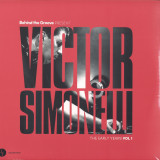
In the words of Bill Brewster - DJ History
‘At the turn of the 1990s, there were few more successful New York house producers than Victor Simonelli. Under a dizzying array of aliases – Solution, NY’s Finest, Groove Committee, Critical Rhythm and Cloud 9 being amongst the better-known – the Brooklyn-born DJ/producer delivered a string of underground club hits during the city’s early ’90s house boom.’
BTG presents “Victor Simonelli: The Early Years Vol 1” a collectors edition double Vinyl release - 2 X 12’s in each Vol
Launching the first Behind The Groove collectors edition vinyl series is New York’s finest Victor Simonelli with ‘The Early Years Vol 1 & 2’ double Vinyl releases. Featuring seminal house tracks such as Cloud 9’s ‘Do You Want Me’, Solution’s ‘Feel So Right’, Instant Exposure’s ‘Wanna Be With You’ and rare mixes of Raiana Page and EZ-AL, this collection brings together classic and rare Victor Simonelli cuts that reflect the early raw energy and buzz of the New York House scene. With ‘Vol 2” scheduled to follow shortly after, this is the most comprehensive collection of rare Simonelli cuts that firmly establishes his esteemed role in 90s House Music as well as introducing new fans to his inimitable sound.
Victor Simonelli is one of the early kings of NYC sampling In house music. The real deal - Victor danced at the legendary David Mancuso’s Loft sessions and developed a serious appreciation for good music. He interned for Arthur Baker at his renown Shakedown Studios (where Arthur worked with the iconic Afrika Bambatta on the seminal dance floor ’Planet Rock’ track) and went on to release hugely influential releases on seminal NYC labels 4th Floor and Nu Groove. Victor’s music was championed by the hugely celebrated iconic House Music DJ pioneers, Larry Levan and Tony Humphries at Paradise Garage & Zanzibar/WBLS/Kiss FM respectively.
Revered as a New York house heavyweight and prolific producer since the turn of the 1990s, Victor Simonelli grew up in Brooklyn, NYC, nurtured by a music loving family, with an avid record collecting father who also worked as a local party DJ. He took music lessons in piano, drums, guitar and bass, before discovering his first love, tuning into NY’s Radio Mix Shows on WBLS, WKTU and WRKS,98.7 Kiss FM) where he discovered the art of mixing and in his own words, ’I just simply got lost in the music’.
Graduating from NYC’s Centre For Media Arts, Victor got an internship in the legendary producer, Arthur Baker’s Shakedown Studios. Soon graduating to editing, mixing and then producing he worked for artists David Bowie, Quincy Jones, Debbie Harry, Sinead O’Connor and Talking Heads. Teaming up with fellow NYC producer Lenny Dee to become the Brooklyn Funk Essentials, they released records ‘Critical Rhythm’ and ‘Subliminal Aurra’ on 4th Floor before Victor went solo as Groove Committee releasing the classic ‘I Want You To Know’ on the legendary Nu Groove Records. Paradise Garage legend, Larry Levan broke ‘I Want You To Know’ rocking 2 copies on his last tour of Japan whilst King of NY House Music,Tony Humphries broke Victor’s new ‘Feels So Right’ across New York on his WBLS/Kiss FM Mastermix show and at his legendary Zanzibar club sessions. It was only a matter of time before Victor’s name became synonymous with quality House music ensuring a worldwide platform for his productions.
In the early 90s alongside his own productions, Victor Simonelli worked on high profile projects, including James Brown’s album, “Love Overdue” BeBe and CeCe Winans single featuring Mavis Staples “I’ll Take You There” and Quincy Jones’ “I’ll Be Good To You” featuring Chaka Khan and the legendary Ray Charles. Never straying too far from his clubland roots, Victor worked with Danny Tenaglia on his classic “The Harmonica Track”.
DJ gigs across the world started flooding in and Victor found himself recording for a dizzying array of labels including Tribal America, Sub-Urban, Bassline, King Street Sounds and Vibe, under a wide range of aliases. He also produced, wrote and remixed for artists such Nile Rodgers (Chic), Afrika Baambata, Hall & Oates, Frankie Knuckles, Kerri Chandler, Madonna and Michael Jackson. Famed for his own productions “It’s So Good” by Creative Force, “I Know A Place” as Sound Of One - the first release on Roger Sanchez One Records -, “Dirty Games” as well as the “Street Players Vol 1 EP”, Victor went on to set up Suburban Records with Tommy Musto and Bassline Records with two other partners. Notable releases on this label include “Do You Feel Me”, Connie Harvey’s gospel inspired, “Thank You Lord”, Urban Blues Project’s “Deliver Me”, Colonel Abrams “Not Gonna Let”, and Mone’s “Better Way”. Never ceasing to produce, DJ, run his own label and host radio shows like Groove Lift, Victor has worked with virtually every NYC producer and has nurtured a next generation talents including Angel Moraes, Jazz ‘N’ Groove, Urban Blues Project, Harlem Hustlers, Jay Jay and Julius Papp. Victor’s releases have also been used on M&S’s “Salsoul Nuggett” hit and Eddie Amador’s underground smash ‘House Music’.
In the late 90’s Victor launched his new Westside Productions, notable for the “Latin Impressions 1 & 2” releases, opened up a studio in Italy as he found himself increasingly working in Europe and now divides his time between New York and Italy. Suffice to say his unique sound of uplifting and spiritual music has kept him at the forefront of House Music and he is credited as one of its leading exponents with his string of classic releases and remixes.
Behind the Groove, branches out from its digital platform to embark on a programme of releases from the iconic pioneer producers of House Music. Esteemed for their high quality features and mixes that continue to explore, celebrate and venerate the contributions of highly respected, scene-shaping Labels, Artists, DJs and Special Events, BTG seeks to bring these talents and tales to the attention of the wider community. Unlocking the stories surrounding the pivotal roles they played and continue to play today in shaping the underground music scene we have come to know and love.
BTG presents “Victor Simonelli: The Early Years Vol 1” a collectors edition double Vinyl release, released on May 12th 2023. ‘Vol 2” follows on May 26th 2023 . These releases are the most comprehensive collection of rare Victor Simonelli cuts that firmly establish his esteemed role in 90s House Music and introduces new fans to his carefree sound.
Есть у нас в наличии и готов к отправке

Rick James Blends Brazen Attitude, Fearless Sexuality, and Shrewd Charisma on Street Songs:
Punk-Funk Album Aims for the Hips and Head, Includes the Timeless Hit “Super Freak”
Sourced from the Original Master Tapes and Strictly Limited to 4,000 Numbered Copies:
Mobile Fidelity’s 180g 45RPM 2LP Set Presents 1981 Smash in Audiophile Sound for the First Time
1/4” / 30 IPS analogue master to DSD 256 to analogue console to lathe
“Punk funk” was a relatively unknown concept before 1981. But once Street Songs took the charts by storm that year, the world soon knew about what became Rick James’ signature style. And how. True to its name, Street Songs blends outspoken sexuality, brazen attitude, and edgy commentary amid contagious R&B-fueled arrangements that simultaneously aim for the hips, head, and various nether regions. And it’s never sounded better.
Sourced from the original master tapes, strictly limited to 4,000 numbered copies, pressed at Fidelity Record Pressing, and housed in a Stoughton gatefold jacket, Mobile Fidelity’s 180g 45RPM 2LP set presents James’ platinum-certified effort in audiophile quality for the first time. Playing with crisp dynamics, lively textures, airy headroom, and revealing clarity, this collectible edition of the record that stayed at the No. 1 spot on the R&B Album Charts for 20 weeks invites you to get closer to music that beckons you to turn your space into a private dance floor.
Then again, you’ll likely be so taken by how the taut bass lines, snappy rhythms, and four-on-the-floor beats — all rendered in stunning detail and with full-bodied architecture — come across with such accuracy and presence, you might stay pinned to your seat. On this pressing, the soundstaging, imaging, and lit-fuse energy of Street Songs reach new heights. Everything from the rubbery feel of the guitar lines to the depth of James’ temperature-raising vocals to the scale of the horn charts emerges as if James and his ace session crew set up in your room.
The Buffalo native and his ensemble waste no time getting their message across. On the album-opening “Give It to Me Baby,” James and company lay down a mix of sleek funk and pulsing disco that practically activates the bright lights of a discotheque and stimulates the libido of anyone within earshot. Having reached No. 1 on the Billboard Hot Soul charts, the song is pure sex — and just one of the carnal delights on a record that embraces the subject as fearlessly as James does his identity.
Of course, the most famous of James’ erotic excursions — the timeless “Super Freak” — hit No. 1 on Hot Dance Club Play charts, No. 16 on the Hot 100, and, later, No. 153 on Rolling Stone’s list of the Top 500 Songs of All Time. Bolstered by a quavering keyboard theme and electro riffs, the much-sampled track worms itself inside your muscles with smile-inducing subject matter, gliding vocals, nimble movements, a hot tenor-saxophone solo, and backing vocals by the Temptations.
The iconic Motown group isn’t the only celebrated guest artist on the Grammy-nominated Street Songs. James’ then-labelmate, Stevie Wonder, lends harmonica to the frank sociopolitical narrative on “Mr. Policeman,” a protest tune that also manages to stroll ’n’ strut via simmering organ, staggering brass accents, and James’ gritty vocal performance. In addition to contributing backing vocals on several cuts, Teena Marie turns in one of the album’s signature moments on “Fire and Desire,” a romantic old-school duet with James that impresses with smoothness, sensitivity, and smokiness.
High-profile colleagues aside, James remains the undisputed star, a figure whose leather-and-latex attire, braided hair, and natural swagger made him misunderstood by some in the mainstream and embraced by everyone in the know as a true original. As a testament to his magnetism and skills, his charisma and rawness seemingly seep through every note, whether on the balladic sweep of the risqué “Make Love to Me” or strident, poke-and-prod persuasion of the moonwalking “Call Me Up.”
On the closing “Below the Funk (Pass the J),” an uptempo autobiographical tale that addresses the visionary musician’s second-favorite love, the singer acknowledges his upbringing and inseparable connection with his roots — an homage to where he began and a toast to where he’s gone.
Rick James, keepin’ it real on Street Songs, still as real as it gets.
Закажите сейчас, и мы закажем товар для вас у нашего поставщика.

'Mauricio and Horns' by Bossa Nova legend and harmonica master Mauricio
Einhorn is produced by Jacques Muyal, with the Idriss Boudrioua Orechestra
arranged by Rafael Rocha and with guest artists Paquito D'Rivera and Lula
Galvao
In jazz, we all know the harmonica master, Mr. "Baron" Toots Thielemans, but we are
equaly fortunate to have our "Prince", Mauricio Einhorn. His early contributions in the
1950s to the birth of the Samba Jazz movement in Brazil played a pivotal role in the
creation of Bossa Nova, a genre that quickly became an integral part of the jazz world.
The influence of jazz on Brazilian music - exemplified by the great Carlos Lyra in
"Influencia Do Jazz" - was so profound that local musicians embraced it to forge a
new musical identity. Many of Einhorn's compositions have become timeless
standards performed worldwide since the early 1950s and '60s.
Together with another giant of the scene, alto saxophonist Idriss Boudrioua,
Mauricio's music gets an even grander presentation than ever before. This time, he
teamed up with an exceptionally talented young musician: a big band arranger and
trombonist named Rafael Rocha, who wrote all the arrangements and conducted the
recordings. Rafael's arrangements are nothing short of magical. They are never
overdone, always respecting the beauty of the original harmonies while infusing them
with his deep passion for jazz. His trombone solos recall the phrasing of Frank
Rosolino, and he modulates the pieces with swirling harmonies that evoke the very
roots of Brazilian jazz. In every track, Rafael enhances Mauricio's elegant and
expressive phrases without ever overpowering the artist, creating a "wall of sound"
that gracefully floats alongside Mauricio.
он должен быть опубликован на 21.11.2025

The extroverted blend of attitude, energy, and ostentatiousness that spills from the New York Dolls’ self-titled debut can be seen in full view on the album cover. Depicting the quintet in its hallmark flash-and-trash apparel and in drag appearance, the 1973 album scared away a considerable amount of potential listeners while capturing the attention of a sizable audience that recognized the band for what it was: zeitgeist pioneers who helped develop the punk and glam rock movements.
Named by Rolling Stone the 301st Greatest Album of All Time and by Mojo the 49th greatest album of all time, New York Dolls receives long-overdue audiophile treatment on Mobile Fidelity’s numbered-edition 180g 45RPM 2LP set. Sourced from the original master tapes, pressed at Fidelity Record Pressing in California, and housed in a Stoughton gatefold jacket, this collectible version marks the first time the group’s career-making statement is available to be experienced in audiophile quality.
Far from harboring the crude elements that became associated with the punk scene, New York Dolls benefits from keen production overseen by none other than Todd Rundgren. Though more accustomed to working far higher-caliber musicians, Rundgren — taken by the New York Dolls’ charisma and cool, if not their instrumental approach — fully understood the ensemble’s aesthetic. He captured what went down at New York City’s Record Plant with an astute blend of live-on-the-floor feel, raw authenticity, and professional acumen.
On Mobile Fidelity’s definitive-sounding reissue, you can hear those facets as well as key details, dynamics, and textures with previously unimaginable insight. Rundgren preserved generous degrees of grit, grime, and grease while bestowing the raucous music with elevated levels of separation, solidity, and impact every landmark recording deserves. His vision extends to introducing choice accents — barroom piano notes, Moog synthesizer passages, Buddy Bowser’s honking saxophones — that add to the songs’ appeal without interfering with the primary architecture.
Afforded extra groove space on this pressing, the tenor, presentation, and attack of both vocalist David Johansen and now-iconic guitarists Johnny Thunders and Sylvain Sylvain come across with stunning vibrancy and vitality. The New York Dolls often seem headed off the rails and into the red, but somehow, the strut, swagger, and sloppiness — and the associated sleaze and scruff, scrape and snarl, frenzy and feverishness those characteristics entail — remain together as a whole that shakes its collective fist at the frustrations, isolation, disarray, and disillusionment of youth chaos and urban decay.
Kicking off its debut with “Personality Crisis,” cited by Rolling Stone as one of the 500 Greatest Songs of All Time, the band makes obvious its grasp of alienation, deviance, displacement, and suburban disaffection — as well as its capacity to play hanging-by-a-thread boogie, noisy rock ‘n’ roll, and Brill Building-inspired pop. The lipstick-kissed New York Dolls possesses traits many of its harsher predecessors would overlook: joyfulness and melody, topped with a knack for knowing how and where to take a song inside of three-and-a-half minutes.
Dive and dash with the belligerent “Looking for a Kiss”; stomp your feet and clap your hands to the big choruses of “Jet Boy”; surrender to the demands and provocations of the coded “Vietnamese Baby”; decide whether “Bad Girl” yearns to explode or implode. It’s one of several tunes here that allude to the world coming to end. Of course, that doesn’t mean there isn’t time for a fling before everything burns. “There’s no place I gotta go,” yowls Johansen. And he means it.
Adorned with tonal crunch, glitter, and gristle, New York Dolls takes pride in its brashness and brattiness. The rambunctious effort, which earned the band the distinction of being voted both “Best New Group of the Year” and “Worst New Group of the Year” in the pages of Creem, displays knowing reverence for the blues without calling attention to the style. The folk-laden “Lonely Planet Boy” is nothing if not a collision of heart-on-the-sleeve emotions and the desire in the face of challenges to maintain a tough-skinned exterior. An interpretation of Bo Diddley’s “Pills,” complete with shivering harmonica and clattering rhythms, announces there’s no cure for what infects this band. It’s that contagious. And how.
His deliveries gushing with campy fun, playful irreverence, and sheer decadence, Johansen doubles as the equivalent of an open fire hydrant that spouts at will. He’s at once tender and vicious, serious and tongue-in-cheek. On arguably his finest hour on the album, Johansen’s phrasing, passion, and lyrical ambiguity alone turn “Trash” into an insistent glam-rock gem whose echoing harmonies and girl-group references stamp it a pop classic.
Too much, too soon? Only for those averse to some of the finest rock ‘n’ roll ever put on tape.
он должен быть опубликован на 31.07.2025

John Mayall is often referred to as the "Father of British Blues." Born on November 29, 1933, he's primarily known for his work as a singer, songwriter, and multi-instrumentalist, particularly as a harmonica player and keyboardist. Mayall gained prominence in the 1960s as the founder and leader of the band John Mayall & the Bluesbreakers, which served as a launching pad for numerous British blues and rock musicians. Mayall's Bluesbreakers lineup famously included Eric Clapton, Peter Green, and Mick Taylor, all of whom went on to achieve great success in their own right. His band became a crucial part of the British blues movement and influenced countless musicians around the world. Over the years, John Mayall has released numerous albums both as a solo artist and with various iterations of the Bluesbreakers. His music spans a wide range of blues styles, from traditional Chicago blues to more experimental and progressive sounds. Mayall's influence on the development of blues and rock music cannot be overstated, and he will always remain a respected figure in the music industry. This John Mayall release from Indigo Records ''Through The Years Live 60's to 80's'' are live recordings presented on Blue vinyl.
он должен быть опубликован на 27.09.2024

Continue As Amery is the debut album by Montreal-based artist Amery. Formerly recording under the moniker Alpen Glow, Continue As Amery sees the songwriter step out into a bold, colourful world full of pop hooks, snagging feelings of abandon and the mornings after. Amery Sandford began releasing as Alpen Glow in 2020 after years playing in punk groups in Newfoundland and as half of Montreal pop duo Born At Midnite (Arbutus). Recorded in Montreal by David Carriere (TOPS, Marci), Patrick Holland, and Kristian North, Continue As Amery is a blast of melodic joie de vivre. On her debut Sandford brings her punk and DIY credentials into sharp focus on 8 perfect pop odes to city living, making mistakes and figuring it out as you go along. Suffuse with powerful imagery and an almost uncanny talent at spinning out hooks brimming with humour and spirit, Amery’s soundworld is informed by friendship, experience and by her day job as a renowned illustrator and visual artist. Beginning Alpen Glow in a spirit of fun and now shedding the alias, Amery’s ready to hotwire the nite. Each song is rich with story. Mountain FM, named for the radio station in Sandford’s home town in the mountains of Alberta, launches into a tale of speeding, blasting the radio too loud, the giddy burning of rubber with no care in the world to slow you down. Featuring live band members Sarah Harris, Jack Bielli, and Frank Climenhage, the singer bristles to get out of her stifling hometown while lamenting the wide eyed adventurer who left for the big city. On Hotwire The Nite, Amery is out on the town, with imagery loaded with the night’s promise. Amery sings “Black candle / Dripping intel / Dagger hanging by an emerald handle / Holy roller that I just can’t have without my hand on an old flame,” diving in and out of fantasy and desire over a pulsating banger. Moments like these feel like a thesis on aural pleasure, with the production sleek and silky playfulness persisting throughout. Spirit Is Broken is a pep talk the artist is giving herself in the mirror. Only Amery could write something so joyous and harmonically glorious while singing about low ebbs. Every line shines with humour, the chorus starting with an exasperated “oh my god, alright” and the refrain nailing the bittersweet feeling of enjoying feeling down. It’s a mood continued on slow groover Ennui, a melter striking out at being stuck; same parties, same faces, daring to dream beyond. As an illustrator and visual artist, Sandford’s images detail dancing instrument-clad animals, party scenes that nod to historical image making heavy hitters like Hieronymus Bosch and Ludwig Bemelmans. On Miracles, Amery deals in bold pop production and her yearning to escape into fantasy, given wings by Korgs and drum machines. On Rocker Blues, originally by French artist FR David, Amery brings the heavy with synth-guitar and an undeniable chorus. C9 is in some ways the album’s centrepiece, a mid tempo funk jam and duet with Montreal stalwart Fireball Kid, it’s the party just out of reach on the horizon. The thing about Cloud 9 is that on the comedown you might get a hella lot of rain. The world Amery builds is intoxicating, rich and most importantly open for anyone to fall into. To be continued…
он должен быть опубликован на 19.07.2024

Oxblood & Blood Red[42,82 €]
Full of collaborations with fellow artists, incl. Thor Harris, Meredith Yayanos, Matt Lebofsky, Dominique Leroni Persi, & members of Kitka Eastern European Women’s Choir. RIYL: Primus, King Crimson, Frank Zappa, Mastodon, Bauhaus. After thirteen years of hibernation, Sleepytime Gorilla Museum, the most gloriously uncategorizable American band in existence, has emerged from stasis to proudly announce the imminent release of their fourth studio album, of the Last Human Being. The album marks the first release of AVANT NIGHT - a new imprint headed by Nick Ohler and facilitated by Joyful Noise Recordings. Sleepytime Gorilla Museum, comprised of multi-instrumentalists and rotating vocalists Nils Frykdahl, Carla Kihlstedt, Michael "Iago" Mellender, Matthias Bossi, and Dan Rathbun, plays an arsenal of instruments ranging from the somewhat standard (drums, electric guitars, bass, electric violin) to the rare (bass harmonica, nyckelharpa, marxophone) to the homemade (Slide-Piano Log, Electric Pancreas, Pedal-Action Wiggler). The group has consistently evaded easy categorization, garnering accolades from across the aisles of contemporary classical music, prog rock, industrial music, metal, avant-garde improv, and more. Their music, in turns bashing and bucolic, enveloping and unsettling, tends towards long-form epics interspersed with mysterious field recordings. "As this slow-rolling planetwide Anthropocene Extinction event deepens, Sleepytime's work has only grown more resonant, more prescient," offers Mer Yayanos, current symposiarch and secretary of the Museum's long standing social math club, the John Kane Society. "What better time for them to Bring Back the Apocalypse than right now, with a new full-length record that integrates the past and the future?" "SGM creates a cohesive statement of virtuoso metal musicianship with the avant garde focus of an art-rock collective." Pitchfork // “I love this style of music –it has great power, great musicianship and great bass playing by Dan Rathbun, sometimes on instruments he built himself. One thing you gotta love about music: this band may have been influenced a bit by King Crimson, but then I, a member of King Crimson, was very much influenced by them” Tony Levin (bassist, King Crimson
он должен быть опубликован на 03.03.2024

Gold Nugget[42,82 €]
Full of collaborations with fellow artists, incl. Thor Harris, Meredith Yayanos, Matt Lebofsky, Dominique Leroni Persi, & members of Kitka Eastern European Women’s Choir. RIYL: Primus, King Crimson, Frank Zappa, Mastodon, Bauhaus. After thirteen years of hibernation, Sleepytime Gorilla Museum, the most gloriously uncategorizable American band in existence, has emerged from stasis to proudly announce the imminent release of their fourth studio album, of the Last Human Being. The album marks the first release of AVANT NIGHT - a new imprint headed by Nick Ohler and facilitated by Joyful Noise Recordings. Sleepytime Gorilla Museum, comprised of multi-instrumentalists and rotating vocalists Nils Frykdahl, Carla Kihlstedt, Michael "Iago" Mellender, Matthias Bossi, and Dan Rathbun, plays an arsenal of instruments ranging from the somewhat standard (drums, electric guitars, bass, electric violin) to the rare (bass harmonica, nyckelharpa, marxophone) to the homemade (Slide-Piano Log, Electric Pancreas, Pedal-Action Wiggler). The group has consistently evaded easy categorization, garnering accolades from across the aisles of contemporary classical music, prog rock, industrial music, metal, avant-garde improv, and more. Their music, in turns bashing and bucolic, enveloping and unsettling, tends towards long-form epics interspersed with mysterious field recordings. "As this slow-rolling planetwide Anthropocene Extinction event deepens, Sleepytime's work has only grown more resonant, more prescient," offers Mer Yayanos, current symposiarch and secretary of the Museum's long standing social math club, the John Kane Society. "What better time for them to Bring Back the Apocalypse than right now, with a new full-length record that integrates the past and the future?" "SGM creates a cohesive statement of virtuoso metal musicianship with the avant garde focus of an art-rock collective." Pitchfork // “I love this style of music –it has great power, great musicianship and great bass playing by Dan Rathbun, sometimes on instruments he built himself. One thing you gotta love about music: this band may have been influenced a bit by King Crimson, but then I, a member of King Crimson, was very much influenced by them” Tony Levin (bassist, King Crimson
он должен быть опубликован на 03.03.2024

Sourced from the Original Master Tapes and Presented in Audiophile Sound for the First Time: Mobile Fidelity’s Numbered-Edition 180g SuperVinyl LP Plays with Riveting Detail
Three decades before he released The Philosophy of Modern Song — an insightful book devoted to 66 tunes that both impacted his career and the music world at large — Bob Dylan issued Good As I Been to You. The under-heralded 1992 album, Dylan’s first solo acoustic album in nearly 30 years and first all-covers effort in nearly 20 years, can be seen as a prophetic prelude to what has become the Nobel Laureate’s celebrated late-career arc. It’s also an absorbing continuation of the custom Dylan has embraced since he first picked up a guitar.
Sourced from the original master tapes, pressed at RTI, and housed in a Stoughton jacket, Mobile Fidelity's numbered-edition 180g SuperVinyl LP of Good As I Been to You reveals the immediacy, detail, and stripped-down nature of recording sessions that took place in Dylan’s garage studio in California. Simple, raw, and unplugged, the record presents Dylan in peak form — and showcases a diversity of vocal phrasing, soulful chording, harmonica accents, and close-up ambience that on this reissue emerge like never before. As the first-ever audiophile edition of this almost-lost classic, this LP also benefits from SuperVinyl’s extraordinary properties: a nearly inaudible noise floor, superb groove definition, and dead-quiet surfaces among them.
Recorded and mixed by Micajah Ryan, and supervised by Debbie Gold, Good As I Been to You took shape at Dylan’s home shortly after the singer-songwriter completed sessions in Chicago with a full band. Unaccompanied, he again gravitated to existing works — in this case, traditional folk music — and, with Gold serving as a trusted advisor, performed the songs in multiple keys and tempos until he arrived at what he desired. That careful, determined albeit loose, organic approach emanates from this reissue, on which each note, movement, and space come across more directly, fully, and immediately than on the original formats. It helps draw a through-line to Another Side of Bob Dylan (1964) as well as the similarly themed follow-up, World Gone Wrong (1993) and immersive old-world storytelling of Tempest (2012) and Rough and Rowdy Ways (2020).
Well before Dylan made those renowned 21st century LPs, however, he needed to find a way out of a funk that — save for his 1989 collaboration with Daniel Lanois, Oh Mercy — followed him for years. As author Clinton Heylin reported Dylan admitting in 1997: “My influences have not changed — and any time they have done, the music goes off to a wrong place. That’s why I recorded two LPs of old songs, so I could personally get back to the music that’s true for me.”
Truth: Few, if any, concepts better encapsulate Good As I Been to You. It resonates with the same originality, honesty, resolve, and age- and time-defying relevance as the seminal Anthology of American Folk Music that fired Dylan’s imagination as a kid in small-town Minnesota and, later, per Greil Marcus’ That Old Weird America book, informed Dylan and the Band’s Basement Tapes sessions. This record also contains the type of music Dylan was playing during his acoustic sets at his period Never Ending Tour shows; within a year of the record’s release, Dylan would play half the album’s songs live.
As for those songs: Rife with strange mystery, common circumstance, and epic adventure, the stories appeal to our base instincts. Their themes — jealousy, temptation, sacrifice, love, revenge, identity, opportunity — operate on a fundamentally human level immune to trends, generations, or eras. They’re ancient and modern, serious and comical, open and disguised, simple and multi-layered. They talk of vengeance and justice (“Frankie & Albert”; “Jim Jones”), romance and tenderness (“Tomorrow Night,” “Froggie Went a Courtin’”), the troubled and trouble-free (“Hard Times,” “Sittin’ on Top of the World”). They lend voice to lovers scorned and freed (“Blackjack Davey”), the used and users (“Diamond Joe”), the powerful and powerless (“Arthur McBride,” “Canadee-I-O”), the followed and followers (“Little Maggie”). And akin to much of Dylan’s finest output, things are not always what they appear to be.
Spanning country, folk, sea shanty, bluegrass, and blues motifs, Good As I Been to You re-confirms Dylan’s position as an elite interpreter and sculptor — not of just structure but emotion. Dylan delivers the tunes as if he’s known them forever. He plays with a subtle sense of mischievousness and retains a largely upbeat demeanour; his eyes seemingly twinkle as he sings and picks. His guitar serves as the guidepost for shuffles, boogies, ballads, and mess-arounds while his innate feel for each specific arrangement and melody helps inform pacing, tone, attack.
Like a great author, he understands the importance of adhering to concision, luring an audience, holding their attention, and maximizing the impact of details, actions, and unexpected turns. Though already coarse and ragged, his voice feels ideal for the subject matter and his phrasing — from the clever ways he stretches syllables to underline meanings on the surprise twists of “Canadee-I-O” to the sheer delight he gets from singing “rowdy-dow-dow” on the protest song “Arthur McBride” — outstanding.
он должен быть опубликован на 15.12.2023

This release heralds the launch of a new 7” series from Mr Bongo. In partnership with London-based DJ and digger, Miche, the series will feature his latest discoveries, as well as choice cuts, taken from his 'With Love' compilations. For the inaugural offering, we take a trip to hazy San Francisco, California, in 1977. Smoke, Inc. were an emerging band in the Greater San Francisco Bay area and a regular fixture in the buzzing live music scene. They had a strong following and were in rotation in most of the Bay area clubs, as well as opening for numerous prestigious acts such as Sly & The Family Stone, Taj Mahal, The Pointer Sisters and Toots and The Maytals. Members of the group worked with Jimi Hendrix, Stevie Wonder, Frank Zappa, Martha Reeves & The Vandellas, and many others considered the cream of the crop of the music world.
Smoke, Inc. featured Roy Schmall on keyboards and vocals, Stan Terry on lead vocals and harmonica, Michael 'Ollie' Schotka, on bass and vocals, Keith Stafford on drums and vocals, and Archie Williams Jr on guitar. They went on to release one 12" EP and two 7" singles. One of those 7’s included 'Waitin' For Love’. It was first released in 1977 and came out on the band's own self-titled imprint. It has gone on to become their rarest and most sought-after recording, now fetching up to an astonishing £2,500 on Discogs. It is a breezy, feel-good, modern/crossover soul beauty, with an infectious sing-along chorus, floaty flute solo, and packed with pure, uplifting dancefloor energy. The B-side features a cover version of the Holland Dozier & Holland-penned classic 'It's the Same Old Song’, made famous by the Four Tops.
Miche enthuses, “I included this gem on my first ‘With Love’ compilation and knew that it deserved its own dedicated reissue complete with original artwork. I’m delighted to get the chance to make that happen for this incredible, soulful AOR glide from a band that is well due another round of appreciation. It’s very rare, and consequently very expensive, so here it is for you all to spin and add to your record collections.”
46 years since its original release, it is our privilege to help Roy and the gang’s light shine once again and let a whole new audience relish the beautiful sounds of 'Waitin' For Love'.
Закажите сейчас, и мы закажем товар для вас у нашего поставщика.

Like the winged half-man/half-bull that dominates its outrageous cover, Cleveland Eaton's Half And Half is a mutant bass-heavy monster that absolutely slays. Incredible jazz-funk from 1973, it's been largely overlooked for decades, and unfairly so. This is just sensational music - a crate digger's delight. It's super funky throughout, with lots of layers, jazz breaks for days, dripping with style and gritty class. This is the first reissue of what has been a hard to find record for many years; it's long overdue. Joyous music for mind, soul and body.
Cleveland Eaton was a revered bassist who played an active role in the backing of Count Basie, the Donald Byrd Quintet, The Ramsey Lewis Trio, Terry Callier and Minnie Riperton; amongst many, many others. Half And Half was the first album released under his own name, initially released as a private press record on his - awkwardly named - Cle An Thair Records. It was then picked up by Gamble & Huff for Gamble Records. Varied, string-adorned and with stupid funky grooves, it's just exceptionally good.
Whilst Half And Half is treasured for its famously brilliant interpretations of gold funk-soul standards, Eaton proves an imaginative composer in his own right. Indeed, the album opens with a striking original; the earthy, laconic jazz-guitar-funk fusion of "Keep It Funky". Cleveland and co. do exactly that. Up next is a properly moving cover of Aretha Franklin's eternal "Day Dreaming". The flute and guitar combo truly achieve celestial greatness here. "Here Comes Funky Lou" rides a bassline from the Gods and a driving soul-jazz groove allows the track to go off in all sorts of directions. Serene guitar soul of the breezy variety one moment, crazy hectic violin-driven wig outs the next, courtesy of Ed Green who played with Dorothy Ashby and Alice Coltrane.
His blistering two track salvo of Stylistics covers to close out this A-Side of A-Sides will leave your jaw dropped, and they're likely the reason you're here for this. And why not? "Betcha By Golly Wow", which uses a bed of acidy synths and harmonica to create a unique atmosphere, is on some next level business. Melancholic, wistful, beautiful. "People Make the World Go Round" is so good, dripping in wonderful horns and ace percussive breaks, it could even be regarded as the definitive version. Seriously!
Opening Side B, War's gigantic "Slipping Into Darkness" is tightly tailored to Eaton's funky flute fusion arrangement whilst the insistent "Missing You" is a swaggering horn-heavy version of Luther Ingram's track from the Dilla/Ghostface-linked LP, I've Been Here All The Time. The creeping, screeching guitar-drenched original "John's Groove" features more fantastic horn lines and neck-snapping percussion whilst "The Love Gangster", written by Bill Wyman and Stephen Stills for his seminal Manassas LP, contains a heavy break with slick drums high in the mix and fuzzy guitars.
The album closes with two more Eaton originals. Written with Johnny Guitar Watson, "Lie" is one hell of a funky string and guitar-driven gem whilst the wild, celebratory "Ah Movin' On" cleverly quotes "Wade In The Water" (which he'd recorded with Ramsey Lewis in 1966) folding it into his new free-jazz composition. A message to his old boss, perhaps, as a sign-off?
We've worked on this reissue for 3.5 years, spending the whole time making it sound super sharp and looking as perfect as it possibly can. An absolute must-have for fans of soulful jazz-funk, Half And Half was mastered for vinyl by Simon Francis and cut by Pete Norman at Final Tweak. The bizarre artwork, mutant beast and all, was restored at Be With HQ over many painstaking months! Hopefully, this new edition, a real labour of love, should bring Cleveland Eaton into the homes and record boxes of many more people.
Закажите сейчас, и мы закажем товар для вас у нашего поставщика.
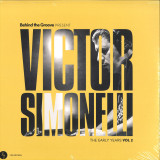
Vol.1[31,05 €]
In the words of Bill Brewster - DJ History
‘At the turn of the 1990s, there were few more successful New York house producers than Victor Simonelli. Under a dizzying array of aliases – Solution, NY’s Finest, Groove Committee, Critical Rhythm and Cloud 9 being amongst the better-known – the Brooklyn-born DJ/producer delivered a string of underground club hits during the city’s early ’90s house boom.’
BTG presents “Victor Simonelli: The Early Years Vol 1” a collectors edition double Vinyl release - 2 X 12’s in each Vol
Launching the first Behind The Groove collectors edition vinyl series is New York’s finest Victor Simonelli with ‘The Early Years Vol 1 & 2’ double Vinyl releases. Featuring seminal house tracks such as Cloud 9’s ‘Do You Want Me’, Solution’s ‘Feel So Right’, Instant Exposure’s ‘Wanna Be With You’ and rare mixes of Raiana Page and EZ-AL, this collection brings together classic and rare Victor Simonelli cuts that reflect the early raw energy and buzz of the New York House scene. With ‘Vol 2” scheduled to follow shortly after, this is the most comprehensive collection of rare Simonelli cuts that firmly establishes his esteemed role in 90s House Music as well as introducing new fans to his inimitable sound.
Victor Simonelli is one of the early kings of NYC sampling In house music. The real deal - Victor danced at the legendary David Mancuso’s Loft sessions and developed a serious appreciation for good music. He interned for Arthur Baker at his renown Shakedown Studios (where Arthur worked with the iconic Afrika Bambatta on the seminal dance floor ’Planet Rock’ track) and went on to release hugely influential releases on seminal NYC labels 4th Floor and Nu Groove. Victor’s music was championed by the hugely celebrated iconic House Music DJ pioneers, Larry Levan and Tony Humphries at Paradise Garage & Zanzibar/WBLS/Kiss FM respectively.
Revered as a New York house heavyweight and prolific producer since the turn of the 1990s, Victor Simonelli grew up in Brooklyn, NYC, nurtured by a music loving family, with an avid record collecting father who also worked as a local party DJ. He took music lessons in piano, drums, guitar and bass, before discovering his first love, tuning into NY’s Radio Mix Shows on WBLS, WKTU and WRKS,98.7 Kiss FM) where he discovered the art of mixing and in his own words, ’I just simply got lost in the music’.
Graduating from NYC’s Centre For Media Arts, Victor got an internship in the legendary producer, Arthur Baker’s Shakedown Studios. Soon graduating to editing, mixing and then producing he worked for artists David Bowie, Quincy Jones, Debbie Harry, Sinead O’Connor and Talking Heads. Teaming up with fellow NYC producer Lenny Dee to become the Brooklyn Funk Essentials, they released records ‘Critical Rhythm’ and ‘Subliminal Aurra’ on 4th Floor before Victor went solo as Groove Committee releasing the classic ‘I Want You To Know’ on the legendary Nu Groove Records. Paradise Garage legend, Larry Levan broke ‘I Want You To Know’ rocking 2 copies on his last tour of Japan whilst King of NY House Music,Tony Humphries broke Victor’s new ‘Feels So Right’ across New York on his WBLS/Kiss FM Mastermix show and at his legendary Zanzibar club sessions. It was only a matter of time before Victor’s name became synonymous with quality House music ensuring a worldwide platform for his productions.
In the early 90s alongside his own productions, Victor Simonelli worked on high profile projects, including James Brown’s album, “Love Overdue” BeBe and CeCe Winans single featuring Mavis Staples “I’ll Take You There” and Quincy Jones’ “I’ll Be Good To You” featuring Chaka Khan and the legendary Ray Charles. Never straying too far from his clubland roots, Victor worked with Danny Tenaglia on his classic “The Harmonica Track”.
DJ gigs across the world started flooding in and Victor found himself recording for a dizzying array of labels including Tribal America, Sub-Urban, Bassline, King Street Sounds and Vibe, under a wide range of aliases. He also produced, wrote and remixed for artists such Nile Rodgers (Chic), Afrika Baambata, Hall & Oates, Frankie Knuckles, Kerri Chandler, Madonna and Michael Jackson. Famed for his own productions “It’s So Good” by Creative Force, “I Know A Place” as Sound Of One - the first release on Roger Sanchez One Records -, “Dirty Games” as well as the “Street Players Vol 1 EP”, Victor went on to set up Suburban Records with Tommy Musto and Bassline Records with two other partners. Notable releases on this label include “Do You Feel Me”, Connie Harvey’s gospel inspired, “Thank You Lord”, Urban Blues Project’s “Deliver Me”, Colonel Abrams “Not Gonna Let”, and Mone’s “Better Way”. Never ceasing to produce, DJ, run his own label and host radio shows like Groove Lift, Victor has worked with virtually every NYC producer and has nurtured a next generation talents including Angel Moraes, Jazz ‘N’ Groove, Urban Blues Project, Harlem Hustlers, Jay Jay and Julius Papp. Victor’s releases have also been used on M&S’s “Salsoul Nuggett” hit and Eddie Amador’s underground smash ‘House Music’.
In the late 90’s Victor launched his new Westside Productions, notable for the “Latin Impressions 1 & 2” releases, opened up a studio in Italy as he found himself increasingly working in Europe and now divides his time between New York and Italy. Suffice to say his unique sound of uplifting and spiritual music has kept him at the forefront of House Music and he is credited as one of its leading exponents with his string of classic releases and remixes.
Behind the Groove, branches out from its digital platform to embark on a programme of releases from the iconic pioneer producers of House Music. Esteemed for their high quality features and mixes that continue to explore, celebrate and venerate the contributions of highly respected, scene-shaping Labels, Artists, DJs and Special Events, BTG seeks to bring these talents and tales to the attention of the wider community. Unlocking the stories surrounding the pivotal roles they played and continue to play today in shaping the underground music scene we have come to know and love.
BTG presents “Victor Simonelli: The Early Years Vol 1” a collectors edition double Vinyl release, released on May 12th 2023. ‘Vol 2” follows on May 26th 2023 . These releases are the most comprehensive collection of rare Victor Simonelli cuts that firmly establish his esteemed role in 90s House Music and introduces new fans to his carefree sound.
Закажите сейчас, и мы закажем товар для вас у нашего поставщика.

Before Mahjun (of which Souffle Continu reissued, in 2016, the two albums released on Saravah), there was... Maajun. Five musicians (Jean-Pierre Arnoux, Cyril and Jean-Louis Lefebvre, Alain Roux and Roger Scaglia) and three times as many instruments at the service of an electric-poetic guerrilla group moulded from folk and blues. The group’s unique album, “Vivre la Mort du Vieux Monde” evokes an (imaginary) association of Frank Zappa and Jacques Higelin, of Sonny Sharrock and the Art Ensemble Of Chicago. Under these conditions, Long Live Death!
“The most French of all the French groups, determined to take Maurice Chevalier’s place in American hearts.” This was how Rock&Folk presented Mahjun in 1977. So be it. But when “Vivre la Mort du Vieux Monde”, was issued, it was 1971, and the name, though the same group, was still spelled Maajun. So, let’s look back at the story.
At the end of the sixties, five blues fans decided to form a French group ready to break down the barriers: Jean-Pierre Arnoux (drums, vibraphone, saxophone), Cyril Lefebvre (guitar, organ), Jean-Louis Lefebvre (bass, violin, guitar, vocals), Alain Roux (saxophone, flute, harmonica, vocals) and Roger Scaglia (guitar, vocals). This was Maajun, and Vivre la mort du vieux monde would be their only album, but which would (nevertheless) be followed by those of Mahjun created later by Lefebvre (Jean-Louis) and Arnoux.
Recorded for the Vogue label, “Vivre la Mort du Vieux Monde” would disturb a number of people. This is mostly due to the lyrics, many of which were written by Gérald Escot-Bocanegra, who, while summoning the spirit of Lautréamont and Rimbaud, turned the Maajun musicians on to rock and free jazz. Add a bit of politics into the mix, and the release of the album was delayed for several months. But then, wasn’t it worth waiting for?
Because “Vivre la Mort du Vieux Monde”, a real concept-album, is an important and iconoclastic statement made directly in the face of (francophone) dreamers of all countries. Over heavy guitar riffs, psychedelic interludes or fantasy-fuelled digressions, Maajun built mazes on the advice of alchemists known only to themselves before heading off on a long march on the “cracking walls”. It was an ambitious project, but Maajun could handle it, going so far as to proclaim: “Tomorrow will be a huge party!” But as we can see “tomorrow”, is now!
он должен быть опубликован на 13.01.2023

The New York Downtown Producer/Composer Returns With His First New Album In 3 Years
EIGHTEEN: the year of release, 2018. EIGHTEEN: the age at which I first used a synthesizer.
In creating EIGHTEEN I worked independently in the studio, initially building up tracks with synthesizers and found sounds recorded in my daily comings and goings. After working with the tracks over a period of months,I shared them with a few musicians, who added their own instrumental layers. Though working independently, we all shared a similar working process: working in our personal recording spaces, as opposed to larger recording studios.
The musicians are: Gabe Gurnsey (drums) of Factory Floor, with whom I collaborated on the Beachcombing EP and performed live at London's ICA. I appear on Gabe's newly released album Physical;
Larry Saltzman (guitar) has played in my Love Of Life Orchestra since the 1970's. Well-known for his work with Arthur Russell ('Kiss Me Again', Flying Hearts), he is in high demand in NYC by acts such as Simon and Garfunkel;
Paul Nowinski, (bass) has played with LOLO since the 1980's. Paul has an impressive list of credits, including Les Paul, Keith Richards, Bernard Purdie and the Boston Pops; Matt Mottel, (electric piano), is the newest addition to the Love Of Life Orchestra. He is half the duo Talibam!, a leading act in the noise jazz scene; Lewin Barringer, (guitar), is a talented guitarist and producer in Philadelphia.
After mixing the final tracks, I brought the mixes to Berlin. There I worked with the brilliant mastering engineer Mike Grinser who helped to give the album a unified sound.
I think of this album as electronic music. It was created in my home studio, using analog and digital synthesizers, found sounds recorded on my phone, and instrumental parts contributed by friends. Finely crafted melodies and harmonies are set against subway noises, street construction, and distant foghorns. Sometimes there are sustained clusters, generated by my leaning against the keyboard. Deliberateness paired with randomness: this is what guided the artistic process.
This album is atypical for me as I am not playing saxophone. (I do play one reed instrument - a harmonica.) I grew up with the sax as my primary instrument. Yet my father was a radio journalist so the reel-to-reel tape recorder was a ubiquitous presence in the family home. From an early age,
I experimented with the tape machine: recording, overdubbing and splicing tape. I learned about Varese from Frank Zappa liner notes; I read John Cage's 'Silence.' Electronic music was on my radar.
My first exposure to an actual synthesizer came when I recorded my first single at the fabled Sound City Studio in Van Nuys, CA. The studio had a custom Neve board, but it also had a firstgeneration Moog modular synthesizer sitting unused in the maintenance room. I asked and they kindly let me experiment with it. Soon, I enrolled at the University of California - San Diego after I discovered they had separate studios for their Moog and Buchla systems. These large modular synthesizers were affordable then only by institutions and rock stars. But these would be soon eclipsed by smaller, cheaper synths in the 70's and early 80's. In the same way, recording studio technology became accessible in the 90's. . And thus the personal computer and digital audio allowed studio quality production in the home studio. Electronic music had become democratized.
Handmade music by way of digital technology: this is the music of EIGHTEEN
Закажите сейчас, и мы закажем товар для вас у нашего поставщика.
