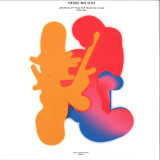
the first-ever reissue on studio mule of the debut album by japanese jazz legend and bassist yoshio ikeda.
having performed with such illustrious figures as sadao watanabe, masabumi kikuchi, and terumasa hino, ikeda’s first album as a leader features pianist and vocalist ichiko hashimoto—also known for her involvement with yellow magic orchestra—berlin-based jazz pianist aki takase, and leading japanese drummer motohiko hino.
avant-garde yet imbued with a distinctly japanese sense of melancholy, this is a work that resonates profoundly with the present moment.
the gem “whispering weeds,” highlighted by thrilling piano and hashimoto’s evocative scat vocals, was also included on a compilation by bbe.
remastered from the original master tapes by kuniyuki, the album has been revived with a richer, more lustrous sound in this definitive reissue.
Поиск:hashim
Все
- 1
- 1: Akashia No Ame Ga Yamu Toki
- 2: Meiko No Yume Wa Yoru Hiraku
- 3: Onna Kokoro No Uta
- 4: Ginza No Cho
- 5: Shinjuku Blues
- 6: Kasbah No Onna
- 7: Tokyo Nagare Mono
- 8: Uramachi Jinsei
- 9: Sake Wa Namida Ka Tameiki Ka
- 10: Otoko No Junjo
- 11: Ame No Yatai
- 12: Shiretoko Ryojo
Wewantsounds is delighted to continue its extensive reissue program of Meiko Kaji"s early discography, originally released by Teichiku Records in Japan between 1972 and 1974. The Quentin Tarantino muse-famous for her starring roles in Lady Snowblood and Stray Cat Rock-was also a gifted singer. Otoko Onna Kokoro No Aika is another collection of superb cinematic songs featuring Kaji"s signature mix of Japanese Pop and Groove, backed by lush, atmospheric orchestrations. This includes her rendition of "Tokyo Nagare Mono," the theme song for Seijun Suzuki"s cult 1966 film Tokyo Drifter. This reissue features the original artwork, an OBI strip, and a four-page insert with new liner notes by Hashim Kotaro Bharoocha, who interviewed Meiko Kaji for the occasion.
- A1: Makafushigi Adventure! / Hiroki Takahashi
- A2: Mezase Tenkaichi / Hiroki Takahashi
- A3: Dragon Ball Densetsu / Hiroki Takahashi
- A4: Mr. Dream Wo Sagase / Ushio Hashimoto
- A5: Aoki Tabibitotachi / Hiroki Takahashi
- B1: Fushigi Wonderland / Wonderland Gang
- B2: Mutenroushi No Oshie / Kohei Miyauchi
- B3: Son Goku Song / Masako Nozawa
- B4: Wolf Hurricane / Toru Furuya
- B5: Romantic Ageruyo / Ushio Hashimoto
A collection of hit songs released at the time of the TV anime "Dragon Ball", including rare insert songs, has been reissued on clear orange vinyl. This is a truly one-star ball (Yishinchu) disc!
A collection of hit songs that also includes the opening theme song "Makafushigi Adventure!" and ending theme song "Romantic Ageruyo" released in 1986. The "Son Goku Song" is sung by Masako Nozawa, the voice actor for Son Goku, the main character of Dragon Ball, and the "Wolf Hurricane" is sung by Toru Furuya, Yamcha's voice actor, Hyuma Hoshi from Star of the Giants, and Amuro Ray from Mobile Suit Gundam. Contains a total of 10 songs, including "Mutenroushi no Oshie" song by Kohei Miyauchi, the voice actor of Master Roshi! A must-have for Dragon Ball fans!
Building on the foundations of his Braindance Records label (2017–2020), Korean musician Go Dam now presents the second release on Stellar Systems. The Digifuga Series: Stellar EP finds him in interplanetary hyperdrive, charting trails blazed by pioneers from Hashim to Mad Mike to Gerard Hanson.
The four tracks were written in the studio Go Dam built with his own hands in Eulji-ro — once Seoul’s printing district, now a hive of small businesses. That same meticulous, artisanal approach runs through all of his work, whether composing film scores, producing K-Pop for online personalities, or fine-tuning sound systems around the city. The EP opens with the irrepressible electro funk of 'Fevernova', its slapping beat driving growling bass and wide-eyed synths. 'Dream Powder' is a stormy banger, surfing waves of filtered acid and noise before breaking into light. 'Chrono Flux' sustains the high energy, like the soundtrack to an anime motorbike chase at sunset, while 'Quasiverve' drifts into deepest night, its sinuous leads creeping over a stalking bassline.
Blending heavyweight vintage hardware with sharp digital tools, Go Dam conjures an epic widescreen sound that nods both to the sci-fi optimism of early electro and techno and to today’s fractured, machine-mediated music economy.
Comes with DL card & 2P insert / wrapped in shrink + a sticker
At long last, Takao is back with his long-awaited second album, seven years in the making. His 2018 "Stealth" was (and still is) a much-loved set, mixing elements of ambient and environmental music; with this new release Takao breaks free of the gravitational pull of these earlier influences and strides confidently forward. "The End of the Brim" jettisons some of the more abstract elements of his previous work, embracing a “universal listenability” and a more concrete intensity, with a focus on supple rhythms and strengthened senses of melodic development and harmonic sophistication. This musical growth can be linked with Takao’s admiration of composers Ken Muramatsu and Toshifumi Hinata, who are generally associated with commercial “production music” and easy listening. Another contributing factor is his private study with veteran keyboardist Ichiko Hashimoto of Colored Music. The ten tracks here include three vocal tracks, with three different singers (Yumea Horiike, Cristel Bere, Atsuo Fujimoto of Colored Music) and seven keyboard-led pieces. The vocal pieces are integral parts of the album’s flow, rather than typical “songs” driven by the name and personality of the singer. All of these factors, plus the veteran presence of engineer Hiroshi Haraguchi, known for his work with Haruomi Hosono, who mixed half of the album's tracks, along with the use of excellent old-school synths, aligned with Takao’s forward-looking vision, have combined to give us an album with a unique sense of timelessness. A spotlight illuminating future paths for pop music, available on CD/Vinyl LP/Digital, with English/Japanese lyrics, and liner notes by Yuji Shibasaki.
- Theme ~ Kaasama No Uta
- Kagami Jigoku
- Haru
- Kinu No Michi
- Hito No Inai Shima
- Nemuri No Kuni
- Tenshi No Youni
- Hyouryuu Sen
- Mikkou
Wewantsounds is delighted to continue its Yoshiko Sai reissue program with the release of "Mikkou", the Japanese singer-songwriter"s 2nd album released in 1976 on Black Records. The album, produced by ace arranger Isamu Haruna, keeps the same formula as "Mangekyou" with Yoshiko Sai"s beautiful songs and dreamy vocals over cool funky arrangements, this time featuring legendary guitarist Masayoshi Takanaka. This is the first time "Mikkou" is widely available outside of Japan, with remastered audio, original artwork and a 4 page insert including new liner notes by Hashim Kotaro Bharoocha who interviewed Yoshiko Sai for this special occasion.
RYOZO BAND’s New Single “QUIET FOG / FUGITIVE” Coming to 7-Inch Vinyl!
Following their previous release Pleasure and a remix by French beatmaker Lex (de Kalhex) that drew attention from multiple directions, RYOZO BAND
kicks off 2026 with a two track single available on streaming and 7-inch vinyl.
The lead track, “Quiet Fog,” is a mid tempo piece highlighted by a powerful horn ensemble, with an awe-inspiring saxophone solo that steals the spotlight.
It’s a track that showcases the band’s evolving groove and ensemble maturity.
Released simultaneously with the 7-inch, “Fugitive” is a cover of a hidden gem by Jamaica’s legendary ska band The Skatalites.
While paying homage to the original, RYOZO BAND reimagines it with their signature energy and dynamism, delivering an uptempo arrangement full of drive
and vitality. The result is an energetic yet sophisticated sound that promises to ignite live audiences.
RYOZO BAND is led by Ryozo Obayashi (SANABAGUN.), joined by an all star lineup: drummer Masaaki Nagata (Zainichi Funk), saxophonist Takehide
“KIDS” Hashimoto (Zainichi Funk), guitarist Tetsuta Otachi (SAHAS), keyboardist Yusei Takahashi (Setagaya Trio, Terumasa Hino Quintet), percussionist
Ryotaro Miyasaka (Yuta Orisaka Ensemble), and trumpeter Kyotaro Hori (ACO, TAMTAM). Each member brings a highly acclaimed background, blending
their influences into an ensemble rich in depth and vitality, modernizing ska and jazz elements with a contemporary twist.
A release brimming with passion and love for music—perfect for ushering in 2026. This single is proof that RYOZO BAND is evolving to the next stage.
- A1: Makafushigi Adventure! / Hiroki Takahashi (Lyrics: Yuriko Mori, Music: Takeshi Ike, Arrangement: Kohei Tanaka)
- A2: Tabidachi
- A3: Makafushigi Adventure!
- A4: Sexy Gal Bulma
- A5: Dragon Ball No Nazo
- A6: Funky Kamesennin
- A7: Daikouya
- B1: Youkai Shutsugen
- B2: Yashin
- B3: Kiken Ga Ippai
- B4: Shenron Shutsugen
- B5: Pilaf To Sono Buka
- B6: Yasei No Shounen
- B7: Romantic Ageru Yo / Ushio Hashimoto (Lyrics: Tatemi Yoshida, Music: Takeshi Ike, Arrangement: Kohei Tanaka)
Pressed and printed in Japan
Japanese OBI and original booklet reproduction
Original released 1986
For Dragon Ball fans and vinyl collector’s alike
The opening theme "Makafushigi Adventure!" (sung by Hiroki Takahashi) and the ending theme "Romantic Ageru yo" (sung by Ushio Hashimoto) from the TV anime "Dragon Ball" that began airing in 1986, as well as the soundtrack by Shunsuke Kikuchi, have been reissued on LP!
Wewantsounds continues its extensive Meiko Kaji reissue program - in partnership with Teichiku Records and Kaji herself - with the release of Yadokari, her third album from 1973. This marks the first time the album has been reissued on vinyl, featuring its original artwork and newly remastered audio. Renowned for her iconic 1970s films (Lady Snowblood, the Stray Cat Rock series) and admired by Quentin Tarantino, Meiko Kaji also released a string of outstanding albums on Teichiku, blending Japanese pop with cinematic grooves. Yadokari, is reissued here with its original deluxe gatefold sleeve andOBI plus a two-page insert featuring new liner notes by Hashim Kotaro Bharoocha. As a special bonus, this edition includes a 7" EP single featuring Shura No Hana, famously featured on the Kill Bill soundtrack.
- A1: Nobuo Yagi - Mi Mi Africa
- A2: Nobuyuki Shimizu - Silver Spot
- A3: Piper - Samba Night
- B1: Haruko Kuwana - Akogareno Sundown
- B2: Aru Takamura - Koi Wa Saikou
- B3: Hitomi Tohyama - Love Is The Competition
- B4: Homma Express -What The Magic Is To Try
- C1: Colored Music - Colored Music
- C2: Shohjo-Tai & Red Bus St Project - Electric City
- C3: Yumi Murata - Krishna
- D1: Eri Ohno - Live Hard, ,Live Free
- D2: Minnie - Rocket 88
- D3: Shoody - Tokyo Melody
2024 Repress
at mule musiq, we've focused on shining light on the many aspects of what electronic music can be, putting out house, techno and ambient releases on our main label, while releasing alternative-leaning dance music through our endless flight imprint. but with the launch of our new label, studio mule, we are stepping away from electronic club music for a bit. the label will not be tied to a specific genre, as we will instead focus on releasing any kind of music that we feel is a little bit different and interesting, but somehow make sense in this day and age. for our first batch of releases, we will be focusing on japanese music.
to be honest, i have been watching the recent rise of global interest in japanese music with a skeptical eye, not sure of how to feel about all these labels overseas licensing great albums that were birthed in our country. but then, i was told by somebody i greatly respect that i should do something similar with mule, and put our own spin on it, which sounded like a good idea to me. after a period of procrastination, i finally got around to doing it. we are starting things off with a compilation of japanese disco, boogie and soul music that we selected from a modern dance music perspective — the kind of songs that we feel would intrigue music fans across the world.
at first, i started seeking authentic-sounding disco that sound like it could have been recorded in the states, but after struggling to get licensing rights for many of those tracks, i started to wonder if that was really the direction we should be going in. when we start new labels or projects, we often come up with the title or artwork first, before deciding on the actual music. we came up with the title midnight in tokyo first, which dictated that we needed to find music that would be a perfect soundtrack to listen to at night in tokyo. we ended up compiling a selection of tracks that you could both listen to at home, and play in clubs at certain time slots. the compilation also ended up sounding a lot more pop than we initially imagined...
during the selection process, we did not care whether the tracks have been reissued already or not, and how rare the original copies of the records were. our sole purpose was to gather a handful of songs from across labels, major or otherwise, that we felt could be listened to for many years to come — even after this whole japanese music trend dies down. although we put together this release mainly for listeners outside of japan, the compilation can also be a chance for japanese music lovers to rediscover the greatness of domestic music, as we did during the process.
the compilation starts off with the afro disco classic 'mi mi africa' by harmonica player nobuo yagi, which was also included in the compilation mastercuts.
'silver top' is a jazzy fusion disco taken from composer, arranger and multi-instrumentalist nobuyuki shimizu's first album, which he released when he was 19. the track features singer epo, whom he worked with many times over the years as an arranger.
'samba night' is by vocalist keisuke yamamoto and his band piper, from their masterpiece second album summer breeze. a delightful city pop number that should appeal to tatsuro yamashita fans.
'akogareno sundown' is a japanese soul classic, sang by singer haruko kuwana (the sister of well-known musi-cian masahiro kuwana). recorded in hawaii and produced by mackey feary band, known for the soulful classic 'a million stars.'
'koiwa saiko (i'm in love)' is a mellow and groovy track by singer aru takamura, the great-grandchild of sculptor kouun takamura, whose son kotaro takamura is a famed poet and sculptor. can be thought of as japan's answer to cheryl lynn's 'got to be real.'
'what the magic is to try' is a cult electropop track by honma express, a project helmed by producer kanji honma. hailed as japan's trevor horn, he is also known as the producer of legendary techno pop band tpo.
'colored music' is a song by colored music, a duo of pianist ichiko hashimoto and her partner atsuo fujimoto, who have gone on tour with ymo. taken from colored music's sole album, the japanese rare groove treasure is a mesh of new wave, synth pop and jazz influences.
the dubby electronic new wave disco 'electric city' is a b side of pop idol group shohjo-tai's debut 12' single, but the girls aren't actually singing on it, making the instrumental one of japan's greatest '80s dance tracks.
'love is the competition' is a breezy disco jam by okinawa-born bilingual artist hitomi tohyama. featured on her album next door, the song's melody seems like an interpolation of the whispers' 'it's a love thing.'
taken from mariah project's diva yumi murata's first album, 'krishna' is a funky and soulful rockin' disco cut.reminiscent of chaka khan's 'i know you, i live you,' 'live hard, live free' is a song by jazz vocalist eri ohno who is known for her work with dj krush and singing on the soundtrack to anime rupin the third.
'rocket 88' is a melancholic disco number by singer minnie. though the track was released through sapporo's independent label paradise records, the superb production quality suggests otherwise.
closing out the 13-track compilation is japanese disco staple 'tokyo melody,' sang by half african and half swedish american singer shoody and backed by tetsuji hayashi's disco band the eastern gang.
- A1: Jun Sato - Lorang
- A2: Fumihiro Murakami - Miko
- A3: Tadahiko Yokogawa - Stop Me
- A4: Love Peace Trance - Yeelen
- B1: Ichiko Hashimoto - Lete
- B2: Yosui Inoue - Pi Po Pa
- B3: Eiki Nonaka - Phlanged Vortex Clip
- C1: X Cara - Night In Aracaju
- C2: Poison Girl Friend - Nobody
- C3: Dream Dolphin - Take No Michi
- D1: Keisuke Sakurai - Harai Cd Version
- D2: Hiroki Ishiguro - Unity
- D3: Dido Shizuru Ohtaka Michiaki Kato - Mermaid
- D4: Keisuke Kikuchi - Retro Electric
2024 repress
Music From Memory is excited to announce a special compilation that they’ve been working on for some time now; MFM053 – VA – Heisei No Oto – Japanese Left-field Pop From The CD Age (1989-1996). Compiled by long-time friends of the label, Eiji Taniguchi and Norio Sato, Heisei No Oto delves into a world of music released almost exclusively on CD and brings together a fascinating selection of discoveries from a little known and overlooked part of Japan’s musical history.
The last ten or so years have seen a global wave of interest in Japanese music encompassing ambient, jazz, new wave and pop records from the 1980s, some of which is increasingly considered the most innovative and visionary music of that time. Although some music from this period, in the form of ‘City Pop’ or ‘rare groove’ records, had been coveted by collectors and DJs for a number of years, most Japanese music from the time was little known outside and often even within Japan.
Sometime around the mid 2000s, two Osaka record store owners, Eiji Taniguchi of Revelation Time and Norio Sato of Rare Groove, along with a handful of deep Japanese diggers such as Chee Shimizu of Organic Music records in Tokyo, began to explore beyond the typical ‘grooves’ or ‘breaks’. Much like their counterparts in Europe and the US, they began delving into home-grown ambient, jazz, new wave and pop records, discovering visionary music, often driven by synthesizers or drum computers, that broke beyond the typical confines of their genres.
Spending tireless hours in local record stores and embarking on digging trips across the country, Eiji Taniguchi and Norio Sato, much like Chee Shimizu, have been at the forefront of unearthing and introducing many of the very Japanese records now loved and sought after around the world. Yet as YouTube algorithms and vinyl reissues would transport such music into the global consciousness and demand and therefore scarcity intensified for such records, so Eiji and Norio have recently begun to turn their attention to CDs.
The title of the compilation Heisei No Oto refers to the sound of the Heisei era, which began in 1989 and corresponds to the reign of Emperor Akihito until his abdication in 2019. Marking the culmination of one of the most rapid economic growths in Japanese history, 1989 also coincided with the music industry’s final shift away from vinyl in favour of CDs. And, although compact discs were first introduced seven years earlier it wasn’t until late into the ‘80s that, beyond dance music labels, CDs became the exclusive format for major and independent labels in Japan and throughout the world.
This however didn’t signal the end of the innovation in Japan. Many of those same musicians who have become known for their work in the ‘80s would continue to produce outstanding music well into the mid ‘90s, as greater innovation and advances in musical equipment allowed Japanese musicians and producers to refine and explore new sounds. While musicians such as the seminal Haruomi Hosono, whose productions feature on a number of tracks, would continue to push the boundaries of these new technologies, these technological advances also meant less established musicians were able to make use of increasingly affordable but state-of-the-art equipment.
Including music by Haruomi Hosono as well as Yasuaki Shimizu, Toshifumi Hinata and Ichiko Hashimoto who have become known and loved around the world in recent years, Hesei No Oto also features Japanese pop star Yosui Inoue, producers Jun Sato and Keisuke Kikuchi in aaddition to less established artists from the contemporary, jazz, new wave, pop and dance music scenes. Bringing together a selection of tracks that seem to define these specific genres and in fact move fluidly between a number of them, the music on the compilation is again underscored by experimentations with synthesizers and drum computers though with something of a gentle Pop sensibility. Reimagined here then under the encompassing term ‘Left-field Pop’, this is an exciting chapter in Japanese musical history that has only just begun to be fully explored.
VA - Heisei No Oto - Japanese Left-field Pop From The CD Age (1989-1996) is a 2xLP/2xCD that includes liner notes by Chee Shimizu and artwork by Hagihara Takuya and is released on February 28th.
Wewantsounds continue its extensive Meiko Kaji reissue program in partnership with Teichiku Records and Meiko Kaji herself, with the release of "Gincho Wataridori," her debut album from 1972. This is the first time the album is reissued since release and it comes with its original Japanese artwork and newly remastered audio. Famous for her 70s exploitation movies ("Lady Snowblood", the "Female Prisoner Scorpion" and "Stray Cat Rock" series) and revered by Quentin Tarantino, Meiko Kaji also released a string of great albums on Teichiku mixing Japanese Pop and cinematic grooves. This reissue comes with deluxe Gatefold sleeve LP, OBI strip and a 2-p insert featuring new liner notes by Hashim Kotaro Bharoocha.
Repress!
1981 SYNTH CLASSIC BY JAPANESE KEYBOARD WIZARD AND YMO PROGRAMMER HIDEKI MATSUTAKE REISSUED OUTSIDE OF JAPAN FOR THE FIRST TIME IN 40 YEARS. REMASTERED FROM THE ORIGINAL TAPES WITH STRIKING ORIGINAL ARTWORK BY LEGENDARY ILLUSTRATOR PATER SATO INCLUDING ITS STUNNING FULLY ILLUSTRATED
8-PAGE BOOKLET
His name may not be instantly familiar, but Hideki Matsutake has had a huge influence over Electronic music. Starting his career as the assistant of Japanese Electronic Music master Isao Tomita in the early 70s, he went on to work with Ryuichi Sakamoto and then Yellow Magic Orchestra as their keyboard programmer and unofficial fourth member. In 1981 he started his own Logic System project recording "Venus" that year in Los Angeles with Don Grusin, Nathan East and Michael Boddicker, brilliantly mixing Synth Funk, Ambient and Boogie with a touch of Fusion Jazz predating Vaporwave by a mere 30 years. Wewantsounds is delighted to reissue this visionary album, which
comes remastered from the original tapes and features Pater Sato stunning artwork including the rare beautiful 8-page insert with an exclusive interview of Hideki Matsutake by Hashim Kotaro Bharoocha.
The early 80s were prolific for Hideki Matsutake. As the go-to keyboard programmer for the tokyo music scene, he worked on Akiko Yano's "Gohan Ga Dekitayo", YMO's "BGM", Ryuichi Sakamoto's "B-2 Unit", Mkwaju Ensemble's "Mkwaju" and found time to record two Logic System albums in 1981. While the first album, "Logic" had a harder techno feel, the second one "Venus" was different affair. Recorded in Los Angeles at the new state of the art Yamaha Studio, it was loosely themed on the Greek goddess Venus and had a funkier more organic sound. For the album Matsutake had asked a handful of American musicians to provide songs he would then add his synth magic touch to. Michael Boddicker, Don Grusin, Nathan East and Roger Powell duly complied and also played on the album.
The updated sound was achieved by switching from the Moog III to the E-mu modular System (which Matsutake brought over to LA) and other synths like the Prophet 5, the Roland MC-8 and TR 808 and the Yamaha GS-1, a forerunner of the DX7.
The result is an amazing futuristic mix of electronic music and early 80s funk, announcing many genres to come, from techno and house to French electro and Vaporwave. From the breezy ambient synth of "I Love You" to the city pop edge of "Be Yourself" (originally written by Nathan East for Debra Laws) and the vocoder-led Daft Punk-ish "Take A Chance", Venus is a fascinating album that both pushes the boundaries of electronic music and is yet strangely accessible and beautiful.
The other key elements of Venus is the artwork designed by Japanese legendary illustrator Pater Sato. Sato had started in Japan in the early 70s doing many album covers for Japanese artists including Tatsuro Yamashita's cult Spacy LP before moving to New York in 1979 to pursue a career in fashion and advertising. His airbrush style became hugely influential over the years and in 2018, Stella McCartney dedicated a whole Men’s collection based on his Venus. Star make up artist Pat McGrath also regularly posts his artwork to her 3 million fans on her instagram.
The original album came with a beautiful 8-panel insert illustrated by Sato which Wewantsounds has reproduced on this deluxe reissue also featuring remastered sound, OBI strip and a second insert featuring credits and line up plus liner notes by Hashim Bharoocha. The notes will feature an exclusive interview with Hideki Matsutake reminiscing about the making of this visionary album which Wewantsounds is delighted to reissue.
A cult icon on the international film scene, Japanese actress Meiko Kaji, born in Tokyo, has been put into the spotlight internationally by Quentin Tarantino when he heavily based his Kill Bill film on the 1973 revenge genre film 'Lady Snowblood,' one of Kaji's most famous films. By the time she appeared in it, she had already made almost fifty feature films (she began her career in 1965) among which the cult 'Stray Cat Rock' and 'Female Prisoner Scorpion' film series and she was one of the most famous exploitation actresses in Japan doubling as a sex symbol. This gave the studios the idea of getting her to start a singing career and release music closely associated with the films she starred in often singing the theme songs. Thus she began releasing records at the dawn of the 70s, recording several 7" singles and five albums for Teichiku which have become sought-after and almost as cult as her films.
Drawing on her film roles, the music on these albums were an uber-cool mix of kayokyoku (Japanese Pop), traditional Enka Music, Acid Folk and Funky beats arranged by the best producers of the time in a cinematic way that could sound like Ennio Morricone or Jean-Claude Vannier. that explosive cocktail is featured in full blow on the first album from the Meiko Kaji reissue program, 'Hajiki Uta' released by Teichiku in 1973.
The album featured two film songs, namely 'Urami Bushi' used for the film series "Female Prisoner Scorpion" and 'Onna No Jumon' featured in the film 'Female Prisoner Scorpion - Jailhouse 41,' which have been composed by Shunsuke Kikuchi who also composed the score for these films. At first Kaji was unsure of her singing talents as told to Hashim Bharoocha in an interview but she quickly rose to the challenge: "I told Shunsuke Kikuchi that I couldn’t imagine myself singing the songs. He said I could ignore the melody that he wrote, and just sing it the way I wanted to. That really lifted the pressure off my shoulders, and I decided to sing the song as the character in the film. The director was also happy with that idea.”
The rest of the album follows the same pattern with atmospheric songs such as "Onna Hagure Uta" or "Onna Somuki Uta" displaying Meiko's sombre singing over a superb slow-burning groove, which precedes the funkier "Hitori Kaze" featuring a wah wah guitar, a breakbeat-like rhythm section and slick string arrangement, shaping the unique Meiko Kaji signature sound.
Wewantsounds is delighted to reissue "Hajiki Uta" and the rest of Meiko Kaji superb early 70s albums for the first time in fifty years in their glorious original Japanese artwork, with remastered audio, cementing further the actress' reputation as a true international pop culture icon.
For Reflection 3 we give a warm welcome to Suddi Raval who has had releases previously as one part of Together on FFRR, Thumbs Up Magic, Gorgeous Records and his own imprint T-Wax Records. He has always been involved in the music scene over the years and although known for his love of Acid House, here we see him delve in to the world of Electro.
Suddi re-ignites his passion and serves up 2 Electro jams that are packed with heavy beats, bleeps, big basses, modulated leads and have that authentic original 1980s Hashim-like feel.
Scott works his magic on 2 Electro cuts with rich pads, reverses, modulated leads, crisp drums, panning keys, warm basses, eerie soundscapes, processed and gated vocal samples, Mantronix-esque bass sequences and rolling toms.
All 4 cuts reflect on how Electro was in the 80s and remain as pure as the stuff being made then.
- A1: Main Title
- A2: Victim
- A3: The Mysterious Creature
- A4: The True Identity Of The Enormous Creature
- A5: Hayashida Research Institute
- A6: Maki And Naoko
- A7: The Soviet Nuclear Submarine’s Crisis
- A8: The Terror In The Ocean’s Depths
- A9: The Ban Is Lifted On The News
- A10: Report 1
- A11: Naoko’s Shorrow
- A12: The Search For The Enemy Begins
- A13: Godzilla Emerges At The Ihama Nuclear Power Plant
- A14: The Destruction Of The Nuclear Power Plant
- A15: Report 2
- A16: The Mt. Mihara Crater
- A17: Us-Soviet Special Envoys Arrive
- A18: To The Prime Minister’s Relief
- A19: Soviet Nuclear Satellite
- A20: Emergency Evacuation Ordered
- A21: The Self-Defense Forces Go To Mt. Mihara
- A22: Coast Lookout Preparations
- B23: Godzilla Appears
- B24: Balashevo
- B25: Godzilla Devastates Yurakucho
- B26: The Guidance Strategy Begins
- B27: Deserted Streets
- B28: The Life Of The Town
- B29: Godzilla And The Magnetic Substance
- B30: The Super-X Mobilizes
- B31: Nuclear Missile Launch
- B32: The Missile Draws Near
- B33: The Giant Beast Collapses
- B34: Super High-Rise Rescue
- B35: The Two Who Were Left Behind
- B36: The Desire To Live
- B37: Nuclear Resolution
- B38: The Red Sky
- B39: Thunder
- B40: The Awakening Of The Giant Beast 1
- B41: The Awakening Of The Giant Beast 2
- B42: The Awakening Of The Giant Beast 3
- B43: The Awakening Of The Giant Beast 4
- B44: Godzilla Vs. The Super-X
- B45: The Terror Of Godzilla
- B46: The Crimson City
- B47: Godzilla Heads To Oshima
- B48: Godzilla Arrives At Oshima
- B49: Godzilla Falls Into Mt. Mihara
- B50: “Godzilla” Ending
He's back! After nine years away from the big screen, the Big G reappeared for his 30th anniversary in THE RETURN OF GODZILLA. Produced by Godzilla's creator Tomoyuki Tanaka and directed by Koji Hashimoto, the picture returns the uber-kaiju to the ultimate antagonist he was always intended to be. Watch as he devastates Tokyo after being resurrected by an underwater volcano and thrill to the dramatic and explosive musical score by Reijiro Koroku!
Having previously worked with Studio Ghibli's Hayao Miyazaki and Isao Takahata, Koroku was the perfect choice to score the Big G's triumphant return, creating no less than three themes for everybody's favourite kaiju. Listen to the rumbling low-frequencies and powerful brass attacks as he ravages a power plant and fights the Japanese Self Defence Forces (JSDF) and swoon to the love theme for Maki and Naoko. Koroku also wrote exciting pieces for the JSDF and the Super-X, a particular machine designed to fight Godzilla. Still, it's his respect and reverence for the Big G that makes THE RETURN OF GODZILLA such a success. The score ends with vocalists The Star Sisters lamenting Godzilla's disappearance, cementing the place he has in our hearts. "Take care now, Godzilla, my old friend."
Sturdy electro thumpery from Konery TMI, served up in five portions across what will surely prove a highly delectable EP for fans of the genre. Opening track 'Nauhuri' and 'Automaa' are both full of grace and gorgeous, effortless glide, while 'Lumivyory' alters the mood somewhat to get down and dirty with some thoroughly filthy acid squelch filth. 'Polaaritahti' takes its cue from the more minimal 80s sounds of Egyptian Lover or Hashim, before we draw to a close with the more serene and soothing 'Mustikka'.
- A1: Grandmaster Flash & The Furious Five - It's Nasty (Geni
- A2: Boogie Down Productions - The Bridge Is Over
- A3: Afrika Bambaataa, Zulu Nation & Cosmic Force - Zulu Nat
- A4: Nitro Deluxe - Journey To Cybotron
- A5: Tuff Crew - My Part Of Town
- A6: Blowfly - Blowfly's Rap
- A7: Funky 4+1 - King Heroin
- A8: (Mc) Rock Lovely - One Time Two Time Blow Your Mind
- A9: Double Trouble - Stoop Rap
- B1: Choice M C. - This Is The "B" Side (True Blue Mix)
- B2: The Fatback Band - King Tim Iii (Personality Jock)
- B3: Fly Guy - Fly Guy Rap
- B4: Cybotron - Clear
- B5: Cold Crush Brothers Vs Fantastic Freaks - Basketball Th
- B6: Willie Wood & Willie Wood Crew - Willie Rap
- B7: Hashim - We're Rocking The Planet
- B8: Maggotron - Bass Invaders
- B9: Cold Crush Brothers - Feel The Horns
- B10: Madam Funkyfly - The Crazy Mule Saloon
- A1: Grandmaster Flash & The Furious Five - It's Nasty (Geni
- A2: Boogie Down Productions - The Bridge Is Over
- A3: Afrika Bambaataa, Zulu Nation & Cosmic Force - Zulu Nat
- A4: Nitro Deluxe - Journey To Cybotron
- A5: Tuff Crew - My Part Of Town
- A6: Blowfly - Blowfly's Rap
- A7: Funky 4+1 - King Heroin
- A8: (Mc) Rock Lovely - One Time Two Time Blow Your Mind
- A9: Double Trouble - Stoop Rap
- B1: Choice M.c. - This Is The "B" Side (True Blue Mix)
- B2: The Fatback Band - King Tim Iii (Personality Jock)
- B3: Fly Guy - Fly Guy Rap
- B4: Cybotron - Clear
- B5: Cold Crush Brothers Vs Fantastic Freaks - Basketball Th
- B6: Willie Wood & Willie Wood Crew - Willie Rap
- B7: Hashim - We're Rocking The Planet
- B8: Maggotron - Bass Invaders
- B9: Cold Crush Brothers - Feel The Horns
- B10: Madam Funkyfly - The Crazy Mule Saloon
After an almost 6 year hiatus, and the break up of the audio-visual trio it had evolved into, Origamibiro returns with Miscellany, a body of work amassed during the years since the release of 2014’s Odham’s Standard.
Though the group never officially disbanded, a number of life-changing events meant it simply became impossible to continue together. As such, the project organically reverted back to the solo pursuits of composer Tom Hill. Fellow multi-instrumentalist Andy Tytherleigh, however, remains a strong collaborator.
Miscellany comprises a varied mixture of work, ranging from electroacoustic to orchestral chamber music. Drawing upon much of the found-sound style for which Origamibiro became known, the DIY approach to sampling and composing continues to play a central role in the process.
Exploration into the tangible nature of everyday objects and textures - both in and outside of the home - is a theme relished in much of Origamibiro’s work. Forest brambles and plastic toy Easter eggs are examined in surgical detail alongside the debris of demolished piano parts, to be repurposed into whatever sonic potential they offer up.
However, new additions to the instrumental palette - viola da gamba, piano, zither, singing bowl, glockenspiel, drum machines and gongs - contribute to an even broader timbre.
Nach einer fast sechsjährigen Pause und dem Auseinanderbrechen des audio-visuellen Trios, zu dem sich das Projekt über die Jahre entwickelt hatte, kehrt Origamibiro nun zurück. "Miscellany" bündelt eine Reihe an Arbeiten, die sich seit dem Release von Odham's Standard (2014) angesammelt haben. "Miscellany" umfasst eine abwechslungsreiche Mischung an Tracks, von elektro-akustischer bis hin zu orchestraler Kammermusik. Aufbauend auf dem einmaligen Style, für den Origamibiro bekannt wurde, verfolgt Hill weiterhin seinen DIY-Anspruch des Sampling und Komponieren, das auch heute noch eine zentrale Rolle in seinem kreativen Schaffen einnimmt. Die Erkundung der greifbaren Natur alltäglicher Objekte und Texturen - sowohl innerhalb als auch außerhalb der eigenen Wohnung - markiert ein Thema, das einen hohen Stellenwert in den Arbeiten von Origamibiro genießt. Brombeersträucher aus dem Wald als auch Spielzeug-Eier aus Plastik werden mit chirurgischem Detail untersucht und mit dem Schmutz demolierter Klavierteile vereint, mit dem Ziel, neue und unerwartbare Klang-Potentiale zu entdecken. Obwohl sich Hill auf seine Anfänge konzentriert, hat er seine Palette an Instrumenten erweitert: Viola da gamba, Klavier, Zither, Klangschale, Glockenspiel, Drum-Machines und Gongs ermöglichen es Hill, eine weitaus breitere Klanglandschaft zu kreieren.
Beautiful 1 Lp Edition With 140g Vinyl, Stoughton Tip-on Sleeve, Liner Notes (english & Japanese) By Chee Shimizu, Sticker Official Reissue Of Diggers' Favorite Colored Music Available On Vinyl And Cd Or The First Time Since 1981. Genre: Electronic, New Wave, Pop, Synth, Experimental Wrwtfww Records Is Deliriously Happy To Announce The Reissue Of The 1981 Self-titled Album From Cult Japanese Duo Colored Music, Available On Vinyl (housed In A Stoughton Tip-on Sleeve) And Digipack Cd, With Liner Notes By Digger, Curator, Connoisseur, Writer And Legend Chee Shimizu. An Incredible Mix Of Cosmic New Wave, Unconventional Disco, Avant-garde Synth Pop, And Hybrid Electronic Funk, Colored Music Is Enchantingly Unique, A Sort Of Experimental And Magnetizing Take On David Bowie's Berlin Trilogy With A Psychedelic Haruomi Hosono Touch. From The Groovy Post-punk Glam Title Track To The Proto-house Dance Floor Killer heartbeat", Ichiko Hashimoto And Atsuo Fujimoto Hit All The Right (and Sometimes Not-exactly-right-but-truly-genius) Notes To Create The Odd And Beautiful, An Unparalleled Audio Escape To The Best Elsewhere You Can Think Of. Also Playing On The Album Are Celebrated Musicians Mansaku Kimura, Shuichi ponta' Murakami (pacific, Ki-motion By Mkwaju Ensemble, Collaborations With Jun Fukamachi, Yasuaki Shimizu, Haruomi Hosono...) Kiyohiko Semba, Tamio doyo' Kawabata, And Tatsuhiko Hizawa.
Blood Debts' is the compulsive debut album from Years Of Denial, the alter-face of London-based French musician/producer and DJ, Jerome Tcherneyan.
Though his formulative Marseille youth was spent exploring the darkest corners of post-punk, New Wave, not to mention Public Enemy and the inspirational Mille Plateaux and Basic Channel labels, Tcherneyan, already an extremely capable drummer, quickly extended his sonic palate toward and beyond the bass-heavy electronic isolationism, insistent beats and drone experimentation that's still very much prevalent in his work today.
One should not either pass over his integral contribution to the much-lauded, though stolidly underground "ghost-rock" unit, Piano Magic, which engineered sublime collaborations with Brendan Perry (Dead Can Dance), Simon Raymonde (Cocteau Twins/This Mortal Coil) and Alan Sparhawk (Low). Tcherneyan, always prolific, can also lay claim to impressive collusions with Bonjo Iyabinghi Noah (African Head Charge), Damo Suzuki (Can), 70's psych folk legend, Mark Fry to name but a few.
In 2005, Jerome founded and promoted the infamous 'Flesh' parties; guests including Andy Stott /Claro Intelecto/Edit-Select/James Ruskin/Kirk Degiorgio/Mark Broom/Oliver Ho/Sigha/Steve Bicknell and many more. These nights served as an invaluable education in Techno and Dubmixology; marathon sets played deep into the sunrise.
Skip forward a decade and the DJ bug is even deeper embedded, with Tcherneyan sharing the booth with, amongst many others, Orphx/Phase Fatale/Joefarr and London Modular Alliance.
Tcherneyan's muse and foil on 'Blood Debts,' his first for Oliver Ho's splendid and already essential new Death & Leisure imprint, is Maya Petrovna, an entrancing London-based vocalist, film composer and performance/physical theatre artist, whose voice perfectly evokes Billie Holliday, Diamanda Galas and all stations between.
There's a black neon heart at the centre of 'Blood Debts,' a fetishtic ritual of contorted flesh and altered states; a feverish, infectious paradox of primitivism and modernity. Years of Denial is the ghost in the machine.
- 1