Though Scratch may have at times seemed crazy, it is worth noting that creative
genius appears so because geniuses see things others do not see and inhabit
realities unseen. As the music on this album reveals, Lee Perry's Black Ark creations
re-arrange the familiar into something new and magical.
Lee spent his early days working with legendary producers Coxsone Dodd, Duke Reid,
Joe Gibbs, Clancy Eccles and Prince Buster, and by 1968 he was an independent
producer, naming his studio musicians The Upsetters and scoring instrumental hits
with innovative rhythms that helped forge the new reggae style. In 1970-1971 he
produced what many consider the greatest works by the Wailers; in 1968 one of his
Upsetters productions hit #5 on the UK pop chart and more hits followed. That gave
him the funds to build his own studio and in 1973 the legendary Black Ark was born.
Among the many landmark classics cut at Black Ark are such incisive political
commentaries as Max Romeo's "War Ina Babylon," and Junior Murvin's "Police and
Thieves" (covered by the Clash). The Congos' "Heart of the Congos" album is a roots
classic and there are many wonderful obscure singles such as Carlton and the Shoes'
"Better Days." Many dub creations made innovative use of Scratch's sonic wizardry via
echo, phasing, reverb, fanging, wah-wah and various sound effects.
It all came to an end in 1978 as Lee, besieged by extortionists, freeloaders, religious
fanatics and assorted pilgrims, let the studio lapse. And then he set it on fre, some
say due to frustration, others say from mental collapse. He left Jamaica, collaborated
with musicians around the world, toured as a sort of mystic trickster/ shaman and
prospered. But his work at Black Ark will always stand as his ultimate creative
achievement.
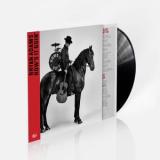
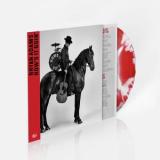
MEMORIALS jump off the waterslides and head above the clouds with their stunning second album, ‘All Clouds Bring Not Rain’. The duo of Verity Susman and Matthew Simms (formerly of Electrelane and WIRE) locked themselves away in a studio in a barn secluded deep in the woods in southwestern France and re-emerged with a beautiful, unusual record that is both melodic and unconventional. For such an ambitious album it’s striking that it was written, performed, recorded and mixed solely by the two of them. Sounding like an unearthed classic, MEMORIALS twist their influences into their own unmistakable sound. Imagine Nico singing with Can produced by David Axelrod and you’re somewhere in the right ballpark.
The record draws inspiration from a wide range of music including folk, dub, post punk, experimental tape music, 60s soul, garage rock, 70s spiritual jazz and Canterbury prog. This attention to detail in their sound meant finding several other studios to get what they needed to record with, including a harpsichord at 4AD’s studio in London and a vibraphone and vintage Leslie speaker in Stereolab drummer Andy Ramsay’s studio Press Play. Verity’s distinctive, unadorned singing is a focal point of the record, moving from tender to wild. Her vocal melodies quickly become earworms, providing the tuneful heart around which the songs’ more unorthodox elements are arranged, which is where Matthew’s unconventional approach to recording and production comes to the fore. With their adventurous arrangements, classic songwriting skills and innovative production techniques, MEMORIALS have created another mesmerising listen that’s accomplished and compelling in its unique approach yet remains dizzyingly immersive - just like their acclaimed live shows.
Dark Entries is ecstatic to announce Terminal Fascination, a retrospective release of the music of Camille O’Grady, subversive artist, leather witch, punk poet, and gender saboteur. O’Grady cut her teeth in New York’s burgeoning punk scene at clubs like CBGB’s, where her band Leather Secrets would share the stage with acts like Television. She became one of the few women to be welcomed into the Mineshaft, Wally Wallace’s legendary Manhattan gay BDSM club. Towards the end of the 70s, she would trek west to San Francisco to be with her partner, performance artist and gallerist Robert Opel, who was tragically killed in 1979. O’Grady would pass away from COVID in 2020, with her voluminous works across various media - text, image, and sound - having been unpublished during her lifetime.
Working with O’Grady’s estate, Dark Entries has assembled thirteen of her finest recordings, including instant classics like “James Dean to the Rescue,” “Tourniquet,” and, of course, “Toilet Kiss.” Two songs, “Angel with a Key” and “Love Comes Like a Cutthroat,” were recorded at a studio in Los Angeles for a 7” release that never materialized, while the rest of the material was recorded live in 1979 at The Ambush, a San Francisco leather club. O’Grady’s songs, often written from the perspective of a gay man, explode like a genderfuck version of Patti Smith, like Buffy St. Marie in leather, like the hedonic utopianism of the 1960s dragged (blissfully) through the broken glass of the 1970s. The release of Terminal Fascination coincides with the publication of ‘A Cross-Worlds Angel,’ a 300-page book of O’Grady’s work by Phillip Zimmerman. The record includes an insert featuring liner notes, lyrics, and photographs. Celebrate Camille O’Grady, the artist Jack Fritscher described as an “earth mother, a leather lioness of the arts.”
‘Finally’, the forthcoming new record from Catz ’n Dogz, belongs to the latter.
There are albums you listen to, and there are albums you live with. ‘Finally’, the forthcoming new record from Catz ’n Dogz, belongs to the latter.
Across sixteen tracks, Voitek and Greg have created their most creatively ambitious and emotionally open work to date. An album about relationships, friendship and the people and places that shape us. At its heart is a simple idea: music should make you feel something, and sometimes the most meaningful moments are the quiet ones when you finally have time to yourself.
Finally is rooted in the emotional contradictions that make memories so powerful. Inspired by classic American Folk and Soul, its songs are happy and nostalgic; hopeful without pretending that the past doesn’t exist. There is melancholy inside the euphoria and warmth inside the sadness, a constant interplay between looking back and moving forward.
The album begins with the soulful breakbeat glow of 'We’re Gonna Be Alright' featuring Ajii, before moving through the smoky jazz and piano-led intimacy of 'Dance For You' with Miller Blue and the bass-driven energy of 'Sun Goes Down' featuring Charlotte Haining. Closing with the reflective 'Miss You' featuring Mateusz Krautwurst, the record takes in a rich cast of vocalists, musicians and producers, alongside a series of deeply personal Catz ’n Dogz solo productions.
Those collaborations are central to Finally. The album is, in many ways, a celebration of the creative friendships Voitek and Greg have built throughout their journey. Relationships that have allowed them to step outside their comfort zone and rethink what their music can be.
Written and recorded between Madrid, New York, Warsaw and the road, the album finds the duo placing renewed emphasis on songwriting, chord progressions and musical craft. Rather than simply chasing the next track, they took the time to learn, experiment and create something with a sense of permanence.
This is an album for driving without a destination. For watching the sun go down. For remembering somebody you haven’t thought about in years. For those rare stretches of time when there is nowhere else you need to be.
IRST ALBUM IN 10 YEARS.
TOURING WITH TROPICAL FUCK STORM IN NOVEMBER (DATES BELOW).
PRODUCED BY DAN LUSCOMBE (THE DRONES) WHO IS ALSO PART OF THE LIVE BAND.
PREVIOUS ALBUMS ON HARDLY ART/SUB POP AND REMOTE CONTROL.
VERY LIMITED BLACK VINYL AND INDIES ONLY PINK VINYL . NON-RETURNABLE.
‘Jarrod Quarrell, creator of Lost Animal, is one of the most underrated songwriters in Australia and one of our all-time favourites. He creates poetic expressions. His work is very interesting in a highly original way and richly emotional. The songs reveal themselves more over many listens and always feel fresh. His powerful, beautiful, transformative, and unforgettable songs possess the vast depth of the human spirit.’ - GIMMIE GIMMIE GIMMIE ZINE
‘Quarrell has developed a collaged techne that embodies a heart-on-sleeve attitude. Lush melodic delays wash with an influx of lyrics that pierce with uncanny imagery and diction.’ - VICE
It’s not every day you hear about a new Lost Animal album. In fact, it’s been ten years between drinks. The debut Ex Tropical (Hardly Art/Sub Pop) was released in 2011, and followed by You Yang (Remote Control) in 2016. So what happened, and where’s frontman/mastermind Jarrod Quarrell been for the last ten years?
From the horse's mouth, “I don't give a fuck about productivity”. A humbling reply. It confirms Quarrell's MO: here’s an artist as a non-conformist. And when he does see fit to bless us with his unique vision of what music can sound like, it has the ability to completely charm and disarm. Amongst a sea of rock bands, LA is essentially a solo act. Simply put; LA is JQ. But on the other hand, amongst an ocean of solo acts, LA possesses the grandiosity of a full band, punk in spirit, but without being fast, or heavy.
Armed with keys and synths, timbres align more with what a toucan might listen to, as opposed to what's heard commonly throughout Melbourne's gig economy. Strings are gently plucked and horns are tenderly blown. These are the colourful brush strokes that decorate the upper frequencies. They’re the ticket to a far away land;exotic, and potentially very dangerous. If the crew from Hear My Eyes are reading this, consider Lost Animal performing Give Some Get Some as the soundtrack to the next time you screen The Hangover Part 2. Yeah, the one where shit gets super fried in Thailand.
The album examines the underbelly of what a ten year journey might rub up against. As one may expect, a lot of that action is below the belt. Tracks like Do That Thing, and In
Rewinding, a few things have happened in the past ten years that are worth illuminating. Shags is no longer commandeering the bass full time. Though he does make an appearance on a couple tracks. The main difference from present day to yesteryear LA is Dan Luscombe (The Drones). Luscombe has jumped into the role of producer (and also part of the live band). One could say he’s a producer of the Spector-ilk: playing a hands-on approach and assisting Quarrell's song crafting. He may have suggested to add a chorus or two, but the chord progressions remain distinctly Lost Animal. You'll recognise them easily by their beauty, combined with either fragility or rigidity. Luscombe is arguably the defining force that made this album happen. Perhaps he had Quarrell at gunpoint. Yet to be confirmed. Regardless, thank fuck for Luscombe because it may have been another decade.
But the album's defining feature is arguably Quarrell's lyricism. He may not cross-examine where he's been, but his voice does unmask where he is: absolved and reincarnated. The decade-long journey has resulted in him looking inwards and unlocking himself. The album's many mantras suggest that he may be a bird (I'm a Bird Now), or that he is living on another planet (Never is Forever). Whatever and wherever he may be,
Give Some Get Some invites the listener to reflect on their own journey over the past decade. Because the game's got a price. So ask yourself what have you taken, and what have you given? Life ain't a box of chocolates. It's a bowl of berries. And when fruit symbolizes temptation, get some.
IRST ALBUM IN 10 YEARS.
TOURING WITH TROPICAL FUCK STORM IN NOVEMBER (DATES BELOW).
PRODUCED BY DAN LUSCOMBE (THE DRONES) WHO IS ALSO PART OF THE LIVE BAND.
PREVIOUS ALBUMS ON HARDLY ART/SUB POP AND REMOTE CONTROL.
VERY LIMITED BLACK VINYL AND INDIES ONLY PINK VINYL . NON-RETURNABLE.
‘Jarrod Quarrell, creator of Lost Animal, is one of the most underrated songwriters in Australia and one of our all-time favourites. He creates poetic expressions. His work is very interesting in a highly original way and richly emotional. The songs reveal themselves more over many listens and always feel fresh. His powerful, beautiful, transformative, and unforgettable songs possess the vast depth of the human spirit.’ - GIMMIE GIMMIE GIMMIE ZINE
‘Quarrell has developed a collaged techne that embodies a heart-on-sleeve attitude. Lush melodic delays wash with an influx of lyrics that pierce with uncanny imagery and diction.’ - VICE
It’s not every day you hear about a new Lost Animal album. In fact, it’s been ten years between drinks. The debut Ex Tropical (Hardly Art/Sub Pop) was released in 2011, and followed by You Yang (Remote Control) in 2016. So what happened, and where’s frontman/mastermind Jarrod Quarrell been for the last ten years?
From the horse's mouth, “I don't give a fuck about productivity”. A humbling reply. It confirms Quarrell's MO: here’s an artist as a non-conformist. And when he does see fit to bless us with his unique vision of what music can sound like, it has the ability to completely charm and disarm. Amongst a sea of rock bands, LA is essentially a solo act. Simply put; LA is JQ. But on the other hand, amongst an ocean of solo acts, LA possesses the grandiosity of a full band, punk in spirit, but without being fast, or heavy.
Armed with keys and synths, timbres align more with what a toucan might listen to, as opposed to what's heard commonly throughout Melbourne's gig economy. Strings are gently plucked and horns are tenderly blown. These are the colourful brush strokes that decorate the upper frequencies. They’re the ticket to a far away land;exotic, and potentially very dangerous. If the crew from Hear My Eyes are reading this, consider Lost Animal performing Give Some Get Some as the soundtrack to the next time you screen The Hangover Part 2. Yeah, the one where shit gets super fried in Thailand.
The album examines the underbelly of what a ten year journey might rub up against. As one may expect, a lot of that action is below the belt. Tracks like Do That Thing, and In
Rewinding, a few things have happened in the past ten years that are worth illuminating. Shags is no longer commandeering the bass full time. Though he does make an appearance on a couple tracks. The main difference from present day to yesteryear LA is Dan Luscombe (The Drones). Luscombe has jumped into the role of producer (and also part of the live band). One could say he’s a producer of the Spector-ilk: playing a hands-on approach and assisting Quarrell's song crafting. He may have suggested to add a chorus or two, but the chord progressions remain distinctly Lost Animal. You'll recognise them easily by their beauty, combined with either fragility or rigidity. Luscombe is arguably the defining force that made this album happen. Perhaps he had Quarrell at gunpoint. Yet to be confirmed. Regardless, thank fuck for Luscombe because it may have been another decade.
But the album's defining feature is arguably Quarrell's lyricism. He may not cross-examine where he's been, but his voice does unmask where he is: absolved and reincarnated. The decade-long journey has resulted in him looking inwards and unlocking himself. The album's many mantras suggest that he may be a bird (I'm a Bird Now), or that he is living on another planet (Never is Forever). Whatever and wherever he may be,
Give Some Get Some invites the listener to reflect on their own journey over the past decade. Because the game's got a price. So ask yourself what have you taken, and what have you given? Life ain't a box of chocolates. It's a bowl of berries. And when fruit symbolizes temptation, get some.
From a Beaumont Bar is Pug Johnson's third full-length album and his most complete collection of heartbreak songs to date. Rooted in classic country storytelling, the record draws from the bars, backroads, and late nights that shaped him, turning years of lived experience into songs full of regret, humor, longing, and hard-earned perspective. Written with the benefit of hindsight, these stories don't try to rewrite the past—they simply tell it. From barroom anthems and dancehall shuffles to slow-burning ballads, From a Beaumont Bar captures the moments after love has gone wrong, when all that's left is memory, acceptance, and another round. While Beaumont, Texas provides the backdrop, the album's themes reach far beyond one place. It's a record about heartbreak in all its forms, told with the wit, warmth, and honesty that have become Pug Johnson's calling card. Rich with pedal steel, fiddle, accordion, and timeless country grooves, From a Beaumont Bar is both a tribute to traditional country music and a reminder that the best songs don't just tell stories—they make you feel like you've lived them.
Ever-evolving Amsterdam duo ANOTR continue their forward momentum with the release of their highly anticipated third studio album, ‘Withness’, out via their own imprint No Art. Rooted firmly in dance music, ‘Withness’ sees the pair refine their sound into their most dance-floor focused and cohesive project to date.
Born during their global tour, ‘Withness’ was shaped in real time: written, tested and refined on dancefloors across the world. Following the expansive, genre-blurring approach of their 2025 LP ‘On A Trip’, the duo felt a pull back toward the club - not as a limitation, but as a unifying space. “We really wanted to have a wide variety of songs that we can play out and create moments,” they explain. “Every track needed to make sense wherever people come together to dance.”
That intention sits at the heart of ‘Withness’. A title that reimagines the idea of “witnessing” into something more active and collective. ‘Withness’ is an album about experiencing life with others. It’s about the moments you share, the people who shape them, and the energy that becomes real only when you’re fully present. The album captures the collective high of friendship. Whether in a packed club, at a festival, or in a living room with friends, the album is designed to soundtrack moments of connection.
“The memories you make with people, they’re the witness of those moments. Withness is about being in it together.” - ANOTR
Sonically, the album marks a clear evolution. Drawing from their early club roots while building on the songwriting confidence developed on their previous records, classic drum machines and 909 samples sit alongside warm, 80s-tinged textures, layered vocals and modern production techniques, creating a sound that feels both nostalgic and forward-thinking.
A key part of the process was spontaneity. The duo embraced a free-flowing, collaborative studio environment, often working with a rotating cast of contributors. Their now-signature “open mic” approach encouraged anyone in the room to experiment with melodies, lyrics and vocal ideas. This energy translates directly into the album’s standout moments. From the euphoric pull of ‘Withness’ to the groove-led ‘Do It With Ya’, the uplifting ‘Paradise’, each track is built to live beyond a single setting.
The LP comes at a timely moment, as their single ‘Talk To You ft. 54 Ultra’ has become the biggest global breakout dance single this year. Sitting firmly in Spotify’s Global Top 200, it has surpassed 175 million streams, and is currently No. 21 in the UK Singles Chart. Spotify have tipped it in their much-coveted global ‘Sound Of The Summer 2026’ list and other highlights include peaking at No. 7 in Shazam’s Global Chart, No.1 on Beatport Top 100 and gaining over 600M UGC views so far.
Underoath reinvents the balance between chaos and harmony with each successive release. Their compositions, conjured from creative tension, become iconoclastic anthems. Even when the band almost combusts, the crackling energy coalesces into something deeply resonant for millions.
Each time they have a chance to do something safe, Underoath challenges themselves instead, with integrity and attitude. Their pair of gold albums and three Grammy nominations stand in stark defiance of the idea of commercial compromise. The Underoath catalog weaponizes noise, aggression, and ambiance as skillfully as melody.
This year the band celebrates 20 years of their album Define The Great Line. Coming on the heels of 2004’s They’re Only Chasing Safety, Define The Great Line saw Underoath pivoting towards a more aggressive sound. The record’s unconventional – and, at times, jarring – intensity served as a stark contrast to the pop-leaning trends that were taking over heavy music at the time.
Featuring fan favorites like “Writing On The Walls”, “In Regards To Myself”, and “You’re Ever So Inviting”, Define The Great Line defied expectations when it debuted at No. 2 on the Billboard 200. It is widely regarded as one of the definitive heavy records of the early 2000s, solidifying Underoath’s legacy as one most influential bands of the genre.
The heart of their sound, which delivers naked vulnerability with thrilling force and cinematic lushness, can be heard in generations of bands who’ve pursued their trailblazing spirit. But Underoath refuses to sit still. Walking an artistic tightrope between immersive access and isolationist otherness, Underoath owns the space between huge choruses and forward-thinking heaviness, both on record and onstage.
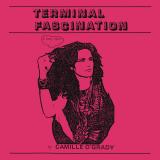
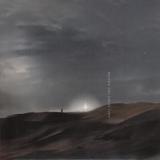
Nearly 15 years have passed since the original version of this LP was released (the first iteration as a 4X12" LMTD set back in 2012), and it has truly aged like fine wine! This release features five timeless cuts from the mind and soul of cv313 and a truly mesmerizing otherwordly dub of the illusive radius project, mixed and recorded near the heart of Detroit! (with nearly all of the tracks making their debut on wax) This entire project has been beautifully remastered by dub innovator and pioneer, Stefan Betke POLE @ scape mastering in Berlin, DE. You can just drop the needle and close your eyes for a near 20 minutes of fathomless sonic depth, massaging your brain and mind, a deep dive into an immersive analogue world. A new addition to this newly minted vinyl iteration of the "Altering Illusions" series now includes cv313's blistering analogue assault on the darkest radius bit in the interpolation tapes series. Expect sub-harmonic deep space exploration in some seriously out-there electronic quadrants, some of the deepest techno reductions ever captured to tape!
Thoughts:
"Altering Illusions Chapter One cv313 is every bit as strong and essential as the debut cv313 album it supplements and acts as a nexus between cv313 material old and new.It is quite unlike anything cv313 has released before or since, a beautiful hybrid of cv313 textures, dense, whirring drones from Alva Noto’s Xerrox series of ambient albums and Thomas Koner’s panoramic soundscapes." -IGLOO MAGAZINE
a A1. cv313 “isis” original mix 10:47
c B1. radius “interpolation tapes” cv313 rewire 20:06
e C2. cv313 “irradiate dub” 5:58
reduced 20:24
a A1. cv313 “isis” original mix 10:47
c B1. radius “interpolation tapes” cv313 rewire 20:06
Nu Vision is a modern salon for visionary leaders, fighting for their art, standing by truths, defending voices, honoring progenitors, whilst pushing forwards towards a new paradigm. The band all have their own stories and extensive discographies, records released on labels you might know, gigs played in places you might have attended but none of that matters. This is a new beginning. A group. A collective.A movement. Nu Vision is a band in the classic do-you-believe-in-alchemy sense. Equal parts rhythm, damage, and deep feeling. Their friends at DFA noted that the album “sounds like Depeche Mode scoring a Michael Mann montage: brooding,motorik, and shot through with black-and-blue beauty.” this idea is taken further in the first video from the album for track one / side one “Time” that launches the project publically along with the albums announcement. The palette of ‘The Seed’ is defined and refined in the best way. It’s an album that opens up many pathways. Brisker, freakier tracks like “Shadow In The Dark,” “R U Serious?” and “Humanity” run towards a softer finish with “Somedays” and the seven-minute, eyeliner-smearing closing ballad, “Lullaby Garden.” These are proper songs made with vintage machines, with a sound that carries obvious influences. ’ The Seed’ pulses forward as the body of the beast is turned inside out, wearing a beating heart on its sleeve, honoring those who left us too soon - DAF’s Gabi Delgado, Nitzer Ebb’s Douglas McCarthy, Depeche Mode’s Andrew Fletcher, and Sandwell District’s Juan Mendez. It’s important to note the emotional core of ‘The Seed’ album is the song ‘Synchronicity’ that is filled with both love and regret, the story of losing a friend without properly making amends. It is unquestionably heartbreaking, but is also delivered with a pang of hope, the feeling that with so many sunrises caught, so many additions and subtractions in life, a perspective has been gained. This is no freshman effort; but rather, a masterclass in continuing sonic education, delivering a unified experience from beginning to end. A New Vision
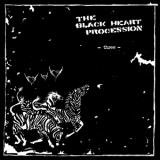
Die Band ,The Black Heart Procession" besteht aus den beiden Hauptsongwriter Tobias Nathaniel und Pall A. Jenkins, die beide zuvor bei ,Three Mile Pilot" mitwirkten. Manchmal treten sie als reines Duo auf, zu anderen Zeiten laden sie Freunde ein, mitzuspielen. Mario Rubalcaba (Clikitat Ikitowi), Jason Crane (Rocket from the Crypt) und Kazu Makino (Blonde Redhead) wirkten an der Entstehung von ,Three" mit. ,Three", das ursprünglich im Jahr 2000 erschien, ist das dritte Album der Black Heart Procession in voller Länge. Die Klänge der Instrumente verschmelzen miteinander und untermalen den Rhythmus von Palls ausdrucksstarkem Gesang. Jeder Song scheint sich unaufhörlich vorwärts und rückwärts zu bewegen und spielt dabei mit dem Kontrast zwischen hellen Klängen und dunklen, grüblerischen Themen. The Black Heart Procession brechen Herzen mit der Verschmelzung von Klängen aus Klavier, Säge, Pumporgel, Gitarre, Trompete und Gesang sowie dem einen oder anderen ungewöhnlichen Perkussionsinstrument. Die Klänge mögen bei einigen von Ihnen Schmerz oder Freude auslösen - oder beides -, da ihre Musik von Trauer und Herzschmerz durchdrungen ist, doch es liegt ein unterschwelliges Element der Befreiung darin.
More than five decades into one of Brazilian music's most remarkable careers, Joyce Moreno returns with a new collection of songs that reflect the warmth, lyrical sophistication and innovation that have made her one of Brazil's most defining musical voices.
Produced by Joyce Moreno alongside her husband and longtime collaborator Tutty Moreno, the album finds the Rio-born singer, guitarist and composer at her most reflective. Across nine beautifully crafted songs, Joyce pairs intricate guitar work, lyrical intimacy and effortless swing with the musical curiosity that has defined her work for more than half a century.
Invited into the studio by Roberto Menescal at just sixteen years old, Joyce emerged during a transformative period for Brazilian music, releasing her self-titled debut in 1968. She soon established herself as one of Brazil's pioneering female songwriters, writing unapologetically from a woman's perspective at a time when few women were afforded that voice. Her song “Me Disseram” sparked national debate, while later works including “Feminina” cemented her reputation as an artist unafraid to challenge convention.
While some of her politically charged songs were censored during Brazil's military dictatorship, Joyce continued to write with honesty and independence. After studying journalism in the late 1960s, her gift for observation and storytelling became an even more defining feature of her songwriting. Over the following decades she released a succession of acclaimed albums, including the now-classic Feminina and Água e Luz, earning widespread recognition both in Brazil and internationally. Antônio Carlos Jobim would later describe her as "one of the greatest singers", while generations of musicians have drawn inspiration from her fearless artistry and enduring originality.
That same artistic fearlessness remains at the heart of her latest work. The album brings together an exceptional ensemble of Brazilian musicians. Tutty Moreno's expressive drumming underpins Joyce's vocals and guitar throughout, while Jorge Helder's bass, Lula Galvão's guitar and Marcos Nimrichter's warm Fender Rhodes create a sound that is both intimate and expansive. Contributions also come from the legendary Toninho Horta, alongside José Arimatéa, Teco Cardoso, Nailor Proveta, Josué dos Santos and Raphael Sampaio, whose additions add colour and texture without overshadowing Joyce's understated brilliance.
Throughout the album, Joyce balances quiet reflection with effortless rhythmic vitality. “Chovendo na Horta” serves as both a heartfelt dedication and a celebration of Joyce's enduring musical connections, featuring the unmistakable guitar of Toninho Horta. Elsewhere, “Aldeia de Ogum” receives a fresh new arrangement by Nailor Proveta, revisiting one of Joyce's most beloved compositions. Originally released in 1980, the track has enjoyed a remarkable resurgence in recent years, embraced by a new generation of listeners and became an underground favourite among DJs including Floating Points, Four Tet and Danilo Plessow. Now a staple of Joyce's live performances, this reimagined version brings renewed energy to a song that continues to transcend generations.
At seventy-eight, Joyce Moreno continues to write with the same curiosity, generosity and quiet innovation that have defined her career from the very beginning. "For me, it's never too soon to try something new, either in music or in life," she reflects - a philosophy that gives both the album and its title their enduring sense of optimism. This latest album is neither a retrospective nor a reinvention, but the work of an artist who continues to refine her voice with remarkable grace, proving that her most compelling music remains firmly rooted in the present.
Following the album's release, Joyce Moreno will embark on a European tour this November, bringing her celebrated live show to audiences across the UK and Europe. A rare opportunity to experience one of Brazil's most influential and enduring artists in concert, the tour showcases a songwriter whose voice, virtuosity and musical vision remain as compelling today as ever.
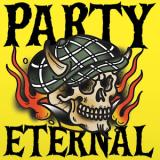
“Trust me, you will pogo, skank, sing and possibly dance like your f*cking Dad on spice.” Party Eternal is the fourth studio album by the Brighton-based punk/ska band The Bar Stool Preachers. The album represents a massive turning point for the seven-piece, both creatively and structurally. It’s blisteringly good. Combining the best of brit-pop, ska, rock and indie ‘Party Eternal’ is exactly the tonic for the times. In parts scathing, and in others total escapism, this rowdy septet have written the greatest party punk album you’ll hear all year. Renowned for their relentless touring schedule, The Bar Stool Preachers have played stages around the globe, from grassroots venues to major festivals like Rebellion and Punk Rock Bowling. Their heartfelt lyrics and magnetic stage presence have earned them a reputation as one of the most engaging live acts in the punk scene today. Whether delivering politically charged messages or uplifting party anthems, The Bar Stool Preachers continue to inspire and unite audiences, carrying the torch of punk’s rebellious spirit into the modern era. Featuring the single ‘Pick A Side’ (the profits of which were donated by the band to Medical Aid for Palestinians), ‘This is Goodbye’ featuring Aussie Celtic Punk masters The Rumjacks and ‘Sick World’ which stars a guest turn from the genre-shattering and quite legendary Fishbone.
New York-based Japanese jazz and electronic music polymath Takuya Nakamura presents his debut album Shape The Future - almost 35 years into his storied musical journey.
An expansive double album, the album’s first LP documents a spellbinding live performance by Nakamura recorded at fabric. A hybrid set combining DJing, live electronics, vocals, and trumpet, the set also features studio versions of special collaborations with Shigeto, Currency Audio and Tim Reaper. The second LP complements the first by assembling studio recordings of select album tracks. Altogether the two volumes make for a definitive display of Nakamura’s exceptional musicianship across jazz, DnB, jungle, broken beat, deep techno and more.
Across his career, Nakamura has played Brazilian music, merengue, salsa and straight-ahead jazz. He’s opened for Sun Ra Arkestra, performed with David Byrne, Laurie Anderson, Lee “Scratch” Perry, Wu-Tang Clan, and Arto Lindsay, appeared on sessions with Terry Riley, ASAP Rocky, Goldie, and TV On The Radio, and remixed the likes of Quincy Jones, Sun Ra, Billie Holiday, and The Streets. He’s also played under director and playwright Robert Wilson.
Although the musical past and present of the Tokyo-born, New York-based DJ and trumpet player is undoubtedly eclectic, Nakamura is abidingly steeped in the sounds of jazz and jungle. This’ll be obvious to casual observers who may have seen any viral videos of him. But there’s more to this. The depth of Nakamura’s engagement with these kinds of music, the way they’ve made him into the person he is, the decades-long path they’ve taken him on; to now arrive at the summit of a solo album is all truly remarkable. Shape The Future resonates with every chapter in this story.
In high school, Nakamura’s friends started listening to jazz and jazz fusion, which piqued his interest, especially when they started going to clubs to see it live, where they managed to see US legends like Sonny Rollins play. Eventually he began to play jazz every day and his musical skill emerged early. He soon became obsessed with getting closer to the source of this music, which led to his studies at the New England Conservatory of Music in Boston with George Russell, an influential figure who had taught Miles Davis and John Coltrane. Nakamura drank it in: not only the technical aspects but the sense of a direct connection to “a music culture where Russell and his friends changed harmony forever. I wanted to know how that was possible!”.
This was a radical experience in itself, but then another revolution happened for Nakamura. He was playing in a venue called The Western Front, near Boston and discovered that the elderly owner had his own soundsystem and was playing what was then - in 1992 - only just becoming known as jungle. This was as freeing a musical revelation as his proximity to the giants of jazz was, and in that instant the two things fused. He understood that using technology to fill a dancehall with sound and a jazz musician’s reflexes are all working to the same ends: “You’re always making decisions,” he says, “but it doesn’t have to be really difficult. It’s the truth of the frequencies, and how they’re affecting people’s minds.”
From that moment on, his life path was set. Moving to New York City, he sought out jungle and its offshoot sounds wherever he could find them, gigging and collaborating relentlessly, and gradually developing his own live and hybrid live/DJ shows. Through regular appearances at New York fixtures Zebulon and CBGBs, and continual shows elsewhere in the city, Nakamura developed his live performance and DJing and it was in these environments that he gradually weaved together his twin loves without compromising either, building an international reputation in the process.
It’s only fitting then that his first album, almost 35 years after he first found his musical direction, should be a live one: a window into this never-ending process. Even here, he had to be persuaded that he should make a record. A member of the fabric team got turned on to his music after their daughter saw him play. Of course, as a jungle lover, Nakamura knew fabric – which has a special place in the history of jungle and drum’n’bass – and “had wanted to play there since I was very young.” You can hear the club in the record: this isn’t just a live show, in keeping with his jungle roots, it’s Nakamura duetting with the soundsystem, and you can feel how the emotions in the room would have ebbed and flowed.
This dynamic translates to a transfixing record. Setting the tone with lushly textured ambient and reverberant jazz, Nakamura segues into cinematic breakbeat and stellar fusion, infusing it all with intoxicating low end and hypnotic rhythms. The LP’s midway point locks into mesmeric percussion heightened by resonant echoes of piano and trumpet. There’s an endless pull to this music. Nakamura adjusts the levels for maximum impact throughout, and the overall effect begins to evoke some harmonious hybrid between a jazz ensemble, a classic Metalheadz 12” and a Theo Parrish DJ set. His electric form continues through surreal jazz, intricate electronics and rolling sub-bass velocity, right up to the subtly devastating final cover of Peter Gabriel and Kate Bush’s ‘Don’t Give Up’, with Nakamura’s fragile vocal sitting in the heart of a huge sound.
From Tokyo jazz nights to formative studies and encounters in Boston to his artistic development in New York, Nakamura reaches another milestone with his monumental debut album. It’s a release that happened just the way a Takuya Nakamura record should. In the same way his instincts led him to musical revelations, taking his own sweet time has led him to make one of the most extraordinary debut albums imaginable, all executed in his own singular style. In Nakamura’s world, the universe finds a way.
Priding themselves in having cultivated a community and culture at their club nights, they play some of the best music ever cut to wax. It might not be quite what you’d expect from a typical northern soul night, it isn’t stepping back into the past, it’s the music stepping forward into 21st century.
“We’re not interested in nostalgia – we love soul music because it’s brilliant. It probably still resonates with young people because it has a message of something bigger than what’s inside your own head – that what really matters resides in relationships with other people, not material things. We think that is beautiful” – DNSC.
“Deptford Northern Soul Club have emerged as the new faces of northern soul” – Yuck.
As featured in Alan Byron’s documentary Northern Soul: Still Burning (2026).
“By recontextualising northern soul in a modern context, they empower the genre to continuously evolve, imparting new meaning to younger, perhaps previously unaware audiences” – Pilot magazine
It's hard to pin down the age of chest's music, as it seems to be in a state of constantflux - a fusion of spontaneous energy and timeless electricity. The band didn't choose this name by chance: for years, its members have been breathing music through every pore of their bodies; they bonded amidst the darkness and vibrations of Supersonic, the heart of the independent music scene in Paris, where they met and have all worked. Even before releasing a single record,chest. were spotted by NME,which ranked them among the 100 to follow last year in 2025. A debut EP in February 2025, All Good Things End (Howlin Banana), further boosted the band's credibility and international popularity at breakneck speed. chest. opened for DITZ, Jehnny Beth, Heavy Lungs and KNIVES, who welcomed them with open arms onto a bustling Anglo-Saxon music scene. They're spotted at La Maroquinerie, Rock en Seine, ESNS and across the UK. chest. come of age without ever going through adolescence. In autumn 2025, chest. began recording their debut album at La Frette studio, known for having hosted sessions by Nick Cave and the Arctic Monkeys. The band, with a line-up featuring three sound engineers, self-produced the album there and opened themselves up to new inspirations without, however, straying from the powerful and melodic noise rock of their early days. Their sound becomes even more complex and personalised, revealing perfectly assimilated influences from industrial, techno and shoegaze. chest. embodies the future figurehead of a French rock scene that is no longer afraid of anything. A band capable of bringing people together without compromising their artistic standards.
A document of chill-out room dreamscapes transmitted from San Francisco circa 1993-1994.
Rooted in live improvisation and arriving at the sweet spot where nascent dance music collided with dub tradition, Selene Songs marked an early highpoint for Sunshine and Moonbeam Jones' enduring partnership as Dubtribe Sound System. This collection of dreamy, harmonious grooves and ambient excursions were recorded between November 1993 and January 1994, captured live in the chill-out room at the duo's legendary Come-Unity parties held at their home on Bryant Street in San Francisco.
Selene Songs was originally released on Chicago-based label Organico in 1995 as a CD and abridged 12" EP. Now it receives a full reissue that spreads the blissed-out majesty of the full seven-track album across a double vinyl pressing and CD digipak edition. Across all formats, Kristen Anderson's original artwork has been faithfully reproduced.
“… All the elements of classic ambient dub with the Tribe’s own sense of love wonderment. One from the heart." - Muzik Mag - 1995
“ We have faith that the universally accessible warmth oozing from these tracks will eventually entice a larger audience." - Billboard - 1995
Number 1 on the Eastern Bloc shop chart - Muzik Mag - 1995
A document of chill-out room dreamscapes transmitted from San Francisco circa 1993-1994.
Rooted in live improvisation and arriving at the sweet spot where nascent dance music collided with dub tradition, Selene Songs marked an early highpoint for Sunshine and Moonbeam Jones' enduring partnership as Dubtribe Sound System. This collection of dreamy, harmonious grooves and ambient excursions were recorded between November 1993 and January 1994, captured live in the chill-out room at the duo's legendary Come-Unity parties held at their home on Bryant Street in San Francisco.
Selene Songs was originally released on Chicago-based label Organico in 1995 as a CD and abridged 12" EP. Now it receives a full reissue that spreads the blissed-out majesty of the full seven-track album across a double vinyl pressing and CD digipak edition. Across all formats, Kristen Anderson's original artwork has been faithfully reproduced.
“… All the elements of classic ambient dub with the Tribe’s own sense of love wonderment. One from the heart." - Muzik Mag - 1995
“ We have faith that the universally accessible warmth oozing from these tracks will eventually entice a larger audience." - Billboard - 1995
Number 1 on the Eastern Bloc shop chart - Muzik Mag - 1995
We are honoured and excited to share the fourth Dream Space EP with the world: Domenic Cappello - Celestial Wave.
For more than three decades, Domenic Cappello has been at the helm of Subculture - the innovative and vastly influential Saturday night at Glasgow’s Sub Club. A true master DJ with deep rooted influences from Detroit & Chicago, Dom has consistently pushed things forward over the years and remains at the cutting edge of modern dance music.
Throughout the 90’s and early 2000’s, he put out high-quality records under various monikers on labels such as Soma, 20:20 Vision & Seventh Sign. Fast forward to recent years and Domenic has been on nothing short of a hot streak - releasing music under his own name on Craigie Knowes, Clone Royal Oak and his outstanding ‘Basement Philosophy’ LP on Alien Communications.
He brings the heat once more for this record; blurring the lines of house, techno and electro to deliver four awe-inspiring cuts of electronic music.
‘The Secret Moon Party’ sets things off, nodding to a certain Highland gathering by some of Scotland’s finest purveyors of quality tunes. A warm, gritty bassline carries the track, evolving into a symphony of precise sound design that is in equal parts playful and euphoric.
Dom’s knowledge of the dancefloor shines through on ‘Acid & Love’. This early night floor filler is the alchemy of just about everything you want to hear when things are getting going. Pure warmth and bliss throughout, also holding its place played deep into the late hours.
‘We Loved Your Ears (in memory of Keith)’ is a heartfelt tribute to the one and only Keith McIvor aka JD Twitch of Optimo. Dom wrote this track as something he thought Keith would have loved, and for this one, we’ll let the music do the talking.
Keith was, and continues to be, an enormous inspiration for us and so many others. In his memory, all proceeds from the digital sales of ‘We Loved Your Ears’ and 25% of all vinyl sales will be donated to Beatson Cancer Charity and The Scottish Brain Tumour Research Centre of Excellence.
Closing the EP is title track ‘Celestial Wave’, which does exactly what it says on the tin. A beautiful piece of music and fitting soundtrack for star gazing, moon dancing and dreaming.
Originally released in 1990, as a triple album in box set with probably the best work THE KLINIK ever did. A selection of their musical works all recorded between 1984 & 1988 and never released before, the box came as a limited edition in 1990 and was sold out in no time, and therefor very rare and hard to find.
Now Antler Records has revisited the box, remastered into a sound experience like you never had before; 6 sides packed in newly designed inner sleeves with band photo's (by Inge Bekkers) that have never been published before. 6 sides, three heavy weight vinyl albums in one extra broadened single album sleeve. Cold electronics, shivering spheres, minimal and highly atmospheric, a soundtrack for a still to be made film. A sound experience like you never had before!
The Klinik is Marc Verhaeghen-Music & Dirk Ivens-Lyrics
All Tracks recorded in the Lab between 1984 & 1988
Digitally Remastered in 2026 by Pieter De Wagter(Equus)
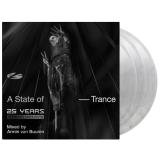
For twenty-five years, A State Of—Trance has united trance lovers around the world, evolving from a radio show into a global movement and one of the most influential brands in electronic music.
To celebrate this remarkable milestone, Armin van Buuren presents A State Of—Trance 25 Years - Selected Highlights, a special mix featuring a personally curated selection of ASOT tracks that highlight some of the biggest moments, memories, and milestones from the past quarter century.
Bringing together timeless classics, scene-defining anthems, and exclusive new interpretations, the mix also includes brand-new remixes of beloved ASOT favorites by some of today’s most exciting trance artists, including Andrew Rayel, ReOrder, Matt Fax, and Dan Harrison.
Honoring the past while embracing the future, A State Of—Trance 25 Years - Selected Highlights is a celebration of the music, artists, and global community that have shaped the journey—twenty-five years together, all united by one sound: A State Of—Trance.
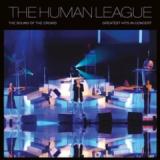
The Human League is renowned for their contribution to the synth-pop genre. Originating from the experimental electronic music scene, they achieved notable success as a pop band during the 1980s. The band's lineup has undergone changes throughout the years, but Philip Oakey, Joanne Catherall, and Susan Ann Sulley have remained core members.
This limited edition BLUE vinyl release captures their performance at The Dome in Brighton on December 19, 2003. It includes their iconic hits such as "Don't You Want Me," "Human," "Mirror Man," and "Fascination." The album showcases their talent for crafting catchy melodies, employing innovative synthesizer techniques, and featuring distinct vocals.
With their memorable songs and unique musical style, The Human League truly made their mark on the Synth-pop genre.
Dream Dancing have been on the hunt for something special and find it with the return of Blueless.
On the A side, two highly sought after tracks originally released on her own Capture Records in 2007.
'Groove Me' is a stunning emotive deep tech house moment which will raise the hairs on your neck on every listen.
'OK' enters more club territory, still keeping within the soulful spectrum. Restored and remastered from Blueless' own vault.
On the B side, 'Trueness' and 'Outsounding' are both fresh from the studio, offering organic rhythms, effortlessly gliding with classy musical atmospheres and warm rolling grooves.
Almost 20 years between the productions, Blueless remains true to her unique soulful style with these much welcomed heartfelt, timeless and deep sounds.
After fifteen years of shaping dancefloors around the world, Mele is set to release his long-awaited debut album Alive On Arrival via Defected Records Far from an introduction, the album marks the arrival of an artist operating with complete creative clarity, bringing together the sounds, collaborators and influences that have defined his journey into one cohesive body of work.
"Alive On Arrival draws inspiration from what feels like my entire life as a producer, a DJ and a music fan, bringing together everything I love about house, hip- hop, UK music, soulful R&B and wider global sounds. The name comes from Wu-Tang Clan's C.R.E.A.M., which felt fitting to where I'm at in my musical journey. It's been 15 years as Mele, but I'm still alive and feel like I've got so much more to give. I've finally arrived at this point with my debut album. The album was made in, and heavily influenced by, London, Miami and Liverpool - three places that are close to my heart. Sonically, it's inspired by some of the best: Jungle, The Neptunes, Gorillaz and Masters At Work." - Mele aka Krissy Peers Set for release on 25 September, Alive On Arrival is Mele's most expansive project to date. Across fourteen tracks, he draws together house, hip-hop, soul and R&B into a record that reflects a lifetime spent moving between genres rather than being limited by them. Created between London, Miami and his hometown of Liverpool, the album captures the energy and musical history of three cities that have shaped both his sound and perspective. At the heart of Alive On Arrival is collaboration. Rather than simply assembling a list of featured artists, Mele has curated a cast of voices whose individual perspectives deepen the emotional and cultural narrative of the album. Long-time collaborators sit alongside new creative partnerships, each contributing to a record built on shared musical language and mutual respect.
You'd be hard pressed to name a song with the driving, emotional intensity and raw energy of the Hamilton Movement's anthemic ode to heartbreak, "She's Gone." Issued as the B-Side of the band's 1976 single "We're Gonna Party," and distributed in and around Indianapolis, there is no evidence the song garnered significant attention upon release—yet over the past fifty years it has amased a cult of devotees across the globe. But while interest in the group's music remains strong, little information has surfaced about the Hamilton Movement's history, and until now, there have been no official reissues of their work. This collection presents the band's discography, alongside previously unreleased music discovered on tape; it is the Indianapolis soul album that should-have-been.
The keys to the Hamilton Movement's mystery can be found in central Indiana, where promoter Dick Melvin has lived the past few decades, in a rural suburb of Indianapolis, amidst forests and cornfields. Melvin served as the group's manager throughout their entire existence, but his involvement extended far beyond typical managerial duties. He co-wrote and co-arranged the band's music; he produced and released their recordings on his Look Out label. Dick is also the band's archivist. His home is filled with boxes of demo sessions, live tapes, contracts, posters, and promotional photos documenting his work with the Hamilton Movement. He entrusted his archive to Now-Again's care and they've assembled this album under his watch. Dick's story, and the story of his band, are presented in an extensive, oversized booklet with Dick's rarely-seen photos and ephemera and words by Now-Again's Egon and Naptown historian Kylie Long.
Deluxe LP features 140g virgin vinyl; heavy-duty board jacket, artwork by Art Rosenbaum + DL. RIYL: Bob Dylan, John Prine, Townes Van Zandt, Ry Cooder, Michael Chapman, Michael Hurley, The Youngbloods & Bonnie “Prince” Billy. Jake Xerxes Fussell’s 4th album finds the acclaimed folksong interpreter, guitarist, and singer navigating fresh sonic and compositional landscapes on the most conceptually focused, breathtakingly rendered, and enigmatically poignant record of his wondrous catalog. Produced by James Elkington and featuring formidable players both familiar (Casey Toll, Libby Rodenbough) and new (Joe Westerlund, Bonnie “Prince” Billy), it includes Jake’s first original compositions; atmospheric arrangements with pedal steel, horns, and strings. One of the most striking and strangely moving moments on Jake Xerxes Fussell’s gorgeous Good and Green Again an album, his fourth and most recent, replete with such dazzling moments arrives at its very end, with the brief words to the final song “Washington.” “General Washington/Noblest of men/His house, his horse, his cherry tree, and him,” Fussell sings, after a hushed introductory passage in which his trademark percussively fingerpicked Telecaster converses lacily with James Elkington’s parlor piano. That’s the entire lyrical content of the song, which proceeds to float away on orchestral clouds of French horn, trumpet, and strings, until it simply stops, suddenly evaporating, vanishing with no fade or trace, no resolution to its sorrowful minor-key chord progression, just silence and stillness and stark presidential absence. It feels like the end of a film, or the cold departure of a ghost, and is unlike anything else Jake has recorded. In all his work Jake humanizes his material with his own profound curatorial and interpretive gifts, unmooring stories and melodies from their specific eras and origins and setting them adrift in our own waterways. The robust burr of his voice, which periodically melts and catches at a particularly tender turn of phrase, and the swung rhythmic undertow of exquisite, seemingly effortless guitar-playing here he plays more acoustic than ever before pull new valences of meaning from ostensibly antique songs and subjects. On Good and Green Again, Jake not only ventures beyond his established mastery of songcatching and songmaking into songwriting, but likewise navigates fresh sonic and compositional landscapes, going green with lusher, more atmospheric and ambitious arrangements. The result is the most conceptually focused, breathtakingly rendered, and enigmatically poignant record of his wondrous catalog. It’s also his most deliberately premeditated album, representing his fruitful return to a producer partnership after two self-produced projects, What in the Natural World (2017) and Out of Sight (2019) (William Tyler produced his friend’s self-titled 2015 debut.) This time James Elkington produced and played a panoply of instruments, bringing to Jake’s arcane song choices his own peerless sense of harmony and orchestration, balance and dramatic tension. The pair enlisted a group of formidable players including regular bandmembers Casey Toll (Mt. Moriah, Nathan Bowles) on upright bass, Libby Rodenbough (Mipso) on strings, and Nathan Golub on pedal steel. They were joined by welcome newcomers Joe Westerlund (Megafaun, Califone) on drums, Joseph Decosimo on fiddle, Anna Jacobson on brass, and veteran collaborator and avowed Fussell fan Bonnie “Prince” Billy, who contributes additional vocals. Album opener “Love Farewell” (featuring some beautiful singing by Bonnie “Prince” Billy), an elliptical tale of the folly of war, set to the world’s most heartbreaking goodbye march for a lover left behind. “Carriebelle” and “Breast of Glass” each similarly concerns, in its own way, romantic love and leavings. All three songs highlight Jacobson’s diaphanous, understated brass parts, tying them together in a true lover’s knot. “Rolling Mills Are Burning Down,” with its distant keening strings and capacious sense of space, observes and mourns the loss of work and community in the wake of elemental disaster. Nine-minute tour de force “The Golden Willow Tree,” the sole explicitly narrative song herein, is a hypnotic, minimalist rendering of a tragic maritime ballad about scuttling an enemy ship in exchange for wealth and glory and a captain’s inevitable betrayal. “Fussell is creating his own legacy within the long lineage of traditional folk musicians and storytellers that have come before him.” The New York Times // “So elegant … It’s relaxing in the way that pondering a Zen koan is relaxing, and sweet in the way that the wounded, honey-voiced blues of Mississippi John Hurt are sweet.” Pitchfork // “Music that resides at the seams of Appalachia and the cosmos.”
“When the flesh gets cut off the soul, it’s not the end.”
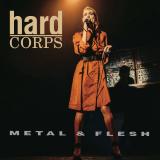
More than forty years after hardCORPS emerged from a Brixton basement, ‘Metal & Flesh’ returns in a new expanded edition on double vinyl and CD, newly remastered with the full involvement of surviving members Rob Doran and Clive Pierce. Born from the collision of punk, analogue synthesisers, sequencers, disco, reggae and experimental studio techniques, hardCORPS created electronic music that was as physical and emotional as it was mechanical. The arrival of French vocalist Regine Fetet gave the group its defining identity, placing her raw, uncompromising voice against the dense machinery of Hugh Ashton, Clive Pierce and Rob Doran. Working mainly with a Roland System 100, several Roland MC4 sequencers and later an additional MC500 and Atari ST 1040 computers, etc. pp., hardCORPS always transformed limitations, accidents, distortion and human imperfection into part of the music itself. Although rooted in the early 1980s, ‘Metal & Flesh’ refuses easy nostalgia, retaining the tension, space and character that made hardCORPS unlike their contemporaries. Yet, shall we eventually mention Kraftwerk, maybe let’s quote Ian Shirley from Record Collector magazine: „’Je Suis Passée‘ was not only a love letter to Kraftwerk but penned with such verve, passion and precision that Ralf and Florian probably would have accepted a blind date at a Düsseldorf cocktail bar (…).“ And as Martin Rushent famously said in 1990: “Hard Corps were ignored in their time. Perhaps it is the burden of the adventurous and the innovative to be ignored in their time, which is sad. Don’t ignore them now.”
This new edition has been carefully remastered to preserve that character and dynamics rather than simply making the recordings louder or more ‘modern’, while the artwork has likewise been developed to reflect the band’s original identity. Metal & Flesh’ is not merely an artefact of the 1980s, but a rare and fiercely individual document of four people discovering what happens when human instinct and machines collide.
Remastered by Martin Bowes. Graphic design by hard CORPS and Steve Lippert.
Gatefold sleeve gloss lamination, printed inner sleeves with lyrics, two double-sided hand-numbered.
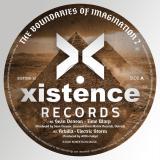
Xistence Records reaches its eighth release with what may be its most important record so far, bringing together four artists whose music carries the spirit and evolution of Detroit techno. With selections reaching back three decades alongside new material, the EP connects different eras of tracks that exemplify the raw soul, machinery and futuristic thinking at the style's core. Sean Deason opens with 'Time Warp', originally appearing on his Matrix label in 1996 and finally receiving its first vinyl release. Thirty years later, its dramatic entrance and surging rhythm have aged perfectly. Energy is matched by genuine depth and soul, with its futuristic energy at the heart of it all. Label owner Arbilla follows with 'Electric Storm', harnessing the power of a great techno groove creates a blend of infections elements working in harmony. The second side reaches back to 1998 for a previously unreleased DX-9 production. A pounding Chicago warehouse beat meets the mechanical precision of Detroit, while a heavily over-arching acid line fuses the marriage these two deep-rooted cities. Legendary producer, Orlando Voorn closes proceedings under his Basic Bastard alias with 'Alone Together'. Perhaps the sickest groove of the EP. opens up a spacious atmosphere that gives the track an almost celestial quality. Inspired by Detroit techno’s evolution and its key figures, Xistence continues to show why it has become one of the rare trusted homes for proper techno.”
Agents Of Time return to Afterlife with two heartrending audio expeditions.
Italian act Agents Of Time have established a sterling reputation over the years. Their mesmerising approach to club music blends emotive melodies and transcendent rhythms, with dance floor-centred beats.
The Mirage EP begins with its title cut; enveloping the listener is a swathe of atmospheric synth and pad work from the off. Oscillating frequencies complement the sultry rhythms while a life-affirming riff forms the stirring centrepiece. On the flip ‘Northern Lights’ is a sensitive, emotive composition which gradually increases its emotional impact as it builds and evolves.
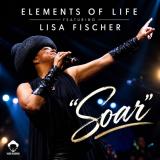
A soaring new chapter unfolds from the forthcoming Elements Of Life album with the release of “Soar,” an uplifting and deeply moving collaboration featuring the incomparable Lisa Fischer. Written by Josh Milan and Louie Vega and produced by 2SoulFusion—Louie Vega and Josh Milan—the song is a powerful testament to resilience, transformation, and the limitless possibilities that emerge when spirit, soul, and music unite.
Built upon a rich tapestry of live musicianship, “Soar” embodies the signature sound that has made Elements Of Life a beloved musical movement around the world. At its core is Lisa Fischer’s breathtaking vocal performance, delivering a message of hope, elevation, and self-discovery with the emotional depth and conviction that have made her one of the most revered voices of her generation.
At the heart of “Soar” is a message of encouragement, resilience, and unconditional support. Through its uplifting lyrics and soaring melody, the song speaks to anyone navigating life's uncertainties while striving to become their fullest self. Lines such as “Clouds hang low, but the sky's still wide” acknowledge the challenges we all face, while the recurring refrain, “I just want you to soar,” serves as a powerful affirmation of faith in another person's journey. Equally moving is the song's central sentiment, “The more you do for you, the better I feel,” expressing a selfless form of love that celebrates growth, healing, and personal fulfillment. Universal in its message yet deeply personal in its spirit, “Soar” reminds us that one of the greatest gifts we can offer is the encouragement to rise, evolve, and embrace our own potential.
The production blends organic instrumentation with sophisticated arrangements, creating a timeless soundscape that feels both expansive and intimate. Multi Grammy Award-winning bassist Christian McBride anchors the composition with his masterful upright bass work, while Josh Milan's lush keyboards, piano, organ, clavinet, and atmospheric textures provide the song's harmonic foundation. Live drums from Tony Cintron and vibrant percussion from Luisito Quintero infuse the track with an irresistible pulse, while Ivan Renta's expressive soprano saxophone solo adds another layer of emotional richness, and a tasteful guitar groove by Sherrod Barnes.
The song's message is elevated further through a powerful vocal ensemble featuring background vocals from Lisa Fischer, Dawn Tallman, Ramona Dunlap, and Lea Lorien, creating moments of communion and uplift that echo the song's central theme of hope, growth, and believing in the possibilities that lie ahead. For Louie Vega and Josh Milan, “Soar” represents another defining moment in their longstanding creative partnership. Through Elements Of Life, they have continually blurred the boundaries between house music, soul, jazz, Latin rhythms, gospel, and global influences, creating music that resonates as deeply on the dance floor as it does in the heart. “Soar” continues that tradition, offering listeners a song that inspires movement, reflection, and renewal.
Recorded at Honeycomb Studios in Pennsylvania and Manhattan Center Studios in New York City, and mixed at Daddy's Workshop in New Jersey, the production benefits from the expertise of recording engineers Yas Inoue & Josh Milan, with final mastering by the Maestro of mastering Herb “Pump” Powers for PM Mastering.
As anticipation builds for the forthcoming Elements Of Life album slated for February 2027, “Soar” offers a powerful glimpse into the project's next evolution— a celebration of musical excellence, spiritual connection, and the enduring power of song to lift us higher.
“These songs were written just before and while in my first stint in rehab at 20 years old. They were recorded about 4 days after I got out. Broke, walking on freshly sober baby giraffe legs, I sold my car and moved back in with my mom to make that recording happen. At a time where I had no direction, the mission of capturing sonically the love that unraveled my heart at that age became my North Star. These songs have sat in the vault for 8 years, and somehow never managed to collect dust. Anytime I’d revisit them, the glow they carried upon conception still shined bright. For years I’ve known there would be a time to let them loose, and that time has finally come. It took nearly a decade of gaining life experience and perspective to truly appreciate the beauty of young love, courage in the face of unknowning at such a formative time in a lifespan, and belief in magic that can break your heart as quickly as it can mend it. I hope these songs can serve as a reminder of the lessons we all learn from early heartbreak and that belief, and even more so, a looking glass at how our hearts are capable of forever expanding to find love that’s true.”
— Briston Maroney
“These songs were written just before and while in my first stint in rehab at 20 years old. They were recorded about 4 days after I got out. Broke, walking on freshly sober baby giraffe legs, I sold my car and moved back in with my mom to make that recording happen. At a time where I had no direction, the mission of capturing sonically the love that unraveled my heart at that age became my North Star. These songs have sat in the vault for 8 years, and somehow never managed to collect dust. Anytime I’d revisit them, the glow they carried upon conception still shined bright. For years I’ve known there would be a time to let them loose, and that time has finally come. It took nearly a decade of gaining life experience and perspective to truly appreciate the beauty of young love, courage in the face of unknowning at such a formative time in a lifespan, and belief in magic that can break your heart as quickly as it can mend it. I hope these songs can serve as a reminder of the lessons we all learn from early heartbreak and that belief, and even more so, a looking glass at how our hearts are capable of forever expanding to find love that’s true.”
— Briston Maroney
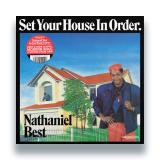
Celestial Echo Records presents Nathaniel Best – Set Your House In Order, an incredible gospel soul LP from 1986, finally back in circulation.
Originally released on Spirit Records of Nevada, the album is very much of its time in the best way — gospel music with drum machines, warm synths and basslines that push it right into modern soul and boogie territory. Nathaniel Best’s voice carries the whole record with real conviction, joined by group vocals and arrangements that give the album that rich, uplifting 80s gospel soul sound.
For us, the standouts are clear. “Call Him” is the boogie dancer — bright, driving and full of movement, the kind of gospel cut that sits perfectly in a modern soul or boogie set. The title track, “Set Your House In Order”, is something else entirely: a beautiful downtempo soul glider, deep and heartfelt, with that slow-burning quality that makes the whole LP feel so special.
Those two tracks tell the story, but the magic runs through the whole record. Scattered across the album are these amazing slower gospel soul moments, balanced with enough groove and lift to keep it moving. It’s not just a one-tracker, it’s a proper LP with feeling, range and a sound that collectors have been chasing for years.
Best’s musical story runs deep. He grew up around gospel, recorded from a young age, played piano in church, sang with the Love Center Choir under Bishop Walter Hawkins, and later worked with names including The O’Jays and The Fairfield Four.
Original copies have always been hard to come by, and the album has built a serious reputation with gospel, soul and boogie collectors over the years.
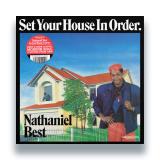
Celestial Echo Records presents Nathaniel Best – Set Your House In Order, an incredible gospel soul LP from 1986, finally back in circulation.
Originally released on Spirit Records of Nevada, the album is very much of its time in the best way — gospel music with drum machines, warm synths and basslines that push it right into modern soul and boogie territory. Nathaniel Best’s voice carries the whole record with real conviction, joined by group vocals and arrangements that give the album that rich, uplifting 80s gospel soul sound.
For us, the standouts are clear. “Call Him” is the boogie dancer — bright, driving and full of movement, the kind of gospel cut that sits perfectly in a modern soul or boogie set. The title track, “Set Your House In Order”, is something else entirely: a beautiful downtempo soul glider, deep and heartfelt, with that slow-burning quality that makes the whole LP feel so special.
Those two tracks tell the story, but the magic runs through the whole record. Scattered across the album are these amazing slower gospel soul moments, balanced with enough groove and lift to keep it moving. It’s not just a one-tracker, it’s a proper LP with feeling, range and a sound that collectors have been chasing for years.
Best’s musical story runs deep. He grew up around gospel, recorded from a young age, played piano in church, sang with the Love Center Choir under Bishop Walter Hawkins, and later worked with names including The O’Jays and The Fairfield Four.
Original copies have always been hard to come by, and the album has built a serious reputation with gospel, soul and boogie collectors over the years.
MIO: Memories in Orbit is one of 2026 best games so far. With a synthwave-induced melody, blissful choir voices echoing the main theme of the game, buzzing electronic noises and a hint of groovy patterns, this track captures the very essence of the game. Reminiscent of other iconic OST like Power Glove’s Far Cry 3: Blood Dragon and Ben Prunty’s FTL: Faster Than Light.
The eye of the storm: welcome to Tornado Wallace's debut album! The accumulation of about four years of work, with tracks written in Berlin and Melbourne, 'Lonely Planet' is nothing like you may have expected from the Australian expat. No stranger to fans and followers of ESP Institute, Beats in Space and Music From Memory's sister Label Second Circle, Tornado Wallace's strain of releases so far merged functionality with a musical playfulness that led him to find himself as one of the producer's behind José Padilla's International Feel album. Here, he leaves the needs of the dance floor behind in order to create a magical mystery tour de trance into his and our inner jungle. How about some references New Age sounds meet new wave melodies, Grace Jones runs into the Dire Straits at Compass Point, while a Korg Mini Pops and a Roland CR78 make amends for Sly & Robbie's absence, Michael Mann pictures Joseph Conrad's 'Heart of Darkness', Robert Rauschenberg tries his luck at naturalism and an imagined Wally Badarou echoes through all of it. Sandwiched between the title track and the yearning beauty of the album's final point 'Healing Feeling', you get all of that as well as collaborations with and contributions of NO ZU, David Hischfelder and the voice of Sui Zhen on 'Today', who would easily make Anna Domino take her proverbial hat off. Tornado Wallace created an album that supersedes the requirements and expectations of a debut. Like a lost Island Records or a never released Made to Measure album, 'Lonely Planet' soundtracks notions and ideas that recall the nostalgic future in the past as much as it looks ahead.
A love letter to Canada sees Adams explore new musical territory, drawing on country, folk and rock while telling stories inspired by the people, places and history of home. How's It Goin' could be the most Canadian album ever written! Inspired by the landscapes, characters, stories and current affairs that are all part of Canada's ongoing history, How's It Goin' sees Adams explore a different musical landscape of his own. Alongside the unmistakable songwriting and voice that have been at the heart of his music, the album introduces elements of country and folk, giving the record a warm, roots-y character. Among the songs are "Diesel and Dirt," "How's It Goin'," "Iron Ribbon" and "The Battle of Lundy's Lane". "The idea was simply to make a record about Canada," says Adams. "It started with writing the song for the documentary, 'Canada's Wild Eastern Edge' and after doing so much research, I was inspired to start writing more songs about Canada. Musically it took me somewhere a little different too, which made the whole thing exciting." One of the album's most poignant moments is "The Ballad of Terry Fox," Adams' tribute to one of Canada's most inspirational figures.The song will also be featured in the forthcoming new documentary film about Terry Fox, entitled "Run Terry Run". How's It Goin' acknowledges Adams' roots and delivers an album that is at times personal, cinematic and, occasionally, reflective but always unmistakably Adams.
A love letter to Canada sees Adams explore new musical territory, drawing on country, folk and rock while telling stories inspired by the people, places and history of home. How's It Goin' could be the most Canadian album ever written! Inspired by the landscapes, characters, stories and current affairs that are all part of Canada's ongoing history, How's It Goin' sees Adams explore a different musical landscape of his own. Alongside the unmistakable songwriting and voice that have been at the heart of his music, the album introduces elements of country and folk, giving the record a warm, roots-y character. Among the songs are "Diesel and Dirt," "How's It Goin'," "Iron Ribbon" and "The Battle of Lundy's Lane". "The idea was simply to make a record about Canada," says Adams. "It started with writing the song for the documentary, 'Canada's Wild Eastern Edge' and after doing so much research, I was inspired to start writing more songs about Canada. Musically it took me somewhere a little different too, which made the whole thing exciting." One of the album's most poignant moments is "The Ballad of Terry Fox," Adams' tribute to one of Canada's most inspirational figures.The song will also be featured in the forthcoming new documentary film about Terry Fox, entitled "Run Terry Run". How's It Goin' acknowledges Adams' roots and delivers an album that is at times personal, cinematic and, occasionally, reflective but always unmistakably Adams.
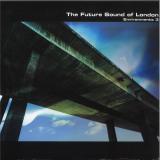
“Environments 3” is one of ‘the great lost albums’ by The Future Sound Of London and these sessions have taken on almost mythical status with the group’s fan base. It was initially due for release after the 1993 release of the UK Top 10 album hit “Lifeforms”, but that didn’t happen. Instead, much later in 2010, it came on CD and download. Only now is it being released on vinyl for the first time..
This release also comes after the success of the first two installments which have sold steadily across the different volumes over the years and still climbing. This third volume is a sparse, highly minimal, and vivid departure from their dense 1990s period, and cited as one of the standout ambient releases of its time with FSOL in fine creative form. Reviewers at the time noted he complete absence of the heavy, spacey atmospheres of Lifeforms or the dark chaos of Dead Cities with delicate textures and moody variety throughout. While mostly calm and meditative, certain cuts evoke a desolate, lonely, or gently industrial feel.


![cv313 - Echospace [Detroit] Presents: "Altering Illusions" [1/3] REMASTERED (2x12")](https://www.deejay.de/images/l/3/8/1242238.jpg)