The music of Green Cosmos makes us realize that our never- ending quest for love can find fulfillment. You take a long, slow breath and feel the magic of transcendent wisdom. There is not one note too many, and everything gets to the heart of the matter. A saxophone that sails ahead on a world- map of sound, driven by the beat of Kalimba and drums, sometimes fraternizing with a bass that‘s now insistent and then shy, and closely listens to a reassuringly omniscient piano until the music merges into a unit that‘s greater than its parts and sees us through the night.
Search:heart 2 heart
Thme is the alias of Paris-based musician Théo Martin. He has released numerous albums on labels such as Seil Records, Vaagner, and Lontano Series, along recent collaborations with artists Agyt and Lamasz.
Anti Atlas is Théo’s first solo work in two years, and his first release on vinyl and cd. The use of magnetic tape remains central to his creative process, enabling him to infuse the sound with a sense of fragility and vulnerability, despite its inherent unpredictability. Feedback loops, emerging from the interactions between tape recorders, served as the guiding principle throughout the entire recording. Longing, heartfelt aspirations, and the quiet hope that keeps us reaching for what lies ahead.
- A1: 3 Horas Da Manha (Ivan Lins, Waldemar Correia)
- A2: Samba Do Aviao (Antonio Carlos Jobim)
- A3: Tema Medieval (Agustin Pereyra Lucena)
- A4: Despues De Las Seis (Agustin Pereyra Lucena, Guillermo Reuter)
- A5: Tema Barroco (Guillermo Reuter)
- A6: La Rana (João Donato)
- B1: Pra Que Chorar (Baden Powell)
- B2: Encuentro De Sombras (Agustin Pereyra Lucena)
Far Out Recordings proudly presents Argentinian guitarist Agustín Pereyra Lucena’s 1980 album La Rana. Recorded in Oslo, La Rana features Agustín’s stunning takes on compositions by Ivan Lins, Antonio Carlos Jobim and Agustín’s friend and musical hero Baden Powell. In addition to these, and a number of Agustín’s own compositions including the fifteen-minute masterpiece “Encuentro De Sombras”, the album’s title track is an idiosyncratic version of Joao Donato’s “A Rã” (Eng: The Frog/ Esp: La Rana) from his 1973 album Quem É Quem.
Forming the rest of the quartet are two fellow Argentinians who were also Agustin’s bandmates from the group Candeias: bassist and multi-instrumentalist Guillermo Reuter and flautist Ruben Izarrualde; with Norweigan drummer Finn Sletten on drums and percussion.
Throughout La Rana we hear not only Agustín’s fabled guitar playing, which ascended him to share stages with the likes of Vinicius de Moraes, Dorival Cayymi, Toquinho, Maria Bethania, Chico Buarque and Quarteto Em Cy, but also his talent as a vocalist. He also provided the heartening illustration for the cover art, which perfectly fits the cordial, inviting tone of the music. Inspired in equal measure by South American rhythms and Norweigan glaciers, mountains and waterfalls, La Rana is filled with the warmth, humility and sincerity of a man seizing a joyful moment in life through music.
The influence of the UK’s Steel City on electronic music is well documented and undisputed and continues to push the envelope with key figures such as Winston Hazel (Forgemasters, The Step), DJ Parrot/Crooked Man, Richard Benson (RAC, SWAG, Altern 8), Chris Duckenfield (RAC, Popular Peoples Front, SWAG, All Ears Distribution), a thriving underground club scene and the likes of Synaptic Voyager reinforcing the city’s rich musical legacy.
Matt White and Paul Baines have been making off-kilter, emotive, late night electronic jams since meeting in the early 90’s and while life took them on different paths for a while, they have recently blown the thick layer of dust from their synths and drum machines and got busy in the studio to create some amazing new music which draws influence from that classic UK techno sound which played such an important part in the development of dance music culture around the world. With recent releases on Frame Of Mind, Acquit and Telomere Plastic the duo are clearly on a roll, wearing the heritage of their city on their sleeve and delivering what can only be described as heartfelt, authentic machine music made with love and soul.
From the opening beats of lead track Dawn Till Dusk we are drawn in to another place which feels comfortably familiar yet organic, fluid and loose in a way that tugs on the heartstrings. A million miles from cookie-cutter tech house, this is two guys in a bedroom studio, digging deep on hardware machines to create a sound to get completely lost in. Lonely Promontory takes things deeper still with immersive pads, taught electro beats and blissed-out melodic lines which give just hint of optimism and recall those beloved sounds of B12, Redcell and Likemind.
Flipping over we have Stellar Engine which goes a littler heavier on the beats and bass whilst still retaining a floating quality, once again highlighting the hardware jam workflow that Synaptic Voyager utilise in their studio. Once Exposed takes us back to those heady days of the early 90’s when techno, house and ambient electronics combined to create a heady blend of deep atmospherics and driving beats which could work on both dance floors and car stereos alike. Rounding off the EP we have Cognitive Network which goes for a straighter four on the floor techno groove and a killer bassline to lose yourself in. These recordings were delivered to the label in unedited long form (some tracks totalling 15 minutes or more in length!) which Jimpster lovingly edited into the versions which you hear on this release.
- A1: Progetto Tribale - The Sweep
- A2: Onirico - Echo Giomini
- A3: Open Spaces - Artist In Wonderland
- B1: Alex Neri – The Wizard (Hot Funky Version)
- B2: M C.j. Feat. Sima - To Yourself Be Free - Instrumental Mix Energy Prod
- B3: Mato Grosso - Titanic Expande
- C1: Dreamatic - I Can Feel It (Part 1)
- C2: Carol Bailey - Understand Me Free Your Mind (Dream Piano Remix)
- C3: The True Underground Sound Of Rome - Secret Doctrine
- D1: Don Carlos - Boy
- D2: Lazy Bird – Jazzy Doll (Odyssey Dub)
Vol 2[28,99 €]
Volume 1 of this expertly curated project of 90s Italian House - put together by Don Carlos.
If Paradise was half as nice… by Fabio De Luca.
Googling “paradise house”, the first results to pop up are an endless list of European b&b’s with whitewashed lime façades, all of them promising “…an unmatched travel experience a few steps from the sea”. Next, a little further down, are the institutional websites of a few select semi-luxury retirement homes (no photos shown, but lots of stock images of smiling nurses with reassuring looks). To find the “paradise house” we’re after, we have to scroll even further down. Much further down.
It feels like yesterday, and at the same time it seems like a million years ago. The Eighties had just ended, and it was still unclear what to expect from the Nineties. Mobile phones that were not the size of a briefcase and did not cost as much as a car? A frightening economic crisis? The guitar-rock revival?! Certainly, the best place to observe that moment of transition was the dancefloor. Truly epochal transformations were happening there. From America, within a short distance one from the other, two revolutionary new musical styles had arrived: the first one sounded a bit like an “on a budget” version of the best Seventies disco-music – Philly sound made with a set of piano-bar keyboards! – the other was even more sparse, futuristic and extraterrestrial. It was a music with a quite distinct “physical” component, which at the same time, to be fully grasped, seemed to call for the knotty theories of certain French post-modern philosophers: Gilles Deleuze, Félix Guattari, Paul Virilio... Both those genres – we would learn shortly after – were born in the black communities of Chicago and Detroit, although listening to those vinyl 12” (often wrapped in generic white covers, and with little indication in the label) you could not easily guess whether behind them there was a black boy from somewhere in the Usa, or a girl from Berlin, or a pale kid from a Cornish coastal town.
Quickly, similar sounds began to show up from all corners of Europe. A thousand variations of the same intuition: leaner, less lean, happier, slightly less intoxicated, more broken, slower, faster, much faster... Boom! From the dancefloors – the London ones at least, whose chronicles we eagerly read every month in the pages of The Face and i-D – came tales of a new generation of clubbers who had completely stopped “dressing up” to go dancing; of hot tempered hooligans bursting into tears and hugging everyone under the strobe lights as the notes of Strings of Life rose up through the fumes of dry ice (certain “smiling” pills were also involved, sure). At this point, however, we must move on to Switzerland.
In Switzerland, in the quiet and diligent town of Lugano, between the 1980s and 1990s there was a club called “Morandi”. Its hot night was on Wednesdays, when the audience also came from Milan, Como, Varese and Zurich. Legend goes that, one night, none less than Prince and Sheila E were spotted hiding among the sofas, on a day-off of the Italian dates of the Nude Tour… The Wednesday resident and superstar was an Italian dj with an exotic name: Don Carlos. The soundtrack he devised was a mixture of Chicago, Detroit, the most progressive R&B and certain forgotten classics of old disco music: practically, what the Paradise Garage in New York might have sounded like had it not closed in 1987. In between, Don Carlos also managed to squeeze in some tracks he had worked on in his studio on Lago Maggiore. One in particular: a track that was rather slow compared to the BPM in fashion at the time, but which was a perfect bridge between house and R&B. The title was Alone: Don Carlos would explain years later that it had to be intended both in the English meaning of “by itself” and like the Italian word meaning “halo”. That wasn’t the only double entendre about the song, anyway. Its own very deep nature was, indeed, double. On the one hand, Alone was built around an angelic keyboard pattern and a romantic piano riff that took you straight to heaven; on the other, it showcased enough electronic squelches (plus a sax part that sounded like it had been dissolved by acid rain) to pigeonhole the tune into the “junk modernity” section, aka the hallmark of all the most innovative sounds of the time: music that sounded like it was hand-crafted from the scraps of glittering overground pop.
No one knows who was the first to call it “paradise house”, nor when it happened. Alternative definitions on the same topic one happened to hear included “ambient house”, “dream house”, “Mediterranean progressive”… but of course none were as good (and alluring) as “paradise house”. What is certain is that such inclination for sounds that were in equal measure angelic and neurotic, romantic and unaffective, quickly became the trademark of the second generation of Italian house. Music that seemed shyly equidistant from all the rhythmic and electronic revolutions that had happened up to that moment (“Music perfectly adept at going nowhere slowly” as noted by English journalist Craig McLean in a legendary field report for Blah Blah Blah magazine). Music that to a inattentive ear might have sounded as anonymous as a snapshot of a random group of passers-by at 10AM in the centre of any major city, but perfectly described the (slow) awakening in the real world after the universal love binge of the so-called Second Summer of Love.
For a brief but unforgettable season, in Italy “paradise house” was the official soundtrack of interminable weekends spent inside the car, darting from one club to another, cutting the peninsula from North to centre, from East to West coast in pursuit of the latest after-hours disco, trading kilometres per hour with beats per minute: practically, a new New Year’s Eve every Friday and Saturday night. This too was no small transformation, as well as a shock for an adult Italy that was encountering for the first time – thanks to its sons and daughters – the wild side of industrial modernity. The clubbers of the so-called “fuoriorario” scene were the balls gone mad in the pinball machine most feared by newspapers, magazines and TV pundits. What they did each and every weekend, apart from going crazy to the sound of the current white labels, was linking distant geographical points and non-places (thank you Marc Augé!) – old dance halls, farmhouses and business centres – transformed for one night into house music heaven. As Marco D’Eramo wrote in his 1995 essay on Chicago, Il maiale e il grattacielo: “Four-wheeled capitalism distorts our age-old image of the city, it allows the suburbs to be connected to each other, whereas before they were connected only by the centre (…) It makes possible a metropolitan area without a metropolis, without a city centre, without downtown. The periphery is no longer a periphery of any centre, but is self-centred”.
“Paradise house” perfectly understood all of this and turned it into a sort of cyber-blues that didn’t even need words, and unexpectedly brought back a drop of melancholic (post?)-humanity within a world that by then – as we would wholly realise in the decades to come – was fully inhuman and heartless. A world where we were all alone, and surrounded by a sinister yellowish halo, like a neon at the end of its life cycle. But, for one night at least, happy.
- A1: In The Beginning
- A2: Just To Ask A Dance
- A3: Jacked
- A4: Mad Catch
- A5: Extraordinary Wings
- B1: Warplane
- B2: Celebrate
- B3: Smuggler’s Adventure
- B4: Glutton For Punishment
Der UK-Postpunk-Geheimtipp des noch jungen Jahres!
Produziert von UK-Indie-Produzenten-Legende Dan Carey, der schon lange mit Heartworms zusammenarbeitet, verbindet 'Glutton For Punishment' die treibenden, motorischen Tendenzen der Gothic-Urgesteine Depeche Mode mit der lyrischen Gewandtheit von PJ Harvey und den schrägen Rhythmen von LCD Soundsystem zu einem kraftvollen Klanggewitter.
We are extremely proud to present the OFFICIAL vinyl release of "Subways Of Your Mind" by FEX, a track that captivated music enthusiasts worldwide as the "Most Mysterious Song on the Internet", or short TMS. After years of speculation, the song's origins have been confirmed, and now, for the first time ever, it will be available on a 7" single.
If you don't know what this is about - than look up on Wikipedia.
The release features the original demo version of the song recorded in 1983, faithfully restored and remastered. The single is backed with "Heart In Danger", an equally stunning track from the band, also taken from their original demo cassette. Ture Rückwardt, songwriter and singer of FEX, even considers this as his most favourite.
Don't miss this chance to own a piece of music history!
- A1: Eyes On Mine
- A2: Last April
- A3: Lime Tree House
- B1: Mother's Son
- B2: My Greatest Friend
- B3: August Blue
Limited edition classic black vinyl mini-album of cathartic slowcore by The Declining Winter, the new vehicle of Richard Adams, formerly of Domino Records post-rockers, Hood. The next release on the acclaimed boutique English independent label, Second Language Music, will be ‘Last April,’ the new mini-album by The Declining Winter, a raw, deeply emotional monument of loss, grief and heartbreak that treads in the footsteps of Red House Painters’ ‘Down Colorful Hill,’ Low’s ‘I Could Live In Hope’ and Songs: Ohia’s ‘Didn’t It Rain.’ This is not a heart-on-your-sleeve record. It does away with the sleeve and goes straight for carving a heart on the arm. Recordings which emerged out of a period of shock, grief and trauma, these six songs were all written on the same night and form a stately tribute to a loved one lost. The Declining Winter strip things back to just Richard Adams’ plaintive voice and acoustic guitar, alongside the beautiful, irrefutably melancholy string arrangements/playing of Sarah Kemp (Brave Timbers). There’s been no attempt to plane off any rough edges – here and there, the creak of a chair, a guitar note missed, a voice almost cracking with emotion – these recordings are like cathartic scrawls in a diary. Only this one has been left out for anyone to read. As with his previous band, Hood, Adams has a way of evoking a particularly pastoral, English melancholy, of lonely morning hikes in inclement weathers, of rain on slate in the West Yorkshire streets where he was raised and still lives.
Die 1987er Black Uhuru-Alben "Positive" und "Positive Dub" zählen zu den besten Arbeiten der legendären Reggae-Band und erscheinen nun kombiniert in remastered Qualität. Produziert von Steven Stanley, mit Sly & Robbie als Studiomusiker, war "Positive" das letzte Album mit Delroy "Junior" Reid on vocals. Beide Formate enthalten die vollständigen 16 Tracks, die LP ist auf schwarzem 180g Doppelvinyl im Gatefold gepresst.
- "At its best, Black Uhuru combines the persistent dance-inciting rhythms of pure reggae with substantial pop melodies and soulful vocals." - St. Petersburg Times
- "The sheer tunefulness the band has displayed in the past." - The Washington Post
- "Uplifting, yet realistic. It paints real, and often graphic, pictures of conflict in the Third World." - Ottawa Citizen
- A1: Intro (Feel The Positive Flow)
- A2: Stand Up
- A3: Work It Out
- A4: Joy (With Ann Nesby)
- A5: Praise Break
- A6: Life (Feat. Ron Carroll)
- A7: Without Ya
- B1: Glory
- B2: High Above (Feat. Lady Blackbird)
- B3: Exceptional (Interlude)
- B4: House Is The Religion
- B5: Say You Wanna Be
- B6: Divine Stuff
- B7: Save My Soul (Feat. Amanzi)
- B8: Your Shine (With Fly Disco Butter)
Bakermat’s upcoming album, Grace Note, is a heartfelt tribute to the powerful connection between House music and Gospel. Celebrating the joy and spiritual essence of these genres, the album invites listeners to rediscover the magic of the dancefloor, where Bakermat's music has fostered moments of joy and connection for over a decade.
- A1: Drink Ring Jesus
- A2: Time To Pay
- A3: Carpenter Skills
- A4: You Give Us
- A5: Devil’s Work Is Never Done
- B1: Cryin’ Elvis
- B2: Dante’s Blues No.7
- B3: His Time
- B4: Next Stop Redemption
- B5: Long Way To Go
Drink Ring Jesus, the second album from Nashville based singer-songwriter Simmons was originally released in 2006 during a period of vast political and social change in America. Post 9/11 the age-old battle between good and evil, God versus Satan if you want to get personal, once again eased into view agitating hearts and minds. Like all songwriters with just their art to carve themselves a foothold in a world becoming less identifiable, Simmons produced an album that is both intimate and deeply inquisitive yet, like all the great folk records, its universal themes of hope, redemption, pain and despair will resonate with all who hear it.
Nearly twenty years on from its initial release Drink Ring Jesus feels as relevant now as it did then. From the opening lines of the title track Simmons is clearly caught in a time of intense personal reflection. It’s not an unusual pathway to tread for songwriters and artists alike, indeed many have fell by its wayside over the years, yet here our narrator is both looking for a way through and calling on something deeper than just instinct for guidance. We are right on the frontline, characters battling on the very precipice of sanctuary or sacrifice on the likes Time To Pay and Devil’s Work Is Never Done, before literally scavenging a ticket to Hope Station on the evocative Next Stop Redemption. There isn’t a moment where you feel Simmons is taking the easy way out or shying from titanic confrontation. Anything but. It’s in the no-mans land where these songs impact the most, at the very alchemy where despair turns to optimism or defeat.
- Sick Of You
- Centre Of Lies
- The American In Me
- Cranked Up Really High
- Raggare
- Vital Hours
- I Need Nothing
- Here I Go And Here I Am
- Silver Son Johnnie
- First Time Is The Best Time
- Dark Yellow Easy Flow
- Samma Sak
- Shitty Shitty Bang Bang
- Bye Bye Hey Hey Hey
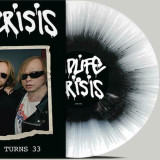
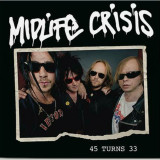
MIDLIFE CRISIS! - Something as unusual as a Swedish "supergroup" in the genre of '77 Punk Rock.
Urrke (Maryslim, Bizex-B), Dregen (Backyard Babies, The Hellacopters, Mike Monroe Band), Robban Eriksson (The Hellacopters, Strindbergs, Winnerbäck, Syl Sylvain), and Måns P Månsson (Crimson Shadows, Wrecks, Maggots).
In 2004, they first put their wild heads together and recorded three old punk classics, released on a vinyl EP. The band went on to release three more EPs (the latest one in 2018). Now, everything is being released on ONE fantastic collection via Wild Kingdom Records. By the way, Dregen is currently making waves on Swedish national TV with the popular series "Så Mycket Bättre".
Hold on to your hats folks!
Sound Like: Heartbreakers, Slaughter & The Dogs, PF Commando, early Damned, The Saints, UK Subs, Dictators, etc oldschool Punkrock.
MIDLIFE CRISIS! - Something as unusual as a Swedish "supergroup" in the genre of '77 Punk Rock.
Urrke (Maryslim, Bizex-B), Dregen (Backyard Babies, The Hellacopters, Mike Monroe Band), Robban Eriksson (The Hellacopters, Strindbergs, Winnerbäck, Syl Sylvain), and Måns P Månsson (Crimson Shadows, Wrecks, Maggots).
In 2004, they first put their wild heads together and recorded three old punk classics, released on a vinyl EP. The band went on to release three more EPs (the latest one in 2018). Now, everything is being released on ONE fantastic collection via Wild Kingdom Records. By the way, Dregen is currently making waves on Swedish national TV with the popular series "Så Mycket Bättre".
Hold on to your hats folks!
Sound Like: Heartbreakers, Slaughter & The Dogs, PF Commando, early Damned, The Saints, UK Subs, Dictators, etc oldschool Punkrock.
MIDLIFE CRISIS! - Something as unusual as a Swedish "supergroup" in the genre of '77 Punk Rock.
Urrke (Maryslim, Bizex-B), Dregen (Backyard Babies, The Hellacopters, Mike Monroe Band), Robban Eriksson (The Hellacopters, Strindbergs, Winnerbäck, Syl Sylvain), and Måns P Månsson (Crimson Shadows, Wrecks, Maggots).
In 2004, they first put their wild heads together and recorded three old punk classics, released on a vinyl EP. The band went on to release three more EPs (the latest one in 2018). Now, everything is being released on ONE fantastic collection via Wild Kingdom Records. By the way, Dregen is currently making waves on Swedish national TV with the popular series "Så Mycket Bättre".
Hold on to your hats folks!
Sound Like: Heartbreakers, Slaughter & The Dogs, PF Commando, early Damned, The Saints, UK Subs, Dictators, etc oldschool Punkrock.
- Cue Cards
- Cue Cards
Like so many bands that cut their teeth playing basements, rental halls, and teen centers around the Puget Sound in the early '90s, the Olympia trio Lync may have had similar roots to the local rock heroes of the era but were conscientiously averse to the trappings of mainstream success. Lync kept the grit, the shouted vocals, and the rough-hewn choruses, but eschewed the machismo and metal swagger. Their song 'Cue Cards' is a perfect encapsulation of their overall approach-heartfelt melodies, bashed drums, hoarse throats, gritty bass lines, and fractured guitars. Lync's legacy was interwoven with fellow PNW artists like Modest Mouse, 764-Hero, and Red Stars Theory-bands that were crucial to the foundation of Suicide Squeeze Records. It only made sense for Suicide Squeeze to reissue Lync's lone LP, These Are Not Fall Colors back in 2023. And in conjunction with the reissue, Suicide Squeeze is proud to announce the second single featuring a choice cut from Fall Colors paired with a current artist's reinterpretation of the song. On their latest 7", Lync's original version of 'Cue Cards' is paired with a cover by Julia & The Squeezettes-a Suicide Squeeze-centric all-star line-up featuring Julia Kugel of The Coathangers and Julia, Julia, Staz Lindes of The Paranoyds, Bonnie Bloomgarden and Rikki Styxx of Death Valley Girls. On their rendition, Julia & The Squeezettes excise the half-time distorted bombast of the original in favor of up-tempo minimalist pop. Guitars are reduced to a few choice phrases, putting the song's luring vocals and lyrical charms at the forefront. Paired with the tasteful yet propulsive rhythm section, this new approach to 'Cue Cards' demonstrates the timeless songwriting of Lync while simultaneously showcasing the creative vision, timbral aptitude, and resourceful production savvy of four contemporary artists in the ongoing lineage of American indie rock. Suicide Squeeze is proud to release these two versions of 'Cue Cards' to the world on a pressing of 500 Ocean Blue-colored vinyl 7" singles.
- A1: Turn Down The Sound
- A2: It's Me
- A3: Anna May
- A4: Two Hearts Combine
- A5: Thunderstrike
- A6: Reverie
- A7: First Step On The Moon
- A8: Dusts Of Gold
- B1: Midnight Blue
- B2: Lovely Lady
- B3: Sound Of A Man
- B4: Sirens
- B5: Mourning Melodies In Rhapsody
- B6: Something About April
- B7: Niacin
Adrian Younge presents: Something About April flaunts all of the trademarks that have made Adrian Younge an in-demand name as a composer and sample source-point. His work oozes raw, analogue soul and the primal sonic edge of psychedelic rock, sitting nicely alongside Ennio Morricone's best soundtrack work or Pink Floyd's early catalogue. Recorded and mixed by Adrian Younge at Linear Labs, the preeminent analog studio of Los Angeles, CA.