
vorbestellen24.10.2025
erscheint voraussichtlich am 24.10.2025
23,32 €
erscheint voraussichtlich am 24.10.2025

erscheint voraussichtlich am 26.09.2025

This star-studded soundtrack to the acclaimed 2013 indie film Winter In The Blood is out for the first time on a deluxe limited edition 2-record, white vinyl set. The original score is written and performed by indie darlings Heartless Bastards, and the song list includes tracks by Robert Plant & Patty Griffin, Cass McCombs, Sonny & The Sunsets, Sallie Ford & The Sound Outside, Them Savages, Alemayehu Eshete, Cowboy & Indian, and Youth & Valor.
erscheint voraussichtlich am 03.05.2024

Jordan Munson ist ein Komponist, Performer und Multimedia-Künstler. In seinen Werken erforscht er die Erinnerung und unsere Beziehung zur Technologie, und es heißt, dass er "akustische Melodien und elektronische Rhythmen mit aufregender Absicht verschmilzt" (The New York Times). Seine Kompositionen beruhen auf einer Ausbildung in Perkussion, Improvisation, Pop und Sounddesign und stellen subtile Landschaften mit reichhaltigen Texturen und treibenden Melodien einander gegenüber. Munson setzt Technologie ein, um natürliche Klänge zu interpretieren und umgekehrt, wobei er sich auf die Übertragungsverluste konzentriert, die durch diese ständige Neusynthese entstehen. "Heartless Fools" wurde 2018 in den Greenhouse Studios in Reykjavík, Island, aufgenommen. Seit diesen ersten Aufnahmen ist die Musik durch weitreichende Zusammenarbeit mit Musikern aus Jazz, Klassik und Pop gewachsen. Zu den Künstlern gehören das experimentelle Pop-Trio Square Peg Round Hole, die Sänger*innen Isaiah Robinson und Hanna Benn sowie die isländische Cellistin Pórdís Gerdur Jónsdóttir. Während die Musik selbst nicht politisch sein soll, bezieht sich der Titel "Heartless Fools" auf die Reaktion von zwei Personen auf die aktuelle politische Landschaft. Die erste arbeitet sich durch Schock und Trauer, während sie die Realitäten dieser Welt wahrnimmt, und versucht, dem Ganzen einen Sinn zu geben. Die andere, angeheizt durch einen Verlust der kulturellen Identität, ist voller Wut, die sie antreibt, unmenschliche Dinge zu tun. Dies zeigt sich in der Musik als Kampf zwischen Ordnung und Chaos, Kontemplation und Ungeduld. Die Werke stehen in einem ständigen Spannungsfeld, sowohl intern und miteinander.
erscheint voraussichtlich am 19.01.2024

erscheint voraussichtlich am 15.12.2023

EVERGREY läuten mit A Heartless Portrait (The Orphean Testament) eine neue Ära ein! Ein Schleier der Dunkelheit legt sich von Göteborg aus über die Welt: EVERGREY schreiben mit ihrem 13.
Studioalbum A Heartless Portrait (The Orphean Testament), 20. Mai 2022 via Napalm Records, ein neues Kapitel der Bandgeschichte. Klangliche Melancholie und ergreifende Texte gehen einher mit progressiver Härte und brennender Emotionalität und lassen den Hörer sprachlos zurück. Ganz ohne Zweifel zementieren
EVERGREY erneut ihren Stand an der Spitze der Szene eindrucksvoller als je zuvor!
Angeführt von Gründer, Sänger und Gitarrist Tom S. Englund, loten die Schweden seit 25 Jahren die Gefilde des Progressive Metal aus, kombinieren diese mit schwerem Melodic Metal und malen so mit bis dato zwölf veröffentlichten Studioalben unverkennbare Klangbilder. A Heartless Portrait (The Orphean Testament), der Nachfolger des erfolgreichen 2021er-Albums Escape of the Phoenix, ist eine 10-Track-Melange, bei der jede Note, jedes Riff und jedes Wort pure Poesie versprüht und eine Intensität erzeugt, die von der ersten Sekunde an fesselt. Tosende instrumentale Kräfte verweben EVERGREY mit der tiefgehenden Gesangsdarbietung von Mastermind Englund - einer der markantesten Stimmen im Metal.
A Heartless Portrait (The Orphean Testament) ist der Beweis, dass EVERGREY müssen niemandem mehr etwas beweisen, zeigen aber dennoch eindrucksvoll, dass der Kreativität auch nach über 25 Jahren keine Grenzen gesetzt sind.
Bestelle jetzt und wir bestellen den Artikel für dich beim Lieferanten.

Following on from a series of singles, 'Runnin' Wild', 'Confliction' and 'Jump The Line', First Word Records is very pleased to present a full-length EP from alt-soul artist Olivier St.Louis, produced by Oddisee - 'M.O.T.H. (Matters Of The Heartless)'
Olivier was born in Washington DC of Haitian and Cameroon heritage, but spent his teens studying in the UK. As a teenager, his CD and tape collection would encompass a wide range of genres, from hip hop and r&b to garage and British alternative rock. A bio-science student, Olivier couldn't suppress his true passion of music. After graduating, he took on a "Jekyll and Hyde" lifestyle; working as a scientist in the day, and a musician at night.
His work as a recording artist eventually lead to his debut release in 2011, 'The Mr. Saint Louis EP', released under the moniker Olivier Daysoul and produced by longtime collaborator and fellow Washingtonian, Oddisee, a revered hip hop producer / artist in his own right. From here on, Olivier began laying down vocals, collaborating and touring with a wide-range of artists over the following years, including Hudson Mohawke, C2C, Laura Mvula and German rockers, AnnenMayKantereit.
After taking a hiatus from feature work, Olivier decided to concentrate on nurturing his own sound. Embracing a newfound love for blues, rock and funk, a series of late night sessions saw him engulfed in new soundscapes, and reverting back to his birth name, Olivier St.Louis. This saw him release two critically-acclaimed EPs with Berlin-based label, Jakarta, and the release of 'The Serious EP' with Bibio on Warp Records.
Following world tours with many of the afore-mentioned, Olivier has been working on all-new material, which is now set to be unleashed upon the world via Worldwide Award-winning London label, First Word Records.
The 'M.O.T.H.' EP begins with the downtempo bump of 'Jump The Line' before the adrenaline-racing rhythm of 'Runnin Wild' steps up the pace. Next is second single 'Confliction'; a considerably moodier affair, with Oddisee on assist on the bars as well as on the boards. The flipside begins on a similar vein as the first with the smoothed-out soul of 'All In Love', before we head into the slightly jazzier tinged 'Quit'. 'Serotonin' follows next with a groove and bassline reminiscent of Sly Stone, before we close out with the feel-good uptempo boogie stepper, 'Steady'. With Oddisee on the boards throughout, this EP exemplifies Olivier's unique take on alternative soul.
Comparisons have already been made to something between D'Angelo and Shuggie Otis - big boots to fill, though easy to believe once you've seen and heard this man do his thing. This EP is essentially a classically-structured selection of soul-funk with a rock edge, and a touch of jazz. Each track is laced with Olivier's sweet harmonies and fuzzed-out guitar licks throughout, and mixed down with a little 2020 boom bap thump. A prime example of Olivier's unique talents and a set of quality contemporary alt-soul.
When asked his thoughts on his artistry, Olivier St. Louis simply states "no punches pulled, no compromises, just me".
'M.O.T.H. (Matters Of The Heartless)' is released via First Word Records in January 2021.
Bestelle jetzt und wir bestellen den Artikel für dich beim Lieferanten.

The first release from Heartless on Steve Bicknell's 6dimensions. Acid tinged techno lives throughout the EP. Hazy modular sequences, sizzling precision crushed atop of a constant kick drum creating an organic aesthetic.
Impulse Model exudes human emotion, the EP's emotional depth lies beneath its techno construct within coarse and bruised production which gives the release a confidently imperfect aura. The production process for Heartless is a 'way of absorbing things that have happened and completely escaping from them', ultimately Heartless has composed an EP that condones escapism whilst the listener stays firmly rooted in their emotional state.
Support from:
Steve Bicknell, Ben Klock, Jeff Mills, Robert Hood, Derrick May, Francos Kevorkian, Function, Luke Slater, SLAM, Oliver Ho, Dj Nobu, Wata Igarashi, James Ruskin, Dimi Agelis, Phase, Ben Sims, Paul Mac and more.......
Bestelle jetzt und wir bestellen den Artikel für dich beim Lieferanten.

Bestelle jetzt und wir bestellen den Artikel für dich beim Lieferanten.

Bei uns am Lager und sofort versandfertig
Back in stock !
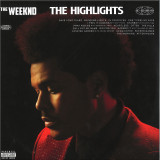
Career spanning collection. The Highlights includes such career-spanning favourites as 2015’s “Can’t Feel My Face” and “The Hills,” 2018’s “Call Out My Name,” as well as more recent hits like “Blinding Lights” and “Heartless.” The album also features many of the artist’s collaborative singles – including “I Feel It Coming” with Daft Punk, “Pray for Me” ft. Kendrick Lamar, and “Love Me Harder” with Ariana Grande. Released on 2LP set. LIMITED EDITION.
Bei uns am Lager und sofort versandfertig

Despite the title sounding like an archive collection, 1994 is actually the debut album from OKRAA. It has an emphasis on live performance and makes for a gorgeously immersive and even evolving listen from the aways excellent A Strangely Isolated Place label. All four pieces are over with minutes but they are worthy of their playing time for the way so much unfolds in such engaging fashion. Synths are cold and innocent on 'Ola De Luz' while 'Heartless' is more textural, dark, heavy in its mood. The title track is another heavy and introspective one while 'Plasma' has a more optimistic feel that lifts the spirts.
Bei uns am Lager und sofort versandfertig

Bei uns am Lager und sofort versandfertig

On her first Harmony Index album, multi-instrumentalist and producer Nico Leibman spotlights the feelings that are most difficult to express, bringing out the friction between her dreamy hooks and harsher sonics. Written almost like a DJ set, the album shifts intentionally between piano-led trip-hop, lounge, dream pop, 2-step and breakbeat house, not languishing in nostalgia but defining a language that's rooted in desire, surrender and forward motion.
Until now, Leibman has been best known as a touring musician, working alongside artists like Jessica Pratt and Ana Roxanne, while slowly putting together new solo material in-between frequent tours. The album was written in bursts over the course of five long years and provided Leibman with a much-needed outlet - a chance for her to lock into her personal musical preoccupations, like Janet Jackson's 'The Velvet Rope', Everything but the Girl's 'Walking Wounded' and Prefab Sprout's 'Jordan: The Comeback'.
It's this era of pop - when nascent technology collided at force with skillful, soulful songwriting - that provides the album's backbone, fleshed out by Leibman's potent meditations on a spectrum of experiences in Los Angeles. And as the record was evolving, Leibman let long night drives crack her creative world open. Embracing the city's notoriously cinematic romantic side, she used the car as a "little chamber of limerence," in her own words, enabling her fantasies and acting as a test system for each song. "If it wasn't hitting in the car," she says. "It wasn't going to be on the record, period."
This sense of motion is evident almost immediately on 'Recognize', when Leibman's breathy words are carried into the night by choppy, uptempo breaks and resonant pads. So even when she simply coos over chugging guitars and bass on the first half of 'Enough', the drop into a low-slung breakbeat is implied. "Another digression, a break in this tension," she sings. "Was I foolish to believe that this was never your intention?" Leibman's tales of disillusionment are imbued with power, buoyed by her pitch-perfect production, with additional help from co-producer Cesar Maria.
On 'Don't Pretend', she sings softly and soulfully over decelerated Timbaland-inspired beats and a dubwise bassline, aided by additional production from Purelink. And 'If' marks the point where she lets go, infusing her euphoria with melancholy as her voice soars alongside the album's most infectious piano riff. Fittingly, the album concludes with 'Trust', a song about surrendering to the possibilities of love that works as a potent metaphor for the album's evolution. Over the course of five years, Leibman learned to let people in, finally trusting the process. "It's also a fantasy of what it would feel like to finally be in love again," she laughs, accepting that it's still just a fantasy. But it's this hope in unfulfilled longing that gives the album its unique character, defining a bold, unguarded voice in LA's experimental pop landscape.
Bestelle jetzt und wir bestellen den Artikel für dich beim Lieferanten.

Kenichiro Nishihara made a spectacular debut in 2008 with his first album ”Humming Jazz,” and is one of the most important figures in Japanese jazzy hip-hop, receiving high acclaim in the lo-fi hip-hop scene that continues the lineage of Nujabes.
a A1: Up All Night feat. SIRUP (DJ Mitsu the Beats Remix) feat. SIRUP
[b] B1: Heartless feat. Michael Kaneko (KAZUMI KANEDA Remix) [feat. Michael Kaneko]
[a] A1: Up All Night feat. SIRUP (DJ Mitsu the Beats Remix) [feat. SIRUP]
[b] B1: Heartless feat. Michael Kaneko (KAZUMI KANEDA Remix) [feat. Michael Kaneko]
[a] A1: Up All Night feat. SIRUP (DJ Mitsu the Beats Remix) [feat. SIRUP]
[b] B1: Heartless feat. Michael Kaneko (KAZUMI KANEDA Remix) [feat. Michael Kaneko]
erscheint voraussichtlich am 25.09.2026

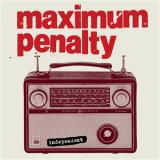
,Independent" ist das 1996 erschienene Album der New Yorker Hardcore-Band Maximum Penalty und gilt als eines ihrer wichtigsten Werke. Die Band verband darauf klassischen New York Hardcore mit melodischen Elementen, Groove und dem markanten Gesang von Jimmy Williams, wodurch sie sich deutlich von vielen Zeitgenossen abhob. Zum 30-jährigen Jubiläum erscheint das Album erstmals auf Vinyl. Die Neuauflage würdigt den anhaltenden Einfluss von Maximum Penalty auf die Hardcore-Szene, der zuletzt durch die Unterstützung von Bands wie Turnstile und das Cover von End It neu sichtbar wurde. Für viele Fans gilt ,Independent" als ein Schlüsselmoment in der Geschichte des melodischen New York Hardcore.
erscheint voraussichtlich am 25.09.2026

'Prince of Failure' marks a significant shift in Daniel Tompkins' creative world Written & developed over several years with Paul Ortiz (Chimp Spanner), the album traces a long internal process rather than a single moment of inspiration. The material reflects on neurodivergence, masking, & the psychological weight of living out of alignment with expectation - themes that shape both the narrative & the sound of the record. The Prince is presented as an archetype rather than a persona: a name given to the internal voice formed through self- doubt, perfectionism, & misinterpretation. By defining it, Tompkins reframes it. The songs move through states of disorientation, isolation, & repetition before arriving at a quieter form of acceptance. The emphasis is on observation rather than resolution.
erscheint voraussichtlich am 19.06.2026

Cream White Vinyl Vinyl[30,04 €]
'Prince of Failure' marks a significant shift in Daniel Tompkins' creative world Written & developed over several years with Paul Ortiz (Chimp Spanner), the album traces a long internal process rather than a single moment of inspiration. The material reflects on neurodivergence, masking, & the psychological weight of living out of alignment with expectation - themes that shape both the narrative & the sound of the record. The Prince is presented as an archetype rather than a persona: a name given to the internal voice formed through self- doubt, perfectionism, & misinterpretation. By defining it, Tompkins reframes it. The songs move through states of disorientation, isolation, & repetition before arriving at a quieter form of acceptance. The emphasis is on observation rather than resolution.
erscheint voraussichtlich am 19.06.2026

Maximum Penalty wurden 1986 gegründet und gelten als eine der einzigartigsten Bands, die während der Blütezeit des New Yorker Hardcore entstanden sind. Die Band, die von Sänger Jimmy Williams ins Leben gerufen wurde und 1988 durch den Gitarristen Joseph Affe verstärkt wurde, begann mit schnellem Hardcore-Punk und entwickelte sich nach und nach zu etwas Größerem, angetrieben von melodischen Rhythmen und gefühlvollem, klarem Gesang. Maximum Penalty war von Anfang an ein fester Bestandteil legendärer Veranstaltungsorte wie CBGB und Coney Island High und tourte in den 90er Jahren auch durch Nordamerika und Europa, wo sie die Bühne mit Bands wie Agnostic Front, Madball, Sick Of It All und Gorilla Biscuits teilten. Die erste Schaffensphase von Maximum Penalty umfasste eine beeindruckende Diskografie - ,Demo 89", die EP ,East Side Story" von 1995, die LP ,Independent" von 1996, die LP ,Super Life" von 1997 sowie eine Reihe von Titeln auf verschiedenen Compilations, darunter ,Where The Wild Things Are" und ,Satisfaction Guaranteed" von Blackout Records. Maximum Penalty tauchte 2009 mit der LP ,Life & Times" (Reaper Records) wieder auf und brachte ihren Sound neuen und alten Hörern näher. Der Einfluss, den Maximum Penalty auf die moderne Hardcore-Szene hatte, ist unbestreitbar. Turnstile nahm die Band in eine einflussreiche Playlist auf, und der Hardlore-Podcast erklärte Maximum Penalty zu einer der ,am meisten unterschätzten Hardcore-Bands". Im Jahr 2025 veröffentlichte die Hardcore-Band End It aus Baltimore ein Cover von ,Could You Love Me?" aus dem 1996er Album ,Independent", hauchte dem Titel neues Leben ein und veranlasste Fans, das Original zu entdecken. Zum 30-jährigen Jubiläum wird ,Independent" zum ersten Mal überhaupt auf Vinyl gepresst, und zwar über Flatspot Records. Gitarrist Joseph Affe bemerkt: ,Maximum Penaltys ,Independent` ist das einzige Album, das nie auf Vinyl erschienen ist, da Vinyl zu der Zeit, als es auf CD veröffentlicht wurde, nur eine Nebensache war. Während wir weiter spielten und neue Veröffentlichungen herausbrachten, war die Veröffentlichung von ,Independent` auf Vinyl etwas, das wir schon immer tun wollten, und nun sind wir endlich, 30 Jahre später, so weit. Die ,Independent`-Ära war eine großartige Zeit in der Geschichte von Maximum Penalty - es bedeutet uns sehr viel, zu sehen, dass ein neues Publikum die Platte zum ersten Mal entdeckt, das ist unglaublich!"
erscheint voraussichtlich am 05.06.2026
Cassette[14,08 €]
Maximum Penalty wurden 1986 gegründet und gelten als eine der einzigartigsten Bands, die während der Blütezeit des New Yorker Hardcore entstanden sind. Die Band, die von Sänger Jimmy Williams ins Leben gerufen wurde und 1988 durch den Gitarristen Joseph Affe verstärkt wurde, begann mit schnellem Hardcore-Punk und entwickelte sich nach und nach zu etwas Größerem, angetrieben von melodischen Rhythmen und gefühlvollem, klarem Gesang. Maximum Penalty war von Anfang an ein fester Bestandteil legendärer Veranstaltungsorte wie CBGB und Coney Island High und tourte in den 90er Jahren auch durch Nordamerika und Europa, wo sie die Bühne mit Bands wie Agnostic Front, Madball, Sick Of It All und Gorilla Biscuits teilten. Die erste Schaffensphase von Maximum Penalty umfasste eine beeindruckende Diskografie - ,Demo 89", die EP ,East Side Story" von 1995, die LP ,Independent" von 1996, die LP ,Super Life" von 1997 sowie eine Reihe von Titeln auf verschiedenen Compilations, darunter ,Where The Wild Things Are" und ,Satisfaction Guaranteed" von Blackout Records. Maximum Penalty tauchte 2009 mit der LP ,Life & Times" (Reaper Records) wieder auf und brachte ihren Sound neuen und alten Hörern näher. Der Einfluss, den Maximum Penalty auf die moderne Hardcore-Szene hatte, ist unbestreitbar. Turnstile nahm die Band in eine einflussreiche Playlist auf, und der Hardlore-Podcast erklärte Maximum Penalty zu einer der ,am meisten unterschätzten Hardcore-Bands". Im Jahr 2025 veröffentlichte die Hardcore-Band End It aus Baltimore ein Cover von ,Could You Love Me?" aus dem 1996er Album ,Independent", hauchte dem Titel neues Leben ein und veranlasste Fans, das Original zu entdecken. Zum 30-jährigen Jubiläum wird ,Independent" zum ersten Mal überhaupt auf Vinyl gepresst, und zwar über Flatspot Records. Gitarrist Joseph Affe bemerkt: ,Maximum Penaltys ,Independent` ist das einzige Album, das nie auf Vinyl erschienen ist, da Vinyl zu der Zeit, als es auf CD veröffentlicht wurde, nur eine Nebensache war. Während wir weiter spielten und neue Veröffentlichungen herausbrachten, war die Veröffentlichung von ,Independent` auf Vinyl etwas, das wir schon immer tun wollten, und nun sind wir endlich, 30 Jahre später, so weit. Die ,Independent`-Ära war eine großartige Zeit in der Geschichte von Maximum Penalty - es bedeutet uns sehr viel, zu sehen, dass ein neues Publikum die Platte zum ersten Mal entdeckt, das ist unglaublich!"
erscheint voraussichtlich am 05.06.2026

erscheint voraussichtlich am 22.05.2026

Bestelle jetzt und wir bestellen den Artikel für dich beim Lieferanten.

The second volume in Death Is Not The End's survey of a form of Brazilian country music known as música caipira ("hillbilly music") - a stripped-back forerunner to música sertaneja, the Brazilian equivalent to US country & western which in it's contemporary form has come to dominate the domestic music industry in recent decades. This collection covers some of the earliest recordings made by the pioneering folklorist Cornélio Pires at the end of the 1920s, through to records from the 30s, 40s & 50s and the beginning of the 60s.
Somewhat rooted in Portuguese troubadour folk traditions, música caipira is typically performed by a duo singing in parallel thirds and sixths, drawing upon a Portuguese-Brazilian style known as moda de viola - with the viola being the viola caipira, a Brazilian-style ten-string guitar that is the core instrument of the music. Born out of the "outback"-style region in north-eastern Brazil, these songs tell stories of pain, love, loss & betrayal - often backed by homemade guitars using invented tunings. Away from the polished pop country & western-stylings of the sertaneja, these recordings could be viewed as the Brazilian equivalent to the roots music of the American dustbowl or Appalachia.
Bestelle jetzt und wir bestellen den Artikel für dich beim Lieferanten.

The hotly anticipated follow-up to 2007"s Horizons, Deep Blue raised the bar in every conceivable way. While maintaining the band"s uncompromising metallic-hardcore style at its core, it pushed into exciting new realms, drawing from a wider scope of influence, incorporating everything from anthemic pop-punk to bloodcurdling death metal. With improved musical abilities and a thoroughly inspired approach to songwriting, Parkway Drive has tied the music and lyrics together into one all-encompassing concept. "It"s basically about the search for truth in a world that seems to be devoid of that," says vocalist and lyricist Winston McCall, explaining the narrative running through Deep Blue. "The story is told through the eyes of a man who wakes up and realizes that his life is a lie and nothing he believes in is real. So he tries to find the truth within himself and his journey takes him to the bottom of the ocean and back again."
erscheint voraussichtlich am 19.09.2025

erscheint voraussichtlich am 26.06.2025
Vol 1[28,99 €]
Googling “paradise house”, the first results to pop up are an endless list of European b&b’s with whitewashed lime façades, all of them promising “…an unmatched travel experience a few steps from the sea”. Next, a little further down, are the institutional websites of a few select semi-luxury retirement homes (no photos shown, but lots of stock images of smiling nurses with reassuring looks). To find the “paradise house” we’re after, we have to scroll even further down. Much further down.
It feels like yesterday, and at the same time it seems like a million years ago. The Eighties had just ended, and it was still unclear what to expect from the Nineties. Mobile phones that were not the size of a briefcase and did not cost as much as a car? A frightening economic crisis? The guitar-rock revival?! Certainly, the best place to observe that moment of transition was the dancefloor. Truly epochal transformations were happening there. From America, within a short distance one from the other, two revolutionary new musical styles had arrived: the first one sounded a bit like an “on a budget” version of the best Seventies disco-music – Philly sound made with a set of piano-bar keyboards! – the other was even more sparse, futuristic and extraterrestrial. It was a music with a quite distinct “physical” component, which at the same time, to be fully grasped, seemed to call for the knotty theories of certain French post-modern philosophers: Gilles Deleuze, Félix Guattari, Paul Virilio... Both those genres – we would learn shortly after – were born in the black communities of Chicago and Detroit, although listening to those vinyl 12” (often wrapped in generic white covers, and with little indication in the label) you could not easily guess whether behind them there was a black boy from somewhere in the Usa, or a girl from Berlin, or a pale kid from a Cornish coastal town.
Quickly, similar sounds began to show up from all corners of Europe. A thousand variations of the same intuition: leaner, less lean, happier, slightly less intoxicated, more broken, slower, faster, much faster... Boom! From the dancefloors – the London ones at least, whose chronicles we eagerly read every month in the pages of The Face and i-D – came tales of a new generation of clubbers who had completely stopped “dressing up” to go dancing; of hot tempered hooligans bursting into tears and hugging everyone under the strobe lights as the notes of Strings of Life rose up through the fumes of dry ice (certain “smiling” pills were also involved, sure). At this point, however, we must move on to Switzerland.
In Switzerland, in the quiet and diligent town of Lugano, between the 1980s and 1990s there was a club called “Morandi”. Its hot night was on Wednesdays, when the audience also came from Milan, Como, Varese and Zurich. Legend goes that, one night, none less than Prince and Sheila E were spotted hiding among the sofas, on a day-off of the Italian dates of the Nude Tour… The Wednesday resident and superstar was an Italian dj with an exotic name: Don Carlos. The soundtrack he devised was a mixture of Chicago, Detroit, the most progressive R&B and certain forgotten classics of old disco music: practically, what the Paradise Garage in New York might have sounded like had it not closed in 1987. In between, Don Carlos also managed to squeeze in some tracks he had worked on in his studio on Lago Maggiore. One in particular: a track that was rather slow compared to the BPM in fashion at the time, but which was a perfect bridge between house and R&B. The title was Alone: Don Carlos would explain years later that it had to be intended both in the English meaning of “by itself” and like the Italian word meaning “halo”. That wasn’t the only double entendre about the song, anyway. Its own very deep nature was, indeed, double. On the one hand, Alone was built around an angelic keyboard pattern and a romantic piano riff that took you straight to heaven; on the other, it showcased enough electronic squelches (plus a sax part that sounded like it had been dissolved by acid rain) to pigeonhole the tune into the “junk modernity” section, aka the hallmark of all the most innovative sounds of the time: music that sounded like it was hand-crafted from the scraps of glittering overground pop.
No one knows who was the first to call it “paradise house”, nor when it happened. Alternative definitions on the same topic one happened to hear included “ambient house”, “dream house”, “Mediterranean progressive”… but of course none were as good (and alluring) as “paradise house”. What is certain is that such inclination for sounds that were in equal measure angelic and neurotic, romantic and unaffective, quickly became the trademark of the second generation of Italian house. Music that seemed shyly equidistant from all the rhythmic and electronic revolutions that had happened up to that moment (“Music perfectly adept at going nowhere slowly” as noted by English journalist Craig McLean in a legendary field report for Blah Blah Blah magazine). Music that to a inattentive ear might have sounded as anonymous as a snapshot of a random group of passers-by at 10AM in the centre of any major city, but perfectly described the (slow) awakening in the real world after the universal love binge of the so-called Second Summer of Love.
For a brief but unforgettable season, in Italy “paradise house” was the official soundtrack of interminable weekends spent inside the car, darting from one club to another, cutting the peninsula from North to centre, from East to West coast in pursuit of the latest after-hours disco, trading kilometres per hour with beats per minute: practically, a new New Year’s Eve every Friday and Saturday night. This too was no small transformation, as well as a shock for an adult Italy that was encountering for the first time – thanks to its sons and daughters – the wild side of industrial modernity. The clubbers of the so-called “fuoriorario” scene were the balls gone mad in the pinball machine most feared by newspapers, magazines and TV pundits. What they did each and every weekend, apart from going crazy to the sound of the current white labels, was linking distant geographical points and non-places (thank you Marc Augé!) – old dance halls, farmhouses and business centres – transformed for one night into house music heaven. As Marco D’Eramo wrote in his 1995 essay on Chicago, Il maiale e il grattacielo: “Four-wheeled capitalism distorts our age-old image of the city, it allows the suburbs to be connected to each other, whereas before they were connected only by the centre (…) It makes possible a metropolitan area without a metropolis, without a city centre, without downtown. The periphery is no longer a periphery of any centre, but is self-centred”.
“Paradise house” perfectly understood all of this and turned it into a sort of cyber-blues that didn’t even need words, and unexpectedly brought back a drop of melancholic (post?)-humanity within a world that by then – as we would wholly realise in the decades to come – was fully inhuman and heartless. A world where we were all alone, and surrounded by a sinister yellowish halo, like a neon at the end of its life cycle. But, for one night at least, happy."
Bestelle jetzt und wir bestellen den Artikel für dich beim Lieferanten.

After many years of artistic collaboration, the long-awaited album, KILLING TIME, bringing together London-based MC Killa P and Italian Bass music collective Numa Crew, has finally arrived.
Killa P, a name synonymous with potent lyricism and raw energy in the Grime scene, delivers a vocal masterclass throughout his debut long-player, soundtracked by the stellar production of the Numa Crew. Together they expertly navigate genres including dubstep, grime, dub, and jungle, while maintaining a distinct and cohesive musical identity.
Not simply a collection of individual tracks, Killing Time is a meticulously crafted journey through sound system music. There are no stylistic boundaries, as the long-player encompasses the entire musical spectrum that unites the Italian crew with the London-based MC, with Killa P free to showcase his evolution as an artist. Alongside them, the album also brings together a diverse cast of friends and collaborators, vocalists, and producers, each adding their own unique flavor.
From the pulsating dubstep-infused Boys in Blue, a searing commentary on social inequality, to the reggae-tinged steppa tune Love Inna We Heart featuring Charlie P and Long Range, a plea for unity and love, Killa P's lyrical dexterity shines.
Tracks such as Champion Sound, Badman City Pt.2 featuring the French Ragga legend Big Red, and No Laugh featuring Big Chain and Bristol’s Buggsy are a nod to Killa P's roots, beautifully showcasing his mastery of grime's signature sound, while the sped-up tempos of the Fleck collaboration Jungle Leng, and Can't Get Me Down featuring Ras Demo, inject a jolt of Junglist attitude. Different Life is a vibrant ‘carnival’ jam, that infuses grime and dancehall moods and sees the great Lady Lykez on the second verse.
The album wraps on a contemplative note with Dreaming, a collaboration with Abstract Sonance, and Heartless, featuring Killa’s son GK on production, revealing an introspective note that adds yet more depth to Killa P's artistry.
As the album’s second track, Family, proclaims: ‘man a deal with family, not friends’ - a fitting line to define the album as a whole… An ode to the unity and strength of family.
Bestelle jetzt und wir bestellen den Artikel für dich beim Lieferanten.

Transparent Red Vinyl
Produced by Dynazty themselves and mixed by Swedish pioneer Jens Bogren, Game of Faces takes you on a journey exploring the essence of the human mind and existence with lyrical themes such as self-discovery, spiritual death, rebirth and re-invention.
Formed in 2008, Dynazty has over the years evolved from its humble beginnings rooted in the Scandinavian Hard Rock scene into now being a powerhouse and formidable force to be reckoned with on the top shelf of the modern melodic metal scene.
Career milestones include the 2020 chart breaking album The Dark Delight, certified for gold status in the bands home country Sweden and neighbours Finland. With single tracks Heartless Madness reaching platinum status and Presence of Mind featured in DC comics and HBO’s Peacemaker series.
Tours in recent years together with bands like Sabaton, Powerwolf, Battle Beast, Pain and Kissin Dynamite has showcased and established the band on the European continent as one of the most prominent live acts of its generation. Fast forward to August 2024 where Dynazty concluded an extensive run of European summer festivals with releasing a new song, Devilry of Ecstasy as a precursor and first taste of a yet unannounced new album
erscheint voraussichtlich am 14.02.2025

Vol 2[28,99 €]
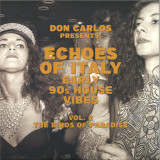
Volume 1 of this expertly curated project of 90s Italian House - put together by Don Carlos.
If Paradise was half as nice… by Fabio De Luca.
Googling “paradise house”, the first results to pop up are an endless list of European b&b’s with whitewashed lime façades, all of them promising “…an unmatched travel experience a few steps from the sea”. Next, a little further down, are the institutional websites of a few select semi-luxury retirement homes (no photos shown, but lots of stock images of smiling nurses with reassuring looks). To find the “paradise house” we’re after, we have to scroll even further down. Much further down.
It feels like yesterday, and at the same time it seems like a million years ago. The Eighties had just ended, and it was still unclear what to expect from the Nineties. Mobile phones that were not the size of a briefcase and did not cost as much as a car? A frightening economic crisis? The guitar-rock revival?! Certainly, the best place to observe that moment of transition was the dancefloor. Truly epochal transformations were happening there. From America, within a short distance one from the other, two revolutionary new musical styles had arrived: the first one sounded a bit like an “on a budget” version of the best Seventies disco-music – Philly sound made with a set of piano-bar keyboards! – the other was even more sparse, futuristic and extraterrestrial. It was a music with a quite distinct “physical” component, which at the same time, to be fully grasped, seemed to call for the knotty theories of certain French post-modern philosophers: Gilles Deleuze, Félix Guattari, Paul Virilio... Both those genres – we would learn shortly after – were born in the black communities of Chicago and Detroit, although listening to those vinyl 12” (often wrapped in generic white covers, and with little indication in the label) you could not easily guess whether behind them there was a black boy from somewhere in the Usa, or a girl from Berlin, or a pale kid from a Cornish coastal town.
Quickly, similar sounds began to show up from all corners of Europe. A thousand variations of the same intuition: leaner, less lean, happier, slightly less intoxicated, more broken, slower, faster, much faster... Boom! From the dancefloors – the London ones at least, whose chronicles we eagerly read every month in the pages of The Face and i-D – came tales of a new generation of clubbers who had completely stopped “dressing up” to go dancing; of hot tempered hooligans bursting into tears and hugging everyone under the strobe lights as the notes of Strings of Life rose up through the fumes of dry ice (certain “smiling” pills were also involved, sure). At this point, however, we must move on to Switzerland.
In Switzerland, in the quiet and diligent town of Lugano, between the 1980s and 1990s there was a club called “Morandi”. Its hot night was on Wednesdays, when the audience also came from Milan, Como, Varese and Zurich. Legend goes that, one night, none less than Prince and Sheila E were spotted hiding among the sofas, on a day-off of the Italian dates of the Nude Tour… The Wednesday resident and superstar was an Italian dj with an exotic name: Don Carlos. The soundtrack he devised was a mixture of Chicago, Detroit, the most progressive R&B and certain forgotten classics of old disco music: practically, what the Paradise Garage in New York might have sounded like had it not closed in 1987. In between, Don Carlos also managed to squeeze in some tracks he had worked on in his studio on Lago Maggiore. One in particular: a track that was rather slow compared to the BPM in fashion at the time, but which was a perfect bridge between house and R&B. The title was Alone: Don Carlos would explain years later that it had to be intended both in the English meaning of “by itself” and like the Italian word meaning “halo”. That wasn’t the only double entendre about the song, anyway. Its own very deep nature was, indeed, double. On the one hand, Alone was built around an angelic keyboard pattern and a romantic piano riff that took you straight to heaven; on the other, it showcased enough electronic squelches (plus a sax part that sounded like it had been dissolved by acid rain) to pigeonhole the tune into the “junk modernity” section, aka the hallmark of all the most innovative sounds of the time: music that sounded like it was hand-crafted from the scraps of glittering overground pop.
No one knows who was the first to call it “paradise house”, nor when it happened. Alternative definitions on the same topic one happened to hear included “ambient house”, “dream house”, “Mediterranean progressive”… but of course none were as good (and alluring) as “paradise house”. What is certain is that such inclination for sounds that were in equal measure angelic and neurotic, romantic and unaffective, quickly became the trademark of the second generation of Italian house. Music that seemed shyly equidistant from all the rhythmic and electronic revolutions that had happened up to that moment (“Music perfectly adept at going nowhere slowly” as noted by English journalist Craig McLean in a legendary field report for Blah Blah Blah magazine). Music that to a inattentive ear might have sounded as anonymous as a snapshot of a random group of passers-by at 10AM in the centre of any major city, but perfectly described the (slow) awakening in the real world after the universal love binge of the so-called Second Summer of Love.
For a brief but unforgettable season, in Italy “paradise house” was the official soundtrack of interminable weekends spent inside the car, darting from one club to another, cutting the peninsula from North to centre, from East to West coast in pursuit of the latest after-hours disco, trading kilometres per hour with beats per minute: practically, a new New Year’s Eve every Friday and Saturday night. This too was no small transformation, as well as a shock for an adult Italy that was encountering for the first time – thanks to its sons and daughters – the wild side of industrial modernity. The clubbers of the so-called “fuoriorario” scene were the balls gone mad in the pinball machine most feared by newspapers, magazines and TV pundits. What they did each and every weekend, apart from going crazy to the sound of the current white labels, was linking distant geographical points and non-places (thank you Marc Augé!) – old dance halls, farmhouses and business centres – transformed for one night into house music heaven. As Marco D’Eramo wrote in his 1995 essay on Chicago, Il maiale e il grattacielo: “Four-wheeled capitalism distorts our age-old image of the city, it allows the suburbs to be connected to each other, whereas before they were connected only by the centre (…) It makes possible a metropolitan area without a metropolis, without a city centre, without downtown. The periphery is no longer a periphery of any centre, but is self-centred”.
“Paradise house” perfectly understood all of this and turned it into a sort of cyber-blues that didn’t even need words, and unexpectedly brought back a drop of melancholic (post?)-humanity within a world that by then – as we would wholly realise in the decades to come – was fully inhuman and heartless. A world where we were all alone, and surrounded by a sinister yellowish halo, like a neon at the end of its life cycle. But, for one night at least, happy.
Bestelle jetzt und wir bestellen den Artikel für dich beim Lieferanten.

"This is the time that we, who have benefitted from the Last Poets shouldbe able to say, 'it's the Last Poets. It's them we should be honouring, because we did not honour them for so many years_"
KRS One wasn't just addressing the hip hop fraternity when he uttered
those words by way of introducing the video for Invocation - a poem
written thirty years ago, around the time of the Last Poets' last significant comeback. He was speaking to everyone who's been affected by the word, sound and power issuing from the most revolutionary poetry ever witnessed, and that the Last Poets had introduced to the world outside of Harlem at the dawn of the seventies.
In 2018 the two remaining Last Poets, Abiodun Oyewole and Umar Bin
Hassan, embarked on another memorable return with an album -
Understand What Black Is - that earned favourable comparison with theirseminal works of the past, whilst showcasing their undimmed passion andlyrical brilliance in an entirely new setting - that of reggae music. Trackslike Rain Of Terror ("America is a terrorist") and How Many Bullets demonstrated that they'd lost none of their fire or anger, and their essential raison d'etre remained the same.
"The Last Poets' mission was to pull the people out of the rubble o f their lives," wrote their biographer Kim Green. "They knew, deep down that poetry could save the people - that if black people could see and hear themselves and their struggles through the spoken word, they would be moved to change."
Several years later and the follow-up is now with us. The project started when Tony Allen, the Nigerian master drummer whose unique polyrhythms had driven much of Fela Kuti's best work, dropped by Prince Fatty's Brighton studio and laid down a selection of drum patterns to die for. That was back in 2019, but then the pandemic struck. Once it had passed, the label booked a studio in Brooklyn, where the two Poets voiced four tracks apiece and breathed fresh energy, fire and outrage into some of the most enduring landmarks of their career. Abiodun, who was one of the original Last Poets who'd gathered in East Harlem's Mount Morris Park to celebrate Malcolm X's birthday in May 1968, chose four poems that first appeared on the group's 1970 debut album, called simply The Last Poets. He'd written When The Revolution Comes aged twenty, whilst living in Jamaica, Queens. "We were getting ready for a revolution," he told Green. "There wasn't any question about whether there was going to be one or not. The truth was many of us still saw ourselves as "niggers" and slaves. This was a mindset that had to change if there was ever to be Black Power." He and writer Amiri Baraka were deep in conversation one day when Baraka became distracted by a pretty girl walking by. "You're a gash man," Abiodun told him. The poem inspired by that incident, Gash Man, is revisited on the new album, and exposes the heartless nature of sexual acts shorn of intimacy or affection. "Instead of the vagina being the entrance to heaven," he says, "it too often becomes a gash, an injury, a wound_" Two Little Boys meanwhile, was inspired after seeing two young boys aged around 11 or 12 "stuffing chicken and cornbread down their tasteless mouths, trying to revive shrinking lungs and a wasted mind." They'd walked into Sylvia's soul food restaurant in Harlem, ordered big meals, then bolted them down and run out the door. No one chased after them, knowing that they probably hadn't eaten in days. Fifty years later and children are still going hungry in major cities across America and elsewhere. Abiodun's poem hasn't lost any relevance at all, and neither has New York, New York, The Big Apple. "Although this was written in 1968, New York hasn't changed a bit," he admits, except "today, people just mistake her sickness for fashion." Umar is originally from Akron, Ohio, but had arrived in Harlem in early 1969 after seeing Abiodun and the other Last Poets at a Black Arts Festival in Cleveland. That's where he first witnessed what Amiri Baraka once called "the rhythmic animation of word, poem, image as word- music" - a creative force that redefined the concept of performance poetry and stripped it bare until it became a howl of rage, hurt and anger, saved from destruction by mockery and love for humanity. When Umar's father, who was a musician, was jailed for armed robbery he took to the streets from an early age where he shined shoes and raised whatever money he could to help feed his eight brothers and sisters. By the time he saw the Last Poets he'd joined the Black United Front and was ready to join the struggle. Once in Harlem, Abiodun asked him what he'd learnt in the few weeks since he'd got there. "Niggers are scared of revolution," Umar replied. "Write it down" urged Abiodun. That poem still gives off searing heat more than fifty years later. In Umar's own words, "it became a prayer, a call to arms, a spiritual pond to bathe and cleanse in because niggers are not just vile and disgusting and shiftless. Niggers are human beings lost in someone else's system of values and morals." And there you have it. It's not just race or religion that hold us back, but an economic system that keeps millions in poverty and living in fear - a system born from political choice and that's now become so entrenched, so bloated on its own success that it's put mankind in mortal danger. It was many black people's acceptance of the status quo that inspired Just Because, which like Niggers Are Scared Of Revolution, was included on that seminal first album. Along with their revolutionary rhetoric, it was the Last Poets' use of the "n word" that proved so shocking, but it would be wrong to suggest that they reclaimed it, since it never belonged to black people in the first place. There's never any hiding place when it comes to the Last Poets. They use words like weapons, and that force all who listen to decide who they are and where they stand. Umar's two remaining tracks find him revisiting poems first unleashed on the Poets' second album This Is Madness! Abiodun had left for North Carolina by then where he became more deeply enmeshed in revolutionary activities and spent almost four years in jail for armed robbery after attempting to seize funds related to the Klu Klux Klan. Meanwhile, the 21 year old Umar was squatting in Brooklyn and had developed close ties with the Dar-ul Islam Movement. A longing for purity and time-honoured spiritual values underpins Related to What, whilst This Is Madness is a call for freedom "by any means necessary," and that paints a feverish landscape peopled by prominent black leaders but that quickly descends into chaos. "All my dreams have been turned into psychedelic nightmares," he wails, over a groove now powered by Tony Allen's ferocious drumming. Those sessions lasted just two days, and we can only imagine the atmosphere in that room as the hip hop godfathers exchanged the conga drums of Harlem for the explosive sounds of authentic Afrobeat. Once they'd finished, the recordings and momentum returned to Prince Fatty's studio, since relocated from Brighton to SE London. This was stage three of the project, and who better to fill out the rhythm tracks than two key musicians from Seun Anikulapo Kuti's band Egypt 80? Enter guitarist Akinola Adio Oyebola and bassist Kunle Justice, who upon hearing Allen's trademark grooves exclaimed, "oh, the Father_ we are home!" Such joy and enthusiasm resulted in the perfect fusion of Nigerian Afrobeat and revolutionary poetry, but the vision for the album wasn't yet complete. He wanted to create a new kind of soundscape - one that reunited the Poets with the progressive jazz movement they'd once shared with musicians like Sun Ra and Pharoah Sanders. It was at that point they recruited exciting jazz talents based in the UK like Joe Armon Jones from Mercury Prize winners Ezra Collective, also widely acclaimed producer/remixer and keyboard player Kaidi Tatham, who's been likened to Herbie Hancock, and British jazz legend Courtney Pine, whose genius on the saxophone and influence on the UK's now vibrant jazz scene is beyond question. The instrumental tracks on Africanism are in many ways as revelatory and exciting as the Last Poets' own. It's important to remember that the kaleidoscope of styles and influences we're presented with here aren't the result of sampling but were played "live" by musicians responding to sounds made by other musicians. That's where the magic comes from, aided by Prince Fatty's peerless mixing which allows us to hear everything with such clarity. Music fans today have grown accustomed to listening to all kinds of different genres. Their tastes have never been so broad or all- encompassing, and so the music on this new Last Poets' album is as groundbreaking as their lyrics, and perfectly suited to the era that we're now living in. John Masouri
erscheint voraussichtlich am 06.12.2024

Indignation Meeting are punky rail fans from Leeds. 15-year-old Peter is the driver - he's the drummer and lead singer, writes most of the songs, and also plays bass and trumpet on the album. The rest of the crew is his dad Michael on guitar, Hugo on bass, and with Keith, Heather and Sally often along for the ride when they play out. Here at DGHQ we loved listening to their self-released debut album Trouble In The Shed so much we eventually released it on vinyl for the first time. They now have a second album! Vocalist/drummer Peter very kindly talks us through the (train) tracks_ * "The Trainspotting Song" - Now, as a train geek, I go out filming trains an awful lot, and one thing you can't help noticing whilst out in the wilds of Staffordshire or the moors of Lancashire are a whole load of unnecessary 'Private Land' signs. This song is my response_ * "The Talyllyn Railway" - The history of the Talyllyn Railway is a fascinating one that I've long since wanted to explore, due to its unique nature as the first railway to ever be taken over by volunteers. This is the result! * "The Middleton Railway" - As a volunteer at the Middleton Railway, I had felt that a song needed to be written for quite a while. However, our guitarist Michael, ended up beating me to it! * "A Model World" - It was late one night, and I was lying on my sofa, trying my hardest to gain an ounce of enjoyment from 'Hornby; A Model World.' It was proving quite hard, due to the alarming lack of substance in the programme, so instead I decided that its name was rather good, and could be the basis of a song explaining my 'model world.' And, well, here it is! * "The Fifth Black Five" - This song is dedicated to the railway preservationists of old, who spent countless hours in cold, damp, dreary sidings, all to make sure us future generations would be able to enjoy the smell of a steam train. Thanks guys! * "Case Study" - This song is a commentary on the sensationalisation of disasters, when there's a massive tragedy and people at home just sit in their comfy sofas, watching the news and drinking tea. We know what's going on, but we can just choose to turn off the TV and forget it ever happened and continue with our lives. It also relates to the dehumanisation of those disasters you experience in school, where you have to write essays on someone who's just become homeless. It seems quite heartless sometimes_ * "Loco Motives" - This song is a fictional story of a man's personal struggle with a railway company, and the drastic measures he took to fix them_ * "That Would Never Suit His Grace" - With model railways, you always seem to get a few people who can never be satisfied with a layout or a model - no matter how hard someone's tried, there's always something to improve on, and they're never nice about it either. This song is a reality check for them_ * "Small Black Shunter" - This is our second homage to Zounds - Electrification would never be truly complete without its B-side. And this B-side is the story of a little loco who wanted to see the world. * "Rhydyronen" - Slowly but surely, we're going to pick off all of the stations on the Talyllyn Railway. Starting where Abergynolwyn left off, this is the story of our second favourite station on the TR. * "Typically English Day" - This is an homage to Mark Astronaut, a true punk genius who was gone before his time. Although there were many songs we could've picked to cover, it only seemed right to punk up one of his most popular tracks, and one of the main ones that got me into the Astronauts in the first place - Typically English Day, a heart-wrenching tale of an elderly couple trapped in the middle of a nuclear war, following their last moments before their inevitable demise. * "Just For The Record" - There is too much misinformation in the media these days, and one case I found particularly egregious was the gross misrepresentation of the strikers, who aren't so evil as the media want you to believe_
erscheint voraussichtlich am 15.11.2024

Seth Troxler’s Slacker 85 imprint prepares to expand its repertoire of ne’er do wells and inspired outsiders, with two new singles shining a flashlight on talent at the characteristically esoteric producers on the fringes of Troxler’s always increasing circles.
American-Ecuadorian sound engineer and musician Andre Salmon has already left his fingerprints on underground dance music’s global scene, developing the current iteration of Inner City with Kevin Saunderson, as well as collaborating with house icons Paul Johnson and K’Alexi Shelby. Having already made a fixture of his supremely effective ‘Heartless’ mashup of Saint Etienne’s classic ‘Only Love Can Break Your Heart’, Slacker now welcomes Salmon to the family to exercise his studio technique and ‘sacred resonance’ deepness. The result is ‘La Mano de Dios’, a voluminous dance on the edge of house and techno, as smooth and impressive as the jets descending above the Terrace at DC10.
From Detroit to the East Coast, TB-203 delivers a contrasting energy on ‘Movin’. A fresh alias of NYC DJ, producer & label owner Tommy Bones, this bubbling, raw acid workout finds fresh heat at the intersection of jackin’ hip house and latin freestyle, driven by loose and lively vocals from DannyP. Underscoring Slacker 85’s commitment to party over posture, ‘Movin’ has been tried and tested to deliver on its old-school promise.
Bestelle jetzt und wir bestellen den Artikel für dich beim Lieferanten.

UNSURPASSED SPACIOUSNESS, IMAGING, AND TRANSPARENCY: MASTERED FROM THE ORIGINAL TAPES, MUSIC EMERGES WITH NEW DETAILS AND TONES
1/2" / 30 IPS analogue master - Plangent Processed - to DXD to analogue console to lathe
Love Over Gold is all about contrast, tension, and crafty composition. Dire Straits' fourth album finds the band continuing to evolve by welcoming increasingly bold arrangements and exploring moody variations. Parts edgy and sharp, and part seductive and relaxed, the five lengthy songs on Love Over Gold sprawl out like a long, winding road cutting through a pastoral landscape. The addition of a new rhythm guitarist, Hal Lindes, encourages deeper atmospheric interplay while the presence of engineer Neil Dorfsman – his first appearance in what would be a long string of collaborations with Mark Knopfler – ensures stunning sonic properties that now come to life like never before.
Mastered from the original master tapes and pressed at RTI, Mobile Fidelity's 180g 45RPM 2LP version of Love Over Gold teems with superb balances, front-to-back soundstages, and crystalline purity. The dead-quiet surfaces and extra-wide grooves bring forward previously obscured details, extra information, and mastering-studio-quality transients. The distinctive textures of a host of instruments – marimbas, acoustic and electric guitars, vibes, synthesizers – further enhance the ambitiousness of the 1982 album.
On this audiophile pressing, everything Knopfler does seemingly turn to gold. Gearheads will hear the unique characteristics afforded by his use of a Mesa Boogie Mark II guitar amplifier (soon again employed on Brothers in Arms) and carefully chosen selection of Schecter Stratocasters, 1937 National steel guitar, and Ovation six- and twelve-string models. Reference-level separation and lifelike imaging place Knopfler and company in your room, while tube-like warmth, spaciousness, and airiness causes the music to breathe anew. This LP will be in your rotation for months.
It doesn't take long to realize Love Over Gold is like no other Dire Straits album – and a staunch proclamation of independence from a band that continued to take longer creative strides with each successive project. Fearlessly extending over metaphoric hills, valleys, and plains for nearly 14-and-a-half minutes, the opening "Telegraph Road" is a guitar hero's dream and exhilarating showcase for Lindes' give-and-take capabilities. In tandem with keyboardist Alan Clark, Lindes provides the ideal foil for not only Knopfler but the long-time rhythm section of bassist John Illsley and drummer Pick Withers.
Taking its time to arrive at destinations, the quintet paints evocative musical and lyrical portraits steeped in patience, drama, and, often times, sadness. Desolate emotions colour the sweeping "Telegraph Road" and barren "Private Investigations," which finds Knopfler in the role of a tired private eye contemplating the emptiness and scars of his profession. Vocally, the Dire Straits leader remains in top form throughout, his whiskey-coated rasp conveying romantic ache, ongoing frustration, and what Rolling Stone beautifully deemed "wracking schizophrenia between the heart and the heartless, the loving and the pain."
Called Dire Straits' prog-rock statement, Love Over Gold is a classic that defies labelling and avoids ageing.
erscheint voraussichtlich am 31.08.2024

Ursprünglich 1998 nur auf CD und Kassette herausgegeben, beinhaltet diese klassische HEART-Compilation die legendären Hits der wegweisenden Rockband und Mitglieder der Rock and Roll Hall of Fame aus den Jahren 1975 bis 1983. Zu den Highlights gehören Songs wie "Barracuda", "Crazy On You" und "Magic Man", sowie die exklusive Aufnahme "Strong, Strong Wind", geschrieben von Diane Warren, speziell für diese Kollektion. Erstmals erhältlich als Doppel-Vinyl und neu gemastert von hochauflösenden Originalquellen.
erscheint voraussichtlich am 19.07.2024

Multitudes" ist das Debütalbum der Singer/Songwriterin Alisa Amador aus Cambridge, MA. Die Songs von "Multitudes" sind eine Synthese aus den
vielen Stilen, die Alisa unersättlich aufgesogen hat: Rock, Jazz, Funk und alternativer Folk, alles verpackt in den Geist der lateinamerikanischen Musik,
mit der sie aufgewachsen ist. Alisa hat live bereits für Künstler wie Hozier, Lake Street Dive, Madison Cunningham, Watchhouse, Hiss Golden
Messenger und viele andere eröffnet.
Das Album ist ein kühnes, fesselndes Selbstporträt, das nicht nur zeigt, wie weit Amador gekommen ist, sondern auch ihre Herkunft feiert (ihre
Wurzeln liegen in Puerto Rico, New Mexico, Argentinien und New England). Die Sammlung, die mühelos zwischen Spanisch und Englisch wechselt und
auf der auch Gaby Moreno, Madison Cunningham und Quinn Christopherson zu hören sind, ist ein wunderschönes Album - die Art und Weise, wie
Amadors kristalline Stimme die üppigen Synthesizer, verträumten Gitarren und filmischen Streicherarrangements des Albums durchbricht, ist
schlichtweg bezaubernd - aber mehr noch, es ist ein intensives Werk, eine tiefgründige, aufschlussreiche Meditation über Triumph und Verlust, Ende
und Anfang, Identität und Zugehörigkeit.
erscheint voraussichtlich am 07.06.2024

Multi-platinum country artist Sara Evans known for chart-topping hits like "Sud in the Bucket " and "A Little Bit Stronger," is poised for a new chapter. This March marked her debut on Melody Place Records with the release of the single "Pride" and her long awaited album, Unbroke. Simultaneously, she's preparing to unveil an updated version of her memoir, "Born To Fly," through Howard Books, a Simon & Schuster imprint. Expect this insightful memoir to hit shelves this Summer, offering readers a deeper understanding of Sara Evans beyond her musical achievements. Add in the recent launch of her lifestyle podcast and "Diving in Deep" and a plethora of TV appearances expect to see (and hear) Sara Evans everywhere.
erscheint voraussichtlich am 07.06.2024

Seit mehr als drei Jahrzehnten kreieren EVERGREY Songs, die mit einer Symbiose aus Härte und Melancholie direkt ins Herz gehen und ziehen damit Fans weltweit in ihren Bann. Mit ihrem 14. Album Theories Of Emptiness schreiben die Poeten aus Schweden um Bandgründer, Sänger und Gitarrist Tom S. Englund ihre Erfolgsgeschichte weiter und beweisen, warum sie zu Recht unangefochten an der Spitze des Genres stehen.
Das Album Theories Of Emptiness wurde von Tom S. Englund und Jonas Ekdahl produziert und von Adam „Nolly“ Getgood (Ex-Periphery) gemischt, mit dem EVERGREY während des gesamten Entstehungsprozesses eng zusammengearbeitet haben, um das klangliche Profil bestmöglich zu entfalten.
Gemastert wurde Theories Of Emptiness von Thomas „Plec” Johansson, der durch seine Arbeit mit Soilwork, The Night Flight Orchestra, Onslaught, The Gems, Eleine und vielen weiteren Bands bekannt ist.
Seit ihrem Debüt The Dark Discover (1998) haben EVERGREY 13 Alben veröffentlicht und bewegen sich in einem Spektrum zwischen hartem Progressive und düsterem Melodic Metal. Theories Of Emptiness ist der Nachfolger des 2022 erschienenen A Heartless Portrait (The Orphean Testament), mit dem EVERGREY weltweit Charterfolge verbuchen konnten (#3 in Schweden Metal, #5 der Top New Artist Albums USA, #7 in Finnland und #12 in Deutschland).
erscheint voraussichtlich am 07.06.2024

New Heaven, INTER ARMA’s latest album, is a compelling testament to perseverance, top to bottom. Its thicket of ever-dense layers of doom, death, and black metal occasionally let bits of light slip in, fleeting reminders to keep going amid the tumult. New Heaven marks a sharp turn for the band, showcasing some of the most extreme and angular songwriting INTER ARMA has ever laid bare. Known for their cinematic take on sludgy, extremely cavernous, and borderline psychedelic Metal, the Richmond band broadens their dynamics by seesawing between piledriving momentum and swirling oblivion. New Heaven crushers and conquers, and illustrates what INTER ARMA can truly be. Take the title track, with its hair-raising lead riff stemming from drummer/songwriter TJ Childers’ challenge to himself to write a nonsensically dissonant part that he ended up loving. The song spirals upward into a punishing Death-Metal march, Meanwhile, vocalist Mike Paparo’s stentorian bellows the bludgeon, above an impossibly complicated web of riffs and rhythms. From the get go, New Heaven and the opening title track eschews any restraint - INTER ARMA is completely unchained. Paparo’s keen and empathetic lyrics about innocent victims of war, addiction, and social apathy affirm that feeling, as a survivor grimaces at the carnage behind him and presses ahead best he can. “You stared into the brutish jaws of strife’s heartless device,” he growls into a chthonic blitz during “The Children the Bombs Overlooked,” a late-album powerhouse. “And you turned your back to hell.” That forward march out of madness is New Heaven in an armor-plated nutshell. Though this is indeed another INTER ARMA triumph, it is not a triumphant album, meant to offer some glib or naïve assurance that everything will be fine. What evidence is there for that, really, either on a record where friends are forced into submission, addiction, suicide, or retreat to a world where suffering remains the lingua franca? No, INTER ARMA and New Heaven are too realistic and experienced for that. This is, instead, a record about enduring brambles and curses and lasting long enough to make something profound, honest, and even affirming about it all every now and again—exactly as INTER ARMA has on New Heaven. FFO: Amenra, Neurosis, Full of Hell, Cult of Luna, Yob, Primitive Man, Thou, Ulcerate, Mastodon, The Body, Panopticon
erscheint voraussichtlich am 26.04.2024

Re-issue des 2. Saffire Albums als Digipak & Ltd. Transparent Curacao LP. Die schwedischen Hard Rocker Saffire haben einen Remix des 2015 auf AOR Heaven erschienenden Albums gemacht. Nicht, dass der ursprüngliche Mix schlecht gewesen wäre, sondern eher aufgrund der Tatsache, dass sich die ursprüngliche Veröffentlichung klanglich anders anfühlte als gewünscht. Mit diesem Remix konnte die Band neue Produktionszutaten hinzuzufügen, von denen sie glauben, dass sie von Anfang an auf dem Album hätten enthalten sein sollen. Melodischer "old-school" Hard Rock & Metal, mit heutigem Sound. Sie klingen ein wenig nach 70er, nach Uriah Heep, Deep Purple etc., was vor allem die Keyboard/Orgel-Klänge und Einsätze betrifft. Die Riffs und Lead-Gitarren-Parts hingegen sind offensiv und knackig, und Sänger Tobias Jansson hat seinen eigenen Stil und Tonlage. Frischer Hard Rock mit Retro Anteilen, ein weiterer "Made In Sweden" Qualitätstitel.
erscheint voraussichtlich am 22.02.2024

Bestelle jetzt und wir bestellen den Artikel für dich beim Lieferanten.