Das vierzehnte Studioalbum der Alternative Country/Southern Rock Band aus Athens, GA zollt jener gleichnamigen Honky-Tonk Bar in Muscle Shoals, AL Tribut, in der Gründungsmitglieder Patterson Hood und Mike Cooley ihre Anfänge hatten und markiert eine deutliche Abkehr von den pointierten Kommentaren von The Unraveling und The New OK (beide 2020 veröffentlicht). Produziert von Langzeit-Kollaborateur David Barbe und live aufgenommen im Sommer 2021 in seinem Studio in Athens, GA, war Welcome 2 Club XIII nach nur drei Tagen auch schon eingespielt. Umso bemerkenswerter, hatte die Band doch eigentlich gar nicht die Absicht, ein neues Album zu machen. Gäste wie Margo Price, Mike Mills von R.E.M. und die in Mississippi aufgewachsene Singer/Songwriterin Schaefer Llana steuerten Background Vocals bei.
Buscar:heaven sent
RIYL: David Byrne, Guy Clark, Bob Dylan, The Flatlanders, Randy Newman, John Prine, Lucinda Williams, Townes Van Zandt. The first-ever vinyl reissue of Allen’s manifold, moving fourth album, remastered from the original analog tapes. Deluxe LP edition features 140g virgin vinyl; a gatefold jacket, inner sleeve with restored, new, and alternate art and photos by Terry and Jo Harvey Allen and friends, insert with lyrics and original notes & DL. Deluxe CD edition features a trifold jacket & inner sleeve. On his manifold fourth album, acclaimed songwriter and visual artist Terry Allen contemplates kinship the ways sex and violence stitch and sever the ties of family, faith, and society with skewering satire and affection alike. Bloodlines compiles thematically related but disparate recordings from miscellaneous sources both theatrical and historical: two songs written for plays; two full-band reprises of selections from Juarez; the irreverent hellfire-hitchhiker-on-highway ballad “Gimme a Ride to Heaven Boy” (featuring Joe Ely); and the poignant eponymous ode to the arteries of ancestry and landscape (the debut recording of eight year-old Natalie Maines, later covered by Lucinda Williams). Since 1970, when they met in Allen’s studio in his hometown of Lubbock, Texas, one of songwriter and visual artist Terry Allen’s great foils and friends was the sometimes cantankerous but always brilliant art critic and writer Dave Hickey, with whom he sparred on topics musical, visual, and beyond (and to whom this reissue is dedicated in memoriam, in the wake of his passing in 2021.) Hickey, a fellow Texan paddling against the currents of the hermetic New York centric art world, was an accomplished songwriter in his own right, and he and Terry pushed each other to refine their respective practices. In 1983, the two were thick as thieves brothers in blood and Hickey’s wry but big-hearted presence haunts the history and periphery of Bloodlines, the album Terry released in June of that year. Hickey’s commercial doubts notwithstanding, critical recognition was not in short demand. In a 1984 review of Bloodlines, the L.A. Herald Examiner called Allen “one of the most compelling American songwriters working today … making the most unique art-pop of our time,” elsewhere comparing him not only to Moon Mullican and Jerry Lee Lewis, but also to the Velvet Underground and Philip Glass (probably the first time that unlikely quartet ever appeared together in one sentence). In 1983, against all odds, such sentiments were growing in underground prominence, as Allen’s records gained a fanatical word-of-mouth following they weren’t easy to find in those days. Recorded piecemeal at Caldwell Studios in Lubbock, in sessions spanning August 1982 through January 1983, Terry self-released it, like all his previous records, on his own Fate Records imprint. Despite his frustration with the protracted timeline and some anxiety about the correspondingly higher budget, the production on Bloodlines courtesy, once again, of master guitarist Lloyd Maines is slicker, cleaner, and more dynamic than prior efforts, and it reached a broader audience than ever before. UK label Making Waves reissued it in 1985, facilitating semi-reliable European distribution for the first time as well as a 1986 UK tour, on which the great BJ Cole filled in for Lloyd on pedal steel. No veteran country songwriter sounds more attuned to the national mood. His songs still feel like little guidebooks for staring down a harsh universe. – The Washington Post // It has always been a fool’s errand to frame Allen in terms of other artists there was nobody like him before he showed up, and the subsequent 40 years have been equally light on plausible peers. Uncut
What It Means To Fall Apart sees Mayday Parade wading in a wide range of complex emotions. The band shared the first taste of the album with the anthemic single “Kids of Summer,” which infuses nostalgic memories of their care-free formative summers at Warped Tour into song, followed by the self-confrontational and vulnerable “Bad At Love.” On the newest single “One For The Rocks And One For The Scary,” the band sings about making the most of the time we have with the people we love.
Their seventh studio album together, What It Means To Fall Apart was created with longtime collaborators Zack Odom and Kenneth Mount, and saw the band diverge from their typical path in the studio. With no final destination in mind and setting their sights on just writing the best songs they could, they started chipping away at something, letting go of any attachment to whether they left the studio with a single, an EP, or a full record. They arrived at a fully realized album, 12 contemplative tracks written through the eyes of a band moving forward with the knowledge they could only gain from looking back. Full track listing can be found below.
The band is looking forward to sharing these songs in venues around the world, noting that it’s not just about creating music for them, but how that music connects them with their fans and each other. “We all live in different states and have separate lives with different things going on,” bassist Jeremy Lenzo shares, “But just being able to get back together and play music is always a highlight.” Lead singer Derek Sanders mirrors that sentiment as well, sharing that the spark that started Mayday Parade still shines bright, “Even after all this time and plenty of other ways it could have gone or plenty of other things that we could be doing with our lives, we're lucky to be able to do this.”
- A1: Hurry, It’s Lovely Up Here
- A2: Daydream
- A3: The Way I Dreamed It
- A4: Heaven Tonight
- A5: My One & Only Love (Doris Day With Andre Previn)
- A6: My Heart
- A7: You Are So Beautiful
- B1: Life Is Just A Bowl Of Cherries
- B2: Disney Girls
- B3: Stewball
- B4: My Buddy (Doris Day With Paul Weston & His Orchestra)
- B5: Happy Endings (Terry Melcher With Introduction By Doris Day)
- B6: Ohi
By far the most unexpected hit record of 2011 was the 29th and final studio album from an 89 year-old Doris Day. My Heart hit the charts in the U.S. and went all the way up to #9 in the U.K., triumphantly capping a legendary singing and acting career. But this record and its chart success was, if you’ll excuse the pun, no mere sentimental journey. The heart of My Heart is a series of songs recorded by Doris in the mid-‘80s as background for scenes featuring her with various animals on the Doris Day’s Best Friends television show, many of
them written by her son, Terry Melcher, whose production credits, of course, include The Byrds and Beach Boys. Melcher also lends a bravura vocal turn to “Happy Endings” and is the subject of a heartfelt preamble by Doris on “My Buddy.” And without question Terry’s influence lay behind her superb, jaunty cover of the Lovin’ Spoonful’s “Daydream.” In short, My Heart was a touching, tuneful love letter from Doris to her deceased son; and now, in honor of her centennial, we’re bringing it to LP for the first time, remastered for vinyl by Mike
MIlchner at Sonic Vision, and pressed in green vinyl complete with an insert featuring liner notes. A beautiful record from a beautiful lady.
Repress in soon!!
Morning Trip & Yoga Records are proud to finally reveal one of the ultimate lost masterworks of new age music: Alice Damon’s Windsong. Gently propelled by Damon's haunting breath-of-life vocal winds reminiscent of Joan La Barbara underscored by field recordings and Damon's fretless bass sound calling to mind mid-70 Joni Mitchell, Windsong is traveling music, for the roads or for the skies. Instantly moving, it conjures vistas both romantically familiar and cosmically mysterious — waterfalls and wind, the voice of the earth, as heard through heavenly prisms.
Damon attended college in Massachusetts, where she formed and fronted the all-female garage band called The Moppets in the late 60s. The band began to garner national attention, but Damon moved instead to the wilds of northern Vermont to homestead and raise a family. In 1981 or thereabouts she was able to gain use of an early Sony digital home recorder, and created her masterwork, Windsong.
But Damon waited until 1990 to release a packaged version of this album, now titled "Windsong II", and sent samples to regional distributors like Vermont’s fabled Silo-Alcazar, where a copy of the album was first discovered, but little evidence exists of a proper commercial release. Alice Damon passed on in 2011 and remained essentially unknown until the landmark I Am The Center: Private Issue New Age In America 1950-1990 first revealed her genius to a wider audience two years later. Now, just in time for the recording's 40th anniversary, Alice Damon's Windsong may at last be heard as one of the most singular, moving and profound examples of new age music's psychedelic essence. Morning Trip & Yoga
Records proudly present Windsong.
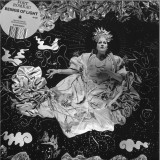
- Followup to 2015's Insides. - RIYL: Jacques Greene, Leon Vynehall, DJ Seinfeld, Project Pablo - Features cover art by Salvador Dalí protégé Steven Arnold. - Silver halide (gray + black marble) vinyl limited to 1,500 copies worldwide - Vinyl is housed in a black dust sleeve inserted in to a matte varnish jacket with metallic silver spot color // After a run of critically-acclaimed singles and EPs, British producer Michael Greene, aka Fort Romeau, returns to the full-length format with Beings of Light, the long-awaited follow-up to 2015's Insides and his second LP on Ghostly International. While a prolific DJ who orients many of his productions for the dancefloor, Greene still sees the album as the ultimate statement of intent, "a space to stretch out, to speak in full paragraphs rather than stunted sentences." He has explored several stylistic fragments in recent years (including the summer 2018 anthem "Pablo," hailed a Best New Track by Pitchfork), but when faced with the extended pause to the dance community in 2020, Greene felt compelled to focus on a larger body of work. Embracing a back-to-basics mentality, he amassed over a dozen hours of sounds, asking himself throughout the sessions: "Does the music move you? Is it honest?" He came out the other end with Beings of Light, an expressive collection traversing rainy day ambient, moonlit disco, and dream-like techno in pursuit of the power found within our subconscious. Album opener "Untitled IV" ushers in a sprinting tempo in its exploration of the human voice, a recurring device in the Fort Romeau project. Greene uses it as a compositional layer, disembodied with its context often opaque or reduced to a single phrase. Here the voice is scattered in percussive twitches, colliding with a kick drum to induce a near state of hypnosis as horns sound off in the distance. Propulsive standout "Spotlights'' is Greene's ode to the romanticised New York City that lives in our hearts, nocturnal and carefree. A vocal snippet repeats the title with a breezy poise, reminiscent of classic house cuts. "Ramona'' honors the beloved Robert Johnson club in Offenbach, Germany. Hazy, spacious, and sustained, Greene designed the beat with their system in mind, "also with a strong nod to the more modern lineage of exceptional minimal house music from Frankfurt," he says. Two ambient pieces surround the track, "(In The) Rain" sets the scene and "Porta Coeli" (a Latin phrase which loosely translates to "heaven's gate") soundtracks the comedown. The album's closer, the title track, is an arc constructed with atmospheric textures, euphoric swings of percussion, and a well-placed piano refrain, "Beings of Light" is adaptive; one could imagine it reverberating from a club, scoring the emotional apex of a film, or radiating through the realm of dreams.
- A1: Don't Leave Me This Way
- A2: La Dola Rosa
- A3: Disenchanted
- A4: Reprise
- B1: So Cold The Night
- B2: You Are My World
- B3: Lover Man
- B4: Don't Slip Away
- C1: Heavens Above
- C2: Forbidden Love
- C3: Breadline Britain
- C4: Sanctified
- D1: Never No More
- D2: Sentimental Journey
- D3: When The Walls Come Tumbling Down
- D4: Judgement Day
When he left Bronski Beat, , Jimmy Somerville formed Communards with Richard Coles (who formerly came play saxophone on Bronski Beat’ s classic track “It Ain’t Necessarily So”).
The Duet’s cult debut album from 1986 now is remastered for the very first time.
Double Vinyle edition : 2 x Black 140 G Vinyl. Gatefold Sleeve with spot matt & gloss UV. 2 x Printed inner sleeve. The album remastered from original tapes .
Vinyl package also features a selection of B - Sides from the 7” singles of 1985 & 1986 .
- One I
- Or Are You Just A Technician Ii
- Chant Iii
- Quatro Two Iv
- Requiem V/Stuki Vi
- Along Came Poppy Three Vii
- Brother Viii/Duet With Piano Ix
- Darkness Here Four X
- Catos Revisited Xi
- The Truth Xii
- How Unbelievable Five Xiii
- Bruce Xiv/Keir Xv
- Neil Six Xvi
- Mike Xvii
- Alan Xviii
- Anthony
A Paean to Wilson is still arguably Vini Reilly and the Durutti Column's most important and consistent piece of work since the demise of the original and seminal Factory Records in the early 1990's. On this release we have the ‘F4 Heaven Sent’ tracks released on vinyl for the first time. They first appeared in 2005 via Wilson's project F4, as being the fourth version of Factory Records. Originally it was download-only release, Heaven Sent (It Was Called Digital, It Was Heaven Sent). A six track CD of personal dedications by Vini ironically the last piece is titled Anthony. Originally this was commissioned for the MIF (Manchester International Festival) where it was premiered in July 2009. Vin had already composed pieces for Tony to listen to whilst he was ill in hospital and it was from here that the project developed. This release belatedly coincides with the new Paul Morley Biography ‘Manchester with Love: The Life and Opinions of Tony ...’Ever critical of Vini's voice, but ever a fierce champion of his talent, the late Tony Wilson would surely appreciate this instrumental tribute by The Durutti Column. ‘Near the beginning of the final night of the Durutti Column's 70-minute international festival tribute to Tony Wilson, A Paean to Wilson, guitarist Vini Reilly announced that he wouldn't be singing: "So you won't have to put up with my awful voice and schoolboy lyrics." If Wilson was with us, he would have chuckled. The Granada presenter-turned-Factory Records boss spent years urging his first signing to stop singing, and concentrate on the virtuosity that led Red Hot Chili Pepper John Frusciante to call Reilly "the greatest guitarist in the world". Two years after his death, Wilson got his way, one of many lovely touches in a very personal, emotional and often warmly funny musical tribute. Wilson signed Joy Division and Happy Mondays, yet never gave up on this cult band he adored, working with them even after his legendary label went bankrupt. A complex man, Wilson was an academic thinker who revelled in Steve Coogan's affectionate, Alan Partridge-style send-up of him. And this tribute was no different. At one point, Reilly known for melancholy launched into something resembling an Irish jig. "Tony loved to laugh," he explained. "He loved absurdities." After the humour came exquisitely mournful music. With Reilly and drummer Bruce Mitchell augmented by bass, keyboard, violin, electric piano, drum machine and trumpet, the band's beautiful pieces reflected Wilson's love of rock and classical. Reilly's plangent guitar work showed grief's emotional spectrum, from sadness to overdriven anger. As in life, Wilson had the last word, his recorded voice expounding thoughts on socialism with an eerie echo. Silence followed as Manchester pondered the loss of one of its truly larger-than-life characters. Then everybody cheered.' Dave Simpson The Guardian 20/7/09
Debut solo album by the Red River Dialect songwriter. Recorded at the Hotel2Tango, Montreal, by Howard Bilerman. Featuring Thor Harris (Swans, Thor & Friends, Shearwater) on drums and Thierry Amar (GYBE!, ASMZ) on bass, with guest appearances from Tom Relleen (RIP) (Tomaga, Melos Kalpa), Catrin Vincent (Another Sky) and Coral Rose (The Silver Field, Red River Dialect).
David has written five critically acclaimed collections of songs under the Red River Dialect name. The last two albums (released by Paradise of Bachelors) achieved a glowing Pitchfork review and a Folk Album of the Month award from the Guardian. Selected press below.
“Folk Album of the Month. Alert, anti-colonialist folk. Songwriter David Morris brings alternate seduction and disquiet on this worldly album steeped in the British landscape... a wide-eyed, curious creature, willingly alert to the world.” – 4/5 The Guardian
“Animated with a new intensity, the Cornwall band’s fifth album may be its most ingenious and immersive mix of folk and rock yet. It’s also Morris’ most compelling set of songs. He invests small sensations with outsize power, finding joy in sensory pleasures as well as in the mystical inquests that music allows. Even as the record is steeped in the long history of British folk music, that balance of the tactile and the spiritual anchors these songs in the present moment.” – Pitchfork
“The most underrated folk-rock band in Britain. The idea of them as a Cornish-born, Buddhist-inclined Waterboys is more potent than ever. Their fifth album of elementally-battered, rueful and rousing folk-rock ... is as stirringly anthemic as they've managed thus far.” – MOJO
“A beguilingly atmospheric record… imagine Steve Gunn transplanted to Kernow.” – Clash
“Gorgeous and moving, anchored by the heft of the physical but reaching for more. The epic spareness, the way it manages to be both still and an enveloping swirl, reminds me most of Talk Talk. There’s a prayerful intensity to the quiet bits, a listening, wondering awe, that makes the rock payoffs more powerful. The album works as a restless, searching, gorgeous whole. Morris and his band have never been better.” – Dusted
“It’s not often that a band comes along and over the course of nine songs both plays to the tradition and stands it on its ear. RRD has taken the challenge of playing with reckless abandon to heart, generating an album that stands on the shoulder of giants showing no fear.” Folk Radio
Monastic Love Songs continues the tradition that David has established over the course of five albums with Red River Dialect: using a song cycle to articulate a relationship with inner and outer landscapes, inspired by the Taoist approach of observing the movement of the heavens in order to understand the cosmos within, and vice versa. The joyful closing track Inner Smile was initially written as a poem of thanks to his Tai Chi teacher Hollis and takes its name from a Taoist practice.
The songs were written during the final weeks of a nine-month retreat at Gampo Abbey, a Buddhist monastery in Nova Scotia where David took ordination as Buddhist monk. The album title is sincere, with a little tongue-in-cheek. The songs mostly explore human relationships within the community, with outliers: Gone Beyond shimmers with cosmic devotion, in Rhododendron a reverie grows from the shadow of a flower. Steadfast concerns the love to be found beyond the urge to like and be liked, when you can’t avoid that difficult person. Leonard Cohen, on his six years living in a monastery:
“You know, there’s a Zen saying: ‘Like pebbles in a bag, the monks polish one another.’
David considers this album to be a follow up to 2015’s Tender Gold and Gentle Blue. The cover of that lp featured an image of him on top of Skellig Michael, in the years before the island was made famous as the home of the Jedi. He considers the visit to that abandoned Celtic monastic site to be one of the influences that stirred up his motivation. Skeleton Key speaks of what was given up to go, and what he was giving up to leave, referencing the Tibetan concept of the ‘bardo of becoming’.
The album came about through a series of fortunate encounters. David’s friend Tom Relleen visited him at the Abbey in May 2019, mentioning a postponed plan to visit the Hotel2Tango. A spark was sown: this studio had long figured in David’s imagination. Many of the releases on Constellation Records, which he had become a die-hard fan of in his teens, were recorded there. Tom contributed some Buchla synthesizer to the opener New Safe, which concerns healing in emptiness and light.
In May David was given permission by the senior monastics to acquire a guitar, which was swiftly baptised as “Malibu Barbie”. Having let the identity of being a songwriter loosen up, not playing an instrument in six months, he was unsure what would happen. In the single hour he was permitted to practice each day, songs began to cascade. The first, Purple Gold, concerns a reacquaintance with first love. David wrote to the Hotel2Tango asking if they had any days available in mid-July?
Engineer and studio co-owner Howard Bilerman replied that they did, and a date was set. Did Howard know any local drummers or bass players who might do a session? He did, too many to choose from, what kind of style? David decided to ask for his ideal: did Thierry from Godspeed ever do sessions? Howard sent him the demos. Thierry was up for it. On the day he went deep into the cover of traditional song Rosemary Lane, his double bass singing on this and on Circus Wagon.
David asked if there were any local drummers he would recommend? Thierry said “many, what style?” David tried his luck again, “two of my favourite drummers are Thor Harris and Jim White.” Thierry said let’s invite them. Thor, having met David a decade earlier, flew from Austin to Montreal for that July day in the studio. Nine months of watching thoughts come and go in meditation helped David recognise this as an opportunity to practice enjoying the day without expectations.
He is, however, grateful that this album came out the way it did, channelling some of what it was like to live those nine months in a monastery overlooking the Gulf of St Lawrence, frozen and flowing.
Mixed by Jimmy Robertson at SNAFU, London, mastered by DenisBlackham.
Cuernavaca / Stateville / Frankincense And Myrrh / Apsara / Ancestral / Spin / Zincali
Approaching his eighty-fifth birthday, sharp and lean, Phil Cohran lives a couple of blocks from the lake on the north side of Chicago. His modest apartment is filled with a palpable richness. His cornet and trumpets, zithers, French horn, harp and frankiphones (an electric kalimba of his own invention); his beloved telescope; African art; a mural of the Chinese monastery where Muslim monks bestowed on him the name Kelan ('holy scripture'); hand-printed posters from the culture wars of 1960s Chicago; all reflect a life dedicated not just to music, but also to science and astronomy, to history and activism. In its range of subject matter the track-list of Kelan Philip Cohran & The Hypnotic Brass Ensemble embodies this invigorating and all-embracing curiosity: a Mexican hill-town filled with perfume and flowers... an Illinois state prison where Cohran taught inmates in the 1960s... heavenly dancers in the temples of Cambodia... a tribute to a sixteenth-century Venetian musicologist. Welcome to the musical world of Kelan Philip Cohran.
Cohran was born in Mississippi and grew up in St Louis. In the immediate post-war years St Louis was a jazz heartland, home of stalwarts like Clark Terry and Oliver Nelson (both of whom he played with), not to mention a genius called Miles Davis. In 1950 Cohran moved to another heartland, Kansas City, where he played trumpet in one of the hardest swinging swing-groups, led by Jay McShann (who famously had given Charlie Parker his first job). With McShann he spent 'the best year of my life', touring as far as Mexico and playing proto-rock'n'roll in Texas with the likes of Big Mama Thornton on vocals. Back in St Louis Cohran led his own group, the Rajas Of Swing, whose show involved wearing red jackets, grey slacks, blue suede shoes and turbans.
Then in the mid-50s he moved to Chicago. He had a small group with a friend, the legendary tenor saxophonist John Gilmore, whose regular gig was to play at Sarah Vaughan's weekly 'birthday' parties, an excuse for the Sassy One to splash the cash and have some fun. ('What, Sarah Vaughan would sing with you and John Gilmore' 'No way, Sarah didn't sing, she was too busy partying.') And in 1959, through Gilmore, he was invited to join Sun Ra's Arkestra, at a crucial period in the evolution of that extraordinary group. Effortlessly wrapping traditions as divergent as boogie-woogie and electronica in an Afro-centric, intergalactic mythology of his own making, Sun Ra casts a huge shadow across conventional narratives of jazz history. 'With Sunny', Cohran simply says, 'I found my own voice'.
You can hear the emergence of this voice on the LP Angels And Demons At Play, recorded in 1960 - Sun Ra's masterpiece from the period. On the track Music From The World Tomorrow, against the urgent whipped and chopped percussion of the Arkestra, it is Cohran's zither, initially bowed and then plucked and strummed, which is the track's magic ingredient. More profoundly it was Sun Ra's example - his defiant self-confidence and sense of purpose - that set Cohran on his own (to quote another Ra composition) 'pathway to unknown worlds'. Indeed this spirit of self-belief led Cohran to turn down the invitation to accompany the Arkestra when Sun Ra moved east in 1961.
Staying in Chicago, Cohran founded the Affro-Arts Theater and performed with the Artistic Heritage Ensemble, recording the group for his own Zulu Records imprint. (Co-members went on to become Earth Wind & Fire; Cohran taught the group's leader Maurice White the mysteries of the frankiphone). The AACM, a musicians' collective of immense influence and importance, had its first meeting in Cohran's front room. With Oscar Brown Jr and Gene Page he wrote and performed in a show celebrating the nineteenth-century Afro-American poet Paul Lawrence Dunbar. He taught music tirelessly in schools and prisons. His studies into music theory and history led him to the discovery of a key book in his life, Gioseffo Zarlino's treatise on harmony, published in Venice in1558. Astronomy is another passion and another area of expertise. One of the gems of the Cohran discography is African Skies, with its lovely harp playing, commissioned by the Chicago Planetarium in 1993.
In Chicago he also raised a large family. Many of his children have gone on to become professional musicians; eight of them are the Hypnotic Brass Ensemble. For each of them, their first teacher was their father, who famously insisted on giving them music lessons not just for several hours after school, but for several hours before school as well. Their father's music was all around them as children; they all vividly remember lying in bed at night not being able to sleep because their father was rehearsing with the Jazz Workshop downstairs.
For the Hypnotic Brass Ensemble, the voyage to where they are now - whether tearing up festivals from Glastonbury to Melbourne, or touring with Gorillaz, or recording their first album on Honest Jon's - has involved a necessary stepping away from their father's shadow. Phil Cohran is the first to recognise this, happily allowing their sound - heavy on the funk, with the urgency of hip hop never far away - to blossom.
But likewise this album is for all of them a natural step. Recorded in Chicago in June 2011, the idea was beautifully simple - 'my music and their band' as Phil puts it, 'we don't have to rattle on more than that'. Only to point out perhaps that here - in the majestic surge of Zincali, for instance, or in the sheer verve and bounce of Cuernevaca - is music not just filled with the warmth of home. This is music that plumbs the depths and rings with joy.
'Cuernevaca is a town in the mountains south of Mexico City. I was there in 1950 when I was on the road with Jay McShann's band. It's a place close to paradise, a city filled with the fragrance of flowers. I always wanted to go back... In 1974 I taught workshops at the prison in Stateville, the Big House where Al Capone spent time. There's a huge wall around the prison, and once I took Hypnotic there - ha - to see what the future holds for them... Makeda, the Queen of Sheba, sent a caravan of gifts to King Solomon - a caravan that took more than a day to pass one point - and the main gifts were Frankincense And Myrrh... I wrote Apsara in 1967, when Jackie Kennedy was in the news with her visit to the temple of Angkor Wat in Cambodia. Apsara were celestial beings, dancers who brought forth the civilization of ancient Cambodia, by dancing in the holy nectar called Amrita... Ancestral is a meditation drone written for my Friday-night residence at the Ethiopian Diamond Restaurant in Chicago's Rogers Park... Spin is the latest of these compositions. Everything in the cosmos spins, from the smallest objects we can see in a microscope to the largest galaxies. Spin is the motion of all things whether it looks like it or not... Zincali is a name Spanish gypsies call themselves. 'Zin', East Africa; 'cali', the people. One of the offshoots in my research into Moorish Spain has led me to Gioseffo Zarlino, the sixteenth-century master of music at St Mark's in Venice. It's said that Bach lost his sight reading Zarlino's treatise on counterpoint. His greatest composition is his setting of the Song of Songs - 'Nigra Sum', 'I am black'. This is my tribute to Zarlino and to the zincali.'
On July 4th Kase Avila is set to raise the bar even higher with his latest effort ‘Minerva’ via Low Key Source. The Filipino-Australian producer is set to delve deeper into his artistry and penchant for the experimental with 14 new tracks.
When Covid-19 turned the world upside down, Kase sent himself into self-isolation. Confined to the studio, the Sydney beatmaker faced this tumultuous time with his love for producing music. Kase explored his love of 90’s boom bap, neo-soul, and the Soulquarians, while playing with the crisp sounds of electronic music to strengthen his perseverance and resolve. Taking its name from the Roman goddess of music, poetry, medicine and wisdom, ‘Minerva’ is a celebration of the resilience found in creativity when faced with uncertainty. The record envisions a sonic landscape that is as intimate as it is expansive. Lush chords pervade Kase’s signature hard hitting drum lines and smooth melodies like an evergreen being traced with graceful footsteps. The result is a sound that is regal in its confidence and joyous in it’s expressiveness. The lead single ‘Magic Birds’ strikes a harmonious balance between the sample-driven beats that have made Kase a fan favourite amongst the lo-fi hip-hop community, and ethereal synth flourishes that give the track a seamless fluidity.
Kase has long been a cornerstone of the Sydney music scene; his brand of ebullient and soulful beats have been filling dancefloors and bedrooms of hip-hop heads for the better part of a decade. In 2019 he released his first ever LP ‘Soul Calibre’, a project that also marked his debut on renowned label Low Key Source. ‘Minerva’ signifies Kase’s continuing ambition to preserve the purism of hip-hop while simultaneously pushing its boundaries with one kick, snare, and key at a time.
Legendary Chicagoan General Juke aka Gant-Man returns with Distorted Sensory, his brand new acid house adventure. A longtime veteran who's been behind the decks since before he was even a teen, he's been an essential part of Chicago dance music history since the Dance Mania days in the mid 90s, and a major pioneer in jumpstarting the juke movement that followed. This new single, and his debut solo releaseon the Teklife imprint explores the time honored tradition of jacking, channeling the very essence of house music though a modern lens. Employing an enigmatic 303 bassline that mutates and breathes as if it were alive, Gant plays malicious melodies that run up and down octaves in a freaky, hallucinatory manner. Squelchy synth movements are met by eerie FM tones, reminiscent of Cajmere's classic Chicago staple the Percolator. A rugged 909 drum kit bangs the track along in true jacking fashion, making it the perfect tool for shaking the floors of dark, sweaty warehouses. In addition to the original, two of the UK's finest contribute remixes as well. Hyperdub boss Kode9 puts things into overdrive with his 160 BPM warped vision of Gant's acid, sliced up to appeal more to the footworkers and fans of psycho tempos. Dubstep pioneer Loefah strips back the original percussion and lets the 303s float over a cloud of deep sub bass, adorned with lovely splashes of rolling snares and micro percussion. With an array of stone cold classics under his belt, from ghetto house anthem Juke Dat Girl to his brilliant collabs with the late DJ Rashad Heaven Sent and Juke Dat Juke Dat, Gant-Man is a true renaissance man. For over 20 years, he's consistently shown the world the complexity that makes up his city's dance culture, never sticking to one area or tempo. Distorted Sensory is a beautiful celebration of Chicago house music, a return to its true raw design, and a reminder of just how timeless an art form it really is.
Nachpressung! Der Name FRIERSON mag dem ein oder anderen bekannt vorkommen. Es war der Nachname von WENDY RENE, deren Werk 2012 von Light In The Attic zur Compilation ,After Laughter Comes Tears" zusammengetragen wurde. Und tatsächlich ist JOHNNIE FRIERSON ihr Bruder, ein weiteres Mitglied des Mittsechziger-Stax-Quartetts THE DRAPELS. Doch ,Have You Been Good To Yourself" wird für jeden, der den eher treibenden R&B von JOHNNIE und seinen Geschwistern erwartet, eine Überraschung sein. Die ultrararen Home Recordings sind eine Mischung aus Spoken Word, Folk und Gospel, die direkt auf Kassette aufgenommen wurden und von FRIERSONs religiöser Kindheit und seiner Karriere im Musikbusiness beeinflusst sind, die 1970 jäh unterbrochen wurde, als er als Soldat nach Vietnam gesendet wurde. Der Schatzsucher Jameson Sweiger fand ,Have You Been Good To Yourself" auf einer Zusammenstellung mit dem Titel ,Real Education" und unter dem Namen KHAFELE OJORE AJANAKU in einem Secondhandladen in Memphis, doch offensichtlich stammte die Aufnahme von FRIERSON. Die Tapes waren nicht weit gekommen: ursprünglich wurden sie in Eckläden und auf Musikfesten in der Umgebung von Memphis verkauft, wo FRIERSON weiterhin auftrat und eine Gospel-Radiosendung moderierte, während er hauptberuflich als Mechaniker, Hilfsarbeiter und Lehrer arbeitete. Die sieben Songs auf ,Have You Been Good To Yourself" sind offenkundig religiös; einige, so wie ,Out Here On Our World", sind durchdringend und eindringlich; andere, wie das selbstkritische ,Have You Been Good To Yourself" sind eher meditativ. Sie spiegeln die schwierige Situation wider, in der sich FRIERSON zur Zeit der Aufnahmen befand, verstört durch seine Zeit beim Militär und in tiefster Trauer um den frühzeitigen Tod seines Sohnes. ,Er war wirklich auf der Suche nach einer Antwort für sich", erinnert sich FRIERSONs Tochter Keesha in Andria Lisles Liner Notes. ,Und komponieren und Musik spielen waren seine Lösung". Remastert und zum ersten Mal professionell veröffentlicht, bleibt die Botschaft FRIERSONs, der 2010 verstarb, ungetrübt.
I’ve known Alex Bleeker my entire life. Well, okay, maybe not since I was born, but there’s no doubt that I’ve shared a fair bit of memories with him over the years. We’ve acted in high school productions of Shakespeare together, gone on late-night diner runs, argued about which Weezer album is the band’s best, and swapped mutual appreciation for the music of Yo La Tengo on car rides careening around the snaky suburbia of our hometown. Just like his Real Estate bandmates Martin Courtney and Julian Lynch, we attended high school in the New Jersey enclave of Ridgewood, a place where sticky summer days yielded cool nights with a glow so nocturnal that you can practically hear the fireflies buzzing off of this sentence alone.
Indie rock—a type of music that can easily be made or listened to in someone’s garage—often dominates teenage suburban preoccupations, and both Alex and I were no exception. You can hear this legacy of listening on his new album Heaven on the Faultline, which departs from his last full-band outing as Alex Bleeker and the Freaks, 2015’s Country Agenda. Whereas that album had a more full-bodied explicitly folk-y feel, Heaven on the Faultline finds Bleeker getting back to his homespun roots over the course of its 13 songs, from the jangly guitar pop of New Jersey heroes the Feelies and YLT’s hushed, acoustic reveries to the open-hearted folk rock that marks so much of the Grateful Dead’s early catalog.
Written and recorded over the last several years, Heaven on the Faultline’s songs were initially recorded straight to GarageBand in Bleeker’s bedroom before receiving further studio refinement in co-producer Phil Hartunian’s Tropico Beauty space in Los Angeles. With contributions from Confusing Mix of Nations’ Josh Da Costa, Cameron Stallones of Sun Araw, singer-songwriter Kacey Johansing, and Parting Lines’ Tim Ramsey, Heaven on the Faultline achieves a warm and intimate feel that defines Bleeker’s mission for the album: “I wanted to capture the moment in which I fell in love with making music to begin with. This is music for myself—me getting back to music for music’s sake.”
The unsteady times we live in certainly creep into view on Heaven on the Faultline. The deceptively easygoing “D Plus” was written on the day of President Donald Trump’s inauguration with the cursed event in mind, while the anxiety of climate change hovers just above the lovely guitar loops of “Felty Feel.” “The album is very much about dealing with the anxiety of a sense of impending doom,” Bleeker states while discussing the album’s portentous vibes. “When is the hammer going to fall? How do we go forward in the face of such anxiety and experience the complexity of life?”
Tough questions with few answers, but try not to stress too much. It’s possible to experience such existential doubt while also enjoying the simple pleasures that life has to offer, and that ethos is square at the heart of Heaven on the Faultline. It defines who Alex Bleeker is, too, and is one of many reasons why I’m proud to have known this special person and artist for so long.
Larry Fitzmaurice
It has been almost 30 years since Mantris shared music with the world. Together with his good friend Christoph Waelkens, the producer was the driving force behind pioneering house outfits The Black Sun and Brown Hardware Inc. Their creative connection led to three consecutive releases in 1992 on cult label Elektron, a short-term sublabel of USA Import Records. A productive music career was forecasted, but Mantris vanished into thin air and no more music was ever heard of him.
Until early 2020, when Brussels based Kong DJ got his hands on a mysterious playlist. Sent from Bombay in India, little information was annexed apart from a reference to the above mentioned records Mantris produced - favorites in Kong’s record bag for many years. Blown away by what he heard, the DJ decided to launch a new record label and invited good friends Hill Men to join forces. Borrowing the original playlist’s title ‘Souvenirs From Imaginary Cities’ as label name, their first release is what you hold in front of you.
mantris, real name Dirk Eggermont, prefers to stay under the radar. In his small apartment in Bombay he hasn’t stopped making music ever since he left Belgium twenty years ago. He composes instinctively, far away from hypes and contemporary scenes, creating intriguing and timeless jams. Utterly cinematic, his story-telling is rich and phantasy provoking. Each of the 10 tracks pencils a singular atmosphere, yet the 40 minutes entirety comes as a coherent whole full of surprising sounds and meandering dreams. Close your eyes for a unique musical vision here offered as a 12” album, reminiscing of the finests UK leftfield experiments, Detroit future sounds of jazz and sophisticated house not house.
Red Vinyl
Directly influenced by the film noir tradition and the hardboiled detective novels of yesteryear, Aging craft gloom heavy mood music that aspires to create a cinema without image. ‘Sentenced To Love’ is the pinnacle of the band's work.
Led by David McLean, Aging’s fourth album is a direct continuation of the music he was commissioned to make during his 2017 Samarbeta Residency with The Crime Scene Ensemble, a 15 piece band of actors and jazz musicians formed to live soundtrack the short stories of pulp fiction writer and collage artist Phil Carney. Chronicling tales full of obsession, longing, double crosses and murder, the same thematic and melodic gravitas is present in ‘Sentenced To Love’, largely due to a handpicked selection of musicians from Manchester’s avant-garde and experimental music scenes being involved in both.
Whereas previous records by the band have largely been improvised, the six brooding scenes that complete ‘Sentenced To Love’ reveal a new compositional rigour and emotional weight, whilst still retaining pockets of nocturnal improvisation, each carefully crafted to create their own distinct and filmic sound world. From the low lit, dive bar blues of ‘Nights In Amber’ to the gun out chase theme of ‘The Trapped Man’, the nameless cowboy ghost story ‘A Shadow On My Name’ and the redemptive odyssey of ‘Cursed With The Thirst’, Aging’s detailed mise-en-scene full of brass, double bass, simmering drums and reverb drenched guitars conjures the pantheon of noir cinema. This is no truer than on the album’s title track, a vampiric torch song whose crescendo soars with Ali Bell’s lamenting, tremulous vocals, which act as a midnight confession of a doomed romance.
In an age where most musicians are attempting to free themselves from limitations, Aging’s ‘Sentenced To Love’ stands proudly as a genre record, one evoking the tradition of the jazz ballad, designed to swallow the listener into the dark cascade of its drama.
- A1: Roy Head & The Traits - Treat Her Right
- A2: The Bob Seger System - Ramblin' Gamblin' Man
- A3: Deep Purple - Boss Radio (Feat Humble Harve)
- A4: The Village Callers - Hush
- A5: Buchanan Brothers - Mug Root Beer Advertisement
- A6: Chad & Jeremy - Hector
- A7: Paul Revere & The Raiders - Son Of A Lovin' Man
- A8: Paul Revere & The Raiders - Paxton Quigley's Had The Course
- B1: The Box Tops - Tanya Tanning Butter Advertisement
- B2: Mitch Ryder & The Detroit Wheels - Good Thing
- B3: Deep Purple - Hungry
- B4: Buffy Sainte-Marie - Choo Choo Train
- B5: Simon & Garfunkel - Jenny Take A Ride
- B6: Paul Revere & The Raiders - Kentucky Woman
- B7: Los Bravos - The Circle Game
- C1: Dee Clark - Boss Radio (Feat The Real Don Steele)
- C10: Summer Blonde Advertisement
- C11: Brother Love's Traveling Salvation Show
- C2: Buffy Sainte-Marie - Mrs Robinson
- C3: Neil Diamond - Numero Uno Advertisement
- C4: Robert Corff - Bring A Little Lovin
- C5: Paul Revere & The Raiders - Suddenly/Heaven Sent Advertisement
- C6: Jose Feliciano - Vagabond High School Reunion
- C7: I Cantori Moderni Di Alessandroni - Khj Los Angeles Weather Report
- D1: Don't Chase Me Around
- D2: Mr Sun, Mr Moon (Feat Mark Lindsay)
- D3: California Dreamin
- D4: Dinamite Jim (English Version)
- D5: You Keep Me Hangin' On
- D6: Miss Lily Langtry
- D7: Khj Batman Promotion
- C8: Vanilla Fudge - The Illustrated Man Advertisement/Ready For Action
- C9: Maurice Jarre - Hey Little Girl
The soundtrack for Quentin Tarantino’s heavily anticipated music laden film Once Upon a Time… in Hollywood, personally curated by Tarantino himself, the soundtrack is a love letter to the music of 1960s era Hollywood. The Once Upon a Time… in Hollywood soundtrack features over 20 standout tracks from artists such as Paul Revere & The Raiders, Deep Purple, and Neil Diamond, as well as vintage radio advertisements, creating a true time capsule of a golden era of filmmaking.
Quentin Tarantino’s Once Upon a Time… in Hollywood visits 1969 Los Angeles, where everything is changing, as TV star Rick Dalton (Leonardo DiCaprio) and his longtime stunt double Cliff Booth (Brad Pitt) make their way around an industry they hardly recognize anymore. The ninth film from the writer/director features a large ensemble cast and multiple storylines in atribute to the final moments of Hollywood’s golden age. Written and directed by Quentin Tarantino. Produced by David Heyman, Shannon McIntosh and Quentin Tarantino. Georgia Kacandes, YU Dong and Jeffrey Chan serve as executive producers. The film also stars Margot Robbie as Sharon Tate plus Al Pacino, Emile Hirsch, Timothy Olyphant, Dakota Fanning, Bruce Dern, Lena Dunham and more.
This is some serious top shelf material out of Baltimore and a certified masterclass in sweet symphonic soul. Optimistics was originally released in 1970 on Turbo and it’s every bit as essential as The Chi-Lites, The Delfonics and The Moments yet nowhere near as known. Those original copies are ridiculously rare and, of course, the prices are equally ridiculous.
Optimistics is a killer LP throughout, beloved of discerning hip-hop producers worldwide and routinely championed by the legendary Pete Rock. The genius George Kerr has handled the production on what is an album of beautiful, naïve soul for mind and body. It’s bursting with goodness and, like the best of its genre, it radiates a heart-breaking ambience that cuts right to the core.
The band of Billy, Harold, James, Charles and Jerome are described on the back cover as “five young, black knights who have embarked on a musical crusade and they're gonna slay a lot of dragons along the way”. We’re not entirely sure how many mythical serpents were dispatched during the making of this album but we can certainly attest to the sense of evangelical drive.
Evergreen opener “You Put Something New In My Life” is a heart-stopping ode to a transformative love. A ballad with spine-tingling chord changes and melodic switch-ups to spare, its sweeping strings and precise drums complement the falsetto delivery perfectly.
It’s followed by the equally beguiling “Let’s Love”. Another string-drenched harmony ballad, it revolves around delicate piano and distinctive guitar lines, crying out to be recontextualised by the best sampling technicians. Closing out the A side, the wonderfully restrained “Love Is God Almighty” is harp and horn-driven, barely-there soul from a higher plain. Heavenly.
Ushering in the flipside, “Should I Let Myself Go”, sampled recently by Knxwledge, is sensational guitar-soul with a yearning that could bring the most hardened soul to tears. It’s followed by the uptempo, Temptations-funk of “Man” and quietly-great “If I Could Influence Man”, where the competing vocals ride a chugging, funky breakbeat and delicious guitar licks. The refreshing, groovy “Say It Baby” is an appropriately positive, upward looking closer. Its sentiment and feel speaks directly to both the band name and the title of this, their only album. Truly optimistic.
The whole LP is a winning blend of slow, spine-tingling ballads and joyously upbeat tracks. It’s a case of A+ vocals, melodies and harmonies over beautiful playing and arrangements. It deserves to be canonical.
This fresh reissue has been mastered with the usual care by Simon Francis and cut by the legendary Pete Norman. The artwork has been lovingly reproduced by the Be With team.
Optimistics should be known to a much wider audience. We’ve hopefully gone some way towards rectifying that.
- A1: Emad Youssef - Al Bareedo Ana (The One I Love)
- A2: Abdel El Aziz Al Mubarak - Ma Kunta Aarif Yarait (I Wish I Had Known)
- B1: Kamal Tarbas - Min Ozzalna Seebak Seeb (Forget Those That Divide Us)
- B2: Madjzoub Ounsa - Arraid Arraid Ya Ahal (Love, Love Family)
- B3: Khojali Osman - Malo Law Safeetna Inta (What If You Resolve What's Between Us)
- C1: Zaidan Ibrahim - Ma Hammak Azabna (You Don't Care About My Suffering) (Live)
- C2: Saied Khalifa - Igd Allooli (The Pearl Necklace)
- C3: Taj Makki - Ma Aarfeen Nagool Shino! (We Don't Know What To Say!)
- D1: Hanan Bulu Bulu - Alamy Wa Shagiya (My Pain And Suffering) (Live)
- D2: Abdelmoniem Ekhaldi - Droob A Shoag (Paths To Love)
- D3: Samira Dunia - Galbi La Tahwa Tani (My Heart, Don't Fall In Love Again)
- E1: Mohammed Wardi - Al Sourah (The Photo)
- E2: Abdullah Abdelkader - Al Zaman Zamanak (It's Your Time)
- F1: Mustafa Modawi & Ibrahim El Hassan - Al Wilaid Al Daif (The Youth Who Came As A Guest)
- F2: Ibrahim El Kashif - Elhabeeb Wain (Where Is My Sweetheart)
- F3: Mohammed Wardi - Al Mursal (The Messenger)
In Sudan, the political and cultural are inseparable. In 1989, a coup brought a hardline religious government to power. Music was violently condemned. Many musicians and artists were persecuted, tortured, forced to flee into exile — and even murdered, ending one of the most beloved music eras in all of Africa and largely denying Sudan's gifted instrumentalists, singers, and poets, from strutting their creative heritage on the global stage.
What came before in a special era that protected and promoted the arts was one of the richest music scenes anywhere in the world. Although Sudanese styles are endlessly diverse, this compilation celebrates the golden sound of the capital, Khartoum. Each chapter of the cosmopolitan city's tumultuous musical story is covered through 16 tracks: from the hypnotic violin and accordion-driven orchestral music of the 1970s that captured the ears and hearts of Africa and the Arabic-speaking world, to the synthesizer and drum machine music of the 1980s, and the music produced in exile in the 1990s. The deep kicks of tum tum and Nubian rhythms keep the sound infectious.
Sudan of old had music everywhere: roving sound systems and ubiquitous bands and orchestras kept Khartoum's sharply dressed youth on their feet. Live music was integral to cultural life, producing a catalog of concert recordings. In small arenas and large outdoor venues, musical royalty of the day built Khartoum's reputation as ground zero for innovation and technique that inspired a continent.
Musicians in Ethiopia and Somalia frequently point to Sudan's biggest golden era stars as idols. Mention Mohammed Wardi — a legendary Sudanese singer and activist akin to Fela Kuti in stature and impact in his music and politics — and they often look to the heavens. A popular story is of one man from Mali who walked for three months across the Sahel to Sudan because the father of the woman he wanted to marry would only allow it if he got him a signed cassette from Wardi himself. Saied Khalifa is said to be the one of the few singers to make Ethiopian emperor Haile Selassie smile.
Such is the stature of Sudanese singers and the reputation of Sudanese music, particularly in the "Sudanic Belt," a cultural zone that stretches from Djibouti all the way west to Mauritania, covering much of the Sahara and the Sahel, lands where Sudanese artists are household names and Sudanese poems are regularly used as lyrics until today to produce the latest hits. Sudanese cassettes often sold more in Cameroon and Nigeria than at home.
But years of anti-music sentiment have made recordings in Sudan difficult to source. Ostinato's team traveled to Ethiopia, Somalia, Djibouti, and Egypt in search of the timeless cultural artifacts that hold the story of one of Africa's most mesmerizing cultures. That these cassette tape and vinyl recordings were mainly found in Sudan's neighbors is a testament to Sudanese music's widespread appeal.
With our Sudanese partner and co-compiler Tamador Sheikh Eldin Gibreel, a once famous poet and actress in '70s Khartoum, Ostinato's fifth album, following our Grammy-nominated "Sweet As Broken Dates," revives the enchanting harmonies, haunting melodies, and relentless rhythms of Sudan's brightest years, fully restored, remastered and packaged luxuriously in a triple LP gatefold and double CD bookcase to match the regal repute of Sudanese music.
A 20,000-word liner note booklet gives voice to the singers silenced by an oppressive regime.
Take a sail down the Blue and White Nile as they pass through Khartoum, carrying with them an ancient history and a never-ending stream of poems and songs. It takes two Niles to sing a melody.
Combo Lulo is that rare possibility of true magic moments manifested. Embodying the classic sentiment of a New York supergroup with an ensemble of friends and like-minded musicians whose resume is too full of credits and accolades to grasp in one shot, the band is a testament to what can happen when locked together for a two-day session in a Brooklyn studio.
Drawing inspiration and direction from band leader, composer and multi-instrumentalist Mike Sarason, Combo Lulo moves side to side from effortless Jamaican foundation rhythms into the further reaches of Caribbean influence...incorporating a natural transition between Jamaican classics and the essence of Afro-Latin ritmo. It's a musical match made in heaven and, more importantly, it's carried out with the gentle and deft touch of veteran studio musicians with deep appreciation and nuanced understanding. Together with Names You Can Trust, it's a locked in groove that is a perfect slice of roots, collaboration & present day experimentation that is sure to have any listener feeling nice.
New and unknown Sent In Sound gets into the trendy spirit of selecting choice tracks and committing them to a 12" piece of wax.
The tracks take on a sky ward direction on newly christened Point Loma (US).
If you're one of the extinct deejays who play 8 hour plus sets, start your journey before spreading your wings on the next booking with Doving on side A by Benaji Lattu. Settle into the booth, hit the loo and sequence the next movement while the lengthy and heavenly track serves its purpose, a convocation for the ceremony ahead, while blessing the entering congregation.
You'll have the perfect tune to bring the room back down gently to reality at night's end with Skylover Tea by Tinopiras on side B.
It's the fragrant sandalwood for the glowing sangha as it exits the guru temple also known as your party.
Silencio celebrates the first year of the label with a double-pack vinyl aptly titled Uno.
Comprising of new and established artists, the tracks on Uno collectively summarize the the feel of this label's year, while giving us a hint of what to expect in the year to come.
Click Box & Stefan Dichev kick off the release with 'Memories'. Presenting a collaborative production that will prove over and over again why sound is one of the strongest senses tied to memory. Engineered with emotionally responsive rhythms that roll into a rocksteady baseline, this track evokes feelings with finesse. "Memories" also features funky squiggle sounds and trailing even-tempered tones to punctuate its procession. This is one you'll want to relive every time the opportunity arises.
New comer Wave Particle Singularity has done it again. 'Virtue' is a tremendous track that will quickly establish itself as one of your new favorite things. The drum sequence, accented by beguiling background sounds and curious vocals, gallops throughout this selection with all its feet off the ground together in each smooth stride. Plus, it also comes fully equipped with a pleasingly unpredictable pace in the form of some moody, well-orchestrated changes that result in a perfectly adjusted attitude. Never a dull moment on the dance floor.
Guaranteed.
Kepler.'s latest offering 'Tool A' possess all the qualities one would normally associate with a fine wine because the taste left on the palate after its consumption is both complex and satisfying. During its ascent, effects that compress a thousand echoes into a single sample ride alongside an active baseline that ripples accordingly. Subtle, flavorful snippets bleep and bloop in complete balance, giving this cut a coordinated, contemplative vibe that brings everything into focus.
With his first track on Silencio, Yuuki Hori's 'Scene 5' is truly a unique item. This electromechanicaly exotic sounding export from Japan makes an impression with layers that are neatly stacked and minimal to the max. Its main feature, a sample that seemingly mimics the mating call of a male bullfrog, rhythmically ribbits in harmony with the beat, bellowing over the entirety of this track. All the various elements of this composition come together in a natural way that feels symbiotic and sounds superb.
Another Silencio first, Jorge Ciccioli's 'TD8' has a deliberate intention to create momentum, with a deep, penetrating baseline that rises to the occasion by descending the darkest depths of its own digital horizon. In the midst of the mix the listener is greeted with a clever chorus that effectively sounds like air vibrating, or in layman's terms "blowing", within an empty glass bottle. As it goes through the motions, observe how every note is noticeably nuanced in an effort to reflect the subtle changes that take place.
Closing out the release and year for Silencio, is Laughing Man with 'Reach Out'. Hard, heavyand heavenly are all terms that could be used to express the sentiment of this selection.
Notice how right from the get go this production profoundly pounds out its agenda with a solid, speedy beat that relentlessly rocks throughout the recording. Accompanied by aseries of wavy, spirited vocal layers, ringing bells and an inspired intersection of cymbals,this track is one hell of a ride that will enable you to make contact with the other side.
Detroit techno pioneer Kevin Saunderson has revived his underground house moniker E-Dancer with 'Into the Future,' a rolling futuristic nod to the sound of Detroit Techno. Swirling retro-future synths, echoed out claps and solid bass line that just screams Detroit. The track's gritty yet groovy sentiment is a perfect continuation of the very first E-Dancer album Heavenly, released in 1998.