Onna Last Live 1983 includes the final performance by the original line-up of Onna, the psych-rock project of revered Japanese manga artist, Keizo Miyanishi. Onna’s legend has largely rested, until now, on one self-released and self-titled seven-inch from 1983. Reissued by Holy Mountain in 2009, its rediscovery, along with several archival live and studio sets that leaked out across the 2000s, signalled to a wider audience the power of Miyanishi’s strikingly hypnotic songwriting. With Onna Last Live 1983, though, we hear the group’s perfect line-up performing at its peak.
While Miyanishi was the core member and conceptualist of Onna, the other members of the group would also go on to make significant contributions to the Japanese underground. Guitarist Michio Kurihara would eventually be known for his membership of YBO2, Ghost and White Heaven, and collaborations with the likes of Boris and Damon & Naomi. Drummer Ken Matsutani formed Marble Sheep & The Run-Down Sun’s Children and The Mickey Guitar Band, while also running the Captain Trip label. Joined by the late bass player Yasui Yutaka, to whom the album is dedicated, this quartet only performed live in 1983; the live set here was recorded at Silver Elephant.
It’s a different line-up to the Onna duo that’s documented on their single. After Miyanishi and fellow manga artist Mafuyu Hiroki recorded that material, Miyanishi decided he wanted to start playing gigs; Hiroki left, and Kurihara, Matsutani and Yutaka joined soon after. This line-up allowed Miyanishi to significantly expand Onna’s powers, leading to a sound that Kurihara once described to Ptolemaic Terrascope magazine as “repetitive and heavy, yet quite orthodox.”
The songs here are simple yet deeply effective in their repetitive power, generally revolving around two or three simply strummed chords for guitar. Bass and drums repeatedly lock into mantra-like grooves as Kurihara’s guitar scales the walls, with Miyanishi’s consumptive moans and sighs sent torquing through FX. The cumulative effect of the seven songs here is very heavy indeed; if the prologue “Always…” drifts beautifully through five minutes of placid, beseeching melancholy, the epilogue, “Never Seen A Light Like This”, spirals out into sixteen minutes of glazed-over psych-rock, completely monomaniacal and thrilling in its slow-motion tumult.
Throughout, you can hear Miyanishi and co. reaching for something ineffable, something beyond and between the notes. It’s a phenomenal performance; it’s also no surprise that the group disintegrated after this show, given its intensity. Matsutani and Yutaka left after the Silver Elephant show, with Miyanishi and Kurihara continuing through the first half of 1984 firstly as a duo, and then a trio with new drummer Yoshiki Ueonyama. Kurihara left soon after. But Onna Last Live 1983 is proof plenty of the powers of the original Onna quartet, sending their Rallizes/Velvets dream-mantras off into darkened, stormy skies.
Search:her fr
- 1: Descent Into Kur
- 2: Stripped Before The Eye Of Death
- 3: Eros Anima
- 4: Senex Rule
- 5: Fractured Body
- 6: Andros Insidium
- 7: A Requiem For Ishtar
- 8: Return To Anu
Through her work across five Vastum albums, Leila Abdul-Rauf has been a sonorous contributor to 20 Buck Spin’s discography for more than 15 years now. Concurrent to that she’s also amassed an impressive body of solo work whereby she could showcase the full range of her multi-instrumental artistic and vocal talents. We now bring that part of Leila’s output to 20 Buck Spin showcasing her darkest and most confrontational material to date with new album ‘Andros Insidium’. On ‘Andros Insidium’ Leila draws us into a ceremonial descent, through the architecture of shadow itself. Unfolding like a ritual text etched in obsidian, each movement traces the violent and sacred geometry of transformation. The presence and wisdom of the feminine divine looms throughout, as an ancient and uncompromising force, in conflict with everything buried, exiled and made monstrous by the machinery of societal pressures and unrealistic expectations. The album delves deep into the dark vastness of the psyche of woman: wild, ugly, vulnerable and powerful. Sonically ‘Andros Insidium’ is a mutation of the cinematic dark-ambient, industrial and ritual folk expressed in prior releases, now sharpened into something far darker, more narrative and intimate. Leila’s vocal work becomes a new focus with a wider variety of styles and characters, exorcising the demons of patriarchal fragmentation and revenge fantasy as lived myth. In its most potent moments, ‘Andros Insidium’ suggests that wholeness is not purity or light, but the terrifying act of reclaiming everything that was discarded, and learning to speak with its voice. * New solo album of Leila-Abdul Rauf of VASTUM (also has played in Amber Asylum, Hammers of Misfortune, and others) * Dark and heavy mix of Dark Ambient, Industrial, Ritual / Neo Folk, Electronic
* FFO: Dead Can Dance, Diamanda Galas, Arcana, Amber Asylum, Jarboe/Swans, Chelsea Wolfe, Cold Meat Industry
Brisk is the debut album by Polish-Hungarian flutist Juli Deák (*2000), based in Budapest. Comprised of seven solo flute pieces, the album offers a concentrated snapshot of Deák’s musical world—one shaped by classical training, experimentation, improvisation, and folk influences.
The project began taking shape in 2021, as Deák moved away from the polished ideals of classical performance toward a more personal and exploratory approach. Early fragments only revealed their meaning in front of an audience, whose responses encouraged her to continue developing the material. With over 15 years of musical experience, Deák combines technical precision with a willingness to embrace vulnerability and chance.
Breathing lies at the heart of Brisk. More than a functional necessity, it becomes an expressive and structural force. Through close listening, breath feels tactile and intimate, placing the performer almost within reach. Techniques such as circular breathing, overblowing, harmonics, singing while playing, and wind tones allow the flute to unfold into multiple voices, while percussive key clicks provide a steady rhythmic pulse.
Deák foregrounds sounds often excluded from classical music—breathy tones, unstable pitches, squeaks, and audible inhalations—treating them as essential expressive tools. This focus reflects her long-term exploration of the flute’s physical and expressive limits and connects directly to her ongoing solo practice, The Breathing Project, of which Brisk is a distilled release.
Active across classical, contemporary, jazz, and experimental scenes, Deák has collaborated with ensembles including Konstmusik-systrar and the VENI ensemble, and performed at festivals such as Norbergfestival and Ung Nordisk Musik.
Across its seven pieces, Brisk balances immediacy and rigor, inviting focused listening while remaining open and bodily. It documents a musician in motion, attentive to sound as sensation, gesture, and breath, and committed to honesty
- A1: Aïe Aïe
- A2: Magenta
- A3: Y’avait Rien D’personnel
- A4: Allo !!
- A5: Dans Ma Caisse
- A6: J’voudrai Qu’tu Restes
- A7: Juste Une Minute
- B1: Ce Jazz
- B2: Quand Le Jour Se Lève
- B3: Il Pleut Dehors
- B4: J’ai Aperçu Ton Reflet
- B5: Demain J’arrête
- B6: Tout Seul Ce Soir
- B7: Passe À Autre Chose
Ariane Bonzini is a French singer-songwriter who is gradually establishing herself as one of the unique voices of the new French-speaking alternative scene. Her first notable project, Magenta, lays the foundations for a deeply personal universe: atmospheric RnB, tinged with sensitive pop, where the softness of her voice meets a refined, cinematic production. With this project, Ariane attracted attention thanks to an authentic sound identity, far removed from the codes usually associated with the genre.
- A1: My Life
- A2: Revel In The Knowledge
- A3: Hollywood Communication
- A4: Please Let Me Remember This
- A5: Emotional Labor
- A6: Ruled By Fear
- B1: Fucking Closure
- B2: I Dream Of A Fire That Stays Burning When Nobody Tends It
- B3: Do It All Again
- B4: Sounds Of A Secret
- B5: Forget The Rest
black vinyl[24,79 €]
Julia Cumming’s solo debut Julia opens with an unadorned declaration of independence: her voice and a piano uniting for a liberating proclamation of self that rejects doubt, misogyny, and the notion of being “too much.” Julia unlocks a creative door years in the making for the New York–born multi-instrumentalist and Sunflower Bean bassist, culminating after nearly two decades of bands, releases, labels, and relentless touring. As Sunflower Bean’s Headful of Sugar era ended in 2023, Cumming decamped to Los Angeles, where a two-year, deeply healing collaboration with producer Brian Robert Jones — her “second artistic puberty” — took shape. Drawing freely from formative influences: Burt Bacharach, Carole King, Joni Mitchell, Carly Simon, and Brian Wilson. Julia emerges as a joyful, anti-cool coming-out: a celebration of the dorks, the misfits, and the enduring truth of being enough.
Delusions Of Grandeur proudly welcomes back 6th Borough Project, the Scottish duo known for their deep-rooted devotion to dusty MPC jams, late-night disco refractions, and the raw, low-slung house grooves that have made them underground staples for over a decade.
Made up of veteran producers Craig Smith and Graeme Clark (a.k.a. The Revenge), 6th Borough Project have carved out a signature sound: soulful but tough, analog yet futuristic, always tapping into the spirit of warehouse sessions and dimly-lit basements. Their new EP entitled The Deal distills everything we love about 6BP - chunky drums, hypnotic groove science, and a certain smoky, nocturnal magic - across four expertly sculpted cuts. Leading the charge, The Deal is a stripped-back, rolling deep house burner powered by crunchy disco-infused beats and a captivating forward momentum. A hooky sax stab weaves in and out of the mix, keeping the groove bubbling and teasing dancers deeper into the zone.
A proper late-night tool with bags of attitude. Driving and percussive from the first bar, The Hertz rides a simple but deadly classic disco groove pushed along by punchy synth stabs and swirling dub-soaked chords. A perfectly-placed vocal sample sprinkles just the right amount of flavour on top, sealing this one as a certified dancefloor shaker. Flip over for Let Me Know which strips things back to the bare essentials: a bold square-wave bass motif, clipped disco drums, rasping open hats, and chopped vox flickering like neon. Dubby, twisted, and packed with raw kinetic energy, this is peaktime ammunition for those who like their grooves dirty and unrefined. Rounding off the EP, For Life is a mutant discoid teaser made for warming up the room or resetting the vibe. A single-note bassline pulses beneath syncopated stabs, creating a hypnotic tension that steadily draws dancers closer to the speakers. Subtle, deep, and effortless in it’s intention.
- A1: Rue Des Villas
- A2: Les Correspondances
- A3: Intempéries
- A4: V
- A5: Quand Tu M'aimais
- A6: Rubans
- B1: Chanson Pour Abel
- B2: Les Roches Noires
- B3: La Douceur
- B4: Le Sens De L'eau
- B5: Panoramas
"Throughout her life, my mother wrote ghost songs. Songs without melodies, without music, written on loose sheets of paper and stored away in folders. Why did my mother, who isn’t a musician, choose this form of expression? And why do I, her son, devote my life to producing music without words?
Le disque de ma mère, an album composed from these texts, the oldest dating back to 1984 and the most recent to 2018, seeks to translate the poetry of this situation."
With the collaboration of Blandine Rinkel, who gives voice to these texts, Superpoze creates a powerful album of songs that speaks to us about transmission, imagination, and secrecy.
- 1: The Horizon (Ooioo)
- 2: Gamel Be Sure To Spiral (Ooioo)
- 3: Wavers (Lightning Bolt)
- 4: Cloud Core (Lightning Bolt)
- 5: The Runners 2 (Lightning Bolt)
- 6: Wow 13 (Lightning Bolt)
- 7: Headless Horsefolk (Lightning Bolt)
METALLIC VINYL[29,20 €]
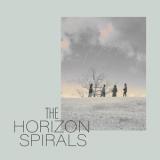
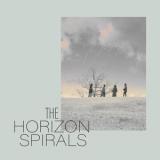
OOIOO and Lightning Bolt are both bands whose music is wholly unique and whose creators" influence would be impossible to overstate. YoshimiO, OOIOO"s founder and bandleader, has been a guiding force in uncompromising art across the continuum of rock and improvised music for four decades, from her work in UFO or Die to The Boredoms to SAICOBAB and beyond. OOIOO serves as a core outlet for melding freeform experimentalism with hypnotic rock pulses, defying boundaries with her acrobatic voice, electronics, trumpet and gamelan. Lightning Bolt"s Brian Chippendale and Brian Gibson have remained unparalleled in their ability to transmute frenetic whirls of percussion, gargantuan fuzz and dizzying melody into monolithic vistas. THE HORIZON SPIRALS / THE HORIZON VIRAL is a split that captures the parallels in ethos between these two ensembles, their sense of gleeful abandon and freight train momentum, in inspiring detail.
- 1: Blue Water
- 2: My Place Among The Stones
- 3: A Friend Like You
- 4: I'll Go Home From Here
- 5: Lost Cause Lover Fool
- 6: Blinded And Smiling
- 7: Sad Song
- 8: Ribbon
- 9: Young Love
Color Vinyl[26,68 €]
On their seventh studio album, Lost Cause Lover Fool (due April 24th on Far Cry/Thirty Tigers), The Milk Carton Kids deliver 9 songs that, more than ever, invite listeners to lean in close and hover in the small moments the album magnifies. Much has changed since The Milk Carton Kids — Los Angeles-based singer-songwriters Kenneth Pattengale and Joey Ryan — burst on the Folk scene in 2011. And The Milk Carton Kids have changed too. But at least one constant remains. Pattengale and Ryan continue to make music that entices us turn down the volume on a chaotic world and dwell as long as possible on what matters most. With rootsy arrangements, Lost Cause Lover Fool expands on the duo’s signature minimalist sound their fans love while also, somehow, making it even smaller. Lost Cause Lover Fool begins with the lonesome pluck and strum of the banjo on “Blue Water.”
Often employed either for lightning-speed or rhythm, here the banjo is handled carefully, with reticence, so that it feels more like light cast across a stretch of grass than a whole bluegrass instrument. Lyrically, this album-opener zooms in on a snapshot of a man walking along a riverside, remembering the child that used to lay on his chest who has now grown to share his worried mind. It’s a moment so small it might easily have been dismissed, except that it holds an emotion as universal as it is fleeting. Lost Cause Lover Fool magnifies many such small moments, turns them into mesmerizing worlds, and reminds us — pleads with us — to pay attention to them as they go by.
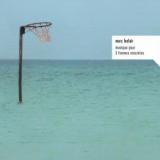
In Sheep’s Clothing announces the long-awaited vinyl pressing of Marc Leclair’s beloved 2005 album Musique pour 3 femmes enceintes. The album will also be available on streaming for the first time via Community Music Group.
For years after Marc Leclair released Musique pour 3 femmes enceintes, he heard from listeners who had lived with the record in an unusually intimate way. Many described how the music became part of the emotional landscape of the months leading to birth. “I never expected that,” Leclair says. “Many women told me they listened to the record throughout their pregnancies. They said it made a real difference, that it helped them. It became more than just a record.”
First issued on CD in the early 2000s, Musique pour 3 femmes enceintes (Music for Three Pregnant Women) now returns in a new edition from In Sheep’s Clothing Hi-Fi, appearing on vinyl for the first time as a double LP. The record is being pressed in Detroit at Archer Record Pressing, the historic plant behind deep-groove classics by Juan Atkins, Kevin Saunderson, Underground Resistance, UR’s Jeff Mills, and J Dilla.
Listeners who know the Montreal-based Leclair through his better-known work as Akufen might be surprised by the tone here. During the same years he was shaping the intricate micro-sampling tracks that made Akufen a cult figure on labels including Perlon, Force Inc. and Trapez, Leclair was quietly developing this far more personal project. The meticulous craftsmanship remained the same, though the focus shifted from the hyper-detailed cut-up rhythms of his dance records toward something slower and more atmospheric. “I always compare my work to a jeweler,” Leclair says. “It’s really very precise. I’m a bit of a detail freak. I can spend hours or days on just one phrase in one song. Everything has to be perfectly put together.”
The project began almost accidentally. A few members of Leclair’s circle became pregnant nearly simultaneously, including one who had long believed she couldn’t conceive. The first track he recorded for the project wasn’t meant to advance a larger concept, he says. “It was meant to highlight the fact that three of my closest friends became pregnant at exactly the same time.”
Leclair was already a father with a three-year-old daughter, so the emotional terrain of early parenthood was familiar. Gradually the idea expanded. “I began thinking, why not make a whole album that celebrates this and also follows the entire pregnancy, the nine months,” he says. The music developed piece by piece, including a track originally commissioned by the Berlin experimental duo Rechenzentrum that would later become the album’s opening movement.
Nearly seven years passed between the first composition and the finished album, and the music mirrors the strange arithmetic of pregnancy itself. What begins as a single idea multiplies outward, sounds layering and branching until the album feels less like a sequence of compositions than a living process unfolding in time. “I work very slowly,” Leclair says. “Everything has to be something I’m completely behind. I never want to rush anything. I want things to come naturally.” Across its 72 minutes, the album blossoms with the patience of a long meditation on time, growth and emergence.
When Musique pour 3 femmes enceintes first appeared via Mutek, it circulated quietly but steadily. Critics who discovered it later recognized its unusual scope. In a 2006 Pitchfork review, Mark Richardson gave the record an 8.1, calling “150e Jour” “an unfailingly gorgeous and tightly sequenced quilt of guitar and piano samples reminiscent of Tangerine Dream,” and describing “85e Jour” as infused with “viscous pop ambient drift, the gauzy synth pads ebbing and flowing with rhythm.” Boomkat described the album as “a majestic opus from a producer that's always promised so much — here delving into a panoramic construction of almost visibly radiant music that works so beautifully through each and every second of its 72 minute lifespan.”
The new In Sheep’s Clothing Hi-Fi edition finally presents the record in the format Leclair long imagined. “I always thought that record deserved a vinyl edition,” he says. Spread across two LPs, the music now has room to unfold at its natural pace. More than twenty years after it first appeared, Musique pour 3 femmes enceintes remains what it was from the start: a carefully shaped meditation on transformation and the quiet miracle of life beginning.
- Air Dancing
- Christina
- Fortune Dance
- Something More
- Sophisticated Lady
- Decepticon
- I Didn't Know What Time It Was
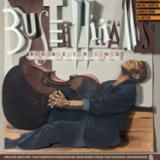
Buster Williams is a man with a strong sense of purpose and a very clear sense of his musical direction. He is also a musician of prodigious gifts - which is implicit in the fact that his years of professional bass playing have included work with Miles Davis, Dexter Gordon, Sonny Rollins, Art Blakey, Sarah Vaughan, Nancy Wilson, Betty Carter, Freddie Hubbard, Herbie Hancock, Chet Baker, Woody Shaw and McCoy Tyner. He is unquestionably one of the giants of the double bass, and his status is a product not only of his natural aptitude, but also of his natural attitude - because Buster Williams is a man who believes in setting himself the highest creative goals. Williams composed five of the seven pieces and wrote all the arrangements. To bring the music to life he had the services of some most distinguished associates. It would be redundant to recite the credentials of Herbie Hancock , Wayne Shorter and Al Foster. This is a most refreshing and exhilarating album to which Buster Williams has brought a high level of creativity and total integrity.
Leather-jacket krautrock? Indeed. Welcome to the world of Carrboro NC's Object Hours. These generous saviors consist of three Triangle scene lifers who all worship the riff but imagine what happens if the riff fell into the middle of your favorite CAN LP. Yes, it lives up to the hype.
"Solved By Walking" was recorded in the winter of 2025 at Betty's in the Chapel Hill woods, these are mighty rock slabs ready for all seasons. Rock believers have felt the ripples and knew the day was coming. Object Hours is a band that fits right in on stage alongside acts as varied as Kim Gordon and Tropical Fuck Storm, bringing the house down in these and similar moments. These are songs that groove, peel paint, sandblast, inspire unconscious movement, make your head bob - frequently all at the same time. These are the jams inspired by the time that you heard "Fun House" coming out of that dude's car with the windows down in the middle of the summer, the ones inspired by the kids who own 3 copies of "Daydream Nation," the ones who listen to the last 1:30 of Wire's "Too Late" over and over. This is the band that has a timer on stage so they don't keep each song playing for days on end, the band whose Bandcamp bio succinctly summarizes their approach thusly: "We try to keep songs under 25 minutes for your sake." Every word here should be inspiration for you to *want* and *need* to hear this record and every word here is true. Just you wait.
Real heads know and the rest of the heads are getting ready to find out. Get ready for Object Hours' "Solved By Walking".
Mutual Rytm spawns new sub-label ‘Versus’ with debut EP from longtime techno associates Regent and Chontane. Continuing to expand its creative world, SHDW’s Mutual Rytm imprint now introduces ‘Versus’ - a new sub- label crafted for creative symbiosis between two artists across one shared release. Opening the series with authority, Regent and Chontane man the debut offering - two close friends and native Berliners who have been shaping techno for more than 15 years. Both long-standing members of the Mutual Rytm family, having released multiple times here before, the pair have always created music informed by life immersed in their local scene. Having both mutually influenced one another over the years, here they present their shared interpretation of techno with individual artistic DNA, forming a unified sound that represents the best of both worlds. Regent goes first, leaning towards functional, anthemic, dance-floor-focused techno. ‘Ephemera’ is tight, minimal but forceful; ‘Slow Burn’ has synth tension rising through the dark, next to glitchy percussion; and ‘Afterglow’ lets in more light, bringing otherworldly synths that hang above the groove and consume your focus. Chontane then explores a more musical and unconventional approach. ‘Plaxaric’ is supple, warm, and deep techno that tunnels into an abyss. ‘Grounding Factor’ is just as economical in design, but with introverted funk and evolving layers of sound. ‘Mental Lab’ spins out into complex rhythms inspired equally by IDM, jungle, and techno. It’s a mental workout as well as a physical one. Both artists add a pair of digital bonus tracks. Regent’s ‘Control Room’ and ‘Rarely Enough’ deliver elevated, hypnotic tools, before Chontane’s ‘Escore’ and ‘Outside In’ bring extroverted drum patterns along with contrasting melodic unease
NO WAY BACK MAGAZINE
BETTER WAYS FORWARD THROUGH MUSIC AND SUBCULTURE STORIES, 1979-1994 - LEARNING FROM, NOT LONGING FOR
After all of the fun had - and, if we may brag a bit - the acclaim for NWB001, we're back with a follow-up.
So here's NWB002. Our start and end points shift this time (1979–1997 vs 1977-1989) but again the focus is on revolutionary moments in music and subculture.
We've got pieces from The Face, i-D, Time Out, Village Voice, Rolling Stone, Mixmag, The Observer and - a particularly big pleasure - Collusion magazine. We've got brilliant photography, too, documenting seminal afterdark moments. And we've put it all together with much love, craft and attention to detail.
This is material that lets us experience culture in its rawest form. In-the-moment and before endless layers of post-rationalisation have kicked in. Breakthrough events in dance music, hip-hop and pop – and parallel shifts in art, design and fashion. Inspirational, ground-level creativity and enterprise that set the scene(s) for subsequent decades.
We hope you enjoy reading NWB002 as much as we enjoyed bringing it together.
Inside No Way Back 002
Behind The Groove - the epic 1983 feature by Steven Harvey in David Toop's Collusion magazine, charting the NYC disco underground
Photographer Steve Eichner documenting the club kids scene at The Limelight, Palladium, Tunnel and Club USA
Year zero reporting as The Face's Sheryl Garratt visits Chicago in 1986, witnessing the emergent house sound
The Mudd Club - 'disco for punks' as Rolling Stone put it; the Lower East Side party which arguably spawned a thousand indie discos
In the 'socialist city' of Sheffield, meanwhile, Jon Savage heads for a night of sharp clothes and even sharper moves at Jive Turkey
Paul Morley writing in Time Out in 1988 on the tension materialising between glossy style mags and the the monochrome music press
The House That Rap Built - Village Voice celebrates the short but sweet glory years of hip-house
Mixmag in 1992 on the 'return of sex' to clubs like Roxy and the Sound Factory
Images and commentary from Eddie Otchere, rewinding to jungle's halcyon days
Kodwo Eshun reporting on jungle's full-throttle ascent for i-D in 1994
+ Editor’s notes, supporting commentary, playlists, and covers, spreads and imagery from original titles
ISSN - 2977-8530
XKatedral Anthology Series II (An Anthology Of Slowly Evolving Timbral Music), featuring exclusive music from Kali Malone, Jessica Ekomane, Mats Erlandsson, Theodor Kentros, Wilma Hultén, and Maria W Horn.
"XKatedral Anthology II is the second instalment in a series of archival releases dedicated to presenting music by composers affiliated with XKatedral working within the realm of slowly evolving harmonic and timbral music. This double-vinyl set contains an array of pieces dating from 2018 - 2020. This collection of pieces focuses on the use of synthetic sound and algorithmic composition languages as tools for precise work within the realm of spectral exploration. In addition to this, the electronic instrumentation in many of the pieces is augmented by acoustic instruments.
The first piece on side A is Kali Malone’s Music for Low Quartet. This piece is an adaptation of the composition “Rose Wreath Crown” originally released on The Sacrificial Code in 2019. In this iteration, the music is scored for two double basses played by Vilhelm Bromander and Zach Rowden, and sine tone electronics performed by Malone herself. The recording of this piece was made at EMS in 2019.
Closing side A is Jessica Ekomane’s ‘First Light’. This computer music piece focuses exclusively on digital sound, layering razor sharp synthetic textures into an otherworldly dynamic weave. The music heard here is a reworked version of a piece originally commissioned by Semibreve in 2020.
Side B contains the work ‘Hands Melt In The Sun’ by Mats Erlandsson. This composition is built from electronically processed tuned zithers and synthetically generated tones arranged in a series of chordal inversions over a sustained fundamental tone. This music, written as a love-letter to the localized drone tradition of Stockholm in the years 2008-2012, was composed and recorded in seven days while in residence at Ställbergs Gruva in Bergslagen, in the summer of 2018.
Opening the second half of the collection is Rough Draft v.7 by Theodor Kentros. Kentros’ compositional practice usually combines acoustic and electronic source material and in this piece he molds the sound of the Buchla 200 and a collection of recorded wind instruments into a molten mass of sound. In its original form, this music was presented as a multichannel immersive work and even in the current stereo configuration it retains some of that enveloping sense of depth.
The second piece on side B, Inertia, is by Wilma Hultén, who makes her debut on record here. An exclusively synthetic piece, Inertia utilizes internal digital feedback in a sealed synthetic system to manifest a harmonic field that swells and abates throughout the length of the piece, interspersed by small gestural elements.
Closing Anthology II is Maria W Horn's work ‘Dies Irae’ for female vocal quartet, pitched glass and synthesis. ‘Dies Irae’ uses a modified form of traditional tonal harmonic language to invoke an uncanny and restless middle ground between the classical western polyphonic vocal tradition and contemporary electronic music. The version heard here is a live recording from Eric Ericssonhallen in Stockholm on May 30th 2020. Performing the piece here are the vocalists Katarina Henryson, Lisa Holmgren, Vilma Ogenblad and Paula Wegmann, as well as Maria herself on glass and electronics."
- A1: Harmony - Dream (Tim Reaper Vip)
- A2: Soulox & Soeneido - Lavish (Tim Reaper Vip)
- B1: Outrage & Sonar's Ghost - The Wait (Tim Reaper Vip)
- B2: Fff - No Holds Barred (Tim Reaper Vip)
- C1: Kloke - Bliss Machine (Tim Reaper Vip)
- C2: Dwarde - Piper (Tim Reaper Vip)
- D1: Refreshers - Crumbling Down (Tim Reaper Vip)
- D2: Dev/Null - Deep Love (Tim Reaper Vip)
After 90 releases on Future Retro London, I feel like I need to take a bit of a break from the constant workload that's come from running the label on my own. I feel like 50 (the cat number for the main label releases) is a good number to pause on for now.
I've been doing some remixes of the back catalogue & thought that putting them all together on one release at some point would be an interesting concept, so here we are.
Thanks so much to all the supporters, artists, designers & everyone else that's been involved in keeping Future Retro London going for so long, couldn't have done this without each & every one of you.
Following the celebrated reissue of Classics Vol. 1, Metroplex unveils Model 500 - Classics Vol. 2, a powerful new collection of essential works from Juan Atkins--pioneer of Techno and architect of some of the most forward-thinking electronic music ever recorded. Bringing together key cuts, rare mixes, and long-sought favorites from across Atkins' groundbreaking output, this compilation highlights the full spectrum of his sonic universe: deep, rolling machine funk, shimmering electro-techno hybrids, and timeless futurist grooves that helped shape generations of electronic artists. Each track has been carefully remastered to enhance its original energy while preserving the raw spirit and space that define the Model 500 sound. From expansive, atmospheric journeys to soulful vocal transmissions and Detroit-powered rhythmic science, Classics Vol. 2 presents Juan Atkins at his most inspired--an essential document of a visionary whose influence continues to echo across dancefloors worldwide. Three decades on, these tracks have lost none of their immediacy, imagination, or futuristic pull. Restored for a new era, Classics Vol. 2 celebrates the legacy of Model 500 with pristine sound and renewed force. Pure Detroit heritage. Eternal future music.
- 01: Devotional Fade
- 02: Clown Car
- 03: Morocco
- 04: Cool Whip
- 05: Soft Hold
- 06: Seven On The Floor
- 07: Arpeggio
- 08: End Of The Horn
Matt Gold and Dustin Laurenzi present Devotional Fade, a collaborative record of electroacoustic rhythmic improvisations – equal parts meditation and dance, released on We Jazz Records, 24th April. Laurenzi and Gold, key collaborators in the Chicago creative scene and with genre spanning artists such as Bill Callahan and Makaya McCraven, step forward here with a major artistic statement, a product of extended improv sessions capturing the duo's hypnotic interplay. This is the sound of two of Chicago's most vibrant instrumental voices listening deeply, communing in sound.
Recorded in Laurenzi's attic studio, Devotional Fade emerged from a series of weekly sessions over the course of a single month. The duo kept the tape rolling continuously each day and selected a number of immersive sonic worlds to present, oscillating between patient, sacred minimalism and wild, dancefloor-worthy combustion.
The pair set two parameters to heighten the sessions' stakes: editing would be kept to a minimum, and a rule of "no pitched overdubs" was put in place – ensuring that all melodic and harmonic gestures would have to be committed in real time. Laurenzi and Gold held true, only sparingly adding a stray shaker or brush to these already largely complete improvisations. Devotional Fade is imbued with quiet propulsion and ecstatic repetition.
Matt Gold is a guitarist, multi-instrumentalist, songwriter, and producer based in Chicago, IL. His work pulls from diverse traditions of electric and acoustic music. Matt has performed across six continents and contributed to over fifty recordings as a collaborator and instrumentalist, garnering critical praise from Pitchfork for playing "one of the most exhilarating guitar solos of recent memory, in any genre." Gold has several long-running collaborative bands spanning jazz, folk, experimental, and chamber music including Sun Speak, Storm Jameson, and Tin. He performs and records with an array of creative artists including Makaya McCraven, Marquis Hill, Jamila Woods, Natalie Merchant, and Greg Ward. Gold co-curates the record label and concert series Flood Music.
Chicago saxophonist/multi-instrumentalist Dustin Laurenzi has developed a personal approach to improvisation and composition that has garnered the attention of the city's creative music community. Laurenzi's music is inspired and informed by jazz, folk, and improvised music. His inventive improvisational sensibilities have made him a sought-after musician in many circles of Chicago's vibrant music scene and beyond. Laurenzi has toured extensively with songwriter Bill Callahan and is featured on Callahan's 2024 release Resuscitate! He has toured with Grammy award-winning artist Bon Iver and appears on the band's critically lauded 2016 release 22, A Million. Laurenzi has also performed with Jeff Parker & The New Breed, Marquis Hill, Makaya McCraven, Matt Ulery, Japanese Breakfast, and This Is The Kit.