Helsinki bassist Antti Lötjönen follows up his 2020 We Jazz Records debut LP with a new 7" introducing a fresh version of key album cut "Erzeben Strasse" and throws in a wild treatment by Petter Eldh's Koma Saxo on the flipside. "Erzeben Strasse" presents Lötjönen's Quintet East lineup in fine form, swinging steadily but also adding enough sideways movement to blur the lines just a little bit. The band features a stellar Finnish cast in Lötjönen (bass), Verneri Pohjola (trumpet), Mikko Innanen (baritone sax), Jussi Kannaste (tenor sax) and Joonas Riippa (drums).
The Koma Saxo treatment of the track, dubbed here as "Erzeben Koma" is full of fire. Uplifting, a bit hectic, beat-driven and jubilant, Eldh's band of brothers double the ensemble heard on Side A, both sampling and adding new recording into the mix. The entire Koma Saxo live band is featured here: Eldh (bass/production), Otis Sandsjö (tenor sax), Jonas Kullhammar (tenor sax), Innanen (alto sax) and Christian Lillinger (drums). The modern sound of Helsinki meet Mauerpark Liquid Jazz.
Suche:her fr
Cinematic feasts of dramatic strings and cascading pianos that will satisfy fans of Nils Frahm and Ólafur Arnalds' The Ransom Note
- 1: A Hard Rain's A-Gonna Fall - The Staple Singers
- 2: Everything Is Broken - Bettye Lavette
- 3: Just Like Tom Thumb's Blues - Nina Simone
- 4: Gotta Serve Somebody - Natalie Cole
- 5: It Ain't Me Babe - Maxine Weldon
- 6: It's Alright Ma (I'm Only Bleeding) - Billy Preston
- 7: The Mighty Quinn - Solomon Burke
- 8: Rainy Day Women #12 & 35 - Merry Clayton
- 9: Shelter From The Storm - Cassandra Wilson
- 10: The Times They Are A-Changin' - The Brothers & Sisters Of Los Angele
- 11: Tomorrow Is A Long Time - Harry Belafonte
- 12: Baby I'm In The Mood For You - Odetta
- 13: Don't Fall Apart On Me Tonight - Aaron Neville
- 14: If Not For You - Sarah Vaughan
- 15: George Jackson - Jp Robinson
- 16: When He Returns - Jimmy Scott
- 17: I Threw It All Away - The Bo-Keys
- 18: Down Along The Cove - Johnny Jenkins
- 19: Every Grain Of Sand - Lizz Wright
- 20: Blowin' In The Wind - The Caravans
Ace’s small but ever-evolving “Black America Sings…” series has been quiet of late, but it springs back into action this month with the 2-LP and CD releases of “Highway Of Diamonds” – a second dip onto the catalogue of Bob Dylan, as reimagined by some of the foremost African-American artists of the 20th century.
From almost the start of his songwriting career, Dylan’s words and music have impacted on black American music, with ‘Blowin’ In The Wind’, speaking to an America that was still mostly segregated and becoming an anthem for all colours and creeds. As Dylan’s own career progressed, so did the number of covers he received, with a significant amount coming from what might be termed ‘non-traditional’ sources such as those heard here.
The 20 songs on “Highway Of Diamonds” continue the story that was told in part on the earlier “How Many Roads” compilation, with an almost entirely different selection of artists lending their voices to some of the best songwriting of the 20th century, and an almost entirely different selection of songs (with the exception of ‘Blowin’ In The Wind’ itself, which provides a common thread linking the story told across the two sets).
Big names from the worlds of soul, gospel and jazz, timeless songs and, for many, new ways of appreciating ever-durable material make “Highway Of Diamonds” as essential a purchase as its predecessor.
As ever, the great audio is complemented by a handsomely illustrated package on both CD and double vinyl, with a plethora of illustrations and in depth song-by-song-and-track-by-track annotation by Ace legend Tony Rounce.
- 1: From Here To Eternity
- 2: Flaming Torch
- 3: You've Got To Pay
- 4: No Solution
- 5: Inbetweens
- 6: Out There In The Night
- 7: Curtains For You
- 8: Programme
- 9: Someone Who Cares
- 10: Miles From Nowhere
- 11: Instrumental
A year after their acclaimed self-titled debut album, The Only Ones followed up with Even Serpents Shine. The sophomore album was met with positive reviews, that “Even Serpents Shine doesn’t boast an out-of-the-box classic tune along the lines of “Another Girl, Another Planet” from the debut, but in many respects, this is the more consistent album, achieving a similar degree of thematic and melodic variety while generat- ing a more coherent sound and feeling.”
Even Serpents Shine features remastered audio and is avail- able as a limited edition of 1000 individually numbered copies on flaming coloured vinyl.
Strong one on Voyage Direct from Rotterdam's Benny Rodrigues...TIP!
The label say "Benny Rodrigues seems to delight in confounding critics. Since making his debut alongside Darko Esser with 2007's Underwater Records--released 'Paradox', the Rotterdam--based DJ has surprised and excited at every turn.
Variously delivering woozy tech--house, rave revivalism, stripped--back minimal, jackin' acid, wide--eyed deep house and, under his occasional ROD alias, shirts--off warehouse techno. Along the way, he's released music on some of Europe's most prestigious labels, including Desolat, Soma, EC Records, Be As One and Wolfskuil Records.
Here, he makes his debut for Tom Trago's Voyage Direct imprint with two undulating, hypnotic, heads--down tracks that blur the boundaries between house and techno. Rhythmically loose but impressively tough - like all of Rodrigues' best productions - both cuts are built around mesmerising late night grooves and intoxicating chords.
'Master French' kicks things off, lacing nagging shakers, subtle synth strings and fluttering chords over a robust, shuffling tech--house groove. Rodrigues works the mix like a master, bringing elements to the fore before sliding them into the background. It's a simple, heads--down, 4am groove, but it's executed brilliantly.
'Z', on the other hand, is an altogether breezier affair, with repetitive, new age-- inspired synthesizer melodies seemingly drifting over a rock solid house groove. Notable ride cymbals and warm beats proper the track forward, giving it a humid, tropical feel. This is music to move the body, mind and soul. "
- Johnny
- World Keeps Turning
- Electravision Mantra
- Dial Om
- Wonderful Life
- El Salvador (Former Cd Only Track)
- Sean O'farrell
- Belfast
- Cycle
- They're Killing Us All (To Make The World Safe)
- O Salvation
- Fish And Trees (Former Cd Only Track)
This remastered vinyl reissue of Blind Ear reintroduces The Celibate Rifles' urgent, socially aware punk-rock energy, cementing its place as a cornerstone of Australian alternative rock. 1989 is where The Celibate Rifles take their punk instincts to the next level-garage muscle, surgical precision, and a rock'n'roll pulse that sounds more urgent than ever today. Formed in Sydney ten years ago, the band appears here in full flight: two guitars in constant dialogue, a rhythm section with newfound dynamic range, and a razor-edged vocal that bites without losing melody. The remaster opens up the stereo image, sharpens the six-string detail, and restores to the turntable the physical punch this record demanded from day one; it's the definitive way to (re)discover a key title from the Australian school. The tracklist is pure traction: "Some Kind of Feeling" hits the ground running with speed and focus; "Wonderful Life '88" nails an instant hook and a clear-eyed critique of yuppie culture; and the closer, "O Salvation," lands as an expansive, cathartic statement of intent. Two tracks unusual in Australian rock for their subject matter-"Sean O'Farrell" and "Belfast"-tackle the Northern Ireland conflict head-on and underscore the band's social gaze, while the rest of the album maintains a no-filler intensity. This edition preserves the original LP sequence (the two bonus tracks existed only on the period CD) and stands as an essential piece for collectors and front racks alike: ideal for in-stores, listening bars, and classic alternative rock playlists. If your audience connects with BORED!, Radio Birdman, The New Christs, or The Saints, Blind Ear is an unequivocal yes.
- Hasiera 00:50
- 2: Iratzarri 0:37
- Sarrakio 02:10
- Dantza Bihurritua 03:50
- Desagertu 03:18
- Meditazioa I 02:09
- Besarkatu Ninduzun (Cdr Y Basandere Ahotsak) 03:50
- Meditazioa Ii 02:53
- Ametza Iii 02:06
- Oroipen 04:04
- Fallen Gaza 03:09
- Atseginzale Dantza 02:14
- Sua Eta Heriotza 00:59
- Agur Maria (Cdr Y Basandere Ahotsak) 03:55
- Bukaerako Dantza 04:03
- Amaiera 00:36
Una interpretación de Soinuarenbidea II debería partir de esta premisa: todo es posible, nada es aleatorio, y en sí mismo es un imposible de aleatoriedades. El escenario planteado explora la idea de realidad aumentada desde una percepción sonora, ambiental y colectiva. La obra transita hacia adelante y hacia atrás recreando experiencias extintas de porvenir incierto, tratando de facilitar un fin pacificador. Cada pieza sonora se crea, se despliega, se repliega y se destruye, en una torsión permanente de toda la realidad que hace posible cada fragmento musical, cada identidad acústica, cada espacio sonoro. Lo onírico, la ficción, y el viaje están continuamente presentes, y es en el transitar de cada fragmento donde se produce el diálogo de la exposición musical. Los elementos de esta ficción se recrean continuamente, en un continuum donde se entrelazan y se van contorsionando a medida que crecen o decrecen con cada fragmento de síntesis concreta. Los temas explícitamente musicales son el magma que conduce a dar voluptuosidad al disco, siendo la piel un contexto o límite que en sí mismo fluctúa indefinidamente en texturas y configuraciones posibles. Y la urdimbre del silencio es la síntesis que está continuamente presente y que trata de cohesionar los fragmentos en continua colisión expresiva. Las grabaciones de campo proporcionan el material sonoro concreto, y como un fractal sonoro cada una de ellas ofrece diferentes grados de interpretación que a su vez conduce a nuevos fragmentos y nuevas creaciones. Así que se puede pensar que esta es una síntesis de una posible realidad, pero interpretable en infinidad de maneras. Un movimiento y una estaticidad implícitas que generan estructuras y dinámicas acústicas. Lo que se escucha no es real, pero en sí mismo forma parte de la realidad, creando un escenario expectante. Lo cinematográfico, plástico y teatral, danzante y dinámico cobra importancia en este juego, porque se trata de contar una historia, una experiencia recreada desde los puntos de vista del arte visual. Es a su vez hilo conductor y entretenimiento, discurso político y puro divertimento. Es desde este espacio de convivencia artística que tiene sentido la totalidad y justifica el formato sonoro planteado. La contradicción de la obra es patente en el formato, y es a su vez el planteamiento de una accidentalidad en el devenir vital. Contenedor de Ruido recoge todas estas contradicciones y las manifiesta en la obra Soinuarenbidea II. Es una historia sonora, es un cuento acústico. Es un fragmento de vitalidad en imágenes audibles. Es una invitación a la reflexión, a la crítica, al disfrute, a la meditación, a la celebración. Y sobre todo es esperanzadora apreciación de la realidad como algo maleable que confeccionamos colectivamente, que requiere de una paciente observación y la participación colectiva global, en un mundo finito pleno de diversidades y del que ignoramos prácticamente todo, al que deberíamos volver con respeto y devoción.
Soinuarenbidea II-ren interpretazio batek premisa honetatik abiatu beharko luke: dena da posible, ezer ez da ausazkoa, eta, berez, ausazkotasun ezinezko bat da. Planteatutako agertokiak errealitate areagotuaren ideia aztertzen du, soinu-, ingurumen- eta talde-pertzepzio batetik abiatuta. Lanak aurrera eta atzera egiten du, etorkizun zalantzagarriko esperientzia desagertuak birsortuz eta helburu baketsua lortzen saiatuz. Soinu-pieza bakoitza sortu, hedatu, tolestu eta suntsitu egiten da, musika-zati bakoitza, identitate akustiko bakoitza eta soinu-espazio bakoitza ahalbidetzen dituen errealitate osoaren etengabeko bihurdura batean. Onirikoa, fikzioa eta bidaia etengabe daude presente, eta pasarte bakoitzaren joan-etorrian gertatzen da musika-erakusketaren elkarrizketa. Fikzio honen elementuak etengabe birsortzen dira, continuum batean, non sintesi zati zehatz bakoitzarekin hazi edo txikitu ahala elkar lotzen eta bihurritzen diren. Esplizituki musikalak diren gaiak diskoari atsegintasuna ematera eramaten duen magma dira, azala testuingurua edo muga izanik, testura eta konfigurazio posibleetan mugarik gabe aldatzen dena. Eta isiltasunaren irazkia etengabe presente dagoen sintesia da, zatiak etengabeko adierazpen-talkan kohesionatzen saiatzen dena. Landa-grabazioek soinu-material zehatza ematen dute, eta soinu-fraktal batek bezala, horietako bakoitzak interpretazio-maila desberdinak eskaintzen ditu, eta horrek, aldi berean, zati eta sorkuntza berrietara eramaten du. Beraz, pentsa daiteke errealitate posible baten sintesia dela, baina hamaika modutan interpreta daitekeena. Egitura eta dinamika akustikoak sortzen dituzten mugimendu eta estatikotasun inplizitu bat. Entzuten dena ez da erreala, baina, berez, errealitatearen parte da, eta agertoki espektakularra sortzen du. Zinematografikoak, plastikoak eta antzerkikoak, dantzariak eta dinamikoak garrantzia hartzen dute joko honetan, ikusizko artearen ikuspegitik birsortutako istorio bat, esperientzia bat, kontatzea baita helburua. Aldi berean, hari gidaria eta entretenimendua da, diskurtso politikoa eta dibertimendu hutsa. Elkarbizitzarako espazio artistiko honetatik osotasunak zentzua du eta planteatutako soinu-formatua justifikatzen du. Obraren kontraesana nabarmena da formatuan, eta, aldi berean, bizi-bilakaeran istripu-tasa bat planteatzea da. Zarata-edukiontziak kontraesan horiek guztiak jasotzen ditu eta Soinuarenbidea II obran adierazten ditu. Soinu istorio bat da, ipuin akustiko bat. Bizitasun zati bat da, irudi entzungarrietan. Hausnarketarako, kritikarako, gozamenerako, meditaziorako eta ospakizunerako gonbidapena da. Eta, batez ere, itxaropentsua da errealitatea modu kolektiboan egiten dugun gauza xaflakor gisa hautematea, behaketa pazientea eta partaidetza kolektibo globala eskatzen dituena, dibertsitatez betetako mundu mugatu batean, ia guztia kontuan hartzen ez duguna, eta errespetuz eta debozioz itzuli beharko genukeena.
An interpretation of Soinuarenbidea II should start from this premise: everything is possible, nothing is random, and in itself is an impossible randomness. The proposed scenario explores the idea of augmented reality from a sonic, environmental, and collective perception. The work moves back and forth, recreating extinct experiences of an uncertain future, seeking to facilitate a peaceful end. Each sound piece is created, unfolds, retreats, and is destroyed, in a permanent twisting of all reality that makes each musical fragment, each acoustic identity, each sonic space possible. The dreamlike, the fictional, and the journey are continually present, and it is in the transit of each fragment that the dialogue of the musical exposition takes place. The elements of this fiction are continually recreated, in a continuum where they intertwine and contort as they grow or diminish with each fragment of concrete synthesis. The explicitly musical themes are the magma that leads to the work's voluptuousness, the skin being a context or boundary that in itself fluctuates indefinitely in possible textures and configurations. And the warp of silence is the synthesis that is continually present and seeks to unite the fragments in a continuous expressive collision. The field recordings provide the concrete sound material, and like a sonic fractal, each one offers different degrees of interpretation that in turn lead to new fragments and new creations. So one can think of this as a synthesis of a possible reality, but interpretable in an infinite number of ways. An implicit movement and staticity that generate acoustic structures and dynamics. What is heard is not real, but in itself is part of reality, creating an expectant scenario. The cinematic, plastic and theatrical, dance and dynamic aspects take on importance in this game, because it is about telling a story, an experience recreated from the perspective of visual art. It is at once a common thread and entertainment, political discourse and pure entertainment. It is from this space of artistic coexistence that the whole makes sense and justifies the proposed sound format. The contradiction of the work is evident in its format, and it is, in turn, the presentation of an accidentality in the course of life. Noise Container gathers all these contradictions and manifests them in the work Soinuarenbidea II. It is a sound story, an acoustic tale. It is a fragment of vitality in audible images. It is an invitation to reflection, to critique, to enjoyment, to meditation, to celebration. And above all, it is a hopeful appreciation of reality as something malleable that we collectively craft, requiring patient observation and global collective participation, in a finite world full of diversity and of which we know practically nothing, to which we should return with respect and devotion.
Paisajes sonoros, diseño sonoro, drones y música grabada, realizada y arreglada para Contenedor de Ruido por David Aranaz. Coro: Basandere Ahotsak. Producido y mezclado por David Aranaz. Mástering: Estanis Elorza. Fotografía: David Aranaz. Texto: David Aranaz. Traducción: Saioa Aranaz Oreja. Trabajo y Diseño artístico: Cristina Martinez. Edición: Contenedor de Ruido Producciones y Sarbide Music. Distribución: Contenedor de Ruido.
Contenedor de Ruido agradece el apoyo en la realización de Soinuarenbidea II al coro Basandere Ahotsak y en especial a Eva Orbara Goicoa.
Soinuarenbidea II está dedicado al pueblo palestino.
Paisajes y objetos Sonoros, samplers y otras músicas transformadas para Soinuarenbidea II
Burlada: Paseos sonoros matinales por Merindad de Sangüesa, Calle Mayor, Capuchinas, Parque Uranga y varias iglesias y plazas. Pasajes del cotidiano: basura de papel, cristal y plástico.
Pamplona: Cementerio de San José. CEIP Sanduzelai /// Quinto Real: Fábrica de Armas, Puerto de Urkiaga y alrededores. Suite del silencio, bosques en movimiento /// Fábrica de armas de Orbaiceta: regatas, biosques, paseo sonoro hasta regata /// Belate: Puerto de Belate y alrededores. Vacas en pradera junto a las turberas /// Bardenas Reales: Suite de guitarra y Suite del silencio, estepa desértica /// Austria: Tranvías de Graz y Viena. Muchedumbre del metro de Viena.
Voces cinematográficas de: Matanza en Texas, Robocop, Espíritu Sagrado, Solo los Amantes Sobreviven, Voces de Gaza, Yojimbo, Terciopelo Azul, Los 7 Magníficos.
La pista A2 está dedicada a la memoria de David Lynch.
La pista B4 está dedicada a Eva Orbara Goicoa.
Pista A4: Contiene interpretaciones de piano de Three Piano Pieces Op.11 de Arnold Schoenberg.
Pista A5: Es una interpretación expandida con síntesis FM del Concerto Op. 24 - Etwas lebhaft - de Anton Webern.
Pista A7: Contiene la canción Besarkatu ninduzun (Letra de Josune López y música de Josu Elberdin) en interpretación de Basandere Ahotsak en la iglesia de Burutain bajo la tormenta.
Pista B2: Contiene la canción Recuerdos de la Alhambra (Fernando Tárrega) en interpretación torsionada de David Aranaz Sarasa.
Pista B14: Contiene la canción Agur María (Letra y Música de Estíbaliz Robles “Estitxu” y arreglo exclusivo de Alfonso Ortiz para Basandere Ahotsak) en interpretación de Basandere Ahotsak.
Equipamiento para Soinuarenbidea II.
Micros de condensador SE7, configuración XY y ORTF; Micros de cinta ORTIZ LUTHIER configuración XY y Blumlein; Grabadoras MARANTZ y ZOOM; Sintetizadores y samplers Elektron MONOMACHINE SPS-1, MACHINEDRUM SFX6 y MODEL:SAMPLES. Dave Smith MOPHO. Torso Electronics S-4. Sintetizador Modular 333 DIY; Guitarra clásica ALHAMBRA 6P; Esculturas Sonoras tipo Baschet, cristal y metales; Mesa Soundcraft FX16ii; Interface de Audio RME Babyface Pro FS; DAW Logic Pro; Procesamiento de modelado analógico con Acústica Audio, Waves, Softube, Brainworx, Sonible, Analog Obsesion, Tokio Dawn. Metering de Logic y RME DigiCheck . Amplificación Hafler PRO2400. Monitorización BW DM602 S3. Mezcla digital; Mastering híbrido.
*Cover Picture: Pauline Oliveros
Practitioner, educator, DJ, and researcher, Femke Dekker (also known as Loma Doom) has long been immersed in both sound and education. Across lecture halls, archives, festivals, art galleries, independent radio stations, and dance floors, she orbits a central question: What if listening itself were an artistic practice? What might unfold when listening becomes method, medium, and material?
Open Field Listening takes shape around these ideas. Presented as a collaboration between Page Not Found—an artist-run platform dedicated to publishing and experimental practices—and the record label Osàre! Editions, the text originates from Dekker’s graduation thesis for the Master Education in Arts at the Piet Zwart Institute, Rotterdam.
There, she honed her skills as a pedagogue, inviting students into improvisational jam sessions, radio-making, and exercises that activate new modes of attention and a heightened sense of sonic curiosity.
Drawing on the work of scholars and artists—most notably Pauline Oliveros—Dekker approaches listening as a call to action: a way of tuning into one’s surroundings, one’s body, and the urgencies that contour our political and social worlds. She emphasizes the radical potential of reorienting knowledge toward collective attunement: the we rather than the I (or the eye). Inspired by Oliveros’s concept of Deep Listening—a way of expanding awareness through focused, embodied perception—Dekker acknowledges the composer as a foundational feminist figure whose insights continue to reverberate through the classroom, the studio, and beyond.
~~~
Page Not Found kindly thanks Mondriaan Fonds and the Municipality of The Hague for their generous support. Page Not Found is a centre for artistic and independent publishing, approaching these practices as vital, collaborative forms of cultural exchange.
Osàre! Editions is a music label founded by Elena Colombi. With a passion for diverse and experimental sounds, Osàre! Editions showcases unique artists and performers from around the world.
- 1: The Rule Of Three
- 2: Egglet
- 3: Kurt Angle
- 4: Lush Life
- 5: Nowhere
- 6: Sheriff Elvin
- 7: Ghosts
- 8: Do Not Forsake Me O My Darling
Building logically on the natural development of their two previous collections, this time the fearless threesome can be heard roaming further than ever before into the uncharted hinterlands where the deep jazz tradition of the classic tenor trio format, laden with melody and swing, ventures into the untamed regions of free improvisation. At the heart of the band is the unmistakable beat of drummer Spike Wells, who this year celebrates his 80th birthday and the 65th year of his extraordinary career at the forefront of jazz in the UK, providing the driving force behind everyone from homegrown heroes Tubby Hayes to Bobby Wellins to visitors like Stan Getz and Roland Kirk and countless others. Riding at his side to represent the current Londonbased millennial cohort is saxophonist Riley Stone- Lonergan , whose intriguing compositions and boundless creative imagination as an improvisor continue to add to his burgeoning reputation.
Representing the diversity of tastes and interests and uncompromising creative stance typical of Gen X, big- toned bassist Eddie Myer rounds up the posse. The trio initially got together through their mutual love of Sonny Rollins' touring pianoless trios of the late 50s and early 60s, but soon found themselves expanding their repertoire to explore the rich and varied territory opened up by their unique combination of individual tastes. This album is their most coherent, wide-ranging and adventurous set of recordings yet. From Ayler to Strayhorn, from be-bop to calypso, from cowboy movie to free-jazz shootout, there's a surprise at every turn, but always delivered with total sincerity and conviction and a driving desire to bring the audience with them every step of the way. 'The Rule of Three' is a bold and confident statement of intent from a real long-term project that's as invested in the music's future as it is inspired by and reverent of its past.
- A1: Los Mirlos - Sonido Amazonico
- A2: Juaneco Y Su Combo - Linda Nena
- A3: Los Hijos Del Sol - Carinito
- A4: Los Destellos - Patricia
- A5: Los Diablos Rojos - Sacalo Sacalo
- A6: Los Riberenos - Silbando
- B1: Compay Quinto - Diablo
- B2: Los Destellos - Elsa
- B3: Ranil Y Su Conjunto Tropical - Mala Mujer
- B4: Manzanita Y Su Conjunto - Agua
- B5: Los Destellos - Para Elisa
- B6: Juaneco Y Su Combo - Ya Se Ha Muerto Mi Abuelo
- C1: Los Ilusionistas - Colegiala
- C2: Los Diablos Rojos - El Guapo
- C3: Manzanita Y Su Conjunto - El Hueleguiso
- C4: Juaneco Y Su Combo - Vacilando Con Ayahuasca
- C5: Los Hijos Del Sol - Linda Munequita
- D1: Grupo Celeste - Como Un Ave
- D2: Los Destellos - Constelacion
- D3: Los Wembler's De Iquitos - La Danza Del Petrolero
- D4: Chacalon Y La Nueva Crema - A Trabajar
- D5: Los Shapis - El Aguajal
- D6: Los Mirlos - La Danza De Los Mirlos
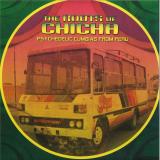
The Roots of Chicha, compiled by Barbès Records, was originally released in 2007 and became the first recording to popularize psychedelic cumbia around the world.
From the late 60's through the 80's, Peruvians invented a new popular musical hybrid inspired by music from the Americas. In 1968, Enrique Delgado released his first record on Odeon with his new group, Los Destellos, single-handedly creating Peruvian cumbia. He codified the genre early on by using the electric guitar as the primary melodic instrument, and mixing cumbia rhythms with folkloric huaynos, criollo voicings, Cuban guarachas and guajiras, rock, boogaloo, surf, psychedelia, oriental music, classical music, and bits and pieces from Brazil, France, Chile... All Peruvian cumbia bands for the next thirty years would end up drawing from the exact same sources (Grupo Celeste, Los Mirlos, Juaneco Y Su Combo, Manzanita Y Su Conjunto...).
This new wave of Peruvian cumbia came to be known as chicha. Chicha is originally the name of an alcoholic drink, made of fermented maize, which the Incas were especially fond of. In the past thirty years, however, the word has taken on a pejorative connotation. Peruvian cumbia started being called chicha in the late 70s, around the same time that the music came to be viewed as the expression of the slums – the pueblos jovenes. Little by little, the word became an adjective, and people now talk of chicha culture, chicha press, chicha architecture, even of a chicha president, and none if it – you guessed right – is meant as a compliment. Chicha suggests corruption, shady deals, and cholos – a derogatory term for a person of Andean heritage that, of late, is being reclaimed and worn as a badge of honor by the very cholos it was supposed to demean in the first place.
- A1: See Saw
- A2: Raise Your Hand
- A3: Uptight
- A4: Barefootin
- A5: Soul Man
- A6: I Heard It Through The Grapevine
- A7: Sitting On The Dock Of The Bay
- A8: It's A Man's Man's Man's World
- A9: In The Midnight Hour
- B1: Vehicle
- B2: Don't Fight It
- B3: Land Of 1000 Dances
- B4: Treat Her Right
- B5: Show Me
- B6: The Beat Goes On
- B7: Baby Baby
- B8: Ain’t No Mountain High Enough
Following our first LP of Tom Jones’s finest soulful performances on the radio, “Soul Man”, we present a second album of soul songs that we think he should have released but never did. This time we concentrate on his TV performances, the bulk of which come from 1969 and reflect his personal preference for covering Stax, Atlantic and Motown material. So put aside your preconceptions if you have any and listen to his collaborations with Aretha, Smokey, Janis, Cher, Dusty and don’t forget that Wicked Wicked Pickett. With a tight, funky band led by Herbie Flowers, this is Big Band Soul at its very best.
- A1: Born-A-Mc
- A2: Ghetto Pop Life Intro
- A3: Ghetto Pop Life
- A4: Omega Supreme
- B1: What U Sittin On? Feat Tha Liks
- B2: The Only One
- B3: Take Care Of Business Feat J-Zone
- B4: That Brooklyn Shit
- C1: Yoo-Hoo!
- C2: Copy Cats Feat Prince Po From Organized Konfusion
- C3: Don't Do Drugs
- C4: Medieval Feat The Pharcyde
- D1: Bush Boys
- D2: Here We Go Again
- D3: I'ma Doomee (Love Letter)
- D4: Knuckle Sandwich
Black Vinyl[27,69 €]
Ghetto Pop Life was Danger Mouse’s first full length album on Lex and a hip hop classic, harking back to the sound of the early 90s East Coast and resurrecting Brooklyn’s most soulful thug MC, Jemini The Gifted One. Incorporating a full church choir on the title track, Danger Mouse also brings in heavy hitting guest rappers J-Zone, Tha Alkaholiks, The Pharcyde and Prince Po. In the words of the NME "Ghetto Pop Life is a funk-fuelled hip hop record that virtually orders you to get down’. LEX010LPRT was originally an exclusive variant but now available to all.
- A1: Born-A-Mc
- A2: Ghetto Pop Life Intro
- A3: Ghetto Pop Life
- A4: Omega Supreme
- B1: What U Sittin On? Feat Tha Liks
- B2: The Only One
- B3: Take Care Of Business Feat J-Zone
- B4: That Brooklyn Shit
- C1: Yoo-Hoo!
- C2: Copy Cats Feat Prince Po From Organized Konfusion
- C3: Don't Do Drugs
- C4: Medieval Feat The Pharcyde
- D1: Bush Boys
- D2: Here We Go Again
- D3: I'ma Doomee (Love Letter)
- D4: Knuckle Sandwich
Gold Vinyl[27,69 €]
Ghetto Pop Life was Danger Mouse’s first full length album on Lex and a hip hop classic, harking back to the sound of the early 90s East Coast and resurrecting Brooklyn’s most soulful thug MC, Jemini The Gifted One. Incorporating a full church choir on the title track, Danger Mouse also brings in heavy hitting guest rappers J-Zone, Tha Alkaholiks, The Pharcyde and Prince Po. In the words of the NME "Ghetto Pop Life is a funk-fuelled hip hop record that virtually orders you to get down’. LEX010LPRT was originally an exclusive variant but now available to all.
Rote splatter Vinyl. Nach über 16 Monaten ohne frische Musik sind KAFFKIEZ zurück und kündigen direkt ein neues Album für den 30.01.2026 an. Noch vor 5 Jahren waren die Shows dieser Band nur von Freunden & Verwandten besucht. Mittlerweile finden die Familientreffen der Rosenheimer Bande in großen Hallen statt und die ansteckende Leichtigkeit der Band verbindet weit über ihre Musik hinaus. Wie die Nachbarsjungs, mit denen man immer noch gerne eine Runde um den Block dreht, stehen KAFFKIEZ für eine durchdringende Befreiung von Alltagslasten und ein Augenzwinkern, das die Sorgen auf morgen vertagt. Die Jungs der Band machen klar, um was es ihnen geht. WIR. Ein Album das Zusammenhalt und Gemeinschaft durch und über die Musik hinaus manifestiert. Eine Einladung an alle Fans von lebenshungrigen Gefühlen, langen Sommerabenden und treibender Leichtigkeit. Wer schon länger Teil der KAFFKIEZ Family ist, wird sich über die gut bekannten und unaufhaltsam nach vorne marschierenden Rhythmen & die schrammelnden Gitarren direkt abgeholt fühlen. Doch der Sound des kommenden & dritten Studioalbums der Band hat an Druck und Kraft gewonnen. Elemente wie Bläser und Synths strecken die Hände in neue Richtungen aus ohne zu vergessen, wo sie herkommen. Ein Familienausflug der Extraklasse.
- I Know Where Mark Chen Lives
- Falling Into It
- All My Friends Are So Depressed
- Well, Whatever It Was
- I Used To Go To This Bar
- After All You Put Me Through
- The Opossum
- Well, Don't It Seem Likeyou've Been Here Before?
- Grey Guitar
Clear Vinyl[23,49 €]
Joyce Manor are California pop-punk legends and I Used To Go To This Bar is this epochal band operating at the top of their game. They continue to deliver relentlessly satisfying rock music in a manner that makes it look simply effortless. The Torrance, California-hailing trio of Barry Johnson, Chase Knobbe, and Matt Ebert are at a point in their career where their position as one of the most beloved rock bands is a foregone conclusion. Their seventh album finds the group continuing to find rich new veins to tap in their short-and sweet songcraft without losing an ounce of bite that gained them such repute in the first place. I Used To Go To This Bar further situates Joyce Manor in the rich lineage of their influences and inspirations. Think AFI"s rapid-fire burn, Weezer"s indelible power-pop acumen, and the dusky emotionalism of The Smiths while further establishing them as leading lights in the current rock landscape. The fresh burst of inspiration that fuels I Used To Go To This Bar proves that Joyce Manor are far from content to rest on such laurels, moving forward with their sound and style in a way that reminds you of how they got to this point in the first place. Catch them live at Coachella 2026.
- 1: For The First Time, Again
- 2: I Believe In Love
- 3: You're Not My Baby Tonight
- 4: Matter Of Taste
- 5: Sing How I Feel
- 6: Goodbye My Love
- 7: Got A New Car
- 8: Ooh
- 9: Down So Bad
- 10: I Know
- 11: Deepest Blue
- 12: Waiting So Long
ORANGE COLOURED Vinyl[21,81 €]
Rough Trade Records freut sich, das fantastische Debütalbum von Tyler Ballgame ankündigen zu dürfen: For the First Time, Again erscheint am 30. Januar 2026. Mit zwölf Songs, die zwischen Classic Rock, Indie und Americana oszillieren - Ballgame zeigt, wie große Stimmen und starke Melodien Herzen bewegen und Horizonte öffnen können. Die erste Single I Believe in Love, eine hymnische Mischung aus Lennon und Orbison, ist ab sofort mit Video erhältlich - gefilmt von engen Freunden in Ballgames WG. Entstanden am Küchentisch und inspiriert vom Rat seines Produzenten Jonathan Rado ("Schreib den größten Song der Welt"), wurde daraus eine Ode an die Liebe selbst - und an die Narren, die sie macht. Produziert von Jonathan Rado (Foxygen, Weyes Blood, Miley Cyrus) und Ryan Pollie (Los Angeles Police Department), bringt das Album analoge Wärme, akustische Energie und üppige Harmonien zurück - mit Unterstützung von Amy Aileen Wood (Fiona Apple) am Schlagzeug und Wayne Whitaker am Bass. Ballgames Weg hierhin war alles andere als geradlinig: Vom Kellergeschoss in New England über Coverband-Auftritte in Rhode Island bis hin zum mutigen Neustart in Los Angeles. Offenheit, Risiko und der Glaube an sich selbst prägen seine Songs - und werden live zur großen Bühne.
- In Search Of A Revival Part 1
- Strawberry Kiwi
- Thunderball
- California
- A Little Something
- Here Comes Ben
- In Search Of A Revival Part 2
- Saraswati Puja
- Hollywood Cold
- Tall Grass
- Wildfire
- Honey Bea
Ltd Sky Blue Vinyl[23,49 €]
Auf ihrem Debütalbum ist eine lange Liste von Elite-Musikern aus der Daptone-Familie zu hören, die alle mit ihrem Talent dazu beigetragen haben, Pazners kreative Vision zu verwirklichen. Das Album wurde mit großem Beifall aufgenommen und erlangte schnell den Ruf als eines der besten Instrumental-Soul-Alben des Jahrzehnts – mit Rezensionen von Pitchfork, American Songwriter, Brooklyn Vegan, Rolling Stone u.v.a.. Im digitalen Bereich wurde das Projekt durch ein unglaublich starkes organisches Wachstum bei den DSPs unterstützt, wobei die Streaming-Zahlen alle Erwartungen übertrafen und es zu einem Durchbruchserfolg sowohl für Daptone als auch für Pazner machten. Nach dem Erfolg seines Debütalbums verbrachte Pazner die nächsten Jahre damit, den musikalischen Kosmos zu erkunden – er schrieb Songs mit Lee Fields und begleitete ihn als Keyboarder auf Tournee. In dieser Zeit gründete er auch eine Familie. Diese Reihe von einschneidenden Lebensereignissen bereitete den Boden für das kommende Album „In Search of a Revival“ (Daptone Records).
Dieses Mal, ganze 10 Jahre nach der Veröffentlichung des selbstbetitelten Debütalbums, komponierte, arrangierte und produzierte Pazner das gesamte Album selbst. Mit einer Mischung aus Musikern, die bereits auf dem Debüt zu hören waren, sowie einer Handvoll Freunden und Mitwirkenden, die er auf seiner musikalischen Reise kennengelernt hat, bildete er ein 17-köpfiges Ensemble aus den besten Musikern der Szene. Während „The Olympians“ stark vom klassischen Soul-Stil von Curtis Mayfield und James Brown beeinflusst war, lehnt sich „In Search of a Revival“ an die goldene Ära der Wrecking Crew, die üppigen Texturen der Gold Star Studios, Vintage-Filmmusik und die eher unbekannten Ecken der cineastischen Klanglandschaften an. Von den kaskadenartigen Harfenklängen, die „Sirens of Jupiter“ eröffnen, bis hin zur treibenden Horns von „Sagittarius By Moonlight“ liefern The Olympians einen ganz eigenen neuen Sound: einen alten Traum vom fernen Griechenland, gemalt in üppigen, filmischen Arrangements über harten Rhythmen. In Search of a Revival ist auf dem besten Weg, ein weiterer Daptone-Klassiker zu werden – ein Album, das nicht nur die Traditionen des Instrumental-Soul würdigt, sondern auch einen kühnen neuen Standard für das Genre in den kommenden Jahren setzt.
Auf ihrem Debütalbum ist eine lange Liste von Elite-Musikern aus der Daptone-Familie zu hören, die alle mit ihrem Talent dazu beigetragen haben, Pazners kreative Vision zu verwirklichen. Das Album wurde mit großem Beifall aufgenommen und erlangte schnell den Ruf als eines der besten Instrumental-Soul-Alben des Jahrzehnts – mit Rezensionen von Pitchfork, American Songwriter, Brooklyn Vegan, Rolling Stone u.v.a.. Im digitalen Bereich wurde das Projekt durch ein unglaublich starkes organisches Wachstum bei den DSPs unterstützt, wobei die Streaming-Zahlen alle Erwartungen übertrafen und es zu einem Durchbruchserfolg sowohl für Daptone als auch für Pazner machten. Nach dem Erfolg seines Debütalbums verbrachte Pazner die nächsten Jahre damit, den musikalischen Kosmos zu erkunden – er schrieb Songs mit Lee Fields und begleitete ihn als Keyboarder auf Tournee. In dieser Zeit gründete er auch eine Familie. Diese Reihe von einschneidenden Lebensereignissen bereitete den Boden für das kommende Album „In Search of a Revival“ (Daptone Records).
Dieses Mal, ganze 10 Jahre nach der Veröffentlichung des selbstbetitelten Debütalbums, komponierte, arrangierte und produzierte Pazner das gesamte Album selbst. Mit einer Mischung aus Musikern, die bereits auf dem Debüt zu hören waren, sowie einer Handvoll Freunden und Mitwirkenden, die er auf seiner musikalischen Reise kennengelernt hat, bildete er ein 17-köpfiges Ensemble aus den besten Musikern der Szene. Während „The Olympians“ stark vom klassischen Soul-Stil von Curtis Mayfield und James Brown beeinflusst war, lehnt sich „In Search of a Revival“ an die goldene Ära der Wrecking Crew, die üppigen Texturen der Gold Star Studios, Vintage-Filmmusik und die eher unbekannten Ecken der cineastischen Klanglandschaften an. Von den kaskadenartigen Harfenklängen, die „Sirens of Jupiter“ eröffnen, bis hin zur treibenden Horns von „Sagittarius By Moonlight“ liefern The Olympians einen ganz eigenen neuen Sound: einen alten Traum vom fernen Griechenland, gemalt in üppigen, filmischen Arrangements über harten Rhythmen. In Search of a Revival ist auf dem besten Weg, ein weiterer Daptone-Klassiker zu werden – ein Album, das nicht nur die Traditionen des Instrumental-Soul würdigt, sondern auch einen kühnen neuen Standard für das Genre in den kommenden Jahren setzt.
- 1: Dirty Water
- 2: Destroyer
- 3: Scream Out Loud For Love
- 4: Police Bastard
- 5: More!
- 6: Hole In The Ground
- 7: We Take All
- 8: Eazy
- 9: Spring That Never Ends
- 10: Sad Song Man
- 11: Chevy Van
- 12: Tail Down
- 13: Leather
- 14: All Right, All Night
Sweatmaster releases a new full-length album after a 15-year hiatus via Svart Records Sweatmaster, one of the aristocrats of Finnish garage rock, is making a big comeback with the release of their fifth album More! in January 2026. After the release of their 2010 album Dig Up the Knife, the band took a long break, which ended a few years ago with live performances both domestic and abroad. At the same time, new material began to emerge in the rehearsal room, and the band quickly found a common strategy for working on it. "We were unanimous about the strengths of our band and decided to get to the heart of the matter. The main idea was to make straightforward songs carried by the vocals. The kind that would work well live with our aggressive playing style," says the band's drummer Matti Kallio. Svart Records will release Sweatmaster's fifth album early next year. More! is a sharp package of fourteen songs that has not been polished to death. "We wanted a raw and electric sound for the new album, built tightly around the three of us playing. The aim was to stick to Sweatmaster's original energy and not spread ourselves too thin. However, despite our efforts, the intervening years brought some new tones with them," guitarist Mikko Luukko explains the background of the new album. The album's first single will be released on Friday, September 19th, and according to singer-bassist Sasu Mykkänen, Destroyer is the essence of Sweatmaster. "The drum fill draws you into the pull of the electric triangle. The guitar taps at the ballads and wants nothing more than to drive the rhythm until the passionate vocals take over. The song doesn't lead anywhere, it's already there. 2 minutes, 37 seconds. Wham bam. Here you go." More! is available for pre-order now at Svart’s webstore on Svart exclusive vinyl, limited coloured vinyl, classic black vinyl, and CD. Release date January 30th, 2026.