With the buzz around her building, Priddy made her biggest splash with the 2021 release of her debut album, The Eternal Rocks Beneath. The 10 self- penned tracks are delivered with a maturity and depth that belie the fact that this is her first full length release. At times tender, at times carrying a darker edge, the stories she weaves are transporting. Not surprising then that Nick Drake, John Martyn, Tunng and Scott Matthews are amongst her many influences.
The album was recorded over a 2-year period at Rebellious Jukebox studios, a little basement studio hidden beneath inner-city Birmingham and presided over by masterful producer Simon Weaver. The ensemble cast of musicians, including a sweeping string section, occasionally cut through by raw electric guitar and drums, as well as Richard March (Pop Will Eat Itself) on double bass and Mikey Kenny on fiddle, enhance Priddy's command of melody and lyricism and provide the perfect backdrop for the feelings of nostalgia and timelessness that underpin the record. Many of the songs were written during Priddy's teenage years and early twenties and reference themes of childhood and distant memories.
The title, 'Eternal Rocks Beneath' reflects this is Priddy's first album; the culmination of her earlier life experiences and the bedrock for whatever follows next.
Aided by her producer, the Osaka- born saxophonist Hisatsugu Suzuki, and his band, Wong has created a stylish jazz album brimming with her trademark soulful vocals drizzled over syncopated grooves. Taking well- known songs from the repertoires of pop music acts as diverse as Phil Collins ("Against All Odds"), Pet Shop Boys ("It's A Sin"), Dead Or Alive ("You Spin Me Round") and Toploader ("Dancing In The Moonlight"), Wong refashions her source material to reflect the cool jazz-flavored sophistication that is at the heart of her unique artistry. From emotive ballads to buoyant uptempo material, Susan Wong reveals her outstanding interpretative skills, revealing that she is a song stylist supreme.
'Matriarchy' is a rebirth for the celebrated, multi- faceted artist, as girli further explores her sound and takes the reins with full creative control, truly cementing her place as a cult figure and ambassador for the next gen of LGBTQIA+ music.
girli's passions have always migrated beyond music and she continues to use her platform to ignite conversations around feminism, sexuality, identity and mental health, opening up topics that most have always shied away from. Representation matters more so now than ever, and girli is ready to rewrite the rules.
There are few Jamaican Artists with such an impressive career as George Dekker. For his brand new studio solo album Right To Be Here George Dekker has teamed up with renowned producers Mafia and
Fluxi. The Heywood Brothers Leroy (Mafia) & Dave (Fluxy) have been producing, remixing and touring for over 35 years now and have worked with a very impressive list of artists over the years ranging from touring with James Brown, Maxi Priest to doing remixes for Janet Jackson, Sting, Gypsy Kings and more.
Active since 2001, Ayyuka was one of the first bands to look back at 70’s Turkish music to find a new voice. Not caught up in the Retromania but reincarnating Turkish Psychedelic within their own style, the band managed to develop an unmistakeable unique sound. Inspirations of Dick Dale, John Frusciante, and local heroes like Erkin Koray, Orhan Gencebay, make their music more guitar oriented but their fascination with film music and improvisation creates unexpected twists within their songs. Right after their eponymous debut in 2007, the band shared stage with Sonic Youth and Jonathan Richman. Heading to a completely instrumental music, their 3rd studio recording “Sömester” had already become a cult album for record collectors. They’ve collaborated with Orlando Julius, Ilhan Ersahin and had guests on almost every album. Their latest full length “Maslak Halayı” was a creative collaboration with Calibro35 genius Tommaso Colliva. The worldwide hype of "Yukadans” will now be followed by their upcoming EP "Zaman Ziyan”, showcasing four brand new instrumental tracks that will transport listeners through a kaleidoscope of musical landscapes, experimenting with techniques of music writing and flirting with genres like afro-beat, funk, dub or arabesque. Save the date for their very first performance of these, live at babylon, as a part of Akbank Jazz Festival.
The last, and previously unreleased, recordings from the legendary and world renowned Swedish psychedelic organist Bo Hansson before he passed away. (Jimi Hendrix was a fan and recorded his song "Tax Free"). Here you can listen to Bosse in fine form together with his lively organ student and keyboardist extraordinary; Eric Malmberg, joined by drummer Niklas Korsell, creating mesmerizing and ethereal space jazz. The music seems to contain information about a deep perspective that questions both time and space and recognize the universe unfolding its abstract process of creation.
Die norwegische Punkband Aktiv Dödshjelp aus Oslo hat sich in den vergangenen Jahren in ihrer Heimat durch ihre explosiven Liveshows und nicht zuletzt durch ihre supermelodiösen Songs mit witzigen und ironischen Texten einen hervorragenden Ruf erspielt. In den 17 Jahren seit ihrer Gründung im Jahre 2007 ist die Band pausenlos im Inland und Ausland getourt und kann nun endlich ein von den Fans lange gefordertes Album präsentieren! Das Album ?Send Dudes? liefert 12 (na OK: 11) kraftvolle und hochmelodische Titel zwischen Punk und Metal , die nicht nur Fans von Bands wie Turbonegro, Kvelertak und The Good The Bad and The Zugly aufhorchen lassen.
Caterina Valente hat die Musikwelt über Jahrzehnt hinweg begeistert. Nun kehrt sie mit einer besonderen Veröffentlichung zurück: Erstmals seit vielen Jahren erscheint eine Compilation, die Material aus ihrem berühmten Telefunken-Repertoire enthält. "Valente International" ist ab dem 3. Mai 2024 als LP über Warner Music erhältlich und bietet einen einzigartigen Einblick in das Werk einer der herausragendsten Stimmen der Musikgeschichte.
DIIV - Andrew Bailey, Colin Caulfield, Ben Newman und Zachary Cole Smith - kündigen ihr viertes Album "Frog in Boiling Water" an. "Frog In Boiling Water", das von Chris Coady produziert wurde und über Fantasy Records erscheinen wird, war ein vierjähriger Prozess, der die Band fast zum Scheitern gebracht hätte, bevor das Album fertiggestellt war.
Mit dem Ziel, ihren Sound voranzutreiben & eine Platte zu machen, die sie herausfordert, und die Band zum ersten Mal demokratisch behandelt, begaben sich DIIV auf eine neue Reise, sowohl individuell als auch kollektiv. Das Ergebnis sind 10 Songs, die eine neue lyrische und musikalische Tiefe ausschöpfen, wobei sich diese beiden Hälften in einem reflektierenden und eindringlichen Ganzen spiegeln. Es ist ein hypnotisches Zeugnis des Durchhaltens und der Vorstellung, dass es auf der anderen Seite etwas anderes gibt, während man hier, in dem sich langsam erhitzenden Wasser des Hier und Jetzt bleibt.
DIIV - Andrew Bailey, Colin Caulfield, Ben Newman und Zachary Cole Smith - kündigen ihr viertes Album "Frog in Boiling Water" an. "Frog In Boiling Water", das von Chris Coady produziert wurde und über Fantasy Records erscheinen wird, war ein vierjähriger Prozess, der die Band fast zum Scheitern gebracht hätte, bevor das Album fertiggestellt war.
Mit dem Ziel, ihren Sound voranzutreiben & eine Platte zu machen, die sie herausfordert, und die Band zum ersten Mal demokratisch behandelt, begaben sich DIIV auf eine neue Reise, sowohl individuell als auch kollektiv. Das Ergebnis sind 10 Songs, die eine neue lyrische und musikalische Tiefe ausschöpfen, wobei sich diese beiden Hälften in einem reflektierenden und eindringlichen Ganzen spiegeln. Es ist ein hypnotisches Zeugnis des Durchhaltens und der Vorstellung, dass es auf der anderen Seite etwas anderes gibt, während man hier, in dem sich langsam erhitzenden Wasser des Hier und Jetzt bleibt.
DIIV - Andrew Bailey, Colin Caulfield, Ben Newman und Zachary Cole Smith - kündigen ihr viertes Album "Frog in Boiling Water" an. "Frog In Boiling Water", das von Chris Coady produziert wurde und über Fantasy Records erscheinen wird, war ein vierjähriger Prozess, der die Band fast zum Scheitern gebracht hätte, bevor das Album fertiggestellt war.
Mit dem Ziel, ihren Sound voranzutreiben & eine Platte zu machen, die sie herausfordert, und die Band zum ersten Mal demokratisch behandelt, begaben sich DIIV auf eine neue Reise, sowohl individuell als auch kollektiv. Das Ergebnis sind 10 Songs, die eine neue lyrische und musikalische Tiefe ausschöpfen, wobei sich diese beiden Hälften in einem reflektierenden und eindringlichen Ganzen spiegeln. Es ist ein hypnotisches Zeugnis des Durchhaltens und der Vorstellung, dass es auf der anderen Seite etwas anderes gibt, während man hier, in dem sich langsam erhitzenden Wasser des Hier und Jetzt bleibt.
»All The Cowboys« war das zweite Soloalbum von Pete Townshend und wurde 1982 veröffentlicht. Es wurde von Chris Thomas in verschiedenen Aufnahmestudios in London produziert. »All the Best Cowboys Have Chinese Eyes« enthält Kompositionen, die aus späteren Alben von The Who gerettet wurden, und wurde knapp drei Monate vor ihrem Album »It's Hard« veröffentlicht. Das Album wurde gut aufgenommen und erreichte auf beiden Seiten des Atlantiks die Top 50 der Charts. Diese schwarze Vinyl-Version wurde von Miles Showell in den Abbey Road Studios mit einer Half-Speed-Mastering-Technik bearbeitet, die einen hervorragenden Vinylschnitt ergibt.
White City (A Novel) wurde 1985 veröffentlicht und war das 5. Soloalbum von Pete Townshend. Das Album erzählt eine Geschichte von kulturellen Konflikten, sozio-kulturellen Spannungen und jugendlichen Hoffnungen und Träumen in den 1960er Jahren. Produziert wurde das Album von Chris Thomas und enthält Gastauftritte von David Gilmour, Clem Burke und John ’Rabbit’ Brunswick. Das Album, das die Single Face the Face and Give Blood enthält, erschien auch als Video im Langformat Diese schwarze Vinyl-Version wurde von Miles Showell in den Abbey Road Studios mit einem Half-SpeedMastering-Verfahren bearbeitet, das einen hervorragenden Vinylschnitt ergibt
Bogus Blimp. The Spectacular Rock Orchestra. Like the vaudeville acts of old they offer tuneful melodrama to the masses. Each song is another act in a play venturing from dark, exotic, and bombastic monuments to stumbling and naked moments of beauty. Bogus Blimp combine the dark 30's of Europe with the avantgardism of our times' rock 'n roll into a genre of its own making: Cabaret Core, Silent Movie Punk, or Horror Pop
Born in Rio de Janeiro, Elizete Cardoso (1920-1990) was one of the best-known voices of Bossa Nova, enjoying considerable success and popularity in both Brazil and the entire Americas. In 1958, Vinicius de Moraes invited Cardoso to sing on an album featuring compositions he co- wrote with Antonio Carlos Jobim. The result, Cancao do Amor Demais, in its entirety - , one of her biggest selling albums and the earliest authentic Bossa Nova LP.
Although both Ella Fitzgerald and Louis Armstrong had met and performed together previously, they wouldn't be heard on record together until January 18, 1946, when they waxed a single 78-rpm disc ("You Won't Be Satisfied) for Decca. They went on to record a few more singles together until in 1956 when producer Norman Granz paired the two together between 1956 and 1957 on three albums that were both critically acclaimed and commercial successes - appealing to audiences in and beyond the confines of jazz per se: Ella & Louis, its sequel Ella & Louis Again, and the selection of songs from George Gershwin's opera Porgy & Bess. While Porgy & Bess was recorded with a big band, the first two albums (featured in this release) were made in small group formats with the great Oscar Peterson Trio plus drummers Buddy Rich or Louie Bellson, resulting in some of the most fascinating jazz and popular music ever produced
What is the connection between talented Theremin player and founder member of the Buggles Bruce Woolley and psychedelic pop band The Honey Pot? Well, in he autumn of 2008 Bruce kindly listened to Icarus Peel's newly-completed album Tea At My Gaffe" and suggested that he should stay on the psychedelic journey. Soon after, Icarus met DJ Marrs Bonfire of Bay FM, who featured the album on one of his "Smart Set" shows. The challenge from Marrs was for Icarus to write a Revolver" style album with shorter songs, and thus "To The Edge" was composed and produced with Wayne Fraquet on drums and Jacqueline Bourne and Iain Crawford on vocals.
Deluxe 180g vinyl. Art Edition LP includes set of six 12”x12” art cards.
The follow-up to Kee Avil's acclaimed 2022 debut Crease: "A stunning debut" (The Quietus); "A whiplash style of uninhibited exploration" (The Wire); "Kee Avil's debut is a force" (Foxy Digitalis); "A work of Frankensteinian wonder" (Electronic Sound); "A tightly coiled, finely wrought vision of avant-pop" (Exclaim); "A debut of fiendish creativity" (Bandcamp Album Of The Day / Albums Of The Year) Kee Avil's music is both adventurous and intimate, intellectually challenging and emotionally resonant. The Montréal guitarist and producer's 2022 debut LP Crease garnered plaudits from outlets like The Wire, The Quietus, Mojo and Foxy Digitalis, picking up a Canadian Juno Award nomination and Bandcamp Album Of The Day and Albums Of The Year along the way. Its intricate construction, unnerving atmospheres, and knife-edge take on avant-pop prompted comparisons to early PJ Harvey, This Heat, and Gazelle Twin. A remix EP with work by claire rousay, Ami Dang, Cecile Believe, and Pelada brought collaborative perspectives to four Crease tracks, offering new pathways within those songs. With Spine, Kee Avil strips back her heavily textured compositions, opening up a much rawer sound. She calls it folk… and while traditionalists might scoff, this is urgent music that reflects the precarity of modern life, as well as the jarring mixture of electronic and real-world interactions that have become the fabric of our day-to-day experiences. There's a hypnotic post-punk somnambulance to it all, using the repetition and fracturing of melodic phrases interwoven with delicate electronics to create curious and persistent hooks. While not a concept album, themes of time's passage, remembrance, and decay crop up across multiple tracks. Each track intentionally only has four elements - guitar, electronics, and two other instruments, with Kee's voice and guitar pushed to the front. Within this minimalist framework, the juxtaposition of beauty and discomfort that is key to the Kee Avil sound stands out in skin-prickling relief. "We're shaped by many versions of ourselves," says Avil. "I was looking back at these versions of myself and what could have been, what didn't end up being and what did end up being, and going back like that through time. Seeing the future, the past." Spine was written in Kee Avil's home studio after a lapse in writing while touring Crease and working on other projects. She is a well-known and respected member of the Montréal experimental scene, and formerly ran Concrete Sound Studio with Zach Scholes, who continues to work with her as a producer on Spine. Compared to the three years that went into making her debut, Spine emerged in a matter of months - a process that may also be a factor in its intensity and sharpness: "This record was much harder, like it was really discovering everything from scratch." In her desire to not simply replicate or extend the sound of Crease, she felt she had to rip up the rule book, write in a different way, and pare back songs against her usual instincts. Sometimes, when we work against our ingrained habits, we get to the core of who we really are. Spine is an exercise in that process. Without over-intellectualizing or being didactic, it hits immediately and emotionally, especially if you are a person who has spent much time in the process of self-examination. Kee's voice hisses, whispers, and chants; her guitar bends and rings; electronics skitter and crackle; violin creaks like a door in the wind. There is something so evocative about the atmospheres she creates that it's easy to overlay one's own feelings onto her work, but to do that wholly would be to overlook one of the most important things about Spine: Kee Avil's clear and thoughtful vision. This isn't just the next step forward in her artistic trajectory; it's a stunner of a record that stands on its own, a bracing and thrilling listen that has much to reveal about the contradictions inherent in being human. - jj skolnik
As mui zyu, Hong Kong British artist Eva Liu searches for a portal, wandering between nothing and everything in her pursuit of peace. On her second full-length album nothing or something to die for she looks outward, embracing the chaos with each tentative step. mui zyu's debut album Rotten Bun for an Eggless Century saw her explore her heritage, as she dived inward to find acceptance and healing. Now, instead of searching for answers from the inside, Liu raises her head to look at the world around her. As she attempts to understand the complexities and significance of human existence, she observes apathy alongside overwhelming chaos; the technological advancements of connection with the lack of meaningful bonds and the frustrations of upholding standards set by others. nothing or something to die for tries to decipher these juxtaposing truths, holding both the weight of those trying to destroy the world with the utter futility of it all. Working with co-producer and fellow Dama Scout band member Luciano Rossi, the sonic world of nothing or something to die for encapsulates both the fleeting tranquility of serenity and the dissonance in chasing it. After all, our reality can change in an instant. Like the psychedelic tones of Ryuichi Sakamoto's Thousand Knives, the urgent techno-pop of Miharu Koshis Parallelisme or the eerie wanderings of Angelo Badalamenti's work for Twin Peaks, nothing or something to die for expertly toes the line between disorder and clarity
After her success with The Mamas & The Papas and two albums under the Mama Cass alias, the 1972 album Cass Elliot was her first record under her real name. After her success with The Mamas & The Papas and two albums under the Mama Cass alias, the 1972 album Cass Elliot was her first record under her real name. The album created the atmosphere of 1930’s Hollywood with a beautiful cover shot by George Hurrell. The music consisted of great songs written by Judee Sill, Bobby Darin, and Bruce Johnston of the Beach Boys. These perfectly showcase the amazing vocalist that Cass was.
Cass Elliot is available as a limited edition of 1000 individually numbered copies on silver coloured vinyl, housed in a gatefold sleeve.
Es gibt nur einige wenige große Bands auf unserem Planeten, die man innerhalb weniger Sekunden unfehlbar identifizieren kann. Das einzigartige
Melodieverständnis, die geschmackvolle Instrumentierung, die richtige Balance aus Tiefe und Eingängigkeit, und dann natürlich diese charismatische
Stimme: Magnum sind Magnum!
Dies gilt auch für ihr neuestes Studioalbum ‚Here Comes The Rain‘, das am 12. Januar 2024 über Steamhammer/SPV als CD+DVD, Doppel-Vinyl-LP, als
Boxset und als Digitalversion veröffentlicht wird und einmal mehr beweist: Stimmungsvoller kann klassische Rockmusik kaum klingen.
Das fantasievolle Artwork stammt wie gewohnt aus der Feder des großartigen Rodney Matthews, der bereits für zahlreiche Magnum-Scheiben das
äußere Erscheinungsbild an die atmosphärisch dichte Musik der Band perfekt angeglichen hat.
Kein Zweifel: Mit ‚Here Comes The Rain‘ ist Magnum in der Besetzung Catley, Clarkin, Keyboarder Rick Benton, Bassist Dennis Ward und Schlagzeuger
Lee Morris erneut ein farbenfrohes, abwechslungsreiches und in jeder Sekunde inspiriertes neues Studioalbum gelungen.
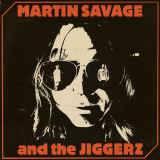
Who said rock'n'roll is dead?! Maybe Dr Frankenstein's made a rock 'n' roll monster cuz it sure seems alive to me. We introduce to you the debut LP of MARTIN SAVAGE AND THE JIGGERZ! All three gentlemen in this power trio have a solid background in the rock 'n' roll business which we won't bore you with here. The band has already released a slew of solid 7" records which we won't bore you with here either. Get on the internet ya lazy sods! Anyway, back to this here album: recorded by Ed Deegan at the esteemed Gizzard Recording Studio up in Fish Island, East London, on magnetic tape it delivers 12 solid senders of pure heart-on-the-sleeve rock 'n' roll action! From the blastin' drumroll of opener 'Between the Lines', a staple in the band's live set, via punk ballad anthem 'Down the Line' leading up to another live favourite called 'Boomerang'. There are covers of should-have-been-legends with bad-ass names like the Backstabbers or the Stripes. There are songs about shitty jobs, troublesome relationships, life on the high and life on the low. It's got everything you need really. Whether ya dig Boston 1976, Medway 1986 or Memphis 1996 there's something for you here. You can call it punk, pub rock, garage, glam or any other label you like but we just call it good ole rock 'n' roll. Hope ya dig!
Bill MacKay and Drag City are delirious with pride to announce the discovery of a new territory: Locust Land, a record which seeks to reflect the nerve-shredding consciousness run amok in our world today - and somehow allay it with sound. Bill"s music is a visceral crackling where it meets the air, and Locust Land can"t help but reflect its era more than any other in his discography. It"s been five years since the release of Fountain Fire - but in the interim, Bill has barely stopped moving, collaborating with artists across the spectrum, including cellist Katinka Kleijn, banjo player Nathan Bowles and keyboardist Cooper Crain. He"s also contributed to recordings by Steve Gunn, Ryley Walker, Bill Callahan & Bonnie Prince Billy (Blind Date Party), and Black Duck (on their self-titled record featuring Douglas McCombs and Charles Rumback). Forget five years - how"d he even get Locust Land squeezed out of his temporal lobes? Bill"s sense of music as art is constantly modulating - lifting off from where it is found and naturally migrating to some other place. Sometimes, that"s elsewhere - others, it"s simply to be found deeper inside the starting point. And so, the action of moving on informs the landscape of Locust Land. This manifests in several different ways. A restless energy and urgency is repeatedly felt - in the driving momentum of "Keeping in Time," "Glow Drift," and "When I Was Here" - while a dogged persistence radiates from the tone colors and percussion of "Oh, Pearl." Mating a dirge-like desolation with sparkling guitars, "Radiator" adds darkness and depth. The sense of searching, displacement and longing in vocal tracks "Keeping in Time," "Half of You," and "When I Was Here" speak literally to the tumult of current vibrations. Within the arrangements, there"s also departure from previous norms - in addition to the brilliant guitar work for which he is known, Bill plays a variety of keyboards, from piano to organ to synth, extending his music with the available voicings, while enriching the sound field without abandoning his signature brevity. For fans of his singing, and following in the recent tradition of Fountain Fire as well as his collaboration with Nathan Bowles, Keys, Locust Land expresses with an increased vocal presence - and heightened engagement, with Bill"s words and melodies drawing us closer. Also different: on his previous solo recordings, Bill played every sound. Here, he has invited other illustrious Chicagoans to join him: Sam Wagster (The Father Costume, Mute Duo) plays bass on three songs, two of which feature the percussion playing of Mikel Patrick Avery (Natural Information Society, Jeff Parker, etc.). Additionally, Janet Beveridge Bean (Eleventh Dream Day, Freakwater) adds otherworldly vocal textures to the elegiac "Neil"s Field." Whether played alone or with companions, this music projects the strength of a universal collective. Even with a piece that might earlier have passed for blissful pastorale, Bill displays some declamatory motives. The reverie which opens the album, "Phantasmic Fairy," embodies both transcendent and desperate moods, with Bill"s ineffable slide guitar playing afloat, with organs and synths, in a dream state suffused with a sense of foreboding - a requiem, perhaps for the days of unencumbered bandwidth? On the other side of the album, the strength to continue to hope appears in the lifting melodicism/exoticism of the album-closing title track, leaving the listener with the sense of having achieved a hard-won space - a place of personal contemplation and dissent, one that everyone on the planet deserves to visit every single day on earth. With cover art also by Bill MacKay (the third of his albums on Drag City to feature his work), Locust Land stands as a thoroughly personal statement from Bill to everyone everywhere.
Bill MacKay and Drag City are delirious with pride to announce the discovery of a new territory: Locust Land, a record which seeks to reflect the nerve-shredding consciousness run amok in our world today - and somehow allay it with sound. Bill"s music is a visceral crackling where it meets the air, and Locust Land can"t help but reflect its era more than any other in his discography. It"s been five years since the release of Fountain Fire - but in the interim, Bill has barely stopped moving, collaborating with artists across the spectrum, including cellist Katinka Kleijn, banjo player Nathan Bowles and keyboardist Cooper Crain. He"s also contributed to recordings by Steve Gunn, Ryley Walker, Bill Callahan & Bonnie Prince Billy (Blind Date Party), and Black Duck (on their self-titled record featuring Douglas McCombs and Charles Rumback). Forget five years - how"d he even get Locust Land squeezed out of his temporal lobes? Bill"s sense of music as art is constantly modulating - lifting off from where it is found and naturally migrating to some other place. Sometimes, that"s elsewhere - others, it"s simply to be found deeper inside the starting point. And so, the action of moving on informs the landscape of Locust Land. This manifests in several different ways. A restless energy and urgency is repeatedly felt - in the driving momentum of "Keeping in Time," "Glow Drift," and "When I Was Here" - while a dogged persistence radiates from the tone colors and percussion of "Oh, Pearl." Mating a dirge-like desolation with sparkling guitars, "Radiator" adds darkness and depth. The sense of searching, displacement and longing in vocal tracks "Keeping in Time," "Half of You," and "When I Was Here" speak literally to the tumult of current vibrations. Within the arrangements, there"s also departure from previous norms - in addition to the brilliant guitar work for which he is known, Bill plays a variety of keyboards, from piano to organ to synth, extending his music with the available voicings, while enriching the sound field without abandoning his signature brevity. For fans of his singing, and following in the recent tradition of Fountain Fire as well as his collaboration with Nathan Bowles, Keys, Locust Land expresses with an increased vocal presence - and heightened engagement, with Bill"s words and melodies drawing us closer. Also different: on his previous solo recordings, Bill played every sound. Here, he has invited other illustrious Chicagoans to join him: Sam Wagster (The Father Costume, Mute Duo) plays bass on three songs, two of which feature the percussion playing of Mikel Patrick Avery (Natural Information Society, Jeff Parker, etc.). Additionally, Janet Beveridge Bean (Eleventh Dream Day, Freakwater) adds otherworldly vocal textures to the elegiac "Neil"s Field." Whether played alone or with companions, this music projects the strength of a universal collective. Even with a piece that might earlier have passed for blissful pastorale, Bill displays some declamatory motives. The reverie which opens the album, "Phantasmic Fairy," embodies both transcendent and desperate moods, with Bill"s ineffable slide guitar playing afloat, with organs and synths, in a dream state suffused with a sense of foreboding - a requiem, perhaps for the days of unencumbered bandwidth? On the other side of the album, the strength to continue to hope appears in the lifting melodicism/exoticism of the album-closing title track, leaving the listener with the sense of having achieved a hard-won space - a place of personal contemplation and dissent, one that everyone on the planet deserves to visit every single day on earth. With cover art also by Bill MacKay (the third of his albums on Drag City to feature his work), Locust Land stands as a thoroughly personal statement from Bill to everyone everywhere.
In one sense, it's easy for artists-songwriters, specifically-to express their feelings in their work. After all, that's what the lyrics are for! But it's much harder to convey emotional energy in how you play, slash at the guitar, and the structure of the music itself. That's precisely why Girl and Girl's Sub Pop debut, Call A Doctor, feels like such a vital, electrifying shock to the senses. Not since the early work of Car Seat Headrest or Conor Oberst's widescreen emotional brutality as Bright Eyes has indie rock managed to come across as this intimate and grandiose, as the Australian quartet led by Kai James lay a lifetime's worth of woes-mental health, the human race's planned obsolescence if you've been living on this cursed rock you know what we're getting at-across a canvas of indie rock that feels both timeless and in-the-moment. An audacious and aggressively tuneful blast of a record, Call A Doctor is an unforgettable first bow from Girl and Girl, whose origins lie in James and guitarist Jayden Williams jamming in his mother's garage in the afternoon after school. One afternoon, James' Aunty Liss headed down to their practice space after walking her dog and asked if she could sit in on drums. "It sounded really great," James recalls. "We begged her to stay, and she said, 'I'll stay until you find another drummer.' We wore her down, and she eventually became a permanent member." After bassist Fraser Bell joined to round things out, Girl and Girl hit the road and began to make a name for themselves beyond the Australian bush, eventually signing to Sub Pop off the strength of word of mouth. Call A Doctor came together quickly soon after, largely recorded in marathon sessions in a two-story industrial complex over the course of two weeks. "That added to the intensity of the album," James says about the frenzied creative process overseen by producer Burke Reid. "I can hear the stress in the record, which is good because that's what it's about-being tense, tied up, and in your own head." Call A Doctor's eleven songs-spanning sweeping guitar epics and wry acoustic shuffles to spiky punk maneuvers and the type of raw, adoringly unvarnished indie-pop associated with legendary PacNW label K Records-are literally plucked from James' personal history, as he reworked older recordings with newer lyrics reflecting his past struggles as well as new anxieties that emerged prior to the album's recording. "I've struggled with mental health for a lot of my life," he explains, "and I went through a particularly difficult patch when we were making the album; the band had started to get some attention, and I felt an enormous amount of pressure to live up to it." "This record is about an individual who's too far in their head, trying to get out," James continues while discussing Call A Doctor's overall outlook-specifically the snapshot it offers of its creator. But even though this record deals with uneasy topics we all know well from within ourselves, it's important to emphasize how teeming with life Girl and Girl's music is. There's a brazen, bold sense of humor to this stuff, an undeniable brightness to the darkness that makes it impossible not to be drawn in as a listener. Feeling down never sounded so goddamn good.
"I was in a dream, but now I can see that change is the only law." With a credo adapted from science fiction author Octavia E. Butler, an album title from a collection of metaphysical poetry, and an expansion in consciousness brought on by personal crisis, guitarist and songwriter Shana Cleveland learns to embrace a changing world with unconditional love on News of the Universe, the new full-length from California rock band La Luz. News of the Universe is a record born of calamity, a work of dark, beautiful psychedelia reflecting Cleveland's experience of having her world blown apart by a breast cancer diagnosis just two years after the birth of her son. It's also a portrait of a band in flux, marking the first appearance for drummer Audrey Johnson and the final ones from longtime members bassist Lena Simon and keyboardist Alice Sandahl, whose contributions add a bittersweet edge to a record that is both elegy for an old world and cosmic road map to a strange new one. But is there any band in the world more suited to capturing the chaos of change in all its messy beauty than La Luz? Formed by Cleveland in 2012, La Luz is beloved for their ability to balance bedlam and bliss, each new record another fine-tuning of the band's mix of swaggering riffs with angelic vocals borrowed from doo-wop and folk; a band so reliably great that it makes the huge step forward in confidence and sheer musicality that is News of the Universe all the more formidable. Cleveland, also a writer and painter, has developed into a truly original songwriter with her own canon of haunted psychedelia. Yet if Cleveland has spent years writing songs about ghosts, what lurks in the shadows of News of the Universe is nothing less than death itself. "There are moments on this album that sound to me like the last frantic confession before an asteroid destroys the earth," says Cleveland. The powerful sense of openness that permeates News of the Universe is at least partially due to the fact that it is a record made entirely by women-from the performing, writing, and producing all the way through to the recording, engineering, and mastering. Working with producer Maryam Qudos (Spacemoth), the all-female environment allowed Cleveland to feel safe tapping into difficult places and expressing hard emotions women are socialized to suppress. Unashamedly vulnerable, unabashedly feminine, and undeniably triumphant, News of the Universe is another knockout record from a band so reliably great that it has perhaps led people to overlook how pioneering La Luz really are: women of color in indie music forging their own path by following their own artistic star into galaxies beyond current musical trends, always led by an earnest belief in the cosmic power of love and a great riff. Never is that more true than on News of the Universe, which might be La Luz's most brutal record to date but also their most blissful.
Svart Records are proud to release the long-awaited full length album "SÁLA" by Kati Rán in May 2024
If the most profound treasures are often the most deeply buried, the journey to uncover them is vital process of discovery. Five years after the 15-minute single “Blodbylgje” signaled the birth of a new, more primordial, and immersive vision after the dissolution of her band L.E.A.F., Nordic dark folk artist Kati Rán has expanded on its oceanic theme for her long-awaited full-length album, “SÁLA”. Embarking on a far-reaching musical and personal travelogue, it’s a reawakening of both the feminine narratives submerged and fragmented within Norse mythology, and the enduring, healing powers held within.
Named after the Old Norse word for ‘soul’ and ‘sea’, “SÁLA” is an act of ‘soul retrieval’, the shamanic art of trauma recovery, be it illness, death, heartbreak or loss, and the reintegration of a splintered self. Across its 13, wide-ranging, elegantly unfolding tracks, the album is an embodiment of different feminine voices and perspectives – from the Norse nine daughters of the sea, or ‘billow maidens’, through various historical and fictional figures to the late-night voices we hear in our most liminal states – all with tales to tell, riddles to solve, challenges to be accepted and guidance to offer. It’s a multiplicity that, like the ocean itself, belongs to a vast, restless dynamic: a matrix of mysteries, unfathomable depths and ever-shifting currents, accumulating into an elemental, regenerative source of power.
Recorded in a barn in Húsafell, Iceland – home to glacier ice caves and a rare lava stone marimba rediscovered for the track “Stone Pillars” – as well as Finland, Norway and at home in Kati’s native Netherlands, “SÁLA” is as much chronicle of Kati’s own perspective-shifting recording process as it as a pilgrimage through different viewpoints and internal states. That itinerate urge is also reflected in the use of different languages, ranging across Norwegian, Old Norse, Icelandic, and, for the first time, English, her combination of ancient texts, historical reimagining’s and unguarded personal reflection backed up by deep research into the most resonant recesses of Nordic lore.
Spun throughout every thread of “SÁLA” is a sense of communion - with the power of stories to offer moral guidance and the thrill of the unknown; with the element of water, recreated across the album both in field recordings and the agelessly organic nature of the music itself; with the archetypes whose qualities we are called upon to embody at our most critical moments; and with the internal hidden realms forever whispering at us from the far edges of our consciousness.
Appropriately, it’s a collaborative venture too. As well as working closely together with Finnish producer Jaani Peuhu, there are contributions from across the musical spectrum, including extreme metal vocalist extraordinaire Gaahl, the Icelandic female choir Umbra Ensemble, renowned Norwegian jazz musician Karl Seglem, Björk and Brian Eno contrabassist Borgar Magnason, members of pagan folk acts Völuspá, Gealdýr, Heilung and Theodor Bastard and even Napalm Death’s Mitch Harris on vocals.
For all the many sources “SÁLA” draws from, the result is a singular, intimately transformative rite of passage, and a retuning of the heart to the reverent continuity of the sacred. It will take you from the opening title track’s chest-pounding rhythmic pulse emerging from a traditional Norwegian bukkehorn (recorded by Karl Seglem), a galloping horse-rider and Kati’s glacial, velveteen chant, through “Kólga’s” recounting of female persecution through the ages borne on the most gossamer-light yet unbreakable of timbres and “Stone Pillar’s” gently percolating, deep wells of abandonment and incantations to recovery. “SÁLA” closes with the track “Sátta” - Old Norse for ‘peace’ and ‘reconciliation’ – ending the album as it began with the bukkehorn, as it weaves rich drones and experience-stamped poems and prayers, Kati’s vocals the most sensitively tuned of emotional barometers. An album made in dedication, and in thrall to, its own sense of destiny, “SÁLA” is, as all quests must ultimately be, a homecoming.
Svart Records are proud to release the long-awaited full length album "SÁLA" by Kati Rán in May 2024
If the most profound treasures are often the most deeply buried, the journey to uncover them is vital process of discovery. Five years after the 15-minute single “Blodbylgje” signaled the birth of a new, more primordial, and immersive vision after the dissolution of her band L.E.A.F., Nordic dark folk artist Kati Rán has expanded on its oceanic theme for her long-awaited full-length album, “SÁLA”. Embarking on a far-reaching musical and personal travelogue, it’s a reawakening of both the feminine narratives submerged and fragmented within Norse mythology, and the enduring, healing powers held within.
Named after the Old Norse word for ‘soul’ and ‘sea’, “SÁLA” is an act of ‘soul retrieval’, the shamanic art of trauma recovery, be it illness, death, heartbreak or loss, and the reintegration of a splintered self. Across its 13, wide-ranging, elegantly unfolding tracks, the album is an embodiment of different feminine voices and perspectives – from the Norse nine daughters of the sea, or ‘billow maidens’, through various historical and fictional figures to the late-night voices we hear in our most liminal states – all with tales to tell, riddles to solve, challenges to be accepted and guidance to offer. It’s a multiplicity that, like the ocean itself, belongs to a vast, restless dynamic: a matrix of mysteries, unfathomable depths and ever-shifting currents, accumulating into an elemental, regenerative source of power.
Recorded in a barn in Húsafell, Iceland – home to glacier ice caves and a rare lava stone marimba rediscovered for the track “Stone Pillars” – as well as Finland, Norway and at home in Kati’s native Netherlands, “SÁLA” is as much chronicle of Kati’s own perspective-shifting recording process as it as a pilgrimage through different viewpoints and internal states. That itinerate urge is also reflected in the use of different languages, ranging across Norwegian, Old Norse, Icelandic, and, for the first time, English, her combination of ancient texts, historical reimagining’s and unguarded personal reflection backed up by deep research into the most resonant recesses of Nordic lore.
Spun throughout every thread of “SÁLA” is a sense of communion - with the power of stories to offer moral guidance and the thrill of the unknown; with the element of water, recreated across the album both in field recordings and the agelessly organic nature of the music itself; with the archetypes whose qualities we are called upon to embody at our most critical moments; and with the internal hidden realms forever whispering at us from the far edges of our consciousness.
Appropriately, it’s a collaborative venture too. As well as working closely together with Finnish producer Jaani Peuhu, there are contributions from across the musical spectrum, including extreme metal vocalist extraordinaire Gaahl, the Icelandic female choir Umbra Ensemble, renowned Norwegian jazz musician Karl Seglem, Björk and Brian Eno contrabassist Borgar Magnason, members of pagan folk acts Völuspá, Gealdýr, Heilung and Theodor Bastard and even Napalm Death’s Mitch Harris on vocals.
For all the many sources “SÁLA” draws from, the result is a singular, intimately transformative rite of passage, and a retuning of the heart to the reverent continuity of the sacred. It will take you from the opening title track’s chest-pounding rhythmic pulse emerging from a traditional Norwegian bukkehorn (recorded by Karl Seglem), a galloping horse-rider and Kati’s glacial, velveteen chant, through “Kólga’s” recounting of female persecution through the ages borne on the most gossamer-light yet unbreakable of timbres and “Stone Pillar’s” gently percolating, deep wells of abandonment and incantations to recovery. “SÁLA” closes with the track “Sátta” - Old Norse for ‘peace’ and ‘reconciliation’ – ending the album as it began with the bukkehorn, as it weaves rich drones and experience-stamped poems and prayers, Kati’s vocals the most sensitively tuned of emotional barometers. An album made in dedication, and in thrall to, its own sense of destiny, “SÁLA” is, as all quests must ultimately be, a homecoming.
The relatively short life of San Francisco's Aluminum has so far yielded a single (Spinning Backwards, 2020) and an EP (Windowpane, 2022), but their debut LP, Fully Beat, overflows with tenured confidence and a singular style that deftly comprises shoegaze, big beat, and jangle pop. With influences ranging from Orbital, to Wipers, to The Avalanches and Sly and the Family Stone, theirs is a multifaceted take on established forms, fed through fuzz and led by honeyed, male-female vocal harmonies from Bay Area post-punk veterans Marc Leyda (of Wild Moth) and Ryann Gonsalves (of Torrey). "Smile" begins with deceptive sparseness, adding neon swirls of stacked tremolo over a mesmerizing lyrical refrain, and hinting at the dynamism to come with understated grace and grit. "Always Here, Never There" is Fully Beat's first pure hit of melodic pop: its liquid bass groove winds beneath a melancholy-sweet synth hook and Leyda's plaintive vocals, while drummer Chris Natividad's deep, pillowy snare and propulsive style maintain a driving pace. Lead single, "Behind My Mouth", shifts gears into a big beat shuffle and howl of overdriven guitars, which relent to Gonsalves' rolling bassline and playful, snarky vocal. Composed across several weeks of experimentation, it is a prime iteration of Aluminum's meticulous world of sound, which nevertheless carries an air of wry nonchalance. Asking, "Do you ever see behind my mouth?", Gonsalves notes that the song "comes from a place of wanting to be understood authentically, and to communicate intentionally." This approach speaks to the album's broader theme of exhaustion amid the demands of the modern grind: working unfulfilling jobs to pay exorbitant rent, feeling society break at the seams, and trying to maintain a meaningful personal life with the remaining scraps of morale. The response, then, must be to find joy. These songs were crafted over a half-dozen months in basements and practice spaces, creating an abundance of authentic passion and catharsis that's as nostalgic and comforting as a cherished, tattered band t-shirt. The closer, "Upside Down", is a full-throttle blare of joyous release - "a straight-up love song," according to Leyda. The deliberate choice to end it with a gradual fade, rather than a dramatic climax, smartly suggests the ambivalence of acceptance - perhaps fitting, when considering the immensity of the album's subject matter. It also hints that there is much more to be said, and as such a rich and compelling debut, Fully Beat shows that Aluminum are only getting started.
In one sense, it’s easy for artists—songwriters, specifically—to express their feelings in their work. After all, that’s what the lyrics are for! But it’s much harder to convey emotional energy in how you play, slash at the guitar, and the structure of the music itself. That’s precisely why Girl and Girl’s Sub Pop debut, Call A Doctor, feels like such a vital, electrifying shock to the senses. Not since the early work of Car Seat Headrest or Conor Oberst’s widescreen emotional brutality as Bright Eyes has indie rock managed to come across as this intimate and grandiose, as the Australian quartet led by Kai James lay a lifetime’s worth of woes—mental health, the human race’s planned obsolescence if you’ve been living on this cursed rock you know what we’re getting at—across a canvas of indie rock that feels both timeless and in-the-moment.
An audacious and aggressively tuneful blast of a record, Call A Doctor is an unforgettable first bow from Girl and Girl, whose origins lie in James and guitarist Jayden Williams jamming in his mother’s garage in the afternoon after school. One afternoon, James’ Aunty Liss headed down to their practice space after walking her dog and asked if she could sit in on drums. “It sounded really great,” James recalls. “We begged her to stay, and she said, ‘I’ll stay until you find another drummer.’ We wore her down, and she eventually became a permanent member.”
After bassist Fraser Bell joined to round things out, Girl and Girl hit the road and began to make a name for themselves beyond the Australian bush, eventually signing to Sub Pop off the strength of word of mouth. Call A Doctor came together quickly soon after, largely recorded in marathon sessions in a two-story industrial complex over the course of two weeks. “That added to the intensity of the album,” James says about the frenzied creative process overseen by producer Burke Reid. “I can hear the stress in the record, which is good because that’s what it’s about—being tense, tied up, and in your own head.”
Call A Doctor’s eleven songs—spanning sweeping guitar epics and wry acoustic shuffles to spiky punk maneuvers and the type of raw, adoringly unvarnished indie-pop associated with legendary PacNW label K Records—are literally plucked from James’ personal history, as he reworked older recordings with newer lyrics reflecting his past struggles as well as new anxieties that emerged prior to the album’s recording. “I’ve struggled with mental health for a lot of my life,” he explains, “and I went through a particularly difficult patch when we were making the album; the band had started to get some attention, and I felt an enormous amount of pressure to live up to it.”
Far from the sound of collapsing under pressure, Call A Doctor finds James and Co. stepping up with their entire collective chest. This is a record that’s so out-and-out alive that you nearly feel like you’re in the same room with Girl and Girl as you listen to it; lead single “Hello” practically bursts through the speakers, amplified by Aunty Liss’ unbelievable stickhandling duties. “‘Hello’ is all about romanticizing your own misery. Letting those deep, dark, dirty thoughts take over. Understanding that even if you could pull yourself out, you wouldn’t because the constant stress and worry is far too familiar and comfortable.”
“Mother” pogos on a spiky groove that’s reminiscent of the geographically close New Zealanders who make up the legendary Flying Nun label, while “Oh Boy” draws from the Shins’ own jangly sound, injected with James’ wonderfully nervy vocals. Then there’s Call A Doctor’s sorta-centerpiece “Maple Jean and the Anthropocene,” a five-minute epic offering a new perspective on climate change and the notion of what it means, in a personal sense, to suffer: “I live in the bushland, and I was driving home one night and hit and killed a wallaby with my car,” James recalls while discussing the song’s lyrical inspiration. “My first thought was, ‘What is the universe trying to tell me?’ No remorse, no guilt, just total self-centeredness. Which was like, Woah, you fucking psychopath! This wallaby wasn’t put on this earth to send you a message. That’s what the song is about, our egocentric species - thinking you’re the main character and that everything that happens is somehow about you.”
“This record is about an individual who’s too far in their head, trying to get out,” James continues while discussing Call A Doctor’s overall outlook—specifically the snapshot it offers of its creator. But even though this record deals with uneasy topics we all know well from within ourselves, it’s important to emphasize how teeming with life Girl and Girl’s music is. There’s a brazen, bold sense of humor to this stuff, an undeniable brightness to the darkness that makes it impossible not to be drawn in as a listener. Feeling down never sounded so goddamn good.
Kein Zweifel: Die große musikalische Weiterentwicklung der Hamburger Sleaze-Rocker Night Laser ist auf ihrem neuesten Studioalbum ‚Call Me What You Want‘ in jeder einzelnen Note zu spüren. Die fünfköpfige Band hat die gesamte Erfahrung aus den drei Vorgängerscheiben ‚Fight For The Night‘ (2014), ‚Laserhead‘ (2017) und ‚Power To Power‘ (2020) sowie den mehr als 200 Konzerten gebündelt und in ihre bislang abwechslungsreichste
und kraftvollste Studioproduktion einfließen lassen. Verantwortlich dafür sind – neben den Bandgründern/Brüdern Benno (Gesang) und Robert Hankers (Bass) – die Neuzugänge Felipe Zapata Martinez, Vincent Hadeler (beide Gitarre) und Schlagzeuger Ingemar Oswald, aber auch Produzent Dirk Schlächter (Gamma Ray, Ross The Boss) und Mix/-Mastering-Koryphäe Eike Freese (u.a. Deep Purple, Helloween, Simple Minds). Veröffentlicht wird ‚Call Me What You Want‘ am 24. Mai 2024 über Steamhammer/SPV als CD, Vinyl und digitaler Download. Bereits vorab werden mit den Album-Openern ‚Bittersweet Dreams‘ und ‚Way To The Thrill‘ und der Hymne ‚Don´t Call Me Hero‘ mindestens drei Singles inklusive Videos
ausgekoppelt.
Info: On her debut album Suave Bruta, across eleven tracks blending traditional Afro Colombian rhythms with electronic experimentation, Ëda Diaz manages to reconcile different parts of her identity, two rich and complementary aspects that she has long viewed as opposites. Wonky Colombian salsa, electrified currulao and an eccentric Colombian-made dembow all sparkle with real-world samples from the buzz of a hairdressing salon to birdsong, and samples cut from classic Latin American tunes, all underpinned by the production of Anthony Winzenrieth evoking Björk, James Blake or Juana Molina.
out of Stock
Last delivered 2 years ago available to reorder, subject to availability
"The outsized sounds emerging from the Excelsior Mill organ captured here constitute a unique chapter in the Sun Ra story, a dizzying phantasmagoria that offers a whole new view on what Ra could do. It might thrill you; it might unnerve you; it might strum your heartstrings; it might spook the living daylights out of you. Most likely you’ll experience all of the above before the jolting musical jeremiad is done. The CD includes the full uncut show with music not featured on the LP version!
When you’re Sun Ra, you don’t need synthesizers to evoke apocalyptic visions and interstellar excursions. You don’t even need a band.
Ra is most widely known for working with various iterations of his Arkestra, but he was no stranger to unaccompanied keyboard expeditions. His discography contains solo piano albums, solo Fender Rhodes records, and solo recordings on conventional organ, the latter going as far back as his home recordings from the 1940s. But none of those instruments ever offered Sun Ra the kind of sonic artillery that waited beneath his fingers and feet when he sat before the keyboards, pedals, and multicolored constellation of tabs controlling the Wurlitzer pipe organ.
Mystic and magisterial, Ra comes off here like a cross between a demonically riffing ‘50s horror movie villain and a futuristic congregation leader delivering the interplanetary gospel. Brassy stabs provide the kind of punctuation that could be graphically rendered as an endless string of exclamation marks in 500-point font. String-like swoops and swirls dance across the top of the carnage, cooling the flames just enough to keep the whole thing from combusting (for a while at least) but never dousing the fiery fury that Ra draws forth from the instrument.
wieder auf Lager Wenn immer es um das beste deutschsprachige Album aller Zeiten geht, sind die Fehlfarben mit "Monarchie und Alltag" vorn dabei. Es erschien 1980. Seitdem ist viel Wasser den Rhein hinabgeflossen, und Peter Hein hängt "das Frühwerk am Hals wie ein Mühlstein". So zumindest singt er im Stück "TCM (Polychemie)" vom Album "Xenophonie". Hein klagt zu Recht. Denn auf "Xenophonie" klingen die Fehlfarben ungemein frisch. Der Opener "Dekade 2" stellt sich mit einem Wahnsinnsriff vor; kurze Zeit später erklingt Peter Heins Stimme mit eben jenem typischen Ausdruck, diesem Gesang, den nur er beherrscht: dringlich-konkret und doch voller Poesie und Melancholie. Bei aller Ernsthaftigkeit kommt die Lässigkeit nicht zu kurz, seit "Resistance" von Family 5 war Hein nicht mehr so locker. Und im Schlussstück, dem fast zehnminütigen "Herbstwind", verwandeln sich die Fehlfarben in Riders on the Storm, ehe ein Fortuna-Düsseldorf-Schal den schönen Spuk vertreibt. Produzent der im Berliner Hansastudio live aufgenommenen Stücke war Moses Schneider (Beatsteaks, Tocotronic).
“All this I do for glory” is a reasoning and exploration of the machinations of ambition and legacy, an examination of the concepts of afterlife, and the first half of a doomed love story in the model of the greek tragedies. As a narra- tive, it exists temporally somewhere between 2015’s “Never were the way she was” (with Sarah Neufeld) and the 1st volume of the NHW Trilogy.
With this, his first solo outing since 2013’s “To See More Light”, Colin Stetson ventures into territory both familiar and strange. Here still, is the dogmatically stripped down approach to performance and capture (all songs recorded live with no overdubs or loops) but there is an immediacy to the album that belies a more invasive and thorough miking of the various instruments being utilized and a seeming influence drawn from the early nineties electronica of artists like Aphex Twin and Autechre, evident in the more pointed role played by the instruments’ many percus- sive elements.
There are ancestries, motivic and timbral, woven through these six songs that plainly anchor them within the shared universe of his Trilogy, though the overall experience is one of extreme intimacy, the sounds and imagery more tangible and immersive than previous offerings. The brief and brutal “In the clinches” recalls (or presages) echoes of songs like “Judges”, though now feeling like one has fallen down the bell of Stetson’s ancient bass sax- ophone itself. “Spindrift”, crystalline and serene, calls to mind the ambient works of Aphex Twin, while “Between Water and Wind” with it’s “Immigrant Song” swagger, relentlessly carves it’s way into the bedrock here, paving the way with an increasing focus on the minute and the minimal, with a deepened sense of patience shared by most of the album’s six tracks.
Engineered and mixed by Stetson himself, this album represents a decidedly independent approach across the entire creative process and finds him at the top of his game, both as a composer and instrumentalist as well as a producer.
Introducing Dionne Warwick 'Now Playing' on Milky Clear Vinyl - This record showcases her iconic songs such as "Walk On By," "I Say a Little Prayer,” and “Do You Know The Way To San Jose.” These classics resonate with audiences across generations and serve as powerful reminders of her talent.
2024 reissue of Thomas Bückers debut album as Bersarin Quartett, originally released in 2008 on Lidar.
With some albums, you realize within a few seconds that here you have come across something really special. It is music that touches you straight away. Music that is important, that has a story to tell – and that manages to do so without even a single line of lyrics.
Wonderful orchestral pieces full of longing and melancholy. It is that certain kind of melancholy that seizes you when you are moved while following the final credits of an emotionally touching movie, remembering special moments that have faded in the course of many years and linger hazily in your memory, when you are somewhat wistfully contemplating old, worn photographs from days passed by … not a feeling of failure or hopelessness, but a bittersweet reflection.
Orchestral cinemascope sounds provide the emotionally moving fundament, wrap the tracks up in a warm coating. Graceful strings pile up, creating big moments and repeatedly ending inmelodies that are simply heart-rending, cinematic and tragic. But the Bersarin Quartett does not merely rely on these ingredients. The songs are also repeatedly interspersed with suspenseful and surprising elements, be it frail electronica, hypnotic soundscapes, drums or reverbed guitars. Rarely has amelange sounded as convincing and natural as this, and rarely has it sounded so well produced.
Thomas himself calls his music “imaginary fictional filmscores“. And it is hardly possible to come up with a more apt term. 10 tracks for 10 movies that have yet to be shot. Music that radiates such an enormous and authentic passion in every single minute, that one can’t help but completely abandon oneself to it. And honestly: Can there be anything more wonderful that can be achieved through music?
out of Stock
Last delivered 6 years ago available to reorder, subject to availability
Following his debut EP ‘En clair-obscur’ and a series of singles earlier this year cementing his place as a rising name in the world of cinematic soul & funk, Hamburg’s finest cinematic soul artist ‘The Offline’ announces his debut album 'La couleur de la mer'.
Reminiscent of film scores from the 60s and 70s, The Offline worked with co-producer Tim Liztenberger to channel the influence of film composers such as Francois de Roubaix and Brian Bennet, creating his own soundtrack on ‘La couleur de la mer’. Inducing images of manorial, fog-swept villas at the sea's edge, silhouetted sailing boats and cigar-chomping villains attempting to thwart the mission of an imaginary hero, the record is a masterfully composed sonic journey. Experimenting with themes and atypical song structures, the music moves from dramatic cues to fragile romanticism. It incorporates psychedelic spaciness, retro soul and hip-hop sensibilities informed by The Offline’s extensive record collection and crate-digger status.
“Ever since I was a child, I was fascinated by the soundtracks from the 60s and 70s, and I always wanted to make an album in the film score direction. I wrote about 30 demos, kicked half of it and stuck to the ones that felt right in the dramaturgical structure of the ‘movie'. Interestingly the main theme was set early on while writing the album, which made the writing process much easier.”
Aptly named, ‘Thème de la couleur de la mer’ opens proceedings, establishing the core motifs of the record. Haunting flutes and xylophones lead the way into Khruangbin-esque guitar lines, which sit against a hip-hop canvas that returns on boom-bap head boppers like ‘Quelque chose reste’. Retro soul revival takes precedence on deep cuts like ‘Un bout de chemin’, with wah-gated guitars interacting with emotive cello lines and symphonic string & horn sections.
The Offline came to life when composer and photographer Felix Müller travelled the Atlantic coastline in the south of France with his analogue camera, capturing beach life on film. After coming back to Hamburg, he started writing songs as the sonic counterpart to the analogue visuals. His Debut EP ‘En Clair-Obscur’ includes five tracks that capture the essence of his journey and the feeling of a cool summer soundtrack.
out of Stock
Last delivered 11 months ago available to reorder, subject to availability