A1. Cars
Smoove tears this classic apart to reveal its raw, drum-heavy break and solo bass riff. Epic synth lines weave through the extended rework, seamlessly transporting us from the 1980s straight into the modern era.
A2. Midnight Rider
An unexpected choice, but irresistibly funky nonetheless. The signature 12-string guitars are replaced with lush Fender Rhodes and Hammond organ, both pushed forward in the mix. The drums hit hard, backed by crisp percussion that drives the groove home.
B1. You Belong to Me
Opening with an extended Fender Rhodes intro, this rework builds gradually with real strings, subtle guitar licks, and groovy drums. Smoove reshapes the structure, dubbing out Carly’s lead chorus vocals to spotlight the stunning harmonies underneath.
B2. Searching
Luther’s vocals are utterly transcendent here. Smoove slows the pace and strips back the arrangement, leaving only Fender Rhodes and a string orchestra to accompany the soulful performance — a truly breathtaking moment.
The vinyl LP at the heart of this éthiopiques 31 tracks 2 to 11 was one of the very last vinyl records ever released in Ethiopia. But above all it represents, we felt, the absolute masterpiece of the Ethiopian Groove – the Swan Song of Swinging Addis. The album leaves a clear idea for posterity of the level of sophistication and mastery that modern Ethiopian music had achieved, before being crushed under the Stalino-military heel of the Derg – as the bloody revolution that was unfolding came to be called.
Ethiopia1976.
The Revolution that broke out in February 1974 rolled on in a ruthless march. The whole of Ethiopian society was utterly stunned. The bouquets of flowers handed joyfully to the first tanks of the coup d'état were to wilt very rapidly. From September 1976 to February 1978, 18 months of Red Terror (the name given by the junta itself) spilled blood throughout the country. This fratricidal conflict took its heaviest toll among students and youth. The shift from feudalism to a cruel and primitive Stalinism left the country's citizens deeply traumatised, and snuffed out any pretence of activism, whatever the sector of society. This ice age was to last for seventeen long years.
ሙሉቀን፡መለሰ Mulukèn Mellèssè Muluqän Mälläsä
It was three tracks by Muluken that served as the opener for éthiopiques-1 more than 25 years ago. Seven more tracks appeared on éthiopiques-3 and 13, all accompanied by The Equators, which was soon to become the Dahlak Band.
The first track, Hédètch alu, also the very first piece that Muluken ever recorded, left audiences both unsettled and amazed. Reflecting the singer's extremely young age (he was just 17 at the time), this angelic voice mystified many, who thought they were in fact listening to a feminine voice. He was not yet 22 when he released his last vinyl record in 1976 with Kaifa Records (KF 39LP), one of the very last to be issued in Ethiopia, before the cassette tape became the dominant medium for music distribution – and before the new revolutionary regime put a stop to all independent musical life, via an unspeakable barrage of prohibitions and other persecutions.
Mulu qèn, literally, “A well filled day”. This tender maternal intention wasn't enough to ward off the cruelty of fate. His mother's premature death drove Muluken to leave his native Godjam, in northeast Ethiopia, to live with an uncle in Addis Ababa. Born Muluken Tamer, he took his uncle's last name – Mèllèssè.
The spelling Muluken appeared in his administrative records. Transcription of Amharic to the Latin alphabet, both in Ethiopia and for scholars, gives rise to controversies and quibbles that can never be neatly settled. French allows for a closer approximation of the original pronunciation, thanks to its battery of accent marks, confusing as they may be to anglophones.
Between rather accommodating administrative record-keepers and the various versions that pop up in interviews given by the artist, Muluken's year of birth oscillates between 1953 and 1955…
1954? One thing is certain: the artist's talent made itself known very early indeed, because he got his start in 1966-67, at the age of 13 or 14. Photos from the period attest to his extreme youth. It's a strange sort of initiation for a very young teenager to become a sensation in the heart of Addis's nightlife at the time, Woubé Bèrèha – the Wilds of Woubé. And what's more, in the club of the Queen of the Night, the Godjamé Assègèdètch Alamrèw herself, the very same that was portrayed by Sebhat Guèbrè-Egziabhér in his novel-memoir Les Nuits d’Addis Abeba2… The legendary female club owner who is remembered to this day by the capital's ageing boomers.
Muluken first tried his hand at the drums, before he grabbed the microphone. He emigrated briefly to the Zula Club, across the street from the old Addis Post Office, one of the ground-breaking bars of the burgeoning musical scene, before joining the Second Police Band in 1968, for around three years. He spent a few months with the short-lived Blue Nile Band founded by saxophonist Besrat Tammènè. As the musical scene grew increasingly successful, and pulled slowly but decisively away from its institutional ties, Muluken released his first 45rpm single in February 1972 (Amha Records AE 440). It was included in two LP Ethiopian Hit Parade compilation albums in September of the same year. All in all, Muluken released eight two-track 45s and the same number of original cassette tapes between February 1972 and 1984, the year that he departed for permanent exile in the USA. After converting to Pentecostalism in 1980, Muluken gradually abandoned all secular musical activity. In 1985, at the end of a concert in Philadelphia, he decided to quit concerts and recording for good. Mèlakè Gèbré, the historic bass player from the Walias band who was playing with him that night, recalls that everything appeared so irredeemably diabolical in Muluken's eyes, that it was to be the end of his contribution to Ethiopian Groove.
The end of the story, the beginning of a legend.
Dahlak Band, forgotten by History
Aside from his personal history and vocal talents, it must be remembered that Muluken Mèllèssè was one of the biggest names in the musical innovations that marked the end of the imperial period. These éthiopiques aim to convince those who are just discovering this hidden gem... As for Ethiopians themselves, they are to this day captivated by this singular and atypical figure in the Abyssinian pop landscape – even though he withdrew from public life some 40 years ago. Incorrigible devotees of poetic twists, of more or less hidden meanings, Ethiopians appreciate above all the care Muluken took in choosing his lyrics and the writers who penned them, such as Feqerte Haylou, Alemtsehay Wodajo and, here, Shewalul Mengistu (1944-1977). Love songs, written by women, a far cry from the conventional drivel that pleases sappy sentimentalists.
Muluken is equally acclaimed for his perfectionism when it came to music, the opposite of the overly casual approach that is all too common. He remained a faithful partner of musicians who came from a lineage that borrowed from several inventive and pioneering bands (Venus, Equators, Dahlak). Amongst them were certain artists who began their musical lives with Nersès Nalbandian at the Haile Sellassie Theatre and who come of age in around 1973 – at just the wrong time, you might say. Among them were the pillars Shimèlis Bèyènè (trumpet), Dawit Yifru (keyboards) and Tilayé Gèbrè (sax & flute). Most notably Tilayé Gèbrè, certainly one of the most important musicians, composers and arrangers of his generation, of the end of the imperial era, and of the early years of the Derg.
It was only in 1981 that a miraculous opportunity arose for Tilayé to escape the Stalinist paradise of the dictator Menguistou Haylè-Maryam. Once again it was Amha Eshèté (1946-2021) who provided a solution. The spirited and courageous producer, who had been in exile in Washington since 1975, succeeded, thanks to his incredible perseverence, in bringing the Walias Band to the USA. It was, in fact an extended Walias Band comprising ten musicians3, six of whom chose to slip away after a few concerts and the recording of an LP (The Best of Walias, WRS 100). Tilayé Gèbrè was one of these. He has been living in the USA ever since. There he joined the then-nascent Ethiopian diaspora, which lived largely unto itself, and was making only very modest headway in the American musical market. It seems unfair that Tilayé Gèbrè and the Dahlak Band were not able to benefit earlier from the public recognition that they do deserve.
A similar draining away of the top-rate talents would lead to the reorganization of the major groups of the “Derg Time”. The remaining artists spread themselves around between Ibex Band (renamed Roha Band), Ethio Star Band and a remodeled Walias Band. That spelled the end of the Dahlak Band.
With this record, produced by the essential Ali Abdella Kaifa a.k.a. Ali Tango, we can appreciate everything that the Derg not only destroyed, but also prevented from flourishing. This gem of Ethiopian-style afrobeat came out in 1976 (and, by way of a parenthesis, before the FESTAC 1977 in Lagos, which was attended by an impressive delegation of Ethiopian musicians — although Fela was already personna non grata in his own country). Despite everything that might distinguish this ethio-groove from Fela’s music – no colonial axe to grind, no question of political confrontation with the authorities, no claims to negritude or Africanism for the Ethiopian musicians, and less extrovertion! –, this LP fits beautifully into the saga of intense and electrified soul of the new “African” groove that Fela and Manu Dibango embodied so well from that point onwards.
In restoring this record to its place in the afrobeat epic, it can be seen that, if nothing else, the timeline bestows a legitimate pedigree and a historical primacy to works that had no international impact when they were originally released.
Warning! Masterpiece!
out of Stock
Last delivered 3 months ago available to reorder, subject to availability
For the second instalment of the Curio Cabinet gourmet-dub series, we bring you two fat slices of steppers’ delight, straight from the southern city of Toulouse.
Both are made by Stefan Dubs under the guiding light of his live project, Sòn Du Maquis. This project has deep roots in the free rave, micro-festival, and dub & sound system culture of his country. It’s also the name of his own label, home to his dub-infested productions; ranging from slo-mo jungle to droney steppers and blown-out trip-hop on a slightly medieval tip.
Staying true to classic sound system tradition, each side pairs the original cut with its own version.
First there is Tolosan Dub, a trancey bass meditation colossus with deep synth work moving around in the trees. Some early nineties UK digidub vibes are surely mashing up the dance here. The version workout slows things down a bit, taking you even deeper into the riddim... strictly warrior style !
On the B-side we've got Bonnefoï Dub, which is pure bass-bin filth with a rootsy harmonica touch and a raw clubby feel. This tune just screams to be played out loud on a proper sound system. The version is certified dance-floor gold, yet there are enough dubbed-out flavours going on for intimate headphone sessions or some mad home skanking.
out of Stock
Last delivered 8 months ago available to reorder, subject to availability
Manny Corchado should be a household name for all boogaloo fans. A true boogaloo gem that blends Manny Corchado's explosive rhythm with the melodic touch of salsa legend Nelson y sus Estrellas. His classic track 'Pow-Wow' is one of the most sought-after singles among collectors and DJs-not just for its A-side, but also for the absolute dance floor bomb hidden on its B-side: 'Chicken and Booze.' This instrumental recording features an irresistible rhythm section that could practically serve as the definition of the boogaloo genre itself. In this case, it plays at a faster tempo than other similar hits, making it even more effective on the dance floor. The horn arrangements create a catchy hook, spiced up with percussion breaks, all while driving its addictive, fast-paced groove. On the B-side of this single, we find another version of the same song-this time re-titled 'Aguardiente y Pollo' in Spanish-performed by Nelson y sus Estrellas. The tropical and salsa orchestra, founded in Venezuela by pianist, composer, and bandleader Nelson González Rojas, keeps the same punch and dance-driven focus as Corchado's version, but adds more melodic and sophisticated arrangements, in the style of the other tracks featured on the band's 1977 album, where this stunning cut was originally included (available here on a 45 for the first time). This Latin vinyl 45er is pure dance floor dynamite!
out of Stock
Last delivered 7 months ago available to reorder, subject to availability
Vinyl reissue of the most acclaimed album by Brazil's legendary female vocal quartet, this LP captures the group at their creative peak, featuring sophisticated arrangements by Edu Lobo and Luiz Eça (Tamba Trio), A post-bossa gem filled with stunning vocal harmonies. Originally released in 1972 on the Odeon label, Quarteto Em Cy stands as a high-water mark in the group's prolific discography-and a hidden gem for collectors of Brazilian vinyl. Known for their intricate vocal harmonies and deep roots in the bossa nova movement, the quartet ventures into post-bossa territory here, where sophistication meets groove in all the right ways. Arrangements by Edu Lobo and Luiz Eça (of Tamba Trio) lend the album a richly layered sound-elegant, jazzy, and emotionally resonant-while the group's harmonies remain as mesmerizing as ever. It's a masterclass in vocal interplay and tasteful orchestration, with an unmistakable Brazilian soul running through every track. Highlights include their stunning interpretation of Milton Nascimento's 'Tudo Que Você Podia Ser,' along with deep cuts like 'Quando o Carnaval Chegar,' 'Canto de Obá,' and 'Cantoria.' These recordings capture a moment when the group, already respected collaborators of Vinícius de Moraes, Jobim, and Chico Buarque, hit a new creative stride. A MPB landmark and long out of print, often cited as QEC finest work, this self-titled LP has become a sought-after piece among collectors of MPB, bossa, and 70s harmony pop. For those drawn to groups like The Free Design or The Mamas & The Papas-but with a distinctly Brazilian elegance-this album offers a rare and rewarding listen. Reissue on 180g vinyl.
out of Stock
Last delivered 8 months ago available to reorder, subject to availability
This new chapter marks Gordon’s first solo release as Leaving Laurel - a deeply personal and instinctive body of work born from a period of rediscovery. The record began as an open exploration of whatever music naturally came through, a process that became both freeing and revealing to Gordon. The album is a wordless love story told through sound. An emotional arc that mirrors the stages of falling for someone: the spark, the curiosity, the vulnerability, and the quiet realisation that your heart has opened without you even noticing. The album carries an uplifting, hopeful energy, reflecting both personal growth and newfound love - ‘our lives entwined' is a tribute to Gordon’s journey of finding “the one.” Following the loss that inspired ‘when the quiet comes’, Gordon’s eulogy to his late friend and musical partner Pierce, this album finds light emerging from grief. Where the previous record lingered in somber reflection, this album begins in that same emotional landscape but quickly blooms into something more vibrant and full of life. The opening track transitions from the cold, atmospheric tones of mourning into a more radiant energy - a sonic awakening symbolising the shift that came after meeting someone who changed everything. Sonically, the record expands Leaving Laurel's signature sound while embracing new textures. Gordon moved away from the lo-fi experimentation of earlier works, leaning instead into a more expressive palette driven by synths and fresh instrumentation, while still preserving the nostalgic warmth that defines Leaving Laurel. The result is a collection that feels both renewed and rooted - a reflection of growth, optimism, and the timeless beauty of connection.
out of Stock
Last delivered 8 months ago available to reorder, subject to availability
From the heart of his own Safe Space imprint, Ackermann returns with a powerful new statement that traces a high-voltage line between techno and house. Known for his raw yet precision-tooled club cuts and a sound that moves from warehouse grit to late-night euphoria, the Stuttgart-based producer once again delivers tracks that are direct, functional and full of character, built for DJs who like it tight, driving and emotional at the same time.
On remix duties, Berlin icon Anja Schneider flips Ackermanns ideas into elegant, rolling peak-time material, balancing subtle tension with her trademark sense of groove and warmth. Rising force Confidential Recipe pushes things further into raw, percussive territory, upping the pressure with jacking drums and rave-soaked energy made for smoke-filled rooms and redlined sound systems.
True to the Safe Space motto, this release is all about the dancefloor: no filler, just stripped-back, high-impact tracks that lock you in and don’t let go.
Das Album ,Scrabbling At The Lock" von 1991 war in vielerlei Hinsicht ein Wendepunkt für The Ex. Es war ihre erste Zusammenarbeit mit dem New Yorker Improvisationskünstler Tom Cora, der fast 100 Konzerte mit der Band spielte. Außerdem erweiterte es ihr Spektrum erheblich und machte sie zu einer Kraft, die ihre Balance zwischen Kreativität und Intensität auf ein neues Level hob. Das Album war nicht nur ein kreativer Meilenstein, sondern brachte ihnen auch ein neues Publikum ein, da sie als eine der ersten ,Punk"-Bands den Sprung in die Welt der improvisierten Musik schafften und regelmäßig als Gäste bei Free-Music-Festivals in ganz Europa auftraten. Das Folgealbum ,And The Weathermen Shrug Their Shoulders" setzte 1993 diese Erfolgsserie mit einer weiteren Reihe herausragender Songs fort, die glühende Energie mit grenzenlosem Eklektizismus und selbstbewusster, improvisatorischer Freude verbinden. Kunstvoller Punk, orientalische und europäische Folk-Inspirationen, einfallsreiche und leidenschaftliche Texte und ein Händchen für Echtzeit-Kreationen verschmelzen nahtlos zu einem Cocktail, der hochbrennbar und gelegentlich bedrohlich, aber auch durchweg abenteuerlich und auffallend ansteckend ist. Zu diesem Zeitpunkt waren The Ex zu einer der beständigsten, herausforderndsten und zukunftsweisendsten Bands ihrer Generation geworden. Und jetzt ist ,And The Weathermen Shrug Their Shoulders" endlich wieder auf Vinyl erhältlich!
out of Stock
Last delivered 9 months ago available to reorder, subject to availability
Did You Enjoy Your Time Here...? ist das neue Studioalbum von PremRock, einem Künstler von Backwoodz Studioz(vielleicht am besten bekannt als die Hälfte von ShrapKnel; das ernüchternde Yin zu Curly Castros wildem Yang). DYEYTH knüpft da an, wo Prems nachdenkliches Backwoodz-Debütalbum ,Load Bearing Crow's Feet" aus dem Jahr 2021 aufhörte: klar, herzlich und gnadenlos witzig. Das Album wurde von Sebb Bash, Blockhead, YUNGMORPHEUS, Child Actor, Controller 7, ELUCID, Small Professor, Jeff Markey und Fines Double produziert, während Prems langjähriger Kollaborateur Willie Green alles zusammenfügt. Textlich wird Prem von einigen der weltweit besten Künstler unterstützt, darunter Pink Siifu, Billy Woods, Cavalier, Nappy Nina, Illogic, AJ Suede, Mary Esther Carter und natürlich Castro. Jeder Gast holt das Beste aus dem Mix heraus und sorgt für fruchtbare Kollaborationen, die weit über einfache Gastverse hinausgehen. Mit originellen Artworks, die vom Album inspiriert sind, vom Chicagoer Künstler Gabe Karagianis. Die besten Formulierungen sind diejenigen, die mehr als eine Bedeutung haben. Wie beim Betrachten eines abstrakten Gemäldes können Worte für verschiedene Menschen unterschiedliche Bedeutungen haben. Eine Frage oder ein Satz, der entweder zu einer längeren existenziellen Überlegung oder einfach nur zu einem Achselzucken führt. Könnte sich auf das gesamte Leben beziehen, auf 90 Minuten in einer Einrichtung oder auf 5 Jahre in einer romantischen Beziehung. Der kurze, berauschende Rausch einer Designerdroge oder die automatisierte Umfrage am Ende einer Online-Transaktion. Es ist eine einfache, aber heimlich geladene Frage. Nun, hast du es getan?
The Godfather Of Salsa - HAVANNA & NYC RECORDINGS 1946-1962! Grosso! again presents this compilation from "El Ciego Maravilloso", the authentic godfather of salsa. His early Havana & NYC recordings. The tracks have been remastered and restored and some are available on vinyl after many years. Format and selection designed for DJs, collectors and latin lovers. Ignacio de Loyola Rodríguez Scull aka Arsenio Rodríguez (30 August, 1911, Güira de Macurijes, Matanzas, Cuba - 30 December, 1970, Los Angeles, CA, USA) was a Cuban musician, bandleader and prolific composer who developed the son montuno and other Afro-Cuban-based rhythms. Today he is seen as one of the most important figures in Latin music, with his influence reaching beyond the Spanish speaking world to also include African popular music of the 20th Century, though when he died he was not widely known by the public for his contributions and influence. He is also recognized (along with Israel 'Cachao' López and Dámaso Pérez Prado) as one of the creators of mambo, what Rodríguez himself often referred to as "ritmo diablo". Some of his best-known, and most-often covered recordings from the 1950s and early 1960s are included here, among them "Dame un cachito pa' huele'," "Dundunbanza," "El reloj de pastora," "Cambia El Paso," and "Hay Fuego En El 23."
London, UK— Musicians Mats Gustafsson, Neneh Cherry, Joe McPhee, Thurston Moore, along with music writer Byron Coley have contributed to an illustrated collector’s guide to records — replete with 277-pages pages of beatific album art, labels, sleeve notes and collector musings on their life-long obsessions of record collecting, with a distinct focus on the recorded history of Free Jazz and Free Improvisation.
Compiling personal archives with discussions and debates of their selections of recordings which could be contenders within a list defined by a parameter of 100 most essential releases presented in chronologic order, acknowledging the music to be preternaturally non-competitive, non-hierarchical, and of equal value. NOW JAZZ NOW is a book for all adventurous music lovers, whether ravenous record collectors, avant-garde jazz enthusiasts, students of radical culture, or simply curiosity seekers in wonder to this music’s illustrious history and lineage.
The gleanings of Cherry, Coley, Gustafsson, McPhee and Moore will enlighten, delight, amuse, and bemuse all who follow their streams of consciousness, knowledge, perception, and, most importantly, unbridled respect and regard for a genre of music dedicated to the dignity of practicing freedom.
AUTHOR BIOS:
Mats Gustafsson is an improviser, musician, composer and record collector aka “discoholic”. His own work is influenced by noise, free jazz, and rock. The artwork from this book comes from his collection and the selection process was curated in part by Gustafsson.
Neneh Cherry is a Swedish singer, songwriter, actor, occasional DJ, and author who recently published her memoirs A Thousand Threads about growing up daughter of West African percussionist Amadu Jah and artist Moki Cherry and being raised by her mother and her trumpeter stepfather Don Cherry. Cherry penned an introductory text for this book.
Joe McPhee is an American jazz multi-instrumentalist who plays tenor, alto, and soprano saxophone, trumpet, the flugelhorn and valve trombone. McPhee has contributed a poetic afterword musing on the expression free jazz.
Thurston Moore is a musician and composer. His latest album Flow Critical Lucidity was a Rough Trade ‘Album of The Year’. Moore recently published Sonic Life: A Memoir (Faber, UK / DoubleDay, US) about his band Sonic Youth.
Byron Coley is a collector and writer based in Western Massachusetts. He turned a serious focus towards free jazz in the early '80s, when working at the Rhino Records store in Westwood, CA. Under the stern tutelage of Jon Williams, Nels Cline, John Breckow and Richard Grossman, he was revelated.
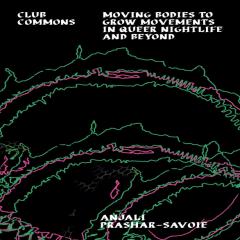
Queer communities have long transformed parties into something powerful: spaces where care flourishes, injustice gets challenged, and new worlds are danced into being. But today, DJs command huge fees while behind-the-scenes workers earn below minimum wage. Corporations profit from our culture while communities that created these spaces are displaced. As venues shut and workers burn out, it’s clear that something has gone deeply wrong.
Club Commons: Moving Bodies to Grow Movements in Queer Nightlife & Beyond by Anjali Prashar-Savoie takes you inside hidden stories of resistance and reinvention. We meet the people reshaping nightlife from below: abolitionist security teams creating safety without police, sober raves doubling as mental health support, radical childcare at parties, venues becoming worker cooperatives, and free party crews reclaiming public space. Through their work, we see how party-throwing skills build movements, how refusing to play changes everything, and why protecting queer nightlife means transforming who owns it.
Quotes
“When Anjali shines her perceptive light on dancefloor culture, everything is better illuminated. I can’t wait to read this book. It’s one we need.” Emma Warren (author of Dance Your Way Home/Up the Youth Club)
“Beautifully written and unique, Anjali Prashar-Savoie’s behind-the-scenes journey through queer nightlife is as thorough as it is fascinating. Documenting a world that commercial interests are rapidly destroying, Club Commons is proof that queer culture holds the key to a better future for the dancefloor and beyond.” Professor Sam Parsley (author of Minor Keys, coach, DJ and founder of In the Key, a directory and platform championing the careers of women, trans and non-binary electronic music producers)
“Club Commons: Moving Bodies to Grow Movements in Queer Nightlife & Beyond is a vital reminder of how important the dance floor is to connect, unfurl and envision new futures. The text highlights the historic and existing care work entangled with the club space, particularly in providing temporary sites of refuge and embodied joy for Black and LGBTQIA+ communities. This is juxtaposed with research on the corporate and carceral commodification of nightlife in recent years, which exposes the false premise that club spaces are always radical. This book affirms my belief that the non-commercial nightlife ecosystem is an essential part of our social change infrastructure, rather than a luxury. Club Commons is a call to action to reclaim this space on our own terms and revive the underground.” Camille Sapara Barton, (author of Tending Grief: An Embodied Guide to Being with Grief Individually and in Community)
Lillian King's debut album In Your Long Shadow is out October 24th. It is about letting the wind in, Lake Michigan in the winter, and the silence of a long summer evening. And really it's about the grief of losing her dad, Neil King Jr. When her dad died in September 2024, grief permeated every facet of Lillian's life. The loss is felt in everything, but especially when doing the things her dad loved the most -- the simple everyday good things that make life worth living: cooking, walking the longer way to work, swimming in cold water. In the throes of grief it feels impossible to find anything that doesn't just make you sadder, but when Lillian did find those things, she grabbed onto them. Soon it was clear that the best coping mechanisms weren't gin and tonics, but talking to her mom and sister as much as possible, and producing an album. The album arrangement came together in a couple of weeks as Lillian brought bandmates and friends Robert Salazar and Nick DePrey new and old songs to build on. Robert played the drums, while Nick played keys (with a smattering of bass and guitar). The process was collaborative and intimate, and only got better when Jack Henry (producer of albums by Friko and Free Range) joined to record and mix it. Some of the songs on this album are years old, including "Underwater", which Lillian wrote one late night in Montreal a decade ago. However, most came together in the months approaching recording."Dragging Dirt" was written just a week before getting into the studio. Despite the bummer material, the recording process was spontaneous and light hearted. The song "Echo" came together unexpectedly during a break between songs. In the midst of recording In Your Long Shadow, Lillian had concerns about making a "grief album." Her sister Frances, as usual, had the right advice: "Every album from now on is going to be a grief album." In Your Long Shadow is about loss as much as it is about living with it. Take it outside on a walk.
Huge news! jazz pianist Ai Furusato is finally releasing her first-ever vinyl LP!
The analog edition features a brand-new remaster by Shinya Matsushita (PICCOLO AUDIO WORKS), bringing out even more warmth and detail in her piano
sound. The first pressing comes as a limited clear vinyl - don’t miss it!
At just 12 years old, she became the youngest person ever accepted into the prestigious Berklee College of Music.
Now 14, Ai Furusato continues to capture the world’s attention as one of the most promising young jazz pianists of her generation.
Trouble’s absolute classic: the legendary album from 1990 and the pinnacle of Trouble’s impressive career. Heavy Metal was never better than this! Includes a live bonus CD recorded in Dallas, Taxas (USA)! Trouble’s debut album did great things for Metal and remains one of the darkest, thrashiest Doom albums to date. A lot of things can change in six years, especially when you’re talking Metal and the dates are 1984 and 1990. The decade may have changed them, but not in a way that suggests decay or a decline in the quality of their resolve or their skill as musicians and performers. On the contrary, Trouble’s 1990 self-titled release is arguably their most mature, boasting a fleshed out sound with unparalleled songwriting, a great production, and the time-crafted vocals of Eric Wagner which had improved major in the years since their previous efforts. All of this culminates in what is my mind the most “complete” thing Trouble ever created. From the mid-paced chug of a killer opener in “At the End of My Daze” to the last notes of “All Is Forgiven”, I can’t see filler or anything resembling a weak link. The riffs here are some of the best ever written, by Trouble or anyone else; every song has a manically awesome main riff that demands a display of headbanging. Riffs are undoubtedly the point of focus here; they make the songs, and they’re a timeless variety of great. Also, the interplay between guitarists Bruce Franklin and Rick Wartell is some of the best lead work you will ever hear in Metal. Trouble basically reinvented themselves with this release, and while I think it was a fantastic rebirth, those who aren’t so keen on the laid back stoner vibe they chose to adopt may not see it as a rejuvenation, but a step back (they did go from doom and gloom to collectively embracing their inner acid dropping free love hippie, after all). But the Metal remained fully intact! And as I’ve said, I think this is Trouble at their best. This is originality and innovation at its best, it is supreme quality. A leader of bands paves the way and then steps aside to create something that will serve as an example of how to improve upon an established formula: that is, by doing it really damn well.
Born in London to Scottish parents, Bishop Briggs grew up in Japan and Hong Kong. Days after graduating high school, she moved to Los Angeles where, after years of performing at any venue that would have her, she was discovered in a small hole-in-the-wall by a former-A&R rep and the rest was history. The music of Bishop Briggs transcends the limitations of singular genres, blending folk, pop and electronic music into a wholly unique sound. Her debut track “Wild Horses” reached #1 on Spotify's US Viral Chart and #2 on Spotify’s Global Viral 50 charts, with airplay on Sirius XM’s Alt Nation, Zane Lowe’s Beats 1 Show and a prized spot in Acura’s 2016 TLX and ESPN’s NFL Playoffs ads.
Born in London to Scottish parents, Bishop Briggs grew up in Japan and Hong Kong. Days after graduating high school, she moved to Los Angeles where, after years of performing at any venue that would have her, she was discovered in a small hole-in-the-wall by a former-A&R rep and the rest was history. The music of Bishop Briggs transcends the limitations of singular genres, blending folk, pop and electronic music into a wholly unique sound. Her debut track “Wild Horses” reached #1 on Spotify's US Viral Chart and #2 on Spotify’s Global Viral 50 charts, with airplay on Sirius XM’s Alt Nation, Zane Lowe’s Beats 1 Show and a prized spot in Acura’s 2016 TLX and ESPN’s NFL Playoffs ads.
Born in London to Scottish parents, Bishop Briggs grew up in Japan and Hong Kong. Days after graduating high school, she moved to Los Angeles where, after years of performing at any venue that would have her, she was discovered in a small hole-in-the-wall by a former-A&R rep and the rest was history. The music of Bishop Briggs transcends the limitations of singular genres, blending folk, pop and electronic music into a wholly unique sound. Her debut track “Wild Horses” reached #1 on Spotify's US Viral Chart and #2 on Spotify’s Global Viral 50 charts, with airplay on Sirius XM’s Alt Nation, Zane Lowe’s Beats 1 Show and a prized spot in Acura’s 2016 TLX and ESPN’s NFL Playoffs ads.
Born in London to Scottish parents, Bishop Briggs grew up in Japan and Hong Kong. Days after graduating high school, she moved to Los Angeles where, after years of performing at any venue that would have her, she was discovered in a small hole-in-the-wall by a former-A&R rep and the rest was history. The music of Bishop Briggs transcends the limitations of singular genres, blending folk, pop and electronic music into a wholly unique sound. Her debut track “Wild Horses” reached #1 on Spotify's US Viral Chart and #2 on Spotify’s Global Viral 50 charts, with airplay on Sirius XM’s Alt Nation, Zane Lowe’s Beats 1 Show and a prized spot in Acura’s 2016 TLX and ESPN’s NFL Playoffs ads.
A meditative, folk-inflected score rooted in improvisation, ‘Dragon’s return’ echoes the soul of A film long buried behind the Iron Curtain
With Dragon’s Return, Australian composer and multi-instrumentalist Oren Ambarchi and Norwegian guitarist Fredrik Rasten present a new, meditative score to Eduard Grecner’s eponymous 1967 Slovak cult film — a stark, black-and-white parable.
The album captures a unique live performance recorded at the Videodroom Festival during Film Fest Ghent in October 2024, where this new score premiered alongside the film in collaboration with the Slovak Film Institute. What began as a fleeting, improvisational encounter between music and image has since taken on a life of its own — an evocative sound world that retains its power even in the absence of visuals.
The album will be available on vinyl and all digital platforms from September 12 via VIERNULVIER Records. The vinyl edition includes an obi strip, a booklet with film stills, and extensive liner notes on the film.
The label is known for shedding new light on forgotten films through reimagined soundtracks — claire rousay’s acclaimed The Bloody Lady being the most recent example.
“Folklore meets avant-garde in an ancient drama - a ballad about love, hate and finding a way out of loneliness” - Rastislav Steranka (Slovak Film Institute)
Ambarchi and Rasten do not accompany the images so much as speak through them. Their interplay — on guitars, flutes, percussion, and voice — unfolds slowly, without a fixed destination, culminating in subtle, entrancing drones. With few breaks or ruptures, this trippy, folk-inflected continuous composition invites surrender.
Rasten’s 12-string guitar and delicate use of voice create layered textures that shimmer and shift. Ambarchi, known for his electro-acoustic work, here explores a radically softer mode — strumming, bowing and coaxing tones from his instrument as though it were a string section unto itself. He blows into shells, adding breath and texture to the sonic palette, touching on something elemental.
Together, they evoke a sound world that feels both ritualistic and strangely familiar — as if echoing from a forgotten ceremony or dreamed into being after hearing an old folk tale. Rooted in improvisation, the music speaks in tones both intimate and expansive, shaped live in dialogue with the film and with each other, with only minimal overdubs added afterward.
out of Stock
Last delivered 9 months ago available to reorder, subject to availability
Das Cover von ,Liquorice", dem dritten Album der australischen Indie-Pop-Künstlerin Hatchie, zeigt ein Nahporträt von Harriette Pilbeam, die lächelt, wobei ihr verschmierter roter Lippenstift auf die glorreiche Folge eines Kusses hindeutet. Das Bild wurde während eines spontanen Fotoshootings im Hinterhof mit einer einfachen Digitalkamera aufgenommen und fängt eine Erinnerung ein, die etwas unvollkommen ist und von Sehnsucht, Begierde und Bedauern geprägt ist Das Bild wurde während eines spontanen Fotoshootings im Hinterhof mit einer kleinen Digitalkamera aufgenommen und verkörpert ein Album, das rau und voller Freude ist und sich mit Themen wie Sehnsucht, Begierde und Reue befasst. Pilbeam begann ernsthaft mit dem Schreiben von ,Liquorice", während sie von 2022 bis 2023 in Brisbane lebte, und später in einem gemeinsamen Haus mit Agius in Melbourne, wo sie die Demos schließlich Mitte 2024 fertigstellte. Als Musikerin, die ihre Einflüsse bisher offen zur Schau gestellt hat, bemühte sich Pilbeam, von Grund auf neu zu schreiben, ohne bestimmte musikalische Einflüsse im Hinterkopf zu haben. Pilbeam begann ernsthaft mit dem Schreiben von ,Liquorice", während sie von 2022 bis 2023 in Brisbane lebte, und später in einem gemeinsamen Haus mit Agius in Melbourne, wo sie die Demos schließlich , und stellte die Demos schließlich Mitte 2024 fertig. Als Musikerin, die ihre Einflüsse bisher offen zur Schau gestellt hatte, bemühte sich Pilbeam, ganz von vorne anzufangen, ohne bestimmte musikalische Einflüsse im Hinterkopf zu haben, und ließ den Songs wochenlang Zeit zum Atmen, anstatt Ideen zu überstürzen. Sie fühlte sich von der melodischen Einfachheit ihrer frühen Songs angezogen und akzeptierte ihre musikalischen Unsicherheiten: ,Ich wollte meine Grenzen als Stärken betrachten, die meinen Stil prägen." Nachdem sie mit den Produzenten Jorge Elbrecht (Caroline Polachek, Japanese Breakfast, Sky Ferreira) und Dan Nigro (Olivia Rodrigo, Chappell Roan) an ,Giving the World Away" gearbeitet hatte, wollte Pilbeam ,Liquorice" mit einem einzigen Kollaborateur fertigstellen, idealerweise einem nicht-männlichen Produzenten, der auch sein eigenes Musikprojekt vorantreibt. Im September 2024 kehrten Pilbeam und Agius nach Los Angeles zurück, um mit Melina Duterte zusammenzuarbeiten, die unter dem Namen Jay Som Indie-Rock aufnimmt und an einer Reihe von Projekten mitgewirkt hat, darunter das mit einem Grammy ausgezeichnete Album ,The Record" von boygenius. ,Mein letztes Album ist sehr düster und introspektiv geworden, und das ist zwar ein Teil von mir, aber es gab noch eine ganz andere Seite, die ich nicht zum Ausdruck gebracht habe", sagt Pilbeam. ,Ich bin eine hoffnungslose Romantikerin und eine sehr alberne Person, manchmal sogar bis zum Äußersten." Die heute 32-jährige, verheiratete Pilbeam stellte fest, dass ,ewige Gefühle" der Sehnsucht und des Herzschmerzes schnell zurückkehrten, als sie über ihre Erfahrungen als jüngere Frau nachdachte. Gleichzeitig ließ sie ihre Vorliebe für tragische Liebesfilme einfließen, in denen die Figuren nicht unbedingt ein gemeinsames Happy End finden. Liquorice beschäftigt sich mit der Endlichkeit des Ewigen. Diese Songs fangen die überwältigenden, berauschenden und transformierenden Nebenwirkungen der Verliebtheit ein, auch wenn die gesamte Liebesgeschichte nur eine einzige magische Nacht dauert. Wie die reichhaltigen Aromen der gewundenen, titelgebenden Süßigkeit - süß, salzig und bitter in einem Bissen - bestätigt Liquorice, wie Sehnsucht und Besessenheit in der Selbstfindung einer jungen Frau miteinander verflochten sind.
out of Stock
Last delivered 9 months ago available to reorder, subject to availability
Pullman ist eine im Studio entstandene Akustik-Supergroup, die Ende der 90er Jahre aus der Post-Rock-Szene Chicagos hervorging und Ken ,Bundy K." Brown (Tortoise/Directions in Music), Curtis Harvey (Rex), Chris Brokaw (Come) und Doug McCombs (Tortoise/Eleventh Dream Day) vereinte. Später kam Schlagzeuger Tim Barnes hinzu, wodurch die Kernbesetzung der Gruppe gefestigt wurde. Ihr Debüt bei Thrill Jockey gaben sie 1998 mit "Turnstyles & Junkpiles", einer leisen, live auf zwei Spuren aufgenommenen Sammlung verwobener Gitarrenklänge, die Kritiker mit John Fahey, Leo Kottke und Gastr del Sol verglichen. Ihr Folgealbum "Viewfinder" (2001) erweiterte die Palette um Percussion, subtile elektrische Texturen und Mehrspur-Layering, wobei die rustikale, filmische Zurückhaltung von Pullman beibehalten wurde. Mit beiden Alben wurde die Band zu einem Maßstab für akustische, songorientierte Instrumentalmusik: folkig im Geist, postrockig in der Methode und zeitlos im Klang. Zwei Jahrzehnte später kehrt Pullman mit "III" zurück, einem Album, das von Freundschaft und Widerstandsfähigkeit geprägt ist. Im Jahr 2021 gab Barnes seine Diagnose einer früh einsetzenden Alzheimer-Erkrankung im Alter von 54 Jahren öffentlich bekannt. Trotz seines fortschreitenden Gesundheitszustands begannen er und Brown fast täglich, oft aus der Ferne, mit einem großen Kreis von Mitwirkenden aus Barnes' musikalischer Vergangenheit zusammenzuarbeiten. Was als einzelner Beitrag für eine Compilation begann, entwickelte sich nach und nach zu einem vollständigen Pullman-Album, das zwischen 2021 und 2023 fertiggestellt wurde. "III" wurde von Brown bearbeitet und gemischt, mit frühen Beiträgen von Barnes, und führt die für die Gruppe charakteristische Intimität und Räumlichkeit fort, während es gleichzeitig den Geist der Gemeinschaft verkörpert, der ihre Arbeit seit jeher geprägt hat. "III" ist sowohl eine Fortsetzung der einzigartigen Ästhetik von Pullman als auch ein Beweis für die nachhaltige Kraft der Musik und schwebt mit der stillen Schwere der Erinnerung, der Beharrlichkeit und der Anmut.
Black vinyl repress. Wie in het voorjaar van 2025 het voorrecht had om de theatertour van Het Zesde Metaal bij te wonen, kon daar op de koop toe genieten van een handvol gloednieuwe songs. Het resultaat is de EP Randgevallen: vijf songs, vijf vertellingen uit het persoonlijke en wereldse leven die andermaal bewijzen dat Het Zesde Metaal als geen ander kan beschrijven, beklijven en betoveren.
Wie in het voorjaar van 2025 het voorrecht had om de theatertour van Het Zesde Metaal bij te wonen, kon daar op de koop toe genieten van een handvol gloednieuwe songs. En daarna vaststellen dat die helaas nergens te (her)beluisteren waren. Tot nu, want de goesting om de songs vast te leggen voor de eeuwigheid werd op den duur wel heel groot. En dus kampeerden Wannes Cappelle en co afgelopen zomer enkele dagen in Waimes (DAFT Music Studios), voor het eerst in de nieuwe bezetting met Kasper Cornelus op gitaar/toetsen en Sander Verstraete op bas.
Het resultaat is de EP Randgevallen: vijf songs, vijf vertellingen uit het persoonlijke en wereldse leven die andermaal bewijzen dat Het Zesde Metaal als geen ander kan beschrijven, beklijven en betoveren. Een staalkaart bovendien van de muzikale en tekstuele veelzijdigheid die de band al jaren kenmerkt. Opener Service is een opgewekte popsong waarin Cappelle sappig de drang naar reviews en hartjes in het dagelijkse en economische leven fileert: 'wa' vind je van onze service? / zou j'ons geen tiene willen geven? / asteblieft, want anders is den directeur vies.' In Traagskes Groeien verstilt het tempo en keert de blik naar binnen, het persoonlijke leven in, mijmerend over kinderen die stilaan het nest ontgroeien. 'ge moet u zo nie' spoeien / ge moet traagskes groeien / ge moe' laagske per laagske groeien', probeert Cappelle het loslaten nog even uit te stellen.
Wie dacht dat Oud En Nieuw daarna gaat over feestvieren in de donkerste dagen van december, is op het verkeerde feestje beland. Wiegend op hypnotiserende bas, drum en pedal steel passeert opnieuw de vergankelijkheid van het leven, dit keer met een bredere maatschappelijke blik. 'alles da' oud is, was ooit nieuw / en groot is ooit kleine begonnen / veel komt van weinig / glad was eerst ruw / zelfs de waarheid wierd ooit verzonnen'. Wanneer naar het einde toe pulserende synths het tempo opheffen en de song licht euforisch uitwaaiert in een instrumentale coda, kun je alleen maar de ogen sluiten en stilstaan bij wat was en nog komen zal.
Label is het enige nummer dat speciaal voor de EP werd geschreven en baadt net als Service in meer dartele klanken, terwijl Cappelle met trefzekere oneliners een beeld van zichzelf schetst. 'de meeste middens mijd ik, ik hore bie de randgevallen thuis / misschien verdiene 'kik ook een label'. Moeten we altijd proberen de ander in een vakje te duwen? Kan iedereen niet 'gewoon' anders zijn? En ironisch draait Cappelle de rollen om: 'atypisch is de norm / ge moogt buiten de lijntjes kleuren / gewoon is niet verboden / normaal zijn doet geen zeer / as ze mor hunder plekke kennen / de rare zijn met meer.'
Het slotakkoord is voor het beklijvende Duizend Soldaten van Willem Vermandere, dat Cappelle en Filip Wauters begin dit jaar brachten voor het tv-programma Ik Vraag Het Aan. Nu zet het een pakkend punt achter een EP die nogmaals de tijdloze klasse van de band onderstreept. Meeslepend, verhalend, herkenbaar, grappig, ontroerend, scherp. Het Zesde Metaal is het allemaal en heeft daar slechts vijf songs voor nodig.
Randgevallen werd opgenomen met Frederik Segers (productie) en Jasper Maekelberg (mix) aan de knoppen, en komt uit op 4 oktober. Met de plaat onder de arm én aan de merchandisetafel herneemt de band zijn theatertour, maar dan in het groot, langs fantastische zalen in onder meer Brugge (Concertgebouw), Gent (Capitole) en Nederland.
Belgian sitar player Nicolas Mortelmans will release his second album, titled "SPACE". For these recordings, he went into the studio with Roland van Campenhout, Stef Kamil Carlens, Tim Vanhamel and Simon Segers. The result of this encounter is a raw and honest record in which all the music is improvised. With this album, Nicolas returns to his roots and experiments with psychedelic rock, ambient, funk, and jazz. Expect an intense meditative and explosive listening experience.
out of Stock
Last delivered 9 months ago available to reorder, subject to availability
HOUSE BY THE CEMETARY, the 'supergroup' led by former MONSTROSITY and VILE frontman and current artwork artist Mike Hrubovcak and Rogga Johansson from PAGANIZER and RIBSPREADER are releasing their third full-length, "Disturbing The Cenotaph". Since the duo, completed by former THE PROJECT HATE drummer Thomas Ohlsson, originally picked up their moniker as an homage to the 1981 cult horror flick of the same name, it shouldn't come as a surprise they've once again paying tribute to director Lucio Fulci (1927-1996) in one of this album most lethal salvo, 'New York Ripper'. Elsewhere on this third album, other tracks like 'Undead Apocalypse' or 'Burial Disturbance' were inspired by other famous horror classics like "Night Of The Living Dead" and "The Texas Chainsaw Massacre", Hrubovcak has come up in his lyrics with his own tales of terror. Some are totally fictional like, 'Coffin Colony' about a "diseased homeless living in underground coffins who gets infected with rabies after eating sewer rats". Others, like 'Lunatic Butcher' are inspired by real-life events or, in that case, by the antics and vicious killings of Paul John Knowles, dubbed 'the Casanova killer'. Musically speaking, Johansson jokes about "every band saying that their new album is their best but that's actually true here eh eh! This album is HOUSE BY THE CEMETARY on steroids. The sound is broad and impious, the vocals are awesome and the heavy riffing interlaced with occasional melody makes an overall varied, fun and GORY listen!" Completed, like on 2024's "The Mortuary Hauntings", by a gruesome artwork courtesy Felipe Mora (whose nightmarish visions can already be seen on albums by CONSUMPTION, ACHERON or WOMBBATH) and mixed by Håkan Stuvemark from WOMBBATH, Disturbing The Cenotaph is one raw, in-your-face and eight songs packed death-metal-to-the-core album ready to chill you to the bone!
Hinter dem sorgefrei erscheinenden Titel Dolce Vita verbirgt sich eine dunklere, schmerzhafte Geschichte: es ist die der erzwungenen Flucht von Louis’ Großvater und dessen Familie vor der honduranischen Diktatur. Matute taucht unter dem ironisch gemeinten Motto Dolce Vita in die bewegte Geschichte Lateinamerikas ein, das unter der Herrschaft von Militärregimen und imperialistischen Großkonzernen, wie der United Fruit Company, jahrzehntelang litt.
Als Sängerin und Pianistin glänzte Blossom Dearie nicht nur mit einer der ungewöhnlichsten Stimmen des
Jazz, sondern auch mit coolem Understatement und swingender, harmonischer Finesse. Dieser Albumklassiker von 1958 mit Gitarrist Herb Ellis, Bassist Ray Brown und Schlagzeuger Jo Jones verbindet zeitlose
Eleganz mit rhythmischer Leichtigkeit.
"Sunshine and Balance Beams", das neunte Album von Pile, ist eine Sisyphus-Parabel über Arbeit und Leben. Um es zu schreiben, begab sich Sänger Rick Maguire an ,einen dunklen Ort" und rang mit dem Konzept, dass es keine Erleuchtung und kein Ende des Leidens gibt. Maguire erforscht den Workaholismus, den Mythos der Leistungsgesellschaft und die Akzeptanz der Sterblichkeit - und das alles in einer teuflischen Allegorie, in der es darum geht, durch einen schattigen Wald zu stapfen und dem ungewissen Traum einer hellen Lichtung entgegenzugehen. Pile ringt mit existenziellen und sozialen Widersprüchen, indem sie klangliche Zwischenräume heraufbeschwören. Die Musik existiert irgendwo im temporären Gleichgewicht von Licht und Schatten, Chaos und Ordnung. Heiße, regenähnliche Gitarren, sich verschiebende Drums, die gewundene Wege in Klang und Tempo ebnen, unheimliche Synthesizer und wässrige Streicher fügen sich zu einem Panorama aus Laut-Leise-Dynamik zusammen, das der Emotionalität der donnernden Auftritte der Band entspricht. Die Gruppe engagierte eine Streichergruppe (Geigen, Bratsche, Cello), die glühende, durchkomponierte Arrangements spielten, die von der Cellistin Eden Rayz und Pile mitgeschrieben wurden. Sie ließen sich von Kino- und Opernpartituren von Chopin, Bernard Herrmann und Ralph Vaughan Williams inspirieren, was "Sunshine and Balance Beams" einen überlebensgroßen Sound verleiht, der Piles blitzschnelle Umsetzungen einiger ihrer bisher zugänglichsten Songtexte noch verstärkt. Die Aufnahme ist ein deutlicher Sprung im Produktionswert und stellt Maguires Gesang auf neue und aufregende Weise in den Mittelpunkt. Pile reisten nach Pawtucket, RI, um zwei Wochen lang bei Machines with Magnets mit ihrer langjährigen Tontechnikerin Miranda Serra (Kal Marks, Kira McSpice) aufzunehmen. Das Album wurde von Seth Manchester (Lightning Bolt, Mdou Moctar) gemischt und von Matt Colton (Aphex Twin, Swans, Muse) gemastert. "Sunshine and Balance Beams" ist das erste Album von Pile für das Chicagoer Label Sooper Records.
Aaron Frazer - der in Los Angeles lebende Sänger, Songwriter, Multi-Instrumentalist und Mitglied der gefeierten Gruppe Durand Jones & the Indications - lässt mit "Into the Blue" eine gewagte Mischung aus Soul, Psychedelia, Spaghetti-Western, Disco, Gospel und Hip-Hop auf sein hochgelobtes Debütalbum "Introducing_" aus dem Jahr 2021 folgen. "Into The Blue" repräsentiert die beeindruckende Bandbreite von Frazers klanglichen Talenten. "Es ist das klarste Porträt dessen, was ich als Künstler bin", sagt Frazer über sein zweites Solo-Album, auf dem er die unverwechselbare Falsettstimme und das klassische Songwriting beibehält, für das er bekannt ist, aber mit einer Hip Hop inspirierten Mentalität im Kern, die Genres und Produktionstechniken miteinander verwebt und "Into The Blue" somit fest im Hier und Jetzt verankert. "Into The Blue" ist das Ergebnis eines gebrochenen Herzens. Nach dem Ende einer langen Beziehung zog Frazer quer durchs Land von Brooklyn nach Los Angeles und begab sich auf eine Reise, die sich in den Themen des Albums widerspiegelt: Trauer, Einsamkeit und die Suche nach Heilung. "Into The Blue" enthält Momente mit überragenden Arrangements, die an David Axelrod und Ennio Morricone erinnern, wird aber durch die Rohheit von iPhone-Aufnahmen und One-Take-Vocals ausgeglichen. Als Co-Produzent für das Album konnte Frazer den Grammy-Gewinner Alex Goose gewinnen, der für seine Crate-Digging-Samples und die Zusammenarbeit mit Hip-Hop-Künstler*innen wie Freddie Gibbs, Madlib und Brockhampton bekannt ist. Frazer experimentierte auch zum ersten Mal mit Samples, die er aus unerwarteten Quellen wie der R&B-Gruppe Hi-Five aus den 90ern bezog. Und Obwohl "Into the Blue" aus Herzschmerz entstanden ist, hofft Frazer, dass es die Zuhörer*innen mit einem Gefühl des Optimismus zurücklässt. "Weißt du, man kann auch an einem Tag, an dem man trauert, lachen", sagt er, "es gibt keine Gipfel ohne Täler" - aber mit "Into The Blue" erreicht Aaron Frazer neue Höhen.
"I want nothing more than to be a loner," Emily Kempf sings early on Flower of Devotion, the new album by Chicago trio Dehd. It's a startling admission coming from a songwriter who, just a year ago on Dehd's critically acclaimed Water, wrote eloquently about the joys and pains _ more than anything, the necessity _ of love, compassion, and companionship. But then, "admission" isn't really the right word here, given the stridency of Kempf's tone. "Loner" is a declaration. The record ups the ante on Dehd's sound & filters in just enough polish to bring out the shining and melancholy undertones in Jason Balla and Emily Kempf's songwriting, even as it captures them at their most strident. Balla's guitar lines at times flirt with ticklish cosmic country, while at others they reflect the dark marble sounds of Broadcast. Kempf, meanwhile, establishes herself as a singer of incredible expressive range, pinching into a high lonesome wail, letting loose a chirping "ooh!," pushing her voice below its breaking point and letting it swing down there. When she and Balla bounce descending counter-melodies off one another over McGrady's one-two thumps, or skitter off over a programmed drum pad, they sound like The B-52s shaking off heartache. What makes Flower of Devotion so impressive is how its creation seems to have strengthened its creators, both as individuals and as a unit, even as they've stared down their own limitations. It's also striking just how much fun they seem to be having in the process. "It's okay to be lighthearted in the face of despair," Kempf says. It's a theme that runs through the album, from the opening back-and-forth build of "Desire" to the click-clacking chorus of "Haha," which finds them deflating their own history. Flower of Devotion was recorded in April and August of 2019 in Chicago. It will be released on Fire Talk Records on July 17th 2020.
Jefferson Berry combines story telling with the intricacies of JamBand and Roots instrumentation. His songs are performed by a cadre of unique
players: The Urban Acoustic Coalition. The band is anchored by the virtuosity of Bud Burroughs and the harmonies of Theresa Ratliff. While acoustic by nature, never missing is the locked-in bass/drums drive of Uncle Mike and Adam Stranburg. Complementing all this with a variety of guitar styles, Berry’s projects bring a danceable style and contemporary point of view to a unique wing of Philadelphia’s local music scene. With the release of his fourth album in five years, this reputation is spreading nationally.
Berry’s lyrics are informed by his years in corporate media followed by a dozen years teaching African American History, Economics and Government to inner-city Philadelphia high school students. Symeer Woods (aka Lil Uzi Vert) and the late Rasheen Jones (aka Runup Rico) were among his students. Born Into A Blizzard is the latest release from Jefferson Berry & the UAC and has 10 tracks in total featuring “Leaving Santa Maria", “Thirty Miles to the Beach” and “Philly Eats its Own”.
Celebrating over a decade of hip-hop excellence, Legacy of Hits delivers 15 career-defining tracks from Rich Homie Quan, one of Atlanta’s most influential voices. From the breakout anthem "Type of Way" to the multi-platinum-certified smash Flex "(Ooh, Ooh, Ooh)", this collection captures Quan’s ability to craft both raw street records and timeless radio staples that shaped the sound of Southern rap.
The set includes fan favorites like “Differences”, "Walk Thru (feat. Problem)”, "They Don’t Know”, "Blah Blah Blah”, “Reloaded" and "15 Shots, giving fans a complete retrospective of his impact. With production from heavyweights such as Yung Carter, Metro Boomin, London on Da Track, Trauma Tone, and Yizzle, the project stands as a true testament to Quan’s consistency, resilience, and influence.
Available in both vinyl and CD formats with exclusive collectible packaging, Legacy of Hits is more than just a greatest hits, it’s a landmark release that celebrates Rich Homie Quan’s journey, artistry, and legacy.




![NOW JAZZ NOW - 100 Essential Free Jazz & Improvisation Recordings [1960-80] (BOOK)](https://www.deejay.de/images/l2/6/1/1191661.jpg)