Miles Davis' A Tribute to Jack Johnson is the best jazz-rock record ever made. Equally inspired by the leader's desire to assemble the "greatest rock and roll band you have ever heard,” his adoration of Johnson, and Black Power politics, Davis created a hard-hitting set that surges with excitement, intensity, majesty, and power. Bridging the electric fusion he'd pursued on earlier efforts with a funkier, dirtier rhythmic approach, Davis zeroes in on concepts of spontaneity, freedom, and identity seldom achieved in the studio — and just as infrequently accepted by the mainstream.
Sourced from the original analog master tapes, pressed on MoFi SuperVinyl, and housed in a Stoughton jacket, Mobile Fidelity's 180g LP reissue brings it all to fore with startling realism. Benefitting from SuperVinyl’s nearly inaudible noise floor, superb groove definition, and clean, ultra-quiet surfaces, this 180g LP showcases everything — from the bold tonality of the headliner's white-hot trumpet solos to the decay of crashing cymbals, carry of wiry guitar notes, and echoes of the studio — in reference fashion.
Bristling with exuberance, Davis' high-register passages explode with authority and commanding presence. Around him, a barrage of urgent backbeats, knifing riffs, and supple bass lines emerge amidst black backgrounds. One of the most prominent differences long-time fans will notice is how much more aggressive, immediate, and vibrant the music sounds, with those aspects central to the composer's original desires.
Utilizing wah-wah and distortion, the go-to instrumentalist of the performances— guitarist John McLaughlin — attacks with a nasty edge, slashing style, and vicious streak that allows A Tribute to Jack Johnson< cross the until-then-impenetrable divide between rock and jazz. Davis puts both feet in the former camp and erases any gap. The stories of the record’s creation are nearly as legendary as the sounds within: Two sessions, multiple jams, different sets of musicians (several uncredited), and near-miraculous production perfectionism that made it all appear cohesive.
The least-well-known masterpiece of Davis' career, the 1971 record — seamlessly assembled and spliced together by producer Teo Macero — was a victim of limited record-label promotion. Audiences also didn’t immediately know what to make of its original cover art — faithfully replicated here. In addition, the powers that be at Columbia Records were directing the public’s attention to Miles at Fillmore, a completely different kind of album guided by two keyboardists. A Tribute to Jack Johnson practically lives in a different universe, one from the future. To many listeners who did manage to hear it — among them critic/musician Robert Quine, Stooges leader Iggy Pop, and renowned critic Robert Christgau — it surpassed everything that came before.
Indeed, Davis treated it as a personal manifesto: An opportunity to salute the Black championship boxer admired for his threatening image to the establishment and impeccable taste in clothes, cars, women and music. Davis explains in the liner notes his affinity for Johnson — a stance mirrored by the defiant music, which hits with a prize fighter's force and reflects the graceful elegance with which a pugilist navigates the ring — and closes the album with a Johnson quote read by Brock Peters.
Inspired not only by Johnson but by Jimi Hendrix and Sly Stone, Davis changed his approach and his band. He surrounds himself with a cadre of musicians in their 20s and, in the case of bassist Michael Henderson, a 19-year-old fresh from touring with Stevie Wonder. Henderson gives Davis what he requested: boogie-based grooves that don’t lose shape or direction. Soprano saxophonist Steve Grossman, drummer Billy Cobham, and organist Herbie Hancock adhere to a similar aesthetic that prizes brazenness, innovation, and energy.
In that vein, during a portion of “Yesternow,” Davis segues into a separate performance (which became known in its entirety as “Willie Nelson”) played by guitarists McLaughlin and Sonny Sharrock, bass clarinetist Bernie Maupin, keyboardist Chick Corea, bassist Dave Holland, and drummer Jack DeJohnette. Dig it!
Talking with jazz scholar Bill Milkowski — who himself noted how McLaughlin’s unrestrained style, decibel-forward volumes, and rapid-fire power chords engendered himself to the rock crowd at the same time that his harmonics and syncopation still definitely made him a jazz player — guitarist Henry Kaiser summed up part of the appeal of A Tribute to Jack Johnson as well as anyone, saying: “It’s a jazz record that way way more open than other jazz records at the time, but still not free jazz. McLaughlin’s rhythm guitar playing on ‘Right Off’ — the use of different chords in a rock shuffle than what anybody had used before — was revolutionary.”
And to think that’s just one aspect of a record that contains multitudes. “Never let them forget it.” Indeed.
Suche:herbie
Before coming to Europe, in 1970, pianist Manuel Villarroel was a vet in his native Chilli. A few years later, as leader of the Machi Oul Big Band, he returned to the animal kingdom. A very specific kind of animal, for sure, the Quetzalcoatl, also known as the Feathered Serpent. What is behind this title (also the name of one of the three original compositions on this album released on the Palm label in 1976), is first and foremost a sort of homecoming...
After discovering the jazz of Herbie Hancock, McCoy Tyner, Miles Davis and John Coltrane, Villarroel was taken by the free jazz which was all the rage at the time in America and Europe, and this would inspire the first version of his Machi-Oul, project. This was a septet, with which the pianist would record, in 1971, the tremendous Terremoto (re-released by Souffle Continu FFL085). After this masterstroke Villarroel was invited to record with Perception (Perception & Friends) and with Baikida Carroll (Orange Fish Tears). While these were notable contributions, Villarroel was already looking into other combinations.
“I had to deal personally with my situation as an expatriate, without disavowing it. I tried not to betray my roots, I tried to translate into my music what was essential to me, to reflect my origins – Latin America, its musical and above all human feelings – while remaining faithful to jazz, which is the mode of expression of the musicians in the group”. This then is the ‘homecoming’ we mentioned, which would incite Manuel Villarroel to compose what he would call “structured free music”. In January 1972 the pianist enlarged his formation to reach the size of a real big band: the Septet became the Machi-Oul Big Band. Three years later in January 1975, with producer Jef Gilson at the helm, fifteen musicians including those from the old Septet (Jef Sicard, François and Jean-Louis Méchali, Gérard Coppéré) worked on a rare form of jazz. From togetherness to dissonance, we danse to it “Bolerito” then shake it up on “Leyendas De Nahuelbuta”. As for the concluding serpent, it is a piece which is impossible to pin down: “Quetzalcoat” is as impressive as it is difficult to grasp. To remind ourselves of this, lets listen to it again.
Tucked away in a corner of northwestern Europe and so small you could drive through it in minutes without noticing you were ever there, Luxembourg is often overlooked. This is also true for Luxembourg’s music scene, and even more so in the early 1980s. Aside from a string of victories at the annual Eurovision song contest or the mighty Radio Luxembourg that had for decades been blasting jazz, rock and other modern music into stolid Western European ears, very little else seemed to be going on. But even in a country of barely 350,000 people, musical adventurers had picked up on the spaced-out jazz-funk of bands like Return to Forever, Herbie Hancock’s Mwandishi, Weather Report, George Duke, and the electric Miles Davis. Under the leadership of trumpet player Gast Waltzing, a handful of them put together a band called “Atmosphere” and used the sound of their inspirations as a launchpad for their own musical exploration.
What you hold in your hands is a “best of” the Atmosphere band, which released two albums and a 7” single between 1981 and 1986. Privately pressed and long out of print, with original copies very hard to come by even in their country of origin, these records have for years been unheard by anyone outside hardcore collector circles. With no master tapes available, it was a real labor of love to track down the best quality vinyl copies and to reissue a selection of our favorite tracks in professionally remastered form.
Editions de Lux is a new label dedicated to unearthing and releasing records we love and believe deserve more attention, with a focus on Luxembourg and the surrounding countries. We are just the latest in a long line of immigrants who have come to work in Luxembourg and who are trying to find our own path into the heart of this mysterious little country that has much more to it than dark forests, medieval castles, rusting steel mills, and shadowy banks.
In dieser turbulenten Zeit ist es wichtiger denn je, als Menschheit eng zusammenzustehen, anstatt sich gegenseitig zu bekämpfen. Und genau darum geht es im neuen FIREWIND-Album ‚Stand United‘! Neben top aktuellen Themen, die in Zehn neuen Tracks besungen werden, erwartet uns textlich wie auch musikalisch das wohl stärkste Werk ihrer bisherigen Bandgeschichte. Passend zum neuen Release verbreitet die Band rund um ex Ozzy Osbourne-Gitarrist Gus G. und Sänger Herbie Langhans (ehemals Avantasia) im Frühjahr 2024 ihre Botschaft von ‚Stand United‘ in Europa. Gemeinsam mit MASTERPLAN geht die Band auf große Co-Headliner Tour, u.a. in Deutschland, Frankreich, Spanien, Schweden und vielen weiteren Ländern. So erblickt ab dem 01.03.2024 ‚Stand United‘ das Licht dieser Welt - verfügbar als limitierte Splatter- und Marbled-Vinyl-Versionen, CD-Digipak und Digital!
Causa Sui's three volumes of Summer Sessions are back in print! This time on the band's own label, on individual LPs for the first time since they were first released in 2008 and 2009. Re-packaged in El Paraiso's signature style. Originally the Summer Sessions were intended as a side project for the band - a chance to explore their love for other genres such as American free jazz, krautrock, 1970s soundtracks, as well as the psychedelia and detuned stoner-rock that characterized Causa Sui's first two albums. But these three albums came to define the band, and have become modern classics of psychedelia and progressive rock since their initial release ten years ago. In a scene often characterized by loyalty to a specific period, there's something refreshing about Causa Sui's eclectic approach. With several guest appearances by Coltrane-devotee Johan Riedenlow on sax and electronics wiz Rasmus Rasmussen, Causa Sui venture far beyond stoner-rock platitudes. Take the grandiose opening statement for example - the 24 minute "Visions of Summer" taking up the entire A-side: here new and old sounds dissolve in a mindbending excursion that recalls Future Days-era Can, breezy tropicalia or Herbie Hancocks Mwandishi group, as much as it sparks associations to Kyuss or Hendrix. Other tracks, such as the frenetic Rip Tide (vol. 2), heads into straight up free jazz territory with Riedenlow going absolutely bonkers on the sax. But this set also allows plenty of room for atmospheric pieces such as the sun-drenched "Venice by the Sea" (vol. 3) or the Morricone-esque "Cinecitta" (vol. 2).
Two months after recording The Sidewinder, trumpet legend Lee Morgan was back in Van Gelder Studio in February 1964 creating his masterful sextet album Search for the New Land with Wayne Shorter, Herbie Hancock, Grant Green, Reggie Workman, and Billy Higgins. The expansive title track is the centerpiece of this dynamic program of Morgan originals.
This Blue Note Classic Vinyl Edition is stereo, all-analog, mastered by Kevin Gray from the original master tapes, and pressed on 180g vinyl at Optimal.
Green Vinyl[34,24 €]
"Miles Davis is regarded to be one of the most influential and acclaimed figures in the history of jazz and 20th-century music. At the request of Columbia Records executive George Avakian, he formed his first regular quintet in 1955. After all members of the first quintet left Davis a few years later, he hired the core of the second quintet in 1963 and the final member in late 1964. The second quintet would record and play together until the end of the 60s. Sorcerer is the third album by the Second Great Miles Davis Quintet. The quintet consisted of Miles Davis on trumpet, Wayne Shorter on tenor saxophone, Herbie Hancock on piano, Ron Carter on bass and Tony Williams on drums. It was recorded in May 1967 and contains a darker sound. The last song on the album, ""Nothing Like You"", features vocals by Bob Dorough. Sorcerer is available as a limited edition of 2500 individually numbered copies on crystal clear vinyl."
Let the Music Play: How R&B Fell in Love with 80s Synths is the overlooked story of how R&B, disco and funk were transformed by the explosion of music tech in the era of ghetto blasters and Ronald Reagan. It traces how pioneers like Stevie Wonder and Herbie Hancock inspired a new generation of black musicians and producers to reinvent music with a whole new set of rules.
From superstars like Prince and Sade to production geniuses like Kashif and Jam & Lewis, it tells the fascinating stories of the artists involved and how they made some of the best-loved records of the era – creating a blueprint for music today.
To mark the 35th Anniversary of Acid Jazz, we have been reissuing seminal records from our catalogue on colour vinyl. The final instalment - and the second James Taylor Quartet release in the series - is this this version of ‘Mission Impossible’ is pressed on a fitting red vinyl.
The original release track-listing showcases JTQ’s sixties soundtrack odyssey – driving organ instrumentals from the beginnings of Acid Jazz, showing James and the original lineup in their prime. Alongside Lalo Schifrin’s iconic title track appear tracks by Herbie Hancock, Paul Simon and Bacharach & David, before the Taylor-penned original ‘The Stooge’ closes out this lean, hip collection.
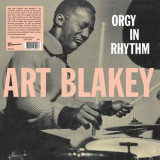
When Billy Eckstine’s band dissolved in the mid-1940s, adventurous drummer Art Blakey spent two years in Africa, where he briefly converted to Islam; back in New York, he gigged with Miles and Monk, before fronting his own Jazz Messengers. 1957’s Orgy In Rhythm drew on the sounds of North Africa and the Middle East, Blakey’s unfettered drumming accompanied by Latin percussionists such as Potato Valdez and Evilio Quintero, with Herbie Mann on flute. The musical arrangement is stunning, at times melodic or primordially rhythmic, but never short of pure brilliance. Overall, an excellent and astounding release!
This A&M/CTI debut album by George Benson signaled the arrival of a true star in the jazz scene. Creed Taylor signed Benson immediately after Wes Montgomery's passing in 1968 -- he was being groomed for it by Verve's house producer, Esmond Edwards, and arranger, Tom McIntosh, before he ever came to CTI. Taylor paired Benson with arranger Don Sebesky (who had done plenty of work on Montgomery's A&M sides) and engineer Rudy Van Gelder. Herbie Hancock and Ron Carter (both members of the Miles Davis Quintet with whom Benson had guested earlier that year), bassist Richard Davis, and pianist Hank Jones were all guests.
- A1: Jeito Bom De Sofrer
- A2: Papo Furado (Jive Talking)
- A3: Xibaba (She-Ba-Ba)
- A4: Andei
- A5: Back Streets Of Havana
- B1: Flora's Song
- B2: San Francisco River
- B3: Vera Cruz
- C1: Celebration Suite
- C2: Casa Forte
- C3: From The Lonely Afternoon
- C4: Black Narcissus
- D1: When Angels Cry
- D2: O Sonho (Moon Dreams)
- D3: Summer Night
- E1: A Secret From The Sea
- E2: O Cantador / I Just Want To Be Here
- E3: Light As A Feather
- E4: O Canto Da Sereia
- F1: Open Your Eyes You Can Fly
- F2: Hot Sand
- F3: Parana
- F4: Jump
- G1: Fingers (El Rada)
- H1: Samba De Flora
- H2: Amajour
- H3: The Road Is Hard (But We're Going To Make It)
- I1: Above The Rainbow
- I2: Love Lock
- I3: What Can I Say
- I4: Musikana
- J1: The Happy People
- J2: Peasant Dance
- J3: Dom-Um (A Good Friend)
- J4: Outernational Meltdown - Hungry On Arrival
- G2: Toque De Cuíca
- G3: Romance Of Death
Airto Moreira and Flora Purim, the legendary King and Queen of Brazilian Jazz, have captivated audiences for over six decades with their vibrant albums and exhilarating live performances. With a dedicated global fan base including the UK's jazz funk and jazz dance scene to Japan's concert halls, the power couple continues to make waves in the industry – Flora's 'If You Will' (2022) album was even nominated for a Grammy! The duo met and came together musically in Sambalanço and the Sambrasa Trio. The mixture of Airto's rural Brazilian background and percussion talents and Flora's classical training and involvement in the underground Bossa Nova movement, created a unique blend of sounds that resonates across generations. They have not only collaborated with music legends like Miles Davis and Chick Corea but have also produced ground-breaking music alongside the likes of Hermeto Pascoal. Despite facing numerous challenges, including Flora's arrest and incarceration in 1974, the duo's close connection with friends-musicians like Thelonius Monk and Cannonball Adderley, their persistence and absolute passion for music have propelled them to the pinnacle of success. They worked with renowned musicians like Wayne Shorter, Jaco Pastorius, Herbie Hancock, Joe Henderson, McCoy Tyner, George Duke and producers such as Orin Keepnews and Creed Taylor. Having been a part of numerous prestigious ensembles, including Dizzy Gillespie's United Nations ensemble, Airto and Flora's journey is a testament to their innovation and devotion to their craft. This collection offers a glimpse of that incredible journey, showcasing their extraordinary talent and unique sound and it’s also the first comp scanning their 60 year careers Compiled by Straight No Chaser editor/publisher Paul Bradshaw & Totally Wired Radio presenter Roberta Cutolo. Àṣẹ.
- A1: Sleepless Nights (Feat Buddy, Reuben Vincent & Phoelix)
- A2: Love You Bad (Feat Malaya & Phoelix)
- A3: From My Heart & My Soul (Feat Tarriona Tank Ball & Phoelix)
- A4: First Responders (Feat Punch & Bilal)
- B1: The Mighty Tree (Feat Herbie Hancock, Rapsody & Kamasi Washington)
- B2: Freeze Tag (Feat Cordae & Phoelix)
- B3: Luv U (Feat Snoop Dogg & Alex Isley)
Dinner Party is the super-group of Terrace Martin, Robert Glasper, 9th Wonder, & Kamasi Washington, a collection of some of Hip-Hop’s finest current producers and contributors. With 14 GRAMMY Nominations between the group, Dinner Party utilizes the strengths of each musician seamlessly, blending their styles to create something soulful for these trying times. At just over 20 minutes, the album leaves the listener with just enough to satisfy them but yearn for more.
Seven Steps to Heaven arrived at a crucial junction in Miles Davis' career. Recorded at two separate locations in spring 1963, it served as Davis' first release in more than a year – a layoff that was then unprecedented for the jazz visionary who had issued at least one LP a year since debuting in the early '50s. Equally notable, Seven Steps to Heaven marks the point at which the core of Davis' Second Great Quintet started to assemble. The twice Grammy-nominated effort is also Davis' final studio record to blend standards with originals. And it happens to be one of the expressive, well-played albums in the jazz canon.
Sourced from the original master tapes, pressed at RTI, and housed in a Stoughton gatefold jacket, Mobile Fidelity's 180g SuperVinyl LP of Seven Steps to Heaven adds yet another step (or more) towards the bliss suggested by the album title. Playing with standout clarity, detail, tone, and balance, this audiophile reissue pulls back the curtain on the instrumentalists. Afforded the tremendous advantages of SuperVinyl – including a nearly inaudible noise floor, dead-quiet surfaces, and superb groove definition – this numbered-edition version presents Davis and Co. amid a wide, deep soundstage whose dimensions and solidity help bring the record's historical importance and musical merit into focus. Warm, organic, and present, the SuperVinyl LP of Seven Steps to Heaven is what great-sounding hi-fi is all about.
And there's nary a passage on this 1963 landmark that isn't great. That Davis manages to make it feel so cohesive and seamless is a testament to the inspired performances and engaging compositions. Davis didn't draw it up the way it unfolded. No matter. He held trump cards that stayed up his sleeve for the next three decades: A drive to be nothing less than superb, a refusal to settle for mediocrity, and standards to which nearly no other composer or player could match. "The toughest critic I got, and the only one I worry about, is myself," Davis wrote in the liner notes. "The music has to get past me."
Davis' demanding approach partly explains why he switched up his band between the first and second sessions – and underscores how fast his mind was racing with new ideas. Seven Steps to Heaven acts as the stable bridge between the transitional period that followed the dissolution of his First Great Quintet and formation of the Second; without it, Davis perhaps doesn't invite then-23-year-old Herbie Hancock and a still-teenage Tony Williams into the fold. The trumpeter not only got his men – he preserved in amber for the only time (well, magnetic tape anyway) the chemistry and vibe he achieved with pianist Victor Feldman, drummer Frank Butler, tenor saxophonist George Coleman, and bassist Ron Carter.
That line-up gels for half of the six songs on Seven Steps to Heaven. Captured in Los Angeles April '63, the quintet stretches out on a luxurious reading of the late '20s New Orleans staple "Basin Street Blues"; lays on the romance for a candlelit stroll through the '40s standard "I Fall in Love Too Easily"; and explores the rounded contours and melodic crevices of the early blues "Baby Won't You Please Come Home." The performances are refined, elegant, emotional; the band lets the feelings linger and gives the listener time to absorb the colours and textures.
A month later, Davis returned to New York City with Coleman and Carter, and partnered them with Hancock and Williams. Tellingly, the quintet tried its collective hand at the title track and "Joshua" – Feldman-penned songs already recorded in Los Angeles – as well as the yearning "So Near, So Far." Those are the tunes that comprise the other piece of Seven Steps to Heaven, with the revised quintet's liquid pulse, articulate dynamics, and timing shifts a harbinger of things to come.
It's also worth mentioning that the interpretations of the bounding "Seven Steps to Heaven" – a showcase for Davis' trumpet – and interlocking "Joshua" netted considerable radio airplay and attracted the attention of other contemporaries who covered the songs. Keeping Carter and Williams as the rhythmic engine, and Hancock as the anchor between solo flights and structural motifs, Davis would soon soon welcome Wayne Shorter into the family and transform jazz. Again. The aptly – and, in hindsight, perhaps prophetically titled Seven Steps to Heaven – is how he got there.
- Louis Armstrong- - When You're Smiling
- Aretha Franklin- - God Bless The Child
- Chet Baker- - I Fall In Love Too Easily
- Chris Connor- - Lullaby Of Birdland
- Ella Fitzgerald- - My Funny Valentine
- Julie London- - Cry Me A River
- Lena Horne- - Stormy Weather
- Esther Phillips- - Release Me
- Billie Holiday- - Blue Moon
- Doris Day- - Keep Smilin', Keep Laughin', Be Happy
- Nat King Cole- - Unforgettable
- Peggy Lee- - Black Coffee
- Della Reese- - Whatever Lola Wants
- Harry Belafonte- - Day O (The Banana Boat Song)
- Frank Sinatra- - The Lady Is A Tramp
- Etta James- - At Last
- Nina Simone- - Stomping At The Savoy
- Dinah Washington- - Mad About The Boy
- Anita O'day- - Sing, Sing, Sing
- The Dave Brubeck Quartet With Carmen Mcrae- - Take Five
- Sarah Vaughan- - All Of Me
- Dakota Staton- - The Song Is Ended
- Miles Davis- - Ascenseur Pour L'échafaud (Générique)
- Duke Ellington, John Coltrane- - In A Sentimental Mood
- Dean Martin- - You're Nobody Till Somebody Loves You
- Charles Mingus- - Boogie Stop Shuffle
- 4: Thelonious Monk- - Monk's Dream
- John Coltrane- - Giant Steps
- Quincy Jones- - Soul Bossa Nova
- Dizzy Gillespie- - Manteca
- Charlie Parker- - Ko Ko
- Gerry Mulligan, Stan Getz- - Anything Goes
- Count Basie Orchestra- - Whirly Bird
- Sidney Bechet- - Twelfth Street Rag
- Bud Powell- - Parisian Thoroughfare
- Erroll Garner- - You Are My Sunshine
- The Horace Silver Trio- - Opus De Funk
- Herbie Hancock- - Watermelon Man
- Django Reinhardt, Quintette Du Hot Club De France- - Mi
- The Bobby Timmons Trio- - This Here
We Release Jazz is sooooo happy to announce the release of a very limited edition double LP for Boillat Thérace Quintet’s 1974 Montreux Jazz Festival performance, with 3 bonus studio tracks! This gem from the Geneva, Switzerland band follows the acclaimed WRJ reissue of their self-titled album (1974) and My Greatest Love (1975), their full-length with Benny Bailey. The 300-copies-only white sleeved DLP comes with the classic obi and features fully remastered audiophile-ready recordings.
Captured live at Montreux Jazz Festival, July 3rd 1974, this rare audio treat features Boillat Thérace Quintet fan-favorites including their infamous homages to Swiss Marmite ("Cenovis"), and Geneva's public transport line Tram 12 ("1224"), as well as remarkable renditions of timeless jazz numbers by Freddie Hubbard ("Straight Life" and "Backlash") and Chick Corea ("Spain").
Additionally, the double LP offers 3 bonus songs taken from the ensemble’s sessions for their self-titled debut: superb takes on Herbie Hancock’s "Dolphin Dance", Wayne Shorter’s "Adam’s Apple", and Claude Engel’s "5th of July, Dulong Street".
All in all it’s a beautiful soul-jazz/modal fest full of flair and heart, one that perfectly encapsulates the vibrant and inventive Swiss jazz scene of the 1970s. A must have for fans and collectors.
This new album from We Release Jazz follows the label’s celebrated releases of the Ryo Fukui catalogue (Scenery, Mellow Dream, A Letter from Slowboat, Ryo Fukui in New York, My Favorite Tune), Hiroshi Suzuki’s seminal Cat album, and Le Cercle Rouge soundtrack by Eric Demarsan among other jazz wonders.
- A1: Plain Gold Ring (Mop Mop Rework)
- A2: My Baby Just Cares For Me (The Reflex Edit)
- A3: Mood Indigo (Renegades Of Jazz Remix)
- B1: Little Girl Blue (Maestro Remix)
- B2: Love Me Or Leave Me (Suonho Relove)
- B3: African Mailman (The Rebel Remix)
- B4: I Loves You Porgy (Mees Dierdorp Remix)
- C1: My Baby Just Cares For Me (Gabriel & Castellon & Maestro Remix)
- C2: African Mailman (Opolopo Remix)
- C3: Plain Gold Ring (Fab Samperi Remix)
- D1: He Needs Me (Gramophonedzie Remix)
- D2: Love Me Or Leave Me (Gabriel & Castellon & Maestro Remix)
- D3: African Mailman (Smoove Remix)
- D4: Central Park Blues (Monte Midnight Mix)
Little Girl Blue Remixed is the 2015 remix album of the iconic 1958 debut album by Nina Simone, Little Girl Blue. The original debut album was released by Bethlehem Records, the label that earned its place in jazz history by releasing acclaimed debut albums by Carmen McRae, Chris Connor, Herbie Mann, and Johnny Hartman amongst others.
When DJ Maestro got the chance to remix this album, he was thrilled. Soon he got the idea to ask some of his favourite producers to collaborate, like Mop Mop, Renegades of Jazz, Gramophonedzie, Fab Samperi, The Reflex, and Mees Dierdorp. They all had one thing in common: excitement to work with the original recordings from this iconic album. The result is 14 remixes, each with a unique approach to the original song, and all with a contemporary feel.
Little Girl Blue Remixed is available as a limited edition of 1000 individually numbered copies on translucent green coloured vinyl.
Repress!
Here's a true West Coast soul-jazz gem originally released on pacific jazz in 1961. Les McCann's warm and emotional singing shines over some gorgeous big band arrangements signed by the great conductor and bandleader Gerald Wilson. McCann's usual trio with Herbie Lewis on bass and Ron Jefferson on drums is augmented by a phenomenal bunch of West Coast top musicians including clarinetist Buddy Collette, tenor sax lions Charles Lloyd, Teddy Edward, and Harold Land, and two absolute guest stars: tenor sax giant Ben Webster and organ stylist Richard "groove" Holmes, what else?
Soul-jazz and blues at their best. Allmusic Guide
First time on vinyl!
Newly remastered. LP housed in a gatefold jacket.
Featuring Herbie Hancock, Martha Reeves, Alphonse Mouzon, Chuck Rainey, Patryce “Choc’let” Banks, Carlos Morales, and members of The Pointer Sisters.
In the 1970s, Betty Davis defied genre and gender by pushing her voice to extremes and embracing the erotic. She articulated a kind of pre-punk, funk-blues fusion that had yet to be normalized in mainstream music – a style that few musicians have come close to replicating. As one of the first Black women to write, arrange, and produce her own albums, Betty was a visionary who disregarded industry boundaries and constraints. Raw, unapologetic and in full control, Betty paved the way for generations of future artists who said “funk you” to the music industry and social norms.
In 1979, when Davis entered an L.A. studio to record her fifth and final album, she was reeling from a series of setbacks. Three years earlier, after recording her fourth album, Is It Love Or Desire, Davis was dropped from her label and the LP was subsequently shelved. In 1978, her beloved band Funk House went their separate ways. Looking for a fresh start, Davis relocated to Hollywood to focus on songwriting. Before long, British manager Simon Lait (Toni Basil), offered to fund her next project.
With renewed vigor, Davis reunited with former Funk House guitarist Carlos Morales and brought together industry veterans like fusion drummer Alphonse Mouzon and session bassist Chuck Rainey. Old friends Anita and Bonnie Pointer (The Pointer Sisters) and Patryce “Choc’let” Banks joined Davis on vocals, as did Motown legend Martha Reeves. The resulting album, Crashin’ From Passion, was her most musically diverse, blending elements of reggae and calypso (“I’ve Danced Before”), jazz (“Hangin’ Out in Hollywood,” “Tell Me a Few Things”), dark synth-pop (“She’s a Woman”), and even disco (“All I Do Is Think of You”). Equally exploratory are Davis’ vocals, as she trades in her signature sass and snarls for more nuanced stylings.
Among the album’s few funk tracks is “Quintessence of Hip,” in which Davis hails musicians like Bob Dylan, Billie Holiday, Stevie Wonder, and John Coltrane, while deftly integrating elements of their work. The song also offers a moment of stark vulnerability, as she sings, “Isn’t rich? Isn’t it queer? Losing my timing so late in my career.” It would prove to be a prophetic line in the months to follow.
The mixing process was mired by artistic differences and then cut short, amid the death of Davis’ beloved father. Bereft and exasperated, Davis returned home for the funeral, setting into motion her retirement from the music industry. Crashin’ From Passion, meanwhile, would be shelved for 15 years and licensed for a CD-only release, without Davis’ consent, in the ‘90s. This 2023 edition of the album, made with Davis’ full approval and cooperation, marks its first official release and first time ever on vinyl. The package was designed by GRAMMY®-winning artist, Masaki Koike, while the album cover features an incredible shot of Betty captured in London in the mid-1970s by renowned photographer Kate Simon.
Crashin’ From Passion was remastered by Dave Cooley at Elysian Masters and pressed on vinyl at Record Technology, Inc. (RTI). The accompanying booklet includes a treasure trove of rare photos from the era, plus lyrics, and new liner notes by writer, ethnomusicologist, and Betty’s close friend, Danielle Maggio, who integrates interviews that she conducted with Davis, marking her last ever interviews.
Filled with aural magic and enchanting musical spells, Sorcerer is true to its name. The third of five albums devised by Miles Davis' legendary second quintet – and the second record in a still-unprecedented string of eight consecutive releases within a four-year period that forever changed the face of jazz – the 1967 magnum opus mesmerizes with instrumental colours, subdued musings, and subtle details.
This is a reference-standard reissue. You'll hear poetic lyricism pouring out of Wayne Shorter's horn, the breadth and definition of the notes spreading across an enormous soundstage. Never before have drummer Tony Williams' rim shots ricocheted with such purpose or his light percussive work mirrored that of a feather touching skin. Similarly, Herbie Hancock's piano runs now occupy their own space, where their relationship to the central rhythms and front line becomes clearer.
Prizing inflection and nuance more so than heady solos or uptempo flights, Sorcerer mesmerizes with cerebral properties and cascades of emotional interplay. Such beauty emerges in the mellow ballad "Pee Wee," an indelible statement of restrained authority and sophisticated expression. The swirling title track unfolds as jazz shadowplay, Hancock, Shorter, and Williams mirroring one another's moves with guile and purpose. The opening "Prince of Darkness" showcases the ensemble's reach and communication, every musician going in seemingly different directions yet ending up on the same page
A lasting example of Davis' visionary insight, Sorcerer is comprised entirely of pieces written by his band mates. Indeed, save for the closing "Nothing Like You" – a brief tribute to Davis' eventual wife, who also graces the cover, recorded in 1962 and adorned with vocals from Bob Dorough, the album represents a further maturation and refinement of a quintet that stands as one of the finest in jazz history.
With J Jazz volume 4, the BBE J Jazz Bullet Train continues its journey traversing the expansive landscape of modern Japanese jazz. Volume 4 is the latest in the universally praised compilation series exploring the best, rarest and most innovative jazz to emerge from the Far East. Please take your seats for a first-class ticket to J Jazz central. This latest station stop off is with the famed Nippon Columbia label, one of the biggest labels in Japan, whose jazz output embraces every possible style imaginable. Focussing on the key years 1968-1981, J Jazz volume 4 sees compilers Tony Higgins and Mike Peden dig even deeper into their record collections and pull-out tracks that span styles ranging from solo to big band, jazz classical interpretations and heavy jazz rock, to febrile post-bop, white hot samba fusion, and modal psychedelic wig-outs. J Jazz volume 4 features icons such as drum master Takeo Moriyama, keyboard magi Hiromasa Suzuki, Fumio Itabashi, and Masahiko Satoh, and guitar wizards Kazumi Watanabe and Kiyoshi Sugimoto, alongside big band maestros and innovators Nobuo Hara and his Sharps and Flats, and Toshiyuki Miyama’s New Herd. Thunderous basslines nestle alongside glistening runs of electric piano, bubbling synths and air-tight drumming as the heavy psychedelic modal blues of Jiro Inagaki flows with the infectious samba grooves of Takashi Mizuhashi featuring Herbie Hancock; Shigeharu Mukai’s fusion funk epics take the music to another level and Mikio Masuda’s driving keyboard rhythms brings the heat to an incendiary dancefloor zone.
Million Seller is the new electro-acoustic album and project led by Matt Calvert, one of the founding members of the underground alt-rock sensation Three Trapped Tigers The inspiration for the project originated as Matt revisited his collection of early 70s releases by Herbie Hancock's Mwandishi group - some of the pianist's most overlooked and least understood albums. "The concept of Million Seller was to create a contemporary sound with similar elements to the Mwandishi band, putting the electronics and percussion at the forefront, merging organic and synthetic." Mwandishi (originally a sextet, later a septet with added electronics) had three horn players: Million Seller has none, instead using three synth players: Calvert himself is joined by Stale Storlokken of free- form experimental legends Supersilent, and by the unclassifiable improvisor Matthew Bourne. The line-up is completed by drummer Dave Smith, who brings his comprehensive knowledge of the Gambian tradition of Sabar drumming alongside his extensive jazz background, and a trio of guest musicians: Mamadou Saar on sabar and djembe drums, Kadialy Koudate on kora, and Sam Wilson on contemporary percussion. The results are a striking fusion of ancient and modern sounds, of heavy yet playful synth interactions topped by driving acoustic percussion, of wild improvisation mixed with moments of ambient beauty, all creating a sonic identity that's every bit as unique, wide-ranging and unforgettable as its inspiration.
In the late 1960s, vibraphonist Roy Ayers was among the top young talents in jazz, thriving during a remarkable era for the genre. While Ayers would later become a jazz-funk pioneer and delve heavily into R&B fusions, his third album Stoned Soul Picnic is a masterful showcase of soul-jazz grooves. Produced by Herbie Mann, Stoned Soul Picnic features a memorable Laura Nyro-penned title track, along with an exceptional lineup of musicians, including Gary Bartz, Hubert Laws, Ron Carter, Herbie Hancock, and Grady Tate. Originally released in 1968.
1963 album from the Cuban conguero Mongo Santamaria. Featuring his brilliant cover version of Herbie Hancock's classic title track, along with numerous compositions of his own, this is one of Mongo Santamaria's most famous and coveted albums. From the iconic cover to the brilliant grooves contained within, this album has the whole package. Excellent latin jazz and latin-soul groovers from a Cuban hero, and one of the most famous performers, full stop, of the middle 20th Century.
Remasterte Neuauflage einer der seltenen Platten des französischen Filmkomponisten (Emmanuelle, Purple Rain, Against All Odds) und Meisterarrangeurs (Serge Gainsbourg, Charles Aznavour): Auf seinem selbstbetitelten Album von 1979 bot Michel Colombier eine außergewöhnliche wie geniale Fusion aus Jazz, Pop, Klassik und Funk, begleitet von Top-Musikern wie Jaco Pastorius, Herbie Hancock, Steve Gadd, Larry Carlton und Michael Brecker, aus denen er das Beste herausholte.
Synth pioneer and musical polymath, Wally Badarou is a genius. But you know that already. A vinyl version of his majestic Colors Of Silence has been craved by the Balearic cognoscenti ever since its low-key 2001 release. Indeed, when we first started work on Be With, we asked some pals with exquisite taste what their dream release would be. We asked Balearic legend Moonboots and, without hesitation, he said Colors Of Silence by Wally Badarou. We didn't know Wally had made this album. And most still don't. But that's about to change.
Colors Of Silence is ostensibly a new age album. As ever though, Wally's sophisticated synth textures and expressive keyboard runs are so full of character, so full of life, that this work of art transcends any easy genre categorisation. It's simply stunning, throughout. It sounds like A.r.t. Wilson or Suzanne Kraft, with traces of CFCF and Jonny Nash. But it was made a good decade earlier than the work of these modern giants. Sometimes, it doesn't seem far from some Larry Heard albums.
Island Records founder Chris Blackwell's friend Nathalie Delon asked Wally to provide music for the yoga DVD she was to release. Lack of time on both sides made them agree on using "quality demos" Wally had in his ideas bank. It's understandable why Colors Of Silence remains somewhat of a lost gem. As Wally explains: "Total lack of promotion made it an 'intimate' release, which was exactly what I was looking for: just a buzz-maker and time-buyer that would allow me to concentrate on the real thing as soon as I'd have time, which could also turn into a rare collecting item later, once the final versions made their way to success. You never know."
Over the years, Colors Of Silence has become a true cult record for the ambient/Balearic heads.
The beguiling but brief "Dance In The Dust" is the shuffling, hyper-percussive, hypnotic opener. It gives way to the deep serenity of "Amber Whispers". It's a gliding, divine, mini melodic masterpiece. It'll make you swoon in its extreme beauty. The bright and breezy "Where Were We" follows, a tropical, reggae-tinged bounce through the islands.
The uptempo groove is maintained on the keys-drizzled soca-funk of "The Lights Of Kinshasa" before Side A is rounded out with "Pictures Of You". It starts with stately, melancholic, unadorned piano and this alone would make for a beautiful song. But Wally always gives us that bit extra and he effortlessly introduces warm, dreamy pads and minimal, slo-mo percussion to augment a frankly stunning piece of work.
Ushering in Side B, Wally's mesmeric piano playing is to the fore again, in the intro to uber-chilled "Serendipity For Two". The playing becomes more mellifluous as the track progresses and adds warmth through exotic percussion, woodwind, sweeping synths and digi-drums. It has echoes of, er, Echoes. It segues seamlessly into the more propulsive, wavy "Smiles By The Millions". If you're not nodding and grinning along widely to the gently throbbing bassline underpinning this, we can't help you. The meditative "Higher Still" follows, cinematic in feel and ever so slightly sinister with the strings. It sounds particularly Badalamenti-esque, if you ask us.
That unmistakable, almost peculiar Badarou funk - so lyrical, so texturally rich and so rhythmically spacious - is all over "Oriental". Next up, "Days To Wonder" brings the serenity back, insistent yet melodic keys, as if played in a place of worship, coupled with birdsong, conjure a kind of instant nostalgia for halcyon days of youth. The contemplative "Dawn Of Europa" is a sombre, beatless, ambient journey whilst the glorious, too-brief "Crystal Falls" features soft percussion and sparkle before fully glistening with some gentle head-nod beats. Wally brings this incredible collection to a mellow, tender close with the graceful "Purple Lines".
There can be few artists more under-appreciated given their vast influence than Wally Badarou. His solo work practically defined the sound of the Balearic DJs of the 1980s, and thus the more sophisticated sound of dance culture thereafter. A synth specialist, Badarou was the long-time associate of Level 42. He was one of the Compass Point All Stars (with Sly and Robbie, Barry Reynolds, Mikey Chung and Uziah "Sticky" Thompson), the in-house recording team of Compass Point Studios responsible for a series of albums in the 1980s recorded by Grace Jones, Tom Tom Club, Mick Jagger, Black Uhuru, Gwen Guthrie, Jimmy Cliff and Gregory Isaacs. Badarou's keyboard playing could also be heard on albums by Robert Palmer, Marianne Faithfull, Herbie Hancock, M (Pop Muzik), Talking Heads, Manu Dibango and Miriam Makeba. He also produced Fela Kuti. Phew!
Meticulously remastered and cut by both Simon Francis and Cicely Balston respectively, it has been pressed to the highest possibly quality at Record Industry in Holland. Special thanks must go to Apiento from Test Pressing who first introduced us to Wally and facilitated all those early zoom meetings. It couldn't have happened without his help. Not least on pulling the art together, too, which features striking original photography by Mads Perch. Benji Roebuck of Roebuck Press did his thing brilliantly in art working the whole package to completion. All in all: essential.
New Robohands LP 'Palms' is the fifth album from the London based instrumentalist and producer Andy Baxter. Moving towards different genres and arrangements from his previous albums, 'Palms' features duelling harp parts, tape echo, double bass and draws inspiration from artists such as Dorothy Ashby, Azimuth, Alice Coltrane and Toquinho.
In parts tropical and synth drenched, and in others stripped back and acoustic, 'Palms' is a journey back to saturated analog recordings of the late 60s and 70s, with a subtle modern layer of glitch FX and pitch control experimentation in places. The album makes also reference to classic releases from jazz fusion that feature the legendary Arp Odyssey synthesiser, used by artists such as Herbie Hancock and George Duke.
The seventeen track album features performances from multiple session musicians including Jim Piela on saxophone and Marco Cremaschini on Rhodes, with Baxter taking on drums, guitar, bass, keys and also mixing duties. 'Palms' is a new direction for his project and a record that thematically journeys into modern reinterpretations of jazz, downtempo, acoustic and ambient music.
New Robohands LP 'Palms' is the fifth album from the London based instrumentalist and producer Andy Baxter. Moving towards different genres and arrangements from his previous albums, 'Palms' features duelling harp parts, tape echo, double bass and draws inspiration from artists such as Dorothy Ashby, Azimuth, Alice Coltrane and Toquinho.
In parts tropical and synth drenched, and in others stripped back and acoustic, 'Palms' is a journey back to saturated analog recordings of the late 60s and 70s, with a subtle modern layer of glitch FX and pitch control experimentation in places. The album makes also reference to classic releases from jazz fusion that feature the legendary Arp Odyssey synthesiser, used by artists such as Herbie Hancock and George Duke.
The seventeen track album features performances from multiple session musicians including Jim Piela on saxophone and Marco Cremaschini on Rhodes, with Baxter taking on drums, guitar, bass, keys and also mixing duties. 'Palms' is a new direction for his project and a record that thematically journeys into modern reinterpretations of jazz, downtempo, acoustic and ambient music.
George Coleman (born March 8, 1935) is an American jazz saxophonist best known for his work with Miles Davis and Herbie Hancock in the 1960s. Coleman was born in Memphis, Tennessee and learned to play the alto saxophone in his teens. After his work with Ray Charles, George started working with B.B. King in 1953 and switched to playing the tenor saxophone.
George Coleman was a member of legendary outfits such as Max Roach’s quintet, The Slide Hampton Octet, Miles Davis’ Quintet and The Chet Baker Quintet. The list of his collaborations is impressive to say the least, Mr. Coleman recorded and performed with greats such as Freddie Hubbard, Herbie Hancock, Charles Mingus, Ahmad Jamal, Idris Muhammad, Pharoah Sanders, Ornette Coleman, Melvin Sparks, ArtBlakey…and many others.
Coleman was named an NEA Jazz Master, was added to the Memphis Music Hall of Fame in 2015, and received a brass note on the Beale Street Brass Notes Walk of Fame. George Coleman’s performances were included on classic recordings released by prominent labels from the likes of Blue Note, Atlantic, Prestige, Strata-East, Muse, Verve and Impulse!
On the album we are proudly presenting you today: Amsterdam After Dark (Recorded in 1978 at the famous NY Sound Ideas Studio and released on Timeless Records in 1979) the listener is treated to six majestic tracks of the highest caliber and features a remarkable outing of advanced musicianship by jazz-giants in their prime, delivering an inspirational gem of an album.
The all-star line-up includes Sam Jones (Dizzy Gillespie, Duke Ellington, Ben Webster) on bass, Billy Higgins (Donald Byrd, Thelonious Monk, John Coltrane) on drums and Hilton Ruiz (Roy Brooks, Rashaan Roland Kirk, Sonny Rollins) on piano. Most players featured here were also part of the legendary ‘Eastern Rebellion’ collective responsible for releasing multiple ground-breaking albums over several decades.
Amsterdam After Dark shows off George Coleman’s mastery of the sax, his brilliant vintage techniques and deep soulful tones. Coleman plays from the heart and is on top of his game. Expect both original compositions as well as standards, beautiful ballads with elegant (yet fierce) solos alternating between the instruments, growling blues-oriented themes…this is a contemporary sounding Hard Bop & Post-bop crossover album and a must have for any self-respecting jazz fan or collector!
South London soul artist Andrew Ashong returns with his first full release since 2014 - an expansive six-track collaboration with Kaidi Tatham, the unrivaled underground virtuoso described as the UK's Herbie Hancock. 'Sankofa Season' takes both artists to new heights as they seamlessly complement each other's musical language, giving voice to productions that criss-cross genre and time to move into their own distinct lane. Expect deep jazz funk, hazy contemporary soul, jazzy broken beat, breezy latin soul, organic deep house and much more.
- A1: Chameleon (Taggy Matcher Disco Mix)
- A2: Money (7 Samuraï Disco Version)
- A3: Music (The Dynamics Disco Version )
- A4: Brick House (Taggy Matcher Disco Mix)
- B1: Suit & Tie (John Milk Version)
- B2: Everybody's Talkin (Blundetto & Grandmagneto Original Version)
- B3: Rapper's Delight (Taggy Matcher Dub Version)
- B4: Move On Up (The Dynamics Original Version)
- B5: Saturday Night Fever (Grandmagneto Original Version)
Volume 2[17,27 €]
Repress!
Stix Records is a sub-division of Favorite Recordings, recently launched with a first official single by Taggy Matcher Birdy & Nixon (STIX033), who pleased us with two Reggae-Rocksteady renditions of the famous Black Keys. Precisely specialized in the exercise of producing covers with a Reggae twist,
the new label presents his first album entitled "Disco Reggae". Many artists faithful to the stable of Favorite Recordings and its various sub-labels are invited for the occasion: The Dynamics, Blundetto, Grandmagneto, 7 Samurai, John Milk or Taggy Matcher. All came and brought their respective touch to this first compilation, with among other things some of the rarest titles from their Big Single Records' years, but also 4 new and exclusive productions. Each of them delivers a great isco-Reggae version of classic hits by some artists as diverse as Madonna, Herbie Hancock, Justin Timberlake, The Commodores, The O'Jays, Curtis Mayfield, Harry Nilsson or Sugarhill Gang. Whatever the genre or the period, nothing can resist their inventiveness and creativity, to the point sometimes we confuse between originals and covers. Everything is remastered and cut at Carvery Records (UK), known for their expertise in Caribbean and Disco music. The vinyl LP comes in a deluxe version, housed in an old-school Tip-On Jacket.
- A1: Dragon Song (Brian Auger's Oblivion Express)
- A2: Total Eclipse (Brian Auger's Oblivion Express)
- A3: The Light (Brian Auger's Oblivion Express)
- B1: On The Road (Brian Auger's Oblivion Express)
- B2: The Sword (Brian Auger's Oblivion Express)
- B3: Oblivion Express (Brian Auger's Oblivion Express)
- A1: Dawn Of Another Day (A Better Land)
- A2: Marai's Wedding (A Better Land)
- A3: Trouble (A Better Land)
- A4: Women Of The Seasons (A Better Land)
- B1: Fill Your Head With Laughter (A Better Land)
- B2: On Thinking It Over (A Better Land)
- B3: Tomorrow City (A Better Land)
- B4: All The Time There Is (A Better Land)
- B5: A Better Land (A Better Land)
- A1: Truth (Second Wind)
- A2: Don't Look Away (Second Wind)
- A3: Somebody Help Us (Second Wind)
- B1: Freedom Jazz Dance (Second Wind)
- B2: Just Me Just You (Second Wind)
- B3: Second Wind (Second Wind)
- A1: Whenever You're Ready (Closer To It!)
- A2: Happiness Is Just Around The Bend (Closer To It!)
- A3: Light On The Path (Closer To It!)
- A2: Bumpin' On Sunset (Straight Ahead)
- B1: Straight Ahead (Straight Ahead)
- B2: Change (Straight Ahead)
- B3: You'll Stay In My Heart (Straight Ahead)
- A1: Brain Damage (Reinforcements)
- A2: Thoughts From Afar (Reinforcements)
- A3: Foolish Girl (Reinforcements)
- B1: The Big Yin (Reinforcements)
- B2: Plum (Reinforcements)
- B3: Something Out Of Nothing (Reinforcements)
- B4: Future Pilot (Reinforcements)
- B1: Compared To What (Closer To It!)
- B2: Inner City Blues (Closer To It!)
- B3: Voices Of Other Times (Closer To It!)
- A1: Beginning Again (Straight Ahead)
Brian Auger’s Oblivion Express was the phoenix that rose from the ashes of sixties combo The Trinity. Fusing R&B, jazz, soul and funk, keyboard maestro Brian Auger created a new breed of music that took the US and the UK by storm. Auger’s unique experimentation culminated in rhythm-infused jazz funk that united Black and white ’70s audiences. The 6 studio albums that make up Complete Oblivion illustrate the group’s diverse musical influences and progression, from the 1970 self titled debut’s heavy jazz-rock to the jazz fusion, latin and disco tinged Reinforcements from 1975 - this process no doubt powered by the groups’ evolving line up, which included guitarists Jim Mullen and Jack Mills, drummers Robbie McIntosh & Steve Ferrone, bassists Barry Dean and Clive Chaman and vocalist Alex Ligertwood. The musical highlights within Complete Oblivion are many, but particular highlights to mention have to be Total Eclipse (Oblivion Express), Fill Your Head With Laugher (A Better Land), the blistering cover of Eddie Harris’ Freedom Jazz Dance (Second Wind), the Barry Dean composition Whenever You're Ready, the version of Marvin Gaye’s Inner City Blues (Closer To It), Beginning Again (Straight Ahead) and the mind bending keyboard tour de force Brain Damage (Reinforcements). Given the groups legendary status among fellow musicians such as Zucchero and Herbie Hancock, DJ’s like Kenny Dope and Gilles Peterson and Auger’s legion of fans worldwide - that mission was fully accomplished - or to put it another way, in the words of super fans The Beastie Boys: “Those who remain oblivious to the obvious delights of Brian Auger’s Oblivion Express do so at their own risk!”
- A1: Take Five - The Dave Brubeck Quartet
- A2: Moanin' - Art Blakey & The Jazz Messengers
- A3: Soul Bossa Nova - Quincy Jones & His Orchestra
- A4: Milestones - Miles Davis
- A5: My Bucket's Got A Hole In It - The Ramsey Lewis Trio
- B1: Watermelon Man - Herbie Hancock
- B2: Caravan - Duke Ellington
- B3: One Mint Julep - Ray Charles
- B4: Walk On The Wild Side - Jimmy Smith And The Big Band
- B5: Desafinado - Stan Getz & Charlie Byrd
- C1: So What - Miles Davis
- C2: Tuxedo Junction - Quincy Jones
- C3: Harlem Nocturne - King Curtis
- C4: Blues Walk - Herbie Mann
- C5: Unsquare Dance - The Dave Brubeck Quartet
- D1: Sing, Sing, Sing - Benny Goodman And His Orchestra
- D2: Love For Sale - Dexter Gordon
- D3: Take The "A" Train - Duke Ellington
- D4: Work Song - Cannonball Adderley & Ray Brown
- D5: I've Got A Woman (Part 1) - Jimmy Mcgriff
There are as many flavours of Jazz as there are pebbles on a
beach, but the majority combine rhythmic invention with
instrumental virtuosity to create a sound that can transport the
listener to a different plane. Our compilation features duos,
trios, bands and orchestras playing music inspired by Africa,
Brazil and all points in-between. Film themes, standards, charttoppers and relative obscurities have been carefully assembled
to provide a wide-ranging picture of the Jazz instrumental.
Originally released on Polydor Records in August 1981, it remains a very special and discrete record and has gone on to achieve a cult status separate from the rest of their august catalogue.
Formed at London's Guildhall School of Music and Drama by way of Paris and the Isle Of Wight, Level 42 marked the union of four talented friends – Mark King, Mike Lindup, and brothers Phil and Roland 'Boon' Gould – complete with Wally Badarou, their very own studio-based synthesiser whizz-kid. From building a fervent following through the nascent Britfunk scene, they signed to Polydor and went on to make a series of fascinating albums.
The sheer invention, melody and imagination of this four-piece was astounding, aided by their secret weapon, French-Belizean Badarou, whom the band had met playing sessions for M, Robin Scott's art-disco ensemble. Although Level 42 had recorded – and made waves – for indie label Elite, they signed to Polydor and released this album, with three of their original calling cards, Starchild, Turn It On and the mighty, UK Top 40 breaching Love Games.
By the mid 80s Level 42 had become arena-filling superstars, with their commercial pop-funk with everyman lyrics that delighted fans not just in Europe, but also in America, too. Hear the roots of that on this frequently surprising, always entertaining debut album. Think of this album as the missing link between Talking Heads and Herbie Hancock.
Out of print on LP for a number of years, this re-issue faithfully replicates the original 1981 Polydor UK release with insert and is pressed onto high quality 180g vinyl.
Classic Jazz Album from 1978.
Featuring an all-star line-up.
First ever vinyl reissue since 1986.
Released for the first time in the UK & North America.
180g BLACK vinyl limited to 500 copies (w/obi strip).
Curtis Fuller (December 15, 1932 – May 8, 2021) was an American jazz trombonist best known for being a member of several legendary jazz outfits, his impressive catalog of solo albums and a contributor to many classic jazz recordings.
Fuller was born in Detroit and lost both his parents at a very young age. He spent several years in an orphanage run by Jesuits where he developed a passion for jazz after one of the nuns there took him to see his first live performance. Curtis attended public school in his hometown (together with Donald Byrd and Milt Jackson) where he took up the trombone at the age of sixteen.
Curtis Fuller was a well-respected member of iconic outfits such as Art Blakey & The Jazz Messengers, Art Farmer’s Tentet, The Benny Golson Quintet and Eastern Rebellion. The list of his collaborations is impressive to say the least, Mr. Fuller recorded and performed with greats such as Quincy Jones, John Coltrane, Count Basie, Dizzy Gillespie, Freddie Hubbard, Roland Kirk Rashaan, Miles Davis…and many others.
Fuller was granted an honorary doctorate of music from Berklee College of Music in 1999 and eight years later he was honored as a NEA Jazz Master. Curtis Fuller’s performances were included on classic recordings released by prominent labels from the likes of Blue Note, Savoy, Prestige, Strata-East, Muse, Verve and Impulse!
On the album we are presenting you today: Four On The Outside (Recorded in 1978 at the famous New York CI Recording Studio and released on Timeless Records the same year) the listener is treated to six majestic tracks of the highest caliber and features a remarkable outing of advanced musicianship by jazz-giants in their prime, delivering an inspirational gem of an album.
The all-star line-up includes Pepper Adams (Oliver Nelson, Lalo Schifrin, Herbie Hancock) on saxophone, Dennis Irwin (The Jazz Messengers, Chet Baker) on bass and James Williams (Calvin Keys, Thelonious Monk) on piano.
Four On The Outside shows off Fuller’s mastery of the Trombone and this delightful set features him in a front line with Pepper Adams delivering a unique trombone-baritone saxophone combination (few others have followed this intriguing coupling). Curtis Fuller plays from the heart and is on top of his game. Expect sharp and elegant original compositions, machine gun-like spurts, angular boppish lines and top rhythm section work that never gets in the way of the horns spreading their wings. All of the above makes this record a must have for any self-respecting jazz fan or collector!
KAU (previously KAU trio.) is an instrumental trio based in Brussels. Representing various European backgrounds, the Belgian capital and melting pot proves to be a never ending source of inspiration for the band. Taking influences from jazz, groove and dance music, their aim is simple but straightforward: to make your heads bob. The formula they use to do so has been the same since their early days: improvisation, never ending jam sessions and an open-mindedness towards various genres and styles. This gives their music an organic and vibrant feel. Furthermore, the three boys' long-lasting friendship is at the heart of it all, always relying on what brings them together: their love for music. The KAU cycle is bound to repeat itself and to birth something new - over and over again.
"The Cycle Repeats" is KAU's debut album, due on September 22 on SDBAN Ultra, the home of ECHT!, Black Flower, Glass Museum, STUFF. and more. It represents a milestone in the band's musical journey: it's their firm decision to present a strong and unified trio playing music that stands out through the combination of 80's synths, acoustic drums and electric bass. Moreover, the album succeeds in capturing the energy of their infectious and legendary live shows.
Highlights are album opener "Kampala", which has a throbbing bassline, jazzy synths and heavily modified arpeggiators at its core. The album's first single "Little Steps" starts with a strong hip hop groove, morphing into Herbie Hancock-style chords. "Amulet" is inspired by breakbeats, fast paced grooves and pentatonic bass lines. Both "Kautokeino" and "Alaska" are an invitation to travel to the utmost remote places of this earth, using intense sequencing and suffocating subbasses into an epic finish, probably demonstrating the trio in its most sincere form.
In short: with André Breidlid on drums, Matteo Genovese on bass and Jan Janzen on synths, KAU are a trio of childhood friends with a pan-European identity, whose music reflects the city they grew up in: unapologetic, richly diverse and with a spontaneous groove underlining it all. With their new album "The Cycle Repeats" they directly aim for your dancing shoes and souls.
- A1: Taggy Matcher - Disco Illusion
- A2: 7 Samurai - Shake It Dub (Feat. Alicia Blue Eyez' Smith) (Extended 12' Version)
- B1: The Dynamics - Feel Like Makin Love
- B2: Lucas Arruda - Melt The Night (Mato Reggae Remix)
- C1: The Dynamics - Miss You (Extended Disco Version)
- C2: Rosemary Martins - Love To Love You Baby
- D1: Taggy Matcher - Cantaloupe Island
- D2: Mato - Movin' In The Right Direction
- D3: Taggy Matcher - Big Fun
Following 2 acclaimed first editions, Stix Records presents the 3rd
volume of its Disco Reggae compilation series.
Like previous one, the 9 tracks comp is made both from productions
of the home labels now sold-out as vinyl, and from brand new
exclusive music by the like of Taggy Matcher, Mato or newcomer
Rosemary Martins, taking over classics titles from Donna Summer,
Stephen Encinas, Roberta Flack, Herbie Hancock, Steve Parks, or Inner City.
The perfect soundtrack to extend the summer!!
Wayne Shorter’s 1967 album Schizophrenia found the legendary saxophonist at the pinnacle of post-bop with a sextet of like-minded musical explorers including James Spaulding, Curtis Fuller, Herbie Hancock, Ron Carter & Joe Chambers performing Shorter originals like ‘Tom Thumb’, ‘Go’, and ‘Miyako’.
This stereo Tone Poet Vinyl Edition was produced by Joe Harley, mastered by Kevin Gray from the original analog master tapes, pressed on 180g vinyl at RTI, and packaged in a deluxe gatefold tip-on jacket.
Rare Jazz-Funk album from 1978 by Headhunters founder.
Featuring an all-star line-up including Herbie Hancock.
Originally released in 1978 on Tobisha EMI Japan.
First vinyl reissue outside of Japan released in collab w/Totown Records. Comes with double side insert.
Paul Jackson (born in Oakland, California in 1947) needs little introduction. Paul began playing bass at the age of nine and was considered by many of his teachers to be a musical prodigy. Jackson was known as a “Musician’s Musician” and shaped a sound that launched a new direction in contemporary music: the so-called ‘Pulse Playing’, a trademark sound of close-meshed funk grooves combined with sensational rhythms. With this innovative approach, he influenced entire generations of jazz and funk musicians to come. Paul’s compositions were sampled by big acts from the likes of Prince, TLC, Mobb Deep and NWA…just to name a few.
Paul Jackson was a founding member of the Headhunters under Herbie Hancock (THE group responsible for their ground-breaking fusion and jazz-funk compositions that took the world by storm in the 70’s). The solid union between Hancock and Jackson has been especially evident in the many international tours they have made together…not to mention that he participated on most of the Headhunters albums and Herbie’s solo albums.
Paul has also worked as a producer and as a studio/live musician alongside acts such as Santana, Sonny Rollins and The Pointer Sisters. He was a frequent guest performer at renowned international festivals such as the Montreux and Newport events. Jackson’s composing has not gone without recognition and was nominated for Grammy Awards in 1974, 1975 and 1976. Like other highly talented, creatively motivated engineers of music, Paul has expanded his career to other mediums such as playing on blockbuster movie soundtracks such as “Death wish” and “Dirty Harry”.
Paul Jackson also wrote five solo albums worth listening to – including the monster of an album that is known as “Black Octopus” which is considered to be a kind of lost Headhunters album.
His debut album “Black Octopus” saw the light of day in 1978 and is a total piece of art filled with abstract sticky funky grooves, floating electric piano playing, strong thumping bass lines, raw heavy drums and amazing vocal acrobatics (Jackson himself takes vocals in 3 out of 5 songs, and his soulful singing voice strikes an emotional chord that does not go unnoticed).
On “Black Octopus” you’ll also find some of the best all-star musicians from the likes of Alphonse Mouzon (Roy Ayers, Betty Davis, Azar Lawrence)…and last but not least fellow Headhunters Bennie Maupin and Herbie Hancock himself.
With “Black Octopus” Paul Jackson wrote the book on how a jazz-funk-fusion album should sound like. The fact that the album was only distributed in Japan at the time (Jackson resided in Tokyo since the late 70’s, where he passed away in 2021) continues to increase its reputation as an album that is VERY hard to find. This is a must-have gem…not only for fans of jazz, funk and rare grooves, but also for DJs and collectors around the globe.