This is a very significant 30th Anniversary issue of an iconic album from 1991. The Future Sound Of London broke boundaries with "Papua New Guinea", included here, influencing a whole new era of techno, ambient and electronic music. For the first time this album has been divided into four sides to comprise a double LP for higher end audio sound. There are only 1500 copies and each is individually numbered. It comes in a gatefold sleeve and includes new artwork exclusive to this limited edition.
Both the original single and album were a fixture on the end of year charts of many publications including Melody Maker, NME and Mixmag, whilst also achieving Best Techno Single at the Mixmag Awards in 1992.
10 brand new recordings from the legendary Jamaican singer and longtime Massive Attack collaborator, Horace Andy, produced by Adrian Sherwood.
Midnight Rocker has been approached in a similar fashion to the late-career quality that Sherwood coaxed out of Lee "Scratch" Perry with the Rainford and Heavy Rain albums, assembling a crack team of players and spending many months perfecting performance, arrangements and mixing. The result is a remarkable suite of tracks that sparkle with superb musicianship, carefully crafted production and Horace’s beautiful vocals.
The material includes revisiting and updating a few classic Horace Andy songs such as “Mr. Bassie”, but the bulk of the tracks are brand new compositions with contemporary messages, such as “Watch Over Them” and “Materialist”. The pair have also versioned “Safe From Harm”, a much-loved early single by the group that Andy is most associated with – Massive Attack.
“On-U Sound are very proud to present a truly wonderful album with one of the all-time great singer-songwriters in the rich history of Jamaican music, Horace Andy. This is a true gold star performance, and I’m very proud of it.” Adrian Sherwood.
out of Stock
Last delivered 4 years ago available to reorder, subject to availability
Alga Marghen proudly presents "Water Angels", an LP with previously unreleased tracks by Katalin Ladik, following the monumental "Phonopoetics" from 2019. "Water Angel", the title track, is a side-long work from 1989. It began its life containing a plice of "O Fortuna" from Carl Orff's "Carmina Burana" and was first staged in an artificial fog on a lake at the 1989 Spoleto Festival in Italy. The texts include fragments of her own lyrics mixed with parts from James Joyce and Lewis Carroll in a kind of sonic-textual collage of processed sounds superimposed to environmental field recordings. one can also hear the composer Erno Király, her first husband, playing his self-built instrument called "Zitherphone", a 58-stringed huge engine of sounds assembling five zithers in a single body, with pick-ups placed on some of the strings. The first part of "Water Angel" was used as a starting point for "Three Orphans", another composition juxtaposing electronically modified voice with recordings of folk songs, this time Hungarian. It's a kind of "adaptation of a Hungarian folk ballad", utilizing recordings done in Transylvania in 1940, registered with a wax cylinder phonograph and gathered by Radio Novi Sad. Thanks to the collaboration with Boris Kovac, the sound engineer for this project, the quality of Katalin Ladik's screams, whispers, chants, laughter, giggles is now significantly improved, and in some ways the subtle nuances of her virtuoso interpretation find here their most powerful rendition. Also presented on this record are three and never before issued works created by Katalin Ladik in collaboration with the composer Svetlana Marasch at the electronic studio of Radio Belgrade in 2019, "Electric Bird", "White Bird" and "Ice Bird". combining extended vocal techniques, processing and modular synthesis, these tracks confirm the artist's radical temperaments that helped to define her work during the 60s and 70s, while pushing it further into new territories thus revealing an artist with almost no peer in the experimental landscape today.
Neue Farbauflage des begnadeten Horace Andy-Albums "Midnight Rocker" aus 2022 auf On-U Sound. Die streng limitierte Auflage wird hauptsächlich im Label-Webshop und in Japan angeboten, die Exemplare im europäischen Handel sind somit sehr begrenzt. Alle vorherigen Vinylauflagen sind ausverkauft.
Very limited new repress coming, note new price. An air of the unsettled is a staple of Robert Lloyd’s career, from The Prefects’s dank dexterity and jittery paranoia of the first Nightingales’ release, Idiot Strength, onward through four decades of top-notch recordings. If the unique persona of Lloyd and crew always came across on their ten albums and countless line-ups, it was largely as an acquired taste of the musical cognoscenti. Labels good and bad seemed to feel, at one point or another, a public duty and a point of pride to release a Nightingales album before returning to the business of business. Four Against Fate is remarkable. It’s the work of what’s now the band’s longest-serving line-up. The instrumental precision of any version of Nightingales has been one of the band’s defining hallmarks, but the psychic interplay of a group can take a few albums to kick in with full majesty - here’s proof of that. The rhythm section of Fliss and Andi functions now on a purely intuitive level. Jim’s work now ranks with that of any guitarist in modern ‘rock’ music, not just in originality, but also across an egalitarian mass of inspiration. Each member sings. Although Robert’s voice functions as the band’s superego, Fliss takes lead in several songs. Few bands today sound as much like a single unit as do Nightingales, but this group has the bonus of a distinct and credible musical language, exemplified by The Desperate Quartet, which comes across as both a medieval war march and the anthem of looming apocalypse. When at the song’s halfway point, American classical musician Clara Kebabian’s violin and Mark Bedford’s (of Madness) double bass overtake the Robert, Fliss, Jim and Andi, it’s a jawdropper of such intense perversity that it alone defies the listener to not play the album again from the start. Not that this album lacks ‘hits’ - The Top Shelf, Everything Everywhere All Of The Time, Devil’s Due and The Other Side are stunners. Robert claims Four Against Fate is the first of his album on which he skips no tracks on playback! Finally, the world has awakened to one of British music’s last treasures. After forty years of new labels, this is the first time Nightingales have released an album on the same label as their last full-length.
A masterful mix of timeless American soul with vintage 1970s African samples in a most rewarding way – musical traveler Eamon teams with production duo Likeminds for No Matter The Season, his second album for Now-Again. “I’ve been singing since I was a tike, promoters used to call me ‘the boy wonder’, but with this record it felt new, almost like I was singing every note as if my life depended on it,” says Eamon from his home in Southern California, a far cry from his native Staten Island, New York City. But you wouldn’t know his birthplace from the way he sings, especially on No Matter The Season, where Eamon put a new spin on vintage samples from the Now-Again catalog, crafting beats from various African rhythms such as Amanaz’s Zamrock, the Hygrades Nigerian funk, and Ayalew Mesfin’s Ethiopian tezetas. Shortly after the release of his last Now-Again project, Captive Thoughts, he began working with the production duo on two original compositions that appear on No Matter The Season. But as time went on, he came upon the idea of completing the album by sending the duo samples from the Now-Again catalog to work with. Which were expanded upon with a multitude of live instruments. “There was something special about combing through the African records at Now-Again,” Eamon reflects. “I had never heard the variety of funk and soul that existed in places like Lagos and Addis Ababa, it was like a history lesson in Rhythm & Blues. I was hearing the godfathers of the movement here in the US. I wanted to pay my respect to that lineage. Since singing in my father’s doo-wop group as a kid, I’ve always used music from the past to create and express something new in the present. But to be able to do that across continents and get back to the roots…that was really impactful for me.” Likeminds, helmed by Chris Soper and Jesse Singer, two East Coast transplants to LA who are as comfortable chopping up samples on an MPC as they are playing classic instruments, using vintage microphones, or recording to tape, offer up what could be described as a West Coast spin on the revivalist soul sound championed by Daptone Records. “For sure, the album is soaked in an old school feel, but to still tap into the depths of my soul today is always the end goal,” Eamon states. All but two tracks are based on Now-Again samples, using the classic rhythms as accompaniment to showcase Eamon’s emotional singing style that is still as honest and raw as when he was a 16, singing about heartbreak. The end result, No Matter the Season, is a celebration of the musical relationship between Africa and America and the thrilling soul music that relationship has spawned since the 60s and 70s. “My hope is people know that I’m not leaving anything on the table in this chapter of my career,” Eamon reflects. “Only thing I can do is pour my heart out on every single line. Even though I’m writing and screaming to the heavens about my joy, my pain, my love…these are songs for everyone, everywhere, anytime. You’re gonna walk away feeling something. This is why I titled the album No Matter The Season.”
out of Stock
Last delivered 4 years ago available to reorder, subject to availability
LIMITED TO 500 COPIES. THIS IS THE REMASTERED VERSION OF EL GOODO’S SECOND ALBUM ON VINYL AT LAST.
ORIGINALLY RELEASED ON DELL’ORSO IN 2010 THE LP IS ON ECO COLOUR MIX (COMPLETELY RANDOM PATTERN AND COLOUR)
As The Sunday Times wrote back when –
This album mixed by the Super Furries' Cian Ciaran has an incredibly sure touch in romping through 1960s (and occasionally later) pop sounds, whether early Beatles, Joe Meek meets Morricone, the Monkees or The Velvet Undeground. As the album progresses, El Goodo calmly assimilate these influences and make the sounds their own on a superb set of songs"
SFA’s young-buck buddies El Goodo are here to prove you know of at least
two Welsh bands who can kick ass, and in the hearts of some of our worlds,
save rock-n-roll. -Children of the Coal
The Welsh five piece release an album filled with summery psychedelic
harmonies and spaghetti western rhythms: a match made in vintage
heaven – PopMatters
Coyote is the sound of a band that has perfected its sense of style, while at the same time spreading its wings.- Under the Radar
out of Stock
Last delivered 4 years ago available to reorder, subject to availability
As Guadeloupean vocalist and composer Marie-Line Dahomay writes in her liner notes to the compilation, gwoka is more than a style of music, it is “a way of living and thinking.” Rooted in the social, musical and ritual practices of enslaved African people and their descendants on Guadeloupe, gwoka has always sought to express the spirit of independence and resistance authentic to the island.Building on its traditional call-and-response form and the ideas of pivotal figures like Gérard Lockel and Christian Laviso, modern gwoka evolved throughout the second half of the twentieth century to include funk, jazz and electronic influences.
Defined by its propensity for innovation and experimentation, this compilation charts the most radical changes to modern gwoka, capturing a sensory riot of traditional répertoires, rhythms and makè techniques fused with genre-defying experimentation.Whether heard in the deeply cosmic, spiritual music of Dao, Freydy Doressamy and Gaoulé Mizik, or the jazz funk inflections of Gui Konket and Horizon, the music here is united by the feeling of santiman ka, crucial not only to gwoka music but the identity of Guadeloupe at large.
As co-curator Cédric Lassonde (Bueaty & The Beats) writes: “What unifies these selections is the depth of the compositions, the experimentation around the santiman ka, and the spirit of resistance and liberation against slavery, be it modern or ancestral. With a thirst for innovation typical of the island’s creole culture, the ka spirit is deeply rooted in collective history and in a quest for identity.”
Co-curator Brandon Hocura (Séance Centre) continues: “The creative energy of these musicians is powerful and demonstrates a universal pursuit of resistance, freedom and identity. Their voices are distinct, but the chorus rises high and carries their message far across the sea.”
Lèsprit Ka: New Directions in Gwoka Music from Guadeloupe 1981-2010 is the first compilation of its kind to bring the sound of modern gwoka to a wider audience, with many of the featured musicians still active today. Presented as a double LP, the release features a specially commissioned essay by Guadeloupean musician Marie-Line Dahomey, and extensive liner notes from Cédric Lassonde and Séance Centre’s Brandon Hocura.
True to the hybrid nature of the music, the compilation seeks not to provide a definitive sound, but express the variety of contemporary forms that have evolved from gwoka. Just as Guadeloupean trailblazers Kassav fused gwoka with funk and cadence to create zouk, so did the musicians on this collection push gwoka in new directions rarely heard beyond its shores.
In the words of Gérard Lockel, “gwoka is the soul of Guadeloupe”
out of Stock
Last delivered 4 years ago available to reorder, subject to availability
Here we are! Back for the second volume of Back from the Canigó ! In the same spirit as Back from the Grave, our goal is to look back at what happened in the South of France near Perpignan at the beginning of the 21st century. As you can hear it in the first volume, the city of Perpignan (and its region, Northern Catalonia) has been a strong place for underground rock'n'roll for many years. In the 90's, there were a lot of garage bands and an important mods community. These guys created a spirit in the city that's still present today. This volume showcases the new bands created by Perpignan's city rockers and the country punks from the nearby villages. Bands like Les Gardiens du Canigou, The Ugly Things, The Likyds, The Toxic Farmers, The Vox Men, The Feedback, heard on the first compilation, spawned plenty of new formations. This time the scene has its own labels - Nasty Products and Profet Record are two of them. It has never been easier to record music and put it on vinyl. There are live venues all over the city. The beginning of the internet also makes life easier, even when you're in a town in the South of France near the Spanish border and the Mediterranean. Myspace is growing fast and local bands make contact with the other side of the Atlantic. The Sonic Chicken 4 are signed by In the Red and Trouble in Mind. Parisian labels are also interested in the work of bands from Perpignan. The Hushpuppies, ex-Likyds, go to the capital and are signed by Diamondtraxx. They're certainly the best known band of that era with their hit "You're Gonna Say Yeah", featured on Guitar Hero and in several commercial ads. Boosted by international touring, Catalan bands make their way into the world. The Fatals go on tour in Italy and Canada. The Sonic Chicken 4 are booked for a US tour while Jack of Heart, signed on Born Bad, play all over Europe. The whole world listens. This is the story told by our compilation. Just put the needle on the record and let the music do the talking...
KAWALA today announce their emotionally resplendent debut album ‘Better with You’. The album marks the culmination of years of work which has seen the band grow from humble begging’s to the world class act they are today. Along the way they have done everything from support Bombay Bicycle Club on their European tour, play socially distanced shows in UK parks (after the first easing of restrictions in 2020), appear on FIFA 2021, write and perform in their own YouTube sitcom (the mad-cap Paradise Heights) and become ambassadors for the Music Venue Trust. Each step on the journey has seen the band grow and expand on what KAWALA means to their community. Ahead of the album’s release, the band are about to head out on their biggest UK and Ireland tour to date – including a sold-out show at the O2 Kentish Town Forum. NME describes them "the Bombay Bicycle Club-approved indie heroes making bangers without borders"
A staggering collection Detroit techno-soul music, beamed directly into your consciousness from 1994. Kenny Larkin should need no introduction to those whose ears are trained in the ways of the motor city and her musical sons and daughters. He is one of a handful of artists from the city whose original and unique sonic output has helped shape and advance techno as an art form and as a serious musical movement across the world and it's galaxies beyond, a formidable DJ and producer whose music continues to push the envelope today. 'Azimuth' gives us what would be Larkin's first full length offering, and across 11 tracks of blistering hi-tech machine funk, ambient, soul drenched rhythms and futurist club music he deftly crafted a classic. This is the album you hold in your hands now, here in 2021. Originally released on Warp Records, 'Azimuth' is back here in it's expanded form of a 2 x LP and bonus 10" reissue. A record that effortlessly sounds like it came to earth yesterday while being 25 years old, a true Detroit classic that still makes waves across the planet today. File under - 'Essential'.
'Azimuth' has been legitimately reissued for 2021 on Kenny’s own Art Of Dance imprint. Remastered from DAT tapes and original sources by Curve Pusher. Designed by Atelier Superplus
out of Stock
Last delivered 45 days ago available to reorder, subject to availability
Fabio & Grooverider have been at the forefront of UK dance music for over 3 decades. This is the roots of their story told through music. The 2 London DJ's are part of the DNA of the global Jungle / D&B movement and they have remained relevant, cutting edge, authoritative and essential to this truly underground art-form since it's inception. RAGE could arguably be the ground zero of Jungle. The party was started at London's cavernous Heaven club by Fabio & Grooverider in 1988, at the height of Acid House fever that was making it's way up and down the motorways, slip-roads, fields and warehouses of the M25 and further beyond every weekend, troubling the nation, the police, your parents and the press as it went. RAGE was a different beast, it certainly channelled some of that Acid energy but pitted it against the new and exciting sounds emanating from Belgium, Amsterdam, Detroit, Sheffield, Essex and Hackney and in turn created a new style, a new sonic attitude and energy in the process. Rumbling bass-lines, narcotic synth rushes and roughly chopped and sped-up breakbeats all merged into a style that we now know as Jungle. Nothing like this had been heard before, this was a brand new style and it was coming out of London's West End and Fabio & Grooverider were the people firmly behind it. RAGE is approaching its 30th anniversary. Its sonic and cultural legacy is still being felt today, Fabio & Groove are still shutting down raves and festivals every weekend all over the world with their superior DJ sets and musical knowledge guided by their pioneering spirit. This musical selection you hold in your hands, the first of 4 parts, sees them delve into their prodigious memories and record boxes to select a true musical representation of the very beginning of one of the UK's most unique and influential musical movements of the last 50 years. Across 4 x 2 x 12"s compilations we are taken on the journey through the sounds of RAGE, accompanied with track by track notes from Fabio & Groove themselves. This is the sound of the underground, from the inside out. This is a masterclass in the old-school. The roots. There is no filler here, it's simply ALL killer. Lovingly selected and programmed by the masters - 'The Living Shock' & 'The Ladies Choice'. Produced in conjunction with Above Board distribution and Fabio & Grooverider. All tracks mastered from original sources and fully licensed. Mastering by Optimum, Bristol. Artwork and design by Atelier Superplus. 2019
out of Stock
Last delivered 20 months ago available to reorder, subject to availability
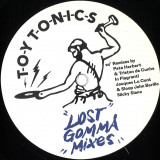
This is a very special EP. As many might know Toy Tonics started as a sublabel of now sleeping German indie dance label Gomma records. Gomma, along with DFA, Output Records and a few other was knownn for a very ecclectic, different approach in dance music. On this LOST GOMMA MIXES EP you find 4 now lost tracks that came out ca 10 - 20 years ago on Gomma, but fit very well in today’s zeitgeist again. Pete Herbert, In Flagranti, Jacques Lu Cont are featured. Who knows about modern disco - knows these producers. And there is a very special name here too: Nicky Siano. The now legendary New York DJ used to be resident at Studio 54 and other legendary NYC venues of the 1970ies and 1980ies. One of his are remix works was for the Gomma rcords band The KDMS. Pure disco euphoria.
out of Stock
Last delivered 2 years ago available to reorder, subject to availability
How can one explain the lasting popularity of the bass clarinet in musical circles from Vienna to Brussels? Perhaps because its frequency range articulates an alternative to conventions of popular music, where "bass" is reserved primarily for rhythmic impulses and the very foundation of the music. Viennese bass clarinetist Susanna Gartmayer's playing can by no means be reduced to just this, rather, it scutinizes the entire sound universe: she can do rhythm and drone, not to mention melody and noise, often all at once. Who would be a more fitting collaborator than Stefan Schneider, with his minimalist rhythms and subtle cosmic exploration?
Together, Schneider and Gartmayer form the project So Sner, which owes its existence to a concert in 2015 at the Approximation Festival in Düsseldorf. Gartmayer's bass clarinet polyphonies so impressed Schneider that he quickly suggested a collaboration. That same year, they began recording the album "Reime" in Kraftwerk's former Kling Klang studio, which in 2015 became workspace and concert venue simply called Elektro Müller. The second part was recorded in the summer of 2020 in Düsseldorf-Kaiserswerth at Stammhaus church, whose interior wood paneling facilitated organic acoustics.
Susanna Gartmayer has been active as a musician and composer in various realms between experimental rock music, improvisation and multimedia sound performance since the early 2000s, releasing the album "Smaller Sad" with Christof Kurzmann and "Black Burst Sound Generator" with Brigitta Bödenauer in 2020. In addition to his solo project Mapstation, Düsseldorf-based musician and producer Stefan Schneider has been pursuing new avenues of experimental music in the here and now for over 20 years, in numerous collaborations with Sofia Jernberg, Krautrock pioneer Hans-Joachim Roedelius, or visual artist Katharina Grosse among others.
So Sner's sound is equally oriented towards experiment and tradition, whose roots can be traced back to the UK of the early 80s: an era in which soul and synth, jazz and industrial, avant-garde and polyrhythm were blended with the help of intellectualism and punk attitude in such a way that manifold sketches of possible music emerged which are only being colorized today. Like So Sner - from the very first stomp to the very last drop.
Olaf Karnik, Cologne, October 2021
out of Stock
Last delivered 4 years ago available to reorder, subject to availability
Kapingbdi came together in Liberia, West Africa, during the late 1970’s and had their own unique style. This six to seven-piece band played original compositions in a vibrant mix of African Rhythms, Soul, Spiritual Jazz, Funk and Rock. Led by Kojo Samuels on sax, flute and vocals “Born in The Night” presents the essential tracks from their rare studio LPs produced between 1978-1981. The work has been carefully edited and remastered in 2019 for vinyl LP and a 6-Page Digipack CD, which includes two additional recordings. Kapingbdi toured through Europe and the U.S. and were the only Afro funk band to ever come out of Liberia.
Kapingbdi hail from Liberia, West Africa and have their own imitable style. They effortlessly combine traditional African music in a modern mix of Jazz, Funk, Soul and Rock. The band is a fusion of the old and the new.
The word "Kapingbdi" is taken from the Sierra Leone language Mende and means "born in the night". Kojo Samuels was given the name by his Latin teacher whilst attending high school in Freetown, They often meet and debate at night in the city and soon after Kojo is called Kapingbdi. The name serves as a description of his origin. Born In Lagos, Nigeria in 1943. The son of slave children. His mother from Nigeria and father from Sierra Leone who moved the family to Liberia, during the 1950’s.
Kojo has played music for as long as he can remember. He starts with the harmonica and later becomes a drummer and percussionist in his first band at school. During his art studies 1965-1972, he tours Germany and works as an art teacher in the USA. His band Kapingbdi is reorganized five times and consists of up to seven musicians. In a VW-Bulli he drives the group from concert to concert and if the drummer fails, he jumps in himself. Between 1978 and 1981 three Kapingbdi LPs are produced for the independent label Trikont, recorded in Hamburg and Munich. During this creative period, the band plays at festivals in Africa and Europe. In 1984, the band tours the United States and shortly after, they came to an end.
At their best, Kapingbdi would rouse the audience with original compositions like "Human Rights", justice for all, especially for South Africans, and "You Go Go You Go Come". The officials and employees in the government departments have no time for the common man, for any questions such as job search, scholarship or similar, he receives the answer "go, come back tomorrow" and the same thing the following day. Or "Now Is The Time For Cry For Love." Now it is time to scream for love and finally, time for humanity and justice. Despite immense difficulties, the musicians consciously live and work in Africa and are at home in Liberia.
On April 12, 1980, ordinary soldiers and non-commissioned officers organize a coup against the government. This is an attempt to put an end to a policy of exploitation of the Liberian people. Whilst efforts to eradicate poverty, lawlessness and illiteracy are obvious throughout the country, Liberia is still Americanized to a high degree. This is evident, as the radio programs of that time almost exclusively played American disco music. Under these conditions, the people seek a reconnection to their folk music, and Kapingbdi were aware of this. Kojo tried many times to come together with traditional Liberian musicians. This passion takes him north of the country. Meeting and playing with the old hornblowers and playing music on traditional instruments, such as the elephant tusk.
Kapingbdi make high quality tape copies of their own vinyl LPs and patiently try to displace all unauthorized tapes from the domestic "market". Nevertheless, it is hard to make a living through music in Liberia. Kapingbdi, is now celebrated. The radio plays are in abundance, but royalties are not forthcoming. Their musical link is the feeling of Afrobeat and Highlife, which is found in each of the many Kapingbdi pieces. They embody Jazz, which is understood to be the most refined example of black music outside of Africa. In Liberia, Jazz is virtually impossible to hear. Bright shining names such as John Coltrane, Charlie Parker or Miles Davis were widely unknown. Thus, the Black Jazz, including its Back-To-Africa movement of the 60’s and 70‘s, passes by without leaving a trace in Africa itself.
Kojo's claim at the time, was to make African music with the depth, sensitivity and the freedom of the technical level of Jazz. This makes Kapingbdi the torchbeares. The underpaid prophets in small Liberia. It is the passion with which the founder of the band continues to work on their music for years. Tirelessly, stimulating and encouraging his fellow musicians. This is ultimately responsible for the success of Kapingbdi in Liberia itself. The local audience seems to listen to the band in fascinated astonishment. One wonders about the ability to develop as demonstrated by Kapingbdi on the basis of their music. It is African and unusually jazzy, danceable and better than the American disco music heard on the radio.
Rather than chase the money and the job opportunities in Europe, Kapingbdi are firmly rooted in Africa. The musicians live in Monrovia, the capital of Liberia, at the Kabingbdi workshop, located in the Congotown area on the eastern edge of the sprawling city. Kojo works here as a sculptor, painter, batik artist and musician. The sales revenue that his activities generate, gives him the opportunity to support the development of African Jazz music. The highest percentage of funds are from Germany and Kojo’s work ethic is “to work on your own thing“. The stance taken aims to support the welfare of Liberians and Africans. The other musicians of the group live in a second house that is nearby.
For the sake of consistency, Kapingbdi is a full-time band. However, the revenue, from all of the sources, could not keep them afloat. Equally, as important to the group are Kojos's knowledge of traditional African music and his sculpting skills. His knowledge is shared with others at the afternoon workshops. It is here that they discuss new lyrics, engage in political debate and the self-imposed task of improving conditions in Africa. At times the debate became heated, especially during rehearsals. This was regarded as good and integrative, sowing the seeds of innitiative to keep the band together.
From 1980 to 1985 Kojo also opened and ran the club "Panjebota", located on the grounds of the U.S. Consulate in Monrovia. Almost every evening Kapingbdi perform the song "Wrong Curfew Walk", whose lyrics lament the killing of citizens during the curfew imposed by the Liberian government. When the head of state Samuel Doe hears the song, he behaves agressively and forces Kojo to close the "Panjebota". Kojo had already moved on. Soonafter he meets Fela Kuti at the Africa-Festival and plays concerts in Germany with Cecil Taylor's workshop band.
Kapingbdi is for thinking, dreaming, dancing. What they sing about is what they have experienced. Kojo Samuels is 76 years old today and still follows his vocation as a critical musician, artist and activist.
Ekkehart Fleischhammer / Sonorama 2019 (with the help of original press sheets and the memories of Kojo Samuels)
out of Stock
Last delivered 4 years ago available to reorder, subject to availability
Here’s a split vinyl of quarantine protest jams from two Seattle heavy-hitters: AJ Suede & Specswizard. Both artists were inspired by 2020’s Black Lives Matter protests, mask-wearing, and stay-at-home orders to produce boom-bap tunes that could only exist in the 21st Century. Insomniac magazine praises the pair’s “next level lyricism.” The Seattle Times picked AJ Suede’s brilliant “Long May We Rain” as one of the best albums of 2020. On the flip side of this cross-generational split LP, you’ll find the vinyl-only “Lost Gems” project from Specswizard. He’s a veteran of Seattle’s scene, releasing dozens of self-produced cassettes and EPs since his start way back in 1988. Here, the familiar sound of buzzing amps and tape hiss makes way for major-key soul turned into pensive bangers. Each artist’s low, late-night-in-the-living-room baritone conjures the feeling of recording in a cramped apartment while the neighbors are sleeping. Still, the beats knock like side doors and narratives hover like heavy rain from cumulus clouds of weed smoke. Together, these two records provide a powerhouse portrait of Black life in the American Northwest today. Only 500 individually numbered copies have been pressed.
The Flower-Corsano Duo, the world’s best and only drums / Japan banjo duo return to VHF for their first album since 2009’s monumental The Four Aims. Mick Flower (Vibracathedral Orchestra) and Chris Corsano (frequently seen with Bill Orcutt, Joe McPhee, and other luminaries) work an area that’s not really jazz, not really anything—a stream of endlessly mutating free sound, a unique mind-merge between Corsano’s nimble drums and percussion and Flower’s amplified Japan banjo (also known as a Shahi Baaja, a type of electric Indian zither with both fretted / keyed and drone strings).
Flower cuts a highly original line, playing neither “leads” nor making drone-music. Less amplified here than on the more “heavy” The Four Aims, the strings ring out with distinct clarity in short snippets of melody and a canvas of pleasing electric sound. Corsano’s bag is to charm out a flow of thoughtful percussion engagement, rolling around on his kit, continually varying his attack and approach in conversational free-jazz style. The Halcyon is a precious addition to a tiny discography, a fortunate event even in today’s world of small press overabundance. Thanks guys!
Celebrating The Chameleons’ 40th Anniversary, this
iconic concert is released on vinyl for the very first
time.
The Camden Palace was a special performance
recorded on the 11th of September 1984 for a satellite
TV broadcast and features Middleton’s finest on top of
their game, playing tracks taken from ‘Script of the
Bridge’ and ‘What Does Anything Mean? Basically’.
This album also includes four bonus tracks from the
Arsenal concert, which was recorded for an
independent Catalonian local TV channel in 1985.
The cover art has been exclusively designed by
Chameleons guitarist Reg Smithies, who designed all
the official Chameleons studio releases.
The Chameleons are an acknowledged influence on
future generations of indie and alternative rock bands,
including Stone Roses, The Charlatans, Smashing
Pumpkins, The Flaming Lips, The Killers, The Horrors,
The National and Interpol. Oasis main songwriter Noel
Gallagher claims The Chameleons were an early
influence on his song writing and stated in a recent
interview: “I’d forgotten how much ‘Strange Times’
meant to me. It came out in ‘86. I was 19!! I’ve been
listening to it every day since and I have to say it’s
blown my mind… again! It must have influenced my
early years as a song writer because I can hear ME in
it everywhere!!”
Double LP pressed on ‘Chameleon’ (orange / blue)
coloured vinyl. Also includes a copy of the album on
CD, previously unseen photos and poster.
For the past 20 years, Jason Boland & the Stragglers have dazzled audiences all over as one of the leading ambassadors of the Oklahoma and Texas music movement. Millions of fans cheering him on, over 500,000 records sold independently and 10 albums later, Boland is a career musician whose legacy continues to grow. From his early days touring in cramped vans and playing in front of tiny bar crowds to the packed venues he performs in today, Boland’s uncompromising approach has grown his profile dramatically, especially in the past handful of years. Add to that the legions of musicians who are influenced by Boland, and his impact on the scene is undeniable.
Polymorphism Records continue their intercultural and cross-genre work with their third release E Source. Female vocals return to the label with four original tracks by Russian artist Sestrica, who brings in her characteristic emotional narrative. A remix by Konx Om Pax and
a rework by Antwood make up the crew boarding on a galactic grey/silver vinyl.
PM003 takes off with electro-to-techno beats fuelled by a mild, wrapping acid melody in Today We Meet, where the uplifting countdown to launch can be felt. Sentimental Value gets
us deeper into the spatial trip. Darker samples and a heavier bassline give extra gravity to the anthem of the journey across sonic galaxies. Floating to slow, surrounding sounds and loops we land on a calmer planet called Intention. Its tidal sensation is created by an
orchestral combination of meditative vocals and other layers of composition. New Era enters an orbit of elegant syncopation within a rotating reverb stardust. Ancestral beeps subtly acknowledge legacy to be taken forward to the next odyssey.
Musician and graphical artist Konx Om Pax from Glasgow beautifully introduces nostalgia to New Era with playful breaks and scratches, getting us back to our roots in this excursion visiting alien territoires. Sestrica’s vocals from her original track are drawn into the remix as
echoing words rendering a mysterious aura, travelling through a deep trance of diverse yet harmonic rhythms and effects. A journey within a journey.
Canadian producer Antwood’s rework of side A jumps into an epic vortex of more experimental, unexpected sounds. The album-closer builds up towards absolute chaos, to then create a vacuum to emptiness. A supermassive (tribute to black holes intended) drop
leads to the last minutes of the EP: up tempo cyber-influenced sounds that bring us to a bright futuristic landscape ironically far from a dystopian prophecy.
Purely coincidental fact: the last track of PM002’s originals being Crisis Apparition and its homologue in PM003 New Era, hope seems to be peeking through current times to send an accidental message with this first series of the label.
Mind the overuse of Space metaphors; in this year 2021 where humans are going farther and further in exploring new places out there, it is a tribute and celebration to discover new musical journeys like this out here, on Earth.
Environmental sustainability and social justice are core values of Polymorphism Records. Following their strong interest in contributing to a good cause, shown from the early days, all Bandcamp digital sales are donated to projects such as Team Trees or The Ocean Cleanup.meet f B3 E Source side A (Antwood rework)
out of Stock
Last delivered 7 months ago available to reorder, subject to availability
Having already proven that he is capable of maintaining sonic quality and distinction over the course of a full original program, Chevel (a.k.a. Dario Tronchin) now makes his LP debut for Stroboscopic Artefacts. His other S.A. contributions (including the inaugural entry in the label's singular Monad series, the "One Month Off" EP, his participation to the label's five-year retrospective series) have already hinted that a more complete exposition of his unique inner world would surface, and here it is at last.
Over the course of his young career, Chevel has gained a mastery over several compositional elements: Polaroid-like slow melodic fades, sharp ricocheting beats, and simply making one's headphones feel like a viable means of physical transportation. All of these elements come into play shortly after the needle hits the grooves of (Track A1), a euphoric introductory track marked by a spectral panning sequence and by beats chopped with a culinary expert's sense of elegance. The drum kit sounds that feature throughout are used sparely but - either because of this or in spite of this - provide maximum impact upon the listener's nervous system. The almost 'far Eastern' use of 'block' percussion on (Tracks A2 and B1) perfectly complements the synthetic sheen produced by fuzz distortion, radio static and bandpass-filtered sound bites, taking us to a terrain where a palette of decay effects provides just as much aesthetic inspiration as the presence of technological advancement.
There is more than enough humor and playfulness at work here, too, helping to once again banish the persistent stereotype of the modern techno producer as a sterile technician: the queasy melody line, sliced-and-diced whistling and gelatinous bounce of (Track D2) evoke a child's wonderment at playtime more than they do the rarefied rigour of the laboratory. The less pulsating numbers like (Track C3) and the closing (Track D3) will engage the listener as well, being like short audio films of abiogenesis (i.e. spontaneous generation of life from 'non-living' material) taking place. These tracks are not so much 'interludes' or contemplative retreats from the action as they are enhancers of it, utilizing fluttering cycles of melody to engage in a kind of conversation with the more driving tracks. As to the 'driving' tracks themselves: the places that they drive the listener to are satisfyingly beyond customary experience.
In other words, despite Chevel's keeping the sonic toolkit and overall atmosphere consistent from track to track, there is a rich variety in the emotional affectivity on display here. The net effect is like a dream state that leaves strong impressions even though one can't pinpoint exactly why they are doing so (and which leaves one wanting to dive back into the dream pool and experience something similar again.) This is a talent that unifies the diverse constellation of Stroboscopic Artefacts producers, and one that makes Chevel in particular one to continue watching, listening to, and experiencing.
Wire (USA/Germany/UK) - ''Very intriguing, can/'t wait to dive in.''
Pitchfork (USA) - "Nice use of space, though do find the atmosphere a little one-note. Percussion really pops."
RBMA - "Thanks for reaching out. Having a listen now and the album sounds really good. Happy to give it a shout on RBMA Twitter whenever is best for you."
Paramount Artists (UK) - "20/10 top effort!"
NTS Radio (UK) - ''Nice IDM music with fine textures and bass frequencies..''
Groove (Germany) - ''Very interesting delicate structures. Suggested for review in Groove.''
Exclaim! (Canada) - "I like this. I'll float it to my team and I'll let you know if anyone's interested in covering it."
Big Up Magazine (USA) - "Absolutely epic album."
Vicious Magazine (Spain) - "Great sounds, for our september issue, thx a lot!"
Little White Earbuds (USA) - ''Fantastic album from Chevel. I have unfortunately been at work today without my usual headphones but even listening on very poor quality ones, the rich sonic mastery comes through. Can't wait to get home and listen to this properly.''
Cone Magazine (UK) - "Thanks for sending this through. Looks great, and always interested about a new Stroboscopic release. I'll let you know when something goes up."
Copenhagen based label Escho release “Escho 15 år: Burgers for my new life” - an extensive compilation of exclusive material for their 15th anniversary (2005-2020). The compilation gathers music by all the currently active artists of Escho - both Danish and international - 27 artists in total. Contributing artists for the compilation are (in alphabetical order): Anders P Jensen, August Rosenbaum, Astrid Sonne, Baby In Vain, BishBusch, The Bleeder Group, Bona Fide, Collider, Dane TS Hawk, Eric Copeland, Excepter, First Hate, Gullo Gullo, Homies, iB101, Iceage, Joanne Robertson, Kh Marie, Liss, Puyain Sanati, Small White Man, Smerz, Søren Kjærgaard, Thulebasen, Varnrable, Yangze and Ydegirl. About Escho and the compilation: The Escho sound was born 15 years ago in small apartments around Enghave Plads, a slightly run-down square at the west end of Vesterbro, Copenhagen, past the kebab shops and the porno shops and the drunks. A few years earlier, as teenagers, several members of the Escho crew had made extremely strange, crisp metal in a very popular band. Escho was a promoter and booking agent as much as it was a label in the early days. They put on small shows to foster and hype the local scene and they brought important performers from all over the world to Copenhagen for the first time. Black Dice, Gang Gang Dance, White Magic, Excepter, Hype Williams, Boredoms, Charles Hayward, they rippled through Copenhagen after they came. Eric Copeland stayed for months. Lorenzo Senni, now well known as a vanguard dance producer, brought his high-school hardcore band to Copenhagen. Escho found and asked these artists to play. And Escho played their humble part in giving sound back to the world. Iceage, Posh Isolation and the Mayhem scene went global. Escho is a lot about being in Denmark, what that sounds like, and projecting it for anyone to hear. Across its releases, Escho’s aesthetic has allowed for the amateurish and the obsessive, the soft and the hard. Escho is about the power of shared experimental experience. Escho has been going for such a long time that the kids who started it are now twice as old as they were when they came up with the name, the idea, the desire to start something. Much younger people, generations younger, work at the label. The world has transformed since then. Escho was born in a period of time where alternative and underground music existed on a private, separate plane to mass culture, and it now finds itself in a time where mass culture and the underground are porous. Tribalism and niche knowledge has been blended by the internet, erasing the border between mainstream and underground modes. Alternative thinking takes many forms now, and new artists continue to expand and interpret the sound of Escho, carrying with them the same curiosity that lit the first Escho sparks 15 years ago. As a whole, this compilation — it is important to note — is jagged in form and tone. It is not even close to a conventional scene compilation, where the sound of a clan flows together. This record doesn’t flow like that. And this, fittingly, makes this anniversary album a ‘classic’ Escho release, because conventions about form and presentation are thrown out the window and new conventions proposed. It is a reminder that Escho quietly remains an ongoing art project as much as anything else. More than its form and tone, however, this compilation is jagged because it is a document of today. It is not final, or conclusive in any way, because the contours of contemporary music are boundless. It’s jagged because Escho has been to a million shows, and put on a million shows, and still loves going to shows. It is a picture of pluralism, discovery and openness. It makes a case for having ears, and making art, and propagating this so that successive generations of young people do it too. This is exactly as it was in the beginning
[v] 22 First Hate – Vampire Boy ¯\_(ツ)_/¯ [2020 Demo]
The Esbjörn Svensson Trio, e.s.t. for short, are still
celebrated today as one of the most important and
influential European jazz bands of the last 20
years.
In 1999, the three Swedes achieved their
international breakthrough with ‘From Gagarin’s
Point Of View’. A star rose in the musical sky and a
unique world career followed. But sometimes stars
shine for much longer than one thinks. On ‘e.s.t.
Live 95’ there are recordings that prove that this
was also true for the Esbjörn Svensson Trio.
The band, founded in 1993, found their very
specific sound early on but it was not initially
noticed outside its home country. In 1995, when
the trio’s namesake still wore long hair and a
headband, these recordings were made at various
locations in Sweden. And whoever hears how the
trio played back then is left breathless.
Much of what distinguishes e.s.t. was already
strongly pronounced here: the coherence and
powerful grip of the playing; the catchy themes that
immediately jump out at the listener and yet do not
become clichéd; the fusion of the music of role
models like Thelonious Monk and Keith Jarrett into
a style of their own, always infected by the forward
thrust of rock. Magical moments were saved for
eternity by these recordings.
Now this e.s.t. early work is available on double
vinyl.
For many years now, the comparative of epic has simply been EPICA. Since their formation in 2002 and their quick ascension to stalwarts of symphonic metal noblesse with trailblazing masterpieces “The Divine Conspiracy” (2007) or “Requiem for the Indifferent” (2012), Dutch metal titans only knew one way: Up. Especially with their last three releases “The Quantum Enigma”, “The Holographic Principle” and this years’ “Ωmega”, forming a metaphysical trilogy that’s both alpha and omega of all things symphonic metal, EPICA became rightful monarchs of a genre they themselves helped made become a global phenomenon.
Yet, as every other band, EPICA couldn’t take their latest installment of breathtaking cinematic grandeur to the seven corners of the world as they would have normally done. You know why. Thus, plans have been made and visions fulfilled to produce a once-in-a-lifetime event that couldn’t be further away from yet another streaming show. What EPICA unleashed upon the world on Saturday, June 12th, 2021, was a monument to their music, their career, and their enduring legacy as forebears of a whole genre. Now finally being released on Blu-ray and DVD and various audio formats, “Ωmega Alive” is the EPICA show of your wildest dreams, brought to life by blood, sweat, tears and a healthy dose of megalomania. Think Marvel meeting Cirque de Soleil in a Tim Burton universe.
Celebrating the release of their gargantuan new opus magnum, „Ωmega“, the streaming event saw fans from over a 100 countries flock to the screens to witness a show that has proven to be the defining moment in EPICA‘s concert history. A show that’s nothing short of the band’s most explosive performance to date, brought to life with an enormous production on an ever-evolving stage setting that’s full of visual surprises. For the first time ever, EPICA performed songs like ‘The Skeleton Key’ or the insanely monumental “Kingdom of Heaven Part 3” from “Ωmega”, alongside the band’s most popular songs, rare songs, fan favorites and huge surprises. “What started as a basic idea to do an online release show for “Ωmega” quickly spiraled out of control and became our most ambitious project to date,” creative director and keyboard wizard Coen Janssen says. “As usual, we wanted to push the boundaries, explore the limits, and think outside the box. We found ourselves back in our happy place. This concert film, our ray of light for you in the dark times that we have all been living in.”
For half a year, the band worked tirelessly on a show that’s been setting a new standard for concert films and streaming events. “What we wanted to do was the ultimate EPICA show where we could fulfill every dream we ever had, where there was room for all the ideas, effects and props that are just too big to be taken on tour.” Far from your usual streaming concert, the band developed a trademark feature called a “living backdrop.” Coen explains: “We built another stage right behind our stage where lots of things were going on the whole time. And we meant that very literally,” he laughs. “Every song got something extra, something unique that was fitting its world.”
He can say that again: Elaborate visuals, tailor-made videos and graphic effects, fire, and flames on a Nibelungen level, dancers and actors, artistic performances or fire performers all add to the aura of symbolism and cinematic splendor, setting the stage for a band that can’t be happier to finally bring their new album to life, harmonizing wonderfully and giving their A game for a show to remember. “It was so great finally playing with the band again, actually standing on stage with them. Boy, did we miss this,” Coen emphasizes and adds: “We also built a pretty cool new stage with some fire-breathing snakes and lots of rotating elements. Good thing is, we might also take it on the road when we can finally tour again.”
Until then, “Ωmega Alive” will be a more than efficient remedy against no-concerteritis – for bands, fans, and crew alike who all look back on an extra-long dry spell. Divided into five acts as there are letters in EPICA and “Ωmega”, each part gets a different theme, look, and feel, complemented with references to the history of EPICA, the symbolism of the band and the videos they did. It’s, in short, the best show they ever did, a two-hour spectacle spanning their storied career up to their latest endeavors and graced by Simone Simons’ breathtaking a-cappella rendition of ‘Rivers’ from “Ωmega” complete with choir, easily the most emotional and achingly beautiful moment in their entire career. Frankly, you don’t see this on a normal tour.
What EPICA brought to life here with the help of 75 artists and crew members is a testimony to their burning will to take their band ever higher – even now, in the darkest of times we ever had to endure. Let “Ωmega Alive” be your ray of light as it was theirs, a journey into the heart, body and soul of one of the most passionate and visionary metal bands alive today.
CAM Sugar launches its new HERITAGE collection dedicated to the most celebrated soundtracks that made the history of Italian cinema. The opening title is Federico Fellini’s milestone AMARCORD, which is here presented for the first time ever as a 180gr gatefold double LP, carefully restored and remastered from the original master tapes. AMARCORD won an Academy Award in 1974 as Best Foreign Film, besides receiving two nominations for Best Director and Best Screenplay. The sweet and evocative music by Nino Rota takes the listener on a journey through the places of Fellini’s boyhood in Rimini, creating a combination of music and images that is absolutely perfect and still internationally appreciated today. This edition includes a 30x75cm illustrated poster, with a reproduction of the original Nino Rota music sheets. This very special re-release of this classic by Nino Rota is in honor of what would have been his 110th birthday.
‘Paint It Blue’ is dedicated to the man who, for many still today embodies
the central figure at the genre’s source: Julian Edwin ‘Cannonball’
Adderley (1928 - 1975). Maybe he didn’t invent Funk. Together with his
co-musicians in his 60s quintet, Cannonball’s alto sax style, his attitude,
humour great musicality, and his love for his audience allowed him to
become a synonym for funk.
Nils Landgren, born in 1956, grew up between the music of his father, a
Jazz cornet-player, and the music of his grandfather, a pastor on the
island Gotland. He first heard Cannonball Adderley on ‘Kind Of Blue’. In
this Miles Davis Sextet of the late 1950s, they were all together: “Miles,
the master of beauty. Coltrane, the master of sound. And Cannonball
Adderley, the master of funk,” Nils Landgren writes in the liner notes to
‘Paint It Blue’. From that point on, he procured everything of
Cannonball’s that he could lay his hands on. “Without the soul of
Cannonball it would have been impossible to form my group Funk Unit
many years later,” he writes.
Landgren edited Cannonball’s live concert announcements into his own
arrangements, so that the time jump between the original and the
nouveau arrangement appears non-existent. An effective device that
literally brings this revered musician into the fold of Nils Landgren’s Funk
Unit.
Whoever speaks of Cannonball Adderley, must also speak equally of his
brother Nat Adderley. It was an obvious thought to invite the most
important brothers in Jazz after the Adderleys to guest on ‘Paint It Blue’;
with the high energy Funk-Jazzrock of the late 70s, the Brecker brothers
have proven worthy heirs to the Adderleys. Both of them solo on
Landgren’s track ‘You Dig’.
The equally noble and forcible groove is delivered by the sideman to
countless Soul greats, Bernard Purdie. Bernard’s own stylistically related
production with the Brecker Brothers, Nils Landgren, amongst others is
now strongly in the public consciousness on ‘Soul To Jazz’. Much like
Cannonball Adderley, Airto Moreira owes important impulses to his time
with Miles Davis.
‘Paint It Blue’ is possibly Nils Landgren’s most lavish record to date and
with some certainty also his best. Landgren’s playing is cool and smooth,
with warmth, temperament and thought. Here his sound combines
organically with everything he surrounds himself with. The album sounds
as if the recordings for it were a pure joy for all participants. Nils
Landgren has the prerequisite for serious fun, the gift of intelligent
serenity.
CAM Sugar launches its new HERITAGE collection dedicated to the most celebrated soundtracks that made the history of Italian cinema. The opening title is Federico Fellini’s milestone AMARCORD, which is here presented for the first time ever as a 180gr gatefold double LP, carefully restored and remastered from the original master tapes. AMARCORD won an Academy Award in 1974 as Best Foreign Film, besides receiving two nominations for Best Director and Best Screenplay. The sweet and evocative music by Nino Rota takes the listener on a journey through the places of Fellini’s boyhood in Rimini, creating a combination of music and images that is absolutely perfect and still internationally appreciated today. This edition includes a 30x75cm illustrated poster, with a reproduction of the original Nino Rota music sheets. This very special re-release of this classic by Nino Rota is in honor of what would have been his 110th birthday.
In 1977, in the midst of a period of political turmoil and social unrest that went down in Italian history as "years of lead", screenwriter and director Massimo Pirri made a film no one else had the courage to make: Italia: ultimo atto? (Could It Happen Here?). Here, Pirri explores the controversial (and, in the 70s, very current) topic of left-wing armed struggle. He does so through a storyline that is almost prophetic: in the film, a mysterious ultra-leftwing armed group plans and executes the killing of the Ministry of the Interior; in 1978 Christian Democrat leader and former premier Aldo Moro was kidnapped and killed by the Marxist-Leninist Red Brigades).
The violence of Pirri's storyline is fully captured by the score composed by Lallo Gori, who uses obscure synths, analog keyboards, and dry-sounding acoustic drums to create an extremely tense and frenzied soundscape of electronic textures.
The result is an album that combines dark, haunting jazz-funk with ambient atmospheres and suspenseful electronic sounds, and which ends up sounding like an instrumental proto-hip hop record where Moog synths take the lead together with drums.
At the time, this must have seemed like a low-budget, ramshackle soundtrack – essentially, a B-movie soundtrack. Indeed, the extensive use of electronic sounds was meant to compensate for the lack of acoustic instruments, such as the bass or (alas!) brass, which were replaced by keyboards and MiniMoog synths. Today, however, Lallo Gori's odd and minimalistic style of arranging makes this score sound unexpected, avant-garde, and innovative. In short, modern and contemporary.
Previously unreleased in any format, all tracks have been remastered from the original master tapes.
out of Stock
Last delivered 4 years ago available to reorder, subject to availability
What do you get when you blend a reverential take on the diverse canon of popular Caribbean music with an all-star cast of seasoned studio musicians from the heart of Brooklyn? The answer lies in Combo Lulo's much anticipated debut studio long-player, Neotropic Dream. The group takes its influence from the deep musical heritage of New York's cultural pedigree, especially the heyday of the city's Caribbean record distribution industry — a culture of music that still bubbles today in the crevices of the city's independent neighborhoods and record communities.
Despite the general scope of the muse, it's hard to precisely pin down this fantastic re-imagining. In some ways, that's why the title for the band's debut album is Neotropic Dream, a nod to the biogeographic region that encompasses the countries along the Afro-Caribbean diaspora, a region intensely diverse in its climate, fauna and flora. This theme manifests musically as you journey through Combo Lulo's original compositions and cleverly chosen covers. More than anything, it's a dreamy storm of styles and musical moments born anew. And just as weather swiftly travels and transforms the Caribbean, so the varied musical styles carry the listener from the album's start to finish. Not just a talented band's showcase of styles, but rather a sumptuous feast of savory and sweet ingredients on display, together. A musical curry roux, if you will, that fits together so harmoniously, it's no wonder the band engenders automatic appreciation both in their studio recordings and in their uproarious live shows.
Whether it's cumbia gone rock steady, or reggae gone chicha, or vocal vs. version, there's a little something for everybody on here, depending on where you drop the needle. With splendid original compositions and horn arrangements from band leader Mike Sarason and saxophonist Anant Pradhan, respectively, Combo Lulo is quickly proving themselves to be a powerhouse of the highest caliber.
out of Stock
Last delivered 4 years ago available to reorder, subject to availability
Intimate, sensual: such is the music of Malik, shaped as desired over the albums: Un (2017), Tempéraments (2019), which earned him the nomination “Revelation album of the year” at the Victoires de Music 2020… And, today, Troy. Which opens a new chapter, that of an organic bias whose idea germinated after his last tour. Major fashions, solar and organic: TROIE imposes itself in warmth and sensuality.
Malik Djoudi has always been fond of duets or collaborations - with Juliette Armanet, Cécile de France or even Etienne Daho, support from the start - does not deprive himself of it here. Thus, we savor the tempo shared with the young rapper Lala & ce, “Point sensible” and the synthetic poetry explored with Philippe Katerine, “Eric”. Third collaboration, and not the least: "A few words", sung with Isabelle Adjani, the immense actress in a state close to Ohio, that of the navy sweater made in Gainsbourg.
With Companion, Otto A Totland completes his album trilogy of personal, sparse piano compositions, following in the footsteps of 2014's Pinô and 2017's The Lost.
As a self-taught pianist, Otto further determines himself as a timeless composer who follows nothing but his own gut and heart. The outcome is something so pure it’s hard to not be affected. The development of his pieces over the years has grown into something so himself that it's almost immediately recognisable. With Companion he has matured in his own craft, and the various pieces here feel confident and absolutely beautiful in a way that sees the end of the trilogy as a warm, empathic document for the times.
As with the previous two albums, Companion was again recorded at Nils Frahm's Berlin studio for optimal warmth and space, Pinô and The Lost at his previous Durton Studio while Companion at the historic Studio 3 at Funkhaus. All three records are released by Sonic Pieces in hand-crafted limited edition covers as a statement showing that craftmanship and humanity still exists in this world constantly moving towards the exact opposite.
This quote by Norwegian philosopher Guttorm Fløistad seems an appropriate connection to both Otto's music and the way we are all heading : “The only thing for certain is that everything changes. The rate of change increases. If you want to hang on you better speed up. That is the message of today … In order to master changes, we have to recover slowness, reflection and togetherness. There we will find real renewal.” With this in mind, Companion is exactly what it's title sets out to be. A friend that can follow and comfort in both good or bad times.
out of Stock
Last delivered 4 years ago available to reorder, subject to availability
Léonie Pernet's second album Le Cirque de Consolation, to be released November 19th on InFiné & CryBaby, inhabits a world where borders dissolve and everyone makes their own unique and singular utopia. Hereby, the record questions the links between pop music, African cultures and electronic music, neo-classical music or the role of voice, whether human or synthetic. Sophomore albums can be a painful process for an artist - how refreshing it is to hear one so decidedly optimistic.
Textextext - (add your write up)
The sought after whirlwind of French Pop that exploded onto the scene with her debut "Crave", Leonie Pernet, returns with her second album, "Le Circque de Consolation", a sort of double negative of her first. While the yearning that sat at the center of "Crave"might not have been resolved, the young multi-instrumentalist and singer has found a new perspective - a more open and positive outlook on her own life and work. Perhaps telling, then, that the title was the first element of the album to exist: as it is and has always been a journey of personal (and collective) consolation first, a musical confrontation with the self.
"This record parallels my life's journey," confirms Léonie, "it reflects what has happened in my life since 'Crave' came out and how I feel today. There's still a lot of melancholy, but a lot more sunshine and light. In four years, I've become sober, which has saved me; I've worked a lot on my voice, which is a part of a desire to speak, to address my audience more directly, and also a more pronounced pop desire." In line with her new-found "openness", Leonie invites another musician into her creative process for the first time on "Le Cirque de Consolation": Jean Sylvain le Gouic, who lended his coproduction and perspective to her, while Leonie still plays almost all instruments herself with an astounding prowess.
Leonie's voice oozes with a new-found self-confidence and takes center stage amidst eclectic, distinctively fun and open-minded production. Sometimes she sings in English, mostly in French: "I worked a lot on my voice," confirms Léonie, "I didn't dare to sing before, neither live, nor on record, nor in the studio." Surrounding her astounding, intoxicating voice are forays into any direction imaginable: from harsh, experimental electronics to the more sombre, organic and quiet moments - and everywhere, there is the vision of Africa, (also Middle East) it's many sonic gifts and cultures.
Leonie has found a universal utopia that she craves for - a musical, cultural amalgamation that is decidedly non-western, political and poetic, rooted in self-discovery and the connection with other humans: African and oriental percussion, synthesizers, drum-machines; Léonie mixes genres and instruments with ease and precision. The French novelist and philosopher Édouard Glissant - whose work and writing had a big influence on Pernet - coined the term "Creolization ", the "bringing together of several cultures or at least several elements of distinct cultures, in one part of the world, resulting in new data, totally unpredictable in relation to the sum or the simple synthesis of these elements."
From "Hard Billy ", a techno-influenced rebellious anthem, to "Les Chants de Maldoror," a club and dance song propelled forward by feverish derboukas, to the deeply moving "A rebours" and its Afro-electronic rock. Léonie Pernet inhabits a world where borders dissolve and everyone makes their own unique and singular utopia. Hereby, the record questions the links between pop music, African cultures and electronic music (Intérieur Négro), neo-classical music (Le Cirque de consolation, Dandelion), or the place of the voice, whether human or synthetic as in the atmospheric "Vowel". Sophomore albums can be a painful process for an artist - how refreshing it is to hear one so decidedly optimistic.
out of Stock
Last delivered 4 years ago available to reorder, subject to availability
1. Some records hit you with an instant impression of timeless brilliance, and Low Life’s Dogging is one of those records, what the wise call “an instant classic”. 2. From Squats to Lots: The Agony and the XTC of Low Life is more like their second album Downer Edn (read Edition), a little more withdrawn, a little more textured. Complex. Rich. Which is to say: you’re going to need some time with it. 3. Some show, some grow. Low Life have done both. This one is a grower. Spend some time with this one. It’s got that nuanced flavour. Don’t guzzle. Sip. Savour. 4. Sip it, and sense the recurring brilliance of Mitch Tolman’s lyrics, exploring the usual territory of gutter life, lad life, punk life, low life. The dirge. Disgust and shame in white Australia. Council housing, bills piled to the neck, substance abuse and rehabilitation, the fallen lads and lasses who stood too close to the flame, loss and loneliness, from squats to lots. Un-Australian gutter symphony. 5. There is a celebration of resilience and that’s a central theme of this record and a time like ours needs a record like Agony & XTC. Low times are coming through, but if you’re low they won’t get to you. 6. Iggy Pop’s Bowie produced studio rock masterpieces ‘The Idiot’ and ‘Lust For Life’ are important reference points to the 3rd album sounds of Low Life. Here comes success! 7. ‘The Agony and Ecstasy’ is a 1985 novel by Irving Stone about the life of Italian Renaissance painter Michelangelo. Stone wrote another novel about the single eared painter Vincent Van Gogh called ‘Lust For Life’. This synchronicity hit me. 8. Iggy and the Stooges are a pretty safe reference for Low Life (and all good rock music). Iggy and the Stooges are a low life’s Michelangelo, but solo Iggy like Lust for Life is a better reference for this particular incarnation of Low Life, which is to say they are studio rock albums. 9. Bowie later referred to this period of his life as profoundly nihilistic. But Iggy looked at it as the period of his life that saved him from an early grave. This confrontation is Low life lore. 10. Let’s stick to this, because there’s something about this era of Bowie that makes sense with Low Life’s new album, particularly Low. One should never miss the Low in our new album from Low Life. Producer and studio boss Mickey Grossman has the ear for the Low, and he has carved out a little statue of David right here. 11. Mickey’s ears are recording, mixing and producing the best of Sydney, most notably the Oily Boys Cro Memory Grin. A great companion record to this one. Use Agony & XTC AFTER Oily Boys. Not on an empty stomach, and don’t try to operate heavy machinery (bobcat, bulldozer etc). 12. The relationship between Low Life and Sydney hardcore should not be understated, but it also shouldn’t guide how to listen to Agony & XTC. This is not austere, disciplined music. 13. Think, like, if Poison Idea were given the kind of studio time and budget as Happy Mondays. You wouldn’t play it to a teenager. It’s not for children. This is a mature flavour, one for the adults who have had to contend with failure and hardship, medical bills and disappointed family members, betrayed lovers and worrisome growths, police brutality and tooth decay, humiliating bowels and collapsed septums, detoxing and drying out, for those who have seen themselves as corrupted and putrid and unloveable, for those who endure all of this and aren’t willing to lie down and cop it sweet: Low Life are still here and they ain’t going nowhere. NOTES ON HOW NOT TO LISTEN TO AGONY AND XTC OF LOW LIFE: 1. Don’t think of shoe-gaze. It suggests a safe passage to 90’s reminiscences, a vogue style of our time, but nothing to do with Low Life style. Low Life style is always of its time. The content changes. Agony & XTC shares weight of records like My Bloody Valentine’s Loveless and Slowdive’s Kebab, records that were laboured on after the songs were recorded, songs that were written as they were recorded. 2. We can call these “studio albums” as opposed to albums built in the heat of live performance. Studio albums from the 90’s are called shoe-gaze by some journalist nerds, but we know better than to use words like this. 3. Studio albums are excessive and, at the same time, so empty. Agony & XTC, Loveless, Kebab, Rumours: excessive! And empty. This is not to suggest this is Low Lite, some throwback, soft. A band like Low Life can make an overproduced studio rock album without having to use the word shoe-gaze. So, don’t think studio albums mean anything especially 90’s. Don’t look back. 4. Let’s lose these distasteful labels, like “shoe-gaze”, “rehab rock”, “stab”, “guitar OD overdrive”, “western Sydney wonder”. They can fade out. A low life was once referred to as a vagabond. Who uses this term today? Nobody. Language can murder. Words can die. Kill ‘em all! - Daniel 'DX' Stewart, Melbourne, 2021.
Over the course of the decade, Meatbodies’ Chad Ubovich has been
a perennial candidate for MVP of West Coast’s fertile rock scene. The
LA native could be seen peeling off guitar solos in Mikal Cronin’s
backing band, supplying the Sabbath-sized low end for Ty Segall and
Charlie Moothart as the bassist for Fuzz, and, of course, fronting his
own Meatbodies. Today the recently dormant experimental noise /
freak-rock outfit has announced their return with 333—a corrosive
stew of guitar scuzz, raw acoustic rave-ups, and primitive
electronics that charts Ubovich’s journey from drug-induced darkness
to clear-eyed sobriety. 333 simultaneously reflects on how the world
he re-entered was still pretty messed up—if not more so. “These lyrics
are dark, but I think these are things that a lot of people are feeling
and going through” he says. “Here in America, we’re watching the
fall of U.S. capitalism, and 333 is a cartoonish representation of that
decline.”
In mid to late 2019, the band—Ubovich and drummer Dylan
Fujioka—had a new album in the can, ready to be mixed. But
when COVID hit, like so many other artists, they put their release
on hold as they rode out the pandemic’s first wave. During that idle
time, Ubovich discovered a cache of demos that he and Fujioka had
recorded in a bedroom back in the summer of 2018, and he really liked
what he heard. In contrast to Meatbodies’ typical full-band attack, it
was deliriously disordered. “It sounded gross, like a scary Magical
Mystery Tour,” he recalls proudly. After subjecting them to some
mixing-board freakery, Ubovich fast-tracked the songs into becoming
this third release of theirs, 333. It proves Meatbodies have greatly
expanded their palette, opening new portals to explore. And for an
album that wasn’t supposed to exist, 333 is the ultimate testament to
Meatbodies’ renewed vitality.
Ferocious Dog have been putting lockdown to good use by writing and recording their fifth studio album 'The Hope'. Instantly recognisable as a fusion of folk, punk and ska - but with newer members Ryan and Johnny really putting their stamp on evolving their sound further - the former adding much more bite to the electric guitar, with the latter juxtaposing this aggression with softer folky sounds.
The ever-present traditional cover is here, right on-trend with a sea shanty vibe, the rest of the album flows irresistibly through tales of historical observations to biting commentary on the plights facing the world today. The songs follow a rollercoaster of pace and sentiment which will have you wanting to mosh one moment before having a moment to contemplate, coupled with a surprise collaboration and an overdue catch-up with how Mairi is getting on.
A great follow-up to Fake News and Propaganda - Ferocious Dog seem to have the knack of evolving their sound enough to pique your interest, without losing any of the sound or attitude that made you fall in love with them in the first place. Once they’re allowed out to play again they’ve given themselves a real headache in trying to pick a set list from their now burgeoning back catalogue.
Ferocious Dog have been putting lockdown to good use by writing and recording their fifth studio album 'The Hope'. Instantly recognisable as a fusion of folk, punk and ska - but with newer members Ryan and Johnny really putting their stamp on evolving their sound further - the former adding much more bite to the electric guitar, with the latter juxtaposing this aggression with softer folky sounds.
The ever-present traditional cover is here, right on-trend with a sea shanty vibe, the rest of the album flows irresistibly through tales of historical observations to biting commentary on the plights facing the world today. The songs follow a rollercoaster of pace and sentiment which will have you wanting to mosh one moment before having a moment to contemplate, coupled with a surprise collaboration and an overdue catch-up with how Mairi is getting on.
A great follow-up to Fake News and Propaganda - Ferocious Dog seem to have the knack of evolving their sound enough to pique your interest, without losing any of the sound or attitude that made you fall in love with them in the first place. Once they’re allowed out to play again they’ve given themselves a real headache in trying to pick a set list from their now burgeoning back catalogue.
"You ever wonder what Keith Morris does at the end of the day? Does he maintain that wide-eyed stare, the one that pins audiences to the floor with its very intensity, while he’s putting on his pyjamas? Does he continue spitting venom from that heroically ragged throat of his while he’s making his cocoa? Does he lay his head on his pillow with the same righteous fury that launched thousands upon thousands of moshpits? Hey, I’m just wondering. Y’see, all that intensity and venom and fury… it has to go somewhere while he’s otherwise occupied with mundane tasks like taking off his socks or brushing his teeth, right? And listening to the thrilling racket conjured up by Vancouver’s Chain Whip, you’d be forgiven for thinking that they have somehow become vessels for that energy. I mean, they’re Morris’ spiritual successors - if their 2019 debut ‘14 Lashes’ wasn’t enough of a clue, then this six-song blast of blink-and-you’ll-miss-it brilliance should leave you in no doubt. This is hardcore punk as it was originally conceived, and it slays. ‘But who are Chain Whip?’ I hear you ask. Well, they’re a bunch of dudes from British Columbia who’ve also served time in bands like The Jolts, Fashionism and Corner Boys (among others). They’re the ones who are gonna have you slashing the seats at your local cinema, or taking potshots at lines of empty bottles on street corners, cuz they make you feel so damn tuff. OK, I’m just goofing around here - whereas Chain Whip are serious business. No, really. I dare you to listen to the Germs-go-nuclear b(‘)last of ‘Laguna Bleach’, or the garage-slop-at-200-mph rush of ‘Fresh Paint And Philanthropy’, and not want to launch a stink bomb into your teacher’s car. Or, failing that, to bring about the extinction of global capitalism. If that fails, you’ll just end up wearing out the grooves of this very fine six-song EP while bouncing between walls like the DRI logo guy if he wore jet heels and spring-loaded shoulder pads. Jeez, imagine Keith finishing the night shift and giving these guys a handover. As if they’d even need to be told. Look, Chain Whip are the best straight-up old-skool punk band you’ll hear today. You know what to do. Trust your instincts. Dance that two-step to hell with ‘em. This. Is. The. Shit." Will Fitzpatrick.
* Jonny L is widely and rightly regarded as one of the most talented and influential artists working in the scene today. His style is hard to define as he rarely repeats an idea or theme in any track, and this can be easily felt in this eclectic but essential selection of previously unreleased work. Each track here was made in the early years of rave, and yet each maintains the standard high quality and accomplished sound you would expect from Jonny L. This is a rare opportunity to grab hold of some of his formative work, and as an EP, it is simply outstanding and unmissable..
out of Stock
Last delivered 4 years ago available to reorder, subject to availability
This double album is a new collaboration between long-time Umor Rex artists Andreas Gerth (one half of Driftmachine) and Carl Oesterhelt (11 Pieces for Synthesizer). Both developed their shared musical cosmos during their time with the now defunct Tied +Tickled Trio. Oesterhelt is also known for his solo compositions for orchestras and for collaborations with Johannes Enders and Hans-Joachim Irmler of Faust.
As futurism seems inherent to electronic music, the backward-looking view is alien to its nature – consequently, a dialectical struggle between these principles is rarely expressed with the means of electronics. Especially today, its essence as a medium of progress stands in opposition to a sceptical position. By reconnecting us with history, The Aporias of Futurism seeks to define a critical location, that stands in opposition to the postmodern concept of interpretation, deconstruction and reformulation and the belief in progress that goes with it.
The working method for the album Andreas and Carl followed was the usual musique-concrète-technique – cut/assemble/edit/process pre-recorded sounds – but instead of deconstructing the concrete noises into an abstract sound entity, they followed a different path: the organic interweaving of orchestral structures with the electronically processed noise layers into a composition in the sense of classical modernism at the beginning of the 20th century.
Carl started with sketches recorded via a broken CD player, processed through a ring modulator, which sounded like old electronic music from the 1950s. To interact with these fragments Andreas recorded and processed a plethora of everyday noises, atmospheres, tonal fragments from the modular, industrial and shortwave radio noise, percussion in the form of door slamming, falling metal sheets, ball tracks, and so on. So, while they still played within the futuristic discipline, the reference to the past is actually unmistakable. One can hear it in the tonality of the contrasting orchestral passages, in the sound character of the processed samples and the sonic electronic layers. But it is precisely here, where a narrative tension develops. Theses and antitheses, extreme (unresolved) opposites, contrasts… essentially inner contradictions, or expressed in another word aporias… … but there is another factor at play here, something that plays a subordinate, almost ostracized role in the post-modern context: beauty (albeit the beauty of ruins) – beauty, the only refuge of the pessimist.
In the course of the process, a wide range of motifs and ideas emerged from the fog of memory. Free associations of concepts, books and authors from a wide period of time, such as Milton's Paradise Lost, William Blake, Robert Graves, ancient Rome, as well as Borges and Juan Rulfo. This flood of images is also incorporated on the album cover as a "free interpretation" of cultural objects and their relations in time.
The overarching motif of a sceptical rejection of the idea of Futurism is illustrated by a quote from Emile M. Cioran, the writer who most closely embodies the common spirit of the work presented here.
"But here comes the strangest thing: the Futurist idolizes becoming only until he has enforced that order for which he fought; then the ideal conclusion of time becomes apparent to him, the ‘always’ of utopia, which concludes and crowns the historical process. The conception of the Golden Age of Paradise par excellence, thus grips believers and unbelievers alike. But between the original paradise of the religions and the eschatological of the utopia there is the whole distance that separates a nostalgia from a hope, a repentance from a delusion, an achieved from an unrealized completion."
All music composed by Andreas Gerth and Carl Oesterhelt between Berlin and Munich, Germany in 2021. Produced and mixed by Andreas Gerth in Berlin. Mastered by John Tejada in Sherman Oaks, USA. Artwork by Daniel Castrejón in Mexico City.
BBE Music celebrates the centenary of recorded Ghana Highlife music with a double album reissue of two rare 80s LPs recorded by the late Atakora Manu, AFRO HIGHLIFE and OMINTIMINIM. Born in Toase, Ghana, a proud Asante, Atakoras musical talent made itself clear from an early age. But it wasn’t until his late teens that he put that talent to use as a performer, first founding the legendary Princess Trio from 1961 till 1963 with drummer Togas and multi-instrumentalist Elder Osei Bonsu. After a spell from 1963 till 1966 as guitarist with the United Ghana Farmers’ Council Drama Troupe, Manu teamed up with Moses Kweku Oppong to form the legendary Kakaiku No. 2 Band, producing a string of national hit singles over the following three or four years. There followed a three year break from music until fate struck: Atakora found a job in 1973 as Recording Studio Attendant- and later recording engineer- at Ambassador Recording Studios in Kumasi, at that time the country’s largest independent label. On seeing his musical talents behind the studio desk, it wasn’t long before the boss suggested to Manu that he get back to making music himself, an opportunity that he was quick to take up- as will be more than apparent from the hardcore, rootsy Highlife and palmwine selections reissued here. As well as long-time associates Togas and Elder Bonsei, local Kumasi legends CK Mensah, Amoako Agyeman, Agyei Kyeremanteng (of the famous Keyeremanteng All Stars) , and Atta Fofie lent a hand from time to time, along with a handful of other seasoned Ambassador studio session players. THE MUSIC A unique selling point here is the mix of vintage, rootsy ‘palmwine’ blues-style guitar Highlife with quirky keyboard electronics, a sound well-established today but revolutionary in the comparatively conservative world of 70s and 80s Highlife. This comes across beautifully in Dada and Cape Coast Cousin, the latter toasting off guitar licks with bubbling wah wah organ. We find a similar juxtaposition in Asante Kotoko, a shout-out to Kumasi’s champion soccer team, which also features some sweet ‘village’ drumming, and in Meka A Ensa..