Uluru is back with another Dibba production!
Italian dj and producer Dj Dibba open up to different sounds and surprise us with a contagious Uk Garage Remix.
On the flip, the producer from Albano Laziale (known as the italian Kingston) confirm himself as one of the reggae-hip hop raising stars with “Ego Skank”.
Pull up guaranteed!
Pressed on high quality black and transparent red vinyl (48 gr.)
Edition of 250, cut it loud and fat, highly recommended for big sound systems.
Search:hi 5 kings
- A1: Intro
- A2: Raw Born Reggae
- A3: Nah Lie (Interlude)
- A4: She Nah Lie
- A5: Tings Ah Gwan (Interlude)
- A6: The Children
- A7: Radio (Interlude)
- A8: Gunman
- B1: Trenchtown Ride (Interlude)
- B2: The Herbs W/ Barrington Levy
- B3: Clarendon (Interlude)
- B4: Farmers Rock
- B5: Farmers Rock Dub
- B6: Dog Ah Bark Studio (Interlude)
- B7: Curfew Drop W/ Linval Thompson
- B8: Outro, Until Next Time
Six years after Nazamba’s first offering, he delivers his final gift: A Message From Zion.
The journey begins with George ’Nazamba’ and Rico ‘O.B.F’, two kindred spirits connected by sound. Countless cross-ocean visits between Kingston and the French Alps, from enjoying hot beers on the beach to reasonings in snowy mountains. Moments that forged a pure brotherhood.
Out of this friendship grew his first album, the self-titled Nazamba in 2019. Now comes his second, a collaboration between Thompson Sound and Dubquake Records. Together, they unite two generations of reggae powerhouses. Produced by Rico O.B.F, the record reimagines classic Thompson Sound gems. Nazamba’s musical storytelling is accompanied by the Roots Radics, with guest appearances from Linval Thompson & Barrington Levy.
Then came silence. In 2022, Nazamba passed on to Zion. The album project was unfinished, yet full of life. What remains is raw, unpolished and painfully beautiful.
A Message From Zion, a celebration of Nazamba’s universe. His voice, wisdom, poetry, heart and spirit. Forward we ah go. Ah true.
- A1: Derrick Morgan - Fat Man
- A2: Lloydie & The Lovebites - Wine & Grine
- A3: Phyllis Wilson - Love Is All I Have
- A4: Delroy Wilsom - Put Yourself In My Place
- A5: Rico Rodriguez - Rainbow Into The Rio Mino
- A6: Derrick Morgan - I Love You
- A7: Honey Boy Martin - Dreader Than Dread
- B1: The Heptones - Gunmen Coming To Town
- B2: Justin Hinds - Rub Up, Push Up
- B3: Lester Sterling - Soul Voyage
- B4: Derrick Morgan - Moon Hop
- B5: John Holt - Fat Girl, Sexy Girl
- B6: The Ethiopians - Reggae Hit The Town
- B7: Pat Kelly - How Long
The Rude Boy moniker has its roots firmly set in the downtown districts of Kingston, Jamaica.
Alongside the regular Ska/Rocksteady sounds coming out of the sound systems, there was an undercurrent theme to some songs that spoke of the struggles of the youth, of their confrontation, arrests and run ins with the establishment.
Some of these songs praised the Rude Boys for their stance and style while other songs were more in contempt with the Rude Boy's attitiudes, comings ,goings and violent behaviour.
For this release we have put together a set of tunes that the Jamaican Rude Boys would have been listening to at the sound systems on the lawns and street corners.
Not only the more obvious Rude Boy tunes like 'Gunmen Coming to Town' , 'Dreader than Dread', 'Moon Hop' but also some of the tunes that made the sound systems rock well into the night.
Hope you enjoy the set,,,,,
2025 Repress
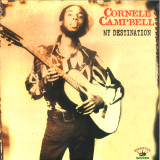
The mighty Falsetto voice of Mr Cornell Campbell is another we believe, unsung hero of the Jamaican music scene. Who in our opinion should have broke through to a wider audience, than his cult status currently provides. We have unearthed straight from the master tapes an album that was due for release around the mid 70’s. A few of these cuts, found their way out on limited 7”s, that were mainly for the domestic Jamaican market. But as a complete body of work, never found a release until now. We hope like us, once you have played the tracks, you will feel that this set of cuts, stands up amongst Cornell’s finest work. Cornell Campbell (born 1948, Jamaica), made his first recordings in the early 1960’s for Coxone Dodd at Studio 1. Tracks like ‘Under the Old Oak Tree’, ‘My Treasure’ and later as a duo with Roy Patton ‘Salvation’ and ‘Sweetest Girl’, were local hits on the Jamaican Sound Systems. A short spell with the Uniques was followed by his roll as lead vocalist with the Eternals, under the monicker of Don Cornell. Their finest moment being the classic ‘Stars / Queen of the Minstrels’ cuts which still stand up today as some of Jamaica’s finest.
The 1970’s saw Mr Campbell move on to work with producer Bunny ‘Striker’ Lee, for whom he cut most
of his big tunes. He and fellow singer Johnny Clarke, would become Bunny’s 70’s equivalent to his 1960’s stable of singers like Slim Smith, Pat Kelly and Ernest Wilson. They would provide the voice to his many hits of the day. Bunny not being called ‘Striker’ for nothing. Cornell also had a series of hits around his theme as the ‘Gorgon’. The mighty figure unbeatable at the dances in the Greenwich Town district of Kingston. ‘The Gorgon’, ‘The Conquering Gorgon’. ‘Natty Dread in a Greenwich Farm’. These were all firm favourites at the dances in Jamaica. He also worked with other notable producers around this time. Winston ‘Niney’ Holness “I Heart is Clean’, Tappa Zukie ‘Follow Instruction’
and culminating in a massive hit ‘Boxing’ in 1979 for producer Joe Gibbs. But it was his time with Bunny Lee that set the levels for his record output. This unreleased album is from this period in time, when Cornell Campbell never sounded sweeter......
2025 Repress
When people think of Tough Gong they usually think of Bob Marley and rightly so, as he was nicknamed and often called Tough Gong and from this his early releases which came out on the Tough Gong label. But Tough Gong was also the name of a recording complex named after Bob Marley hat included a top level recording studio, pressing plant and distribution centre that would allow reggae music to carry on many years after his sad and too early demise.
Bob Marley had take over the former residence of Island Records boss Chris Blackwell the Island House, 56 Hope Road around 1974. Just before the 'Smile Jamaica' concert on 03rd December the same year the house was ambushed by gunmen. Bob's manager Don Taylor was hit 5 times AND Bob was shot in the arm and his wife Rita Marley was hit in the head by a stray bullet. How no one was fatally injured is staggering. Immediately after the concert Bob Marley started his self imposed exile from Jamaica, settling in London, England. This would lead to the aptly named exodus album being recorded there in the summer of 1977. It would not be until the 'One Love' peace concert in Kingston's national arena on the 22nd April 1978 that would see Bob's return to the island. Marley felt is was important to show his commitment to the people of Jamaica and on his return to 56 Hope Road he began construction of his own recording studio with the help of music mogul Tommy Cowen. Unfortunately Bob Marley's short life would end on the 11th May 1981 from cancer which originated form a football injury. His passing would lead to 56 Hope Road being turned into a museum to the legend of reggae music.
A new location would have to be found to carry on Bob's work which was 220 Marcus Garvey Drive, Kingston 11. The buyer would be Rita Marley and the Tough Gong International Organisation.
Engineers working at the new facility included Errol Browne who had worked at Treasure Isle studios and Hopeton Overton Browne known as 'Scientist', named by the great producer Bunny 'Striker' Lee who worked with him previously at King Tubbie's and Channel One's studios described his ground breaking style as being like that of a scientist.
We focus for this release on the work carried out by the great Scientist on the songs of the Black Solidarity Label run by Ossie Thomas (aka Joe The Boss) recorded at Tough Gong studios. One of the foremost recording, pressing and distribution facilities on the Jamaican island set up from the work of Bob Marley to carry forward reggae music. Hope you enjoy this set......
Knowledge The Pirate returns with a powerful new statement with his new album, The Round Table, which is now available. The Round Table is produced in its entirety by longtime collaborator and legend Roc Marciano through his Pimpire International imprint.
With roots in New York’s revered ‘90s hip-hop scene, Knowledge The Pirate has steadily built a reputation as one of the genre’s most consistent and authentic voices. A frequent Roc Marci collaborator and key figure in the modern underground renaissance, Knowledge fuses golden-age grit with new wave innovation—bridging generations while staying firmly rooted in New York’s timeless sound.
Since his 2018 debut Flintlock, Knowledge has carved a lane entirely his own through his label Treasure Chest Entertainment, Inc. With five acclaimed projects under his belt, including the recent 5lbs of Pressure, he continues to deliver unfiltered street wisdom and personal reflection in every bar.
The Round Table stands as a testament to his evolution—an uncompromising body of work laced with Roc Marciano’s signature production and Knowledge’s lived-in lyricism. It’s not just a record—it’s a meeting of the minds, an audio council of kings.
“The Round Table is cinematic storytelling, teaching street knowledge, eating etiquette that will save your life” Knowledge professes. “This album is like an Honorable Elijah Muhammad book; How To Eat To Live. Produced fully by the true creator of the new wave sound, Roc Marciano, you are all invited to a seat at The Round Table; and break bread with the true Godfathers of this new wave rap renaissance.”
- A1: Panafrican Dub Part1 Feat. Tydal Kamau
- A2: Panafrican Dub Part2 Feat. Tydal Kamau
- A3: Look At You
- A4: Nguê Ghara Feat. Lenna Bahule
- A5: Better Days Feat. Mark Wonder 03 33
- B1: The Government Part 1
- B2: The Government Part 2 Feat. Gengis Don
- B3: The Don Is Coming
- B4: Moto Fire Feat. Vimbai „Vee“ Mukarati
- B5: Kadudu
On "The Afrodub Experience," Umberto Echo takes us on a ride across four continents, exploring 50 years of Afro-Caribbean music history with numerous collaborators.
The inspiration is the Afrobeat of the 1970s, which he discovered through original musicians from Fela Kuti's "Africa 70" band in the Berlin project "Afrobeat Academy" which he began to fuse with dub and reggae.
Mitwirkende
wird veröffentlicht am 17. Oktober 2025
Recorded by Umberto Echo and the musicians in Berlin, Hamburg, Munich, New York, Melbourne,
Kingston Jamaica & São Paulo between 2008 and 2024
Mixed by Umberto Echo & Silvan Strauss, November 2024 at Apollo Studio Berlin
assisted by DJ Tobi Neumann & Robin Ludyga
Produced by Umberto Echo, co-produced by Silvan Strauss
Mastered by Umberto Echo
Artwork by aDUBta
Umberto Echo published by KKBB Publishing/Edition Dubvibes
Drums: Silvan Strauss, Giuseppe Coppola
Drum Programming: Silvan Strauss, Gengis Don, Umberto Echo
Bass: Daniel Stritzke, Oghene Kologbo, Patrick Frankowski, Giorgi Kiknadze
Percussion: Samuel Wootton, Nicholas Ado-Nettey, Umberto Echo, Djakali Kone, Giuseppe Coppola
Guitars: Umberto Echo, Mandjau Fati, Ferdinand Kirner, Oghene Kologbo, Giovanni Agostini
Cora: Sebastian Cuevas, Djakali Kone
Saxes: Ben Abarbanel-Wolff, Florian Riedl, Giovanni Pecorini, I Sax
Trumpets: Benny Brown, Philip Sindy, Sebastian Kölbl
Trombone: Roman Sladek
Keys: Barney McAll, Lionel Wharton, Markus Kuczewski, Umberto Echo, Silvan Strauss, Milo Winter
Vocals: Lenna Bahule, Gengis Don, Vimbai „Vee“ Mukarati, Mark Wonder, Tydal Kamau
Backing Vocals: Runtendo Machiridza, Tariro neGitare, Erica Nevell
- 01: Tafese Tesfaye - The Dove &Amp; The Pigeon
- 02: Yetemwork Mulat - Heathen &Amp; Earth
- 03: Alemu Aga - The World Is But A Place Of Survival
- 04: Sosena Gebre Eyesus - Save Us From Our Death
- 05: Abiy Seyoum - The Last Judgement
- 06: Tafese Tesfaye - You Who Take Good Care Of Me
- 07: Sosena Gebre Eyesus - When I Say Your Name
- 08: Akalu Yossef - Who Can Doubt
- 09: Abiy Seyoum - We Are All Mortals
- 10: Yetemwork Mulat - The Second Coming Of Christ
- 11: Akalu Yossef - Our Father
- 12: Alemu Aga - Song Of Praise Played With A Plectrum
LP 2x12"[28,36 €]
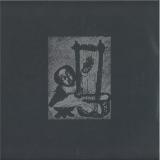
The begena is a large ten-stringed lyre which is part of the traditional Amharic heritage of Ethiopia. The Amharas, who have long formed the politically and culturally dominant people of Ethiopia, mainly inhabit the central and northern part of the country. In the majority, they follow the monophysite Orthodox Tewahido Church established in the early fourth century AD.
Music plays a very important part in the life of the church. Most of the liturgy is sung and, contrary to secular music, it is accompanied by percussion instruments only. The begena occupies a special place because it is the one melodic instrument exclusively dedicated to the spiritual repertory. Because of its mythical origin, it is highly respected. Tradition holds that the begena was given to king David by God, and brought to Ethiopia by Menelik I, together with the Ark of the Covenant. It has always been the instrument of kings and nobles. Played by pious men and women of letters, it never became widespread. But it never disappeared either, not even under the Derg regime (1974-1991) which had banned the instrument.
Among Amhara string instruments, the begena is the most carefully crafted, especially with regard to the ornately sculpted crossbar. Its ten gut strings are cleaned and twisted several times. The characteristic buzzing timbre equalled by no other Amhara instrument is due to the enzirotch, that is, small bits of leather placed between each string and the bridge. This plays an important part in the sound production by creating a brief contact between the string and the upper rim of the bridge, thus modifying the vibrating properties of the string. In this manner, the spectrum of the sound is considerably enhanced (up to over 10 kHz).
The begena is a very powerful instrument, it keeps the devil thirty steps away, and its presence in the home wards off malicious spirits. Priests and preachers recommend its presence, especially during Lent (Fassika Tsom) when the Orthodox Amharas ponder their sins and repent. Because of its spiritual import, the begena generates intense emotion. According to some musicians, playing the begena brings them into direct contact with God or the Virgin Mary. The religious role of the begena is underscored by the shape of the instrument, each part symbolises an important element of the faith. The crossbar for instance, which reaches across the entire width of the instrument, represents God who is above all things. The belly which "gives birth" to the sound represents the Virgin Mary, and the ten strings recall the Ten Commandments.
Recorded by Stéphanie Weisser in Addis Ababa, Ethiopia, March 2002-December 2005.
Mastered by Renaud Millet-Lacombe.
Issued under license from VDE-Gallo, Switzerland.
During this summer’s European tour with Junior Dell & The D-Lites, we were honoured to share the stage at This Is Ska Festival in Germany with none other than The Pioneers.
After the show, fate had me driving Jackie and George back to the hotel. On the way, we got to reminiscing about our last collaboration — Jump Up!, released on Original Gravity Records in December 2023. Mid-conversation, Jackie casually said: “Hey Neil, I’m in England all of July, we could record something.”
I dropped the guys off, said goodnight, but as soon as my head hit the pillow, an idea sparked: wouldn’t it be cool to have them record Jackie Edwards’ northern soul classic I Feel So Bad — but reimagined in an early reggae style?
So in July, we set up a session at Farm Factory Studios in Welwyn Garden City. George and Jackie came down, and it was nothing short of magical to hear these legends harmonising together once again in the booth. The result captures that late-60s moment when soul and reggae collided on dancefloors, raw and full of energy.
To add another dimension, we also created a version as if it had traveled from Kingston to London. The “Boss” version imagines the raw Jamaican master — while the A-side reflects how Trojan Records might have “sweetened it up” with horns and strings for the UK pop market.
Two sides, one timeless tune — a tribute to both the grit and the gloss of reggae’s golden era.
- A1: Tafese Tesfaye - The Dove &Amp; The Pigeon
- A2: Yetemwork Mulat - Heathen &Amp; Earth
- A3: Alemu Aga - The World Is But A Place Of Survival
- B1: Sosena Gebre Eyesus - Save Us From Our Death
- B2: Abiy Seyoum - The Last Judgement
- B3: Tafese Tesfaye - You Who Take Good Care Of Me
- C1: Sosena Gebre Eyesus - When I Say Your Name
- C2: Akalu Yossef - Who Can Doubt
- C3: Abiy Seyoum - We Are All Mortals
- D1: Yetemwork Mulat - The Second Coming Of Christ
- D2: Akalu Yossef - Our Father
- D3: Alemu Aga - Song Of Praise Played With A Plectrum
Cassette[16,18 €]
The begena is a large ten-stringed lyre which is part of the traditional Amharic heritage of Ethiopia. The Amharas, who have long formed the politically and culturally dominant people of Ethiopia, mainly inhabit the central and northern part of the country. In the majority, they follow the monophysite Orthodox Tewahido Church established in the early fourth century AD.
Music plays a very important part in the life of the church. Most of the liturgy is sung and, contrary to secular music, it is accompanied by percussion instruments only. The begena occupies a special place because it is the one melodic instrument exclusively dedicated to the spiritual repertory. Because of its mythical origin, it is highly respected. Tradition holds that the begena was given to king David by God, and brought to Ethiopia by Menelik I, together with the Ark of the Covenant. It has always been the instrument of kings and nobles. Played by pious men and women of letters, it never became widespread. But it never disappeared either, not even under the Derg regime (1974-1991) which had banned the instrument.
Among Amhara string instruments, the begena is the most carefully crafted, especially with regard to the ornately sculpted crossbar. Its ten gut strings are cleaned and twisted several times. The characteristic buzzing timbre equalled by no other Amhara instrument is due to the enzirotch, that is, small bits of leather placed between each string and the bridge. This plays an important part in the sound production by creating a brief contact between the string and the upper rim of the bridge, thus modifying the vibrating properties of the string. In this manner, the spectrum of the sound is considerably enhanced (up to over 10 kHz).
The begena is a very powerful instrument, it keeps the devil thirty steps away, and its presence in the home wards off malicious spirits. Priests and preachers recommend its presence, especially during Lent (Fassika Tsom) when the Orthodox Amharas ponder their sins and repent. Because of its spiritual import, the begena generates intense emotion. According to some musicians, playing the begena brings them into direct contact with God or the Virgin Mary. The religious role of the begena is underscored by the shape of the instrument, each part symbolises an important element of the faith. The crossbar for instance, which reaches across the entire width of the instrument, represents God who is above all things. The belly which "gives birth" to the sound represents the Virgin Mary, and the ten strings recall the Ten Commandments.
Recorded by Stéphanie Weisser in Addis Ababa, Ethiopia, March 2002-December 2005.
Mastered by Renaud Millet-Lacombe.
Issued under license from VDE-Gallo, Switzerland.
The 'Natty Dread a Weh She Want' set brings together two legends of Reggae Music.
The stylish and unmistakable falsetto voice of singer Horace Andy and the production/DJ singing skills of Tapper Zukie.
Both artists catalogues of music stand up strong but this, originally released 1979 set of songs seems to have brought something special out of both of them when producing/writing and arranging this set of tunes.
'Natty Dread a Weh She Want' was a massive hit when it was released by Tapper Zukie and Horace Andy but this timeless track still sounds as fresh today as the day it was released in 1979,as do the other tracks on this fine album...
Hope you enjoy the set....
- A1: 12 Tribes Of Israel
- A2: Don't Cut Off Your Dreadlocks
- A3: Jah Jah Is The Conquerer
- A4: Cool Down Your Temper
- A5: A Big Big Girl
- A6: Don't Trouble Trouble
- A7: Wicked Then A Say
- B1: Ride On Dreadlocks
- B2: Whip Them Jah
- B3: Everybody Needs Money
- B4: Long Long Dreadlocks
- B5: Just Like Any Other Man
- B6: Wicked Babylon
- B7: Scoumaka King Tubby's
Linval Thompson is one of the great roots vocalists that ruled the dancehalls of Jamaica in the mid 1970’s. His distinctive vocal style and roots lyrics, that spoke of the struggles that faced the Rastas, hit a chord with the people of Jamaica, and provided a string of hits for him in the dancehalls. This in turn, would set a tone that he carried on through his musical career and future production work. Linval Thompson (b.1959, Kingston, Jamaica) was actually raised in Queens, New York. He cut his first record there at the age of 16 ‘No Other Woman’ with future Third World singer Bunny Ruggs. He also cut a couple of tracks for a US producer E Martin ‘’Jah Jah Deh’and ‘Weeping and Wailing’. In 1974 he returned to Jamaica and cut ‘Mama Say’ and a version of D Brown’s ‘Westbound Train’ for producer K Hobson which got Thompson noticed by producer Phil Pratt. Pratt took him to Lee Perry’s Black Ark studio’s where he cut ‘Kung Fu Man’. Thompson’s friendship with fellow singer Johnny Clarke led to a meeting with producer Bunny Lee. His first track cut for Lee was ‘Don’t Cut Off Your Dreadlocks’ and it became a big hit in Jamaica. Bunny Lee was the producer of the moment and Linval added to his long list of hit singles with ‘A Big Big Girl’, ‘Cool Down Your Temper’, ‘Ride On Dreadlocks’ and the title of this compilation ‘Jah Jah Is The Conqueror’. He seemed to hit a musical height working for Bunny Lee (who as he has done with many of his singers) encouraged Linval into production work himself. Which has led to another chapter in Linval’s story. Working with an array of artists including, Freddie McGregor, Johnny Osbourne, Barry Brown, Rod Taylor and many more. But it is his singing career that we focus on here and that great period in reggaes history the mid 1970’s where Linval delivered a string of classic hits that we have compiled for you here. Hope you enjoy the set.
Breakbeat Paradise Recordings is proud to introduce Miles Kings & The Foolish Knights with the super positive anthem "A Good Day" with a top class remix from our very own Jayl Funk.
Toxic Funk Vol. 19 is all about the uplifting vibes of this original track perfectly written and played with groovy drums, lovely piano line, backing vocals that brings goosebumps and the powerful voice of Miles King.
On the flip side Jayl Funk picks up the tempo and bring the Good Day to the dancefloor with his straight up funky beats and grooves.
Breakbeat Paradise Recordings – consistent and always reliable to delivering you the funkiest beat and breaks out there. Look out for more coming soon…
As bassist for dance-punk outfit The Rapture, Mattie Safer cut his teeth in the music scene alongside a wave of now-legendary early 2000s NYC acts like the Yeah Yeah Yeahs, LCD Soundsystem and more (a time period recently immortalized in the documentary film ‘Meet Me In The Bathroom.’) Fast-forward nearly 2 decades and Mattie has found the sweeter side of dance music as the current lead vocalist for slo-mo kings Poolside, and now he presents his 2nd solo lovetempo project on Razor-N-Tape.
Championed heavily by Gilles Peterson, lovetempo’s modern soul classic 'But I Do' gets a vinyl release with a trio of remixes. Crackazat delivers in his signature style, weav-ing the organic elements and earworm vocals of the original into a deep and jazzy mix. Lon-doner Daisybelle bumps the BPMs up a few notches and adds pulsing synths to her take, and Brazilian duo From House To Disco turn in a dubby club remix to round out the record.
Drum and bass reggae legends, Sly Dunbar and Robbie Shakespear, are the featured strongholds of The Revolutionaries, a conglomeration of many of reggae's finest studio musicians, brought together to create some of the best dub of the late 70's.
"Black Ash Dub" is a wonderful example of the group at its peak. Sly's drumming prowess is at its best on this lp, complete with his famous crash cymbals on the 4th beat in 4/4 time versus the 1st beat. His skills are legendary due in large part to the bass playing of Robbie. His grooves are intense, yet very supple, and perfectly augment Sly's grooves.
Each track is a tribute to a drug; the 2 major club hits are "Marijuana" and "Cocaine".
All cut at the legendary Channel One recording studio in Kingston and mixed by the genius touches of dub masters Scientist and Prince Jammy.
Originally released in 1980 on the mighty Trojan Records, "Black Ash Dub" is today widely heralded as one of the finest dub collections of the era and considered an essential addition to the collections of all serious fans of the genre.
PRODUCED BY: Jah Thomas RECORDED AT: Channel One MIXED BY: Prince Jammy, Scientist MUSICIANS BASS: Robbie, "Flabba" DRUMS: Sly Dunbar, "Santa" RHYTHM GUITAR: Bo Pee, Bingy Bunny HORNS: Bobby Ellis, Deadly Headley PIANO: Gladdy ORGAN: Ansel Collins PERCUSSION: Sticky, Skully
Two lyrical and spiritual forces meet, as Akae Beka and Ivorian veteran Tiken Jah Fakoly awaken the profound realisation that all is inherently blessed, encouraging us to accept life as it unfolds. Produced by Zion I Kings, Everything Bless is a gentle yet powerful reminder to embrace the present moment, cherish the divine connection with our spiritual kin, and nurture inner peace and contentment. Vaughn Benjamin meditates on the need for both determination and trust, while the ancient voiced Tiken sings in Bambara, over Mamadou Sidiki Diabate’s cascading Kora, reassuring that Jah will guide. The accompanying dub version pares down drums and vocals, maintaining the same sense of joy. Taken from 2021’s album Polarities, Everything Bless is released as a seven inch vinyl single for the first time on via Before Zero Records.
This series honours both the vocal and version culture of the reggae sound system and the profound lyricism of Vaughn Benjamin. We have consistently received two requests in relation to releasing the LPs: "Can we have dub versions?" and "Where can we read the lyrics?" Our response is the 'Akae Beka - vocal, version and word-sound collection.' Before Zero Records worked with Tippy I Grade to mix a series of dub mixes from a carefully curated selection of his extensive works with Vaughn Benjamin. The vocal and corresponding dub mixes were then cut to wax by Lewis Hopkin of Star Delta and wrapped in a collage made of Ras Marcus's artworks, which he crafted for various LP covers of Vaughn's works throughout the years with the lyrics transcribed and printed on the rear of each sleeve.
Before Zero Records present the Akae Beka Vocal and Version Series. This represents a turning point in the presence of Vaughn Benjamin, the voice of Akae Beka and Midnite’s presence in the sound system world, merging the vocal and version sound system culture with the deeply spiritual music and word sound of Akae Beka and Tippy I Grade.
Two of the deepest thinkers in reggae music, Vaughn Benjamin and Chronixx, trade reflections on their collaboration, ‘Black Carbon.’ Originally released on the 2021 album ‘Polarities,’ the song is available for the first time as a vinyl single, backed by its dub version. Adorned with the swirling flute of Sheldon Bernard (Beres Hammond, Harmony House) and David Pransky’s brittle, Kora-like mandolin, the twin reggae intellects, with their uniquely delicate voices, introspect on how ‘all ah we forward from the same carbon.’ The song’s message juxtaposes the unity that binds us with a critique of the prevailing narratives and structures that weaken this bond. It underscores the universal truth that we all originate from the same elemental blackness—a truth mirrored throughout humanity and the entire spectrum of creation. Yet, it pointedly highlights how this shared essence is often unrecognised or undervalued in the social and political realms, especially for nations and diasporas connected by the original human hue. The A-side vocal mix is followed by Tippy I’s lavish, questing dub, bringing the instrumentation to the fore. Produced by Vaughn and Zion I Kings.
Each 7” vinyl sleeve has the lyrics transcribed and printed on the back. This series represents more than a collection of music; it is a multifaceted, intellectual and spiritual revelation encapsulated in melody, tone and beat. The never before released dub versions complement each vocal mix with grace and innovation, creating the perfect settings for reflection and integration of the lyrics.
- A1: Tyler (5:51)
- A2: Burden Of Shame (6:29)
- A3: I Think It's Going To Rain Today (3:41)
- A4: Food For Thought (4:09)
- A5: Don't Do The Crime (4:10)
- B1: One In Ten (4:33)
- B2: Sardonicus (4:26)
- B3: Please Don't Make Me Cry (3:22)
- B4: Cherry Oh Baby (3:16)
- B5: Red Red Wine (3:01)
- B6: If It Happens Again (3:40)
- B7: Don't Slow Down (4:31)
- C1: I Got You Babe (Feat Chrissie Hynde) (3:08)
- C2: Don't Break My Heart (3:45)
- C3: Sing Our Own Song (3:57)
- C4: Rat In Mi Kitchen (3:03)
- C5: All I Want To Do (5:27)
- C6: Maybe Tomorrow (3:21)
- C7: Afrika Bambaataa & Family - Reckless (Feat Ub40) (3:51)
- D1: Breakfast In Bed (Feat Chrissie Hynde) (3:13)
- D2: Homely Girl (3:22)
- D3: Kingston Town (3:46)
- D4: Robert Palmer - I'll Be Your Baby Tonight (Feat Ub40) (3:23)
- D5: Tears From My Eyes (3:44)
- D6: Here I Am (Come & Take Me) (4:17)
- D7: (I Can't Help) Falling In Love With You (3:26)
Early 1980, UB40 scored their first success with Food For Thought', reaching high in the charts. By the time they released their first album they were already so successful that they had signed off on unemployment benefit, leading to the stamped Signing Off featured on form 40, for the sleeve of their debut album. The first dub album ever to reach the album charts in the U.K. included One In Ten' and Don't Slow Down'.
In 1983 the band put on a new project, boasting ten cover versions of Jamaican hits and, contrary to low expectations, it became a huge hit and the band's first number one album. Tracks included are Cherry Oh Baby' and Please Don't Make Me Cry' and Red Red Wine'. The latter was a rather poppy song and became the band's biggest selling single ever, entailing their definitive worldwide break through.
There have been lots of collaborations through the years and most of these became huge hit songs. Together with Chrissie Hynde UB40 recorded two singles: I Got You Babe' (1985) and Breakfast In Bed' (1988). They teamed up with Afrika Bambaataa for Reckless' (1988) and with Robert Palmer the band released I'll Be Your Baby Tonight' (1990), just to name a few.
UB40 - COLLECTED has captured all the different phases of the band in one complete album, from classic hits combined with the new!
The year is 1974 and we are in Kingston, Jamaica: Lee Scratch Perry has just presented Susan Cadogan's album 'Sexy Suzy' on his Upsetters label. The Jamaican singer, who is just under 25, sees her cover of 'Hurt So Good' flirt with the top of the UK and JA charts but has no idea that 50 years later, she would still be a household name among Jamaican music fanatics.
On the B-side of this LP, produced by Mr Perry himself, the penultimate track is a cover of Little Willie John’s "Fever". Over the years this song has taken an unshakable place in the hearts of reggae lovers worldwide. With nearly 700 different versions referenced to date, Fever already enjoyed classic status at the time, mainly thanks to the success of Peggy Lee’s version released in 1958. Since then, in all styles, across all continents, the song has been reinterpreted, so much so that it's rare to find a year since 1956 without a new version hitting the market! Universal, timeless, this love song is known to all music enthusiasts, but in the reggae scene, it’s Susan Cadogan and Lee Scratch Perry’s version that still reigns supreme.
50 years after its release, Stand High Patrol offer us their own version. Recorded at the end of 2023, the Susan Cadogan / Stand High Patrol collaboration wasn’t initially meant to move beyond its dubplate status. However, due to the track’s success in the dance and a growing demand, it became the first pressed collaboration on record between a Jamaican artist and the Dubadub Musketeerz. Accompanied by its dub version, Stand High’s take on Fever is a creative reimagining and brings to mind that classic 90s UK dub style. Its sits firmly on its foundations, a stepper roots-flavored drum beat. Some might find the interpretation ‘more jazzy’ than Lee Perry’s, but everyone will have their own take. One thing’s for sure—its impact on the dancefloors is undeniable!
Jamwax Records proudly presents this historic reissue, featuring two timeless tracks from The Wailers’ legendary album The Best of The Wailers: "Can't You See" and "Back Out". While these songs have long been cherished as classics, this marks the first time they have ever been available on a 7-inch vinyl single. Even though some books about Bob Marley & The Wailers list them as having been released on 7-inch, I have never seen a copy for sale.
Produced by the visionary Leslie Kong with co-producer Warwick Lyn, the album captures The Wailers at their soulful, raw best. These songs predate the group’s later partnership with Lee Perry and Island Records, offering a purer, more unembellished sound. The harmonies are flawless, the arrangements simple yet deeply powerful, and the performances utterly timeless. "Back Out" highlights Bob Marley's unmistakable voice, brimming with the confidence and charisma that would later make him a global icon. Bunny Wailer and Peter Tosh's harmonies add depth to a track that perfectly embodies the spirit of early reggae. "Can't You See" showcases Peter Tosh on lead vocals, supported by the sublime harmonies of Bob Marley and Bunny Wailer.
These recordings, crafted with a four-track setup and featuring some of Jamaica’s finest musicians—including Mickey ‘Boo’ Richards on drums, Jackie Jackson on bass, and Winston Wright on organ—are testament to a moment in time when reggae was still raw, revolutionary, and evolving.
Recorded at Dynamic Sounds Studios (Kingston, Jamaica), from 29th April until 19th May 1970.
Originally released on August 9th of 1971 by Beverley's Records, 135 b Orange Street, Kingston, Jamaica, West Indies.