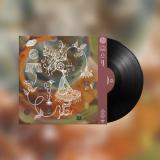
Sir Richard Bishop returns for a new sponítaneous six-string meshing of people"s music, recollections and psychic intentions. Are y"all ready for some Hillbilly Erotica? Migration from last album"s Ragas to this new Erotica is another chapter in Bishop"s progress, drifting via songs into the further frontiers of his pappy"s hometown sounds, trancing over and out in their hand-me-down clothes. As with the ragas, the "rotica"s hung round the neck of John Fahey"s infamous dubbing of certain tradiítional American folk sounds as "American Primitive." A perfectly good thought, but Sir Richard picks his own axe and chose a separate path. Rushing through gutters & picking pickled brains in the saucy head waters of the down-low & literal American primitive, his hillbilly music is a mash of brined cultural inheritance, mini-ragas and moonshine-drunk savagery breaking out on the frets. As a conception for Sir Rick"s acoustic guitar music, it"s a dynamite means and frame, centering his improvisations in a place overflown with pagan desire and unbound in deliverance. Here he flies up and down the neck, his manner less pristine, yet more exquisite, a flailing, flowing-on-the-river medley through stubborn whitewater turbulence, post-grass and folk"s classical gas. Anybody who takes a snort of this here Hillbilly Erotica will find a frankly spellbinding richness of intent and execution in their ear-mouths. And may thereafter find brain and blightness. It"s fine!
Sir Richard Bishop returns for a new sponítaneous six-string meshing of people"s music, recollections and psychic intentions. Are y"all ready for some Hillbilly Erotica? Migration from last album"s Ragas to this new Erotica is another chapter in Bishop"s progress, drifting via songs into the further frontiers of his pappy"s hometown sounds, trancing over and out in their hand-me-down clothes. As with the ragas, the "rotica"s hung round the neck of John Fahey"s infamous dubbing of certain tradiítional American folk sounds as "American Primitive." A perfectly good thought, but Sir Richard picks his own axe and chose a separate path. Rushing through gutters & picking pickled brains in the saucy head waters of the down-low & literal American primitive, his hillbilly music is a mash of brined cultural inheritance, mini-ragas and moonshine-drunk savagery breaking out on the frets. As a conception for Sir Rick"s acoustic guitar music, it"s a dynamite means and frame, centering his improvisations in a place overflown with pagan desire and unbound in deliverance. Here he flies up and down the neck, his manner less pristine, yet more exquisite, a flailing, flowing-on-the-river medley through stubborn whitewater turbulence, post-grass and folk"s classical gas. Anybody who takes a snort of this here Hillbilly Erotica will find a frankly spellbinding richness of intent and execution in their ear-mouths. And may thereafter find brain and blightness. It"s fine!
Prison hits the road album, riding two massive jams across altered routes of consciousness a la the allegorical and literal heavy traffic of the Brooklyn Queens Expressway, visible from the windows of the studio in which Big Rigs on the BQE was recorded! The requisite Prison gear, guitars, bass and drums plus synth & FX, coughs out exhaust flavoured with Groundhogs/Velvets/Hampton"s/Pink Fairies/Magic Band/Good Rats/Can. An improvised rock and roll tapestry, gas "n guitar pedal on down to the metal.
born (literally) in fire, soma flared briefly as the alchemical pairing of two unique and dynamic musicians. david thrussell and pieter bourke met through mutual friends in the artistic melting-pot of early 1990s elwood, melbourne, australia. bourke was an integral member of the gothically ambient eden, thrussell frontman of anarchic industrial combo snog. both admired each others work, and though some considered them an unlikely combination, something rather potent was brewing which drew them inexorably together.
initially bourke joined snog live and then in the studio, contributing mightily to their epic second album ‘dear valued customer’. as a natural result of their friendship and muse, thrussell and bourke instituted their own project, soma, to explore the intersections of arcane and mysterious technologies. the first soma album “hollow earth” was released to acclaim.
soon after, thrussell was awoken by a 3am knock on his door. bourke was now homeless - the result of a devastating fire that had just torn through his apartment and studio - and he needed somewhere to sleep. this is when work on ‘the inner cinema’ began, with bourke and thrussell ensconced in the same dwelling, able to write and record around the clock (often only leaving to plan the next session while dining at local vegan eateries).
at the time thrussell was obsessed by the testosterone bravado and haunting alienation of ‘spaghetti-western’ theme songs, while bourke brought his love of all things percussive and the other-worldly atmospherics of arvo pärt (with the outer-space dub of king tubby) to the mix. together, on a diet of blood-plum sago, fortean times and lingering smoke fumes, they concocted their dadaist brew.
magical and unforgettable, ‘the inner cinema’ stands apart and outside of the musical mainstream. since its 1996 release the album has developed a mythical reputation and is spoken of in hushed and adulating tones among acolytes of atmospheric and electronic music. you hold in your hands a lovingly remastered deluxe reissue of this sonorous gem.
time marches on, and after a few more sporadic soma recordings bourke and thrussell moved on to other pastures. bourke would work with dead can dance, lisa gerrard and hollywood auteur michael mann, as thrussell toured regularly with snog and black lung, cut some interesting soundtracks and birthed the idiosyncratic omni recording corporation.
expelled from its fiery crucible, this dark jewel of sound, this soundtrack of the mind, has lain in the soft earth awaiting rediscovery. fluid metabolic rhythms and breathy washes of timeless melancholy pulsing, inviting, in the warm soil. now is your chance.
Consolidated, the political dance/industrial music band from the early 90ties joined again for a studio session in San Francisco last summer, resulting in a new album. 'We're Already There'. The first release on Consolidated's own label 'The End Of Records'. What else to expect, the new recordings are an innovating mix of industrial, to hip-hop, to rock and funk with mixtures of live instruments and electronics. Topped with left political activism and politically radical lyrics address issues such as America, Covid and ecocide with song The Flood, demand *'Free Music, Stop America'* with Musica Sin Frontieras & welcome guest vocalist GRETA THUNBERG on the track The 'ol Mass Extinction Blues. The album starts in 'traditional Consolidatedgroove' with the song 'Capitalism A.F.', a mix of beats, industrial sounds and hiphop. Followed by funkypop songs, danceable industrial jams, techno beats, reggae and blues influences plus a remarkable noise track. Main musicians are Adam Sherburne (guitar/vocals) and Mark Pistel (synths/beats) backed by Lynn Farmer (Meat Beat Manifesto) on drums, who replaces the original drummer Phil Steir. The complete album is recorded, mixed and mastered by Mark Pistel at 'Room 5' in San Francisco. The cover shows art paintings from Ayelet Hay (front) and William Kendall (back). On 'We're Already There' Consolidated plays more music than ever. "I have zero interest in being in a band, especially my own_" "I had to develop a different way to be involved with music for aesthetic and mental health reasons_" "FREE MUSIC! is not to the detriment of artists, it's literally the end of artists-as anyone perceives them in the last 500 years" -Adam Sherburne - Consolidated are known for their live performances, in which a microphone is passed among audience members to discuss, rebut, argue or elaborate on song topics. Consolidated: Adam Sherburne & Mark Pistel.
ARTS is back with a classy debut, this is Geinst, a very young Artist coming from France. His music is Unique, Literally one of a kind. We are happy to present Uchronie EP. When people don't express themselves, they die one piece at a time, don't forget it.
out of Stock
Last delivered 52 days ago available to reorder, subject to availability
The Bug and Ghost Dubs relentlessly probe and atomize original material culled from Kevin Richard Martin's critically acclaimed 'Sub Zero' album. ("Monolithic and unforgiving, even by the Bug's standards, representing his most suffocating take on ambient dub yet." Pitchfork). Remixed to punish sound systems and freeze up the dance, both Fiedler and Martin trade fresh, contrasting blows, after their recent IMPLOSION face off album on PRESSURE last year. (Dub/Reggae album of the year, 2025, in 'The Wire') The resulting 4 remixes are every bit as hypnotic and persuasive as you would hope for from productions fresh out the soundlabs of Michael Fiedler aka GHOST DUBS and Kevin Richard Martin under his dancefloor destroying Bug alias. Both producers intensify the desolate mood of the originals but introduce demolition inducing beats which provide the literally irresistible momentum. Echoes of the originals are respected and heard throughout, but the extra gear shifts pay off brilliantly. Guaranteed to push serious air, and test the most powerful of sub woofers, these 4 remixes vary from heavy to superheavyweight. i.e. GHOST DUBS outputs a deliriously stoned headnod with his zonal refix of 'When I'm Gone', which miraculously sounds both subtley mysterious, but monolithically huge, whilst The Bug prowls ice cold, on the noirish, narcotic, instrumental hip hop of 'Too Human', which sounds like prime Mobb Deep mixed by Rhythm & Sound' at 16 bpm. Essential remixes of an already very special album, the original atmosphere is not only captured expertly, it is categorically amplified. LARGE.
Big Crown Records is proud to present Adult Themes, the latest full length offering from El Michels Affair. This album takes the band's "Cinematic Soul" aesthetic literally and sends the listener on a journey through a whirlwind of moods and energies. With their 2005 debut album Sounding Out The City, EMA spearheaded an instrumental funk / soul movement that inspired a slew of bands and even lead to the creation of a few independent record labels. El Michels has since lent his signature sound to artists from Adele to Dr John, Lana Del Rey to Aloe Blacc, and a who's who list of others. In 2016 he co-founded Big Crown Records and has since produced the lion's share of its output. A short stint as the touring band for Wu Tang Clan in 2007 led to the cult classics Enter The 37th Chamber (2009) and Return To The 37th Chamber (2017). Adult Themes marks the long awaited, highly anticipated return to an album of original compositions from El Michels Affair. In 2017 in between producing, playing, and recording on other artists' records Leon Michels began creating compilations of short interludes intended to be sampled by hip hop producers. Some of these wound up becoming songs by Jay Z & Beyonce, Travis Scott, and Don Toliver. These minute-long snippets were inspired by the dense moody work of `60s composers like David Axelrod, and Francois de Roubaix, as well as Moondog's brand of classical jazz. Michels was having so much fun creating these instrumental / orchestral nuggets that he decided to expand on some of the ideas and create what would become the soundtrack for a movie that has yet to be made, an imaginary film entitled "Adult Themes." The album plays like the colors on an artists pallet. Songs like "Rubix" and "Villa" are densely orchestrated with the hard-hitting drums that El Michels Affair is known for. On "Life of Pablo", Leon's son makes his first appearance on record and intros a song with an epic arrangement and a moving mood. "Hipps" is a drum heavy ballad that could've easily fit on EMA's debut record, Sounding Out the City. Other compositions like "The Difference" and "Kill The Lights" are bare, melodic mood pieces with sparse drums and sophisticated chord movement. All of these tunes come together to make perfect backgrounds for dialogue and action. One of the beautiful things about instrumental music is that the listener can decide what the narrative is. With Adult Themes El Michels Affair has created a "choose your own adventure" in musical form.
ReVINYL Random Color Edition. Concrete is a bracing jolt of a song, racing forward on a tightly wound post-punk riff, its call-and-response vocals capturing the turmoil and schizophrenic internal dialogue of the song's subject matter."It's about someone who's trapped in a relationship and they're being pummelled into surrender," says singer and lyricist Charlie Steen. "It's not about a physically abusive relationship - more an emotionally and psychologically draining one. The call-and-response vocals between Steen and bassist Josh Finerty is the central figure's own internal dialogue. They are dealing with two different things that they don't want to address."The band cite The Fall, Country Teasers, Television Personalities and Wire among their biggest influences, and the icily claustrophobic sound of Concrete sets it in a lineage with Magazine, Joy Division. As a lyricist, Steen is a modern flâneur, forensically observing the lives of others around him as they unspool and fracture, with Hubert Selby Jr and Irvine Welsh his primary literary influences. "That graphic and harsh style of writing always interested me," he explains. "It's not about the shock factor; it's about the fact they are talking about these things in such great detail without stripping anything back."The London five piece have swiftly earned a reputation as one of the most visceral and exhilarating live bands in the UK, their combustible shows being honed through a heavy touring schedule in the UK and across Europe. Cutting their teeth on the squat-punk scene in the Queen's Head in Brixton in 2015, where they were taken under the wing of Fat White Family, the white heat of their gigs quickly landed them support slots with Slaves and Warpaint. They were also personally invited by Billy Bragg to play the Left Field stage at Glastonbury this year.Following two singles - the AA single The Lick/Gold Hole and Tasteless on Fnord Communications as well as the digital-only Theresa May-baiting Visa Vulture (described by Steen as "the worst love song ever") - Concrete is the first track to be released as part of their record deal with Dead Oceans."We started this band as a joke that went too far," deadpans Steen. "What we do is quite strange and quite weird, but I get to meet a lot of people and I get to hear a lot of things. I am interested in the surrealism of reality."
Mit "Stoak wie a Felsen - Das Beste aus fünf Jahrzehnten" erscheint am 26. Juni anlässlich des 75. Geburtstages von Stefanie Werger eine besondere Werkschau auf farbiger Vinyl und CD, die einer der markantesten Stimmen des Austropop gewidmet ist.
Stefanie Werger ist weit mehr als eine erfolgreiche Interpretin: Sie ist eine prägende Singer/Songwriterin, die mit ihren Liedern, ihrer Sprache und ihrer Haltung über Generationen hinweg Spuren hinterlassen hat.
In einer Musikszene, die lange stark männlich geprägt war, hat sie sich mit unglaublichem Talent, künstlerischer Eigenständigkeit und einer großen Portion Charisma einen festen Platz erarbeitet und damit sehr früh eine besondere Rolle als erfolgreiche Frau in der österreichischen Pop- und Liedermacherszene eingenommen. Ihre Songs sind direkt, poetisch, humorvoll, unbequem und berührend zugleich - und genau darin liegt ihre anhaltende Kraft.
Andy Zahradnik nennt Stefanie Werger treffend eine "Liederatin" - ein Begriff, der ihr künstlerisches Wesen wunderbar auf den Punkt bringt. Denn Werger erzählt in ihren Liedern Geschichten, beobachtet scharf, formuliert lebensnah und verbindet literarisches Gespür mit musikalischer Kraft. Ihre Werke sind nie bloß Songs, sondern persönliche, gesellschaftliche und emotionale Momentaufnahmen.
Die Tracklist von "Stoak wie a Felsen - Das Beste aus fünf Jahrzehnten" enthält zentrale Stationen des Schaffens von Steffi Werger: Der Reigen spannt sich von I wü di g'spian, das hier in einer spektakulären Live-Version enthalten ist, über Klassiker wie Stoak wie a Felsen (ebenfalls als kraftvolle Liveaufnahme), Flamenco Turistico und Sommer bis hin zu dem wehmütigen Langsam wea i miad ihres letzten Albums. Als besonderer Bonustrack ist der brandneue Song So schene Leit inkludiert und damit erstmals auf Tonträger erhältlich.
Auch die Ausstattung der Edition unterstreicht den besonderen Charakter dieses Releases: Die LP erscheint auf weiß-silber marmoriertem Vinyl und macht die Veröffentl
The dogs bark and the heavy-metal caravan tears through everything in its path. What lies ahead is a twisting, high-voltage journey for anyone with a taste for contemporary sound, and this record offers no lukewarm sightseeing, no pre-retirement indie pop-rock playlist drift. You'll have to learn to dance off-beat, wringing out every neuron before the final rinse. Drink your sweat, not your tears, and burn off the bitterness: that's the intended destination of the trip. This monstrous album has a computer where its heart should be. Three humans are wired into it: Michel Cloup, Manon Labry and Julien Rufié. Layer after layer, they've fed this sandpaper-and-digital-custard mille-feuille. On the menu, heaped and hurtling by the wagonload, the beast is stuffed with screams, laughter, melodies, noise: a frantic feast. It even leaves you wondering who's driving whom. Who seized control? The flesh? The printed circuits? Michel as a Titanic-'n'-Roll conductor? Julien and Manon as demolition apostles? Doesn't matter. For now, it rips, it saws, it strafes, it smashes, without pause. Rock debris_post or not_grumbling Parmentier-pop mash, white-hot hip hop spinning out, electro-disco-kraut fissuring, furious new French chanson: everything shoves its way into the blender. The real free world is here. Michel veers between naïve chants of dwindling hope, barking tsunamis of black fury and other delights, recounting the world in full 360 degrees as well as the twenty metres outside his front door. As ever, he speaks of himself, of us, speaks a lot, speaks too much. The intensity barely drops below the danger line; even the lows are stratospheric. Foot to the floor, calmly. In the thick of it, you'll wander room to room through the small theatre of France's grand political tragicomedy (David, Goliath and Godzilla), the consultation chamber of our disappointments (2027), the community repair shop of our hopes (Catharsis), the literary gym (The Poison, The Antidote), the torture room (H&M, with old Toulousain comrade Fredo Nonstop), the nightclub in flames (Shame, RIP), the electronic shooting gallery (Maria, Background Noise), the XXL confessional (For Whom? For What?) before ending in the Munch Room, the chamber of the primal scream (SISRAHTAC). "In the end, there are no words left. It howls, it howls, and it doesn't stop."
Shady Nasty subvert expectations. In a world bound by modded cars, immigrant heritage and digital obsessions, Kevin Stathis, Haydn Green and Luca Watson craft a left-field breed of punk that pushes their formal training in jazz and classical music to its most uncustomary extremes. Influences like King Krule and Low Life surface not as reference points, but as undercurrents absorbed and reconfigured into something unmistakably their own. Debut album TREK has surpassed 2M streams - named one of Rolling Stone Australia's 50 Best Australian Albums of 2025. Fred again.. co-sign ("literally my favourite band in the world right now") drove a major viral surge, leading to collaborative singles "Air Maxes" and "HARDSTYLE 2" (with Fred again.. & KETTAMA), BBC Radio 1 Hottest Record. Sold-out UK debut at The Windmill, London; sold-out album shows across Australia; national support for The Streets (Sydney Opera House Forecourt, Palace Foreshore Melbourne, Fremantle Arts Centre).
Live dates continue into 2026 with Shady Nasty returning to the UK/EU as part of their TREK Tour, hitting up venues in London (Moth Club), Bristol (Strange Brew), Leeds (Hyde Park Book Club), Glasgow (SWG3 Poetry Club), Dublin (Whelan's), Cologne (Garagen), and Berlin (Mikropol), as well as Marrapalooza in Newcastle, Best Kept Secret Festival (NL), and Outbreak Festival in Manchester, before heading to Australia for shows in Brisbane (The Tivoli), Newcastle (King Street Bandroom), Wollongong (UOW Unibar), and Canberra (Fun Time Pony), then back to the UK for All Points East festival, curated by Tyler, the Creator, in August, and a full North American run supporting Militarie Gun (Sept-Oct 2026).
In Fashion: All that is Fun
In Fashion: Ein Liter Bier in Sweden
In Fashion: Big Drums
In Fashion: La Moda
In Fashion: Sitar Solos
In Fashion: High Heels
In Fashion: Bigger Guitars
In Fashion: World Gym
out of Stock
Last delivered 3 months ago available to reorder, subject to availability
Never Sleep charity tape series focuses on the North East's Valenican musical obsession with the man who started it all.
Trendsetter DJ Scott commands respect with a blend of Makina, Hardcore and Bounce. A trance laced session filled with the resonating compere styles from MC Stompin, MC Jet and MC Natz.
Bringing the energy, heart on the sleeve lyricism and maximal Mackem love for the late night surreptitiously crew. Lacing the backdrop with rapid fire crossfade technique, jump up tonal flair and high pace anthemic signals. Scott brings authenticity alongside the finest MC's in the land.
MC Stompin shows the naysayers who owns the night, MC Jet streamlines quality on the mic and MC Natz brings his own signature tones to the prestigious event.
Literally bringing the first ever Makina records back from Spain (8 of them) and starting Hangar13, this mix showcases an incredible time for the localised sonica and the rise of a cultural defining era in the North East.
DJ Scott is known for his huge cultural contribution, youth work and working class pioneership. A true UK legend and local hero.
All proceeds go to The Macmillan Cancer Support who help people across the UK and and provides specialist health care.
out of Stock
Last delivered 3 months ago available to reorder, subject to availability
Ashtar Afterhours is Kenneth Graham - originally from Los Angeles, he has been a defining presence in electronic music ever since the 90s. Buying his first classic synthesizer, a Yamaha CS01, in 1984, he delved into music production at an early stage. Kenneth put out over 40 releases over the years- under his own name as well as stepping up under various aliases- Estelle Montenegro, KG Beat, Exit Strategy and many others. Kenneth also formed some super-groups together with friends, his Sun Children / Sunkiss project- together with David Alvarado- put out highly influential music on legendary Peacefrog Records.
Body Music was originally released on Plastic City in 2001 and it has been a Smallville favourite since a long time, so we are super happy to present this beauty as a repress, as always with a full cover artwork by Stefan Marx.
All tracks written & produced by Kenneth Graham, B3 w&p by Kenneth Graham & Gabriel Ortega
Vinyl cut by Helmut Erler at Lathesville
out of Stock
Last delivered 4 months ago available to reorder, subject to availability
Ten years ago, Anderson .Paak didn't just release an album; he staged a full-scale takeover of the soul and hip-hop landscape. Released on January 15, 2016, Malibu served as the definitive arrival of an artist who had spent years grinding in the underground before a star-making turn on Dr. Dre’s Compton. While his previous work hinted at his potential, Malibu was the moment the world met the "Cheeky Andy" persona in full—a virtuosic drummer, a raspy-voiced crooner, and a sharp-witted rapper all rolled into one. The album is a sprawling, sun-drenched journey through the Southern California coast, blending 1970s funk, church-reared gospel, and gritty boom-bap into something that feels both nostalgic and entirely futuristic. With a heavyweight production lineup including 9th Wonder, Madlib, Kaytranada, and Hi-Tek, the record maintains a warm, analog texture that was a breath of fresh air in an increasingly digital era. It’s an album that breathes, full of intentional imperfections and the kind of "in-the-pocket" groove that can only come from a seasoned live performer. Beyond the infectious, dance-floor-ready energy of tracks like "Am I Wrong" and "Come Down," the album is a deeply autobiographical masterwork. .Paak uses the 65-minute runtime to unpack his life story with startling clarity, touching on his mother’s gambling addiction, his father’s incarceration, and his own brushes with homelessness with a sense of resilience that never feels heavy-handed. He weaves these heavy themes through a lens of triumph, grounded by vintage surfing documentary samples that give the project its cinematic, coastal atmosphere. It’s a celebratory record born out of struggle, anchored by his impeccable technicality on the drums and a guest list—featuring ScHoolboy Q, Rapsody, and The Game—that feels hand-picked to complement his specific brand of West Coast swagger. A decade later, Malibu stands as a modern classic and the blueprint for the soulful revivalism that would eventually lead .Paak to global superstardom and Grammy-winning heights. It remains a testament to the idea that the most profound music often comes from the most personal places, proving ten years on that the best way to move forward is to stay rooted in the groove.
out of Stock
Last delivered 32 days ago available to reorder, subject to availability
Simple Symmetry’s recent gig in Cape Town yielded studio magic as they connected with singer Asandisa Siswana of the Thanda Choir on ‘Inkwenkwezi,’ which literally means star in Xhosa. Representing guidance, hope, and good fortune, her immensely powerful vocal performance made for a super potent mix with SS’s big room styling, and great remix material for Lipelis who brings it all back to crowd-pleasing bubble-gum house, while Peaking Lights shine some acid on the proceedings and Multi Culti A&R Thomas Von Party gives his new Teenage Engineering drum synth a workout on the Riddim Mix.
out of Stock
Last delivered 17 days ago available to reorder, subject to availability
W.R.F. was formed in 2015 by Nina and late studio partner Andrew Weatherall to help wrangle the vast output recorded together beyond his solo releases.
Spotlighting nine tracks from the Apparently Solo series of EPs recorded between 2016- 2019 and released on Bandcamp in 2023, this lustrous time capsule marks the culmination of Walsh and Weatherall’s creative relationship born after they clicked at London’s earliest acid house clubs, becoming partners then managers of their Sabres Of Paradise/Sabrettes labels before taking different paths by the late '90s.
An accomplished musician, Nina had learned the art of studio technology by the time they reunited and started working together in 2012. Created at her Facility 4 Studio situated in the dangerous, gang-ridden no man’s land between Streatham and Mitcham, Anamchara captures the super-prolific creative stretch starting in 2015 that produced Weatherall’s Convenanza and Qualia solo sets, W.R.F.’s The Phoenix Suburb (And Other Stories) plus a whole lot more. According to Nina, Andrew envisioned the spectacular ‘Borderland’ as natural successor to ‘Smokebelch’, his most revered track. When it came to his remix, Nina enlisted renowned viola virtuoso Sarah Sarhandi and composed new harmonies with Pachelbel’s Canon in D Minor in mind.
The set also catches the breakthrough period when, through Nina’s careful coaxing, Andrew started using the computer system she’d set up to better express his musical visions by arranging the elements, grooves and melodies she sent him. Still considered the UK’s greatest DJ-producer, Andrew’s arrangements were inspired by his club-igniting sets. “This allowed me to mix the colours for his palette whilst he was painting the picture,” says Nina. Anamchara straddles the gamut of musical styles explored by W.R.F. at this time, from slower paced psychedelic “drug chug” outings ‘We Two’. ‘Heat To Meat Ratio’, ‘Hidden Watchers Part 1’ to banging acid house and techno sometimes inspired by the violence outside the studio door, including ‘SCHLAP’, ‘Crack-Ed’ and churning acid juggernaut ‘Yacidik’ (“After much dangling of the acid carrot, Andrew took a bite and, after one familiar raised eyebrow, never looked back,” says Nina).
Many tracks fly elements from the enormous sonic library Nina inherited from late partner Erick Legrand that she called The Akashic Library of Sound. Marking Andrew’s 2016 admission into the vault, ‘Rattly Old Puffin’ boasts Erick’s psychedelic guitar and tumbling drum loop Weatherall would run with, including on ‘Borderland’. “Erick was like our third member,” says Nina.
Bringing down the curtain, ‘Alma’’s exquisitely poignant melody that unfolds over thirteen time-stopping minutes was composed by Nina while navigating Erick’s birth and departure date anniversaries to accompany Andrew’s reading from Gordon Burn’s 1991 same-named novel at 2018’s Durham Literary Festival. Burn’s novel imagines early 60s popstrel Alma Cogan, who succumbed to cancer in 1966 surviving to reflect on fame. “Now it just makes me think of Erick. And every time I hear those well-placed cymbal crashes I can only think of the Captain himself.”
A beautiful grand finale for this astonishing selection of pure gold from the vaults.
Kris Needs / 2026
out of Stock
Last delivered 4 months ago available to reorder, subject to availability
In 2019, La Volte released Les Furtifs, the latest novel by science fiction writer Alain Damasio. At that time, to mark the publication, Damasio invited the band Palo Alto to join him on stage in response to an invitation from the literary festival Oh les beaux jours !, held at La Criée – Théâtre national de Marseille. What was initially intended as a one-off performance led to a multi-date tour across France. The show performed at La Maroquinerie was filmed and recorded in multitrack and will be release on the 12th of June 2026 on Hublotone (HUBLO006CD).
At the same time, to join this release, Palo Alto invited eight artists to remix the pieces composed for the show: Ptôse, Pacific 231, Judith Juillerat, Herb Duncan, Norscq, Thierry Zaboitzeff, Lefdup & Lefdup, and Electronicat.
Bringing together the best of the French underground music scene, these tracks echo avant-garde artists such as Coil and Tuxedomoon, blending electronic music with string instruments, instrumental compositions with acid club influences. They will be available on vinyl in a gatefold sleeve featuring artwork by Kiki Picasso (ex-Bazooka). Inside the gatefold, an exclusive text by Alain Damasio introduces the project.
Palo Alto is a French band formed in Paris in the late 1980s. They have recorded a dozen albums and developed several projects featuring guest musicians such as Scanner, Simon Fisher Turner, Ramuntcho Matta, J. G. Thirlwell / Foetus, Richard Pinhas and the New York trumpeter Rhys Chatham. They contributed to a tribute album to John Balance / Coil and asked a dozen artists to reinterpret "Half-Mute", Tuxedomoon’s debut album, featuring the original members of the American band (Steven Brown, Blaine L. Reininger and Peter Principle). In 2018, they were selected by the Californian band The Residents to take part in a cover album released on Cherry Red Records. Their latest album, dedicated to the philosopher Gilles Deleuze, was released on the Belgian label Sub Rosa in 2020.
a A1 - The Stealthy Ones remix By Ptôse
[c] A2 - Une Grâce [remix By Pacific 231]
[e] A3 - Menace Prophylaxie Niveau 6 [remix By Judith Juillerat]
[g] A4 - La Ville Est À Nous ! [remix By Herb Duncan]
[i] A5 - Lueur Ultramarine [remix By Norscq]
[k] B1 - Une Clameur De Sabbat [remix By Thierry Zaboitzeff]
[m] B2 - Un Cri [remix By Lefdup & Lefdup]
[remix By Electronicat]
[a] A1 - The Stealthy Ones [remix By Ptôse]
[c] A2 - Une Grâce [remix By Pacific 231]
[e] A3 - Menace Prophylaxie Niveau 6 [remix By Judith Juillerat]
[g] A4 - La Ville Est À Nous ! [remix By Herb Duncan]
[i] A5 - Lueur Ultramarine [remix By Norscq]
[k] B1 - Une Clameur De Sabbat [remix By Thierry Zaboitzeff]
[m] B2 - Un Cri [remix By Lefdup & Lefdup]
[remix By Electronicat]
‘Richness of tone; precision of articulation; ingenuity of timbre that, when Akinmusire pursues microtonal avenues, creates the sense that particular sounds are almost hermetically sealed before being slowly squeezed and pinched into the air. In other words there is a high degree of technical mastery, but, tellingly, it underpins a profound and often engrossing sense of narrative.’ - Jazzwise
‘Halvorson has formulated a guitar style with few precedents. One inspiration might be the painter George Seurat, whose Impressionist paintings of a hundred isolated dots cohere into a picture if one steps back from the canvas. Halvorson’s pointillist approach to the guitar works much the same way.’ - JazzTimes
Slo-Mo Neon Luminate Hoverings, the new album by trumpeter/composer Ambrose Akinmusire and guitarist/composer Mary Halvorson, features four new compositions by each musician as well as one collaboration. The duo, long admirers of each other’s musicianship, met at Halvorson’s Brooklyn apartment and began playing together periodically, going back as far as 2009. They rehearsed the music on Slo-Mo Neon Luminate Hoverings in January 2025, just before performing it at the New York City club The Stone; they recorded this album the next day at Sear Sound.
Akinmusire and Halvorson made two previous attempts at recording an album but felt that they got it right with this third session. Halvorson says of their rapport, which developed over those years of friendship and collaboration, “I think it’s partly a shared aesthetic and an ease of communication. I feel comfortable to try whatever.” Akinmusire concurs, “I think it’s rare to find an improviser that all goes and nothing has to go at all. It’s rare to feel like you don’t have to do anything and you can do anything. And that’s what I love about playing with Mary.”
Though Halvorson regularly uses effects pedals on her guitar, Akinmusire’s use of one on Slo-Mo Neon Luminate Hoverings is new. Having recently gotten an updated model of the Line 6, Halvorson was passing her old ones along to friends. “Ambrose was interested in trying a Line Six. I gave him one five minutes before the rehearsal and was amazed how quickly he was able to do incredible shit on it ... in literally five minutes,” she says.
“But I’ve been watching you, I’ve been watching Bill Frisell and other people use it for a long time,” Akinmusire says. “I approached it as if it were its own musician. I played and it would process the sound and then I would choose to react to that or not. The people like Mary that I love to listen to who use delay, I like being able to hear the process of the texture that’s being built. With some people, when they use it, you don’t really hear it. But with Mary, she’ll play a line and then she’ll react to that line and then react to that,” he continues. “It’s really cool to hear how something is being built. So I kind of stole that.”
Halvorson says, “I’ve never seen someone pick up a pedal and then immediately do something with it that felt like, ‘Oh, this is a sound,’ as opposed to just tinkering, you know? It felt like he was making music on it right away, and then also doing things that surprised me, like the vocalizing really surprised me. I wasn’t expecting that, and it was awesome.”
The early 80’s in Aylesbury, Buckinghamshire, was hardly the place where music dreams came true. It had an amazing venue called Friars which was on the touring circuit, but very few local bands. There was the VICE CREEMS fronted by Kris Needs and there was the notorious yet terrible SORE WILLIES. EFFIGY came from the ashes of the SORE WILLIES and formed in 1983. EFFIGY came fully formed and instantly became popular in the local area, where they put on a weekly night at the Uptown Coffee Bar. The band hardly left Aylesbury though, and when they did it was to play in nearby High Wycombe and Bicester. They played bigger gigs with everyone from ALIEN SEX FIEND, BILLY BRAGG, UK DECAY, THE SCARS and SPIZZ. The band recorded one 5 track demo in October 1983 and it is simply unbelievable that it has never been re-released, but then again the bands legacy seems to have banished without a trace, with literally no mentions anywhere. Making their demo one of the hardest ones from 1983 to track down, or even hear, since it is not even uploaded on YouTube.
EFFIGY’s sound is so instant. It’s driving, tight female fronted post punk with hooks, style, and had it been released at the time would have made them a household name. Think a straight ahead version of SIOUXSIE AND THE BANSHEES, early X-MAL DEUTSCHLAND, THE A-HEADS or the SKELETAL FAMILY but with a more pop edge. The songs lyrically were around the obsession with paganism and old black and white horror films, the name EFFIGY was taken from a book Roger was trying to write about witchcraft and the Pendle witch trials called Effigy of Isobel, which was never completed (due to his very low attention span) but a song on this recording did emerge.
The release comes with a lyric sheet, a new interview with the band and as much archive as we could dig out, which in this case wasn’t much.
On the label's latest, Oath are proud to present 'Times', the latest morphological masterclass from Ukrainian producer extrodinaire Vakula, on which his boundless and intuitively captivating sound remains as absorbing as ever.
Drawing deeply from a rich palette of genres such as deep house, ambient, dub techno, and jazz, and feeding in inspirations from natural and philosophical spheres, Vakula's musical ethos has allowed him to continuously explore the inner and outer reaches of his universal soundscape. By feeling things out through hardware, he allows his music to grow organically, blending humanistic tendencies with technological outputs that always bring harmonious musical riches to the surface.
'Times' represents another seismic chapter in his story, one which contains a series of genre-defying blends that twist, turn, and enthrall with their ever-evolving beauty. 'Atmos Time' plays out as the EP opens up, and draws the listener close with a textured melodic chime and spaced out groove.
Floating along on a bed of cosmic ambience, the groove and melodic features cascade as one, drifting further through the layers of time and thought. 'Break Time' ups the urgency ever so slightly, with a similar atmosphere unraveling above an energised broken beat.
'Drum Time' brings in side B, and this one shifts perspective once more. The melodic sways up above merge and blend with the poly-rhythmic undertones, with the jungle-lite broken beat creating an enchanting energy. 'Soul Time' wraps things up, which moves into a distinctly ambient techno sort of realm. Dreamy pads and looping key lines intertwine amongst a captivating sea of mood and tone, as a laid-back beat shimmers underneath with poise and elegance. . A fitting end to a record filled with moments of tonal excellence, ever-shifting melodic feeling and rhythmic sequencing - an experience that forever drifts through the memory, always capturing the imagination….
out of Stock
Last delivered 3 months ago available to reorder, subject to availability
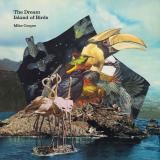
Mike Cooper returns to Discrepant with The Dream Island of Birds, a release that blurs the lines between memory, field recording, and reimagined sound.
In the early 1990s, Cooper met illustrator and writer Charles van Sandwyk while walking on a small island in Fiji. Van Sandwyk was living there quietly, working from a modest bamboo house near the beach. Years later, Cooper learned that following a serious car accident, van Sandwyk experienced vivid dreams during his recovery — one of which became a small illustrated book titled The Dream Island of Birds. A signed postcard from that book still hangs in Cooper’s studio.
In 2012, Cooper spent a month as artist-in-residence on Pulau Ubin, a small island between Singapore and Malaysia, recording birds and insects across the island. Home to more than 300 resident and migratory bird species, Pulau Ubin provided the source material for this album, later combined with electronics and digital processing. The track titles reference some of the island’s more evocatively named birds, though the sounds themselves are not literal representations. One piece is not derived from live birds at all, but imagined entirely through electronic means.
Neither documentary nor abstraction, The Dream Island of Birds sits between field recording, memory, and invention — an island heard through time and circuitry.
Soul Jazz Records celebrate 25 years of working in partnership with Studio One with brand new editions of FIVE of their best-selling CLASSIC Studio One collections all released on limited-edition one-off pressing coloured double vinyl. Also available in new limited-edition card wallet CD editions. The new edition featured albums are Studio One Funk, Studio One Dub, Studio One Ska, Studio One Roots and Studio One Classics.
Studio One Classics features a non-stop selection of stone-cold classic Studio One killers! Spanning 40 years of the legendary label, this album is a celebration of the music of Studio One Records and features a who’s who of Jamaican Reggae: Bob Marley, The Heptones, Horace Andy, Sugar Minott, Don Drummond, Prince Jazzbo & more. This collection contains numerous legendary tracks, including Bob Marley and the Wailers’ “Simmer Down”," "Love Me Forever" by Carlton & His Shoes, Slim Smith's "Rougher Yet," Horace Andy's "Fever,", Alton Ellis’s “I’m Just A Guy’, The Skatalites’ blazing ‘Confucious’ and loads more. Timeless stuff - every track here is indeed a classic, no-one can argue about that! Studio One produced literally hundreds of hits and this selection includes some of the label’s most enduring songs.
It is simply impossible to imagine modern Jamaican music without Clement "Coxsone" Dodd, founder of the iconic Studio One where virtually every singer and musician of note in Reggae cut their teeth. Studio One's output spans over four decades, all represented here. Coxsone Dodd pioneered nearly every new form of Jamaican music as it developed over time and this album includes Ska, Dancehall, Roots, Rocksteady, DJ, Lovers and more. This is probably the best entry of the many Soul Jazz Studio One releases if you're after a primer in the Studio One sound. Like it says on the wrapper 'Classics' pretty much sums it up
out of Stock
Last delivered 4 months ago available to reorder, subject to availability
In 1979, the Soviet label Melodiya released a record that immediately stood apart from most Soviet jazz of its time and perhaps for that very reason never became widely known. Oriental Suite by Oleg Gotskosik Quintet is a rare example of jazz, Eastern musical tradition, and compositional thinking coming together not as an exotic stylization but as a fully formed artistic statement.
This is not “Oriental colour” used as decoration, nor folklore treated as an ornament. Oriental Suite grows from within another musical tradition, with its monody, modal logic, slow unfolding of form, and focus on inner states rather than outward effect. The music is calm and concentrated. It does not try to impress, but gradually draws the listener into its own space.
Oleg Gotskozik was born in Tashkent in 1951, a city where Eastern music was part of everyday life rather than something distant or exotic. That may explain why his engagement with traditional material sounds so natural. He does not quote or stylize; he thinks in the same musical categories. By temperament, he was closer to a composer than to a jazz musician in the conventional sense. For him, jazz was not a style but a way of working with form and improvisation.There is no standard “theme and solos” logic in Oriental Suite. Improvisation is woven into the fabric of the music itself and unfolds in the same way as in oral traditions, gradually, with rising tension and a clear sense of arrival. Individual sections refer to traditional Uzbek genres such as lullabies, lyrical songs, and funeral laments, but these are not genre sketches. They are states of being. The music unfolds slowly, avoiding familiar harmonic drama and relying instead on modal scales and subtle internal movement.
A special role is played by trumpeter Yuri Parfyonov. His approach, with delayed vibrato, micro-glissandi, and melismatic phrasing, sounded unexpected at the end of the 1970s and still feels remarkably fresh today. This is not expressive jazz virtuosity but a focused, almost meditative voice, where improvisation becomes a form of inner speech.
It is also important to note that the original recording was not without technical flaws. Like many Soviet jazz releases of the time, Oriental Suite was captured under far from ideal conditions, and the master contained audible imperfections that were never part of the music itself. For this edition, the restoration was approached with great care and respect, working through the recording moment by moment to remove unwanted artifacts while preserving the character and atmosphere of the original. The aim was simple: to make sure nothing stands in the way of fully experiencing the music.
In the early 1980s, Oleg Gotskozik left the Soviet Union, and after that his name virtually disappeared from Soviet music journalism and literature. There were no official bans or public statements. He was simply no longer mentioned. Oriental Suite continued to exist on its own, without an author and without context. The record never entered the canon, received no continuation, and was never officially reissued. It seemed to fall out of time.
The original vinyl pressing was released in a run of around 32,000 copies, but most of them remained within the republic and never reached wide circulation. Today, original copies are hard to find and have long become objects of interest for collectors. There have been no official reissues, only attempts that never went beyond test pressings.
Today, Oriental Suite sounds surprisingly contemporary. It is music that can be described as deep ethno-jazz and even, in a certain sense, spiritual jazz. There is no exoticism here, no decorative borrowing, only a complete immersion in another musical way of thinking. It does not require explanations and does not need to be justified by its time.
This is not a forgotten curiosity revived for collectors’ sake. It is music that simply waited for the moment when it could be heard without ideological filters or genre expectations. Now it is returning quietly, without noise or hype, but with the clear sense that this is not an artifact of an era, but a living and genuinely rare artistic statement.
ounded in 1992 by the larger than life, Scottish punk-rock poet laureate, Mr Paul McKenzie, this merry band of miscreants has spent more than three decades circumnavigating the globe to bring the McKenzies gospel to an ever-expanding throng of rebels, scallywags and ne'er do wells. There's not many bands that can boast of a 30+ year career as staggeringly adventurous, wildly tempestuous and utterly death-defying as The Real McKenzies. It would be a serious mistake to write them off as just another Celtic punk band (they’ve been around longer than the Dropkick Murphys after all). They are an unstoppable juggernaut of touring mayhem. A ferocious troupe of insanely talented minstrels, storytellers and entertainers melding traditional acoustic and electric instruments to create a sound like no other. Their list of accolades is long. From sharing the stage with the likes of NOFX, Rancid, Flogging Molly, Metallica and Shane McGowan to appearing in film, books and video games to early releases with the almighty Fat Wreck Chords, their legendary status only continues to grow. On Yer Bike is an absolute beast of an album. A newly revitalized and laser-focused Paul McKenzie has never sounded better and his longtime bandmates have never been tighter. Boasting thirteen epic tracks, including the Sawney Bean trilogy (a trio of songs about Scotland's most infamous cannibal highwayman), the songs rage across topics including but not limited to love, literacy, historical sagas, eating sardines with your mother and, of course, cannibalism. Soaring bagpipes, heart pounding percussion and ultra melodic shoutalong Celtic punk rock are the orders of the day and are delivered piping hot from one of the most respected and adored pioneers of the genre.
Ten years ago, Anderson .Paak didn't just release an album; he staged a full-scale takeover of the soul and hip-hop landscape. Released on January 15, 2016, Malibu served as the definitive arrival of an artist who had spent years grinding in the underground before a star-making turn on Dr. Dre’s Compton. While his previous work hinted at his potential, Malibu was the moment the world met the "Cheeky Andy" persona in full—a virtuosic drummer, a raspy-voiced crooner, and a sharp-witted rapper all rolled into one. The album is a sprawling, sun-drenched journey through the Southern California coast, blending 1970s funk, church-reared gospel, and gritty boom-bap into something that feels both nostalgic and entirely futuristic. With a heavyweight production lineup including 9th Wonder, Madlib, Kaytranada, and Hi-Tek, the record maintains a warm, analog texture that was a breath of fresh air in an increasingly digital era. It’s an album that breathes, full of intentional imperfections and the kind of "in-the-pocket" groove that can only come from a seasoned live performer. Beyond the infectious, dance-floor-ready energy of tracks like "Am I Wrong" and "Come Down," the album is a deeply autobiographical masterwork. .Paak uses the 65-minute runtime to unpack his life story with startling clarity, touching on his mother’s gambling addiction, his father’s incarceration, and his own brushes with homelessness with a sense of resilience that never feels heavy-handed. He weaves these heavy themes through a lens of triumph, grounded by vintage surfing documentary samples that give the project its cinematic, coastal atmosphere. It’s a celebratory record born out of struggle, anchored by his impeccable technicality on the drums and a guest list—featuring ScHoolboy Q, Rapsody, and The Game—that feels hand-picked to complement his specific brand of West Coast swagger. A decade later, Malibu stands as a modern classic and the blueprint for the soulful revivalism that would eventually lead .Paak to global superstardom and Grammy-winning heights. It remains a testament to the idea that the most profound music often comes from the most personal places, proving ten years on that the best way to move forward is to stay rooted in the groove.
out of Stock
Last delivered 4 months ago available to reorder, subject to availability
Time To Get On Board A New Black Universal Express.
With each new recording Anthony Joseph presents an imaginative, personal vision of contemporary black culture, and The Ark is yet another compelling album by the award-winning Trinidadian poet and musician. This second part of a sequence of two albums launched with last year’s Rowing Up River To Get Our Names Back, finds Joseph giving full vent to his desire to explore many thought-provoking themes. However, there is a specific thread running through the glorious offering of sounds.
”I was especially interested in the idea of using Afrofuturism as a means of using the future in order to correct the wrongs of the past,” explains Joseph. “And so a lot of lyrics reimage or imagine an alternate black history. At the same time there are elements of autobiography.” The aforesaid cultural phenomenon, a view of the black experience through the prism of science fiction and ancient Egypt and Africa, as mapped out by visionaries from music and literature such as Sun Ra, Parliament-Funkadelic and Octavia E. Butler, has previously inspired Joseph. His 2006 novel The African Origins Of UFOs was a multi-hued work, and the new music shows how Joseph
has, much like all significant artists, gone on to broaden his conceptual palette, creating beguiling new stories and images set to startling rhythms and tones. Tracks such as ‘James’, with its taut, crisp bass and dubbed-up brass, and ‘Transposition Of Space (Glissant)’, a potent evocation of the influential Martiniquan theorist set in a haze of jazz guitar and ambient synthesizers, are marvels of text-sound painting.
As for ‘Baron Samedi’, shaped by a languid, almost wounded guitar line and slow rise of horns that frame Joseph’s journey to the ‘mountain of fire, almost touching the sky’ it is an epic blend of commanding vocal delivery and dramatic sonic tapestry.
Joseph led the Spasm band in the early 2000s and recorded well-received albums such as Bird Head Son and Time, in which songs were largely based on spirituals or chants enhanced by improvisation. But his musical curiosity has naturally led to collaborations, and the new work is produced by Dave Okumu, the prodigiously talented guitarist-vocalist-composer known as the leader of Mercury Music Prize-nominated The Invisible, and who was also a member of the seminal band Jade Fox.
Having first performed together at a show curated by influential saxophonist-flautist Shabaka Hutchings at the storied Total Refreshment Centre In London during lockdown, Joseph and Okumu struck up a rapport that further developed when the former guested on he latter’s album. With the connection made Joseph knew Okumu was the ideal producer for this latest project, which has a freewheeling, almost black psychedelic thing. After sifting through demos and loops the guitarist made on pro-tools the poet started to live with the music. Many months later words began to take shape. Joseph then went into the studio with Okumu’s band and set about creating a magnum opus. Boasting a stellar cast such as vocalist Eska Mtungwazi, trumpeter Byron Wallen and keyboardist Nick Ramm, The Ark is a highly intricate musical mosaic framed by simmering funk grooves, wily jazz improvisation and haunting dub effects. Through the use of many genres the music has simply become its own genre.
The Ark can be perceived as a vessel or means of transport to new worlds, along the lines of Sun Ra’s Ark or Funkadelic’s Mothership, and the material it contains is a unique blend of who Anthony Joseph is and how he sees the world and society in these stimulating, challenging times. “It balances the personal with the universal in a much more vulnerable, accessible way than on previous albums,” Joseph explains.
“It has become less about a personal experience and more about a collective, communal experience in which the artist is conduit, messenger, urban griot.”
Ten years ago, Anderson .Paak didn't just release an album; he staged a full-scale takeover of the soul and hip-hop landscape. Released on January 15, 2016, Malibu served as the definitive arrival of an artist who had spent years grinding in the underground before a star-making turn on Dr. Dre’s Compton. While his previous work hinted at his potential, Malibu was the moment the world met the "Cheeky Andy" persona in full—a virtuosic drummer, a raspy-voiced crooner, and a sharp-witted rapper all rolled into one. The album is a sprawling, sun-drenched journey through the Southern California coast, blending 1970s funk, church-reared gospel, and gritty boom-bap into something that feels both nostalgic and entirely futuristic. With a heavyweight production lineup including 9th Wonder, Madlib, Kaytranada, and Hi-Tek, the record maintains a warm, analog texture that was a breath of fresh air in an increasingly digital era. It’s an album that breathes, full of intentional imperfections and the kind of "in-the-pocket" groove that can only come from a seasoned live performer. Beyond the infectious, dance-floor-ready energy of tracks like "Am I Wrong" and "Come Down," the album is a deeply autobiographical masterwork. .Paak uses the 65-minute runtime to unpack his life story with startling clarity, touching on his mother’s gambling addiction, his father’s incarceration, and his own brushes with homelessness with a sense of resilience that never feels heavy-handed. He weaves these heavy themes through a lens of triumph, grounded by vintage surfing documentary samples that give the project its cinematic, coastal atmosphere. It’s a celebratory record born out of struggle, anchored by his impeccable technicality on the drums and a guest list—featuring ScHoolboy Q, Rapsody, and The Game—that feels hand-picked to complement his specific brand of West Coast swagger. A decade later, Malibu stands as a modern classic and the blueprint for the soulful revivalism that would eventually lead .Paak to global superstardom and Grammy-winning heights. It remains a testament to the idea that the most profound music often comes from the most personal places, proving ten years on that the best way to move forward is to stay rooted in the groove.
Amulets is the solo project of Portland-based audio and visual artist Randall Taylor. Amulets employs handmade cassette tape loops and live processed guitar loops to create live, lush soundscapes and immersive drones. Through the recontextualisation of cassettes, sampling, field recording, and looping, these long-form compositions blur the genres of ambient, drone, noise, and electronic music. Amulets has steadily built a catalog defined by tactile intimacy and patient exploration. Deeply immersive, the album navigates the dreamy boundaries between the tangible and the ethereal, where sound behaves as memory itself: unstable, layered, and quietly transformative. Known for his ability to weave soundscapes that evoke powerful emotions with minimalistic instrumentation, Taylor's newest project is a masterful exploration of mood, atmosphere, and texture.Throughout the ambient soundscapes is introspection, melancholy, and an almost hypnotic calm. The album resists forward motion, instead inviting the listener to linger inside its evolving textures, to sit with what's left behind rather than rush toward resolution. Central to Amulets' identity is Taylor's insistence on working, quite literally, outside the box. While many contemporary experimental artists rely heavily on software, Taylor's process remains rooted in physical interaction with sound. "This album differs from previous albums because it's a lot of found sounds, song fragments, and other samples that I have that I wanted to fuse together. I also heavily relied on a lot of ambient guitar and live guitar recording to marry all the sounds together." (Randall Taylor) FOR FANS OF Tim Hecker * Ben Frost * Lawrence English * Alessandro Cortini * This Will Destroy You * Mono * Windy & Carl The single colour edition comes as Lavender vinyl!
out of Stock
Last delivered 5 months ago available to reorder, subject to availability
Mit "We Will Survive This" veröffentlichen 1816 ein Album, das seine Kraft aus Verletzlichkeit, Beharrlichkeit und leiser Zuversicht schöpft. Die Band - bestehend aus der Sängerin Wenche Losnegard, dem Bassisten und Hauptkomponisten Audun Ellingsen, Cellisten Gregor Riddell und Schlagzeuger Erik Nylander - knüpft an ihr gefeiertes Debüt an und vertieft die charakteristische Verbindung aus Kammermusik, Jazz und alternativer Pop-Sensibilität. Der Name 1816 verweist auf "das Jahr ohne Sommer" - ein historisches Sinnbild für Umbruch, Erschütterung und Überleben. Vor diesem Hintergrund erforscht das Album Themen wie Unsicherheit, Entbehrung und die fragile Hoffnung in Zeiten, in denen die Welt aus den Fugen zu geraten scheint. Die Musik reflektiert diese Stimmungen, ohne sie direkt zu kommentieren: stille Passagen treffen auf dynamische Ausbrüche, offene Formen auf dichte Klangszenen. Die Texte bewegen sich zwischen persönlicher Introspektion und alltäglicher Lebensnähe; literarische Anklänge - von Byron bis Dolly Parton - verleihen ihnen zusätzliche Tiefe. Gäste erweitern den Klangraum behutsam, ohne den unverwechselbaren Stil der Band zu überlagern. "We Will Survive This" ist ein berührendes, bewusstes Album über das Annehmen von Grenzen - und den Mut, dennoch aufzustehen.
Out now via 7 Mater, in collaboration with The Circle Music for worldwide distribution, this special edition of Stolen Season Pt. I captures both the essence of the project and the spirit of the upcoming full-length Stolen Season Pt. I. This first pressing is destined to become a collector's item: numbered and limited to 250 black vinyl copies and 250 gold vinyl copies, each edition comes housed in a deluxe sleeve with an exclusive 30x30 insert that perfectly frames the visual world of the band. It is a striking presentation that mirrors the richness of the music contained within. The creative force behind From The Land is Anatoly Pakhalenko, best known as the frontman of the acclaimed dark folk ensemble Nytt Land.
Conceived in 2025, this new project serves as an alter ego for Pakhalenko, allowing him to explore the darker edges of country, blues, and folk traditions while weaving them into a world described as "a black and white landscape, tired of all this s**t that's going on around and gradually sinking into an endless sleep". Together with Aleksandr Rosliakov, Pakhalenko composed Stolen Season Pt. I between January and May 2025 at Nytt Land Studio, handling recording, mixing, and production duties himself. The result is an album that resonates with uncompromising artistic vision and raw emotional depth. From The Land 's universe draws inspiration from the haunting literary realms of H.P. Lovecraft and Edgar Allan Poe, as well as the surreal, unsettling imagery of David Lynch. This heady mixture of influences creates a soundscape that is equally cinematic and visceral, where ritual meets ruin, and folk traditions dissolve into the smoke of blues and country noir.
The classic Fearless Iranians From Hell Die For Allah LP is now back in print after a twenty-five year hiatus. Remastered and repressed on nuclear green vinyl, this hardcore punk arsenal also includes all tracks from their literally explosive Blow Up The Embassy 7-inch debut. FIFH was a mysterious Texan monstrosity formed in 1983 by Iranian expat (and modern day hashashin) Amir Mamori, who gathered to his side various mutants and apocalyptic freaks from the San Antonio punk rock blast zone, even throwing in two Butthole Surfers rejects for good measure (including none other than the notorious Anus Presley himself). The subsequent recording sessions were a chaotic affair, as guitars were rarely in tune and the drums were seemingly scavenged from the trash. It was all directed by Amir who, with fanatical focus, would inspire the band on to victory from behind a stupifying cloud of hash smoke. The resulting releases were widely praised; from places like Maximum Rock n Roll and the Village Voice in the US, to Sounds and New Musical Express in the UK. They were even cited as forerunners of the musical genre known as Taqwacore. After touring the US in the late ’80s—and leaving in their wake crowd turbulence, police intimidation, and even bounties being place on the heads of the members—the band disbanded in 1989 upon the death of the Ayatollah Khomeini (may Allah have mercy on him). “We’re stoned as shit, and we’re ready to roll.” - F.I.F.H. ’87
out of Stock
Last delivered 5 months ago available to reorder, subject to availability
Cathartic avant-rock, literate DIY folk & experimental composition exploring displacement, love, climate change, belonging & the places we call home - RIYL Jim O’Rourke, Richard Youngs, This Heat, Richard Dawson, Flying Nun. ‘Real Home’ is the new album by the Manchester-born, London-based artist Kiran Leonard. His sixth album proper (not including innumerable tour-only CD-Rs and short-run cassettes), since his precocious debut in 2013, ‘Real Home’ finds Leonard invigorated by inspiration and experience, making passionate, literate, and mercurial music that explores displacement, love, memory, climate change, connections to home and more. Encompassing songs recorded after moving to South London, ‘Real Home’ reflects on ideas of belonging and domesticity through folkloric, stream-of-consciousness songwriting. Across nine tracks, Leonard traces lived impressions of the household and the city, expressing sentiments of dislocation, alienation and stasis, but contentment too. Infusing the avant-rock effervescence, terraced dynamics and visionary lyricism of his music with what he defines as a greater sense of openness, Leonard is as versatile, fervent and imaginative as ever on ‘Real Home’, yet his music is somehow more intimate, affecting, and acutely expressive. Shaped by dual considerations of simplicity and formalism, ‘Real Home’ is by turns beautiful, allusive, and ruminative, an album on which Leonard considers what his songs have resembled in the past and what they mean now. In recent years, Leonard has crafted eloquent chamber music inspired by the likes of James Joyce and Clarice Lispector (‘Derevaun Seraun’), responded to contemporary politics and communication breakdown in the digital age (‘Western Culture’), and compiled solo works and ensemble recordings for a longform ode to Jonas Mekas and to one of Leonard’s enduring themes; home (‘Trespass On Foot’). On ‘Real Home’, Leonard reiterates this abiding thematic focus yet ascends to new, different heights, in music of cathartic delicacy and dissonance where all the myriad dimensions of his work to date seem to crystallize. There are sinuous songs about struggle and defying the pace of city life through drift and diversion (‘Pass Between Houses’), stirring songs of intense feeling and crescendo, described as a form of speculative detective fiction (‘Theatre for Change’). There are touching solo piano ballads (the title track), symbolic contentions with carbon capture and climate change (‘Utopia of Bog’), modes of experimental minimalism (‘Void Attentive’), and other profuse feats of compositional range, embroidered with wild tendrils of narrative and lyrical depth. A record to pore over, and get lost in. Exemplifying the vast aesthetic scope of Leonard’s music, lead single ‘My Love, Let’s Take The Stage Tonight’ is inspired by country lodestar Hank Williams, Russian poetry and a late period love poem by William Carlos Williams. Yet for Leonard, the song signals a sense of accessible materiality, and is the product of a more linear approach to writing songs: “My imitation of the great Hank Williams, in spirit if not in substance…This is one of the best efforts on Real Home at a song-as-object. Looking at it now I realise I was trying to write a song that made itself known as a song to the listener, and I wonder whether that’s crucial if you want a song to transcend its context. And that this is either accomplished through a total openness – by being inviting, by laying the tricks of the song out plain to see, as Williams and his many ghostwriters did so well – or by adopting a knowing aloofness, positioning oneself against the listener but letting it be known that that’s what it’s doing. In this song I try both, but mostly the former: as in, I wanted to write a song where every line follows on from the next.” Imbuing the endlessly elaborate and inventive qualities of his music with a newfound streak of candid, clear-cut melodicism, Leonard has reached a special place in his artistry, on a record that feels familial, and expresses closeness. Assembled with affiliates including Lauren Auder, Otto Willberg, Jasper Llewellyn (caroline), Tom Hardwick-Allan (Shovel Dance Collective), Magda McLean (caroline, The Umlauts), Alex Mckenzie (caroline, Shovel Dance Collective), Isabelle Thorn (Dear Laika) & more, the recording process had a significant influence on the subject matter of ‘Real Home’, in sessions defined by close-knit camaraderie and artistic eccentricity: “The theme of the home obviously recurs throughout the record; the album was mostly recorded in domestic spaces with friends, and the name of the album is Real Home. I like the qualifier ‘real’, like you’re getting past the cloak of the word and towards the thing-itself…also nearly all the percussion in this record was recorded on items from my dad’s shed (jam jars, sandpaper, blocks of wood, etc). Real home record!” ‘Real Home’, like anything by Kiran Leonard, is a record of dazzling multiplicity. Yet it’s a companionable prospect with a central premise; a collection of songs where listeners old and new can find a home. An album led by a scene; of Leonard standing at the threshold, ready to welcome you inside. “Exceptional songs that linger” - The Guardian // “An autodidact of amazing talent & energy” – Pitchfork // “A ridiculous amount of talent…confrontational, celebratory, provocative or perverse – he manages all of these emotions & more” - The Quietus /
»Vents d’aether« is the first collaborative album by sound artist Jérôme Bouve and composer-performer Delphine Dora. The six pieces are based on live improvisations on organ and harmonium. They were recorded in different churches on the Cotentin peninsula in France’s Normandy region and later enriched with additional field recordings by SA~RA. This adds an extra layer to compositions which were created both in and out of the moment and which quite literally resonate with the histories of the instruments and the buildings that were so integral to their emergence. »Vents d’aether« is to be understood as a dialogue between sound and space that takes place across time and place.
Bouve carried the idea of working with the organs and harmoniums that can be found in the churches and chapels in the Val de Saire in the Northeast of Cotentin around with him for years. When he got to know Dora, he found the perfect musical partner with whom to finally make a record »about the wind, the wood, the stones of the Val de Saire.« In September 2024, the duo embarked on a short but fruitful journey during which they stopped by at several different churches. They recorded hours-long improvised sessions dedicated to »capturing the moment, letting space and time shape gestures and sound, seizing fleeting epiphanies in their greatest simplicity,« as Dora notes in the album’s linernotes.
She took the lead behind the instruments, however Bouve assisted her on drawbars for the last two pieces on »Vents d’aether,« thus adding an even more unusual touch to the recordings. They formed the basis for an album that Dora calls »the testimony of a sensory quest, a collection of memories suspended in time.« Indeed, starting with the epic 20-minute-long titular piece up until the ringing of church bells near the end of the closing piece »Montfarville V,« this overwhelming yet intimate record blurs the boundaries between different times and spaces altogether.
Bob Stanley’s latest compilation “Wednesday Morning 6AM” literally turns back the clocks.
In the late 70s and early 80s, there was a parallel world of hits that people only heard when their clock radio went off. BBC Radio 2 had little time for the Top 40 music played by Radio 1 and beamed into living rooms by Top Of The Pops. Radio 2 effectively created a chart of its own playing singles or album tracks that their DJs enjoyed and wanted to share with their listeners. These tracks were given multiple plays on rotation and became earworms for millions of listeners.
“Wednesday Morning 6AM” is the warming soundtrack of eating breakfast or driving to school or to work in the cold and dark early hours to the sound of Art Garfunkel’s ‘99 Miles From LA’, Dolly Parton’s ‘The Bargain Store’, Hoyt Axton’s ‘Evangelina’, Paul Simon’s ‘Train In The Distance’ and Air Supply’s ‘Lost In Love’.
Other featured artists include Gilbert O’Sullivan, Crystal Gayle, Carly Simon, John Denver, Lou Rawls, Lindisfarne, Bob James, Stella Parton and Dionne Warwick.
The 2-LP version includes the bonus track ‘Danny’s Song’ by Anne Murray.
Amulets is the solo project of Portland-based audio and visual artist Randall Taylor. Amulets employs handmade cassette tape loops and live processed guitar loops to create live, lush soundscapes and immersive drones. Through the recontextualisation of cassettes, sampling, field recording, and looping, these long-form compositions blur the genres of ambient, drone, noise, and electronic music. Amulets has steadily built a catalog defined by tactile intimacy and patient exploration. Deeply immersive, the album navigates the dreamy boundaries between the tangible and the ethereal, where sound behaves as memory itself: unstable, layered, and quietly transformative. Known for his ability to weave soundscapes that evoke powerful emotions with minimalistic instrumentation, Taylor's newest project is a masterful exploration of mood, atmosphere, and texture.Throughout the ambient soundscapes is introspection, melancholy, and an almost hypnotic calm. The album resists forward motion, instead inviting the listener to linger inside its evolving textures, to sit with what's left behind rather than rush toward resolution. Central to Amulets' identity is Taylor's insistence on working, quite literally, outside the box. While many contemporary experimental artists rely heavily on software, Taylor's process remains rooted in physical interaction with sound. "This album differs from previous albums because it's a lot of found sounds, song fragments, and other samples that I have that I wanted to fuse together. I also heavily relied on a lot of ambient guitar and live guitar recording to marry all the sounds together." (Randall Taylor) FOR FANS OF Tim Hecker * Ben Frost * Lawrence English * Alessandro Cortini * This Will Destroy You * Mono * Windy & Carl
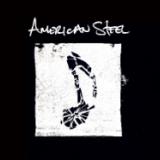
American Steel is the last great band to come out of Berkeley's 924 Gilman scene. Forged in the same ¬res as Operation Ivy, Crimpshrine, and Rancid, these soulful punks have at long last decided to unearth their self-titled album from 1998. AmSteel evolved into one of the most artful and sophisticated punk bands around, but this quartet began as a truly raw and wrathful DIY outfit, and we're grateful for the opportunity to share this 17-song hidden gem. We have been begging the band to release this material since Red Scare first began. Literally pestering them for twenty years. Listen to this dynamic debut and you will understand why.
‘Bad Wiring’ by Jeffrey Lewis & The Voltage, originally released in 2019 and long ago sold out, is re-released in UK/Europe on Blang Records. Recorded in Nashville by Roger Moutenot (Lou Reed, Yo La Tengo, Sleater-Kinny) the album blends raw lo-fi garage-punk with acoustic interludes. His trademark literate lyrics, moving between the poignant and the hilarious, shift from personal anxieties to existential dread (often in the same song eg, ‘My Girlfriend Doesn't Worry'), record stores ('LPs') and under-appreciated artists ('Exactly What Nobody Wanted'). The album was greeted with widespread acclaim in 2019 with many reviewers declaring it his best yet. Jeffrey Lewis & The Voltage play End Of The Road in September with a UK/Europe tour planned to follow.
Press For Bad Wiring In 2019:
" The “and about our relationship” refrain of ‘My Girlfriend Doesn’t Worry’ will have you replaying the album instantly." grade A- Robert Christgau, Consumer Guide (top albums of the year 2019).
" terrific wordplay." ******* Rob Hughes, Uncut
"Thick with the evergreen anti-folkie's charm." **** Mojo
"Electrifying, again." **** Q Magazine.
"one of the most consistently enjoyable records Lewis has made in his 18-year career." ********- HotPress
"possibly his best studio album yet." **** The Skinny.
"Jeff Lewis sits comfortably with Lou Reed and Leonard Cohen as an exemplary songwriter. Reed always strived for street cool and Cohen’s words were imbued with mysticism and his love of women. Lewis has the courage to open up his heart and lay out all the horrible neurosis, paranoia, and despair that we all fall prey to. Reed the cool, Cohen the mystic and Lewis the honest. A better triumvirate you couldn’t hope for.” Louder Than War.
"There’s a strong suggestion that this is the best album his written to date and after listening to just a handful of songs you’d be hard-pushed to disagree – you’ll also be left wondering why in the hell Lewis is not better known than he is, this album is filled with unforgettable songs that set his songwriting apart from anything else you’re likely to hear today." Folk Radio UK.
Stacey Kent is an American jazz singer in the mould of the greats, with a legion of fans, a host of honors and awards including a Grammy nomination, album sales in excess of 2 million and more than one billion streams, and Platinum, Double-Gold and Gold-selling albums that have reached a series of chart-topping positions.
Stacey, a comparative literature graduate with a passion for music, travelled to Europe to further her studies after receiving her degree from Sarah Lawrence College in NY. Through a series of twists of fate, she found herself in London where she enrolled in a graduate music program at the Guildhall School of Music and Drama, where she met her future husband and musical partner, Jim Tomlinson.
Kent's musical journey began with childhood piano lessons. A keen ear and true voice lead her to search out opportunities to express her love of music. However, nothing suggested the shift from the academic path to the one that propelled her to international recognition as one of the foremost jazz singers of her generation. With a catalogue of 13 studio albums, including the Platinum selling, Grammy-nominated Breakfast On The Morning Tram (Blue Note/EMI 2007) and an impressive list of collaborations, Stacey has graced the stages of nearly 60 countries over the course of her career.
Her worldwide fan base is testimony to her ability to express the emotional heart of her songs with delicately nuanced interpretations that transcend borders and defy categorization. Her unique multi-lingual repertoire includes standards, chanson, Bossa Nova, and originals written by Jim Tomlinson, her saxophonist/producer/composer/arranger husband in collaboration with the Nobel Prize-winning author, Kazuo Ishiguro with whom they have worked since 2006. She has also recorded with Brazilian legends, Marcos Valle, Roberto Menescal and Danilo Caymmi, and the celebrated French string quartet, the Quatuor Ébène.
Stacey's last studio album, Summer Me, Winter Me, was released in November 2023 on Naïve Records. A collection of fans' requests from her as yet unrecorded concert repertoire, Summer Me, Winter Me entered the French jazz charts at number 1 and has quickly established itself as a new highlight in her discography. She now returns with A Time For Love.
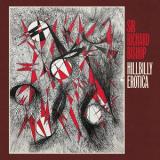
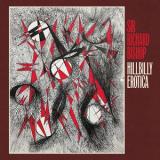
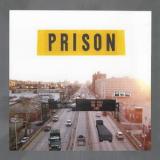


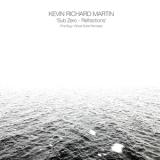




![Palo Alto - Les Furtifs, émeute musicale [remixes] LP](https://www.deejay.de/images/l/4/4/1241044.jpg)