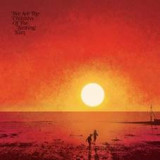
After another long hiatus, BEAM is excited to present the vinyl debut from rising star and nebulous neurocranker, al dente. Over 4 tracks, ‘Running and Falling Over’ captures the stylistic fluidity we have come to know and love from Naarm/Melbourne. Ever present traces of Dozzy refract through millennium-bug tech-house, summoning atmospheres of deep yet ever playful psychedelia. Opening the A-side on ‘Ripple Effect’, pulsating drones and echoes of organic percussion slither through the undergrowth. ‘Soft Steps’ explores fractal resonance amid expansive, evolving textures. Flipping to the B-side, ‘Unfold’ melds paranoiac psy with a wiggly tek swagger. Slow-burner ‘Blue Trial’ closes out the EP – a proggy roller for the eternal sunrise.
Mixed by Declan Vadasz
Mastered by Marco Pellegrino @ AnalogCut
Artwork by Rudi Schmidt
Type by Studio Joel
out of Stock
Last delivered 10 months ago available to reorder, subject to availability
- Jimmy Somerville's debut solo album Read My Lips is re-issued with rarities and new remixes.
- Originally released in 1989, the album enjoyed Gold Sales and 3 Top 30 hits, as well as Jimmy's Top 10 cover of Sylvester's 'You Make Me Feel (Mighty Real)'.
- Across these expanded versions are remixes from Gerd Janson, AMYL, Arpeggius and William Orbit; unreleased demos, B-Sides and rarities such as 'From This Moment On' (from Red, Hot + Blue)
and I Believe in Love (with Arthur Baker and The Beat Disciples).
- New liner notes from journalist and author Paul Burston.
On the 25th August, Burna Boy will release his brand-new album ‘I Told Them…’. It will be available to stream everywhere as well as on CD & Vinyl. The Pre-order will go live alongside the album announce on the 28th July. ‘I Told Them…’ features Burna’s newest hit singles ‘Sittin’ On Top Of The World (feat. 21 Savage)’, ‘Talibans II’ & ‘Big 7’ as well as a whole host of album features.
Burna Boy was born Damini Ogulu in Port Harcourt, Rivers State, Nigeria, in 1991 and began making music at just ten years old. As a teenager he honed his craft on Nigeria’s southern coast, delving into dancehall, reggae and Afrobeat’s. In the early 2010s Burna Boy emerged as one of Nigeria’s fastest-rising stars, combining influences from his Nigerian heritage with hook-filled pop stylings to create unforgettable tracks. His 2012 single ‘Like to Party’ broke into the global mainstream and paved the way for his full-length debut L.I.F.E, a year later.
Over the next five years, Burna Boy released two more albums and collaborated with a long list of high-profile artists including J Hus, Skales, Fall Out Boy and Lily Allen. African Giant was released in 2019 followed by his fifth album Twice as Tall in 2020 (which featured collabs with Chris Martin and Youssou N'Dour), both charted in several countries across the globe andgarnered worldwide acclamation, with the latter winning a Grammy Award for ‘Best Global Music Album’. Breaking cultural boundaries, he became the first Nigerian to headline a show at New York’s Madison Square Garden, he released his sixth album, Love, Damini, last year (featuring collabs with the likes of Ed Sheeran and Khalid). It deservedly became the highest-charting Nigerian album in history and currently holds the record for the only African artist to earn a no. 1 on iTunes in 16 countries worldwide.
out of Stock
Last delivered 2 years ago available to reorder, subject to availability
Indies Only LP is opaque green vinyl. Both LPs come with a download. The moment the needle drops on Bite, the new A Giant Dog record, one’s conception of what an A Giant Dog record sounds like bends like space and time around a starship running at lightspeed. The biggest point of departure is that Bite is a concept album, concerning characters who find themselves moving in and out of a virtual reality called Avalonia. A Giant Dog’s first album of original songs since 2017’s Toy, Bite finds the band Sabrina Ellis, Andrew Cashen, Danny Blanchard, Graham Low, and Andy Bauer at their peak as musicians, challenging themselves with more complex arrangements and subject matter that forced them out of their heads and into those of the characters who occupy this supposed paradise. “We had to find ourselves within, or project ourselves into, the principal characters. We developed them, got to know their minds, emotions, and motivations, and then expressed those in nine songs,” Ellis explains. Themes of addiction, gender fluidity, living ethically in a capitalist society, physical autonomy, avarice, grief, and consent bubble beneath the promised happiness of Avalonia. This is evident in songs like “Different Than,” where Ellis sings, “My body can’t explain the things my mind don’t comprehend” as if societal gender pressure is squeezing its protagonist out of their skin. The songs on Bite are full of bombast, at turns calling to mind the spacefaring operatic rock of Electric Light Orchestra and the high drama of an Ennio Morricone film score. The album’s narrative sweep is epic in scope, its characters facing impossible odds and certain doom, existing as comfortably with the sci-fi grandiosity of Thin Lizzy’s Jailbreak as it does with the high fantasy of Dio and Iron Maiden. Appropriately, A Giant Dog came to this narrative armed to the teeth with new ideas, unleashing synthesizers and string sections to create what Ellis describes as orchestral, symphonic, futuristic punk. To achieve this, they left their home turf of Austin, Texas, for La Cuve Studio, just outside of Angers, France. Living in the French countryside, A Giant Dog laid down their vision of the future against a decidedly pastoral backdrop. On walks from Angers to La Cuve, Ellis says that they “would see many things, and also nothing at all. Swans on the river. Romani people living in little trailers, with a side hut built for their dog. A juggler on a unicycle—not fucking with you.” “We thought we wouldn’t be allowed back in France after this trip, to be honest,” they continued. “Five loud, stomping, clapping, rowdy Americans who ran through the streets of Angers for three weeks in November 2022.” The experience capped two years of planning and writing, fleshing out the universe of Avalonia beyond the bounds of most concept albums. The resulting nine songs do not merely occupy this space: They’ve lived in it, and they want out.
Boy Harsher, Portishead, Thom Yorke, Radiohead, Beak>, ERAAS, SUUNS. Over the past seven years, Public Memory's distinctive use of analog synthesizers, electronic beats mixed with organic percussion, lo-fi sound design, and gritty ambience has created a singularly eerie and shadowy world. The first seconds of Public Memory's new record, Elegiac Beat, thrust us immediately into that world. We are in media res, with a feeling of sudden movement from a sensible point A to B. Given some time however, we realize that there is something askew–a bit of brightness here, some shadows pushed aside, some jazz and funk amongst the dub and Krautrock. This is an unfamiliar, ambiguous mood that pushes Public Memory towards new ground. We still drift past the clouded lights and hollowed out buildings of previous albums, but with an occasional bounce in our step now, a bit of golden haze around the edges. First single "Savage Grin" cements this clearly. The track has a jazzy, trip-hop flavor, albeit filtered through Public Memory's narcotic, hazy lens. We could be in a hotel lounge in the alps somewhere on holiday, or out of time in a majestic, sparkling ballroom. But we still have the feeling of being haunted, or perhaps even hunted in some way. This feeling intensifies and comes to a head towards the ever-darkening end of the track, leading directly into "Afterimage", in which someone almost imperceptibly sings "I hear them coming" in a twisted, auto-tuned flail. Second single "7 Floor" begins with flanged drums and damaged synthesizer stabs, evoking a kind of apparition floating towards us in the mist. As the track moves on there is, similarly to "Savage Grin", a contrast in feeling between a cold exterior roaming and an interior, warmer, human place. This time however, we move from the colder to the warmer as the synths from the track's beginning make way for a Rhodes-style organ and backing string synth, infusing an unexpected sense of peace. But like "Savage Grin", the track moves to its end through an in-between place beyond the haze. Faded and distant synthesizers meld with voices–human, or perhaps otherwise–that beckon us, or perhaps warn us. We can't be sure which. Third single "Far End Of The Courtyard" brings us closest to classic Public Memory territory with hip-hop beats, chopped and screwed samples, lo-fi ambience, and ghostly electric pianos complementing the vocals. There is darkness, perhaps more here than in the previous two singles, but with a crucial moment of uplifting lightness so subtle it may be missed upon first listen. As an inverse to both "Savage Grin" and "7 Floor" we end with brightness, the jazzier side of the record pushed to the forefront as the track fades away on that golden haze. In the end though, the haze may be just that: a vapor, a mist, a slight dusting of some other world on top of the degraded one Public Memory so effectively portrays. Elegiac Beat is between two places, and as it straddles the line between the two, we are uncertain if the light it brings shines directly from the sun, or if it is dimly reflected through that majestic ballroom world. For fans of 1990s Bristol trip hop, coldwave, and Thom Yorke's The Eraser
RIYL: Sigur Ros, Explosions in the Sky, Bark Psychosis, Caspian, Mogwai, This Will Destroy You. Exclusive vinyl colour (Opaque Mix Hellfire), limited to 1000 copies, and features a gatefold jacket, printed two-sided Euro sleeves, four art prints, and download code. Breaking from the strange monotony and abnormal norms that took hold during two years of pandemic life, Hammock returns with Love in the Void, an album that looks to the future, seizes the present, and unabashedly relishes the experiences and bonds that bring meaning to our days. Known for crafting orchestral works of stirring cinematic ambience, on Love in the Void the Nashville-based duo of Marc Byrd and Andrew Thompson bring guitar-forward, heart-pounding urgency to songs that shout through and shatter the static of complacency. Since forming as Hammock in 2003, Byrd and Thompson have released 14 critically-acclaimed albums and are renowned for their unique talent for bringing inexpressible emotion to life. The Covid-19 pandemic followed closely after one of Hammock’s career-defining works, the Mysterium, Universalis, and Silencia trilogy that chronicled the incomprehensible loss of Byrd’s 20-year old nephew. At their homes and apart, Byrd and Thompson then recorded Elsewhere, an album of shimmering ambience that channelled alienated longing and displacement into avenues that gave way to worlds and possibilities yet realized. Shaken awake and needing to break free of frustrations and longings, Love in the Void pulses with an unbridled spirit for action and experience and a burning desire for connection. Across songs that hammer home the keenly felt emotions of life’s highs and lows, Byrd and Thompson crest soaring crescendos awash in reverb and delve to keenly felt moments of quiet introspection, with unflinching lyrics on tracks like “Undoing” and “Denial of Endings’’ that weigh choices made and circumstances that can’t be changed. Lush and dramatic string orchestration from Matt Kidd (Slow Meadow) and emphatic drumming from Jake Finch heighten the stakes in play, and Christine Byrd’s (Lumenette) ethereal vocals leave mysteries lingering in the haze. Love in the Void is Hammock’s loudest album to date, embracing daring and vulnerability with palpable vitality at its core, and moving into an unknown future without fear.
In Rumi's poem A Great Wagon he writes of a place of total acceptance. "Out beyond ideas of wrongdoing and rightdoing, there is a field. I'll meet you there," It is a boundless, liminal space where we can release the judgments we make and carry of ourselves, and the comparisons to others. When we think of this field, there is a sense of tranquility that only comes when we are undisturbed by the shadow self and see existence as neither bright nor dim, white nor black. But as lead singer Greg Bertens explains, arriving there is a whole different story. "This is a poem I've returned to over the years, and I love the idea of this place, but getting there is life's journey." Bertens adds "I think the longing for and elusiveness of this field is a recurring theme in our music." Field is enveloped by themes of regret, disconnection and frustration but with the space to understand that these feelings are a natural part of the struggle between reconciling the inner and outer self. The Los Angeles/San Francisco-based group have been indie shoegaze stalwarts since their formation in 2001. After two decades and a handful of line-up changes, their extensive discography presents a dynamically textural, lush psychedelic rock that has featured guest appearances by members of Pavement, My Bloody Valentine, and Snow Patrol, among others. 2021's LP We Weren't Here was hailed for its dense instrumental blanket, where unrelenting hi-hats and heavy kicks exist alongside dreamy drone guitar. This propulsive nature permeates Field, as members Bertens, Noël Brydebell (vocals), Nyles Lannon (guitar), Jason Ruck (synths), Justin LaBo (bass), and Adam Wade (drums) produce a kaleidoscopic sonic landscape. Patient, sprawling instrumentation builds a foundation in which Bertens' themes of endurance, perseverance and clarity can bloom with a considered poise. As a lyricist who writes in response to the instrumental arrangements, rather than a focus on a specific theme or person, Field is a testament to Film School's ability to create in the moment, and to showcase the magic that stems from when we are truly present. Album opener "Tape Rewind" is a swirling rush of color, as sustained guitars, darkened bass lines and urgent, percussive swells dance alongside each other. "This is the newest of all the songs on the record and feels like a new level of heaviness for the band," Bertens explains, noting that its lyrical context of struggling to move past trauma adds to its cathartic essence. Field is bookended by heavier themes, with closer "All I'll Ever Be" taking on the perspective of those we hurt when we embrace our own toxic behaviors. Originally written to be a simple acoustic guitar and vocals song soon turned into an ethereal, effects-laden composition, with Noël's hazy lead vocals ushering in a new-found acceptance. "It's all I want / To be released / And all I can be," she laments, cementing Field's message of accepting ourselves in whatever form we find ourselves in. "Defending Ruins" is a murky relentless underworld, inspired by the freewheeling tones of Texas-based band Holy Wave. "Defending the ruins, defending remains," Bertens spits, among a richly-layered outro. "Don't You Ever" confirms Film School's ability to merge both delicate and growling instrumentation throughout the album, with the song's softly spoken section hovering above sparkling guitar. "Is This A Hotel" bends towards the electronic aspects of the band, with wailing synths accompanying a story of bitter desire. With over two decades in the industry, Field cements Film School as a distinct, dominant force in the shoegaze scene. Soaked in an emotionally open, imaginative atmosphere, the album is both singular and expansive, and leaves the door open for a constantly evolving interpretation. Film School have never confined themselves to the rigidity of specifics, and it's on Field that they urge us to look beyond the binary of certainty, and to take a second look
- Panda Bear, Voice of the Seven Woods, Mammane Sanni Abdoulaye. File under: Jazz / Electronic. Titi Bakorta almost didn't make it. Born in and raised in Kinshasa, the Congolese multi-instrumentalist was on his way to Uganda when he fell off the boat as it traversed the mighty Congo River. Unable to swim, Bakorta was saved by a friend who dragged him to the closest city Kisangani, where he was unexpectedly acquainted with local singer Dancer Papalas. Soon they were performing in bands together, traveling across the continents and settling in Tanzania, South Sudan and Dubai - they even appeared in front of General Defao, the beloved Congolese vocalist who fronted legendary soukous bands Grand Zaiko Wawa, Choc Stars and Big Stars. Now based in Kampala, Bakorta offers his own unique take on Congolese pop and folk sounds, weaving traditional elements through a psychedelic lattice of guitar loops, mangled voices and eccentric beatbox rhythms on his debut full-length. He bends woodblock snaps on 'Kop' into stuttered blurs, wailing emotionally over twanging riffs and bizarre, theatrical xylophone twinkles. It's still pop music on some level, but curved around Bakorta's unwieldy personal narrative - there's a sense that everything could unravel at any time but it all hangs together, strengthened by Bakorta's confident, contemporary production smarts. 'Elles Vais' is more airy, with celestial soukous vocals that float above tight, electronic drums. Tangled guitar echoes overlap each other like dense, weaved tapestries, contrasting perfectly with Bakorta's urgent, driving pulse. Occasionally, he transcends completely, like on 'Molende' where his chants and phrases neatly flutter between praise music and contemporary R&B. "Hustling, hustling, hustling, everyday I'm hustling," an angelic voice coos over phased electric guitar plucks and looped, AutoTuned chorals. It makes perfect sense that Bakorta should team up with Metal Preyers' Jesse Hackett on the album's final track, the aptly-titled 'Titis Haunted House'. The two artists share a similar obsession with moonlit, carnivalesque soundscapes, and Hackett's eerie synths provide a suitably eccentric foundation for Bakorta's ghostly wails and fuzzy guitar sounds.
: Daft Punk, SAULT, BADBADNOTGOOD, Surprise Chef. Eraserhood Sound's mysterious, intergalactic house band Fantasy 15 are finally ready to unleash their debut LP, Zoltandia. After years of rising anticipation which saw the group release a handful of now-sold out, highly sought-after 45s, Fantasy 15 have delivered a modern synth-funk opus. The album, named after the group's remote home planet, is a dazzling display, and features an audacious blend of soul, funk, disco, boogie, house, hip hop, New Wave, and much more. Zoltandia is a true sonic journey, a concept album that tells the fantastical tale of the beloved freedom fighters Fantasy 15. The group, whose true identity has always been a mystery, push the limits of their musical experimentation further than ever. Leading single "Interplanetary Lover" features the show-stopping Kendra Morris on lead vocals, and serves as the group’s first proper love song. Elsewhere, the title track "Zoltandia" features chanting group vocals and a disco-boogie groove that nods to legends like William Onyeabor and Kiki Gyan.
King Krule, Interpol, Alex G, Orion Sun, Snail Mail, Toro Y Moi, Unknown Mortal Orchestra. “Transparent Yellow” Indie Store Colour. (LPC1) available while stocks last. For Lutalo, creating music is an act of hope in and of itself. Throughout their meticulously crafted folk, rock, and soul, on which they sing and play all the instruments, the Twin Cities-raised, Vermont-based musician embeds golden lines of poetry that inspire curiosity about the world and empathy for everyone searching for a way through it. After releasing their 2022 debut EP, Once Now, Then Again, Lutalo emerged as a rising talent in the indie world, catching the attention of Fleet Foxes’ Robin Pecknold and Big Thief’s Adrianne Lenker, who invited the young musician on tour. Following a vinyl release with that breakthrough project, they are releasing its companion EP, AGAIN, on August 25 via Winspear. On the ambitious AGAIN, a collection of kinetic indie rock tracks, Lutalo makes bold critiques of systemic oppression, capitalism, and the digital attention economy. Though these topics are heady, their writing always sits at an accessible place of personal introspection. Like on the arresting single “Push Back Baby,” whose fuzzy electric guitar lines twist and unfurl in intricate patterns, Lutalo paints a complex portrait of our current reality that’s “rooted in the greed or narcissism of capitalists,” they explain. “I’m analyzing those systems and patterns, and also asking, ‘Can we continue to not perpetuate this?’ Because it’s hurt a lot of people historically. I’m just asking people to question it.” Through their music, but also through their lifestyle that’s alternative to America’s economic and political systems, Lutalo asks listeners to imagine new possibilities. “I want to help people question the way they’re living,” they say, “so we can create a better reality for us to exist in together.”
King Krule, Interpol, Alex G, Orion Sun, Snail Mail, Toro Y Moi, Unknown Mortal Orchestra. “Transparent Yellow” Indie Store Colour. (LPC1) available while stocks last. For Lutalo, creating music is an act of hope in and of itself. Throughout their meticulously crafted folk, rock, and soul, on which they sing and play all the instruments, the Twin Cities-raised, Vermont-based musician embeds golden lines of poetry that inspire curiosity about the world and empathy for everyone searching for a way through it. After releasing their 2022 debut EP, Once Now, Then Again, Lutalo emerged as a rising talent in the indie world, catching the attention of Fleet Foxes’ Robin Pecknold and Big Thief’s Adrianne Lenker, who invited the young musician on tour. Following a vinyl release with that breakthrough project, they are releasing its companion EP, AGAIN, on August 25 via Winspear. On the ambitious AGAIN, a collection of kinetic indie rock tracks, Lutalo makes bold critiques of systemic oppression, capitalism, and the digital attention economy. Though these topics are heady, their writing always sits at an accessible place of personal introspection. Like on the arresting single “Push Back Baby,” whose fuzzy electric guitar lines twist and unfurl in intricate patterns, Lutalo paints a complex portrait of our current reality that’s “rooted in the greed or narcissism of capitalists,” they explain. “I’m analyzing those systems and patterns, and also asking, ‘Can we continue to not perpetuate this?’ Because it’s hurt a lot of people historically. I’m just asking people to question it.” Through their music, but also through their lifestyle that’s alternative to America’s economic and political systems, Lutalo asks listeners to imagine new possibilities. “I want to help people question the way they’re living,” they say, “so we can create a better reality for us to exist in together.”
Re-mastered by Kramer in 2022. Recommend If You Like: Raymond Scott, Mort Garson, Joe Meek, Robert Moog, Perrey and Kingsley, John Cage, Brian Eno, Sun Ra, Karlheinz Stockhausen, Hawkwind, Pete Seeger, William Shanter, Fred Rogers. An electro-surrealist musical journey from the mind of Bruce Haack "The Captain" - capturing his inventive genius musically in tandem with tapping into the voice of his inner child, innovative story songs inspired by Bruce Haack's diverse musical interests and a love of Science and explorations of the Natural World, songs to excite the imaginations of listeners, both young and old. Ahead of his time and beyond categorization- Haack continued to create trying to find new platforms in order to promote his electronic music. He scored many commercials during the 1960s and promoted electronic music on TV, even demonstrating his inventions on Mister Rogers' Neighborhood in 1968. He self-released his first children's music album later that year. Haack constantly added new genres and inspirations to his compositions and was greatly influenced by the psychedelic rock of the era. He constantly created new work that reflected not only his varied interests, but his shifting musical horizons. He created multiple youth oriented albums, dipping into science fiction, psychedelia and electronica, using traditional song structures in order to capture children's attention to educate them, while wrapped in one of his many personas. Bruce Haack wanted people to know him through his medium: music. He dedicated his life to exploring, inventing and sharing his eclectic brand of humor and many musical points of view. In failing health, he never stopped pursuing his distinctive musical dreams.
Athens, Georgia's Telemarket emerges with force and finesse on its debut full length, Ad Nauseum, due out August 25th on Elephant 6 label affiliate Cloud Recordings and Science Project Records. The record by tums navigates loops of existential quandary, heartache, and hilarity in a world gone awry. Running at 34 minutes and 34 seconds, this thirteen track odyssey discovers itself through bouts of exuberant feedback and snappy hooks, and ultimately finds resolution surrounded by good friends in its musical home of Athens. Among these friends is John Fernandes of Cloud Recordings, a former member of projects Olivia Tremor Control and Circulatory System and longtime Elephant 6 collaborator, who teamed up with Telemarket to release and distribute the group's LP. Ad Nauseum features artwork from late Georgia artist Patrick Dean, to whom the record is dedicated. Dean’s piece ‘Welcome to Athens, Y'all” was featured on Athens GA publication Flagpoles cover in August of 1999, and now adjourns the Telemarket cover reflecting the themes of repetition, redundancy, and relief. Telemarket provides a distorted vessel for the shape-shifting songeraft of vocalist / guitarist Adam Wayton, and features collaborations with many of his talented Athens friends. Wayton together with guitarist and engineer Will Wise hunkered down in their Odd Street home studio (originally built by a former Widespread Panic fiddle player) for much of 2021-2022 a piece of time many would just as soon forget and managed to create something memorable together in Ad Nauseum
Odd Holiday are purveyors of a rare breed of hip hop, both anchored in golden-era lyrical dexterousness and aligned to the contemporary movement of minimal soulful production. Their music is deeply emotive, seasoned, and undeniable.
L.I.S.A is the debut release by the semi-nomadic duo consisting of Mattic, a Charlotte, NC native currently residing in France and producer Daylight Robbery! who has one foot in the burgeoning jazz scene of London, UK and the other in the boom bap foundation of Brooklyn, NY. L.I.S.A represents the meeting of two forces who are at the top of their game and supremely comfortable in their craft, merging into something which feels both timeless and brand new.
András Cséfalvay makes simple music with a potent atmosphere. A well-known figure in the Slovak underground (artistic, literary and music) scene, he returns after years of silence with a collection of intense songs. It's music which tackles both fantasy concepts and environmental trauma; Cséfalvay, armed only with the voice of a bard and his own hand-made guitar, will kindle your imagination and take you to the most unexpected corners of your mind.
More than a singer, on 'Future Role of the Church in the Forthcoming Enviromental Transformation' Cséfalvay acts like a narrator, wearing his heart on his sleeve. He sings of his hate of percussion instruments, Jupiter and other planets, tells tales of guns and love, nature and Mithrandir. His unique style is completely absorbing, despite the minimal, traditional set-up known from his live performances. Existential, yet light, these twelve songs mark a welcome return of a fascinating artist who presents his own vision of the past, present and future – it's bleak and existential, but also filled with purity and honesty that's impossible to resist.
'Future Role of the Church in the Forthcoming Environmental Transformation' is András Cséfalvay's second album, and his first for the sincere label Weltschmerzen.credits
teely Dan's gold-selling third studio album Pretzel Logic, charted at No. 8 on the Billboard 200 and restored the group's radio presence with the single "Rikki Don't Lose That Number," which became the biggest pop hit of their career and peaked at No. 4 on the Billboard Hot 100. The 1974 album was produced by Gary Katz and was written primarily by Walter Becker (bass) and bandleader Donald Fagen (vocals, keyboards). The album marked the beginning of Becker and Fagen's roles as Steely Dan's principal members.
They enlisted prominent Los Angeles-based studio musicians to record Pretzel Logic, but used them only for occasional overdubs, except for drums, where founding drummer Jim Hodder was reduced to a backing singer, replaced by Jim Gordon and Jeff Porcaro on the drum kit for all of the songs on the album. Steely Dan's Jeff "Skunk" Baxter played pedal steel guitar and hand drums.
Pretzel Logic has shorter songs and fewer instrumental jams than the group's 1973 album Countdown to Ecstasy. Steely Dan considered it the band's attempt at complete musical statements within the three-minute pop-song format. The album's music is characterized by harmonies, counter-melodies, and bop phrasing. It also relies often on straightforward pop influences. The syncopated piano line that opens "Rikki Don't Lose That Number" develops into a pop melody, and the title track transitions from a blues song to a jazzy chorus.
Other standout tracks include "Any Major Dude Will Tell You," a reflective ballad with lush harmonies, and "Parker's Band," a playful ode to the jazz great Charlie Parker.
Lyrically, the album explores themes of nostalgia, lost love, and the struggles of the creative process. In "Barrytown," the band reflects on their early days as struggling musicians, while in "Through with Buzz," they offer a biting critique of the music industry and the pressure to conform to commercial expectations.
One of the defining characteristics of Pretzel Logic is its use of unusual chord progressions and unexpected musical twists and turns. The band's intricate arrangements and skilled musicianship are on full display throughout the album.
Rolling Stone praised the album, calling Steely Dan the "most improbable hit-singles band to emerge in ages."
"When the band doesn't undulate to samba rhythms (as it did on 'Do It Again,' its first Top Ten single), it pushes itself to a full gallop (as it did on 'Reelin' in the Years,' its second). These two rhythmic preferences persist and sometimes intermingle, as on 'Rikki Don't Lose That Number,' which jumps in mid-chorus from 'Hernando's Hideaway' into 'Honky Tonk Women.' Great transition." — the review said.
AllMusic gave the album 5 stars, with reviewer Stephen Thomas Erlewine noting that "instead of relying on easy hooks, Walter Becker and Donald Fagen assembled their most complex and cynical set of songs to date." Dense with harmonics, countermelodies, and bop phrasing, Pretzel Logic is vibrant with unpredictable musical juxtapositions and snide, but very funny, wordplay.
The album's cover photo featuring a New York pretzel vendor was taken by Raeanne Rubenstein, a photographer of musicians and Hollywood celebrities. She shot the photo on the west side of Fifth Avenue and 79th Street, just above the 79th Street Transverse (the road through Central Park), at the park entrance called "Miners' Gate."
After a brief battle with esophageal cancer, Walter Becker died on September 3, 2017 at the age of 67. Steely Dan has sold more than 40 million albums worldwide and were inducted into the Rock and Roll Hall of Fame in March 2001. VH1 ranked Steely Dan at No. 82 on their list of the 100 Greatest Musical Artists of All Time. Rolling Stone ranked them No. 15 on its list of the 20 Greatest Duos of All Time.
This stereo UHQR reissue will be limited to 20,000 copies, with gold foil individually numbered jackets, housed in a premium slipcase with a wooden dowel spine.
Overall, Pretzel Logic is a standout album in Steely Dan's discography. The album's blend of catchy hooks, complex arrangements, and thoughtful lyrics has made it a favorite among fans of classic rock and pop music.
The contributions of the late Detroit producer James DeWitt Yancey -better known to the world as J Dilla- to the world of hip-hop can't be overstated, and nowhere is his legacy more apparent than his work as a member of Slum Village. A founding member of the trio, (Alongside rappers T3 and Baatin) Dilla provided the group's distinctly esoteric, free-wheeling sound, built around winding basslines, quirky drumbeats, subtle low-end frequencies, and classic jazz & soul samples. Against the backdrop of Dilla's rich production, T3 and Baatin's free-flowing style of rhyming would also earn wide critical praise, leading to comparisons as the successors to A Tribe Called Quest. (A label they themselves have rejected.) After the success of Slum's 1997 studio debut, Fan-Tas-Tic Vol. 1, the group went to work on their follow up. Though the project was completed in '98, label turmoil kept the project on ice until 2000. By the time Fantastic Volume II hit Dilla was well on his way to his status as a hip hop legend having produced cuts for Common, Busta Rhymes, Erykah Badu, A Tribe Called Quest and many more. Later works from Slum Village may have had more of an impact sales-wise (in the immediate) but Fantastic Vol. 2 had fans and many critics saying that Slum Village, and Dilla in particular, may single-handedly save rap music.' Perhaps that statement is hyperbole but many consider Fantastic Volume II to be Slum Village's finest work ever to this day. Ne'Astra Media Group now presents the album reissued on vinyl, for the first time in several years. Every wobbling bass note of J Dilla's production has been preserved to maintain the legacy of this hip hop rap classic and maintain the legend of one of hip-hop's greatest beatsmiths.
out of Stock
Last delivered 3 years ago available to reorder, subject to availability
Paul Hillery's third compilation in this series of rare and hard to find grooves is as much a geographical journey as it is a musical one. With acts, artists and tracks linked to London, Florida, Atlanta, the Netherlands, Switzerland, California, India and Germany and more this compilation is very much proof of the global language that is music. With many of the recordings only previously existing on sold out and obscure private pressings and small runs on indie labels this collection of tracks really is a must have. Complementing the previous two albums curated by Paul Hillery we really do get to see and hear the history of studio recordings from a plethora of touring and travelling troubadours, jobbing composers and song-writers, session musicians, producers and engineers. Again, as with the previous two volumes in the 'Children of the Sun' series, this is an eclectic gathering of styles and genres that have been curated into an accessible fusion of Jazz, Rock, AOR and Folk tinged grooves that all have soul. With many tracks getting a first time digital release this 3 LP album sits nicely alongside the previous albums in the series and rates as an essential compilation for any serious lover and collector of music. In Paul Hillery's words: "Let us gather one more time on another journey through the rhythmic sands of time, traversing continents and genres one track at a time. Taking in joyful places and wide-open spaces while dropping out to the musical pulse that unites us all An album to remind us that we are all made of stardust with more to connect than drive us apart, for . . . We Are The Children of the Setting Sun"
It contains the product of two different sessions. The first date, which is actually the second chronologically, yielded just two tracks. Although, something new for the time, they were long enough to fill up one side of an LP. 5 Stars AllMusic: "The undeniable strength and conviction present in Miles Davis' performance on Walkin', underscores the urgency and passion with which he would rightfully reclaim his status as a primary architect of bop. Davis is supported by his all-stars, consisting of his primary rhythm section: Horace Silver
(piano), Percy Heath (bass), and Kenny Clarke (drums). Walkin! is a thoroughly solid effort." 'I'll Remember April' from the same session, but not included on the original LP, has been added as a bonus.
Black Truffle is pleased to announce The Leisure Principle, a new solo LP from London-based bassist and sound artist Otto Willberg. A key player in the London underground, Willberg is often heard on acoustic and electric bass in free improv settings and bands with Laurie Tompkins (Yes Indeed) and Charles Hayward (Abstract Concrete), as well as the fractured No Wave unit Historically Fucked. His previous solo releases have ranged from extended technique double bass to explorations of the acoustics of a 19th century artillery fort. But nothing Willberg has committed to wax so far prepares a listener for The Leisure Principle, six unashamedly melodic improvisational workouts created almost entirely with heavily filtered bass harmonica and electric bass. On the opening ‘Reap What Thou Sow’, a single-note bass harmonica loop pulses along underneath a roaming bass solo, the side-chained envelope filtering (where the dynamic behaviour of the bass determines the filter for both bass and harmonica) fusing the two instruments into a single stream of burbling shifts in resonance. After several minutes of patient exploration of this low-end landscape, the music suddenly opens up in widescreen with the entrance of Sam Andreae’s graceful melodica chords, spreading out across the stereo field. From this epic opener, each of the remaining pieces goes on to explore a slightly different aspect of the terrain. On ‘Shadow Came into the Eyes as Earth Turned on its Axis’, a similarly buoyant harmonica bass line provides the foundation, but this time playing a soulful descending riff, its almost R&B feel abstracted and half-obscured by the filtering. On ‘Mollusk’, echoed bass arpeggios skitter between elegiac chords somewhat reminiscent of the opening of John Abercrombie’s ‘Timeless’, before settling into a hypnotic groove. On the record’s second half, Willberg pushes further into the possibilities of his idiosyncratic instrumentation. On ‘Wetter’, bass and harmonica come together into a monstrous, growling jaw harp; on ‘Had we but world enough and more time’, the subtly shifting pulsating patterns start to feel almost like a kind of evaporated, drum-less dub techno until an eruption of wheezing bass harmonica gives the piece a comically folkish turn. Willberg’s melodically inventive and virtuosic bass performance calls to mind any number of fusion touchstones, from Jaco Pastorius to Mark Egan’s singing tone in the early Pat Metheny Group—even Anthony Jackson’s work with Steve Kahn. But with its radically reduced instrumentation, The Leisure Principle is also an exercise in minimalism, and the absence of percussion gives even its funkiest moments a strangely abstracted quality. At times, its uncanny blend of the abstruse and the immediate suggests the fried pop experiments of David Rosenboom or the skewed but deeply musical DIY of 80s underground groups like De Fabriek. Both easy on the ear and profoundly strange, The Leisure Principle proudly takes its place among the most eccentric offerings on the Black Truffle menu.
out of Stock
Last delivered 3 years ago available to reorder, subject to availability
Following on the somnambulant heels of When I See The Sun, our massive, near-complete Codeine overview, comes What About The Lonely?, an eight-track LP recorded at the group's live zenith. Captured direct from the mixing board at a stop on Codeine's November 1993 swing through the Midwest, opening for Mazzy Star, this document finds Stephen Immerwahr, John Engle, and Doug Scharin running through their hits at Chicago's notorious Lounge Ax for a crowd of chatty "120 Minutes" fans. Gastr Del Sol's David Grubbs adds his guitar to two songs, slinking on and off the 24-inch stage with little fanfare, but leaving his signature indelibly on the performance.
Following on the somnambulant heels of When I See The Sun, our massive, near-complete Codeine overview, comes What About The Lonely?, an eight-track LP recorded at the group's live zenith. Captured direct from the mixing board at a stop on Codeine's November 1993 swing through the Midwest, opening for Mazzy Star, this document finds Stephen Immerwahr, John Engle, and Doug Scharin running through their hits at Chicago's notorious Lounge Ax for a crowd of chatty "120 Minutes" fans. Gastr Del Sol's David Grubbs adds his guitar to two songs, slinking on and off the 24-inch stage with little fanfare, but leaving his signature indelibly on the performance.
Its not always about super rares, we got to cover those LP tracks as well. How this never made it onto a 45 ill never know. Michael Henderson's brilliant 'Let Love Enter' has always been an underground classic and is about to get a fire lit under it once again, simply the finest Brazilian influenced soul Jazz fusion.
Michael's bass playing, Vocals and production are all over modern American black music, having played for Miles Davis. Norman Connors, Marvin Gaye, Stevie Wonder to name just a few, his influence is huge right through the industry as well being a million selling artist himself. You can still here his bass sampled in many a Hip-Hop track to this day.
MAJOR REISSUE OF MAKOTO KUBOTA'S SUNSET GANG ALBUMS RECORDED IN THE 70S WITH HARUOMI HOSONO FOR THE SHOWBOAT LABEL AND FEATURING HIS BLEND OF JAPANESE FOLK, BLUES AND R&B WITH HAWAIIAN, OKINAWAN AND NEW ORLEANS INFLUENCES. THE ALBUMS ARE RELEASED IN COLLABORATION WITH MAKOTO KUBOTA AND COME WITH ORIGINAL ARTWORK, REMASTERED BY MAKOTO KUBOTA HIMSELF.
Starting with the reissue of 'Hawaii Champroo' recorded in Honolulu in 1975 and co-produced by Haruomi Hosono, Wewantsounds will then release 'Sunset Gang' from 1973 followed by Dixie Fever from 1977. All albums have been newly remastered by Makoto Kubota and they each come with original artwork, OBI and the original 4 page japanese insert. This is the first time the album is released outside of Japan....
Eclipse kehren zurück mit ihrem neunten Album "Megalomanium". Nach ihrem bisher erfolgreichsten Album "Paradigm" (das die massive Single "Viva La Victoria" enthält, die allein bisher über 26 Millionen Streams auf Spotify hat)) veröffentlichten die schwedischen Hard Rocker ihr letztes Album "Wired" Ende 2020 (Platz 23 der deutschen Charts). Trotz der fehlenden Tourneen gelang es ihnen, weiter zu wachsen. Das neue Album bietet den fröhlichen, hooklastigen und gitarrenorientierten Sound von Eclipse in seiner reinsten Form, 80er beeinflusster Melodic Hard Rock. Die Band ruht sich jedoch nicht auf Lorbeeren aus und bietet einige neue Elemente für einen Sound, der vor allem in Europa bereits Massen von Fans gewonnen hat. Während die erste Single "The Hardest Part is Losing You" einfach zeigt, dass die Inspiration intakt ist - eine der besten Hymnen von Eclipse überhaupt! - Songs wie "Got It!" oder das von Victor Crusner gesungene "High Road" zeigen, dass die Band sich nicht scheut, neue Wege zu gehen. Trotzdem können sie im hymnischen "Children of the Night" mit einem Riff, das die Erinnerungen an den besten Dio/Sabbath-Sound weckt, sehr hart rocken. Weitere Highlights sind das sofort erkennbare "Hearts Collide" und das treffend betitelte "Anthem", das die Fans, die die Shows der Band genießen, in Brand setzen wird. Megalomanium hat absolut alles, was man von den Jungs aus Stockholm erwarten würde, und noch mehr. Erik Martensson (auch W.E.T.) zeigt einmal mehr, warum er einer der gefragtesten Autoren und Produzenten der Szene ist. Sein Geschmack für Melodien, Songwriting und Harmonien ist absolut herausragend und wenn er sich mit Magnus Henrikssons Gitarren duelliert, ist absolute Magie da. Große Europa Tournee von Juni bis November.
Östro 430 waren schon immer eine sehr besondere Band. Eine kurze Zeitreise: Es sind die späten 70er- und frühen 80er-Jahre, und in Düsseldorf proben Dutzende junger Gruppen die Revolution: Male, Mittagspause (später Fehlfarben), ZK (später Tote Hosen), S.Y.P.H., Der Plan, DAF. Ihre Barrikade, Bühne und Biertresen ist der Ratinger Hof, der schnell zum deutschen "Mekka des Punk" wird. Doch selbst hier verstoßen Östro 430 gegen jedes Gesetz. Ihre Musik ist aufgedreht, melodiös, brachial und Do-it-Yourself. Die Krönung sind die Songtexte: Lieder wie "Sexueller Notstand", "S-Bahn" und "Zu cool" werden zu Klassikern. Sie schaffen es ins Fernsehen, den britischen NME und sogar in die BRAVO. Die Welt braucht die Östros, aber sie verpasst ihre Chance: 1984 lösen sich Östro 430. 39 Jahre später bekommt die Welt eine zweite Chance. Östro 430 können nicht anders, als anders zu sein als alle anderen. Punkrock, aber nach Hausfrauenart: keine Gitarren - und trotzdem straight. Dazu Texte, die das Reimlexikon neu erfinden: Sie dichten "Diktator" auf "Vibrator" und "Hintern" auf "Pimpern". Sie teilen aus gegen jede Art von Spießertum: machtgeile Populisten, konservative Alt-Punks, ignorante Umweltschweine und politisch Überkorrekte, die Shitstorms diktieren. Und die Östros können sogar anders als anders, nämlich verletzlich sein. In "Bleib hier" heißt es: "Du sagst, ich lieb aus Angst vor dem Alleinesein und jedes Wort tritt meine Zukunft ein". Östro 430, die ungewollten Role-Models der Ü50-PunkerInnen, teilen wieder aus & prangern an - schmackhaft, nachhaltig & wohl bekömmlich. Auf "Punkrock nach Hausfrauenart" sagen nun auch Bela B. von den Ärzten, Bärchen & die Milchbubis und Stefan Stoppok mit ihren musikalischen Gastbeiträgen als Kronzeugen für die Gruppe aus. Einst waren Östro 430 Vorbilder, als es Bezeichnungen wie Rrriot Girls und Role Models noch nicht gab. Und auch heute sind sie wieder Wegbereiter. Wegbereiter wofür? Bis die Welt das passende Wort gefunden hat, nennen wir"s einfach "Punkrock nach Hausfrauenart".
Östro 430 waren schon immer eine sehr besondere Band. Eine kurze Zeitreise: Es sind die späten 70er- und frühen 80er-Jahre, und in Düsseldorf proben Dutzende junger Gruppen die Revolution: Male, Mittagspause (später Fehlfarben), ZK (später Tote Hosen), S.Y.P.H., Der Plan, DAF. Ihre Barrikade, Bühne und Biertresen ist der Ratinger Hof, der schnell zum deutschen "Mekka des Punk" wird. Doch selbst hier verstoßen Östro 430 gegen jedes Gesetz. Ihre Musik ist aufgedreht, melodiös, brachial und Do-it-Yourself. Die Krönung sind die Songtexte: Lieder wie "Sexueller Notstand", "S-Bahn" und "Zu cool" werden zu Klassikern. Sie schaffen es ins Fernsehen, den britischen NME und sogar in die BRAVO. Die Welt braucht die Östros, aber sie verpasst ihre Chance: 1984 lösen sich Östro 430. 39 Jahre später bekommt die Welt eine zweite Chance. Östro 430 können nicht anders, als anders zu sein als alle anderen. Punkrock, aber nach Hausfrauenart: keine Gitarren - und trotzdem straight. Dazu Texte, die das Reimlexikon neu erfinden: Sie dichten "Diktator" auf "Vibrator" und "Hintern" auf "Pimpern". Sie teilen aus gegen jede Art von Spießertum: machtgeile Populisten, konservative Alt-Punks, ignorante Umweltschweine und politisch Überkorrekte, die Shitstorms diktieren. Und die Östros können sogar anders als anders, nämlich verletzlich sein. In "Bleib hier" heißt es: "Du sagst, ich lieb aus Angst vor dem Alleinesein und jedes Wort tritt meine Zukunft ein". Östro 430, die ungewollten Role-Models der Ü50-PunkerInnen, teilen wieder aus & prangern an - schmackhaft, nachhaltig & wohl bekömmlich. Auf "Punkrock nach Hausfrauenart" sagen nun auch Bela B. von den Ärzten, Bärchen & die Milchbubis und Stefan Stoppok mit ihren musikalischen Gastbeiträgen als Kronzeugen für die Gruppe aus. Einst waren Östro 430 Vorbilder, als es Bezeichnungen wie Rrriot Girls und Role Models noch nicht gab. Und auch heute sind sie wieder Wegbereiter. Wegbereiter wofür? Bis die Welt das passende Wort gefunden hat, nennen wir"s einfach "Punkrock nach Hausfrauenart".
"All The Old 45s - The Very Best of Deacon Blue" coincides with the band"s UK and Ireland tour of the same name, and charts their multi-million selling history - from bringing "Chocolate Girl" and "Dignity" to life in the corner of a Glasgow basement, to skyscraping, stadium-filling hits like "Wages Day" and "Real Gone Kid", via their swoon-inducing tribute to Bacharach and David ("I"ll Never Fall In Love Again"), their collective favourite single ("Your Swaying Arms"), and one of the most significant songs in the Deacon Blue canon, which followed a split in 1994 and the loss of two original members: 2012"s comeback single "The Hipsters" heralded a new lease of life for the group, and jump-started a second act that"s seen them more fired up, and prolific, than ever.
Toying with the familiar but not afraid to break with expectations, AVEM presents a versatile range of works that make up his debut album.
Dream State was largely written and produced in times of the pandemic, specifically during lockdown periods — a context that grants the album an air of melancholic isolation. Offering seven songs on a double LP, it marks the collective imprint LOKD’s vinyl premiere. Merging sounds of Electronica, House and Techno, LOKDLP001 finds its place neatly outside of common categories.
In the past years, the Swiss DJ, producer and live act has made a name for himself with a steadily growing catalogue: not only through a handful of EPs, but also by releasing countless singles, remix- es and live recordings. In autumn of 2023, the Basel– based artist now reveals his first studio album.
Instrumentation ranges from studio percussion re- cordings, synthesizer & drum machine classics, all the way to ethereal piano and vocal performances; all performed and recorded by the artist himself.
Familiar structures of House and Techno are introduced, only to be broken again by gleam- ing twists and turns. A focus on percussion is ap- parent throughout the album, be it in the dynamic texture of drum recordings or in the evolving break- beat rhythms of a guiding bass drum.
Dream State tells an ephemeral tale of the uncertain, treading through an unique territory of opposites — from rapid progression to outright hypnosis, from weightless yearning all the way to euphoric catharsis.
out of Stock
Last delivered 21 months ago available to reorder, subject to availability
Los Angeles rapper Earl Sweatshirt releases his new project SICK!, out now via Tan Cressida / Warner Records. The new 10-track project includes previously released singles "2010," "Tabula Rasa (feat. Armand Hammer)," and "Titanic" and features collaborative contributions from artists and producers Zelooperz, Nak-el Smith, Armand Hammer, Black Noi$e, and The Alchemist.
Speaking about the new project, Earl says:
"SICK! is my humble offering of 10 songs recorded in the wake of the worldwide coronavirus pandemic and its subsequent lockdowns. Before the virus I had been working on an album I named after a book I used to read with my mother ('The People Could Fly'). Once the lockdowns hit, people couldn't fly anymore. A wise man said art imitates life.
People were sick. The People were angry and isolated and restless. I leaned into the
chaos cause it was apparent that it wasn't going anywhere. these songs are what happened when I would come up for air. Peace and love to Zelooperz the enigma, The Armand Hammer, and my good friends Alchemist and Black Noi$e. Peace and love to u."
Following the project's release, Earl Sweatshirt will embark on his North American 2022 NBA Leather Tour later this month with Action Bronson, and The Alchemist with Boldy James. The 19-date run will see stops in Los Angeles, Chicago, and New York City before wrapping up in Austin in February. Tickets are available here.
Listen to SICK! above and find full album details and upcoming live dates below. Stay tuned for more from Earl Sweatshirt coming soon.
Enter the realm of Illa J, the musical force shaking the foundations of the industry. His latest offering, 'No Traffic', is a testament to his boundless talent and versatility, showcasing his singing, production and rapping abilities on 19 tracks written and produced entirely by Illa J himself. This album marks his debut on BBE Music and a new chapter in his musical journey. Meet Illa J: a musical prodigy raised in a family of talented musicians. With a jazz bassist father and a gifted singer mother, it's no surprise that Illa J was destined for greatness. He's best known as the younger brother of hip-hop legend J Dilla and has made a name for himself as a former member of Detroit's iconic hip-hop group, Slum Village. With a lifetime of exposure to quality music and top-tier musicians, Illa J is a force to be reckoned with. Created amidst the chaos of the pandemic, Illa J's 'No Traffic' serves as a beacon of hope, a roadmap for creatives seeking their path. He enlists the help of Detroit legends Amp Fiddler, Frank n Dank, British soul sensation Harleighblu, and introduces the rising stars of Detroit, Serious, Joz B, Maine Soul, and more, all matching Illa J's energy and passion on the tracks. The focus track of the album, "Star Struck", is a prime example of Illa J's signature style. The astral pentatonic soundscape and precise drum programming transport you to new heights, while Illa J's beats, melodies, and bars will leave you in awe. 'No Traffic' is a musical journey that takes you to a place where Illa J's playful and versatile sound reigns supreme. The album is expertly mastered by Grammy-award nominated The Carvery Studio and is a refreshing experience of a true artist reveling in their artistry. Don't miss out on this once-in-a-lifetime opportunity to delve into Illa J's musical realm."
'Ain't Ever Easy' is the best example to date. The muscular, chooglin' beat of the country funk heater "Can't Take Back" opens Ryan Curtis' sophomore album 'Ain't Ever Easy.' Like a steam train gliding into some high desert station, it bears the strong vintage machinery of Curtis' "alt-country from the high country" sound. The song lopes in on oozing guitar and keys over a backbeat that pulses sexier than a
breakup song has the right to be. Regret has rarely sounded this happy, but Curtis is capable of turning love and loss into dripping hot, powerful songs. Over the last decade the various styles of country have become Curtis' stock-in-trade. With a gravelly growl he paints cinematic pictures of picaresque people from the Midwest and the badlands; down and out townies, bar room drifters, forlorn lovers, and resilient loners fill his visionary tales, mournful subject matter he turns into country gold.
The record is both a wonderful evolution in Tom's songwriting, and perhaps his most personal, heartfelt work so far. Inspired by pivotal moments, the album examines everything from family strife to heartbreak and abandonment, and exhibits some of the most confident, refined songwriting of his career. Set against lush soundscapes of beautifully textured guitars, agile strings and bright piano notes, these songs delve into the wonders of new love; reach out to a beloved sister; celebrate a close friend's good news. "I've touched on things in this record that I've never spoken about before," he says. "It's without doubt my most personal to date."Title track 'Love & Light' is dedicated to Speight's older sister, Cathy. Like "Tomorrow", it reaches out to a loved one with an emotional acuity that is startling for its candour. "My sister was the one who gave me my first guitar," he explains. "She used to pick me up from school... sometimes she'd forget and be a bit late, but I didn't mind." The song (like the album) is full of unconditional love, powerful enough that it stays with you long after the final note.
Tomáš Knoflíček is a musician, sound organizer, and curator based in the Czech Republic. His activities are mainly related to post-everything quartet Gurun Gurun (Home Normal, Buh records), in which he collaborated with a number of mainly Japanese musicians (e.g. Haco, Asuna, Aus, Cuushe, Moskitoo). Since 2004 he has been working at the Faculty of Fine Arts and Music University of Ostrava, where he focuses mainly on interdisciplinarity in art, especially the relationship between image and sound. He is the co-organizer of the Kukačka project (kukacka.org), focusing on art in public space, and also the curator of the Lauby and Dukla galleries in Ostrava. As a curator or co-creator, he participated in a number of sound art projects and collaborated with many visual artists, for whom sound is an important means of research (e.g. Christoph Zwiener, Julia Gryboś, Barbora Zentková, Matěj Frank, Jan Krtička, Pavel Sterec, Lišaj). Knoflíček is also the author of several music videos and VJ-sets for Gurun Gurun, Wabi Experience, and Haco. In 2021 he released his first solo album Vaguely delimited targets (LOM label).
Founded in 1971, Matumbi was among the earliest and best British reggae bands. They did, however, also record under different guises, including The 4th Street Orchestra. In their acclaimed Rough Guide to Reggae, Steve Barrow and Peter Dalton rate this album (and its counterpart Leggo! Ah-Fi-We-Dis) as "the best showcase for Matumbi's talents". This release marks the first LP reissue of this genuine UK roots-monument since 1976.
Original member Dennis 'Blackbeard' Bovell (of LKJ and Dub Band fame) knew the local sound system-scene like the back of his hand and most tracks on Ah Who Seh? Go Deh! were initially cut as exclusive 'specials' for his own Jah Sufferer sound system and for fellow soundmen. Hardly anyone hearing these tunes at reggae parties or would have guessed they didn't originate in Kingston but were recorded in London. And neither did many who bought the records when they were released a few years later. That's hardly surprising, as the material Bovell & Co churned out could easily compete with the toughest output of their Jamaican counterparts. A splendid version of the 1970 Kingstonians smash "Singer Man" is the most familiar tune here. But it's the band's own outstanding, heavyweight roots tunes like "Jah Chase Dem" or "Za-Ion", their versions popping up later in true sound system style for maximum impact, that will have reggae fans prick up their ears.
Ah Who Seh? Go-Deh! is available as a limited edition of 750 individually numbered copies on orange coloured vinyl.
Originally released on may 29, 1969, Crosby, Stills and Nash remains one of rock 'n' roll's most impressive debuts. It was big news in 1969 when former key members of the Byrds, Buffalo Springfield, and the Hollies - three of the finest bands of the '60s - splintered off to form their own trio. Despite their already-proven talents, few could have imagined the gossamer vocal blend that would become the trademark of supergroup Crosby, Stills and Nash. The band's debut effectively provided the soundtrack to the summer of '69. For his part, Steve Stills keeps exploring the progressive folk-rock sound that he'd pioneered with Buffalo Springfield; signature tune Suite: Judy Blue Eyes is an expansive, multi-section affair that makes full use of the group's vocal skills. Fresh from the Hollies, Graham Nash adds an accessible pop sensibility, epitomized by the effervescent ditty Marrakesh Express. David Crosby, always the wild card in the Byrds, here adds rough edges and flashes of mystery with his cutting protest rocker Long Time Gone and the exquisite art-folk of Guinnevere. With this kind of firepower under its belt, it's no wonder csn quickly became one of the biggest groups of their era.
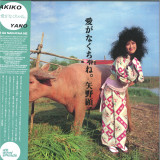
Wewantsounds continues its Akiko Yano series with the reissue of her cult classic 'Ai Ga Nakucha Ne' recorded in 1982 and co-produced by Ryuichi Sakamoto. Featuring Japan, the album includes additional recording in Tokyo with YMO and is mixed by Steve Nye and Shinichi Tanaka. It is the first time the album is released outside of Japan and the deluxe LP features the original artwork with gatefold sleeve and a lavish 24-page colour booklet with sessions photos by Pennie Smith (famous for The Clash's London Calling photo). The reissue also includes a new introduction by Mac DeMarco and a dual interview with Akiko Yano and Steve Jansen by journalist Paul Bowler. The audio remastered from the Original tapes by Mitsuo Koike.
'Ai Ga Nakucha Ne' ('there must be love' in Japanese) is Akiko Yano’s 6th studio album and follows 'Tadaima' in 1981. It continues exploring the electro-pop sound of its predecessor, hot on the heels of her touring with Yellow Magic Orchestra between 1979 and 1980. For this album, Akiko decided to try something new; she enrolled English fellow musicians Mick Karn, Steve Jansen and David Sylvian from Japan and booked the Air Studios in London under the supervision of engineer Steve Nye. Over a couple of weeks, the musicians created a fascinating soundscape full of catchy pop tunes, sung in both Japanese and English. Reminiscing about the studio sessions, Steve Jansen notes "Our music’s different but we maybe had a similar process of working. It was a great environment because the studio was a great place to work. It was very insular. There were four studios and there were always groups working in there 24/7."
The eleven tracks featured on "Ai Ga Nakucha Ne," mostly composed by Akiko - are a great collection of catchy tunes featuring her distinctive vocals and accompanied by the Japan musicians. As Akiko explains about the creative process, "I didn’t think to imitate or to make another Tin Drum. But I had Steve Jansen and Mick Karn, these excellent musicians. They were eager to understand the songs, then they put in everything they had. I knew the material was different from what they usually played in Japan. But it was a great experience working with them.
There are many highlights on the album, from the pop edge of "Aisuru Hito Yo" to the avant groove of "Another Wedding Song", each song is memorable and the album ends with the superb “Good Night” sung by Akiko and David Sylvian.
The original 1982 LP release included a 24 page booklet featuring many photos by Pennie Smith and Japanese photographer Bishin Jumonji. The booklet is reproduced in its entirety here and the album on top of contributions by Mac DeMarco, a longtime fan of the album, Akiko and Steve Jansen making this release of 'Ai Ga Nakucha Ne' a unique testament to Akiko Yano's greatness.
out of Stock
Last delivered 5 years ago available to reorder, subject to availability
Der Soundtrack zur HBO-Serie "The Last of Us" basiert auf der beliebten Musik und Klangwelt des gleichnamigen Videospiels. Geschrieben wurde der Soundtrack vom mit einem Academy Award ausgezeichneten Komponisten Gustavo Santaolalla und von David Fleming.Die intime, gitarrenbetonte Klanglandschaft spiegelt die Emotionalität der Serie wider und nimmt die Hörer mit auf die ungewisse Reise durch die USA in einer postapokalyptischen Welt, zwanzig Jahre nach der Zerstörung der modernen Zivilisation durch eine, von einem Pilz verursachte Epidemie.
Based on the critically acclaimed video game of the same name developed by Naughty Dog for the PlayStation® platforms, The Last of Us is written and executive produced by co-creators Craig Mazin (Emmy® Award-winning creator of HBO’s “Chernobyl”) and Neil Druckmann (creator and writer of the award-winning “The Last of Us” franchise and Naughty Dog Co-President).
The Last of Us takes place twenty years after modern civilization
has been destroyed by a viral outbreak. Joel, a hardened survivor, is hired to smuggle Ellie, a 14-year-old girl, out of an oppressive quarantine zone. What starts as a small job soon becomes a brutal, heartbreaking journey, as they both must traverse the U.S. and depend on each other for survival.
The vinyl release to the acclaimed series contains soundtrack
highlights from the show. Featured are score tracks by composer Gustavo Santaolalla, with additional music by David Fleming as well as songs by Depeche Mode, Pearl Jam, Jessica Mazin & Nick Offerman.
The package contains 2x vinyl, standard weight at 140g, 1x green and 1x clear, a double-sided poster of the show’s key art, spot gloss and soft touch on the gatefold and an insert featuring liner notes by Neil Druckmann, Craig Mazin, Gustavo Santaolalla & David Fleming and images from the show.
out of Stock
Last delivered 3 years ago available to reorder, subject to availability
In 1972, a foursome of design students set out to make a record. This was, in many ways, a strictly creative endeavor. The quartet — composed of Dave Pescod, Alan Lewis, Phil Rawle, and Ted Rockley — were all trained, not as musicians, but as creatives. Art school heavyweights, the four were well-versed in the methodology of intentional experimentation, in the delicate balance of pushing the limits without completely unmooring oneself from a guiding creative intention. Emboldened by a high-brow familiarity with thoughtful experimentation and all the non-conviction of non-musicians, Bowes Road Band’s stint in the world of popular music yielded a record that is as much mind-melting as it is a direct product of its time. Their sprawling LP “Back in the HCA” embodies the exigence “art for art’s sake,” but it is for art’s sake that this record, however off the deep end it seems to travel (hear: “Doctor, Doctor”), remains a unified, and stunning, body of work. The LP’s do-ityourself garage rock noisemaking meets highfalutin creative processes. “Back in the HCA” is warbling psychedelic freakout (“Two Fingers,” “Doctor, Doctor”), Donovan-esque English countryside folk stylings (“Inside My Head,” “Goodbye to Rosie”), and avant-garde jazz improvisions (“Grass is Grass,” “Tomorrow’s Truth”) in one luminous release.
Originally an 9-track LP, Jakarta, Uno Loop, and Bowes Road Band decided to mine the six most cohesive tracks for the reissue, though the extras may be released somewhere down the line. Cohesion efforts aside, “Back in the HCA” stands alone in its singular conception of a genre-bending continuum — it evades definition. That said, the LP can easily be situated in the sonic environment in which it was conceived. By the end of the 60s, England was crawling with blues-based rock outfits that were starting to venture into prog rock territory. You can hear this popular dint cast over the folkier side of the LP. But Bowes Road Band was armed with their non-musicianship: they existed completely liberated from the motivating yet ultimately paralyzing lust for stardom. Enjoying this liberation, Bowes Road Band was utterly free to make noise. This freedom meant drawn out sax interludes amidst sweetly folk stylings (“Grass is Grass”) and Shaggs-like fuzzed-out freakouts that spiral into a void (Doctor, Doctor). This freedom also meant straight-forward tuneful cuts like “Goodbye Rosie” that conspicuously introduce heavily distorted auto-organ accompaniment mid-track amidst poignant lyricism. Bowes Road Band crafts a unified sound and then cracks it open.
With a completely off-the-radar status, Bowes Road Band could only press 50 copies of the record — 10 for each of them and 10 for the school. The band’s lifespan was to end there, or so they thought. “Back in the HCA” was the accidental fruit of a Berlin flea market treasure hunt by Jannis Stürtz, DJ and co-founder of Habibi Funk and Jakarta Records. After finding and sharing the LP with a few colleagues, Stürtz managed to get in touch with the band, get ahold of the master tapes collecting dust in Ted Rockley’s attic, and start the reissuing process. The record is still adorned with its original cover art designed by Alan Pescod, both reminiscent of bygone school days and the Zoom calls of yesterday — in short, reunion. Its re-discovery was happenstance and ought to be listened to as such. That is, “Back in the HCA” was not made to be listened to on a broad scale, or, at least, was not made with this goal in mind; it is neither in its time nor of its time. Of course, the group explicitly cites the folk tunes of the English countryside, the distorted rock groups that reigned during the record’s conception, and the fringes of psychedelic music that only the uber-underground might recognize (e.g., “Dreaming of Alice”). Yet still with these obvious influences, “Back in the HCA” always existed beyond the domain of both traditional musicianship and conventional commodification. Bowes Road Band’s DIY musicality beams through in technicolor across “Back in the HCA.” The vinyl includes an 8-page booklet detailing the albums creation and interviews with the band.
Lead single “Grass is Grass,” out July 14 along with album pre-order, encapsulates the record’s range: the track unfurls into a sprawling sax-driven trip following a sundrenched, Donovan-esque intro w/ lyrics “naively about parks and gardens, not marijuana!” The keyed-down folk cut “Goodbye to Rosie” is single 2 and elevates stripped-down acoustics with golden tinges, out August 4th. Focus track “Tomorrow’s Truth” constructs the fuzzed-out underbelly of acid folk. Listen for echoes of late Beatles, Mark Fry, and Donovan (if they were armed by an unshakabele willful naiveté). Like Sgt. Pepper’s on a shoestring budget—take a trip to the underground with LP “Back in the HCA,” available everywhere physically and digitally on September 1st via Jakarta Records and Uno Loop.
Besides online promotion from label profiles, the album will be further promoted by external agencies within the UK and US.
The album is her first featuring all original material since her 2014 debut, Unstoppable, and shows the 29-year-old "Acoustic Songbird" reaching a new level of maturity. It includes twelve new tracks, all self-penned meditations on love and life except for Chlara's uniquely ethereal reframing of David Bowie's iconic "Heroes" track. Highlights include the recent singles "I Is The Loneliest Letter" and "Come To Bed"; also ear-catching is the blissful chillout groove "Sunburn" and the sensual bedroom ballad "747," where Chlara exudes a smouldering eroticism.