Manny Corchado should be a household name for all boogaloo fans. A true boogaloo gem that blends Manny Corchado's explosive rhythm with the melodic touch of salsa legend Nelson y sus Estrellas. His classic track 'Pow-Wow' is one of the most sought-after singles among collectors and DJs-not just for its A-side, but also for the absolute dance floor bomb hidden on its B-side: 'Chicken and Booze.' This instrumental recording features an irresistible rhythm section that could practically serve as the definition of the boogaloo genre itself. In this case, it plays at a faster tempo than other similar hits, making it even more effective on the dance floor. The horn arrangements create a catchy hook, spiced up with percussion breaks, all while driving its addictive, fast-paced groove. On the B-side of this single, we find another version of the same song-this time re-titled 'Aguardiente y Pollo' in Spanish-performed by Nelson y sus Estrellas. The tropical and salsa orchestra, founded in Venezuela by pianist, composer, and bandleader Nelson González Rojas, keeps the same punch and dance-driven focus as Corchado's version, but adds more melodic and sophisticated arrangements, in the style of the other tracks featured on the band's 1977 album, where this stunning cut was originally included (available here on a 45 for the first time). This Latin vinyl 45er is pure dance floor dynamite!
Cerca:hi rhythm
blickwinkel welcomes composer and multi-instrumentalist Francis Plagne to the label with a reissue of Asleep in a beached boat, an album that was initially released on his own Mould/Mouse Museum label in 2021 on cassette. The album was mostly given away to friends but now gets a wider release through a limited vinyl and digital edition.
Gentle melodies set an airy atmosphere and are intertwined with tensive dialogs between rhythms and textures coming from a wide array of acoustic and electronic instruments. Stylistically somewhere in between his Rural Objects (Black Truffle) and Udge (Horn of Plenty), on the eleven tracks on this album we hear Plagne in his most playful way to date.
Francis Plagne is a musician from Melbourne, Australia whose work swings between songwriting and a variety of other approaches, including group improvisation, instrumental abstraction, and domestic musique concrète. He performed live regularly since 2005 and has released recordings on labels such as Black Truffle, Horn of Plenty, Kye Records, Penultimate Press and his own Mould/Mouse Museum micro-label. In addition to performing his own work either solo or with a band, he has performed and recorded in improvised and other arrangements with Tetuzi Akiyama, Oren Ambarchi, Andrew Chalk, Crys Cole, James Rushford, and Joe Talia, among others.
»Hug of Gravity« is the second solo album by Raphael Loher and his first for Hallow Ground. The Swiss pianist and composer uses piano preparations, tape machines, and digital means to forge an aesthetic of playful reduction and rhythmic abstraction. The source material for these four sprawling pieces was culled from recordings of the artist performing the album’s predecessor, 2022’s »Keemuun.« Loher used them in a painstaking two-part working process to create an album that is both a product of and an ode to transformation, exploring themes of alternative temporalities and spatialities. »Hug of Gravity« oscillates between experimental electronic music, ambient, and minimal music and calls to mind the work of artists like William Basinski, Linda Catlin Smith, or label mate Andrius Arutiunian.
Loher laid the foundation for »Hug of Gravity« in 2020 with ten solo performances at his studio, during which he presented the pieces from his debut album. For these intimate concerts, he prepared the piano with modelling clay in order to move beyond the well-tempered tuning that dominates most of Western music. He then used a consecutive three-month residency in the Blenio Valley to refine the recordings. »I cut up and rearranged the material, then transferred the results—around 30 pieces—to a varispeed tape machine and then back to the computer. After that was done, I cut them up and rearranged them again,« he laughs. By radically reworking the material, he created an album that eschews traditional notions of time and space.
Loher points out the influence that his surroundings had on him. »The process created the music—and the place was essential to the process.« he says. He wandered through the mountains for up to nine or ten hours a day, which gave him a sense of what he calls expanded temporality. »Time just felt longer, my experiences seemed more diverse and nuanced, and it was as if I perceived my environment more clearly,« he explains. This shift in Loher’s perception of time and space—the latter also expressed in the album’s title—influenced his work with the varispeed tape machine. It allowed him to change the pitch of different recordings while layering them to let interference patterns emerge and emphasise the emotional qualities of the unconventional tunings he had used.
In this way, Loher constructed numerous interlocking narrative arcs throughout »Hug of Gravity,« an album that is ever-changing; an exercise in calm ecstasy that provides its audience with the feeling of being removed from conventional time and space. This approach is also reflected in the artwork for »Hug of Gravity,« which is based on drawings Loher made during his residency at Blenio Valley. Their fine hand-drawn lines run in parallel and let incidental patterns emerge, an effect that is only multiplied when the six different drawings that accompany each vinyl copy of the album are overlapping, forming ever-new visual constellations.
- A1: October (1 18)
- A2: My & Me (Feat Sampha, Laura Groves, Ricky Washington & Alabaster Deplume) (3 21)
- A3: Porcupine Tattoo (Feat Noah Cyrus & Bill Callahan) (3 25)
- A4: Never Felt Better (Feat Sampha & Florence Welch) (4 25)
- A5: Ether (Feat Maddy Prior) (3 19)
- A6: Losing You (Feat Sampha, Laura Groves, Jah Wobble & Yazz Ahmed) (3 05)
- A7: Firelight (Feat Florence Welch, Berwyn & Alabaster Deplume) (3 23)
- B1: The Summons (1 28)
- B2: No More Rehearsals (Feat Roses Gabor, Jah Wobble, Jack Jack Penate & Yazz Ahmed) (3 13)
- B3: You Were Smiling (Feat Samantha Morton) (3 41)
- B4: Norm (Feat Bill Callahan) (3 01)
- B5: Swamp Dream #3 (Feat Clari Freeman-Taylor) (4 18)
- B6: The Meadows (Feat Roses Gabor, Kamasi Washington & Ricky Washington) (4 50)
- B7: Goodbye (Hell Of A Ride) (Feat Nourished By Time) (3 33)
RED VINYL[21,81 €]
Everything Is Recorded, ist das musikalische Kollaborationsprojekt von XL-Recordings Chef Richard Russell. Auf dem Album "Temporary" sind zu hören u.a. Sampha, Bill Callahan, Noah Cyrus, Florence Welch, Maddy Prior, Berwyn, Alabaster Deplume, Jah Wobble, Yazz Ahmed, Laura Groves, Kamasi Washington, Ricky Washington, Roses Gabor, Jack Penate, Samantha Morton, Clari Freeman-Taylor und Nourished By Time. "Temporary" entstand im Verlauf von vier Jahren in Russells Londoner Copper House Studio und während einiger zusätzlicher Sessions in Tottenham, Cumbria, Dorset, Los Angeles und Las Vegas Es schließt an die vorangegangenen Releases wie das 2018 für den Mercury Prize nominierte Debüt an. Auf dem neuen Album erfährt Russells musikalische DNA allerdings ein Reboot: Sein Cut & Paste Approach reicht in die Zeit vor Sampling-Helden wie The Bomb Squad und Prince Paul zurück bis hin zu Innovatoren wie Steve Reich, Robert Rauschenberg und William S. Burroughs. Während Russells Musik bislang geprägt war von Rhythmus, Worten und Melodie - in ebendieser Reihenfolge - tauschen zwei Aspekte diesmal ihre Rollen. Der Rhythmus tritt zugunsten der Melodie in den Hintergrund. Musikalisch ist "Temporary" vom Gedankenexperiment "what if folk music had "gone digital" in the 80s, just as reggae had?" geleitet, während sich in spiritueller und lyrischer Hinsicht vieles um Trauer und den Verlust von Freunden, Familienmitgliedern und Kollegen dreht. Im Ergebnis stehen leuchtende und gelassene Kompositionen, auch dank der faszinierenden und vielfältigen Gästeliste, die "Temporary" mitbringt. Die fragilen, zärtlichen und stillen Tracks liefern vielleicht eines der sanftesten Alben, die je über den Tod geschrieben wurden. "Das Album zu machen, war erfüllend, eine Art, das Leben zu heiligen", so Russell. "Temporary" ist die erste reguläre Veröffentlichung von Everything Is Recorded nach über vier Jahren. In der Zwischenzeit war Russell allerdings nicht untätig. Via Soundcloud und Bandcamp erschienen zuletzt "Summer Solstice", "Autumn Equinox", "Winter Solstice" und "Spring Equinox", die alle mit einer Reihe von Gastmusikerinnen und -.musikern im Rahmen ausgiebiger Jams an jeweils nur einem Tag entstanden. Mit der Schauspielerin und Regisseurin Samantha Morton tat er sich zum Duo Sam Morton zusammen, welches sein Debüt "Daffodils und Dirt" veröffentlichte. Für Peter Gabriels Comeback-Album "i/o" produzierte Russell den Song "Four Kinds of Horses".
- Dame Un Cachito Pa' Huelé
- Dundunbanza
- Como Se Goza En El Barrio
- Esas No
- La Gente Del Bronx
- Mambo En La Cueva
- Que Negra P'acelerá
- Blanca Paloma
- Mami Me Gustó
- El Dolorcito De Mi China
- Hay Fuego En El 23
- Besame Aquí
- La Fonda De Bienvenido
- No Quiero
- Juégame Limpio
- Pimienta
- Cambia El Paso
- Que Me Manda La Niña
- Pobre Chinito
- Baila Simón
- El Reloj De Pastora
- Sabor De Pachanga
- Hachero Pa' Un Palo
- Errante Y Bohemio
- El Divorcio
- Papa Upa
- Lo Que Le Pasó A Luisita
- No He Visto A Caridad
- Suéltala
- Adiós Carmelina
- Emilio Dolores
The Godfather Of Salsa - HAVANNA & NYC RECORDINGS 1946-1962! Grosso! again presents this compilation from "El Ciego Maravilloso", the authentic godfather of salsa. His early Havana & NYC recordings. The tracks have been remastered and restored and some are available on vinyl after many years. Format and selection designed for DJs, collectors and latin lovers. Ignacio de Loyola Rodríguez Scull aka Arsenio Rodríguez (30 August, 1911, Güira de Macurijes, Matanzas, Cuba - 30 December, 1970, Los Angeles, CA, USA) was a Cuban musician, bandleader and prolific composer who developed the son montuno and other Afro-Cuban-based rhythms. Today he is seen as one of the most important figures in Latin music, with his influence reaching beyond the Spanish speaking world to also include African popular music of the 20th Century, though when he died he was not widely known by the public for his contributions and influence. He is also recognized (along with Israel 'Cachao' López and Dámaso Pérez Prado) as one of the creators of mambo, what Rodríguez himself often referred to as "ritmo diablo". Some of his best-known, and most-often covered recordings from the 1950s and early 1960s are included here, among them "Dame un cachito pa' huele'," "Dundunbanza," "El reloj de pastora," "Cambia El Paso," and "Hay Fuego En El 23."
Wrapped Up In Time is the fourth vinyl release by Night Foundation; the solo project of Intermedia artist and Noir Age label owner Richard Vergez. An existential suite of sounds comprised of analogue synth and drum machine, guitar, clarinet, tape loops and other assorted space racket.
The LP offers solo, instrumental passages punctuated by duets with Noir Age alumni: Underground vocal legend Little Annie reputable for her past collaborations with Coil, Nurse With Wound, Swans and countless others, lends her lived-in pipes for Blue Garage; along with Belgrade-based sound artist Zhe Pechorin for Night Blooming Jasmine; a tribute to our passed brother David Lynch.
Both rhythmic and expansive, Hinterland searching; Wrapped Up In Time is a processing of grief, memory, and the current state of our revolving loop of life. Recorded in South Florida, 2024-2025.
Mastered by Giuseppe Ielasi of Senufo Editions.
For fans of: Coil, King Tubby, Dead Can Dance, Scorn, Sabres of Paradise, and Vicious Pink
Limited edition of 100 on black vinyl with full color matte jackets
- A1: The Jungle
- A2: Love That Boy
- A3: House On Fire
- A4: Sacrifice
- B1: Get My Mind
- B2: Le Queens
- B3: In Your Eyes
- B4: Bold
Montreal indie rock trio Plants and Animals announce "The Jungle", their fifth studio album set to be released October 23rd via Secret City Records. Their shortest album yet and certainly their boldest, "The Jungle" is eight acts in a world full of noise. The album is auto-produced and was recorded at Mixart, their studio in Montreal. The band explains : "We started working on this a couple of years ago. Warren was afraid for a friend's health. He thought he was self-medicating too much and not taking care of himself. He couldn't let go of this image of an overworked dude swallowing too many sleeping pills and falling asleep with the stove on. So it began as the place next door, sometime before Greta Thunberg turned the expression into a rallying cry, where Earth is the house and the people are sleeping. It's terrifying, and on the whole we're not unlike this friend, are we?" "The Jungle" starts with electronic drums that sound like insects at night. A whole universe comes alive in the dark. It's beautiful, complex and unsettling. Systematic and chaotic. All instinct, no plan. Voices taunt,"yeah yeah yeah." This tangled time in which we find ourselves is reflected back in shadows. Every song is such a landscape. The first one grinds to a halt and you become a kid looking out a car window at the moon, wondering how it's still on your tail as you speed past a steady blur of trees. You watch a house go up in a yellow strobe that echoes the disco weirdness of Giorgio Moroder, Donna Summer and David Bowie. You get pummelled by a rhythm then set free by a sudden change of scenery_the wind stops, clarity returns. You're under a streetlight in Queens, soft-focus, slow motion, falling in love. You speak French now too, in case you didn't already. Bienvenue. These are personal experiences made in a volatile world, and they reflect that world right back at us, even by accident. There's one song Nic sings to his teenage son who was dealing with climate change anxiety and drifting into uncharted independence. The band carries it out slowly together into a sweet blue horizon. Warren wrote the words to another shortly after losing his father. It's about the things we inherit not necessarily being the things we want. In a broader sense, that's where a lot of people find themselves right now.
2026 Repress
The clergy is pleased to introduce you to a new initiate: Birds ov Paradise. This highly anticipated Hypnus debut comes split into three separate EP's which will be released one each full moon starting October.
Some of you may be acquainted with the music of Birds ov Paradise already as he's put out two stellar records on Jens and Aniara Recordings in 2016-2017, as well as making a contribution to our podcast series The Memoir where his sound was put on a grand display. Those of you who are new to the fantastic dream world of this very talented artist will quickly get lost in the flowing rhythms that drives his magical deep techno sound.
Early support from Etapp Kyle, Ness, Slam, Iori, Refracted, Svreca, Cio D'Or and Dorisburg to name a few.
Als Sängerin und Pianistin glänzte Blossom Dearie nicht nur mit einer der ungewöhnlichsten Stimmen des
Jazz, sondern auch mit coolem Understatement und swingender, harmonischer Finesse. Dieser Albumklassiker von 1958 mit Gitarrist Herb Ellis, Bassist Ray Brown und Schlagzeuger Jo Jones verbindet zeitlose
Eleganz mit rhythmischer Leichtigkeit.
- A1: Soha
- A2: Gypsy Karma
- A3: Cuatro Letras
- A4: Motosu
- B1: Ton Bonheur
- B2: El Pecador
- B3: Yukio
- B4: Souissi
- B5: Lembra
With Atlas(t), French beatmaker ProleteR pushes his craft further, blending hip-hop beats, nu-jazz melodies, and world music samples into a globe-spanning soundscape. From Asian voices to South American rhythms, African grooves to Eastern European tones, each track unfolds like a new stop on the map. A vibrant mix of nostalgia, swing, and wanderlust, Atlas(t) is both a travel diary and a dancefloor invitation. ProleteR transforms global sounds into colorful, modern beats, a record made to spark curiosity and keep the needle spinning.
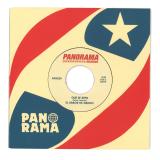
We keep the fire burning with PAN009, a scorching slice of Latin soul from Puerto Rico’s own Nacho Sanabria, better known as El Sabor De Nacho. Originally released in 1973, his version of “Que Se Sepa” takes the Roberto Roena classic and injects it with a new energy — fiery brass, driving percussion, and that unmistakable swagger that defines the golden age of salsa.
Born in Cataño, Puerto Rico in 1929, Nacho Sanabria grew up surrounded by the rhythms of bomba and plena, performing on stage as early as age nine. After relocating to New York in the late 1940s, he became a key figure in the Latin dance scene, performing with groups like Sonora Boricua, Orquesta Panamericana, and later Rafael Cortijo’s Combo. By the mid-1960s, Sanabria formed his own band, El Sabor De Nacho, combining tight horn arrangements, sharp percussion, and his signature charismatic delivery. His 1970s recordings — including Alma Primitiva and Salsa Caliente — stand as shining examples of Puerto Rican salsa at its peak.
Sanabria’s version isn’t a straight cover — it’s his own Puerto Rican interpretation, full of character and swing. The rhythm section stays tight and earthy, the horns punch with intent, and his vocal delivery brings that effortless charm only a seasoned bandleader could deliver. A proper Latin soul mover that sits somewhere between the barrio and the dancefloor, perfect for warm evenings and deeper DJ sets.
Rescued from obscurity and lovingly restored for today’s floors, PANORAMA Records continues its mission to reintroduce rare and essential music to new generations. From deep funk, jazz and global grooves to Latin dancefloor heat, the label’s 45s series shines a light on overlooked gems that still sound fresh today. Supported by tastemakers like Gilles Peterson, Patrick Forge, and the Mr Bongo DJs, this one’s destined to move both hips and feet.
- Three Times Cursed
- Searching Everywhere
- Out Of Time
- (I Know A Thing Or Two About) Girls
- Marisa In Your Ear
- She's Fine, She's Mine
- Existential Homesick Blues
- Yours Or Mine
- Stuck In The Past
- Shadow Of A Doubt
- Mojo Hanna
- Lonesome Sundown
Wailin' Rhythm 'n' Blues ravers THE BREADMAKERS from Melbourne, Australia, first formed back in 1989, delivering an explosive mixture of Garage Rock Revival and rockin' Rhythm 'n' Blues
Featuring members of SHUTDOWN 66, THE BO-WEEVILS, and THE PURITANS, these guys have long achieved cult status in the Garage Punk scene. Following their selftitled LP released on SOUNDFLAT RECORDS in 2020, we couldn't get enough of their wild sound. Thankfully, our prayers have been answered with a brand-new hit record from the fantastic BREADMAKERS!
The album includes two smashing cover versions: Bo Diddley's classic "She's Fine, She's Mine" and Andre Williams' "Mojo Hannah" , alongside some fabulous BREADMAKERS originals. Whether it's the catchy, wild tunes like "Marisa In Your Ear", "Existential Homesick Blues" and "Mojo Hanna", or the cool, bluesy vibes of their take on Bo Diddley's "She's Fine, She's Mine" and the moody "Stuck In The Past", these guys prove they have rock 'n' roll coursing through their veins.
"Lonesome Sundown" is yet another fantastic release from Australian Garage Punk legends THE BREADMAKERS!
- A1: Primetime
- A2: Turboframe
- A3: All You Did (Feat. Elvin Brandhi)
- B1: Top Suki Girl
- B2: Hunter Hunted
- B3: Cavalier
Assembled by Pedro Alves Sousa, Má Estrela is a conjuration of ideas and obsessions around dub, leftfield dance phenomena and the hypnotic potential of urban somnambulance.
In a levitating state, not exactly detached from the unease of these end times, Sousa surrounds himself by a number of accomplices from past and present endeavours to project a scrying mirror reflection of distinct languages of trance and liberation - dub's space and infinity, jungle and footwork's broken shards, DJ Screws legacy perpetually reanimated via numerous slowed down anonymous versions on Youtube and the lyricism and fire of jazz.
Temporarily a quartet, comprised of Sousa on saxophone and its electronic processing, Bruno Silva and Simão Simões on electronics and Gabriel Ferrandini on acoustic and electronic drums, after the departure of Miguel Abras, Má Estrela had in their 2022 debut album their first document of this ongoing process that’s now continued with ‘Tornada". Miguel Abras has since been replaced with Bruna de Moura and Má Estrela came back to being a five piece.
Coming out in November through Discrepant, with Miguel Abras' bass still present, 'Tornada' deepens the symbiotic connection between those rhythmic, melodic and textural particles in a mutating flux of continuities and disruptions throughout seven tracks. Featuring the invocations of Elvin Brandhi in 'All You Did', 'Tornada' makes its way amidst harmonic spectres, rhythmic debris that breathe for life and a certain, implicit idea of ritual that sustains itself liminally between the ethereal dissolution of time and the physical projection of space.
- A1: Little Old Lady
- A2: Village Blues
- B1: My Shining Hour
- B2: Fifth House
- C1: Harmonique
- C2: Like Sonny
- D1: I'll Wait And Pray
- D2: Some Other Blues
Analogue Productions (Atlantic 75 Series) Celebrating the 75th Anniversary of Atlantic Records! Coltrane playing with his former Miles Davis bandmates Featuring originals "Harmonique" and "Like Sonny" 180-gram 45 RPM double LP Pressed at Quality Record Pressings Tip-on old style gatefold double pocket jacket by Stoughton Printing The first album to hit the shelves after Giant Steps, Coltrane Jazz was recorded in November and December 1959, although one of the eight tracks ("Villiage Blues") was recorded in late 1960.
On everything save the aforementioned "Village Blues," Coltrane used the Miles Davis rhythm section of pianist Wynton Kelly, bassist Paul Chambers, and drummer Jimmy Cobb AllMusic describes Coltrane Jazz as the saxophone legend's preparation for his launch into his peak years of the 1960s. There are three standards aboard, but the group reaches their peak on Coltrane's original material, particularly "Harmonique" with its melodic leaps and upper-register saxophone strains and the winding, slightly Eastern-flavored principal riffs of "Like Sonny," dedicated to Sonny Rollins. The moody "Village Blues" features the lineup of McCoy Tyner on piano, Elvin Jones on drums, and Steve Davis on bass; with the substitution of Jimmy Garrison on bass, that personnel would play on Coltrane's most influential and beloved 1960s albums. Sound excellence can be found on this definitive deluxe 180-gram 45 RPM 2LP Analogue Productions (Atlantic 75 Series) reissue of Coltrane Jazz.
- Mean Street
- Dirty Movies
- Sinners Swing!
- Hear About It Later
- Unchained
- Push Comes To Shove
- So This Is Love?
- Sunday Afternoon In The Park
- One Foot Out The Door
The song titles on Van Halen's aptly titled Fair Warning don't lie. The likes of "Unchained," "Mean Street," "Push Comes to Shove," "One Foot Out the Door," and more indicate the mood the band channels on its double-platinum 1981 record — the nastiest, darkest, and fiercest album of the group's storied career. For the fourth time in four years, Van Halen throws down the gauntlet to all challengers and emerges victorious.
Sourced from the original analog tapes, pressed on MoFi SuperVinyl at Fidelity Record Pressing, and strictly limited to 5,000 numbered copies, Mobile Fidelity's UltraDisc One-Step 180g 45RPM 2LP set plays with unfettered clarity, dynamics, and immediacy. Benefitting from superb groove definition, an ultra-low noise floor, and dead-quiet surfaces, this vinyl edition captures what went down in the studio with tremendous realism and involving presence.
Taking a more controlled approach in the studio and still completing everything in less than two weeks, Van Halen and producer Ted Templeman relied on studio amplifiers to direct the sound. Further diverging from the live-on-the-floor approach of its earlier albums, the ensemble also employed overdubs to great effect. The result: Dense, stacked architecture that underlines the hard-hitting tenor of the songs — and which comes alive like never before on this reference edition that looks as good as it sounds.
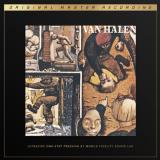
The premium packaging and gorgeous presentation befit the reissue's select status. Housed in a deluxe slipcase, it features special foil-stamped jackets and faithful-to-the-original graphics that illuminate the splendor of the recording. Aurally and visually, it is made for listeners who want to immerse themselves in everything involved with the album, including the iconic cover art adopted from William Kurelek's haunting painting, "The Maze."
Isolated frames from Kurelek's childhood-inspired work — including a man bashing his head into a brick wall, a guy pinning down an adversary as he delivers bare-fist blows to his face and others watch with apparent glee, a boy tied down on a conveyer belt and being sent through the equivalent of a meat saw — adorn the front and back covers. The sunnier visual disposition of Van Halen's prior efforts gives way to something sinister and tortured, traits reflective of the music within. The band members, too, are visually depicted not in glamorous shots but in a serious black-and-white portrait in which the quartet is clad in black leather jackets.
Tough, aggressive, stark: Fair Warning comes on like a series of bare-knuckled punches to the solar plexus and boasts lyrical narratives to match. Though not a concept record, the concise album revolves around themes of roughing it on the streets and struggling to survive amid dim prospects. Singer David Lee Roth reportedly penned many of the initial lyrics after traveling to Haiti and observing extreme poverty. The characters and situations populating Fair Warning reflect hardscrabble existence, last-chance desperation, and underlying danger.
Witness the crazies, poor folks, and hunters of “Mean Street”; the former prom queen turned pornographic actress on “Dirty Movies”; the menace and vice of “Sinners Swing!”; the streetwise hustle of “Unchained”; the isolation and alienation of “Push Comes to Shove”; the desire for escape on “One Foot Out the Door”: A carefree California beach party Fair Warning is not.
Having said he felt angry and frustrated during the sessions, guitarist Eddie Van Halen uses the forceful arrangements as a playground for his seemingly unlimited arsenal. Supported by a crack rhythm section and a hyped-up Roth, he performs with an almost impossible combination of punk-like intensity, technical finesse, lyrical fluidity, and unbridled emotion. The virtuoso was increasingly butting heads with Templeton and seeking a freedom in the studio he believed denied him.
No wonder he plays like a bat out of hell. Listen to the rapid-fire manner in which he slaps the high and low E strings on the 12th fret of his instrument on “Mean Street,” instilling the tune with funk flair and metal-spiked sharpness. For the pouty strut of “Dirty Movies,” Eddie Van Halen contributes slide guitar magic made possible after he sawed off the lower portion of a Gibson SG so he could reach further down the fretboard.
Related intensity, urgency, and daredevil momentum punctuate the surging “Sinner’s Swing!” A heavily flanged, delicately melodic introduction frames the attitudinal “Hear About It Later,” among the most creative arrangements of Van Halen’s career. And do riffs come any bigger or magnetic than those on the high-wire kick of “Unchained”? As for the out-of-left-field “Sunday in the Park,” an instrumental composed on an Electro-Harmonix micro-synthesizer: Who but Eddie Van Halen to supply creep factor in such an ingenious way?
Despite selling fewer quantities than Van Halen’s prior efforts, Fair Warning remains for many diehards the record that epitomizes all of the band’s immense strengths —Roth’s manic energy and tongue-wagging humor, Alex Van Halen’s rhythmic heartbeat-in-your-chest bombast, and Michael Anthony’s lucid bass lines included. Arriving when the New Wave of British Heavy Metal and new-wave movements were taking flight, it signaled a shot across the bow from a band determined to stay a step ahead and provide proof nobody could touch what it delivered.
More than four decades later, Fair Warning still sounds that alarm.
- 1: The Barbarian
- 2: Take A Pebble
- 3: Knife-Edge
- 4: The Three Fates A. Clotho B. Lachesis C. Atropos
- 5: Tank
- 6: Lucky Man
Supergroups existed before Emerson, Lake & Palmer formed in 1970. And, as we all know well, many came after. But few, if any, matched the English trio’s chemistry and its elevated combination of virtuosity, vision, and verve. Having influenced a multitude of followers, ELP’s prowess was obvious from the start. The band’s self-titled debut stands as a towering statement of creative imagination, execution, and discipline more than five decades after its original release.
Mastered at MoFi’s California studio, housed in a Stoughton jacket, and pressed at Fidelity Record Pressing, Mobile Fidelity’s numbered-edition 180g 33RPM LP of Emerson, Lake & Palmer presents the benchmark album in audiophile sound. Clear, dynamic, and balanced, this collectible edition honors the perfectionist approaches that both informed the playing and recording of the record.
Distinguished with black backgrounds, this reissue brings to light the epic scope, tonal depth, and mind-bending degrees of musicianship on display. Aspects — textures, nuances, effects, melodies, tempo changes — that go hand-in-hand with the trio’s compositions and interplay are rendered amid broad soundstages and delivered with pinpoint detail. Whether you’ve owned multiple copies of this touchstone or seeking out your first version, you’ll relish the presence, separation, imaging, and crispness that help make every song come across as if the group has set up shop in your listening space.
Opening the door to the seemingly infinite possibilities of progressive rock while steering clear of excess, Emerson, Lake & Palmer achieved a rare feat in that its complex, cerebral music didn’t prevent it from attaining mainstream success. The gold-certified effort launched the career of a band that would sell tens of millions of records. It also landed a Top 50 single in the form of the ballad “Lucky Man,” whose vocal harmonies, folksy strumming, multi-tracked instrumentation, and breakthrough Moog solo almost feel quaint in the face of the other fare on the album.
Comprised of genre-defying originals and hybrid arrangements of two classical pieces, the album Rolling Stone originally and rightly said is “best heard as a whole” matches outrageous ambition with the otherworldly skills of three musicians who remain among the finest to ever pick up their respective instruments. While Emerson soon drew the lion’s share of headlines for his ability on keys — clavinet, Moog, piano, Hammond organ, and pipe organ included — Greg Lake’s aptitude on guitar and bass, along with well as Carl Palmer’s monster talents behind the kit, created a three-headed hydra that devoured everything in front of it.
That extends to the radical reinterpretation of Bela Bartok’s “The Barbarian” that begins the LP, a performance that in less than four-and-a-half minutes runs the gamut from distorted to churchy to angular and blustery. More classical flourishes, keyboard wizardry, hard-rock heaviness, and gothic signatures emerge throughout “Knife-Edge,” which reimagines music by Leos Janacek and J.S. Bach — and ultimately invites you to explore a cathedral of sound teeming with separate bursts of keys and percussion.
And did someone say “drumming”? Check out Palmer’s monster salvo on “Tank,” a rhythmic showcase that marches out with knee-bent notes and mirror-reflected passages. Or dive into the mythological suite “The Three Fates.” Replete with three parts and Emerson playing the pipe organ at Royal Festival Hall, it shoots off sonic fireworks via sophisticated arpeggios, jazz improvisations, dancing counter-meters, sizzling chords, and a few explosions. Please don’t hold anyone at MoFi responsible if your system cannot handle it; this is heady stuff.
Indeed, everything on Emerson, Lake & Palmer is there for a purpose. Whether you aim to attempt to dissect all of the notes, shifts, and polyrhythmic bluster or just want to absorb this album as one living, breathing organism, this version invites you to do both as many times as you desire.
- Brown Is The Color
- Tame
- No Yawn
- All Odds No Chants Feat. Sara Persico & Elvin Brandhi
- Im Bann Der Wehenden Fahnen
- No Place Like
- Home
- Spellbound To Ancestral Curse
- Though The Trees Feat. Iceboy Violet
- Nowhere Everywhere Feat. Elvin Brandhi & Sara Persico
- Who, Me?
The notion of home isn’t precise, even a dictionary will offer multiple definitions. A home can be a place where you live, a place where you belong, where you originate from or a place where you’re given care; it can be a physical space, a land, a people or even a person. The concept isn’t completely universal, but everyone possesses a unique idea of what home means to them. On her fifth album, Ziúr considers not just what home symbolizes from her perspective, but the word’s resonance to the diverse community that surrounds her, and how their stories have impacted her over the years. Indeed, it’s the first time she’s felt it necessary to examine her own nationality. In the past, she’s deliberately avoided labelling herself as German, feeling disconnected from her country’s politics, culture and even the German language itself. In 2025, the idea of Germanness is in flux and progressives are under attack from all sides. The country’s politics aren’t only being turned inward by the growing throng of far-right voices, but by scared moderates, opportunists and those blinded by comfort, willing to ignore hatred to maintain their privilege. Stepping up to provide a different narrative, Ziúr scours her soul, writing and singing in German for the first time and proposing growth and evolution, not fear and regression. “I never considered being part of Germany,” she explains. “But I am.”
A solemn mood permeates the album’s opening track ‘Brown is the Color’, and Ziúr sings in measured, slow-motion breaths over noisy synth oscillations and doomed piano flourishes. Already, it’s a significant departure from her last run of releases, veering away from the frenetic, satirical chaos of 2023’s Hakuna Kulala-released ‘Eyeroll’ or its fantastical, dubby predecessor ‘Antifate’. Ziúr pulls on real world insights here, tracing her oldest, dearest musical inspirations to present her origins to anybody who might be listening. “Cold world is holding up,” she laments with a metallic crunch. “To let go of your heart, let me go.” And her voice emerges from the shadows completely on ‘Tame’; unprocessed, Ziúr sounds naked and vulnerable on ‘Tame’, curving her precise words around broken, lopsided rhythms and jangling new wave guitars. It’s pop music in its own way, inverted and reconstructed to fit snugly into her well-established sonic landscape. On ‘No Yawn’, brittle, downsampled hi-hats and industrial scrapes ping-pong around distorted riffs, provided by James Ó Ceallaigh aka WIFE; “You fail to sugarcoat your half-ass attempt,” she deadpans, “to build your promised wonderland on quicksand.” Even the beatless ‘All Odds No Chants’, a collaboration with Elvin Brandhi and Sara Persico, reveals another room in Ziúr’s autobiographical suite, mirroring György Ligeti’s enduringly influential choral works with its gnarled, dissonant vocal harmonies.
Dale Tallbert And The Dimensionals' rare but classic LP None But The Righteous hides in plain sight as one of those gospel-soul obscurities. Issued without fanfare, it contains only a handful of songs, but both 'None But The Righteous' and 'Blessed' stand out as deeply worked grooves, built with the same finesse as contemporaneous modern soul but anchored in devotional spirit. The record never broke into wider circulation, leaving collectors to hunt it down like thought-to-be-extinct game. Its blend of smooth arrangements and quietly insistent rhythm gives it a character distinct from flashier gospel crossovers of the era, making the Dimensionals' lone appearance on wax feel like a small but vital link in the chain between church-rooted harmony groups and the more polished soul recordings that followed.
- A1: Get Up I Feel Like Being A Sex Machine
- A2: Brother Rapp (Part I & Part Ii)
- A3: Bewildered
- A4: I Got The Feeling
- B1: Give It Up Or Turnit A Loose
- B2: I Don’t Want Nobody To Give Me Nothing
- B3: Licking Stick
- C1: Lowdown Popcorn 9.Spinning Wheel
- C2: If I Ruled The World
- C3: There Was A Time
- C4: It’s A Man’s Man’s Man’s World
- D1: Please, Please, Please
- D2: I Can’t Stand Myself (When You Touch Me)
- D3: Mother Popcorn
James Brown wants to know one thing before he and his band begin Sex Machine. “Can I get into the thing, really?,” he asks. His cohorts enthusiastically respond in the affirmative. And for the next hour and change, Mr. Dynamite gets into it and more, turning in a sweat-soaked, feet-moving, hip-swiveling, emotion-purging, in-the-red, drop-everything-you’re-doing-and-dance performance for the ages. Ranked by Rolling Stone among the 500 Greatest Albums of All Time, the sweeping 1970 effort towers as a testament to Brown’s inimitable legacy as well as the peak powers of his voice, vibrancy, and bands.
Sourced from the original master tapes, pressed at Fidelity Record Pressing, and housed in a Stoughton gatefold jacket, Mobile Fidelity’s numbered-edition 180g 33RPM 2LP set presents Sex Machine in audiophile sound for the first time. It explodes with the energy the lightning-strike music demands. Dynamic, immediate, present, airy: Everything from the brassiness and fluidity of the horns to the snap and decay of the snare to the swell and carry of the organ comes across in full-range perspective.
Then there’s Brown’s superhuman singing, which here emerges with a purity, naturalism, and transparency that ensure you feel everything. Screeching, shouting, pleading, moaning, preaching, stinging, commanding, testifying, crooning, humming: The Godfather of Soul contributes one of the finest vocal performances known to man. This definitive 55th anniversary reissue of Brown’s monster funk statement further exhibits a combination of clarity, solidity, separation, and imaging that helps bring to light what he and his crack ensembles committed to tape. Both in the studio and on the stage.
Just how lifelike does this reissue sound? Senior Mobile Fidelity Sound Lab engineer Krieg Wunderlich, who handled the remaster, notes: “There were some artifacts that sounded a bit like mistracking. But they turned out to be breath blasts on the vocal microphone. That is part of history. JB was workin' hard, and breathin' hard. And there was an edit the timing of that was truly strange. Again, a part of history.”
Originally marketed as a live album, Sex Machine contains six songs recorded in the studio and later overdubbed with canned crowd noise and reverberation. Save for “Low Down Popcorn,” the tracks on the latter half stem from a phenomenal performance captured in October 1969 at Bell Auditorium in Brown’s adopted hometown of Augusta, GA. The special relationship between the singer, the audience, and the location is palpable.
As the 1960s gave way to a new decade, Brown experienced immense success and dealt with unexpected change. Soul Brother Number One soon expanded his idea for an official live album captured in Augusta when the ensemble that backed him on that date morphed into the original version of the world-famous J.B.’s just months after the show. The virtuosic abilities, sticky chemistry, and rhythm-forward nature of the J.B.’s prompted him to book a one-off session in Cincinnati, OH, on a late July night.
Anchored by brothers William “Bootsy” Collins and Phelps “Catfish” Collins, the group — as well as two different drummers — laid down a nearly 11-minute rendition of “Get Up I Feel Like Being Like a Sex Machine” and a thrilling medley of “Bewildered,” “I Got the Feeling,” and “Give It Up or Turnit a Loose.” A pair of then-recent studio singles cut in separate locations in 1969, “Brother Rapp” and “Low Down Popcorn,” each featuring his prior group, took care of the second LP worth of material that complements the originally planned live set.
Complicated? Somewhat. Unusual? Definitely. But just as he elevated the expectations for all present and future R&B artists, Brown not only makes it all work. He makes it positively electrifying.
“Get Up I Feel Like Being Like a Sex Machine” is alone deserving of a dissertation on the art of funk music, seeing it moves up and down akin to an oil derrick, witnesses Brown unleashing a trademark series of grunts, squeaks, and “good god” asides, and glides to a hypnotic groove that won’t quit. Or look to the syncopated rhythms of “Brother Rapp (Part I and Part II),” one of multiple pieces here that signify the point where Brown began viewing every instrument as a percussive tool. Brown closes the three-song medley with his new band with a skedaddling “Give It Up or Turnit a Loose,” which provides jolts on the order of sticking your finger into a socket.
Not that the actual live material falls short in any way. Setting an insistent tempo for the vitality that follows, “I Don’t Want Nobody to Give Me Nothing” positions Brown as a role model, leader, and self-sufficient entrepreneur. All simmer and boil, the short and sweet “Licking Stick” dares you to keep pace. The floating, almost comforting “Spinning Wheel” spotlights the instrumental prowess of Maceo Parker and company, and functions as a seamless segue into the tender, horn-saluted “If I Ruled the World.”
And Brown and his mates still aren’t done. Just try to resist the one-two closing punch of “I Can’t Stand Myself (When You Touch Me)” and “Mother Popcorn.” Mercy.
Ain’t it funky? Sure ‘nuff.
‘Get A Life, Listen To Autumns’ is a statement that tells you everything you need to know about the quality and attitude of the Irish producer’s latest EP. His DNO debut presents five tracks of steel-studded EBM and industrial run through with his trademark dub aesthetics.
A1 ‘100 Ways To Get Fucked’ — another bold title — struts its stuff to a methodical stomp; strained vocals pulled out of shape and fed back into macabre forms; low-end chugging like some smoke-billowing, grease-slicked machine.
‘Let It Melt’ picks up the pace, making judicious use of the reverse function, while subtle acid chirps and woozy arpeggios provide a chaotic, though not unpleasant, dissonance that induces a feeling of headrush.
‘Petted’ swaggers like sex incarnate, alongside snatches of diva vox and the kind of sweeping space-age pads that Holst might have used had he been born a century later, seemingly taking cues from the hot and sweaty nights of ’80s Chicago.
Over on the B-side, ‘LDRO’ sets its kicks and snares thrusting at full tilt over an inexorable bassline; Autumns’ favourite effect, delay, keeping things squelching like the jellified flesh of a ballistics dummy.
And to finish, ‘God’s Gift’ drops down to a sludgy rhythm — though with surprisingly spritely percussion — to match its tortured guitar, shrieking horns, and deadly subs. A fever dream of twisted metal and hot breath, like the gradual slowing after the climax of debauchery.
Marking a sultry new route for DNO, Autumns’ first for the label is confident, confrontational, and
not to be missed.
Rhythms of postmodern realism at the very bottom of the DNO.