Search:francis plagne

Styles
All
  • 1
Francis Plagne - Asleep in a beached boat

blickwinkel welcomes composer and multi-instrumentalist Francis Plagne to the label with a reissue of Asleep in a beached boat, an album that was initially released on his own Mould/Mouse Museum label in 2021 on cassette. The album was mostly given away to friends but now gets a wider release through a limited vinyl and digital edition.

Gentle melodies set an airy atmosphere and are intertwined with tensive dialogs between rhythms and textures coming from a wide array of acoustic and electronic instruments. Stylistically somewhere in between his Rural Objects (Black Truffle) and Udge (Horn of Plenty), on the eleven tracks on this album we hear Plagne in his most playful way to date.

Francis Plagne is a musician from Melbourne, Australia whose work swings between songwriting and a variety of other approaches, including group improvisation, instrumental abstraction, and domestic musique concrète. He performed live regularly since 2005 and has released recordings on labels such as Black Truffle, Horn of Plenty, Kye Records, Penultimate Press and his own Mould/Mouse Museum micro-label. In addition to performing his own work either solo or with a band, he has performed and recorded in improvised and other arrangements with Tetuzi Akiyama, Oren Ambarchi, Andrew Chalk, Crys Cole, James Rushford, and Joe Talia, among others.

out of Stock

Order now and we will order the item for you at our supplier.

23,95

Last In: 69 days ago
Francis Plagne - The Refrain

"Black Truffle proudly presents The Refrain from Melbourne-based artist Francis Plagne, whose growing catalog of collaborative and solo releases range from song-based work to abstract audio collages.

Closely aligned with Plagne's Moss Trumpet LP (released by Penultimate Press in 2018), The Refrain’s two side-long tracks mix sounds of the mundane with the otherworldly; rising, receding and overlapping. The result feels like being led through a series of scenes devoid of context or direction. Furthermore, it’s hard to define the scenes as either inviting or disconcerting, as they’re often both at the same time. As the record progresses sounds reappear and are juxtaposed so as to only hint at the familiar. A hall of mirrors, perhaps?

Completed in 2020 using material recorded from 2012-2020, the record uses tapes of shelved, unfinished, and forgotten projects that featured field recordings from various locations, domestic sounds of plastic bottles, bubble wrap, creaking chairs, voice, and instrumental recordings, including an appearance from crys cole on Casio. These pieces were re-amped, processed and edited, then additional instrumental pieces featuring synths, guitars, plastic saxophone, melodica, and percussion were added, the results shaped into drifting, episodic assemblages.

Although essentially a tape piece, The Refrain presents as a crude, non-idiomatic composition that feels both timeless and transitory. It’s a million miles from the polish and rigour of GRM, perhaps more in line with Jacques Bekaert’s eponymous Igloo LP, or Costin Miereanu’s Luna Cinese. The Refrain could be read as a psychedelic Krapp’s Last Tape; one man’s response to listening through forgotten and discarded tapes, reflecting, reconciling, and forging a new path. A potent tonic for these absurd times."

-- Nick Hamilton, August 2021

out of Stock

Order now and we will order the item for you at our supplier.

21,64

Last In: 4 years ago
Francis Plagne & crys cole - Two Words

Two Words is the debut release from the duo of Canadian sound artist crys cole and Australian songwriter Francis Plagne. Building on a series of experimental live performances in which the pair toyed with possible common languages for their seemingly unrelated approaches to music, the LP's two sides present a single piece that brings together abstract texture and slow-motion song in a sonic space where genre cedes to the logic of dreams.

The piece begins with a long, nearly static sequence built primarily from rubbed surfaces, using movement in the stereo field and changing mic placements to create a unified but unstable sonic environment that mimics wind, water, and breath, opening an impossible space between nature and artifice. This artificial outdoors ultimately makes room for Plagne's electric organ, which sounds a series of melancholic chords to accompany a wandering Wyatt-esque keyboard line as cole's intimate contact mic textures sizzle and pop in the foreground.

From here the piece makes a surprise detour into song, as the majority of the second side finds Plagne intoning a series of obtuse two word phrases (from a text by Berlin-based poet Marty Hiatt) to an austere organ accompaniment. Working closely with engineer and producer Joe Talia, cole and Plagne extend the studio-as-an-instrument tradition of Teo Macero and This Heat, introducing subtle yet unexpected production shifts that lead the listener from the initial austerity of the organ and voice to an oneiric space of asynchronised vocal doubles, creaking textures, and distant whistling, ultimately arriving at something like an imagined meeting of Organum and Arthur Russell.

Packaged in a suitably mysterious sleeve featuring a lush work by Australian painter Anne Wallace on the front and text by Hiatt on the back, Two Words is both comforting and strange, a disorienting blend of seemingly discrepant elements.

out of Stock

Order now and we will order the item for you at our supplier.

16,60

Last In: 7 years ago
Anthony Pateras - Two Solos

Futura Resistenza is pleased to present the latest release from the prolific, restlessly creative composer-performer Anthony Pateras, two side-long pieces - one performed by Callum G'Froerer on double-bell trumpet, the other sung by Clara La Licata - in which soloists are accompanied by numerous pre-recorded tracks of their own instrument or voice, creating acoustic halls of mirrors where the distinction between live performer and recorded accompaniment becomes difficult to perceive. Palimpsest Geometry (2020) for double-bell trumpet & tape works with rapidly pulsed single trumpet notes, at brisk tempos that hover at the perceptual threshold between rhythm and tremolo. The interaction between different rates of pulse produces skittering echoes, as if G'Froerer's layers of trumpets were really a single sound bouncing around the sonic space. There Is A Danger Only Our Mistakes Are New (2021) for voice & tape goes to work on a see-sawing two-note melodic cell, insistently transposed and transposed again, hummed or sung with open vowels, contracting to a semitone and expanding to a minor third. More than anything in the canon of Western art music, the piece calls up the criss-crossing repeated figures of Inuit vocal games or the interlocking repetitions of Banda-Linda music, where rhythmic and harmonic displacements of repeated motifs fuse together individual parts into the illusion of an impossibly rich and multi-faceted unitary sonic organism. Essentially homogeneous in texture yet built up from constantly changing details, broadly static yet always moving and shifting, these pieces exemplify Pateras' recent work while also pushing it into a new, strikingly immediate direction. Here, form grows organically out of the material itself; the results are sparkling, immersive, and quietly uncompromising. (Francis Plagne)

out of Stock

Order now and we will order the item for you at our supplier.

9,03

Last In: 64 days ago
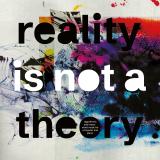
Mark Fell & Pat Thomas - Reality Is Not A Theory LP

Recorded in concert at the University of Sheffield in March 2025, Reality Is Not A Theory is the first collaboration between Mark Fell and Pat Thomas. Major figures in British experimental music since the 1990s, Fell and Thomas have developed their rigorous practices from radically different backgrounds and perspectives: where Fell’s singular take on synthetic abstraction emerged from Sheffield’s electronic underground, Thomas is a virtuoso improvising pianist steeped in jazz and modernist art music who has simultaneously worked with sampler-based electronics for decades. As the record’s wonderfully academic subtitle explains, we are presented here with two sides of ‘algorithmic and improvised music for computer and piano’, exemplifying both players’ insatiable search for new (and sometimes uncomfortable) playing situations.

The performance begins with Fell’s electronics close to the timbres of acoustic percussion, attacks that suggest wood, metal or glass threaded along a rapid pulse while Thomas focuses on the lowest registers of the piano, deadening the strings. As Fell’s electronics start to ring out and occupy more harmonic space, Thomas turns to wide, repeated clusters, which slowly expand into patterns of chords. Like in his recent solo recordings and his trio work with Joel Grip and Anton Gerbal, Thomas’ playing combines extreme dissonance with a deep lyrical sense. Fell’s work gradually shifts its focus toward drum sounds, drawing on the microtemporal processes that have characterized his practice in recent decades. Heard together with Thomas’ probing piano, the computer sounds call up unexpected associations with the klangfarben antics of improv drummers like Paul Lovens or Tony Oxley. Throughout its second half, the music grows increasingly frenetic, as Thomas sounds out rapid, irregularly repeated figures and beautifully sour chords in the upper register, while Fell’s percussion develops into angular pan-pipe-like feedback and waves of glissandi.

With great confidence and patience, Fell and Thomas often let their individual contributions remain rhythmically distinct and unsynchronised, allowing unexpected correspondence and coincidence to guide the music’s development. Recorded in a hall named after Sheffield steel manufacturer and Master Cutler Mark Firth, the location might suggest a model for understanding how Fell and Thomas interact here: two workers in the same workshop, each immersed in their own part of the production process. Arriving in a striking sleeve designed by Mark Fell, with liner notes by Francis Plagne, Reality Is Not A Theory is an invigorating document of the meeting of two mavericks of contemporary music.

pre-order now21.11.2025

expected to be published on 21.11.2025

22,06

Last In: 2026 years ago
Kumio Kurachi - Open Today LP

Kumio Kurachi

Open Today LP

12inchBIS013LP
Bison
06.12.2024
  • 1: Kitaro Rides A Boat
  • 2: Daily Hotel
  • 3: Slowly Walking
  • 4: Piggyback
  • 5: Castle Ruins
  • 6: In The Can
  • 7: Came To Sell Water Meter By Measure
  • 8: Eiji Mitooka’s Arrangements
  • 9: Cheap Flat
  • 10: Year One And Public

Kumio Kurachi is a Japanese singer-songwriter who has been active since the 1980's.

This is his 11th solo album and only the second to be released outside of Japan following ‘Sound of Turning Earth’ (2018) on bison. Though his songs are written and performed primarily on guitar, “Open Today” is a return to Kurachi’s full, multi-instrumental recording style - featuring drums, bass, strings, keys and Kurachi’s rich, distinctive vocals in multiple voicings. Incredibly, all instrumental performances and arrangements were performed and recorded by Kurachi himself - marking a brilliant return to the fully fleshed out visionary world we fell in love with on Supermarket Chitose (Enban, 2006). The super fine detail and dense landscapes of ‘Open Today’ should come as no surprise really - Kurachi is an illustrator by trade and it bleeds right through to his music. Even to the non-native speaker Kurachi’s vocals hold centre stage - at times enormous and thundering over urgent guitar and toms, then switching to softly spoken words amongst keys. Frequently Kurachi multiplies, whether multitracking himself or summoning voices for the characters he writes from sightings on train platforms or supermarkets. His lyrics - translated to English for both formats - are more like poetry, and though written about the mundane they quickly become surreal, bringing the quality of dreams into the everyday. The hours spent on buses, trains or walking home towards a cheap flat - familiar to us all - are catalysts for microcosms of detail.

Again, we shouldn’t be surprised - Kurachi is well known in Japan for winning the national championship of NHK's "Poetry Boxing" in 2002, which also might explain his amazing Discogs photo. Poet, illustrator, multi-instrumentalist - Kurachi is thought of by many as a genius. He’s worked with Jim O’Rourke, Tori Kudo, Eiko Ishibashi and Taku Unami (who did the mastering on this LP). There are lines to be drawn between Kurachi and Kazuki Tomokawa or Kan Mikami, but also Francis Plagne and Fairport Convention.

Ultimately though there is nothing else like it - it’s a brand of strange songcraft that’s totally captivating.

pre-order now06.12.2024

expected to be published on 06.12.2024

26,01

Last In: 2026 years ago
James Rushford - Turzets LP

The latest in a prolific string of solo and collaborative releases by James Rushford, Turzets collects a pair of new works primarily created and recorded last year while the Australian composer-performer was in residence at La Becque, an art center on Lake Geneva in Switzerland. The side-length piece "Fallaway Whisk" explores hesitation in its many forms_reticence of speech, sonic restraint_using live, abstracted translations of text from English to German against a lush and swelling soundscape. On the flip side, "Quire" is a work in ten movements influenced by the composer's study of late medieval repertoire on portative organ, weaving the instrument's woodsy interlocking melodies with angelic Yamaha CS-80 synth sweeps and stuttering glitches. The combined effort is somewhat a departure for Rushford, working in traces of Klaus Schulze, concrete poetry, and ars subtilior into a precise and ever-unfolding tapestry. Rushford's work draws from a wide range of collagist and improvisatory musical languages, staking out an idiosyncratic stylistic space that has been variously described as "electro-acoustic experimentation with a beating heart" (Boomkat) and "haunted Jacobean ASMR" (The Wire). Investigating the creases, cracks, and folds in traditions ranging from early music to New Age, Rushford's work subtly exaggerates seemingly liminal aspects such as atmosphere and the bodily presence of the performer until these take on a weight equal to musical elements such as pitch, rhythm, and timbre. In recent years, Rushford's solo work has been guided by his theorization of sonic images, particularly the shadow, which has inspired pieces as diverse as an hour-long companion to Federico Mompou's 1959-67 piano cycle Música Callada (2016) and a sumptuous translation of the play of light across flat surfaces into synthetic sound (The Lake from the Louvers, Shelter Press, 2021). His long-standing performance practice for piano, portative organ, synthesizers, and electroacoustic devices, is constantly infused with a delicacy of touch and a harmonic sensibility in which unorthodox tunings coexist with influences from fin de siècle Impressionism, the twentieth century avant-garde, and popular musical structures. He has worked with a vast range artists including Klaus Lang, Annea Lockwood, David Behrman, Tashi Wada, Haroon Mirza, Dennis Cooper, Ora Clementi, crys cole, Oren Ambarchi, Kassel Jaeger, Will Guthrie, and Graham Lambkin. He has performed as Golden Fur (with Sam Dunscombe and Judith Hamann) and Food Court (with Joe Talia and Francis Plagne).

pre-order now05.04.2024

expected to be published on 05.04.2024

27,52

Last In: 2026 years ago
Richard Teitelbaum - Asparagus

Black Truffle is thrilled to announce a major archival release from legendary American composer and live electronics innovator Richard Teitelbaum, centred around his soundtrack for Suzan Pitt’s cult 1978 animation Asparagus. Best known to some listeners for introducing Europe to the Moog synthesizer as a founding member of Musica Elettronica Viva in Rome, Teitelbaum’s extensive and radically experimental body of work includes collaborative recordings with master improvisers like Anthony Braxton, Andrew Cyrille and George Lewis, intercultural experiments combining electronics with non-Western instruments such as the shakuhachi, works for computer controlled piano, and large-scale multi-media operas. Recorded at York University, Toronto in 1975–1976, ‘Asparagus (European Version)’ sprawls across both sides of the first LP. Discovered by composer Matt Sargent in Teitelbaum’s tape archive, this is a previously unheard major work for Moog modular and Polymoog synthesizers, unique in Teitelbaum’s oeuvre for its lushness and gently melodic quality. The music unfolds slowly, submerging lyrical melodies and burbling arpeggios into uneasy, glacially shifting harmonic swells, the luscious texture thickened with subtle changes of modulation and phase, calling up the shifting layers of Costin Miereanu’s classic Derives or the kosmische Musik tradition more than any academic synthesizer exercise. Teitelbaum incorporated much of this material into his soundtrack for Suzan Pitt’s Asparagus, which receives its first official release here. Asparagus, famously paired with David Lynch’s Eraserhead for a two-year run of midnight screenings at New York’s Waverly Theatre, uses hand-drawn and stop animation to unfurl an oneiric succession of images, beginning with a sequence in which the female protagonist defecates two stalks of asparagus, which multiply and float out of the toilet bowl to form the letters of the title. Teitelbaum’s soundtrack interweaves delicate drifting tones from the ‘European Version’ with contributions from Steve Lacy and Steve Potts on saxophones, George Lewis on trombone and Takehisa Kosugi on violin. Edited closely to the film, even without images the soundtrack proposes a surreal journey through floating synth tones, squealing horns, propulsive arpeggios, distant chatter, and an old-timey waltz. The final side of the set presents a new realisation of Teitelbaum’s text score ‘Threshold Music’, performed at a memorial concert at Roulette, New York in 2022 by Leila Bourreuil (cello), Alvin Curran (sampler and objects), Daniel Fishkin (daxophone), Miguel Frasconi (glass objects) and Matt Sargent (lap steel). The piece asks musicians to match their instrumental volume to that of the sounds of the environment in which they play, sometimes with the addition of recorded environmental sounds, reinforcing frequencies they encounter in listening deeply to their surroundings. Here the players use a field recording taken at Teitelbaum’s home in Bearsville, New York, their long tones and shimmering, glassy textures delicately emerging from the white noise of the location recording. Released with the full approval of both Richard Teitelbaum and Suzan Pitt’s estates, Asparagus is illustrated with striking images from Pitt’s film and accompanied by detailed liner notes by Francis Plagne. These previously unheard pieces shed new light on the work of a key composer in the American experimental tradition, offering up some of Teitelbaum’s most beautiful and engaging music.

out of Stock

Order now and we will order the item for you at our supplier.

33,07

Last In: 23 months ago
Bergisch-Brandenburgisches Quartett - Live '82

Black Truffle is pleased to announce a major archival discovery from the wildest outer fringes of the FMP universe, the Bergisch-Brandenburgisches Quartett’s Live ’82. The Bergisch-Brandenburgisches Quartett (BBQ) was formed in 1980 in Rostock, East Germany, when three of the most radical and riotous members of the West German free music scene—reedist/accordionist Rüdiger Carl, percussionist Sven-Åke Johansson and Hans Reichel on violin and his modified ‘strange guitars’ — first played as a quartet with East German saxophonist Ernst-Ludwig Petrowsky. A rare example of a working band with members from both sides of the wall, during its lifetime the BBQ left only one recorded document, a studio LP on Amiga, the pop and jazz sublabel of the GDR state-run Deutsche Schallplatten Berlin. Neither pure fire music nor orthodox free improvisation, the four members of the BBQ shared an all-embracing aesthetic where quotes and jokes sat comfortably alongside radical extended techniques and sonic experiments. Beautifully recorded at the 1982 Moers festival, the music presented here is a kaleidoscopic demonstration of what Johansson has called the BBQ’s ‘free postmodernism’. Beginning with a fractured landscape of clarinet flourishes from Petrowsky, Johansson’s spacious drums accents, banjo-esque plucks from Reichel’s handmade guitar and the groans and squawks of Carl on cuica, the music lurches between flowing melodicism and stunted locked grooves, settling after a few minutes into a lyrical clarinet and bass clarinet duet accompanied by shimmering guitar chords and some inexplicable percussive rotations. When Petrowksy starts to unfurl long, flowing flute lines accompanied by hand percussion, the music suddenly recalls Don Cherry’s global fusions, but this turn to the folkish quickly takes on a more European character when Carl and Johansson pick up accordions for the first of several comical but oddly moving duets. The more frantic second half of the set takes in a raucous digression into honking R&B, an Ayler-meets-Schlager romp with almost rockish chordal accompaniment from Reichel and an outrageous free jazz blowout with Carl on accordion, not to mention episodes of Johansson’s signature improvised Sprachgesang and antics with his expanded percussion set up, including items such as shoe stretchers and the Berlin yellow pages, which more than once cause the audience to burst into laughter. Arriving in a beautifully designed sleeve with copious archival photographs and flyers from Johansson’s collection and extensive new liner notes from Francis Plagne, Live ’82 is a major historical document that remains both musically challenging and immensely entertaining forty years on.

out of Stock

Order now and we will order the item for you at our supplier.

22,98

Last In: 3 years ago
Alvin Curran - Fiori Chiari, Fiori Oscuri

2023 Repress

Black Truffle is pleased to announce the first-ever vinyl reissue of Alvin Curran’s classic Fiori Chiari, Fiori Oscuri, originally issued in 1978 on Ananda, the cooperative label run by Curran, Roberto Laneri, and Giacinto Scelsi. Fiori Chiari, Fiori Oscuri (Light Flowers Dark Flowers) – its title inspired by an intersection in Milan – is the second in the series of four solo recordings Alvin Curran issued in the 1970s and early 1980s, preceded by Songs and Views from the Magnetic Garden (1975), followed by The Works (1980) and Canti Illuminati (1982).

Each of these solo works combines field recordings with performances on synthesiser, various acoustic instruments, and voice, arranged in languorously paced, dreamy sequences. Far from the bracing pointillism of much musique concrete, the elements encountered on the meandering course followed by Fiori Chiari, Fiori Oscuri – whether a frenetic piano improvisation, dense layers of Serge synthesiser and ocarina, or a monologue from Frederic Rzewski’s five-year old son, Alexis – often occupy the foreground of our attention for minutes at a time. As Curran explains, his approach is like that of a filmmaker in the editing process, working with “whole blocks of recorded time”. The purring of a cat, toy piano, a child counting, plaintive synthesiser tones, the cacophony of exotic birds at the London Zoo – each disappears into the next, until, on the LP’s second side, a solo piano performance takes centre stage, moving unexpectedly from percussive minimalist permutations to a halting rendition of Georgia on My Mind. A subtle yet stunning work that more than forty years on still seems charged with possibility, Fiori Chiari, Fiori Oscuri arrives in a loving reproduction of the original sleeve, featuring Edith Schloss’ beautiful cover painting, remastered audio and with new liner notes by Alvin Curran and Francis Plagne.

out of Stock

Order now and we will order the item for you at our supplier.

21,81

Last In: 4 years ago
Amm - Ammmusic

Amm

Ammmusic

12inchBT018LP
Black Truffle
24.07.2020

Re-release of the record originally released on 2016-02-05!

Remastered and cut by Rashad Becker at D&M Berlin and presented in an exact replica sleeve of the original 1966 release by Stephen O'Malley.

sales information: Black Truffle is honoured to present the first vinyl reissue of the classic debut album from AMM, AMMMusic. Coinciding with the 50th anniversary of its recording in 1966, this reissue makes one of the cornerstones of the experimental music tradition available again in its original form, replete with Keith Rowe's beautiful pop art cover and the terse aphorisms by the group that served as its original liner notes. A testament to the interaction between the experimental avant-garde and the countercultural underground, the album was originally released on Elektra, recorded by Jac Holzman (the label's founder, responsible for signing The Doors, Love, and The Stooges) and produced by DNA, a group that included Pink Floyd's first manager Peter Jenner. (Pink Floyd paid tribute to AMM's influence on their improvisational sensibility with the track 'Flaming' on their debut album, named after the piece that occupies AMMMusic's first side, 'Later During a Flaming Riviera Sunset').

Formed in 1965 by three players from the emerging British jazz avant-garde - Keith Rowe and Lou Gare had played with the great progressive big band leader Mike Westbrook and Eddie Prévost played in a post-bop group with Gare - AMM quickly evolved from a free jazz group into something decidedly more difficult to categorise. By the time these recordings were made, two more members had joined the group: another Westbrook associate, Lawrence Sheaf, and the radical composer Cornelius Cardew. Then at work on his masterpiece of graphic notation Treatise, Cardew brought with him extensive experience of the post-serialist and Cageian currents in contemporary composition. Using a combination of conventional instruments and unconventional methods of sound production (most famously Keith Rowe's prepared tabletop guitar, but also prepared piano and transistor radio), the group performed improvised pieces often running for over two hours and ranging from extended periods of silence to terrifying cacophonies.

Evan Parker famously described the improvisational logic of AMM's music as 'laminal', in contrast to the 'atomistic' approach more common among the generation of British improvisers (Bailey, Rutherford, Stevens and co.) to which he himself belonged. AMM improvised in layers: layers of sound subtly rising and falling or abruptly starting and stopping without being propelled by the implied pulse of free jazz improvisation. Rather than a pulse, AMM's music began with the sound of the room in which it was played, the Cageian anarchy of silence. By embracing the non-synchronous simultaneity of layered sound, AMM was able to create a musical container into which nearly anything could be incorporated at any moment: on AMMMusic, long tones sit next to abrasive thuds, the howl of uncontrolled feedback accompanies Cardew's purposeful piano chords, radios beam in snatches of orchestral music (and, on the LP's second side, an extended fragment of 'Mockingbird').

AMM's clearest break with jazz-based improvisation concerned the idea of individuality. Where improvised music has tended to foster the development of idiosyncratic stylists who move freely from one group to another, AMM, initially through an engagement with eastern philosophy and mysticism and later though a politicized communitarianism, sought to develop a collective sonic identity in which individual contributions could barely be discerned. In the performances captured on AMMMusic

the use of numerous auxiliary instruments and devices, including radios played by three members of the group, contribute to the sensation that the music is composed as a single monolithic object with multiple facets, rather than as an interaction between five distinct voices.

- Francis Plagne

out of Stock

Order now and we will order the item for you at our supplier.

13,07

Last In: 5 years ago
John Duncan - Klaar

John Duncan

Klaar

12inchBT031
Black Truffle
20.10.2017

Black Truffle is thrilled to announce the first ever vinyl reissue of legendary performance and sound artist John Duncan's forgotten gem Klaar, originally released by Extreme in 1991 and partly created in collaboration with Andrew McKenzie (The Hafler Trio). Duncan is perhaps most well known for his notorious early performances pieces, which explored violence, self-denial, and the establishment of extreme psychological and physical states in both artist and audience. Alongside these transgressive experiments, Duncan began to create audio works primarily using short wave radio. Where some of Duncan's earlier recordings are composed of magnificently sculpted but abrasive walls of noise, Klaar, recorded while Duncan was living in Amsterdam, occupies a more meditative territory.
Opening with 'Delta', which layers long tones seemingly sourced from slowed down voices over a distant, watery field recording, the remainder of the first side is occupied with the epic title piece, which arranges shortwave radio abstraction, vocal experiments, and field recordings (street sounds, fireworks, monastic chants) into an episodic cinema for the ear. The second side is dominated by the long, brooding 'The Immense Room', where layers of shortwave interference and field recordings are gradually built up into a pulsing, wavering bed of sound infused with a subtly disturbing sense of psychological unrest. This rises to the surface near the end of the piece as sexual moans and ominous rumbles crisscross the stereo image before being abruptly brought to a halt.
A singular work of electroacoustic composition, Klaar is both compositionally sophisticated and infused with a sense of mystery and a vital reality often lacking in more academic experimental music; it sits proudly alongside contemporaneous recordings by Duncan's friends and collaborators Jim O'Rourke and Christoph Heemann and is a must for anyone interested in their work.
- Francis Plagne

pre-order now20.10.2017

expected to be published on 20.10.2017

14,75

Last In: 2026 years ago
Annea Lockwood - Tiger Balm / Amazonia Dreaming / Immersion

Black Truffle is honored to present a new issue of Annea Lockwood's classic 1970 tape piece Tiger Balm, unavailable on vinyl for over thirty years, accompanied by two exquisite unreleased works for percussion and voice.
Created while Lockwood was living in the UK, the side-long Tiger Balm is a singular work within the cannon of tape music. Inspired by research into the ritual function of music, the piece explores the possibility of evoking ancient communal memories through sound. Breaking entirely with the dynamic language of the musique concrète tradition, Lockwood uses a select palette of mainly unprocessed sonic elements chosen for their mysterious and erotic characteristics (a purring cat, a heartbeat, gongs, slowed down jaw harp, a tiger, a woman's breath, a plane passing overhead), presenting at most two sounds at once. As one sound flows organically into the next, their shared characteristics are highlighted, opening a space of dream logic and mysterious associations between nature and culture, the ancient and the modern.
The B-side presents two pieces for percussion recorded here for the first time. Amazonia Dreaming (1987), performed by Dominic Donato, uses unaccompanied snare drum and voice to evoke the nocturnal soundscape of the Amazon rainforest. Unorthodox techniques and materials (marbles, chopsticks, a plastic jar lid) transform the snare into a resonant field of sensual textures.
Immersion (1998), performed by Donato and Frank Cassara, is a slow-moving exploration of gentle beating tones, performed on marimba, tam tams and gong. Like the other two works presented on this LP, it provides captivating proof of Lockwood's belief in the complexity that deep listening can reveal within seemingly simple sounds.
Francis Plagne
Presented in a stunning deluxe gatefold sleeve with archival pics and liner notes by Annea Lockwood including the score to Amazonia Dreaming.
LP design via Stephen O'Malley
Mastered and cut by Rashad Becker at D&M, Berlin February 2017

out of Stock

Order now and we will order the item for you at our supplier.

20,29

Last In: 7 years ago
  • 1
Items per Page:
N/ABPM
Vinyl