Limited edition of 500 copies.
Hard Top assembles the previously unreleased 1975 recordings of legendary South African saxophonist Kippie Moketsi (also spelled Moeketsi). The 2LP vinyl edition is presented in a gatefold sleeve featuring artwork by Mafa Ngwenya and comes from As-Shams Archive on the heels of the Tete Mbambisa's previously unreleased African Day album in 2024.
By 1975, at the age of 50, saxophonist Kippie Moketsi had already earned his stripes as a South African jazz figurehead. His tenure with the Jazz Epistles and the cast of the "South African Jazz Opera" King Kong in the late-1950s had not only marked his own rise to fame but also seen him help catalyse the ambitions of a younger generation of iconic artists who would go on to become the defining figures of modern South African jazz. While he didn't enjoy the same international attention as his protégés Miriam Makeba, Hugh Masekela and Abdullah Ibrahim, his humble and challenging career on the local jazz scene until his death in 1983 saw him forge an enduring legacy.
Owing to the efforts of record producer Rashid Vally, Kippie Moketsi's journey through the 1970s is beautifully documented, most notably on the albums Dollar Brand + 3 (1973), Tshona! (1975) and Blue Stompin' (1977), in which he shares the spotlight with Abdullah Ibrahim, Pat Matshikiza and Hal Singer respectively. As a featured performer on Soul of the City's Diagonal Street (1975) and Dennis Maple's Our Boys are Doing It (1977), Moketsi is seen embracing the popular orientations of South African jazz in 1970s but, having come up in the 1940s and 1950s, he never forgot his roots as a dedicated admirer and scholar of traditional American jazz.
While Moketsi did write some memorable compositions, it was in the role of interpreter that he shone most brightly. With its title derived from a good-natured nickname that nodded to Moketsi's elder status by way of his receding hairline, Hard Top is a covers album that looks back in time to the era of rhythm and blues while also indulging 1970s pop and funk with a decidedly South African vibe. Officially joining Kippie Moketsi's catalogue 50 years after it was recorded, Hard Top provides an opportunity to celebrate the multiple dimensions of a South African jazz legend and reflect on the unwavering support of his fan, producer and friend Rashid Vally, who passed away in December 2024.
quête:hi rhythm
- A1: Mamehy - Je Mitsiko Ro Mokotse (“Those Who Talk Dirty Behind Your Back Tire Themselves Out For Nothing”)
- A2: Drick - Sinjake Panambola (“Dance Of The Rich”)
- A3: Befila - Eka Ndao (“Let's Go”)
- A4: Behaja - Marolinta (Name Of A Village On The South-Western Tip Of Madagascar)
- B1: Mahafaly Mihisa - Fanoigna (“Heated Debate“
- B2: Meny & Ando - Ka Tseriky Iha (“Don't Be Surprised”)
- B3: Rebona - Zana-Konko
- B4: Mirasoa & Mahapoteke - Bleu Bleu (“Blue Blue“)
Wild ecstatic vocals, distorted electric guitars, rocket bass, and the amphetamine beat! // Unlike anything else, this is THE high life music you've always wanted // Ceremonial music played with abandon and extreme intent, honoring the living and dead alike // Recorded on location in SW Madagascar by Maxime Bobo // “Tsapiky music from Southwest Madagascar features wild ecstatic vocals, distorted electric guitars, rocket bass, and the amphetamine beat! Unlike anything else, this is THE high life music you've always wanted - ceremonial music played with abandon and extreme intent, honoring the living and dead alike. In Toliara and its surrounding region, funerals, weddings, circumcisions and other rites of passage have been celebrated for decades in ceremonies called mandriampototse. During these celebrations – which last between three and seven days – cigarettes, beer and toaky gasy (artisanal rum) are passed around while electric orchestras play on the same dirt floor as the dancing crowds and zebus. The music, tsapiky, defies any classification. This compilation showcases the diversity of contemporary tsapiky music. Locally and even nationally renowned bands played their own songs on makeshift instruments, blaring through patched-up amps and horn speakers hung in tamarind trees, projecting the music kilometers away. Lead guitarists and female lead singers are the central figures of tsapiky. Driven as much by their creative impulses as by the need to stand out in a competitive market, the artists distinguish themselves stylistically through their lyrics, rhythms or guitar riffs. They must also master a wide repertoire of current tsapiky hits, which the families that attend inevitably request before parading in front of the orchestra with their offerings. This work, a constant push and pull between distinction and imitation, is nourished by fertile exchanges between various groups: acoustic and electric, rural and urban, coastal or inland. What results during these ceremonies is a music of astonishing intensity and creativity, played by artists carving out their own path, indifferent to the standards of any other music industry: Malagasy, African or global. Recorded live on location by Maxime Bobo, this vinyl LP includes a 4-page full-color insert with detailed liner notes plus photos of the musicians and surroundings.”
- Creases Of Desire
- Incense Puma At The Foot Of The Staircase
- The Pauper
- Snake Eyes
- Velvete
- Mosquito Boat
- Setanakam Acid
- Elephant
- Cold Sweat
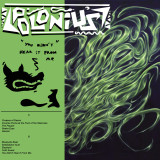
- You Didn’t Hear It From Me
Full page feature in Wire Magazine (March 2025, Issue 493) 'the freak audio series continues with the lysergic You Didn't Hear It From Me which combines dubbed out sampledelia and metallic beats with ghostly saxophone soaked in an acid bath'
Polonius AKA Egyptian-French artist Seif Gaber, whose works spans a decade of “science fiction archeomiragical time travel" explorations and is an important piece of the healthy electronic/far out mosaic in Milan.
With a considerable number of releases under his name, both self released and through such likeminded labels as Ikuisuus, Goaty Tapes or Sun Araw's Sun Ark, Polonius grand vision encompasses a myriad of languages culled from kosmische travelings, exotica's dreamlands, soundtrack psychedelia, spiritual jazz escape routes and transmuted beat science to convey them into a sonic fiction where all these trails intertwine in a cosmological soundscape filled with wonder and speculation.
Building on last year's more beat-centric excursions of his self-titled vinyl debut on Stoned to Death, Polonius' first entry into the Discrepant extended family via Souk finds him dwelling deeper into rhythmic mystic extrapolations through a series of hallucinatory tracks. Conveying jungle's kinetic energy, dubwise meditations on bass weight, collapsing beats, globetrotting percussion accents and synth-driven night drives, 'You Didn't Hear It From Me' finds Polonius with a strong sense of purpose and direction, reconvening bits and pieces from the netherworld into a more urban scenario, not quite any we can stand or dance on. Just dream of.
- A1: Weejuns (Intro) Ft Will Stowe
- A2: Beautiful Black
- A3: One Hand Washes The Other Ft Lojii
- A4: Crossroad(S)
- A5: Negroni (Skit)
- A6: Firefly Ft Fatima
- A7: Nothin' To Say
- A8: Uptown Mami (Skit)
- B1: Manuva(S) Ft Joe Armon-Jones
- B2: Driftin' Interlude Ft Pearl De Luna
- B3: Chase The Sunrise Ft Yaya Bey, Lojii, Fatima
- B4: First Dates
- B5: Quiz Interlude Ft Salimata
- B6: Lizards / Dancin' With The Devil Ft Jaydon Clover & The Hotel
- B7: Mind, Body, Spirit Ft Seafood Sam
- B8: Forever Pooh
Cassette[14,08 €]
Auf "Warlord of the Weejuns" definiert er in Brooklyn geborene und im Südosten Londons lebende Rapper Goya Gumbani seinen Sound mit reichhaltigen Full-Band-Arrangements neu und verbindet Londons neue Jazz-Generation mit dem Hip-Hop-Erbe von New York City. Zu den Gästen des Albums gehören die ebenfalls in London lebende schwedischen Soulsängerin Fatima, lojii, Seafood Sam und Yaya Bey. Der Titel des Albums ist eine Ode an Miles Davis, den Goya für seine Leidenschaft für Musik und den allgegenwärtigen Stil bewundert, den er in jeden Aspekt seines Lebens einbrachte. Goya kanalisiert diesen Ehrgeiz auf diesem neuen Album, das mit üppigen Arrangements in voller Bandbesetzung aufgenommen wurde und seine eigene Stimme als Teil der Instrumentierung einsetzt. Mit Goya und seiner scharfen, mühelos geschmeidigen Stimme als tonangebendem Dirigenten des Albums bringt er eine Schar musikalischer Köpfe zusammen, um eine weitläufige, strahlende Sammlung musikalischer Vignetten zu schaffen, die die wortlosen Ausdrücke des Jazz und die meditativen Rhythmen des Reggae aufgreifen. In "Warlord of the Weejuns" geht es um Selbstbestätigung, Selbstwert und das schwarze Erbe, das Wissen und Macht von innen heraus manifestiert. Goya arrangierte seine einzigartige Vision mit Produktionen von Joe Armon-Jones, Swarvy, Franky Bones, Dan Diggers, Alejandro ?anchez, Maxwell Owin, Omari Jazz, Les Lockheart, Zalente und Ghostly-Labelkollegen quickly, quickly.
- A1: Weejuns (Intro) Ft Will Stowe
- A2: Beautiful Black
- A3: One Hand Washes The Other Ft Lojii
- A4: Crossroad(S)
- A5: Negroni (Skit)
- A6: Firefly Ft Fatima
- A7: Nothin' To Say
- A8: Uptown Mami (Skit)
- B1: Manuva(S) Ft Joe Armon-Jones
- B2: Driftin' Interlude Ft Pearl De Luna
- B3: Chase The Sunrise Ft Yaya Bey, Lojii, Fatima
- B4: First Dates
- B5: Quiz Interlude Ft Salimata
- B6: Lizards / Dancin' With The Devil Ft Jaydon Clover & The Hotel
- B7: Mind, Body, Spirit Ft Seafood Sam
- B8: Forever Pooh
CLOUDY COGNAC VINYL[24,79 €]
Auf "Warlord of the Weejuns" definiert er in Brooklyn geborene und im Südosten Londons lebende Rapper Goya Gumbani seinen Sound mit reichhaltigen Full-Band-Arrangements neu und verbindet Londons neue Jazz-Generation mit dem Hip-Hop-Erbe von New York City. Zu den Gästen des Albums gehören die ebenfalls in London lebende schwedischen Soulsängerin Fatima, lojii, Seafood Sam und Yaya Bey. Der Titel des Albums ist eine Ode an Miles Davis, den Goya für seine Leidenschaft für Musik und den allgegenwärtigen Stil bewundert, den er in jeden Aspekt seines Lebens einbrachte. Goya kanalisiert diesen Ehrgeiz auf diesem neuen Album, das mit üppigen Arrangements in voller Bandbesetzung aufgenommen wurde und seine eigene Stimme als Teil der Instrumentierung einsetzt. Mit Goya und seiner scharfen, mühelos geschmeidigen Stimme als tonangebendem Dirigenten des Albums bringt er eine Schar musikalischer Köpfe zusammen, um eine weitläufige, strahlende Sammlung musikalischer Vignetten zu schaffen, die die wortlosen Ausdrücke des Jazz und die meditativen Rhythmen des Reggae aufgreifen. In "Warlord of the Weejuns" geht es um Selbstbestätigung, Selbstwert und das schwarze Erbe, das Wissen und Macht von innen heraus manifestiert. Goya arrangierte seine einzigartige Vision mit Produktionen von Joe Armon-Jones, Swarvy, Franky Bones, Dan Diggers, Alejandro ?anchez, Maxwell Owin, Omari Jazz, Les Lockheart, Zalente und Ghostly-Labelkollegen quickly, quickly.
L.A. Witch haben schon immer eine Aura müheloser Coolness ausgestrahlt, sei es in Form des Americana Noir und des lakonischen Back-to-Basics-Rock'n'Roll ihres selbstbetitelten Debüts oder des glühend strengen Abenteurertums ihres zweiten Albums "Play With Fire". Die Band - bestehend aus Sade Sanchez (Gitarre/Gesang), Irita Pai (Bass) und Ellie English (Schlagzeug) - begann als informelle Angelegenheit, aber die schwülen und betörenden, von Hall umhüllten Songs, die sie schufen, fanden beim Publikum Anklang und brachten das Projekt über den isolierten Raum von Freunden und Gleichgesinnten in Südkalifornien hinaus in die weite Welt. Auf ihrem neuesten Album "DOGGOD" geht das Trio über die bisherigen kreativen und geografischen Grenzen hinaus - das Material wurde in Paris produziert und die Tracks im Motorbass Studio in der Rue de Martyrs aufgenommen. "DOGGOD" erkundet ein breiteres klangliches Terrain, setzt ein größeres Arsenal an Sounds ein und erforscht größere existenzielle und kosmische Themen, ohne dabei den für die Band typischen Sinn für das Verbotene, das Verlassene und die Vorahnung zu verlieren. "DOGGOD" ist ein Weg, das universelle Rätsel der spirituellen Natur von Liebe und Hingabe anzugehen. "Ich habe das Gefühl, eine Art Dienerin oder Sklavin der Liebe zu sein", sagt Sanchez. "Ich bin bereit, für die Liebe zu sterben, indem ich ihr diene, für sie leide oder nach ihr suche - so wie ein treuer, ergebener Diensthund es tun würde." Der Titel des Albums ist ein Palindrom, das DOG und GOD zusammenfasst - eine Verherrlichung des Unterwürfigen und eine Subversion des Göttlichen. Es ist eine Anspielung auf die Reinheit von Hunden und eine Anerkennung ihrer bedingungslosen Liebe und ihres beschützenden Wesens, die im Widerspruch zu den verschiedenen abwertenden Assoziationen stehen, die mit dieser Spezies verbunden werden. "Es gibt diese symbolische Verbindung zwischen Frauen und Hunden, die die untergeordnete Stellung der Frau in der Gesellschaft zum Ausdruck bringt", erklärt Sanchez. "Und alles, was solche göttlichen Eigenschaften verkörpert, hat es nicht verdient, als Schimpfwort benutzt zu werden." Diese widersprüchlichen Erkundungen von Liebe und Unterwerfung manifestieren sich in der sanften und rauchigen Garagerock-Alchemie der Band, mit einer neu entdeckten Nutzung der disziplinierten Zurückhaltung und eisigen Instrumentierung des Post-Punk. Der Album-Opener "Icicle" zeigt, wie L.A. Witch aus dem Proto-Punk, der Psychedelia und den düsteren Riffs der 70er Jahre in die von Refrains durchtränkten Gitarren und den verlorenen Minimalismus von Joy Division und den frühen The Cure reist. Es wird eine Parallele zwischen romantischem Selbstmord und Märtyrertum gezogen, die sich im zweiten Song, "Kiss Me Deep", fortsetzt. Hier beschreibt Sanchez eine Liebe, die so rein ist, dass sie die Zeit übersteigt und sich über mehrere Leben erstreckt. Es ist ein Lied über Leidenschaft, vorgetragen mit dem weltlichen und verletzten Stoizismus der frühen Goth-Pioniere. Von dort aus geht die Band zur Leadsingle "777" über, einem Song über Hingabe bis hin zum Tod. Ein treibender Beat, ein treibendes, verzerrtes Riff und Sanchez' ätherischer Gesang vereinen sich zu einem Song, der sowohl düster in seinem Fatalismus als auch sinnlich in seiner treuen Leidenschaft ist. Auf dem gesamten Album "DOGGOD" weichen L.A. Witch nie von ihrer Muse ab. In "I Hunt You Pray" legt Pai einen hypnotischen Basslauf hin, während English einen zyklischen Krautrock-Groove einsetzt und Sanchez das Bild eines verlassenen Hundes am Straßenrand malt, der allein in der Nacht ist und sowohl als Jäger als auch als Gejagter lebt. Auf "Eyes of Love" macht sich die Band die meditativen Mid-Tempo-Wiederholungen, dekonstruierten Akkorde und esoterischen Betrachtungen über Liebe, Tod und Spiritualität zunutze, die Lungfish zu einer so beliebten Band gemacht haben. Es unterstreicht die Parallele zwischen der unerschütterlichen Liebe in den Augen eines Hundes und der Selbstaufopferung eines Erlösers. Auf "The Lines" nimmt die Band den treibenden Puls des Post-Punk und fügt dem Mix eine Extraportion Chorus hinzu. "Chorus ist ein moderner Effekt, der auf der Idee beruht, die leichten Tonhöhenunterschiede eines Chors nachzubilden. Es gibt eine schimmernde Qualität, die uns zurück zu diesem spirituellen, göttlichen Gefühl bringt", erklärt Sanchez. Gepaart mit dem Einsatz von Orgel und einer grüblerischen Moll-Melodie, beschwört der Song gleichzeitig das Heilige und das Sakrileg. Der Titeltrack "DOGGOD" hat vielleicht die größte Ähnlichkeit mit dem Material des Vorgängeralbums "Play With Fire", in den schlanken und gemeinen Gitarren auf eine raue Rhythmusgruppe und verträumten Gesang treffen. Aber während ihr vorheriges Album ein Aufruf war, seinen eigenen Weg zu gehen, bleibt "DOGGOD" dem "Bis dass der Tod uns scheidet"-Thema des Albums treu und geht sogar so weit, ein Maß an Unterwerfung zu beschreiben, das in gefährliche und ungesunde Gefilde übergeht, wobei Sanchez singt "hang me on a leash / `til I wait for my release". Letztendlich ist "DOGGOD" eine perfekte Verkörperung des Ansatzes von L.A. Witch. Es ist gleichzeitig romantisch und bedrohlich, ehrfürchtig und profan, eine Feier und ein Klagelied. Es spannt den Bogen zwischen Vergangenheit und Gegenwart, indem es vertraute Klänge aufgreift und sie für die Jetztzeit aufbereitet. Aber es läutet auch eine neue Ära für die Band ein, die über die Kodachrome-Erinnerungen an das Amerika der Jahrhundertmitte hinausgeht und tiefer in den mittelalterlichen und gotischen Energien von Paris und darüber hinaus gräbt, während sie gleichzeitig ein besudeltes Herz erforscht.
Warodjah is the musical collaboration between Andrea Rausa (A.K.A. Afreak) and Massimiliano Troiani. The two Italian DJs and producers crossed paths in Rome, where they started sharing the mixing console and co-hosting parties in the Italian capital. They soon found a deep connection through their mutual passion for African music and electronic dance music.
On the A side, the title track, presented in both full-length and radio edit versions, pays homage to the rich heritage of African music and the storytelling tradition of African griots. Special guest Zouratié Koné, hailing from a Griot family in Burkina Faso, takes us on a sonic journey. With his masterful handling of a self-crafted Kora, he weaves dreamy melodies that dance freely above a progressing tapestry of drum patterns and ethereal piano chords.
On the flipside, a sumptuous house remix by DJ Fett Burger. Renowned for his diverse and eclectic productions with a lot of personality, delivers here 14 minutes of pure joy and bliss. Playing around with the original theme, and adds full of surpassing and groovy elements that draws you to the dancefloor and keeps you there! A fusion of hypnotic euphoric rhythm play, delightful melodies and a touch of house music as a feeling. A remix dedicated to the true era of the art of remixing! Original, creative and groovy
- A1: Fujitronic (Flute Mix)
- A2: Money Palaver (Extra Warm Mix)
- A3: Jupiter Rising (Disco Dub)
- B1: Otto Part 1 (Synthethic Dub)
- B2: Artificial High (Rhythm Mix)
- B3: Artificial High (Vocal Mix)
- B4: Clave Song (Extra Dubbed Mix)
- B5: Anthem (Room Dub)
- C1: Musical Message (Disco Dub)
- C2: Otto Part 4 (909 Mix)
- C3: Message (Room Dub)
- C4: Tronic Rhythm (Flute Dub)
- D1: Ritm Dub (Piano Mix)
- D2: Kabu Anthem (Cosmic Dub)
"No Warranty Dubs" is made by a logic powerhouse combination, Jimi Tenor & Kabukabu meets DJ Sotofett, with most of what you can expect from all parts involved. You're served Afro Dub & Jazz in a bold and classic sonic execution. Through all 15 cuts the echoes are real and rhythms upfront, with proper extended Disco Dubs and versions of Afrobeat and Free Jazz contrasting body and soul. The album is tuneful and rugged, some cuts have vocals & synth swimming alone, while others glue the drummers groove to slick piano from beginning till end.
Followers of Jimi Tenor's life in music will be able to dive into his trademark song writing, signature flute breathing and indistinguishable style of saxophone playing, as well as his tender and electrifuingly psychedelic vocals known from early days of Puu/Sähkö and Warp releases. Kabukabu's heavyweight instrumental performance trancends regular studio recordings with joy and precision as a core element. Kabukabu's Ekow Alabi Savage aka Ekowmania (from last years "Dr.Afrodub" album) embeds deep rhythm knowledge throughout the entire musical landscape. Last in the chain is DJ Sotofett, producing and mixing his probably most classically crafted output to date. With silky gloves and clanking wrenches every element has been tweaked, re-mixed & dubbed excessively to justify a fully musical, psychedelic, warm and rhythmically rich experience.
"No Warranty Dubs" is as warm as the chords of "Money Palaver (Extra Warm Mix)", and as bombastic as opening track "Fujitronic (Flute Mix)". The album reaches it's most tender moments with the sweet "Musical Message (Disco Dub)" and dives straight into obscurity when guest drummer Ilmari Heikinheimo contributes to "Otto Part 4", a rare freejazz cut with TR-909 tickering from start til end. The simplicity of "Tronic Rhythms (Flute Dub)" is worthy a tear in an eye, while brittle souls can scatter to the thunderous horns and drenched rhythms of "Kabu Anthem (Cosmic Dub)".
The British jazz/hip hop fusion collective Us3 founded in 1992 in London and its notable members included producers Mel Simpson and Geoff Wilkinson. The group scored a major hit in 1994 with “Cantaloop (Flip Fantasia)”, a track that displayed the group’s fondness for sampling classic recordings from the Blue Note label (in this case, Herbie Hancock’s “Cantaloupe Island’). The track was included on their debut album Hand On The Torch.
The album was a result of their connections with Blue Note owner Capitol Records, which gave Simpson and Wilkinson free rein to sample anything from the Blue Note catalog. Together with several musicians and rappers Kobie Powell and Rahsaan Kelly, they sampled a series of Blue Note classics, from Art Blakey and Thelonious Monk, to Horace Sylver and the previously mentioned Herbie Hancock. With the release of Hand On The Torch, Us3 had forged one of the most elaborate union between styles and became one of the best-selling jazz albums on the Blue Note label.
AgainstMe debuts on 47, exploring subterranean and spiralling techno across four tracks. On 47045, the Berlin-based Greek artist hones his multi-dimensional productions and detailed sound design, dipping into dynamic rhythms, club-cut atmospheres, and undulating basslines that unfurl across whirring backdrops.
Priori’s hit EP Pareidolia gets a well deserved remix treatment. The relation between Priori and Midgar started early 2023 with the release of his Pareidolia EP, where a remix for Keplrr followed quickly the year after. Now, early 2025, a group of close friends and admired artists were invited to rework the Pareidolia’s originals. Midgar affiliate Forest Drive West uses the opportunity to present not one but two remixes.
Presenting one half-time 85 bpm twist of Hazard and another slowpaced murky techno groover. Originally from Montreal, Maara forms the Canadian connection and she turns Memory Palace into a beautiful bouncy dub-techno floater. Sound experimentalist Notte Infinita takes his turn on Pareidolia’s title track and creates some magnificent eyesclosed drum & bass hypnotism. At last, Amsterdam’s upsammy brings back the light with her iconic playful approach. She flips the steady groove of Glass Shards into a jumpy interplay of rhythms and joy
Chontane returns with Set A Dot, the third release on his label, TANE. Offering a four-track statement of pure rhythmic intensity and intricate groove construction. Known for his precision-driven approach to techno, Chontane continues to refine his sound, fusing raw
percussive elements, hypnotic basslines, and evolving sonic textures into club-ready weapons that move both the mind and body..
From the outset, Magallanes asserts itself with rolling drum patterns and pulsating synths, locking listeners into its hypnotic rhythm. Hypnotic synth pulses weave through the track, building tension gradually until it breaks into a dense, rhythmic crescendo.
Next up, Turn the Tables lives up to its name, amplifying the energy with snapping hi-hats, deep bass momentum, and restrained synth modulations. A functional yet immersive trip through layered percussive textures.
The B-side offers a deeper, more atmospheric twist. Cycle Break channels a grooveheavy, tribal-infused flow, using intricate rhythmic interplay and distant, metallic textures to create a track that breathes and expands across the mix.
Rounding out the release, Set A Dot leans into pure forward motion, with skittering percussion, sharp synths, and a rolling low-end pulse, making it a go-to tool for seamless DJ layering and extended club sets.
With Set A Dot, Chontane refines his signature style, delivering tracks that are meticulously detailed and irresistibly powerful.
A journey through rhythm, texture, and raw energy.
- A1: Porto Feliz (Mozar Terra)
- A2: Janeiro (Ion Muniz)
- A3: Serena (Steve Sacks
- B1: A Chegada (Dom Salvador)
- B2: Para Ana (Ricardo Dos Santos)
- B3: Pra Nova (Aloisio Aguiar)
- B4: Constelação (Alfredo Cardim)
- C1: Ascensão (Mozar Terra)
- C2: Clodes (Alfredo Nascimento)
- C3: Naquela Base (Guilherme Vergueiro)
- D1: Atlantico (Ricardo Dos Santos)
Gatefold 2LP
Far Out Recordings proudly presents a landmark discovery in Brazilian jazz: the long lost album by drumming pioneer Edison Machado. Recorded in New York City in early 1978 but never released, Edison Machado & Boa Nova captures a pivotal figure in Brazilian music history at the height of his artistic powers.
Combining North and South American jazz traditions with Machado's revolutionary samba innovations, Edison Machado & Boa Nova represents a triumph against the odds. After facing persecution under Brazil's military dictatorship and being forced to sell his drum kit in 1976, Machado found renewed creative purpose in New York with the Boa Nova ensemble. The resulting album captures the essence of his genius - sophisticated yet wild, controlled yet daring, leading an ensemble of some of the best jazz, samba and bossa nova players of the day.
At just fifteen years old, Machado revolutionized Brazilian music through an accident that would change everything - when his snare drum broke during a performance, he began playing samba rhythms on the cymbal. This innovation, known as "samba no prato" (samba on the cymbals), brought new layers of dynamism to samba and proved instrumental in the development of bossa nova alongside contemporaries like Antonio Carlos Jobim and João Gilberto.
A complex and passionate figure, Machado was notorious for his militant perfectionism and "attacking" style of drumming. Having spent some years of his youth in the Brazilian army, musicians often remarked that he played as if he were at war. But his innovative style, while exhibiting complete control and sophistication, somehow so often danced right on the edge of chaos and wild abandon.
After making his name in Rio's legendary Beco das Garrafas (Bottles Alley) in the 1950s and early '60s, Machado went on to form Bossa Três - the world's first instrumental bossa nova group. His influence spread internationally through collaborations with Stan Getz, Sergio Mendes, Antônio Carlos Jobim, Milton Nascimento, and Chet Baker, while his 1964 album Edison Machado É Samba Novo stands as a masterpiece of Brazilian jazz.
At 80 minutes in length, Edison Machado & Boa Nova, the lost 1978 New York sessions, is a singular achievement in Brazilian jazz. The format itself is a rarity in the canon. It’s packed full of exceptional technical precision and creative vitality, with sophisticated arrangements and masterful improvisation from its exceptional sextet of Brazilian and US musicians: Paulinho Trompete (flugelhorn/trumpet), Ion Muniz (tenor saxophone), Steve Sacks (baritone saxophone), Mozar Terra (piano), and Ricardo dos Santos (double bass).
The album features unheard compositions by Brazilian masters Dom Salvador (Salvador Trio, Harry Belafonte, Edu Lobo), Guilherme Vergueiro (Raul De Souza, Leon Ware, Joyce), Aloisio Aguiar (Arthur Verocai, Airto) amidst the plethora of captivating original material by the members of the Boa Nova ensemble.
ver the years, Andreas O. Hirsch has shaped a distinctive sound, exploring the possibilities of the electro-acoustic instruments he const- ructs. The Carbophone as well as the Electrified Palm Leaf are plucked instruments akin to the African Kalimba or Mbira. In combination with effects and loops, Hirsch creates an experimen- tal space, influenced by early electronics, Asian and African music as well as the possibilities of editing and collage. The majority of the pieces on The Salamander Treaty were made using the Carbophone Jr., a small traveling version of his original Carbophone which was the basis of the previously released Early Carbophonics. Shaped by the joy of discovery, the eight tracks traverse peculiar worlds of sound, carried by a warm downbeat and analogue vibe. Alongside the Car- bophone Jr., other instruments come into play: a vibrato-soaked guitar leads through the slowly evolving ‘Rise’, marked by a recurring Shepard tone and sounds made by striking the bars of an antique wall clock. In the straightforward yet sub-aquatic ‘Te- atime Unlimited’, a pitch-shifted Morse key wanders erratically in the background. Tape-delayed har- monicas serve as a flying carpet for ‘Drifting Newts’, and rubber bands make their melodic-rhythmical appearance through ‘Back Door Minimal’.
The Salamander Treaty refers to War with the Newts, a prophetic and black-humoured science fiction novel by Karel Čapek from 1936, which tells the story of the rise of the salamanders, who become in- creasingly intelligent and eventually begin to compete with mankind. The album is a pacifist response to this dark scenario: Hirsch’s salamanders prefer to hang out under the stars (‘Drifting Newts’), drink tea (‘Tea Time Unlimited’) and — as illustrated on the back cover — write conspiratorial-pacifist demands instead of calling for war (e.g., ‘Teaoism International’, ‘White Lilies’, ‘For Congress’). In image and word, the album invites looking at the term ‘treaty’, which phonetically contains the words ‘tree’ and ‘tea’, as a friendly reminder that the drafting of every treaty and agreement on this planet should be accompanied by a peaceful spirit.
Music, mix and artwork by Andreas Oskar Hirsch. Mastered by Volker Hennes. Pressed on BioVinyl by Optimal, who state that their manufacturing process reduces CO2 emissions by approximately 90% for the PVC component. 12“ LP, coloured sleeve, download code included,
LIMITED TO 100 COPIES!.
Spandau20, an imprint named after the Western Berlin district and focused on artists from the area, delivers techno in all diverse forms - from warehouse and electronic peak time beats to breaks and IDM, balancing the old and new school sounds flawlessly. With a focus on vinyl releases, for the collectors, Spandau20 has lately also focused on its label nights, with showcases at Fabric, Bassiani and many others. The label's 10th release features 10 tracks that epitomise the musical diversity of Spandau20 and the progressive musical mindset of its roster, calling on the label favourites and Spandau natives to deliver brand new and exciting music. This special release even features one track that all artists have worked on together: 'Come Closer', a swarming, slithering beginning featured as the VA's opener. Its barely coherent female vocal echoing amidst a cacophony of demon-like effects. The chilling ambience captured at the offset transcends into the first full length track by Elli Acula, 'Floating Eyes', a cur characterised by an authoritative, pounding bass featuring calculated percussive rolls and metallic overtones to make for a face-scrunching opener to this devilish collection of works. FJAAK follow for the first of twin cameo appearances, partnering up with fellow live supremo and hardware aficionado KiNK. On 'Overbridge' the trio deliver a cavernous, rolling number driven by a deep thrumming bass in addition to a razor-edged lead synth, and pulsating technopattern. Dajusch is known for incorporating his years of classical study in with his immersive musical style - and with his VA effort the Berlin native neatly showcases this. Easing the energy slightly, 'Move' escalates from its warm, melodic intro into rumbling goliath of a beat comprising a looping, slew of gassy harmonics. The momentum of the release shifts considerably with the introduction of acutely versatile producer, DJ and sound artist Claus. The artist from Spandau leans his track 'Bloomscroll' towards sparse, dubby sonics in which he intricately ties together to form churning, burgeoning soundscape. FJAAK jolt proceedings back into the techno groove with their signature blend of arresting sub-bass and reverberating rhythms, which come thick, fast and heavy on 'Jackfruit'. The abstract wonder of Anna Z's broken-beat like stylings is fully explored on 'Icy Liq'. It's outlandish and amorphous in its execution, causing a clattering percussive chaos that's choicely pieced together by the modular-extraordinaire. Nikk stealthy moves into breaks territory with his track 'Down In The Shadows', packing a trap-like snare with an acid-flecked melody and dawn-breaking, dream-like textures. The penultimate track on the VA is 'Tufted'. J.Manuel expertly employs a chorus of robot-like sonics that course through a short-circuiting low-end to produce a pacy, inescapable journey via a whirling, merciless beat. He is joined by the legendary producer Tobi Neumann for their menacingly ambient number titled 'Fennec.' In parts a nod to UK dubstep, the duo concocts a fierce admixture of styles bolstering tribal-like components with industrialised overtones and methodically crafted drum-fills.
Moving Pressure 03 lands as Rene Wise's third release on his imprint. With a refined approach to rhythm and restraint, the artist once again distills techno to its purest form: hypnotic, percussive, and propulsive. Across four tracks and in line with the label's essence, MP03 thrives on movement-low-end mastery meets tightly coiled grooves, while textural elements shift and evolve with subtle precision.
A1 'Relax' sets the foundation with a mighty sub-base, rolling forward with effortless force. Chopped-up claps ricochet through the mix, while a funky, disembodied vocal repeats a single command: "relax". Then comes 'Chomp Chomp', a denser offering in Wise's sensorial arsenal. Layered with gritty textures, his signature percussion builds a soundscape that is both tactile and weightless, evoking a kinetic dream state where groove and space are in constant conversation. On the flip, 'Cave' plunges into murkier terrain. Swathed in fog and sinister atmospherics, it unfolds through an eerie blend of sci-fi surrealism and grounded physicality. Bleeps hover like distant signals, their sharpness softened by a cavernous, smothering embrace. It's a study in tension-hypnotic and unsettling in equal measure. Closing the release is 'Deep Under', a track that embodies its name with subterranean mystique. The soundscape is rich with detail, an ecosystem of sonic fragments shifting beneath the surface. It's immersive yet elusive, like catching glimpses of something just out of reach-a mirage that flickers between the tangible and the ethereal.
This is minimalism with intent, built for deep immersion. Less, here, is infinitely more.
Night Keeper is a collaborative album by New York City-based artist Aaron Landsman and former Swans guitarist Norman Westberg that is based on the former's eponymous play. Westberg recorded it together with performer Jehan O. Young for the Swiss Hallow Ground label, with Landsman serving as the record’s producer. The original piece was first performed in the Spring of 2023 at The Chocolate Factory Theater in Queens and filled the stark industrial space with spoken text, choreography, projections, and music in dim light and, occasionally, complete darkness. Westberg and Young afterwards brought it to the studio to record it as a two-part
album in whose course his textural sounds, based on loops and samples, set the stage for her soothing, sonorous vocal performance. »Night Keeper« is a performance inspired by sleeplessness and the wanderings of the human mind at night—about time and memory.
Westberg and Young elegantly capture its essence in these roughly 44 minutes with a somnambulic album, letting sound and meaning flow into each other. The initial spark for Night Keeper was a run of almost sleepless nights in different neighbourhoods of a city that is perpetually insomniac. Instead of trying to force himself to go back to sleep by any means necessary, Landsman started writing down his thoughts. As he explains in the liner notes—accompanying the music along with drawings made by audience members during the performances—he started listening to the particular way in which the voice in his head navigates time and language. Accordingly, the texts that Young reads on the record form a diverse collection of specific moments, imagining different speakers and evoking different
situations. Westberg complements, accentuates, and juxtaposes these with different means. Ominous drones, soaring melodies, rhythmic bass sounds: the guitarist, whose latest release for Hallow Ground was 2021’s First Man In The Moon with Polish double bassist Jacek Mazurkiewicz, conjures up distinct sound worlds in which Young can let Landsman’s scenes unfold to gripping effect.
Landsman makes it clear that »Night Keeper« was intended as an invitation to »stay up, look out the window, let what’s happening outside spark reveries or predictions« or even take it on a stroll through the neighbourhood—at night, of course. Much like the original piece, this album is then one dedicated to wandering around, both mentally and physically.
Burnski's high-quality Constant Black is back with more essential club-ready sounds. Donnie Cosmo and Pascal Benjamin step up for one side of action each. Cosmo's 'Holo Glitch' is first and pairs balmy synth work that is colourful and silky with some punchy tech drums and rolling bass that pulls you in deep. 'Echo Drift' is another lithe and lively one to get you on your toes while the groove flows and 'Airplane Mode' is another stylish mix of lush synth design and great rhythm. Benjamin's trio on the flip is a little more gritty with industrial-space-tech many the most fitting way to describe these curious cosmic cuts.
Wewantsounds is delighted to release Dibango 82 an unreleased live recording by Manu Dibango tapedin Marseille, Dec 1982. The electrifying live concert features the African legend alongside his stellar 8-piece group, blending funk, jazz, and African rhythms. Highlights include "Africa Boogie" and "Waka Juju." This album released in partnership with INA and Soul Makossa, Dibango"s label captures the African legend at the top of his game. Remastered from the original tapes with liner notes (Eng/Fr) by Graeme Ewens and concert organiser Christian Ducasse, it features a front cover photo by key African paris-based photographer Bill Akwa Bétotè.
- A1: Leuchtturm (Remastered 2025) 04 28
- A2: Neuland (Remastered 2025) 05 30
- A3: Ag Penthouse ( 2 Epoche ) (Remastered 2025) 05 17
- A4: Unland (Remastered 2025) 05 39
- A5: Ral 7035 (Remastered 2025) 04 09
- B1: Wanderlust (Remastered 2025) 06 50
- B2: Distel (Remastered 2025) 07 16
- B3: Traumschön (Remastered 2025) 05 29
- B4: Junge Männer Von Gestern (Remastered 2025) 01 43
- B5: Der Endlos Blaue Himmel (Remastered 2025) 01 55
Originally released on CD only – those were the days – “Triola im Fünftonraum“ counts as one of the most iconic albums of the early Kompakt era. Experience this timeless masterpiece of lush electronica lovingly restored and remastered for the first time on vinyl – 21 years after its inception.
We found this review from back in the days that perfectly sums up what “Triola im Fünftonraum” is all about:
The press material for “Triola im Fünftonraum” made allusions to home listening, when the album is mostly about movement… in a car …preferably a fast one … on a muggy spring day.
This might catch followers of producer Jörg Burger off guard. Up until this point, the producer’s Triola tracks – limited to three consecutive appearances on Kompakt’s yearly Pop Ambient series and a spot on “Leichtes Hören Teil 1” – were free-floating ambient washouts (albeit wondrous free-floating ambient washouts) with no pulse. The album, on the other hand, is beat-driven. Though still resolutely ambient – more an update of Burger’s lushest Bionaut tracks, only fully engaging instead of mildly diverting.
The soft, synthetic hand drums and tranquil vapors of “Leuchtturm” from Pop Ambient 2003, remain untouched and begin the album. Two other tracks that might sound familiar receive dynamic overhauls, now supported with quick dance rhythms and additional layers of synth gauze; the whispy flute trills and lightly flickering keys of “AG Penthouse”, for instance, are melted into a churning rhythm and some singing keyboard vamps that resemble a relaxed take on Tangerine Dream’s suspenseful soundtrack work for “Thief” (minus the crazy guitars).
What really makes the whole thing glow is the manner in which the tracks are attached, flowing in and out of another, rising and cresting and receding, with supreme poise – even if its title provides no indication, the album is as much a travelogue as Carl Craig’s “Landcruising”, Morgan Geist’s “Driving Memoirs” and Model 500’s “Deep Space”.
These are some of Burger’s most inventive productions, a remarkable feat since he’s been doing this so long. Catch yourself in the right frame of mind and you’ll wonder if everything he has released has been one extended ramp-up to this. In this age, it’s also refreshing to have a purely ambient techno album with absolutely no connection to “Boards of Canada”.
In other words, it’s a landmark for both its label and its genre.
Andy Kellman
Copyright 2025 TiVo Corporation
Ursprünglich nur auf CD veröffentlicht – das waren noch Zeiten – zählt „Triola im Fünftonraum“ zu den ikonischsten Alben der frühen Kompakt-Ära. Dieses zeitlose Meisterwerk schwelgerischer Electronica erscheint nun 21 Jahre nach seiner Entstehung erstmals liebevoll restauriert und remastered auf Vinyl.
Wir haben diese zeitgenössische Rezension gefunden, die perfekt zusammenfasst, worum es bei „Triola im Fünftonraum“ geht:
Das Pressematerial für „Triola im Fünftonraum“ spielt auf das Zuhören zu Hause an, obwohl es in dem Album hauptsächlich um Bewegung geht … in einem Auto … vorzugsweise einem schnellen … an einem schwülen Frühlingstag.
Das könnte die Fans des Produzenten Jörg Burger überraschen. Bis zu diesem Zeitpunkt waren die Triola-Tracks des Produzenten – beschränkt auf drei aufeinanderfolgende Auftritte in der jährlichen Pop-Ambient-Reihe von Kompakt und einen Platz auf „Leichtes Hören Teil 1“ – frei schwebende Ambient-Auswaschungen (wenn auch wundersame frei schwebende Ambient-Auswaschungen) ohne Puls. Das Album hingegen ist beatgetrieben, obwohl es immer noch entschieden Ambient ist – eher eine Aktualisierung von Burgers üppigsten Bionaut-Tracks, nur dass es voll und ganz fesselt, statt nur leicht abzulenken.
Die sanften, synthetischen Handtrommeln und die ruhigen Dämpfe von „Leuchtturm“ aus Pop Ambient 2003 bleiben unangetastet und bilden den Auftakt des Albums. Zwei weitere Stücke, die einem bekannt vorkommen könnten, erhalten eine dynamische Überarbeitung, die nun von schnellen Tanzrhythmen und zusätzlichen Schichten von Synthesizer-Gaze unterstützt wird; die flüsternden Flötentöne und leicht flackernden Tasten von „AG Penthouse“ zum Beispiel verschmelzen zu einem aufgewühlten Rhythmus und einigen singenden Keyboard-Vamps, die an eine entspannte Version des spannenden Soundtracks von Tangerine Dream erinnern, der für „Thief“ (ohne die verrückten Gitarren) verwendet wird.
Was das Ganze wirklich zum Leuchten bringt, ist die Art und Weise, wie die Tracks miteinander verbunden sind, wie sie ineinander fließen, ansteigen und ihren Höhepunkt erreichen und wieder abklingen, und das mit höchster Gelassenheit – auch wenn der Titel nichts darauf hindeutet, ist das Album ebenso ein Reisebericht wie Carl Craigs „Landcruising“, Morgan Geists „Driving Memoirs“ und Model 500s „Deep Space“.
Dies sind einige von Burgers einfallsreichsten Produktionen, eine bemerkenswerte Leistung, wenn man bedenkt, wie lange er schon dabei ist. Wenn man sich in die richtige Stimmung versetzt, fragt man sich, ob alles, was er bisher veröffentlicht hat, eine einzige Vorbereitung auf dieses Album war. In der heutigen Zeit ist es auch erfrischend, ein reines Ambient-Techno-Album zu hören, das absolut nichts mit „Boards of Canada“ zu tun hat.
Mit anderen Worten: Es ist ein Meilenstein für das Label und das Genre.
Andy Kellman
Copyright 2025 TiVo Corporation