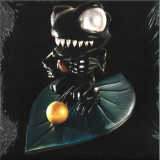
Jesse Hackett returns with another unclassifiable co-mingling of genres, this time made in collaboration with Durban-based gqom trio Phelimuncasi. The group met up in Nyege Nyege's Kampala studio last year, spending three days engineering a sequence of tracks that turned the acts' respective sounds inside out, stretching urgent vocals over mutating backdrops of time stretched electronic drums, saturated noise and unstable synths.We last heard from Hackett on last year's chilling 'Shadow Swamps', a chilly, surrealist blast of disembodied folk and vintage electronics that added a cinematic twist to industrial music. Phelimuncasi meanwhile followed their acclaimed debut with the enormous 'Ama Gogela', asserting their dominance with tight, dancefloor-fwd, hook-led jams produced by some of the scene's most important beatmakers. In collaboration, both Metal Preyers and Phelimuncasi materialized a few worlds outside their comfort zones, with the Durban trio's words frothing from Hackett's marshy productions like echoes from another universe.Opening track 'Gidigidi ka Makhelwane' erupts in a fizz of beatbox percussion that loops noisily alongside Makan Nana, Khera and Malathon's stirring vocals, delivered in their local isiZulu tongue. Hackett's process is relatively restrained, offering Phelimuncasi the space to work their rousing magic unimpeded and adding punctuation where necessary. But when he takes more of a destructive role, it's just as impressive: on 'Gqom slowgen Chant', he corrupts his rhythm into a ritualistic pulse, letting the trio's words melt into metallic clicks and nauseous atmospheres.Elsewhere on 'Mgiligi wableka', Phelimuncasi's words create a rousing rhythm against a low-n-slow gqom thud from Hackett, and on 'Coffin Roller' he brings to mind '80s video nasty soundtracks, toying with analog synth sequences against Makan Nana, Khera and Malathon's distant chants. 'Like A Corpse' might be the album's most hollowed-out banger, turning the beat into a chopped 'n screwed drag that scrapes clamorously against Phelimuncasi's gurgling raps. Needless to say, there's nothing else like this.Jesse Hackett returns with another unclassifiable co-mingling of genres, this time made in collaboration with Durban-based gqom trio Phelimuncasi. The group met up in Nyege Nyege's Kampala studio last year, spending three days engineering a sequence of tracks that turned the acts' respective sounds inside out, stretching urgent vocals over mutating backdrops of time stretched electronic drums, saturated noise and unstable synths.We last heard from Hackett on last year's chilling 'Shadow Swamps', a chilly, surrealist blast of disembodied folk and vintage electronics that added a cinematic twist to industrial music. Phelimuncasi meanwhile followed their acclaimed debut with the enormous 'Ama Gogela', asserting their dominance with tight, dancefloor-fwd, hook-led jams produced by some of the scene's most important beatmakers. In collaboration, both Metal Preyers and Phelimuncasi materialized a few worlds outside their comfort zones, with the Durban trio's words frothing from Hackett's marshy productions like echoes from another universe.Opening track 'Gidigidi ka Makhelwane' erupts in a fizz of beatbox percussion that loops noisily alongside Makan Nana, Khera and Malathon's stirring vocals, delivered in their local isiZulu tongue. Hackett's process is relatively restrained, offering Phelimuncasi the space to work their rousing magic unimpeded and adding punctuation where necessary. But when he takes more of a destructive role, it's just as impressive: on 'Gqom slowgen Chant', he corrupts his rhythm into a ritualistic pulse, letting the trio's words melt into metallic clicks and nauseous atmospheres.Elsewhere on 'Mgiligi wableka', Phelimuncasi's words create a rousing rhythm against a low-n-slow gqom thud from Hackett, and on 'Coffin Roller' he brings to mind '80s video nasty soundtracks, toying with analog synth sequences against Makan Nana, Khera and Malathon's distant chants. 'Like A Corpse' might be the album's most hollowed-out banger, turning the beat into a chopped 'n screwed drag that scrapes clamorously against Phelimuncasi's gurgling raps. Needless to say, there's nothing else like this.
Buscar:hi rhythm
- A1: That's All Right
- A2: Mystery Train
- A3: Heartbreak Hotel
- A4: Blue Suede Shoes
- A5: Tutti Frutti
- A6: My Baby Left Me
- A7: Hound Dog
- B1: Don't Be Cruel
- B2: Love Me Tender
- B3: So Glad You're Mine
- B4: All Shook Up
- B5: Let Me Be Your Teddy Bear
- B6: Jailhouse Rock
- B7: Baby I Don't Care
- B8: Doncha' Think It's Me
- C1: King Creole
- C2: Trouble
- C3: Stuck On You
- C4: Fever
- C5: Such A Night
- C6: It's Now Or Never
- C7: Are You Lonesome Tonight?
- D1: Mess Of Blues
- D2: Tonight Is So Right For Love
- D7: Night Rider
- D8: Return To Sender
- D3: Surrender
- D4: (Marie's The Name) His Latest Fame (Marie's The Name)
- D5: Little Sister
- D6: Can't Help Falling In Love
Of all the nicknames given to Elvis, only one of them really seems to reflect his importance in the history of rock: they called him The King.
Together with Chuck Berry, Elvis represented the young generation that vibrated to the music with new rhythms that appeared in the Fifties: Rock’n’Roll. Presley’s personality, not to mention his voice, charm, and a whole series of chart hits, guaranteed Elvis a special place in the hearts of his fans; and not only in his own lifetime, because the same is true some fifty years later.
The thirty titles included in this album are a brilliant demonstration of Elvis’ talents, and the music alone is enough to explain the cult following of his fans, who will worship him forever.
- A1: S.i.v.a 01 31
- A2: Galassia M81 04 35
- A3: L'abeille Pourpre 04 31 Video
- A4: Miami 2064 06 09
- A5: L'uomo E La Natura (Part 1) Una Melodia, I Miei Ricordi 04 16
- B1: Dernier Stop Avant Neptune 06 55
- B2: Mer Méditerranée 03 51
- B3: The End Of Capitalism 03 49
- B4: La Terre C'est L'espace 04 29
- B5: L'uomo E La Natura (Part 2) Sogni E Realta 03 25
Emmanuel Mario returns to Karaoke Kalk with his third album under his Astrobal moniker for the Berlin-based imprint. »L’uomo e la natura« (»Man and Nature«) sees the prolific drummer and producer, who has worked with artists such as Laetitia Sadier and label mate Pink Shabab, take a different musical route than before. The French electronic music composer pays homage to the spirit of library music while also making concessions to different strains of pop and even classical music. With only two of the ten songs putting words to the music, »L’uomo e la natura« is a masterful exercise in the evocation of atmospheres: expressing much while saying very little outright—show, don’t tell.
The album was born out of a desire to push the envelope. »I wanted to make music that was both pop and ambitious in its chord progressions as well as surprising in its construction,« explains the Paris-based artist. Taking inspiration from library music artists such as Alessandro Alessandroni or Bruno Nicolai as well as the more cosmic strains of electronic instrumental music, he strove »to create a soundtrack that would immediately bring to mind outer space.« The first of the three singles released ahead of the full album, »L’abeille pourpre,« captures this spirit with funky rhythms and an overjoyed interplay of different melodies, all tied together by wordless yet terminally catchy vocals.
The second single, »Miami 2064,« traverses through many different moods in its six-minute run-time: Starting off as neo-noir synth-wave piece, it then proceeds to pay its dues to the masters of the cosmic music tradition such as Tangerine Dream or, of course, Jean-Michel Jarre before slowly descending back to Earth with guitars and dreamy synthetic vocals, playfully punctuated by a plethora of wistful melodies. It is the perfect encapsulation of the open-ended approach Mario follows throughout the entire album, taking full creative licence in regards to songwriting and arrangements. »I wanted to surprise myself,« he shrugs. He succeeded.
»L’uomo e la natura« rewards multiple listens not only emotionally, but also intellectually. »I also wanted to talk about politics and ecology, because it’s impossible not to,« Mario notes. Some of the track titles express this more openly than others and the two title tracks sung by Mario and Nina Savary use French and Italian lyrics, respectively. However, as a whole the album leaves things open to interpretation. Does »The End of Capitalism« sound elegiac or triumphant? And what do you actually make of this musical vision of the Floridian metropolis, whose mere existence is threatened by climate change already today, four decades from now? Mario doesn’t necessarily answer these questions—he doesn’t tell, he shows.
In the late 1980s, as techno and house made its way around Europe, mutating as it hopped from city to city, one young DJ from Curacao made a mistake that would inspire a brand new sound. While he was performing at Den Haag's Club Voltage, DJ Moortje accidentally dropped a dancehall track at 45RPM rather than 33, and let it play out. Thirsty for a hi-NRG sound, the crowd loved the squeaky vocals and rapid beat, and bubbling (or bubbling house) was born.For the next couple of decades, bubbling was a crucial part of Holland's Afro-diasporic club landscape. And as a new generation of wide-eyed young DJs and producers began to take the reins, it evolved accordingly. In the late-2000s, Den Haag-based teenage prodigy Guillermo Schuurman followed in the footsteps of his uncle DJ Chippie (one of the genre's co-founders) and cousins DJ Daycard, DJ Master-D, Stiko Jnr and DJ Justme, and began performing and writing beats. Using Fruityloops, he fused familiar bubbling rhythms with rap and R&B samples, trance synths and electro house wobbles, and his tracks quickly became a regular fixture on the Dutch circuit."Bubbling Inside" is a collection of Schuurman's most essential cuts from the era (2007-2009), with a couple of newer productions added for context. Crafted solely for the dance, most of these tracks were never properly released and have been painstakingly hunted down and collected by the Nyege Nyege Tapes together with Sascha Roth from Pantropical in Rotterdam and De Schuurman himself. Hearing them together highlights just how forward thinking the young producer was, steering a Dutch institution into the future.2008's 'First One' is a proto-Berghain belter, with booming bass-heavy kicks underpinning the kind of cheeky melodies that remain the calling card of the genre. 'Pier Je Bil!!' ratchets up the tempo, twisting bubbling's syncopated dancehall kicks into a rapid-fire club clatter and decorating them with steel-pan melodies. Elsewhere, 2019's 'Domina' shows how Schuurman's production style has developed as he mutates trap percussion, dubstep bass and eerie synth textures, while retaining the DNA of bubbling. "Bubbling Inside" is a testament to the evolution of the bubbling genre, as witnessed by one of its most visionary producers.
- A1: 3 Horas Da Manha (Ivan Lins, Waldemar Correia)
- A2: Samba Do Aviao (Antonio Carlos Jobim)
- A3: Tema Medieval (Agustin Pereyra Lucena)
- A4: Despues De Las Seis (Agustin Pereyra Lucena, Guillermo Reuter)
- A5: Tema Barroco (Guillermo Reuter)
- A6: La Rana (João Donato)
- B1: Pra Que Chorar (Baden Powell)
- B2: Encuentro De Sombras (Agustin Pereyra Lucena)
Far Out Recordings proudly presents Argentinian guitarist Agustín Pereyra Lucena’s 1980 album La Rana. Recorded in Oslo, La Rana features Agustín’s stunning takes on compositions by Ivan Lins, Antonio Carlos Jobim and Agustín’s friend and musical hero Baden Powell. In addition to these, and a number of Agustín’s own compositions including the fifteen-minute masterpiece “Encuentro De Sombras”, the album’s title track is an idiosyncratic version of Joao Donato’s “A Rã” (Eng: The Frog/ Esp: La Rana) from his 1973 album Quem É Quem.
Forming the rest of the quartet are two fellow Argentinians who were also Agustin’s bandmates from the group Candeias: bassist and multi-instrumentalist Guillermo Reuter and flautist Ruben Izarrualde; with Norweigan drummer Finn Sletten on drums and percussion.
Throughout La Rana we hear not only Agustín’s fabled guitar playing, which ascended him to share stages with the likes of Vinicius de Moraes, Dorival Cayymi, Toquinho, Maria Bethania, Chico Buarque and Quarteto Em Cy, but also his talent as a vocalist. He also provided the heartening illustration for the cover art, which perfectly fits the cordial, inviting tone of the music. Inspired in equal measure by South American rhythms and Norweigan glaciers, mountains and waterfalls, La Rana is filled with the warmth, humility and sincerity of a man seizing a joyful moment in life through music.
Jazz & Milk-Labelhead und Freestyle-DJ-Koryphäe Dusty aus München meldet sich mit seiner neuen EP "As Above So Below" zurück, die gefühlvoll, warm und grenzüberschreitend Deep-House-Grooves mit Elementen aus Jazz, Dub und westafrikanischen Rhythmen kombiniert, die einen Sound erzeugen, der ebenso introspektiv wie dancefloortauglich ist. Die EP ist eine berauschende Mischung der rohen Stimmkraft und den perkussiven Rhythmen des ghanaischen Künstlers King Owusu (Jembaa Groove), der die Bühne mit Legenden wie Ebo Taylor und Pat Thomas teilte, und erscheint zum 20-jährigen Labeljubiläum in 2025. Support kommt von Peter Kruder, Severino, Don Letts, Opolopo und dem jüngst verstorbenen DJ Harvey. Dusty legt weiterhin weltweit - Johannesburg bis Istanbul, Manila bis London - auf, veranstaltet die Jazz & Milk-Labelabende in München und Köln und eine Radiosendung auf dublab.de moderiert.
"Full support of EP!" - DJ Harvey, Klymax Bali, International Feel, Pikes
"Very nice! Thank you!" - Peter Kruder, Kruder & Dorfmeister
"Great EP! Love it!" - Ruff Stuff, Shall Not Fade
"SEXY... DEEEEEP." - Severino, Horse Meat Disco
"Warm and deep - very nice!" - Opolopo
"Good to go on Culture Clash Radio!" - Don Letts, BBC Radio 6 Music
- A1: Progetto Tribale - The Sweep
- A2: Onirico - Echo Giomini
- A3: Open Spaces - Artist In Wonderland
- B1: Alex Neri – The Wizard (Hot Funky Version)
- B2: M C.j. Feat. Sima - To Yourself Be Free - Instrumental Mix Energy Prod
- B3: Mato Grosso - Titanic Expande
- C1: Dreamatic - I Can Feel It (Part 1)
- C2: Carol Bailey - Understand Me Free Your Mind (Dream Piano Remix)
- C3: The True Underground Sound Of Rome - Secret Doctrine
- D1: Don Carlos - Boy
- D2: Lazy Bird – Jazzy Doll (Odyssey Dub)
Vol 2[28,99 €]
Volume 1 of this expertly curated project of 90s Italian House - put together by Don Carlos.
If Paradise was half as nice… by Fabio De Luca.
Googling “paradise house”, the first results to pop up are an endless list of European b&b’s with whitewashed lime façades, all of them promising “…an unmatched travel experience a few steps from the sea”. Next, a little further down, are the institutional websites of a few select semi-luxury retirement homes (no photos shown, but lots of stock images of smiling nurses with reassuring looks). To find the “paradise house” we’re after, we have to scroll even further down. Much further down.
It feels like yesterday, and at the same time it seems like a million years ago. The Eighties had just ended, and it was still unclear what to expect from the Nineties. Mobile phones that were not the size of a briefcase and did not cost as much as a car? A frightening economic crisis? The guitar-rock revival?! Certainly, the best place to observe that moment of transition was the dancefloor. Truly epochal transformations were happening there. From America, within a short distance one from the other, two revolutionary new musical styles had arrived: the first one sounded a bit like an “on a budget” version of the best Seventies disco-music – Philly sound made with a set of piano-bar keyboards! – the other was even more sparse, futuristic and extraterrestrial. It was a music with a quite distinct “physical” component, which at the same time, to be fully grasped, seemed to call for the knotty theories of certain French post-modern philosophers: Gilles Deleuze, Félix Guattari, Paul Virilio... Both those genres – we would learn shortly after – were born in the black communities of Chicago and Detroit, although listening to those vinyl 12” (often wrapped in generic white covers, and with little indication in the label) you could not easily guess whether behind them there was a black boy from somewhere in the Usa, or a girl from Berlin, or a pale kid from a Cornish coastal town.
Quickly, similar sounds began to show up from all corners of Europe. A thousand variations of the same intuition: leaner, less lean, happier, slightly less intoxicated, more broken, slower, faster, much faster... Boom! From the dancefloors – the London ones at least, whose chronicles we eagerly read every month in the pages of The Face and i-D – came tales of a new generation of clubbers who had completely stopped “dressing up” to go dancing; of hot tempered hooligans bursting into tears and hugging everyone under the strobe lights as the notes of Strings of Life rose up through the fumes of dry ice (certain “smiling” pills were also involved, sure). At this point, however, we must move on to Switzerland.
In Switzerland, in the quiet and diligent town of Lugano, between the 1980s and 1990s there was a club called “Morandi”. Its hot night was on Wednesdays, when the audience also came from Milan, Como, Varese and Zurich. Legend goes that, one night, none less than Prince and Sheila E were spotted hiding among the sofas, on a day-off of the Italian dates of the Nude Tour… The Wednesday resident and superstar was an Italian dj with an exotic name: Don Carlos. The soundtrack he devised was a mixture of Chicago, Detroit, the most progressive R&B and certain forgotten classics of old disco music: practically, what the Paradise Garage in New York might have sounded like had it not closed in 1987. In between, Don Carlos also managed to squeeze in some tracks he had worked on in his studio on Lago Maggiore. One in particular: a track that was rather slow compared to the BPM in fashion at the time, but which was a perfect bridge between house and R&B. The title was Alone: Don Carlos would explain years later that it had to be intended both in the English meaning of “by itself” and like the Italian word meaning “halo”. That wasn’t the only double entendre about the song, anyway. Its own very deep nature was, indeed, double. On the one hand, Alone was built around an angelic keyboard pattern and a romantic piano riff that took you straight to heaven; on the other, it showcased enough electronic squelches (plus a sax part that sounded like it had been dissolved by acid rain) to pigeonhole the tune into the “junk modernity” section, aka the hallmark of all the most innovative sounds of the time: music that sounded like it was hand-crafted from the scraps of glittering overground pop.
No one knows who was the first to call it “paradise house”, nor when it happened. Alternative definitions on the same topic one happened to hear included “ambient house”, “dream house”, “Mediterranean progressive”… but of course none were as good (and alluring) as “paradise house”. What is certain is that such inclination for sounds that were in equal measure angelic and neurotic, romantic and unaffective, quickly became the trademark of the second generation of Italian house. Music that seemed shyly equidistant from all the rhythmic and electronic revolutions that had happened up to that moment (“Music perfectly adept at going nowhere slowly” as noted by English journalist Craig McLean in a legendary field report for Blah Blah Blah magazine). Music that to a inattentive ear might have sounded as anonymous as a snapshot of a random group of passers-by at 10AM in the centre of any major city, but perfectly described the (slow) awakening in the real world after the universal love binge of the so-called Second Summer of Love.
For a brief but unforgettable season, in Italy “paradise house” was the official soundtrack of interminable weekends spent inside the car, darting from one club to another, cutting the peninsula from North to centre, from East to West coast in pursuit of the latest after-hours disco, trading kilometres per hour with beats per minute: practically, a new New Year’s Eve every Friday and Saturday night. This too was no small transformation, as well as a shock for an adult Italy that was encountering for the first time – thanks to its sons and daughters – the wild side of industrial modernity. The clubbers of the so-called “fuoriorario” scene were the balls gone mad in the pinball machine most feared by newspapers, magazines and TV pundits. What they did each and every weekend, apart from going crazy to the sound of the current white labels, was linking distant geographical points and non-places (thank you Marc Augé!) – old dance halls, farmhouses and business centres – transformed for one night into house music heaven. As Marco D’Eramo wrote in his 1995 essay on Chicago, Il maiale e il grattacielo: “Four-wheeled capitalism distorts our age-old image of the city, it allows the suburbs to be connected to each other, whereas before they were connected only by the centre (…) It makes possible a metropolitan area without a metropolis, without a city centre, without downtown. The periphery is no longer a periphery of any centre, but is self-centred”.
“Paradise house” perfectly understood all of this and turned it into a sort of cyber-blues that didn’t even need words, and unexpectedly brought back a drop of melancholic (post?)-humanity within a world that by then – as we would wholly realise in the decades to come – was fully inhuman and heartless. A world where we were all alone, and surrounded by a sinister yellowish halo, like a neon at the end of its life cycle. But, for one night at least, happy.
2024 was a big year for Regulate Recordings and their sister club night “Shake Your Rump”. DJ Deviant’s “The Rhythm” & “Make Em Bounce” burned up dance floors in spring, “Summer Jam” saw Atomphunk & Deviant team up with Seattle MCs Mugs and Pockets to devastating effect. “Summer Jam” lit up the second half of the year with support from the Allergies, Boca45 and 6 Music and was included in Craig Charles’s “Funkiest Tracks of 2024”.
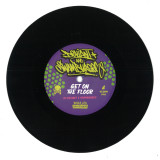
Regulate move into the new year by setting off two certified bangers. Master of the decks DJ Deviant is back on production duties; lead track “Get On The Floor” sees him once again collaborating with Swamburger (Mugs and Pockets) for a full force party starter. The production pulls influences from the earliest days when hip hop and disco were joined at the hip, with nods to The Sugar Hill Gang and The Furious Five, as well as the Golden Age and artists like Chubb Rock and Big Daddy Kane. Swamburger’s machine gun delivery and Deviant’s sharp cuts pull the track right into 2025 for maximum impact.
Flip side “Where’s The Party Clap” is a big trunk of cut and paste funk with a popping bass line, horns, claps, cuts and a groove that just doesn’t quit.
UK-based producers b.mod and Essentia debut on Rhythm Werk's Collaborative Series with a four-track EP blending powerful four-to-the-floor rhythms and intricate broken beats. Known for their releases on labels such as Arts, Soma, Liberta Records, and Suara, the duo bring a precise, high-impact sound engineered for dance floor energy and dynamic set transitions.
Each track is meticulously crafted, offering versatility for DJs--whether building intensity, maintaining flow, or creating reflective moments. This 12-inch record is a must-have for those seeking forward-thinking club tools.
Berlin’s Moses Yoofee Trio have confirmed details of their first new material since their 2023 mini-album, Ocean. ‘WHIP.wav’ will be released digitally on October 18, 2024, and represents the first taster for their debut full-length, MYT, set to be released by Nils Frahm’s LEITER on February 7, 2025. The German group recorded much of the album over ten days in April 2024 at Glaswald Studios, in the countryside outside Stuttgart, before returning to Berlin to polish the results and record two further tracks at LEITER’s Funkhaus studio. Available on vinyl and via all digital platforms, the album was produced by the trio with long-time collaborator and mixing engineer oh.no.ty. ‘WHIP.wav’, the original version of which was previously shared to social media to great response, is a perfect showcase for the band’s unique brand of sophisticated jazz, its laidback summer grooves lit up by Moses’ fluid piano lines, while drummer Noah Fürbringer’s deft rhythms lock in with Roman Klobe-Barangă‘s understated bassline. At just 100 seconds long, it’s also as succinct and straightforward as MYT’s title – and indeed many of its tracks – which reveals a lot about the Moses Yoofee Trio. The new album’s tracks display a remarkable determination to distil their work to its essence, allowing their prodigious talents and graceful versatility to flourish in uncluttered surroundings. Their goals, they state concisely, are “emotions, moments and bangers”, and careful attention was paid to arrangements to ensure nothing superfluous made the cut. Before coming together as a band, all three members were already deeply involved in the music scene, touring, recording, and producing for a wide range of artists and bands. They connected in 2020 when Moses met Roman at Berlin’s Jazz Institute, and it was the latter who suggested they jam with his friend Noah, who was living in southern Germany at the time but frequently visited Berlin. Amid the extended lockdowns of the Covid-19 pandemic, the trio embraced the chance to fully immerse themselves in the creative process. Since then, Moses Yoofee Trio have cultivated an extraordinary reputation for their shows, and this year they won the German Jazz Prize’s prestigious Live Act of The Year award. Recent highlights include a 2,500-capacity Elbjazz Festival booking beside Hamburg’s harbour, a riotous appearance at London’s Jazz Festival, and an intimate gig before 200 people at the German capital’s now redundant Tempelhof Airport on the rooftop of an air traffic control tower. Despite their own work as a trio, all three musicians remain busy elsewhere, with Moses, like Roman, often working with chart-topping Berlin-based Peter Fox, a frontman for reggae/dancehall/hip hop crossover act SEEED, and accompanying him on his extensive solo tours. Noah, meanwhile, plays with another renowned artist, German-American rapper Casper, as well as Sweden’s acclaimed Petter Eldh and German comedian / actor / musician Teddy Teclebrhan.
Texture returns for its second release with debut EP by Detroit-based STS. ‘Swallowed by a Whale’, dips a toe into the deep ocean of a swirling mind, notated with captivating rhythms and intense, otherworldly sounds. Danny Daze and Jonny from Space turn 'Souvlaki Man' on its head, highlighting the Miami-Detroit psychedelic sonic connection. On the Bside, Lyon's Warzou thickens 'Boot Stuck in the Swamp' to a sludgy lowend workout.
- Clem's Crime 05:08
- Synth Love 04:32
- Silver Skin
- Good Boy
- Will Not Dance
. The idea for the band was originally conceived by singer-guitarist Joe Woodward whilst writing and recording songs in his kitchen on a 4-track recorder, and over time eventually found help from like-minded friends, Elliot Roberts and Cam Wheeler. The three of them would spend their nights experimenting with cassette recording with the admirable if not challenging aim to recreate the symphonic sounds of Phil Spector on a DIY budget. With growing confidence and having amassed a small catalogue of songs, a few aborted attempts were made to get a live band together before they found help from a second guitarist, Eli Allison, who had recently relocated from Cornwall. As necessity would dictate, the first shows as a quartet made use of a drum machine, but the ideal formation for the band wasn’t truly complete until meeting Nia Abraham, whose live drumming would add a more physical quality to the band’s sound. At the beginning of 2024, they began working more purposefully towards an end goal with the writing and recording of the five-song Nowhere Near Today EP. Though retaining some of their home recording practices, they also made use of a studio facility based in a disused shopping centre basement that was made available through SHIFT, a local artist collective connected to the band. The acquisition of an 8-track Tascam 488MKII, along with the natural reverb of SHIFT’s empty concrete space allowed for further opportunity to experiment with both cassette recording techniques and their still developing live sound, the two environments permitting an all-too-rare creative freedom. The process was transformative for the group, their Spector-inspired ambitions now taking on a more defined shape that skirted around the edges of psych, noise-rock and industrial-pop in a way that increasingly became their own. For a debut EP, the results are impressively realised, a confluence of expansive tremolo guitars, a deliberately primordial rhythm section and a contrasting vulnerable vocal performance that’s both melodic and bracing. It’s a record born both of private experimentation and public performance, who they are on stage and what they express on record informing the other but still distinctly each their own thing, shifting then dovetailing like the waves of feedback that wash through Nowhere Near Today. Still a young band, it’s tomorrow they feel a lot closer to.
- 1: Soul Rebel
- 2: Try Me
- 3: It's Alright
- 4: No Sympathy
- 5: My Cup
- 6: Soul Almighty
- 7: Rebel's Hop
- 8: Corner Stone
- 9: 400 Years
- 10: No Water
- 11: Reaction
- 12: My Sympathy
Soul Rebels / BOB MARLEY AND THE WAILERS
The classic album now returns with new analogue mastering and stunning smoky blue vinyl pressing Originally released in 1970, Soul Rebels marked the first full-length album credited to Bob Marley and The Wailers, establishing it as a cornerstone of the roots reggae movement and a musical monument in the early stages of their career.
This album is a powerful blend of love songs and defiant rebel anthems that captures the essence of the era's burgeoning reggae scene. With its catchy rhythms, revolutionary spirit, and thought-provoking lyrics, this recording stands as a testament to the band's ability to seamlessly merge the themes of love, liberation, and self-awareness.
The title track, ‘Soul Rebels’, has become an anthem for those seeking freedom from societal norms and restrictions, encapsulating the themes of resistance and self-determination that Bob Marley, Peter Tosh, and Bunny Wailer wove into their music. The album also highlights their collaboration with visionary producer Lee ‘Scratch’ Perry, recorded at the renowned Randy’s Studio in Kingston, which became the birthplace of some of the most influential sounds in reggae history.
First concept album by Bob Marley and The Wailers
New analogue mastering restores the 1970 album to its original brilliance
Pressed on smoky blue vinyl Released on the Upsetter label, celebrating the groundbreaking collaboration between Bob Marley and The Wailers and Lee ‘Scratch’ Perry.
'Challenge Me Foolish' is an almost lost album of µ-Ziq material circa 1998-99, an era that saw Mike Paradinas release 'Royal Astronomy' on the now defunct Virgin subsidiary Hut records, and also tour with Björk.
It's an era of his music that's definitely worth re-exploring, in which Mike went against the grain by producing music that was baroque, melodic and whimsical, while the IDM movement he was lumped with made instrumental music that was often neurotic and complicated. His taste for melody and dreamy beauty above roughness and intricacy confused people who were hanging on too tightly to the rules. He even brought in Japanese vocalist Kazumi, adding an extra human touch.
'Challenge Me Foolish' is something of a companion to the Royal Astronomy record, arguably even better given the fresh ears selecting the material. It's imbued with a confident sense of pastoral colour, and a gentle optimism, utilising bells, studied orchestral arrangements and airy synthesisers that sit the album somewhere between, Jean Jacques Perrey (the French electronic composer whose whimsy was always balanced with serious innovation and chops) and the colourful, optimistic soundtracks of Joe Hisaishi. There's a strange sense of the old and new throughout, the sentimental and utopia, with nary a hint of darkness. Even when the album dips into the hyperkinetic rhythms of jungle, the melodies and mood still retain a sense of gentle warmth. Dive into peak time Paradinas.
"Four years in the making, Nikolaienko’s retrogarde take on mid-20th century tape music is a loping, whirling fuzzy felt oscillator odyssey. If Louis and Bebe Barron had been asked to create electronic tonalities for a Czech animation based on EM Forster’s The Machine Stops, the results may have turned out like this. Only, for all its nods to Parmegiani and the BBC Radiophonic Workshop, one can’t quite see this album coming out in 1956 – or even 1976. Something about the slightly off kilter rhythms, the loose feel and wheezing sound effects make this very much a post-Dilla take on Raymond Scott and his successors." - The Wire
"...The album, pitched as “a tribute to early-electronics’ golden era,” takes on a fragmented aesthetic of bleeps, thunks and jolts that secrete the concentrated focus of a fantastical laboratory...” Tiny Mix Tapes
"...The Sounds Of Pseudoscience is a perfect cocktail of space ambient with ice, delicate percussions, under-water rhythms and echoes of Soviet 60s..." Krossfingers
Limited to 50 copies cassettes in Riso printed J-cards
"Four years in the making, Nikolaienko’s retrogarde take on mid-20th century tape music is a loping, whirling fuzzy felt oscillator odyssey. If Louis and Bebe Barron had been asked to create electronic tonalities for a Czech animation based on EM Forster’s The Machine Stops, the results may have turned out like this. Only, for all its nods to Parmegiani and the BBC Radiophonic Workshop, one can’t quite see this album coming out in 1956 – or even 1976. Something about the slightly off kilter rhythms, the loose feel and wheezing sound effects make this very much a post-Dilla take on Raymond Scott and his successors." - The Wire
"...The album, pitched as “a tribute to early-electronics’ golden era,” takes on a fragmented aesthetic of bleeps, thunks and jolts that secrete the concentrated focus of a fantastical laboratory...” Tiny Mix Tapes
"...The Sounds Of Pseudoscience is a perfect cocktail of space ambient with ice, delicate percussions, under-water rhythms and echoes of Soviet 60s..." Krossfingers
DJ Support: Carlita, Dar Disku, Disco Arabesquo & Moving Still
Melbourne-based producer Rami Imam unveils Safara, the latest release on his own label, Ponda Records, which he founded in 2020 as a platform for his cross-cultural sound explorations. Drawing from the rich traditions of the Middle East, North Africa, and the Mediterranean, Safara is a six-track odyssey of energetic and euphoric house and disco house, deeply rooted in both nostalgia and innovation. Safara is the culmination of Imam's immersion into the golden eras of global music, channelling the soulful rhythms and melodies of Afro-Funk, West African Highlife, Arab Disco, Bollywood, Afro-Cuban Jazz, Libyan Reggae, and Algerian Rai. By blending these timeless influences with a modern, dancefloor-oriented focus, Imam creates a sound that is both steeped in history and refreshingly new.
With a sonic palette that includes iconic synths such as the Juno 106, Super 6, SH 101, Moog Model D, and the 303, Imam weaves the analog warmth of these instruments into lush, modern productions. Piano and strings—his favourite classical instruments—add an organic layer of emotional depth, connecting the pulse of the dancefloor with the timeless elegance of traditional composition.
Safara is more than a collection of tracks; it is a journey across continents and eras, where the pulse of the past meets the driving force of the present. Recorded in Melbourne but influenced by sounds from around the world, Safara invites listeners to traverse vast musical landscapes—from the hypnotic grooves of North African rhythms to the sun-drenched melodies of Mediterranean shores—culminating in a transportive experience that lingers long after the final beat fades.
By balancing the ancient with the futuristic, Imam has crafted a record that feels both comfortingly familiar and daringly innovative. Safara is a testament to the endless possibilities of blending cultures, genres, and eras into something that is not just heard but felt—music for the soul as much as for the dancefloor.
- A1: Grupo Atlantic - Danza Atlantic
- A2: Los Tigres De Tarapoto - Bailando Con Los Tigres
- A3: Los Invasores Del Progreso - Selva Mia
- A4: Los Condores De Cusco - La Piedrita
- A5: Grupo Punto 5 De La Oroja - Raquel
- B1: Los Rangers De Tingo Maria - Baila Babalu
- B2: Los Condores De Cusco - Cusco Imperial
- B3: Grupo Punto 5 De La Oroja - Triste Esperanza
- B4: Grupo Atlantic - Amor En La Selva
- B5: Los Invasores Del Progreso - Recordando A Mi Lita
Bringing new life to the electrifying sounds of Peru’s golden era of cumbia, *CHICHA POR FAVOR Vol. 1 is a highly anticipated limited edition vinyl release, featuring 12 rare tracks from the historic El Volcan label, known for its groundbreaking cumbia in the highlands of Cusco, Peru. This curated collection, spanning the 1970s and 80s, delivers listeners an immersive sonic journey into the heart of Peru's tropical music heritage.
For vinyl collectors, cumbia enthusiasts, and aficionados of Latin American musical history, this album is a rare treasure, packaged with an exclusive insert detailing the cultural origins of each track and offering in-depth insights into the socio-musical evolution of Peruvian cumbia. This release is the inaugural volume of CHICHA POR FAVOR, a project aimed at preserving and celebrating the defining sounds of Peruvian tropical music.
The tracks featured in CHICHA POR FAVOR Vol. 1 offer a uniquely authentic perspective on Peruvian cumbia’s intricate layers, capturing the influence of coastal rhythms, Andean folklore, and Amazonian beats, fused with elements of rock and psychedelia. From the driving electric guitars of *Grupo Atlantic*’s “Danza Atlantic” to the lively, Amazonian-infused grooves of *Los Invasores* and *Los Tigres*, the album reflects a diversity of styles that arose during a transformative era in Peru’s music scene. Notably, the release revives the distinctive sound of *El Volcan* a Cusco-based label that became a beacon for cumbia in the Andes and beyond.
Peruvian tropical music emerged in the 1960s as a fusion of traditional Andean sounds with electric guitar-driven interpretations of Afro-Caribbean and American rock influences. The insert, included with each vinyl, presents a well-researched narrative of the genre’s genesis and evolution, from early instrumental adaptations of huayno rhythms to the psychedelic Amazonian sounds that became its signature.
This compilation is not only a celebration of Peru’s cultural legacy but also an educational experience, designed to give listeners a comprehensive understanding of the geographical, cultural, and musical landscapes that shaped this genre.