Belgian instrumentalists Glass Museum have found the perfect balance between piano and drums, where jazz and electronics collide, uniting the surgical precision of the best contemporary jazz, à la Gogo Penguin and Badbadnotgood, with the electronic influences of Jon Hopkins or Floating Points.
In motion since 2016, the duo consisting of keyboardist Antoine Flipo and drummer Martin Grégoire, have a rich history written around a powerful connection to duality. From the initial impact of the 'Deux' EP in 2018, to the synthetic and organic textures of the critically acclaimed 2020 album 'Reykjavik', Glass Museum has found its balance in symmetry.
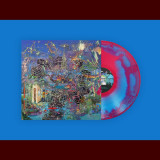
Released 29th April via the groove-obsessed Sdban Ultra label, 'Reflet' was born out of a desire for freedom, a wish to innovate and travel differently. This new piece stands out as an artistic climax crafted at the crossroads of time and genres, an electronic proposition wrought by two brave hearts, tempered by the organic reflections delivered through computer free melodies. An album which places the human at the core of its compositions and in order to return to a more instinctive and instantaneous means of creation, the duo retreated to a secret location in one of the most remote parts of the Ardennes. It's there, in the shade of spruces, that the album was first born.
Extremely cinematographic, 'Reflet' delivers a panoramic view point: jazz, breakbeat, minimal techno and deep house, collide on neo classical grounds. From the dynamic instrumentation of album opener 'Caillebotis' to the absorbing oscillations of 'Shiitake' and grand gestures of the album title track, 'Reflet' is an odyssey running through troubled times, an ode to night time, to life, dreams and to all rhythms that convey emotions beyond words. Like its immersive creative process, the album offers a counterpoint and, above all, endless perspectives. Elsewhere, the pulsing, melodic 'Auburn' and entrancing electronic textures of 'Opal Sequences' continue the exploration before the strutting 'Kendama' showcases the electronic sensibilities that are buried within their productions.
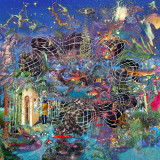
Shining as a true instrumental tour de force, 'Reflet' also takes inspiration from the progress of the Ohme Collective. At the crossroads of art disciplines, science, new technologies and societal challenges, this creative community draws the future of visual arts and created the album artwork for this resolutely futuristic album.
Having initially won the opportunity to perform at the Dour Festival, Tournai back in 2016, Glass Museum have picked up a series of awards and distinctions back home in their homeland and they now find themselves dining at the top table of Europe's contemporary music scene. The international music scene opened itself to the band once again in 2019, with the duo performing at Elb Jazz in Hamburg, the legendary Ancienne Belgique in Brussels and the Iceland Airwaves Festival, Reykjavik.
In 2020, Glass Museum distinguished themselves by remixing a track for electronic artist, Rone. Having recently received a César Award for his soundtrack to the Jacques Audiard film, Les Olympiades, the French producer called on the Brussels duo's know-how - a mark of confidence which once again underlines the international reach of Glass Museum. Germany, Iceland, Turkey, Romania, Greece, France or Czech Republic have already approved Glass Museum's singular recipe.
quête:hi rhythm
Ending a break of twelve years, The Villains Inc. returns from the past to deliver four lost tracks from the label mastermind himself! Author of a short yet remarkable discography on Dominance Electricity, Electro Empire, and Drivecom just to name, Italian don Gab.Gato takes this opportunity to revisit some of his classics by a quatuor of undisputed electro heavyweights.
UK veteran Phil Klein opens hostilities on A side with his outstanding remix of "Electro Empire". Originally released on German Electrocord back in 2003, Gab.Gato's version sees a luminous electro-funk treatment in pure Bass Junkie style. Needless to say this electro banger will hit you hard with its untouchable sub bass, oldschoolish tones, hammering drums and retrofuturistic atmosphere!
Italian techno / electro legend Max Durante, coming next, propels "The Villains Inc" cut to another dimension. Taken from the "No Light Or Shadow EP" (ATVS002 in 2008), the track mutes into a milestone of an experimental slaughter tinted with industrial sororities. Following a catchy Speak n' Spell overture, the song introduces some hot and sexy female orgasms, while a heading acid line enhanced by a straight to the point rhythm will drive you on the dancefloor.
US DJ / Producer Sinistarr on the flip goes deeper into the realm with his "Couterterrorism" rework of "A Scanner Darkly". Published on Boris Divider's Drivecom in 2007, the tune evolves into a completely fresh and transformed version. A frantic bassline carries you away on a fast inducing grimey dancefloor boogie combined with hi tones and no nonsense electro beat!
Last but not the least, Drexciyan Dj Stingray closes the EP with its groovy "313 Psycotropic mix" of "S.N.A", a tune written by Gab.Gato and Matteo Merlo in 2007 on "The Systematik Network Attack EP" (ATVS001). Stingray's mix sounds like a sonic, ethereal and thought after assault based upon cutting-edge sororities over playful vocals.
Craftily written and designed (artwork project by Gab.Gato, and illustrated by Simonloop aka Urbanmagic, in 2009 was prophetic on his own: clones programmed to reappear from the past), nasty "Reprogrammed EP" features the almighty ATVS signature we all know, a dark, magnetic and rough sound ranging from breakbeat acid-tinged to Detroit-influenced electro and techno style. Should we mention that this limited 12" (no digital) is expected to sell fast and earn the status of collectible masterpiece, just like the previous releases on the label!
NEW 45 BY DEEP-FUNK PIONEER LUCKY BROWN RECORDED DURING THE MYSTERY ROAD SESSIONS!
"Funk is a living, breathing, creative and generative entity and The New Lucky Seven celebrate its life with a mysterious and authentic sonic snapshot from the iconic Mystery Road sessions: WOODHEAD!"
Woodhead is a steady medium groover built around an acute chanky guitar part that Joel Ricci aka Lucky Brown composed while living in the "Woodhood" district of Bellingham Washington, USA in the fallout shadow of an industrial area on the outskirts of town. The Woodhood was so named because the streets were all named after different kinds of trees; Cottonwood, Alderwood, Birchwood, etc. Though members of the band had been performing Woodhead since as early as 2004, it had never been officially committed to tape. So during the 2013-2014 span of living room "Magik Carpet" sessions at drummer, Oliver Klomp's house in West Seattle, the combo dubbed by Lucky as "The New Lucky Seven" casually hit the head a couple times before calling it a night as Lucky rolled tape.
Opening with the now world-famous guitar player, Jabrille "Jimmy James" Williams dropping deftly into his rhythmic part, Lucky chants in the background the words "don't stop" as the tension builds up into the moment the whole band comes in. With Bob Heinemann on bass, Marc Hager on Rhodes and Oliver Klomp on drums, the thick but honest groove is instantly palpable. Trombone player Mars Lindgren and Sax player Thomas Deakin, along with Lucky on Trumpet lay down the 'head' to the tune right off the bat with everyone in the band giving that hard hit on the 4 count of the last bar of the repeated figure. This 'hit' returns again to form the breakpoint between soloists Jimmy James, Marc Hager, and on side B, Thomas Deakin, and Lucky Brown on the flute. The horn section microphone was situated on the dining room table and Lucky just had to lean over to reach it with his instrument! Michael Iris of Bell Creek Studio transferred and mixed these two tunes from Lucky Brown's cassette machine.
This tune was left off of the Mystery Road compilation album but comprises one of the last tracks created during those sessions therefore the concept, vibe, style, and intention should resonate and be interchangeable with the rest of the 45s from that epic Box Set TR-9043 released by Tramp Records on May 4, 2015.
As you spin and interact with the Mystery Road recordings, you are invited to allow Woodhead to take its rightful place specifically alongside the other "The New Lucky Seven" recordings and generally as a part of the suite of crude and naive living-room "Magik Carpet" funk of the rest of the Mystery Road.
As illuminated before in Lucky's artist statement regarding the Mystery Road sessions, the music contained therein was always intended to put emotion, vibe, feeling, and spirit before technical, spatial, or even performance constraints and to serve as a gift of discovery to lovers and aficionados of the deep funk idiom and the rare 45rpm format. Funk is a living, breathing, creative and generative entity and The New Lucky Seven celebrate its life with a mysterious and authentic sonic snapshot from the iconic Mystery Road sessions: WOODHEAD!
The Idealist is one of the many projects of Joachim Nordwall who has a long history in Swedish experimental music running the quintessential iDEAL Recordings record label since 1998, as a member of the psych-drone duo Alvars Orkester, avant punk rock trio Kid Commando and ritual drone rock group The Skull Defekts and through his many solo recordings and collaborations with people such as John Duncan, Aaron Dilloway, Mika Vainio, Mats Gustafsson, Leif Elggren, Gabi Losoncy, Mark Wastell and Christine Abdelour.
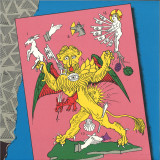
As The Idealist, he has been delving into an amalgam of experimental techno, dub and industrial music since 2006. His new A Lion Is A Lion And Not A Lamb continues this perspective unabatedly, conjuring up six tracks that shimmer with an almost psychotropic intensity, sometimes including acidic touches, dwelling in a confrontational minimalist musical stance where repetition, bursts of gorgeous noise and dubbed out skeletal rhythms make for wayward yet driving grooves at home on the dance floor and a set of headphones alike. The Idealist looks for engagement within rhythm, in its almost purest
form.
Tape
Los Angeles native Sha Sha Kimbo undeniably lives for the rave. As exemplified through her every intentional move as a producer, DJ, promoter, radio host and label owner, Sha Sha radiates an unwavering love for amplifying, nurturing and supporting the culture of underground electronic music and the community that surrounds it, with her forthcoming release absolutely no exception to this.
Set for release as a digital download and limited edition cassette tape on August 13, the LA rave staple is happy to announce her debut EP on Evar Records, Total Chaos. A brilliant testament to the cathartic importance of staying up late and getting lost in a buzzing crowd of kindred spirits, Total Chaos harnesses the universal experience of having pent-up energy into massive, angst-ridden breakbeat anthems. Over six tracks, Sha Sha channels the hair-raising spirit of '90s rave along with her formative experiences with DMZ-via-Low End Theory dubstep and punk rock. Finding her place within LA's bass music, house, techno and rave scenes while defying easy categorization, Sha Sha personifies the no-rules electronic music ethos behind John Frusciante and Aura T-09's Evar Records. To supplement Total Chaos' three originals, LYZZA, Machine Girl and LCY provide three raw remixes highlighting various aspects of Sha Sha Kimbo's renegade rave spirit.
Drawing from the Los Angeles punk rock and '90s rave music that soundtracked her youth, Total Chaos personifies how she grew up on the dance floor, showcasing Sha Sha's tried and true ability to express rich, nuanced emotions through tracks that, first and foremost, can level a warehouse party. Kicking off the vibe on July 30, the EP's lead single "Save The World" is a perfect representation of this, with the jump-up rave cut employing a megaton breakbeat and sickly-sweet vocal samples over simmering base of dark, UK-influenced atmospherics. From the late night energy of the title track to the euphoric, dawn-breaking feel of "Limited Perfect," Total Chaos offers the refuge of a robust dance floor with the warm reassurance to be one with the universe.
Rounding out Total Chaos EP are three remixes that amicably and serendipitously support Sha Sha Kimbo's visionary aim to both explore the unknown and bring people together along the way. Brazilian-born, Amsterdam-based powerhouse LYZZA adds a full verse and a nest of serrated rhythms to her version of "Total Chaos," while New York's Machine Girl applies their trademark punk electronics approach to "Save The World." Meanwhile, Bristol's own LCY hollows out "Limited Perfect" into a haunting amalgam of post-punk minimalism and low-frequency pressure. A study of the opposing light and dark energies of underground dance music, Total Chaos presents a breakbeat-heavy vortex, sure to awaken everyone's inner raver.
Berlin talent Joplyn is next up on Crosstown Rebels making her debut release on the label titled We Will Forgive Ourselves featuring remixes from prolific producer MK and label-head Damian Lazarus. Serving up two remixes in the form of MK’s Dub and Damian Lazarus’ Re-Shape, it acts as another milestone release for the near twenty-year-old imprint.
We Forgive Ourselves is the perfect musical metaphor for Joplyn’s inspiration. The track opens proceedings with elegant drum pads which are paired beautifully with quaint hi-hats. A gentle, healing vocal, followed by a deep heavy bassline creates a profound juxtaposition. Galactic-like sounds fizz in and out, fusing everything together to create a real sense of utopia that truly embodies Joplyn’s vision.
Brimming with a signature MK sound right from the offset, we’re treated to six-and-a-half minutes of perfectly executed contemporary deep house. Warming, subtle and inherently groove-led, soft kicks open into Joplyn’s haunting vocal offerings before rhythmic hats coalesce alongside, forming a modern dance anthem that is sure to light up many a club setting this summer.
Damian Lazarus’ Re-Shape comes next. Shimmering with an ethereal quality, the nine-minute piece undulates between moments of spiritual bliss to pummelling, acid-laden danceability. Whirring synths help create a galactic quality, as we travel between feelings of introspection, euphoria and everything in between.
Official re-issue of Javier Segura's album from 1986. Exciting tribal, ambient and experimental sonorities brought back in a newly remastered release.
Originally released in 1986, 'Nostalgia De Lo Humano' is almost unclassifiable. For Segura, styles are another form of repression, something that serves to label and keep track of those who sees, listens, buys or plays, and especially who sells. Despite the fact that Segura has been producing music continuously since the 1970s, his recognition as a musician was for a long time limited to experimental music circles. He had always controlled his career on his own, on the fringes of the industry. As Javier Segura himself says, his head is full of textures, rhythms and melodies. Through his textured productions, Segura opened up new dimensions to experimental music, using guitars, drum machines, trumpets, synths, or pedals.
- A1: The Plastik Beatniks Feat. Angel Bat Dawid - The Sun Is A Negro
- A2: The Plastik Beatniks Feat. Doseone - Hollywood Beat
- A3: The Plastik Beatniks Feat. Allen Ginsberg - What He Looks Like_
- A4: The Plastik Beatniks Feat. Angel Bat Dawid - Westcoast Sound 1956
- A5: All Those Streets I Must Find Cities For
- A6: The Plastik Beatniks Feat. Angel Bat Dawid - Bagelshop Jazz
- B1: The Plastik Beatniks Feat. Moor Mother - War Memoir
- B2: The Plastik Beatniks Feat. Angel Bat Dawid - Harwood Alley Song
- B3: The Plastik Beatniks Feat. Patti Smith - Ginsberg (For Allen)
- B4: Would You Wear My Eyes
- B5: A Particular Police Officer
- B6: The Plastik Beatniks Feat. Angel Bat Dawid - The End Always Comes Last
Sounds like supergroup. Rarely have outstanding figures of such a variety of musical styles collaborated on one album to pay homage to a nearly forgotten artist, one of the few black Beatnik poets, Bob Kaufman.
"All Those Streets I Must Find Cities For" by The Plastik Beatniks is an attempt to acoustically reanimate Bob Kaufman, to return the Beat to him in a transatlantic collaboration. It is a shimmering psychedelic, at times jazzy concept album, sometimes reminiscent of Krautrock or hip hop, about a Beat-era poet who was as great as he was forgotten. It takes spoken word to a new level, as a transatlantic showcase of musical avant-gardes and a joyful "sound archaeology" of modernity, in which the tracks of the "Plastik Beatniks" meet the best voices of America.
The 12 wildly different songs and audi collages, on the transatlantically-produced album, "All the Streets I Must Find Cities For," is based on lyrics by Beat author Bob Kaufman. They were originally part of the radio play "Thank God for Beatniks," for which author Andreas Ammer ("Ammer & Einheit"), Notwist‘s Markus Acher and Micha Acher and loop maker Leo Hopfinger ("LeRoy") formed "The Plastik Beatniks." On the eastern side of the Atlantic they composed music and crafted soundscapes. On the west side of the ocean, they asked three of the most renowned singers, activists and producers in the U.S. to recite or sing Bob Kaufman's poetry.
Punk-pop icon Patti Smith immediately signed on to read Kaufman's poem "Ginsberg (For Allen)". Free jazz vocalist Moor Mother passionately performed Bob Kaufman's "War Memoir". American jazz clarinetist, composer, singer and “International Anthem” labelmate Angel Bat Dawid, a legitimate successor to Sun Ra, polyphonically read and sang such poems as "The Sun is a Negroe" and "West Coast Sound 1956" and included some clarinet solos on top. Also on the album, Bob Kaufman himself recites his previously unknown poems "Hollywood Beat", "Would You Wear My Eyes", and the "Jail Poem" "All Those Streets I Must Find Cities For". Beat chronicler Raymond Foye, who still lives at the Chelsea Hotel in New York, contributed an interview he conducted with late beatnik Allen Ginsberg about Bob Kaufman. Completing the circle was hip-hop artist Adam "DoseOne" ("13&God"), who once gave Markus Acher a well-thumbed volume of Bob Kaufman, whom he admired. He contributed some raps. Thus 12 tracks emerged, as diverse as the artists, poets and musicians who contributed to it. More than an album. An epitaph. A work for the eternity of Beat.
Regarding Bob Kaufman - of course the FBI kept a file on him – first as a sailor, then a communist, and finally a Beat poet. As one of the mainstays of the movement, he edited the literary magazine "Beatitude" in San Francisco and defined "Beatnik" to Allen Ginsberg: half rhythm, half sputnik. Bob recited his poetry loudly on the streets (when he wasn't sunk into years of silence in protest of the Vietnam War) and in the bars and bagel shops of North Beach. Once, he almost landed a pop hit ("Green Green Rocky Road"), which then made Dylan's companion Dave van Ronk famous. That Kaufman is today less known than his friend Allen Ginsberg may be because he was a black Beat poet, and also a Jew. This was not compatible with fame in the US of the 1950s. Though Kaufman had the same publisher, City Lights, as Ginsberg, he was frequently arrested and jailed, and was treated with electric shocks until he developed serious mental heath issues. There he wrote his "Jail Poems". The seventh of these lent this album its name:
"Someone whom I am is no one / Something I have done is nothing Someplace I have been is nowhere / I am not me What of the answers / I must find questions for? All these strange streets I must find cities for, Thank god for beatniks."
Dewa Alit, Bali’s master of contemporary Gamelan composition, returns to Black Truffle with Chasing the Phantom, presenting two recent works played by the composer’s Gamelan Salukat, a large ensemble that performs on instruments specially built to his designs, using a unique tuning system that combines notes from two traditional Balinese Gamelan scales. Alit explains that the ensemble’s name suggests “a place to fuse creative ideas to generate new, innovative works” and both compositions demonstrate the composer’s ability to wring stunning new possibilities from variations on the traditional Gamelan ensemble. While using familiar elements of Balinese Gamelan music, such as unison scalar melodies and stop-start dynamics, Alit’s music is overflowing with harmonic, rhythmic, and timbral inventions, the latter often facilitated by unorthodox playing techniques.
“Ngejuk Memedi”, an English translation of which gives the LP its title, results from Alit’s reflection on the complex relationship between tradition and modernity in Balinese culture, particularly in the way that belief in the phantoms or spirits known as ‘memedi’ are shared through social media using digital technologies. Embodying this uncanny co-existence, the opening passages of the piece are at once immediately recognisable in their use of the metallophones of the Gamelan ensemble and strikingly reminiscent of electronics in their timbre and movement. At points, what we hear seems to have been fragmented with digital tools, or even to originate in some incessantly glitching DX7. Short melodic figures loop irregularly, with the ensemble splintering into polyrhythmic shards before unexpectedly recombining for intricate unison passages. After several minutes of this manically tinkling metallic sound world, the metallophones are joined by drums for a meditative passage of lower dynamics, as the uniformly high pitch range explored in the opening sections gradually opens up to include resonant low gong hits. Recovering some of the manic energy of the opening, but now enhanced with the full range of percussion, the piece weaves through a series of tempo changes to a stunning passage of rapid-fire melodies and ringing chords that sweep across the metallophones, their unorthodox tuning creating complex clouds of wavering harmonies.
“Likad”, written during Covid-19 lockdowns, channels anxiety and uncertainty into musical form, resulting in a piece that, even by Alit’s standards, is stunning in its complexity and the virtuosity it demands of Gamelan Salukat. Its opening section is perhaps most remarkable for its mastery of texture, with rapid transitions between dry, muted strikes and metallic shimmers calling to mind the use of filters in electronic music. At points, the complex irregular repetitions of short melodic patterns, where the music seems to get stuck or be suddenly interrupted by a skip, recall the mad sampler works of Alvin Curran or the skittering surface of prime period Oval more than anything familiar from acoustic percussion music. Moving through a dizzying series of twists and turns, the piece ends with a majestic sequence of chords possessing an almost hieratic power. A major statement from a radical contemporary composer, one cannot help but agree with Alit when he sees Chasing the Phantom as an answer to the “question of the future of Gamelan music”.
Tape
Statique is the fifth full length album on Mille Plateaux and Force Inc. labels by Automatisme (the Canadian musician and conceptual artist William Jourdain active since 2011). Jourdain met the label owner Achim Szepanski in 2019 and did an album in solo (Alter-, Mille Plateaux, 2020) plus four others in collaborations (with iadema, Beyond Humans, Stefan Paulus and Viatorism in duo with Pheek). Automatisme now returns as a solo act on that label. The results are, on one side, an expanded vision of fast rhythmic clicks and cuts, like we heard on his Alter-Rate tracks and that are entitled Ultra-Rate on the Statique album. On the other side, it is the multiple Ultra-Scape tracks that are an augmented version of the granulized ambient dub techno he developed since the beginning of the Viatorism moniker. Jourdain adds elements of chaos and perturbation into algorithmic electronic music like static electricity is the presence of a disturbing body in a circuit.
- 1: Awaiting The Vultures
- 2: Of The Sleep Of Ishtar
- 3: Luring The Doom Serpent
- 4: Contemplations Of The Endless Abyss
- 5: The Elder God Shrine
- 6: Temple Of Lunar Ascension
- 7: Dreaming Through The Eyes Of Serpents
- 8: Whence No Traveler Returns
- 9: The Forbidden Path Across The Chasm Of Self-Realization
- 10: Beckon The Sick Winds Of Pestilence
Nearly 20 years ago, Karl Sanders – the founder, principal songwriter, and driving creative force behind the exotic, devastatingly heavy stylings of American extreme death metal icons Nile – forayed from his metallic leanings to serve listeners with a transfixing dose of the cinematic, meditative, world music-driven Saurian Meditation (2004). The album explores highly original compositions of hypnotizing, primarily Middle Eastern inspired music, featuring the unique inclusion of instruments such as the balagma saz (Turkish lute) and Glissentar, often blended with dark electronic ambience and deft electric guitar work. Saurian Meditation marked the beginning of Sanders’ Saurian journey, being the first of now three Saurian releases. From the haunting first notes of “Awaiting the Vultures”, which dreamily conjures images of traversing through the dark, mysterious halls of an abandoned ancient temple, to the slithering, percussion-driven pulses and searing electric solos on the ominous album closer “Beckon the Sick Winds of Pestilence” – Saurian Meditation provides a diverse escape for both fans of Nile and the outer realms beyond. Thematically centered around its acoustically-driven, spellbinding seventh track, “Dreaming Through the Eyes of Serpents”, the album ebbs and flows from a higher, rhythmic consciousness to a darker, hypnotic inner balance, achieving a Reptilian Theta State of deep meditation. Saurian Meditation launches the multi-dimensional Saurian universe – witness the very first, transcendental solo output by Karl Sanders, available for the very first time on vinyl, as well as in CD and digital formats, via Napalm Records!
Azure, Vinyl Williams' fifth album was released on French label Requiem
Pour Un Twister in 2020
Azure marks a point of higher equilibrium for songwriter Lionel Williams, using far
more restraint and speed than his earlier releases, as well as a concentration of
unifying paradoxical qualities. Vinyl Williams' Opal (2018) was critically acclaimed
and his earlier releases, Brunei (2016) and Trance Zen Dental Spa (2015) - a
collaboration with Chaz Bear of Toro Y Moi - are fan favorites for their incessant
bliss and driving rhythms. Vinyl Williams' live shows are a spectacle of
pearlescent sights and sounds, with all of Williams' work combined and
synchronized together in rapturous hyper- dimensional moments.For fans of
Morgan Delt, Toro Y Moi, Ariel Pink, Part Time, Maston, Jacco Gardner, Arthur
Verocai, Sunbeam Sound Machine, The Free Design, Curt Boettcher, Chris Cohen,
Dungen.
Azure, Vinyl Williams' fifth album was released on French label Requiem Pour Un Twister in 2020 Azure marks a point of higher equilibrium for songwriter Lionel Williams, using far
more restraint and speed than his earlier releases, as well as a concentration of unifying paradoxical qualities. Vinyl Williams' Opal
(2018) was critically acclaimed
and his earlier releases, Brunei (2016) and Trance Zen Dental Spa
(2015) - a collaboration with Chaz Bear of Toro Y Moi - are fan favorites for their incessant bliss and driving rhythms. Vinyl Williams' live shows are a spectacle of pearlescent sights and sounds, with all of Williams' work combined and synchronized together in rapturous hyper- dimensional moments.
For fans of Morgan Delt, Toro Y Moi, Ariel Pink, Part Time, Maston, Jacco Gardner, Arthur Verocai, Sunbeam Sound Machine, The Free Design, Curt Boettcher, Chris Cohen, Dungen.
Azure, Vinyl Williams' fifth album was released on French label Requiem
Pour Un Twister in 2020
Azure marks a point of higher equilibrium for songwriter Lionel Williams, using far
more restraint and speed than his earlier releases, as well as a concentration of
unifying paradoxical qualities. Vinyl Williams' Opal (2018) was critically acclaimed
and his earlier releases, Brunei (2016) and Trance Zen Dental Spa (2015) - a
collaboration with Chaz Bear of Toro Y Moi - are fan favorites for their incessant
bliss and driving rhythms. Vinyl Williams' live shows are a spectacle of
pearlescent sights and sounds, with all of Williams' work combined and
synchronized together in rapturous hyper- dimensional moments.For fans of
Morgan Delt, Toro Y Moi, Ariel Pink, Part Time, Maston, Jacco Gardner, Arthur
Verocai, Sunbeam Sound Machine, The Free Design, Curt Boettcher, Chris Cohen,
Dungen.
After three EP's in his own name, and one with Moreno Ácido at Holuzam, Diogo makes his debut 12” in the Discos Extendes series with “FINALMENTE!”. In a singular appropriation of the vast legacy of rave culture, Diogo crosses, along four tracks, a certain time span between the 90's and the 2020's, with all kinds of recycling and updates that the exercise entails. Syncopated rhythmic patterns, robust basses, junglist echoes, haunted voices or celestial pads make up a revivalist sound palette, here rearticulated beyond linear structures. “Até Segunda” sets the tone in territories close to Objekt's Theme from Q in a live sound design amidst sudden disturbances and rallying hooks. Tracks 2 and 3 stand out for their plot twists: “Ponto de Não Retorno” starts with a frenetic breaky maze before get immersed in a oneiric landscape, and “What?!” progresses gently within Vancouver coordinates to be opened to a schizophrenic rawness that, from there, completely remakes the track. “Errar É Ok” is an exercise of decompression, melodically woven, with a dreamy coda pointing to nostalgic horizons. Violet closes the EP with a muscular version of “Ponto de Não Retorno”. "Finalmente!" marks for this unstable balance between familiarity and strangeness, intuitiveness and disturbance, euphoria and immersion. Tracks for the dance floor, yes, with a twist, to be rediscovered as often as you like.
A Delicate degustation for the finer palette, Taste the Bass is the latest seasonal sound delicacy via your favourite dysfunktional deep throb duo Ambien Baby. Stepping up their songwriting skillz and staying true to their heady primal sophistication, Nap & D.Tiff indulge in vocal explorations laced throughout 4 tracks, cries of couplet writing and hints of daring duets lingering on the lips. The hypnotic electroclashed EBM is served with superior rhythmic complexity and sonic depth, as per usual, niche on the streets ~ screech in the sheets.
A heartfelt ode to the synthesizer that first bound them together, passion, rage & a reminder to never-ever forget to groove; all four songs come prepped rave ready, mise en plus! Clean, mean inspired techno leaning freakouts that nail that midrange tempo, filled to the brim with that special ingredient no pretenders can purchase. A raw audio feast fit for the gods… although it took God 7 days to create the earth and Ambien Baby created this in 4.
Now onto its fourth volume, NuNorthern Soul’s annual Summer Selections EP is fast becoming a must-check for fans of slow-motion sunshine sounds, contemporary Balearic beats and sumptuous downtempo grooves.
Summer Selections Four showcases six hand-picked tracks from EPs and albums to be released by NuNorthern Soul in 2022. A genuine ‘cream of the crop’ or ‘best in class’ feel, with NNS label boss and curator Phil Cooper putting together a varied EP piled high with evocative melodies, atmospheric chords, tactile grooves and ear-catching instrumentation.
First to step up to the plate is experienced producer James Bright, whose cut ‘Amber’ offers a bubbly, colourful and analogue-rich stroll through mid-tempo Balearic house territory. The track is one of the highlights of Bright’s forthcoming Totem EP. It’s quickly followed by ‘Nana a Leon’ from Be.Ianuit’s Entre Dos Islas EP, a gorgeous mixture of deep bass, twinkling pianos, sultry synth-strings, sparkling synthesiser arpeggios, echoing machine drums and spoken word vocals from guest performer Marcos de la Fuente.
San Francisco’s Cole Odin offers a snapshot of his forthcoming Songs For Suns EP via ‘Growing’, a slow-motion sunset soundscape built around ethereal chords, chiming melodies and head-nodding drums, while Gold Suite’s ‘The Cowboy’ – taken from the On My Horizon EP – brilliantly joins the dots between jangling Americana, mid-‘80s Balearic reggae and sun-soaked instrumental synth-pop. While brand-new, it could easily be mistaken for the kind of obscure, hard-to-find gem that gets Balearic record collectors so hot under the collar.
Next up is another new signing to NuNorthern Soul, North of the Island, whose debut EP Feeling Free is undoubtedly a highlight of the label’s 2022 release schedule. ‘I Feel’, the track showcased here, adds attractive, sunset-ready musical flourishes to a chugging, delay-laden rhythm track and the kind if squelchy bass-line most often found in proto-house and early ‘80s electro-funk cuts. It’s a spaced-out, mind-altering delight.
Rounding off another sizzling Summer Selections excursion is ‘Smoke & Fly’ from fast-rising twosome Residentes Balearicos, an Ibiza-based Italian duo who impressed many with their 2021 EPs on Balearic Ensemble. Dusty, bass-heavy, drowsy and picturesque, the track is a simply gorgeous chunk of Balearic dub piled high with organic percussion, undulating acid lines and mazy solos. It provides a fittingly triumphant conclusion to another essential sampler EP from NuNorthern Soul.
Red Vinyl[22,48 €]
Cabaret Voltaire co-founder Stephen Mallinder's second solo outing for Dais further distills his signature fusion of minimal synth, oblique wordplay, and "wonky disco" into a riveting rhythm suite ripe for our Age of Escalation: Tick Tick Tick. Channeling the temporal malaise of lockdown through a lusher palette of modular electronics and stereo strings, the songs embrace ambiguity and plasticity, loose systems of percolating circuitry and airless funk. Recorded across a handful of sessions at Meme Tune Studios in Cornwall with frequent collaborator Benge (aka Ben Edwards), Mallinder cites no guiding aesthetic premise for the collection beyond "cowbell on every track, and entirely no reverb." From the first coiled cybernetic groove of opener "Contact," the album's spatial dynamics are disorienting and asymmetrical, alternately cold and sensual, opiated and claustrophobic. But, throughout, "rhythm is the default, the bedrock, the building block-even the melodies are rhythmic." Across 40-plus years of electronic musicianship, Mallinder's sense of timing and tempo has honed into a rare tier of mastery, limber and fluid but knotted with strange frictions. Shades of Detroit technoid industrial ("ringdropp," "Shock To The Body") crossfade into now avy punk-funk ("Guernica Gallery," "Galaxy," "The Trial"), bad trip IDM ("Wasteland"), and jittery vapor house ("Hush"), at the threshold of modes both familiar and foreign. Lyrically the record is equally evasive, rich with allusions and associative linguistics, surveying liquid notions of societal noise, ecological ruin, art world pretension, and the trials of daily life. But the lack of fixed meaning remains Mallinder's main muse: "Music should draw you in; lyrics should make you think. Most interpretation is misinterpretation." This is music of countdowns and comedowns, fleeting pleasures and opaque futures, observing the great decline while dancing on its ashes. Flux is deathless and forever; the rest, illusion: "I will be a constant figure / Flickering a moving picture / Turning in your head forever / Split apart but held together."
Black Vinyl[21,22 €]
Cabaret Voltaire co-founder Stephen Mallinder's second solo outing for Dais further distills his signature fusion of minimal synth, oblique wordplay, and "wonky disco" into a riveting rhythm suite ripe for our Age of Escalation: Tick Tick Tick. Channeling the temporal malaise of lockdown through a lusher palette of modular electronics and stereo strings, the songs embrace ambiguity and plasticity, loose systems of percolating circuitry and airless funk. Recorded across a handful of sessions at Meme Tune Studios in Cornwall with frequent collaborator Benge (aka Ben Edwards), Mallinder cites no guiding aesthetic premise for the collection beyond "cowbell on every track, and entirely no reverb." From the first coiled cybernetic groove of opener "Contact," the album's spatial dynamics are disorienting and asymmetrical, alternately cold and sensual, opiated and claustrophobic. But, throughout, "rhythm is the default, the bedrock, the building block-even the melodies are rhythmic." Across 40-plus years of electronic musicianship, Mallinder's sense of timing and tempo has honed into a rare tier of mastery, limber and fluid but knotted with strange frictions. Shades of Detroit technoid industrial ("ringdropp," "Shock To The Body") crossfade into now avy punk-funk ("Guernica Gallery," "Galaxy," "The Trial"), bad trip IDM ("Wasteland"), and jittery vapor house ("Hush"), at the threshold of modes both familiar and foreign. Lyrically the record is equally evasive, rich with allusions and associative linguistics, surveying liquid notions of societal noise, ecological ruin, art world pretension, and the trials of daily life. But the lack of fixed meaning remains Mallinder's main muse: "Music should draw you in; lyrics should make you think. Most interpretation is misinterpretation." This is music of countdowns and comedowns, fleeting pleasures and opaque futures, observing the great decline while dancing on its ashes. Flux is deathless and forever; the rest, illusion: "I will be a constant figure / Flickering a moving picture / Turning in your head forever / Split apart but held together."
• Sony Music Masterworks and Milan Records announce the vinyl release of “My Hero Academia: World Heroes' Mission” with music by composer and arranger YUKI HAYASHI. The film adaptions are based on the original Comic Series “My Hero Academia”, which sold over 50 million copies worldwide.
• Based on Kōhei Horikoshi’s most successful manga series, ‘My Hero Academia: World Heroes’ Mission’ is an action-adventure film directed by Kenji Nagasaki. When a sinister organization threatens to wipe out all superhuman powers, the fate of the world is on the line. But before they can succeed in putting their evil plans into action, the Pro-heroes around the world assemble to come up with a counter plan to stop the worst from happening.
• The soundtrack of the critically acclaimed, hugely popular film adaptation is now being released as a stunning double coloured vinyl with a double gatefold.
• My Hero Academia: World Heroes’ Mission is the third movie, following the success of My Hero Academia: Two Heroes and My Hero Academia: Heroes Rising (75M streams to date), and marking a major shift in the series' story - putting Deku in a precarious position of being painted as a villain.
• Besides the movie adaptations, the comic was adapted into an anime series. The 5th season of the series is currently on air. You can watch it on Funimation and Crunchyroll in the UK and you can find “My Hero Academia Season 1” on Netflix.
About the composer Yuki Hayashi:
• Yuki Hayashi was born in Kyoto, Japan in 1980. Being an active member in a men's rhythmic gymnastics team in his early years spawned his interest in BGM while selecting songs to complement performances. This led him to begin teaching himself music composition while at university, despite not having a background in music itself. After graduating, Yuki acquired the basics of track making under house techno DJ and sound-maker Hideo Kobayashi and started producing his first range of music accompaniments for dance sports. His experience as a rhythmic gymnast has enabled Yuki to intuitively incorporate an eclectic range of music and produce a unique sound, empowering scenes from TV drama, animation and film.