LDF (Lello Di Franco) makes a powerful return to Skylax, this time teaming up with Detroit's own Javonntte. Following his stellar release with Gari Romalis, LDF delivers a release that is pure gold for fans of the original Detroit sound. If you appreciate the styles of Moodymann, Theo Parrish, or Omar S, this record is bound to resonate deeply. The EP opens with "Disco One (All Night Long)," a groove-heavy track that embodies the essence of classic Detroit house. It pulses with soulful basslines and infectious rhythms, setting a hypnotic tone that's perfect for late-night sessions. "Saved" ventures into Chicago acid territory, a tribute to the raw, driving energy of classic acid house. With its punchy 303 basslines and tight, snappy percussion, it channels the best of Chicago's underground with a fresh, modern edge. "After Midnight" offers a smooth, after-hours vibe, balancing deep, jazzy chords with a pulsating rhythm that keeps the energy simmering. It's a track that brings warmth and intimacy, ideal for closing sets or introspective moments. "Martha" is a lush, emotionally rich track that embodies LDF's Italian roots while staying grounded in Detroit's heritage. With warm melodies and a rolling bassline, it delivers a balance between soulful warmth and a classic dancefloor feel. "Love Anthem" is a heartfelt groove, merging lush pads and laid-back percussion with a sense of nostalgic euphoria. It's a track that brings people together, a true love letter to house music. "People From Mars" pays homage to Omar S, with its stripped-down, gritty approach. The track has a rough, analog feel, capturing the raw energy and spirit of Detroit's underground. Finally, "The Dirty Digital Show" closes the EP on an intense note, with a driving rhythm and futuristic soundscapes. As an Italian DJ and producer from Naples, LDF brings his decades of experience—starting from his early inspirations in house and techno in 1993—into this record. Also, as co-owner of Frole Records and co-founder of Basic Frame Distribution, his knowledge of the scene is profound, and it's reflected in each meticulously crafted track. This release is a testament to the timelessness and diversity of house music.
Artwork done by legendary french cult designer H5 (Daft Punk, Air, Etienne de Crecy …)
quête:hi tech roots
With a clutch of EPs under his belt spanning a wealth of pallets, Henzo narrows the focus on his debut studio album “The Poems We Write For Ourselves” - a culmination of persistent iterations over several years, distilling his sonic milieu into something that feels decidedly his own. The album proper is coupled with a debut live performance which reinterprets the tracks and splices them with omitted material from the time of writing - recorded in full in the intimate confines of Manchester’s growingly infamous Stage and Radio basement. Honing his craft in the shadows of Lancashire, Poems is an expansive reflection of the producer’s time spent away committing to the scope of an LP.
A thread of stratified sound design weaves throughout the record, but with a discerning dancefloor proclivity mostly prevalent. Cold opener “Noggin” riffs on noughties Raster-Noton a la Byetone rebuilt with fractal tear out DnB, with closer “Indulgence” following suit on a puckered plod of Dub Techno ambience. More club-focussed moments come in the form of “Rustica Slump” and “Blue Will...”, the former’s sickly sweet vocals resolved by the latter’s stoic UKG/Techno rudeness. “A Bouquet of Clumsy Words” channels mechanical shuffle with a stripped back 2/4 pulse whilst maintaining a firmly FWD>>energy alongside “Plant Your Roots In Me” on a similar vector - swapping out a straight kick pattern for a bludgeoning 808 assault on an early Hessle-indebted tip.
“Take Stock, Touch Grass” harks to golden era ClekClekBoom and Night Slugs with a bare bones kick and vocal motif, updating the formula with a tweaking lead line that places it firmly in the contemporary space. “Swell:Shrink” sings from the same sheet with a shrieking, space age wobble doing the heavy lifting, knocking the pace back to a shoulder-lean swagger on a slow fast conundrum Henzo has shown his flair for on previous releases.
The outliers to Henzo’s more known approach, “Worm Grunting” with Belfast’s Emby, an amalgamation of halfest time DnB and illest mannered Road Rap, plus “The Rest Is The Mess You Leave”, a starkly anti-retro Ghettotek endeavour, give grounds to the LP. Clearly rooted in the comfortable universe of the dancefloor, these tracks expand the producer’s realm into loftier heights as he graduates into long play land.
Detroit’s own Brian Kage returns with Timeless Times Remixed, a interstellar re-imagination of his album "Timeless Times" featuring an all-star lineup of remixers. Timeless Times Remixed brings together some of the finest minds in house and techno, delivering deep, timeless grooves with Detroit soul.
Brian Kage, a staple of Detroit’s electronic music scene, brings together a heavyweight lineup of producers to rework key tracks from his latest album. The legendary Delano Smith infuses Detroit Techno City with his signature deep and hypnotic touch, while Scotland's Milton Jackson reworks Just The Groove with a dose of his classic rolling house energy. The collaborative Reference (Luke Hess & Brian Kage) Remix of Nordhouse leans into peak time dub-techno atmospheres, while Detroit's newest and finest young talent from the Submerge crew Max Watts takes Galaxian into raw, driving 808 Electro terrain.
This essential four-tracker bridges deep house, techno, electro, and dub, while staying true to the classic and timeless sounds of Detroit’s roots.
Markantonio returns to vinyl with Radici, a bold statement that dives deep into his origins, both in name and sonic identity. This four-track EP marks a pivotal moment in his artistic journey, bridging the raw energy of early techno with his signature funky groove-driven approach.
A vital force in shaping the Neapolitan techno identity since 2001, AnalyticTrail now takes a new step in its evolution with the release of Radici. Markantonio, the label's founder and one of Italy's most influential techno figures, makes a striking return to the forefront. This release doesn't just mark his comeback to vinyl, it reflects a renewed connection to his roots and a forward-thinking vision that continues to drive the underground movement.
Opening with Welcome to Disco, the A-side sets the tone with an infectious rhythm, pulsating basslines, and shimmering synths that light up the floor with hypnotic flair. Rising Dutch talent Isaiah delivers a bold reinterpretation with his Rework, injecting a darker, more driving edge layered with brooding atmospheres and relentless percussion. On the B-side, the title track Radici dives deeper into tribal-infused territory, blending hypnotic loops with raw percussive energy, while Groover rounds out the EP with a stripped-back, minimalist roller designed for late-night momentum.
A must-have for techno lovers, Radici captures the essence of where it all began and where it's headed next.
After two decades, the indietronic veteran returns with a powerful sonic reflection on today’s sociopolitical climate and a poignant reminder of music’s enduring ability to heal, unite, and inspire. Blending experimental electronics with krautrock sensibilities, the album thrives on spontaneity, collaboration, and the beauty of ‘happy accidents’.
While many of Nitrada’s sonic trademarks remain — intricate, rickety beats; enigmatic field recordings; and gut-punching string melodies — EVERYTHING THAT IS NOT COUNTED WILL BE LOST marks a shift in approach. Experimenting with different constellations of musical machines, Christophe Stoll, the mind behind Nitrada, recorded hours of improvisations (some shared on his Instagram). These sketches became the raw material for more elaborate, carefully structured arrangements.
True to his collaborative spirit, Stoll brought in like-minded artists to shape the final album: Jan Sturm (aka STURM) lends his touch to the shimmering FRAGMENTS OF LIGHT. The euphoric dystopian WE DANCE IN THE CHAOS features Landobe (Marco Heinle) and Patrick Siegfried Zimmer on vocals. Luca di Mira (of Giardini di Mirò fame) contributes synths, cello, and delicate textures to some tracks, while Johannes Schardt’s guitar work brings a visceral, post-rock edge to NO HYMN FOR NOBODY and IL ROMANTICISMO DELL’APOCALISSE, nodding to Stoll’s roots in punk and indie.
“The goal is to take listeners on a journey through different timbres and sonic landscapes — a collage of diverse ideas and inspirations,” says Stoll about his album which effortlessly juxtaposes experimental ambient soundscapes, heavy jagged guitars, and minimal techno pulses, making them feel as though they’ve always belonged together. Because, in the end, they do – all part of the shared vocabulary of our universal language: MUSIC.
- A1: Pharoah Jones
- A2: Ghost Gospel
- A3: Ill Feeling
- A4: Capital Punishment
- A5: Do Not Adjust
- A6: Cool Green Trees
- A7: Chill Scratch
- A8: Poisonous Fumes
- A9: Welcome Aboard The Starship
- B1: Keep On Runnin
- B2: Sounds Impossible
- B3: Painted Faces
- B4: The Knew Style
- B5: Chicken Wing Blues Sauce
- B6: Kool Breeze
- B7: Sexx Bullets
- B8: Soul Child
- B9: Take Off Runnin
- B10: Centurian
- B11: Bozack
- B12: Church
- B13: Splash One
- B14: Hank
- B15: 73 Goatee
"Chasing the funky symphonies that filled my head and my dreams..."
December 25th, 2023 - an Instagram post. Stimulator Jones shared half a dozen FIRE tracks from his beat tape archive. We were immediately drawn to the rough hewn boom bap.
"I'd release that", Rob commented.
Hours of material was shared and the result is this: Cool Green Trees (1999-2005). A collection of beats and loops Stimulator Jones created between the ages of 14-20 at home in his basement, bedroom and computer room in Roanoke, Virginia.
You will not believe the profound soulful genius contained within these naive schoolboy melodies.
December 25th, 1998 - 25 years ago to the day and his much-coveted Yamaha SU10 sampler was finally bestowed upon young Stimmy AKA Sam Lunsford: "I immediately hooked up a CD Walkman to the input jack and looped the beginning two bars of Grover Washington Jr.'s "Mercy Mercy Me". I don't know what exactly was so thrilling about hearing two measures of music repeating over and over but it was so infectious and hypnotizing and enthralling to me. I'll never forget that ecstatic rush of making my first loop - an uncontrollable, gleeful smile plastered all over my face." When you hear the pocket breakbeat symphonies featured here on Cool Green Trees, you'll feel the same sense of frisson.
In the wake of his Stones Throw breakthrough - Exotic Worlds & Master Treasures - Stimulator Jones was pegged by many as a 90s throwback artist. However, he literally IS a 90s artist. He's been recording music most of his life and he's now 40. He created the bulk of Cool Green Trees as a teenager. Everything before 2004 was recorded when Sam was still in school. He was in 8th grade when he made the 1999 tracks - he didn't even have his learner's permit. This album is a snapshot of a young man in a simpler time. Things were still mysterious back then and he was flying blind, relying on his ears and having to figure things out for himself: "I had no road map for becoming a beatmaker. I have been collecting music since I was a kid, I am a lifelong digger and seeker of cool and interesting sounds. I was there in the golden age of Hip Hop, and while I may have been a suburban white kid in Roanoke, Virginia, I was tuned in and I bought so many classic albums when they came out. I was attracted to Hip Hop because of the musical and poetic quality. I was hypnotized by the rhythms, partially because I was a drummer. I didn't brag about collecting my breakbeat records or making beats - it was something I did in isolation. It wasn't something I generally wanted to bring attention to and it didn't really score me any cool points. I certainly wasn't flexing on social media about it."
Hell, he can do that now!
Opener "Pharoah Jones" was inspired by Yesterday's New Quintet and Madlib's ability to capture that classic 70s sound whilst playing all the instruments. Sam created this one stoned afternoon by laying down a 2 bar loop and a shaker loop on his Yamaha SU700 sampler. He hung a microphone from the ceiling and played his Yamaha Stage Custom drum kit over the top before adding ender Rhodes and playing his dad's Selmer tenor sax through an Electro Harmonix Memory Man echo pedal. Yes! Up next, "Ghost Gospel" utilises a dope loop from a gospel record and adds some soul-funk drums overtop, whilst working that filter knob. Says Sam: "The loop reminded me of something Ghostface would rap over. The sample was in 3/4 waltz time but I flipped it for a 4/4 groove, a technique I picked up from RZA. "Ill Feeling" uses sped-up pieces from a dusty old funk record and putting them over a classic NOLA drum loop; gain chopping up a slow, bluesy 3/4 time signature and bending it to a 4/4 groove. Classy shit. "Capital Punishment" features drums tapped in live, inspired by MF Doom's Special Herbs series. "Do Not Adjust" consists loops found on a compilation of 70s French music at Happy's Flea Market, a classic Roanoke digging spot.
The sublime, evocative title track, "Cool Green Trees" was created when Sam was still living at home. He dumped samples off his SU10 into the family desktop and arranged them in a demo version of Pro Tools: "This track was sort of my ode to the DJ Shadow style of sample based production. Super spacey, slow, and moody. The heavily filtered drums were inspired by Alec Empire's 'Low on Ice' album. I later added some scratches and sounds from a Spider Man storybook record." "Chill Scratch" snags the final bit of a bossanova record and pairs it with a drum loop before adding experimental scratching run through an Electro Harmonix Memory Man echo pedal. "Poisonous Fumes" was made using a sampler, mixer and a turntable; a kind of mixtape beat collage with added scratches and sounds from various records. Using dialogue from superhero records was a nod to Madlib. "Welcome Aboard The Starship" is dark, downtempo trip-hop with a spooky bent. Sam paired a slow, hard drum loop with a guitar sample grabbed off a psychedelic rock record. To finish, he added various backwards sounds and weird atmospheric effects and a little scratching. Swoon.
Side B opens with "Keep On Runnin", made on a borrowed Roland SP202 sampler. Having always loved the sound of the Lo-Fi filter on those machines, reminiscent of the Emu SP1200, Sam always imagined Del or another of the Hieroglyphics crew rapping over this beat. You can certainly hear why. "Sounds Impossible" sees Sam experimenting with layering multiple kick samples at different volumes to create patterns similar to those heard by Showbiz and Lord Finesse during their God-level 1995 period. "Painted Faces" was made by chopping up a REDACTED record which he had gotten from Happy's Flea Market and paired it with a REDACTED drum loop. By the time Sam recorded "The Knew Style", he had acquired a shitty old 1960s portable turntable off eBay. It didn't function properly when he bought it but his brother opened it up, cleaned it out and got it working: "I remember he told me that there was a bunch of sand inside of it when he opened it up, as if its previous owner had taken it to the beach. I would take that turntable on my Happy's Flea Market digs so I could preview records...that's how I found this loop."
"Chicken Wing Blues Sauce" loops up a classic blues joint and pairs it with some REDACTED drums. A bit of filtering and arranging et voilà! "Kool Breeze", from 1999, is one of Sam's oldest surviving beats, as is "Sexx Bullets". The Roots sampled the same record, leaving Sam frustrated yet vindicated. "Soul Child" was an early SU10 creation, looping a dusty old Soul Children 45 and pairing it with 70s rock drum loops to great effect. "Take Off Runnin" was another loop found digging with a portable turntable. Paired with some boom bap drums it makes for a hypnotic head-nod groove. "Centurian" was intended to be a little beat interlude a la Pete Rock. The sample is from a sun-dappled soft-psych record and it's paired with a Robin Trower drum loop that just happens to fit perfectly. Sometimes you slap things together kind of haphazardly and magic happens. "Bozack" was the first beat Sam made using Pro Tools, his first foray into using chopped sounds instead of loops, an exciting new world. "Church" is beat interlude using a Phil Upchurch loop with the "Long Red" drums - a favourite break of Dilla et al. Sam was really on a tear in late 2004, probably because he was unemployed and phoneless and able to just make beats all day. He made "Splash One" on a borrowed Yamaha SU700 and again was experimenting with tapping the drums in live with his fingers, instead of using a loop or sequenced pattern. Channeling 9th Wonder, Sam used a water splash sound effect from a Batman record as a percussive element, hence the title (also a 13th Floor Elevators reference). The main loop is a backwards portion of one of his favourite Roy Ayers songs.
"Hank" is another fun little beat interlude thing, created on a borrowed Roland SP202 sampler with the fantastic Lo-Fi effect that resembled the Emu SP1200 at a fraction of the price. "73 goatee", from 99, is another of his oldest surviving beats, created in his bedroom with his Yamaha SU10 and his brother's Vestax MR-300 4-track recorder: "This one will always feel special. I can remember having a feeling all the way back then on the night that I created it that this was a solid beat with a catchy loop. There was something in the Fender Rhodes melody that resonated with me emotionally, and I had never heard a producer sample that portion before. I felt like I had found my own unique sound, my own unique loop. It came from an Ahmad Jamal '73. I actually even recorded myself rapping and scratching over this beat way back then, I still have that version in all its imperfect sloppy glory."
Sam explains just how much these tracks mean to him: "They all have immense historical and sentimental value and I'm proud of them. These beats come from an innocent, simple time when I was just figuring out how to craft these sounds. They're something very personal to me. They are the initial part of a journey that I really was taking *alone*. There was no YouTube. I couldn't Google shit. I didn't even know any other beatmakers, producers or DJs in my town that could teach me anything. It was always just me, alone, in a room with some equipment - chasing the funky symphonies that filled my head and my dreams. What I was doing wasn't cool. Most of my peers thought I was a weirdo and couldn't care less. Creating these sounds was an anti-social endeavour. In a sense, I felt like it was me against the world, and all I had to instruct and assist me were the recordings produced by my heroes - RZA, DJ Premier, Erick Sermon, Beatminerz, Showbiz, Diamond D, Beatnuts, Prince Paul, The Bomb Squad, Pete Rock, Q-Tip, E-Swift, Mista Lawnge, DJ Shadow, Cut Chemist, Peanut Butter Wolf, El-P and so many more...I dedicate this collection to them, and to my older brother Joe who has always been a musical and technical guiding light for me.
This was a time before every kid was a self-described producer and beatmaker, before everyone had a DAW, before Kanye and "chipmunk soul", before Red Bull beat battles, before there was any social media beyond chat rooms and AOL Instant Messenger, before Soundcloud, before SP-404 mania, before lo-fi beats to study to, before Splice, before targeted ads for MIDI chord packs, etc. In 99 when I told people that I had a sampler and made beats I was mostly met with bewildered confusion and indifference. Kids and adults alike would wonder why I got this weird machine for Christmas instead of something worthwhile like a Playstation or a mountain bike or even a guitar for that matter because at least that could be used to make "real music". Back then, sampling was still not widely respected as an art form - it was seen as lazy, talentless and unoriginal at best and outright criminal theft at worst. I had gotten respect for playing drums and guitar and things of that nature but this was a step in the wrong direction in the eyes of many."
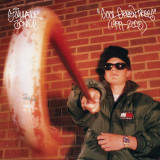
The cover photo is a picture of Sam standing on his back porch in the latter part of 1998, just before he got his first sampler. He was 13 years old, in 8th grade. His dad took the picture with his 35mm film camera: "I actually wanted to be pointing my dad's .22 pistol at the camera lens but he wouldn't let me. He gave me an old walking cane to use instead. The Tommy Hilfiger puffer jacket came from the lost and found at William Fleming High School where my mom worked as a secretary. I was thrilled when she brought it home because we never spent money on expensive name brand clothing like that - we were for the most part strictly a sale rack, bargain bin, thrift store, yard sale, flea market kind of family when it came to clothes. My watch is some cheap off-brand fake gold department store watch." Mastering for this vinyl edition was overseen by Be With regular Simon Francis and it was cut by the esteemed Cicely Balston at Abbey Road Studios to be pressed in the Netherlands by Record Industry.
Senselessness 1/2 is the very first solo issue of the Swiss electronic composer Robin Félix, on his own label De l’Aube (Of Dawn), the occasion for him to prove that field recordings can be (or should be?) an integral part of the global matter, when so often they are just something hovering in the background because it’s “nice” or reminds the artist of a place he loves.
Throughout the length of these four tracks, they are litterally central; moreover, they are electronically transformed, manipulated, skewed and twisted in order to form some sort of framework, a backbone on to which sounds and genres intertwine. On Cluster, violins and cellos (recorded in the gardens of the Venice Biennale) are soon transmuted into the abrasions of the electroacoustic realm, until the pulse of a relentless bass introduces a pure and pristine electronic music that knows and uses the roots of dub, drum’n’bass and the meticulousness of Jan Jelinek’s Glitch aesthetics. A tad “housy”, Chi comes as a second pulse where a modified didgeridoo and African percussions (recorded in a Swiss forest) lead the listener to a sort of tribal mode, as suited to dancers than to those who prefer inner journeys; here, the spatial dub of King Tubby moves from background to foreground.
The more abstract Boiler verges on the IDM and the heady, elegant and spartan Detroit techno – headphones reveal its numerous minute and delicate details. Based on the recording of insects, of which one can hear the actual rubbing of elytras, the closing Swarm ends the record with and intricate blend of ambient, which in some way winks to the Aphex Twin and The Future Sound Of London. Overall Senselessness 1/2 is a mesmerising and concise update of the famous Deutsche elektronische musik of old, that gathered on its way the other genres that made Robin Félix tick. Since field recordings have hardly been that meaningful, one wonders where Senselessness 2/2 will lead us to
Cyphon is excited to announce the release of an amazing new EP from Domenic Cappello. Titled Galactic Praise, this four-track masterpiece pays homage to the rich heritage of Detroit Techno while seamlessly incorporating Cappello's innovative sound design, displaying his golden ear for what makes a discerning dance floor tick.
A key figure in the electronic music scene through his long-standing residency at Glasgow's legendary Sub Club, Domenic captivates audiences globally with his unique blend of tough, pulsating beats, heartfelt melodies, and deeply immersive soundscapes. His position as booker and resident (alongside Harri) at Sub Club has allowed him to hone his craft and connect with some of the finest talents in House and Techno, influencing his distinctive style. With Galactic Praise, he takes listeners on an exhilarating journey through the heart of techno, inspired by the pioneering music that emerged from the golden era of Motor City sounds.
Dat Thing sets the tone. A driving house track that encapsulates the raw energy and spirit of Detroit, featuring hypnotic synth lines and robust bassline that give a hint of melancholy whilst maintaining a stripped back groove for maximum club impact.
Niamh’s Song is a deeper exploration of melody and rhythm, showcasing Cappello's masterful ability to weave complex harmonies into an intoxicating, otherworldly groove.
Flip over for Galactic Praise, a tribute to the roots of Techno, this track combines classic 909 and 303 elements with ethereal pads creating a heavier, timeless sound that will resonate with both longtime fans of the genre and newcomers alike.
Closing out this special EP we have Neon Skyline, a pumping yet reflective piece that captures the essence of late-night drives through urban landscapes blending chiming arpeggios, a driving synth bassline and tough beats making for an immersive experience.
As Domenic puts it: 'This EP is a tribute to the roots of techno that have inspired me since my formative years. My experiences at the Sub Club have been crucial in shaping my sound and approach to my own productions, inspiring me to create something that captures the energy and emotion of that packed dance floor and incredible sound system. I can’t wait to share it with everyone!'
- A1: Space Drift
- A2: Memory Loss
- A3: Siren-Call
- A4: Harmonisers Of The Spheres
- A5: Telepathy Beyond Time
- A6: Older Than Time
- A7: Congestion Hoe-Down
- A8: Shadowland
- A9: Celandine & Columbine
- A10: The Dying Of The Light
- A11: Cloud
- A12: Darkness At Noon
- A13: Future Perfect
- A14: The Killing Skies
- B1: Into The Depths She Calls
- B2: Lazy Summer Afternoons
- B3: Insects Revolt
- B4: Blood Runs Cold
- B5: Post Apocalypse Fog
- B6: Fish Don’t Cry
- B7: Ghost In The Abbey
- B8: Insects Dance
- B9: Dreams Of Magic & Cornfields
- B10: Devil’s Lightening
- B11: Danger Hurts
- B12: Why Me?
First ever release of pioneering radiophonic / experimental / electronic / soundtrack composer you may never have heard of but really should have by now. 26 tracks in all.
As we began the mammoth task of whittling down material for this album Elizabeth recalled the time she met Delia Derbyshire. It was during a party for existing and former Radiophonic Workshop composers at BBC Maida Vale in the early 1980s. Delia introduced herself with typical energy and exuberance proclaiming "It's up to you now - I'm passing the baton. Show these men how we get things done". That must have been quite an honour and responsibility for a young, female composer establishing herself within the male-dominated environs at Delaware Road.
Looking back over a musical career spanning almost five decades, it's clear Elizabeth rose to the challenge and made her mark. She was consistently in demand with television and radio producers, composing for an array of ground-breaking, critically acclaimed and popular BBC projects. Whilst Delia's legacy has achieved mythical status with her position as an innovator and feminist icon secured, the majority of Elizabeth's recorded work remains unavailable so her contribution to the output of the Workshop and evolution of British electronic music is somewhat under-appreciated.
Perhaps this record will help start to remedy the situation. Included are early tape experiments, home demos and non-BBC commissions from the early 1970's to the late 2000s. Having listened to 260+ digital audio tapes from Elizabeth's personal archive we have barely scratched the surface but hope to provide an indication of the breadth of her compositional and sound design skills.
Classically trained in cello and piano, Elizabeth graduated from the University of East Anglia with a degree in Music in 1973. She was mentored by Tristram Cary who helped her to become UEA's first recipient of a Masters in Electronic Music and later awarded an Honorary Doctorate by Staffordshire University. Joining the BBC as a studio manager in 1975, Elizabeth transferred to the Radiophonic Workshop in 1978. One of her first tasks was to create special sound effects for Blake's 7 using tape loops, the EMS 100 and trusted VCS3.
Her celebrated score for The Living Planet in 1982 featured early use of the PPG synthesizer and earned an Emmy nomination. Over the following years studio technology evolved rapidly, but Elizabeth transitioned from analogue recording techniques to newer digital platforms with relative ease, using samplers, midi sequencing and computer controlled workstations.
With an incredible 1,400 commissions to her name, she created special sound for The Day Of The Triffids, Lord Of The Rings, countless radio dramas including Iris Murdoch's The Sea, The Sea, Harold Pinter's Moonlight, all of Howard Barker's plays, productions of King Lear, Wordsworth's Prelude and The Pallisers. The success of The Living Planet led to further work for the BBC Natural History Unit followed by numerous commissions for The Natural World. At one point in the late 1980's at least five of her signature tunes were being broadcast every week including Points Of View, Horizon, Doctors To Be and Everyman.
After the closure of the Workshop in 1996 Elizabeth became freelance, arranging Faure's Pavane for the BBC World Cup '98 coverage (reaching no. 9 in the UK singles chart). She wrote additional music for Monty Python's Holy Grail DVD, scored Michael Palin's Full Circle and Sahara TV series, The Lost Gardens Of Heligan and The Human Body with Robert Winston.
Retiring from the music industry in the late 2000's, Elizabeth recently returned to her East Anglian roots and now lives near the coast. She walks daily, listening to all kinds of music, new and old, on her beloved air-pods.
"Connect is the latest and sixth album by world famous Dutch DJ Ferry Corsten. Connect represents a culmination of over 30 years of ground-breaking contributions to electronic dance music that has shaped the global music scene. The album is a sweeping journey through Ferry's career-spanning exploration of genres—trance, house, progressive, and techno—brought together by his signature sound and masterful emotional storytelling. Connect features a host of contemporary artists including producers Marsh, 22Bullets, Silva City (Alan Fitzpatrick & Reset Robot), and more. It also features vocalists Chris Howard, Diandra Faye and MERYLL amongs others. The album pushes the boundaries with features like AI-generated vocals, showcasing the evolution of electronic music in both artistry and technology. Every track on Connect resonates with Ferry Corsten’s unmistakable trance roots, yet each forges its own distinctive path. Connect is a testament to Ferry Corsten’s artistry, weaving a rich tapestry of progressive, house, breakbeat, and trance into a cohesive journey that celebrates the power of music to connect and inspire. Connect is available as a limited edition of 1000 individually numbered copies on purple marbled vinyl and includes an insert with notes by Ferry for each track."
DIG Curated is proud to announce its latest release: a jolting EP from Tbilisi's rising producer Uvall. This highly anticipated record is backed by Amsterdam's radiant force Marron, co-founder of the ever-evolving techno event Eerste Communie - a true rite of passage in the underground dancefloors.
Driven by a relentless passion for vinyl, and a vision for techno rooted in shared experiences, DIG Curated stands as a community-driven platform allowing emerging artists to be discovered through the endorsement of established diggers in the scene. Co-founded as a sub-label of DIG, by Berlin-based techno mainstays Olivia Mendez and Chami, the project is nurturing a future of vinyl curation shaped by credibility and collaboration.
For the third release on DIG Curated, Marron steps in to present a trailblazer in Tbilisi's underground scene - Irakli Bregvadze aka Uvall. He is known for groove-driven, high-energy techno, emerging from the heart of Georgia's electronic music movement, where the mantra "We dance together, we fight together" symbolises a commitment to unity and resistance. His production style - a potent fusion of hypnotic rhythms and raw intensity - is designed for big-room club spaces, capturing dancers in an immersive experience throughout. Uvall's magnetic sound lies in touching all elements while never failing to keep the minimalism as intriguing as it is mysterious. His undulating rhythms, draped with enigmatic synths, work seamlessly at both faster and slower tempos, keeping the tracks deeply captivating.
With Northern Lights' heavy pulsations that control and mold the listener, it becomes clear why Marron-who has been consistently curating the steamiest dancefloors-would choose to present Uvall's music as a precious discovery. Both artists seem to be born under similar stars, living and breathing the social movement that techno is, standing up for freedom of expression and border-transcending values.
Renowned for his deep-rooted dedication to the underground techno community, Marron lends his endorsement and artistic appreciation to the release. As a co-founder of Eerste Communie, Marron has consistently championed forward-thinking sounds and community-driven dancefloor experiences, making him the utlimate advocate for DIG Curated's mission. Always in competition with himself, Marron's fast-paced yet highly rhythmic selections are driven by his roots in African groove combined with a powerful, yet hypnotizing and atmospheric techno sound.
"With DIG Curated, we aim to harness the collective power of creativity and knowledge, and spotlight emerging artists. We want to collaborate with esteemed figures in the music scene, who have the credibility to endorse new names with distinct sounds." - Chami, co-founder of DIG Curated.
"As DIG continues to evolve and grow, we are committed to pushing the signature sound of techno that brought us together, and inspire a new movement in vinyl curation by launching DIG Curated." - Olivia Mendez, co-founder of DIG Curated.
DIG Curated 003 is a testament to the power of community, resilience, and the importance of music as an igniting tool to empower and connect dancers in times of polarisation and adversity.
The long-anticipated debut LP from Atlantik has finally arrived on Feines Tier. Hailing from Cologne, childhood friends Georg and Clemens have spent over a decade refining their passion for hardware-driven live techno.
Whether as a regular touring act, resident duo at Berlin’s legendary Sisyphos, or an opening act on Fusion’s Turmbühne, Atlantik has captivated audiences with their high-energy approach to techno.
While their sound continues to evolve, its roots remain in Cologne’s minimal techno golden era. Atlantik blends glitchy percussion, delicate melodies, and hypnotic atmospheres—always maintaining the precision and restraint of minimalism. Enjoy the journey!
Introducing Gabriel Seher and Boris Kraft aka Draaht on Logistic records. In the dynamicrealm of live electronic improvisation, Draaht emerges as a captivating duo, seamlesslyblending sonic landscapes that fuse instant composition with the pulsating beats of Techno.Logistic gets back to his Techno roots with 2303 from Draaht, Techno music all the way inthe line of artists the label has worked with such as Robert Hood or Tobias. This 3 track EPTechno has a strong and powerful analog sound production. A killer vibe for the dance floor.
Eleven is a magic number in many cultures, for us maybe it is… or not, anyway our eleventh release is going to be something special with vinyl again as the main format after some only digital releases.
The man in charge of production duties is well known for crafting merciless techno exercises all over the place, RNGD is not a newcomer at all, his roots come from the late nineties and you can somehow feel that into his modern tunes.
These four cuts have a strong link with the classic Birmingham school, Regis,
Downwards, Female, Surgeon… but with a personal and unique twist.
Direct Source is a clear example of what I mentioned before, a few elements are enough to make the funk happen: a solid sequence, proper drums and a hypnotic arrangement.
Same approach on 037, proper neural funk with basic elements administered properly. B side opens with Degradation, again with the same mantra, anabolic, gymnastic and physical.
To close the release Diabólica, providing the mental slice of the pie with the
occasional pad and vocal samples but yet energetic and direct to the floor.
This is the true spirit of techno, don’t be fooled for the new trends. Timeless is the word here.
Text by Luis Rozalén / Hd Substance
- Almon Memela - Amapoyisa
- Cowboy Superman - Ntombi Kazipheli
- Mfongozi Guitar Players - Marabi Jazz
- Casper Shiki - Ngazula
- Elliot Gumede - Amasoka
- The Play Singer - Imitwalo
- The Play Singer - Kusile Dale
- Enoch Mahlobo And Shezi - Wenzani
- The Blind Man With His Guitar - Isoka Labaleka
- Nongomo Trio - Guga Mzimba
- The Play Singer - Nga Fika Ekaya
- Cowboy Superman - I Lele Insizwa
- Mbaqanga Guitar Trio - Come Again
- Cowboy Sweethearts - Sambamba Lomfana
- Cowboy Superman And Beauty - Kumnandi Kwazulu
- The Blind Guitar Player - Ungakhulumi
- Thoko And Almon - Mandlovu
- Zachariah And His Guitar - Abafana
- Mampondo And Sobantu - Themba Lami
- Baca Boys - Ngiyamqoma
- Dennis Khanyile - Thembile
- The Play Singer - U Ngi Cebe E Poisen
- Mike Khuzwayo And The Playboys - Zibedu
- The Blind Man And His Guitar - Unledo Wabantu
- Almon Memela - Lashona
"Amazing! Like stumbling on a treasure-trove of unheard Charlie Patton and Blind Willie McTell 78s, but imbued with the spirit of Mahlathini and Ladysmith." Joe Boyd
'But for this compilation of rescued songs masterfully restored from rare 78 rpm shellacs, few could imagine the diversely beautiful roots of Zulu Guitar Music emerging during the period 1950 – 1965. Story-tellers and master musicians appropriate outlaw personae, re-purpose country and western, Hawaiian and other styles, to stretch and challenge our notion of “the Zulu guitar”.
Twenty-five songs (18 on vinyl) plunge us into the depths of the migrant experience. Translations in the liner notes offer us glimpses of pugnacity, melancholy and heartache, all coloured by the paternalism that circumscribed the singers’ apartheid-dominated lives.
The early *mbaqanga* undertow in many of the songs subverts the wanderlust of Country and Western music into a fugitivity burdened by nostalgia. Something irretrievable has been lost, prompting a blending of ideas and cultures to make sense through thankless acts of musical divination. Inadvertently they have been thrust into the role of the antihero, where outwitting competition for lovers is as important as evading the Black Jacks (apartheid’s municipal cops) and their informants.
Considering the politically repressive period that this music emerges from, we can surmise that the specificity in the storytelling went a long way towards evading censure. But even when words are absent, there is a narrative arc suggested by the musical expression.
With most of the master tapes wilfully destroyed or lost, modern transcription and restoration techniques from the original shellac discs present the original sound most likely more clearly than ever heard before.'
Produced for reissue by Chris Albertyn and Matt Temple at Matsuli Music and Siemon Allen at Flatinternational.
Artwork design by Siemon Allen.
Liner note and translations by Kwanele Sosibo.
Audio restoration and lacquers by Frank Merritt at The Carvery and pressed at Pallas, Germany.
Original 78rpm recordings sourced from the collections of Chris Albertyn at Matsuli Music, and Siemon Allen at the Flatinternational Archive.
- A1: Obibini Takyi - Aburokyiri Abrabo
- A2: Lee Dodou - Mampong Dwa
- A3: King Solomon (Nii Mantse) - Dzen Ye Kokloo
- B1: Okyerema Asante - Ateaa
- B2: George Darko - Medo Menuanom (Lp Version)
- B3: Osei Banahene - Woanwaremea
- C1: Osei-Osarfo Kantaka - Mansa (Special)
- C2: King Solomon (Nii Mantse) - Dzoohee
- C3: Classique Vibes - Sankofa
- D1: Osei Banahene - Odo Nye Me Sa
- D2: Obibini Takyi - Ohia Sei Abrantie
- D3: Padmore Oware - Menkowu
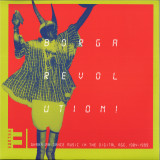
Kalita is excited to present the third volume in their groundbreaking ‘Borga Revolution!’ compilation series, exploring the revolutionary phenomenon of ‘Burger Highlife.’ This unique style fused West African melodies with synthesizers, disco, and boogie, a sound that took Ghanaian airwaves by storm in the 1980s and beyond. With previous volumes receiving strong support by tastemakers such as Gilles Peterson, Antal, Tom Ravenscroft, and Hunee, Volume 3 takes a deeper dive than ever before into the world of Ghanaian digital dance music. This volume features rare, sought-after tracks from artists including Obibini Takyi, Osei Banahene, and Okyerema Asante, as well as Burger Highlife trailblazers George Darko and Lee Dodou. Borga Revolution! Volume 3 offers a curated mix of standout anthems and rediscovered gems, many of which are otherwise nearly impossible to find, making this collection a must-have for fans and collectors alike.
The 1970s and 80s saw Ghanaian musicians begin to incorporate Western sounds like funk and disco into their music, reflecting the changing global musical landscape. However, the country's political instability and economic hardships, marked by military regimes and curfews, forced many artists to leave Ghana in search of better opportunities abroad. In Europe and the U.S., these musicians fused their traditional highlife roots with emerging digital sounds, using cutting-edge technology like the DX7 synthesizer and drum machines to create the genre now known as Burger Highlife. With ‘Borga Revolution!’ Kalita offers a vivid exposition of this musical transformation, using rare interviews, archival photos, and detailed liner notes to bring to life the pioneering spirit of both well-known icons and unsung innovators of Burger Highlife, one of West Africa’s most exciting musical movements.
Brand new Manchester imprint, 160 Street Recordings is excited to announce its first vinyl release, Evolutions EP, by the dynamic production duo of Response and Buda. With a reputation for carving out a distinctive uncompromising sound, the pair return with a gritty, dark collection of tracks that channel the deep, raw energy of early 90s Jungle and Jungle Techno.
Drawing influences from the breakbeat-driven sub-bass and atmospheric elements of that era, the Evolutions EP fuses heavy basslines, classic breaks, and dark, rave-inspired energy.
A1. Evolutions
The EP opens with the title track, ‘Evolutions’—a driving, atmospheric tune full of breakbeat intensity and underpinned by weighty sub bass. Kicking off with a memorable rave stab melody, the track builds with powerful percussion and a haunting, evolving soundscape that moves between light and dark.
A2. Fintons Dub
“Break, show ‘em something, but not too much….” ‘Fintons Dub’ brings a laid-back dubbed out groove, with a selection of classic breaks and a deep sub-bass foundation. An atmospheric pad and cinematic Kung Fu movie sample add depth to this cut, the breaks building gradually with delays as the track rolls out..
B1. Fintons Dub (Double 0 Remix)
No introduction is needed for Double 0, co-founder of legendary London club night Rupture and one of the pioneering figures of the original Hardcore Jungle Techno sound. His remix of ‘Fintons Dub’ takes the track back to his Doncaster warehouse roots, unleashing thunderous bass and breakbeat energy, a twisted mentasm and techno infused stabs. A true dancefloor weapon that embodies the true spirit of Jungle Techno.
B2. Acid Vein
Rounding off the e.p. is ‘Acid Vein’ a 303 led breakbeat bomb that infuses rolling breaks with a pounding sub bass and haunting jazz samples. Slower in tempo than the previous tracks and more reminiscent of the more formative years of rave, Acid Vein will also appeal to the wider breakbeat community.
In the depths of the underground, where the beat pulses through the concrete veins of the city and the soundscape echoes the soul of a movement, Infinity Plus One delivers the Reflexion EP – a raw and unapologetic nod to the gritty, underground roots of ‘90s techno and electro. Drawing inspiration from late-night warehouse parties, the machine-driven rhythms, and the futuristic sounds that emerged from the Motor City’s pioneers, Reflexion carries the essence of that golden era while pushing forward into new realms of sonic exploration. These four tracks, composed with deep grooves and dark, hypnotic sequences, offer a hard-hitting blend of electro-funk and house that will resonate with fans of both vintage and contemporary styles.
On Innocent Beginnings we find a bass-heavy, bouncy house rhythm mesh with haunting synth melodies, setting the tone for a journey through forward-looking machine soul. Next we have Dusk And Darkness which layers a breakbeat on an 808 electro groove to form a darker, ravey feel where all the emphasis is placed on the rolling beats and bassline. Flipping over we have Stand For Love which takes us on a deep house journey, showing a more sensitive and heartfelt side of the Infinity Plus One sound. Closing out this heavyweight four tracker you’ll find Ubiquity with its deep, atmospheric mood built around a snaking bassline whilst big synth stabs add an intensity to this club-ready groove.
Each track here is a manifesto, a declaration of sonic freedom, engineered for the DJs who understand the pulse of the underground. This is the music you feel in your chest, not just hear in your ears.
Ira James continues the fine curation of his excellent Vessel Recordings label here with a pair of legends taking care of a new three-track EP. Doc Martin and Joeski are long-time house royalty and they open up here with 'Join Hands' which is low-slung tech with rolling drums and some majestic piano chords that light up things with real emotion next to a passionate vocal. 'It's Time' pairs things back and allows a nice live-sounding and funky bassline to shine under percussive drums and 'Roots' has more swing to it as organic sound effects and crunchy snares all add detail.
- What Was
- Above Us
- What Am I? / Radio Tower
- Lotus Leaf
- Sideline
- Nature's Eternal
- Fiction Interlude
- All My Life
- Cycles
- Up In The Stars
- Grow
Luke Titus is a Chicago-born drummer, songwriter, producer, and multi-instrumentalist known for his remarkable versatility and genre-spanning artistry. With deep roots in jazz and a knack for blending it seamlessly with experimental music, drum & bass, and beyond, Titus has earned a reputation as a world-class drummer and a dynamic force across the national musical landscape. Growing up in Chicago's vibrant music scene, Titus flourished alongside fellow young artists in the early 2010s. His work quickly positioned him as a key figure in the city's jazz, hip-hop, and R&B communities, leading to collaborations that propelled him to national recognition. Continue to follow the thread of Luke Titus' many contributions to jazz and alternative scenes across America, and what emerges is a singular weave between his roots in Chicago, LA and New York communities. From What Was Will Grow A Flower is the second LP from the prolific young songwriter and producer, codifying his many musical leanings into an emergent, nearly clairvoyant statement of musical intent. Blooming and innovative songwriting, effervescent vocal hooks, virtuosic instrumental passages, and meticulously studied production techniques abound. About the album, Titus says "This album is about spirituality and connectivity, both with the universe and the self, as told through my personal journey. It questions reality as a way to deepen one's connection to it. I dedicate this album not only to anyone who has been through hard times, but to anyone who relates to the cyclical nature of the human experience. And more than that, I dedicate this album to my mom." As a producer and songwriter, Titus' fingerprints can be found on numerous acclaimed projects, including Noname's Room 25, Luke Titus & Cisco Swank's Some Things Take Time, Orion Sun's Orion, and Ravyn Lenae's Hypnos. His co-production credits span across a roster of innovative talents like Steve Lacy, Monte Booker, Brian Sanborn, Teo Halm, Phoelix, Cisco Swank, Saba, Kiefer, Elijah Fox, and Itai Shapira. Titus has taken his talents to the global stage, performing at high-profile festivals and venues such as Lollapalooza, Coachella, Pitchfork, Blue Note NYC, North Sea Jazz Fest, Smoking Grooves, Fuji Rock Festival, Blue Note Tokyo, and NYC Winter Jazz Fest, amongst many others.