Cerca:hic box

Generi
Tutto
  • 1
Aphrodite’s Child - 666 (The Apocalypse Of John) LP 2x12"

666 ist eines der originellsten Progressive-Rock-Alben aller Zeiten. Komponiert vom verstorbenen Maestro
Vangelis, mit Texten von Costas Ferris, ist es ein konzeptionelles Doppelalbum, das bei seiner Veröffentlichung als „ein Werk von atemberaubender Komplexität und Originalität“ gepriesen wurde und die
Krönung in der Karriere von Aphrodite’s Child darstellt.
Mit Stücken wie „The Four Horsemen“, „Aegian Sea“, „Babylon“, „Do It“, „The Beast“ und „All the
Seats Were Occupied“ hat das Album im Laufe der Jahrzehnte stetig an Ansehen gewonnen und nachfolgende Generationen von Musikern beeinflusst.
Diese Box enthält remasterte Audio-Versionen des Original-Album-Mixes und der seltenen griechischen
LP-Version von 1974 (die einen deutlich anderen Mix als die Original-LP-Veröffentlichung aufwies) sowie
eine Blu-ray-Disc mit 96 kHz / 24-Bit-Atmos- & 5.1-Upmixen & Stereo-Mix, die alle von Vangelis betreut
wurden. Die Disc enthält außerdem als Bonus eine 28-minütige Episode der französischen Fernsehsendung
Discorama vom Juni 1972, in der Vangelis über das Album spricht (mit englischen Untertiteln).
Die Box enthält ein reich bebildertes Buch mit einem neuen Essay und Originalinterviews mit der Band
sowie vielen bisher unveröffentlichten Fotos, die Vangelis kurz vor seinem Tod im Mai 2022 in seinen
verschiedenen Archiven in Europa aufgestöbert hat.

In Stock

Disponibile in Stock e pronto per la spedizione

32,73
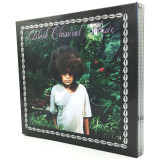
Yussef Dayes - Black Classical Music 2x12"

Box Set: Lift off lid box with crushed emerald felt lining, Includes Embossed Gatefold edition Double Tri-Colour Splatter Vinyl.

Plus limited edition Black Classical Music branded ProMark Drum Sticks, and branded Afro Comb.

Yussef Dayes veröffentlicht sein mit Spannung erwartetes Debüt-Solo-Studioalbum 'Black Classical Music' auf Brownswood. Zusammen mit Kamaal Williams brillierte der Multiinstrumentalist und Visionär auf dem Yussef Kamaal-Album 'Black Focus', das den Jazz FM Newcomer-Award 2016 gewann und zum Meilenstein der aktuellen Londoner Jazzbewegung avancierte. 'Black Classical Music' ist ein 19-Track-Werk, das die Zuhörer durch einen Spiegel auf die Vergangenheit und Gegenwart des einflussreichen Künstlers blicken lässt, während es Themen wie Zuhause und Familie erforscht. Inspiriert wird Yussef von seinen musikalischen Helden Miles Davis und Rahsaan Roland Kirk und seinen ausgedehnten Reisen rund um den Globus, die sein Studium des Rhythmus vertieft haben. Ehrenvolle Features auf 'Black Classical Music' bringen Chronixx, Jamilah Barry, Tom Misch, Shabaka Hutchings, Miles James, Sheila Maurice Grey, Nathaniel Cross, Theon Cross and the Chineke! Orchester, sowie Venna, Rocco Palladino, Charlie Stacey und Elijah Fox.

In Stock

Disponibile in Stock e pronto per la spedizione

133,40
George Harrison - All Things Must Pass (Boxset) LP 3x12"

All Things Must Pass wurde im November 1970 von Apple Records veröffentlicht. An dem von Harrison
und Phil Spector koproduzierten Album wirkten viele Musiker mit, darunter Eric Clapton, Ringo Starr,
Billy Preston, Pete Drake, Gary Wright, Klaus Voormann, Mitglieder von Badfinger, Musiker der Delaney
and Bonnie Band und John Barham. Die Dreifach-LP stürmte die Charts auf der ganzen Welt und wurde
allgemein als Rock-Meisterwerk gefeiert. George war der erste Beatle, der sowohl in Großbritannien als
auch in den USA eine Solo-Nummer-eins-Single hatte, und zwar mit der ersten Single des Albums, „My
Sweet Lord“, auf der er sein charakteristisches Slide-Gitarrenspiel vorstellte. George schrieb den Opener
des Albums, „I’d Have You Anytime“, zusammen mit seinem Freund Bob Dylan, der auch einen weiteren
Song auf diesem bahnbrechenden Album schrieb: „If Not For You“. Die Vinylplatte enthält einen neuen
Remix des Originalalbums und ein Originalposter, auf dessen Rückseite Notizen von Dhani Harrison und
Paul Hicks zum Remixen des Albums zu finden sind.
Musikrichtung: Pop international

non in magazzino

Ordina ora e ordineremo l'articolo per te presso il nostro fornitore.

93,07

Last In: 6 months ago
Jim Croce - The Definitve Croce

”The Definitve Croce”, eine Sammlung von Jim Croces unvergleichlichem Studioalben, die 1972 und 1973
veröffentlicht wurden, ist wieder als limitierte 3LP-Box aus farbigem Vinyl oder als limitierte 3CD-Box
erhältlich. Alle drei Alben enthalten aktualisierte Mixe von Paul Hicks (George Harrison, John Lennon).
Disk 1 ist das Studioalbum von 1972 „You Don’t Mess Around with Jim“. Das Album erreichte Platz 1 und
ist mit GOLD ausgezeichnet, und enthält die Nummer-1-Single „Time In A Bottle“, sowie die Hits „You
Don’t Mess Around With Jim“ und „Operator (That’s Not The Way It Feels).“ Disk 2 ist das Studioalbum
von 1973 „Life and Times“. Das Album erreichte die Top 10 und ist mit GOLD ausgezeichnet, und enthält
die GOLD-Nummer-1-Single „Bad, Bad Leroy Brown“, sowie den Hit „One Less Set Of Footsteps“. Disk
3 ist das letzte Studioalbum von Jim Croce „I Got A Name“, das 1973 veröffentlicht wurde. Das Album
erreichte Platz 2 und ist mit GOLD ausgezeichnet, und enthält die Top 10 Hits „I’ll Have To Say I Love
You In A Song“ und „I Got A Name“ sowie den Top 40 Hit „Workin’ At The Car Wash Blues.“

pre-ordina ora19.09.2025

dovrebbe essere pubblicato su 19.09.2025

65,97
Horatio Luna - Yes Doctor

Horatio Luna

Yes Doctor

12inchSAPE00825
La Sape
16.05.2025

Australia's left-field club renaissance keeps flowering, and Horatio Luna's cult 2020 debut Yes Doctor remains an essential root document. The LP welds dub-soaked bass pressure, broken-beat jack and smoky nu-jazz improv onto a house chassis—picture Moodymann deep cuts drifting through Dadawah's spiritual haze. Championed by Gilles Peterson after Luna appeared on Brownswood's Sunny Side Up compilation—where drummer Phil Stroud and synth maestro Dufresne also featured—the record was pieced together across 2019 during a run of late-night sessions while Hicks was living in the La Sape house. La Sape's brand-new 2025 pressing (cat. SAPE00825) uses freshly cut plates and presents the full ten-track programme on 140 g black vinyl. The package features subtle touch-ups to the jacket artwork and refreshed centre-label stickers while preserving the original aesthetic. "Yes Doctor is my coming-of-age—mixing every style I could think of into house, pushing aesthetic boundaries, making 'un-boxable' music," Luna says. File next to Theo Parrish and Yesterday's New Quintet: DJs will lock onto the title track's seven-minute bruk workout, while deeplistening customers will cherish the front-to-back journey in groove alchemy.

non in magazzino

Ordina ora e ordineremo l'articolo per te presso il nostro fornitore.

28,53

Last In: 9 months ago
Lee Tracy & Isaac Manning - Is it What You Want

As the sun sets on a quaint East Nashville house, a young man bares a piece of his soul. Facing the camera, sporting a silky suit jacket/shirt/slacks/fingerless gloves ensemble that announces "singer" before he's even opened his mouth, Lee Tracy Johnson settles onto his stage, the front yard. He sways to the dirge-like drum machine pulse of a synth-soaked slow jam, extends his arms as if gaining his balance, and croons in affecting, fragile earnest, "I need your love… oh baby…"

Dogs in the yard next door begin barking. A mysterious cardboard robot figure, beamed in from galaxies unknown and affixed to a tree, is less vocal. Lee doesn't acknowledge either's presence. He's busy feeling it, arms and hands gesticulating. His voice rises in falsetto over the now-quiet dogs, over the ambient noise from the street that seeps into the handheld camcorder's microphone, over the recording of his own voice played back from a boombox off-camera. After six minutes the single, continuous shot ends. In this intimate creative universe there are no re-takes. There are many more music videos to shoot, and as Lee later puts it, "The first time you do it is actually the best. Because you can never get that again. You expressing yourself from within."

"I Need Your Love" dates from a lost heyday. From some time in the '80s or early '90s, when Lee Tracy (as he was known in performance) and his music partner/producer/manager Isaac Manning committed hours upon hours of their sonic and visual ideas to tape. Embracing drum machines and synthesizers – electronics that made their personal futurism palpable – they recorded exclusively at home, live in a room into a simple cassette deck. Soul, funk, electro and new wave informed their songs, yet Lee and Isaac eschewed the confinement of conventional categories and genres, preferring to let experimentation guide them.

"Anytime somebody put out a new record they had the same instruments or the same sound," explains Isaac. "So I basically wanted to find something that's really gonna stand out away from all of the rest of 'em." Their ethos meant that every idea they came up with was at least worth trying: echoed out half-rapped exhortations over frantic techno-style beats, gospel synth soul, modal electro-funk, oddball pop reinterpretations, emo AOR balladry, nods to Prince and the Fat Boys, or arrangements that might collapse mid-song into a mess of arcade game-ish blips before rallying to reach the finish line. All of it conjoined by consistent tape hiss, and most vitally, Lee's chameleonic voice, which managed to wildly shape shift and still evoke something sincere – whether toggling between falsetto and tenor exalting Jesus's return, or punctuating a melismatic romantic adlib with a succinct, "We all know how it feels to be alone."

"People think we went to a studio," says Isaac derisively. "We never went to no studio. We didn't have the money to go to no studio! We did this stuff at home. I shot videos in my front yard with whatever we could to get things together." Sometimes Isaac would just put on an instrumental record, be it "Planet Rock" or "Don't Cry For Me Argentina" (from Evita), press "record," and let Lee improvise over it, yielding peculiar love songs, would-be patriotic anthems, or Elvis Presley or Marilyn Monroe tributes. Technical limitations and a lack of professional polish never dissuaded them. They believed they were onto something.

"That struggle," Isaac says, "made that sound sound good to me."

In the parlance of modern music criticism Lee and Isaac's dizzying DIY efforts would inevitably be described as "outsider." But "outsider" carries the burden of untold additional layers of meaning if you're Black and from the South, creating on a budget, and trying to get someone, anyone within the country music capital of the world to take your vision seriously. "What category should we put it in?" Isaac asks rhetorically. "I don't know. All I know is feeling. I ain't gonna name it nothing. It's music. If it grabs your soul and touch your heart that's what it basically is supposed to do."

=

Born in 1963, the baby boy of nine siblings, Lee Tracy spent his earliest years living amidst the shotgun houses on Nashville's south side. "We was poor, man!" he says, recalling the outhouse his family used for a bathroom and the blocks of ice they kept in the kitchen to chill perishables. "But I actually don't think I really realized I was in poverty until I got grown and started thinking about it." Lee's mom worked at the Holiday Inn; his dad did whatever he had to do, from selling fruit from a horse drawn cart to bootlegging. "We didn't have much," Lee continues, "but my mother and my father got us the things we needed, the clothes on our back." By the end of the decade with the city's urban renewal programs razing entire neighborhoods to accommodate construction of the Interstate, the family moved to Edgehill Projects. Lee remembers music and art as a constant source of inspiration for he and his brothers and sisters – especially after seeing the Jackson 5 perform on Ed Sullivan. "As a small child I just knew that was what I wanted to do."

His older brother Don began musically mentoring him, introducing Lee to a variety of instruments and sounds. "He would never play one particular type of music, like R&B," says Lee. "I was surrounded by jazz, hard rock and roll, easy listening, gospel, reggae, country music; I mean I was a sponge absorbing all of that." Lee taught himself to play drums by beating on cardboard boxes, gaining a rep around the way for his timekeeping, and his singing voice. Emulating his favorites, Earth Wind & Fire and Cameo, he formed groups with other kids with era-evocative band names like Concept and TNT Connection, and emerged as the leader of disciplined rehearsals. "I made them practice," says Lee. "We practiced and practiced and practiced. Because I wanted that perfection." By high school the most accomplished of these bands would take top prize in a prominent local talent show. It was a big moment for Lee, and he felt ready to take things to the next level. But his band-mates had other ideas.

"I don't know what happened," he says, still miffed at the memory. "It must have blew they mind after we won and people started showing notice, because it's like everybody quit! I was like, where the hell did everybody go?" Lee had always made a point of interrogating prospective musicians about their intentions before joining his groups: were they really serious or just looking for a way to pick up girls? Now he understood even more the importance of finding a collaborator just as committed to the music as he was.

=

Isaac Manning had spent much of his life immersed in music and the arts – singing in the church choir with his family on Nashville's north side, writing, painting, dancing, and working various gigs within the entertainment industry. After serving in the armed forces, in the early '70s he ran The Teenage Place, a music and performance venue that catered to the local youth. But he was forced out of town when word of one of his recreational routines created a stir beyond the safe haven of his bohemian circles.

"I was growing marijuana," Isaac explains. "It wasn't no business, I was smoking it myself… I would put marijuana in scrambled eggs, cornbread and stuff." His weed use originated as a form of self-medication to combat severe tooth pain. But when he began sharing it with some of the other young people he hung out with, some of who just so happened to be the kids of Nashville politicians, the cops came calling. "When I got busted," he remembers, "they were talking about how they were gonna get rid of me because they didn't want me saying nothing about they children because of the politics and stuff. So I got my family, took two raggedy cars, and left Nashville and went to Vegas."

Out in the desert, Isaac happened to meet Chubby Checker of "The Twist" fame while the singer was gigging at The Flamingo. Impressed by Isaac's zeal, Checker invited him to go on the road with him as his tour manager/roadie/valet. The experience gave Isaac a window into a part of the entertainment world he'd never encountered – a glimpse of what a true pop act's audience looked like. "Chubby Checker, none of his shows were played for Black folks," he remembers. "All his gigs were done at high-class white people areas." Returning home after a few years with Chubby, Isaac was properly motivated to make it in Music City. He began writing songs and scouting around Nashville for local talent anywhere he could find it with an expressed goal: "Find someone who can deliver your songs the way you want 'em delivered and make people feel what you want them to feel."

One day while walking through Edgehill Projects Isaac heard someone playing the drums in a way that made him stop and take notice. "The music was so tight, just the drums made me feel like, oh I'm-a find this person," he recalls. "So I circled through the projects until I found who it was.

"That's how I met him – Lee Tracy. When I found him and he started singing and stuff, I said, ohhh, this is somebody different."

=

Theirs was a true complementary partnership: young Lee possessed the raw talent, the older Isaac the belief. "He's really the only one besides my brother and my family that really seen the potential in me," says Lee. "He made me see that I could do it."

Isaac long being a night owl, his house also made for a fertile collaborative environment – a space where there always seemed to be a new piece of his visual art on display: paintings, illustrations, and dolls and figures (including an enigmatic cardboard robot). Lee and Issac would hang out together and talk, listen to music, conjure ideas, and smoke the herb Isaac had resumed growing in his yard. "It got to where I could trust him, he could trust me," Isaac says of their bond. They also worked together for hours on drawings, spreading larges rolls of paper on the walls and sketching faces with abstract patterns and imagery: alien-like beings, tri-horned horse heads, inverted Janus-like characters where one visage blurred into the other.

Soon it became apparent that they didn't need other collaborators; self-sufficiency was the natural way forward. At Isaac's behest Lee, already fed up with dealing with band musicians, began playing around with a poly-sonic Yamaha keyboard at the local music store. "It had everything on it – trumpet, bass, drums, organ," remembers Lee. "And that's when I started recording my own stuff."

The technology afforded Lee the flexibility and independence he craved, setting him on a path other bedroom musicians and producers around the world were simultaneously following through the '80s into the early '90s. Saving up money from day jobs, he eventually supplemented the Yamaha Isaac had gotten him with Roland and Casio drum machines and a Moog. Lee was living in an apartment in Hillside at that point caring for his dad, who'd been partially paralyzed since early in life. In the evenings up in his second floor room, the music put him in a zone where he could tune out everything and lose himself in his ideas.

"Oh I loved it," he recalls. "I would really experiment with the instruments and use a lot of different sound effects. I was looking for something nobody else had. I wanted something totally different. And once I found the sound I was looking for, I would just smoke me a good joint and just let it go, hit the record button." More potent a creative stimulant than even Isaac's weed was the holistic flow and spontaneity of recording. Between sessions at Isaac's place and Lee's apartment, their volume of output quickly ballooned.

"We was always recording," says Lee. "That's why we have so much music. Even when I went to Isaac's and we start creating, I get home, my mind is racing, I gotta start creating, creating, creating. I remember there were times when I took a 90-minute tape from front to back and just filled it up."

"We never practiced," says Isaac. "See, that was just so odd about the whole thing. I could relate to him, and tell him about the songs I had ideas for and everything and stuff. And then he would bring it back or whatever, and we'd get together and put it down." Once the taskmaster hell bent on rehearsing, Lee had flipped a full 180. Perfection was no longer an aspiration, but the enemy of inspiration.

"I seen where practicing and practicing got me," says Lee. "A lot of musicians you get to playing and they gotta stop, they have to analyze the music. But while you analyzing you losing a lot of the greatness of what you creating. Stop analyzing what you play, just play! And it'll all take shape."

=

"I hope you understood the beginning of the record because this was invented from a dream I had today… (You tell me, I'll tell you, we'll figure it out together)" – Lee Tracy and Isaac Manning, "Hope You Understand"

Lee lets loose a maniacal cackle when he acknowledges that the material that he and Isaac recorded was by anyone's estimation pretty out there. It's the same laugh that commences "Hope You Understand" – a chaotic transmission that encapsulates the duality at the heart of their music: a stated desire to reach people and a compulsion to go as leftfield as they saw fit.

"We just did it," says Lee. "We cut the music on and cut loose. I don't sit around and write. I do it by listening, get a feeling, play the music, and the lyrics and stuff just come out of me."

The approach proved adaptable to interpreting other artists' material. While recording a cover of Whitney Houston's pop ballad "Saving All My Love For You," Lee played Whitney's version in his headphones as he laid down his own vocals – partially following the lyrics, partially using them as a departure point. The end result is barely recognizable compared with the original, Lee and Isaac having switched up the time signature and reinvented the melody along the way towards morphing a slick mainstream radio standard into something that sounds solely their own.

"I really used that song to get me started," says Lee. "Then I said, well I need something else, something is missing. Something just came over me. That's when I came up with 'Is It What You Want.'"

The song would become the centerpiece of Lee and Isaac's repertoire. Pushed along by a percolating metronomic Rhythm King style beat somewhere between a military march and a samba, "Is It What You Want" finds Lee pleading the sincerity of his commitment to a potential love interest embellished by vocal tics and hiccups subtlely reminiscent of his childhood hero MJ. Absent chord changes, only synth riffs gliding in and out like apparitions, the song achieves a lingering lo-fi power that leaves you feeling like it's still playing, somewhere, even after the fade out.

"I don't know, it's like a real spiritual song," Lee reflects. "But it's not just spiritual. To me the more I listen to it it's like about everything that you do in your everyday life, period. Is it what you want? Do you want a car or you don't want a car? Do you want Jesus or do you want the Devil? It's basically asking you the question. Can't nobody answer the question but you yourself."

In 1989 Lee won a lawsuit stemming from injuries sustained from a fight he'd gotten into. He took part of the settlement money and with Isaac pressed up "Saving All My Love For You" b/w "Is It What You Want" as a 45 single. Isaac christened the label One Chance Records. "Because that's all we wanted," he says with a laugh, "one chance."

Isaac sent the record out to radio stations and major labels, hoping for it to make enough noise to get picked up nationally. But the response he and Lee were hoping for never materialized. According to Isaac the closest the single got to getting played on the radio is when a disk jock from a local station made a highly unusual announcement on air: "The dude said on the radio, 107.5 – 'We are not gonna play 'Is It What You Want.' We cracked up! Wow, that's deep.

"It was a whole racist thing that was going on," he reflects. "So we just looked over and kept on going. That was it. That was about the way it goes… If you were Black and you were living in Nashville and stuff, that's the way you got treated." Isaac already knew as much from all the times he'd brought he and Lee's tapes (even their cache of country music tunes) over to Music Row to try to drum up interest to no avail.

"Isaac, he really worked his ass off," says Lee. "He probably been to every record place down on Music Row." Nashville's famed recording and music business corridor wasn't but a few blocks from where Lee grew up. Close enough, he remembers, for him to ride his bike along its back alleys and stumble upon the occasional random treasure, like a discarded box of harmonicas. Getting in through the front door, however, still felt a world away.

"I just don't think at the time our music fell into a category for them," he concedes. "It was before its time."

=

Lee stopped making music some time in the latter part of the '90s, around the time his mom passed away and life became increasingly tough to manage. "When my mother died I had a nervous breakdown," he says, "So I shut down for a long time. I was in such a sadness frame of mind. That's why nobody seen me. I had just disappeared off the map." He fell out of touch with Isaac, and in an indication of just how bad things had gotten for him, lost track of all the recordings they'd made together. Music became a distant memory.

Fortunately, Isaac kept the faith. In a self-published collection of his poetry – paeans to some of his favorite entertainment and public figures entitled Friends and Dick Clark – he'd written that he believed "music has a life of its own." But his prescience and presence of mind were truly manifested in the fact that he kept an archive of he and Lee's work. As perfectly imperfect as "Is It What You Want" now sounds in a post-Personal Space world, Lee and Isaac's lone official release was in fact just a taste. The bulk of the Is It What You Want album is culled from the pair's essentially unheard home recordings – complete songs, half-realized experiments, Isaac's blue monologues and pronouncements et al – compiled, mixed and programmed in the loose and impulsive creative spirit of their regular get-togethers from decades ago. The rest of us, it seems, may have finally caught up to them.

On the prospect of at long last reaching a wider audience, Isaac says simply, "I been trying for a long time, it feels good." Ever the survivor, he adds, "The only way I know how to make it to the top is to keep climbing. If one leg break on the ladder, hey, you gotta fix it and keep on going… That's where I be at. I'll kill death to make it out there."

For Lee it all feels akin to a personal resurrection: "It's like I was in a tomb and the tomb was opened and I'm back… Man, it feels so great. I feel like I'm gonna jump out of my skin." Success at this stage of his life, he realizes, probably means something different than what it did back when he was singing and dancing in Isaac's front yard. "What I really mean by 'making it,'" he explains isn't just the music being heard but, "the story being told."

Occasionally Lee will pull up "Is It What You Want" on YouTube on his phone, put on his headphones, and listen. He remembers the first time he heard his recorded voice. How surreal it was, how he thought to himself, "Is that really me?" What would he say to that younger version of himself now?

"I would probably tell myself, hang in there, don't give up. Keep striving for the goal. And everything will work out."

Despite what's printed on the record label, sometimes you do get more than one chance.

non in magazzino

Ordina ora e ordineremo l'articolo per te presso il nostro fornitore.

11,72

Last In: 3 years ago
Lee Tracy & Isaac Manning - Is it What You Want LP

As the sun sets on a quaint East Nashville house, a young man bares a piece of his soul. Facing the camera, sporting a silky suit jacket/shirt/slacks/fingerless gloves ensemble that announces "singer" before he's even opened his mouth, Lee Tracy Johnson settles onto his stage, the front yard. He sways to the dirge-like drum machine pulse of a synth-soaked slow jam, extends his arms as if gaining his balance, and croons in affecting, fragile earnest, "I need your love… oh baby…"

Dogs in the yard next door begin barking. A mysterious cardboard robot figure, beamed in from galaxies unknown and affixed to a tree, is less vocal. Lee doesn't acknowledge either's presence. He's busy feeling it, arms and hands gesticulating. His voice rises in falsetto over the now-quiet dogs, over the ambient noise from the street that seeps into the handheld camcorder's microphone, over the recording of his own voice played back from a boombox off-camera. After six minutes the single, continuous shot ends. In this intimate creative universe there are no re-takes. There are many more music videos to shoot, and as Lee later puts it, "The first time you do it is actually the best. Because you can never get that again. You expressing yourself from within."

"I Need Your Love" dates from a lost heyday. From some time in the '80s or early '90s, when Lee Tracy (as he was known in performance) and his music partner/producer/manager Isaac Manning committed hours upon hours of their sonic and visual ideas to tape. Embracing drum machines and synthesizers – electronics that made their personal futurism palpable – they recorded exclusively at home, live in a room into a simple cassette deck. Soul, funk, electro and new wave informed their songs, yet Lee and Isaac eschewed the confinement of conventional categories and genres, preferring to let experimentation guide them.

"Anytime somebody put out a new record they had the same instruments or the same sound," explains Isaac. "So I basically wanted to find something that's really gonna stand out away from all of the rest of 'em." Their ethos meant that every idea they came up with was at least worth trying: echoed out half-rapped exhortations over frantic techno-style beats, gospel synth soul, modal electro-funk, oddball pop reinterpretations, emo AOR balladry, nods to Prince and the Fat Boys, or arrangements that might collapse mid-song into a mess of arcade game-ish blips before rallying to reach the finish line. All of it conjoined by consistent tape hiss, and most vitally, Lee's chameleonic voice, which managed to wildly shape shift and still evoke something sincere – whether toggling between falsetto and tenor exalting Jesus's return, or punctuating a melismatic romantic adlib with a succinct, "We all know how it feels to be alone."

"People think we went to a studio," says Isaac derisively. "We never went to no studio. We didn't have the money to go to no studio! We did this stuff at home. I shot videos in my front yard with whatever we could to get things together." Sometimes Isaac would just put on an instrumental record, be it "Planet Rock" or "Don't Cry For Me Argentina" (from Evita), press "record," and let Lee improvise over it, yielding peculiar love songs, would-be patriotic anthems, or Elvis Presley or Marilyn Monroe tributes. Technical limitations and a lack of professional polish never dissuaded them. They believed they were onto something.

"That struggle," Isaac says, "made that sound sound good to me."

In the parlance of modern music criticism Lee and Isaac's dizzying DIY efforts would inevitably be described as "outsider." But "outsider" carries the burden of untold additional layers of meaning if you're Black and from the South, creating on a budget, and trying to get someone, anyone within the country music capital of the world to take your vision seriously. "What category should we put it in?" Isaac asks rhetorically. "I don't know. All I know is feeling. I ain't gonna name it nothing. It's music. If it grabs your soul and touch your heart that's what it basically is supposed to do."

=

Born in 1963, the baby boy of nine siblings, Lee Tracy spent his earliest years living amidst the shotgun houses on Nashville's south side. "We was poor, man!" he says, recalling the outhouse his family used for a bathroom and the blocks of ice they kept in the kitchen to chill perishables. "But I actually don't think I really realized I was in poverty until I got grown and started thinking about it." Lee's mom worked at the Holiday Inn; his dad did whatever he had to do, from selling fruit from a horse drawn cart to bootlegging. "We didn't have much," Lee continues, "but my mother and my father got us the things we needed, the clothes on our back." By the end of the decade with the city's urban renewal programs razing entire neighborhoods to accommodate construction of the Interstate, the family moved to Edgehill Projects. Lee remembers music and art as a constant source of inspiration for he and his brothers and sisters – especially after seeing the Jackson 5 perform on Ed Sullivan. "As a small child I just knew that was what I wanted to do."

His older brother Don began musically mentoring him, introducing Lee to a variety of instruments and sounds. "He would never play one particular type of music, like R&B," says Lee. "I was surrounded by jazz, hard rock and roll, easy listening, gospel, reggae, country music; I mean I was a sponge absorbing all of that." Lee taught himself to play drums by beating on cardboard boxes, gaining a rep around the way for his timekeeping, and his singing voice. Emulating his favorites, Earth Wind & Fire and Cameo, he formed groups with other kids with era-evocative band names like Concept and TNT Connection, and emerged as the leader of disciplined rehearsals. "I made them practice," says Lee. "We practiced and practiced and practiced. Because I wanted that perfection." By high school the most accomplished of these bands would take top prize in a prominent local talent show. It was a big moment for Lee, and he felt ready to take things to the next level. But his band-mates had other ideas.

"I don't know what happened," he says, still miffed at the memory. "It must have blew they mind after we won and people started showing notice, because it's like everybody quit! I was like, where the hell did everybody go?" Lee had always made a point of interrogating prospective musicians about their intentions before joining his groups: were they really serious or just looking for a way to pick up girls? Now he understood even more the importance of finding a collaborator just as committed to the music as he was.

=

Isaac Manning had spent much of his life immersed in music and the arts – singing in the church choir with his family on Nashville's north side, writing, painting, dancing, and working various gigs within the entertainment industry. After serving in the armed forces, in the early '70s he ran The Teenage Place, a music and performance venue that catered to the local youth. But he was forced out of town when word of one of his recreational routines created a stir beyond the safe haven of his bohemian circles.

"I was growing marijuana," Isaac explains. "It wasn't no business, I was smoking it myself… I would put marijuana in scrambled eggs, cornbread and stuff." His weed use originated as a form of self-medication to combat severe tooth pain. But when he began sharing it with some of the other young people he hung out with, some of who just so happened to be the kids of Nashville politicians, the cops came calling. "When I got busted," he remembers, "they were talking about how they were gonna get rid of me because they didn't want me saying nothing about they children because of the politics and stuff. So I got my family, took two raggedy cars, and left Nashville and went to Vegas."

Out in the desert, Isaac happened to meet Chubby Checker of "The Twist" fame while the singer was gigging at The Flamingo. Impressed by Isaac's zeal, Checker invited him to go on the road with him as his tour manager/roadie/valet. The experience gave Isaac a window into a part of the entertainment world he'd never encountered – a glimpse of what a true pop act's audience looked like. "Chubby Checker, none of his shows were played for Black folks," he remembers. "All his gigs were done at high-class white people areas." Returning home after a few years with Chubby, Isaac was properly motivated to make it in Music City. He began writing songs and scouting around Nashville for local talent anywhere he could find it with an expressed goal: "Find someone who can deliver your songs the way you want 'em delivered and make people feel what you want them to feel."

One day while walking through Edgehill Projects Isaac heard someone playing the drums in a way that made him stop and take notice. "The music was so tight, just the drums made me feel like, oh I'm-a find this person," he recalls. "So I circled through the projects until I found who it was.

"That's how I met him – Lee Tracy. When I found him and he started singing and stuff, I said, ohhh, this is somebody different."

=

Theirs was a true complementary partnership: young Lee possessed the raw talent, the older Isaac the belief. "He's really the only one besides my brother and my family that really seen the potential in me," says Lee. "He made me see that I could do it."

Isaac long being a night owl, his house also made for a fertile collaborative environment – a space where there always seemed to be a new piece of his visual art on display: paintings, illustrations, and dolls and figures (including an enigmatic cardboard robot). Lee and Issac would hang out together and talk, listen to music, conjure ideas, and smoke the herb Isaac had resumed growing in his yard. "It got to where I could trust him, he could trust me," Isaac says of their bond. They also worked together for hours on drawings, spreading larges rolls of paper on the walls and sketching faces with abstract patterns and imagery: alien-like beings, tri-horned horse heads, inverted Janus-like characters where one visage blurred into the other.

Soon it became apparent that they didn't need other collaborators; self-sufficiency was the natural way forward. At Isaac's behest Lee, already fed up with dealing with band musicians, began playing around with a poly-sonic Yamaha keyboard at the local music store. "It had everything on it – trumpet, bass, drums, organ," remembers Lee. "And that's when I started recording my own stuff."

The technology afforded Lee the flexibility and independence he craved, setting him on a path other bedroom musicians and producers around the world were simultaneously following through the '80s into the early '90s. Saving up money from day jobs, he eventually supplemented the Yamaha Isaac had gotten him with Roland and Casio drum machines and a Moog. Lee was living in an apartment in Hillside at that point caring for his dad, who'd been partially paralyzed since early in life. In the evenings up in his second floor room, the music put him in a zone where he could tune out everything and lose himself in his ideas.

"Oh I loved it," he recalls. "I would really experiment with the instruments and use a lot of different sound effects. I was looking for something nobody else had. I wanted something totally different. And once I found the sound I was looking for, I would just smoke me a good joint and just let it go, hit the record button." More potent a creative stimulant than even Isaac's weed was the holistic flow and spontaneity of recording. Between sessions at Isaac's place and Lee's apartment, their volume of output quickly ballooned.

"We was always recording," says Lee. "That's why we have so much music. Even when I went to Isaac's and we start creating, I get home, my mind is racing, I gotta start creating, creating, creating. I remember there were times when I took a 90-minute tape from front to back and just filled it up."

"We never practiced," says Isaac. "See, that was just so odd about the whole thing. I could relate to him, and tell him about the songs I had ideas for and everything and stuff. And then he would bring it back or whatever, and we'd get together and put it down." Once the taskmaster hell bent on rehearsing, Lee had flipped a full 180. Perfection was no longer an aspiration, but the enemy of inspiration.

"I seen where practicing and practicing got me," says Lee. "A lot of musicians you get to playing and they gotta stop, they have to analyze the music. But while you analyzing you losing a lot of the greatness of what you creating. Stop analyzing what you play, just play! And it'll all take shape."

=

"I hope you understood the beginning of the record because this was invented from a dream I had today… (You tell me, I'll tell you, we'll figure it out together)" – Lee Tracy and Isaac Manning, "Hope You Understand"

Lee lets loose a maniacal cackle when he acknowledges that the material that he and Isaac recorded was by anyone's estimation pretty out there. It's the same laugh that commences "Hope You Understand" – a chaotic transmission that encapsulates the duality at the heart of their music: a stated desire to reach people and a compulsion to go as leftfield as they saw fit.

"We just did it," says Lee. "We cut the music on and cut loose. I don't sit around and write. I do it by listening, get a feeling, play the music, and the lyrics and stuff just come out of me."

The approach proved adaptable to interpreting other artists' material. While recording a cover of Whitney Houston's pop ballad "Saving All My Love For You," Lee played Whitney's version in his headphones as he laid down his own vocals – partially following the lyrics, partially using them as a departure point. The end result is barely recognizable compared with the original, Lee and Isaac having switched up the time signature and reinvented the melody along the way towards morphing a slick mainstream radio standard into something that sounds solely their own.

"I really used that song to get me started," says Lee. "Then I said, well I need something else, something is missing. Something just came over me. That's when I came up with 'Is It What You Want.'"

The song would become the centerpiece of Lee and Isaac's repertoire. Pushed along by a percolating metronomic Rhythm King style beat somewhere between a military march and a samba, "Is It What You Want" finds Lee pleading the sincerity of his commitment to a potential love interest embellished by vocal tics and hiccups subtlely reminiscent of his childhood hero MJ. Absent chord changes, only synth riffs gliding in and out like apparitions, the song achieves a lingering lo-fi power that leaves you feeling like it's still playing, somewhere, even after the fade out.

"I don't know, it's like a real spiritual song," Lee reflects. "But it's not just spiritual. To me the more I listen to it it's like about everything that you do in your everyday life, period. Is it what you want? Do you want a car or you don't want a car? Do you want Jesus or do you want the Devil? It's basically asking you the question. Can't nobody answer the question but you yourself."

In 1989 Lee won a lawsuit stemming from injuries sustained from a fight he'd gotten into. He took part of the settlement money and with Isaac pressed up "Saving All My Love For You" b/w "Is It What You Want" as a 45 single. Isaac christened the label One Chance Records. "Because that's all we wanted," he says with a laugh, "one chance."

Isaac sent the record out to radio stations and major labels, hoping for it to make enough noise to get picked up nationally. But the response he and Lee were hoping for never materialized. According to Isaac the closest the single got to getting played on the radio is when a disk jock from a local station made a highly unusual announcement on air: "The dude said on the radio, 107.5 – 'We are not gonna play 'Is It What You Want.' We cracked up! Wow, that's deep.

"It was a whole racist thing that was going on," he reflects. "So we just looked over and kept on going. That was it. That was about the way it goes… If you were Black and you were living in Nashville and stuff, that's the way you got treated." Isaac already knew as much from all the times he'd brought he and Lee's tapes (even their cache of country music tunes) over to Music Row to try to drum up interest to no avail.

"Isaac, he really worked his ass off," says Lee. "He probably been to every record place down on Music Row." Nashville's famed recording and music business corridor wasn't but a few blocks from where Lee grew up. Close enough, he remembers, for him to ride his bike along its back alleys and stumble upon the occasional random treasure, like a discarded box of harmonicas. Getting in through the front door, however, still felt a world away.

"I just don't think at the time our music fell into a category for them," he concedes. "It was before its time."

=

Lee stopped making music some time in the latter part of the '90s, around the time his mom passed away and life became increasingly tough to manage. "When my mother died I had a nervous breakdown," he says, "So I shut down for a long time. I was in such a sadness frame of mind. That's why nobody seen me. I had just disappeared off the map." He fell out of touch with Isaac, and in an indication of just how bad things had gotten for him, lost track of all the recordings they'd made together. Music became a distant memory.

Fortunately, Isaac kept the faith. In a self-published collection of his poetry – paeans to some of his favorite entertainment and public figures entitled Friends and Dick Clark – he'd written that he believed "music has a life of its own." But his prescience and presence of mind were truly manifested in the fact that he kept an archive of he and Lee's work. As perfectly imperfect as "Is It What You Want" now sounds in a post-Personal Space world, Lee and Isaac's lone official release was in fact just a taste. The bulk of the Is It What You Want album is culled from the pair's essentially unheard home recordings – complete songs, half-realized experiments, Isaac's blue monologues and pronouncements et al – compiled, mixed and programmed in the loose and impulsive creative spirit of their regular get-togethers from decades ago. The rest of us, it seems, may have finally caught up to them.

On the prospect of at long last reaching a wider audience, Isaac says simply, "I been trying for a long time, it feels good." Ever the survivor, he adds, "The only way I know how to make it to the top is to keep climbing. If one leg break on the ladder, hey, you gotta fix it and keep on going… That's where I be at. I'll kill death to make it out there."

For Lee it all feels akin to a personal resurrection: "It's like I was in a tomb and the tomb was opened and I'm back… Man, it feels so great. I feel like I'm gonna jump out of my skin." Success at this stage of his life, he realizes, probably means something different than what it did back when he was singing and dancing in Isaac's front yard. "What I really mean by 'making it,'" he explains isn't just the music being heard but, "the story being told."

Occasionally Lee will pull up "Is It What You Want" on YouTube on his phone, put on his headphones, and listen. He remembers the first time he heard his recorded voice. How surreal it was, how he thought to himself, "Is that really me?" What would he say to that younger version of himself now?

"I would probably tell myself, hang in there, don't give up. Keep striving for the goal. And everything will work out."

Despite what's printed on the record label, sometimes you do get more than one chance.
non in magazzino

Ordina ora e ordineremo l'articolo per te presso il nostro fornitore.

23,49

Last In: 3 years ago
Bob Mould - Distortion: 1989-1995

Bob Mould

Distortion: 1989-1995

8x12"-VinylDEMRECBOX48
Demon Records
02.10.2020
  • LP 1: – Bob Mould - Workbook (1989)
  • A1: Sunspots
  • A2: Wishing Well
  • A3: Heartbreak A Stranger
  • A4: See A Little Light
  • A5: Poison Years
  • A6: Sinners And Their Repentances
  • B1: Brasilia Crossed With Trenton
  • B2: Compositions For The Young And Old
  • B3: Lonely Afternoon
  • B4: Dreaming, I Am
  • B5: Whichever Way The Wind Blows
  • LP 2: – Bob Mould - Blacksheets Of Rain (1990)
  • C1: Black Sheets Of Rain
  • C2: Stand Guard
  • C3: It’s Too Late
  • C4: One Good Reason
  • C5: Stop Your Crying
  • D1: Hanging Tree
  • D2: The Last Night
  • D3: Hear Me Calling
  • D4: Out Of Your Life
  • D5: Disappointed
  • LP 3: – Sugar – Copper Blue (1992)
  • E1: The Act We Act
  • E2: A Good Idea
  • E3: Changes
  • E4: Helpless
  • E5: Hoover Dam
  • F1: The Slim
  • F2: If I Can't Change Your Mind
  • F3: Fortune Teller
  • F4: Slick
  • F5: Man On The Moon
  • LP 4: – Sugar – Beaster (1993)
  • G1: Come Around
  • G2: Tilted
  • G3: Judas Cradle
  • H1: Jc Auto
  • H2: Feeling Better
  • H3: Walking Away
  • LP 5: – Sugar – File Under: Easy Listening (1994)
  • I1: Gift
  • I2: Company Book
  • I3: Your Favorite Thing
  • I4: What You Want It To Be
  • I5: Gee Angel
  • D6: Sacrifice / Let There Be Peace
  • J1: Panama City Motel
  • J2: Can't Help You Anymore
  • J3: Granny Cool
  • J4: Believe What You're Saying
  • J5: Explode And Make Up
  • LP 6: & 7 – Sugar – Besides (1995)
  • K1: Needle Hits E
  • K2: If I Can't Change Your Mind (Solo Mix)
  • K3: Try Again
  • K4: Where Diamonds Are Halos (Live At The Cabaret Metro, 22Nd July 1992)
  • K5: Armenia City In The Sky (Live At The Cabaret Metro, 22Nd July 1992)
  • L1: Clownmaster
  • L2: Anyone (Live At The Cabaret Metro, 22Nd July 1992)
  • L3: Jc Auto (Live At The Cabaret Metro, 22Nd July 1992)
  • L4: Believe What You're Saying (Campfire Mix)
  • L5: Mind Is An Island
  • M1: Frustration
  • M2: Going Home
  • M3: In The Eyes Of My Friends
  • M4: And You Tell Me
  • N1: If I Can't Change Your Mind (Bbc Radio Session)
  • N2: Hoover Dam (Bbc Radio Session)
  • N3: The Slim (Bbc Radio Session)
  • N4: Where Diamonds Are Halos (Bbc Radio Session)
  • LP 8: – Distortion Plus:1989 – 1995
  • O1: All Those People Know
  • O2: No Water In Hell
  • O3: Dying From The Inside Out
  • P1: Dio
  • P2: Hickory Wind
  • P3: Can’t Fight It
  • P4: Turning Of The Tide

Demon Records presents Distortion: 1989-1995, the first in a series of four expansive vinyl box sets chronicling the solo career of legendary American musician Bob Mould. Bob Mould’s career began in 1979 with the iconic underground punk group Hüsker Dü before forming the beloved alternative rock band Sugar and releasing numerous critically acclaimed solo albums. Volume one in this new series covers 1989 to 1995, beginning with Mould’s first post Hüsker Dü album Workbook and continuing through to Sugar’s final studio album File Under: Easy Listening.

Each album is presented with brand new artwork designed by illustrator Simon Marchner and pressed on 140g clear vinyl with unique splatter effects.

Includes a 28-page companion booklet featuring: liner notes by journalist Keith Cameron; a foreword by writer and actor Fred Armisen; a tribute from Richard Thompson; lyrics and memorabilia.

Mastered by Jeff Lipton and Maria Rice at Peerless Mastering in Boston.

Featuring an array of bonus tracks including Sugar’s 1995 collection of Bsides and non-album tracks Besides, along with Distortion Plus: 1989-1995 a new and exclusive collection of rarities and collaborations (pressed on clear vinyl).

pre-ordina ora02.10.2020

dovrebbe essere pubblicato su 02.10.2020

59,45
WANUBALE - PHOSPHENES

Wanubale

PHOSPHENES

2x12inchAR129VL
Agogo Records
25.09.2019

Wanubalé - nine guys from Berlin, inspired by the city's fresh Jazz scene and distinct club culture. Wanubalé met at school. Five of the nine in the band went to the same musical high school in Berlin.
Heavy influences from Jazz, Neo Soul and Funk shape their compositions. However, electronic sounds are just as important to Wanubalé. All of the nine are in their early twenties. All of them are into Dub, Bass Music and Broken Beats. And several members are DJs, as well. The Wanubalés are first rate musicians. They tend to take their time writing arrangements, yet they are careful not to overly emphasize their Jazz skills. Songwriting is a collaborative affaire, everything is developed organically.
Just like the band name, which dates back to the days of fooling around in the schoolyard, playing with syllables ("nuba" came first). Sound was crucial. Some say "Wanubalé" means "brother" in Swahili. Wanubalé: four horns, two drummers, guitar, bass, keyboards. Nine musicians with a knack for funky breaks, mighty brass sounds and great melodies. The musicians don't hide their influences: Snarky Puppy, Fat Freddy's Drop, plus younger acts like Hiatus Kaiyote. But Wanubalé do their own thing.
Wanubalé: four horns, two drummers, guitar, bass, keyboards. Nine musicians with a knack for funky breaks, mighty brass sounds and great melodies. All songs are written, produced and arranged by Wanubalé. Recorded at Jazzanova Studio, Berlin.

non in magazzino

Ordina ora e ordineremo l'articolo per te presso il nostro fornitore.

23,49

Last In: 6 years ago
Ian Hicks - Character Collapse

Ian Hicks

Character Collapse

12inchOMSOLOW002
So Low
16.03.2018

So Low is an occasional night in Glasgow run by Iona Fortune, JD Twitch, Katie Shambles and Becky Marshall. So Low is strictly for creatures of the night and plays music that could perhaps be described by the words Dark Waves / Cold Waves / Minimal Synthesis / Maximal Industrial / Lo-Nrg / Forgotten Flemish Goth Bands, Teutonic Apocalyptic Beats +++
It is now also a label, administered by Optimo Music.
The third release on So Low is a 5-track EP from Ian Hicks, formerly one half of Soft Metals. Ian also appeared on our 'Now & Then' compilation EP. Here he commands his own release and sets the synths to stun with 5 tracks of analogue waves ranging from the XTC bliss out of 'Character Collapse' and 'Depths Of Psyche' to the shockwave klang of 'Chemical Environments' and 'Specter', perhaps leaving the very best to last with the ultimate hypno, sex slug groove of 'Continuous'. Subliminal vocals. Wrecked drum boxes. Synths spiralling.
Full colour picture sleeve designed by So Low collective member and acclaimed Glasgow artist Katie Shannon.

non in magazzino

Ordina ora e ordineremo l'articolo per te presso il nostro fornitore.

9,03

Last In: 8 years ago
Bill Wyman's Rhythm Kings - MY KING AND QUEEN: GEORGIE FAME AND BEVERLEY SKEETE 4x12"
  • A1: Anyway The Wind Blows
  • A2: Cadillac Woman
  • A3: Can't Get My Rest At Night
  • A4: Days Like This
  • A5: Down Home Girl
  • B1: Gee Baby Ain't I Good To You
  • B2: Hit That Jive Jack
  • B3: I Can't Dance
  • B4: Jealous Girl
  • B5: Just For A Thrill
  • C1: Keep On Truckin
  • C2: Do You Or Don't You I Wanna Know
  • C3: Motorvatin' Mama
  • C4: Rhythm King
  • C5: Rough Cut Diamond
  • D1: Streamline Woman
  • D2: The Joint Is Jumping
  • D3: Tomorrow Night
  • D4: Walking One & Only
  • D5: Where's The Money
  • E1: A True Romance
  • E2: Bad To Be Alone
  • E3: Bye Bye Blues
  • E4: Crazy He Calls Me
  • E5: Cry Baby
  • E6: Every Sixty Seconds
  • F1: Groovin
  • F2: He's A Real Gone Guy
  • F3: I Put A Spell On You
  • F4: I Want To Be Evil
  • F5: Long Walk To Dc
  • F6: Love Letters
  • G1: Snap Your Fingers
  • G2: Mojo Boogie
  • G3: My Handy Man
  • G4: Oh Baby
  • G5: Ring My Bell
  • G6: Spooky
  • H1: That's How Heartaches Are Made
  • H2: This Ain't United Nations
  • H3: Trust In Me
  • H4: When Hollywood Goes Black And Tan
  • H5: Yesterdays

- This four LP box set features some of the best studio recordings by Bill Wyman's Rhythm Kings, the ten-piece band that Bill
put together after leaving the Rolling Stones in 1992. Whilst the band features guest appearances by all-star musicians (including
Mick Taylor, Eric Clapton, Chris Rea, George Harrison,Gary Brooker and Peter Frampton on these recordings), it has an all-
star core line-up that features Georgie Fame, Beverley Skeete, Albert Lee, Terry Taylor and Bill Wyman himself of course.
- For this compilation, Bill Wyman has chosen forty three tracks that showcase the fantastic lead vocals of both Beverley
Skeete, perhaps the UK's busiest session singer, and Georgie Fame, a star (and legend) in his own right since 1964 of course.
- Each singer has two LPs: Georgie's features his renditions of songs by the likes of J.J. Cale, Mose Allison, Dan Hicks, and Bill
Wyman & Terry Taylor, while Beverley's features her take on songs by Nellie Lutcher, Screamin' Jay Hawkins, J.B. Lenoir and
The Rascals.
- This box set marks the first appearance of any Rhythm Kings recordings on vinyl. The four LPs are housed in an attractive rigid
outer slipcase and the inner sleeves feature all themusician credits.

pre-ordina ora17.11.2017

dovrebbe essere pubblicato su 17.11.2017

54,41
  • 1
Articoli per pagina:
N/ABPM
Vinyl
