Finally! The long-awaited Raffaele Attanasio's label , " Letters From Jerusalem " , is born - Jerusalem represents the spiritual and physical center of the Earth, hence that comes to life the metaphor that locates in it ourselves center. Music as a means of exploration, as a descriptive source ofdeepest and hidden feelings and emotions in the center of man. Music as creation and destruction of feelings and perceptions, as act that turns into potency.The first release includes four tracks of which two recorded live , particular attention is drawn to the title track : " Credible Threat " , which has a special partnership with Douglas J. McCarthy , leader of legendary EBM band " Nitzer Ebb ". There is no time, we'll all die ! LFJ001 early Feedbacks and Supports: Slam : Thanks Raffaele these are all destroyers:)
Philippe Petite : Thanks for sharing your new EP. My favourites are A1 and B2: super Ben Sims : Eutanasia is the track for me, thx! Gary Beck: the 2 live cuts are wild and brilliant! Really look forward to playing them in my upcoming sets, love it!
Dustin Zahn :The production on the promo is really high! thanks
Rebekah : cool tracks, thanks! Ancient Methods : That is a great start what you have for your label! thanks for the promo
Поиск:high feelings
Все
Sascha Kloeber & Partina Records... a secret hint for superb produced
songs in highest quality with a lots of feelings and musical emotions.
From deep to nice. Be careful with "Nights of the Sun" - it turns into a
surprise by a heavy synthesizer sound.
Limited white colored Vinyl with a special mastering: much more
dynamic and smoother sound than the digital release.
Early support by: Pig&Dan (Cocoon), Max Cooper (Traum), Laurent Garnier, Patrick Kunkel (Cocoon), Tim Green (Get Physical, Cocoon), Microtraum (Traum), Beatamines (Keno), André Kraml (Dirt Crew, Trapez), Homebase (Beatwax, Playhouse), Broombeck (Terminal M), Anderson Noise, Philipp Wolgast (Kompass Musik), Oscar Barila (Bondage Music), Martin Dacar, Turm 3 (Seenplatte) and more
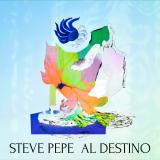
“Al destino”, the new album by Steve Pepe, began to take shape in 2023 after roughly a year of highly abstract sound research. The original intention was to create a dancefloor-oriented record, moving away from down-tempo structures, built around minimal, percussive compositions and high BPMs, with sound conceived primarily as a functional element.
In 2024, however, the process shifted. Less time was spent producing and more time reflecting. Emotions hovered between the urgencies of the present and unresolved past traumas, and almost without conscious intention, singing returned to the center of the project. It was not a calculated choice, but an inevitable one.
The resulting album does not draw its energy from distant places, nor does it focus on sonic experimentation as an end in itself. Instead, Al destino offers an intimate perspective on how memories and emotions shape the inner self, on the sensation of being simultaneously alone and deeply connected to everything, and on the struggle to reconcile feelings, sensations, love, and desire.
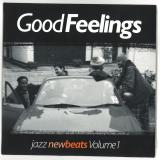
- A1: Dj First Klas – Goodfeelin' 5 35
- A2: Delaney's Rhythm Section – Rebel (Club Mix) 8 02
- B1: A Forest Mighty Black – High Hopes (Instrumental) 4 58
- B2: Outside – Moodswing (Aquasky Remix) 7 40
- C1: Nobukazu Takemura Featuring Dee C Lee – Searching (Roni Size Remix) 7 07
- C2: Smoke City – Underwater Love (Studio Mix) 6 46
- D1: Up, Bustle & Out – The Revolutionary Woman Of The Windmill 9 17
- D2: Red Snapper – Son Of Mook 5 55
- E1: Dj Food – Mella (Drive Faster Mix) 4 49
- E2: Dig! Alliance – Rotorvibe 4 20
- E3: Count Basic – Strange Life (Kruder & Dorfmeister Remix) 4 35
- F1: Aeroplanitaliani – Zitti Zitti (Jazz Instrumental) 4 53
- F2: Reminiscence Quartet – Psychodelico 6 35
Introducing Human Behaviour Records, a vibrant new realm where music meets the soul, a home for fresh, innovative sounds and frequencies that resonate with the very essence of what makes us uniquely human. A journey into the deep, timeless grooves of dance music, blending rhythms and harmonious beats that transcend space and time. Our mission is to create a profound, unforgettable connection with all those who hear it, inviting listeners to lose themselves in the universal pulse that binds us together. We hope to spark a sense of unity, bringing together individuals from all walks of life and fostering a community built on shared experience and creative expression.
First up one up on the label is Nic David with his highly anticipated EP “Magnetic”. It pushes and pulls the boundaries of house and electro, connecting frequencies that attract positive feelings and inspire irresistible movement on the dance floor. Followed by A2 we have “The Feelin” a track that takes you on a journey with no destination, an ever-evolving ride through funky basslines and enlightened melodies. B1 taking a turn into the harder sounds with “Work it (Listen up)” capturing the mind with heavy drums and mind altering sounds through peak moments. And for the final track we are proud to have none other than Nate S.U for the remix of “Work It”. A forward thinking human known for his hypnotic sounds, creating timeless music that sits on its own throne. His take on “Work It” fuses electronic textures and a rock inspired rhythm, pushing the boundaries from the ordinary.
Yesterday it started to rain…
The smell of damp tarmac rising up through open windows, a smell which is uniquely evocative for us all depending on our individual histories: a suburban pavement, a school playground, a basketball court.
The rain cut through a band of low pressure that had been lying over the city for days, pinging rhythmically off metal, causing rolling tyres to hiss and spit.
The music that soundtracked this meteorological shift was the debut full length from Rain Text (Giuseppe Ielasi & Giovanni Civitenga), simply titled III. Scattered throughout the nameless eight tracks there are moments of low-end pressure relieved by the fizz and clatter of metallic rhythms; there is static, there is discord, there is release.
The individuals comprising Rain Text have a long history of manipulating sounds for evocative ends, Giuseppe Ielasi has been making music as one half of Bellows for many years, each album stretching and destroying their sound in beautiful increments. He has also released reliably inspirational music either solo or in collaboration for the likes of Editions Mego, Shelter Press and Faitiche. His sensitive ears are also in high demand as a mastering engineer. It is worth perusing the 800+ releases he has technical credits for on Discogs: from classics of the avant-garde to the freshest faces of the Swedish underground, the chances are some of your favourite albums are included.
Giovanni Civitenga helms the SKYAPNEA long-running NTS show. Joining him, you can enjoy the fruits of a lifetime of deep listening through shows that flit between the industrial and the devotional, a space that is fully explored on III.
The album was recorded quickly over three fertile days in Ielasi’s studio in Monza, but of course results like this can only be achieved at such a pace by spending a lifetime obsessing over the mechanics and possibilities of sound.
Those who are enamoured by the rain—who are returned by it to the surfaces, smells and sounds of a lost and idealised youth; who feel themselves restored—are known as ‘pluviophiles’. Their response to rain may well have a biological explanation: when rain hits tarmac negative ions are released into the air, which are thought to result in feelings of wellbeing and positivity. All the more reason, then, to return to the vivid ecosystem that Rain Text has so carefully cultivated for III."
Words by The Dengie Hundred – August 2024
- Somewhere, Nowhere
- Angles Mortz
- False Prophet
- Fluoride Stare
- The Void
- Ascension
- Just A Kid
- Host
- Landslide
- Renaissance
- 7: Am
- Blue In Grey
2026 Repress
Flickering in ultraviolet, there is an elusive place where blue pill meets red, ups become downs, and day merges with night. Those liminal spaces where anything is possible is where you’ll find Nightbus and their hypnotic debut album Passenger. Doom, uncertainty, and opportunity lurk in the shadowy corners of their murky existence with stops at disassociation, co-dependency, and addiction before reaching its final destination - a glimmer of hope.
The in-between of Nightbus’ own Gotham lies where Manchester’s city pulse meets Stockport’s outer realm. An audio-visual entity formed among a musical family of friends, freaks, and foes in messy mills and after hours on dancefloors alike, their sound bleeds from tension where collective creative forces are bound together and collide with the fallout of being torn apart. Before even playing a show, their So Young released single ‘Mirrors’ – a knowing nod of respect to some well-known gloomy Northerners - may have made old school indie heads shimmy at shows in Salford’s The White Hotel but also signalled the duo’s knack for offering listeners a Bandersnatch approach to hitchhiking their own personal Nightbus in whatever direction they choose to take. “Everyone can have their moment with our songs; the music is our response to who we are as young people, living in the city full of this energy right now,” they say.
Whilst reverb hefty melodies and dread-filled loops embody isolation from writing at each of their home studio set-ups, magic happens in the ether across 90s trip-hop, indie sleaze and electronica; Jake’s production layers Olive’s pop sentimentality with drums and samples whilst tales of a cast of faceless characters place Olive as puppet master; her severed self’s perspective manipulating their stringed limbs at arm’s length to see how their stories play out when scenes reflecting her own lie close to the bone. “It’s a bit fucked; like having this out of body experience with a made-up movie running through my head,” she says. “As I write I can see they’re all from a similar world, but they allow me to explore different feelings without giving away part of myself.”
Recorded at The Nave in Leeds with producer-engineer Alex Greaves (Heavy Lungs, Working Men’s Club), surprise and danger lies in every crevice. Brooding whispers turn to chants on 6-minute opus ‘Host.’ Improvised when performed live, its immersive shift in tempo leads to hefty dub courtesy of Jake’s pedals. Even then, you won’t know shit’s hit the fan until its mid-point reveal when ominous bass blasts a thunderous soundtrack as its protagonist defiantly walks away after committing the perfect crime. “It makes you wait, and more songs should have sirens,” Olive grins.
Leaning deeper into alter-egos via the video game-psychological horror of a Silent Hill dystopia, the band’s Fight Club moment ‘Angles Mortz’ turns its literal translation of death angles on its head as it reflects upon kink and internalised shame reincarnated as pride. Elsewhere the ice cool ‘Landslide’ is a Requiem for a Dream about the addiction of being in a band; ‘The Void’ explores co-dependency and estranged relationships; and carefully selected samples revive house track ‘Just A Kid’ from the band’s early incarnation. Passenger’s every direction is to face challenges head on. “That is what’s so great about horror; you can see through predictable patterns so when the unexpected occurs it's more realistic and uncomfortable… I want to own the dark stuff!”
As for Passenger’s first single, the pulsating ‘Ascension’ is a spiralling deep dive into death, suicide, and legacy around who or what we leave behind. A noughties club banger by way of NYC beats - ergonomically designed for those who like to stay out a little too often and too late - it throbs like a house party’s partition wall as the literal levelling up undergoes a neon transformation; blue glitching to pink, diffusing the white construct of the Nightbus Matrix. “It really does feel like the end of something and was purposely written that way,” they say, “the ascension is like a firework going off!”
With wheels in motion, Nightbus has become a movement surpassing sonic realms. Between shows from Porto to Brighton taking in The Great Escape, Rotterdam’s Left Of The Dial and Paris’ Supersonic; DJing; remixing; guesting (BDRMM’s Microtonic album); and even enlisting talented like-minds to craft a 3-part queer coming-of-age music video series which ties in with a new ‘hyperpop’ phase in the evolution of their popular Nightbus Soundsystem club night, heads are now being turned from sports brands to high-end fashion designers. “There are things we can’t reveal just yet,” tells Olive, “but we’re excited about the direction this beast we’ve created is heading.” As the album philosophises and asks one ultimate question; what does it truly mean to be ‘Passenger’? Nightbus may not claim to offer a definitive answer, but it might make you feel a bit better about those demons.
House of Harm are proud to announce the forthcoming release of their new album Playground, out December 1st, 2023. The new record builds and expands upon the three-piece’s enthralling shadow-pop sound, a mix of midnight atmospherics, 90s era jangle pop, and contagious synth drenched hooks that further elevate the transcendent vocals of lead singer Michael Rocheford. Rounded out by Cooper Leardi (guitar / synths) and Tyler Kershaw (guitar / synth), House of Harm have amassed an impressive following as something of a best kept secret among their growing fanbase, leading to sold out shows on both coasts by the power of word of mouth alone.
The band members have been drawn to music for as long as any of them can remember, and the drive to be around like-minded artists and make their own noise drew them all to Boston after high school. There they all quickly enmeshed themselves, playing in other bands before meeting each other. Ever since, House of Harm have been quietly making a name for themselves among music fans with darker pop persuasions via a steady stream of releases in single, ep and album form.
That attention to detail and workmanlike approach at the expense of chasing instant gratification seems to be paying dividends after years of steady effort. The journey of their new album Playground saw House of Harm stay true to that ethos. The band painstakingly narrowed the record down to an efficient 10 tracks that they felt made the most sense, both standing on their own as well as fitting into an LP that built a cohesive world for the listener to get lost in. The album’s name also reflects the experimentation and happy accidents that came about during the writing and recording process.
On “The Face of Grace” they set out to explore different dynamics by writing a song entirely without drums, but couldn’t help themselves from putting emphasis on the song’s 6/8 waltz time signature. “Two Kinds” is another first for House Of Harm in that it’s predominantly driven by acoustic guitar. That aforementioned vulnerability shows up in other areas of the songwriting process as well with “Two Kinds”, one of their most revealing songs to date from a lyrical standpoint, written from a place of reflection and weakness and tackling feelings uneasy to be put on display for public consumption.
Taken as a whole, the end result is an album representing a collection of the band’s most raw and expressive songs yet.
- Sooner Or Later
- Pillars
- Look Ahead
- Simulacrum
- The Bell On The Hillside
- Summit
- Hope
- Branches
- Namesake
- June
Following his award-nominated and critically acclaimed 2023 album Until Then, Danish guitarist and composer Rasmus Oppenhagen Krogh now presents his fourth album as a bandleader. "The title refers to the pillars that life and existence rest on," Krogh explains. "The moments, feelings, and meetings that form us as human beings, and that follow us the rest of the way. Snapshots that become defining for how our life develops." Musically, Pillars balances clear song structures with rich, intricate harmonic foundations. Krogh draws on influences from jazz, indie, rock, film scores, electronic music, and pop, creating a genre-fluid universe in which the ensemble"s improvisational voices shape each piece. Krogh"s guitar takes the lead, acting as a melodic guide, while the production - crafted alongside longtime collaborator Rasmus Juncker (Yör, Anna Roemer, Little North) - adds depth and texture, highlighting the album"s bold and multi-faceted sonic identity. As on previous releases, Krogh is surrounded by some of Denmark"s finest musicians, all longtime collaborators whose personal voices and improvisational approach have deeply influenced his musical development. The ensemble includes Anders Christensen on electric bass (Paul Motian, Jakob Bro, The Raveonettes), Jakob Hoyer on drums (The Raveonettes, Jakob Bro, Nikolaj Norlund), Lars Greve on reeds and effects (Resonerede Rum, Girls in Airports, Peter Sommer), Simon Toldam on piano and synths (Simon Toldam Trio, Han Bennink Trio, Efterklang), and Victor Dybbroe on percussion (Girls in Airports, Teitur, Blomsten). Their interplay and openness create a living, evolving sound world, with Krogh"s guitar at its emotional center. Beyond his own projects, Krogh is a sought-after guitarist, working with artists ranging from Guldimund to Takykardia and Emil de Waal. Pillars underscores his identity as a deeply personal and forward-looking voice in contemporary instrumental music.
- Sure As Spring
- All The Time
- Morning High
- What Good Am I?
- Sunstroke
- It's Alive
- Big Big Blood
- Call Me In The Day
- Pink Slime
- Phantom Feelings
- You Can Never Know
Auf 500 Stück limitierte 2025er Nachpressung vom 2013er La Luz Debütalbum auf rotem Vinyl. LA LUZ aus Seattle sind cool. Doch ihre Art der Coolness hat nichts mit Distanz oder Arroganz zu tun; es ist eine Laune und irgendetwas in ihrer Musik passt zum düsteren, unwirklichen Duft sterbender Monde und Schatten. Diese Art von Coolness. Was LA LUZ da besonders macht, ist die Verkörperung des am wenigsten definierten Eckchens des menschlichen Daseins: Sehnsucht und die flüchtige Erleichterung, die mit tiefster Sehnsucht einhergeht. Auf Spanisch steht LA LUZ für ,Licht" und das ist der perfekte Ausblick, wenn die Songs der Band eigentlich in die gegenteilige Richtung streben. Doch wenn man die Texte ausblendet - eine gute Entschuldigung, den vierteiligen Harmonien noch mehr Gehör zu schenken - findet man die Unwegbarkeiten und Schmerzen von Liebe und Verlust und die Gewissheit, dass nichts im Leben für immer ist, vorgetragen mit einer perfekt ausbalancierten Heiterkeit, die fast den Eindruck entstehen lässt, dass am Ende doch alles Sinn macht. Im letzten Frühjahr begaben sich LA LUZ in einen dunstigen Trailerpark, um ,It's Alive" mit ihrem Freund und Toningenieur Johnny Goss aufzunehmen. Vom ersten Drumroll und den unheimlichen Akkorden von ,Sure A Spring" an - einem angekratzten Popjuwel, das das Album einläutet - bewegt sich das Album wie eine langsame Fahrt auf schwieriger Strecke, die sich schlängelt und abfällt, während sich das Terrain verändert. ,What Good Am I?" erinnert mit dem Leadgesang und den dazu passenden Harmonien an den Superhit von MAZZY STAR. Mittendrin findet sich der Titeltrack. ,It's Alive" ist ein klingender Rocker mit unheimlichem Refrain, einem großen Batzen ,ooohs" und einer umschweifigen Geschichte, die die vernebelte Logik vom Rest des Albums aufgreift. Zwei Instrumentalstrücke, ,Sunstroke" und ,Phantom Feeling" zeigen, dass die Band über den echten Surf Sound Bescheid weiß und passen perfekt zum unterkühlten Herzschmerz um sie herum.
Fresh off producing a seminal documentary about the origin story of Portuguese rave culture, Shcuro returns to his mother tongue, music, to give us four slices of fresh yet classic Lisbon underground flavour right as the summer sets in. 'Echo Chamber' EP, Para?so's 17th outing, comes with two equally excellent remixes separated by the atlantic: Brooklyn's MoMA Ready and Berlin's Mareena. Side A starts with two tracks first blueprinted this past year as Shcuro prepared a new live set. 'No Expectations' opens the record with a high-paced sweat-breaker that elegantly evokes early rave culture as stabs, funk and feelings abound. A2 'Persistence' follows suit with the work that exudes proficiency: sound design, dub techno learnings and masterful layering all conspire to create a moment of pure techno draw. Closing side A, 'Deviation' pulls some of the previous track's energy even though it's a rework from the artist's earlier unreleased catalogue: another sign that we're talking realness here. Clever percussion and refreshing washes drive us well into dubby territories. 'Suspension' opens the B side, picking up where it left off with the last original: a beautifully produced piece with fleeting mutating stabs that seem to swim alongside us in an imaginary oceanic dancefloor. Liquid, refreshing sensorial motifs seem to underpin this record and that spirit spills into the remix pack, starting off with MoMA Ready's take on 'Persistence', bringing out the rawness in the original while adding a special sauce with Robert Hood-like funky yet minimalistic bleep work. Tresor's Mareena steps in for a centered, dancefloor-geared - but still mysterious - twist on 'Deviation', perfectly rounding up the record with the expertise of a club resident.
Eager Buyers is an observation of longing, of memory, of attempted connection, of lost innocence, and irreconcilable dreams. It"s the sound of broken promises for a bright future, where rose-tinted glasses have lost their clarity, dirtied with disaffection over time. Across this sultry, smoky, cinematic epic, JASSS attempts to process mixed feelings amidst the modern malaise. Alluringly atmospheric and cerebral, but bold and direct, with high-spec sound design, JASSS spaces each element with expert definition. Searing swathes of noise nestle with crisp breakbeats, billowing bass, dark ambience, prepared piano, phosphorescent electronics and calibrated percussion.
- A1: Malavoi - Te Traigo Guajira
- A2: Los Caraibes - Donde
- A3: Tropicana - Amor En Chachacha
- A4: Ryco Jazz - Wachi Wara
- A5: Eugene Balthazar - Dap Pignan
- A6: Roger Jaffort - Oye Mi Consejo
- A7: Les Kings - Oriza
- B1: Les Supers Jaguars - Tatalibaba
- B2: Super Combo De Pointe A Pitre - Serrana
- B3: L'ensemble Abricot - Se Quedo Boogaloo
- B4: Henri Guedon - Bilonga
- B5: Les Aiglons - Pensando En Ti
- B6: Los Martiniquenos - Caterate
In Guadeloupe, many people think that jazz and ka music are like a ring and a finger. To some extent, the same could be said about so called Latin music and the music played in the French West Indies.
Both aesthetics were born in the Caribbean and bear so many connections that they can easily be considered cousins. In constant dialogue, there are lots of examples of their fruitful alliance and have been for a while. The English country dance that used to be practiced in European lounges came to be called kadrille in Martinique and contradanza in Cuba. They both featured additional percussion instruments inherited from the transatlantic deportation. Drawing from shared feelings about the same traumatized identity – later to be creolized – it would be hard not to assume that they were meant to inspire each other. The golden age of the orchestras that graced the Pigalle nights during the interwar period further proves the point. As soon as the 1930s, Havana-born Don Barreto naturally mixed danzón and biguine music in a combo based at Melody's Bar. In the following decade, Félix Valvert, a conductor who was born and raised in Basse-Terre in Guadelupe, also worked wonders in Montparnasse with La Coupole, which was an orchestra made up of eclectic musicians. Afro- Caribbean performers of various origins were often hired on rhythm and brass sections in jazz bands, which used to enliven the typical French balls of the capital. In the 1930s and onwards, Rico’s Creole Band was one of them.
Martinican violinist-clarinettist Ernest Léardée, who would become the king of biguine music as well as the main figure of French Uncle Ben's TV commercials (a dark stigma of post-colonial stereotypes), had musicians from the whole Caribbean sphere play at his Bal Blomet – and they all enchanted "ces Zazous-là" (according the words of Léardée's biguine-calypso piece). In les Antilles (French for French West Indies), music history started to speed up in the 1950s, when trade expanded and radio stations grew bigger. The Guadelupean and Martiniquais youth tuned in their old galena radio sets to South American and Caribbean music. As for the women traders, les pacotilleuses, they bought and sold goods across different islands (the "passing of items through various hands" was thought to be most pleasurable) and brought back countless sounds in their luggage. Such was the case of Madame Balthazar, who once returned from Puerto Rico with the first 45rpm and 33rpm to ever enter Martinique.
Out of this adventure was created the famous Martinican label La Maison des Merengues, a music business she opened and undertook with her husband and which proved to be a major landmark. At the end of the 1950s, in Puerto Rico, Marius Cultier competed in the Piano International Contest playing a version of Monk's Round 'Midnight. He won the first prize and this distinction foreshadowed everything that was to come. Cultier, the heretic Monk of jazz, was quickly praised for writing superb melodies, always tinged with a twist that conferred a unique sound to his music. It didn't take long for the gifted self-taught musician to get to play with Los Cubanos, making a name for himself thanks to his impressive maestria on merengues.
The rest is history. Besides, in the late 1950s, Frantz Charles-Denis, born into the upper middle class in Saint-Pierre and better known by his first name Francisco, went back home after working at La Cabane Cubaine – a club located rue Fontaine where he had caught the Latin fever. Francisco's music was therefore heavily marked by his Cuban cousins' influence, which gave the combos he led a specific style and also led to renewal. Things were swinging hard in La Savane, located in the main square in Fort-de-France. He set up the Shango club close by and tested out the biguine lélé there, a new music formula spiced up with Latin rhythms. Soon afterwards, fate had him fly to Puerto Rico and Venezuela.
As for percussionist Henri Guédon (percussions were only a part of his many talents), he was born in Fort-de-France in May 22nd 1944, the day marking the celebration of the abolition of slavery. As an old man, he could remember that in " his father's Teppaz, a lot of hectic 6/8 music was constantly playing...". In the opening lines of his Lettre à Dizzy, a small illustrated collection of writings published by Del Arco, he highlighted the huge impact that cubop had on him as a teenage boy, around 1960. He eventually turned out to be the lider maximo in La Contesta, a big band steeped in Latin jazz. He was also the one who originated the word zouk to describe music which brought the sound of the New York barrio to Paris. It was the culmination of a journey that started in Sainte-Marie: "a mythical place for bélé, the equivalent of Cuban guaguancó". In the early 1960s, the tertiary economy developed to the detriment of agriculture. Yet rural life was where roots music emerged in Martinique and in Guadeloupe.
Record companies played a major part in the process of Latin versions sweeping across the islands – before reaching everywhere else. Producer Célini, boss of the great Aux Ondes label, and Marcel Mavounzy, both the head of Émeraude records - a firm which was founded in 1953 - as well as the brother of famous saxophonist Robert Mavounzy, were big names to bear in mind. Although there were many of them - all of whom are featured on this record - Henri Debs was definitely the major figure in the recording adventure. He proved to be so influential that he even got compared to Berry Gordy. In the mid 1950s, when he acquired his first Teppaz, he worked on his first compositions: a bolero and a chachacha. Then, he became the one man who made people discover Caribbean music, from calypso to merengue. He was among the first ones to rush out to San Juan, Puerto Rico, to buy records and distribute them through a store run by one of his brothers in Fort-de-France. He had members of the Fania All Star come and perform there, which he was madly proud about. He was also the first one to pay attention to Haitian music, such as compas direct and various other rhythms which would soon flood the market. As a result, many of the combos hitting his legendary studio would end up boosted by widespread "Afro-Latin" rhythms. However, he never denied his identity: gwo ka drums were given a major role, although they were instruments which had long been banned from the "official" music spheres. The present selection bears witness to such a creative swarming. Here are fourteen tracks of untimely yet unprecedented cross-fertilization: all types of music rooted in the Creole archipelago have found their way, whatsoever, to the tracklisting. Whether originating from the city or being more rural, they all go back to what Edouard Glissant, in an interview about the place of West Indian music in the Afro-American scope, called "the trace of singing, the one which got erased by slavery." "It is so in jazz, but also in reggae, calypso, biguine, salsa... This trace also manifests through the drums, whether Guadelupean, Dominican, Jamaican or Cuban... None of them being quite the same. They all point to the idea of a trace, seeking it out and connecting to each other through it. This is the hallmark of the African diaspora: its ability to create something new, in relation to itself, out of a trace. It may be the memory of a rhythm, the crafting of a drum, a means of expression which doesn't resort to an old language but to the modalities of it." The opening track features one of the emblematic orchestras of this aesthetic identity, criscrossing many music types from the archipelago. The 1974 Ray Barretto guajira – Ray Barretto was a major New York drummer influenced by Charlie Parker and Chano Pozzo – is magnificently performed by Malavoi, a legendary Fayolais group (i.e from Fort-de-France). Additionally, the compilation ends on a piece by Los Martiniqueños de Francisco. It symbolically closes the circle as it is a genuine potomitan of Martinique culture which also functions as a tireless campaigner for Afro-Caribbean music. Practicing the danmyé rounds (a kind of capoeiria) to the rhythm of the bèlè drum, it delivers a terrific Caterete, a kind of champeta of Afro- Colombian obedience which was originally composed by Colombian Fabián Ramón Veloz Fernández for the group Wgenda Kenya. The icing on the cake is Brazilian Marku Ribas, who found refuge in Martinique in the early 1970s, bringing his singing to the last trance-inducing track. These two "versions" convey the whole tone of a selection composed of rarities and classics of the tropicalized genre, swarming with tonic accents and convoluted rhythms. It is the sort of cocktail that the West Indians never failed to spice up with their own ingredients. For instance, the Los Caraïbes cover of Dónde, a famous Cuban theme composed by producer Ernesto Duarte Brito, has a typical violin and features renowned Martinique singer Joby Valente and his piquant voice.
The track used to be – or so we think – their only existing 45rpm. The meaningful Amor en chachachá by L'Ensemble Tropicana, a band which included Haitian musicians among whom was composer and leader Michel Desgrotte, also recalls how Latin music was pervasive in the tropics in the mid-1960s. They were the ones keeping people dancing at Le Cocoteraie in Guadelupe and La Bananeraie in Martinique. Around the same time, another "foreign" band, Congolese Freddy Mars N'Kounkou's Ryco Jazz, achieved some success on both islands by covering Latin jazz classics – such as their adaptation of Wachi Wara, a "soul sauce" by Dizzy Gillespie and Chano Pozo whose interweaving of strings and percussions can have anyone hit the dancefloor. How can you resist Dap Pinian indeed, a powerful guaguancó by Eugene Balthazar, performed by the Tropicana Orchestra and published by the Martinique-founded La Maison des Merengues? It also acts as a symbol of the maelstrom at work. Going by the name Paco et L'orchestre Cachunga, Roger Jaffory used to play guaguancó too: his Fania-inspired Oye mi consejo is one example of his style. Baila!!!!! Dancing was also one of the Kings' focus points. Oriza is a Puerto Rican bomba and a "classic" originally composed by Nuevayorquino trumpeter Ernie Agosto, which reserves major space for brasses, giving it a special sheen.
Emerging from the New York barrios crucible was also La Perfecta, a Martinique group originating from Trinidad, whose name directly references the totemic Eddie Palmieri figure as well as his own band, also called La Perfecta. Here they borrow Toumbadora from Colombian producer and composer Efraín Lancheros and interpret it by emphasizing percussions, which set fire to the track even more than the wind instruments. The same goes for Martinique's Super Jaguars, who use Tatalibaba – a composition by Cuban guitarist Florencio "Picolo" Santana which was made famous by Celia Cruz & La Sonora Matencera – as a pretext for sending their cadences into a frenzy. In a more typically salsa vein, the Super Combo, a famous Guadelupean orchestra from Pointe-Noire that was formed around the Desplan family and had Roger Plonquitte and Elie Bianay on board, adapt Serana, a theme by Roberto Angleró Pepín, a Puerto Rican composer, singer and musician also known for his song Soy Boricua. Here again, their vision comes close to surpassing the original. In the 1970s, L'Ensemble Abricot provided a handful of tracks of different syles, hence reaching the pinnacle of the art of achieving variety and giving pleasure. They played boleros, biguines, compas direct, guaguancó and even a good old boogaloo - the type they wanted to keep close to their hearts for ever, "pour toujours", as they sang along together in one of their songs. Léon Bertide's Martinican ensemble excelled at the boogaloo which had been composed by Puerto Rican saxophonist Hector Santos for the legendary El Gran Combo.
Three years later, in 1972, Henri Guédon, with the help of Paul Rosine on the vibraphone, tackled the Bilongo made famous by Eddie Palmieri. Such a classic!!!!! And so were the Aiglons, the band from Guadelupe: choosing to execute Pensando en tí, a composition by Dominican Aniceto Batista, on a cooler tempo than the original, they noticeably used a wonderfully (un)tuned keyboard in place of the accordion. On the high-value collectible single – the first one released by Les Aiglons under the Duli Disc label – there is a sticker classifying the track under the generic name "Afro". Now that is what we call a symbol. Jacques Denis
Do you ever wish to wish, to wish away the pain, to wish away some sort of pleasure? All these
feelings that we cary, all these things that burden us. Over time the weight drags us down and
one day we want to explode. Time to explode is now. Throw it all away. Maara is back on her
classic b*ll sh*t, or proverbial horse riding high on latest EP ‘Revenge from the Penthouse’.
Gracing us from her ivory penthouse, Maara throws down 5 club ready bangers in her signature
style. She ain’t played with…
Finnish Samuli Tanner is a drummer and producer swimming in alises and side-projects. Tanner's been part of Modern Feelings (released on Sähkö Recordings) and on this 7" it's back to early-mid 90's Braindance with hectic & quick paced patterns, klanks, whirl and rhythmically short voice snippets. B-side has Jimi Tenor Remix, highlighting a (clubbier) structure resembling the area of early Rephlex and Warp releases.
Returning to the Bordello, and the seven-inch, is Real Velour. This secretive figure reappears with two tracks of indie dance that bend and re-shape elements of italo disco, minimal pop and synth wave to create an utterly unique experience. Sleazy basslines and tropical percussion give way to heavily vocodered words in “Lover”, machine amor breaking to spoken human voice as melodies twirl. The romance described is one of passion, of friendship and of fidelity; but, with a hint of control. Clever and addictive, the composition cherry-picks bittersweet sounds to depict this relationship. The flip, “Look What You’ve Done”, maintains the candystore keys of the A-Side; the tone shifting as lyrics adopt a brazen and fortified vigour. It appears maybe that the promises of “Lover” have been shattered. While the love story turns to hurt feelings and regret, Real Velour keep the energy high to revel in the final break-up.
"High urgency music with a very personal expression of the artist: in one way or another", this has always been the important or maybe even the core factor of every Cortizona release so far.
So it was just a matter of time until DJ Marcelle/Another Nice Mess, longtime fan of The Fall and Jiskefet, topnotch producer, dj wizard with three turntables (and a lovely person in general) - and myself - would collaborate towards a Cortizona release.
I guess the initial idea of working together with DJ Marcelle/Another Nice Mess dates back to 2019. One day she called me four times in five minutes just to hear Mark E. Smith's voice message on my phone. Since then there has been no going back. I mean: what's not to love about her?
Some time ago, she sent me the digital files of her new LP 'Sorry, No Service'. One of the tracks, 'Sorry, No Silence', features the Nan Goldin sample: 'this is clearly ethnic cleansing', taken from Goldin's impressive speech to which the audience cheered in support at the opening of her exhibition at the Neue Nationalgallerie in Berlin end of 2024.
Two weeks later Marcelle contacted me again: her German label refused to release the track. This was the moment we had both been waiting for: at last Cortizona and Marcelle would work together!
The album is due to be released later this year, but, with things as they are in Gaza, it is important to issue 'Sorry, No Silence' as a stand-alone track as soon as possible.
Talking about urgency!
'Sorry, No Silence' resonates feelings of global despair over the genocide in Gaza and the moraland political bankruptcy of 'western values'. It does so over a repetitive, militant tribal beat, complete with heavy basslines. The spirits of Mark Stewart, On-U Sound and Muslimgauze loom over the track, but as is always the case with Marcelle, both on stage and in the studio: she has an authentic style of her own, where playfulness meets courage and - also in this case - anger meets rhythm.
'Sorry, No Silence' is a track I didn't know I was waiting for. A track reflecting the sign of the times. The 12'' also features an even more heavy (and faster) dub version and the avant garde track 'Never Again Means', featuring more Nan Goldin samples: 'never again means never again for everyone'.
For obvious reasons the proceeds of this 12 inch and the digital Bandcamp release will be donated to PCRF, Palestine Children's Relief Fund.
Support more than welcome.
(written by Philippe Cortens)
TAMTEN, the master storyteller behind the synthesizers, extends his invitation to every curious listener to ponder the same questions that haunt him throughout his peculiar career: what impacts the sound of an era? How are we shaped by what we hear and see? Do we channel our collective feelings of longing and desire for higher purpose in accord or in opposition to major historical and political forces?
On "Wschodnia Fala: The Reimagined Vision of Eastern-European Wave Music" TAMTEN takes us on a kaleidoscopic voyage through a parallel universe where the symbols and echoes of days gone by are so much more than just archived exhibits of nostalgia. Through an array of meticulous, cut & paste rearrangements, the Warsaw-based artist manages to animate yet another fantastic world of "what could be", following his more apocalyptical take on the previous LP.
There is boldness in every aspect of the release. The saga-like story unfolds evoking the excitement of seashore autobahn ride, thrills of long-forgotten discotheque nights, rush of obsessive romance and intriguing, noir-inspired drama of introspection. The analogies between Polish wave music (with nods to Aya RL, Republika, Klaus Mittfoch, Papa Dance or even Bajm) and global disco-era top chart phenomenons like Kraftwerk, Grace Jones, Giorgio Moroder and Duran Duran, could spark hour-long musicology debates. The melodies and harmonies heard on the album resemble compositions everybody knows but also sound completely new and exhilarating, just as western music clips experienced for the first time behind the Iron Curtain and then collected compulsively on VHS tapes. The feeling of the author's frenetic attempt to capture sensations, memories, artifacts and ideas never escapes the listener till the very last minute of the recording.
"Wschodnia Fala" could pass for an eerie, anonymous late 80s lost-and-found cassette mixtape unearthed on any of the Berlin Wall's sides, if it wasn't for its crystal-clear, contemporary production value and the fluent, educated use of samples ranging from bizarre and opaque to deliberately retro-pop-influenced. Those elaborate winks of the eye for those in the know are already TAMTEN's trademark and they reflect his long-standing fascination with the dancefloor anthropology rather than just the dancefloor itself. Even though never leaning towards formulaic, easy-to-mix, club-ready stompers, his ideas are still groovy enough to make anyone move.
The album strives for some sort of unattainable totality - it's a ticket to a seance, an experience, a rite. It is a chance to time travel and dance with your ancestors in a glass labyrinth on acid or to watch an 80s teenage adventure, coming-of-age, road cruising film in the cinema of your imagination with only a soundtrack provided. A "the best of" CD compilation of hits from a childhood we remember from a different timeline. A comic book sketch, a diary of an archivist, an elegy for the times that never were and a party you wish you could go to right now. The adventure is always different with another listen.
Step in. Close your eyes. Reimagine.
Embrace the wave
"In less than a ten-year span, Subsonic Eye have established a deep catalog across jangle- and indie-pop spectra. On their 2023 album All Around You, the Singaporean five-piece refined their signature snappy hooks with a renewed appreciation for the natural world’s entanglement with their urban milieu. Ever enraptured by nature and their surroundings, Subsonic Eye have dedicated much of their music to celebrations of their environment.
Their fifth album, Singapore Dreaming, centers their hometown through a more focused lens. Where All Around You comprised a space to sit with the complex feelings inspired by the intense world we inhabit, Singapore Dreaming is that intense world itself — Subsonic Eye’s interpretation of their high energy urban context refracted through straight-to-the-point, poppy, ergonomic songs tinged with tension that could explode at a moment’s notice.
Despite the newly honed vision, Singapore Dreaming still has all of Subsonic Eye’s signature elements: spellbinding walls of tone, hooky riffs, zippy rhythms, and punches in the perfect place — all led by singer Nur Wahidah’s dreamlike voice, whose vaporous and velvety character always makes the layers whole."
- Love's Death
- Cathy Don't Go
- Madman
- Preamble: Great Divine Rector's Call
- Particle Harmonies
- Jodler
- James Alley Blues
- Susume
- C.e.d
- His Outer Feelings Expressed Musically
- Song Of The Victory
- Segment
Volume 2 of the absolutely infamous (and highly sought after) Cult Sounds compilation, comprised of music done by fringe religious cults around the world. Oh, boy! Volume 2 of Cult Sounds is here, so it's time for another bad trip through the music produced by weird, extreme cults all over the world. From hypnotic Manson Family recordings to the catchy 80s pop manufactured by The Family, to jazz, psych jams, country music or plain out there musical experimentation, this second volume gets as weird, dark and mesmerizing as its predecessor, amazing.