Air is the central element in Antonina Nowacka's third solo album Sylphine Soporifera. The title names an imaginary species and the land they inhabit, inspired by the unreal desert landscape of Paracas and the undulating tree-less hills of the Outer Hebrides, and comes from the writings of Rudolf Steiner, who describes creatures called Sylphs as the spirits of the air, and the Latin word sopor which means deep sleep.
As with all her releases, Nowacka's other-worldly vocals coming as if from beyond the veil, at once haunting, alien and utterly entrancing. "The voice is the most beautiful and resonating instrument,” she says. “When I sing I feel I create a field in between myself and the air in front of me," she explains. "It is not just that I'm singing – something in the space in front of me is happening, and I merge with this sphere.”
She conjures and is inspired by open environments and infinite landscapes: places full of light and air, manifested here in the sound of ocarinas from Budrio in Italy, whistles from Mexico, simple bamboo flutes from Nepal, alongside tremulous zithers, synthetic Hawaiian sounds from a vintage organ and the uncanny wind instrument presets from a 90s synth.
Nowacka’s first album was informed by vocal sketches made in caves in Indonesia, later recorded at a fortress in Poland; she studied Hindustani music in India with vocalist Shashwati Mandal, fell in love with early Cumbia in Mexico and Peru, and has more recently found inspiration in the landscapes of Italy. Hers is a new New Age soundworld that finds its origins everywhere and nowhere. Sylphine Soporifera gathers these sounds, visions and experiences into an album permeated with a sense of hope and fulfilment, that feels like sitting in an enlivening white beam of afternoon sunlight, as dustmotes swirl in the stillness.
Suche:hill of vision
rush2theUnknown is a project born in pandemic-era provincial New Zealand, developed in the hills of Izu Peninsula, Japan, but forged in the fire of potent teenage memories — the flames of the future sounds of jungle and drum 'n' bass that exploded onto dance floors across the urban centres of New Zealand in the mid 90's. Two old friends, both who played pivotal roles in the development of New Zealand's own jungle and drum 'n' bass scenes in the 1990s, estranged for decades, reunited amidst the isolation and chaos of covid. They began an experiment, attempting to recapture the feeling of having their heads overwhelmed by sounds they couldn't quite comprehend as adolescents — in particular, channeling the energy, spirit, and vibe of 1995 to 1997, where the ever-mutating evolution of jungle intersected with the dawning of drum 'n' bass to create a utopian future vision, before the latter genre changed course and moved increasingly darker.
By weaving in the influences that these two long-lost friends had accumulated over the decades, most notably from ambient, kankyõ ongaku, new age, minimalism, and some of the deepest research into the history of Japanese video game music ever conducted, the pair attempt to discover new terrain from an specific era of dance music that was never fully explored.
1998 was a fertile year defined by juggernaut projects from Black Star, Lauren Hill, Outkast, and others, all of whom synced experimentation with foundational tenets that made the 1990s ferociously groundbreaking.
Out of Oakland, California, a collective known as Hieroglyphics were positioning away from industry control, to helm their own assets in manners more suited to their own marketing self-vision. While artists have certainly went solo prior, this came at a critical juncture for the crew during a spiraling and newfound Internet world. Born out of this independent spirit was the crew’s first official studio album 3rd Eye Vision.
The album spans twenty-two songs, all featuring beats by Domino who manned the lion’s share of production. A-Plus, Opio, Del, Casual, and Phesto also contributed beats. MCs each had their own song, short interludes highlighting their individuality through short verses, a clear espirit de corps statement.
Even among standouts like “Oakland Blackouts” or “At The Helm,” perhaps the most celebrated song off the release is “You Never Knew,” a track that propelled 3rd Eye Vision to #88 on the Billboard Top 200, not an entirely easy feat as a new label competing with the late ‘90s’ abundant onslaught of classic material.
In celebration of 20 years of 3EV, Fat Beats and Hiero Imperium are proud to present this CD/Vinyl reissue in deluxe packaging, expansive liner notes and the full original album tracks and a bonus for the very first time in one package.
The latest by UK rave reanimator Low End Activist is a nine-track suite of skeletal hardcore, pointillist drum n bass, and deprivation chamber dub, chopped and brewed in homage to the countryside sites of golden age dance gatherings: Airdrop. From Waterstock to Yarnton Road to White Horse Hill, England’s early 90’s dance summits loomed large in LEA's familial and artistic landscape as a youth, trading tapes and pumping tunes across long weekend afternoons: “Fast music to soundtrack slow days.”
An atomized stew of stabby samples, bubbling bass, airhorns, echo, and blitzed BPMs, the cuts take cues from key heroes of the “where were you in ‘92” set – Tango & DJ Ratty, Top Buzz, DJ SS, DJ Seduction, Dr. S Gachet – then fling them to the four corners. Skittery, stripped, and elevated, this is mad scientist music of voltage, vision, and rewired brains, scraped to its raw genetic essence and deployed for peak kinetic liberation.
Diane Birch emerges as a formidable American singer-songwriter and pianist, boasting a repertoire of critically lauded releases spanning a rich decade-long career. With an eclectic array of musical influences stemming from a globe-trotting childhood - ranging from her humble beginnings as a preacher's daughter in Zimbabwe and South Africa to her transformative years as a gothic teen immersed in the vibrant cultural underbelly of Portland, Oregon. Her discovery while living in London via Myspace led to a record deal in New York, where she then spent the next few years.
Diane's journey is as diverse as her sound. Her profound experiences have culminated in a unique musical blend, characterized by her stint performing soulful covers and original pieces in the swanky lounges of the Beverly Hills elite. Receiving widespread attention with her debut album "Bible Belt" and her follow-up projects "Speak A Little Louder" and "Nous", these works not only cemented her position in the international music scene but also earned her accolades and respect from esteemed peers including Prince, Daryl Hall, Mark Ronson, Dave Stewart, Questlove, Elvis Costello, Bryan Ferry and Stevie Wonder.
Returning with her latest work, "Flying On Abraham", Diane presents a meticulously crafted collection of original compositions. This album is a heartfelt homage to her vast and varied musical roots, weaving together the rich tapestry of 70s AM radio, soul, jazz, classic rock, 80s/90s pop and R&B. Despite the eclectic mix, Diane's sound remains distinctly her own - her voice a blend of raw emotion and refined grace, echoing the legacy of iconic artists like Carole King, Carly Simon and Rickie Lee Jones, yet standing out with an authenticity and individuality that is unmistakably Diane Birch. Produced by renowned English musician Paul Stacey, known for his work with Noel Gallagher and the Black Crowes, "Flying On Abraham" was recorded in the UK, backed by an impressive lineup of musicians. This album is not just a collection of songs but a narrative of her artistic journey, offering a window into the soul of a woman who has traversed continents and musical genres to create something truly extraordinary.
With "Flying On Abraham", Diane Birch reaffirms her status as a musical virtuoso, continuing to enchant audiences worldwide with her evocative lyrics. It represents Diane's enduring vision of "making American music with an English sensibility."
This is a repress of Tycho's second release with Ghostly International to celebrate the 10 year anniversary of this masterpiece, while Ghostly International celebrates its 25th year anniversary. For nearly a decade, Tycho has been known as the musical alias of Scott Hansen, but with the release of Awake - his second LP for Ghostly International - the solo project evolved into a three-piece band. Relating closer to post-rock than ambient soundscapes, the record is situated in the present, sounding more like Hansen than drawing from his influences. This is, in many ways, the first true Tycho record. Following 2011's Dive LP, the San Francisco-based designer toured extensively, and with a full band on stage, his sound coalesced into a percussive, organic whole. Zac Brown (guitars, bass) rejoined Scott on the road for this tour, but it was the particular addition of Rory O'Connor's live drumming that ultimately sent Hansen back to the studio with a more precise vision. "After the tour, I decided that I wanted to capture the more energetic, driven sound of the live show on the next album," Hansen recalls. Bringing musicians into Tycho's creative process was a step towards expanding his own songwriting and advancing the project beyond its current sound. In a cabin near Tahoe last winter, Zac and Scott began fleshing out the structure of the new record, but it wasn't until they set up shop in the hills of Santa Cruz with Rory that it all fell into place. "It crystallized the vision of how the drums would come to the forefront on this record," says Hansen. The sound was much more stripped-down and concise with more organic instruments in the fold. Songs like "Montana" and "Awake" are a departure from Tycho's previous material - unique to the group effort poured into the songs on the new record - while "See" and "Dye" echo ideas from previous works, bridging a middle ground between the old and new. Working with Count Eldridge, who also engineered Dive, the team could fixate on the pulses that Tycho might previously layer under synthesizers and exhume them with distinct bass and guitar patterns. Also known for his design work as ISO50, Hansen's visual and sonic efforts have dovetailed throughout the course of his career. "This is the first time in my life I've dropped everything to focus on one artistic pursuit," notes Hansen. Previous Tycho releases came to fruition when an amalgam of songs were nearing completion, but Awake is where music becomes the focus and true expression becomes the result.
'And Also The Trees' compelling new album, 'Mother-of-Pearl Moon', was born from a series of extraordinary electric guitar improvisations created by guitarist Justin Jones in the pre- and postdawn hours during a month of solitude in 2020. Each piece then developed in its own way - the guitar, often left in its raw, unaltered form, is accompanied by the voice of his brother Simon, bringing imagery and narrative, Colin Ozanne's clarinet and piano adding poise, colour and harmony, Paul Hill's percussion creating depth_ on occasion an autoharp, a Moog_ all leading the listener from the depths of the English countryside far out in all directions of the compass. The music is often filmic, reminiscent of various film genres from the '50s to the '70s. This is most apparent in 'This path through the meadow', a song that explores the intertwining of human nature and nature in its animal and botanic form, and in its video where the band appear to be performing to an imaginary screening. Elsewhere, the album title track transports the listener across the oceans to the Far East...and to its exotic gardens, still waters and the 'Mother-of-pearl moon'. And Also The Trees (AATT) formed during the original post-punk era in rural Worcestershire, an environment that has provided a constant inspiration to a group whose music has often explored the dark underbelly as well as the beauty of the British countryside. They are renowned for their captivating live performances, a unique style of mandolin-like electric guitar, evocative lyrics and dark jazz rhythms - not to mention a creative independence fiercely preserved for over four decades. Founded by singer Simon Jones and his guitarist brother Justin, AATT have maintained a continuous presence on the post-punk, alternative rock and Gothic scenes worldwide. They have released fifteen studio albums.
London-based producer Otik releases his first album 'Cosmosis' on Martyn's label 3024. The 11-track LP signifies the fourth album on the imprint across its ten-year tenure, showcasing a more introspective side to Otik's musical output.
The album leans into delicate melodies, hazy atmospheres and lush analogue sounds, often evoking blissed-out feels and ripples of brilliant colour. Produced three years ago during lockdown, 'Cosmosis' comes after a period of spiritual struggles, where Otik questioned his faith, religious beliefs, and the concepts of right and wrong. While the pandemic allowed ample time for reflection, Otik translated these thoughts into music from his Peckham-based studio, later finding a home on 3024's evolving discography.
Following Otik's EP 'Soulo' in 2021, 'Cosmosis' marks the second release from the Bristol-born DJ and producer on 3024. This time, his sound stems from a broader palette, touching on slower, aerated ambient notes through to rugged D'n'B, displaying the far-reaching breadth, vision and maturity of Otik's aesthetic.
Keen to release a body of work that explores the journey of enlightenment and the struggles to get there, Otik drew inspiration from the luminary filmmaker Terrence Malick and how Malick portrayed ideas and philosophies in films like The Tree of Life and Voyage of Time. As a result, the record conveys a compelling narrative of rebirth, told through exquisite sound design and a push-pull pace that oscillates across the album.
The lead single 'Cosmosis' binds astral breakbeats with a star-lined melody stitched against a spacious backdrop. Sparse, celestial vocals punctuate the soundscape and add a spiritual feel, culminating in a dazzling trip at just over five minutes.
Limited Edition of 3,000 on Opaque Blue vinyl. - Includes 4 Bonus Tracks from the "Commitment" sessions. - Includes 12 Page Booklet with Liner Notes by Critically Acclaimed Writer, Michael Krugman. // Bobby Darin was, by any definition, a superstar - a chart-topping, multimillion-selling, Grammy Award-winning singer-songwriter, a Golden Globe-winning actor, visionary entrepreneur, and committed political activist. Restless and daring, his refusal to be constrained by genre, resulting in an endless string of top 10 hits, including "Splish Splash," "Queen of the Hop," "Dream Lover," "Beyond the Sea," and "If I Were a Carpenter." While his public persona was all bright lights and glamour, Darin was driven and inspired by the generational shifts and social upheaval of the 1960s. Despite his weakened health, Darin devoted nearly all of his free time towards multiple causes, tirelessly campaigning for his friend Robert F. Kennedy until his assassination in June 1968, after which Darin withdrew from the spotlight and embarked on an unlikely personal journey. He swapped his crooner's tuxedo for folk singer denim, his toupee for an outlaw mustache, a Beverly Hills mansion for a secluded trailer at Pfeiffer Beach in Big Sur. Commitment is grittier and more audacious than Darin's previous work. From the counterculture anthem "Me and My Hohner" (with its ironic reference to "The Star-Spangled Banner") and the soul-searching "Sausalito" to the wryly autobiographical "Distractions (Part 1)" and the tense funk of "Light Blue," the album's experimentation and free-wheeling songcraft affirm Darin as a generational talent uniquely capable of crossing the borders of age and politics.
The phoenix symbolizes a new beginning. The fire burns off the last vestiges of the past as the bird spreads its wings and takes flight into the future. The Polyphonic Spree harness the flames of rebirth on their 2023 full-length offering, Salvage Enterprise. Led by frontman, founder, producer, multi-instrumentalist, and visionary Tim DeLaughter, the group embark on their next season. They're reverent of their history, yet they're also ready for an even brighter tomorrow. "Across all of the music I've done, lyrically there's a sense of desperation and a moment of convincing myself I'm going to make it through regardless of how the music dresses up," notes Tim. "On this one, I struggled with the amount of vulnerability I was experiencing and was willing to share both musically and lyrically, but ultimately decided to let it play out. Now that it's done, I'm happy with the dance between the two. It's a `rising-from-theashes' record." Salvage Enterprise beckons complete immersion. Opener "Galloping Seas (Section 44)" affixes softly strummed acoustic guitar to an orchestral hum as Tim urges, "Hold on through the galloping seas." "We're all galloping through rough waters," he says. "I tried to describe the process as well as I could and encourage people to keep their heads above the storm and the waves. Ride it out. It's going to be okay. It starts off very calm and introspective, and you can envision where it's going." Flute echoes over nimbly plucked guitar during "Shadows On The Hillside (Section 48)" as keys twinkle. A glorious harmony amplifies the nostalgia of "Hop Off The Fence (Section 49)." It concludes with "Morning Sun, I Built The Stairs (Section 52)." Optimism strains through his hopeful intonation, "I learned to fly, the more that I become a new reason, I want to try," uplifted by boisterous horns and cinematic strings. It crashes into an Ennio Morricone-style crescendo bolstered even higher by operatic vocals. "There is an arc of leaving the world behind, stripping your old self away, and becoming new again," he offers. "You're shedding off this old world, and you're heading into the future. It's an epic ending. You've made it. You're going to be alright." In the end, The Polyphonic Spree are the soundtrack to that light at the end of the tunne
Classic black vinyl plus bonus 7"-single with two exclusive tracks! Babydoll is the fifth Rat Columns album and, following 2021's Pacific Kiss, the second to be released on Tough Love. The recordings took place in Perth, Western Australia, partially by engineer Jason Hayles in a 1960's office building that formerly housed the secretarial pool of a successful mattress company, and partially by DW in an industrial unit, and feature the ensemble cast of Taylah McLean, Chris Grunwaldt, Scott Payne, Richard Ingham, Cohen Bourgault and, of course, DW himself. It was then mixed and mastered in Melbourne by Mikey Young and Joseph Carra, respectively. Babydoll seems to mark a return to a murkier, dirgier Rat Columns format. Distortion is fetishized again and many small amplifiers were tortured in the album's production. Tempos have drifted down and the lyrical concerns move ever inward, in an inverse bloom. The mood is dour, introspective, circular, the songs long, and short attention spans are neglected. 'Cerulean Blue' churns through a crystalline memoryscape, homaging low-brow grunge auto-fiction and a partial history of mid-period rave. 'Life In The Jungle' is a fever dream of imperialist wartime fantasy projection. 'Heavenly Assault' attempts a crushing density amid visions of transcendent devotion. 'Virtual Sweden' takes us ever northwards into the frosted tip of Scandinavian détente. 'Babydoll', like 'Cerulean Blue', homages a primarily imagined low-cosmopolitan world of alt-lit digi-poets, bedroom fantasists, underwater prisons for gorgeous, gorgeous girls. 'Bees Make Honey' lets more sophisticated music machines into the conversation, and marks the first use of vocal tuning software on a Rat Columns album, albeit in an avant-amateurist fashion. 'Jane, I Live For You' enters the space-ballad race, dreaming of synthetic folk-rockers, leaning on sampler keybeds in the half-light. 'December' is yet another tribute to fallen Stars, mansions on the hill, winter skin in cashmere sweaters, truth in education, love, faith, (im)purity. In all these respects, it is a classic Rat Columns record. Because all Rat Columns records are classic records.
- 1: Cold Blue Steel And Sweet Fire
- 2: Like Veils Said Lorraine
- 3: Medley: Bony Moronie/Summertime Blues/You Never Can Tell - With James Taylor
- 4: You Turn Me On I’m A Radio - With Neil Young & The Stray Gators
- 5: See You Sometime (Early Version With Bass & Drums)
- 1: This Flight Tonight
- 2: Electricity
- 3: Lesson In Survival
- 4: Blue
- 5: Banquet
- 6: Intro To For The Roses
- 7: For The Roses
- 1: Intro To Judgement Of The Moon And Stars (Ludwig’s Tune)
- 2: Judgement Of The Moon And Stars (Ludwig’s Tune)
- 3: Blonde In The Bleachers (Alternate Guitar Mix)
- 4: Barangrill (Guitar/Vocal Mix)
- 5: Sunrise Raga
- 6: Twisted (Early Alternate Version)
- 1: Piano Suite
- A. Down To You
- B. Court And Spark
- C. Car On A Hill
- D. Down To You
- 2: Help Me
- 3: Trouble Child (Early Alternate Take)
- 4: Car On A Hill (Early Alternate Take)
- 5: Bonderia
- 1: Introduction
- 2: Free Man In Paris – With Tom Scott & The L.a. Express
- 3: The Same Situation – With Tom Scott & The L.a. Express
- 4: Just Like This Train – With Tom Scott & The L.a. Express
- 6: Jericho
- 7: Woman Of Heart And Mind
- 1: In France They Kiss On Main Street
- 2: Edith And The Kingpin
- 3: Don’t Interrupt The Sorrow
- 4: Harry’s House
- 1: The Jungle Line (Guitar/Alternate Vocal)
- 2: Shades Of Scarlet Conquering (Alternate Version)
- 3: The Boho Dance (Alternate Version)
- 4: Dreamland (Early Alternate Band Version)
- 1: Raised On Robbery – With Neil Young & The Santa Monica Flyers
- 2: People’s Parties (Early Alternate Take)
Joni Mitchell Archives, Vol. 3: The Asylum Years (1972-1975) is the latest entry in Rhino’s ongoing, GRAMMY-winning series exploring the vast untapped archives of rare Joni Mitchell recordings — a project guided inti-mately by Mitchell’s own vision and personal touch. Joni Mitchell Archives, Vol. 3: The Asylum Years (1972-1975) will be available as a 4 LP with an accompanying book featuring photos and a conversation about this period between Joni Mitchell and longtime friend Cameron Crowe.
The collection begins with an early cut of “Cold Blue Steel And Sweet Fire,” one of two songs (along with “For The Roses”) test-driven during a visit to a Graham Nash David Crosby recording session at Wally Heider’s in Hol-lywood.
From there, listeners are treated to early demos and alternate versions from sessions from For The Roses, Court & Spark, and The Hissing Of Summer Lawns; historic live show recordings, including the entirety of Mitch-ell’s triumphant 1972 return to Carnegie Hall and a definitive gig with her Court And Spark backing band Tom Scott & the L.A. Express; and tracks from sessions cut alongside James Taylor, Graham Nash, and Neil Young.
q 5. Sunrise Raga [3:41]
A bittersweet nostalgia lies at the heart of 'Imaginary People', the new
album from indie roots duo Viv & Riley
Over ten tracks, the pair applies an indie folk sheen to newly composed pop
gems, a reworking of an ancient ballad, and even an original fiddle tune, deftly
weaving together the old and new. In contrast to the sunny, lush production from
Alex Bingham of Hiss Golden Messenger, the lyrics lean melancholic. "Kygers Hill"
and "Sauvie Island" are both wistful odes to locales where these two young
master musicians spent formative years developing a penchant for songwriting.
"Is It All Over'' lampoons the futility of the billionaire space race through a darkly
comedic vision of a future music industry, while the title track expounds on the
"imaginary" versions of our idealized selves. Viv & Riley fittingly end the album
with a droning take on the traditional Ozark tale "The Blackest Crow." Both
musicians trace their original artistic inspiration to the deep roots music they
learned in their youths on opposite sides of the country. The duo's continuing
musical expansion is in part the fruition of their investment in the music scene of
their new home of Durham, NC which is known for its cross-genre collaboration
and creatively articulated roots music. However, the tracklist is still peppered with
pedal steel and the rootsy fiddle and banjo trappings the pair employed to
acclaim on their previous two releases. As much as 'Imaginary People' looks back
to nostalgic yesteryears, it importantly marks the beginning of a new direction for
these songwriting virtuosos
ORKA is a duo comprising Francine Perry from London and Jens L. Thomsen from the Faroe Islands. They crossed paths in the vibrant club scene of London, an immersive world that had a profound impact on their creative journey. ORKA's music draws inspiration from the Hardcore Continuum and UK sound system culture, blending it with elements of minimal techno, progressive electro, and ambient music, resulting in a diverse range of stylistic influences. Now ORKA emerges with their long-awaited new album. Once again, they greet us with their distinct blend of earthy tones and a bold, adventurous spirit, taking us to a realm bursting with neon-lit hues, pulsating club beats, and an abundance of sensory stimulation. Aptly named "All At Once," the album title provides a clue to the auditory and sensory experience that awaits the listener in this immersive record. ORKA has continuously evolved as a project over many years and iterations, embracing fluidity and a relentless quest for fresh sonic amalgamations. Their journey has been marked by a gradual refinement, stripping away layers to reach the core essentials. This transformative process has unfolded over the years, reaching from their site-specific, cowshed sampling and band-based expedition in "Livandi oyða" (2007) to the bold, innovative exploration of minimalist techno in "Vað" (2016). However, their latest release, "All At Once," signifies yet another remarkable leap forward in their artistic evolution. The seeds of this artistic progression were already planted in previous releases like the <13 EP (2017) and the hard-hitting techno single "Juno" (2018). However, it is with the arrival of the album "All At Once" that ORKA's vision fully blossoms, unveiling a vivid and expansive sonic landscape. This latest offering presents a glorious and vibrant tapestry, showcasing a maximalist approach to techno that pulsates with energy coupled with their signature meticulous attention to sound design, reflecting a deep awareness and intentionality in their creative process. If this album was to be thought of as a place, it would be a shimmering, futuristic, buzzing kind of city with vibrating night-time drizzle from above and endless glowing lights in the distance. Several of the tracks are built around cut-up vocal samples that are divided from their semiotic meanings and reconfigured as loops, and thus mined for their timbral and percussive qualities. Recurring collaborators South London duo LV (Hyperdub, Keysound, Brownswood) are featured on a handful of these tracks, mixing in their complex cocktail of grime and bliss. The result is a sort of queer erotic dance-floor mysticism, and the closest to a full-blown dance record that ORKA have ever made. There must be a club in that shimmering futurist city of the night.. and it is a collective, inclusive and alluring place. There is no need to fear any dancefloor exhaustion by listening to this album though, as there are also moments of floating cyber beauty and pure enveloping warmth to be found among its tracks. As always, following the artistic journey of ORKA is a joyous experience, filled with unexpected twists and turns that keep us captivated.
Whispers is the first proper P.G. Six album since 2011"s Starry Mind. Time passes slowly, as they"ve been known to say out in the country, and before you know it, there"s a bunch of it behind you. After five releases in the first decade of P.G. Six, it may seem a bit of a surprise to have not heard something new in the past twelve years - but a cursory listen to Murmurs & Whispers will answer why, as the deep acoustic focus of the tracks imply an investment of the type of compassion and understanding that takes time and concentrated effort to conjure. Additionally, Pat Gubler"s always got a few pots going at once in his ever-expanding musical universe. He"s been active since the mid-90s, first with Memphis Luxure and Tower Recordings, then as P.G. Six, and as a member of Metal Mountains, Wet Tuna, Garcia Peoples and Weeping Bong Band. Additionally, some time was spent making collaborative records with Dan Melchior (in 2019) and Louise Bock (in 2021). Pat"s been playing the harp for more years than he"s been in bands, but when he realized that he was writing a set of songs centered around harp compositions, he spent some time in the woodshed with his instrument, a late 80s model Triplett Celtic 34 String Harp (which replaced a lovely Paraguayan harp he"d played for years previously). After the previous P.G. albums of electric band arrangements, he was in a place of writing songs with more silence in them. He ended up playing a lot of the parts himself on Murmurs & Whispers, adding guitar, bass, keyboards, recorder and hurdy gurdy, in addition to his harp and vocals. Clark Griffin and Wednesday Knudson, who Pat plays with in Weeping Bong Band, played and sang a bit themselves, and the record was recorded piece by piece in houses around upstate New York by Mike Fellows. Returning to the quiet acoustic sound of the first couple of P.G. Six albums, Parlor Tricks and Porch Favorites (which has seen a much-needed reissue in the past year after too many years OOP) and The Well of Memory, Murmurs & Whispers is more straightforward in expressing its vision of rural celestial wonder. Bucolic and comfortably lived in, Murmurs & Whispers nonetheless projects the transcendent heart of P.G. Six once again, and as ever, it is magnificent to hear it passing through us.
In the past, Mapache recording sessions have been pretty laid-back
affairs, with friends coming and going, the sessions starting and stopping
at the band's discretion--as relaxed a process as the immaculately sunny
vibes that their four albums would suggest - But on their dynamic and
ambitious fifth album of cosmic-folk, Swinging Stars, Sam Blasucci and
Clay Finch decided to take a trip and hunker down somewhere
particularly special
"It's a pretty impactful place," Finch says of the Panoramic House, the artist
retreat where Swinging Stars was recorded. "It's kind of dramatic. It's a castle-y
building on a hill, way up overlooking the Bay."
Located in Stinson Beach in Marin County, California, the Panoramic House has
recently hosted acts like My Morning Jacket, the War on Drugs, and Cate Le Bon,
and was the ideal combination of scenic beauty and self-imposed confinement to
allow Mapache to settle in for their most cohesive album yet.
"That environment yields itself to a higher level of focus because everybody's
together for a week," says Finch, explaining that the band stayed there during the
process, sharing every bit of their time and energy on a shared vision. "We were
all captive. No one could escape," he laughs.
Swinging Stars, an album of calm, second-nature swagger, is the natural result of
a band that's existed in one form or another for its founders' entire adult lives.
Finch and Blasucci first met as students at La Canada High School, just north of
Los Angeles, where they both had a guitar class: "There wasn't much supervision
or anything," remembers Blasucci. "It was really nice. And we got to just play
guitars together."
Dies ist ein Text zum neuen Album der Band Madsen. Es heißt HOLLYWOOD und die meisten Infos dazu im Text hier sind wahr.
Hier drei generelle Fakten über Madsen:
Erstens: 2004 meldeten Madsen ein Patent für deutschsprachigen Punk und Rock beim zuständigen Rockmusikamt an. Dort ist aktuell weniger Betrieb als in den 00er-Jahren. Madsen nutzen dieses Patent seitdem ordentlich und jede andere Genrebeschreibung finde
ich unnötig.
Zweitens: Die Madsen GbR ist ein Familienunternehmen- echte Familie und die Ausgesuchte. Die Kinder der aktuellen Madsen-Generation werden perspektivisch auf die Übernahme der Band vorbereitet.
Drittens: HOLLYWOOD ist das neunte Album der Band.
Nach LICHTJAHRE (2018) lag überraschend für alle Beteiligten plötzlich ein schnell produziertes Punk Album in ihren Händen (NA GUT DANN NICHT, 2020). Noch mehr DIY als normal Madsen-DIY. Und auch neu: Sebastian Madsens erstes Soloalbum EIN BISSCHEN
SEELE (2022). Kommt mal wieder anders als geplant.
Zeitgleich: Gründen eines eigenen Labels: “GOOYBYE LOGIK RECORDS”.
Zeitgleich: Schreiben an HOLLYWOOD.
HOLLYWOOD entstand in den letzten fünf Jahren. Wenn man fünf Jahre an Musik schreibt, fließen viele Ideen die Elbe hoch bis ins Riesengebirge und wieder runter. Es wird hinterfragt und abgewogen, und: der Weg beginnt und endet in unterschiedlichen Musikwelten: Print ist noch mehr gestorben, super gestorben, toter als tot, aber immer noch wichtig, irgendwie.
TikTok-ability, Reels Reels Reels und wie kommen Künstler*innen an die wachsenden Einnahmen des digitalen Streaming-Markts ran??? Aber: Pressetext bleibt Pressetext und Madsen bleibt Madsen mit fünf Jahre mehr Leben erlebt.
HOLLYWOOD wurde live und ohne Metronom im Clouds Hill Studio eingespielt und von Simon Frontzek produziert. Madsen kennen Simon Frontzek seit der 8. Klasse von den Bundesjugendspielen. Vom Weit- und Hochspringen und vom Kugeln irgendwo hinwerfen.
Dann waren sie in verfeindeten Jugendgangs oder so, dazu gab es mal einen Artikel in der Visions. Aber das ist schon ein bisschen her.
Konsequent herstellen, was man selber gut findet, Arbeit in ein Detail stecken, das man liebt und vielleicht niemand raushören wird: Das war und ist Konsens zwischen 4x Madsen und 1x Duo Frontzek und Rudi Maier - dem Powerduo of Rock und Detail und of musikalischem
Feingefühl.
Dies ist ein Text zum neuen Album der Band Madsen. Es heißt HOLLYWOOD und die meisten Infos dazu im Text hier sind wahr.
Hier drei generelle Fakten über Madsen:
Erstens: 2004 meldeten Madsen ein Patent für deutschsprachigen Punk und Rock beim zuständigen Rockmusikamt an. Dort ist aktuell weniger Betrieb als in den 00er-Jahren. Madsen nutzen dieses Patent seitdem ordentlich und jede andere Genrebeschreibung finde
ich unnötig.
Zweitens: Die Madsen GbR ist ein Familienunternehmen- echte Familie und die Ausgesuchte. Die Kinder der aktuellen Madsen-Generation werden perspektivisch auf die Übernahme der Band vorbereitet.
Drittens: HOLLYWOOD ist das neunte Album der Band.
Nach LICHTJAHRE (2018) lag überraschend für alle Beteiligten plötzlich ein schnell produziertes Punk Album in ihren Händen (NA GUT DANN NICHT, 2020). Noch mehr DIY als normal Madsen-DIY. Und auch neu: Sebastian Madsens erstes Soloalbum EIN BISSCHEN
SEELE (2022). Kommt mal wieder anders als geplant.
Zeitgleich: Gründen eines eigenen Labels: “GOOYBYE LOGIK RECORDS”.
Zeitgleich: Schreiben an HOLLYWOOD.
HOLLYWOOD entstand in den letzten fünf Jahren. Wenn man fünf Jahre an Musik schreibt, fließen viele Ideen die Elbe hoch bis ins Riesengebirge und wieder runter. Es wird hinterfragt und abgewogen, und: der Weg beginnt und endet in unterschiedlichen Musikwelten: Print ist noch mehr gestorben, super gestorben, toter als tot, aber immer noch wichtig, irgendwie.
TikTok-ability, Reels Reels Reels und wie kommen Künstler*innen an die wachsenden Einnahmen des digitalen Streaming-Markts ran??? Aber: Pressetext bleibt Pressetext und Madsen bleibt Madsen mit fünf Jahre mehr Leben erlebt.
HOLLYWOOD wurde live und ohne Metronom im Clouds Hill Studio eingespielt und von Simon Frontzek produziert. Madsen kennen Simon Frontzek seit der 8. Klasse von den Bundesjugendspielen. Vom Weit- und Hochspringen und vom Kugeln irgendwo hinwerfen.
Dann waren sie in verfeindeten Jugendgangs oder so, dazu gab es mal einen Artikel in der Visions. Aber das ist schon ein bisschen her.
Konsequent herstellen, was man selber gut findet, Arbeit in ein Detail stecken, das man liebt und vielleicht niemand raushören wird: Das war und ist Konsens zwischen 4x Madsen und 1x Duo Frontzek und Rudi Maier - dem Powerduo of Rock und Detail und of musikalischem
Feingefühl.
- 1: Title Theme
- 1: 2 Cross Your Heart
- 1: 3 Victory Theme
- 1: 4 Wherever We Are Now
- 1: 5 Kayleigh's Theme
- 1: 6 Eugene's Theme
- 1: 7 Meredith's Theme
- 1: 8 Same Old Story
- 1: 9 Shot In The Dark
- 1: 0 Face Down
- 1: Felix's Theme
- 1: 2 Viola's Theme
- 1: 3 Barkley's Theme
- 1: 4 Like Chimeras
- 1: 5 Deus Ex Calibur
- 1: 6 Arrow Of Time
- 2: 1 By The Campfire
- 2: New Wirral Park
- 2: 3 Jaunty Merchant Tune
- 2: 4 New Wirral (Night)
- 2: 5 The Mournchildren
- 2: 6 Autumn Hill
- 2: 7 The Stations Beneath
- 2: 8 Archangel Encounter
- 2: 11 Cherry Meadow
- 2: 1 Eastham Woods
- 2: 13 The Marshes
- 2: 14 Mt. Wirral
- 2: 15 Night's Bridge Station
- 2: 16 Goodbyes
- 2: 17 Credits
- 2: 9 The Amber Lodge
- 2: 10 Into The Caves
Tape[13,87 €]
Das Role-Playing-Game "Cassette Beasts" liefert einen mitreißenden 80er-Synthie-Rock-trifft-auf-britischen-Indie-Soundtrack, der vom Briten Joel Baylis komponiert wurde und bei dem die Newcomerin Shelby Harvey, den Gesang übernimmt. Der Soundtrack nimmt seine Hörer mit auf die mysteriöse Insel New Wirral und bietet alles: Von Lo-Fi Akustikballaden bis hin zu stadiontauglichen Hymnen. Apropos, willkommen in New Wirral, einer abgeschiedenen Insel, die von mysteriösen Kreaturen bewohnt wird, die man sonst nur aus den Albträumen kennt, die man niemandem wünschen möchte. Die Insel wird aber auch von einem tapferen Völkchen, das Kassetten benutzt, um gegen diese Monster in die Schlacht zu ziehen. Um wieder nach Hause zu finden, gilt es, die Insel bis in die letzte Ecke untersuchen und Monster auf Tape zu bannen, um ihre Eigenschaften zu erlangen! Joel Baylis gibt einen kurzen Einblick in seine Vision hinsichtlich des Soundtracks dem Resultat seiner Arbeit: "Mein Ziel war es, als ich die Musik für Cassette Beasts gemacht habe, etwas zu erschaffen, dass irgendwo zwischen einem Rollenspiel-Soundtrack und einem 80er Synthie-Rock-Album liegt. Ich denke, selbst wenn man diese Einflüsse in Betracht zieht, ist etwas höchst Eigenständiges entstanden. Es fällt schwer, den einen Genre-Stempel aufzudrücken, dafür versammelt die Musik zu viele Stimmungen und Stile." Darüber hinaus könnte die Freude bei Baylis über die Veröffentlichung des Soundtracks auf wunderschönem lila und mintgrünem Vinyl sowie natürlich auch auf limitiertem Tape kaum größer sein: "Die Stücke für den physischen Release wurden mit viel Bedacht ausgewählt und zusammengestellt, so dass alle Aspekte des Soundtracks perfekt in Szene gesetzt werden und das Produkt einfach großartig in jeder Sammlung aussehen sowie unter der Nadel klingen wird." Und da sich bei "Cassette Beasts" alles um die legendären Tonbänder dreht, haben sich Black Screen Records natürlich ebenfalls um eine limitierte Auflage von Tapes gekümmert. Alles bereit für die Monsterjagd! Der "Cassette Beasts"-Soundtrack ist nicht nur für Indie-Gamer ein Muss, sondern auch für Fans von Künstlern wie CHVRCHES oder Liebhaber des 80er Synthie-Sounds.
- 1: Title Theme
- 2: Cross Your Heart
- 3: Victory Theme
- 4: Wherever We Are Now
- 5: Kayleigh's Theme
- 6: Eugene's Theme
- 7: Meredith's Theme
- 8: Same Old Story
- 9: Shot In The Dark
- 10: Face Down
- 11: Felix's Theme
- 12: Viola's Theme
- 13: Barkley's Theme
- 14: Like Chimeras
- 15: Deus Ex Calibur
- 16: Arrow Of Time
- 17: By The Campfire
- 18: New Wirral Park
- 19: Jaunty Merchant Tune
- 20: New Wirral (Night)
- 21: The Mournchildren
- 22: Autumn Hill
- 23: The Stations Beneath
- 24: Archangel Encounter
- 25: The Amber Lodge
- 26: Into The Caves
- 27: Cherry Meadow
- 28: Eastham Woods
- 29: The Marshes
- 30: Mt. Wirral
- 31: Night's Bridge Station
- 32: Goodbyes
- 33: Credits
Black Vinyl 2x12"[31,89 €]
Das Role-Playing-Game "Cassette Beasts" liefert einen mitreißenden 80er-Synthie-Rock-trifft-auf-britischen-Indie-Soundtrack, der vom Briten Joel Baylis komponiert wurde und bei dem die Newcomerin Shelby Harvey, den Gesang übernimmt. Der Soundtrack nimmt seine Hörer mit auf die mysteriöse Insel New Wirral und bietet alles: Von Lo-Fi Akustikballaden bis hin zu stadiontauglichen Hymnen. Apropos, willkommen in New Wirral, einer abgeschiedenen Insel, die von mysteriösen Kreaturen bewohnt wird, die man sonst nur aus den Albträumen kennt, die man niemandem wünschen möchte. Die Insel wird aber auch von einem tapferen Völkchen, das Kassetten benutzt, um gegen diese Monster in die Schlacht zu ziehen. Um wieder nach Hause zu finden, gilt es, die Insel bis in die letzte Ecke untersuchen und Monster auf Tape zu bannen, um ihre Eigenschaften zu erlangen! Joel Baylis gibt einen kurzen Einblick in seine Vision hinsichtlich des Soundtracks dem Resultat seiner Arbeit: "Mein Ziel war es, als ich die Musik für Cassette Beasts gemacht habe, etwas zu erschaffen, dass irgendwo zwischen einem Rollenspiel-Soundtrack und einem 80er Synthie-Rock-Album liegt. Ich denke, selbst wenn man diese Einflüsse in Betracht zieht, ist etwas höchst Eigenständiges entstanden. Es fällt schwer, den einen Genre-Stempel aufzudrücken, dafür versammelt die Musik zu viele Stimmungen und Stile." Darüber hinaus könnte die Freude bei Baylis über die Veröffentlichung des Soundtracks auf wunderschönem lila und mintgrünem Vinyl sowie natürlich auch auf limitiertem Tape kaum größer sein: "Die Stücke für den physischen Release wurden mit viel Bedacht ausgewählt und zusammengestellt, so dass alle Aspekte des Soundtracks perfekt in Szene gesetzt werden und das Produkt einfach großartig in jeder Sammlung aussehen sowie unter der Nadel klingen wird." Und da sich bei "Cassette Beasts" alles um die legendären Tonbänder dreht, haben sich Black Screen Records natürlich ebenfalls um eine limitierte Auflage von Tapes gekümmert. Alles bereit für die Monsterjagd! Der "Cassette Beasts"-Soundtrack ist nicht nur für Indie-Gamer ein Muss, sondern auch für Fans von Künstlern wie CHVRCHES oder Liebhaber des 80er Synthie-Sounds.
Gold farbenes Vinyl! De Augustines erstes Soloalbum seit seinem dritten Album, dem von Thomas Bartlett produzierten Tomb (2019), und dem Nachfolger von A Beginner's Mind (2021), einer von der Kritik gefeierten Kollaboration mit Sufjan Stevens, ist eine Rückkehr des südkalifornischen Künstlers zu dem in sich geschlossenen Ansatz seines Debüts Spirals of Silence (2015) und Swim Inside the Moon (2017). De Augustine verbrachte fast drei Jahre damit, allein zu arbeiten und die unendlichen Weiten seiner Vorstellungskraft zu erforschen, um ein allumfassendes Werk zu schaffen, das nach seiner eigenen quixotischen Logik existiert und eine psychische Landschaft bewohnt, die so sublim und mystisch ist wie ein Fiebertraum oder ein Märchen. Er schrieb, arrangierte, nahm auf, produzierte und mischte Toil and Trouble allein und formte den kunstvollen, detaillierten Sound des Albums, indem er auf 27 verschiedenen Instrumenten spielte (darunter so seltsame Dinge wie ein Xylophon aus Glas). Inmitten dieses höchst experimentellen Prozesses durchlebte er eine ephemere, aber alptraumhafte Zeit mit jenseitigen Empfindungen und übernatürlichen Visionen - eine Erfahrung, die die Entstehung des Albums kurzzeitig unterbrochen hat, aber letztendlich dazu beitrug, die immense emotionale Tiefe von Toil and Trouble zu bereichern. "Dieses Album entstand aus dem Nachdenken über den Wahnsinn der Welt und wie überwältigend das sein kann", sagt De Augustine. "Ich habe eine Art Gegenwelt als Leitfaden benutzt, um zu verstehen, was hier eigentlich vor sich geht - ich musste mich selbst aus der Realität herausnehmen, um zu versuchen, die Realität zu verstehen." Das Ergebnis ist das bisher visionärste Werk eines einzigartigen Songwriters, das abwechselnd betörend, niederschmetternd und unaussprechlich schön ist und seine tiefe Fähigkeit offenbart, Schmerz in außergewöhnliche Schönheit zu verwandeln.
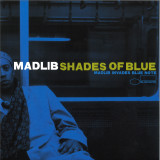
Der Sound von Blue Note wurde im Hip-Hop bereits in seinen frühen Tagen durch Samples und Remixe fest verankert. Aber als der DJ, Produzent, Rapper und Multiinstrumentalist Madlib 2003 die Blue-NoteArchive für sein Meisterwerk “Shades Of Blue” “plündern” durfte, legte er die Messlatte auf ein neues Niveau. Das Resultat war ein visionäres Album mit Remixen und Neuinterpretationen klassischer BlueNote-Aufnahmen von u.a. Donald Byrd, Bobbi Humphrey, Ronnie Foster, Bobby Hutcherson und Wayne Shorter.
- A1: Boat
- A2: Salt Water
- A3: Eyes Closed
- A4: Life Goes On
- A5: Dusty
- A6: End Of Youth
- A7: Colourblind
- B1: Curtains
- B2: Borderline
- B3: Spark
- B4: Vega
- B5: Sycamore
- B6: No Strings
- B7: The Hills Of Aberfeldy
White Vinyl[36,93 €]
Ed Sheeran is set to release his new album ‘-‘ (Subtract) - the last in his decade-spanning mathematical album era - on 5 May 2023 through Asylum/Atlantic on vinyl, cassette and CD. An album that revisits Ed’s singer/songwriter roots, and one that was written against a backdrop of personal grief and hope, ‘-’ (Subtract) presents one of the biggest stars on the planet at his most vulnerable and honest.
In Ed’s own words - “I had been working on Subtract for a decade, trying to sculpt the perfect acoustic album, writing and recording hundreds of songs with a clear vision of what I thought it should be. Then at the start of 2022, a series of events changed my life, my mental health, and ultimately the way I viewed music and art.
Writing songs is my therapy. It helps me make sense of my feelings. I wrote without thought of what the songs would be, I just wrote whatever tumbled out. And in just over a week, I replaced a decade’s worth of work with my deepest darkest thoughts.
Within the space of a month, my pregnant wife got told she had a tumour, with no route to treatment until after the birth. My best friend Jamal, a brother to me, died suddenly and I found myself standing in court defending my integrity and career as a songwriter. I was spiralling through fear, depression and anxiety.
I felt like I was drowning, head below the surface, looking up but not being able to break through for air.
As an artist I didn’t feel like I could credibly put a body of work into the world that didn’t accurately represent where I am and how I need to express myself at this point in my life. This album is purely that. It’s opening the trapdoor into my soul. For the first time I’m not trying to craft an album people will like, I’m merely putting something out that’s honest and true to where I am in my adult life.
This is last February’s diary entry and my way of making sense of it. This is Subtract.”
Since he first learnt ‘Layla’ by Eric Clapton on guitar at the age of 12-years-old, Sheeran’s love of the singer/songwriter began. Growing up with the likes of Damian Rice, Bruce Springsteen and Bob Dylan playing on repeat in his parents’ house – artists that his dad, John, introduced him to – ‘-‘was always on Ed’s horizon. Yet as the songs and writing process took on a whole new meaning and direction after a series of hard-hitting events impacted Ed’s world in 2022, one thing that remained untouched was his strong desire to make a record anchored in his love of singer/songwriter compositions. And now, as he gears-up for the release of his most soul-baring work to date, ‘-‘ serves as a timely reminder for why Sheeran remains one of the most gifted lyricists of his generation; an artist who breaks down his own experiences for fans to seek comfort and belonging.
‘-‘ is the result of Sheeran pushing the boundaries of his songcraft, as he delivers the most profound songwriting of his career. Teaming-up with Aaron Dessner (The National) on writing and production after the pair joined forces following an introduction from mutual friend Taylor Swift, Ed and Aaron began crafting the album in February last year. Writing over 30 songs during their month-long studio stint, the album’s fourteen tracks are seamlessly tied together by exquisite production from paired back, folk-leaning textures to bolder, full-band/orchestral arrangements.
Ed Sheeran burst onto the UK music scene in 2011 with his debut album ‘+’. Rapidly establishing himself as a history-making artist, he followed with ‘x’, ‘÷’, ‘No.6 Collaborations Project’ and ‘=’ - a catalogue that has seen Sheeran become one of the world’s biggest musical success stories of the 21st century.
Ed Sheeran is set to release his new album ‘-‘ (Subtract) - the last in his decade-spanning mathematical album era - on 5 May 2023 through Asylum/Atlantic on vinyl, cassette and CD. An album that revisits Ed’s singer/songwriter roots, and one that was written against a backdrop of personal grief and hope, ‘-’ (Subtract) presents one of the biggest stars on the planet at his most vulnerable and honest.
In Ed’s own words - “I had been working on Subtract for a decade, trying to sculpt the perfect acoustic album, writing and recording hundreds of songs with a clear vision of what I thought it should be. Then at the start of 2022, a series of events changed my life, my mental health, and ultimately the way I viewed music and art.
Writing songs is my therapy. It helps me make sense of my feelings. I wrote without thought of what the songs would be, I just wrote whatever tumbled out. And in just over a week, I replaced a decade’s worth of work with my deepest darkest thoughts.
Within the space of a month, my pregnant wife got told she had a tumour, with no route to treatment until after the birth. My best friend Jamal, a brother to me, died suddenly and I found myself standing in court defending my integrity and career as a songwriter. I was spiralling through fear, depression and anxiety.
I felt like I was drowning, head below the surface, looking up but not being able to break through for air.
As an artist I didn’t feel like I could credibly put a body of work into the world that didn’t accurately represent where I am and how I need to express myself at this point in my life. This album is purely that. It’s opening the trapdoor into my soul. For the first time I’m not trying to craft an album people will like, I’m merely putting something out that’s honest and true to where I am in my adult life.
This is last February’s diary entry and my way of making sense of it. This is Subtract.”
Since he first learnt ‘Layla’ by Eric Clapton on guitar at the age of 12-years-old, Sheeran’s love of the singer/songwriter began. Growing up with the likes of Damian Rice, Bruce Springsteen and Bob Dylan playing on repeat in his parents’ house – artists that his dad, John, introduced him to – ‘-‘was always on Ed’s horizon. Yet as the songs and writing process took on a whole new meaning and direction after a series of hard-hitting events impacted Ed’s world in 2022, one thing that remained untouched was his strong desire to make a record anchored in his love of singer/songwriter compositions. And now, as he gears-up for the release of his most soul-baring work to date, ‘-‘ serves as a timely reminder for why Sheeran remains one of the most gifted lyricists of his generation; an artist who breaks down his own experiences for fans to seek comfort and belonging.
‘-‘ is the result of Sheeran pushing the boundaries of his songcraft, as he delivers the most profound songwriting of his career. Teaming-up with Aaron Dessner (The National) on writing and production after the pair joined forces following an introduction from mutual friend Taylor Swift, Ed and Aaron began crafting the album in February last year. Writing over 30 songs during their month-long studio stint, the album’s fourteen tracks are seamlessly tied together by exquisite production from paired back, folk-leaning textures to bolder, full-band/orchestral arrangements.
Ed Sheeran burst onto the UK music scene in 2011 with his debut album ‘+’. Rapidly establishing himself as a history-making artist, he followed with ‘x’, ‘÷’, ‘No.6 Collaborations Project’ and ‘=’ - a catalogue that has seen Sheeran become one of the world’s biggest musical success stories of the 21st century.
- 1: Adolescents - I Hate Children
- 2: Middle Class - Out Of Vogue
- 3: Agent Orange - Bloodstains
- 4: Dead Kennedys - Chemical Warfare
- 5: Simpletones - I Like Drugs
- 6: Suicidal Tendencies - Fascist Pig
- 7: T.s.o.l.- Abolish Government/Silent Majority
- 8: Circle Jerks- Beverly Hills
- 9: Wasted Youth - Fuck Authority
- 10: The Gun Club - She’s Like Heroin To Me
- 11: Redd Kross - Burn Out
- 12: China White - Live In Your Eyes
- 13: Circle Jerks- Live Fast Die Young
- 14: Negative Trend - How Ya Feeling?
- 15: Eddie And The Subtitles - American Society
- 16: Channel 3 - Manzanar
- 17: Flipper - Ha Haha
- 18: Rikk Agnew O.c. - Life
- 19: Social Distortion - Playpen
- 20: Dead Kennedys - California Überalles
- 21: Shattered Faith - I Love America
- 22: The Weirdos - Helium Bar
- 23: Middle Class - Insurgence
- 24: Germs - Communist Eyes
- 25: Adolescents - Kids Of The Black Hole
Futurismo present their new anthology series: Altered Vision, beginning with SUBURBAN ANNIHILATION The California Hardcore Explosion / From The City To The Beach: 1978-1983.
This aggressive collection draws from California’s rich history of punk, more specifically hardcore: a new sound that eschewed melody for intensity, a sound that took punk harder and faster, a sound intrinsically American. Whilst hardcore was also burning over on the East Coast, it was in California that it had ignited and sprawled, a sonic punch in the face that raged socio-political disdain and total abandonment for commercialism, fuelled by a crumbling American Dream and the collapse of family values.
Suburban Annihilation takes you from the major cities, to the coastal towns, to the SoCal suburbs, showcasing some the most important bands of the West Coast. Blasting off with the Adolescents ‘I Hate Children’, it heads from the year zero of Middle Class’s ‘Out Of Vogue’ to the surf punk of Agent Orange’s ‘Bloodstains’, from the blues tinged outlaw of The Gun Club’s ‘She’s Like Heroin to Me’ to the classic anti-anthems: ‘Live Fast Die Young’ by the Circle Jerks, lifted from their seminal Group Sex album, and the hardcore staple ‘California ÜberAlles’ by the Dead Kennedys. Also present are so many other bands integral to the era: T.S.O.L, Wasted Youth, Germs, Social Distortion, Suicidal Tendencies, Negative Trend, Flipper and many more.
Though the music was designed to repel, this historical document has been lovingly designed to remind us that this genre created some of the most immediate and acutely-realised music ever produced. Making this collection of choice cuts essential for long-time fans of hardcore and punk, just as those new and inquisitive about one of the most angry and pissed off genres to have given birth in America.
This 2xLP comes in a choice of limited edition coloured vinyl, it has a tracklist co-curated by Henry Rollins, it contains liner notes by Lisa Fancher of Frontier, a bio by award winning author Benjamin Myers, and contains a booklet featuring an array of images by the legendary punk photographer Edward Colver.
- A1: Andrzej Marko - Dhamma (3:33)
- A2: Andre Mikola - Circulation (3:30)
- A3: Andrzej Marko - Magic Scenery (5:12)
- A4: Andre Mikola - Longing For Tomorrow (3:35)
- A5: Andre Mikola - Nocturnal Flowers (3:39)
- B1: Andre Mikola - Fly Me To The Sun (3:46)
- B2: Andre Mikola - Birth Of A Butterfly (3:44)
- B3: Andre Mikola - Riding On A Sunbeam (3:52)
- B4: Andre Mikola - Osmosis (4:33)
- B5: Andre Mikola - Solar Heating (3:36)
Fly Me To The Sun is a breathtaking German library gem from the hallowed Coloursound label. Originally out in 1983 it features two Polish composers, Andrzej Marko and André Mikola. If outré synth-funk is your thing, you need this record.
Almost blindingly luminous with positive vibes and radiant optimism, Fly Me to the Sun is a collection of funky, sun-dappled compositions for synthesizer and live instruments like drums, bass and guitar. A dope blend of beatbox driven future jazz and electro pop.
The wonderfully sleaze-adjacent opener "Dhamma" includes some grandiose piano chords amid floating ambient sounds a la Steve Hillage with slick drums entering the fray at a languid pace. "Circulation" sounds like Bowie ran into Chaz Jankel during an extended stay in Los Angeles, the Thin White Duke emerging out of a studio at 6am, bleary-eyed and clutching this filthy, bleepy instrumental of sonic smut. "Magic Scenery" is as delicate and astounding as the title suggests, a deep ambient movement conjuring halcyon images of rolling fields with abundant fauna and flora; acid-tinged visions of intense colour and natural beauty. Cool, slo-mo breaks adorn the strutting melancholy of “Longing for Tomorrow” and “Nocturnal Flowers” to close out Side A.
Skip the title track, which opens up Side B, and head straight to “Birth of a Butterfly” for a slice of creeping digi-dub-soul niceness. This should've been front and centre of that Personal Space compilation a decade ago. Raising both the tempo and the temperature, “Riding on a Sunbeam” continues in the mesmerising cosmic funk style before "Osmosis", one of the clear stand-outs, presents a fine vintage synth solo over a mellow funky rubberband beat. The closing track, "Solar Heating", warms things up with slapped bass and bold drum machine beats and the synth lends Sci-Fi vibes to the dark dub-funk-reggae rhythm.
As David Hollander, in Unusual Sounds: The Hidden History of Library Music, states, Coloursound was "founded in 1979 by composer, music lawyer, and vibraphonist Gunter Greffenius. A Munich-based library with a reputation for releasing innovative and ambitious music, it catered largely to the market for experimental sounds, its first release was 1980’s Biomechanoid, an abstract synthesizer excursion by Joel Vandroogenbroeck, of the pioneering kosmische band Brainticket. The record — complete with imposing, anonymous title and unearthly H.R. Giger cover art — set the tone for the label’s progressive leanings. The label’s catalogue stands as a tribute to the unfettered creative license that libraries were able to provide to forward-thinking musicians who, frustrated by the whims and constraints of the commercial scene, found complete freedom in the world of production music."
As with all our library music re-issues, the audio for Fly Me To The Sun comes from the original analogue tapes and has been remastered for vinyl by Be With regular Simon Francis. Richard Robinson has brought the original Coloursound sleeve back to life in all its metallic silver glory.
- A1: Bright & Shiny Things
- A2: Ulidhani Minajali Manze
- A3: Blink Twice For Yes
- A4: Mama Cuishe
- B1: Cherry Red Paint Job
- B2: Go On
- B3: Every Pool Of Stagnant Water
- B4: Stand Back Little Timmy
- C1: All Sprawled Out In The City
- C2: Flickers On The Fourth Floor
- C3: The Infamous Gatwick Meltdown Of 2016
- C4: I Belong Elsewhere
- D1: Sundown Sundown
- D2: Fetch The Poison
- D3: Blood Red Cheese Wire
Alt-rap dissident Jam Baxter announces his newest solo venture, Fetch the Poison. Conceived during a state-wide alcohol ban in Mexico, the album is Baxter’s first to be composed in complete sobriety — though his hallucinatory style of storytelling and cast of monstrous characters make a welcome return. Lyrics on Fetch the Poison meld Baxter’s Latin American experience with visions of a grisly alternate dimension: sun, sea and glittering vistas are sullied by hollow-eyed addicts, shady bar tenders and duplicitous lovers. Amongst deft bars, the rapper includes a number of spoken word pieces that echo the prose in his now sold out book Off-Piste. The album also features Blah Records' Nah Eeto & Black Josh, as well as DJ Sammy B-Side and Jehst, alongside Brazil’s NOG, Black Alien and Xamã. Baxter reunites with frequent collaborator Chemo on production — now under the moniker Forest DLG — for much of the album, with appearances from Jack Danz, Dr Zygote, Wundrop (CMPMD) and Midlands' electronic stalwart Lenkemz. Despite its diverse credits, tracks are connected by icy, spaced-out electronics with beats twisted through tape distortion and anchored by chest- rattling bass. Baxter began writing the album in Mexico just before the pandemic began while holed up in the city of San Cristobal De Las Casas, Chiapas, as the world shut down. “All the streets were eerily empty and it was amazing. I had the city to myself,” he says. “Then suddenly there was a state- wide alcohol ban and I could no longer casually sip tequila as I went about my business. I didn’t really have a choice but to write” With no alcohol to fuel him, and San Cristobal largely silent, the rapper says he was surprised to find himself in a deeply creative — and prolific – state. “I took to it amazingly well, and I wrote this whole album in three months of clear-headed bliss in the same apartment. I would sit and write all day, and occasionally walk up a mountain when I got stuck ... or go and feed the stray dogs at the church on top of the hill. It was weirdly the most fun I’d had in years.” Fetch the Poison is Baxter’s seventh solo album.
- A1: Nebuchadnezzar
- A2: Traverse The White Light
- A3: Double Triple
- A4: Psilocybin
- A5: Voodoo Tactics (Feat Fatboi Sharif)
- A6: Chronovisor
- A7: Houses On A Hill
- A8: No Exception
- A9: Reading The Room
- A10: Mind Heavy
- A11: Nxcptn
- A12: Dbltrpl
- A13: Chrnvsr
- A14: Hss
- A15: Vdtcts (Feat Fatboi Sharif)
- A16: Trvrsthwhtlght
- A17: Rdgthrm
- A18: Mndhvy
- A19: Pslcybn
- A20: Nbchdnzzr
- A21: Nebuchadnezzar Ii (Feat Astral Trap, Blake Anthony, Mika'il, Greg Cypher)
“Avada Kedavra Deluxe,” by Seattle rapper AJ Suede, is a 21-track, self-produced, self-referencing, double-vinyl labyrinth of experimental boom-bap. Building on a signature style that SPIN magazine describes as “stream-of-consciousness rhymes, containing everything from socio-political commentary and blunted cinematic allusions to psychedelic visions,” Suede’s creation is as compelling as it is unclassifiable. On the first LP, Suede demonstrates his substantial skills as a beatmaker and rapper, chopping up what Seattle’s KEXP calls “the smoothest, jazziest, weirdest samples” and overlaying parkour bars about Grunge, success, and social justice. From the first cut, “Nebuchadnezzar,” which New York’s Major Stage describes as a “powerful chant-like hypnotic loop,” these 10 tracks capture an elusive mood of too many hours inside watching YouTube and trying to piece together fractured connections. The album’s title is derived from an Aramaic spell: “Let this thing be destroyed.” On the second LP, Suede invites 13 guests to “destroy” the original songs. This disc of remixes and reworkings showcases underground voices from across the Northwest (Seattle’s Wolftone, Khrist Koopa, Portland’s Fines Double), from across America (New Jersey’s Fatboi Sharif, California’s mudwater, Ohio’s Lord Olo, New York’s Bloodblixing), and around the world (Tel Aviv’s Argov and Japan’s Wazasnics). Seattle rappers Astral Trap, Blake Anthony, Mika’il, and Greg Cypher are featured on a bonus “posse” cut. AJ Suede has been grinding for years in the underground, building a solid, devoted global fanbase. He’s released acclaimed cassettes and CDs through respected labels such as Fake Four Inc., Candy Drips, Chong Wizard, and Blackhouse. In May 2022, a 100-copy vinyl run of his album “Metatron’s Cube” sold out in less than four hours. With “Avada Kedavra Deluxe,” AJ Suede has tapped into the moment, using what Deeply Rooted Hip-Hop calls “a subconscious steeped in the mystical.” As KEXP says: “Quite predictably, the whole album bangs.”
Jan Anderzén and his partners celebrate the transcendental power of ecstatic music. Alas Rattoisaa Virtaa is the first Kemialliset Ystävät album in four years. It is the result of chance enhancing online collaboration methods, desire to get lost in the sound archives and the high art of meticulous editing. The album title is from visions of rivers running down from Heart of Darkness to the City of Joyful Noise. If contemporary music is a high speed train passing by then KY's music would be an orgy of light under a railway bridge.
A band member Lars Mattila experiences the music of Alas Rattoisaa Virtaa in spatial terms:
"There are worlds accessed only through our auditory system. I hear a Wunderkammer of freestanding sound objects. Rhythms like sequences of seemingly random stuff laid out on the forest floor: a pair of thrones, a Henry Moore sculpture, a watermelon, two thrones, a Moore sculpture, a melon... I trust the path to go on even if I can't see behind the hill. There's motion, wether it be drunk driving or super human rapid eye movement. The sheer amount of detail makes it impossible to take everything in at once. One's perception and shifting focus reshape the experience on each listen. I remember my visit to Cappella Palatina in Palermo where Normann architecture, Arabic arches and Byzantine dome form a harmonious whole. Various cultural and spiritual influences are recognized as equals. The sense of space also brings to mind the end scene of The Lawnmower Man when the dude is trying to escape the virtual world."
- A1: Rock This Mother
- A2: Talk To Me Girl
- A3: You Can Find Me
- A4: Check This Out
- A5: Jesus Going To Clean House
- A6: Hope You Understood
- A7: Is It What You Want
- A8: Love Is Everlasting
- A9: This Is Hip-Hop Art
- A10: Opposite Of Love
- A11: Do You Know What I Mean
- B1: Saving All My Love For You
- B2: Look Out Here I Come
- B3: Girl You Always Talking
- B4: Have A Great Day
- B5: Take My Hand
- B6: I Need Your Love
- B7: Your Town
- B8: Talk Around Town
- B9: Booty Head/Take A Little Walk
- B10: I Love My Mama
- B11: I Never Found Anyone Like You
Vinyl LP[23,49 €]
As the sun sets on a quaint East Nashville house, a young man bares a piece of his soul. Facing the camera, sporting a silky suit jacket/shirt/slacks/fingerless gloves ensemble that announces "singer" before he's even opened his mouth, Lee Tracy Johnson settles onto his stage, the front yard. He sways to the dirge-like drum machine pulse of a synth-soaked slow jam, extends his arms as if gaining his balance, and croons in affecting, fragile earnest, "I need your love… oh baby…"
Dogs in the yard next door begin barking. A mysterious cardboard robot figure, beamed in from galaxies unknown and affixed to a tree, is less vocal. Lee doesn't acknowledge either's presence. He's busy feeling it, arms and hands gesticulating. His voice rises in falsetto over the now-quiet dogs, over the ambient noise from the street that seeps into the handheld camcorder's microphone, over the recording of his own voice played back from a boombox off-camera. After six minutes the single, continuous shot ends. In this intimate creative universe there are no re-takes. There are many more music videos to shoot, and as Lee later puts it, "The first time you do it is actually the best. Because you can never get that again. You expressing yourself from within."
"I Need Your Love" dates from a lost heyday. From some time in the '80s or early '90s, when Lee Tracy (as he was known in performance) and his music partner/producer/manager Isaac Manning committed hours upon hours of their sonic and visual ideas to tape. Embracing drum machines and synthesizers – electronics that made their personal futurism palpable – they recorded exclusively at home, live in a room into a simple cassette deck. Soul, funk, electro and new wave informed their songs, yet Lee and Isaac eschewed the confinement of conventional categories and genres, preferring to let experimentation guide them.
"Anytime somebody put out a new record they had the same instruments or the same sound," explains Isaac. "So I basically wanted to find something that's really gonna stand out away from all of the rest of 'em." Their ethos meant that every idea they came up with was at least worth trying: echoed out half-rapped exhortations over frantic techno-style beats, gospel synth soul, modal electro-funk, oddball pop reinterpretations, emo AOR balladry, nods to Prince and the Fat Boys, or arrangements that might collapse mid-song into a mess of arcade game-ish blips before rallying to reach the finish line. All of it conjoined by consistent tape hiss, and most vitally, Lee's chameleonic voice, which managed to wildly shape shift and still evoke something sincere – whether toggling between falsetto and tenor exalting Jesus's return, or punctuating a melismatic romantic adlib with a succinct, "We all know how it feels to be alone."
"People think we went to a studio," says Isaac derisively. "We never went to no studio. We didn't have the money to go to no studio! We did this stuff at home. I shot videos in my front yard with whatever we could to get things together." Sometimes Isaac would just put on an instrumental record, be it "Planet Rock" or "Don't Cry For Me Argentina" (from Evita), press "record," and let Lee improvise over it, yielding peculiar love songs, would-be patriotic anthems, or Elvis Presley or Marilyn Monroe tributes. Technical limitations and a lack of professional polish never dissuaded them. They believed they were onto something.
"That struggle," Isaac says, "made that sound sound good to me."
In the parlance of modern music criticism Lee and Isaac's dizzying DIY efforts would inevitably be described as "outsider." But "outsider" carries the burden of untold additional layers of meaning if you're Black and from the South, creating on a budget, and trying to get someone, anyone within the country music capital of the world to take your vision seriously. "What category should we put it in?" Isaac asks rhetorically. "I don't know. All I know is feeling. I ain't gonna name it nothing. It's music. If it grabs your soul and touch your heart that's what it basically is supposed to do."
=
Born in 1963, the baby boy of nine siblings, Lee Tracy spent his earliest years living amidst the shotgun houses on Nashville's south side. "We was poor, man!" he says, recalling the outhouse his family used for a bathroom and the blocks of ice they kept in the kitchen to chill perishables. "But I actually don't think I really realized I was in poverty until I got grown and started thinking about it." Lee's mom worked at the Holiday Inn; his dad did whatever he had to do, from selling fruit from a horse drawn cart to bootlegging. "We didn't have much," Lee continues, "but my mother and my father got us the things we needed, the clothes on our back." By the end of the decade with the city's urban renewal programs razing entire neighborhoods to accommodate construction of the Interstate, the family moved to Edgehill Projects. Lee remembers music and art as a constant source of inspiration for he and his brothers and sisters – especially after seeing the Jackson 5 perform on Ed Sullivan. "As a small child I just knew that was what I wanted to do."
His older brother Don began musically mentoring him, introducing Lee to a variety of instruments and sounds. "He would never play one particular type of music, like R&B," says Lee. "I was surrounded by jazz, hard rock and roll, easy listening, gospel, reggae, country music; I mean I was a sponge absorbing all of that." Lee taught himself to play drums by beating on cardboard boxes, gaining a rep around the way for his timekeeping, and his singing voice. Emulating his favorites, Earth Wind & Fire and Cameo, he formed groups with other kids with era-evocative band names like Concept and TNT Connection, and emerged as the leader of disciplined rehearsals. "I made them practice," says Lee. "We practiced and practiced and practiced. Because I wanted that perfection." By high school the most accomplished of these bands would take top prize in a prominent local talent show. It was a big moment for Lee, and he felt ready to take things to the next level. But his band-mates had other ideas.
"I don't know what happened," he says, still miffed at the memory. "It must have blew they mind after we won and people started showing notice, because it's like everybody quit! I was like, where the hell did everybody go?" Lee had always made a point of interrogating prospective musicians about their intentions before joining his groups: were they really serious or just looking for a way to pick up girls? Now he understood even more the importance of finding a collaborator just as committed to the music as he was.
=
Isaac Manning had spent much of his life immersed in music and the arts – singing in the church choir with his family on Nashville's north side, writing, painting, dancing, and working various gigs within the entertainment industry. After serving in the armed forces, in the early '70s he ran The Teenage Place, a music and performance venue that catered to the local youth. But he was forced out of town when word of one of his recreational routines created a stir beyond the safe haven of his bohemian circles.
"I was growing marijuana," Isaac explains. "It wasn't no business, I was smoking it myself… I would put marijuana in scrambled eggs, cornbread and stuff." His weed use originated as a form of self-medication to combat severe tooth pain. But when he began sharing it with some of the other young people he hung out with, some of who just so happened to be the kids of Nashville politicians, the cops came calling. "When I got busted," he remembers, "they were talking about how they were gonna get rid of me because they didn't want me saying nothing about they children because of the politics and stuff. So I got my family, took two raggedy cars, and left Nashville and went to Vegas."
Out in the desert, Isaac happened to meet Chubby Checker of "The Twist" fame while the singer was gigging at The Flamingo. Impressed by Isaac's zeal, Checker invited him to go on the road with him as his tour manager/roadie/valet. The experience gave Isaac a window into a part of the entertainment world he'd never encountered – a glimpse of what a true pop act's audience looked like. "Chubby Checker, none of his shows were played for Black folks," he remembers. "All his gigs were done at high-class white people areas." Returning home after a few years with Chubby, Isaac was properly motivated to make it in Music City. He began writing songs and scouting around Nashville for local talent anywhere he could find it with an expressed goal: "Find someone who can deliver your songs the way you want 'em delivered and make people feel what you want them to feel."
One day while walking through Edgehill Projects Isaac heard someone playing the drums in a way that made him stop and take notice. "The music was so tight, just the drums made me feel like, oh I'm-a find this person," he recalls. "So I circled through the projects until I found who it was.
"That's how I met him – Lee Tracy. When I found him and he started singing and stuff, I said, ohhh, this is somebody different."
=
Theirs was a true complementary partnership: young Lee possessed the raw talent, the older Isaac the belief. "He's really the only one besides my brother and my family that really seen the potential in me," says Lee. "He made me see that I could do it."
Isaac long being a night owl, his house also made for a fertile collaborative environment – a space where there always seemed to be a new piece of his visual art on display: paintings, illustrations, and dolls and figures (including an enigmatic cardboard robot). Lee and Issac would hang out together and talk, listen to music, conjure ideas, and smoke the herb Isaac had resumed growing in his yard. "It got to where I could trust him, he could trust me," Isaac says of their bond. They also worked together for hours on drawings, spreading larges rolls of paper on the walls and sketching faces with abstract patterns and imagery: alien-like beings, tri-horned horse heads, inverted Janus-like characters where one visage blurred into the other.
Soon it became apparent that they didn't need other collaborators; self-sufficiency was the natural way forward. At Isaac's behest Lee, already fed up with dealing with band musicians, began playing around with a poly-sonic Yamaha keyboard at the local music store. "It had everything on it – trumpet, bass, drums, organ," remembers Lee. "And that's when I started recording my own stuff."
The technology afforded Lee the flexibility and independence he craved, setting him on a path other bedroom musicians and producers around the world were simultaneously following through the '80s into the early '90s. Saving up money from day jobs, he eventually supplemented the Yamaha Isaac had gotten him with Roland and Casio drum machines and a Moog. Lee was living in an apartment in Hillside at that point caring for his dad, who'd been partially paralyzed since early in life. In the evenings up in his second floor room, the music put him in a zone where he could tune out everything and lose himself in his ideas.
"Oh I loved it," he recalls. "I would really experiment with the instruments and use a lot of different sound effects. I was looking for something nobody else had. I wanted something totally different. And once I found the sound I was looking for, I would just smoke me a good joint and just let it go, hit the record button." More potent a creative stimulant than even Isaac's weed was the holistic flow and spontaneity of recording. Between sessions at Isaac's place and Lee's apartment, their volume of output quickly ballooned.
"We was always recording," says Lee. "That's why we have so much music. Even when I went to Isaac's and we start creating, I get home, my mind is racing, I gotta start creating, creating, creating. I remember there were times when I took a 90-minute tape from front to back and just filled it up."
"We never practiced," says Isaac. "See, that was just so odd about the whole thing. I could relate to him, and tell him about the songs I had ideas for and everything and stuff. And then he would bring it back or whatever, and we'd get together and put it down." Once the taskmaster hell bent on rehearsing, Lee had flipped a full 180. Perfection was no longer an aspiration, but the enemy of inspiration.
"I seen where practicing and practicing got me," says Lee. "A lot of musicians you get to playing and they gotta stop, they have to analyze the music. But while you analyzing you losing a lot of the greatness of what you creating. Stop analyzing what you play, just play! And it'll all take shape."
=
"I hope you understood the beginning of the record because this was invented from a dream I had today… (You tell me, I'll tell you, we'll figure it out together)" – Lee Tracy and Isaac Manning, "Hope You Understand"
Lee lets loose a maniacal cackle when he acknowledges that the material that he and Isaac recorded was by anyone's estimation pretty out there. It's the same laugh that commences "Hope You Understand" – a chaotic transmission that encapsulates the duality at the heart of their music: a stated desire to reach people and a compulsion to go as leftfield as they saw fit.
"We just did it," says Lee. "We cut the music on and cut loose. I don't sit around and write. I do it by listening, get a feeling, play the music, and the lyrics and stuff just come out of me."
The approach proved adaptable to interpreting other artists' material. While recording a cover of Whitney Houston's pop ballad "Saving All My Love For You," Lee played Whitney's version in his headphones as he laid down his own vocals – partially following the lyrics, partially using them as a departure point. The end result is barely recognizable compared with the original, Lee and Isaac having switched up the time signature and reinvented the melody along the way towards morphing a slick mainstream radio standard into something that sounds solely their own.
"I really used that song to get me started," says Lee. "Then I said, well I need something else, something is missing. Something just came over me. That's when I came up with 'Is It What You Want.'"
The song would become the centerpiece of Lee and Isaac's repertoire. Pushed along by a percolating metronomic Rhythm King style beat somewhere between a military march and a samba, "Is It What You Want" finds Lee pleading the sincerity of his commitment to a potential love interest embellished by vocal tics and hiccups subtlely reminiscent of his childhood hero MJ. Absent chord changes, only synth riffs gliding in and out like apparitions, the song achieves a lingering lo-fi power that leaves you feeling like it's still playing, somewhere, even after the fade out.
"I don't know, it's like a real spiritual song," Lee reflects. "But it's not just spiritual. To me the more I listen to it it's like about everything that you do in your everyday life, period. Is it what you want? Do you want a car or you don't want a car? Do you want Jesus or do you want the Devil? It's basically asking you the question. Can't nobody answer the question but you yourself."
In 1989 Lee won a lawsuit stemming from injuries sustained from a fight he'd gotten into. He took part of the settlement money and with Isaac pressed up "Saving All My Love For You" b/w "Is It What You Want" as a 45 single. Isaac christened the label One Chance Records. "Because that's all we wanted," he says with a laugh, "one chance."
Isaac sent the record out to radio stations and major labels, hoping for it to make enough noise to get picked up nationally. But the response he and Lee were hoping for never materialized. According to Isaac the closest the single got to getting played on the radio is when a disk jock from a local station made a highly unusual announcement on air: "The dude said on the radio, 107.5 – 'We are not gonna play 'Is It What You Want.' We cracked up! Wow, that's deep.
"It was a whole racist thing that was going on," he reflects. "So we just looked over and kept on going. That was it. That was about the way it goes… If you were Black and you were living in Nashville and stuff, that's the way you got treated." Isaac already knew as much from all the times he'd brought he and Lee's tapes (even their cache of country music tunes) over to Music Row to try to drum up interest to no avail.
"Isaac, he really worked his ass off," says Lee. "He probably been to every record place down on Music Row." Nashville's famed recording and music business corridor wasn't but a few blocks from where Lee grew up. Close enough, he remembers, for him to ride his bike along its back alleys and stumble upon the occasional random treasure, like a discarded box of harmonicas. Getting in through the front door, however, still felt a world away.
"I just don't think at the time our music fell into a category for them," he concedes. "It was before its time."
=
Lee stopped making music some time in the latter part of the '90s, around the time his mom passed away and life became increasingly tough to manage. "When my mother died I had a nervous breakdown," he says, "So I shut down for a long time. I was in such a sadness frame of mind. That's why nobody seen me. I had just disappeared off the map." He fell out of touch with Isaac, and in an indication of just how bad things had gotten for him, lost track of all the recordings they'd made together. Music became a distant memory.
Fortunately, Isaac kept the faith. In a self-published collection of his poetry – paeans to some of his favorite entertainment and public figures entitled Friends and Dick Clark – he'd written that he believed "music has a life of its own." But his prescience and presence of mind were truly manifested in the fact that he kept an archive of he and Lee's work. As perfectly imperfect as "Is It What You Want" now sounds in a post-Personal Space world, Lee and Isaac's lone official release was in fact just a taste. The bulk of the Is It What You Want album is culled from the pair's essentially unheard home recordings – complete songs, half-realized experiments, Isaac's blue monologues and pronouncements et al – compiled, mixed and programmed in the loose and impulsive creative spirit of their regular get-togethers from decades ago. The rest of us, it seems, may have finally caught up to them.
On the prospect of at long last reaching a wider audience, Isaac says simply, "I been trying for a long time, it feels good." Ever the survivor, he adds, "The only way I know how to make it to the top is to keep climbing. If one leg break on the ladder, hey, you gotta fix it and keep on going… That's where I be at. I'll kill death to make it out there."
For Lee it all feels akin to a personal resurrection: "It's like I was in a tomb and the tomb was opened and I'm back… Man, it feels so great. I feel like I'm gonna jump out of my skin." Success at this stage of his life, he realizes, probably means something different than what it did back when he was singing and dancing in Isaac's front yard. "What I really mean by 'making it,'" he explains isn't just the music being heard but, "the story being told."
Occasionally Lee will pull up "Is It What You Want" on YouTube on his phone, put on his headphones, and listen. He remembers the first time he heard his recorded voice. How surreal it was, how he thought to himself, "Is that really me?" What would he say to that younger version of himself now?
"I would probably tell myself, hang in there, don't give up. Keep striving for the goal. And everything will work out."
Despite what's printed on the record label, sometimes you do get more than one chance.
“Pure psychotropic madness.” A screaming head on fire penetrated my chest, jolting me from the universal plane back to earth.” Guitarist/Singer/Sonic Alchemist Dave W’s vivid fever dream ignited The Revenge of Heads on Fire, WHITE HILLS’ latest release, which harnesses the energy of ferocious, hedonistic rock with blissful passages of dark ambience. Exploring themes of mortality, transformation and rebirth, the band reveals a spiritual depth unparalleled in previous works. The roar of fire, swirling of oceans and hallucinogenic visions can be heard throughout the 75-minute journey. From the intrepid prelude “The Instrumental Head” to the closing punk blaze of “Eternity”, the album ebbs and flows, smouldering and seething in the middle with the 21- minute mammoth opus “Don’t Be Afraid”. “’Don't Be Afraid’ alone makes this an essential listen for fans of contemporary psychedelia.” -All Music The Revenge of Heads on Fire consummates Dave W’s prototype for the 2007 release on Rocket Recordings, Heads on Fire, later picked up by Thrill Jockey. Six rediscovered songs accompany re-mixed versions of the original material, fulfilling the master arch of the pyre lit long ago. Recorded during the band’s tumultuous early years, the music vibrates with the energy and volatility of a sonic boom. The album will be released on Heads on Fire Industries, distributed worldwide via Cargo Records.
- A1: Rock This Mother
- A2: Talk To Me Girl
- A3: You Can Find Me
- A4: Check This Out
- A5: Jesus Going To Clean House
- A6: Hope You Understood
- A7: Is It What You Want
- A8: Love Is Everlasting
- A9: This Is Hip-Hop Art
- A10: Opposite Of Love
- A11: Do You Know What I Mean
- B1: Saving All My Love For You
- B2: Look Out Here I Come
- B3: Girl You Always Talking
- B4: Have A Great Day
- B5: Take My Hand
- B6: I Need Your Love
- B7: Your Town
- B8: Talk Around Town
- B9: Booty Head/Take A Little Walk
- B10: I Love My Mama
- B11: I Never Found Anyone Like You
Cassette[11,72 €]
As the sun sets on a quaint East Nashville house, a young man bares a piece of his soul. Facing the camera, sporting a silky suit jacket/shirt/slacks/fingerless gloves ensemble that announces "singer" before he's even opened his mouth, Lee Tracy Johnson settles onto his stage, the front yard. He sways to the dirge-like drum machine pulse of a synth-soaked slow jam, extends his arms as if gaining his balance, and croons in affecting, fragile earnest, "I need your love… oh baby…"
Dogs in the yard next door begin barking. A mysterious cardboard robot figure, beamed in from galaxies unknown and affixed to a tree, is less vocal. Lee doesn't acknowledge either's presence. He's busy feeling it, arms and hands gesticulating. His voice rises in falsetto over the now-quiet dogs, over the ambient noise from the street that seeps into the handheld camcorder's microphone, over the recording of his own voice played back from a boombox off-camera. After six minutes the single, continuous shot ends. In this intimate creative universe there are no re-takes. There are many more music videos to shoot, and as Lee later puts it, "The first time you do it is actually the best. Because you can never get that again. You expressing yourself from within."
"I Need Your Love" dates from a lost heyday. From some time in the '80s or early '90s, when Lee Tracy (as he was known in performance) and his music partner/producer/manager Isaac Manning committed hours upon hours of their sonic and visual ideas to tape. Embracing drum machines and synthesizers – electronics that made their personal futurism palpable – they recorded exclusively at home, live in a room into a simple cassette deck. Soul, funk, electro and new wave informed their songs, yet Lee and Isaac eschewed the confinement of conventional categories and genres, preferring to let experimentation guide them.
"Anytime somebody put out a new record they had the same instruments or the same sound," explains Isaac. "So I basically wanted to find something that's really gonna stand out away from all of the rest of 'em." Their ethos meant that every idea they came up with was at least worth trying: echoed out half-rapped exhortations over frantic techno-style beats, gospel synth soul, modal electro-funk, oddball pop reinterpretations, emo AOR balladry, nods to Prince and the Fat Boys, or arrangements that might collapse mid-song into a mess of arcade game-ish blips before rallying to reach the finish line. All of it conjoined by consistent tape hiss, and most vitally, Lee's chameleonic voice, which managed to wildly shape shift and still evoke something sincere – whether toggling between falsetto and tenor exalting Jesus's return, or punctuating a melismatic romantic adlib with a succinct, "We all know how it feels to be alone."
"People think we went to a studio," says Isaac derisively. "We never went to no studio. We didn't have the money to go to no studio! We did this stuff at home. I shot videos in my front yard with whatever we could to get things together." Sometimes Isaac would just put on an instrumental record, be it "Planet Rock" or "Don't Cry For Me Argentina" (from Evita), press "record," and let Lee improvise over it, yielding peculiar love songs, would-be patriotic anthems, or Elvis Presley or Marilyn Monroe tributes. Technical limitations and a lack of professional polish never dissuaded them. They believed they were onto something.
"That struggle," Isaac says, "made that sound sound good to me."
In the parlance of modern music criticism Lee and Isaac's dizzying DIY efforts would inevitably be described as "outsider." But "outsider" carries the burden of untold additional layers of meaning if you're Black and from the South, creating on a budget, and trying to get someone, anyone within the country music capital of the world to take your vision seriously. "What category should we put it in?" Isaac asks rhetorically. "I don't know. All I know is feeling. I ain't gonna name it nothing. It's music. If it grabs your soul and touch your heart that's what it basically is supposed to do."
=
Born in 1963, the baby boy of nine siblings, Lee Tracy spent his earliest years living amidst the shotgun houses on Nashville's south side. "We was poor, man!" he says, recalling the outhouse his family used for a bathroom and the blocks of ice they kept in the kitchen to chill perishables. "But I actually don't think I really realized I was in poverty until I got grown and started thinking about it." Lee's mom worked at the Holiday Inn; his dad did whatever he had to do, from selling fruit from a horse drawn cart to bootlegging. "We didn't have much," Lee continues, "but my mother and my father got us the things we needed, the clothes on our back." By the end of the decade with the city's urban renewal programs razing entire neighborhoods to accommodate construction of the Interstate, the family moved to Edgehill Projects. Lee remembers music and art as a constant source of inspiration for he and his brothers and sisters – especially after seeing the Jackson 5 perform on Ed Sullivan. "As a small child I just knew that was what I wanted to do."
His older brother Don began musically mentoring him, introducing Lee to a variety of instruments and sounds. "He would never play one particular type of music, like R&B," says Lee. "I was surrounded by jazz, hard rock and roll, easy listening, gospel, reggae, country music; I mean I was a sponge absorbing all of that." Lee taught himself to play drums by beating on cardboard boxes, gaining a rep around the way for his timekeeping, and his singing voice. Emulating his favorites, Earth Wind & Fire and Cameo, he formed groups with other kids with era-evocative band names like Concept and TNT Connection, and emerged as the leader of disciplined rehearsals. "I made them practice," says Lee. "We practiced and practiced and practiced. Because I wanted that perfection." By high school the most accomplished of these bands would take top prize in a prominent local talent show. It was a big moment for Lee, and he felt ready to take things to the next level. But his band-mates had other ideas.
"I don't know what happened," he says, still miffed at the memory. "It must have blew they mind after we won and people started showing notice, because it's like everybody quit! I was like, where the hell did everybody go?" Lee had always made a point of interrogating prospective musicians about their intentions before joining his groups: were they really serious or just looking for a way to pick up girls? Now he understood even more the importance of finding a collaborator just as committed to the music as he was.
=
Isaac Manning had spent much of his life immersed in music and the arts – singing in the church choir with his family on Nashville's north side, writing, painting, dancing, and working various gigs within the entertainment industry. After serving in the armed forces, in the early '70s he ran The Teenage Place, a music and performance venue that catered to the local youth. But he was forced out of town when word of one of his recreational routines created a stir beyond the safe haven of his bohemian circles.
"I was growing marijuana," Isaac explains. "It wasn't no business, I was smoking it myself… I would put marijuana in scrambled eggs, cornbread and stuff." His weed use originated as a form of self-medication to combat severe tooth pain. But when he began sharing it with some of the other young people he hung out with, some of who just so happened to be the kids of Nashville politicians, the cops came calling. "When I got busted," he remembers, "they were talking about how they were gonna get rid of me because they didn't want me saying nothing about they children because of the politics and stuff. So I got my family, took two raggedy cars, and left Nashville and went to Vegas."
Out in the desert, Isaac happened to meet Chubby Checker of "The Twist" fame while the singer was gigging at The Flamingo. Impressed by Isaac's zeal, Checker invited him to go on the road with him as his tour manager/roadie/valet. The experience gave Isaac a window into a part of the entertainment world he'd never encountered – a glimpse of what a true pop act's audience looked like. "Chubby Checker, none of his shows were played for Black folks," he remembers. "All his gigs were done at high-class white people areas." Returning home after a few years with Chubby, Isaac was properly motivated to make it in Music City. He began writing songs and scouting around Nashville for local talent anywhere he could find it with an expressed goal: "Find someone who can deliver your songs the way you want 'em delivered and make people feel what you want them to feel."
One day while walking through Edgehill Projects Isaac heard someone playing the drums in a way that made him stop and take notice. "The music was so tight, just the drums made me feel like, oh I'm-a find this person," he recalls. "So I circled through the projects until I found who it was.
"That's how I met him – Lee Tracy. When I found him and he started singing and stuff, I said, ohhh, this is somebody different."
=
Theirs was a true complementary partnership: young Lee possessed the raw talent, the older Isaac the belief. "He's really the only one besides my brother and my family that really seen the potential in me," says Lee. "He made me see that I could do it."
Isaac long being a night owl, his house also made for a fertile collaborative environment – a space where there always seemed to be a new piece of his visual art on display: paintings, illustrations, and dolls and figures (including an enigmatic cardboard robot). Lee and Issac would hang out together and talk, listen to music, conjure ideas, and smoke the herb Isaac had resumed growing in his yard. "It got to where I could trust him, he could trust me," Isaac says of their bond. They also worked together for hours on drawings, spreading larges rolls of paper on the walls and sketching faces with abstract patterns and imagery: alien-like beings, tri-horned horse heads, inverted Janus-like characters where one visage blurred into the other.
Soon it became apparent that they didn't need other collaborators; self-sufficiency was the natural way forward. At Isaac's behest Lee, already fed up with dealing with band musicians, began playing around with a poly-sonic Yamaha keyboard at the local music store. "It had everything on it – trumpet, bass, drums, organ," remembers Lee. "And that's when I started recording my own stuff."
The technology afforded Lee the flexibility and independence he craved, setting him on a path other bedroom musicians and producers around the world were simultaneously following through the '80s into the early '90s. Saving up money from day jobs, he eventually supplemented the Yamaha Isaac had gotten him with Roland and Casio drum machines and a Moog. Lee was living in an apartment in Hillside at that point caring for his dad, who'd been partially paralyzed since early in life. In the evenings up in his second floor room, the music put him in a zone where he could tune out everything and lose himself in his ideas.
"Oh I loved it," he recalls. "I would really experiment with the instruments and use a lot of different sound effects. I was looking for something nobody else had. I wanted something totally different. And once I found the sound I was looking for, I would just smoke me a good joint and just let it go, hit the record button." More potent a creative stimulant than even Isaac's weed was the holistic flow and spontaneity of recording. Between sessions at Isaac's place and Lee's apartment, their volume of output quickly ballooned.
"We was always recording," says Lee. "That's why we have so much music. Even when I went to Isaac's and we start creating, I get home, my mind is racing, I gotta start creating, creating, creating. I remember there were times when I took a 90-minute tape from front to back and just filled it up."
"We never practiced," says Isaac. "See, that was just so odd about the whole thing. I could relate to him, and tell him about the songs I had ideas for and everything and stuff. And then he would bring it back or whatever, and we'd get together and put it down." Once the taskmaster hell bent on rehearsing, Lee had flipped a full 180. Perfection was no longer an aspiration, but the enemy of inspiration.
"I seen where practicing and practicing got me," says Lee. "A lot of musicians you get to playing and they gotta stop, they have to analyze the music. But while you analyzing you losing a lot of the greatness of what you creating. Stop analyzing what you play, just play! And it'll all take shape."
=
"I hope you understood the beginning of the record because this was invented from a dream I had today… (You tell me, I'll tell you, we'll figure it out together)" – Lee Tracy and Isaac Manning, "Hope You Understand"
Lee lets loose a maniacal cackle when he acknowledges that the material that he and Isaac recorded was by anyone's estimation pretty out there. It's the same laugh that commences "Hope You Understand" – a chaotic transmission that encapsulates the duality at the heart of their music: a stated desire to reach people and a compulsion to go as leftfield as they saw fit.
"We just did it," says Lee. "We cut the music on and cut loose. I don't sit around and write. I do it by listening, get a feeling, play the music, and the lyrics and stuff just come out of me."
The approach proved adaptable to interpreting other artists' material. While recording a cover of Whitney Houston's pop ballad "Saving All My Love For You," Lee played Whitney's version in his headphones as he laid down his own vocals – partially following the lyrics, partially using them as a departure point. The end result is barely recognizable compared with the original, Lee and Isaac having switched up the time signature and reinvented the melody along the way towards morphing a slick mainstream radio standard into something that sounds solely their own.
"I really used that song to get me started," says Lee. "Then I said, well I need something else, something is missing. Something just came over me. That's when I came up with 'Is It What You Want.'"
The song would become the centerpiece of Lee and Isaac's repertoire. Pushed along by a percolating metronomic Rhythm King style beat somewhere between a military march and a samba, "Is It What You Want" finds Lee pleading the sincerity of his commitment to a potential love interest embellished by vocal tics and hiccups subtlely reminiscent of his childhood hero MJ. Absent chord changes, only synth riffs gliding in and out like apparitions, the song achieves a lingering lo-fi power that leaves you feeling like it's still playing, somewhere, even after the fade out.
"I don't know, it's like a real spiritual song," Lee reflects. "But it's not just spiritual. To me the more I listen to it it's like about everything that you do in your everyday life, period. Is it what you want? Do you want a car or you don't want a car? Do you want Jesus or do you want the Devil? It's basically asking you the question. Can't nobody answer the question but you yourself."
In 1989 Lee won a lawsuit stemming from injuries sustained from a fight he'd gotten into. He took part of the settlement money and with Isaac pressed up "Saving All My Love For You" b/w "Is It What You Want" as a 45 single. Isaac christened the label One Chance Records. "Because that's all we wanted," he says with a laugh, "one chance."
Isaac sent the record out to radio stations and major labels, hoping for it to make enough noise to get picked up nationally. But the response he and Lee were hoping for never materialized. According to Isaac the closest the single got to getting played on the radio is when a disk jock from a local station made a highly unusual announcement on air: "The dude said on the radio, 107.5 – 'We are not gonna play 'Is It What You Want.' We cracked up! Wow, that's deep.
"It was a whole racist thing that was going on," he reflects. "So we just looked over and kept on going. That was it. That was about the way it goes… If you were Black and you were living in Nashville and stuff, that's the way you got treated." Isaac already knew as much from all the times he'd brought he and Lee's tapes (even their cache of country music tunes) over to Music Row to try to drum up interest to no avail.
"Isaac, he really worked his ass off," says Lee. "He probably been to every record place down on Music Row." Nashville's famed recording and music business corridor wasn't but a few blocks from where Lee grew up. Close enough, he remembers, for him to ride his bike along its back alleys and stumble upon the occasional random treasure, like a discarded box of harmonicas. Getting in through the front door, however, still felt a world away.
"I just don't think at the time our music fell into a category for them," he concedes. "It was before its time."
=
Lee stopped making music some time in the latter part of the '90s, around the time his mom passed away and life became increasingly tough to manage. "When my mother died I had a nervous breakdown," he says, "So I shut down for a long time. I was in such a sadness frame of mind. That's why nobody seen me. I had just disappeared off the map." He fell out of touch with Isaac, and in an indication of just how bad things had gotten for him, lost track of all the recordings they'd made together. Music became a distant memory.
Fortunately, Isaac kept the faith. In a self-published collection of his poetry – paeans to some of his favorite entertainment and public figures entitled Friends and Dick Clark – he'd written that he believed "music has a life of its own." But his prescience and presence of mind were truly manifested in the fact that he kept an archive of he and Lee's work. As perfectly imperfect as "Is It What You Want" now sounds in a post-Personal Space world, Lee and Isaac's lone official release was in fact just a taste. The bulk of the Is It What You Want album is culled from the pair's essentially unheard home recordings – complete songs, half-realized experiments, Isaac's blue monologues and pronouncements et al – compiled, mixed and programmed in the loose and impulsive creative spirit of their regular get-togethers from decades ago. The rest of us, it seems, may have finally caught up to them.
On the prospect of at long last reaching a wider audience, Isaac says simply, "I been trying for a long time, it feels good." Ever the survivor, he adds, "The only way I know how to make it to the top is to keep climbing. If one leg break on the ladder, hey, you gotta fix it and keep on going… That's where I be at. I'll kill death to make it out there."
For Lee it all feels akin to a personal resurrection: "It's like I was in a tomb and the tomb was opened and I'm back… Man, it feels so great. I feel like I'm gonna jump out of my skin." Success at this stage of his life, he realizes, probably means something different than what it did back when he was singing and dancing in Isaac's front yard. "What I really mean by 'making it,'" he explains isn't just the music being heard but, "the story being told."
Occasionally Lee will pull up "Is It What You Want" on YouTube on his phone, put on his headphones, and listen. He remembers the first time he heard his recorded voice. How surreal it was, how he thought to himself, "Is that really me?" What would he say to that younger version of himself now?
"I would probably tell myself, hang in there, don't give up. Keep striving for the goal. And everything will work out."
Despite what's printed on the record label, sometimes you do get more than one chance.
- E1: You Turn Me On I’m A Radio (Live)
- E2: Big Yellow Taxi (Live)
- E4: Woodstock (Live)
- F1: Cactus Tree (Live)
- F2: Cold Blue Steel And Sweet Fire (Live)
- F3: Woman Of Heart And Mind (Live)
- F4: A Case Of You (Live)
- F5: Blue (Live)
- G1: Circle Game (Live)
- G2: People’s Parties (Live)
- G3: All I Want (Live)
- G4: Real Good For Free (Live)
- G5: Both Sides Now (Live)
- H1: Carey (Live)
- H2: The Last Time I Saw Richard (Live)
- H3: Jericho (Live)
- H4: Love Or Money (Live)
- A1: Banquet (2022 Remaster)
- A2: Cold Blue Steel And Sweet Fire (2022 Remaster)
- A3: Barangrill (2022 Remaster)
- A4: Lesson In Survival (2022 Remaster)
- A5: Let The Wind Carry Me (2022 Remaster)
- A6: For The Roses (2022 Remaster)
- B1: See You Sometime (2022 Remaster)
- B2: Electricity (2022 Remaster)
- B3: You Turn Me On I’m A Radio (2022 Remaster)
- B4: Blonde In The Bleachers (2022 Remaster)
- B5: Woman Of Heart And Mind (2022 Remaster)
- B6: Judgement Of The Moon And Stars (Ludwig’s Tune)
- C1: Court And Spark (2022 Remaster)
- C2: Help Me (2022 Remaster)
- C3: Free Man In Paris (2022 Remaster)
- C4: People’s Parties (2022 Remaster)
- C5: Same Situation (2022 Remaster)
- D1: Car On A Hill (2022 Remaster)
- D2: Down To You (2022 Remaster)
- D3: Just Like This Train (2022 Remaster)
- D4: Raised On Robbery (2022 Remaster)
- D5: Trouble Child (2022 Remaster)
- D6: Twisted (2022 Remaster)
- I1: In France They Kiss On Main Street (2022 Remaster)I
- I2: The Jungle Line (2022 Remaster)
- I3: Edith And The Kingpin (2022 Remaster)
- I4: Don’t Interrupt The Sorrow (2022 Remaster)
- I5: Shades Of Scarlett Conquering (2022 Remaster)
- J1: The Hissing Of Summer Lawns (2022 Remaster)
- J2: The Boho Dance (2022 Remaster)
- J3: Harry’s House/Centerpiece (2022 Remaster)
- J4: Sweet Bird (2022 Remaster)
- J5: Shadows And Light (2022 Remaster)
- E3: Rainy Night House (Live)
Joni Mitchell was at a turning point 50 years ago. After making four acclaimed albums with Reprise Records, including her 1971 masterpiece Blue, she left the label to join the brand-new Asylum Records in 1972. Over the next seven years, Mitchell would record some of the most acclaimed music of her career while changing her musical direction by adding more jazz elements into her song writing. The evolution culminated in 1979 with Mingus, her collaboration with jazz titan Charles Mingus, and her studio last album for Asylum.
The Asylum Albums (1972-1975), the next instalment in the Joni Mitchell archive series, explores the beginning of that prolific era. The collection features newly remastered versions of For The Roses (1972), Court And Spark (1974), the double live album Miles Of Aisles (1974), and The Hissing Of Summer Lawns (1975). All four were recently remastered by Bernie Grundman. The Asylum Albums (1972-1975 will be available on 23rd September on 5-LP 180-gram vinyl (Limited Edition Of 20,000) and as a 4CD set. The cover art for the set features a previously unseen painting by Mitchell. The set also includes an essay by friend and fellow Canadian Neil Young.
The Asylum Albums (1972-1975), follows Mitchell’s musical evolution over four albums as she embraced more jazz-inspired pieces and moved away from the folk and pop of her early years. It includes essential tracks like her first Top 40 hit, “You Turn Me On, I’m A Radio” and her highest-charting (#7) single “Help Me,” plus favourites like “Free Man In Paris,” “Raised On Robbery” and “In France They Kiss On Main Street.” Mitchell has been intimately involved in producing the collection, lending her vision and personal touch to every element.
l b6. Judgement Of The Moon And Stars (Ludwig’s Tune) 2022 Remaster
[x] e1. You Turn Me On I’m A Radio (Live) [2022 Remaster]
[y] e2. Big Yellow Taxi (Live) [2022 Remaster]
[2022 Remaster]
[xa] e4. Woodstock (Live) [2022 Remaster]
[xb] f1. Cactus Tree (Live) [2022 Remaster]
[xc] f2. Cold Blue Steel And Sweet Fire (Live) [2022 Remaster]
[xd] f3. Woman Of Heart And Mind (Live) [2022 Remaster]
[xe] f4. A Case Of You (Live) [2022 Remaster]
[xf] f5. Blue (Live) [2022 Remaster]
[xg] g1. Circle Game (Live) [2022 Remaster]
[xh] g2. People’s Parties (Live) [2022 Remaster]
[xi] g3. All I Want (Live) [2022 Remaster]
[xj] g4. Real Good For Free (Live) [2022 Remaster]
[xk] g5. Both Sides Now (Live) [2022 Remaster]
[xl] h1. Carey (Live) [2022 Remaster]
[xm] h2. The Last Time I Saw Richard (Live) [2022 Remaster]
[xn] h3. Jericho (Live) [2022 Remaster]
[xo] h4. Love Or Money (Live) [2022 Remaster]
“Pure psychotropic madness.” A screaming head on fire penetrated my chest, jolting me from the universal plane back to earth.” Guitarist/Singer/Sonic Alchemist Dave W’s vivid fever dream ignited The Revenge of Heads on Fire, WHITE HILLS’ latest release, which harnesses the energy of ferocious, hedonistic rock with blissful passages of dark ambience. Exploring themes of mortality, transformation and rebirth, the band reveals a spiritual depth unparalleled in previous works. The roar of fire, swirling of oceans and hallucinogenic visions can be heard throughout the 75-minute journey. From the intrepid prelude “The Instrumental Head” to the closing punk blaze of “Eternity”, the album ebbs and flows, smouldering and seething in the middle with the 21- minute mammoth opus “Don’t Be Afraid”. “’Don't Be Afraid’ alone makes this an essential listen for fans of contemporary psychedelia.” -All Music The Revenge of Heads on Fire consummates Dave W’s prototype for the 2007 release on Rocket Recordings, Heads on Fire, later picked up by Thrill Jockey. Six rediscovered songs accompany re-mixed versions of the original material, fulfilling the master arch of the pyre lit long ago. Recorded during the band’s tumultuous early years, the music vibrates with the energy and volatility of a sonic boom. The album will be released on Heads on Fire Industries, distributed worldwide via Cargo Records.
Hailing from Los Angeles with an arsenal of songs as varied as the
American landscape itself, PJ Western creates music of contradictions
His tripped out pop- rock psychedelia evokes a haze of 60’s AM radio as heard
emanating from someone else’s car window.
Here I Go, Western’s debut album, recorded during the lockdown we all endured,
was written in dreams. In visions. Wild but refined, classic but modern. The album
is a lot like the man who wrote it: complex, celebratory, grateful. Recorded in LA
with the help of some of the finest musicians the city has to offer, Here I Go
offers a perspective of the city as heard through the ears of a precocious outsider
– someone who may call the city home, but also can’t quite shake the suspicion
he might not belong in the Hollywood Hills surrounding him.
Packaging:CD Digiwallet, 16-page booklet, marketing sticker