
pre-ordina ora27.11.2026
dovrebbe essere pubblicato su 27.11.2026
28,53 €
dovrebbe essere pubblicato su 27.11.2026
dovrebbe essere pubblicato su 27.06.2025

dovrebbe essere pubblicato su 21.03.2025

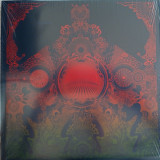
"One of the best bands to come out of NYC since who gives a shit." -CVLT Nation. When you enter White Hills' lair in Brooklyn, the duo's insatiable desire for music and art is immediately palpable. Crates of vinyl from floor to ceiling line the long hallway. Guitars appear at every angle, one lying across a sofa in obvious mid-play with others in cases tucked beside amplifiers into every conceivable corner. Synthesizers and cables cover the purple satin bed while gouache paintings in various stages of progress strewn the floor. Album covers, movie posters, books, paintings, prints and souvenirs of subversive culture occupy the remaining wall space. A sanctuary of adoration, creation and imagination, it's also the nerve center of their record label Heads on Fire Industries and the site where the final mixes of their latest album Beyond This Fiction took shape. For nearly two decades, White Hills have been blowing minds with their sonic alchemy: a unique mix of neo-psychedelia, art rock, and post-punk- at once original and recognizable. Their cult reputation emblazoned in celluloid following their performance in Jim Jarmusch's sultry vampire romance Only Lovers Left Alive, the duo has toured vigorously since their inception. With a vast catalogue that astounds and a relentless punk ethos, time seems to energize the duo, making them increasingly daring and prolific. "Music creates a bliss beyond sex and drugs," professes one-woman rhythm section Ego Sensation. "We'll never stop making music. It's the highest high to be had in life." Founding member Dave W, whose signature other-worldly guitar sorcery defines the White Hills sound, grabs his Les Paul to record a melody lingering in his head from last night's dream before it escapes. Outside, the sound of passing sirens, honking horns and bits of conversation remind you that you're in the middle of New York, a city so flush with rock legacy and artistic innovation it would take lifetimes to drink it all in. A voice from outside shouts, "This shit is going for 3! These people got to be out of their fucking minds!" Dave shakes his head and laughs, "There's no place I'd rather be." Committed to a vocation marked by extremes, doubt, struggle and moments of ecstasy, Dave and Ego continue this torrid affair with music bearing their latest fruit Beyond This Fiction. Inspired by the ideas of Joseph Campbell, the writer/philosopher known for the book The Power of Myth, the album explores the idea of "riding between opposites"- forging one's own path unrestrained by the dualistic constraints of society. It's a cry to all the seers among us- call us outsiders or rebels- who feel smothered by convention and see nonconformity as the gateway into divine mystery. Recorded with Martin Bisi, known for his iconic NYC sound developed through his work with no-wave titans Sonic Youth, Swans and Lydia Lunch, Beyond This Fiction sees Dave W (guitar/vocals/synths) and Ego Sensation (drums/bass/vocals) orchestrating their distinct guitar heavy meditations into songs with a stronger focus on vocals than previous albums. Opener "Throw It Up In The Air" and closer "Beyond This Fiction" both have a lush quality that flirts with shoegaze. "Killing Crimson", a song that takes inspiration from Killing Joke and King Crimson, has a driving beat and a catchy hook that begs for a sing-a-long. "The Awakening" plunges into the meditative ambient abyss the band is well known for, featuring the unique voice of frequent collaborator poet Dan McGuire to deliver the meaning behind Beyond This Fiction. The album harnesses the seductive accessibility of 2015's Walks For Motorists while evoking the tempestuous soul of the band's seminal 2011 H-p1. Notorious shapeshifters, White Hills make Beyond This Fiction a familiar surprise. Back in the lair, Dave draws eyes on his hands in preparation for the day's video shoot. Ego reaches in the closet pulling out the red velvet jacket she wears on the cover of Beyond This Fiction where she stands in a NYC alley holding a glowing orb. "That's the portal- the gateway into the mystery. The music will take you there.".
Ordina ora e ordineremo l'articolo per te presso il nostro fornitore.

CLOUDY SEA BLUE VINYL[28,53 €]
"One of the best bands to come out of NYC since who gives a shit." -CVLT Nation. When you enter White Hills' lair in Brooklyn, the duo's insatiable desire for music and art is immediately palpable. Crates of vinyl from floor to ceiling line the long hallway. Guitars appear at every angle, one lying across a sofa in obvious mid-play with others in cases tucked beside amplifiers into every conceivable corner. Synthesizers and cables cover the purple satin bed while gouache paintings in various stages of progress strewn the floor. Album covers, movie posters, books, paintings, prints and souvenirs of subversive culture occupy the remaining wall space. A sanctuary of adoration, creation and imagination, it's also the nerve center of their record label Heads on Fire Industries and the site where the final mixes of their latest album Beyond This Fiction took shape. For nearly two decades, White Hills have been blowing minds with their sonic alchemy: a unique mix of neo-psychedelia, art rock, and post-punk- at once original and recognizable. Their cult reputation emblazoned in celluloid following their performance in Jim Jarmusch's sultry vampire romance Only Lovers Left Alive, the duo has toured vigorously since their inception. With a vast catalogue that astounds and a relentless punk ethos, time seems to energize the duo, making them increasingly daring and prolific. "Music creates a bliss beyond sex and drugs," professes one-woman rhythm section Ego Sensation. "We'll never stop making music. It's the highest high to be had in life." Founding member Dave W, whose signature other-worldly guitar sorcery defines the White Hills sound, grabs his Les Paul to record a melody lingering in his head from last night's dream before it escapes. Outside, the sound of passing sirens, honking horns and bits of conversation remind you that you're in the middle of New York, a city so flush with rock legacy and artistic innovation it would take lifetimes to drink it all in. A voice from outside shouts, "This shit is going for 3! These people got to be out of their fucking minds!" Dave shakes his head and laughs, "There's no place I'd rather be." Committed to a vocation marked by extremes, doubt, struggle and moments of ecstasy, Dave and Ego continue this torrid affair with music bearing their latest fruit Beyond This Fiction. Inspired by the ideas of Joseph Campbell, the writer/philosopher known for the book The Power of Myth, the album explores the idea of "riding between opposites"- forging one's own path unrestrained by the dualistic constraints of society. It's a cry to all the seers among us- call us outsiders or rebels- who feel smothered by convention and see nonconformity as the gateway into divine mystery. Recorded with Martin Bisi, known for his iconic NYC sound developed through his work with no-wave titans Sonic Youth, Swans and Lydia Lunch, Beyond This Fiction sees Dave W (guitar/vocals/synths) and Ego Sensation (drums/bass/vocals) orchestrating their distinct guitar heavy meditations into songs with a stronger focus on vocals than previous albums. Opener "Throw It Up In The Air" and closer "Beyond This Fiction" both have a lush quality that flirts with shoegaze. "Killing Crimson", a song that takes inspiration from Killing Joke and King Crimson, has a driving beat and a catchy hook that begs for a sing-a-long. "The Awakening" plunges into the meditative ambient abyss the band is well known for, featuring the unique voice of frequent collaborator poet Dan McGuire to deliver the meaning behind Beyond This Fiction. The album harnesses the seductive accessibility of 2015's Walks For Motorists while evoking the tempestuous soul of the band's seminal 2011 H-p1. Notorious shapeshifters, White Hills make Beyond This Fiction a familiar surprise. Back in the lair, Dave draws eyes on his hands in preparation for the day's video shoot. Ego reaches in the closet pulling out the red velvet jacket she wears on the cover of Beyond This Fiction where she stands in a NYC alley holding a glowing orb. "That's the portal- the gateway into the mystery. The music will take you there.".
dovrebbe essere pubblicato su 30.08.2024

“Pure psychotropic madness.” A screaming head on fire penetrated my chest, jolting me from the universal plane back to earth.” Guitarist/Singer/Sonic Alchemist Dave W’s vivid fever dream ignited The Revenge of Heads on Fire, WHITE HILLS’ latest release, which harnesses the energy of ferocious, hedonistic rock with blissful passages of dark ambience. Exploring themes of mortality, transformation and rebirth, the band reveals a spiritual depth unparalleled in previous works. The roar of fire, swirling of oceans and hallucinogenic visions can be heard throughout the 75-minute journey. From the intrepid prelude “The Instrumental Head” to the closing punk blaze of “Eternity”, the album ebbs and flows, smouldering and seething in the middle with the 21- minute mammoth opus “Don’t Be Afraid”. “’Don't Be Afraid’ alone makes this an essential listen for fans of contemporary psychedelia.” -All Music The Revenge of Heads on Fire consummates Dave W’s prototype for the 2007 release on Rocket Recordings, Heads on Fire, later picked up by Thrill Jockey. Six rediscovered songs accompany re-mixed versions of the original material, fulfilling the master arch of the pyre lit long ago. Recorded during the band’s tumultuous early years, the music vibrates with the energy and volatility of a sonic boom. The album will be released on Heads on Fire Industries, distributed worldwide via Cargo Records.
Ordina ora e ordineremo l'articolo per te presso il nostro fornitore.
“Pure psychotropic madness.” A screaming head on fire penetrated my chest, jolting me from the universal plane back to earth.” Guitarist/Singer/Sonic Alchemist Dave W’s vivid fever dream ignited The Revenge of Heads on Fire, WHITE HILLS’ latest release, which harnesses the energy of ferocious, hedonistic rock with blissful passages of dark ambience. Exploring themes of mortality, transformation and rebirth, the band reveals a spiritual depth unparalleled in previous works. The roar of fire, swirling of oceans and hallucinogenic visions can be heard throughout the 75-minute journey. From the intrepid prelude “The Instrumental Head” to the closing punk blaze of “Eternity”, the album ebbs and flows, smouldering and seething in the middle with the 21- minute mammoth opus “Don’t Be Afraid”. “’Don't Be Afraid’ alone makes this an essential listen for fans of contemporary psychedelia.” -All Music The Revenge of Heads on Fire consummates Dave W’s prototype for the 2007 release on Rocket Recordings, Heads on Fire, later picked up by Thrill Jockey. Six rediscovered songs accompany re-mixed versions of the original material, fulfilling the master arch of the pyre lit long ago. Recorded during the band’s tumultuous early years, the music vibrates with the energy and volatility of a sonic boom. The album will be released on Heads on Fire Industries, distributed worldwide via Cargo Records.
dovrebbe essere pubblicato su 16.09.2022
“Pure psychotropic madness.” A screaming head on fire penetrated my chest, jolting me from the universal plane back to earth.” Guitarist/Singer/Sonic Alchemist Dave W’s vivid fever dream ignited The Revenge of Heads on Fire, WHITE HILLS’ latest release, which harnesses the energy of ferocious, hedonistic rock with blissful passages of dark ambience. Exploring themes of mortality, transformation and rebirth, the band reveals a spiritual depth unparalleled in previous works. The roar of fire, swirling of oceans and hallucinogenic visions can be heard throughout the 75-minute journey. From the intrepid prelude “The Instrumental Head” to the closing punk blaze of “Eternity”, the album ebbs and flows, smouldering and seething in the middle with the 21- minute mammoth opus “Don’t Be Afraid”. “’Don't Be Afraid’ alone makes this an essential listen for fans of contemporary psychedelia.” -All Music The Revenge of Heads on Fire consummates Dave W’s prototype for the 2007 release on Rocket Recordings, Heads on Fire, later picked up by Thrill Jockey. Six rediscovered songs accompany re-mixed versions of the original material, fulfilling the master arch of the pyre lit long ago. Recorded during the band’s tumultuous early years, the music vibrates with the energy and volatility of a sonic boom. The album will be released on Heads on Fire Industries, distributed worldwide via Cargo Records.
dovrebbe essere pubblicato su 16.09.2022

2026 Repress
Prologue: Wearied by our endless travelling under a burning sun, we stopped by the margins of a tiny stream, embraced by a timid vegetation. The scorching heat made our throat parched and weak: yearning to quench our thirst, we immersed ourselves into the waters without any hesitation, drowning our dryness and our exhausted limbs. I pointed my face, revived by water, towards the sky and I lingered on, admiring it: a flock of birds gently floated, drawing in the sky some abstract shapes. I sat beneath a palm tree, motionlessly admiring the show, the shades of the night approaching. 'The true joy of a moonlit night is something we no longer understand. Only the men of old, when there were no lights, could understand the true joy of a moonlit night.' --
dovrebbe essere pubblicato su 02.10.2026
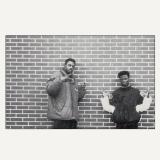
Initially recorded in 1996 and officially released February 1997, 2nd Family's Killaz from the Blackside tape is one of the most distinctive examples of unpolished, stripped-back & paranoid mid-90s Memphis rap. Recorded by King JC together with 2nd Family MCs Pistol Grip & Killa Chrome in a home-studio set up at the group's base in Southern Hills Apartments in Whitehaven, South Memphis (known locally as Blackhaven or the Blackside, a short trip from Graceland) the sparse, brooding and somewhat introspective production sets the record apart from the more raucous, overdriven precedent of the period. Pressed on vinyl for the first time via Death Is Not The End in an edition of 300 copies.
dovrebbe essere pubblicato su 06.11.2026

Ever since the late 1950s bossa-nova revolution, Brazil’s influence on French music has been undeniable. Pierre Barouh, Georges Moustaki and a vast array of lesser known artists, all made the Musica Popular Brasileira (MPB) an axis of promotion at the service of a cool and metaphysical, modern and mixed Brazilian lifestyle. Some were seduced by the poetic languors of the bossa, some were looking for fun, and others just loved the American hybridization of jazz-bossa, jazz-samba.
What is bossa nova? One of its creators, Joao Gilberto said: "Its style, cadence, everything is samba. At the very start, we didn't call it bossa nova, we sang a little samba made up of a single note - Samba de uma nota so .... The discussion around the origins of bossa nova is therefore useless”. It is nevertheless useful to remember that these magnificent Brazilian songs, which the guitarist describes as samba, were shifted and balanced around improbable chords. "I like things that lean, the in-betweens that limp with grace," said Pierre Barrouh, quoting Jean Cocteau.
With emotion, arrangements for violin and supple guitar licks, bossa nova rapidly changed. A transformation that can be heard in the Tchic, tchic, French Bossa Nova 1963-1974 compilation, the result of a cultural reappropriation, which traveled through the United States and supplemented itself in France.
A musical revolution that has remained significant, bossa nova was born in Rio. From 1956 to 1961, Brazil lived through its golden years. In five years, the country had invented its modernist style. Elected president in 1956, Juscelino Kubitschek de Oliveira, an elegant man with a broad forehead, brandished a promising slogan: "Fifty years of progress in five years". He quickly got to work. Not worried about increasing debt, he launched the project for a new federal capital, Brasilia, designed by the communist architect Oscar Niemeyer. Volkswagen opened state-of-the-art factories and created the “fusquinha”, the Beetle. In Rio, the Vespa made its first appearance. The Arpoador Surf Club crew run into the “girl” from Ipanema, Helô Pinheiro - the tanned garota ("chick"), between a flower and mermaid, who at 17 walked by the Veloso bar, where the fiery author and composer, Tom Jobim and Vinicius de Moraes, were getting drunk on whiskey. From then on, bossa symbolized cool.
In 1958, Joao Gilberto recorded Chega de Saudade, which the directors of Philips denied, calling it "music for fagots". The marketing director, who believed in it, secretly pressed 3000 78-inch vinyls and distributed them at schools around Rio, creating a tidal wave.
American jazzmen then took over. In particular, trumpeter Dizzy Gillespie and guitarist Charlie Byrd. In November 1962, the Brazilian Ministry of Foreign Affairs funded a "Bossa-Nova" concert at Carnegie Hall in New York, inviting the genre’s pioneers. Unprepared, the show soon turned to disaster. But the troupe was invited to the White House by Jackie Kennedy. The first lady loved "the new beat" and in particular Maria Ninguem, a song by Carlos Lyra, later covered by Brigitte Bardot.
In Brazil, the 1964 military coup quickly ended this euphoria. The destructive atmosphere that ensued pushed many Brazilian musicians to leave, if not to exile. Thus, Tom Jobim, Sergio Mendes and Joao Gilberto arrived to the United States. In New York, Joao Gilberto met saxophonist Stan Getz. At the time, he was married to the Bahianese Astrud Weinert Gilberto, who had a German father. She had never sung before, but she knew how to speak English. Getz therefore asked her to replace her husband on The Girl From Ipanema. The Getz/Gilberto record with Tom Jobim on piano, was released in March 1964. Phil Ramone, the "pope of pop" was in charge of sound.
Bossa nova arrived in Paris through the classic “guitar-voice” channel (Pierre Barouh, Baden Powell, Moustaki…) But France loved jazz and Paris had already welcomed its American contributors. All these good people were to pass through Saint-Germain-des-Prés. The cabaret l'Escale became the Mecca of Latin American sound where one could find Pierre Barrouh and his friends, such as the Camara Trio, samba-jazz aces, whose only record was published by the Saravah label. With a band strangely called Les Masques (a band that included Nicole Croisille and Pierre Vassiliu, among others), the Camara Trio recorded an interesting Brazilian Sound, including the track Il faut tenir which is present on this tasty compilation of rarities.
Other enlightened musicians can also be found on the compilation, such as Jean-Pierre Sabar (songwriter for Hardy, Auffray, Leforestier ...) and the French pop rock organist Balthazar. In 1975, Sabar recorded Aurinkoinen Musiikkimatka on a Finnish label, which featured the crazy Vai, Vai, included on this record. We are now following the footsteps of Brazilian electronic musicians such as Sergio Mendes, Eumir Deodato or Marcos Valle who created funk and disco sounds on their keyboards and synthesizers. A style that influenced Véronique Sanson when she wrote Jusqu’à la Tombée de la nuit in 1969 for Isabelle de Funès, the niece of Louis and a great friend of Michel Berger - Sanson did end up singing this track on her 1992 Sans Regret record.
The pinnacle of exoticism and travel, Sylvia Fels’ Corto Maltese includes bongos, sea mist and ocean sounds. The title was taken from Jacky Chalard’s concept album written in 1974, Je suis vivant, mais j’ai peur (I am alive, but I am scared), based on Gilbert Deflez’s science fiction novel.
However, bossa nova extended the scope of popularity. "In the 1970s, I was a fan of Sergio Mendes, Getz / Gilberto. I fell in love with this music that I knew because I had been an orchestral singer, " explained Isabelle Aubret, who in 1971 delivered a composite record of covers by the very funky Jorge Ben, Orfeu Negro, Tom Jobim, Vinicius de Morais and Jean Ferrat. "I recorded this album for Meys Records in Paris, far from Brazil, with wonderful musicians, François Raubert, Roland Vincent, Alain Goraguer...". The latter wrote the arrangements for Casa Forte, a very percussive title borrowed from Edu Lobo, one of the initiators of the bossa who spent time in California. "Jazz and bossa came together and produced very rhythmic music. I love singing, it allows me to dream, to have fun, to feel a high on stage, and these songs brought me joy, made me swing, my singing felt like a dance.”
The world tours of French singers and their desire for the tropics, often brought them to Rio with its hills, forests, caipirinhas and tanned bodies. There are surprises though, like this Iemenja (Iemenja is the goddess of the sea in the Afro-Brazilian candomblé religion). Not unlike the composer and musician Jean-Pierre Lang, based in Sao Paulo, Claire Chevalier taught Brazil to Brazil. In 1970, the singer and painter published a 45-inch vinyl, Mon mari et mes amants (My husband and my lovers), under the improbable pseudonym of Clarinha (little Claire). She was then living in Rio, with her husband, Joël Leibovitz, who founded a band called Azimuth, and who owned a record label specialized in "sambas enredos" songs for samba school parades.
For its B side, she asked Pierre Perret to come up with lyrics for a song composed by Carlos Imperial: "Oh goddess of the sea, o goddess Iemenja, I bring a white rose to adorn your long hair ..." . "Perret came to see us, and we had fun, remembers Joël Leibovitz. We wrote Lemenja for fun, we recorded it at the Havaí studio, behind the Central do Brasil the central station. Erlon Chaves, the arranger who worked with Elis Regina, joined us" adding his share of Afro-Brazilian percussions and funky brass to the mix.
There is a common misunderstanding in Franco-Brazilian history: that bossa, admittedly hedonistic, is perceived as funny, even though the poets who wrote the texts are often philosophizing on the human condition. Its French interpreters pull it towards a carnival inspired universe, far removed from its fundamental essence. Thus, Jean Constantin covered the famous Samba da minha terra, an ode to the art of samba written by the classic Bahian composer Dorival Caymmi, renaming it with the enticing title of Pas tant de tchi tchi pompon: "On your pier there is no tchi tchi / when you arch your back, you know everything is alright ”(lyrics by Gérard Calvi). This expedited bossa aims for the absurd, but retains a certain elegance.
Indeed, Jean Constantin was not an idiot, the rather large man had a huge mustache and liked fantasy, (Les pantoufles à papa, Le pacha, inspired by cha-cha-cha-cha, salsa and jazz) but he was also the lyricist of Mon manège à moi interpreted by Edith Piaf, the composer of Mon Truc en plume by Zizi Jeanmaire and the soundtrack of François Truffaut’s 400 Blows. Le Poulpe, published in 1970, from which this bossa is extract, was arranged by Jean-Claude Vannier, an accomplice of Serge Gainsbourg’s Melody Nelson. In short: "There is enough of samba / By looking at the parasol / Because my poor cabeza / Is going to die in the sun".
Even the American actress Marpessa Down, who was at the heart of the bossa nova revolution with her role as Euridyce in Marcel Camus’ film Orfeu Negro, winner of the 1959 Cannes Palme d'or, fed the clichée with Je voudrais parler au petit cuica - "Tell me how you manage to always make people want to dance / It's true, I must admit that I cannot resist your magic" - in consequence, once can hear the cuica, a little drum inherited from the Bantu.
But bossa nova had many angles. Societal, of course, pushing actresses who were symbols of women's liberation like Brigitte Bardot, Jeanne Moreau, or Sophia Loren to engage in the exercise of accelerated bossa. In February of 1963, Sophia Loren made a record in French in Rome, Je ne t'aime plus, featuring the song De jour en jour, a bossa written by two Italians, Armando Trovajoli and Tino Fornai, which was released a little later by Barclay. Bossa accompanied the 1960s, a decade of moral liberation. Ann Sorel, who interpreted La Poupée des favellas, caused a sensation with L’amour à plusieurs, a provocative song written by Frédéric Bottom and Jean-Claude Vannier. As for the actress Andrea Parisy, she displayed her bourgeois cheekiness in Marcel Carné's Les Tricheurs before interpreting Les mains qui font du bien. And Magalie Noël, the friend of Boris Vian, who sung Johnny fais-moi mal, was hired to sing Une énorme Samba, composed by Alain Goraguer (arranger to Gainsbourg, Bobby Lapointe and Jean Ferrat) with lyrics by Frédéric Botton.
But in the end, of what wood is bossa nova made of? The answer is given by Christianne Legrand, daughter of Raymond the conductor, and sister to Michel the composer: "With me, with jà" - jà means "immediately" in Portuguese. In 1972, the singer, an expert in vocal jazz and a member of the Double Six, published Le Brésil de Christianne Legrand. Two songs included on the Tchic Tchic compilation that demonstrate how bossa, jazz, funk, rock, etc. work like a swiss army knife: the music is used to denounce broken systems, or miracles, HLM et ciné roman, Cent mille poissons dans ton filet, two songs from the O Cafona soundtrack, a successful telenovela broadcast, at the time in black and white, on TV Globo. The first was adapted in French by the fighter and friend of the Legrand tribe, Agnès Varda. The second is content with a play on words, jostling them into a summer fun.
Véronique Mortaigne
Ordina ora e ordineremo l'articolo per te presso il nostro fornitore.

Psychedelic MasterpieceOriginally released on Capitol Records in 1969, Euphoria’s debut album A Gift From Euphoria is an unsung album; one with incredible sonic radiance, masterful songwriting, and everlasting harmonies—with their fantastical combination of psychedelic, folk, country, and hard rock. The 15 songs set up a journey through the best of what had been happening within modern music by 1969. Comparisons to The White Album are apt as it leaps from genre to genre with shocking confidence, as if they knew this was their only chance to say it all on a record. But it was too good to last as this was the only album Euphoria made, one that is critically championed in hindsight and highly sought after nowadays, and it is Jackpot Records honor to be able to bring it to you. Now reissued from the original analog master tapes with the original cover artwork exclusively for RSD 2026.
dovrebbe essere pubblicato su 24.04.2026

GOSPEL GREATEST HITS - Die Seele der Musik Mit Gospel Greatest Hits präsentiert Wagram eine außergewöhnliche Sammlung der kraftvollsten Stimmen und bewegendsten Songs der Gospelgeschichte - als Doppel-CD und Doppel-Vinyl. Diese Zusammenstellung vereint emotionale Tiefe, spirituelle Kraft und musikalische Exzellenz in einem einzigartigen Hörerlebnis. Zu hören sind Legenden wie Mahalia Jackson, The Edwin Hawkins Singers, Sister Rosetta Tharpe, Sam Cooke, Ella Fitzgerald, Louis Armstrong und das Golden Gate Quartet - Künstler:innen, die Gospel nicht nur geprägt, sondern weit über die Kirchenmauern hinausgetragen haben. Gospel war schon immer mehr als nur Musik: In den USA war er Stimme der Hoffnung, Ausdruck von Widerstand und Quelle spiritueller Kraft - und ist bis heute ein Fundament für Soul, R&B und Pop. Diese Sammlung bringt die Ursprünge zurück ins Rampenlicht - mit Songs, die unter die Haut gehen.
dovrebbe essere pubblicato su 28.11.2025

Deep black, with ghostly glimmers of an old car melting into the tarmac: the cover of Never En-ding Rodeo sets the tone. This isn't just a late-night drive, but a controlled skid across the borders of Post-Rock, Noise and Psych. The engine roars, the ground shakes, the white lines blur. Six years after the release of Ain't That Mayhem, the Lyon-based band returns with a dense, smoke-veiled record. Never Ending Rodeo: a deceptively playful, almost cartoonish title for such an intense album. As if, after circling endlessly around dust, bucking, and stampedes, Zëro had carved out its own orbit. Unstable, inevitably. But magnetic. Éric Aldéa (guitar, vocals), Franck Laurino (drums), Ivan Chiossone (Persephone, synths), and now Varou Jan (guitar, bass) - (Le Peuple de l'Herbe, Condense) - have lost none of their bite. Better still: this new album marks a turning point in production quality, thanks in particular to the mixing work of Niko Matagrin. The sound is broader, more inhabited. Every snare crack, every synth layer sits precisely in a meticulously sculpted space. "As if Tom Waits had collided with Nine Inch Nails. Before a frightening modernity hurled this so-nic convoy into a headlong rush." ~ Indiepoprock "You don't simply pass through Never Ending Rodeo: you step inside, you lock yourself in, drawn irresistibly by its magnetism." ~ Solénopole
dovrebbe essere pubblicato su 31.10.2025

Over 19 tracks, Wayfaring Strangers: Cosmic American Music mines gold from dollar bin country-rock detritus to reconstruct events as seen from the genre's wild west - Americana's vast private press substructure. As progenitor and contemptuous poster boy for the music that came to be Cosmic American, Gram Parsons found himself mired in a recording career spent mostly in scouting the perimeters of chart success. "He hated country-rock," Parsons collaborator Emmylou Harris would later reflect. "He thought that bands like the Eagles were pretty much missing the point." Parsons had been orbiting the idea of Cosmic American Music for some time. In 1968 he'd parted ways with the Byrds and was looking to take air with a new project. "It's basically a Southern soul group playing country and gospel-oriented music with a steel guitar" he told Melody Maker, on the subject of The Flying Burrito Brothers. So it was that when A&M's Burrito Brothers debut The Gilded Palace of Sin made it to shelves in February of 1969, early adherents to the Cosmic American gospel were already echoing its message from areas flanking Gram Parsons' Southern California hills and canyons. There was F.J. McMahon in coastal Santa Barbara, Mistress Mary further inland in Hacienda Heights, and Plain Jane of Albuquerque, New Mexico, each responding by committing their own private readings to tape before day one of the 1970s. Parsons himself might've disdained them, had he even been aware of such minor ripples, shimmering at the edges of his desert oasis. But these were true believers all the same, given over fully to his roots music concept, each filling vinyl grooves with non-rock instrumentation like fiddle, banjo, and pedal steel guitar, the last undoubtedly Cosmic American Music's most distinguishing stringed signifier. Only too predictably, big labels did the grunt work of confining and defining the movement, as ABC, United Artists, RCA, and more played catch-up with Asylum's raptor rock juggernaut, via backwoods crossover also-rans with names like Gladstone, American Flyer, and Silverado. Twang reigned, the shitkickers kicked shit, and the vaguely western-sounding guitar records piled up. Country-rock became "the dominant American rock style of the 1970s," as Peter Doggett's comprehensive Are You Ready for the Country put it much later. Wayfaring Strangers: Cosmic American Music picks up and dusts off golden ingots from the dollar-bin detritus of that domination, to reconstruct events as seen from the genre's real Wild West-America's one-off private press label substructure.
Ordina ora e ordineremo l'articolo per te presso il nostro fornitore.

ShitKid's self-titled debut EP immediately cut through the haze on its release in 2016, pushing the home-recording lo-fi pop artist into the spotlight with praise from the likes of The FADER, Pigeons & Planes, i-D, SPIN, The Line of Best Fit and many more. Home-recorded lo-fi recordings ranging from the alternative pop of debut single "Oh Please Be A Cocky Cool Kid" to the White Stripes-y garage rock of "Rnr Sally" to the just plain weird, the ShitKid EP is an essential release from ShitKid - now available on vinyl again, on limited edition galaxy vinyl.
dovrebbe essere pubblicato su 15.11.2024

»Chromacolor« is one of those records that immediately feels like home even though it is hard to locate stylistically. Written and recorded by Hanno Leichtmann in Berlin and Madeira between 2020 and 2022, it draws on rhythmic minimalism as a guiding principle and might call to mind organic, instrument-based ambient music, but also incorporates jazzy moments as well as Annie Garlids multi-layered vocals that permeate through these nine pieces.
The foundation for Leichtmann’s Chromacolor project was laid when the prolific Berlin-based producer, musician, and drummer borrowed a vibraphone and a Fender Rhodes from two friends. Combining their unique sonic affordances with those of a Guitaret, an electric lamellophone, he further expanded his sound palette by inviting other musicians—Anthea Caddy, Sabine Vogel, Tobias Delius, Els Vandeweyer, Sabine Ercklentz, Mike Majkowski, Andrei Ladeishchikov, Oona Farchy, Gonçalo Caboz as well as Rafael and Hugo Andrade—to play small but vital parts in the production of the album.
The opener »Kisses and Wine« masterfully sets the tone for an album that is as inviting as it is challenging. Working with relaxed repetitive rhythms, Garlid’s anthemic vocals and a sprinkle of saxophone and flute tones courtesy of Delius and Vogel, respectively, as well as tender piano notes played by Leichtmann, it evokes a lot with only few means: a certain melancholy, but also an elevated atmosphere that feels both exuberant and restrained.
Leichtmann’s elegant study of the power of repetition, minute rhythmic shifts and subtle use of melodic and harmonic elements creates ambiguities and polyvalences like these throughout the entire record, up until its understated finale, aptly titled »A Beautiful Day«—a drone-jazz piece, if you will, both longing and joyful.
As an album, »Chromacolor« is hard to pigeonhole, but rich and rewarding. All it takes is immersing yourself in it.
Ordina ora e ordineremo l'articolo per te presso il nostro fornitore.
Gegründet 2016 in Berlin. Veröffentlichung von elf 7"-Singles bei diversen Plattenfirmen. 2021 folgt das Debüt Album "Paradies" auf dem Hamburger Label „Clouds Hill“. Zeit ihres Bestehens spielte Gewalt über 250 Konzerte weltweit. Die Touren führten sie durch Deutschland, Österreich, Schweiz, USA, Frankreich, Belgien, Niederlande, Polen, Tschechien, Slowenien. 2018 wurden sie von Weltstar "Jack White" als Support in Deutschland eingeladen. Später teilten sie sich Bühnen mit internationalen Größen wie "Raveonettes", "Fat White Family", "Tricky" und "White Hills". Jason Williamson von Sleaford Mods outete sich als Fan "Gewalt is wicked, follow them". Auch Jack White zeichnete sich beeindruckt von Gewalt "These three Germans - They sound amazing“.
Mit "Doppeldenk" erscheint nun das zweite Studio-Album der Berliner Band auf rotem Vinyl und erstmalig auch auf CD.
dovrebbe essere pubblicato su 04.10.2024

Air is the central element in Antonina Nowacka's third solo album Sylphine Soporifera. The title names an imaginary species and the land they inhabit, inspired by the unreal desert landscape of Paracas and the undulating tree-less hills of the Outer Hebrides, and comes from the writings of Rudolf Steiner, who describes creatures called Sylphs as the spirits of the air, and the Latin word sopor which means deep sleep.
As with all her releases, Nowacka's other-worldly vocals coming as if from beyond the veil, at once haunting, alien and utterly entrancing. "The voice is the most beautiful and resonating instrument,” she says. “When I sing I feel I create a field in between myself and the air in front of me," she explains. "It is not just that I'm singing – something in the space in front of me is happening, and I merge with this sphere.”
She conjures and is inspired by open environments and infinite landscapes: places full of light and air, manifested here in the sound of ocarinas from Budrio in Italy, whistles from Mexico, simple bamboo flutes from Nepal, alongside tremulous zithers, synthetic Hawaiian sounds from a vintage organ and the uncanny wind instrument presets from a 90s synth.
Nowacka’s first album was informed by vocal sketches made in caves in Indonesia, later recorded at a fortress in Poland; she studied Hindustani music in India with vocalist Shashwati Mandal, fell in love with early Cumbia in Mexico and Peru, and has more recently found inspiration in the landscapes of Italy. Hers is a new New Age soundworld that finds its origins everywhere and nowhere. Sylphine Soporifera gathers these sounds, visions and experiences into an album permeated with a sense of hope and fulfilment, that feels like sitting in an enlivening white beam of afternoon sunlight, as dustmotes swirl in the stillness.
Ordina ora e ordineremo l'articolo per te presso il nostro fornitore.

Two-Piers, the label that brought you ‘Pop Psychédélique (The Best of French Psychedelic Pop 1964-2019)’ brings you the second instalment in the series ‘Garage Psychédélique (The Best of Garage Psych and Pzyk Rock 1965-2019)’. A thrill-a-minute dive into the crazy awesome world of Garage Psychedelic Rock.
From the Psych sound explosion onto the underground club scene in the US and UK in the mid 1960s, to its discovery by a wider audience via the exceptional Nuggets and Pebbles compilation series in the 1970-1980s. Through its mainstream revival with the Garage sound of the late 1990 - early 2000s, to the current crop of exceptional bands flying the Garage Psych flag today, ‘Garage Psychédélique’ takes you on a journey and gives you a little taste of some of the finest music from the scene and the bands that blazed a trail for others to follow…..Sit back and enjoy the ride!
From the opening bars of The Sonics ‘Have love Will Travel’ through the Psych workout that is Count Five’s ‘Psychotic Reaction’ to the joys of ‘60s Beat Psych groups from the US such as The Paragons, The Preachers, The Strangeloves, The Squires, and the eccentric stylings of The Monks. The album careers along at a blistering pace of Garage Psych brilliance, jammed packed full of underground floor fillers a plenty.
US legendary underground acts such as The Electric Prunes, The Chocolate Watch Band and MC5 all deliver classic tracks for the cause, and singer-songwriter Harry Nilsson even makes a foray into the psych rock sound with ‘Jump into the Fire’.
In recent years such bands as Thee Oh Sees, Moon Duo and Allah-Las from the US have taken the Garage Psych influence and ‘60s sound and made it their own. A whole crop of bands such as White Hills, Gnod and Goat from the scene have evolved the music into a ‘Pzyk Rock’ feel with a darker and heavier vibe, but crucially still with the joyous undertones that the scene brings to its devotees.
The Garage Psych sound has influenced groups from around the globe with bands like Liverpool’s The Stairs ‘Weed Bus’, Scotland’s finest The Poets with ‘That’s the Way It’s Gotta Be’, The Bogeymen, a largely undiscovered ‘90s Psych Hammond band from France with ‘Electrocution’. Hailing from Sweden Goat bring us ‘Gathering of Ancient Tribes’ and The Hives their dancefloor anthem ‘Main Offender’. From Perth, Australia Pond’s Psych leanings on ‘Fantastic Explosion of Time’ are clear to see. Finally, Kevin Parker’s band Tame Impala were very influenced by the whole garage psych sound in their early band incarnation, as perfectly showcased here on the epic wig-out that is ‘Half Full Glass of Wine’ that closes the album.
This isn’t meant to be a ‘crate diggers’ album or a compilation of ‘obscure hard to find tracks’ to out-do your mates. It is quite simply a celebration of the Garage Psychédélique scene and a chance to revel in its brilliance and dance around your kitchen. If it means you go down a rabbit warren of discovery to unearth more gems and brilliant bands from the Garage Psych scene then job done!
dovrebbe essere pubblicato su 15.07.2024

"The Eighties spawned many iconic films such as Footloose, Dirty Dancing, Ghostbusters, Rocky and The Breakfast Club. Despite all the different genres, they all had something in common: great film music. 80’s Movies Hits Collected is a collection of music that is inextricably linked to Eighties movie classics, including Queen, Billy Ocean, Lionel Richie, The Bangles, Duran Duran, Pat Benatar, Tina Turner and Survivor amongst many others. 80’s Movie Hits Collected is available as a limited edition of 1500 copies on translucent blue (LP1) and gold (LP2) coloured vinyl. This 2LP-set includes an insert with liner notes, photos, and credits. "
80'S Movie Hits Collected by Various Artists, released 24 May 2024, includes the following tracks: "Philip Oakey & Giorgio Moroder - Together In Electric Dreams (From Electric Dreams)", "Limahl - Never Ending Story (From The Never Ending Story)", "Los Lobos - La Bamba (From La Bamba)", "Ray Parker Jr. - Ghostbusters (From Ghostbusters)" and more.
This version of 80'S Movie Hits Collected comes as a 2xLP. This release comes with (a) Insert(s).
The vinyl is pressed as a translucent, blue disc. Another vinyl is pressed as a translucent, gold disc.
dovrebbe essere pubblicato su 24.05.2024

New album from Jason Isbell and the 400 Unit, tackling issues such as gun violence, the opioid crisis, and women's rights all through Isbell's signature songwriting lens. Weathervanes is a collection of grown-up songs: Songs about adult love, about change, about the danger of nostalgia and the interrogation of myths, about cruelty and regret and redemption. Life and death songs played for and by grown ass people. Some will make you cry alone in your car and others will make you sing along with thousands of strangers in a big summer pavilion, united in the great miracle of being alive. A Jason Isbell record always lands like a decoder ring in the ears and hearts of his audience, a soundtrack to his world and magically to theirs, too. Weathervanes carries the same revelatory power. This is a storyteller at the peak of his craft, observing his fellow wanderers, looking inside and trying to understand, reducing a universe to four minutes. He shrinks life small enough to name the fear and then strip it away, helping his listeners make sense of how two plus two stops equalling four once you reach a certain age - and carry a certain amount of scars. Jason Isbell has established himself as one of the most respected and celebrated songwriters of his generation. The North Alabama native possesses an incredible penchant for identifying and articulating some of the deepest, yet simplest, human emotions, and turning them into beautiful poetry through song. Isbell sings of the everyday human condition with thoughtful, heartfelt, and sometimes brutal honesty. The record features the rolling thunder of Isbell’s fearsome 400 Unit, who’ve earned a place in the rock ‘n’ roll cosmos alongside the greatest backing ensembles, as powerful and essential to the storytelling as The E Street Band or the Wailers.
dovrebbe essere pubblicato su 17.05.2023

Swing Family's Music Force is dramatic mid-80s synth-funk. From the maverick mind of Sauveur Mallia, it's a thrilling and uniquely brilliant album from start to finish. It's undoubtedly known and revered for its unbelievable standout track, "Mission Africa". Those that know, know. And if you don't know, get to know. It's the reason this record has been hugely sought-after for the best part of two decades. Originally released on Tele Music in France in 1985 but now tear-inducingly rare, this is the definition of "a welcome reissue."
Swing Family is basically a supergroup of French Funk royalty. Led by French disco lord and Arpadys maestro Sauveur Mallia, they were augmented by trombonist Alex Perdigon from legendary French funk rock collective Godchild, trumpeter Kako Bessot from funky fusion group Synthesis and saxophonist Pierre Holassian, a member of Giant, Janko Nilovic's French jazz orchestra. So, about as heavyweight as it gets for funky French goodness. Mallia handles, of course, bass duties throughout, as well as utilising his arsenal of synths including his E-mu, Yamaha Dx7, Roland MSQ 700, Mini Moog and Oberheimm.
The maximalist disco fusion of "Exorcistor" is perhaps a bit too 80s French cheese for most tastes, so either linger on its singular style or head straight to the soundtracky typo-funk of "Greewich Boulevard". A deep, swaggering powerhouse, it comes on like mid-80s Chic jamming on the set of Beverly Hills Cop with Kashif. Yes, *that* good. It's followed by the vital "Music Force", a synthy, sleazy instrumental full of sax and flute and those 80s drum fills. Just the right side of acceptable.
OR! You can even choose to forget all the rest and just stick "Mission Africa" straight on. A rumbling, strutting, afro-cosmic low-profile banger. The slick drums hit hard, the synth strings warm things up, overlapping horns add swagger whilst electric guitar flourishes and a chanted refrain sit in the mix quite perfectly. A track that's almost impossible to describe and do justice to. You just need to hear it. Preferably as you saunter into your favourite after-hours club, after spotting all your friends at once, as you cut a swathe to the bubbling dance floor. A track quite like no other, it makes you sit up within its first bars and, to us at least, sound like something you'd have heard on a Print Thomas mix from the mid 00s. Basically, it's cosmo-galactic.
The B Side opens with "Musical Stars", an oh-so-80s funk-lite track which, at times, sounds like something Daft Punk may have left on the cutting room floor during their Discovery sessions. Another unimpeachable favourite of ours is the druggy brilliance of "Gentleman & Musician". You can almost hear the white powder through the speakers, as soaring, acidy synths, slick, heavy beats and the irresistible interplay of the primo horn players create a real sleazy wonder. "Film Action" follows, a galloping horn-heavy synth romp with moments of extreme bass breakdown brilliance before the drama-synths of "Episode Double" take things up another notch as it oscillates between gorgeous funky horns and urgent bleepy magic. Super tense, super funky and super stylish. Just ace. The elctro-tinged horn workout "Fatal Lady" closes things out majestically.
The audio for Music Force has been remastered by Be With regular Simon Francis, ensuring the punch of Sauveur's bass and those sick drums come through to the fullest. Pete Norman’s expert skills has made sure nothing is lost in the cut whilst the original and iconic sleeve - complete with perky Liberty Belle - has been restored here at Be With HQ as the finishing touch to this long overdue re-issue.
Ordina ora e ordineremo l'articolo per te presso il nostro fornitore.

Futurismo present their new anthology series: Altered Vision, beginning with SUBURBAN ANNIHILATION The California Hardcore Explosion / From The City To The Beach: 1978-1983.
This aggressive collection draws from California’s rich history of punk, more specifically hardcore: a new sound that eschewed melody for intensity, a sound that took punk harder and faster, a sound intrinsically American. Whilst hardcore was also burning over on the East Coast, it was in California that it had ignited and sprawled, a sonic punch in the face that raged socio-political disdain and total abandonment for commercialism, fuelled by a crumbling American Dream and the collapse of family values.
Suburban Annihilation takes you from the major cities, to the coastal towns, to the SoCal suburbs, showcasing some the most important bands of the West Coast. Blasting off with the Adolescents ‘I Hate Children’, it heads from the year zero of Middle Class’s ‘Out Of Vogue’ to the surf punk of Agent Orange’s ‘Bloodstains’, from the blues tinged outlaw of The Gun Club’s ‘She’s Like Heroin to Me’ to the classic anti-anthems: ‘Live Fast Die Young’ by the Circle Jerks, lifted from their seminal Group Sex album, and the hardcore staple ‘California ÜberAlles’ by the Dead Kennedys. Also present are so many other bands integral to the era: T.S.O.L, Wasted Youth, Germs, Social Distortion, Suicidal Tendencies, Negative Trend, Flipper and many more.
Though the music was designed to repel, this historical document has been lovingly designed to remind us that this genre created some of the most immediate and acutely-realised music ever produced. Making this collection of choice cuts essential for long-time fans of hardcore and punk, just as those new and inquisitive about one of the most angry and pissed off genres to have given birth in America.
This 2xLP comes in a choice of limited edition coloured vinyl, it has a tracklist co-curated by Henry Rollins, it contains liner notes by Lisa Fancher of Frontier, a bio by award winning author Benjamin Myers, and contains a booklet featuring an array of images by the legendary punk photographer Edward Colver.
dovrebbe essere pubblicato su 24.02.2023

Following the triumphant, epic Are the Last of the Great Thunderstorm Warnings album released in early 2021, The Besnard Lakes have announced the release to an accompanying EP – The Besnard Lakes are the Prayers for the Death of Fame.
The majority of the music found on …Death of Fame were recorded in some form at the same time as their 2021 double album, but have since been either re-recorded, edited, extrapolated, and straight-up psyched out. Going even further into their drone rock influences (think Pure Phase-era Spiritualized and the mellower moments White Hills’ catalogue) the band emerge as a progressive and experimental group not afraid to take things out beyond the 15 minute mark (Silver Shadows).
A band who are getting close to their 20 year mark continue to explore, surprise and excite us – it’s a trip, and we’re all on board.
dovrebbe essere pubblicato su 04.11.2022
Here’s artist Max Kuhn on hearing the new Ralph White recordings for the first time: “I was driving a familiar round trip across the high desert when I first put it on. It immediately spoke to me. In the lyrics there's a familiar geography for me, a familiar emotional landscape for all of us. And maybe it was driving an almost 40 year old truck on sun baked & cracked asphalt in July, but it's like you can hear his songs coming apart- the cadence, the rhymes stumbling & defying expectations, consistency but they just keep moving. You have no choice but to go with it. Probably a good lesson for how to live in this era we're in, cracking up but keeping it all running somehow, trying to make something pretty with the time.” Recorded in Austin, Texas in March of 2020, just days before the city and the rest of the world shut down, Ralph White spent two days with producer, Jerry David DeCicca (Will Beeley, Ed Askew) and recording engineer, Don Cento, capturing a raw and wild set of performances. Ralph, having recently converted his van into a mobile living and touring quarters equipped with a wood-burning stove, left Austin, the city where he was born 70 years ago, and retreated to an Arizona commune where he began building a new house in the desert hills to escape the virus and insanity of daily living. Ralph takes us on a journey through his myriad of travels: from Dock Boggs to Syd Barrett to William Faulkner to Stella Chiweshe to Blind Uncle Gaspard…scratching banjo, rasping train whistle hollers, rolling kalimba, rousing accordion, taut shimmers of guitar, caustic fiddle and lyrics - that could have been hidden amongst the dusty inner groove of a lost Harry Smith 78 - weaving in and out of streams of consciousness, time and place. In addition to his solo work, White has recorded or performed with a diverse group of folk and avant-garde musicians: Thurston Moore of Sonic Youth, Jandek, Jack Rose, Eugene Chadbourne, Michelle Shocked, Sir Richard Bishop, and Michael Hurley. “This is what Ralph White really sounds like. It’s what time passing really sounds like. It’s what a look really feels like. This record is someone touching you all over!” --Bill Callahan “Striking, electrifying acoustic music from an underappreciated legend of the American Southwest. Here, tight song structures meet open, unadorned instrumentation: guitar, banjo, kalimba, accordion, fiddle, and White's elastic voice, unspooling pitches and syllables. White draws listeners in on his terms. Lyrics wind and twist and pull back: "Motel 6, Motel 6, Altoona, Altoona; missing you, missing you so, great big hole in my--..." Brave, beautiful, a high point in White's long career. And this is just Volume 1!” - Eli Winter. "What Ralph White puts on albums and onstage is so mind-boggling and vast, it forces those of us in the description business down a treacherous path." --Darcie Stevens, Austin Chronicle. “White was a member of well-loved punk bluegrass outfit Bad Livers, but his solo work is possessed of a much more lonesome spark, exaggerating the implied drone at the heart of the music of Dock Boggs and The Stanley Brothers…White plays wooden six-string banjo, violin, button accordion and kalimba and his voice has a high, eerie quality to it…extremely psychedelic.” --David Keenan, The Wire Tracklisting: 1. Gun Barrel Polka 2. Misinformation Shuffle 3. El Golfo 4. Something About Dreaming 5. Rye Straw 6. The Stovepipe Blues 7. No Stranger 8. Morning Sickness 9. Lord Franklin
dovrebbe essere pubblicato su 29.09.2022

"“The New Backwards” was conceived by Peter “Sleazy” Christopherson in 2007, revisiting stray tracks which hadn’t seemed to gel with the material he had chosen for the more somber “Ape of Naples” from 2005, COIL’s initial posthumous release, a sort of requiem and a kiss-goodbye to his then recently deceased partner John Balance.
Significantly different to its sister release, this album collects the brilliantly chaotic and outrageously rhythmic material from the original sessions for the album that was begun as early as 1993 and had originally been conceptualised as the follow-up to “Love’s Secret Domain”. These songs are as diverse and wild as the places they originated from, partly infamously spawned in Sharon Tate’s former home in the Hollywood Hills, the Nine Inch Nails home base in New Orleans and London’s Swanyard, remixed and restructured with the help of long-term friend Danny Hyde in Thailand, this collection has its own unique flow and an atmosphere not found on any other COIL release.
Both “AYOR” and “Backwards” had by the time the album was first released already become favourites in COIL’s manic live performances. Some of the other tracks had only leaked in demo versions and are here presented updated and polished as Christopherson and Hyde intended them to be heard. It is interesting to consider Balance’s vocal contributions, too. Whilst on the albums COIL did release at the time this material was first put aside (“Black Light District” and “ElpH”) his voice is all but absent, his vocal performances and his lyric writing here are arguably more closely indebted to the previous “Love’s Secret Domain” era, especially the epic “Copacaballa” is noteworthy in that respect.
The New Backwards” effectively became the final official COIL studio release of all new material whilst Peter was still alive and is here presented for the first time fully supervised by Danny Hyde, its co-creator.
The stunning cover uses a detail from artist Ian Johnstone’s “Cubic Raven” painting, licensed from the estate of IJ..
It is high time to rediscover this timeless album with the Infinite Fog release boasting eight further tracks of previously unheard material from the same sessions, rough working stages and surprising remixes which will surely delight the dedicated COIL archaeologists, as they shine yet another light on the creative process and on what could have been.
Recorded at Swanyard, London and at Nothing Studios, New Orleans, 1996.
Thanks to everyone there, especially Trent Reznor who made it all possible.
Written & Produced by Coil & Danny Hyde.
Remixed by Peter Christopherson & Danny Hyde, Bangkok 2007.
For that session Coil were: Peter Christopherson, Jhonn Balance & Drew McDowall.
Mastered by Jessica Thompson.
Front artwork by Ian Johnstone.
Artwork licensed from The Estate of Ian Johnstone.
Layout Cold Graves and Oleg Galay."
dovrebbe essere pubblicato su 18.04.2022

Bringing together therapeutic frequencies, forest bathing
(shinrin-yoku) and binaural sound, Hinako Omori's ‘a journey...’
combines inner healing and natural landscapes into in an
immersive cartography of the mind in ambient electronics. The
album progresses not track by track but as a continuous
journey, a stream of consciousness tracing hills and valleys with
the warmth of analogue synthesis and Omori’s voice always
close at hand. Omori detuned oscillators to create binaural
beats, syncing to the Hz of our brainwaves so that listeners
might further find themselves calmed by and immersed in these
soundscapes
‘a journey...’ was recorded at Omori’s home studio and Real
World Studios, when Omori was an invited to perform at the
immersive online festival WOMAD At Home. Spatial 3D
recordings are woven throughout the album, and situate each
track in different environments, from waterways to forests in and
around the Mendip Hills.
It is Hinako’s work in sound engineering that provides the
bedrock of skills that manifest her vision for ‘a journey...’,
articulating a whole world in binaural field recordings, analogue
synthesisers, and augmented vocals.
The album sits within a rich lineage of electronic musicians who
have looked to music for its healing properties, from
Venezuelan musician Miguel Noya to Pauline Anna Strom’s
ambient soundscapes; Pauline Oliveros’ deep listening
meditations and the augmented field recordings of Irv Teibel’s
‘Environments’ series.
Mastered and cut by Matt Colton at Metropolis.
LP pressed on white vinyl.
Ordina ora e ordineremo l'articolo per te presso il nostro fornitore.

Hypernatural, comprises of Dan Whitford, better known as one of the pillars of Melbourne heavyweights Cut Copy, Mirko Vogel, the engineer extraordinaire who has recorded for Modular and Room40, and Mike Gamwell, also known as Knightlife, who’s racked up several releases on Cut Copy’s own Cutters Records. You could say their roots are in Melbourne, Australia, but it seems unfair to pinpoint the trio to any specific location.
That’s because their sound lies somewhere deep in misty forests, or half-remembered dreams and subconscious wells of ancestral emotion. The transformative power of these 7 tracks was no accident however. The music was pieced together during two trips - one to the remote Swedish coast and another to the Scottish highlands. The three producers used a set of guidelines that allowed each of them to compose and arrange tracks separately yet collectively, like a connected Oblique Strategy. They took inspiration from the stark beauty of their natural surroundings, which had a huge effect on the music they were making.
The resulting tracks inhabit a world of their own, full of shimmering arpeggios and drifting pads, taut drums and sound effects. The opening track Longboat cruises into view with white noise washes and galley master rhythms, conjuring Old Norse battleships and a sense of sailing the open sea, destination unknown. The single Stormfront is a depth-charged deep house burner, bristling with atmospheric energy and rolling like thunder. With its cascading synth arpeggios and weighty drops, it swells like moody clouds on the horizon and releases tension like the first rain of a summer storm.
Hypernatural particularly succeeds in its world-building, and there’s a cohesion to the tracks despite their many differences in tempo and style. Spirit Walk joins marimbas with modular pulses, as well as slide guitar and snappy shakers, to bring out some Ry Cooder swagger. Unknown Caller taps into the phone line at the speed of 5G, sending breakbeats down the wire on a cold calling mission to recruit ravers for the next after hours. But there are also tracks nodding to blissed-out comedowns and daydreams. Both Changing Tides and New Dawn slow down time to an introspective moment, a catch of the breath, the witness to a beautiful moment. Album closer Valley harks back to classic rave-era ambient, an avalanche of optimism down a majestic mountainside.
Hypernatural evokes panoramic vistas and serene countryside, and you could certainly imagine it soundtracking a hike along coastal hills, or a field at a festival. But it also resides beyond the pastoral, finding a home in airport departure lounges and autobahn service stations, until it eventually settles down inside us - even without the headphones on.
Stormfront
Hypernatural’s single Stormfront is a depth-charged house-tempo burner, bristling with atmospheric energy and rolling like thunder. With its cascading synth arpeggios, raindance incantation and weighty drops, it swells like moody clouds on the horizon, and releases tension like the first rain of a summer storm.
Ordina ora e ordineremo l'articolo per te presso il nostro fornitore.

Bria is an intimate and incisive labour of love from multi-instrumentalists Bria Salmena
and Duncan Hay Jennings. Catapulted by a deep sense of dread and confusion in the
depths of 2020, Salmena decided to forgo writing her own music. “I wanted to listen for
what might reflect my life back to me,” she says, “six tracks that could be my mirror.” The
result is a pointillistic knockout of a release that weaves a landscape both luscious and a
little rogue; showing us exactly what good songs can do.
Bria’s internal turbulence seemed to mirror last year’s external instability. When Jennings
and back-up singer Jaime McCuaig moved to The Outside Inn, a hobby farm in Hockley
Hills, Ontario, Bria soon joined. The farm’s living-room-turned-studio proved an ideal
setting for the long-time friends to compile a record of handpicked country covers. They
went searching for songs that could speak to our everyday loneliness, outside and in.
‘Cuntry Covers’ houses it all: well-worn favourites and lesser-known gems.
The record opens with ‘Green Rocky Road’, as performed by Greenwich Village legend
Karen Dalton. Jennings’ twangy guitar carries Bria’s original inflection and richly textured
vocals, complete with dreamy overlay. ‘Dreaming My Dreams With You’, a rendition of the
Waylon Jennings hit, is followed by John Cale’s ‘Buffalo Ballet’, a lyrical journey through
Abilene, Texas, the endpoint of the Chisholm Trail.
Engineered and mixed by Duncan Hay Jennings, each song brings desire and sexuality
front and centre, with all the swagger you’d expect – and more. Bria hopes the record will
be understood as a small contribution to the subversion of a genre with deep patriarchal
roots. Mistress Mary’s ‘I Don’t Wanna Love Ya Now’, from the 1969 album ‘Housewife’,
served as the original inspiration. “It was the first song Duncan and I worked on,” Bria
notes. “It definitely set the tone for the other tracks we picked.”
Bria’s voice - described as wavering between “sultry and howitzer” - shines on ‘Fruits Of
My Labour’, written and performed by country great, Lucinda Williams. The Walker
Brothers’ ‘The Sun Ain’t Gonna Shine Anymore’ is a harmonic (and hypnotic) standout. A
musical explorer who moves fluidly between styles, Bria doesn’t consider herself a
country artist: “I feel as though I’m a visitor here, paying respect to a style that has
informed a part of my musical identity. Country music, as much as any other art form,
should be an arena for representation, expression and provocation. I have a ton of
reverence for artists who came before me and challenged the primarily whiteheterosexual status quo.”
Salmena and Jennings have toured for years as members of Toronto four-piece FRIGS,
whose 2018 debut ‘Basic Behaviour’ was long-listed for the Polaris Music Prize. Making a
mark in diverse genres from country to punk, both play as permanent members of Orville
Peck’s band.
‘Cuntry Covers’ was recorded on the territories of the Anishnaabe, the Haudenosaunee,
the Wendat and the Mississaugas of the Credit. The release also features contributions
from FRIGS drummer Kris Bowering and vocals by Ali Jennings.
LP pressed on opaque breeze blue vinyl.
dovrebbe essere pubblicato su 10.12.2021

Bria is an intimate and incisive labour of love from multi-instrumentalists Bria Salmena
and Duncan Hay Jennings. Catapulted by a deep sense of dread and confusion in the
depths of 2020, Salmena decided to forgo writing her own music. “I wanted to listen for
what might reflect my life back to me,” she says, “six tracks that could be my mirror.” The
result is a pointillistic knockout of a release that weaves a landscape both luscious and a
little rogue; showing us exactly what good songs can do.
Bria’s internal turbulence seemed to mirror last year’s external instability. When Jennings
and back-up singer Jaime McCuaig moved to The Outside Inn, a hobby farm in Hockley
Hills, Ontario, Bria soon joined. The farm’s living-room-turned-studio proved an ideal
setting for the long-time friends to compile a record of handpicked country covers. They
went searching for songs that could speak to our everyday loneliness, outside and in.
‘Cuntry Covers’ houses it all: well-worn favourites and lesser-known gems.
The record opens with ‘Green Rocky Road’, as performed by Greenwich Village legend
Karen Dalton. Jennings’ twangy guitar carries Bria’s original inflection and richly textured
vocals, complete with dreamy overlay. ‘Dreaming My Dreams With You’, a rendition of the
Waylon Jennings hit, is followed by John Cale’s ‘Buffalo Ballet’, a lyrical journey through
Abilene, Texas, the endpoint of the Chisholm Trail.
Engineered and mixed by Duncan Hay Jennings, each song brings desire and sexuality
front and centre, with all the swagger you’d expect – and more. Bria hopes the record will
be understood as a small contribution to the subversion of a genre with deep patriarchal
roots. Mistress Mary’s ‘I Don’t Wanna Love Ya Now’, from the 1969 album ‘Housewife’,
served as the original inspiration. “It was the first song Duncan and I worked on,” Bria
notes. “It definitely set the tone for the other tracks we picked.”
Bria’s voice - described as wavering between “sultry and howitzer” - shines on ‘Fruits Of
My Labour’, written and performed by country great, Lucinda Williams. The Walker
Brothers’ ‘The Sun Ain’t Gonna Shine Anymore’ is a harmonic (and hypnotic) standout. A
musical explorer who moves fluidly between styles, Bria doesn’t consider herself a
country artist: “I feel as though I’m a visitor here, paying respect to a style that has
informed a part of my musical identity. Country music, as much as any other art form,
should be an arena for representation, expression and provocation. I have a ton of
reverence for artists who came before me and challenged the primarily whiteheterosexual status quo.”
Salmena and Jennings have toured for years as members of Toronto four-piece FRIGS,
whose 2018 debut ‘Basic Behaviour’ was long-listed for the Polaris Music Prize. Making a
mark in diverse genres from country to punk, both play as permanent members of Orville
Peck’s band.
‘Cuntry Covers’ was recorded on the territories of the Anishnaabe, the Haudenosaunee,
the Wendat and the Mississaugas of the Credit. The release also features contributions
from FRIGS drummer Kris Bowering and vocals by Ali Jennings.
LP pressed on opaque breeze blue vinyl.
dovrebbe essere pubblicato su 10.12.2021

Ordina ora e ordineremo l'articolo per te presso il nostro fornitore.

Imperium Droop brings two mavericks of sweeping exploration together into new avenues of musical expression. Kid Millions and Jan St. Werner explore a liminal space between improvisation and composition, a fluid yet defined sound-space, founded on the unique chemistry of their friendship and pushing into the future. Kid Millions stands as one of the most sought after drummers and improvisers in NYC, known for his work as the drummer for Oneida, his expansive solo work as Man Forever, as well as collaborations and performances with the likes of Laurie Anderson, Philip Glass, Royal Trux, Boredoms, White Hills, and Spiritualized. Regardless of who he's working with Kid Millions radically redefines the drums as an instrument. Jan St. Werner has consistently remained at the vanguard of electronic music. In his work as one half of the visionary duo Mouse On Mars, as well as his acclaimed solo work both as a composer and sound artist, and in collaborations with The Fall's Mark E Smith, Oval's Markus Popp, Stereolab, and The National St. Werner constantly pushes the limits of recorded sound. Together, Millions and Werner have crafted a monument of unpredictable beauty built on breathless forays into the unknown. Werner's application of a seemingly infinite arsenal of textures unleashes colorful swaths of energy. Mats Gustaffson joins Werner on the maximalist "Color Bagpipes," unleashing torrents of swiveling melody and breathy clicks over the exponential thunder of Millions' drum kit. Pieces like "Dark Tetrad" and "Astral Stare" demonstrate the duo's mastery of space and surprise. Dark flutters flow in slow pulses across "Apotropaic" where erratic swirls of sound twist and mutate on "Sorrows and Compensations," unified as a single force by the overwhelming diversity of sounds. Millions' drums effortlessly rides each wave of Werner's prismatic deluges and channels their energy into dynamic movements. Through his singular prowess, Millions' tireless rhythms and subtle gestures mirror Werner's boundless textural palette and drive each piece towards transcendence. On Imperium Droop, Kid Millions and Jan St. Werner have combined their powers into an incomparable work of gripping and intrepid sonic fluctuations.
dovrebbe essere pubblicato su 25.06.2021

- The complete film music available for the first time on vinyl - 180 Gram "Satanic Rite" Colored Vinyl - Exclusive liner notes by Rob Zombie - 16 Page Booklet featuring unreleased photography - Bonus Black Metal live album by Count Corgan pressed to 180 gram black vinyl with B-Side etching // Waxwork Records is proud to present Rob Zombie's THE LORDS OF SALEM Original Motion Picture Soundtrack. Available for the very first time on vinyl and pressed to 180 gram "Satanic Rite" colored vinyl, the music of THE LORDS OF SALEM features The Velvet Underground, Rick James, Rush, Leviathan the Fleeing Serpent, John 5, and more. THE LORDS OF SALEM is a 2012 American supernatural horror film written, produced, and directed by Rob Zombie. The film stars Sheri Moon Zombie (The Firefly Trilogy), Meg Foster (They Live), Bruce Davison (X-Men), Dee Wallace (E.T., The Hills Have Eyes), and Patricia Quinn (The Rocky Horror Picture Show). The plot focuses on a troubled female disc jockey, Heidi (Sheri Moon Zombie), who is a recovering drug addict living in Salem, Massachusetts. Her life becomes entangled with a coven of ancient Satan-worshipping women after receiving a strange wooden box and listening to the album inside it by a band named "The Lords". The soundtrack features classic songs by The Velvet Underground, Lou Reed, Manfred Mann's Earth Band, and several more. The score features original cues by John 5 and Griffin Boice. In line with other Zombie soundtracks, the album features intermittent dialogue tracks from the movie. Waxwork is thrilled to present the debut vinyl release of THE LORDS OF SALEM as a deluxe album package featuring 180 gram "Satan Rite" colored vinyl (Blood Red and Blue Butterfly effect with White Splatter), exclusive liner notes by Rob Zombie, new and original art by Robert Sammelin, a 12"x12" 16-page booklet including unreleased set photography from Zombie's personal archive, a heavyweight art print, printed inner sleeves, and old-style tip-on gatefold jackets with satin coating. Also included is a bonus black metal album by Count Gorgann entitled Corpse Eater: Satanic Misery Live for the Dead. This bonus album features a 2015 live recording at Black Forest Discothek and is pressed to 180-gram black vinyl with an etched B-Side.
dovrebbe essere pubblicato su 04.06.2021

Pressed On Limited Edition Black And White Vinyl! Available on 2LP, with the look of a silk-screened jacket we are excited to bring to you these Liquid Swords Instrumentals. There are many reasons why Wu-Tang Clan rapper GZA's second solo album Liquid Swords is considered one of the greatest hip-hop records of all time. Critics and historians point to GZA's raw, and starkly poetic lyrics which featured references to chess, crime and philosophy, as well as superb guest performances from his Wu-Tang Clan contemporaries. One can't comment on Liquid Swords' brilliance however without touching upon the production, courtesy of Wu-Tang's own mastermind RZA. Behind a hazy and murky backdrop of rare samples and classic boom-bap beats, RZA crafted a bleak atmosphere of urban dystopia for GZA's esoteric rhymes to flourish in,cribbing from a wide panoply of sources ranging from the dusty soul of The Bar-Kays and Ohio Players, the nostalgic jazz of Cannonball Adderley and Willie Mitchell, and even the experimental weirdness of Mothers Of Invention. In a retrospective 5-star AllMusic review of Liquid Swords, writer Steve Huey said of RZA’s production: “The Genius' eerie calm is a great match for RZA's atmospheric production, which is tremendously effective in this context; the kung fu dialogue here is among the creepiest he's put on record, and he experiments quite a bit with stranger sounds and more layered tracks.” These instrumentals, peppered with frequent interludes of dialogue from the classic samurai flick Shogun Assassin, became the core of the GZA’s acclaimed sophomore LP. The full Liquid Swords instrumentals are now available in a white and black vinyl pressing, a nod to the chessboard art synonymous with the album’s cover art. All tracks have been restored, with re-mastered audio from the original source tapes.
Ordina ora e ordineremo l'articolo per te presso il nostro fornitore.

London-based folk-psych-country band The Hanging Stars return with their eclectic third studio album, A New Kind Of Sky, due out on 21 February 2019. Carrying on their exploration of transatlantic psychedelic folk and cosmic country, the new album blends twelve-string, harmony-laden lullabies with soft rock anthems to create a guilded box of bucolic folk-rock. As well as the band’s signature wistful pastoral escapism, there are lyrical concerns about the recent past; the systematic division of people, values, facts and humanity in The West in general - and the UK in particular. The band weave the same thread they have always woven but this time with a more unified vision, creating a kaleidoscopic poncho for these times.
The Hanging Stars comprise songwriter, singer and guitarist Richard Olson, Sam Ferman on bass, Paulie Cobra on drums, Patrick Ralla on guitars, keys and vocals, and renowned pedal steel player Joe Harvey-Whyte. Returning guest Collin Hegna from Brian Jonestown Massacre plays an instrument called a Marxophone on “Choir of Criers”. They also welcome Sean Read of The Rockingbirds and Dexy's Midnight Runners, who adds horns to “Three Rolling Hills” and “I Was A Stone”.
The main bulk of the recording for the new album was done live in the studio at Echozoo in Eastbourne with Dave Lynch. For the first time, the band decided to dive straight in to the recording studio following their German tour in 2018. Having lived in each other’s pockets and playing their new songs every night, the band were as tight and primed as they could possibly be. There ensued a few, very long, days of recording, capturing the essence of the band in their element.
The songwriting process was even more collaborative for this album, with the usual co-writes between Richard Olson, Sam Ferman and Patrick Ralla enhanced by Joe Harvey-White’s arrangements and Paulie Cobra’s harmonies. The biggest difference is that Sam Ferman sings lead on the first single “‘(I’ve Seen) The Summer in Her Eyes”, a song about lost love and self doubt channeled through two and a half minutes of garage pastoralism.
The album’s title track “A New Kind of Sky” tells a story from the point of view of somebody who idealises a past that never existed. The band go glam-rock on the stand-out track “I Will Please You”, a tale of a cult leader/world leader and his irresistible (for some) charm from the point-of-view of his most recent victim and “Heavy Blue” is a country music tale of drunken debauchery seen through the eyes of an inexperienced young man. The triumphant trumpet-driven song “These Rolling Hills” is a minor-key tale of a journey into the hills of Marin County, California undertaken by Paulie and Richard to visit friends Asteroid No. 4, with a most interesting outcome.
The Hanging Stars released their debut album Over the Silvery Lake in 2016, which received plaudits from broadsheets such as The Times, who described it as; "An album with enough of a hazy, sun-dappled charm to make the capital's dreariest weather bearable”, as well as The Guardian, who said; “Mersey-laced harmonies and just a whiff of the Gun Club.” They picked up a good amount of support at 6 Music and “The House on the Hill” scored a much-coveted 10/10 by John Robb on Steve Lamacq’s Roundtable.
Their second album Songs For Somewhere Else in 2017 received critical acclaim from the likes of Uncut (Revelations article), Shindig (several features and 4* review) as well as The Quietus and The Line Of Best Fit, plus radio support from Gideon Coe and Bob Harris (they performed an Under the Apple Tree Session for Bob Harris in January 2019).
Whilst playing their own successful sold-out headline dates, the band were invited to share the stage with Teenage Fanclub, The Clientele, Wolf People, The Long Ryders and GospelbeacH, as well as playing festivals such as Liverpool’s International Festival of Psychedelia, Red Rooster, Ramblin' Roots, UK Americana Festival and The Long Road.
Ordina ora e ordineremo l'articolo per te presso il nostro fornitore.

Fresh from wowing us with that crazy limited promo 45, Krikor Kouchian delivers 11 tracks of expertly executed, shimmering boogie funk. BIG TIP!
.
Think of the neon lights of the boulevard or a late nite drive through the lonely hills, Krikor Kouchian's "Pacific Alley" propels you to a world of sleaze and excitement, where passion, money, and illicit substances take precedent and the sun beats down in a relentless unforgiving fashion.
Spending time as a youth in Southern Cailifornia, the French-born Kouchian developed an obsession with this Americana and the magic of everything California. The music on the radio, from pop, to funk, to hip hop fueled his impressionable mind, later on taking influence in his own music.
Pacific Alley is a snapshot of this lost period, full of juicy low slung basslines, slow bpm cruisers, Linn drum crashes, and ride or die melodies. The elements all meld together through this 11 track lp, it's equal parts uplifting and melancholic, downtrodden, yet not without rays of light; the soundtrack for days hanging in front of the corner stores and nights on the strip, both a naive love affair and backstabbing doublecross.
This is boogie funk for the grift, a dollar here buys a bottle there so step into the shade, pop the tape in the deck and enter into the concrete dreamworld.
Ordina ora e ordineremo l'articolo per te presso il nostro fornitore.

Over the years, Phil Mison has become the go-to selector for those looking for Ibiza-themed compilations. None of his previous collections, though, have been quite as personal as Out Of The Blue, a compilation inspired by his first spell behind the decks at the Café Del Mar in 1993 - and the remarkable chain of events leading up to it.
Mison made his first trip to Ibiza in the summer of 1991 and quickly fell in love with the magical music being played by Café Del Mar resident DJ, Jose Padilla. On his return to the UK, Mison began to cultivate his own take on the laidback, open-minded style, recording mix-tapes of Ibiza style chill out' tunes to give to friends.
In November 1992, Mison was hanging out in Tag Records, Soho, when Padilla walked in. He plucked up the courage to speak to the Spaniard because earlier that summer Mison had given one of his friends some tapes to take out to Jose in Ibiza so he wanted to see if he had got them. During the conversation Mison invited him down to his next DJ set at Nicky Holloway's club, the Milk Bar and less than three months later, and clearly impressed by what he'd heard on the tapes, Padilla invited Mison to fill in for him at the Café Del Mar, beginning in April '93.
It's that first trip to DJ in Ibiza - a crazy six-weeks spent dividing his time between spinning records at Café Del Mar, hanging out in Jose Padilla's house in the hills, and meeting some particularly eccentric White Isle residents - that proved the inspiration for Out Of The Blue.
The compilation contains a mixture of records that Mison played in his earliest Ibiza sets, those that remind him of that period, and recent discoveries that boast a similarly warm, loved-up vibe. Mison is at pains to point out that it's not a track-for-track representation of his first sets, but rather a collection inspired by this most momentous of experiences.
As you'd expect from a selector of Phil Mison's standing, Out Of The Blue is an outstanding collection. Some will no doubt hear the influence of his mentor - the man he credits with effectively turning his DJing career around - in the undulating rhythms and new age melodies of Kamasutra's Sugar Step', the meandering synthesizer solos and Spanish language vocals of Congarilla's sublime Sacred Tree', and the lilting flamenco guitars of Gambarra', an unreleased mix from Mison's popular Cantoma project.
Elsewhere, listeners can marvel at the starry ambient bliss of Belgian legend Frank De Wulf's The End', recline to the saucer-eyed fusion jazz of the Christoph Spendel Group, shuffle along to tactile, hard-to-find period deep house from Language, Moodswings and Don Carlos, and marvel at The Cactus Rose Project's ridiculously rare Jelly', a sparkling, disco-era jazz-rock outing partly inspired by the Doobie Brothers' Long Train Running'.
Out Of The Blue may well be a very personal selection of tracks celebrating a moment in time, but it's happily one that we can all enjoy.
Ordina ora e ordineremo l'articolo per te presso il nostro fornitore.

Limited edition 8 track double 12" featuring some of the best tracks from now out of print MEMBERS ONLY 12" singles plus some tracks never released on vinyl previously. Tracks compiled from cassettes and overdubbed by ANNE CLARK, FGTH, BANANARAMA, LAST POETS and more. Hand stamped white labels.
Ordina ora e ordineremo l'articolo per te presso il nostro fornitore.
