Stunning second album from Royal Headache and 2015's underground pop sensation. Royal Headache's follow-up, retains that swagger, pop hooks and grace but adds extra romance and instant appeal. The amount of emotion and range of Shogun's vocals and the whip-smart counterpoint provided by the band - drummer Shortty, guitarist Law, and bassist Joe - present a dash through decades of pop history, recombining not just the music but all of the feelings of pain and joy elicited from audiences, supercharged and ready to explode once more. Shogun's voice and lyrics aren't so much a secret weapon in Royal Headache's arsenal as they are the front line, happiness and hurt soaring above the songs, driving home all the feelings within. For fans of the Buzzcocks, The Strokes first album, Marked Men and The Undertones.
Поиск:his all star band
Все
South London based producer and multi-instrumentalist Neue Grafik announces his new EP 'Foulden Road Part II' from his Neue Grafik Ensemble band, released 25th March on Total Refreshment Centre. The sequel to their impressive 2019 release 'Foulden Road', Neue Grafik continues to incorporate 100% live takes with the ensemble, as well as solo productions that reflect Neue Grafik's past work with both the Rhythm Section and 22a labels.
Neue Grafik explains, "This EP is a reflection of the social context which surrounds me" – created in a year of much social isolation as well as political unrest, 'Foulden Road II' explores the complex feelings that he found himself battling. He adds "In 2019, we released 'Foulden Road Part I', which was a transitional album, exploring a new culture and navigating between two worlds: Paris and London. 'Part II' is a bit darker, closer to realness with a sprinkle of hope. I couldn't have predicted that I'd finish it encased in my flat, between four walls, in December 2020 after a year of lockdown, Brexit, George Floyd protests, and without London's brilliant culture mesmerising my mind. Everything was sad and closed. Hills were difficult to climb. But it also gave me the time to work hard and deliver this second part of Foulden Road, pushing it forward".
Combining an array of influences — from London, to Paris via New York, Nigeria and Cameroon — with well-measured confidence, ' Foulden Road II' allows you to reflect on the complexities of the last year, whilst braced with energy and hope to move forward positively. Heavy horns and hypnotic poetry form the backbone record, which will ignite any room. 'Foulden Road II' begins with the grounding poetry of MA.MOYO on 'Black Bodies'. The EP is dedicated to Adama Traoré, a black man who died in police custody in Paris. Neue Grafik explains "His name is not well known outside of France. I was shocked, devastated even, to learn that his story didn't cross the Channel". 'Queen Assa' is a heavily percussive dancefloor-hitter which honours French activist Assa Traoré, (Adama's sister) her family, and her struggle to support all families hurt by police brutality. Broken beat elements flow through the horn accompanied 'Officer, Let Me Go To School', while West London rapper Lord Apex offers an unapologetic and poignantly personal perspective on 'Step To It'.
Released on the Total Refreshment Centre label, based out of Stoke Newington's Foulden Road, the EP is a testament to his versatility as an ever-shifting figurehead. Engineered by Capitol K, recorded at Total Refreshment Centre, mixed by Marcus Linon at Greasy Records and mastered by Guy Davie at Electric Mastering – a significant pillar in Neue Grafik's musical career. Having played a DJ set there in 2017, he was convinced by TRC founder Lex Blondin to start a band after he was heard playing some compositions on the communal piano. After spending a couple of sleepless nights on the living room couch, his first gig was booked in the venue space downstairs a week later. The ensemble was established and he has remained in London ever since.
Neue Grafik Ensemble's musicians include; Matt Gedrych, Benjamin 'The Chief' Appiah, Jack Banjo Courtney, Chelsea Carmichael, Dougal Taylor, Yahael Camara-Onono, Xvngo, Rebekah Reid, Dan-Iulian Drutac, Jamie-lee Glinsman and Zara Hudson-Kozdój.
Neue Grafik hosts The Orii Jam Sessions, an energising weekly jam night at Hackney Wick's Colour Factory, which has become a pivotal weekly gathering, inspired by the likes of Unit 31 and Steam Down.
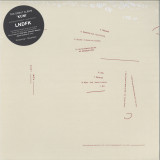
LNDFK (aka Linda Feki) presents her ground-breaking debut album, "Kuni" on Brooklyn-based Bastard Jazz Recordings. Undeniably on the rise after her 2019 breakout performance at Primavera Sound, LNDFK has already caught the attention of Pitchfork, Rolling Stone, Clash Magazine, Noisey, and Brooklyn Vegan (among many others) while being championed by the likes of Gilles Peterson, Tom Ravenscroft, and Jamz Supernova & landing spots on tastemaker playlists like Spotify's "Pollen" and "Fresh Finds."
"Kuni" is a spellbinding exploration of dichotomies: Love & Death (Eros & Thanatos), Flower & Fire, Delicacy & Violence, Poetry & Realism, Purification & Destruction. These opposites are reified in the 10-track LPs multifarious and multifaceted sounds, elegantly meandering through a variety of styles and genres, spearheaded by Linda and features the production wizardry of Darrio Bassolino who co-wrote the album.
"Kuni" opens with "Hana-bi," an ambient instrumental piece that sets the tone for the album. Inspired by the Takeshi Kitano 1997 film of the same name – particularly Joe Hisaishi's stunning soundtrack, as well as Kitano's paintings which appear in the film. "Hana-bi" expresses the dialoguing opposites of flowers and fire, the first of many dichotomous representations throughout the album. "Takeshi" acts as an extension and to "Hana-bi," albeit one of opposing sound, with its driving, highly syncopated drums (which reappear throughout "Kuni") – à la Karriem Riggins, Questlove, or Yussef Dayes – frenetic bass line, and jazz chords. Linda's sultry voice is interspersed, initially jumping around in scat fashion, being triggered as if a sample, before her lyrics come in; her vocals are used like an additional instrument, adding to the song's rich texture. "Kuni" truly hits its stride with the next song, "Smoke – a moon or a button" (its title lifted from the 1959 book by Ruth Krauss and Remy Charlip), which is structured like a jazz standard yet flows into neo-soul territory sonically with those prodigious drums a highlight once again.
LNDFK touches on experimental hip hop in two songs on the record (both of which were released as singles in 2021): "Don't Know I'm Dead or Not (feat. Chester Watson)" – track #4 – and "How Do We Know We're Alive (feat. Pink Siifu)" – track #9. Although they embrace a more hip hop-leaning sound, these songs by no means shy away from the exploratory theme, and feature two of the alt-rap scenes rising stars with Chester Watson and Pink Siifu who offer provocatively impressing verses, combining dense word play with unconventional flows. While these tracks may first appear to be outliers on the album, they are undeniably in tune with "Kuni's" message and sonic palette, acting as testaments to LNDFK's willingness to explore and experiment.
Meanwhile, "Ku" – the third and last single before the album release – furthers the pre-established future soul sound while meandering through nu jazz and left-field electronic. Inspired by the graphic novel and film, "Sin City," and its female assassin protagonist Miho, "Ku" is a musical interpretation of Miho's story, incorporating both her beauty – the first half of the song – and murderous tendencies – the second half – to create a stunning juxtaposition, culminating in an ambient finale that suggests the character's vulnerability and inner peace. The song gracefully bridges the gap between Hiatus Kaiyote-esque songwriting, Dilla's rhythmic syncopation, and Thundercat's instrumental prowess (LNDFK has shared a stage Brainfeeder labelmate Kamasi Washington).
Mixed in throughout "Kuni" are a series of instrumental pieces that function as something akin to an interlude. The aforementioned intro, "Hana-bi," and the album closer "se mi stacco da te, mi strappo tutto:" act as bookends, while "Om" indicates the half-way mark, and "Ktm" sees Jason Lindner add his sound the album. These tracks are the ambient foundation of "Kuni," representing the thematic duality of the work. Clocking in at only 24 minutes, "Kuni" packs an astonishingly diverse array of sounds, styles, and themes, all while showcasing virtuosic musicianship and instrumental prowess.
Appearing on "Hana-bi" and "Ktm," renowned international artists Asa-Chang and Jason Lindner add an additional perspective to "Kuni": Asa-Chang on "Hana-bi," and Jason Lindner on "Ktm." Asa-Chang - famously of the Japanese avant-garde group Asa-Chang & Junray - provides vocals and percussion to an alternate version of the instrumental opener, while the acclaimed keyboardist Jason Lindner offers his synth expertise on "Ktm." These features highlight the spirit of collaboration found in LNDFK's music, always willing to try out new ways of working.
LNDFK is a singer and songwriter, born of two cultures – an Italian mother and Arab father. She grew up in Naples, away from her father, the Sahara, her homeland and traditions, which has helped nourish the desire to rediscover – through art – an engagement to her roots. Her music melts with jazz, neo-soul and hip-hop influences, filtered through her experiences and sensibility.
Her first EP, "Lust Blue," was composed with the artistic production of Dario Bass and released by Feelin' Music; after that she released several singles that saw international radio support (BBC, NTS, Wordwide FM) and gained a massive audience on digital platforms. Together with her band, she toured around Europe, performing alongside such notable artists as Kamasi Washington and Mndsgn, among others. Most recently she toured Italy, and performed at Primavera Sound Festival 2019 in Barcelona.
"Kuni," is due out on NYC label Bastard Jazz Recordings in February, 2022, while the vinyl LP will follow shortly after.
- A1: Bakeina's Dream (Feat Bocar Sana Coulibaly)
- A2: Golden Cage
- A3: Quicksand Blues
- A4: Mad Girl Lament (Feat Mariam Kone & Samba Toure)
- A5: Ghost Sands
- B1: Are U Satisfied (Feat Samba Toure)
- B2: The First Sone (Feat Anansy Cisse & Bocar Sana Coulibnaly)
- B3: Minamba (Feat Mariam Kone)
- B4: Heaven Sands (Feat Hugo Race)
- B5: Bankoni (Feat Djime Sissoko)
Based in Bamako for sixteen years, Philippe Sanmiguel has been the producer of albums by the famous Malian bluesman Samba Touré since his international debut. Over the years, Philippe has expanded his work with other artists such as the legendary Tuareg band Tartit, Anansy Cissé, Mariam Koné or Djimé Sissoko among others.
While working on the albums of these artists, he often had the inspiration to add influences from his original rock culture but in small measures. That's how Black Mango was born, to gather his favorite musical collaborators around his own compositions and expand the vision. It started with an EP released on Glitterbeat Records in 2014 from which the idea for a full-length album was born.
Black Mango's Quicksand album was recorded in Bamako over a period of several years, in various recording sessions, giving each musician free range to play on a rhythmic and melodic basis prepared in advance. The alchemy was immediate in all cases, often from the first takes.
Philippe originally met producer and musician Hugo Race with Chris Eckman during their stay in Bamako for the recording sessions of Dirtmusic's Troubles & Lion City albums. Hugo loved the raw feeling of the tracks and offered to remix the album in his Melbourne studio, bringing his own unique touch.
The fruit is ripe!
Recorded at Akan Studio & Funhouse Studio in Bamako, Mali by Konan Kouassi & Philippe Sanmiguel
Produced, mixed and mastered by Hugo Race at Helixed Studio
A few words about the main " stars " :
- Samba Touré is Samba Touré.
- Anansy Cissé is a young songhoy artist for whom Sanmiguel has produced two albums, including the recent and acclaimed "Anoura".
- Mariam Koné is one of the most beautiful voices of Mali, who has a self-produced album and teaches music at the conservatory of Bamako.
- Singer Bocar Sana Coulibaly & Ali Traoré are singer and guitarist from Niafunké, nephews of the great Ali Farka Touré and have a band called Espoirs de Niafunké
- A1: Curs In The Weeds
- A2: Rude To Rile
- A3: Working Poor
- A4: Albina
- A5: A Burden
- B1: Helen
- B2: Father
- B3: Heathen's Kiss
- B4: Different Gray
- B5: This Is What
- B6: Father (Reprise)
- C1: Curs In The Weeds (Reprise)
- D1: Working Poor (Live Sessie Voor Het Programma "Duyster")
- D2: Father (Live Sessie Voor Het Programma "Duyster")
Deluxe Reissue of "House With No Home" - Pressed on Clear Blue with
Gray Streaks Colour Vinyl with bonus 7" included
The cover of House with No Home, the second full- length album from Horse
Feathers, a dusty west coast folk duo comprised of Justin Ringle and Peter
Broderick, depicts a wintry farm dusted with snow It's an image that's easily
conjured throughout each of the 11 songs that make up Home, a subtle, nuanced,
and quietly noble collection of Americana-kissed alternative folk that echoes the
work of Bonnie "Prince" Billy, James Yorkston, Iron & Wine, and Bon Iver. Ringle,
who blends Richard Buckner's soft, serpentine delivery with Andrew Bird's "I can't
open my mouth all the way" mumble populates his songs with the kind of
woodsy, heart and soul-broken characters that one would expect to find lurking
between the pines on a frosty Oregon morning in February, but it's Broderick who
provides the chill. His string arrangements are grandiose in their simplicity and
busy without ever interfering with Ringle's poignant, icy prose. From the heady
opener "Curs in the Weeds" to the surging, banjo-led "Working Poor," the two carve
up each track like master craftsman, finding the perfect middle ground between
the sparse, reverb- laden landscapes of the Great Lake Swimmers and the
orchestral, aching beauty of Hem. This deluxe reissue includes a bonus 7" with a
2021 reworking of 'Curs In The Weeds' with a full band as well as 2 songs from a
radio session recorded during the European tour for the original album release.
Tibor Szemző's new LP features two composition, »The Other Shore« & »CUBA«. As the album title implies, »Snap #2« can be considered a sequel to his cult album »Snapshot from the Island« (released in 1987). Back then the island was a metaphor for isolation, while »Snap #2« offers Szemző’s reflections of his visits to real islands, Cuba (1988-1990) and Japan (1992-1994). As usual, Tibor Szemző processed the themes both visually and musically and has presented them many times live as cinematographic performances.
A previous version of »The Other Shore« was released in 1999 on CD. On this album, the original recording from 1997 is used; it has been recomposed, remixed and remastered and some additional recordings have been included. The core of Szemző’s Gordian Knot ensemble of the mid-nineties (Tibor Szemző on bass flute, Péter Magyar on drums and Tamás Tóth on bass guitar) has been enlarged by a string section and additional percussionists. The Other Shore composition has a multilayered texture; it starts with strings and is followed by prerecorded voices reciting the Sutra of the Lotus Flower of the Wonderful Law (Myôhô-Renge-Kyô in Japanese), the most important sutra of Mahayana Buddhism. Then percussion introduces the basic beat of the piece and the voice of the 102 year-old Buddhist priest Ônishi Ryôkei giving a lecture on Kannon sutra is heard. The following uneven entries of drums and bass guitar are like paint brush strokes in Zen calligraphy. The long tones of Szemző’s bass flute enters the piece as the last element suggesting itself as a connecting thread through all previous layers.
When Tibor Szemző first visited Cuba in 1988, he had just started shooting film on 8mm, something of a personal diary. When he met Jonas Mekas in Budapest a few years later, he realized that this footage could be screened publicly and also be an integral part of live performances. »CUBA« is the recording from 2000 of one such performance and was remixed by the author in 2021. It is as similar to and yet different from »The Other Shore«. The Gordian Knot band seemingly structures the piece in the same way, but the resulting sound is much heavier especially thanks to drummer Péter Magyar. Nevertheless, the contributions of Szemző on bass flute, Mihály Huszár on electric bass and T. Bali on prepared electric guitar also inject the proper rock sting. Incorporated Havanna street sounds and local radio broadcasts recorded by the author provide even more steamy roughness to the sound of Szemző’s »CUBA«.
The cover design of the »Snap #2« with photo reproductions from Szemző’s films reflects the aesthetics of the Snapshot from the Island album. This vinyl LP runs at 45 RPM for better sound quality.
- 1: Ponor Naviše – Uplifting Abyss
- 2: Prolećna Groznica – Spring Fever
- 3: Hej Krčmarice – Hey Waitress Mama
- 4: Blue Kum – Blue Best Man
- 5: Dan Za Danom – Day By Day
- 6: Uspomena - Memento
- 7: Ne Dolaziš Više U Moju Ulicu – You Don’t Come By My Street No More
- 8: Moja Soba – My Room
- 9: Sećanje Na Prošlo Leto – Remembering Last Summer
- 10: Balada - Ballad
What would you do if a never before released jazz funk album from 70s Yugoslavia had dropped suddenly into your arms? An album which sounds like a crate diggers holy grail!? Album full of heavy drum breaks, repetitive bass grooves, superb sax solos and world class jazz arrangements finely intertwined with Yugoslavian folk music elements?! - “PRESS IT!” ~ That’s what we said always striving to present the future of unheard sound of Yugoslavia! With the help from Mr. Cosmic himself (Željko Kerleta), Jovan Maljoković and his wife Nevenka and, of course, Radio Belgrade who provided the recordings buried deep in their library, here we present Jovan’s first vinyl release since 1989 and his album nr. zero. If this LP was released in 1976, sounding this clear and impressive as it sounds today, it would be up on the pedestal with cult Yugo jazz-funk releases such as Sećanja by Miša Blam (also released on Everland) – and believe me – it would burn a whole through your wallet. Don’t allow me to get started on the Jovan’s ensemble personnel here, represening the crème de la crème of jazz and funk instrumentalists of Yugoslavian Jazz (Goce Dimitrovski, Miloš Krstić, Kire Mitrev, Miodrag Maljoković, Aleksandar Sanja Ilić, Miša Blam, Uroš Šećerov...). The raw execution, top recording and compositions resembling but not imitating the greatest contemporary western jazz-funk ides of the time, that sound like something that could have been easily released on Mainstream, Columbia, MPS or even be an authentic Kudu hit record if it had been released at the time by Creed Taylor. Just listen to the track A1 Ponor Naviše with a whirlwind of big band arrangement turnovers or track B1- Uspomena (hint: Sećanje...) where Jovan takes on the ‘Lame donkey’ in a strong downbeat rearrangement released just two years after Volker Kriegel published it on his album Lift! (MPS/BASF 1973.). You’ll be blown away by the instrumental prowess of the ensemble and Jovan’s ideas! ~ Dr. Smeđi Šećer
Mura were a previously little-known group from Japan, formed by friends Kota Inukai (vocals, guitar), Masaki Endo (bass) and Sho Shibata (drums) in the late noughties. Performing mostly in small events in Sapporo, they were outsiders, and felt a kinship with few other groups, though Inukai mentions rock group Green Apple Quick Step, and hardcore band Ababazure as fellow travellers. This isolation surely feeds into the uniqueness of Mura’s music – they sound little like much that we know of the taggable Japanese underground of their times, and the music they recorded for this, their debut album, spanning a decade, is gloriously all over the shop, from delirious punk wig-outs to strange pop miniatures.
The group formed young – Inukai was only fourteen when they started, and Mura were his first ever band. When pressed on what they were listening to while making their music, Inukai recalls that he “used to listen to the works of Haruomi Hosono a lot”, and you can hear traces of this, perhaps, in the breadth of the sound Mura explores, from the lovely, country-esque shuffle of “In The Talk”, through the garage-y plunk of “Rest” and the reflective, melancholy “Younger Brother”. They were also big fans of video game music – “even orchestral covers of video games”, Inukai smiles – and that’s in there, too, in the split-second responsiveness of the playing, the way they flick through ideas and genres almost impatiently, taking minutes to cover terrain that other groups might spend albums and years exploring.
But the songs were also grounded in Japan’s history, with many of the songs inspired by “old Hokkaidō,” Inukai recalls, “from the Meiji, Taishō, Shōwa periods.” With Inukai coming up with the melodies, and Shibata fleshing out arrangements, all three members then contributed lyrics. You can hear that collective effort in the way the music moves, every player listening carefully to each other, the songs moving gracefully, but not without verve and vim. It’s a delightful album, full of pop songs that take unexpected turns, with glinting melodies sung out, here sweetly, there with gruff candour, guitars tangling together like an unholy union of Tom Verlaine and Jad Fair, every song charged with a new, unpredictable spirit.
The latest entry in An’archives’ ‘Free Wind Mood’ series, Ki is a trio that pits long-time collaborators Tamio Shiraishi (saxophone, voice) and Takahashi Michiko aka Mico (drums, voice, vocoder, melodica, piano, percussion) against drummer, percussionist and vocalist Fritz Welch. They each bring a wealth of experience, from Shiraishi’s early moves in the Japanese underground of the late ‘70s and early ‘80s – he was a founding member of Fushitsusha, and played with Taco and Machinegun Tango – to his legendary, late-night solo New York subway performances; he and Mico also spent some time playing with No Neck Blues Band, while Welch, currently based in Glasgow, has a long history taking in stints with Peeesseye, Lambs Gamble and FvRTvR.
Tearful Face Of My Cute Love (Is Begging To Me), named after a yakuza song, is Ki’s first LP, after CD-Rs on Chocolate Monk (Ki No Sei, 2009) and Unverified (Stops Dropping, 2010). Documenting two live performances from 2008, it’s a startling, wild freedom chase, each piece stretching languorously across one side of the vinyl, giving the trio maximum space to thunder their way through space and time. Their West Nile 2008 show, on side one, opens with a battery of drums, fierce and livid, before Shiraishi’s unmistakable and remarkable whinnying, high-zone tone slithers into earshot. The stage is set, the battle moves forward, yet there’s remarkable simpatico between the three players, with Mico and Welch volleying guttural vocal exhortations at each other. When it does offer respite – see the sudden swoop into near- silence at around 12:30– everything’s still tense; who knows what’s around the corner?
For all its fury, though, Tearful Face Of My Cute Love... is full of oddly lyrical moments, too – see the sweet melody that winds out, with gentle melancholy, near the very end of the West Nile performance. This lyricism also haunts the second side of the album, a performance from Glassland, Brooklyn, which seems more focused on the intersection of incidents, from clattering cymbals to ghostly swarms of sax scream, to dive-bombing spirals of vocoder. There’s an appealing sense of audio verité here, as though you’re in the room with the performers, shaken and stirred by every movement, lost in the interlocking maze they’re weaving in real time. It’s a bracing, thrilling document of very immediate, human music – of three bodies moving through the world, sounding their environment.
[a] a1 Tearful face of my cute love [is begging to me] (Side A)
[b] b1 Tearful face of my cute love [is begging to me] (Side B)
LDI Records serves up a celebration of The Hague's famous electro sound with native Cliff Dalton aka Sander Evers behind four originals and fellow West Coast legends Legowelt and Rude66 both remixing. Cliff Dalton is a relatively new project from a long-time Dutch music great. Sander Evers is the drummer in psychedelic stoner rock band Monomyth and has played with other notable groups including 35007 and Gomer Pyle. Next to those projects, he has always had his ear tuned into the region's enduring techno and electro scene and now offers up his own fresh take on it. The EP's title refers to the fact that all these artists are bound by geography, but is also a nod to the fact that The Hague is the largest Dutch city by the sea. The opener 'We Are The Little Ones' is about an evil robot factory in a futuristic dystopian city. It is a coruscated electro-funk workout with crisp analogue drums and nimble bass overlaid with withering sci-fi melodies. 'We Don't Need A Real World' is a superbly cinematic eight-minute excursion with widescreen synth work taking you to the stars as you ride an elastic bassline. The majestic 'City Under The Sea' then layers up neck-snapping snares with cosmic arps and plunging bass and 'Cleopatra's Matrix' soundtracks an ancient Egyptian city with its mystic leads and eerie pads luring you into a late-night electro trance. West Coast pin-up and hugely prolific electronic innovator Legowelt remixes 'We Are the Little Ones'. His version has plenty of his textbook intrigue, lo-fi texture and magical synth charm, and finally key Bunker Records associate Rude 66 flips 'City Under The Sea' into a snaking dub rhythm with hypnotic acid lines and seductive vocal whispers woven in deep. The Blue City EP is a timeless package of West Coast electro direct from the source.
“They were so solid. They meant what they said, they did what they did… here’s two guys, a guitar player and a harmonica player, and they could make it sound like a whole orchestra.” – Taj Mahal
“It was perfect. What else can you say?” – Ry Cooder
Nearly sixty years after they first played together, Ry Cooder and Taj Mahal, longtime friends and collaborators, reunite with an album of music from two Piedmont blues masters who have inspired them all their lives: GET ON BOARD: THE SONGS OF SONNY TERRY & BROWNIE MCGHEE, on Nonesuch Records.
With Taj Mahal on vocals, harmonica, guitar, and piano and Cooder on vocals, guitar, mandolin, and banjo – joined by Joachim Cooder on drums and bass – the duo recorded eleven songs drawn from recordings and live performances by Terry and McGhee, who they both first heard as teenagers in California.
Explaining where Terry and McGhee took him musically, Cooder says, “Down the road, away from Santa Monica. Where everything was good. ‘I have got to get out of here,’ was all I could think. What do you do, fourteen, eighteen years old? I was trapped. But that first record, Get on Board, the 10” on Folkways, was so wonderful, I could understand the guitar playing.”
Taj Mahal adds, “I started hearing them when I was about nineteen, and I wanted to go to these coffee houses, ‘cause I heard that these old guys were playing. I knew that there was a river out there somewhere that I could get into, and once I got in it, I’d be all right. They brought the whole package for me.”
Taj Mahal and Ry Cooder originally joined forces in 1965, forming The Rising Sons when Cooder was just seventeen. The band was signed to Columbia Records but an album was not released and the group disbanded a year later. The 1960s recording sessions, widely bootlegged, were finally issued officially in 1992. GET ON BOARD is Taj Mahal and Ry Cooder’s first recording together since then.
Harmonica player Sonny Terry and guitarist Brownie McGhee, both originally from the southeastern United States, had active solo careers as well as collaborating with some of the most celebrated musicians of their time. But they were best known for their forty-five-year partnership, which began in 1939 and included mesmerising live performances around the world and numerous acclaimed recordings.
Their Piedmont blues style became popular during the folk music revival of the 1940s and ’50s, centered in New York City’s flourishing club scene for jazz, boogie-woogie, blues and folk music. Terry and McGhee traveled in the same circles as Woody Guthrie, Pete Seeger, Leadbelly, and Josh White, among others in a rich mix of writers, actors and musicians. As a new generation emerging in the 1960’s drew inspiration from folk and blues, Terry and McGhee toured the world as the foremost exponents of the acoustic music of the Piedmont. They were named National Heritage Fellows in 1982 in recognition of their distinctive musical contributions and accomplishments.
“You got the south on steroids, when you got the music of the south, the culture of the south, the beauty of the south, through Brownie and Sonny,” Taj Mahal says. He describes McGhee as a “solid rhythm player. To really play behind the harp like that. He would set stuff up. He wasn’t making many notes. Sonny had all the notes, running around. But Brownie, he laid it down.” Cooder adds: “This thing of squeezing the thumb and first finger and a little bit of the second finger, which I still do. I’d forgotten where it came from. That’s what Brownie did. I saw him do that and said, ‘I think I can do that.’”
Taj Mahal calls Terry “a wizard harmonica player”. Cooder says, “Sonny had incredible rhythm for one thing. Making sounds with his voice and the harmonica so you couldn’t tell quite which was which. He was good at that.”
“We’ve been doing this a while,” Cooder says. “Perhaps we’ve earned the right to bring it back. Taj Mahal concludes. “We’re now the guys that we aspired toward when we were starting out. Here we are now… old timers. What a great opportunity, to really come full circle.”
- A1: Sampuesana - Los Dinners
- A2: La Borrachita - Junior Y Su Equipo
- A3: Paga La Cuenta Sinverguenza - Manzanita
- A4: Infinito - Hugo Blanco Y Su Arpa Viajera
- B1: El Jardinero - Manzanita Y Su Conjunto
- B2: Feito Parrandero - Los Feos
- B3: Bien Bailadido - Junior Y Su Equipo
- B4: Saturno 2000 - Los Santos
- C1: La Danza Del Mono - Lucho Gavilanes
- C2: Capricho Egipcio - Conjunto Tiupico Contreras
- C3: El Chacarero - Los Gatos Blancos
- C4: Pa Oriente Me Voy - Los Atomos De Paramonga
- D1: Alegrate - Junior Y Su Equipo
- D2: Todo Lo Tengo De Ti Menos Tu Amor - Grupo Celeste
- D3: La Fuga Del Bandido - Los Ecos
Analog Africa delves deep into the scene of the Mexican's sonideros (sound-system operators) to present the "Rebajada" movement they've created using locally made pitch controls, speakers and sound effects.
"In 2010, I had asked Eamon Ore-Giron - aka DJ Lengua - if he would be interested in compiling a Latin project for Analog Africa, and if so, if he had a theme in mind. He replied, “Have you ever heard of rebajada?“ The question mark above my head, together with the wall of China, must have been the only other object visible from out of space because Eamon, probably noticing I got paralysed, continued, “Rebajada in Spanish means “to reduce, to lower”. It’s basically Mexican sonideros (soundsystem operators) slowing down the beat of a Cumbia to create a much more tangible music to dance to. I’ll send you a mix I made last year and let me know what you think.“ And so he did.
That mix was called Rebajada Mota Mix and I began listening to it on a loop. Although I was not immediately hooked it was intriguing from the get-go, and so I kept listening until magic began unfolding. Slowed down music allows you enough time to hear right through it, revealing itself in ways I had rarely experienced before. Everything became more transparent and I was noticing sounds normally only perceptible by bats. A near psychedelic experience. That mysterious mix included a few Ecuadorian songs by Junior y su Equipo - aka Polibio Mayorga (a cult figure in the sonidero scene), a couple of Mexican tunes, one Colombian, and various Peruvian songs, undoubtedly the driving force behind this project.
The sonidero who brought Peruvian and Ecuadorian music to Mexico was the legendary Pablo Perea from Sonido Arco-Iris, and although his fingerprints are all over the compilation Saturno 2000, this selection of songs in rebajada is exclusive to DJ Lengua. With the exception of a few classics from Polibio Mayorga and La Sampuesana – the queen of all rebajadas – most of these songs were probably never performed as such before, let alone released.
So how did rebajada come to be? In a nutshell; Rebajada started with two families of brothers – the Pereas and the Ortegas – who travelled all over Latin America and returned to Mexico with heavy loads of records which they would sell to the various sonideros always on the lookout for new tunes. Colombian beats especially seemed to fit almost perfectly with the Mexican dance steps – but they were just a bit too fast. As a result some sonideros began experimenting with equipment, and Marco Antonio Cedillo of Sonido Imperial created a revolutionary pitching system that could slow records down to an extent other players could only dream about. And so rebajada was born . . . or so we thought.
At the same time in north of the country, in Monterrey, sonidero Gabriel Dueñez almost got electrocuted by a short circuit that nearly set his record player on fire. As a result the platter started spinning in slow motion for the rest of the party, turning Cumbia into a different affair altogether. The youngsters went crazy for it and started harassing the sonidero with requests to record cassettes for them. Reluctant at first, Dueñez finally began recording a series of pirated cassettes called “Rebajada” which included mainly Colombian cumbia and porro in slow-mo exclusively. Those tapes took the city by storm and turned rebajada into a celebrated and defiant movement of the youth.
Of course it would not be a Mexican urban legend if it didn’t include dramaturgical elements, and so for nearly 30 years, until this day and probably for ever, both cities have been arguing and claiming ownership the creation of rebajada for themselves. But sonidera Joyce Musicolor, who never has time for such trivial arguments, got straight to the point: “Rebajada, and the equipment to perform it, is from here Mexico City but it was Monterrey that popularised it.“
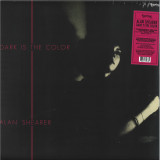
Favorite Recordings presents Dark Is The Color, the first LP by Alan Shearer reissued on vinyl for the first time. Despite being initially composed and produced for the French library label PSI, this rare
and obscure in-demand gem from 1985 sounds retrospectively like a proper album with great coherence and sophistication all along. Indeed, these 11 tracks will delight synthesizers addicts. Expect deeply emotive instrumental compositions, with ingenious analogue sequencing on stimulating chord progressions. The result is a highly retrofuturistic album, sometimes almost anticipating 90's videogames
scores. Just imagine Wally Badarou in a bunker with Talking Heads watching New York 1997 from John Carpenter.
Composed mostly step by step on a Sequential Pro-One synthesizer, Dark Is The Color is the product of the exciting state of mind from the 80's era with new sounds, new tools and new trends on the music spectrum. Influenced by bands like Talking Head or Japan, the sirens of the new wave scene strongly resonate here with Alan Shearer's familiarity and craftmanship with synthesizers.
Back in the days, Alan Shearer aka Frédéric Viger was working for his father’s music label, “Musique Pour L'image”, and their sublabel “PSI”. He started with Marathon Life under his real name before taking the Alan Shearer monitor. These records were produced for radio, TV and cinema industries but as well for companies’ internal communication. They represented a real investment from the label and these catalogues are usually full of amazing music from great artists such as Martial Solal, Vladimir Cosma, Joël Fajerman, Harlem Pop Trotters and even Manu Dibango.
About his musical illustration process, Alan Shearer tells: "Soundtracks are indeed my biggest influences and I'm a real fan of American composers as Jerry Goldsmith or Elmer Bernstein. I've always considered soundtracks as the new classical music or classical music of our century. There is a real state of mind producing music for illustration: you have to stick to the video. You should not tell what the image is saying but accompany what it is saying. You have to find a unique link, people always told me music should not be noticed for itself in a movie, that's what makes it good.”
In March 2020, Tahiti 80 had a plan to start recording their new album in the studio. That plan, of course, along with everything else in the world, got derailed. But the five-piece group was resilient and resourceful. They quickly shifted to a socially distanced plan B that included file swapping and virtual sessions, all refereed by producer Julien Vignon. The result, due for release in March 2022, is the buoyant Here With You, a collection of eleven upbeat songs that unfold like a prescription for a post-pandemic panacea.
“When lockdown in France happened, we said, 'We're not going to stay at home not doing anything,'” says singer-guitarist Xavier Boyer. “And our new plan became a hopeful thing, waking up every morning and seeing what the other guys had worked on. It wasn't always easy, but this new method allowed a freer approach where we could really go all the way with an idea without being influenced by each other’s suggestions. It must've been overwhelming for Julien, who ended up selecting all our arrangements. But he stayed positive all the way through.”
To help stay inspired and focused during their time in isolation, the band created a mood board, with the centerpiece a photo of an early '90s rave in the UK.
Boyer says, “Whenever you see pictures from this era, people seem very innocent. There are no cell phones and everybody is in to what they are experiencing. We kept that picture in mind as a kind of mantra that would help everyone feel connected to this idea of people celebrating, gathering and just having fun. We were missing the connection with people, and thought it would be great if we could create music that would inspire that kind of emotion.”
Indeed, the songs on Here With You are brimming the feeling of communion that we've all been missing over the past two years. It's there in the catchy opener Lost in the Sound, which walks the walk with Chic guitar flicks, urban nightfall sparkles and an inviting chorus (“Your heart grooves like a thousand 808s on the right time”). It's there in the Jackson 5-style syncopated bounce of “Vintage Creem,” the lush, dreamy “Breakfast in L.A.” and the panoramic sweep of “UFO.” And it's there in the first single “Hot,” which matches an irresistible groove with a neon-lit, percolating arrangement that evokes the disco clubs of 1979.
What's remarkable is that though Tahiti 80 displays a clear affection for sounds of the past, from bubble gum to '70s soul, they never trade in mere pastiche. Their take is more a slightly warped and playful carnival mirror mash-up of classic pop styles, given depth through Boyer's hang-gliding, coolly emotive vocals and lyrics that often rub against the euphoric grain of the music.
“I like to think of songs as a three-minute drama,” says Boyer. “This concept of drama definitely adds different levels to our music. There's the melody, the lyrics, then the production that can maybe emphasize or counterbalance the interaction between the yin and yang in a song.
“There's a difference between the very upbeat, sunshine-y soft rock and the lyrics, even on our past albums,” he continues. “Not dark, but a little more melancholy, and also looking for some kind of motivation, talking to yourself. Like with a lot of Motown songs, you get that feeling where you body’s dancing while your mind’s reflecting, reminiscing.”
That alluring blend of happy-sad has been a signature part of the Tahiti 80 sound from the time Boyer and bassist Pedro Resende formed the group in 1993, as students at the University of Rouen. Taking their name from a souvenir t-shirt given to Boyer's father in 1980, the duo recruited guitarist Mederic Gontier in 1994, and with the addition of drummer Sylvain Marchand a year later, the lineup was complete. The foursome released a self-produced and self-financed EP, 20 Minutes, in 1996, which resulted a record deal with French label Atmospheriques in 1998. Their full-length debut Puzzle, produced with Ivy's Andy Chase and mixed by Tore Johansson, went gold and featured the international hit “Heartbeat” that established the band throughout Europe and Asia.
In the years since, Tahiti 80 – with the additions of Raphaël Léger on drums and Hadrien Grange on keys - has released eight acclaimed albums. The band has fused what MOJO called a “glorious entente of old and new technology” (including singles like “Yellow Butterfly,” “1000 Times,” “Sound Museum,” “Crush!” and “Big Day,” which was featured on a FIFA video game soundtrack), while collaborating with such producers and arrangers as Richard Swift, Tony Lash and Richard Anthony Hewson, who famously arranged The Beatles' “Long and Winding Road.” Boyer has also put out two solo albums, the first under the anagram Axe Riverboy and the second under his name. In 2019, the band released Fear of an Acoustic Planet, a stripped-down reimagining of some of their best-loved tracks from the previous twenty years. It served not only as a look back but a reminder of their formidable songwriting skills.
Boyer is definitely a student of the timeless three-minute pop song format pioneered by '60s artists like The Beatles and The Beach Boys. He says, “I see it as kind of a frame for a painting. Most of the songs on this album, I wrote a verse, pre-chorus and chorus. There aren't many middle eights. I wanted it to be very concise. I feel like people have less attention. There's so much music. It's too easy to switch off or skip to another track, so I want to hook the listener. The three-minute song is kind of an easy code to crack, but at the same time you have to figure out a new way to tell the stories that we've heard before.”
And the stories on Here With You are very much about the longing for connection. Of the album title, Boyer says, “In the world right now, that can mean a lot of different things. Like missing our fans, missing going to concerts. In a way, it can be a statement of what happened last year, and a wish of 'I want to be here with you again.' It's our ninth album. We've had some had some very open, conceptual titles like Puzzle, Activity Center. Sometimes they were more specific like Fosbury orWallpaper for the Soul. Here with You, seems more personal, more engaging in terms of relationships. When I suggested that title, everyone in the band said, 'Yeah, that's it.'”
Until Tahiti 80 can resume a full tour schedule, Boyer says he hopes the new record will make that personal connection. “If I see from the point of view as a music fan, sometimes I see albums I like as companions throughout my life. So if we can be a part of people's existence, even if it's a song that reminds them of the time they were driving with the windows open and it was sunny. Or a sad song that resonates with them after a breakup. That's what we're all looking for when we're making music. You do this very personal thing and you want it to touch as many people as possible.”
West London's post-punk scene is showcased with an EP built on the raw energy of like-minded collective spirits of the time by the short-lived Hamburger All-Stars.
Primarily revolving around the ideas of Justin Adams, a recent arrival in London with his band, The Syndromes, they soon found themselves recording at Street Level Studios - a basement squat in then run-down Little Venice. With producers Kif-Kif Le Batteur (Here And Now / Planet Gong) and Grant "Showbiz" Cunliffe (Blue Midnight / The Fall), their open-minded techniques allowed Adams to develop his increasing interest in the "studio as instrument" principles he loved from the likes of Brian Eno and Lee Perry.
Not a band as such, but friends and musicians from other bands all contributing including The Impossible Dreamers, Alternative TV, Gong and more, this "All-Stars" collective would later go on to be part of, form or affiliated in The Invaders Of The Heart, The Pretenders, Moodswings and Mutoid Waste.
Appearing on just 2 releases, the now rare split 7" and LP for the aptly named 100 Things To Do / Fuck Off Records, the songs initial vocals soon shift into funk and dub improvisations. One Million Hamburgers, Swinging London Pt 2 and Studded Leather Jacket almost fall away into atmospherics, with guitar, bass, percussion and horns augmented by Dr Rhythm machine, shortwave radio and heavy doses of Space Echo that capture the period's rawness and naivety to perfection.
Second release of the new "Live At Fabrik Hamburg" series on Jazzline in
cooperation with the legendary venue and NDR Kultur - is this previously
unreleased concert from jazz great Gil Evans with a 16-strong all-star
cast from 1986
It will be released as a double CD in a three-piece digipak and as a triple LP in a
triple gatefold cover that includes detailed liner notes by Michael Laages. By the
1980s, the Gil Evans Orchestra's repertoire had developed into a distinctive blend
of Jimi Hendrix melodies, the band members' own compositions and occasional
references to Gil's older recordings. This concert in Hamburg contained four
songs by Hendrix, with only one ("Up From The Skies") being part of an original
studio album. The regular performances in Europe meant that the audience of the
band was getting younger and was also well acquainted with rock music.
A year and a half after this performance, Gil Evans passed away. He will rightly be
remembered forever for the brilliant albums he recorded with Miles Davis and
under his own name. In reality, however, he lived three quite contrasting musical
lives. As was the case with his Monday evening concerts in New York's Sweet
Basil, this Hamburg performance is a reminder of the lively late phase of Gil
Evans. Here a great all- star ensemble played an outstanding concert of eight
pieces in over two hours.
Gondwana Records sign LA bassist and composer Seth Ford-Young's Phi-Psonics project and announce a remastered deluxe-edition of The Cradle featuring bonus material
Phi-Psonics is a meditative, immersive instrumental group from Los Angeles, led by bassist Seth Ford-Young and featuring Sylvain Carton on woodwinds, Mitchell Yoshida on electric piano, and Josh Collazo on drums. Their deeply soulfulmusic draws on jazz and classical influences together with Ford-Young's own musical experiences, relationships, and his introduction to spirituality, yoga and philosophy at a young age, to create something uniquely its own. Phi-Psonics' name and ultimate aim is to find 'Phi' – the golden mean – in art, nature and self. Ford-Young explains:
"It's a bit of a cliché, but music saved my life many times and instilled in me a belief in the great power of healing through art. It is my hope and intention that this music provides healing to someone somewhere."
Originally from Washington DC area, Ford-Young moved to California in the early 90s and fell in love with the deep sounds of the upright bass and the music of Charles Mingus, John and Alice Coltrane, and Duke Ellington along with Bach, Chopin, Pärt, and Satie. He immersed himself deeply in music and keen to learn combinedintense personal study with collaborations, tours, and recordings with artists such as Tom Waits, Beats Antique, and John Vanderslice. In 2010 he moved from the San-Francisco Bay area to the Los Angeles hills and continued his explorations. But great music is rarely just about music and Ford-Young's meditative, soulful music draws on more than just the twin wellsprings of jazz and classical music:
"My mother was a yoga teacher from the early 70's until recently and taught me yoga and meditation at an early age, my stepfather is an Aikido instructor and student of the teachings of Gurdjieff. Those were all early areas of study that I came back to many times throughout my life. Phi-Psonics has been a project that unapologetically synthesizes some of these ideas into our music".
It's this mixture of influences, musical and extramusical, that gives the music of Phi-Psonics it's immersive quality and quiet power. Revealingly the music that would becomeThe Cradle, wasn't written specifically for an album, originally Ford-Young was just writing down what was coming through. As time went by and the album began to take shape, the world situation seemed to be getting darker and his compositions aim to offer hope as a response to the negative influences that abound today. Remarkably for such a beautiful sounding record, it was recorded at the composer's home, rather than in a studio, but the relaxed nature of this process gives the music an airy lightness that propels the music to some magical spaces.
Originally self-released on vinyl in a limited run just as the world went into lockdown, The Cradle reached Matthew Halsall (founder of Gondwana Records) when he aws looking for music for his Worldwide FM show and he was blown away, hearing a kindred spirit at work. Halsall explains:
"Phi-Psonics make beautiful, humble and honest music, it's not showy, but it has a deep vibe that will elevate your mind and soul if you let it. When we heard The Cradle we reached out and are really super delighted to welcome Seth and his band to our label". Whereas for Ford Young: "Connecting with Matthew and the Gondwana records family has been a light in the darkness of the last years - to have my music make connections even as we are more isolated."
Ford-Young is currently putting the finishing touches to the second Phi-Psonics record, but aware that only a select few had heard The Cradle, let alone had the chance to buy a copy, and entranced by its deceptive simplicity and elevating energy, Halsall suggested that Gondwana present the album as a remastered 'deluxe edition' with an extended running time featuring extra tracks and new artwork from Daniel Halsall.
The Cradle starts with First Step, perfectly setting the tone for the whole album, it is a beautiful, soulful slice of musical calm gently propelled by Ford-Young's resonant bass and elevated by sublime flute and Wurlitzer electric piano solos. The seductive title track The Cradle was written way back in 2011 during a time of great personal change that led the composer to a feeling of newness and nurture. The magical, winsome Desert Ride is inspired by many rides through the grandly cinematic Mojave Desert. You can experience how incredibly full of life it's harsh landscape is if you slow down to its tempo. The gentle, sublime Mama is a tribute to mothers of all kinds, beautiful and heroic. Drum Talk was largely improvised, Ford-Young and the band agreed on a topic and recorded their conversation. Choosing their notes based on how Josh's drums were tuned. Like Glass is named for the special properties of Glass. Like some music, glass is delicate, yet has structure. The first of the two bonus tracks Still Dancing was written during the early days of 2020 in response to the challenges we all were facing then. It's a reminder that the figurative dance continues and that real dancing is essential. And the second, The Searcher, also written as a response to 2020, is a gently hypnotic song about the introspection and growth that can spring from a difficult situation.
This then is The Cradle, a quiet self-contained masterpiece, life-affirming and elevating in equal measure and the first offering from a wonderful new voice in spiritual jazz and the latest members of the global Gondwana Records family.
- A1: Hidden Portal
- A2: Early Waves
- A3: Sensitive (Feat Jerome Thomas)
- A4: Nacre
- A5: Skybox (Feat Blue Lab Beats)
- A6: Monkeyflower (Interlude)
- A7: One4Dumile
- A8: Dust On A Curb (Feat Summers Sons & C Tappin)
- B1: Levada (Feat Dal)
- B2: Orbit Sundog
- B3: Mount Rakko
- B4: Seaside Dreams (Feat Hunter Rose)
- B5: Uteki (Feat Alfa Mist)
- B6: Warplude
- B7: Half Nine (Feat Keepvibesnear)
- B8: Ajar
New album by pioneering German beatmaker FloFilz. On Close Distance, the lofiturned-hifi producer blends hip-hop inspired beats with contemporary jazz, alt r&b and a little rap. Featuring Alfa Mist, Blue Lab Beats, Jerome Thomas,
KeepVibesNear, Summers Sons & C.Tappin, Dal & Hunter Rose. Close Distance is his fourth album for Melting Pot Music. Since 2013, the self-taught bedroom producer and classically trained violinist has sold more than 10k LPs and gained 200 million streams.
Close Distance literally means “near in space or time” (or “nah dran”, as we say in German). The 16 songs on Close Distance came to life over the past two years. Many sketches were birthed at FloFilz's old home studio in Aachen. Some songs were made from scratch in London, where Flo did sessions with UK jazz supremos Alfa Mist and Blue Lab Beats at their studios. One was recorded in a kitchen in Streatham, where rap duo Summers Sons and pianist C.Tappin reside.
More sessions were already in planning when lockdown kicked in and travelling was no longer an option. Around the same time, Flo was about to move from Aachen to Berlin which he eventually did in November 2020. Once installed, he started sharing beats and files out of his makeshift studio in Moabit. Beat folders were sent to
London where two of our favourite new alt R&B vocalists – Jerome Thomas and KeepVibesNear – live. Another one went to Dartmoor where the jazz/hip-hop trio Dal added their magic touch while Hunter Rose processed her sultry vocals in Cape Town - 12 flying hours away from Berlin.
The album artwork has been created by Indonesian illustrator Fatchurofi, who caught FloFilz's attention through his work for everybody’s favourite band Khruangbin. Taking influences from Japanese Ukiyo-e art, Fatchurofi is adding a zen-like clarity (and tranquility) that resonates very well with the album.
It is no exaggeration to say that FloFilz has not only created another inspiring album with Close Distance but one that demonstrates how music can close the distance which we all have experienced (and still do) in a beautiful way.
- A1: Intro
- A2: I Know That You've Been Wounded (Church Hurt) (Church Hurt)
- A3: He'll Make A Way (Trust In The Lord) (Trust In The Lord)
- A4: Talk To God
- A5: In The Name Of Jesus (Everytime) (Everytime)
- B1: To Be Used By You (I Want To Be A Good Man) (I Want To Be A Good Man)
- B2: Who Do Men Say I Am?
- B3: Storm Of Life (Stand By Me) (Stand By Me)
- B4: In The Service Of The Lord
- B5: I Just Want To Be A Good Man (To Be Used By You) (To Be Used By You)
This album is a tribute to Pastor Wylie Champion, who died while we were in the process of releasing this, his first record, and his wife, Mother Champion, who died a few months earlier. We met Pastor Champion a few years ago while we were putting together another release, The Time for Peace Is Now: Gospel Music About Us. We found him in a collection of YouTube videos from the 37th Street Baptist Church in Oakland, California, put together by the pastor there, Bishop Dr. W.C. McClinton. There was quite a lot of talent in those videos, and among them was Pastor Champion whom we liked so much that we decided to make a record with him. Pastor Champion wasn’t like any other pastor you’ve ever met. As an itinerant preacher, a carpenter, and a father of five, he made a name for himself traveling up and down the California coast with his electric guitar. He traveled alone and he played alone, well into his seventies. The easiest way to describe him would be as an outsider gospel artist. Other than these bare facts, we never learned much about him—except that he was also the brother of the well-known soul singer Bettye Swann. In fact, most of what we knew about him we got from his sister’s Wikipedia page. We decided that because we met Champion through the 37th Street Baptist Church, we would record him there too. We recorded him live on a two-track Nagra reel to reel, as we wanted the album to be analog in the style of traditional gospel recordings. Over the course of two evenings (when the workday was done), Champion taught his band—musicians who had never played together before—a handful of songs, a small selection of the nearly 2,000 fragments of songs and sermons that he regularly performed. We listened in as they all got more familiar with the material and each other over time. At some point, we mentioned to Champion that he would have to be interviewed by someone to write notes for the album. He wasn’t too pleased with this idea, saying he’d had a hard life and he didn’t want to talk about it. Over the next few months, we kept asking Champion to talk to someone about his life. He told us that he didn’t want to talk about growing up in Louisiana, his mother being accosted by the Klan, or that his father was a gambler. He didn’t want to talk about being jailed for 90 days for using a whites only bathroom, being in gangs or having a street name. We told him that was fine—he could talk about what he wanted to talk about. And he told us that he didn’t want to talk about anything. You know, there are times when you make a record where it’s already made in your mind before you start. But then in the end, the record you thought you were making is not the record you made. We spent years puzzling over this one, trying to figure out what it was saying, who it was for, and how to get people to pay attention to it. But Champion knew that this record wasn’t going to be for everyone. He didn’t really care. The important part for him was just getting the message out there in the same way that he always had, travelling alone with his electric guitar. “I want to say what I mean,” he said, “be practical, precise, to the point, and, at the same time, diplomatic.” In other words, he just wanted to be a good man. God bless Pastor Champion and Mother Champion, peace be with them and their family. Love to all.
Album - 3 singles - vinyl “Make all the uncertainty and adventure of growing up sound like the best days of your life” - UPSET “A ripper that channels sounds from all throughout punk history” - Brooklyn Vegan "On a take-no-prisoners assault" - Tom Robinson, BBC 6music “California compacted into three rowdy minutes” - The Rodeo “Scorching slacker pop” - CLASH Reminders approach punk rock from where they know it best: a forgotten seaside town. Formed on the Isle of Wight in 2017, the band cut their teeth writing songs about teenage lust and suburban boredom, gaining attention after they independently released Water Sports and Major Cities. Fresh-faced and excited, the then-teenagers coined their sound 'beach punk'; a tongue-in-cheek ode to their hometown that they stand by today. Firmly solidifying their identity as breakneck but bubblegum, a pop-tinged punk band, Reminders work to introduce themselves to anybody willing to listen. After an unexpected hiatus during COVID which delayed the release of their album, the band are now raring and ready to go with their new label home at Venn and forthcoming tour dates. Already championed at radio by BBC Radio 1, BBC 6Music and BBC Introducing, as well as landing placements on esteemed Spotify and Apple Music editorial playlists alike, they were labelled 'scorching slacker pop' by the influential CLASH Magazine, dubbed 'About to Break' by UPSET Magazine, and have already shared stages with rock legends and pop stars Liam Gallagher, The Killers, and Camila Cabello. Debut album Best Of Beach Punk released 1st April 2022