Fragments, The Debut Album From Trifecta (Beggs, Holzman, Blundell)
Trifecta, a new addition to the Kscope roster, features 3 of the contemporary
music scene’s most lauded and revered musicians - bassist and songwriter Nick
Beggs, keyboardist extraordinaire Adam Holzman and completing the line-up,
Craig Blundell - one of the world’s most celebrated drummers.
Having performed together as part of Steven Wilson’s band, the three would
jam together after soundchecks and from these sessions the fledgling ideas for
Fragments were born. Nick Beggs comments “after the last tour with Steven
finished, we had a handful of tracks ready to work on and as we moved through
our various separate projects we agreed to work on Trifecta.”
The record primarily leans toward a fusion of jazz rock, being instrumental except for the first single (the wonderfully titled “Pavlov’s Dog Killed Schrodinger’s Cat”), the lyrics of which, Beggs states, “are written from the perspective of
a layman trying to understand quantum mechanics...and failing.”
Each band member completed the recording and engineering of their own
contributions in their various home studios, helping to bring their individual
production ideas to each track. Adam Holzman mixed the record at his New
York home studio with the mastering handled by Andy VanDette (Rush, David
Bowie, Deep Purple, Porcupine Tree, Beastie Boys) in New York.
Asked what fans of the musicians can expect from Trifecta, Beggs says, “Fission!
It’s like Fusion but less efficient and more dangerous.”
The debut album resulting from this “fission” of these extraordinary musicians
is entitled ‘Fragments’ and will be released on Kscope on 20th August 2021.
Cerca:his band
Far Out Recordings proudly presents two previously unreleased tracks of glorious Brazilian sunshine music. Written and recorded in 1978 by pianist, composer, sound engineer, studio owner and former amateur skateboarding champion Ricardo Bomba, ‘Eu Sei’ and ‘Flutuando’ were almost doomed to total obscurity when the master tapes were binned following a ruthless studio clear out. Luckily Bomba kept a cassette tape copy from which Far Out has remastered the release for 7” vinyl/ digital.
Throughout a varied career, which included a four year stint as bandleader of Jorge Ben’s live show (78-82), Ricardo Bomba had a string of idiosyncratic, underground pop hits throughout the 80s, including ‘Você Vai Se Lembrar’ which recently featured on Soundway’s Onda De Amor (Synthesized Brazilian Hits That Never Were 1984-94) compilation, as well as his then award-winning, now obscure solo album Ultralight (1988).
With the stunning vocals of Mariana Couto (the first wife of Chicago percussionist Laudir de Oliveira), legendary drummer Peninha who has recorded with the likes of Jorge Ben, Quarteto Em Cy, Lincoln Olivetti, Tony Bizarro and Gal Costa, and Brazilian guitarist Blimba Buarque, “Eu Sei” and “Flutuando” truly are lost gems of the late ‘70s Rio de Janeiro MPB scene.
*Disclaimer! This release was mastered from cassette tape, so the sound quality may differ from other releases on Far Out Recordings. We advise listening to sound clips before buying where possible... The music was simply too good to not release!
Albums often try to evoke a time and place, few manage to do that with such startling effect as the unlikely collaboration, Leave the Bones, between the multi-generational Haitian band Lakou Mizik, and Grammy-winning electronic music artist Joseph Ray. “Haiti'' is a word that conjures up a lot of images, it is a country judged by many, most of whom have never set foot on its shores. But its history is rich, its people proud and defiant, and nowhere is that more evident than in its music. Culture is what defines the country - its drums and Vaksins (traditional horns) are symbols of freedom and pride, liberty and struggle, and represent the escapist joy of dancing. Leave the Bones paints a musical portrait, a fresh glimpse of an oft misrepresented country, that through Vodou chants, chest-pounding Rara dance tunes and contemporary protest songs, conveys the listener to Haiti’s spiritual heart, a place that remains a compelling mystery for foreigners and a source of pride for every Haitian.
Standing in the Doorway: Chrissie Hynde sings Bob Dylan.
The songs were recorded in lockdown by Chrissie and her Pretenders bandmate James Walbourne, almost entirely by text message. James would record an initial idea on his phone and send it off to Chrissie to add her vocal, before the tracks were mixed by Tchad Blake (U2, Arctic Monkeys, Fiona Apple). The nine-track album will be released via BMG on 21st May.
Speaking about how the album came together and its inspiration, Chrissie says:
‘A few weeks into lockdown last year, James sent me the new Dylan track Murder Most Foul. Listening to that song completely changed everything for me. I was lifted out of this morose mood that I’d been in.
I remember where I was sitting the day that Kennedy was shot - every reference in the song. Whatever Bob does, he still manages somewhere in there to make you laugh because as much as anything, he’s a comedian. He’s always funny and always has something to say. That’s when I called James and said, ‘let’s do some Dylan covers’ and that’s what started this whole thing.’
Standing in the Doorway: Chrissie Hynde sings Bob Dylan includes Chrissie and James’ versions of In the Summertime, You’re a Big Girl Now, Standing in the Doorway, Don’t Fall Apart on Me Tonight and Tomorrow is a Long Time.
One can’t overstate the size of the Fear Factory boot print on the neck of heavy metal. Unleashing influential albums with devastating anthems for over 30 years, Fear Factory is widely recognized as both crucial and innovative in extreme metal circles. Fear Factory manufactured, demanufactured, and remanufactured a sound that reverberates across several subgenres. They perfected an explosive blend of staccato paint-stripping riffs, industrial-tinged drums, electronic flourishes, and a scream/sing dichotomy, all of which became staples in heavy music, ever since the group first emerged in L.A.
Fear Factory headline major festivals; earned several awards from the international sales charts; toured with Black Sabbath, Slayer, Iron Maiden, and Metallica; and influenced generations of bands. But it’s the group’s commitment to unrelenting extremity and creative authenticity which ensured its place in heavy metal history, from the highly-revered Demanufacture to the similarly dominating Genexus. Songs like “Zero Signal,” “Shock,” and “Fear Campaign” are instantly recognizable anthems, as much a part of the musical DNA of modern metal subculture as the riffs and scream/sing style within them.
Fear Factory records are cinematic in scope; sonic landscapes, echoing the dystopian post-apocalyptic futures found in classic sci-fi literature and films, from Ray Bradbury to Blade Runner. Aggression Continuum, the tenth studio album, is the culmination of three decades of unforgettable songs, performances, and forward-thinking storytelling concepts, while simultaneously rebooting Fear Factory onto a brilliant and excitingly unpredictable new path. Like the liquid metal T-1000 in the Terminator franchise or the Academy-Award winning reboot of Mad Max, Aggression Continuum is a turning point where what “was” transforms into what will be. It’s Fear Factory’s own Fury Road.
Aggression Continuum boasts the definitive attack of songs like “Recode,” “Distruptor,” and “Purity.” The riffs, concepts, and passion remain strong, as Fear Factory celebrates its past, present, and future. Whatever may come, Fear Factory will be there, a soundtrack to humankind’s uncertain times ahead.
’Angelo lost his shit over it. Aaliyah’s 3rd favourite track of all time is on it. David Bowie rocked up with it to a TV interview, declaring it “the most exciting sound of contemporary soul music”.
In 1996, Lewis Taylor released his self-titled masterpiece. A true modern classic, it’s an album that was years ahead of its time. Forget 25 years ago, it could easily have been made in 2021. An effortless blend of neo-soul, sophisticated pop, smart grooves and laid-back white funk, it enjoyed rapturous reviews from critics and music legends alike. But the album never managed to make an impact and given what was likely a token vinyl release at the time, the original records have long since been near-impossible to find. Lewis Taylor’s Lewis Taylor remains a holy relic for some and criminally unknown to most.
Lewis Taylor’s impeccable influences created a dazzling sonic palette: the LP as a whole suggests the visionary brilliance of Prince; the vocal stylings evoke the yearning power of Marvin Gaye; the effortless guitar playing shares the virtuosity of Jimi Hendrix; the haunting tones conjure Tricky; the innovative production and engineering invite comparisons to studio mavericks like Todd Rundgren and Brian Eno; the multi-layered, complex harmonies flash on Pet Sounds-era Brian Wilson; the dark, drama is reminiscent of both Scott Walker and Stevie Wonder; the complex arrangements create textures and moods with the feel of Shuggie Otis on Inspiration Information; the bold experimentation is akin to progressive artists like Faust and Tangerine Dream; the atmosphere is in conversation with Jeff Buckley’s Grace… and we could go on. That might all sound like marketing hyperbole, but not as far as Be With is concerned. It is a genuine wonder how an album this good could’ve passed so many people by.
But despite all the reference points, the similarities are really only skin-deep because the album sounds truly original. It occupies its own distinct, strange universe that feels dark and brooding one moment, bright and joyous the next. Ultimately, Taylor sounds like Taylor.
Although you wouldn’t know it from the credits, the album wasn’t the work of Lewis alone. Sabina Smyth gets an executive producer credit on the original sleeve, but in fact she worked with Lewis on the production and arrangements, did a lot of the backing vocals and she co-wrote Track, Song, Lucky and Damn with Lewis.
Lewis clarified all this in a Soul Jones interview with Dan Dodds in 2016. He explains how not giving Sabina the credit she was due at the time was an unfortunate consequence of where his head was at and he’s now trying to set the record straight.
Together they created an exquisite and sensually-charged record, with a freshness to the writing that makes the songs catchy, melodic-yet-deep and sometimes even funky. The music is predominantly guitar-led and a mixture of organs and synths, live drum loops and electronic percussion make for a sort of modern soul backing orchestra.
On the surface the album is gorgeously laidback, but beneath the lush, sometimes slick, production there’s a murkiness in the seriously gritty funk/hip-hop instrumentation. Lewis Taylor can be a claustrophobic listen. Even its one-word, often seemingly throw-away track titles add to the sense of unease. In its most positive moments, there’s still a sense that things aren’t quite right. The magic comes from this compelling tension.
The languid, strutting “Lucky” is a sensational opening statement. Sinuous electric guitar winds around the shaking percussion with a killer bass line rattling your bones, and Lewis’s voice is sublime. Its six-and-a-half unhurried minutes manage to distill the work of Marvin, Al Green and Bobby Womack because yes, it’s *that* good. Up next is the tough, dusty drum and jazzy, unsettling psych-guitar workout of “Bittersweet”. Aaliyah described it the “perfect song”, which says it all. By turns loping and soaring, tightly coiled and blasting free, 25 years on its discordant, swaggering majesty still sounds like future R&B.
The swinging, blue-eyed funk of “Whoever” oozes sophisticated sunshine soul for hazy days before “Track” sweeps in. The music tries to lift us up, beyond the reach of the vocals trying to drag us back down as Taylor sings “my mood is black as the darkest cloud”. The spare, dubby electro-soul of “Song” closes out the first half of the album with barely contained dread as it creeps towards the lush, synth-heavy coda.
The smouldering “Betterlove” eases us into the second half, coming on like a languorous response to the call of “Brown Sugar”, before sliding into the shuffling, softly-rocking “How”. Somehow the remarkable “Right” manages to both warm things up and smooth things out even more. Taut yet luxurious, it’s definitely not wrong.
“Damn” was to have been the album’s title track and you might also be able to hear its influence on D’Angelo’s Voodoo, maybe most obviously in the chaotic closing moments of “Untitled (How Does It Feel)”. Building to a screeching wall of noise that suddenly cuts dead, “Damn” sounds like the natural end to the album, with the celestial a cappella “Spirit” serving as a heavenly reprise.
When it came to the sleeve, art director Cally Callomon heard Taylor’s music as “sideways off-camera glances at a plethora of influences he had” and wanted to interpret that visually: “I went off into night-time London to see if I could find his song titles in off-beam low-fidelity photographs. I even found a shop called Lewis Taylor”. With a slide for each of the album’s ten tracks, nine of them are on the inner sleeve and the slide for “Damn” makes the front cover. It should’ve been the album’s title, but concerns over distribution in the US scuppered this.
One of UK soul’s most fascinating artists, Andrew Lewis Taylor is an enigmatic figure and a hugely under-appreciated talent. A prodigious multi-instrumentalist who got his start touring with heavy blues/psych outfit the Edgar Broughton Band, he released two albums of psychedelic-rock as Sheriff Jack before Island signed him on the strength of a demo alone. But Taylor was destined to be one of those artists unable (or unwilling) to be pigeonholed and despite the best efforts of Island’s publicity department the music never sold in the quantities it needed to or deserved to. Island eventually let him go in the early 2000s and in June 2006, Lewis Taylor retired from music.
Typical for the mid-90s, this CD-length album was squeezed onto a single LP for its original vinyl release. Simon Francis’s fresh vinyl mastering now spreads out the ten tracks over a double LP so nothing is compromised. And as usual, the records have been cut by Pete Norman and pressed at Record Industry. The original artwork has been restored at Be With HQ and subtly re-worked to work as a double.
This sprawling psychedelic soul opus really is a forgotten should-be-classic. We know that there are those of you who know, and as for the rest of you, we’re a bit jealous that you’re getting to hear Lewis Taylor for the first time.
The full-length debut from Bendigo Fletcher, Fits of Laughter is a collection of moments both enchanted and mundane, sorrowful and ecstatic: basking in the beauty of a glorious lightning storm, waking with a strand of your beloved’s hair happily caught in your mouth, drinking malt liquor while bingeing “The X-Files” on a lonesome Saturday night. As lead songwriter for the Louisville, KY-based band, frontman Ryan Anderson crafts the patchwork poetry of his lyrics by serenely observing the world around him, often while working his grocery-store day job or walking aimlessly in nature (a practice partly borrowed from the late poet Mary Oliver). When matched with Bendigo Fletcher’s gorgeously jangly collision of country and folk-rock and dreamy psychedelia, the result is a batch of story-songs graced with so much raw humanity, wildly offbeat humor, and a transcendent sense of wonder.
True to its spirit of purposeful wandering, Fits of Laughter unfolds in a wayward yet lushly detailed sound, embroidered with everything from crystalline harmonies to blistering guitar riffs to heady drum-machine beats. For help in forging the album’s ragged elegance, Bendigo Fletcher worked with producer Ken Coomer (the original drummer for Wilco and Uncle Tupelo), whom Anderson met in a flash of strange serendipity. Soon after he’d connected with Coomer via phone and bonded over a shared affection for Pink Floyd’s Obscured by Clouds, the band headed to Nashville to record in Coomer’s garage studio, laying down the album’s eight songs in nine frenetic days.
In keeping with the regional perspective that defines much of folk and country music, Fits of Laughter ponders certain paradoxes inherent in the band’s homeland. “In Kentucky there’s a long-running frustration of tradition and stubbornness versus progress,” says Anderson. “On one side you’re looking at things like the coal industry or Mitch McConnell, but then there’s also a feeling of togetherness and a fuck-the-man attitude and a loving desire for everyone to be left alone.” Referring to Fits of Laughter as a coming-of-age album, Anderson also examines a more internal conflict throughout the songs, including his choice to abandon his medical-school aspirations in favor of pursuing a career in music. “The title’s really about the spectrum of emotions I’ve felt on the way to finding what makes me feel like I’m living truthfully, rather than holding onto what I think other people’s expectations are of me,” he says. “It’s a phrase that bridges all of those emotions—everything from joy to hysteria.”
Limited Coke Bottle Green vinyl, 250 copies only for the UK. Any future pressing will be on black vinyl. Massage feature Alex Naidus from Pains At Being Pure At Heart. Recorded by Lewis Pesacov (Fool’s Gold, Foreign Born, Peel’d). Massage was supposed to be low-stakes, no big deal "anti-ambition," as Andrew Romano, guitarist and vocalist, put it. The L.A.based jangle-pop group's first album, 2018's Oh Boy, was a sweet and simple weekend warrior's affair, or more specifically, an every-other-Monday one, as the band members gathered to bash out songs that offered messy but heartfelt tribute to their chosen heroes: The Feelies, the Go-Betweens, Twerps, Flying Nun. For Romano, not taking things too seriously is a dead-serious affair: “Nothing kills the kind of music we want to make faster than the sense that a band is trying too hard,” he says. The kind of music Massage makes sunny, bittersweet, tender is less a proper genre than a minor zip code nested within guitar pop. Take a little "There She Goes" by the La's, some "If You Need Someone" by the Field Mice; the honey-drizzled guitars from The Cure's "Friday I'm In Love," a Jesus & Mary Chain backbeat, and you're almost all the way there. Indie pop, jangle pop, power pop whatever you call it, pushing too hard scares the spirit right out of this sweet, diffident music, and Massage have a touch so light the songs seem to form spontaneously, like wry smiles. Still, on their sophomore effort, Still Life, they manage to take a quantum leap forward in songwriting, production, and depth, all somehow without seeming to try. These 12 deft songs are full of late-summer sunlight and deep shadows, pained grins and shared jokes, shy declarations of love and quietly nursed heartbreak. Still Life resurrects a brief, romantic moment in the late-'80s, right after post-punk and immediately before alt-rock, when it seemed like any scrappy indie band might stumble across a hit. When Andrew Romano and Alex Naidus first met in 2007, Naidus had just joined a band with his friends Kip Berman and Peggy Wang that was about to stumble into many of them. When Naidus finally left Pains for L.A. in 2013, two hit albums and a few world tours later, he started playing with Romano to recapture the no-stakes, suburban-garage joy of making music for its own sake. It was "friendship incarnate," Naidus remembers. The other members came from within the friend circle Gabrielle Ferrer (keyboard/vocals) is Romano's sister-in-law, Michael Felix (drums) is one of Naidus’ best friends, and David Rager (bass) is a childhood friend of Felix’s. When Felix moved to Mexico City in early 2020, Naidus’ wife, Natalie de Almeida, stepped in. The result is the finest batch of songs they've ever produced. From Naidus' velvet-lined JAMC tribute "Half A Feeling" to Ferrer's Let It Be-era Replacements-tinged lament "The Double" to Romano's "In Gray & Blue," these are gold-standard indie-pop gems from emerging masters of the form. Still Life glows with the sincerity and unfakeable warmth of the era they so lovingly channel. Like the best Gin Blossoms chorus you still remember, the songs on Still Life stir big, pure emotions, but beneath them, uneasy truths about adulthood linger, just below the surface. Maybe the exact mix of ringing guitars and two-part harmonies can chase those feelings away, or redeem them, for at least a minute or three. Massage won't stop trying.
A deep dive into the one of most collectable jazz catalogues in the world, a selection of some of the rarest and most sought-after recordings from the 60s and 70s, a time when British jazz began to find its own identity. Drawn from the iconic labels of Decca, Deram, Argo, EMI Columbia/Lansdowne Series, Fontana, Mercury, & Philips. Kenny Wheeler was born Canada in 1930 and, with encouragement from his father - himself a trombone player - began playing trumpet at age 12. After studying at Toronto’s Royal Conservatory, he arrived in London in 1952, his playing enveloped in the sounds of Miles Davis, Booker Little, and Fats Navarro. In 1959, Wheeler joined the Johnny Dankworth Orchestra and stayed there until 1963, although he returned frequently for shows and other projects in the years that followed. He quickly become a distinguished soloist in the Orchestra and appeared on Dankworth’s key sixties albums. Wheeler met and played with the rising artists of London’s free jazz scene. Players such as Trevor Watts, Derek Bailey, and Evan Parker, musicians who would challenge the conventions of the day, eschewing formal composition and structure to embark on group improvisation. For a musician thoroughly schooled in all the conventions of charts and dance bands as Wheeler was, this was a radical departure. Wheeler’s contributions proved his ample flexibility and showed he was capable of inhabiting both the free environment and the more formal and controlled settings of a big band and orchestra. This was shown most clearly on his debut album, Windmill Tilter, recorded for Fontana with the John Dankworth Orchestra. The album features a young John McLaughlin on guitar along with bassist Dave Holland and a roster of talented and well respected musicians playing on one of the greatest modern jazz big band and orchestral albums.
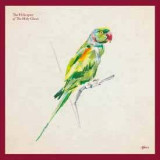
The Debut Album From The Helicopter Of The Holy Ghost - Mark Morriss
( The Bluetones ) Billy Reeves ( theaudience ) Crayola Lectern ( Lost
Horizons / Departure Lounge ) Mark Peters ( Engineers ) Co-produced by
Richard Archer of Hard-Fi Feat. Simon Raymonde ( The Cocteau Twins ) &
Thomas Anderson ( Gazpacho )
In 2001 Billy Reeves, fresh from introducing the world to Sophie Ellis-Bextor
(via their band theaudience) was smashed to bits by joyriders whilst in his Morris Minor - resulting in a two-week coma and a year in and out of hospital. In
2017 his brother gave him two mini-discs that had been saved from the wreckage, including demos of songs he had forgotten - due to crash-related amnesia.
Mark Morriss of chart-topping Hounslow janglers The Bluetones agreed to sing
them, so with the assistance of Richard Archer (Hard-Fi), along with Crayola
Lectern (Zofff / Departure Lounge), and Mark Peters (Engineers), these songs
would form the debut long player from The Helicopter of The Holy Ghost.
The original concept for the material was probably while Billy was signed to
Sony, which pointed toward a more commercial sound, however Crayola Lectern’s involvement on piano help send the recordings into a more ‘Canterbury’
direction, taking influence from Caravan, Robert Wyatt & the like.
Featuring a groovy guest line-up including Simon Raymonde of Cocteau Twins,
Dale Davis from Amy Winehouse’s band, Andy Lewis from Paul Weller’s group,
Smiley from Joe Strummer’s Mescalaros and Thomas Anderson of fellow Kscope
signees Gazpacho, the wide-ranging influence herein is evident throughout a
very sweet, gentle, calming album of originality and versatility.
The Vinyl LP edition of this album will be especially printed in an eco-friendly
manner, with no shrinkwrap being used, the record itself pressed on 100% recycled records and the board made up of FSC certified climate-friendly recycled
material. The whole package itself will be Climate neutral, having all its carbon
offset with ClimatePartner.
Susanna is now releasing a live album of covers with a unique history. Recorded in Oslo and Asker (Norway) in 2019 and 2020
right before the pandemic hit, Live by Susanna and David Wallumrød is a collaboration by the Norwegian and her cousin David, also a prolific musician, whose seeds were unknowingly sown over 20 years ago.“We played a lot together in our childhood and youth, being cousins, growing up in the same small town Kongsberg,” says Susanna. After being highly active musicians for many years, they decided to do a concert together in 2017, at a tiny cocktail-bar concert series in Oslo. It was so much fun they decided to do some more shows. They did, and out of this came Live. The songs on Live are the same covers Susanna and David played together 20 years ago, with a few new additions. They are instantly recognisable classics by Leonard Cohen, Joni Mitchell, Emmylou Harris and Tom
Waits, played in the way Susanna and David know best - voice and keys. Pure, simple, and stunning. David Wallumrød is one of Norway’s most used piano/keyboard-players, he has participated on over 150 albums and been a regular member in the bands of artists like Knut Reiersrud, Odd Nordstoga, Jonas Alaska, Band of Gold and Torun Eriksen. He has his own band called Spirit in the Dark. Susanna is the woman behind Susanna and the Magical Orchestra, a creator of bold, original and enrapturing music, capable of
building worlds to lose yourself in and collaborator with artists such as Jenny Hval and Bonnie ‘Prince’ Billy. Alongside this Susanna has also long been an interpreter of other people’s works, from AC/DC to Dolly Parton, Joy Division to Henry Purcell. Susanna has an ability to transform these works into music that sits comfortably next to her own work while never losing what made the original - and the original composer of the song - so special.
Nadja is a duo of multi-instrumentalist Aidan Baker and bassist Leah Buckareff—active since 2005—and making music which can be described as ambient doom, dreamsludge, or metalgaze. Nadja’s signature sound combines the atmospheric textures of shoegaze and ambient/electronic music with the heaviness, density, and volume of metal, noise, and industrial.
For their new album, Luminous Rot, the duo retain their overblown/ambient sound, and explore shorter and more tightly structured songs reflecting their interests not only in metal, but post-punk, cold-wave, shoegaze, and industrial.
Thematically, Luminous Rot explores ideas of 'first contact' and the difficulties of recognising alien intelligence. This was in part inspired by reading such writers as Stanislaw Lem and Cixin Lui -- in particular, theories on astro-physics, multi-dimensionality, and spatial geometry in "The Three Body Problem" -- as well as Margaret Wertheim's "A Field Guide To Hyperbolic Space," about mathematician Daina Taimina's work with crochet to illustrate hyperbolic space and geometry.
The album was recorded between their home studio, Broken Spine Studios, or Nadja’s live rehearsal studio, both in the district of Lichtenberg, Berlin. Luminous Rot marks the first album mixed by someone else, who in this case was David Pajo. The band comment, “as big fans of Slint, we thought he might fore-front the more angular, post-punk elements of our music - the mix is quite different from our previous albums. But, as usual, we had James Plotkin (Khanate, OLD, etc) master the album as we trust his ears and aesthetic, as he's mastered numerous records of ours.”
- A1: Territory (Feat David Ellefson)
- A2: Cut-Throat (Feat Scott Ian)
- A3: Sepulnation (Feat Danko Jones)
- A4: Inner Self (Feat Phil Rind)
- B1: Hatred Aside (Feat Angelica Burns, Mayara Puertas & Fernanda Lira)
- B2: Mask (Feat Devin Townsend)
- B3: Fear,Pain,Chaos,Suffering (Feat Emmily Barreto)
- B4: Vandals Nest (Feat Alex Skolnick)
While the pandemic paralyzed the entire world and prevented bands from touring, Latin America's biggest metal export SEPULTURA refused to sit back and act like an animal trapped in a cage. Like the flowers growing out of the deceased bird’s body depicted on the stunning colourful cover artwork by Eduardo Recife, the thrash metal pioneers from Belo Horizonte made good use of their unexpected free time to start a project that kept them busy throughout the entirety of 2020:
‘SepulQuarta’ was born at the very beginning of the pandemic when everything was halted”, guitarist Andreas Kisser remembers. “We had a new album out, but we couldn’t tour for it. Therefore, we created this recurring event where we could talk with our fans around the world, play our music and exchange ideas, it was a blast! »SepulQuarta« kept us alive and strong throughout one of the most difficult times in human history.”
“Doing Sepulquarta during this period allowed me to stay in contact with music. Playing my instrument was the only thing left to do in this pandemic,” adds drummer Eloy Casagrande, and indeed, music seemed to be a good way of coping with the never-ending lockdown and fear of loss and isolation that haunted people worldwide. Obviously, the Brazilian pioneers were not the only musicians feeling this way, so they started to connect with friends and colleagues worldwide and asked them to not only be part of their weekly podcast, but also join them in playing one of SEPULTURA’s classics tracks. From the safety of their homes, international stars like David Ellefson, Scott Ian, Danko Jones, Devin Townsend, Matt Heafy and many more recorded a SEPULTURA track together with the band, which have now been mixed and mastered by Conrado Ruther.
“We invited our amazingly talented friends to be a part of our project, either jamming with us or as a guest in the many Q&A’s we promoted,” Andreas explains. “We talked about our history, music, politics, sports, philosophy, depression and the environment among other things. We learned a lot with specialist guests and many of the great minds of today. Here you will find unique performances of SEPULTURA’s music from the many phases of our career, with amazing guest musicians that lent us their talent and energy to record these historical versions!”
DNA Records is proud to present a Cambodian reggae 7” release to showcase some of the talent from this wonderful country and the power that Jamaican music has around the globe.
DUB ADDICTION - Founded in the tropical heat of Cambodia's capital Phnom Penh in 2011 by Sebastien Adnot and Jan Mueller (AKA Professor Kinski), Dub Addiction features a combination of
Cambodian, French, German and Nigerian members. They quickly captured the hearts of local Cambodians and Western expats in a beat.
Cambodian national and vocalist, toaster DJ Khla, is a political activist and is now living in exile in Europe after having fled his country because of military pressure on him and his family. He was able
to escape Cambodia while on tour with Dub Addiction in Denmark.
Their fusion of reggae combined with traditional Cambodian instruments like tro (violin), chapey (traditional Cambodian string instrument) and Roneat (xylophone), along with the toasting of
Cambodian vocalists DJ Khla (Nhem Palla), MC Curly (Kosal Dang) and a variety of traditional female vocalists and international MCs creates a very unique blend.
After all, though South-East Asia and The Caribbean might be far apart on the map, they both get light from one sun.
VIBRATONE - Also a multinational reggae band with members from Cambodia, France, The Philippines, and Brazil, Vibratone formed in Phnom Penh in 2013 with one aim: No cover songs, strictly original creations. With insightful lyrics, they embracing true roots to new roots reggae…with a touch of blues and soul thrown inna di mix! Text edited by Brian Offenther.
- A1: Dance Yrself Clean
- A2: Drunk Girls
- A3: I Can Change
- B1: Time To Get Away
- B2: Get Innocuous
- B3: Daft Punk Is Playing At My House
- B4: Too Much Love
- C1: All My Friends
- C2: Tired / Heart Of The Sunrise (Excerpt)
- C3: 45 33 Intro
- C4: You Can't Hide (Shame On You)
- D1: Sound Of Silver
- D2: Out In Space
- D3: Ships Talking
- E1: Freak Out / Starry Eyes
- E2: Us V Them
- F1: North American Scum
- F2: Bye Bye Bayou
- G1: You Wanted A Hit
- G2: Tribulations
- G3: Movement
- H1: Yeah
- H2: Someone Great
- I1: Losing My Edge
- J2: Jump Into The Fire
- J3: New York, I Love You But You're Bringing Me Down
- I2: Home
- J1: All I Want
The 10th anniversary of a milestone in the history of LCD Soundsystem will arrive August 6, when DFA Records partners with Parlophone / Warner Music to celebrate The Long Goodbye: LCD Soundsystem Live At Madison Square Garden; a 5-LP vinyl unabridged recording of LCD Soundsystem’s near four-hour April 2, 2011 show at New York’s Madison Square Garden, and released on 3CD for the very first time.
Produced and mixed by LCD founder and frontman James Murphy, The Long Goodbye is the ultimate audio document of LCD Soundsystem’s legendary — if not quite final — sold-out Madison Square Garden performance.
The Long Goodbye show was the lengthiest, most career-spanning LCD Soundsystem has played to date. The album finds the LCD core live band of Murphy, Pat Mahoney, Nancy Whang, Al Doyle, Gavilán Rayna Russom and Tyler Pope joined by a choir, string and horn sections — plus special guest performances including Win Butler and Regine Chassagne of Arcade Fire, Reggie Watts, the Juan MacLean, Shit Robot, Planningtorock, and Shannon Funchess of Light Asylum.
No ballads here.
These two brothers started with a group called “The Rock N’ Roll Trio” and one listen to those tracks lead into one direction - authentic, powerful, and dynamic rock n’ roll. And successfully, I may add.
Essentially, there was no need to change their entertaining formula when composing for Ricky Nelson and most of Ricky’s rockers came directly from the Burnette Brothers. So they continued their success for Ricky, to much critical acclaim and considerable esteem with some of Billboard’s significant achievements and milestones.
James Burton cut his teeth on the guitar solos he would create from these Burnette rockers, with the guitar break on “Believe What You Say” to be arguably one of the finest. James Burton credits the Nelson family for his success to this day.
There were a total of 19 songs that Ricky recorded by the Burnette Brothers; 8 of which Johnny had written/co-written until his early passing in August, 1964 at the age of 30 years old. His brother Dorsey died in August, 1979 at the age of 46 years old but not before writing/co-writing the remaining 11 tracks that Ricky recorded.
A few special notes here are worth mentioning:
“Hey Daddy” cut by Billy Burnette (at age 7) is the son of Dorsey. Billy fondly recalls cutting his first record with Ricky Nelson and his band, with Ricky singing harmony along with Billy. He was absolutely thrilled.
“Tired Of Toein’ The Line” written by Rocky Burnette (at age 27) is the son of Johnny. Released in 1980, song hit big overseas and number 1 in Australia. Ricky had recorded it at the same time but didn’t release it, respectful of Rocky’s potential success. Rocky still remembers Ricky’s consideration and kindness to this day.
“Lucky Boy” was written by Johnny & Dorsey Burnette and Ricky recorded it during his final Curb Sessions in September, 1985 as a tribute to the Burnette family - as well as it being a great rocker!
Multi-platinum rock band STAIND are back with their first album in nine years, Live: It’s Been Awhile, May 7 via Yap’em / Alchemy Recordings. The band is comprised of lead vocalist and rhythm guitarist Aaron Lewis, lead guitarist Mike Mushok, bassist and backing vocalist Johnny April, and drummer Sal Giancarelli. Over the course of their career, the band has released seven studio albums and eight Top 10 singles, selling over 15 million albums worldwide. Break The Cycle, released in 2001 and RIAA certified 5x platinum, featured the smash single, “It’s Been Awhile,” one of the most played songs in modern rock radio history, spending 20 weeks at Number 1. In 2019 after a five-year hiatus, STAIND reunited for some unforgettable festival performances, and a hometown reunion show at Foxwoods Casino in Mashantucket, CT where their upcoming album, Live: It’s Been Awhile was recorded.
When unknown virtuoso guitarist Tosin Abasi released his debut solo album under the moniker ANIMALS AS LEADERS in 2009, few would have predicted the band's meteoric rise over the next two years. Although Abasi earned acclaim as the lead guitarist in the Washington, D.C.-based metalcore act Reflux, it was still a long-shot that an instrumental album of progressive metal with jazz, electronic and ambient flourishes would develop anything more than a cult following. With "Weightless," the group's sophomore effort, ANIMALS AS LEADERS is revered worldwide as a trailblazing pioneer of modern heavy music. The group's genre-defying compositions have earned extensive praise; Steve Vai called the band "the future of creative, heavy virtuoso guitar playing," and MetalSucks recently ranked Abasi #2 on their list of modern metal's top guitarists. Whereas the group's self-titled debut was a collaboration between Abasi and Periphery's Misha Mansoor, "Weightless" features the recording debut of ANIMALS AS LEADERS, the true band; Abasi (guitars), Javier Reyes (guitars) and Navene Koperweis (drums). After nearly two years of touring together, the trio wrote and recorded "Weightless" together in mid-2011, with Koperweis producing and Reyes mixing. The group debuted a new track, "Isolated Incidents," during their inaugural headlining tour that summer, which included sellout shows from coast-to-coast.
Nobody could believe Willy Mason was only 19 when he appeared on the indie scene, after a chain of events that saw Mason hanging out, performing gigs and touring America with the likes of Conor Obrest and his band, Bright Eyes around the time of releasing 'Humans Eat', the 2004 album and its singles (now classic track "Oxygen" and "So Long") charting in the UK Singles and Albums Charts in 2005. "Already Dead" follows 'Carry On', his 2012 album produced by Dan Carey during his time in South London which also led to Mason's feature on Lianne La Havas' album 'Is Your Love Big Enough' and his 2012 tour with Ben Howard.
Fake Laugh & Tarquin first became acquainted a very long time ago, before they were either Fake Laugh or Tarquin. Two humans in their late teens with a keen interest in sound, they would indulge each other in whatever conversation they could muster while loitering in the corridors of their sixth-form college. Their place of learning existed in a sleepy Sussex town where once a year, the skies are filled with explosions, while burning effigies are carried through the cobbled streets by inebriated locals. The two did not suspect that much would become of their light friendship - but in good time that would all change…
In the years that followed, the two young artists moved to London and embarked upon their own totally distinct musical journeys - Fake Laugh was playing in venues with ‘rock bands’, while Tarquin was carving out a niche for himself in the bubbling, lava-like instrumental grime scene, which brought a new kind of heat to the clubs of the city. His vibrant, unapologetically obtuse (and at times absurd) brand of club-music delighted the ears of listeners, the feet of dance-floor dwellers and the brains of music theorists - all in one fell swoop. Having released with Mr. Mitch’s crucial Gobstopper imprint as well as big-guns Rinse, Tarquin has become a household name in the homes of those that know. All the while, Fake Laugh was in his bedroom writing scores of songs and occasionally releasing collections of the strongest cuts on a variety of indie labels who believed in his talent for timeless melody, focussed through his own rose-misted, yet modern lens.
It wasn’t until the fabled summer of 2019 that Fake Laugh & Tarquin would make music together in the same room. The first session resulted in album opener Slow, a song which for the previous two years, lay dormant in an acoustic form on a dusty Fake Laugh hard-drive. Fake Laugh had the idea that perhaps the song could be transformed into something far bigger and better in the hands of Tarquin - a theory which was proven correct.
Throughout Fake Laugh & Tarquin the pair continuously confound the listener, fusing sharp and glacial synthetic elements with warm organic tones and heartfelt vocal performances. Money was written at the start of the global pandemic, a time in which people had more financial concerns than usual. Rejecting total doom and gloom, Fake Laugh & Tarquin turn this dystopian angst on its head and create a one-of-a-kind club mover that pulls inspiration from the super-slick grooves of early noughties stalwarts Moloko and Groove Armada. The album twists, turns, morphs and mutates until it’s peaceful conclusion in the form of existential piano-ballad Meaningless Thin